Epidemiology, management, and outcomes of dialysis-requiring acute kidney injury
Abstract
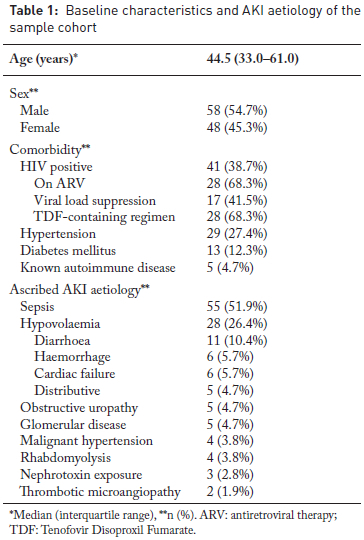
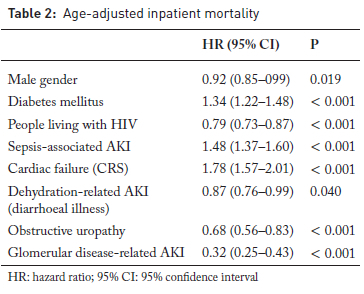
BACKGROUND: Dialysis-requiring acute kidney injury (AKI) portends adverse outcomes in the developed world, but it is less well-studied in the developing world. We, therefore, retrospectively reviewed the epidemiology, referral patterns, and outcomes of dialysis-requiring AKI at an academic public hospital in Johannesburg, South Africa METHODS: Patients prescribed dialysis for AKI over 2 years were retrospectively reviewed. The effects of baseline characteristics and the aetiology of AKI on patient survival, hospitalisation duration, and renal function recovery were analysed RESULTS: A cohort of 106 patients was reviewed over the study period. Patients were generally younger (median 44.5 years). Human Immunodeficiency Virus (HIV) infection (38.7%), hypertension (27.4%), and diabetes mellitus (12.3%) were common comorbidities. Community-acquired AKI predominated with significant renal dysfunction at presentation. The leading causes of AKI were sepsis (51.9%) and hypovolaemia (26.4%). Mortality was high at 56.6%. Older age and diabetes increased mortality and reduced renal recovery. There was increased mortality with sepsis (HR 1.48, 95% CI 1.37-1.60, P < 0.001) and cardiorenal syndrome (CRS) type 1 (HR 1.78, 95% CI (1.57-2.01, P < 0.001). HIV infection did not increase mortality risk and showed an increased likelihood of renal recovery (OR 1.71, 95% CI 1.51-1.95, P < 0.001 CONCLUSION: Our findings resemble those of other low- and middle-income countries in that AKI has a high mortality rate in our setting. Sepsis, older age, diabetes, and CRS increase the risk of death. Sepsis-associated AKI and diabetes are associated with reduced odds of renal recovery