Artificial intelligence and smart cities in India: A conceptual and policy review
Abstract
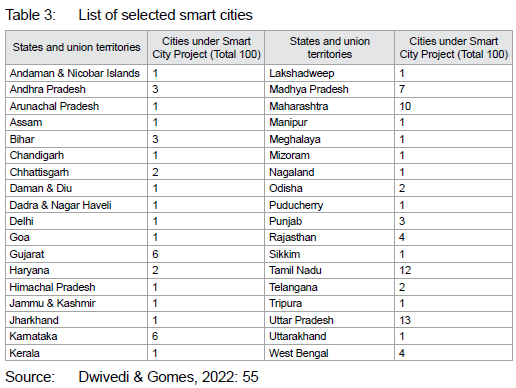
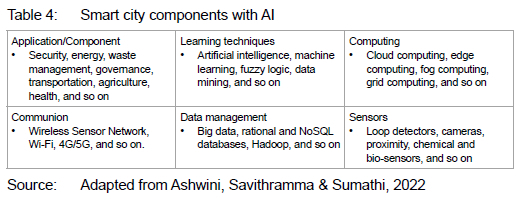
India's urban landscape is undergoing significant transformation driven by demographic shifts and the growing demand for inclusive, efficient urban systems. The Smart City Mission (SCM), launched in 2015, seeks to develop 100 model cities leveraging technology to improve infrastructure, governance, and quality of life. Artificial Intelligence (Ai) is increasingly recognised as a critical enabler in this mission, facilitating data-driven decision-making, efficient service delivery, and adaptive urban management. While global research has explored the integration of AI in smart cities, academic engagement with the Indian context remains limited. This study conducts a conceptual literature review and narrative analysis to examine the intersection of urban governance, smart cities, and AI. It investigates how AI is being integrated into smart-city initiatives globally and in India, and identifies key implementation challenges, including digital inequality, ethical concerns, infrastructural gaps, and policy limitations. The study argues that the success of India's urban future depends on the responsible adoption of AI, underpinned by inclusive policies, robust digital infrastructure, public accountability, and human-centric design.
Urbanisation; smart city; artificial intelligence; artificial intelligence technologies; smart urban technologies; urban development; urban governance
 Thumbnail
 Thumbnail