Artificial intelligence and smart cities in India: A conceptual and policy review
Abstract
India's urban landscape is undergoing significant transformation driven by demographic shifts and the growing demand for inclusive, efficient urban systems. The Smart City Mission (SCM), launched in 2015, seeks to develop 100 model cities leveraging technology to improve infrastructure, governance, and quality of life. Artificial Intelligence (Ai) is increasingly recognised as a critical enabler in this mission, facilitating data-driven decision-making, efficient service delivery, and adaptive urban management. While global research has explored the integration of AI in smart cities, academic engagement with the Indian context remains limited. This study conducts a conceptual literature review and narrative analysis to examine the intersection of urban governance, smart cities, and AI. It investigates how AI is being integrated into smart-city initiatives globally and in India, and identifies key implementation challenges, including digital inequality, ethical concerns, infrastructural gaps, and policy limitations. The study argues that the success of India's urban future depends on the responsible adoption of AI, underpinned by inclusive policies, robust digital infrastructure, public accountability, and human-centric design.
Urbanisation; smart city; artificial intelligence; artificial intelligence technologies; smart urban technologies; urban development; urban governance
Abstract
Indië se stedelike landskap ondergaan 'n beduidende transformasie, gedryf deur demografiese verskuiwings en die groeiende vraag na inklusiewe, doeltreffende stedelike stelsels. Die Slimstad-missie, wat in 2015 van stapel gestuur is, het ten doel om 100 modelstede te ontwikkel deur tegnologie te benut om infrastruktuur, bestuur en lewensgehalte te verbeter. Kunsmatige Intelligensie (KI) word toenemend erken as 'n kritieke 'enabler' in hierdie missie, aangesien dit data-gedrewe besluitneming, doeltreffende dienslewering en aanpasbare stedelike bestuur fasiliteer. Terwyl wêreldwye navorsing die integrasie van KI in slimstede ondersoek het, bly akademiese betrokkenheid by die Indiese konteks beperk. Hierdie studie voer 'n konseptuele literatuuroorsig en narratiewe analise uit om die kruispunt van stedelike bestuur, slimstede en KI te ondersoek. Dit ondersoek hoe KI wêreld-wyd en in Indië in slimstad-inisiatiewe geïntegreer word, en identifiseer sleutel-implementeringsuitdagings, insluitend digitale ongelykheid, etiese kwessies, infrastruktuurgapings en beleidsbeperk-ings. Die studie voer aan dat die sukses van Indië se stedelike toekoms afhang van die verantwoordelike aanvaarding van KI, onderlê deur inklusiewe beleide, robuuste digitale infrastruktuur, openbare aanspreeklikheid en mensgesentreerde ontwerp.
1. INTRODUCTION
Rapid urbanisation across the world has become an inevitable process because of both push and pull factors, in which urban populations across the globe are on the rise. According to the World Bank (2023), 56% of the global population lived in urban areas, i.e. 4.4 billion inhabitants. Moreover, the World Bank predicts that, by 2050, 7 out of 10 people in the world will be living in cities. Thus, urban centres will become crucial to sustainable human development. Even in economic terms, urban centres contribute roughly 80% of the global Gross Domestic Product (GDP) (World Bank, 2025). They have become an integral part of the social and economic well-being of human beings. Clean and green urban centres are sine qua non for healthy and sustainable human progress. Sustainable Development Goal (SDG) 11 set by the United Nations rightly recognises the necessity to "make cities and human settlements inclusive, safe, resilient, and sustainable".
To make the city a better place to live in, businesses to grow, and investors to invest, we need to bring state-of-the-art technology, which will act as an enabler. Technology and urbanisation have similar paths of evolution and have complemented each other. For instance, the industrial revolution from the mid-eighteenth century led to technological innovation in the textile industry, coal and steel industry, and in the emergence of steam engines, and so on, bringing investments into the city (Mohajan, 2019). This led to the dawn of industrial cities such as Manchester and Liverpool in England, Berlin in Germany, as well as Lille and Lorraine in France. Similarly, the emergence of the internet in the 1990s aided the phenomenon of globalisation and urbanisation (Bagnasco & Gales, 2000). The era of internet and World Wide Web (WWW) revolution brought new versions of urban centres known as Information Technology (IT) hubs such as Silicon Valley in San Francisco in the United States of America (USA), Pangyo Techno Valley in Gyeonggi province in South Korea, Bengaluru in India, and so on (Bagnasco & Gales, 2000).
In the present scenario, humanity is witnessing a deep technological revolution with artificial intelligence (AI) integral to it. This has already begun to penetrate urban planning to resolve key challenges that cities are facing. Several cities such as Amsterdam in The Netherlands, Boston in the United Kingdom, Shanghai in China, and others have been pioneers in employing AI in city planning (UN, 2022). India integrates AI in resolving its urban problems. Various cities in the country have adopted AI technology for effective public service delivery, resource optimisation, crowd management, and citizen-centric governance (NITI Aayog, 2018). Considering this trend, the Government of India (2024) initiated an ambitious programme, the Smart City Mission (SCM), to leverage innovative and creative solutions to resolve urban problems and enable socio-economic development of the cities. Integration of AI in the development of smart cities is a novel phenomenon that is still developing at a fast pace. This pace of development, however, is posing a difficult challenge for researchers, scholars, and administrators to elaborately study the prospects and obstacles posed by AI on the economy, environment, and ease of living of urban citizens (Cugurullo et al., 2023).
The newfound interest in subjects such as AI and smart cities has led to the proliferation of scholarly articles and research papers across the world. Wolniak and Stecula (2024) conducted a literature review of publications indexed by Scopus between 2021 and 2024 (data from 29 January 2024). They found that the number of publications with both 'artificial intelligence' and 'smart city' as keywords has been 282 in 2021, 230 in 2022, and 246 in 2023. The numbers reflect the increasing popularity of AI and cities among research scholars. Following this trend, this paper has attempted a literature survey of several publications on these two areas, especially in the context of India. The paper is an amalgamation of academic assessment and policy analysis on AI and smart cities, in general, and the usage of these two concepts for India, in particular. The paper seeks to provide conceptual frameworks of both, as well as how Indian policymakers are using AI in the SCM.
2.1 Smart city
In recent years, smart cities have attracted a great deal of attention and investment, with several projects and programmes in progress throughout the globe. Nevertheless, despite all of this attention and investment, there is not one universally recognised notion of what a smart city is (Albino, Berardi & Dangelico, 2015). Various conceptual interpretations frequently substitute the term 'smart' with similar terms such as 'intelligent' or 'digital' (Gracias et al., 2023). As a result, the phrase 'smart city' is being used in contradiction in various situations and is still an unspecific and unclear idea.
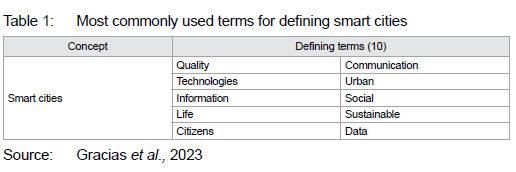
Despite the lack of a shared definition, a number of definitions now in use offer essential details about the primary features and concepts of a smart city. When discussing the concept of a 'smart city', tenets of intelligence should govern urban planning. Intelligence is broadly defined as the capacity to solve problems, identify relationships, learn, adjust to shifting environmental circumstances, grab possibilities, reduce risks, act with intention, reason logically, and effectively handle difficulties (Sternberg, 2012). It also entails predicting results, making rational decisions, and actively digesting information. Emerging technology and innovations facilitate the use of 'smart' management techniques in urban settings and the public sector (Sikora-Fernandez & Stawasz, 2016). The concept of smart cities is shaped and operationalised by people, including communities, authorities, users, and policymakers. This must be recognised. According to the multifaceted definition, a smart city is one that emphasises development's many determinants and takes a holistic approach. Definitions pertaining to information and communication technology prevail in the literature (Koztowski & Suwar, 2021). The Smart City Institute (2021) views the smart city as a goal to aim toward, in order to support innovation, whether it be social or technological, and be able to continuously develop. However, the functionality and accessibility of new technologies are not the only measures of 'smartness'; some studies also consider the connections between ICT infrastructure and economic performance (Roller & Waverman, 2001). When discussing the concept of smart cities, certain terms consistently appear at the forefront. Table 1 shows the ten most commonly used terms associated with the concept of smart cities.
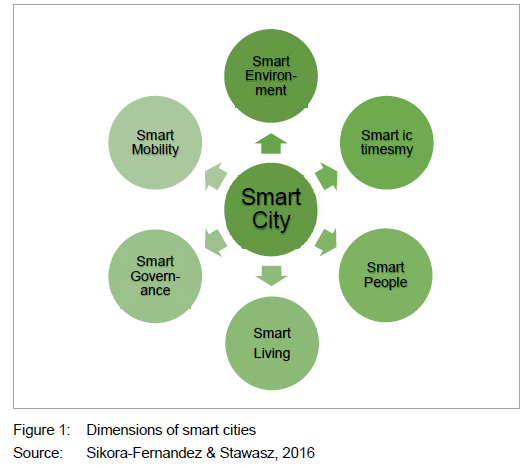
Smart city efforts are frequently presented as ways to boost economic growth, increase sustainability, improve public safety, and improve both the productivity and the quality of life for people living there (Silva, Khan & Han, 2018). These programmes do, however, have a number of drawbacks such as substantial costs, privacy challenges, and data-security issues (Din et al., 2019). Although there is no globally accepted definition of a smart city, six major dimensions are widely acknowledged (see Figure 1).
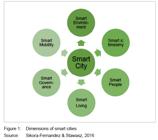
Figure 1 displays a smart City in its centre, surrounded by six interconnected components, namely smart mobility, smart environment, smart economy, smart people, smart living, and smart governance. Each component represents a critical aspect of urban development, indicating how a smart city functions through the joint efforts of these sectors. The graphic demonstrates how smart urban systems rely on integrated planning across mobility, environment, economy, governance, and social well-being.
A city that uses contemporary information and communication technology (ICT) to integrate these characteristics might be considered smart. These factors have their roots in theories of regional competitiveness, transportation and ICT economics, natural resources, human and social capital, quality of life, and active citizen participation in urban governance (Lombardi et al., 2012). First, a smart economy establishes a competitive environment that draws in companies, start-ups, and investors, by reducing bureaucratic barriers through new technologies such as digital land allocation and e-governance. Secondly, smart mobility is accomplished by means of an effective, technologically enabled transportation system that reduces pollution and congestion, by combining eco-friendly options such as electric cars, a strong public transportation network, and sophisticated traffic management technologies. Thirdly, smart governance bridges the divide between the public and the government, by using information and communication technology (ICT) to promote accountability, transparency, and active citizen participation in decision-making. Simultaneously, a smart environment encourages ecologically conscious planning, efficient waste management, and renewable energy, in order to promote sustainable urban development (Duan, Nasiri & Karamizadeh, 2019).
The role of smart people is also significant, highlighting the need for an educated and technologically aware public that can interact with and propel technological advancement. Lastly, by guaranteeing access to basic services such as healthcare, cultural events, and secure housing, and by supporting travel and leisure options, smart living improves people's quality of life overall. These elements collectively serve as the cornerstone of what makes up a smart city, representing a well-rounded strategy for urban development that is both technologically sophisticated and focused on people (Koztowski & Suwar, 2021).
2.2 Artificial Intelligence
AI is a complicated and growing notion that is difficult to define precisely. It is considered by many to be among the most important and revolutionary technological advancements of our time. Fundamentally, AI is a group of computer programmes created to simulate human cognitive processes, taking cues from how the human nervous system and body notice, understand, and react to their environment (Ali et al., 2024).
Although it has received a great deal of attention lately, especially in 2023, AI has roots in the post-World War II era, when early computers were developed. The Dartmouth Conference in 1956, which brought together scholars from a range of fields to investigate the idea of 'thinking machines', was a turning point in the development of AI (Ali et al., 2024). The name 'Artificial Intelligence' was first used during this conference, which also signalled the official start of AI as a separate field of research. John McCarthy was the first to use the phrase 'Artificial Intelligence' during the conference. He defined AI as the science and engineering of developing intelligent machines. Since then, the concept of AI has changed significantly. Cugurullo (2020) breaks down the phrase into its constituent parts to provide a nuanced interpretation: 'Artificial' refers to things that are created by human beings, but 'intelligence' refers to mental skills such as comprehending, learning, making decisions, and dealing with unpredictability. Therefore, it can understand that any human-made system that has the ability to learn, analyse information, and make judgments on its own, even when things are unclear, is considered AI. AI systems generally operate along a 'AI Pipeline', analysing data, spotting trends, and producing well-informed results that mirror the continuous transformation of human civilisation through technological advancement.
However, it was not until the turn of the century that AI gained widespread recognition, as the IBM Deep Blue supercomputer defeated chess expert Gary Kasparov in 1997, using AI algorithms created by IBM engineers (Thompson, 2022). After being trained on a massive data set, the IBM Watson computer achieved victory in the 2011 Jeopardy game shown in the United States (Thompson, 2022). These incidents demonstrated that machines with advanced AI software and enormous volumes of data may outperform people at complex tasks, despite their high cost. Between 2014 and 2024, a few of the businesses have gone one step further and created AI systems that, because of the difficulty and scope of the assignment, have produced amazing outcomes and completed tasks that human beings are unable to complete. One example is AlphaFold from Google DeepMind (World Travel & Tourism Council, 2024).
AI has increasingly dominated global headlines, particularly following the public release of ChatGPT by OpenAI in November 2022. ChatGPT, an advanced AI-powered chatbot, immediately sparked public attention and gathered over 100 million users in just two months, establishing itself as the fastest-growing consumer app in history at the time. This significant event sparked interest in AI worldwide and brought it into the mainstream in 2023. Although ChatGPT was the first AI chatbot to become widely popular, a number of other platforms have since surfaced, such as Baidu's Ernie AI in China, Google Bard, IBM Watsonx. ai, and Microsoft Copilot (Hale, 2023). Applications of AI are already present in daily life, such as speech recognition, smart cars, identification of fraud, security monitoring, music suggestions, and AI-powered personal virtual assistants such as Amazon's Alexa, Apple's Siri, and Microsoft's Cortana (Dhande, 2017).
The fact that AI is a multipurpose technology with a wide range of applications in different industries, comparable to electricity, is one of its distinguishing characteristics. The Oxford English Dictionary (2010) defines AI as 'the capacity of computers, or other machines, to exhibit intelligent behaviour', although there is not a single, widely accepted definition. This suggests that AI systems can mimic and, in certain situations, even outperform human cognitive capacities such as learning, reasoning, and decision-making (Stryker & Kavlakoglu, 2024).
2.3 Machine learning and deep learning
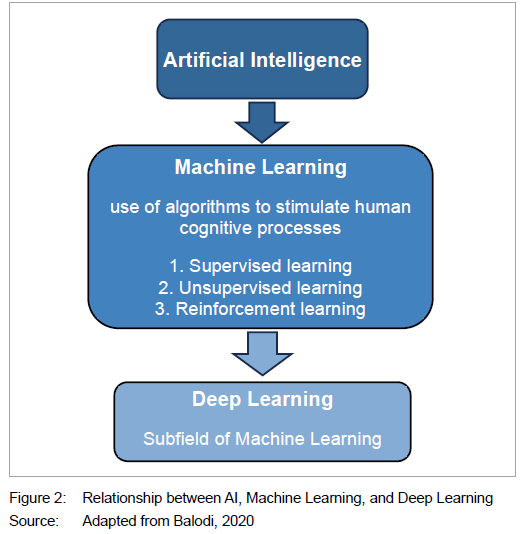
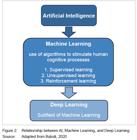
The area of AI is broad and still growing, with many subfields, most notably machine learning (ML) and deep learning. Fundamentally, machine learning uses algorithms to simulate human cognitive processes, allowing computers to perform better and make predictions (Saha, 2021). Machine learning encompasses a range of learning techniques. Supervised learning is the process of training machines on labelled data sets so that they can learn from input-output pairings and make accurate predictions about fresh data. Unsupervised learning, on the other hand, deals with data that has not been tagged. In this instance, algorithms find hidden features or patterns in data sets without direct supervision. Reinforcement learning is based on a feedback mechanism. By interacting with their surroundings and earning rewards or punishments according to how accurately they do tasks, machines learn and improve their decision-making over time. Deep learning is a subfield of machine learning that resembles how the human brain interprets, learns, and makes decisions. Artificial neural networks, which are computer models based on the architecture of the human brain, constitute its foundation (see Figure 2). To properly train these networks and identify intricate patterns, deep learning necessitates substantial processing power and vast amounts of data (Saha, 2021).
However, AI development (like Machine Learning and Deep Learning) poses various concerns, due to its independent and self-improving nature. These include risks to democratic systems, algorithmic inequity leading to discrimination, heightened political polarisation, and breaches of privacy through surveillance (Kharitonova, Savina & Pagnini, 2021). Furthermore, the concentration of data in a small number of strong corporations raises questions about exclusivity and abuse, and authoritarian governments may use AI developments to increase their hold on power (Hedlund & Persson, 2024).
2.4 The role of smart cities in shaping smart cities
AI has emerged as a key factor in the development of smart cities, impacting no t only technology advancement, but also the institutional, administrative, and policy frameworks that govern the organisation of urban systems. AI is increasingly used as an integrative method to reform governance practices, planning processes, and interactions between citizens and states (Santos, Matos & Groznik, 2025). First, AI greatly improves data-driven urban governance. City administrations can handle vast amounts of real-time data, using machine learning models, sensor networks, and predictive analytics to make decisions about mobility, waste management, energy efficiency, public health, and service delivery. This move from reactive to predictive governance enables authorities to anticipate and address emergent issues such as congestion, pollution, infrastructure stress, and public safety hazards. As a result, AI is reshaping the temporal and operational dynamics of urban management.
Secondly, AI allows for more responsive and customised public services. Through chatbots, virtual assistants, and adaptive digital portals, algorithmic solutions help automate administrative duties, improve workflows, and increase public participation. These technologies improve administrative efficiency, while altering state-citizen interactions, by allowing for greater transparency, accessibility, and real-time reaction (MoHAU, 2017a).
Thirdly, AI is reshaping the broader policy ecosystem of smart cities. Policymakers increasingly recognise the need to align national and local frameworks with rapid technological advancements. Urban data governance has emerged as a major concern, as governments strive to control privacy, security, and data-sharing practices in an era of large-scale data extraction. Ethical and accountable AI, which includes algorithmic transparency, fairness, and monitoring, has also arisen as a policy priority for preventing prejudice and ensuring equitable service delivery. Furthermore, the integration of AI necessitates significant expenditures in digital infrastructure such as IoT systems, cloud architectures, and security procedures. Capacity-building, institutional coordination, and regulatory preparation all influence the efficacy of AI deployment (Santos et al., 2025).
Finally, AI is increasingly informing long-term urban development policies, particularly those including sustainability, climate resilience, and catastrophe preparedness. As AI becomes more integrated into the strategic vision of smart governance, policy frameworks must adapt to combine technological innovation with ethical, social, and distributive issues, ensuring that AI-powered urban futures are inclusive, secure, and accountable (Wolniak & Stecula, 2024).
3. METHODS AND REVIEW APPROACH
This study employs a narrative review methodology, a qualitative approach well-suited for synthesising a broad range of academic and policy discourses on the intersection of AI, smart cities, and urban governance. This method was chosen as it facilitates conceptual exploration and thematic synthesis, rather than statistical generalisation, making it appropriate for an interdisciplinary subject area characterised by rapidly evolving technologies, diverse governance frameworks, and emerging ethical debates (Ferrari, 2015).
In the inclusion criteria, it encompassed publications from 2010-2024 that examined AI, machine learning, or digital technologies within urban governance, with particular relevance to smart cities globally and India specifically. Conceptual, empirical, and policy-oriented works were considered, including peer-reviewed articles and credible grey literature such as government and World Bank/ OECD reports, restricted to English-language sources. Following the exclusion criteria, it removed studies unrelated to governance (e.g., purely technical optimisation), opinion-based writings that lacked analytical depth, works with unclear methodology, duplicates, inaccessible full texts, and non-English publications due to resource limitations.
This article follows a structured process involving systematic literature identification, screening based on predefined criteria, and thematic synthesis. Although this is not a comprehensive systematic review, it does include essential features of the PRISMA framework to improve transparency and screening rigour. The review consisted of four steps:
1. Identification, with 312 records found using keywords such as 'Smart Cities Mission', 'AI governance', 'urban data', and 'smart governance'.
2. Screening, in which duplicates were deleted using Zotero.
3. Eligibility involved evaluating abstracts and full texts against predetermined inclusion and exclusion criteria.
4. Inclusion resulted in a final selection of 77 papers chosen for qualitative synthesis.
The review draws on key databases and platforms, including Scopus, Web of Science, Google Scholar, ResearchGate, official repositories from India's Ministry of Housing and Urban Affairs (MoHUA), NITI Aayog, and various international policy think tanks. From an initial pool of sources, a final sample of 77 publications was selected based on the following thematic clusters:
• Smart city concepts and evolution.
• SCM in India.
• Integration of AI into smart city systems
• Challenges of AI-driven urban governance.
• Policy and legal frameworks.
The selected literature ranges from peer-reviewed journal articles, books, doctoral theses, conference papers, government documents, and policy briefs to institutional reports. Together, these sources offer both theoretical grounding and empirical insights into how AI technologies are reshaping urban systems globally and within the Indian context (Bibri & Krogstie, 2020).
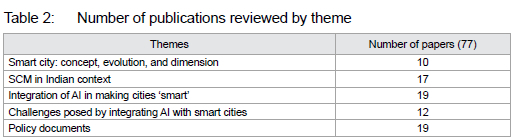
The review process was structured into two complementary components. Academic assessment involved evaluating theoretical frameworks and empirical studies related to smart city development, AI integration, and urban governance. Literature in this domain provided the conceptual basis and global comparisons necessary for framing India's experience. Policy and legal analysis included reviewing national policies, legislative documents such as the Digital Personal Data Protection Act (DPDPA), 2023, and strategy papers published by Indian government institutions (MoHUA, 2022; MEITY, 2023). International development reports from organisations such as the World Bank (2021) were also examined to understand the broader policy landscape and implementation models. To guide the synthesis, five key thematic areas were identified. The categorised distribution of the 77 reviewed sources is summarised in Table 2.
The article begins by reviewing foundational concepts including smart cities, AI, Machine Learning (ML), and Deep Learning (DL). It then examines the state of urban governance in India through the lens of the SCM, highlighting both achievements and persistent challenges in its implementation. The discussion focuses on India's ongoing efforts to integrate AI into smart city initiatives, exploring the opportunities these technologies present as well as the practical, ethical, and institutional challenges they pose.
The article concludes by identifying key areas that warrant further research and policy attention in India's smart city development. These include mitigating algorithmic bias, strengthening cybersecurity infrastructure, understanding the socio-spatial impacts of AI, and establishing clear accountability mechanisms for AI-driven governance.
Concerning limitations to this study, no direct empirical data was included. Instead, it only uses secondary sources. This method restricts the depth of context-specific insights that field-based research or stakeholder interviews could offer, even as it permits a broad conceptual and policy-oriented knowledge. Further research using empirical techniques may enhance this analysis, by providing deeper, more in-depth insights into the incorporation of AI in smart city government projects.
4. SMART CITY DEVELOPMENT IN INDIA
4.1 Smart City Mission
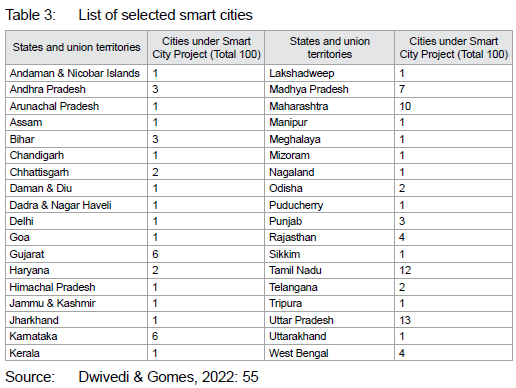
In June 2015, the Indian Prime Minister announced the SCM to encourage urban growth, by designing cities that provide basic infrastructure, assure a clean and sustainable environment, and improve inhabitants' quality lifestyles through the use of smart approaches (MoHUA, 2017a). The SCM first phase started in January 2016 when 20 cities were chosen through the 'Smart City Challenge Competition'. In addition, 79 more cities were added to the quest in subsequent revisions. Ultimately, Shillong was chosen as the 100th smart city, completing the list under the goal, even though one city spot was previously left empty (Dwivedi & Gomes, 2022). Table 3 shows the distribution.
The distribution of the 100 smart cities in India reveals a clear trend of balanced regional representation. Larger and more populated states such as Uttar Pradesh, Tamil Nadu, Maharashtra, and Madhya Pradesh have the most selected cities, indicating vast urban networks and development needs. In contrast, many north-eastern and smaller states have been assigned one city each, ensuring that the SCM serves a wide range of locations. Union territories are also distributed evenly, with most receiving a single city. Overall, the allocation demonstrates the government's intention to blend demographic weight, administrative capacity, and regional equity to shape the SCM.
An essential component of India's SCM, the Integrated Command and Control Centre (ICCC), acts as the 'brain and nerve centre' of urban governance. These hubs are designed to support data integration, real-time monitoring, and well-informed decision-making for better city administration. In order to improve operational efficiency, strengthen public safety measures, and support efficient service delivery throughout smart cities, ICCCs aggregate data from a variety of urban services, including traffic, public safety, utilities, and emergency response. The ICCC, if properly operationalised and managed, can significantly improve metropolitan areas (MoHUA, 2018).
India's SCM has two main approaches to development. First, Area-Based Development (ABD) consists of three parts, namely greenfield development, which encourages planned urban expansion on unoccupied land or previously vacant land over 250 acres, with a focus on smart solutions and affordable housing; redevelopment, which highlights existing built-up regions in areas over 50 acres, and retrofitting, which improves infrastructure and services in established city cores in areas over 500 acres (MoHUA, 2017b).
Secondly, Pan-City Development emphasises the use of intelligent solutions throughout the city to enhance services and infrastructure, usually in sectors such as e-governance, waste management, energy, and transportation (MoHUA, 2024a).
According to the Ministry, ABD starts with a particular 'area', which acts as a blueprint or indicator for replication in other smart city areas. Because the three strategic components - greenfield development, redevelopment, and retrofitting - are meant to have an integrated and sustainable effect across the city, their effects cannot be evaluated separately (MoHUA, 2024b).
4.2 Smart City Mission successes and challenges
The SCM has approved 8,075 projects across 100 cities, costing 1,64,687 crores. According to the most recent information, 7,380 of these projects, costing 1,47,704 crores have been accomplished (MoHUA, 2024b). Approximately 91 of these have been completed, with the remaining ones continuing under progress. This shows notable progress in urban development, with an emphasis on improving infrastructure and urban dwellers' quality of life through well-considered investments and the application of clever, tech-driven solutions (Government of India, 2024). Over 84,000 CCTV cameras have been deployed in 100 cities as part of this effort, which has increased surveillance and reduced crime. The supporting facilities include 1,884 emergency call boxes, 3,000 public speech systems, and modern traffic enforcement technology such as red-light infraction monitoring and automatic number plate identification. Over 66 communities have implemented technological advances in the field of solid waste management to improve everyday operations, collection efficiency, and route optimisation.
To enhance tracking and service delivery, approximately 9,194 cars have been outfitted with RFID-based Automatic Vehicle Location (AVL) devices (MoHUA, 2024a).
The SCM has brought about significant developments in the social sector. So far, 41 digital libraries and over 9,433 smart classrooms have been set up; 152 health ATMs and 172 e-health centres, which do not have specific hospital beds, have been installed in the health sector to increase the availability of primary care services. Despite these successes, a number of problems with execution still exist. Due to a variety of reasons, including legal conflicts, departmental clearance delays, vendor-related problems, and resource limitations, approximately 9% of projects were still unfinished as of 2024 (MoHUA, 2024a).
India's SCM has faced significant criticism for inadequate implementation and lack of transparency, compounded by the nation's limited technical capacity to fully realise the relatively new concept of smart cities. The implementation of India's SCM is further constrained by persistent socio-economic challenges, including rising poverty levels and inadequate access to essential infrastructure and services such as clean water, electricity, and sanitation. While internet access in India has improved over the years, it remains at 47% - lower than in several other Asian countries - reflecting a significant digital divide. This unequal access to digital infrastructure not only deepens social exclusion, but also limits access to reliable information, contributing to the spread of misinformation. At the same time, increasing connectivity raises growing concerns about data privacy and vulnerability to cyberattacks in smart urban environments.
Urban planning and technology policies that lack clear direction risk excluding marginalised populations by failing to provide the necessary resources for digital empowerment. This can lead to what Madhavanunni and Dasgupta (2022) describe as 'digital destitution', where existing social and economic inequalities are intensified by limited access to, and inability to effectively use digital technologies.
Several systemic issues hinder the effective implementation of the SCM. A key challenge is the functional overlap between municipal bodies and Special Purpose Vehicles (SPVs), which often creates confusion over roles and responsibilities. This duplication undermines the operational autonomy of urban local bodies and leads to manpower shortages, as personnel are frequently shared between SPVs and municipal corporations, as observed in cities such as Varanasi and Pune (Maurya & Biswas, 2019: 147). In addition, the lack of structured mechanisms for cross-city referencing or inter-city learning has limited the dissemination of best practices across urban centres.
Another major obstacle is the variation in project implementation between cities. While cities such as Surat and Agra have finished 98% of their smart city initiatives, and Ahmedabad 97%, others such as Shillong (24%), Itanagar (31%), and Guwahati (50%) have made modest development. Under the SCM, these variations indicate unequal administrative capabilities, accessibility of resources, and contextual difficulties that impact project execution speed and quality (Standing Committee on Housing and Urban Affairs, 2025: 105-111).
The climate issue presents major problems for urban societies, especially in areas such as waste management, air quality, livelihoods, and the provision of energy and water. In response, national and international organisations have put up a number of projects to promote urban systems that are climate resilient. These initiatives emphasise sustainable energy and waste management, clean transportation, effective water supply, and the use of digital technologies to achieve these goals (Dwivedi & Gomes, 2022). However, despite these efforts, the efficacy of such programmes in providing comprehensive and generally applicable answers at the ground level remains largely unknown. The Environmental Performance Index (EPI) 2024 ranks India 176th out of 180 countries, with a score of 27.6. This indicates significant environmental issues across a number of metrics, placing the nation just above Pakistan, Vietnam, Laos, and Myanmar. India's air quality is also ranked 177th out of 180 countries (Block et al., 2024).
5. DISCUSSION
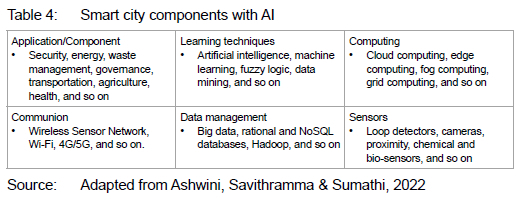
Globally, both developed and developing countries are increasingly adopting AI-driven technologies to support smart city initiatives. In India, the integration of AI into urban development is emerging as a transformative force, particularly within the framework of the SCM. Technologies employed in smart city development can be broadly categorised into five key domains, namely learning techniques, computing technologies, communication technologies, data-management technologies, and sensor technologies (see Table 4). These interconnected systems aim to enhance urban governance, service delivery, and the overall quality of life for city residents. A wide array of smart city frameworks has been developed globally through collaboration between governments, scholars, and industry experts, in order to address the multifaceted dimensions of urban living.
In the Indian context, rapid urbanisation presents both immense opportunities and significant challenges to achieving inclusive and sustainable urban growth. In response, AI is increasingly viewed as a powerful tool to support more adaptive and efficient urban planning, governance, and service delivery. Batty and Axhausen (2020) argue that AI holds the potential to address complex urban problems and enhance planning processes, positioning it as a key enabler in India's evolving urban development trajectory.
AI and ML technologies hold significant potential to transform regional and urban planning processes in India. Although their application in the Indian planning context remains relatively new, their value is increasingly being recognised (Nam & Pardo, 2019). With the capacity to process vast amounts of data, AI and ML can serve as powerful tools for case prediction, predictive modelling, and evidence-based decision-making. By integrating diverse variables and generating comprehensive, data-driven insights, these technologies can substantially enhance the effectiveness and responsiveness of planning efforts. AI-powered solutions offer innovative approaches to complex urban challenges, including improving disaster resilience, promoting sustainable development, optimising transportation systems, and advancing land-use planning (Alonso, Benner & Breheny, 2021).
With the backing of robust government measures, India's ranking in the Network Readiness Index (NRI) 2024 increased from 60th in 2023 to 49th, indicating its increasing importance in the global digital transformation. The NRI uses 54 variables to rank 133 economies across four pillars, namely technology, people, governance, and impact (Government of India, 2024). According to UNCTAD's 2025 Technology and Innovation Report, India's rising ability to embrace and deploy emerging technologies is demonstrated by the country's 2024 Readiness for Frontier Technologies index ranking of 36th, rising significantly from 48th in 2022 (The Hindu, 2025). A number of projects have been launched by the Indian government to incorporate AI into administration. Numerous policy initiatives and success stories in this field are highlighted on the official website, IndiaAI.gov.in. Notably, India suggested creating a worldwide framework for the responsible, secure application of AI during the last G20 Summit, with a focus on broad innovation and moral challenges.
The Indian government has actively worked with the commercial sector and academic institutions to build centres of excellence in AI. The Kotak-IISc Artificial Intelligence-Machine Learning Centre, the NASSCOM Centre of Excellence in Data Science and AI, and the AI research hubs at IIT Hyderabad and IIT Kharagpur are prominent examples. These initiatives all seek to promote research, development, and capacity-building in emerging technologies (The Hindu, 2025).
5.1 Successful artificial intelligence integration in smart city development
India is expected to require approximately $840 billion in infrastructure investments by 2036, equating to an average of $55 billion annually or 1.2% of its GDP (Athar, White & Goyal, 2022). In light of this, the urgency for innovative, cost-effective urban planning solutions is greater than ever. AI is increasingly emerging as a transformative tool capable of addressing complex urban challenges and enhancing municipal governance. Despite persistent issues such as traffic congestion, public safety concerns, inadequate sanitation, and limited healthcare access, AI is being leveraged in several Indian cities to improve service delivery and administrative efficiency. The following examples illustrate how AI is being operationalised across various sectors.
Managing traffic and urban mobility. Traffic congestion continues to be a pressing issue. In 2022 alone, India reported 461,312 road accidents, resulting in 168,491 fatalities (Ministry of Road Transport & Highways, 2022). To mitigate this, AI-powered systems have been introduced. The Intelligent Traffic Management System (ITMS) on the Pune Expressway and the Bengaluru Adaptive Traffic Control System (BATCS), launched in May 2024, are two such innovations. BATCS synchronised 165 traffic intersections, creating 'green waves' that reduce congestion and improve fuel efficiency (Hindustan Times, 2024; Economic Times, 2024).
Enhancing public safety and crime prevention. Urban safety remains a critical concern, with 445,256 reported cases of crimes against women in 2022, averaging 51 FIRs per hour (National Crime Records Bureau, 2022: 211). AI-based predictive policing tools use historical crime data to forecast high-risk areas and time frames, enabling proactive resource deployment. In addition, AI-powered surveillance has proven effective in investigations. For instance, Kerala police solved a 19-year-old murder case, using AI-generated age-progression images linked with social media profiles (Sharma, 2025).
Improving sanitation and hygiene. Manual scavenging remains a grave health and human rights concern, having claimed 631 lives between 2010 and 2020 (PIB, 2020). In response, Kerala introduced the AI-powered robotic device 'Bandicoot' as part of the Guruvayur Sewerage Project. Operated by the Kerala Water Authority, Bandicoot can clean up to four manholes per hour, improving efficiency and reducing human exposure to hazardous conditions.
Expanding healthcare access. With a doctor-to-population ratio of 1:834 as of July 2024 and approximately 1.6 million preventable deaths each year, India's healthcare system is overstretched (MoHUA, 2024a). AI solutions such as virtual consultations, predictive diagnostics, and AI-assisted surgery are transforming care delivery. A notable example is Niramai Health Analytics (Bengaluru), which developed a noninvasive, Al-powered breast cancer screening tool in 2016 that uses thermal imaging to detect early-stage cancer (Indian Express, 2022).
Strengthening citizen engagement in governance. Low awareness of government services and limited interaction channels contribute to citizen disengagement in urban governance. Common people are also not aware of the rights and facilities provided to them by the government, due to a lack of citizen engagement and awareness. Al is helping bridge this gap. For instance, Rajkot's Floatbot chatbot enhances communication between residents and authorities, promoting accountability and transparency.
5.2 Challenges of artificial intelligence integration in smart city development
While Al offers immense promise, its deployment in urban governance presents several significant challenges that must be addressed, in order to ensure equitable, secure, and sustainable smart city development.
Limited financial resources. Despite the need for smart infrastructure, lndia's urban development is hindered by funding gaps. The World Bank (2022) projects a requirement of $840 billion in infrastructure investment by 2036 to accommodate an urban population expected to reach 600 million (Kouamé, 2024). However, urban local bodies (ULBs) contribute only roughly 15% of funding, while private sector investment remains minimal at 5% (World Bank, 2022). ULBs' heavy dependence on central and state funding restricts their capacity to adopt and maintain Al-driven systems. Moreover, Al implementation demands substantial investments in technology, skilled personnel, data infrastructure, and cybersecurity, which many cities are currently ill-equipped to support. While initiatives such as SCM and AMRUT have helped seed digital infrastructure, the scale of Al deployment needed for predictive governance and real-time urban management far exceeds current funding levels (Ministry Of Housing & Urban Affairs. 2022).
Data privacy and security concerns. Al relies on vast amounts of personal and sensitive data to function effectively. However, this dependence raises serious concerns regarding privacy, data breaches, and unauthorised surveillance. Wolniak and Stecula (2024: 1354) emphasise the vulnerability of Al databases to cyberattacks and misuse. ln October 2023, over 815 million lndian citizens' personal data, including Aadhaar and passport numbers, was allegedly leaked and sold on the dark web, exposing severe weaknesses in digital security (Ahmed, 2023; The Economic Times, 2024). ln addition, smart surveillance initiatives in cities such as Hyderabad and Delhi have faced criticism for using facial recognition technology without sufficient legal safeguards, raising alarm over potential violations of digital rights (Reddy, 2023).
Algorithmic bias and social exclusion. Al systems can unintentionally replicate or amplify existing societal biases, especially when trained on unrepresentative or biased data sets. Buolamwini (2023) notes that many facial recognition tools are predominantly trained on lighter skin tones, leading to misidentification and discriminatory outcomes against individuals with darker complexions. ln the context of smart cities, such algorithmic bias can result in unequal access to services, reinforcing social exclusion and racial or ethnic segregation.
Lack of accountability and ethical oversight. Ethical concerns are growing around Al's role in governance, particularly regarding data use and decision-making. Shah (2021) stress the need for clear accountability mechanisms when Al systems make decisions that impact citizens. ln many instances, individuals are unaware of how their data is collected and used. A controversial example is the pilot project in Lucknow, where facial recognition technology was employed to monitor women's facial expressions to combat harassment. Critics argue that the initiative, lacking transparency and scientific validation, risks infringing on privacy and enabling intrusive policing (Al Jazeera, 2021).
While the DPDPA, 2023 marks a significant step forward in data governance, its implementation will be key. The Act provides a legal framework for managing personal and sensitive digital data, aiming to improve individual rights and establish accountability for data handlers (Rizvi & Ajaykumar, 2025). However, its effectiveness in regulating Al use within smart cities will depend on robust enforcement mechanisms such as clear compliance guidelines, regular audits, and strict penalties for violations; institutional readiness, including adequately trained data protection officers; coordination between municipal authorities and national regulators, and investment in secure digital infrastructure, and public awareness, through citizen education campaigns on digital rights, informed consent, and mechanisms for grievance redressal (Díaz-Rodríguez et al., 2023).
6. CONCLUSIONS
This study provided a conceptual review of smart cities and Al, tracing their evolution and interconnections with a particular focus on lndia's SCM. ln a context of rapid urbanisation, where cities are increasingly viewed as engines of economic growth, the article emphasises the need for technology-driven approaches to address complex governance and service-delivery challenges. Through an extensive review of academic and policy literature, the study examined foundational smart city frameworks, the ways Al is being integrated into urban planning and governance, as well as the broader practical and ethical implications of this convergence.
A closer assessment of Al's emerging role within lndia's smart cities shows that its influence extends beyond improving efficiency. Al is reshaping decision-making processes, governance structures, and citizen-state interactions. Tools such as real-time traffic management, automated sanitation systems, and crime-mapping illustrate its capacity to support predictive, data-driven urban management - capabilities that traditional planning approaches cannot offer. However, the benefits of these technological interventions depend heavily on strong and coherent policy frameworks. Existing initiatives, including the SCM, Digital India, and the Digital Personal Data Protection Act (2023), offer a preliminary foundation, yet gaps persist in areas such as standardisation, accountability, ethical oversight, and municipal-level implementation capacity.
The study highlighted that, while AI has the potential to enhance public service delivery, improve safety, and promote citizen engagement, these opportunities are counterbalanced by significant challenges. These include financial constraints faced by Urban Local Bodies (ULBs) and Special Purpose Vehicles (SPVs), data privacy concerns, cybersecurity vulnerabilities, and the risk of algorithmic bias influencing governance decisions. Ensuring the protection of personal data, as recognised by the Supreme Court of India under Article 21, is especially crucial, alongside strengthening the financial and institutional capacity of ULBs and SPVs to support sustainable AI adoption.
Overall, the findings point to the need for a more coordinated and comprehensive policy architecture that links technological deployment with data governance, ethical safeguards, adequate funding, and citizen rights. Such an approach is essential for ensuring that AI contributes not only to efficient urban management, but also to inclusive and socially responsible city development. As AI technologies and smart city models continue to evolve, future research must focus on mitigating algorithmic bias, improving cybersecurity infrastructure, understanding the socio-spatial impacts of AI, and establishing robust accountability mechanisms for AI-enabled governance.
AUTHOR CONTRIBUTIONSGKI conceptualised and supervised the study. DR analysed the paper. RD assisted with literature review and revisions. SC contributed data and supported writing. All authors approved the final manuscript.
REFERENCES
2. LITERATURE REVIEW
- AHMED, N. 2023. How the personal data of 815 million Indians got breached/explained. The Hindu, 7 November. [Accessed: 12 June 2025].
-
ALBINO, v., BERARDI, U. & DANGELICO, R. 2015. Smart cities: Definitions, dimensions, performance, and initiatives. Journal of Urban Technology, 22, pp. 3-21. https://doi.org/10.1080/10630732.2014.942092
» https://doi.org/10.1080/10630732.2014.942092 -
ALI, O., MURRAY, P., MOMIN, M., DWIVEDI, Y. & MALIK, T. 2024. The effects of artificial intelligence applications in educational settings: Challenges and strategies. Technological Forecasting and Social Change, 199. https://doi.org/10.1016/j.techfore.2023.123076
» https://doi.org/10.1016/j.techfore.2023.123076 - AL JAZEERA. 2021. Indian city plans facial recognition to spot 'women in distress'. Al Jazeera, 22 January. [Accessed: 1 June 2025].
-
ALONSO, J., BENNER, M. & BREHENY, M. 2021. Artificial intelligence in urban planning: Applications, methodologies, and challenges. Cities, 118, Article 103383. https://doi.org/10.1016/j.cities.2021.103383
» https://doi.org/10.1016/j.cities.2021.103383 -
ASHWINI, B., SAVITHRAMMA, R. & SUMATHI, R. 2022. Artificial Intelligence in smart city applications: An overview. In: 6th International Conference on Intelligent Computing and Control Systems (ICICCS), Madurai, India, pp. 986-993. https://doi.org/10.1109/ICICCS53718.2022.9788152
» https://doi.org/10.1109/ICICCS53718.2022.9788152 -
ATHAR, S., WHITE, R. & GOYAL, H. 2022. Financing India's urban infrastructure needs. Washington, DC: World Bank. documents1.worldbank.org [Accessed: 24 May 2025]. https://doi.org/10.1596/38306
» documents1.worldbank.org -
BAGNASCO, A. & GALES, P.L. 2000. Cities in contemporary Europe. Cambridge: Cambridge University Press. https://doi.org/10.1017/CBO9780511558733
» https://doi.org/10.1017/CBO9780511558733 - BALODI, a. 2020. Application of artificial intelligence and machine learning in real life. Researchgate, 12 April. [Accessed: 9 November 2025].
-
BATTY, M. & AXHAUSEN, K. 2020. Artificial intelligence in urban and regional planning. Journal of Regional Science, 60(1), pp. 88-128. https://doi.org/10.1111/jors.12436
» https://doi.org/10.1111/jors.12436 -
BIBRI, S.E. & KROGSTIE, J. 2020. The emerging data-driven smart city and its innovative applied solutions for sustainability: The cases of London and Barcelona. Energy Informatics, 3(1), pp. 1-42. https://doi.org/10.1186/S42162-020-00108-6
» https://doi.org/10.1186/S42162-020-00108-6 -
BLOCK, S., EMERSON, J.W., ESTY, D.C., DE SHERBININ, A., WENDLING, Z.A. et al. 2024. Environmental performance index. New Haven, CT: Yale Center for Environmental Law & Policy. epi.yale.edu [Accessed: 2 July 2025].
» epi.yale.edu - BUOLAMWINI, J. 2023. Unmasking AI: My mission to protect what is human in a world of machines. New York, NY: Random House.
-
CUGURULLO, F. 2020. Urban artificial intelligence: From automation to autonomy in the smart city. Frontiers in Sustainable Cities, 2, article 38. https://doi.org/10.3389/frsc.2020.00038
» https://doi.org/10.3389/frsc.2020.00038 -
CUGURULLO, F. et al. 2023. Artificial intelligence and the city: Urbanistic perspectives on AI. London: Routledge. https://doi.org/10.4324/9781003365877
» https://doi.org/10.4324/9781003365877 -
DHANDE, M. 2017. What is artificial intelligence, machine learning and deep learning? geospatialworld.net [Accessed: 10 June 2025].
» geospatialworld.net -
DÍAZ-RODRÍGUEZ, N., DEL SER, J., COECKELBERGH, M., DE PRADO, M. & HERRERA-VIEDMA, E. et al. 2023. Connecting the dots in trustworthy Artificial Intelligence: From AI principles, ethics, and key requirements to responsible AI systems and regulation. Information Fusion, 99, article 101896. https://doi.org/10.1016/j.inffus.2023.101896
» https://doi.org/10.1016/j.inffus.2023.101896 -
DIN, I., GUIZANI, M., RODRIGUES, J., HASSAN, S. & KOROTAEV, V. 2019. Machine learning in the Internet of Things: Designed techniques for smart cities. Future Generation Computer Systems, 100, pp. 826-843. https://doi.org/10.1016/j.future.2019.04.017
» https://doi.org/10.1016/j.future.2019.04.017 -
DUAN, W., NASIRI, R. & KARAMIZADEH, S. 2019. Smart city concepts and dimensions. In: ICIT '19: Proceedings of the 7th International Conference on Information Technology: IoT and Smart City. 20-23 December, Shanghai China, pp. 488-492. https://doi.org/10.1145/3377170.3377189
» https://doi.org/10.1145/3377170.3377189 - DWIVEDI, G. & GOMES, K. 2022. 7 years of smart cities mission, India: A review. New Delhi: Centre for Financial Accountability.
- ECONOMIC TIMES. 2024.India's smart city project still a distant dream? The Economic Times, 25 June. [Accessed: 10 June 2025].
-
Ferrari, R. 2015. Writing narrative style literature reviews. Medical Writing, 24(4), pp. 230-235. https://doi.org/10.1179/2047480615Z.000000000329
» https://doi.org/10.1179/2047480615Z.000000000329 - GOVERNMENT OF INDIA. 2024. Smart city: Enhancing urban life vision and progress of the smart cities mission. Press Information Bureau. [Accessed: 25 June 2024].
-
GRACIAS, J.S., PARNELL, G.S., SPECKING, E., POHL, E.A. & BUCHANAN, R. 2023. Smart cities - A structured literature review. Smart Cities, 6(4), pp. 1719-1743. https://doi.org/10.3390/smartcities6040080
» https://doi.org/10.3390/smartcities6040080 - HALE, E. 2023. China's Baidu unveils ChatGPT rival Ernie. ALJazeera [Accessed: 16 March 2024].
-
HEDLUND, M. & PERSSON, E. 2024. Expert responsibility in AI development. AI and Society, 39(2), pp. 453-464. https://doi.org/10.1007/S00146-022-01498-9
» https://doi.org/10.1007/S00146-022-01498-9 - INDUSTAN TIMES. 2016. Pune leads as Modi Government announces 20 smart cities. Hindustan Times, 25 June. [Accessed: 2 June 2025].
- INDIAN EXPRESS. 2022. Explained: What is the Smart Cities Mission? The Indian Express, 20 February. [Accessed: 10 June 2025].
- KHARITONOVA, Y.S., SAVINA, V.S. & PAGNINI, F. 2021. Artificial intelligence's algorithmic bias: ethical and legal issues. Researchgate [Accessed: 20 October 2025].
- KOUAMÉ, A.T. 2024. January 30). Gearing up for India's rapid urban transformation. World Bank Group [Accessed: 30 January 2025].
-
KOZLOWSKI, W. & SUWAR, K. 2021. Smart city: Definitions, dimensions, and initiatives. European Research Studies Journal, 24(Special Issue 3), pp. 509-520. https://doi.org/10.35808/ersj/2442
» https://doi.org/10.35808/ersj/2442 -
LOMBARDI, P., GIORDANO, S., FAROUH, H., & YOUSEF, W. 2012. Modelling the smart city performance. The European Journal of Social Science Research, 25(2), pp. 137-149. https://doi.org/10.1080/13511610.2012.660325
» https://doi.org/10.1080/13511610.2012.660325 - MADHAVANUNNI, A. & DASGUPTA, A. 2022. The road to Smart City planning: A historical co-evolution of urban planning and information systems. Observer Research Foundation [Accessed: 30 January 2025].
-
MAURYA, A. & BISWAS, S. 2019. Smart city governance in India: Issues and challenges. In: Smart Cities and Urban Development in India. New Delhi: Springer, pp.137-152. https://doi.org/10.1007/978-981-13-7091-9\_9
» https://doi.org/10.1007/978-981-13-7091-9\_9 -
MEITY (Ministry of Electronics and Information Technology). 2023. National Data Governance Framework Policy. New Delhi: Government of India. meity.gov.in [Accessed: 9 July 2025].
» meity.gov.in -
MINISTRY OF ROAD TRANSPORT & HIGHWAYS. 2022. Road accidents in India. New Delhi: Government of India. morth.nic.in [Accessed 2 December 2025].
» morth.nic.in - MOHAJAN, H.K. 2019. The first industrial revolution: Creation of a new global human era. Journal of Social Sciences and Humanities, 5(4), pp. 377-387.
-
MoHUA (MINISTRY OF HOUSING AND URBAN AFFAIRS). 2017a. Smart city features. New Delhi: Government of India. smartcities.gov.in [Accessed: 20 June 2025].
» smartcities.gov.in -
MoHUA (MINISTRY OF HOUSING AND URBAN AFFAIRS). 2017b. Liveability standards in cities. New Delhi: Government of India. smartcities.gov.in [Accessed: 17 June 2025].
» smartcities.gov.in - MoHUA (MINISTRY OF HOUSING AND URBAN AFFAIRS). 2018. Integrated command and control center. New Delhi: Ministry of Housing & Urban Affairs.
-
MoHUA (MINISTRY OF HOUSING AND URBAN AFFAIRS). 2021. Smart Cities Mission dashboard. New Delhi: Government of India. smartcities.gov. in [Accessed: 17 June 2025].
» smartcities.gov. in -
MoHUA (MINISTRY OF HOUSING AND URBAN AFFAIRS). 2022. Annual Report 2021-2022. New Delhi: Government of India. mohua.gov.in [Accessed: 18 June 2025].
» mohua.gov.in -
MoHUA (MINISTRY OF HOUSING AND URBAN AFFAIRS). 2024a. Smart Cities Mission Achievements. pib.gov.in [Accessed: 22 June 2025].
» pib.gov.in -
MoHUA (MINISTRY OF HOUSING AND URBAN AFFAIRS). 2024b. Smart Cities Mission: An evaluation. New Delhi: Standing Committee on Housing And Urban Affairs. prsindia.org [Accessed: 29 June 2025].
» prsindia.org -
NAM, T. & PARDO, T.A. 2019. Conceptualizing smart city with dimensions of technology, people, and institutions. The Information Society, 35(2), pp. 61-75. https://doi.org/10.1080/01972243.2019.1582943
» https://doi.org/10.1080/01972243.2019.1582943 -
NATIONAL CRIME RECORDS BUREAU. 2022. Crime in India 2022: Statistics. New Delhi: Ministry of Home Affairs. ncrb.gov. in [Accessed 2 December 2025].
» ncrb.gov. in -
NITI AAAYOG. 2018. National Strategy for Artificial Intelligence #AIforAll. New Delhi: Government of India. niti.gov.in [Accessed: 17 July 2025].
» niti.gov.in -
OXFORD ENGLISH DICTIONARY. 2010. Artificial intelligence. In: Oxford English Dictionary Online. Oxford University Press. oed.com [Accessed: 2 December 2024].
» oed.com -
PIB (PRESS INFORMATION BUREAU). 2020. Manual scavenging: Government report and statistics. Ministry of Social Justice & Empowerment, Government of India. pib.gov.in [Accessed: 4 June 2025].
» pib.gov.in - REDDY, S. 2023. Facial recognisition technology at hyderabad gated areas: Experts flag privacy concern. The Times of India [Accessed: 1 March 2023].
- RIZVI, K. & AJAYKUMAR, S. 2025. Privacy in practice strategies for data management in India. New Delhi: Observer Research Foundation.
-
ROLLER, L.-H. & WAVERMAN, L. 2001. Telecomunication infrastructure and economic development: A simultaneous approach. American Economic Review, 91(4), pp. 909-923. https://doi.org/10.1257/aer.91.4.909
» https://doi.org/10.1257/aer.91.4.909 -
SANTOS, J.F., MATOS, C.A. & GROZNIK, A. 2025. The role of artificial intelligence in smart city systems usage: Drivers, barriers, and behavioural outcomes. Technology in Society, 81, article 102867. https://doi.org/10.1016/j.techsoc.2025.102867
» https://doi.org/10.1016/j.techsoc.2025.102867 -
SHAH, N. 2021. Data governance challenges in India's smart cities. Journal of Urban Technology, 28(4), pp. 67-84. https://doi.org/10.1080/10630732.2020.1864312
» https://doi.org/10.1080/10630732.2020.1864312 - SHARMA, M. 2025. 19 years, 1 wedding photo, and AI: Kerala's chilling triple murder mystery solved. Hindustan Times. [Accessed: 9 January 2025].
-
SILVA, B., KHAN, M. & HAN, K. 2018. Towards sustainable smart cities: A review of trends, architectures, components, and open challenges in smart cities. Sustainable Cities and Societies, 38, pp. 697-713. https://doi.org/10.1016/j.scs.2018.01.053
» https://doi.org/10.1016/j.scs.2018.01.053 - SMART CITY INSTITUTE. 2021. The Smart City in 6 dimensions. Liege Universite [Accessed: 20 July 2025].
-
STANDING COMMITTEE ON HOUSING AND URBAN AFFAIRS. 2025. Smart cities mission: An evaluation. New Delhi: Standing Committee on Housing and Urban Affairs. Prsindia.org [Accessed: 20 July 2025].
» Prsindia.org -
STERNBERG, R.J. 2012. Intelligence. Dialogues in Clinical Neuroscience, 14(1), pp. 19-27, https://doi.org/10.31887/DCNS.2012.14.1/rsternberg
» https://doi.org/10.31887/DCNS.2012.14.1/rsternberg - STRYKER, C. & KAVLAKOGLU, E. 2024. What is artificial intelligence (AI)? IBM USA [Accessed: 20 July 2025].
- THE ECONOMiC TIMES. 2023. Aadhaar data leak | Personal data of 81.5 crore Indians on sale on dark web: report. The Economic Times [Accessed: 13 June 2025].
- THE HINDU. 2025. India ranks tenth with $1.4 billion private investment in Artificial Intelligence: United Nations report. The Hindu [Accessed: 13 June 2025].
- THOMPSON, C. 2022. What the history of AI tells us about its future. MIT Technology Review [Accessed: 13 June 2025].
- UNITED NATIONS. 2022. Envisaging the future of cities. Nairobi, Kenya: United Nations Human Settlements Programme (UN-Habitat).
-
WOLNIAK, R. & STECULA, K. 2024. Artificial intelligence in smart cities - Applications, barriers, and future directions: A review. Smart Cities, 7(3), 1346-1389. https://doi.org/10.3390/smartcities7030057.
» https://doi.org/10.3390/smartcities7030057 -
WORLD BANK. 2021. Urban development. Washington, DC: World Bank Group. worldbank.org [Accessed: 22 September 2023].
» worldbank.org - WORLD BANK. 2022. India's urban infrastructure needs to cross $840 billion over next 15 years: New World Bank Report. World Bank Group [Accessed: 13 June 2025].
-
WORLD BANK. 2023. Urban development. Washington, DC: World Bank Group. worldbank.org [Accessed: 22 September 2023].
» worldbank.org -
WORLD BANK. 2025. Urban development overview. Washington, DC: World Bank Group. sdgs.un.org [Accessed: 12 February 2025].
» sdgs.un.org -
World Travel & Tourism Council. 2024. Introduction to artificial intelligence (AI) technology. Kingdom of Saudi Arabia: World Travel & Tourism Council. ilag.nordnorge.com [Accessed: 22 September 2024].
» ilag.nordnorge.com
Peer reviewed and revised: November 2025
Published: December 2025