Do social grants contribute to the jobless population growth in the former South African homelands?
Abstract
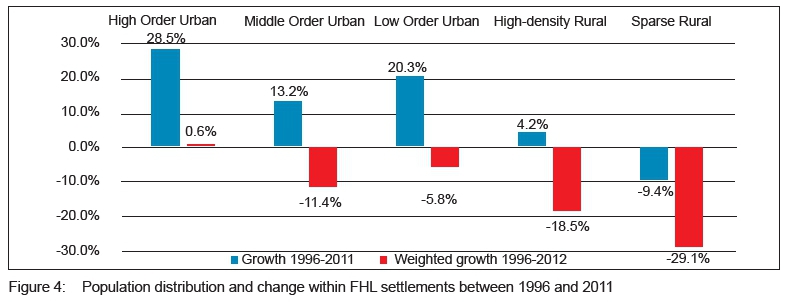
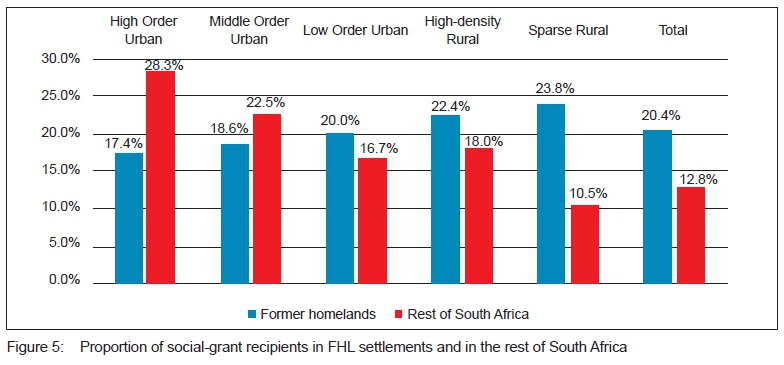
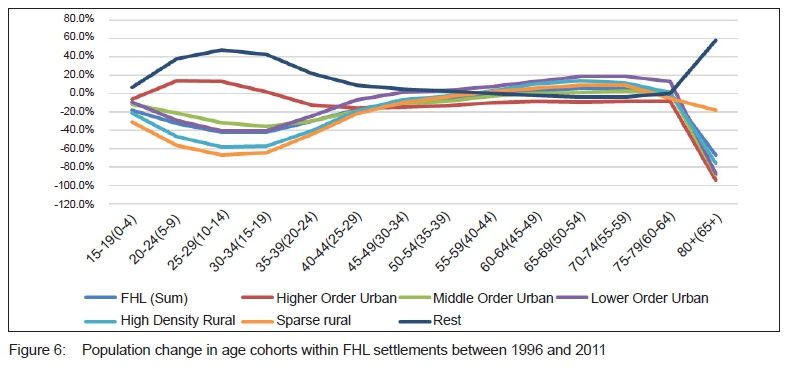
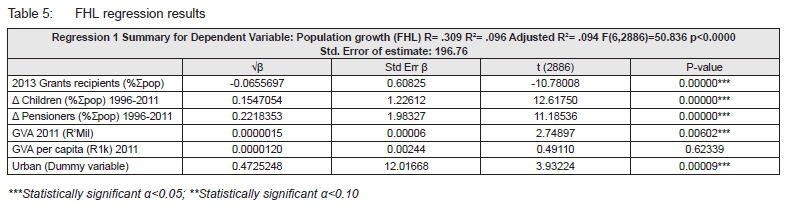
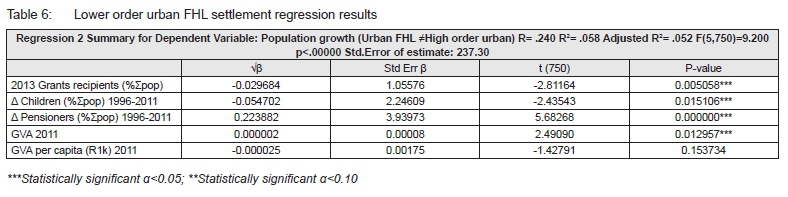
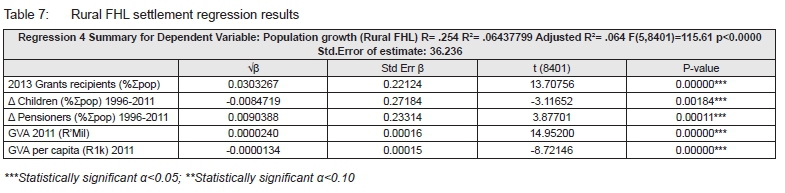
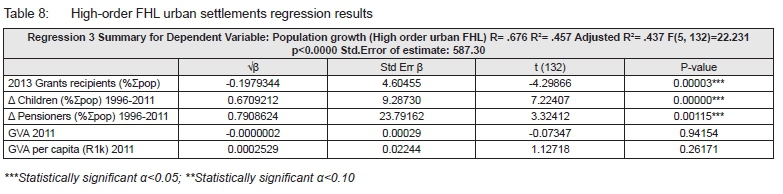
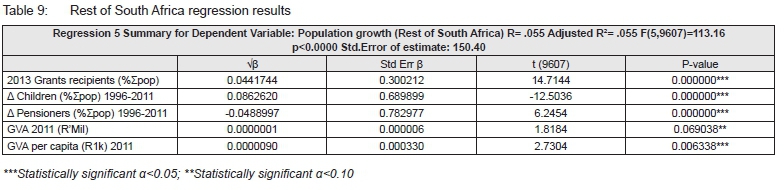
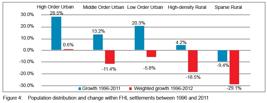
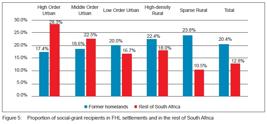
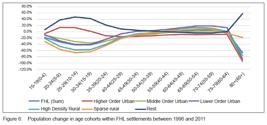
The former homelands and tribal authorities have large populations and high densities with low levels of economic activity and low employment. Population growth in these settlements is in contrast to expectations of population declines, due to urban migration. A possible reason could be the high level of dependency on social grants in the former homelands. The article analyses population growth rates, economic growth rates and the ratio of social grant recipients within former homeland settlements between 1996 and 2011. By using weighted multiple regression tests, the article determines whether the phenomenon of population growth, in the absence of significant economic activity, is linked to welfare transfers. The results indicate that population growth is the product of increases in age cohorts qualifying for social grants in rural areas, due to high birth rates and pensioner in-migration from urban areas. By contrast, other age cohorts show population declines.
Former homelands; population; social welfare; tribal authorities; urbanisation
 Thumbnail
 Thumbnail
 Thumbnail
 Thumbnail
 Thumbnail
 Thumbnail