Trends, obstacles, and opportunities for smart cities in urban space: A systematic literature review
Abstract
Urbanisation and digitalisation are two significant trends in social development nowadays. The 'smart city' has been introduced to address the conflict between citizens' needs and urban services. However, while much attention has been directed towards the technological aspects, fewer studies have explored their urban impacts. This article presents a systematic review of the existing empirical literature on smart cities in urban space, aiming to investigate the trends of the research, and emphasise obstacles and potential opportunities for smart cities in urban space. The review covers 53 articles obtained from the Web of Science (WoS) and Scopus databases and followed the Preferred Reporting Items for Systematic Review and Meta-Analysis (PRISMA) statement. The findings reveal three main trends (smart city as a technique, as a tool, and as a way), five major obstacles (technological hegemony; surveillance and privacy; data integration difficulties; marginalisation and regional inequality; technocracy and discrimination), and four potential opportunities (interdisciplinary collaboration; platform integrations; inclusive citizen engagement; localised adaptive approaches) related to the objectives. Furthermore, the article highlights several recommendations related to context-based responsive planning strategies for local needs; a comprehensive examination of user perception frameworks; the integration of participatory approaches for more inclusive cities, and standardised measurement protocols for information exchange. This review contributes to policymakers and urban planners in their practices, provides valuable guidance to academics in various fields, and delivers implications for applying smart city concepts in the Global South and other developing countries.
Smart cities; urban space; PRISMA; systematic review
Abstract
Verstedeliking en digitalisering is tans twee belangrike neigings in sosiale ontwikkeling. Die 'slim stad' is bekendgestel om die konflik tussen die behoeftes van inwoners en stedelike dienste aan te spreek. Hoewel baie aandag aan die tegnologiese aspekte gegee is, is minder studies gedoen oor die impak daarvan op stedelike ruimtes. Hierdie artikel bied 'n sistematiese oorsig van bestaande empiriese literatuur oor slim stede in stedelike kontekste, met die doel om navorsingstendense te ondersoek, sowel as om hindernisse en potensiële geleenthede vir slim stede uit te lig. Die oorsig sluit in 53 artikels, verkry uit die Web of Science (WoS) en Scopus-databasisse, en volg die PRISMA-riglyne vir sistematiese oor-sigte en meta-analise. Die bevindings identifiseer drie hoofneigings (die slim stad as tegniek, as hulpmiddel en as benadering); vyf belangrike hindernisse (tegnologiese oorheersing; toesig en privaatheid; probleme met data-integra-sie; marginalisering en streeksongelyk-heid; tegnokrasie en diskriminasie), en vier moontlike geleenthede (interdis-siplinêre samewerking; platform-inte-grasie; inklusiewe burgerbetrokkenheid, en plaaslik-geskikte aanpassingsbena-derings). Die artikel maak ook verskeie aanbevelings, insluitend kontekssensi-tiewe beplanningsstrategieë wat plaas-like behoeftes aanspreek; deeglike evaluering van gebruikerspersepsies; deelname-gebaseerde benaderings vir meer inklusiewe stedelike ontwikkeling, en gestandaardiseerde meetprotokolle vir inligtingsuitruiling. Hierdie oorsig bied waardevolle insigte vir beleidmakers en stedelike beplanners, akademici en die toepassing van slim stad-konsepte in die Globale Suide en ander ontwikkelende lande.
Abstract
Ho atamela ha batho litoropong (urbanisation) le ho tsoela pele ha theknoloji (digitalisation) ke mekhoa e meholo e hlahellang nts'etsopeleng ea sechaba matsatsing ana. Khopolo ea "toropo e bohlale" e hlahisitsoe e le mokhoa oa ho rarolla likhohlano tse teng pakeng tsa litlhoko tsa baahi le litsebeletso tsa litoropo. Leha ho le joalo, leha ho e-na le tlhokomelo e ngata e lebisitsoeng likarolong tsa theknoloji, liphuputso tse fokolang li shebane le tsusumetso ea tsona tikolohong ea litoropo. Sengoloa sena se fana ka tlhahlobo e hlophisitsoeng ea lingoliloeng tsa liphuputso tse teng mabapi le litoropo tse bohlale libakeng tsa litoropo, ka sepheo sa ho hlahloba mekhoa ea lipatlisiso le ho totobatsa litSitiso le menyetla e ka bang teng. Tlhahlobo ena e akaretsa lingoliloeng tse 53 tse fumanoeng ho Web of Science (WoS) le Scopus, 'me e latela melaoana ea PRISMA bakeng sa tlhahlobo ea lingoliloeng. Liphetho li senotse mekhoa e meraro e meholo (toropo e bohlale e le mokhoa, e le sesebelisoa, le e le tsela), litsitiso tse hlano (ho busoa ke theknoloji; tlhokomelo e feteletseng le boinotSi; mathata a kopanyo ea data; khethollo ea libaka le ho se lekane; puso ea litsebi le khethollo), le menyetla e mene (ts'ebelisano pakeng tsa lits'ebeletso tse fapaneng; kopanyo ea liforomo; ho kenyeletsoa ha baahi ka botlalo; le mekhoa e ikamahanyang le maemo a lehae). Tlhahlobo ena e fana ka likeletso bakeng sa meralo ea maemo a lehae e arabelang litlhoko tsa baahi, ho hlahloba ka botebo maikutlo a basebelisi, ho kenyelletsa mekhoa ea boitokisetso ba sechaba, le ho theha litekanyo tse tloaelehileng bakeng sa phapanyetsano ea boitsebiso. Sena se thusa ba etsang melao le bahlophisi ba litoropo, le barutehi, haholoholo linaheng tse ntseng li hõla.
1. INTRODUCTION
Urbanisation and digitalisation have emerged as two 'megatrends' nowadays, presenting challenges across social, cultural, and urban domains (Kapoor, Bansal & Jain, 2020; Jedlinski & Sosik-Filipiak, 2022). In response to issues such as crime, congestion, and pollution, cities are increasingly striving to enhance their efficiency and sustainability through smarter approaches (Abdelkarim et al., 2023; Biloria, 2021).
As smart cities become increasingly prevalent to address the conflict between citizen needs and urban services, related approaches will inevitably be encountered in diverse urban environments (Odufuwa et al., 2018). Systems such as sensors will transform the fabric of urban spaces and influence users' perceptions (Abdelkarim et al., 2023). This transformation extends to the spaces' characteristics and users' lifestyle, thereby converting urban spaces into venues for political, cultural, and social interactions (Aminah, 2021). The blurring of boundaries ultimately alters the original sense of place.
However, most of the literature on smart cities has focused on data-driven approaches (Biloria, 2021; Van Ameijde et al., 2022), leaving a gap in the role of urban spaces in the development of smart cities. Therefore, a comprehensive study of smart city development trends, particularly in the fields of urban design and planning, is imperative. Specifically, from an urban perspective, the evolution of smart cities significantly influences the relationships among citizens, urban spaces, technologies, and public awareness (Borruso & Balletto, 2022; Jedlinski & Sosik-Filipiak, 2022). Consequently, it is essential to identify the obstacles and challenges encountered in contemporary cities and to seize potential opportunities to enhance people's quality of life and foster a stronger sense of place.
It is also noted that the existing literature often reflects a Global North orientation and tends to prioritise technical solutions over spatial and social complexities (Marques, 2021). This limits its applicability in more diverse urban contexts, especially in the Global South, where urban forms, governance structures, and socio-economic realities may differ significantly (Alizadeh & Prasad, 2024).
Therefore, this research article aims to analyse the existing literature on smart city practices within urban spaces. The objective of the systematic review is twofold. First, to review the current research trends regarding smart cities in urban space; secondly, to identify the obstacles and challenges encountered in the construction of spaces within contemporary cities. This study reviews and synthesises scientific records to identify, select, appraise, and integrate relevant studies for recommendations and implications for future research on smart cities practices. The findings attempt to contribute to decision-makers and urban planners in the development of smart cities, particularly in the Global South and developing countries.
2.1 Smart city and smart cities
The concept of the 'smart city' originated in the 1990s, when the emerging technologies significantly impacted urban and social development (Wang, Zhu & Du, 2024). In response, the smart city emerged as a solution for urban areas to address urban problems such as traffic congestion and air pollution through the Internet of Things (IoT) (Giffinger et al., 2007; Hoang, 2021). However, the majority of existing literature indicates that there is no universally accepted definition of a smart city, as smart city models focus on different aspects, depending on the context, user needs, and political system (Borruso & Balletto, 2022).
In light of the aforementioned, several terms have been introduced, such as 'wired city', 'digital city', 'sustainable city', and 'universal city', which are sometimes used interchangeably with 'smart city' (Thompson, 2016; Ghani Khan, Elhadef & Mehmood, 2023; Prabowo et al., 2023). 'Wired city' is used to describe highly connected urban areas through Information and Communication Technologies (ICT) (Papa, Gargiulo & Galderisi, 2013). 'Digital city' involves the virtual reconstruction of cities, using digital technologies (Hollands, 2008). In contrast, 'sustainable city' emphasises environmental sustainability (Ahvenniemi et al., 2017), whereas a 'universal city' focuses on accessibility (Singh et al., 2022). It is evident that these terms have different definitions and meanings, indicating different aspects of urban innovation associated with smart cities (Firmansyah et al., 2019). Therefore, to ensure the consistency and credibility, this article uses the term 'smart city' as the main reference point throughout the discussion.
2.2 Factors of smart cities
The discussion of factors influencing smart cities in urban spaces is multifaceted. From a policy perspective, the triple and quadruple helix models support the importance of human factors, including behaviours and interactions between citizens, businesses, academia, and government (Thompson, 2016; Daher, Kubicki & Guerriero, 2017; Han et al., 2023). Other studies concentrated on the technology-people and people-people interactions to facilitate effective support for planning processes (Lim et al., 2018; McKenna, 2020; Punt et al., 2020). Rahman and Ufiteyezu (2023) further subdivided it into three categories: infrastructure, devices, and internet. This highlights the physical carriers, revealing the importance of urban spaces. Moreover, the importance of urban management is also emphasised, with particular attention paid to the functionality of public spaces (Abdelkarim et al., 2023).
These discussions collectively highlight the intricate dynamics between people, technology, urban space, and process within cities. However, previous research has often neglected the role of urban spaces in this field. One critical shortcoming in the existing literature is the tendency to treat urban spaces as undifferentiated, ignoring the specific sociocultural, economic, and spatial contexts that shape the urban experience. Many smart city frameworks, particularly those influenced by the Euro-American body of knowledge, often adopt a generalised, one-size-fits-all approach to urban design and technological integration (Alizadeh & Prasad, 2024). This overlooks the diverse realities of urban environments, which vary widely across different regions, particularly between the Global North and the Global South.
Research has shown that the lack of attention to the differentiated nature of urban spaces leads to the imposition of generic technological solutions that may not be suitable for all urban contexts. For example, the implementation of smart technologies in the Global South requires careful consideration of cultural, social, and physical dynamics, as these factors often influence the success or failure of such initiatives (Marques, 2021). Therefore, recognising the hybridity of urban spaces, where digital, physical, and social elements intersect, is essential for developing successful smart city solutions. This is the main focus of this article.
2.3 Urban space in smart cities
Urban space has historically been inextricably linked to technological evolution. It serves as the spatial manifestation of both 'daily life' and 'social life', exerting a deep influence on the attitudes, behaviours, and values of the citizens (Zgórska, Kamrowska-Zaluska & Lorens, 2021; Wang et al., 2024). Nowadays, the information society is reconfiguring the physical structure of the city, transforming it into a meeting place for "politics and culture, social and individual spheres, and expressive and instrumental space" (Aminah, 2021: 222).
In the context of smart cities, Harrison and Dourish (1996) have categorised the space into three types, namely material, virtual, and hybrid. Wang et al. (2024) expressed a similar view, defining the spaces as physical, information, and social space. These frameworks reveal that urban space extends beyond tangible form, encompassing digital and social dimensions that interact in complex ways. In this context, urban space becomes relational beyond traditional material considerations, emerging from interactions among individuals, communities, and digital infrastructures. The integration of smart technologies redefines urban spaces through physical layout, as well as through dynamic social networks and digital connectivity.
As stated earlier, the four factors of smart cities include people, technology, urban space, and processes. This implies that technological advancement is inextricably linked to the evolution of urban space through interactions, which, in turn, reconfigure the physical structure and social functions of cities. It is, therefore, necessary to integrate smart city characteristics at all levels of the urban environment, thereby transforming the city's identity. This provides the requisite theoretical background for a comprehensive understanding of the evolution path of smart cities in urban space and offers a scientific foundation for future policies and practices. In this study, urban space as the research focus is defined as the dynamic interaction zone where physical form, digital networks, and social activities converge and evolve through smart technologies.
3. METHODS
The study aims to provide an initial understanding of the trends, challenges, and opportunities of urban spaces within contemporary cities. The authors employed the Preferred Reporting Items for Systematic Review and Meta-Analysis (PRISMA) statement, which included information sources (Web of Science and Scopus databases), eligibility criteria, the systematic review process (identification, screening, and eligibility), as well as data extraction and synthesis.
3.1 PRISMA
PRISMA serves as a reporting guideline designed to identify future research priorities, synthesise data for a comprehensive understanding, and formulate causal theories by identifying, selecting, appraising, and synthesising previous studies across various fields (Llorens-Gámez et al., 2022). Raman, Hutagalung and Abdul Rahman (2022) also support the fact that systematic reviews facilitate the identification of trends and gaps, by analysing the existing literature. In this article, the researchers conducted a thorough investigation of topics related to trends, obstacles, and opportunities for smart cities in urban spaces, providing valuable information for future reviews.
3.2
Information sourcesThis review used the Web of Science (WoS) and Scopus databases. The WoS database is renowned for its extensive repository across various disciplines (Shaffril, Krauss & Samsuddin, 2018), including urban studies, environmental sciences, and urban planning. The Web of Science Core Collection served as the primary information source for this review. Furthermore, the Scopus database covers peer-reviewed publications in various scientific, technical, and social science flelds (Sapiyi, Suradi & Mustafa, 2022). The selection of both WoS and Scopus ensures the inclusion of high-impact publications in this study. However, other databases such as Google Scholar and PubMed were excluded, due to no peer-review process, no relevant papers, or not supporting search strings (Campoverde-Molina, Lujan-Mora & Garcia, 2020).
3.3
Inclusion and exclusion criteriaSeveral criteria were established for this study. The first criterion pertained to language. To avoid potential biases and translation difficulties, non-English literature was excluded, limiting the review to English records. The second criterion focused on document type. To ensure the rigour of the research, only peer-reviewed articles were included, while proceedings, book chapters, and other types were excluded, due to the challenges in assessing their quality in the absence of peer review (Jang Jaya et al., 2023). Many systematic reviews also consider the timeline of publications. Considering the 'smart city' as an emerging concept, all publications from the earliest date of publication up to the date of retrieval (11 July 2024) were included in the study.
3.4
Systematic review processThe review process involved four stages. The flrst step was to determine the keywords in the search process. In this phase, the Boolean query method was employed to precisely and accurately locate documents for screening. As discussed in the previous section, only peer-reviewed articles that mentioned the term 'smart city' were included in the study. Other similar terms were excluded from this review, as they may have distinct focuses and objectives. In addition, 'urban space' was considered another relevant keyword.
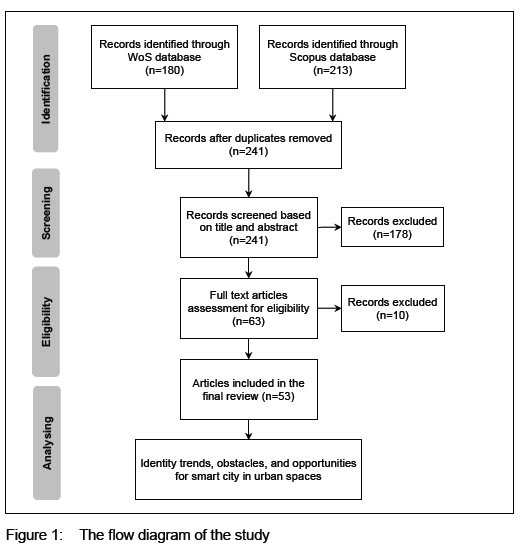
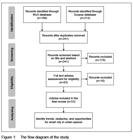
After removing duplicates, a total of 241 unique records were identified for the screening process. These records were reviewed based on their titles and abstracts, resulting in the removal of 178 records. Following the screening, the next step was the eligibility assessment, during which 63 papers were evaluated in full text to ensure that they met the criteria of being valid records, discussing topics related to smart cities, and focusing on urban spaces. During this step, 10 records were removed, due to a lack of relevance, leaving a total of 53 articles for the final analysis (Figure 1).
3.5 Data extraction and synthesis
The remaining articles were synthesised, focusing on the proposed objectives. Appropriate themes and sub-themes were identified by initially reading titles and abstracts, followed by a second careful reading that coded the corresponding sentences and paragraphs.
4. RESULTS
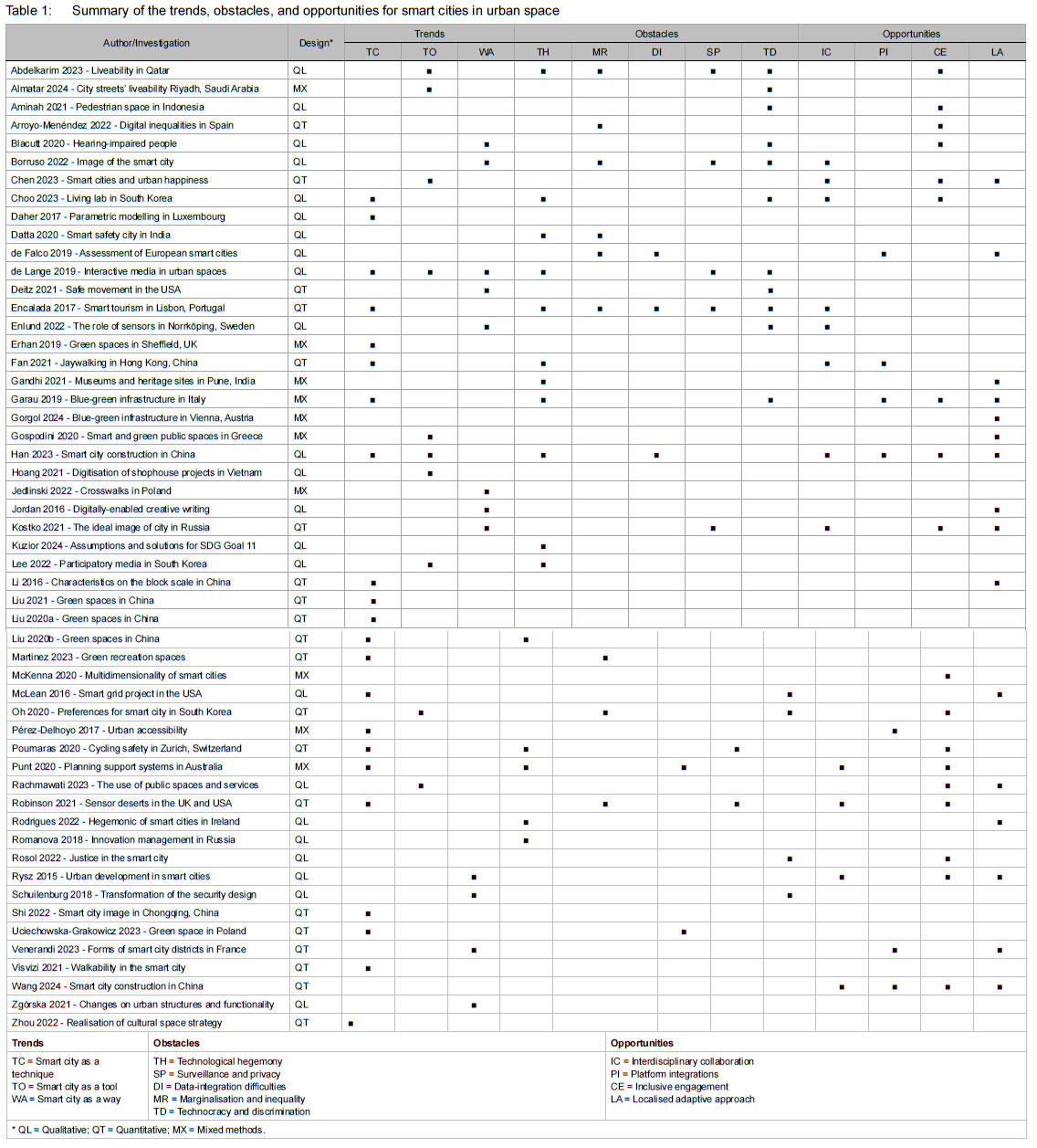
According to the objectives, the review concentrated on three primary themes, encompassing a total of 12 sub-themes: research trends (three sub-themes), obstacles (five sub-themes), and opportunities (four sub-themes) related to smart cities in urban space (see Table 1). The findings provided a thorough analysis of contemporary smart city practices within urban spaces.
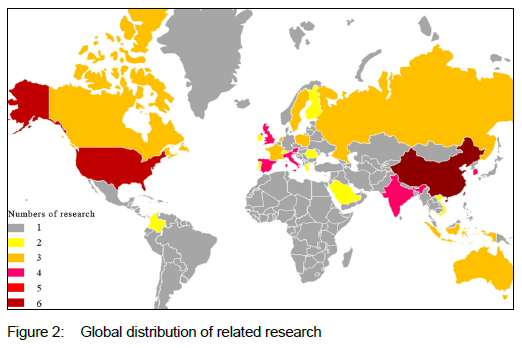
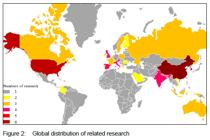
Figure 2 illustrates the global distribution of related research in this study. It reveals that China and the United States have the highest concentration of research, followed by several European countries, South Korea, and India, with moderate levels of academic contributions. However, countries in South America, Africa, and parts of Asia show minimal documented studies. This distribution suggests a strong research focus in technologically advanced and rapidly urbanising nations, while regions with lower engagement may reflect limited academic resources or emerging interest in smart city development (Alizadeh & Prasad, 2024).
4.1 Trends for smart city in urban space
In this section, the current trends of smart cities in urban spaces are identified. These trends reflect the evolving nature of urban environments and highlight the dynamics between people, technology, urban space, and process within cities.
4.1.1 Smart city as a technique to identify problems in urban space
The first approach represents an innovative strategy that leverages technologies such as big data and social media to collect and analyse information on urban life, including pedestrian flow, housing, and transportation (Rodrigues et al., 2022; Han et al., 2023). In this context, a smart city is perceived as a means for authorities to identify problems within urban spaces. Open-source data is widely used for urban development. In Italy, Geographic Information System (GIS) was employed to process instrumental query metrics (Garau & Annunziata, 2019). In a separate study, Pérez-Delhoyo (2017) used radio frequency (RF) and Global Positioning System (GPS) to analyse urban accessibility. Furthermore, computing technologies such as virtual reality (VR), multi-agent simulation (MAS), and OpenStreetMap have been applied to spatial analysis and geospatial and statistical modelling (Li et al., 2016; Martinez & Mahajan, 2023). Sensor data has also been employed to characterise the urban environment to support decision-making (Encalada et al., 2017; Erhan et al., 2019; Robinson & Franklin, 2021; Zhou, 2022). A study in Poland advocated for the data sets integration to develop new tools with existing data (Uciechowska-Grakowicz et al., 2023). In addition, parametric modelling was used to assist architects and policymakers in strategic planning (Daher et al., 2017). In this context, both the government and business sectors have demonstrated significant interest. Han (2023) explored how the government dominates urban development through an integrated platform. De Lange (2019) also elucidated how governments and businesses use data to inform decision-making.
Apart from objective data, subjective input also plays a crucial role, highlighting citizen participation (Erhan et al., 2019). South Korea (Choo et al., 2023), Ireland (Rodrigues et al., 2022), and the United States (McLean et al., 2016) have launched 'urban labs' or 'living labs', where cities are regarded as nodes that guide citizens as participants in the reconfiguration of social, technological, and spatial aspects. Citizens can also be viewed as end-users, providing valuable data on urban infrastructure and services. In Zurich, a mobile application enabled participatory spatiotemporal perception, engaging users in public affairs through online deliberation (Pournaras, 2020). Fan and Loo (2021) also advocated for the use of smartphone applications to understand and promote street life.
Furthermore, some studies integrate subjective and objective data through triangulation. This approach can mitigate potential errors that may arise from a single data set and compensate for the inaccessibility of data, due to technical and theoretical constraints. Shi and Song (2022) introduced deep learning tools to identify and classify images, thereby understanding urban imagery. Visvizi (2021) examined the walkability of streets, by incorporating both objective and subjective data into a model index.
In short, these advancements suggest the transformative potential of integrating diverse data sources and technological innovations to improve urban planning strategies.
4.1.2 Smart city as a tool to enhance the quality of life in urban space
Smart cities serve as not only data-driven solutions, but also platforms for enhancing interaction. "Media city" has been realised through interactive touchscreen information kiosks that promote engagement between users and public spaces (Lee & Lee, 2022). The "smart" and "green" design principles proposed by Greek researchers advocate for amenities such as Wi-Fi zones and touch screens to encourage green spaces use (Gospodini & Manika, 2020).
This concept is further exemplifled in the "Interactive Art City", where multimedia art fosters interaction with the audience (De Lange et al., 2019).
In addition, smart services and facilities integrated into urban environments are transforming people's lifestyles. Abdelkarim (2023) developed a framework for smart, liveable public spaces, validating the impact of embedded technologies on the quality of life. Concurrently, Almatar (2024) and Hoang (2021) discussed the potential of smart platforms to improve liveability, speciflcally regarding streets and traditional shophouses. Oh (2020) further examined residents' quality of life from three perspectives: technology, facilities, and services, revealing that citizens are particularly interested in smart initiatives that enhance their safety, comfort, and convenience. This argument is supported by Chen (2023) and Rachmawati (2023), highlighting the essential role of technological innovation in improving public safety, offering efficient services, and enhancing environmental sustainability, thereby increasing the quality of life.
In short, a smart city aims to optimise urban living by integrating data-driven solutions, interactive spaces, and advanced technologies. This integration is designed to improve the quality of life and foster interactions.
4.1.3 Smart city as a way to influence people's perception of urban space
Technological empowerment has transformed the urban landscape and serves as a way to influence perceptions and behavioural patterns. Blacutt (2020) and Deitz (2021) identified the significance of technological support and relevant geographic data in fostering a sense of security for people with disabilities, from an inclusive perspective. Similarly, Schuilenburg (2018) highlighted the impact of smart architecture on emotional responses, which, in turn, affects tourist behaviour. Jedlinski and Sosik-Filipiak (2022) explored 'iGen', those born between 1995 and 2012, examining how their lifestyle has been shaped by the internet. Enlund (2022) illustrated how social media and other digital platforms influence spatial imagination.
Within this nexus, emerging ideologies and imagery are increasingly being visualised, ultimately shaping the physical fabric of a new lifestyle (Rysz & Mazurek, 2015). For example, the 'Playful City' project invited citizens to co-create visions for the future city through gamification, a form of interactive engagement that involved people directly in the development of their urban environments (De Lange et al., 2019). This active participation in shaping urban spaces demonstrates the connection between technology, individuals, and their surroundings.
Thus, smart cities are more than simply new design paradigms; they represent the materialisation of societal aspirations, leading to the creation of new urban images. By using data-driven solutions, smart cities can transform the physical space and engage citizens in meaningful ways, reshaping their interactions and perceptions of their urban surroundings.
4.2 Obstacles for smart city in urban space
Current trends in smart cities reveal potential challenges within urban environments. These challenges encompass data privacy concerns, social inequalities, and governance problems. It is essential to understand these obstacles, in order to promote sustainable and inclusive urban living.
4.2.1 Technological hegemony
Technological hegemony has become a significant obstacle in contemporary society. Abdelkarim (2023) criticised the technological and instrumental approach, emphasising citizen participation. Romanova (2018) advocated for the accessibility and comfort of citizens in urban spaces, rather than technocratic minimalism that neglects essential factors. Similar sentiments were expressed in the living labs of South Korea (Choo et al., 2023). Meanwhile, Lee (2022) noted that such solutions often overlook software considerations, which are forcefully integrated into cities with diverse textures, resulting in suboptimal efficiency.
These solutions often result in unforeseen consequences. For instance, objective data may not align with subjective preferences of citizens. Digital solutions often struggle to accommodate individual preferences, which can lead to discrepancies between proposed principles and actual outcomes (Pournaras, 2020). Fan and Loo (2021) identified additional limitations, including personal characteristics such as age and gender, subjective factors such as the sense of safety and comfort, and the standardisation and unification of these attributes. In this context, Punt (2020) advocated that to mitigate such issues, it is crucial to foster dialogue between developers and users, as well as among users themselves, in order to improve the adequacy and granularity of data.
4.2.2 Marginalisation and regional inequality
Unequal access presents another challenge. Abdelkarim (2023) affirmed the importance of information accessibility, by proposing a framework for liveability. Datta (2020) further elucidated the potential violence that may arise from disparities in infrastructure, highlighting the technology gap experienced by marginalised groups within the city. This aligns with Encalada et al.'s (2017) assertion that the interaction between infrastructure deficiencies and marginalised communities exacerbates the digital divide. Conversely, smart city initiatives in Europe have tended to concentrate on the core areas of cities, revealing an uneven distribution of interests and resources (De Falco et al., 2019). This spatial segregation, in turn, intensifies the boundaries within social spaces (Arroyo-Menéndez et al., 2022). From a management perspective, Oh (2020) suggested that the reliability and durability of public entities should be taken into account.
Another concern is the inequity in data access. Martinez and Mahajan (2023) highlighted the lack of data accuracy, suggesting that disparities in data may arise from resident engagement and regional differences. Similarly, Robinson and Franklin (2021) introduced the concept of "sensor deserts", pointing out social and spatial imbalances.
4.2.3
Data integration difficultiesWhile the aforementioned statements supported the notion of insufficient data acquisition, De Falco et al. (2019) presented a contrasting perspective. They argued that, even if resources are unevenly distributed, urban peripheries should not necessarily be labelled as "deserts". On the contrary, these peripheral areas often possess substantial urban infrastructure but encounter challenges in accessing and using it, due to the fragmented nature of these subsystems. As Han et al. (2023) described, these "information cocoons" impede the enhancement of management systems. They also emphasised the need for highly integrated platforms that connect stakeholders (Encalada et al., 2017). Furthermore, Punt et al. (2020) and Uciechowska-Grakowicz et al. (2023) respectively advocated for data integration in software support and model development.
4.2.4
Surveillance and privacyHowever, the openness and integration of data also present challenges related to security, privacy, and transparency. In Lisbon (Encalada et al., 2017) and Zurich (Pournaras, 2020), questions were raised regarding information governance. De Lange et al. (2019) discussed how the control and transparency of open datasets could influence individuals' perceptions and self-orientation. It has also been suggested that new technologies could foster resentment and erode trust among residents (Kostko & Pecherkina, 2021). Similarly, while acknowledging privacy concerns, the authors recognised the positive impacts and potential benefits of these technologies. Smart systems such as cryptography, blockchain technology, and biometric identification have been advocated as components of public privacy policies to enhance security (Abdelkarim et al., 2023).
4.2.5 Technocracy and discrimination
The application of innovations significantly influences the lifestyles and social status of urban residents. Aminah (2021) suggested that urban management and official surveillance undermine the power of the poor, due to their conflicting interests. Similarly, in Italy, innovations driven by political and economic motives have marginalised the needs of children, particularly in urban planning and public space design, where child-friendly infrastructure was overlooked (Garau & Annunziata, 2019). Controversies also arose in the United States, where a lack of data regarding people with disabilities led to the neglect of their specific needs in smart city developments such as inadequate accessibility features and the absence of inclusive services (Deitz et al., 2021). This situation has led to new forms of discrimination, extending beyond marginalised communities to encompass the welfare, needs, and rights of all individuals, further expanding social inequalities in urban environments (Encalada et al., 2017; De Lange et al., 2019; Blacutt & Roche, 2020).
Lack of knowledge can also lead to exclusion. Oh (2020) found that citizens' lack of confidence could potentially undermine participation. This finding echoed similar results from South Korea's 'Living Labs', where traditional citizen engagement methods such as surveys often resulted in monotonous and passive participation (Choo et al., 2023). In addition, insufficient participation could lead to biases that prioritise personal needs over broader issues. McLean et al. (2016) argued that positioning citizens as consumers could result in incomplete participation, thereby exposing power dynamics and inequalities.
4.3 Opportunities for smart city in urban space
While acknowledging the challenges, it is crucial to recognise the promising opportunities. These include collaboration, integration, participation, and localisation. By leveraging these opportunities, smart cities can move toward a more inclusive and responsive future.
4.3.1 Interdisciplinary collaboration
From Korea to Europe, from tourist hubs to metropolises, researchers have discussed the crucial role of collaboration among various stakeholders, including citizens, experts, policymakers, and technology developers. Punt (2020) highlighted that the dialogue between citizens and developers may enhance the effectiveness of smart tools. Rysz and Mazurek (2015) underscored the importance of collaboration between government and community. Building on this, Han et al. (2023) further stressed the significance of collective efforts among government, technology, and society, viewing smart cities as a process of co-evolution among diverse stakeholders. Choo et al.
(2023) introduced a new dimension, by emphasising the role of citizens while also asserting the necessity of domain experts. Encalada et al. (2017) affirmed the importance of mutual information exchange and collaboration between governments and researchers for the assessment of tourist attractions. Fan and Loo (2021) proposed new opportunities for collaboration among academia, industry, and government to enhance urban interventions.
Dialogue and collaboration are essential for the development of smart cities. Similarly, cross-regional and interdisciplinary cooperation plays a significant role in this process. Kostko and Pecherkina (2021) and Wang et al. (2024) analysed how inter-regional synergies can enhance collaboration. Enlund et al. (2022) advocated for the integration of technology across various spatial levels, ranging from the individual, familial, and community levels to the city, regional, national, and global scales.
4.3.2
Platform integrationsCollaboration among officials, experts, citizens, and technologists is a critical factor. Within this context, the integration of platforms becomes essential. De Falco et al. (2019) emphasised that merging social and technological aspects could mitigate spatial segregation issues, thereby addressing housing challenges in metropolitan areas. From the perspective of children's activities, Garau and Annunziata (2019) argued that integration in the planning process signifies the recognition of children's rights and contributes to the development of their personalities.
Data integration has also facilitated academic research. Fan and Loo (2021) confirmed that high computational power and advanced algorithms allow researchers to extract fine-grained spatiotemporal patterns, providing new methodologies across various disciplines. For instance, data vendors have made pre-processed and anonymised data sets publicly accessible. This openness lowers technical barriers and enables researchers to directly incorporate these data sets into studies. Venerandi et al. (2023) advocated for a focus on integrating indicators at a finer spatial granularity to expand research areas and outcomes. Han et al. (2023) criticised the self-serving behaviour of governments in the competition for data ownership, which has resulted in delays. This criticism indirectly highlights the current priority of data integration and consolidation.
4.3.3
Inclusive citizen engagementPromoting meaningful citizen engagement is another important aspect. Punt et al. (2020), Chen (2023), and Han et al. (2023) elucidated the benefits of citizen participation in creating public value. Aminah (2021) argued for street vendors' access to pedestrian areas as a realisation of cultural civility. Blacutt and Roche (2020) identified "DeafSpace" as an inclusive component. Similarly, advocating for children's rights represents a shift towards broader citizenship (Garau & Annunziata, 2019). Wang et al. (2024) further proposed social welfare programmes for the elderly population.
Arroyo-Menéndez et al. (2022) emphasised the need to develop inclusive smart city initiatives that minimise additional suffering, particularly among groups most affected by the digital divide, to ensure that they can also benefit from the opportunities these technologies offer. Similar sentiments were echoed by McKenna (2020), who explored that citizen engagement is crucial for developing a sense of ownership and enhances the effectiveness of these initiatives. In the context of Russian cities, Kostko and Pecherkina (2021) examined urban identities and the acceptance of smart development. Their study revealed that, when citizens' perceptions align with the smart city's vision, engagement increases, thus leading to more successful adoption of smart initiatives. However, it is crucial to implement policies that incentivise participation. For instance, token-curated registries (Pournaras, 2020), the gamification of public spaces (De Lange et al., 2019), and citizen science initiatives (Robinson & Franklin, 2021) promote engagement through incentives, thereby enhancing residents' understanding and awareness of smart cities. Other potential avenues include open dialogue with officials and institutional measures (Rysz & Mazurek, 2015; Oh, 2020; Choo et al., 2023).
4.3.4 Localised adaptive approaches
Han et al. (2023: 1) explicitly pointed out that "[t]here is no one-size-fits-all approach to smart city construction". Localised adaptive design provides a pathway to support engagement by designing urban spaces to the specific needs and preferences of local communities, thereby promoting inclusivity and sustainability (Chen, 2023). The authors encouraged each city to explore the most suitable path based on its cultural background and potential. This perspective aligns with De Falco et al.'s (2019) advocacy for flexible approaches that consider historical and cultural contexts, as well as localised management methods. Li et al. (2016) emphasised protecting and inheriting local characteristics for sustainable development. Furthermore, Rysz and Mazurek (2015) and Rachmawati et al. (2023) highlighted the discrepancies in urban requirements, diverse spatial configurations, and governance structures, while Wang et al. (2024) elaborated on the disparities in resource availability.
In addition, Garau and Annunziata (2019) and Rodrigues et al. (2022) analysed the adaptability of smart cities in various environments. Similarly, Gorgol (2024) emphasised the importance of greenfield and brownfield developments in shaping urban identities. These spaces, influenced by historical and cultural contexts, are more deeply integrated into urban identities, due to their appealing characteristics, as posited by Gospodini and Maniki (2020) and Jordan (2016). Meanwhile, as McLean et al. (2016) and Gandhi et al. (2021) noted, current smart cities often follow a 'replicable model', which is not an effective approach to addressing urban challenges. Therefore, localised adaptive design presents a significant opportunity nowadays.
5. DISCUSSION
As a response to urbanisation, the smart city is emerging as a means to facilitate the efficient functioning of society, while making significant contributions to environmental, economic, and other concerns (Liu et al., 2020). These innovations are subtly integrated into our daily lives, transforming the way in which we perceive and interact with our surroundings (Uciechowska-Grakowicz et al., 2023; Venerandi et al., 2023). However, it is crucial to emphasise that the primary goal of the smart city is to enhance the quality of life (Abdelkarim et al., 2023). This article presents a systematic review of 53 studies from the WoS and Scopus databases to investigate research trends and highlight the challenges and potential prospects for smart cities in urban spaces. The reviewed literature can be categorised into three main themes, with a total of 12 sub-themes identified, revealing the following findings.
5.1 Trends for smart city in urban space
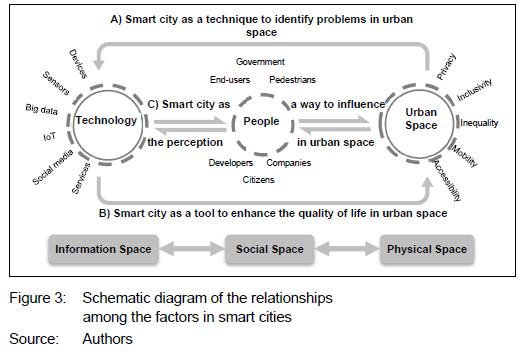
The study emphasises three major trends in research (Figure 3). The predominant trend is the utilisation of techniques such as big data and social media to collect and analyse data from various aspects of urban life. This approach enables urban planners and policymakers to effectively identify and address urban issues, ultimately enhancing the quality of life for citizens. Scholars and governments are employing computational technologies, including open-source data, sensor data, as well as virtual and augmented reality, for spatial analysis (Li et al., 2016; Encalada et al., 2017; Garau & Annunziata, 2019; Zhou, 2022; Martinez & Mahajan, 2023). Meanwhile, the integration of multiple data sets and the application of parametric modelling methods are improving strategic planning and decision-making processes (Daher et al., 2017; Uciechowska-Grakowicz et al., 2023). By synthesising diverse data sources, these methods provide planners with more holistic insights into urban systems, enabling comprehensive strategies that better align with dynamic urban processes (De Lange et al., 2019; Han et al., 2023). Furthermore, participatory planning through 'living labs' supports collaborative interventions for innovative urban solutions (De Lange et al., 2019; Rodrigues et al., 2022; Choo et al., 2023). Subjective input data from citizens fosters planning initiatives that are grounded in the needs and aspirations of local communities (Erhan et al., 2019). Overall, this trend reflects advancements in data-driven approaches, computational tools, and participatory methods that are reshaping urban planning strategies. These innovations provide urban planners with comprehensive understanding for urban systems, promoting more inclusive and adaptive solutions that align with local needs.
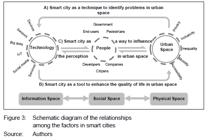
The second approach frames the smart city as an essential framework that integrates technology into public spaces to promote interaction and participation. Examples such as 'Public Play Space' and 'Interactive Art City' demonstrate how interactive technology enhances the user experience in urban environments (De Lange et al., 2019; Gospodini & Manika, 2020; Lee & Lee, 2022). Furthermore, the incorporation of smart technologies, services, and facilities into urban areas is transforming lifestyles and highlighting the positive impact of embedded technology on residents' well-being (Oh, 2020; Abdelkarim et al., 2023; Han et al., 2023). This evolution emphasises the importance of a smart city in facilitating deeper connections between individuals and their environments, providing valuable insights for designing more interactive, inclusive, and responsive public spaces.
However, the third trend transcends a mere technological perspective, highlighting how the information revolution reshapes the relationship between individuals and information, profoundly impacting urban structures and influencing citizens' perceptions and actions. Studies indicate that technology can enhance the sense of security for marginalised groups such as the hearing impaired and disabled (Blacutt & Roche, 2020; Deitz et al., 2021), while also shaping the lifestyles of younger generations such as 'iGen' (Jedlinski & Sosik-Filipiak, 2022). Initiatives such as the 'Playful City' project demonstrate how citizen engagement can be fostered through gamification, realising innovative visions for future cities (De Lange et al., 2019). Smart cities encompass not only technology, but also societal dimensions. The interplay between emerging ideologies and images influences the formation of new lifestyles (Rysz & Mazurek, 2015; Jordan, 2016). These developments reflect aspirations, underscoring a comprehensive design approach (Venerandi et al., 2023). Overall, this reflects the dynamic interaction among technologies, people, urban spaces, and processes, fundamentally transforming perceptions, behaviours, and urban life. As a result, there is a need for new standards in urban planning and designing that prioritise strategies addressing emerging needs and visions, thereby ensuring resilient, inclusive, and supportive urban environments.
5.2 Obstacles for smart city in urban space
However, the rapid evolution of cities has also introduced a series of challenges. A significant challenge is technological hegemony, characterised by the imposition of standardised technological solutions that fail to consider the diverse needs and contexts of different regions (De Lange et al., 2019; Datta, 2020; Lee & Lee, 2022). This trend has led to the homogenisation of urban environments, overlooking the unique social and cultural fabric of each city (Gandhi et al., 2021; Han et al., 2023). Furthermore, the dominance of certain technologies neglects essential considerations of citizen interaction and participation, undermining the fundamental planning principles of inclusivity and sustainability (Abdelkarim et al., 2023; Choo et al., 2023). Compounding these issues is the widespread problem of marginalisation and inequality, where specific populations, particularly marginalised communities, encounter significant barriers to accessing and benefiting from smart city initiatives (Robinson & Franklin, 2021; Arroyo-Menéndez et al., 2022). This inequality exacerbates the digital divide and perpetuates existing social disparities, leading to further exclusion from essential urban resources (Encalada et al., 2017; De Falco et al., 2019; Datta, 2020).
Furthermore, the complexity of urban systems presents significant challenges in data integration and management. The fragmentation and isolation of data sources often impede efforts to develop holistic and interoperable management systems, hindering effective decision-making and resource-allocation processes (Encalada et al., 2017; Han et al., 2023; Uciechowska-Grakowicz et al., 2023). Meanwhile, advancements in smart technologies raise legitimate concerns regarding the collection, storage, and use of sensitive personal information, with growing apprehensions surrounding surveillance, privacy, and data security (Encalada et al., 2017; Pournaras, 2020; Robinson & Franklin, 2021). This situation poses a risk of eroding public trust, potentially weakening residents' acceptance of smart city initiatives designed to enhance their urban experience (De Lange et al., 2019; Abdelkarim et al., 2023).
This inadvertently perpetuates existing imbalances and discrimination, particularly against marginalised and vulnerable groups (Blacutt & Roche, 2020; Aminah, 2021; Deitz et al., 2021). From exclusionary planning practices to algorithmic biases embedded in decision-making processes, the implementation of smart cities has the potential to exacerbate social inequalities and further marginalise communities that are already deprived of their rights (Garau & Annunziata, 2019; Liu et al., 2020; Fan & Loo, 2021). Given these challenges, there is an urgent need for more inclusive and participatory approaches that prioritise equity, diversity, and social justice.
Several studies have identified additional potential challenges. The first is to cultivate citizens' digital literacy and capabilities to overcome the resistance of social conservatives (Enlund et al., 2022; Almatar, 2024; Wang et al., 2024). It is equally crucial for citizens to adapt to spatial diversity and enhance their sense of place, ensuring that the urban design reflects the identities and values of the communities (Jordan, 2016; Kostko & Pecherkina, 2021). Another is the lack of unified measurement standards, which hinders evaluation and information exchange for responsive urban policies (Gorgol, 2024). Finally, the gap between assumptions and implementation warrants attention (Kuzior, 2024). This gap may stem from issues related to technology, management, or policy, and it requires coordination among all parties involved.
5.3 Opportunities for smart city in urban space
Every cloud has a silver lining. The smart city concept highlights potential opportunities, with interdisciplinary collaboration being the most significant. Scholars and authorities emphasise the essential role of collective efforts that involve diverse stakeholders, including citizens, policymakers, academics, and developers (Fan & Loo, 2021; Choo et al., 2023; Han et al., 2023). Research from various countries supports the notion that smart city initiatives should be rooted in the actual needs and desires of communities to enhance their acceptability and effectiveness (Garau & Annunziata, 2019; Punt et al., 2020). In this context, the integration of platforms serves as a key driver, facilitating data exchange across different domains and promoting collaboration and resource availability (Fan & Loo, 2021; Wang et al., 2024). Bridging the social and technical domains addresses spatial segregation and fosters more comprehensive urban planning and management strategies (De Falco et al., 2019). However, the complex nature of data governance and privacy issues must be addressed to ensure that robust policies are implemented to protect the rights of urban residents (De Lange et al., 2019).
Simultaneously, inclusive citizen engagement presents a significant opportunity, with scholars advocating for residents to actively participate in decision-making processes. By fostering open dialogue, cities can harness the collective wisdom of their citizens to co-create solutions that address local needs more effectively (Oh, 2020; Abdelkarim et al., 2023; Choo et al., 2023). However, meaningful engagement also requires recognising the voices of underrepresented groups (Blacutt & Roche, 2020; McKenna, 2020; Aminah, 2021). In addition, localised adaptive approaches offer a promising avenue for achieving citizen-centric development, emphasising unique cultures, histories, and contexts (Li et al., 2016; De Falco et al., 2019; Han et al., 2023). Nevertheless, achieving such localisation requires a departure from the one-size-fits-all mentality and a shift towards more flexible and responsive planning strategies (McLean et al., 2016; Garau & Annunziata, 2019).
Moreover, new opportunities have been proposed such as researching innovative methods of urban embedding (Lee & Lee, 2022) and conducting mixed-methods research to standardise attributes (Chen, 2023; Venerandi et al., 2023).
6. CONCLUSION
This article analysed the concept of smart cities from an urban space perspective, highlighting current trends, potential obstacles, and future research opportunities in the urban planning and policymaking field. The development of smart cities has transitioned from a technology-driven approach to a human-centred methodology. This shift necessitates an examination of potential interactions and their effects on perception, behaviour, and lifestyle within the city. In response to this transition, urban planners and experts have implemented proactive measures; however, some underlying issues inevitably persist. Based on the review, the authors identified five primary challenges: technological hegemony, surveillance and privacy concerns, difficulties in data integration, marginalisation and regional inequalities, as well as technocracy and discrimination. Concurrently, to address these challenges, several opportunities for the future of smart cities were proposed, including interdisciplinary collaboration, platform integration, inclusive citizen participation, and localised adaptive approaches. The review also highlighted the need for future research to incorporate perspectives from the Global South and developing countries to minimise existing inequalities.
The study also presented several recommendations. First, the study highlighted the need for context-based approaches that address local needs, cultural nuances, and socio-economic realities. These approaches should consider specific urban issues such as applying smart technologies to energy efficiency, waste management, traffic systems, and urban design. It is equally important to acknowledge the limited research focused on southern and developing countries, where smart city initiatives often face significant obstacles. Vulnerable communities in these regions may struggle with issues such as weak governance structures, insufficient data systems, and a shortage of technical expertise. Without addressing these foundational barriers, smart city initiatives may unintentionally expand existing inequalities rather than deliver inclusive and equitable urban improvements.
Secondly, it emphasised the importance of user perception frameworks and called for a comprehensive examination of these paradigm shifts, which can inform more responsive planning practices.
Thirdly, urban planners should prioritise the integration of participatory approaches. This involves actively including the voices of all urban citizens, particularly underrepresented groups, in decision-making processes. This fosters a sense of belonging and enhances the effectiveness of urban initiatives.
Lastly, establishing standardised measurement protocols is vital for improving information exchange and enhancing data accessibility across urban sectors. Researchers in the field of urban planning should advocate for these standards to facilitate better coordination among stakeholders and support decision-making processes. This will contribute to the decision-makers and urban planners in the smart city development, especially from urban domains, while also providing valuable guidance to researchers across various disciplines and implications for applying smart city concepts in the Global South and developing countries.
7. LIMITATIONS AND RECOMMENDATIONS
This study has several limitations. First, while Scopus and WoS provide broad academic coverage, their indexing practices tend to prioritise journals from Western institutions. This may lead to an underrepresentation of insights from the Global South, which is noted as a limitation of this review.
Secondly, the eligibility process is subjective and may result in the omission of articles that could warrant further in-depth research.dd
In addition, the reliance on a Boolean string for search queries may exclude articles containing pertinent information. These limitations could introduce bias into the final dataset. Therefore, it is recommended that future studies broaden the literature search and research areas to enhance the investigation.
Future studies should be designed to address specific contextual nuances, with a particular focus on the unique challenges and opportunities present in developing countries. The rise of disruptive technological innovations marks a pivotal moment for these nations, offering them the potential to close the developmental gap that separates them from more advanced economies (Han et al., 2023). In this context, it is crucial to broaden the scope beyond traditional domains such as smart services and big data. Instead, a thorough examination of users' perceptual frameworks and emotional responses transformations is necessary, leading to a more inclusive and responsive urban planning. Moreover, including underrepresented voices and participatory strategies will address the potential for marginalisation in smart city development, contributing to resilient urban environments. Lastly, standardised measurement is essential for improving information exchange and data accessibility, which is vital for further research on urban policies and management.
REFERENCES
2. LITERATURE REVIEW
-
ABDELKARIM, S.B., AHMAD, A.M., FERWATI, S. & NAJI, K. 2023. Urban facility management improving livability through smart public spaces in smart sustainable cities. Sustainability, 15, article16257. https://doi.org/10.3390/su152316257
» https://doi.org/10.3390/su152316257 -
AHVENNIEMI, H., HUOVILA, A., PINTO-SEPPÃ, I. & AIRAKSINEN, M. 2017. What are the differences between sustainable and smart cities? Cities, 60, pp. 234-245. https://doi.org/10.1016/j.cities.2016.09.009
» https://doi.org/10.1016/j.cities.2016.09.009 -
ALIZADEH, T. & PRASAD, D. 2024. The right to the smart city in the Global South: A research agenda. Urban Studies, 61(3), pp. 426-444. https://doi.org/10.1177/00420980231183167
» https://doi.org/10.1177/00420980231183167 -
ALMATAR, K.M. 2024. Rehumanize the streets and make them more smart and livable in Arab cities: Case study: Tahlia Street, Riyadh City, Saudi Arabia. Sustainability (Switzerland), 16(8). https://doi.org/10.3390/su16083376
» https://doi.org/10.3390/su16083376 -
AMINAH, S. 2021. The public rights to the sidewalk in a smart city framework: The case study of Surabaya City. Masyarakat Kebudayaan Dan Politik, 34(2), pp. 221-234. https://doi.org/10.20473/mkp.V34I22021.221-234
» https://doi.org/10.20473/mkp.V34I22021.221-234 -
ARROYO-MENÉNDEZ, M., BARAÑANO-CID, M. & UCEDA-NAVAS, P. 2022. Unequal in the smart city? Spatial segregation and digital inequalities in Madrid. Revista Espanola de Investigaciones Sociologicas, (180), pp. 19-44. https://doi.org/10.5477/cis/reis.180.19
» https://doi.org/10.5477/cis/reis.180.19 -
BILORIA, N. 2021. From smart to empathic cities. Frontiers of Architectural Research, 10(1), pp. 3-16. https://doi.org/10.1016/j.foar.2020.10.001
» https://doi.org/10.1016/j.foar.2020.10.001 -
BLACUTT, A.A. & ROCHE, S. 2020. When design fiction meets geospatial sciences to create a more inclusive smart city. Smart Cities, 3(4), pp. 1334-1352. https://doi.org/10.3390/smartcities3040064
» https://doi.org/10.3390/smartcities3040064 -
BORRUSO, G. & BALLETTO, G. 2022. The image of the smart city: New challenges. Urban Science, 6(1). https://doi.org/10.3390/urbansci6010005
» https://doi.org/10.3390/urbansci6010005 -
CAMPOVERDE-MOLINA, M., LUJAN-MORA, S. & GARCIA, L.V. 2020. Empirical studies on web accessibility of educational websites: A systematic literature review. IEEE Access, 8, pp. 91676-91700. https://doi.org/10.1109/ACCESS.2020.2994288
» https://doi.org/10.1109/ACCESS.2020.2994288 -
CHEN, C.W. 2023. Can smart cities bring happiness to promote sustainable development? Contexts and clues of subjective well-being and urban livability. Developments in the Built Environment, 13. https://doi.org/10.1016/j.dibe.2022.100108
» https://doi.org/10.1016/j.dibe.2022.100108 -
CHOO, M., CHOI, Y., YOON, H., BAE, S. & YOON, D. 2023. Citizen engagement in smart city planning: The case of living labs in South Korea. Urban Planning, 8(2), pp. 32-43. https://doi.org/10.17645/up.v8i2.6416
» https://doi.org/10.17645/up.v8i2.6416 -
DAHER, E., KUBICKI, S. & GUERRIERO, A. 2017. Data-driven development in the smart city: Generative design for refugee camps in Luxembourg. Entrepreneurship and Sustainability Issues, 4(3), pp. 364-379. https://doi.org/10.9770/jesi.2017.4.3S(11)
» https://doi.org/10.9770/jesi.2017.4.3S(11) -
DATTA, A. 2020. The "smart safe city": Gendered time, speed, and violence in the margins of India's urban age. Annals of the American Association of Geographers, 110(5), pp. 1318-1334. https://doi.org/10.1080/24694452.2019.1687279
» https://doi.org/10.1080/24694452.2019.1687279 -
DE FALCO, S., ANGELIDOU, M. & ADDIE, J.P.D. 2019. From the "smart city" to the "smart metropolis"? Building resilience in the urban periphery. European Urban and Regional Studies, 26(2), pp. 205-223. https://doi.org/10.1177/0969776418783813
» https://doi.org/10.1177/0969776418783813 -
DEITZ, S., LOBBEN, A. & ALFEREZ, A. 2021. Squeaky wheels: Missing data, disability, and power in the smart city. Big Data & Society, 8(2). https://doi.org/10.1177/20539517211047735
» https://doi.org/10.1177/20539517211047735 -
DE LANGE, M., SYNNES, K. & LEINDECKER, G. 2019. Smart citizens in the hackable city: On the datafication, playfulness, and making of urban public spaces through digital art. In: Costa, (Ed.). Cyberparks - The interface between people, places and technology: New approaches and perspectives. Cham, Switzerland: Springer, pp. 157-166. https://doi.org/10.1007/978-3-030-13417-4_13
» https://doi.org/10.1007/978-3-030-13417-4_13 -
ENCALADA, L., BOAVIDA-PORTUGAL, I., CARDOSO FERREIRA, C. & ROCHA, J. 2017. Identifying tourist places of interest based on digital imprints: Towards a sustainable smart city. Sustainability, 9(12). https://doi.org/10.3390/su9122317
» https://doi.org/10.3390/su9122317 -
ENLUND, D., HARRISON, K., RINGDAHL, R., BÖRÜTECENE, A. & LÖWGREN, J. 2022. The role of sensors in the production of smart city spaces. Big Data & Society, 9(2). https://doi.org/10.1177/20539517221110218
» https://doi.org/10.1177/20539517221110218 -
ERHAN, L., NDUBUAKU, M., FERRARA,I., RICHARDSON, M. & SHEFFIELD, D. 2019. Analyzing objective and subjective data in social sciences: Implications for smart cities. IEEE Access, 7, pp. 19890-19906. https://doi.org/10.1109/ACCESS.2019.2897217
» https://doi.org/10.1109/ACCESS.2019.2897217 -
FAN, Z. & LOO, B.P.Y. 2021. Street life and pedestrian activities in smart cities: Opportunities and challenges for computational urban science. Computational Urban Science, 1(1), article 26. https://doi.org/10.1007/s43762-021-00024-9
» https://doi.org/10.1007/s43762-021-00024-9 -
FIRMANSYAH, H., SUPANGKAT, S., ARMAN, A. & GIABBANELLI, P. 2019. Identifying the components and interrelationships of smart cities in Indonesia: Supporting policymaking via fuzzy cognitive systems. IEEE Access, 7, pp. 46136-46151. https://doi.org/10.1109/ACCESS.2019.2908622
» https://doi.org/10.1109/ACCESS.2019.2908622 -
GANDHI, P., GAIKWAD, A. & DESHPANDE, S. 2021. Museums and heritage sites - The missing link in smart city planning: A case study of Pune City, India. Space and Culture, India, 8(4), pp. 33-47. https://doi.org/10.20896/saci.v8i4.1072
» https://doi.org/10.20896/saci.v8i4.1072 -
GARAU, C. & ANNUNZIATA, A. 2019. Smart city governance and children's agency: An assessment of the green infrastructure impact on children's activities in Cagliari (Italy) with the tool "Opportunities for Children in Urban Spaces (OCUS)". Sustainability, 11(18). https://doi.org/10.3390/su11184848
» https://doi.org/10.3390/su11184848 -
GHANI KHAN, M.U., ELHADEF, M. & MEHMOOD, A. 2023. Intelligent urban cities: Optimal path selection based on ad hoc network. IEEE Access, 11. https://doi.org/10.1109/ACCESS.2022.3181743
» https://doi.org/10.1109/ACCESS.2022.3181743 - GIFFINGER, R., FERTNER, C., KRAMAR, H., KALASEK, R., PICHLER-MILANOVIC, N. & MEIJERS, E. 2007. Smart cities. Ranking of European medium-sized cities. Vienna, Austria: Vienna University of Technology.
-
GORGOL, N.K. 2024. What is a resilient smart city? Blue-green infrastructure as a strategic feature of smart urban form: Empirical evidence with a particular focus on the Songdo IBD and Aspern Seestadt in Vienna. Sustainability, 16(5). https://doi.org/10.3390/su16051758
» https://doi.org/10.3390/su16051758 -
GOSPODINI, A. & MANIKA, S. 2020. Conceptualising "smart" and "green" public open spaces: Investigating redesign patterns for Greek cities. Civil Engineering and Architecture, 8(3), pp. 371-378. https://doi.org/10.13189/cea.2020.080322
» https://doi.org/10.13189/cea.2020.080322 -
HAN, Y., CAI, J., MA, E., DU, S. & LIN, J. 2023. Understanding smart city practice in urban China: A governance perspective. Sustainability, 15(9). https://doi.org/10.3390/su15097034
» https://doi.org/10.3390/su15097034 -
HARRISON, S. & DOURISH, P. 1996. Re-place-ing space: The roles of place and space in collaborative systems. Proceedings of the ACM Conference on Computer Supported Cooperative Work, 7, pp. 67-76. https://doi.org/10.1145/240080.240193
» https://doi.org/10.1145/240080.240193 -
HOANG, N.T. 2021. Sustainable development of shophouses in Hanoi's new urban areas towards smart city criteria. international Journal of Sustainable Construction Engineering and Technology, 12(5). https://doi.org/10.30880/ijscet.2021.12.05.001
» https://doi.org/10.30880/ijscet.2021.12.05.001 -
HOLLANDS, R.G. 2008. Will the real smart city please stand up? Intelligent, progressive or entrepreneurial? City, 12(3), pp. 303-320. https://doi.org/10.1080/13604810802479126
» https://doi.org/10.1080/13604810802479126 -
JANG JAYA, R.S., KHALID, F. & NOR, M. 2023. A systematic literature review of individual predictors on internet entrepreneurial ventures among academics. Jurnal Pengurusan, 68. https://doi.org/10.17576/pengurusan-2023-68-10
» https://doi.org/10.17576/pengurusan-2023-68-10 -
JEDLINSKI, M. & SOSIK-FILIPIAK, K. 2022. The role of crosswalks in the smart city concept implementation from the "iGen" perspective. Energies, 15(15). https://doi.org/10.3390/en15155661
» https://doi.org/10.3390/en15155661 -
JORDAN, S. 2016. Hacking the streets: "Smart" writing in the smart city. First Monday, 21(1). https://doi.org/10.5210/fm.v21i1.5529
» https://doi.org/10.5210/fm.v21i1.5529 -
KAPOOR, N., BANSAL, V.K. & JAIN, M. 2020. Development of creative problem solving-based framework for site planning in hill areas. Frontiers of Architectural Research, 9(2), pp. 450-466. https://doi.org/10.1016/j.foar.2019.12.003
» https://doi.org/10.1016/j.foar.2019.12.003 -
KOSTKO, N.A. & PECHERKINA, I.F. 2021. Urban identities in Russian cities and the prospects of their "smart" development. Changing Societies and Personalities, 5(4), pp. 636-654. https://doi.org/10.15826/csp.2021.5.4.154
» https://doi.org/10.15826/csp.2021.5.4.154 -
KUZIOR, A. 2024. Smart city conceptual framework in the context of achieving sustainable development goals. Management Systems in Production Engineering, 32(2), pp. 156-161.https://doi.org/10.2478/mspe-2024-0015
» https://doi.org/10.2478/mspe-2024-0015 -
LEE, D. & LEE, S. 2022. Investigating media-user interaction for public play space in a smart city. Applied Sciences-Basel, 12(23). https://doi.org/10.3390/app122311882
» https://doi.org/10.3390/app122311882 -
LI, X., HIJAZI, I., JIAO, H. & LI, K. 2016. Assessment of urban fabric for smart cities. IEEE Access, 4, pp. 373-382. https://doi.org/10.1109/ACCESS.2016.2517072
» https://doi.org/10.1109/ACCESS.2016.2517072 -
LIM, S., MALEK,J., HUSSAIN, M. & TAHIR, Z. 2018. Citizen participation in building citizen-centric smart cities. Malaysian Journal of Society and Space, 14(4), pp. 42-53. https://doi.org/10.17576/geo-2018-1404-04
» https://doi.org/10.17576/geo-2018-1404-04 -
LIU, Q., ULLAH, H., WAN, W.G., PENG, Z.Y., HOU, L., et al. 2020. Analysis of green spaces by utilizing big data to support smart cities and environment: A case study about the city center of Shanghai. iSPRS international Journal of Geo-Information, 9(6). https://doi.org/10.3390/ijgi9060360
» https://doi.org/10.3390/ijgi9060360 -
LIU, Q., ULLAH, H., WAN, W.G., PENG, Z.Y., HOU, L., RIZVI, S.S., et al. 2020. Categorization of green spaces for a sustainable environment and smart city architecture by utilizing big data. Electronics, 9(6). https://doi.org/10.3390/electronics9061028
» https://doi.org/10.3390/electronics9061028 -
LLORENS-GÁMEZ, M., HIGUERA-TRUJILLO, J. & OMARREMENTERIA, C. 2022. The impact of the design of learning spaces on attention and memory from a neuroarchitectural approach: A systematic review. Frontiers of Architectural Research, 11(3), pp. 542-560. https://doi.org/10.1016/j.foar.2021.12.002
» https://doi.org/10.1016/j.foar.2021.12.002 -
MARQUES, L.M.S. 2021. Epistemic dialogues South-North: Decolonising the smart city agenda. [Online]. Available at: <https://www.iuresearch.se> [Accessed: 10 April 2025].
» https://www.iuresearch.se -
MARTINEZ, J. & MAHAJAN, S. 2023. Smart cities and access to nature: A framework for evaluating green recreation space accessibility. IEEE Access, 11, pp. 102014-102024. https://doi.org/10.1109/ACCESS.2023.3303571
» https://doi.org/10.1109/ACCESS.2023.3303571 -
MCKENNA, H.P. 2020. Human-smart environment interactions in smart cities: Exploring dimensionalities of smartness. Future Internet, 12(5), article 79. https://doi.org/10.3390/fi12050079
» https://doi.org/10.3390/fi12050079 -
MCLEAN, A., BULKELEY, H. & CRANG, M. 2016. Negotiating the urban smart grid: Socio-technical experimentation in the city of Austin. Urban Studies, 53(15), pp. 3246-3263. https://doi.org/10.1177/0042098015612984
» https://doi.org/10.1177/0042098015612984 -
ODUFUWA, B.O., OGUNSEYE, N., SALISU, U. & FASINA, S. 2018. Cities insane. Jurnal Kejuruteraan, 30(2), pp. 153-160. https://doi.org/10.17576/jkukm-2018-30(2)-04
» https://doi.org/10.17576/jkukm-2018-30(2)-04 -
OH, J. 2020. Smart city as a tool of citizen-oriented urban regeneration: Framework of preliminary evaluation and its application. Sustainability, 12(17), article 6874. https://doi.org/10.3390/su12176874
» https://doi.org/10.3390/su12176874 -
PAPA, R., GARGIULO, C. & GALDERISI, A. 2013. Towards an urban planners' perspective on smart city. Journal of Land Use, Mobility and Environment, 6(1), pp. 5-17. https://doi.org/10.6092/1970-9870/1536
» https://doi.org/10.6092/1970-9870/1536 -
PÉREZ-DELHOYO, R., GARCÍA-MAYOR, C., MORA, v., GILART-IGLESIAS, V. & ANDÚJAR-MONTOYA, M. 2017. Improving urban accessibility: A methodology for urban dynamics analysis in smart, sustainable and inclusive cities. International Journal of Sustainable Development and Planning, 12(03), pp. 357-367. https://doi.org/10.2495/SDP-V12-N3-357-367
» https://doi.org/10.2495/SDP-V12-N3-357-367 -
POURNARAS, E. 2020. Proof of witness presence: Blockchain consensus for augmented democracy in smart cities. Journal of Parallel and Distributed Computing, 145, pp. 160-175. https://doi.org/10.1016/j.jpdc.2020.06.015
» https://doi.org/10.1016/j.jpdc.2020.06.015 -
PRABOWO, O.M., MULYANA, E., NUGRAHA, G. & SUPANGKAT, S. 2023. Cognitive city platform as digital public infrastructure for developing a smart, sustainable and resilient city in Indonesia. IEEE Access, 11, pp. 120157-120178. https://doi.org/10.1109/ACCESS.2023.3327305
» https://doi.org/10.1109/ACCESS.2023.3327305 -
PUNT, E.P., GEERTMAN, S., AFROOZ, A., WITTE, A. & WITTE, P. & PETTIT, C. 2020. Life is a scene and we are the actors: Assessing the usefulness of planning support theatres for smart city planning. Computers Environment and Urban Systems, 82, article 101485. https://doi.org/10.1016/j.compenvurbsys.2020.101485
» https://doi.org/10.1016/j.compenvurbsys.2020.101485 -
RACHMAWATI, R., MEI, E., HARYONO, E., REINHART, H., GHIFFARI, R., et al. 2023. Smart city approaches to public spaces and services during and after COVID-19: Case studies in four capital cities. Indonesian Journal of Geography, 55(3), article 84578. https://doi.org/10.22146/ijg.84578
» https://doi.org/10.22146/ijg.84578 -
RAHMAN, A. & UFITEYEZU, E. 2023. Smart parking based on iOS apps for smart cities. Jurnal Kejuruteraan, 35(4), pp. 983-989. https://doi.org/10.17576/jkukm-2023-35(4)-21
» https://doi.org/10.17576/jkukm-2023-35(4)-21 -
RAMAN, F.I., HUTAGALUNG, F.D. & ABDUL RAHMAN, M.N. 2022. Preparing pre-service teachers for integration of education for sustainable development in school: A systematic review (2013-2022). Malaysian Journal of Society and Space, 18(3), pp. 153-169. https://doi.org/10.17576/geo-2022-1803-10
» https://doi.org/10.17576/geo-2022-1803-10 -
ROBINSON, C. & FRANKLIN, R.S. 2021. The sensor desert quandary: What does it mean (not) to count in the smart city? Transactions of the Institute of British Geographers, 46(2), pp. 238-254. https://doi.org/10.1111/tran.12415
» https://doi.org/10.1111/tran.12415 -
RODRIGUES, N., VALE, M. & COSTA, P. 2022. Urban experimentation and smart cities: a Foucauldian and autonomist approach. Territory Politics Governance, 10(4), pp. 549-567. https://doi.org/10.1080/21622671.2020.1777896
» https://doi.org/10.1080/21622671.2020.1777896 -
ROMANOVA, A., ROMANOV, D., MAKSIMCHUK, O. & VORONIN, A. 2018. Basic principles of innovation management in the urban economy of smart-city. International Journal of Engineering & Technology, 7(4), pp. 412-415. https://doi.org/10.14419/ijet.v7i4.38.24593
» https://doi.org/10.14419/ijet.v7i4.38.24593 -
RYSZ, K. & MAZUREK, K. 2015. Contemporary foundations of the theory of urban development - Case study smart, slow and compact city theory. Environmental & Socio-Economic Studies, 3(4), pp. 39-46. https://doi.org/10.1515/environ-2015-0072
» https://doi.org/10.1515/environ-2015-0072 - SAPIYI, S., SURADI, N.R.M. & MUSTAFA, Z. 2022. A new imperative of relationship between individual creativity and organisational innovation: A systematic review. Journal of Quality Measurement and Analysis, 18(2), pp. 45-63.
-
SCHUILENBURG, M. & PEETERS, R. 2018. Smart cities and the architecture of security: Pastoral power and the scripted design of public space. City, Territory and Architecture, 5, pp. 1-9. https://doi.org/10.1186/s40410-018-0090-8
» https://doi.org/10.1186/s40410-018-0090-8 -
SHAFFRIL, H.A.M., KRAUSS, S.E. & SAMSUDDIN, S.F. 2018. A systematic review on Asian's farmers' adaptation practices towards climate change. Science of the Total Environment, 644, pp. 683-695. https://doi.org/10.1016/j.scitotenv.2018.06.349
» https://doi.org/10.1016/j.scitotenv.2018.06.349 -
SHI, D. & SONG, L.X. 2022. Research on the application of deep learning technology oriented to the construction and innovation of smart city image cognition. Discrete Dynamics in Nature and Society. https://doi.org/10.1155/2022/9809495
» https://doi.org/10.1155/2022/9809495 -
SINGH, T., SOLANKI, A., SHARMA, S., NAYYAR, A. & PAUL, A. 2022. A decade review on smart cities: Paradigms, challenges and opportunities. IEEE Access, 10(June), pp. 68319-68364. https://doi.org/10.1109/ACCESS.2022.3184710
» https://doi.org/10.1109/ACCESS.2022.3184710 -
THOMPSON, E.M. 2016. What makes a city "smart"? International Journal of Architectural Computing, 14(4), pp. 358-371. https://doi.org/10.1177/1478077116670744
» https://doi.org/10.1177/1478077116670744 -
UCIECHOWSKA-GRAKOWICZ, A., HERRERA-GRANADOS, O., BIERNAT, S. & BAC-BRONOWICZ, J. 2023. Usage of airborne LiDAR data and high-resolution remote sensing images in implementing the smart city concept. Remote Sensing, 15(24), article 5776. https://doi.org/10.3390/rs15245776
» https://doi.org/10.3390/rs15245776 -
VAN AMEIJDE, J., MA, C., GOEPEL, G., KIRSTEN, C & WONG, J. 2022. Data-driven placemaking: Public space canopy design through multi-objective optimisation considering shading, structural and social performance. Frontiers of Architectural Research, 11(2), pp. 308-323. https://doi.org/10.1016/j.foar2021.10.007
» https://doi.org/10.1016/j.foar2021.10.007 -
VENERANDI, A., FUSCO, G. & CAGLIONI, M. 2023. Exploring the form of a smart city district: A morphometric comparison with examples of previous design models. Land, 12(12), article 2159. https://doi.org/10.3390/land12122159
» https://doi.org/10.3390/land12122159 -
VISVIZI, A., ABDEL-RAZEK, S.A., WOSIEK, R.& MALIK, R. 2021. Conceptualizing walking and walkability in the smart city through a model composite w2 smart city utility index. Energies, 14(23). https://doi.org/10.3390/en14238193
» https://doi.org/10.3390/en14238193 -
WANG, C., ZHU, C. & DU, M. 2024. Spatial development and coupling coordination of society-physics-informational smart cities: A case study on thirty capitals in China. Land, 13(6), article 872. https://doi.org/10.3390/land13060872
» https://doi.org/10.3390/land13060872 -
ZGÓRSKA, B., KAMROWSKA-ZALUSKA, D. & LORENS, P. 2021. Can the pandemic be a catalyst of spatial changes leading towards the smart city? Urban Planning, 6(4), pp. 216-227. https://doi.org/10.17645/up.v6i4.4485
» https://doi.org/10.17645/up.v6i4.4485 -
ZHOU, Y. 2022. Strategies to promote smart city cultural scene construction through multi-sensor fusion data. Mobile Information Systems. https://doi.org/10.1155/2022/6890117
» https://doi.org/10.1155/2022/6890117
Peer reviewed and revised: April 2025
Published: June 2025