Neglect and stigma: understanding the process and multiple impacts of social exclusion on children from drug-abusing parents
Abstract
Children growing up with drug-abusing parents are at high risk of experiencing social ostracism from their social environment. Therefore, the aim of this research is to construct a theory based on these children's experiences in facing the process of social exclusion and to identify the multiple impacts of social exclusion on them. The study was conducted in the fishing community in the city of Makassar, South Sulawesi Province, Indonesia. Furthermore, grounded theory was selected as the study method. Data were collected through semi-structured interviews, which were analysed using open, axial and selective coding. The total number of participants was 41, selected purposively. The basic finding of this study showed that neglect and stigma were the characteristics of social exclusion experienced by children from drug-abusing parents in the fishing community; this usually occurred in three loci, namely family, neighbourhood and school environments. Children experiencing neglect and stigma as a result of drug issues within their family involving both parents (mother and father) will undergo a range of broader impacts of social exclusion, compared to only one parent (father) using drugs. The findings of this research can be directly applied in social work practice to develop more effective interventions and policies to support children from families of drug users in facing social exclusion.
drug-abuser parents; multiple impacts; neglect; social exclusion of children; stigma
INTRODUCTION
Substance use disorder is a significant global problem (Bello et al., 2024; Buckles et al., 2023), both in South Africa and Indonesia. In South Africa, initially before the first democratic elections, substance abuse primarily involved alcohol, cannabis and methaqualone (Mandrax). However, with South Africa's transition to democracy, the influx of illegal substances increased, accompanied by the burden of losses caused by the abuse of these substances (Dykes & Casker, 2021; Herman et al., 2009; Visser & Routledge, 2007). Specifically in Indonesia, persons with a substance use disorder has emerged as a critical issue, as evidenced by the rise in prevalence from 1.80% in 2019 to 1.95% in 2021 (Badan Narkotika Nasional Republik Indonesia, 2022). Similarly, in the fishing community in Makassar City, the number of persons with a substance use disorder increased from 901 people in 2020 to 1,082 people in 2021 (Badan Narkotika Nasional Provinsi Sulawesi Selatan, 2021).
Drug abuse is a serious public health problem, because drugs have a negative impact on an individual's health and quality of life (Ahmad et al., 2022; Ainsworth, 2004; Yoon et al., 2024). The negative effects of drugs are not only experienced by the user, but also affect all other family members living together (Klostermann & O'Farrell, 2013). This is evident in the story of Ellen Pakkies, which highlights the stress and difficulties experienced by parents whose family members struggle with substance use disorder and engage in violent and threatening behaviour. Such conditions create a highly tense and shocking environment where a mother could end up killing her 20-year-old son (Dykes & Casker, 2021). The story of Ellen Pakkies illustrates the fragility of families coping with drug abuse (Pieterse, 2019).
Furthermore, children living with families who have substance abuse disorders can be indirectly affected (Battams & Roche, 2011; Chassin et al., 2023). The socioeconomic function of a family is greatly influenced by parents who abuse drugs, particularly fathers (Gilchrist et al., 2019). Drug abuse, especially by the head of the family, significantly impacts on the family's socioeconomic function (Chassin et al., 1999, 2023; Murray, 1989). Such parents often fail to meet their children's basic needs, such as adequate food, clothing and shelter (Barnard & McKeganey, 2004; Hien & Honeyman, 2000; Perruci et al., 2021). As a result, these children take on these responsibilities for themselves, their siblings and their parents (Kallander et al., 2018; Murray, 1989; Tedgard et al., 2019). This phenomenon is typically found in impoverished environments, potentially exposing the children to drugs as well (Messina & Jeter, 2012). Additionally, children of parents who abuse drugs are at risk of various other negative impacts, including social and behavioural issues and challenges in cognitive functioning (Dykes & Casker, 2021).
It has been reported that children raised in environments where parents abuse drugs are at risk of experiencing long-term stress. This is because parents with substance abuse disorders are prone to using physical violence and psychological aggression against their children (Font & Maguire-Jack, 2015; Klostermann & O'Farrell, 2013; Neger & Prinz, 2015; Rumm et al., 2000; Skarstein et al., 2020; Stokes & Schmidt, 2011; Templeton et al., 2007; Wolf et al., 2021). Meanwhile, children who become victims of physical violence, neglect, abuse and trauma are at risk of attempting suicide throughout their lives (Jardim et al., 2018). However, it is important to recognise that not all children in this situation are at risk of attempting suicide throughout their lives. Nonetheless, it is crucial to be aware that these risks still exist (Jardim et al., 2018; Mathibela & Skhosana, 2021; Orford et al., 2010; Pieterse, 2019). Therefore, there is a positive correlation between parental drug abuse and child neglect (Chassin et al., 1999, 2023; Chiang et al., 2020; Forrester, 2000; Freisthler et al., 2017; Gruber & Taylor, 2008).
Extensive research has been conducted on children growing up in families with drug users, as has research related to social exclusion. Studies on the theme of social exclusion began to appear in the 1990s in policy-making and academic literature to analyse the impact of social deprivation (Levitas, 1996). Silver and Miller (2003), later examined social exclusion in relation to solidarity. Burchardt, Le Grand and Piachaud (1999) and Backwith, (2015), viewed social exclusion as a correlate of income poverty.
Gross-Manos (2015, 2017a, 2017b) was a pioneering researcher in the field of child social exclusion. In her quantitative research, Gross-Manos connected material status and social exclusion as relevant to children. She pursued this line of inquiry because the social sciences had traditionally viewed material status and social exclusion from an adult perspective, never considering the children's point of view (Gross-Manos, 2015). Nowadays, sociology recognises children as unique constructors of social reality, which can serve as a unit of analysis in research (Gross-Manos, 2017b).
Social exclusion can be conceptualised as a form of rejection or neglect by individuals or social groups (Dewall & Richman, 2011; Duru & Arslan, 2014; Gross-Manos, 2017a; Silver & Miller, 2003). Social exclusion of children directly affects their basic need for social interaction (Baumeister et al., 2005), because their growth and development are shaped by the social interactions with those around them (Mead, 2015). When children experience social exclusion, such as ostracism or rejection by their social groups, their need for social interaction is unmet. This can affect their growth and development.
Children who grow up with parents who abuse drugs are likely to experience social exclusion in various environments, such as their family, neighbourhood and school settings (Freisthler et al., 2017; Radchenko, 2014; Wolf et al., 2021). Social exclusion within the family environment, such as child neglect, often results from a conscious effort by parents to restrict their children's rights. This can pose a serious threat to their overall well-being (Berger et al., 2010; Font & Maguire-Jack, 2015; Gross-Manos, 2017b; Neger & Prinz, 2015; Stokes & Schmidt, 2011; Yoon et al., 2024). However, it's vital to acknowledge that this phenomenon is not universal. Parental substance use is just one risk factor within a multifaceted pattern of child social exclusion. Apart from parental substance use, numerous risk factors - such as family poverty and material deprivation, intimate partner violence, community crime and violence - contribute to the disruption of children's fundamental need to belong to social groups, essential for their development and welfare (Font & Maguire-Jack, 2015; Horwitz et al., 2011; Rudert et al., 2021; Rudert & Greifeneder, 2016; Rumm et al., 2000; Undheim et al., 2016).
Research has shown that children raised by drug-abusing parents are excluded from the wider community environments as a result of stigma (Ahmad et al., 2022; Gao et al., 2023; Scott & Wahl, 2011). Stigma can lead to discrimination, isolation from society and poor treatment (Couto e Cruz et ai., 2020; Dewall & Richman, 2011). Therefore, those who are stigmatised are at high risk of experiencing mental health problems (Dey et ai., 2020; Edwards et ai., 2017).
However, none of these studies has delved into the phenomenon of social exclusion of children from families of drug abusers using qualitative methods, specifically grounded theory. As a research method, grounded theory is based on the assumption that social science theory can be systematically constructed within social settings (Glaser & Strauss, 1967).
Substance use disorder and its impact on children are major global concerns, going beyond local contexts and having significant worldwide implications. This research employs grounded theory, yielding findings that can be directly applied in social work practice. This is crucial for developing more effective interventions and policies to support children from families of drug users, specifically in fishing communities or low-income communities.
METHODS
This research was carried out in the fishing community in Makassar City located in the South Sulawesi Province, Indonesia, which is known for its high prevalence of drug trafficking (Badan Narkotika Nasional Provinsi Sulawesi Selatan, 2021). The focus area was five sub-districts, namely Ujung Tanah, Bontoala, Makassar, Tallo, and Panakukang.
The study was approved by the ethics committee of Makassar State University (Approval No. 4192/UNN36. 10/LT/2022, July 14, 2022) and obtained permission from the relevant agency in the study location (Approval No. 5680/S.01/PTSP/2022, July 20, 2022).
In this research, the grounded theory method was employed to steer the qualitative analysis, where data collection, analysis and theory construction were conducted iteratively to advance the emergence of new concepts (theories) (Corbin & Strauss, 1990). This grounded theory method is bottom-up and flexible, making it ideal for data collection and analysis (Glaser & Strauss, 1967; Morse, 2001). Accordingly, this method is relevant to construct a new theory on the social exclusion of children from drug-abusing parents based on empirical material, where concepts are developed by researchers in the field (Creswell & Poth, 2018).
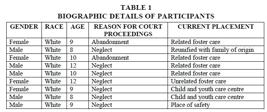
The participants interviewed were selected purposively. The main sample of this research consisted of children from families of drug-abusing parents in the fishing community who experience social exclusion, but included other actors who interact with them, resulting in a total sample size of 41 individuals: 12 children experiencing social exclusion, 10 parents of the children, 2 social worker staff, 3 members of the community development unit, 2 members of the South Sulawesi National Narcotics Agency, 3 religious figures, 5 government staff, 1 peer of the children and 3 neighbours of the children's parents (Table 1). The sample was recruited based on information from professional social workers and in collaboration with the local government department for women and children.
Prior to each interview, participants were briefed on the study's objectives and requested to provide written consent for recording. A comfortable setting was arranged, taking into account the sensitive nature of drug abuse (Maryudi & Fisher, 2020). Face-to-face interviews were chosen for their ability to capture participants' views precisely (Gilgun, 2008). Interviews lasting approximately 30 to 40 minutes were conducted at each meeting. Interviews were conducted 2 to 4 times to ensure that all questions were clearly answered, followed by field notes made immediately after observation and interviews.
The verbatim transcripts underwent analysis through three coding modes: open, axial and selective coding (Arifah et al., 2022; Corbin & Strauss, 1990). Open coding involves categorising and grouping data by careful transcript reading, establishing initial data categories and assigning related concept labels (codes). Axial coding follows, focusing on core phenomena and identifying related categories such as causal conditions, actions, situational factors, and consequences. Finally, selective coding synthesises the model, developing propositions or hypotheses connecting categories into a coherent narrative. In this research, the theoretical structure was constructed through grounded theory procedures and validated by presenting it to the sample. All participants confirmed and agreed that the elements of the theory effectively reflect the interview results and could be used to explain the reality of the studied phenomenon.
RESULTS
This section delves into the findings regarding (i) the process of social exclusion in children from drug-abusing parents in the fishing community, and (ii) the multiple impacts of social exclusion in children from drug-abusing parents in the fishing community.
Theme 1: The process of social exclusion of children from drug-abusing parents in the fishing community
The process of social exclusion of children from families of drug abuse in the fishing community refers to a series of mechanisms and conditions that lead to the child being marginalised or sidelined from full participation in their environment. The social exclusion of children in the fishing community occurs because one parent (father) or both parents of the child (mother and father) are drug addicts. Social exclusion of children occurring in fishing community is characterised by their neglect and stigmatisation, which usually occur in three loci, namely family, neighbourhood and school environments. The process social exclusion of children resulting from parental drug abuse disturbances in fishing community can be elucidated by the findings outlined below.
Sub-theme 1.1: Social exclusion of children whose fathers are drug users
During the interviews it was found that five actors in three different settings contribute to the social exclusion of children whose fathers are drug abusers. The first actor is the fathers themselves, who are, in this context, drug abusers who neglect the children in the family environment. Child neglect is the failure or absence of parents to meet the needs of a child, resulting in serious impacts on the child's wellbeing and development (Linn et al., 2022; Procter et al., 2024; The Alliance for Child Protection in Humanitarian Action [ACPHA], 2018; United Nations International Children's Emergency Fund [UNICEF], 2021). Consequently, neglected children often have to work to meet their daily needs, as revealed in the following comments from several neglected children who were interviewed:
I sell at the auction to help my mother get money. (Participant AM)
I started working at the fish auction when I was 13 years old. I help lift the goods for buyers and fish traders, and then I will get money. (Participant MA)
Every day, I sell food after school. (Participant SA)
I sell to help my mother, because my stepfather is too lazy to work. (Participant SW)
In addition to fulfilling their own basic needs, neglected children also have to work to meet their father's need for buying drugs. This reality is confirmed by the statements of neglected children:
I sell at the auction to help my mother get money ... My father often asks for money from my mother to buy crystal meth. I never saw him use crystal meth, but people say so. (Participant AM)
I sell to help my mother, because my stepfather is too lazy to work. My stepfather uses methamphetamine and drinks alcohol, I know because his friends often invite him, now he has liver disease. (Participant SW)
These statements are reinforced by a comment from a social worker interview:
Sometimes, children have to work to earn money that will be given to their fathers to buy drugs. Like AM and SW, he sells at the auction and the money is given to his stepfather who then uses it to buy drugs. (Participant NE)
Furthermore, these fathers often inflict emotional violence on their children, both verbally and nonverbally, as evidenced by the following quotes from three excluded children:
My father often gets angry and I am often hit on the thigh and the pain makes me cry (Participant AM)
My father often shouts and hits me. (Participant MB)
My father was angry and threatened to kill me. He also once spat on my face for no reason. (Participant SW)
Patriarchy is regarded as a cultural norm by many people, and this is the case in Makassar City (Galizzi et al., 2023; Gilbert et al., 2024; Guiso & Zaccaria, 2023). This ideology considers the position of men to be higher than that of women and this has indirectly created a powerful but unequal relationship between parents and helpless children. These people assume that, regardless of whether or not the parents' actions are wrong, they have full control over their children. Accordingly, this patriarchal culture ultimately perpetuates the social exclusion of children in drug-abuser families. This is in line with the following information obtained from a social worker interview:
Their understanding of child education is also lacking. They understand that "he/she is my child. I can treat them however I want. Whether I exploit or force them to make money, it is my right", because they still adhere to patriarchal culture. But in reality, as parents, they do not understand their responsibility toward the rights of their children. (Participant NE)
It is also important to note that patriarchy not only perpetuates the social exclusion of children, but also creates disharmony within families. This is consistent with the data collected from an interview with BM:
The impact of drugs is that the husbands do not give money to their wives. They only work to buy drugs. Therefore, this causes arguments in families because the wives feel unsupported. (Participant BM)
BM's statement is in line with that of NE:
KS's husband is a drug abuser and dealer After using drugs, he often goes out with other women and records all his activities, which he then shows to his wife to hurt her feelings. (Participant NE)
The second actor is the mother, in effect the wife of a drug abuser. These women usually feel significant emotional pressure because they often face violent behaviour from their husbands. As the following statements by KM and FM indicate, they are mothers of children experiencing social exclusion as well as wives of husbands who are drug abusers:
I have been working as a bread seller for over 20 years since I got married. The money I earn is for the family's daily meals, because I am both the mother and father My husband is a drug addict, but he is now in police custody. In the past, he often went out with naughty women and came home in the early morning. He also often hit me and our children. (Participant KM)
My husband is a drug and alcohol user I am the wife who suffers the most because I am often beaten and have to witness my husband torture of our children. Moreover, one of my children became a victim and died four months ago. Previously, my child was thrown from the attic to the ground and became ill. ... When my husband needs drugs, he tells me to borrow money. Sometimes I borrow money from neighbours or relatives. (Participant FM)
These mothers may feel pressured or stressed because they have to bear the responsibility for the family, which impacts on their interactions and parenting patterns with their children. Social exclusion, in this context, is characterised as emotional violence from the mothers toward their children. This is shown in the interview comment from an excluded child:
My mother often gets angry, she pinches or hits me with a broom. (Participant NA)
Education plays a crucial role in child-raising, as it can provide mothers with the skills and knowledge to raise their children properly. In contrast, illiterate mothers who have drug addicts as husbands will face difficulties in raising their children and finding a job. The wife of a drug-abusing husband shared her experience as follows:
I once wanted to apply for a job as a street sweeper However, I did not go to school and cannot read. If my child has schoolwork, I cannot help. (Participant SY)
The third actors are the neighbours who interact with the children and cause them to be stigmatised. Stigma prevents the children from interacting within the surrounding environment, and this limits their access to non-formal education or other important services. One of the excluded children interviewed reported as follows:
In the neighbourhood, I often hear people talking about my father as a drug abuser I am often teased and gossiped about by my neighbours. (Participant SA)
The fourth actor is the child's peers in the neighbourhood. Children living with a drug-abusing father are prone to be stigmatised in their community. They often face exclusion and bullying from their peers in the neighbourhood. The following are comments from an interviews about the experiences of two children who have encountered social exclusion by their peers in the neighbourhood:
My friends also talk about me. I am labelled as an 'indosiar' [wild]. (Participant NA)
In this neighbourhood, I also have no friends. (Participant AM)
The fifth actor is the children's school friends. Children living with drugs-abusing parents are at risk of being stigmatised in the school environment, as they are often excluded and bullied by their school friends. The following are comments from the interviews with two children who were excluded in their school environment:
When I was still in school, I had no friends at all. Hence, during break time, I stayed in the classroom. (Participant AM)
The most painful thing is that I'm often bullied by friends at school, like mocking me. (Participant NA)
Sub-theme 1.2: Social exclusion of children whose mothers and fathers are drug abusers
The interviews revealed that eight actors in three different environments contribute to the social exclusion of children with both parents as drug abusers. The first actor is the father, who uses drugs and neglects their children's rights. Often, when both parents are drug addicts, their children tend to be raised by other people, considering the fact that the parents are most probably in jail. This position makes the fathers unable to fulfil their role of providing for the families. Here is an interview excerpt about the experiences of two children who have a father who is a drug addict:
My father went to jail first, his sentence was the same as my mother's, 4 years and 6 months. Therefore, since my father was in jail, 7 other siblings and I live with my grandmother. For daily expenses, we are supported by my grandmother and my older sibling. (Participant KS)
Since my stepfather went to jail, my mother and my two younger siblings live with my grandmother (Participant AJ)
As a result, children often experience economic difficulties after their parents are arrested and they are forced to find their own money, as stated by an excluded child:
I go to the auction to work as a fish lifter After I work, I get money. (Participant DN)
Besides working as fish lifters, they make money by becoming parking attendants. An interview with two excluded children shows this:
I earn my allowance from working as a parking attendant. (Participant KS)
I usually become a parking attendant in front of the mosque or in Ciduk Market. (Participant NL)
Furthermore, children from families with drug problems not only feel neglected but also experience emotional violence, as stated by an excluded child:
My stepfather is in jail. Previously, I was scolded and beaten. (Participant DN)
The second actor is the mother. The mother plays the role of a drug abuser and a perpetrator of child neglect. Drug abuse can affect the physical and mental condition of mothers, which in turn can cause neglectful behaviour toward their children, as stated by an excluded child:
Before my mother was arrested, she never gave me pocket money My mother always relied on my sibling for financial assistance. She was only focused on gambling and crystal meth. (Participant KS)
As drug addicts, mothers are prone to emotional attitudes such as being easily angered and uncontrollable (Font & Maguire-Jack, 2015; Neger & Prinz, 2015; Wolf, 2021; Yoon et al., 2024). This affects the quality of interactions within the family and becomes a cause of violent behaviour. The following are comments from three children who have experienced neglect:
My mother likes to get angry, even if she is angry with someone else, I am the one who becomes the target of her emotions. (Participant AJ)
My mother often hits me. (Participant DN)
She often goes with her friends to deal with crystal meth. She often acts harshly, the first time I was hit by my mother was when I was 6 years old. (Participant KS)
Following this, the third actor is the grandmother. Children whose parents are in narcotics prisons are often entrusted to their grandmothers without providing sufficient financial support. This forces the children to work for money. The following are comments from two excluded children:
I used becoming a busker in the market, but not anymore. Now, I work as a parking attendant. (Participant NL)
In the family, my grandmother does not like me unless I give her money; only then does she not get angry. (Participant KS).
Other forms of child neglect include not providing food and clothing, as reflected in the reports of excluded children:
I eat twice a day, in the morning and evening. (Participant NL)
I have not eaten yet today. I eat when there is food, and if there isn't any, usually I eat at a friend's house. (Participant KS)
The money I earn as a parking attendant is used to buy diapers for my two younger siblings who are still toddlers. (Participant NL)
The confessions of two excluded children were confirmed by their neighbour and relative:
KS's father was arrested, and her mother was also arrested twice for the same case. Her younger sibling became a beggar on the street because their grandmother could not provide enough food for the eight small grandchildren. (Participant FM)
Additionally, not providing adequate housing or necessary healthcare for children is another form of neglect, as indicated by three excluded children:
In my grandmother's house, there are 21 people from 4 heads of household. (Participant KS)
We live with other families, totalling 8 people from 3 heads of household. (Participant AJ)
The scar on my cheek was caused by a rat bite while I was sleeping. However, I was not taken to the doctor for treatment. The wound was treated with coffee powder. (Participant NL)
Another form of neglect is not providing adequate education, as stated by an excluded child:
I actually want to go back to school, but my grandmother does not allow it. (Participant NL)
The fourth actors are aunts. Aunts usually tend to verbally abuse children who were handed over by their parents to them. This is basically because all the responsibilities for the children were handed over to their aunts without financial support, as expressed by the two excluded children:
I am often scolded by my aunt even though I gave her all the money I earned. (Participant MP)
I am used to being scolded by my aunt, and I just keep quiet. (Participant AJ)
Other forms of emotional violence, such as hitting and pinching, are also experienced by these children, as evidenced in the interview with an excluded child who stated:
I have been hit before. (Participant MP)
The fifth actors are uncles. The characteristic of social exclusion of children here is emotional and physical violence, as expressed by an excluded child;
I also often get violence from my uncle. The reason is that I want to eat, and my uncle seems not to like seeing me eat, hence he gets angry and hits me. It happens to me often. (Participant KS)
The sixth actor is a parent who is a neighbour of the children. One of the common issues faced by children with both parents as drug abusers is the stigma they experience from neighbours. Here's an excerpt from interviews with the neighbours of two excluded children:
Mrs Dona's son, named DN, is naughty, and even though their family is well-off, no one wants to adopt DN because his mother is a drug addict. (Participant UM)
Mrs Dona is not a good mother, heartless, and neglects her child. Both of DN's parents have been to prison due to drugs. Therefore, no one likes DN. (Participant NM)
Their parents were also a topic of conversation in the neighbourhood. One of the excluded children commented:
I often hear people outside the house talking about my mother (Participant DN)
The seventh actor is the child's peer. Children from families of drug abusers also experience stigma from their peers in the neighbourhoods. For example, a socially excluded child stated:
They often do mean things to me, they mock me, they insult my parents, and I do not have any friends with them. (Participant DN)
Lastly, the eighth actor is the child's school peers. Children from families of drug users often face bullying and social exclusion from their schoolmates, as evidenced by two of the interviewed children:
I do not have any friends in school because they already know that my biological parents are separated, and my stepfather is in jail. (Participant AJ)
My classmates already know that my father is in jail. Thus, I am bullied and excluded. (Participant SS)
Theme 2: The multiple impacts of social exclusion on children from drug-abusing parents in the fishing community
The multiple impacts of social exclusion on children of drug-abusing parents in fishing communities refers to the layered and reinforcing negative effects experienced by these children. The multiple impacts of social exclusion on children results from neglect and stigma as a result of the drug abuse issues within the child's family in the fishing community. Interviews were conducted in this regard and the results show that when both parents (mother and father) are drug abusers, their children are prone to a wider range of social exclusion compared to those who have only one parent (father) using drugs.
A summary of the grounded theory of the multiple impacts of social exclusion on children can be seen in Figure 1.
Sub-theme 2.1: The impact of social exclusion on children whose father is a drug user
In this study, it was found that children who experience neglect and stigma because of family drug issues, typically involving the father, can lead to a range of consequences. One of the significant impacts is the increased risk of dropping out of school. Neglected children often find themselves compelled to seek employment at a young age, particularly to support their mothers, who have the responsibility for maintaining the family structure. Consequently, this situation can force children to discontinue their education in order to contribute to the family income. This was expressed by two children who dropped out of school:
My sister and / dropped out of school because we had to help our mother work to make money. (Participant AM)
I,'m lazy to go to school because I can already work and make money myself. (Participant MA)
The statements of the two children who dropped out of school were also confirmed by their mother as follows:
AM has dropped out of school. He helps me work to earn money because my husband is lazy, and his hobby is drinking and using meth. (Participant ML)
Her father is in jail for drugs, so / have to be both mother and father. But I'm helped by my son who works at the fish auction and my daughter who works at the grocery store. (Participant KS)
The second statement of the wife of the drug abuser is confirmed by a comment from a social worker in a staff interview:
Children from drug abuser families generally experience exclusion in the family environment because they have to help their mothers make a living. Their fathers are sometimes detained, arrested, and so on. Automatically, the children become breadwinners, willing or not, and have to drop out of school to work and make money. (Participant NE)
The second impact is the low literacy skills in children. Children who have to work at a young age or drop out of school often struggle to develop their abilities and talents, and their literacy skills are also often undeveloped, as expressed by one of the children with a low literacy level:
I cannot read and count well yet. (Participant AM)
AM's confession was confirmed by her mother and one of the neighbours. The comments from their interview are as follows:
When AM was in the fifth grade of elementary school, she could not read or count yet. (Participant ML)
AM sells cakes at the auction but many cheat her because she cannot count correctly. (Participant HL)
The third impact is the lack of confidence. Children who drop out of school may end up with low literacy, leading to a lack of confidence. Children living with drug-abusing parents also face negative stigma from their surroundings. The stigma experienced by children can affect their emotional and social wellbeing, as well as their confidence, as stated by the two children lacking confidence:
I am ashamed and feel inferior to my friends. (Participant AM)
I am ashamed ... because my parents quarrel every day. (Participant MA)
This research demonstrates that children who experience neglect and stigma as a result of drug-related issues within the family, typically involving the father, can have impacts, namely school dropout, low literacy and lack of confidence.
Sub-theme 2.2: The impact of social exclusion on children whose mother and father are drug user (DAPs)
Children who experience neglect and stigma because their parents are drug users will suffer a wider range of impacts. First, they drop out of school. Many mothers and fathers involved in drug abuse eventually end up in detention and leave their children to be raised by others without any financial support or assistance from the parents. This can cause financial problems for families, which can in turn result in their children dropping out of school. This is evidenced by the reports of three children who dropped out of school:
Last I checked, I was in the sixth grade of elementary school. I am not sure if I graduated or not, but I did not take the graduation exam. (Participant KS)
I dropped out of school and I cannot do much. It is actually very difficult, but I surrender. Just follow along. (Participant AJ)
I used to go to school until the third grade of elementary school, now I am 12 years old. (Participant NL)
A second impact is low literacy levels. Children who drop out of school tend to have difficulty reading, writing or spelling. They may also have difficulties in following instructions and understanding more complex concepts. Several children who dropped out of school admitted during interviews that their literacy skills are very low:
There are lessons I do not like, namely mathematics, and I cannot read yet. (Participant KS)
I cannot read yet. (Participant NL)
The third impact is substance use disorder. Substance use disorder by both parents may lead to their detention, therefore leaving their children without supervision. This phenomenon has the potential to trigger unsupervised children to resort to drug abuse themselves, hence causing problems for the next generation of children. This fact was confirmed by one of the excluded children interviewed:
I have 10 siblings, 5 brothers and 5 sisters, and I am the fourth child. My eldest brother also dropped out of school and is currently in police custody for drugs. (Participant KS)
The fourth impact is online prostitution. This may be caused by various factors such as lack of parental supervision, because both parents are in custody. The following is a statement from a child suspected of being a perpetrator of online prostitution,
Usually, my uncle tells me to be a naughty woman to get a lot of money. (Participant KS)
This child's statement is confirmed by the statements of two neighbours:
His niece, FM, her mother, and her father were arrested. Even one of their children was arrested by the police for drugs, while their daughter had become an online prostitute. (Participant RK)
KS is her own uncle, who asked her to become an online prostitution, at the age of 15. (Participant FM)
The fifth impact is delinquency of minors. Lack of attention and family support, and environmental influences lead excluded children to engage in terrorising activities. Usually, they make use of a sharp weapon made with a nail. Its shape is simple, resembling a slingshot equipped with a rubber band as a launcher. This bow is used to terrorise other groups. Here is a comment from a child involved in terrorising activities:
I joined the bow group. I joined the gang because I had no friends to play with in my neighbourhood. They often do mean things to me, they mock me, they insult my parents, and I do not have any friends with them. But now I have stopped. (Participant DN)
DN's statement is supported by that of his foster grandmother, DM, who stated:
I could not monitor where DN was and with whom he was friends until he got involved in the bow group. (Participant DM)
Finally, the sixth impact is lack of confidence. Children from drug-abusing families are often neglected by their families and face stigma from society, and this can in turn affect their self-confidence. This finding was evinced by two excluded children during the interview:
I feel inferior and ashamed because my parents are in jail for drugs. (Participant DN)
I feel different from other kids; they have caring parents while my parents are not caring. (Participant AJ)
The results of this study lay the groundwork for a grounded theory of the multiple impacts of social exclusion on children in terms of context, causal conditions and family reactions, as well as the consequences.
DISCUSSION
The process of social exclusion in children from drug-abusing parents in the fishing community
The process of social exclusion of children from families with drug abuse issues in fishing community refers to a series of mechanisms and conditions that result in children being marginalised from full participation in their environment, including the family, neighbourhood and school environments. The social exclusion of children in this fishing community occurs because one or both parents are drug addicts. Characteristics of social exclusion of children from families with drug abuse issues in fishing community are neglect from family members and negative stigma from the surrounding community.
This research shows that children living with a drug-addicted father in the fishing community are vulnerable to social exclusion within the family environment. Social exclusion of children within the family is closely linked to the conscious efforts of parents to restrict children's rights within the family, leading to neglect. This conscious effort is strongly related to the patriarchal culture, where the power structure within the family often places the father as the highest authority controlling decisions and resources (Galizzi et al., 2023; Gilbert et al., 2024; Guiso & Zaccaria, 2023). In the context of a family with a drug-addicted father, patriarchy exacerbates the situation as the power and authority held by the father are used to fulfil his personal need for drugs, sacrificing the well-being of his children. Patriarchal culture supports the father's dominance, making neglect of children more likely because children are seen as having a lower status and less entitlement to care and support.
As a result, these children fall victim to unjust family practices, losing their basic rights and forced into roles that should be the parents' responsibility. They must work as food vendors to meet their daily needs and their father's drug demands, care for their infant siblings, cooking and tidying the house. A drug-addicted father prioritises drugs, even resorting to pressure or violence against his family. This aligns with the research by Perruci et al. (2021), which found that drug-abusing parents fail as breadwinners, while becoming obsessively focused on their drug needs (Luongo, 2021). Consequently, there's an overlap in family role distribution, leading to child neglect, including inadequate housing, food and clothing (Dyba et al., 2019; Forrester, 2000; Hameed, 2019; Leinonen et al., 2003; Milin et al., 2016). Children taking on parental roles face immense physical and mental pressure, neglecting their necessary childhood routines and bearing adult family responsibilities. This neglect impacts not only on their basic needs but also has emotional and educational aspects (Barnard & McKeganey, 2004; Gedzune, 2014; Hien & Honeyman, 2000; Perruci et al., 2021; Wood et al., 2022). This condition creates a difficult-to-break cycle of hardship, where neglected and stressed children are highly likely to experience psychological and social problems later in life.
Furthermore, interview results indicate that the domestic violence experienced by mothers because of their husbands' drug habit affects their interaction and parenting patterns with their children. When mothers are victims of physical or emotional abuse from drug-addicted husbands, their stress levels rise significantly. This high stress often makes mothers emotional and prone to being harsh with their children. These findings are consistent with those of Murphy, Harper, Griffiths and Joffrion (2017), who found a significant relationship between maternal stress levels and child neglect. Mothers in these stressful situations struggle to provide the necessary attention and affection, resulting in harsh and inconsistent parenting.
Moreover, the financial instability caused by the father's drug addiction also plays a significant role in poor parenting patterns. Money meant for food and clothing is diverted to meet the fathers' drug needs, as described by Craig et al. (2022). Consequently, children's basic needs go unmet, and they often live under unsatisfactory conditions.
It is also important to note that children raised by drug-abusing families are not only marginalised within the family environment, but also within the neighbourhood and school because of the stigma. This stigma arises from the negative perceptions of society towards drug abuse, which is seen as deviating from social norms (Couto e Cruz et al., 2020; Griffiths et al., 2004; Klostermann & O'Farrell, 2013). When parents are involved in legal or social issues as a result of drug abuse, their children often bear the consequences. Society tends to associate these children with their parents' negative behaviours, leading to discrimination and exclusion form various aspects of social life.
Further findings from this study indicate that children growing up with both parents (father and mother) who are drug abusers often experience social exclusion from family members and the community where the child resides, such as fathers, mothers, grandmothers, aunts, uncles, adult neighbours, peers and school friends. When both parents are involved in drug abuse, their children often have to be raised by other family members, such as grandmothers or aunts, especially if their parents are incarcerated because of drug-related offenses. However, in many cases, the financial and emotional support provided to these children is minimal, leading them to live in overcrowded and squalid conditions because of the large number of occupants in the household. Substitute caregivers often lack sufficient resources to meet the basic needs of these children, resulting in neglect and lack of attention. Additionally, it has been revealed that if both parents are drug users, they often exhibit negligent and emotionally harsh behaviour towards their children. These findings are consistent with the research of De Avila et al. (2020), Gilchrist et al. (2019) and Pakenham and Cox (2012), which found that drug abuse correlates positively with child neglect.
Children living with both parents (father and mother) as drug abusers often face stigma from their surrounding environment and school. In their neighbourhood, they are frequently the subject of gossip and are labelled as troublemakers. This stigma is deeply rooted in the community's perceptions, viewing these children through the lens of their parents' deviant behaviour. At school they often experience bullying from their peers, who mock and ostracise them. Similar studies indicate that stigma includes indirect aggression, such as gossiping and spreading malicious rumours (Skarstein et al., 2020). Such negative treatment adversely affects the children's development, making them feel undervalued and unaccepted. The negative stigma they experience in society and their school environment can lead to profound feelings of isolation and depression (Edwards et al., 2017; Orford et al., 2010; Pieterse, 2019).
The multiple impacts of social exclusion in children from drug-abusing parents in the fishing community
The multiple impacts of social exclusion on children of drug-abusing parents in the fishing community refers to the layered and reinforcing negative effects experienced by these children. Children who face neglect and stigma because one of their parents (father) is a drug addict suffer a number of impacts such as school dropout, low literacy skills and a lack of self-confidence. When these children are forced to leave school to work at a young age to support themselves or their families, they lose the opportunity to develop important skills and talents. This loss of access to education results in low levels of literacy and other skills, which in turn worsens their future prospects.
The case of AM serves as a concrete example of this such impacts. AM not only dropped out of school and consequently had a low literacy level, leading to low self-esteem. When children like AM have to struggle with menial jobs at a young age, they not only miss out on formal education but also endure severe psychological and social pressures. The social stigma attached to them as children of drug-addicted parents further exacerbates this condition, making them feel isolated and undervalued. This aligns with the findings of Dey et al. (2020), which state that children who experience stigma are at high risk of losing self-esteem.
Specifically, this study shows that children who experience neglect and stigma as a result of drug-related issues within their family, involving both parents, will suffer a range of broader impacts. These impacts include school dropout, low literacy levels, substance use disorder, involvement in online prostitution, juvenile delinquency and low self-esteem. When both parents are involved in drug abuse, the children lose the income and support that should be provided by the parents. The lack of attention and support from the family makes them vulnerable to negative influences from their surroundings, and the stigma from society further exacerbates their situation.
These children tend to engage in risky behaviours, such as KS, who experienced the impacts of school dropout, low literacy, involvement in online prostitution, and low self-esteem, as KS sought ways to cope with the emotional stress and material deprivation she faced. These findings are consistent with the research of Holmila et al. (2011) and Wood et al. (2022), which concluded that the risk of harm is significantly higher if both of the child's parents are drug abusers. This increased risk is attributed to the compounded negative effects of neglect, stigma and the absence of positive role models, leading these children to seek comfort and validation in harmful ways.
Other research indicates that child rearing by family members who are not biological parents, especially in situations where the parents are drug abusers, can hinder the quality of the child's wellbeing (Buckles et al., 2023; Pakenham & Cox, 2012). Some negative impacts of such upbringing include lower educational attainment, as children often have to leave school to work or care for the family (Ariani et al., 2023; Kallander et al., 2018). Additionally, they are more vulnerable to both physical and emotional violence, as their caregivers may lack the capacity or readiness to deal with the children's emotional and physical needs (De Avila et al., 2020; Ramsewak et al., 2020). Furthermore, this situation can also lead to the perpetuation of substance abuse, as children who grow up in environments rife with drug abuse are at a higher risk of repeating the same patterns in the future (Vilela et al., 2019).
CONCLUSION
The process of the social exclusion of children from drug-abusing families in the fishing community involves neglect and stigma that occur in three loci: the family environment, the neighbourhood and the school environment.
This research forms the basis for a grounded theory on the dual impact of social exclusion on children, analysed from the context, causal conditions, actions/reactions, and consequences. The conditions causing these events or occurrences are referred to as causal conditions. In fishing community, parents who use drugs are seen as the cause of children's exclusion. Actions or interactions then arise as reactions to these causal conditions, such as neglect and stigma. Consequences are the results of these actions or reactions, where neglect and stigma lead to the dual impact of social exclusion on children. The multiple impacts of social exclusion on children due to both parents (father and mother) using drugs poses broader risks compared to when only one parent (father) uses drugs.
Finally, this research introduces a new theoretical concept, namely the theory at the substantive level of social exclusion of children from drug-abusing families in fishing community. This research also acknowledges certain limitations that require further exploration in subsequent studies. The sample size, deemed adequate for qualitative approaches, necessitates supplementation through quantitative research with larger samples.
The combination of neglect and stigma can create a cycle of poverty and marginalisation that is difficult to break. Therefore, comprehensive and inclusive interventions are crucial to provide material support, education, as well as psychological and social interventions for children affected by these impacts, so they can break free from this vicious cycle and have a better future. The findings of this research can provide valuable input for interventions and support systems in various countries, including South Africa. By addressing universal issues around drug abuse and its impact on children, the insights gained from this research are relevant and applicable in broader global contexts, thus providing valuable guidance for social work practitioners and policymakers worldwide, including those operating in South Africa.
REFERENCES
-
Ahmad, J., Joel, U. C., Talabi, F. O., Bibian, O. N., Aiyesimoju, A. B., Adefemi, V. O. & Gever, V. C. 2022. Impact of social media-based intervention in reducing youths' propensity to engage in drug abuse in Nigeria. Evaluation and Program Planning, 94(October): 1-9. https://doi.org/10.1016/j.evalprogplan.2022.102122
» https://doi.org/10.1016/j.evalprogplan.2022.102122 -
Ainsworth, F. 2004. Drug use by parents: The challenge for child protection and drug and alcohol services. Children Australia, 29(3): 4-10. https://doi.org/10.1017/S1035077200006052
» https://doi.org/10.1017/S1035077200006052 -
Ariani, A. I., Salman, D. & Syukur, M. 2023. Investigation of social construction of violence and exploitation: A case study of children and women in Gowa Regency, Indonesia. Journal of Law and Sustainable Development, 11(12): e1865. https://doi.org/10.55908/sdgs.v11i12.1865
» https://doi.org/10.55908/sdgs.v11i12.1865 -
Arifah, S. D., Yassi, A. & Bahsar-Demmallino, E. 2022. Climate change impacts and the rice farmers' responses at irrigated upstream and downstream in Indonesia. Heliyon, 8(12): e11923. https://doi.org/10.1016/j.heliyon.2022. e11923
» https://doi.org/10.1016/j.heliyon.2022. e11923 - Backwith, D. 2015. Social work, poverty and social exclusion. In: Dowling, M. (ed) Social work and poverty. London: Routledge.
-
Badan Narkotika Nasional Provinsi Sulawesi Selatan. 2021. Laporan Tahunan 2021 (Issue 0929). [Online] Available: https://bit.ly/laporanbnntahun2021
» https://bit.ly/laporanbnntahun2021 -
Badan Narkotika Nasional Republik Indonesia. 2022. Indonesia Drugs Report 2022. Pusat Penelitian, Data dan Informasi Badan Narkotika Nasional 2022. Online [ Available: https://puslitdatin.bnn.go.id/konten/unggahan/2022/07/IDR-2022.pdf
» https://puslitdatin.bnn.go.id/konten/unggahan/2022/07/IDR-2022.pdf -
Barnard, M. & McKeganey, N. 2004. The impact of parental problem drug use on children: What is the problem and what can be done to help? Addiction, 99(5): 552-559. https://doi.org/10.1111/j.1360-0443.2003.00664.x
» https://doi.org/10.1111/j.1360-0443.2003.00664.x -
Battams, S. & Roche, A. 2011. Child wellbeing and protection concerns and the response of the alcohol and other drugs sector in Australia. Advances in Mental Health, 10(1): 62-71. https://doi.org/10.5172/jarnh.2011.10.1.62
» https://doi.org/10.5172/jarnh.2011.10.1.62 -
Baumeister, R. F., DeWall, C. N., Ciarocco, N. J. & Twenge, J. M. 2005. Social exclusion impairs self-regulation. Journal of Personality and Social Psychology, 88(4): 589-604. https://doi.org/10.1037/0022-3514.88A589
» https://doi.org/10.1037/0022-3514.88A589 -
Bello, L. O., Baiyegunhi, L. J. S. & Danso-Abbeam, G. 2024. Substance use and labour market nexus in South Africa. Scientific African, 23: e02093. https://doi.org/10.1016/j.sciaf.2024.e02093
» https://doi.org/10.1016/j.sciaf.2024.e02093 -
Berger, L. M., Slack, K. S., Waldfogel, J. & Bruch, S. K. 2010. Caseworker-perceived caregiver substance abuse and child protective services outcomes. Child Maltreatment, 15(3): 199-210. https://doi.org/10.1177/1077559510368305
» https://doi.org/10.1177/1077559510368305 -
Buckles, K., Evans, W. N. & Lieber, E. M. J. 2023. The drug crisis and the living arrangements of children. Journal of Health Economics, 87: 102723. https://doi.org/10.1016/jjhealeco.2022.102723
» https://doi.org/10.1016/jjhealeco.2022.102723 -
Burchardt, T., Le Grand, J. & Piachaud, D. 1999. Social exclusion in Britain 1991-1995. Social Policy and Administration, 33(3): 227-244. https://doi.org/10.1111/1467-9515.00148
» https://doi.org/10.1111/1467-9515.00148 -
Chassin, L., Blake, A. J., Sternberg, A., Bui, L., Ruof, A., Waddell, J. T., Elam, K. K. & Paxton, L. 2023. Parent substance use and child and adolescent health outcomes. Reference Module in Biomedical Sciences, 2: 722-740. DOI: 10.1016/b978-0-12-818872-9.00064-9
» https://doi.org/10.1016/b978-0-12-818872-9.00064-9 -
Chassin, L., Pitts, S. C., DeLucia, C. & Todd, M. 1999. A longitudinal study of children of alcoholics: Predicting young adult substance use disorders, anxiety and depression. Journal of Abnormal Psychology, 108(1): 106-119. https://doi.oig/10.1037/0021-843X.108.U06
» https://doi.oig/10.1037/0021-843X.108.U06 -
Chiang, C. J., Jonson-Reid, M. & Drake, B. 2020. Caregiver physical health and child maltreatment reports and rereports. Children and Youth Services Review, 108: 104671. https://doi.org/10.1016/j.childyouth.2019.104671
» https://doi.org/10.1016/j.childyouth.2019.104671 -
Corbin, J. M. & Strauss, A. 1990. Grounded theory research: Procedures, canons, and evaluative criteria. Qualitative Sociology, 13(1): 3-21. https://doi.org/10.1007/BF00988593
» https://doi.org/10.1007/BF00988593 -
Couto e Cruz, C., Salom, C., Parsell, C., Dietze, P., Burns, L. & Alati, R. 2020. Social domains of discrimination against people who inject drugs: Links with health and wellbeing. International Journal of Drug Policy, 77(March): 102620. https://doi.org/10.1016/j.drugpo.2019.102620
» https://doi.org/10.1016/j.drugpo.2019.102620 -
Craig, J. M., Wolff, K. T., Pierce, K., Zettler, H. & Baglivio, M. T. 2022. Childhood abuse, neglect, household dysfunction, and juvenile recidivism: The mediating role of social bonds. Journal of Criminal Justice, 82: 101998. https://doi.org/10.1016/jjcrimjus.2022.101998
» https://doi.org/10.1016/jjcrimjus.2022.101998 - Creswell, J. W. & Poth, C. N. 2018. Qualitative inquiry & research design, choosing among five approaches. 4th ed. Thousand Oaks: SAGE.
-
De Avila, C., Andrews, B., Buckman, C., Tumin, D. & Ledoux, M. 2020. Documentation of drug abuse in the family or household of children admitted to the hospital for non-accidental trauma. Child Abuse & Neglect, 109: 104696. https://doi.org/10.1016/jxhiabu.2020.104696
» https://doi.org/10.1016/jxhiabu.2020.104696 -
Dewall, C. N. & Richman, S. B. 2011. Social exclusion and the desire to reconnect. Social and Personality Psychology Compass, 5(11): 919-932. https://doi.org/10.1111/j.1751-9004.2011.00383.x
» https://doi.org/10.1111/j.1751-9004.2011.00383.x -
Dey, M., Castro, R. P., Jorm, A. F., Marti, L., Schaub, M. P. & Mackinnon, A. 2020. Stigmatizing attitudes of Swiss youth towards peers with mental disorders. PLoS ONE, 15(7): e0235034. https://doi.org/10.1371/journal.pone.0235034
» https://doi.org/10.1371/journal.pone.0235034 - Duru, E. & Arslan, G. 2014. Evlenmek amaciyla evden kaçan kiz ergenler: Bir olgubilim çalışması. Türk Psikolojik Danışma ve Rehberlik Dergisi, 5(41): 36-48.
-
Dyba, J., Moesgen, D., Klein, M. & Leyendecker, B. 2019. Methamphetamine use in German families: Parental substance use, parent-child interaction and risks for children involved. Substance Use and Misuse, 54(4): 583-591. https://doi.org/10.1080/10826084.2018.1528459
» https://doi.org/10.1080/10826084.2018.1528459 -
Dykes, G. & Casker, R. 2021. Adolescents and substance abuse: The effects of substance abuse on parents and siblings. International Journal of Adolescence and Youth, 26(1): 224-237. https://doi.org/10.1080/02673843.2021.1908376
» https://doi.org/10.1080/02673843.2021.1908376 -
Edwards, A. C., Lönn, S. L., Karriker-Jaffe, K. J., Sundquist, J., Kendler, K. S. & Sundquist, K. 2017. Time-specific and cumulative effects of exposure to parental externalizing behavior on risk for young adult alcohol use disorder. Addictive Behaviors, 72: 8-13. https://doi.org/10.1016/j. addbeh. 2017.03.002
» https://doi.org/10.1016/j. addbeh. 2017.03.002 -
Font, S. A. & Maguire-Jack, K. 2015. Decision-making in child protective services: Influences at multiple levels of the social ecology. Child Abuse & Neglect, 47: 70-82. https://doi.org/10.1016/j.chiabu.2015.02.005
» https://doi.org/10.1016/j.chiabu.2015.02.005 -
Forrester, D. 2000. Parental substance misuse and child protection in a British sample. A survey of children on the child protection register in an inner London district office. Child Abuse Review, 9(4): 235-246. https://doi.org/10.1002/1099-0852(200007/08)9:4<235::aid-car626>3.3.co;2-w
» https://doi.org/10.1002/1099-0852(200007/08)9:4<235::aid-car626>3.3.co;2-w -
Freisthler, B., Kepple, N. J., Wolf, J. P., Curry, S. R. & Gregoire, T. 2017. Substance use behaviors by parents and the decision to substantiate child physical abuse and neglect by caseworkers. Children and Youth Services Review, 79: 576-583. https://doi.org/10.1016/j.childyouth.2017.07.014
» https://doi.org/10.1016/j.childyouth.2017.07.014 -
Galizzi, G., McBride, K. & Siboni, B. 2023. Patriarchy persists: Experiences of barriers to women's career progression in Italian accounting academia. Critical Perspectives on Accounting, 99: 102625. https://doi.org/10.1016/jxpa.2023.102625
» https://doi.org/10.1016/jxpa.2023.102625 -
Gao, Y., Krans, E. E., Chen, Q., Rothenberger, S. D., Zivin, K. & Jarlenski, M. P. 2023. Sex- related differences in the prevalence of substance use disorders, treatment, and overdose among parents with young children. Addictive Behaviors Reports, 17: 100492. https://doi.org/10.1016/j.abrep.2023.100492
» https://doi.org/10.1016/j.abrep.2023.100492 -
Gedzune, G. 2014. Pre-service teachers addressing children's social exclusion in the classroom: The virtue of identification. Procedia - Social and Behavioral Sciences, 116: 4572-4576. https://doi.org/10.1016/j.sbspro.2014.01.988
» https://doi.org/10.1016/j.sbspro.2014.01.988 -
Gilbert, C., Everett, J. & de Castro Casa Nova, S. P. 2024. Patriarchy, capitalism, and accounting: A herstory. Critical Perspectives on Accounting, 99: 102733. https://doi.org/10.1016/j.cpa.2024.102733
» https://doi.org/10.1016/j.cpa.2024.102733 -
Gilchrist, G., Dennis, F., Radcliffe, P., Henderson, J., Howard, L. M. & Gadd, D. 2019. The interplay between substance use and intimate partner violence perpetration: A meta- ethnography. International Journal of Drug Policy, 65: 8-23. https://doi.org/10.1016/j.drugpo.2018.12.009
» https://doi.org/10.1016/j.drugpo.2018.12.009 - Gilgun, J. F. 2008. Hypothesis generation in social work research. Journal of Social Service Research, 15: 113-135.
- Glaser, B. G. & Strauss, A. L. 1967. The discovery of grounded theory: Strategies for qualitative research. United Kingdom: Aldine Transaction.
- Griffiths, K. M., Christensen, H., Jorm, A. F., Evans, K. & Groves, C. 2004. Effect of web- based depression literacy and cognitive behavioural therapy interventions on stigmatising attitudes to depression. British Journal of Psychiatry, 185: 342-349.
-
Gross-Manos, D. 2015. Material deprivation and social exclusion of children: Lessons from measurement attempts among children in Israel. Journal of Social Policy, 44(1): 105-125. https://doi.org/10.1017/S0047279414000646
» https://doi.org/10.1017/S0047279414000646 -
Gross-Manos, D. 2017a. The implications of social exclusion and low material resources on children's satisfaction with life domains: A study of 12 year-olds in 13 countries. Children and Youth Services Review, 78: 129-141. https://doi.org/10.1016/jxhildyouth.2017.05.018
» https://doi.org/10.1016/jxhildyouth.2017.05.018 -
Gross-Manos, D. 2017b. Material well-being and social exclusion association with children's subjective well-being: Cross-national analysis of 14 countries. Children and Youth Services Review, 80: 116-128. https://doi.org/10.1016/jxhildyouth.2017.06.048
» https://doi.org/10.1016/jxhildyouth.2017.06.048 - Gruber, K. J. & Taylor, M. F. 2008. A Family Perspective for Substance Abuse : Implications from the Literature. Journal of Social Work Practice in the Addictions, 6(1-2): 1-29
-
Guiso, L. & Zaccaria, L. 2023. From patriarchy to partnership: Gender equality and household finance. Journal of Financial Economics, 147(3): 573-595. https://doi.org/10.1016/jjfineco.2023.01.002
» https://doi.org/10.1016/jjfineco.2023.01.002 -
Hameed, M. A. 2019. The tripartite tragedy: Alcohol and other drugs, intimate partner violence and child abuse. Children Australia, 44(1): 32-41. https://doi.org/10.1017/cha.2018.52
» https://doi.org/10.1017/cha.2018.52 -
Herman, A. A., Stein, D. J., Seedat, S., Heeringa, S. G., Moomal, H. & Williams, D. R. 2009. The South African Stress and Health (SASH) study: 12-month and lifetime prevalence of common mental disorders. South African Medical Journal/Suid-Afrikaanse Tydskrif Vir Geneeskunde, 99(5 Pt 2): 339-344. http://www.ncbi.nlm.nih.gov/pubmed/19588796
» http://www.ncbi.nlm.nih.gov/pubmed/19588796 -
Hien, D. & Honeyman, T. 2000. A closer look at the drug abuse: Maternal aggression link. Journal of Interpersonal Violence, 15(5): 503-522. https://doi.org/10.1177/088626000015005004
» https://doi.org/10.1177/088626000015005004 -
Holmila, M. J., Itapuisto, M. & Ilva, M. 2011. Invisible victims or competent agents: Opinions and ways of coping among children aged 12-18 years with problem drinking parents. Drugs: Education, Prevention and Policy, 18(3): 179-186. https://doi.org/10.3109/09687637.2010.493168
» https://doi.org/10.3109/09687637.2010.493168 -
Horwitz, S. M., Hurlburt, M. S., Cohen, S. D., Zhang, J. & Landsverk, J. 2011. Predictors of placement for children who initially remained in their homes after an investigation for abuse or neglect. Child Abuse & Neglect, 35(3): 188-198. https://doi.org/10.1016/j.chiabu.2010.12.002
» https://doi.org/10.1016/j.chiabu.2010.12.002 -
Jardim, G. B. G., Novelo, M., Spanemberg, L., Gunten, A. von, Engroff, P., Nogueira, E. L. & Neto, A. C. 2018. Influence of childhood abuse and neglect subtypes on late-life suicide risk beyond depression. Child Abuse & Neglect, 80(October 2017): 249-256. https://doi.org/10.1016/j.chiabu.2018.03.029
» https://doi.org/10.1016/j.chiabu.2018.03.029 -
Kallander, E. K., Weimand, B. M., Becker, S., Van Roy, B., Hanssen-Bauer, K., Stavnes, K., Faugli, A., Kufas, E. & Ruud, T. 2018. Children with ill parents: Extent and nature of caring activities. Scandinavian Journal of Caring Sciences, 32(2): 793-804. https://doi.org/10.1111/scs.12510
» https://doi.org/10.1111/scs.12510 -
Klostermann, K. & O'Farrell, T. J. 2013. Treating substance abuse: Partner and family approaches. Social Work in Public Health, 28(3-4): 234-247. https://doi.org/10.1080/19371918.2013.759014
» https://doi.org/10.1080/19371918.2013.759014 -
Leinonen, J. A., Solantaus, T. S. & Punamäki, R. L. 2003. Parental mental health and children's adjustment: The quality of marital interaction and parenting as mediating factors. Journal of Child Psychology and Psychiatry and Allied Disciplines, 44(2): 227-241.https://doi.org/10.1111/1469-7610.t01-1-00116
» https://doi.org/10.1111/1469-7610.t01-1-00116 -
Levitas, R. 1996. The concept of social exclusion and the new Durkheimian hegemony. Critical Social Policy, 16(46): 5-20. https://doi.org/10.1177/026101839601604601
» https://doi.org/10.1177/026101839601604601 -
Linn, N., Kallawicha, K. & Chuemchit, M. 2022. The use of corporal punishment against children in Myanmar: An analysis of data from the 2015-2016 Myanmar Demographic and Health Survey. Child Abuse and Neglect, 131(September): 1-6. https://doi.org/10.1016/j.chiabu.2022.105692
» https://doi.org/10.1016/j.chiabu.2022.105692 -
Luongo, N. M. 2021. Your diagnosis will not protect you (and neither will academia): Reckoning with education and Dis-Ease. International Journal of Drug Policy, 98: 103450. https://doi.org/10.1016/j.drugpo.2021.103450
» https://doi.org/10.1016/j.drugpo.2021.103450 -
Maryudi, A. & Fisher, M. R. 2020. The power in the interview: A practical guide for identifying the critical role of actor interests in environment research. Forest and Society, 4(1): 142. https://doi.org/10.24259/fs.v4i1.9132
» https://doi.org/10.24259/fs.v4i1.9132 -
Mathibela, F. & Skhosana, R. M. 2021. I just knew that something was not right! Coping strategies of parents living with adolescents misusing substances. Journal of Substance Abuse Treatment, 120: 108178. https://doi.org/10.1016/jjsat.2020.108178
» https://doi.org/10.1016/jjsat.2020.108178 - Mead, G. 2015. Mind, self and society. In: Morris, C. W. (ed). Mind, self and society: The definitive edition. Chicago: University of Chicago Press.
-
Messina, N. & Jeter, K. 2012. Parental Methamphetamine use and manufacture: Child and familial outcomes. Journal of Public Child Welfare, 6(3): 296-312. https://doi.org/10.1080/15548732.2012.683364
» https://doi.org/10.1080/15548732.2012.683364 -
Milin, S., Kleinau, C., Lüdorf, T., Lotzin, A., Degkwitz, P., Verthein, U. & Schäfer, I. 2016. Konsummotive bei Stimulanzienkonsum. Suchttherapie, 17(01): 17-21. https://doi.org/10.1055/s-0041-111253
» https://doi.org/10.1055/s-0041-111253 - Morse, J. M. 2001. Situating Grounded Theory Within Qualitative Inquiry. In: Schreiser, R. S. & Stern, P. N. (eds). Using Grounded Theory in Nursing. New York: Springer.
-
Murphy, A. L., Harper, W., Griffiths, A. & Joffrion, C. 2017. Family reunification: A systematic review of interventions designed to address co-occurring issues of child maltreatment and substance use. Journal of Public Child Welfare, 11(4-5): 413-432. https://doi.org/10.1080/15548732.2017.1340221
» https://doi.org/10.1080/15548732.2017.1340221 -
Murray, J. B. 1989. Psychologists and children of alcoholic parents. Psychological Reports, 64(3): 859-879. https://doi.org/10.2466/pr0.1989.64.3.859
» https://doi.org/10.2466/pr0.1989.64.3.859 -
Neger, E. N. & Prinz, R. J. 2015. Interventions to address parenting and parental substance abuse: Conceptual and methodological considerations. Clinical Psychology Review, 39: 71-82. https://doi.org/10.1016/jxpr.2015.04.004
» https://doi.org/10.1016/jxpr.2015.04.004 -
Orford, J., Velleman, R., Copello, A., Templeton, L. & Ibanga, A. 2010. The experiences of affected family members: A summary of two decades of qualitative research. Drugs: Education, Prevention and Policy, 17(sup1): 44-62. https://doi.org/10.3109/09687637.2010.514192
» https://doi.org/10.3109/09687637.2010.514192 -
Pakenham, K. I. & Cox, S. 2012. Test of a model of the effects of parental illness on youth and family functioning. Health Psychology, 31(5): 580-590. https://doi.org/10.1037/a0026530
» https://doi.org/10.1037/a0026530 -
Perruci, L. G., Diehl, A., da Silveira, B. V., Teixeira, J. A., Souza, J., Miasso, A. I., dos Santos, P. L., dos Santos, M. A., de Souza, R. M., Pillon, S. C. & Wagstaff, C. 2021. The emotional and psychiatric problems of adolescents on parole whose parents are substance users: A Brazilian cross-sectional study. Journal of Child Health Care, 25(2): 253-267. https://doi.org/10.1177/1367493520925661
» https://doi.org/10.1177/1367493520925661 -
Pieterse, A. 2019. Film notes: Masculinity, violence, and queer identity in recent South African films. Safundi, 20(3): 375-381. https://doi.org/10.1080/17533171.2019.1601443
» https://doi.org/10.1080/17533171.2019.1601443 -
Procter, C., Pontalti, K., Hart, J. & Alruzzi, M. 2024. Conceptualising and challenging child neglect in humanitarian action: Protecting displaced children in Jordan and Palestine. Child Abuse & Neglect, 147(December 2023): 106539. https://doi.org/10.1016/j.chiabu.2023.106539
» https://doi.org/10.1016/j.chiabu.2023.106539 -
Radchenko, A. 2014. On the social environment of child development. Procedia - Social and Behavioral Sciences, 146: 283-289. https://doi.org/10.1016/j.sbspro.2014.08.130
» https://doi.org/10.1016/j.sbspro.2014.08.130 -
Ramsewak, S., Putteeraj, M. & Somanah, J. 2020. Exploring substance use disorders and relapse in Mauritian male addicts. Heliyon, 6(8): e04731. https://doi.org/10.1016/j.heliyon.2020.e04731
» https://doi.org/10.1016/j.heliyon.2020.e04731 -
Rudert, S. C. & Greifeneder, R. 2016. When it's okay that I don't play: Social norms and the situated construal of social exclusion. Personality and Social Psychology Bulletin, 42(7): 955-969. https://doi.org/10.1177/0146167216649606
» https://doi.org/10.1177/0146167216649606 -
Rudert, S. C., Janke, S. & Greifeneder, R. 2021. Ostracism breeds depression: Longitudinal associations between ostracism and depression over a three-year-period. Journal of Affective Disorders Reports, 4(March): 100118. https://doi.org/10.1016/jjadr.2021.100118
» https://doi.org/10.1016/jjadr.2021.100118 -
Rumm, P. D., Cummings, P., Krauss, M. R., Bell, M. A. & Rivara, F. P. 2000. Identified spouse abuse as a risk factor for child abuse. Child Abuse & Neglect, 24(11): 1375-1381. https://doi.org/10.1016/S0145-2134(00)00192-7
» https://doi.org/10.1016/S0145-2134(00)00192-7 -
Scott, M. C. & Wahl, O. F. 2011. Substance abuse stigma and discrimination among African American male substance users. Stigma Research and Action, 1(1). https://doi.org/10.5463/sra.v1i1.3
» https://doi.org/10.5463/sra.v1i1.3 - Silver, H. & Miller, S. M. 2003. A social exclusion: The European approach to social disadvantage. Indicators, 2(2): 1-17.
-
Skarstein, S., Helseth, S. & Kvarme, L. G. 2020. It hurts inside: A qualitative study investigating social exclusion and bullying among adolescents reporting frequent pain and high use of non-prescription analgesics. BMC Psychology, 8(1): 112. https://doi.org/10.1186/s40359-020-00478-2
» https://doi.org/10.1186/s40359-020-00478-2 -
Stokes, J. & Schmidt, G. 2011. Race, poverty and child protection decision making. British Journal of Social Work, 41(6): 1105-1121. https://doi.org/10.1093/bjsw/bcr009
» https://doi.org/10.1093/bjsw/bcr009 -
Tedgard, E., Rastam, M. & Wirtberg, I. 2019. An upbringing with substance-abusing parents: Experiences of parentification and dysfunctional communication. NAD Nordic Studies on Alcohol and Drugs, 36(3): 223-247. https://doi.org/10.1177/1455072518814308
» https://doi.org/10.1177/1455072518814308 -
Templeton, L. J., Zohhadi, S. E. & Velleman, R. D. B. 2007. Working with family members in specialist drug and alcohol services: Findings from a feasibility study. Drugs: Education, Prevention and Policy, 14(2): 137-150. https://doi.org/10.1080/09687630600901123
» https://doi.org/10.1080/09687630600901123 -
The Alliance for Child Protection in Humanitarian Action (ACPHA). 2018. Child neglect in humanitarian settings: Literature review and recommendations for strengthening prevention and response. [Online] Available:https://resourcecentre.savethechildren.net/pdf/child_neglect_in_humanitarian_settings_lowres_2_0.pdf/
» https://resourcecentre.savethechildren.net/pdf/child_neglect_in_humanitarian_settings_lowres_2_0.pdf/ -
Undheim, A. M., Wallander, J. & Sund, A. M. 2016. Coping strategies and associations with depression among 12- to 15-year-old Norwegian adolescents involved in bullying. Journal of Nervous and Mental Disease, 204(4): 274-279. https://doi.org/10.1097/NMD.0000000000000474
» https://doi.org/10.1097/NMD.0000000000000474 -
United Nations International Children's Emergency Fund (UNICEF). 2021. Child protection strategy summary 2021. [Online] Available: https://www.unicef.org/documents/child-protection-strategy
» https://www.unicef.org/documents/child-protection-strategy -
Vilela, T. D. R., Rocha, M. M. D., Figlie, N. B. & Mari, J. J. 2019. Association between psychosocial stressors with emotional and behavioral problems among children of low- income addicted families living in Brazil. Child Abuse & Neglect, 92: 12-21. https://doi.org/10.1016/j.chiabu.2019.03.005
» https://doi.org/10.1016/j.chiabu.2019.03.005 -
Visser, M. & Routledge, L. A. 2007. Substance abuse and psychological well-being of South African adolescents. South African Journal of Psychology, 37(3): 595-615. https://doi.org/10.1177/008124630703700313
» https://doi.org/10.1177/008124630703700313 -
Wolf, J. P. 2021. Prescription drug misuse and child maltreatment among high-risk families. Journal of Interpersonal Violence, 36(7-8): 3006-3016. https://doi.org/10.1177/0886260518772109
» https://doi.org/10.1177/0886260518772109 -
Wolf, J. P., Freisthler, B. & McCarthy, K. S. 2021. Parenting in poor health: Examining associations between parental health, prescription drug use, and child maltreatment. Social Science & Medicine, 277: 113887. https://doi.org/10.1016/j.socscimed.2021.113887
» https://doi.org/10.1016/j.socscimed.2021.113887 -
Wood, S., Scourfield, J., Stabler, L., Addis, S., Wilkins, D., Forrester, D. & Brand, S. L. 2022. How might changes to family income affect the likelihood of children being in out-of-home care? Evidence from a realist and qualitative rapid evidence assessment of interventions. Children and Youth Services Review, 143(October): 106685. https://doi.org/10.1016/j.childyouth.2022.106685
» https://doi.org/10.1016/j.childyouth.2022.106685 -
Yoon, S., Ploss, A., Hutzel, M., Webb, R., Hatfield, A., Lee, J. Y., Munshi, A., Radney, A. & McClellan, J. 2024. Parenting attitudes and behaviors among parents involved with the child welfare system and affected by substance use disorders. Child Abuse & Neglect, 149(August 2023): 106657. https://doi.org/10.1016/j.chiabu.2024.106657
» https://doi.org/10.1016/j.chiabu.2024.106657
Article accepted: 25/06/2024
Article published: 11/12/2024
AUTHOR BIOGRAPHY
Sumarni Sumai is a doctoral student at Makassar State University, Indonesia, and currently serves as a lecturer at the State Islamic Institute of Parepare, South Sulawesi, Indonesia. Her area of specialisation is Communication Sociology. The article is the result of her doctoral research conducted from February 2020 to June 2023, and she drafted the initial version of the article.
Darmawan Salman is a Professor at Hasanuddin University in Makassar, Indonesia, and serves as Sumarni Sumai's dissertation supervisor at Makassar State University. His area of specialisation is Rural Sociology. He guided and supervised this research from April 2021 to June 2023, assisting in the interpretation of empirical data and conceptualisation of the article.