Facilitating active ageing: a social work intervention with institutionalised older adults
Abstract
Older adults in many developing nations move to care homes for reasons other than ill health, but the institutional routines, paired with the separation from families, may curtail their autonomy and choices, adversely affecting their active ageing prospects. This study introduced a novel social work intervention that targeted individual-level, personnel-level and institutional-level modifications to improve the active ageing prospects of institutionalised older adults. A total of 35 participants (16 males and 19 females) were recruited from seven care homes in Kerala, India. The active ageing status of the participants significantly improved after the intervention (137.77±45.1) compared to that before the intervention (128±44.2). The findings show that structural and personnel changes in the institution, combined with individual and family-level interventions, can improve the active ageing prospects of institutionalised older adults in developing nations, where institutionalisation is not always necessarily a consequence of ill health.
older adults; care homes; active ageing; play therapy; mental health education
INTRODUCTION
Older adults constitute one of the rapidly growing populations that the social work profession provides services to (Langford & Keaton, 2022). Social work with older adults involves promoting independence, autonomy and dignity in late adulthood. The paradigm shift in gerontology, from minimising decline to promoting successful ageing, has significantly shaped social work interventions with older adults. The WHO framework of active ageing envisions autonomy and independence as two important aspects of late adulthood (World Health Organization, 2002). However, there are subsets within the older adult population with fewer active ageing opportunities, institutionalised older adults being one of them. With the greying of the population and increasing longevity, there is an emerging trend of institutionalisation of older adults. This institutionalisation can sometimes affect the active ageing prospects of older adults as care homes often employ a needs-based approach, giving primacy to physical needs over holistic development. Assisting institutionalised older adults in ageing actively, hence, requires interventions that can transform the individuals as well as their immediate environment.
Social work interventions can assist institutionalised older adults in ageing actively by modifying their psycho-social prospects and environment. This intervention study introduced a novel social work model to improve the active ageing prospects of institutionalised older adults in care homes of Kasargod, Kerala, India, and the results show that the intervention effectively improved the active ageing of the participants. The article discusses the need for social work interventions to promote active ageing, the content and implementation of the intervention model employed in this study and the impact of social work intervention in promoting active ageing. Given the rising institutionalisation of older adults across the globe, social work interventions promoting active ageing in care homes are becoming increasingly important. This is particularly true in the case of developing nations, where institutionalisation posits a set of challenges that might affect the active ageing prospects of older adults. The social work intervention model proposed by this study can be modified and adapted to facilitate active ageing care homes, particularly in the context of developing countries.
BACKGROUND OF THE STUDY
Older adults, often despite their desire to age in place, transfer to institutional living because of multiple factors. This transfer to institutions or care homes can adversely affect their prospects of successful ageing (Choolayil et al., 2023). When older adults are transferred to institutionalised care, they face difficulties in adjusting to the new environment. The process of fitting into the new demanding environment is tedious. Older adults shifting to care homes are bound to institutional routines that often curtail their autonomy, choice and decision-making (Moilanen et al., 2021). Autonomy and independence are envisioned as the two major components of active ageing by the World Health Organisation, and these components are envisioned in the context of intergenerational solidarity. Active ageing involves "the process of optimising opportunities for health, participation, and security to enhance the quality of life as people age" (WHO, 2002: 12). However, institutional settings can restrict the autonomy of the residents for administrative convenience and practical reasons. This curtailing of autonomy often affects the individual's prospects of ageing actively, as active ageing essentially involves a participation component in addition to health and security (WHO, 2002; Wongsala et al., 2021). While most care homes impart the health and security components effectively, they often trail behind in participation (Hedman et al., 2019; Katan & Bergman, 1988). Residents of such care homes seldom get opportunities for social interactions and family meetings, whereas family involvement is one of the key factors that can facilitate better mental health for institutionalised older adults (Lao et al., 2019). Hence, institutional life, with poor family involvement, can induce loneliness, anxiety and a sense of depression, if the residents have poor social life conditions. These mental health concerns can be detrimental to the overall well-being and active ageing of older adults. However, modifications in the environmental and psycho-social contexts in care homes can essentially induce changes in the lives of institutionalised older adults.
One of the major reasons for restricting the social life of older adults in care homes is the trend of associating old age with retirement, illness and dependency. This stereotyping can have two detrimental effects on the lives of older adults. Firstly, it can lead to care home policies that can restrict older adults from social avenues, and secondly, it can induce a perceived sense of internalised isolation within the mindset of older adults themselves, alienating older adults from social life. For instance, most care homes do not promote interactions with the local community, and there are rare visits from family members (Choolayil et al., 2023). Promoting active ageing in care homes can help in overcoming this dual problem. Active ageing brings out positivity, subjective well-being, and good physical and emotional mental health (Bowling, 2008; Fernández-Mayoralas et al., 2015). However, there are multiple limitations imposed by the structural and functional features of care homes that restrict the active ageing of institutionalised seniors (Van Malderen et al., 2016). Improving the active ageing prospects for institutionalised older adults, hence, requires modifications at the institutional level too. An active lifestyle, along with good and effective social and environmental engagement, would enhance active ageing. Given the comprehensive nature of active ageing, which is a continuous process, the prospects should be open to older adults residing in care homes too, who are often deprived of opportunities to age actively because of the nature of their residence. This intervention study has, hence, designed a novel social work intervention model to improve the active ageing of older adults residing in care homes in Kerala, India.
AGEING IN CARE HOMES: THE STATUS IN THE GLOBAL CONTEXT
Care homes are not considered the ideal place of residence for older adults, as most older adults prefer ageing in place. The idea of ageing in place involves being able to continue living in one's own residence and be part of the community, with a certain level of independence as one grows old, rather than moving to an institutional facility (Low et al., 2021; Schorr & Khalaila, 2018). However, many older adults, despite their intrinsic motivation to age in place, are placed in care homes for multiple reasons, primarily poor health. While poor health is one of the major reasons for institutionalised care in most of the developed countries, other factors such as economic determinants, poor housing and lack of social support also play a major role in developing countries. The nature and composition of care homes vary across nations, but in general there are three major types of care homes, viz. public sector care homes, private sector non-profit care homes, and private sector for-profit care homes. Hence, even the choice of care homes is determined to some extent by economic factors (Bhat & Dhruvarajan, 2001; Dolai, 2015).
The fact that care homes are mushrooming across the globe is undeniable. Across Europe, care homes are mostly constituted of a range of nursing homes, and the care home sector is showing growth. However, the trends are varied, with nations such as France experiencing growth in both for-profit and non-profit care homes; in countries such as Germany, for-profit homes have increased more than non-profit homes; and in countries such as Norway, the number of nonprofit care homes has increased and for-profit homes declined (Eurofound, 2017). The rise in institutionalised care in Europe is mostly a consequence of the decline of functional capacity. However, the case is different when it comes to developing nations. Most Asian, African and Latin American nations have been traditionally gerontocratic and hence older adults were taken care of by their families (Hossain et al., 2018). Yet currently the mushrooming trend of etsbalishing care homes may be seen in these regions too. For instance, in 2019 South Africa had at least 400 registered care homes, the majority of which were run by religious organisations and NGOs (Lloyd-Sherlock, 2019). In India, there are at least 728 care homes in the private and public sectors (Wishes & Blessings, 2022). However, one of the key differences between the contexts in developed and developing nations is the fact that the shift to care homes in developing countries is not always an attempt to address cognitive and/or functional decline, but takes place for other reasons as well. The shift to care homes is often a consequence of poverty, family problems and migration of the children etc. (Curien et al., 2000; Marx, 2016; Singh & Kumari, 2017; Van Dongen, 2005). There are emerging reports on deviation from traditional family-based care to institutional care in many developing countries, including South Africa and India (Kalideen et al., 2022; Menezes & Thomas, 2018). Sometimes, such shifts to care homes are sudden and unplanned, impacting on older adults detrimentally (Bussy, 2021). It has been established through previous studies that poverty inhibits family support, and poor older adults end up in care homes even though they do not experience severe cognitive or functional decline (Reddy, 2000). This institutionalisation of older adults for reasons other than cognitive and functional decline necessitate residents of care homes in the global South receiving interventions that facilitate active ageing.
PROMOTING ACTIVE AGEING IN CARE HOMES: THE NEED AND THE LIMITATION
Active ageing is often defined in the context of community life. The WHO document on active ageing emphasises "maintaining functional capacity" over the life course as a key component and considers an "age-friendly environment" and "intergenerational solidarity" to be essential to attain active ageing (WHO, 2002: 15-16). A prima facie analysis of the key terms indicates that these elements are almost always associated with ageing in place and are hence applicable to older adults who are community dwelling. However, in many parts of the world, older adults who are not subject to functional disabilities often reside in care homes for reasons other than functional disability (Choolayil et al., 2023). Hence the prospects of active ageing, in the generic understanding of the term, are very much limited in the context of care homes and older adults in care homes are deprived of the opportunities for active ageing.
The composition of care homes is of importance when considering the question of active ageing in care homes. Many residents of care homes do not experience severe detriments to functional capacity, but move to care homes for compelling reasons such as lack of resources. This means that care homes in the global South accommodate individuals whose functional capacity is on a par with their community-dwelling counterparts, but who experience fewer opportunities to age actively. Though these individuals often network and engage in newer social roles within the institutional context and rediscover their identity within the institutional context (Choolayil et al., 2023), the opportunity to age actively very much depends on the opportunities available at the care homes. Unfortunately, the routine of many care homes, often enforced for administrative and practical reasons, often resembles that of a 'total institution' (Goffman, 1961), which is characterised by structured activities under a common authority intended for a group of people, implemented in terms of a top-down decision (Karmel, 1969). This makes the opportunities to age actively in care homes very limited for the residents. However, their placement in a setting with limited opportunities makes it necessary for them to avail themselves of better opportunities to age actively. With this aim in mind, an intervention model was designed to facilitate active ageing among older adult residents of care homes and implemented in selected care homes in Kasargod, Kerala. The intervention targeted changes in individual, institutional and family levels to improve the prospects for the active ageing of the participants.
THEORETICAL FRAMEWORKThe study was guided by the framework of active ageing, which envisions ageing as a positive experience. The steady improvement in life expectancy and a rapidly ageing population necessitate better care provisions for older adults. However, evolving patterns of family structure, labour and migration constantly shape the care provisions of older adults (WHO, 2002). This necessitates the expansion of active ageing opportunities to care homes, where older adults are increasingly availing themselves of care provisions. Older adults residing in care homes constitute less than five percent of the population in most countries (United Nations, 2017), but this subset of older adults requires additional assistance in active ageing, as they often experience role diminishment as a result of their placement in care homes (Choolayil et al., 2023). The WHO (2022) document on active ageing emphasises six specific determinants and two cross-cutting determinants of active ageing. Shaped by the cross-cutting determinants of gender and culture, the six specific determinants - viz. behavioural determinants, personal determinants, physical environment, social determinants, economic determinants, and health and social services - influence the active ageing of older adults. Interventions for active ageing hence focus on these determinants. Within the specific context of care homes, this study focused on selected determinants to facilitate active ageing. Since the study had to address the question of the uniqueness of the place, i.e. care home, in contrast to ageing in place, certain determinants were found important for the intervention model, identified in consultation with experts and stakeholders (discussed in the section 'Designing an intervention model for facilitating active ageing in care homes').
The cross-cutting determinants of gender and culture guided the overall study. Cultural elements included the role of intergenerational contact and the changing trends of institutionalised care (Dobner et al., 2016; Low et al., 2021). Hence, the interventions were designed to improve family support and intergenerational contact, and also to improve the relationship with the personnel in the care homes. The aspect of gender was taken into consideration during individual-level interventions focusing on specific determinants. WHO (2002) lists certain factors to be addressed under the specific determinants. Following the WHO framework, mental health interventions were provided under the determinant Health and Social Service System, physical activity was promoted under Behavioural determinants, and family support and relationship with care home personnel were addressed under Social determinants as direct interventions with the participants. Besides, indirect interventions through training of care home personnel were also made in the domains of physical environment, behavioural determinants and health and social service systems. The interventions to modify the determinants for active ageing are described in the section 'Designing an intervention model for facilitating active ageing in care homes'.
RESEARCH METHODSSince the study aimed at implementing a novel intervention model to improve the active ageing prospects of older adults living in care homes, a one-group pre- and post-intervention design was adopted for the study. A total of 35 individuals, 16 male and 19 female, from seven care homes in Kasaragod, Kerala, volunteered for the study. A two-stage process was involved in the recruitment of the participants. Private care homes in the study location were contacted by the principal investigator for implementing the study. From among the 16 licensed private care homes contacted (Social Justice Department, n.d.), only seven provided administrative clearance. Case records of the residents of the care homes were then assessed by the principal investigator with the assistance of personnel in charge at the care homes to enlist potential participants. Only those individuals from the care homes falling in the age bracket of 60 to 80, devoid of cognitive impairments and without any critical functional disabilities were enlisted as potential participants. Each potential participant was then contacted individually by the investigators and 35 participants consented to participate in the study.
Since the study employed a one-group pre- and post-intervention design, baseline data were collected using an interview schedule administered to the participants that gathered socio-demographic data and established the existing status of active ageing of the respondents. Active ageing was measured using the University of Jyvaskala Active Ageing Scale (Rantanen et al., 2019). The scale measures the active ageing of the respondents in four domains, viz. goals, functional capacity, opportunities and frequency. Scores in these four domains are added to obtain the overall active ageing scores of the individuals. A higher score indicates better active ageing experienced by the respondents. The original scale had an alpha reliability of 0.95. A modified version of the scale administered in the vernacular language was used for the study and the alpha value was found to be above 0.80, which is considered reliable.
Based on the findings from the baseline data, six residents from two participating care homes were interviewed to understand the factors they considered important for facilitating active ageing. The intervention model was then prepared by the researchers based on the findings from the baseline data and the interviews, adhering to the active ageing framework. The model was then evaluated by three subject experts and further modified to incorporate their suggestions. The duration of the intervention was three months. The interventions were carried out by trained social workers who were part of the research team under the guidance of the principal investigator. Intervention-related activities were carried out in each institution for at least twenty days each month continuously for a period of three months, depending on the availability and participation capabilities of the participants. In addition to interventions for older adults, personnel in the care homes were educated on active ageing to facilitate the overall intervention process. After one month of the completion of the intervention, data on active ageing were collected again. The pre- and post-intervention scores were then compared to assess if the intervention could improve the active ageing of the respondents.
Limitations of the study
The study was conducted in only seven care homes because of administrative limitations and resource constraints. Also, all the participating institutions were licensed care homes in the private sector. The dynamics in government care homes might differ, which is not addressed in this study, as the intervention model was designed with the inputs from the baseline data gathered from the participating institutions.
Ethical considerations
The study adhered to the IFSW Code of Ethics for social workers (International Federation of Social Workers, 2018). The study was approved and funded by the Indian Council of Social Science Research (F No. 02/96/2019-2020/RP/Major). Consent was sought from the District Social Justice Office, Kasaragod, Kerala, India, which governs the care homes registered in the district. The District Social Justice Office reviewed the study proposal and granted permission to carry out the study, and direction was given to the participating care home superintendents to cooperate and make the necessary arrangements (Order No. SJD/KSD/DSJO/284/2021-A1). A brief orientation to the study was given to the care home superintendents/managers to inform them about the process of the study. Before collecting pre-intervention data for the study, the research team established a rapport with the participants through mutual introductions and active listening. The participants were informed about the objectives and methods of the study. The recruitment of participants for the study was finalised only after the participants had consented to take part in the study by reading the Participant Information Sheet. In order to honour the privacy of the participants and to keep their identities confidential, alpha-numeric codes were used instead of personal identifiers. All the information gathered through the study has been stored with no personal identifiers and only the principal investigator had access to the dataset.
Designing an intervention model for facilitating active ageing in care homes
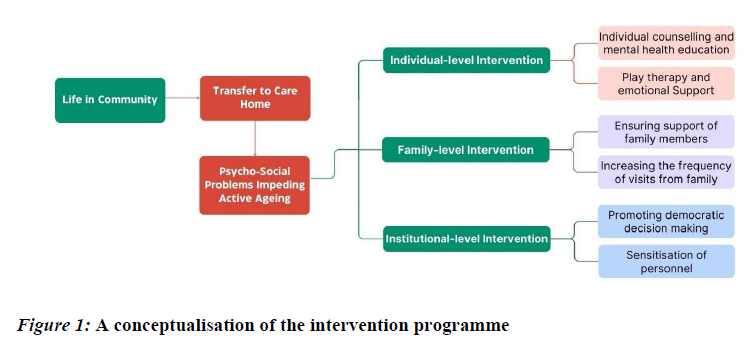
The starting point of this study was to design and implement an intervention strategy that can facilitate active ageing for older adults residing in care homes in Kerala. To this end, the first step was to assess the limitations of the current system in the care homes. Hence, informal in-depth interviews were conducted as an exploratory starting point for the development of the intervention model. The purpose of these interviews was to seek the opinions and ascertain the aspirations of older adults as to what could facilitate active ageing in institutional settings. After the initial interviews with six residents from two care homes, an outline of the intervention model was prepared, and three subject experts were asked to review it. This ensured that both expert and lay opinions were taken into consideration for the formulation of the model, making the model theoretically informed and practically feasible. The model thus developed entailed three levels of intervention strategies, viz. individual-level strategies, family-level strategies and institutional-level strategies, adhering to the active ageing framework. An overview of the model thus prepared is briefly presented below.
Individual-level intervention
Interventions at the individual level were designed to first create a rapport between the research team and the participants, and then to gain an understanding of the general psychological problems faced by the participants of the study. The objective was to welcome the participants to the intervention programme, get them acquainted with the psychosocial care provider/counsellor, encourage them to talk freely about themselves and their thoughts, ideas and concerns, and facilitate a free and open workspace. The individual-level intervention had three major components.
1. Rapport building: The first part of the intervention was to build a rapport between the participants and the social workers involved in the programme. Furthermore, a sense of group feeling had to be promoted among the participants too. The rapport-building session aimed at achieving these ends. To achieve this aim, the participants were gathered in a room and asked to introduce themselves. After the introduction session, there was a video presentation on the importance of the intervention and the social workers engaged in conversations with the participants to make them feel comfortable in the setting. This was followed by individual-level conversations to establish a connection between the social workers and the participants. The activity served as an ice-breaker and helped the participants get acquainted with each other. Also, the social workers who were providing the intervention were able to establish a connection with the participants.
2. Individual counselling and mental health education: This part of the intervention included multiple sessions of individual counselling and psycho-education for the participants. The social workers had to engage each participant in at least three sessions between thirty to forty-five minutes each for every individual counselling session. This was intended to capture the unique problems faced by each participant within the institution. Participants were encouraged to list the difficulties faced and then they were guided by the counsellor on addressing these problems. These sessions spanned the entire period of the intervention and followed the principles of psycho-social counselling. This was complemented by a mental health education session that extended over one to two hours in each institution. It involved group sessions where the participants were encouraged to share the problems they faced with the social worker and other group members. The session included brainstorming activities where individuals shared ideas to tackle problems mentioned by the group members. This was done to help individuals improve their problem-solving skills. The session also included an educational component. The participants were introduced to the idea of active ageing and the ways to achieve it.
3. Play therapy and emotional support: Play therapy or expressive therapy uses play as a medium to help people express themselves and their problems. Play as a medium helps in the expression of subconscious fears in a lesser triggering mode, helping individuals to express their thoughts in a creative way and thus enabling therapists to help them more effectively (Gallo-Lopez & Schaefer, 2005). Though play therapy is predominantly used with children, it is equally effective with adults, especially older adults. Play therapy is a proven method to improve the psycho-social prospects of older adults. The benefits of play therapy include improved self-esteem and socialisation skills, in addition to reducing depression (Cho et al., 2010; Ledyard, 1999; Paramita et al., 2019). A specific play therapy activity was designed for this study, viz. 'Colour your dreams'. The participants were divided into pairs and were provided with paper and crayons. The participants were asked to pick a colour according to their mood and create drawings. Later, the psycho-social care provider asked the participants to explain their emotions. This enables the group to recognise the feelings of others and communicate understanding in verbal and non-verbal ways. It also shows respect and provides emotional support to the person by letting them know that their feelings are reciprocated and they are not alone. The second play therapy activity was titled 'Mad game' to assist the participants in venting their emotions and would build team spirit among participants. This model involved role plays that let the participants ventilate their emotions and reach positive solutions for their problems. This intervention was supervised by the social workers to address any adverse emotional reactions.
Family-level intervention
The family is the most important social group for an older adult, where strong emotional bonds keep the members together. Family members are expected to support older adults in the difficult phases of life, because this is the time when they need to feel respected, secure and loved to effectively cope with the difficult phase of life (Swiderska, 2014). In order to meet these objectives, a family-level intervention component was added to the intervention model. The intervention intended to re-establish the emotional connection between the institutionalised older adults and their families. This was done in two steps, viz., ensuring family support and increasing the frequency of visits from family.
1. Ensuring support of family members: This part of the intervention involved contacting the relatives of the residents of the care homes, preferably close relatives, through digital means to include them in the intervention programme. The relatives were then asked to visit the participants of the study on a fixed date, and a get-together programme was arranged as an initial step in the intervention. The session aimed at creating awareness among family members of the need to provide emotional support to older adults. The session involved a public gathering in the institution followed by family counselling sessions for the individuals along with their families to ensure a good understanding between families and the participants of the study.
2. Increasing the frequency of visits: As a corollary to the first-level intervention, the family members were asked to visit the participants of the study more frequently. Contacting the older adults using phone calls was also promoted to improve the frequency of contact, ensuring that the participants felt close to their families.
Institutional-level intervention
As discussed in earlier sections, care homes often function like "total institutions" (Goffman, 1961:3), which is detrimental to the active ageing prospects of older adults. This means that interventions to improve the active ageing of institutionalised seniors would be effective only if there are corresponding changes in the functioning of the care homes as well. Hence, two important aspects at the institutional level were taken into consideration in this part of the intervention.
1. Promoting democratic decision-making: Democratic decision-making was promoted in the institutions so that the residents felt they had a role in the decision-making process. This sense of self-determination improves the self-esteem of individuals and facilitates active ageing (Teater & Chonody, 2017). The opinions of the participants were expressed in matters such as the daily routine, dietary preferences and recreational activities. Making the residents of care homes decide on matters of their day-to-day living is an improvement from the traditional top-down approach in that it can facilitate active ageing.
2. Sensitisation of personnel: The prospects of ageing actively in care homes depend heavily on the expertise and service of the personnel in the care homes. Often, the personnel in care homes do not engage in skill upgrading or continued education, which often means their knowledge remains stagnant and their practices become outdated. This part of the intervention provided education for the personnel in the care homes and emphasised the importance of a rights-based approach to older care. The personnel were given information on the mental health needs of older adults, with a focus on esteem needs, decision-making power and active ageing. This part of the intervention was also aimed at sustaining the output of the overall intervention by facilitating changes in the overall functioning of the institutions.
FINDINGS AND DISCUSSION
The data for the study were gathered in two steps. In the first step, a baseline study was undertaken with the consenting participants to understand their basic socio-demographic details, health prospects and active ageing status before the intervention. A second set of data was collected one month after the intervention was completed to ascertain whether the intervention had any impact on the active ageing status of the respondents. The findings are listed in the section below.
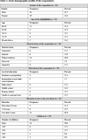
Among the 35 respondents of the study, more than half (54.3 per cent) were women and in terms of age 60-64 was the most common age group (31.4 per cent). More than a quarter of the respondents were either unable to read or write (25.7 per cent) or educated only up to the primary level (25.7 per cent). More than half of the respondents (62.9 per cent) had been residing in the care homes for less than five years. Sixty per cent of the respondents had at least one child, whereas the rest had no children.
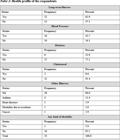
The health profile of the respondents was taken into consideration, as physical health condition is one of the significant determinants of active ageing (WHO, 2002). Besides, the success of interventions can be influenced by the physical health condition of the participants. Most of the respondents of the study (62.9 per cent) were suffering from at least one long-term illness. Almost half, 45.7 per cent, of the respondents were experiencing blood pressure-related health conditions. Only 22.9 per cent of the respondents had diabetes. Very few (8.6 per cent) were suffering from cholesterol. The majority of the respondents (80 per cent) were not suffering from illnesses other than the ones listed above. Only one of the respondents had some sort of disability. The data show that all the participants were experiencing at least some form of physical difficulty, but none of them had any significant disability that could hinder their participation in the intervention programme.
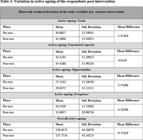
The main purpose of the intervention was to improve the active ageing of the respondents. There were improvements in all domains of active ageing after the intervention. The mean Active ageing: Goal score improved from 39.88 (±12.59) to 41.40 (±13.96) after the intervention. There was a slight improvement in the mean Active ageing: Functional capacity domain, from 34.52 (±12.20) to 35.43 (±11.90). The mean Active ageing: Opportunities domain score improved from 27.1143 (±12.19) to 29.86 (±11.11). There were improvements in the mean Active ageing: Frequency from 26.54 (±11.22) to 31.08 (±10.98). The Overall active ageing score improved from 128.06 (±44.21) to 137.77 (±45.10). In order to determine if the improvements in the active ageing score were statistically significant, a paired t-test was administered.
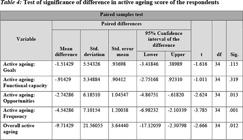
The result of the paired sample t-test showed that there were significant differences across multiple domains of active ageing and the overall active ageing of the participants. The mean Active ageing: Goals score improved by 1.52, but the difference was not significant at p = 0.115 and t = -1.61. The mean Active ageing: Functional capacity improved by 0.92, but the difference was found to be not statistically significant at p = 0.319 and t = -1.011. There was a significant improvement in the Active ageing: Opportunities with a mean difference of 2.74 at p = 0.013 and t = -2.63. The improvement in the mean Active ageing: Frequency score by 4.54 was also found to be significant at p = 0.001 and t = -3.785. The overall active ageing score improved by 9.72 after the intervention, and the improvement was found to be significant at p = 0.012 and t = -2.666. The data show that though the intervention could not improve the goals and functional capacity of the participants significantly, the opportunities and frequency could be improved. This means that the participants' physical capabilities remained almost the same after the intervention, and so did their goals, implying that they were adequately motivated even before the intervention programme. However, what was limiting them was the opportunities and the frequency of pursuing activities that facilitate active ageing, which significantly improved after the intervention, resulting in significant changes in these domains and thereby improving the overall active ageing of the respondents.
DISCUSSION
Older adults residing in care homes, by virtue of being unable to age in place, are often subject to limitations that restrict them from active ageing. Many older adults in developing countries shift to care homes because of problems other than physical ailments or illness. Essentially many care homes accept individuals who are physically and mentally fit and devoid of functional disabilities. Providing active ageing opportunities to these individuals is often not the priority of most care homes, as every so often they employ a neesd-based approach that primarily focuses on meeting physical needs such as nutrition, housing and clothing, sometimes ignoring the psycho-social needs of the residents. The strategy of this study was to employ targeted interventions aimed at improving the active ageing prospects of older adults residing in care homes. The three-level intervention strategy, guided by the active ageing framework, focused on improving the mental health and social interactions of the participants by providing psycho-social counselling and play therapy. In order to involve the families in the intervention programme, family gatherings were convened, and family counselling was arranged. This helped the participants connect more with their close family, significantly improving their overall happiness. Finally, the intervention facilitated structural changes in the functioning of the institution that were aimed at ensuring more autonomy for the residents. A combination of these efforts could effectively improve the active ageing of the participants.
The findings from the study show that older adults in care homes can improve their prospects of actively ageing successfully with proper modifications at environmental, personal and structural levels. The participants of this study were motivated to age successfully even before the intervention, but they lacked opportunities to pursue successful ageing, which translated into poor active ageing scores. However, when the right opportunities were presented through the intervention, they were able to improve their active ageing prospects. This points to the fact that the active ageing of older adults living in care homes can be improved by targeted interventions that facilitate change on structural and individual levels. Social work interventions can be an effective medium to facilitate this change, provided that the social workers are trained and experienced in gerontological social work practices. Also, one of the key requirements for the success of social work interventions for older adults lies in successful institutional-level changes. Hence, social work interventions targeting institutionalised older adults should also target improving personnel expertise and changing institutional routines. Only if these elements change, will the interventions that target the individuals be efficacious. Moreover, there should be social work advocacy for policy changes that facilitate greater autonomy and active ageing of older adults residing in care homes.
RECOMMENDATIONS AND CONCLUSIONThe findings of the study show that social work interventions can improve the active ageing prospects of institutionalised older adults. The intervention strategy employed by this study suggests a set of practice and policy recommendations.
a. Individualised support: One of the key aspects associated with the success of any active ageing intervention model is individualised support addressing the specific needs of the participants. While group-based interventions are essential and practical in care home settings, individualised support catering to the certain unique needs of older adults can help in improving their active ageing prospects. This is particularly true in the case of individualised mental health support for older adults. It is hence recommended that older adults receive individualised support sessions in the care homes. Another aspect associated with individualised support is the enabling of timely contact with family members. Many participants of this study emphasised their need to be in contact with their family members. Increasing the visiting frequencies or at least contact through virtual media should be promoted. The nature and frequency of contact should be ascertained as a care home policy.
b. Modifying the environment: One of the key aspects that this research has emphasised is the uniqueness of the place. Older adults relocating to care homes experience a role diminishment, and ageing actively in care homes would require a positive environment in the care home that helps them rediscover their identity in the new place (Choolayil et al., 2023). This essentially involves helping the older adults become accustomed to the place and the people. The intervention in this study helped participants to bond with each other and generate constructive group dynamics. Also, the personnel were trained regarding the need to promote active ageing and the importance of involving the residents of care homes in the decision-making process. These modifications in the dynamics of the place can facilitate active ageing. Hence, interventions that help the residents of the care homes to bond with each other and with the personnel are recommended.
c. Continuing professional education: Care home personnel in this study were able to significantly improve the active ageing prospects of older adults after being trained by the research group. The training on basic concepts of active ageing and measures to facilitate this helped the personnel in assisting older adults more effectively. Mandatory skill training programmes and continuing education, preferably by gerontology social workers, are recommended in this regard.
Facilitating active ageing in care homes is a priority for the social work profession, given the greying of populations across the globe. Although this study was conducted in care homes in a specific geographical area of India, moving older adults to care homes is on the increase across the globe (Eurofound, 2017; Lloyd-Sherlock, 2019; Wishes & Blessings, 2022). If care providers and social workers are not aware of active ageing as promulgated by the WHO in the Active Ageing Policy Framework (2002), this aspect may be neglected in rendering their service. Active ageing is thus not a necessary feature specific to India, but applicable globally. Social work interventions uniquely catering to the needs of institutionalised older adults have the potential to help people age actively, despite the limitations of care homes.
REFERENCES
- Bhat, A. K. & Dhruvarajan, R. 2001. Ageing in India: Drifting intergenerational relations, challenges and options. Ageing & Society, 21(5): 621-640.
- Bowling, A. 2008. Enhancing later life: How older people perceive active ageing? Aging and Mental Health, 12(3): 293-301.
-
Bussy, D. V. 2021. The adjustment experiences of the aged when entering a retirement home in South Africa. [Online] Available: https://ukzn-dspace.ukzn.ac.za/bitstream/handle/10413/20693/Bussy_Danielle_Vivian_2021.pdf?sequenc e=1&isAllowed=y [Accessed: 21/08/2023].
» https://ukzn-dspace.ukzn.ac.za/bitstream/handle/10413/20693/Bussy_Danielle_Vivian_2021.pdf?sequenc e=1& isAllowed=y - Cho, Y. L., Cha, J. S. & Park, M. S. 2010. Review on elaborated art play therapy in elderly care facility. International Journal of Gerontological Social Welfare, 22: 99-107.
- Choolayil, A. C., Putran, L., Kunder, M. A. & Ilango, P. 2023. Identity reconstruction under institutional living and its impact on life satisfaction among older adults. Ageing International, 48(2): 482-500.
- Curien, K. C., Thomas, M. E. & Rajan, I. 2000. Dynamics of migration in Kerala: Dimensions, differentials and consequences. New Delhi: Orient Longman.
- Dobner, S., Musterd, S. & Fortuijn, J. D. 2016. 'Ageing in place': Experiences of older adults in Amsterdam and Portland. GeoJournal, 81(2): 197-209.
- Dolai, M. C. 2015. Housing for the aged. Economic and Political Weekly, 50(34): 22-25
-
Eurofound. 2017. Care homes for older Europeans: Public, for-profit and non-profit providers. [Online] Available: https://www.eurofound.europa.eu/publications/report/2017/care-homes-for-older-europeans-public-for-profit-and-non-profit-providers [Accessed: 10/06/2023].
» https://www.eurofound.europa.eu/publications/report/2017/care-homes-for-older-europeans-public-for-profit-and-non-profit-providers - Fernández-Mayoralas, G., Rojo-Pérez, F., Martínez-Martín, P., Prieto-Flores, M. E., Rodríguez-Blázquez, C., Martín-García, S., Rojo-Abuín, J. A. & Forjaz, M. J. 2015. Active ageing and quality of life: Factors associated with participation in leisure activities among institutionalized older adults, with and without dementia. Aging & Mental Health, 19(11): 1031-1041.
- Gallo-Lopez, L. & Schaefer, C. 2005. Play therapy with adolescents. New York: Rowman & Littlefield Publishers.
- Goffman, E. 1961. Asylums: Essays on the social situation of mental patients and other inmates. United Kingdom: Taylor and Francis.
- Hedman, M., Häggström, E., Mamhidir, A. G. & Pöder, U. 2019. Caring in nursing homes to promote autonomy and participation. Nursing Ethics, 26(1): 280-292.
- Hossain, Z., Eisberg, G. & Shwalb, D. W. 2018. Grandparents' social identities in cultural context. Contemporary Social Science, 13(2): 275-287.
-
International Federation of Social Workers. 2018. Global Social Work Statement of Ethical Principles [Online] Available: https://www.ifsw.org/global-social-work-statement-of-ethical-principles/ [Accessed: 12/06/2023].
» https://www.ifsw.org/global-social-work-statement-of-ethical-principles/ - Kalideen, L., Van Wyk, J. M. & Govender, P. 2022. Demographic and clinical profiles of residents in long-term care facilities in South Africa: A cross-sectional survey. African Journal of Primary Health Care & Family Medicine, 14(1): e1-e9.
- Karmel, M. 1969. Total institution and self-mortification. Journal of Health and Social Behavior, 10(2): 134-141.
- Katan, J. & Bergman, S. 1988. Social workers and resident participation in old age homes: Professional commitment and practical involvement. Journal of Gerontological Social Work, 13(1-2): 49-64.
- Langford, J. & Keaton, C. 2022. Introduction to social work: A look across the profession. Arlington: Mavs Open Press.
- Lao, S. S. W., Low, L. P. L. & Wong, K. K. Y. 2019. Older residents' perceptions of family involvement in residential care. International Journal of Qualitative Studies on Health and Well-Being, 14(1): 1611298.
- Ledyard, P. 1999. Play therapy with the elderly: A case study. International Journal of Play Therapy 8(2): 57-75.
- Lloyd-Sherlock, P. 2019. Long-term care for older people in South Africa: The enduring legacies of apartheid and HIV/AIDS. Journal of Social Policy, 48(1), 147-167.
- Low, G., von Humboldt, S., Kalfoss, M., Wilson, D.M. & Leal, I. 2021. Aging in place. In: Gu, D. & Dupre, M. E. (eds) Encyclopedia of Gerontology and Population Aging (pp 284289). Springer.
-
Marx, F. J. 2016. Exploring alternative residential care facilities for the intermediate elder: towards a retirement facility in Warwick Junction. [Online] Available: https://researchspace.ukzn.ac.za/xmlui/handle/10413/15260 [Accessed: 21/08/2023].
» https://researchspace.ukzn.ac.za/xmlui/handle/10413/15260 - Menezes, S. & Thomas, T. M. 2018. Status of the elderly and emergence of old age homes in India. International Journal of Social Sciences and Management, 5(1): 1-4.
- Moilanen, T., Kangasniemi, M., Papinaho, O., Mynttinen, M., Siipi, H., Suominen, S. & Suhonen, R. 2021. Older people's perceived autonomy in residential care: An integrative review. Nursing ethics, 28(3): 414-434.
- Paramita, R. W., Azzahra, F., Ramadhani, D. M., Wahyuni, R. & Masfufah, A. A. 2019. The existential communities play therapy to increase self-acceptance in the elderly with post-power syndrome. 4th ASEAN Conference on Psychology, Counselling, and Humanities (ACPCH 2018) (pp. 171-173). Atlantis Press.
- Rantanen, T., Portegijs, E., Kokko, K., Rantakokko, M., Törmäkangas, T. & Saajanaho, M. 2019. Developing an assessment method of active aging: University of Jyvaskyla active aging scale. Journal of Aging and Health, 31(6): 1002-1024.
-
Reddy, P. 2002. The plight of older persons in South Africa. In United Nations Population Fund (Ed.). Situation and Voices: The Older Poor and Excluded in South Africa and India. (pp. 59-92). United Nations Population Fund. [Online] Available: https://www.unfpa.org/sites/default/files/resource-pdf/ageing_voices.pdf
» https://www.unfpa.org/sites/default/files/resource-pdf/ageing_voices.pdf - Schorr A. V. & Khalaila, R. 2018 Aging in place and quality of life among the elderly in Europe: a moderated mediation model. Archives of Gerontology and Geriatrics, 77(1): 196-204.
- Singh, V. & Kumari, P. 2017. Factors responsible for shifting of elderly women to old age homes in Varanasi district: A cross sectional study. International Journal of Applied Home Science, 4(7): 525-528.
-
Social Justice Department. (n.d.) Old age homes. [Online] Available http://sjd.kerala.gov.in/orph.php [Accessed: 12/06/2023].
» http://sjd.kerala.gov.in/orph.php - Swiderska, M. 2014. The importance of family support in old age. Pedagogika Rodziny, 4(1): 15-22.
- Teater, B. & Chonody, J. 2017. Promoting actively aging: Advancing a framework for social work practice with older adults. Families in Society, 98(2): 137-145.
-
United Nations. 2017. Department of Economic and Social Affairs Population Division. Living Arrangements of Older Persons: A Report on an Expanded International Dataset. New York. [Online] Available: https://www.un.org/en/development/desa/population/publications/pdf/ageing/LivingArrangements.pdf [Accessed: 23/08/2023].
» https://www.un.org/en/development/desa/population/publications/pdf/ageing/LivingArrangements.pdf - Van Dongen, E. 2005. Remembering in times of misery: Can older people in South Africa 'get through'? Ageing & Society, 25(4): 525-541.
- Van Malderen, L., De Vriendt, P., Mets, T. & Gorus, E. 2016. Active ageing within the nursing home: A study in Flanders, Belgium. European Journal of Ageing, 13(3): 219-230.
-
Wishes and Blessings. 2022. Old age homes in India. [Online] Available: https://wishesandblessings.net/blog/old-age-homes-in-india-2022/ [Accessed: 14/06/2023].
» https://wishesandblessings.net/blog/old-age-homes-in-india-2022/ - Wongsala, M., Anbacken, E. M. & Rosendahl, S. 2021. Active ageing: Perspectives on health, participation, and security among older adults in northeastern Thailand-a qualitative study. BMC geriatrics, 21: 1-10.
-
World Health Organization. 2002. Active ageing: A policy framework. [Online] Available: https://extranet.who.int/agefriendlyworld/wp-content/uploads/2014/06/WHO-Active-Ageing-Framework.pdf [Accessed 14/06/2023].
» https://extranet.who.int/agefriendlyworld/wp-content/uploads/2014/06/WHO-Active-Ageing-Framework.pdf
Article accepted: 27/09/2023
Article published: 14/06/2024
FUNDING
This article is the outcome of a Major Research Project (F.No. 02/96/2019-20/MJ/RP) funded by the Indian Council of Social Science Research, New Delhi.
AUTHOR BIOGRAPHY
Laxmi Putran is an Assistant Professor at the Department of Social Work, Central University of Kerala. Her areas of expertise include gerontology, tribal welfare and gender. She was the principal investigator of the project titled "Psycho-social care for ageing actively under institutional care", from which this article is derived.
Mohan A Kunder is a professor at the Department of Social Work, Central University of Kerala. His areas of expertise include community organisation, sustainability studies and gerontology. He was the co-investigator of the project titled "Psycho-social care for ageing actively under institutional care", from which this article is derived.
Anoop C Choolayil is a Senior Research Fellow at the Department of Social Work, Central University of Kerala. His research interests include human rights, health equity and gerontology. He wrote the initial draft of the article.