Splints and immobilisation approaches used for second to fifth metacarpal fractures: a systematic review
Abstract
BACKGROUND: The second to fifth metacarpal fractures are immobilised with splints, plaster of Paris (POP) or buddy strapping for a period of time. However, no recent evidence-based splinting and immobilisation programme exists for the management thereof, leaving a gap in the literature to inform clinical practice. This review aimed to review, appraise and collate the literature on splints and immobilisation approaches used for second to fifth metacarpal fractures after surgical and conservative management in adults aged 20 to 59 years. METHODS: The review included experimental study designs, quasi-experimental studies, cohort studies and case-control studies from January 2008 to September 2018. Two reviewers independently screened, selected, appraised and extracted data from the included studies. Preferred reporting items for systematic reviews and meta-analysis (PRISMA) guided the reporting. Joanna Briggs Institute (jBl) critical appraisal tools were used to assess the risk of bias for each included study. RESULTS: Database searches generated 1 005 articles with ten additional articles found on Google Scholar. Ten articles were included: two randomised controlled trials (RCTs), one quasi-RCT, four prospective studies, one retrospective record review, one retrospective study and one comparative study with descriptive reporting of the results. CONCLUSION: High level 1b evidence suggests that no reduction, a soft wrap and buddy strapping for three weeks with early active finger and wrist mobilisation are effective for individuals who sustained boxer's fractures with < 70° angulation. To guide clinical practice, high-level research is needed to determine the immobilisation of second to fifth metacarpal fracture types. Level of evidence: Level 2
boxer's fracture/s; immobilisation; metacarpal fractures; splints; orthosis
Introduction
Metacarpal fractures account for 10% of bony injuries and are one of the most prevalent upper limb injuries among adults.12345
The problem is that no best-evidence splinting and immobilisation programme exists to inform clinical practice. This can lead to disability, decreased hand function and poor health-related quality of life (HRQoL). A period of immobilisation is widely deemed part of the management after sustaining second to fifth metacarpal fractures.67-9 Conservative management includes closed reduction if required, with external protection utilising a splint, U-shaped, non-circumferential plaster of Paris (POP), strapping the injured metacarpal finger to the adjacent uninjured metacarpal finger (buddy strapping) or mobilisation.
Splints and immobilisation approaches for second to fifth metacarpal fracture management vary in the literature. Fabrication of customised splints requires technical skill, in-depth knowledge of pathology and anatomy, bone-healing time frames, and surgery. Occupational therapists and physiotherapists trained in the management of hand injuries are qualified to choose, design, apply, individualise and adjust splints according to their specific needs, and administer rehabilitation programmes. Reviewing existing literature on splints and immobilisation approaches used for second to fifth metacarpal fractures would provide an appraisal of evidence on the various splints and immobilisation approaches currently used to provide guidance to clinicians in clinical practice.
Therefore, the research question guiding the scoping type systematic review was: What evidence is available for conservative and post-surgical splints and immobilisation approaches utilised (including, but not limited to, POP and/or splints) as part of initial management for adults older than 20 years and younger than 59 years of age, reporting on outcomes which included, but were not limited to, hand function, HRQoL, disability, digital ROM, grip strength and fine motor dexterity after sustaining single or multiple second to fifth metacarpal fractures?
The review's objective was to determine the immobilisation and splint approaches utilised for post-surgical and conservative management for 20- to 59-year-old adults who sustained a single or multiple second to fifth metacarpal fracture.
Methods
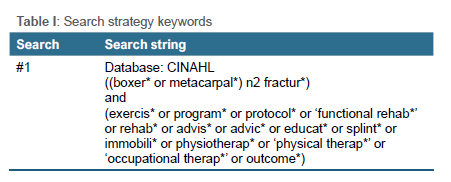
This research was registered with PROSPERO (number CRD 42019132620), and the review protocol adhered to PRISMA recommendations.10Table I.
An adapted Cochrane document for randomised controlled trials (RCT) and non-RCTs (Cochrane website) was piloted on three studies to ensure accuracy and consistency. Two independent reviewers independently screened, selected, appraised and extracted data from three eligible studies. The pilot study was undertaken to assess the consistency of the review procedures. Joanna Briggs Institute (JBI) critical appraisal tools were used to assess risk of bias for the pilot studies.12
Eligibility
Intervention studies in English for the period January 2008 to September 2018 were included. Eligible studies complied with the following inclusion criteria: adult participants between 20 and 59 years of age, reporting on conservative and post-surgical immobilisation and splints utilised (including, but not limited to, POP and/or splints, buddy strapping) for single or multiple second to fifth metacarpal fractures. Studies with participants younger than 20 years were not included due to skeletal immaturity.112
Exclusion criteria were studies investigating thumb metacarpal fractures, studies investigating second to fifth metacarpal fractures with an associated tendon injury, nerve injury or preexisting osteoarthritis or rheumatoid arthritis. Studies reporting on concurrent fractures of the phalangeal, carpal, distal radius and ulna bones were also excluded. Studies reporting on fractures with infections were also excluded.
Screening
After the database searches, all identified articles were imported into Endnote® (Clarivate Analytics, PA, USA), and duplicates removed. Two reviewers independently screened the identified articles against their titles and abstracts. The remaining articles were independently assessed for eligibility according to the inclusion criteria in a standardised and unbiased manner. Disagreement in selecting included articles was resolved between the reviewers. Inter-rater reliability of 0.80 Cronbach's alpha among the two reviewers during the second phase indicated a substantial agreement and consensus during the eligibility phase. Full-text articles were retrieved for all eligible articles. Data was extracted from the included articles using the piloted data extraction template.
Data extraction
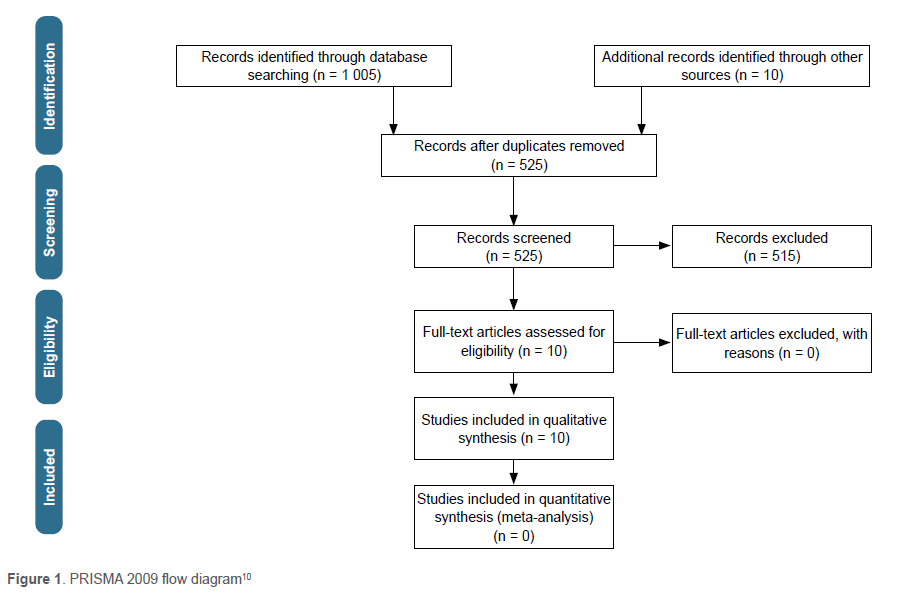
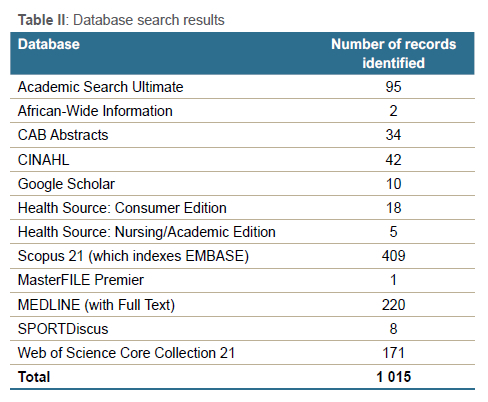
The database searches generated 1 005 research articles, with ten additional articles identified through a Google Scholar search, resulting in 1 015 articles (Table ll). From the total 1 015 research articles, 490 duplicates were removed, with 525 articles remaining for screening by the two reviewers. The reviewers excluded 515 articles due to languages other than English (69), paediatric articles (37), metacarpal fractures with associated tendon injuries (15), studies performed on animals (88), articles reporting on only surgical intervention for metacarpal fractures (295) and other sources with participants older than 59 years and first (thumb) metacarpal fractures (11) (Figure l).
Assessment of the methodological quality
The reviewers independently assigned a grade and assessed the risk of bias for each included study, with the JBI critical appraisal tools assessing the studies' relevance, results and trustworthiness.12
To ensure methodological rigour, the reviewers assessed all the included eligible articles according to the grading of recommendations assessment, development and evaluation (GRADE) method.1311
Ten articles were included in totality, showing a dearth of literature in the field. Two articles had high-quality ratings, one moderate quality, and seven low-quality ratings, as shown in the summary of the findings table available online (Supplemental table). High-quality rating indicated confidence in estimating effects, and future research is unlikely to affect or change the confidence. A moderate quality rating indicated that further research is likely to impact confidence and may even change the estimate. A low quality indicated that future research has a very high likelihood of impacting the confidence in effect estimation.13https://saoj.org.za/index.php/saoj/article/view/524/626).
Results
According to the objective, the presentation of the narrative results below is to appraise and collate the literature on splint and immobilisation approaches for conservative and post-surgical immobilisation and splint approaches used in 20- to 59-year-old patients who sustained a single and/or multiple second to fifth metacarpal fracture(s) according to the specified fracture levels.
Evidence on shaft metacarpal fractures
A prospective study conducted in Saudi Arabia investigated the conservative management of spiral and long oblique shaft fractures of second to fifth metacarpal bones.141414
A prospective study conducted in the United Kingdom included 30 individuals who sustained single or multiple, middle or border, closed spiral metacarpal fractures.151515
In Nova Scotia, a prospective research study was conducted on 61 patients with second to fifth non-scissoring spiral metacarpal fractures where they were managed conservatively.1616
From these three studies, the following splint can be used with confidence for individuals who sustained second to fifth metacarpal shaft fractures:
• Thermoplastic splint with the wrist in 20-30° with the fingers free.
Evidence on neck and shaft of fifth metacarpal fractures
A Turkish retrospective record review comparative study was conducted on 140 participants with a mean age of 30.56 years. A low GRADE quality of evidence rating was given. The inclusion criteria included sustaining an isolated, extra-articular, neck or shaft fifth metacarpal fracture with more than 30° of angulation. The participants were allocated to two groups.1717
A clinical concern is that group A and group B, the wrist, PIPJ and DIPJ joints were included with possible reporting bias where complete ROM reporting was omitted. In the POP group, the long period of immobilisation caused pressure points and neuropraxia. The participants preferred the U-shaped ulnar gutter splints for their comfort, which clinicians should consider.
From these studies:
• No best-evidence splinting and immobilisation approach can be deducted as unaffected joints are included in the immobilisation.
Evidence on neck, shaft and base of fifth metacarpal fractures
A retrospective study was conducted in Glasgow, on 162 individuals who sustained fifth metacarpal (neck, shaft, base) fractures.18 1818
A lack of reporting on outcomes, such as pain information measured with the EQ-VAS, which is part of the EQ-5D, TAM of the fifth finger and grip strength, affects the generalisability of this study's results to other populations. However, in a well-selected group of individuals who sustained fifth metacarpal neck, shaft and base fractures, the management pathway adds a valuable option for clinicians, especially in settings with limited resources. The benefits include decreased orthopaedic and hand therapy follow-up sessions, with positive financial and time implications for both government and patients.
From the studies, the immobilisation that can be used with moderate confidence, for individuals who sustained single or multiple neck, shaft or base of fifth metacarpal fractures, is:
• Buddy strapping the fifth to the fourth finger.
Evidence on neck of fifth (boxer's) metacarpal fractures
In Switzerland, a randomised multicentre trial on 68 participants who sustained fifth metacarpal neck fracture with < 70° of angulation and no rotational deformities was conducted.191919
In Turkey, a comparative study included 24 male participants working in professional environments and who sustained uncomplicated closed fifth metacarpal neck fractures.2020
The participants were allowed to perform self-care and other light everyday activities. Outcomes included: satisfaction and hand function on days 30 and 45 follow-up, with the QuickDASH questionnaire, TAM, angulation, shortening and rotation of the fractures at 30 days follow-up and return to work. All participants returned to work by 30 days postoperatively. No statistically significant difference between the conservative and surgical groups was seen in TAM, final shortening and final angulation. However, statistically significant differences were seen when the surgical group returned to work earlier (p < 0.001) and presented with improved hand function (p < 0.05). The recommendation from the authors was that antegrade intramedullary K-wire fixation for fifth metacarpal fractures should be performed.20
In a Swiss study, 40 individuals sustained a closed neck of fifth metacarpal fracture with palmar displacement of 30° to 70°.212119,21 A palmar two-finger splint, followed by a metacarpal hand-based brace, supports the fracture site while allowing hand function and ROM while the fracture is healing.
From the three studies, the following splints can be used with confidence for individuals who sustained neck of fifth metacarpal fractures:
• Soft wrap and buddy strapping the fifth to the fourth fingers for three weeks.
• Palmar two-finger splint for five days followed by applying a thermoplastic metacarpal hand-based splint including the fourth and fifth MCPJs for five weeks.
In conclusion, in carefully selected individuals who sustained fifth neck of metacarpal fractures, buddy strapping and metacarpal hand-based splint immobilisation provide comfort, improved hand function, less stiffness and earlier return to work.
Evidence on second to fifth (not yet covered in other objectives) metacarpal fractures
A German prospective cohort RCT was conducted on 60 participants who sustained non-thumb metacarpal fractures.99
In another article, an evidence-based pathway was compiled using a systematic review of all research before 2008.2222
The base of the metacarpal fracture treatment pathway of the index finger (IF), middle finger (MF), ring finger (RF), and little finger (LF) was as follows: extra- and intra-articular fractures treated conservatively or with K-wires were given a forearm wrist splint positioned with the wrist at 20° extension, for four weeks. At four weeks from the day of the injury, light function and wrist exercises were encouraged. The splint was discarded after six weeks. When the fracture was managed surgically with an ORIF, light function was commenced at two weeks, with the splint discarded at four weeks.22
The shaft of metacarpal fracture treatment pathway for the IF, MF, RF and LF: forearm-based splints incorporating and positioning the wrist at 20° extension with the affected and one adjacent finger MCPJs positioned in 70° of flexion with a dorsal hood piece of the splint which was to be worn for three weeks. All other joints were left free and were able to move in the splint. After three weeks, the dorsal hood was removed, but the forearm-based splint was continued and only taken off for exercise periods. Exercises at three weeks included wrist and MCPJ active movement. The splint was worn only at night for two more weeks and discarded at six weeks. At four weeks, light function commenced. This time frame was applied to conservative or K-wire management of MJPJ shaft fractures. The fracture was managed with an ORIF, light function was initiated at two weeks, and the splint was discarded at four weeks.22
Neck and head metacarpal fracture treatment pathway for the IF, MF, RF and LF: a splint (hand-based) that positioned the affected MCPJ and an adjacent Anger's MCPJ in flexion of 70° was worn for a period of two to four weeks. After this period, the splint was removed, and the Anger's buddy strapped for another two weeks. In conservative or K-wire management, light function was commenced at four weeks, splint intervention continued at night and for protection during activities, and discarded at six weeks. In the ORIF managed fractures, light function was commenced at two weeks, splint intervention continued at night and for protection during activities and discarded at four weeks. Strengthening was started at six weeks.22
The evidence-based pathway was tested on 23 individuals.23 2323
From these studies for individuals who sustained a variety of different types of single or multiple second to fifth metacarpal fractures:
• Thermoplastic customised splinting and immobilisation period with all the unaffected joints not included, with early active mobilisation of unaffected joints encouraged.
Discussion
The purpose of this scoping-type systematic review was to determine the immobilisation and splint approaches utilised for post-surgical and conservative management for 20- to 59-year-old adults who sustained a single or multiple second to fifth metacarpal fracture. A detailed description of the literature has been provided, indicating no single preferred splint and method of immobilisation for each type of second to fifth metacarpal fracture.
Shaft fractures of second to fourth metacarpals were managed with certain similarities, such as spiral fractures, receiving forearm-based wrist splints.15,16 Active mobilisation was suggested for spiral fractures, but intra- and extra-articular fractures were conservatively or surgically managed with forearm-based thermoplastic splints with a dorsal hood piece left for three weeks with the splint being removed from four weeks.14,23 Wrist POP for two weeks was also suggested for spiral and long oblique fractures.1415,16,20 The authors in the sourced articles recorded various immobilisation methods for the neck (boxer's) of the fifth metacarpal fractures. These included a short POP wrist splint, a U-shaped gutter splint including the wrist, a soft palmar wrap and buddy strapping for three weeks or a wrist POP up to PIPs for four weeks.16,19 Also included was a U-shaped ulnar gutter splint for four weeks for conservative management and a U-shaped ulnar gutter splint seven days from K-wire insertion.2021231924,25 At eight weeks, participants who sustained neck of fifth metacar-pal fractures managed with an elastic bandage around their metacarpals and wrist with early protected movement, displayed stronger grip strengths than the immobilisation in a U-shaped splint participants. 2627
For the metacarpal base, intra- and extra-articular fractures, a forearm wrist splint for four weeks after K-wires and six weeks after conservative management was utilised.23917
The heterogeneity of the studies prevented the authors from conducting an effectiveness systematic review, and hence a scoping-type systematic review resulted. OpenDOAR was not used in the grey literature search and is a limitation.
Conclusion
We report on the evidence on splinting and immobilisation approaches used for second to fifth metacarpal fractures. The information provided should be used to guide decision making in clinical practice to ensure optimal hand function, decreased stiffness and early return to work. As the review only yielded ten relevant articles, a gap in the literature regarding evidence-based splinting and immobilisation programmes is seen, except for the initial immobilisation of boxer's fractures, where adequate evidence was found. Level 1b evidence for no reduction, a soft wrap and buddy strapping for three weeks with early active wrist and finger for management of boxer's fractures was found to be effective. Further research is, however, required for the other types of second to fifth metacarpal fracture immobilisation.
It is recommended that future research focuses on the effects of splints and immobilisation approaches using adequately powered RCTs and controlling for confounding variables, e.g., fracture type. Standardised outcome measures for both conservative and post-surgical groups should be used.
Acknowledgements
Thanks to Ms Annamarie du Plooy, an information scientist at the University of the Free State, for assisting with searching the databases. Thanks to Prof. Joanne Potterton for her reading of the draft and her support.
Ethics statement
The authors declare that this submission is in accordance with the principles laid down by the Responsible Research Publication Position Statements as developed at the 2nd World Conference on Research Integrity in Singapore, 2010.
Prior to commencement of the study, ethical approval was obtained from the following ethical review board: The Health Sciences Research Ethics Committee of the University of the Free State, ethical clearance number UFS-HSD2019/0046/2602. All procedures were in accordance with the ethical standards of the responsible committee on human experimentation (institutional and national) and with the Helsinki Declaration of 1975, as revised in 2008.
Declaration
The authors declare authorship of this article and that they have followed sound scientific research practice. This research is original and does not transgress plagiarism policies.
Author contributions
MMK: conceptualised, drafted the protocol, submitted for ethical clearance, wrote the first draft and refined the article
RYB: read, elaborated on and refined the article
CB: read, elaborated and refined the article
LMH: assisted as an independent reviewer, read, elaborated on and refined the article
ORCID
Keller MM https://orcld.org/0000-0002-1513-295X
Barnes RY © https://orcld.org/0000-0002-3743-0077
Brandt C https://orcld.org/0000-0002-8445-1348
Hepworth LM © https://orcld.org/0000-0002-5747-7382
References
- 1. Bucholz RW. The epidemiology of fractures. Philadelpla, PA.: Llpplncott Williams & Wllklns; 2009.
-
2. Nakashian MN, Pointer L, Owens BD, Wolf JM. Incidence of metacarpal fractures in the US population. Hand. 2012;7(4):426-30. https://doi.org/10.1007/s11552-012-9442-0.
» https://doi.org/10.1007/s11552-012-9442-0 -
3. De Jonge JJ, Kingma, J, Van der Lei B, et al. Fractures of the metacarpals. A retrospective analysis of incidence an aetiology a review of the English-language literature. Injury. 1994;25(6):365-68. https://doi.org/10.1016/0020-1383(94)90127-9.
» https://doi.org/10.1016/0020-1383(94)90127-9 -
4. Anakwe RE, Aitken SA, Cowie JG, et al. The epidemiology of fractures of the hand and the influence of social deprivation. J Hand Surg Eur Vol. 2007;36(1):62-65. https://doi.org/10.1177/1753193410381823.
» https://doi.org/10.1177/1753193410381823 -
5. Saleeby PW. An introduction to the International Classification of Functioning, Disability and Health (ICF). Int J Disabil Hum Dev. 2016;15(1):1-3. https://doi.org/10.1515/ijdhd-2015-0027.
» https://doi.org/10.1515/ijdhd-2015-0027 -
6. Wong VW, Higgins JP. Evidence-based medicine: management of metacarpal fractures. Plast Reconst Surg. 2017;140(1):140e-51e. https://doi.org/10.1097/PRS.0000000000003470.
» https://doi.org/10.1097/PRS.0000000000003470 -
7. Ozer K, Gillani S, Williams A, et al. Comparison of intramedullary nailing versus plate-screw fixation of extra-articular metacarpal fractures. J Hand Surg. 2008;33(10):1724-31. https://doi.org/10.1016/j.jhsa.2008.07.011.
» https://doi.org/10.1016/j.jhsa.2008.07.011 -
8. Wong TC, Ip FK, Yeung SH. Comparison between percutaneous transverse fixation and intramedullary K-wires in treating closed fractures of the metacarpal neck of the little finger. J Hand Surg. 2006;31(1):61-65. https://doi.org/10.10164.jhsb.2005.06.022.
» https://doi.org/10.10164.jhsb.2005.06.022 -
9. Gülke J, Leopold B, Grõzinger D, et al. Postoperative treatment of metacarpal fractures- Classical physical therapy compared with a home exercise program. J Hand Ther. 2018;31(1):20-28. https://doi.org/10.1016/jjht.2017.02.005.
» https://doi.org/10.1016/jjht.2017.02.005 -
10. Moher D, Liberati A, Tetzlaff J, Altman DG. Preferred reporting items for systematic reviews and meta-analysis: the PRISMA statement. J Clin Epidemiol. 2009;62(10):1006-12. https://doi.org/10.1016/j.jclinepi.2009.06.005.
» https://doi.org/10.1016/j.jclinepi.2009.06.005 -
11. De Sanctis V, Di Maio S, Soliman A, et al. Hand X-ray in pediatric endocrinology: Skeletal age assessment and beyond. Indian J Endocrinol Metab. 2014;18(7):63. https://doi.org/10.4103/2230-8210.145076.
» https://doi.org/10.4103/2230-8210.145076 -
12. Tufanaru C, Aromataris E, Campbell J, Hopp LMZ. Institute TJB. Chapter 3: Systematic reviews of effectiveness. [Internet]. 2017. Available from: https://reviewersmanual.joannabriggs.org/.
» https://reviewersmanual.joannabriggs.org/ -
13. Oxman AD. Grading quality of evidence and strength of recommendations. BMJ. 2004;328(7454):1490-94. https://doi.org/10.1136/bmj.328.7454.1490.
» https://doi.org/10.1136/bmj.328.7454.1490 -
14. Al-Qattan MM. Outcome of conservative management of spiral/long oblique fractures of the metacarpal shaft of the fingers using a palmar wrist splint and immediate mobilisation of the fingers. J Hand Surg Eur Vol. 2008;33(6):723-27. https://doi.org/10.1177/1753193408093559.
» https://doi.org/10.1177/1753193408093559 -
15. Khan A, Giddins G. The outcome of conservative treatment of spiral metacarpal fractures and the role of the deep transverse metacarpal ligaments in stabilising these injuries. J Hand Surg Eur Vol. 2015;40(1):59-62. https://doi.org/10.1177/1753193414540408.
» https://doi.org/10.1177/1753193414540408 -
16. Macdonald BB, Higgins A, Kean S, et al. Long-term follow-up of unoperated, nonscissoring spiral metacarpal fractures. Plast Surg. 2014;22(4):254-58. https://doi.org/10.4172/plastic-surgery.1000888.
» https://doi.org/10.4172/plastic-surgery.1000888 -
17. Gulabi D, Avci CC, Cecen GS, et al. A comparison of the functional and radiological results of Paris plaster cast and ulnar gutter splint in the conservative treatment of fractures of the fifth metacarpal. Eur J Orthop Surg Traumatol. 2014;24(7):1167-73. https://doi.org/10.1007/s00590-013-1290-2.
» https://doi.org/10.1007/s00590-013-1290-2 -
18. Gamble D, Jenkins PJ, Edge MJ, et al. Satisfaction and functional outcome with 'self-care' for the management of fifth metacarpal fractures. Hand. 2015;10(4):607-12. https://doi.org/10.1007/s11552-015-9749-8.
» https://doi.org/10.1007/s11552-015-9749-8 -
19. Van Aaken J, Fusetti C, Lucchina, S, et al. Fifth metacarpal neck fractures treated with soft wrap/buddy taping compared to reduction and casting: results of a prospective, multicenter, randomised trial. Arch Orthop Trauma Surg. 2016:136(1):135-42. https://doi.org/10.1007/s00402-015-2361-0.
» https://doi.org/10.1007/s00402-015-2361-0 -
20. Cepni SK, Aykut S, Bekmezci T, et al. A minimally invasive fixation technique for selected patients with fifth metacarpal neck fracture. Injury. 2016;47(6):1270-75. https://doi.org/10.1016/j.injury.2016.01.034.
» https://doi.org/10.1016/j.injury.2016.01.034 -
21. Strub B, Schindele S, Sonderegger J, et al. Intramedullary splinting or conservative treatment for displaced fractures of the little finger metacarpal neck? A prospective study. J Hand Surg Eur Vol. 2010;35(9):725-29. https://doi.org/10.1177/1753193410377845.
» https://doi.org/10.1177/1753193410377845 -
22. Toemen A, Midgley R. Hand therapy management of metacarpal fractures: An evidence-based patient pathway. Hand Therapy. 2010:15(4):87-93. https://doi.org/10.1258/ht.2010.010018.
» https://doi.org/10.1258/ht.2010.010018 -
23. Midgley R, Toemen A. Evaluation of an evidence-based patient pathway for non-surgical and surgically managed metacarpal fractures. Hand Therapy. 2011;16(1):19-25. https://doi.org/10.1258/ht.2010.010026.
» https://doi.org/10.1258/ht.2010.010026 -
24. Pellatt R, Fomin I, Pienaar C, et al. Is buddy taping as effective as Plaster immobilization for adults with an uncomplicated neck of fifth metacarpal fracture? a randomized controlled trial. Ann Emerg Med. 2019;74(1):88-97. https://doi.org/10.1016/jannemergmed.2019.01.032.
» https://doi.org/10.1016/jannemergmed.2019.01.032 -
25. Martínez-Catalán N, Pajares S, Llanos L, et al. A prospective randomized trial comparing the functional results of buddy taping versus closed reduction and cast immobilisation in patients with fifth metacarpal neck fractures. J Hand Surg Am. 2020;45(12):1134-40. https://doi.org/10.1016/j.jhsa.2020.05.013.
» https://doi.org/10.1016/j.jhsa.2020.05.013 -
26. Retrouvey H, Jakubowski J, Al-Taha M, et al. Prospective multicenter randomised controlled trial comparing early protected movement and splinting for fifth metacarpal neck fracture. Plast Surg. 2022;30(1):6-15. https://doi.org/10.1177/22925503211011952.
» https://doi.org/10.1177/22925503211011952 -
27. Kaynak G, Botanlioglu H, Caliskan M, et al. Comparison of functional metacarpal splint and ulnar gutter splint in the treatment of fifth metacarpal neck fractures: a prospective comparative study. BMC Musculoskelet Disord. 2019;20(1)169:1-10. https://doi.org/10.1186/s12891-019-2556-6.
» https://doi.org/10.1186/s12891-019-2556-6
Accepted: January 2021
Published: May 2022
Editor: Dr Duncan McGuire, University of Cape Town, Cape Town, South Africa
Funding: The authors declare that no commercial funding was received. The reviewer payments were funded by the Early Career Academic Development grant from the University of the Witwatersrand.
Conflict of interest: The authors declare they have no conflicts of interest that are directly or indirectly related to the research.