Percutaneous radiofrequency ablation as a treatment for chronic back pain: knowledge, attitude and practices of South African spine surgeons
Abstract
BACKGROUND: Radiofrequency ablation (RFA) is a well-established treatment for spinal facet joint pain, especially in developed countries. However, several aspects of RFA lack high-quality evidence and the treatment remains contentious. In South Africa, little is known about the perception of RFA or how widely it is utilised. This study investigated the knowledge, attitude and practices of South African spine surgeons concerning the use of RFA to treat chronic axial back pain METHODS: A survey was conducted at the 2023 South African Spine Society Congress. Spinal orthopaedic surgeons and neurosurgeons were eligible to participate. Responses were presented using descriptive statistics: overall and by subgroups who did and did not practise RFA. Factors associated with conducting RFA were investigated in univariate and multivariate analyses RESULTS: Eighty-nine spine surgeons completed the survey, of which 43 (49%) conducted RFA. Full-time private practice had the strongest association with conducting RFA (adjusted risk ratio 2.52, 95% confidence interval [CI] 1.23-5.16). Overall, 62 of 87 (70%) respondents regarded RFA as a good treatment option in certain patients, including 19 of 45 (42%) of respondents who do not conduct the procedure. RFA training was heterogeneous, with course attendance the most common source of training (16 of 41, 39%). RFA practitioners conducted a median of 50 RFAs per year (interquartile range [IQR] 20-80 RFAs per year), although ten practitioners conducted ≥ 100 RFAs per year CONCLUSION: Among the spine surgeons surveyed, there was majority support for the use of RFA in certain patients, and approximately half of respondents conducted the procedure. Findings of potential concern included heterogeneity in RFA training and the observation that a few surgeons conducted particularly high volumes of RFA. Further research should explore whether RFA is used appropriately and effectively in the South African setting by investigating patient selection and technique LEVEL OF EVIDENCE: 3
neurotomy; rhizotomy; spine; facet joint; chronic pain
Introduction
Chronic neck and lower back pain are among the leading causes of years lived with disability worldwide.12,3 Briefly, this procedure involves insertion of an insulated needle at the level of the affected vertebra and use of thermal energy to create a lesion in the target sensory nerve, disrupting the pain signal to the brain.4,5
RFA has a short recovery time and may be an attractive option for patients desiring timeous relief without major surgery. It may also be a prudent choice in patients at increased risk of surgical complications, although this aspect has received little attention. Notably, RFA should form part of a multimodal, interdisciplinary pathway of care for back pain,67-9 While similar data from other countries is lacking, RFA for axial back pain appears to be commonly used, at least in developed country settings.6,10-14
The scientific literature relating to RFA for chronic back pain is extensive and includes numerous evidence syntheses.4,15-19 However, this evidence base has limitations such as variation in patient selection, variation in technical aspects of the procedure, variation in outcome assessment, a predominance of small, single centre studies, and lack of long-term follow-up.16,18,20-22 Thus many aspects of RFA remain contentious and without high-quality evidence.10,12,13,22 Efforts to address this problem include several recent consensus guidelines6,13,14,23 and the RADICAL randomised controlled trial (RCT) on the effectiveness of RFA for low back pain, currently underway in the United Kingdom.12
Little is known about the use of the somewhat controversial RFA procedure in South Africa, including its utilisation for axial back pain. The current study investigated the knowledge, attitude and practices of spine surgeons in South Africa concerning the use of RFA as a treatment for chronic back pain. This allowed for insight into the prevalence of RFA use among these healthcare providers, comparison of surgeon perceptions to the available literature, and identification of further research needs in our setting.
Methods
This cross-sectional study involved a knowledge, attitude and practice survey conducted at the annual South African Spine Society (SASS) Congress, held in Cape Town in May 2023. Most congress delegates were spine surgeons although registrars, physiotherapists and other interested parties also attended. To be eligible for the study, individuals were required to be neurosurgeons or orthopaedic surgeons currently practising spine surgery in South Africa.
Data collection and analysis
To our knowledge, there were no existing survey instruments which were suitable for the study. Thus, a short survey was developed based on the study objectives and the existing literature on the topic. RFA is colloquially referred to as 'rhizotomy' in South Africa, and 'rhizotomy' is also used in funder billing code descriptions for the procedure. The survey clearly stated that the content pertained to percutaneous rhizotomy via RFA for chronic back pain. The term 'rhizotomy' was used thereafter in the survey questions. Three spinal surgeons reviewed the survey for face validity. The survey was distributed at the congress in paper-based form. Participation was entirely voluntary, and surveys were completed anonymously. Responses were captured electronically on the REDCap data management platform.
Categorical data were reported as frequencies and percentages. Continuous data were assessed for normal distribution and presented as mean and standard deviation or median and interquartile range (IQR), as appropriate. The association between practising RFA for chronic back pain and various other survey responses was investigated using chi-squared tests and Fisher's exact test as appropriate, with significance accepted at p < 0.05. Analyses were conducted using jamovi version 1.6 (www.jamovi.org), Stata Statistical Software: Release 16, College Station, TX: StataCorp LLC, and GraphPad Prism version 9.2.0 for Mac OS, GraphPad Software, San Diego, California USA, www.graphpad.com.
Results
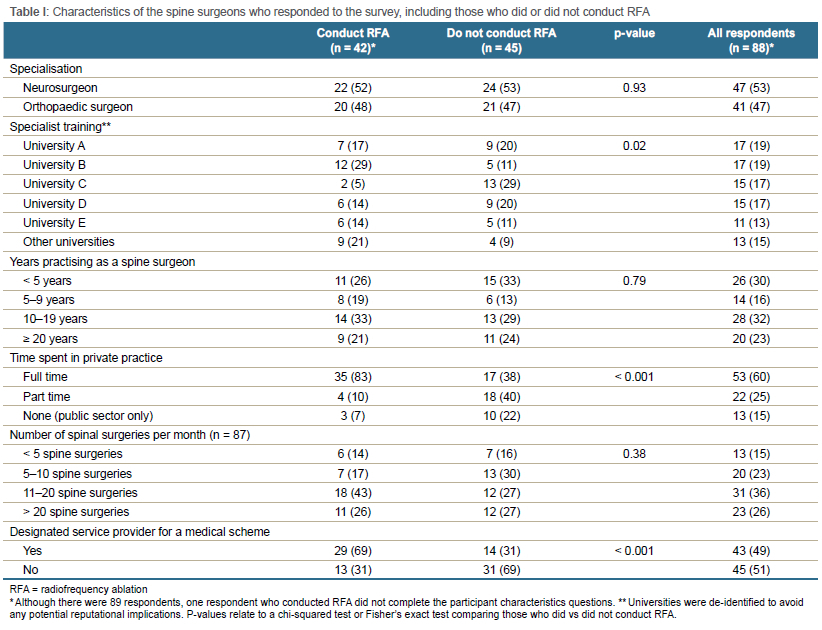
There were 140 delegates registered for the 2023 SASS Congress, although it was not possible to distinguish the number of practising spine surgeons versus other healthcare professionals within this total. Eighty-nine spine surgeons completed the survey, suggesting a response rate of > 64% among those eligible to participate. Of 88 surgeons who responded to the question on conducting RFA, 43 (49%) currently conducted RFA to treat back pain. The characteristics of all survey respondents, as well as those that did or did not conduct RFA, are shown in Table I.
Factors associated with conducting RFA
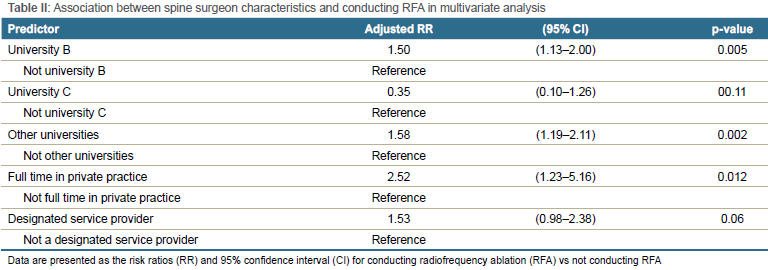
Univariate analyses found that university specialist training, time spent in private practice, and being a medical scheme-designated service provider were significantly associated with conducting RFA (Table I). The association between each university and conducting RFA was investigated using simple logistic regression. Training at University B and 'other universities' were positively associated with conducting RFA at p ≤ 0.12 (odds ratio [OR] 3.10, 95% confidence interval [CI] 0.99-9.72, p = 0.05, and OR 2.71, 95% CI 0.77-9.59, p = 0.12, respectively) whereas training at University C showed a significant negative association with conducting RFA (OR 0.12, 95% CI 0.03-0.57, p = 0.008). No association was found with the remaining universities and conducting RFA (p > 0.20) (data not shown). Variables associated with conducting RFA at p < 0.20 in the univariate analyses were included in a multiple regression analysis (Table II). Adjusted risk ratios (aRR) showed that being in full-time private practice had the strongest association with conducting RFA (aRR 2.52, 95% CI 1.23-5.16, p = 0.012). Training at University B or 'other universities' remained significantly associated with conducting RFA, and there was a trend towards a significant association between conducting RFA and being a medical scheme-designated service provider (Table II).
Attitudes and expectations
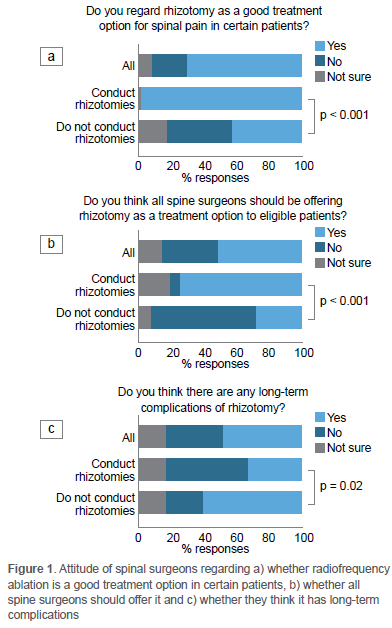
Responses regarding attitudes and expectations are shown in Figures 1 and 2. Overall, 62 of 87 (70%) respondents regarded RFA as a good treatment option in certain patients, including 19 of 45 (42%) of respondents who do not conduct RFA. Despite the relatively high support for RFA, only 45 of 87 (51%) respondents thought that all spine surgeons should be offering this procedure. Among those who did not conduct RFA, 12 of 45 (27%) thought all surgeons should be offering it.
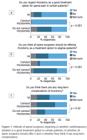
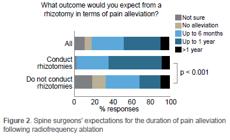
Respondents' opinions were mixed on whether RFA has long-term complications, with 42 of 87 (47%) indicating 'yes' and 31 of 87 (35%) indicating 'no'. The perception of long-term complications was higher among those who did not conduct RFA than among those who did, at 27 of 45 (60%) and 14 of 43 (33%), respectively. The most common expectation for pain relief following RFA was up to one year (35 of 87, 39%), closely followed by up to six months (31 of 87, 35%). Expectations for up to one year of pain relief were higher among those who conducted RFA than in those who did not, at 24 of 43 (56%) and ten of 45 (22%), respectively.
Scientific evidence for RFA
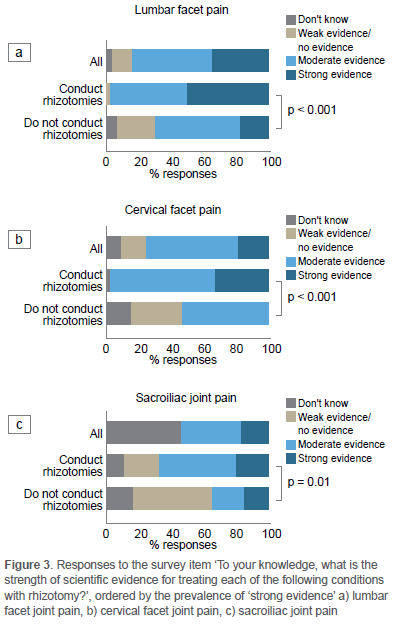
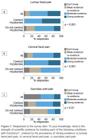
The perceived strength of scientific evidence for treating lumbar facet pain, cervical facet pain and sacroiliac joint pain with RFA is shown in Figure 3. Among all surgeons, the proportion of 'moderate evidence' or 'strong evidence' responses was highest for lumbar facet pain (73 of 87, 84%), followed by cervical facet pain (66 of 88, 75%), and sacroiliac joint pain (45 of 88, 51%). When comparing those that did versus did not practise RFA, the distribution of responses differed significantly across all three conditions, with those practising RFA indicating higher levels of evidence for the treatment. For example, 21 of 43 (49%) who conducted RFA felt that there was strong evidence for its use to treat lumbar facet pain compared to seven of 43 (16%) who did not conduct RFA.
RFA training and practice
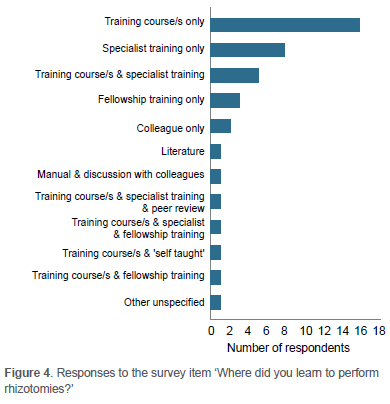
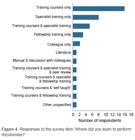
Respondents who conducted RFA were asked to indicate their source of training in the procedure and could indicate multiple sources if applicable. Options included specialist training, fellowship training, training courses, colleagues and literature. The most common response was training course/s only (16 of 41, 39%), among a variety of other training descriptions (Figure 4). One respondent indicated training entirely from the literature.
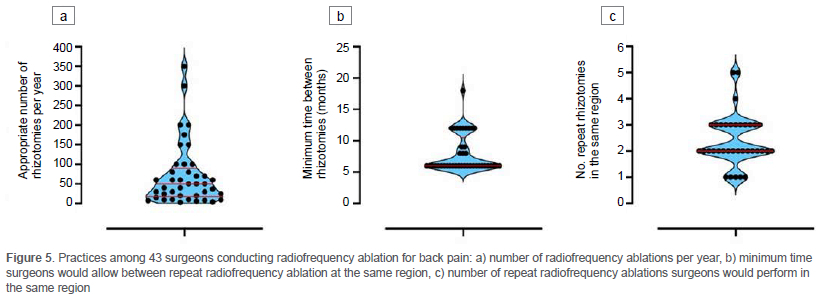
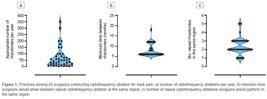
Among 43 respondents who conducted RFA, the median number of procedures per year was 50 (IQR 20-80 RFAs per year) (Figure 5). Ten surgeons conducted ≥ 100 RFA per year, including one who reported conducting 350 per year. When asked about the minimum time before repeating a RFA in the same region for recurrent back pain, 26 of 41 (63%) indicated six months, and this was also the minimum and the median value [IQR 6-9 months] (Figure 5). When asked how many times they would repeat an RFA in the same region, the most common response was twice (16 of 41, 39%), and this was also the median response [IQR 2-3] (Figure 5).
Discussion
The first finding of the study was that most spine surgeons supported the use of RFA in certain patients and felt that there was moderate or strong evidence for its use to treat lumbar or cervical facet joint pain. Specifically, 70% of respondents felt that RFA was a good treatment option in certain patients, 82% felt that it would provide up to six months or more of pain relief, and 84% indicated that there was moderate or strong evidence for its use to treat lumbar facet pain. These perceptions were broadly in keeping with the scientific literature. Meta-analyses of multiple RCTs have shown an association between RFA and a significant decrease in lumbar facet joint pain at six and 12 months compared to baseline or to control treatments (e.g. sham procedure, epidural block).16,18,19 RFA for cervical facet pain was perceived as having moderate or strong evidence by 75% of respondents, which may somewhat overestimate the available evidence: a recent systematic review identified only one small RCT on the use of RFA for cervical facet pain.151521
A second finding of the study was that approximately half of the respondents conducted RFA for chronic back pain. The surgeon characteristic most strongly associated with conducting RFA was full-time private practice whereas specialisation, years of experience and surgery volume did not appear to play a role. Spine surgery in the South African private healthcare sector is dominated by degenerative pathology whereas in the public healthcare sector, trauma and infection predominate.24,25 This difference in pathology profile, along with substantial RFA startup and running costs, may help to explain why RFA is associated with private rather than public sector practice. Training at certain universities also showed a modest independent association with conducting RFA, which may reflect the influence of training mentors or unknown influences specific to a local geographic region. Respondent reasons for whether to conduct RFA were not directly assessed. However, when comparing those who did not practise RFA to those who did, a higher proportion of respondents indicated that it was not a good treatment option, that the procedure had long-term complications, and that it was associated with weak or no evidence.
A third finding was notable variety in how RFA training was acquired. Spinal RFA has numerous technical aspects, thus appropriate technique, along with appropriate patient selection, is critical to the success of the treatment.6,26,27 Variation in RFA technique was previously reported among members of the American Society of Pain and Neuroscience (ASPN), and the authors expressed concern over the training background of some providers and deviations from standard practice.286,13,14,23
A fourth finding was that the self-reported number of RFAs per year showed a skewed distribution: most practitioners performed an average of 0.4-1.5 procedures per week whereas a few high-volume practitioners performed up to an average of > 6 procedures per week. It is possible that high-volume practitioners are well known as RFA providers and receive many referrals. However, there is also concern that high volumes may reflect overutilisation of the procedure. This affirms the need to investigate patient selection for RFA within our setting.
Final findings from the study relate to the repetition of RFA and the risk of long-term complications. All respondents indicated that they would wait at least six months before repeating RFA at the same spine region. This was in keeping with the findings of an international working group, which recommended that RFA may be repeated up to two times per year in individuals who obtained at least three months of lumbar or cervical facet pain relief from an initial RFA.6,14 The total number of times RFA may be repeated does not appear to have been addressed in the scientific literature thus far. Most respondents indicated that they would repeat an RFA two or three times.
Approximately half of the respondents felt that there were long-term complications of RFA for chronic back pain, an aspect that is unclear from the limited available literature.29-32 In the few studies on long-term complications of RFA for chronic back pain, the main concern relates to atrophy of the multifidus muscle and the risk of functional segment instability.29-32 However, studies have had disparate findings and there is difficulty in distinguishing the effect of RFA from the natural progression of degenerative pathology.29-32 A recent commentary noted that while the unclear risk of harm is concerning, such risk should be weighed together with the potential treatment benefit and other contextual factors.3133-35 such as those with a high body mass index, diabetes or HIV, merits particular attention.
There are some limitations to the study. While the survey included a large proportion of South African spine surgeons, it was not a random sample, and the extent to which the findings can be generalised to the total population of South African spine surgeons is unclear. In addition to spine surgeons, pain specialists, among others, also conduct RFA, thus the survey is not representative of all RFA practitioners in South Africa. It is acknowledged that survey responses related to self-report of RFA practices may be subject to recall bias.
Conclusion
To our knowledge, this was the first study to investigate the use of RFA for chronic back pain in the South African setting. Among the spine surgeons surveyed, there was majority support for the use of RFA in certain patients, and approximately half of the respondents currently conducted the procedure. Findings of potential concern included heterogeneity in RFA training and the observation that a few surgeons conducted particularly high volumes of RFA. Patient selection and technique are critical to the appropriate and effective use of RFA. Future research should include investigation of these aspects in the South African setting, including comparison to current best practice consensus.
Ethics statement
The authors declare that this submission is in accordance with the principles laid down by the Responsible Research Publication Position Statements as developed at the 2nd World Conference on Research Integrity in Singapore, 2010.
Prior to commencement of the study, ethical approval was obtained from the following ethical review board: Stellenbosch University Health Research Ethics Committee, reference number N23/03/013. All procedures were in accordance with the ethical standards of the responsible committee on human experimentation (institutional and national) and with the Helsinki Declaration of 1975, as revised in 2008. Participation in the study was voluntary and entirely anonymous. The study information sheet informed delegates that completion of the survey would be taken as informed consent to participate in the study.
Declaration
The authors declare authorship of this article and that they have followed sound scientific research practice. This research is original and does not transgress plagiarism policies.
Author contributions
TNM: contributed to the conceptualisation and design, the data collection, data analysis and manuscript preparation
PV: contributed to the conceptualisation and design, the data collection, and manuscript preparation
JHD: contributed to the conceptualisation and design and manuscript preparation
ORCIDMann TN https://orcid.org/0000-0002-9750-5106
Vorster P https://orcid.org/0000-0002-5504-1139
References
- 1. Meucci RD, Fassa AG, Faria NMX. Prevalence of chronic low back pain: systematic review. Rev Saude Publica. 2015;49:1.
- 2. Knezevic NN, Candido KD, Vlaeyen JWS, et al. Low back pain. Lancet. 2021;398:78-92.
- 3. Gill B, Cheney C, Clements N, et al. Radiofrequency ablation for zygapophyseal joint pain. Phys Med Rehabil Clin N Am. 2022;33:233-49.
- 4. Leggett LE, Soril LJJ, Lorenzetti DL, et al. Radiofrequency ablation for chronic low back pain: a systematic review of randomized controlled trials. Pain Res Manag. 2014;19:e146-53.
- 5. Stolzenberg D, Ahn JJ, Kurd M. Lumbar radiofrequency ablation: procedural technique. Clin Spine Surg. 2020;33:20-23.
- 6. Cohen SP, Bhaskar A, Bhatia A, et al. Consensus practice guidelines on interventions for lumbar facet joint pain from a multispecialty, international working group. Reg Anesth Pain Med. 2020;45:424-67.
- 7. Starr JB, Gold L, McCormick Z, et al. Trends in lumbar radiofrequency ablation utilization from 2007 to 2016. Spine J. 2019;19:1019-28.
- 8. Manchikanti L, Hirsch JA, Pampati V, Boswell MV. Utilization of facet joint and sacroiliac joint interventions in Medicare population from 2000 to 2014: explosive growth continues! Curr Pain Headache Rep. 2016;20:58.
- 9. Manchikanti L, Pampati V, Soin A, et al. Trends of expenditures and utilization of facet joint interventions in fee-for-service (FFS) Medicare population from 2009-2018. Pain Physician. 2020;23:S129-47.
- 10. Occhigrossi F, Carpenedo R, Leoni MLG, et al. Delphi-based expert consensus statements for the management of percutaneous radiofrequency neurotomy in the treatment of lumbar facet joint syndrome. Pain Ther. 2023;12:863-77.
- 11. Juch JNS, Maas ET, Ostelo RWJG, et al. Effect of radiofrequency denervation on pain intensity among patients with chronic low back pain: the MINT randomized clinical trials. JAMA. 2017;318:68-81.
- 12. Ashton KE, Price C, Fleming L, et al. Effectiveness and cost-effectiveness of radiofrequency denervation versus placebo for chronic and moderate to severe low back pain: study protocol for the RADICAL randomised controlled trial. BMJ Open. 2024;14:e079173.
- 13. Klessinger S, Casser H-R, Gillner S, et al. Radiofrequency denervation of the spine and the sacroiliac joint: a systematic review based on the grades of recommendations, assesment, development, and evaluation approach resulting in a German national guideline. Global Spine J. 2024;14:2124-54.
- 14. Hurley RW, Adams MCB, Barad M, et al. Consensus practice guidelines on interventions for cervical spine (facet) joint pain from a multispecialty international working group. Reg Anesth Pain Med. 2022;47:3-59.
- 15. Suer M, Wahezi SE, Abd-Elsayed A, Sehgal N. Cervical facet joint pain and cervicogenic headache treated with radiofrequency ablation: a systematic review. Pain Physician. 2022;25:251-63.
- 16. Janapala RN, Manchikanti L, Sanapati MR, et al. Efficacy of radiofrequency neurotomy in chronic low back pain: a systematic review and meta-analysis. J Pain Res. 2021;14:2859-91.
- 17. Conger A, Schuster NM, Cheng DS, et al. The effectiveness of intraosseous basivertebral nerve radiofrequency neurotomy for the treatment of chronic low back pain in patients with modic changes: a systematic review. Pain Med. 2021;22:1039-54.
- 18. Lee CH, Chung CK, Kim CH. The efficacy of conventional radiofrequency denervation in patients with chronic low back pain originating from the facet joints: a meta-analysis of randomized controlled trials. Spine J. 2017;17:1770-80.
- 19. Shih C-L, Shen P-C, Lu C-C, et al. A comparison of efficacy among different radiofrequency ablation techniques for the treatment of lumbar facet joint and sacroiliac joint pain: A systematic review and meta-analysis. Clin Neurol Neurosurg. 2020;195:105854.
- 20. Yang AJ, Wagner G, Burnham T, et al. Radiofrequency ablation for chronic posterior sacroiliac joint complex pain: a comprehensive review. Pain Med. 2021;22:S9-13.
- 21. Lee DW, Cheney C, Sherwood D, et al. The effectiveness and safety of sacral lateral branch radiofrequency neurotomy (SLBRFN): A systematic review. Interv Pain Med. 2023;2:100259.
- 22. Maas ET, Ostelo RWJG, Niemisto L, et al. Radiofrequency denervation for chronic low back pain. Cochrane Database Syst Rev. 2015;2015:CD008572.
- 23. Eldabe S, Tariq A, Nath S, et al. Best practice in radiofrequency denervation of the lumbar facet joints: a consensus technique. Br J Pain. 2020;14:47-56.
- 24. Mann T, Vlok A, Dunn R, et al. Private healthcare sector spine surgery: Patient and surgeon profiles from a large open medical scheme in South Africa. S Afr Med J. 2023;113:1289-96.
- 25. Miseer S, Mann T, Davis J. Burden and profile of spinal pathology at a major tertiary hospital in the Western Cape, South Africa. S Afr Orthop J. 2019;18:33-39.
- 26. Provenzano DA, Buvanendran A, De León-Casasola OA, et al. Interpreting the MINT randomized trials evaluating radiofrequency ablation for lumbar facet and sacroiliac joint pain: a call from ASRA for better education, study design, and performance. Reg Anesth Pain Med. 2018;43:68-71.
- 27. Schneider BJ, Doan L, Maes MK, et al. Systematic review of the effectiveness of lumbar medial branch thermal radiofrequency neurotomy, stratified for diagnostic methods and procedural technique. Pain Med. 2020;21:1122-41.
- 28. Abd-Elsayed A, Azeem N, Chopra P, et al. An international survey on the practice of lumbar radiofrequency ablation for management of zygapophyseal (facet)-mediated low back pain. J Pain Res. 2022;15:1083-90.
- 29. Smuck M, Crisostomo RA, Demirjian R, et al. Morphologic changes in the lumbar spine after lumbar medial branch radiofrequency neurotomy: a quantitative radiological study. Spine J. 2015;15:1415-21.
- 30. Oswald KAC, Ekengele V, Hoppe S, et al. Radiofrequency neurotomy does not cause fatty degeneration of the lumbar paraspinal musculature in patients with chronic lumbar pain - a retrospective 3D-computer-assisted MRI analysis using iSix software. Pain Med. 2023;24:25-31.
- 31. Karri J, Cohen SP. Dilemmas with denervation: to do or not to do (that is the question). Pain. 2024;165:1904-906.
- 32. Guven AE, Evangelisti G, Burkhard MD, et al. Asymmetrical atrophy of the paraspinal muscles in patients undergoing unilateral lumbar medial branch radiofrequency neurotomy. Pain. 2024;165:2130-34.
- 33. Epstein N. More risks and complications for elective spine surgery in morbidly obese patients. Surg Neurol Int. 2017;8:66.
- 34. Klemencsics I, Lazary A, Szoverfi Z, et al. Risk factors for surgical site infection in elective routine degenerative lumbar surgeries. Spine J. 2016;16:1377-83.
- 35. Farias FAC, Dagostini CM, Falavigna A. HIV and surgery for degenerative spine disease: a systematic review. J Neurol Surg A Cent Eur Neurosurg. 2021;82:468-74.
Accepted: June 2025
Published: May 2026
Editor: Prof. Robert Dunn, University of Cape Town, Cape Town, South Africa
Funding: Minor running expenses were covered by the Stellenbosch Spinal Surgery Training Trust. No grant funding was received for this study.
Conflict of interest: The authors declare they have no conflicts of interest that are directly or indirectly related to the research.