Doxorubicin-induced early-onset chronic progressive cardiotoxicity, pharmacogenetics and survival among breast cancer patients in Zimbabwe
BACKGROUND: Early-onset chronic progressive cardiotoxicity (ECPC) is a significant cause of morbidity and mortality among patients who receive doxorubicin-based chemotherapy for breast cancer. OBJECTIVE: To establish incidence of ECPC in black Zimbabwean women with breast cancer treated with doxorubicin and the resultant survival, and to describe the pharmacogenomic biomarkers' association with prognosis. METHOD: A prospective observational study was conducted in Zimbabwe with 50 participants who received doxorubicin-based treatment and were actively followed up to 12 months, with 3-monthly echocardiography and vital status determined at 60 months for all-cause mortality analysis. RESULTS: ECPC was observed in 10% of participants. Median survival for participants who developed ECPC and those without was 11.9 v. 40.8 months. Participants with ECPC had 5-year overall survival (OS) of 0% v. 42% (hazard ratio (HR) 4.19, 95% confidence interval (CI) 1.27 - 13.79; p=0.018) for participants with no ECPC recorded. Median survival was significantly shorter for patients on calcium channel blockers (p=0.01). Cardiotoxicity, pre-existing hypertension and histological grade showed no significant association. Using multivariate analysis, poor OS was observed with ECPC (HR 4.19, 95% CI 1.27 - 13.79; p=0.018) and calcium channel blocker use (HR 2.38, 95% CI 1.07 - 5.32; p=0.034); no association was observed with pharmacogenomic biomarker risk categorisation based on SLC28A3, UGT1A6 and RARG (HR 1.39, 95% CI 0.46 - 4.25; p=0.561). CONCLUSION: Breast cancer patients with doxorubicin-induced ECPC had poorer OS. The risk of doxorubicin cardiotoxicity and poor survival could not be explained using SLC28A3-scoring pharmacogenomic profile. Breast cancer therapies with lower cardiotoxicity are needed in Zimbabwe and other low-resource settings.
pharmacogenomics; anthracycline-induced cardiotoxicity; breast cancer survival; gene polymorphism
Doxorubicin-induced early-onset chronic progressive cardiotoxicity, pharmacogenetics and survival among breast cancer patients in Zimbabwe
T A MazhinduI, II; V A NyangwaraIII; M Z BorokIV; C MasimirembwaV; T FlaigVI; T B CampbellVI; N NdlovuVII, VIII
IMB ChB, MMed; Department of Oncology, Medical Physics and Imaging Science, Faculty of Medicines and Health Sciences, University of Zimbabwe, Harare, Zimbabwe
IIMB ChB, MMed; African Institute for Biomedical Science & Technology, Harare, Zimbabwe
IIIBSc, MSc; African Institute for Biomedical Science & Technology, Harare, Zimbabwe
IVMB ChB, FRCP; Department of Internal Medicine, Faculty of Medicines and Health Sciences, University of Zimbabwe, Harare, Zimbabwe
VPhD; African Institute for Biomedical Science & Technology, Harare, Zimbabwe
VIMD; Department of Medicine, University of Colorado Anschutz, Aurora, USA
VIIMB ChB, MMed, MSc; Department of Oncology, Medical Physics and Imaging Science, Faculty of Medicines and Health Sciences, University of Zimbabwe, Harare, Zimbabwe
VIIIMB ChB, MMed, MSc; African Institute for Biomedical Science & Technology, Harare, Zimbabwe
BACKGROUND: Early-onset chronic progressive cardiotoxicity (ECPC) is a significant cause of morbidity and mortality among patients who receive doxorubicin-based chemotherapy for breast cancer.
OBJECTIVE: To establish incidence of ECPC in black Zimbabwean women with breast cancer treated with doxorubicin and the resultant survival, and to describe the pharmacogenomic biomarkers' association with prognosis.
METHOD: A prospective observational study was conducted in Zimbabwe with 50 participants who received doxorubicin-based treatment and were actively followed up to 12 months, with 3-monthly echocardiography and vital status determined at 60 months for all-cause mortality analysis.
RESULTS: ECPC was observed in 10% of participants. Median survival for participants who developed ECPC and those without was 11.9 v. 40.8 months. Participants with ECPC had 5-year overall survival (OS) of 0% v. 42% (hazard ratio (HR) 4.19, 95% confidence interval (CI) 1.27 - 13.79; p=0.018) for participants with no ECPC recorded. Median survival was significantly shorter for patients on calcium channel blockers (p=0.01). Cardiotoxicity, pre-existing hypertension and histological grade showed no significant association. Using multivariate analysis, poor OS was observed with ECPC (HR 4.19, 95% CI 1.27 - 13.79; p=0.018) and calcium channel blocker use (HR 2.38, 95% CI 1.07 - 5.32; p=0.034); no association was observed with pharmacogenomic biomarker risk categorisation based on SLC28A3, UGT1A6 and RARG (HR 1.39, 95% CI 0.46 - 4.25; p=0.561).
CONCLUSION: Breast cancer patients with doxorubicin-induced ECPC had poorer OS. The risk of doxorubicin cardiotoxicity and poor survival could not be explained using SLC28A3-scoring pharmacogenomic profile. Breast cancer therapies with lower cardiotoxicity are needed in Zimbabwe and other low-resource settings.
Keywords: pharmacogenomics, anthracycline-induced cardiotoxicity, breast cancer survival, gene polymorphism
Breast cancer is the most common cancer among females in sub-Saharan Africa (SSA).[1] As SSA undergoes a transition in disease burden with increasing non-communicable disease incidence, both the incidence and mortality of breast cancer are increasing.[2] Africa has the highest mortality rate for breast cancer in the world, and this has been attributed to advanced disease stage at diagnosis, tumour biology, delayed intervention and inadequate treatment.[3] Cancer survival can also be significantly affected by treatment toxicity, timely management of these adverse events and genetic polymorphisms that affect toxicity risk.[4-6]
Management of breast cancer involves multimodal interventions that include surgery, chemotherapy, radiotherapy and hormonal therapy. The aim of cancer intervention is to maximise tumour control with minimum toxicity. For patients for whom chemotherapy is indicated, doxorubicin use is part of first-line treatment and doxorubicin-induced cardiotoxicity (DIC) is a dose-limiting concern.[7] DIC is categorised into (i) acute cardiotoxicity that occurs within the first week of anthracycline treatment, (ii) early-onset chronic progressive cardiotoxicity (ECPC) occurring <1 year after the completion of anthracycline treatment and (iii) late-onset chronic progressive cardiotoxicity whose onset occurs ≥1 year after the completion of anthracycline treatment.[8] Patients who develop DIC-related congestive heart failure have a poor prognosis, with mortality approaching >50% at 1 year.[9] Clinically, high risk factors for DIC include pre-existing hypertension, dyslipidaemia, diabetes mellitus, tobacco smoking and obesity.[10] At a genetic level, doxorubicin metabolism and protein transporter coding genetic polymorphisms have been shown to increase DIC risk. The Canadian Pharmacogenomics Network for Drug Safety (CPNDS) recommends genotyping paediatric patients due to receive anthracycline-based chemotherapy for UDP-glucuronosyltransferase 1A6*4 (UGT1A6*4-rs17863783), Solute carrier family 28 member 3 (SLC28A3-rs7853758) and Retinoic Acid Receptor Gamma (RARG-rs2229774) haplotypes to categorise more accurately DIC risk and to implement closer cardiac surveillance.[11] In a prospective cohort study in Zimbabwe, these pharmacogenomic biomarkers showed limited predictive value for direct DIC prediction.[12]
Concurrent medications may have cardioprotective effects against DIC.[13] In experimental animal model studies, calcium channel blockers used for hypertension resulted in preserved left ventricular function, elimination of toxicity-associated cardiomyocyte changes and reduction in observed cardiomyocyte apoptosis.[14-17] In addition, a meta-analysis of randomised controlled trials also reported significant DIC risk reduction in patients on concurrent statin therapy.[18,19] Other factors, including clinical stage at diagnosis, greatly affect prognosis and a recent study in Zimbabwe showed that 43% had distant metastases.[20] Various patient-specific and health system factors result in a higher proportion of patients presenting with stage IV disease at diagnosis.[21] Due to the unique challenges of disease presentation differences, stage at presentation, treatment intent, pharmacogenomic risk factors and reports of unique tumour biology in African populations, it is important to understand the cardiotoxicity and survival outcome association in breast cancer patients in an African setting like Zimbabwe.[22] The purpose of this study was to establish the incidence of ECPC and resultant 5-year survival outcome in breast cancer patients who received doxorubicin-based treatment at Zimbabwe's largest oncology centre.
Methods
Study design and participants
Between January 2019 and July 2020, a prospective cohort observational study was conducted at Parirenyatwa group of hospitals, Harare, Zimbabwe. Fifty participants above the age of 18 years with histologically confirmed invasive breast ductal or lobular carcinoma were recruited before doxorubicin-based chemotherapy was commenced as part of standard care for their diagnosis. Participants were recruited through convenience sampling, encompassing all indications for doxorubicin administration, including neoadjuvant, adjuvant and definitive therapy. Patients who had previous chest wall external beam radiotherapy, previous chemotherapy, who were non-black women or with abnormal left ventricular ejection fraction (LVEF) of <60% were excluded. The study received approval from the Medical Research Council of Zimbabwe ethics committee (MRCZ/A/2325). All participants provided written informed consent using MRCZ-approved forms, which outlined the study procedures and granted authorisation for the biobanking of blood specimens.
Data collection
Participants underwent cardiovascular assessment by a cardiologist using 2D echocardiography to measure LVEF at baseline and 3, 6, 9 and 12 months. Patients were actively followed in the study for up to 12 months after commencing doxorubicin-based chemotherapy treatment. Participants' demographics, comorbidities, chemotherapy doses, concurrent medications, examination findings and blood specimens for genotyping were collected.
Study endpoints
The endpoints for this study were incidence of ECPC and overall survival. A patient with ECPC was defined as having LVEF threshold of >10% reduction from the baseline echocardiography.[23,24] For overall survival, the participant's vital status at 60 months was obtained from the hospital records, and for participants who had died the date of death was recorded. Survival was determined from the day of enrolment into the study, which was at commencement of the doxorubicin treatment.
Pharmacogenomic biomarker testing
Genotyping was done using Genopharm®, an open Q15 array panel that contains 120 assays for over 48 genes.[12,25] Patients' DIC risk classification was based on copy number polymorphism detection system (CNPDS) recommendations into patients with SLC28A3 rs7853758 A protective variant who do not carry RARG rs2229774 A or UGT1A6 rs17863783 T alleles, as low genetic risk, or those carrying the RARG rs2229774 A or UGT1A6 rs17863783 T risk variants, as high genetic risk; the rest of the patients were classified as moderate genetic risk.[11]
Statistical analysis
The data were analysed using Stata (version 18; Stata Corp, College Station, TX, USA) and R statistical software (version 3.4.3, https://www.r-project.org/). Categorical data were summarised using frequency counts and percentages and continuous variables were summarised with mean and standard deviation. Kaplan-Meier curve and log-rank test were used to assess visually the effect of categorical covariates on the time to death. Univariate and multivariate Cox regression models were used to assess the risk factors influencing the risk of death. A variable with p-value <20% at univariate Cox regression was considered for multivariate Cox regression. A backward elimination, with the help of likelihood ratio test at a p-value of 5%, was used to keep the variable in the final model.
Results
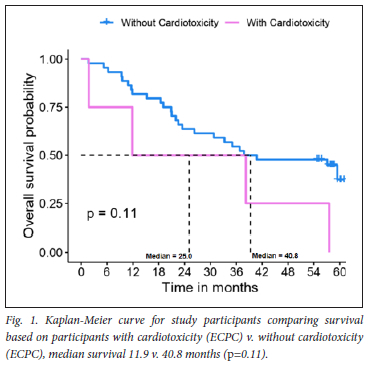
Twelve months after completion of doxorubicin-based chemotherapy, 5 (10%) participants developed ECPC and 45 (90%) did not. Median overall survival for participants who developed ECPC was 11.9 months, compared with 40.8 months in participants who did not develop ECPC, and the 5-year overall survival was 0% v. 42% respectively (hazard ratio (HR) 4.19, 95% confidence interval (CI) 1.27 - 13.79; p=0.018). The participant characteristics are summarised in Table 1. The median age at diagnosis of breast cancer was 44.6 v. 53.4 years in patients with ECPC and without ECPC, respectively.
Treatment
The mean cumulative doxorubicin dose was 235 (interquartile range (IQR) 57.62 - 376.30) mg/m222Table 2. No patients received trastuzumab treatment.
Survival
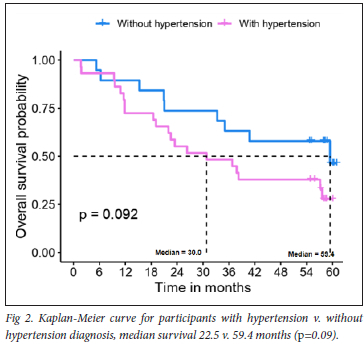
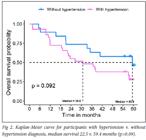
At 60 months, 20 (40%) participants were alive and 30 (60%) were deceased. Survival after enrolment into the study was compared for factor differences including tamoxifen treatment, pre-existing hypertension, ECPC occurrence, cancer group clinical stage, calcium channel blocker treatment and histological grading (Figs 1 - 6).
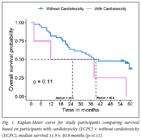

Univariate Cox regression analysis showed that compared with participants with ECPC, participants who did not have ECPC had a higher likelihood of overall survival (HR 2.9, 95% CI 1.1 - 7.62; p=0.031). Participants not taking any calcium channel blocker had a higher likelihood of overall survival compared with those receiving this treatment (HR 2.58, 95% CI 1.25 - 5.34; p=0.01). Both the ECPC and channel blocker treatment on multivariate analysis had significance in observed overall survival: HR 4.19 (95% CI 1.27 - 13.79; p=0.018) and HR 2.38 (95% CI 1.07 - 5.32; p=0.034), respectively.
Univariate analysis showed that moderate- and high-risk SLC28A3 scores had HR of 0.51 (95% CI 0.22 - 1.19; p=0.51) and 1.85 (95% CI 0.63 - 5.39; p=0.56), respectively. Patients who received tamoxifen after chemotherapy had a better overall survival (HR 0.44, 95% CI 0.18 - 1.07; p=0.071). However, univariate analysis showed insignificant association with cancer group stage and pre-existing hypertension (Table 3).
Discussion
In this study, 10% of participants developed ECPC and had a median survival of 11.9 months, compared with 40.8 months in participants who did not develop ECPC. The factors that significantly affected median survival in this study included ECPC, treatment with calcium channel blockers and tamoxifen therapy. DIC risk categorisation with pharmacogenomic UGT1A6*4-rs17863783, SLC28A3-rs7853758 and RARG-rs2229774 haplotypes was not significantly associated with median survival.
The incidence of ECPC in this study is within range of other studies that have used a similar definition of a decrease in LVEF >10% from baseline on echocardiography within the first 12 months from treatment completion.[26-28] Although DIC risk after the first 12 months of chemotherapy still persists, the vast majority of DIC occurs in the first 12 months and this guided our study design.[27]
DIC incidence has been reported to be three times higher in African American patients compared with patients of European ancestry. This observation has multiple factors including the difference in prevalence of hypertension, diabetes and obesity, and other socioeconomic factors such as access to diagnostics and treatment.[29] Our study participants were all of black-African ancestry and were treated in a setting where routine echocardiography follow-up is not instituted. The ECPC incidence and resultant median survival we observed adds to the evidence that follow-up echocardiography is important. The National Comprehensive Cancer Network and American Society of Clinical Oncology recommend that echocardiography every 6 - 12 months is undertaken after completion of doxorubicin-based chemotherapy.[30]
The observed median survival for all participants was 37.8 months. Unfortunately, due to a lack nationwide breast cancer screening to enable early diagnosis in Zimbabwe, most women have stage III and stage IV disease and this has been demonstrated in previous reports.[20,31] Most cancer patients in low- and middle-income countries such as Zimbabwe present with advanced-stage disease, which confers a poor prognosis, and other factors associated with this are limited knowledge about the disease, and delayed diagnosis and treatment.[32,33] The survival findings from other African regional countries have shown a similar cancer stage distribution and poor prognosis; however, none have reported the association of treatment toxicity such as ECPC.[34-38]
Various risk factors have been described for DIC, including pre-existing hypertension, age, sex, ethnicity and co-medications.[39,40] In this study, we report that participants with pre-existing hypertension had a lower median survival than those with no history of hypertension; however, this association was not significant. In addition to these findings, participants who were on treatment with calcium channel blockers had a significantly higher risk of death. This finding on calcium channel blockers is contrary to some reports by other researchers. In these studies, it is hypothesised that blockade of L-type calcium channel (LTCC) attenuates DIC development via the favourable regulation of calcium/calmodulin-dependent protein kinase II.[41] Experimental animal studies have shown that utilising nifedipine blocking or gene knockdown of LTCC suppresses doxorubicin-related cardiomyocyte cellular injury, ameliorating the risk of DIC.[42] One source that could result in inconsistent findings contrary to this hypothesis could be the observed polymorphism in Cav 1.2 encoding the alpha-1 subunit of the LTCC, resulting in possible lack of the protective effect.[43]
Pharmacogenetic biomarker-guided cancer interventions form a significant component of precision oncology.[44,45] The CPNDS recommendations for genotyping patients for UGT1A6*4-rs17863783, SLC28A3-rs7853758 and RARG-rs2229774 are for paediatric patients. In this study, we are reporting the observed effect of the classification of these biomarkers on survival among adult breast cancer patients of black-African ancestry. No significant association was noted in this cohort; this is in keeping with previous findings of the limited positive predictive value for DIC.[12] Further research is required on predicting this important treatment-related event, given the survival implications of occurrence.
In our study, hormonal therapy with tamoxifen, cancer group stages II and III, and histological grade showed insignificant survival association. At 60 months, median survival was not reached for patients who received tamoxifen, in keeping with the inherent favourable prognosis that oestrogen receptor-positive breast cancer infers.[46,47] Breast cancer staging in this study cohort and generally in SSA may be inaccurate due to challenges to accessing advanced imaging due to level of development.[6,20,48] The limited access to advanced imaging may result in the understaging of some patients. This limited access to advanced imaging for all patients has been accepted and addressed in the effort to harmonise the National Comprehensive Cancer Network (NCCN) cancer management guidelines for SSA, guiding practitioners according to locally available resources. These guidelines do recommend chest radiograph and ultrasound scan-based staging when other more accurate modalities are not available.[49]
The limitations of our study include a small sample size, lack of analysis of specific cause of death and the use of genotyping for specific pharmacogenomic variants only. Further studies need a larger sample size based on the ECPC event incidence we observed, specific cause of death verification and genetic sequencing for gene variant signal detection. The observed incidence of ECPC and resultant survival provides a basis for exploring implementation of echocardiography-based follow-up after doxorubicin treatment. Another option could be the use of less cardiotoxic chemotherapy options such as epirubicin or liposomal doxorubicin, although a limiting factor here could be the upfront drug cost challenges.[50] However, the lower cardiotoxicity of these two drugs, myelosuppression of liposomal doxorubicin and avoided echocardiography costs could ultimately make these alternatives a cost-viable option.[51-53]
Conclusion
In this study, breast cancer patients who received doxorubicin-based chemotherapy and developed ECPC had poorer survival compared with patient who did not develop ECPC. Patients on treatment with calcium channel blockers had significantly poorer median survival and the study-observed median survival was not significantly associated with current pharmacogenomic biomarkers for DIC in this group of black Zimbabwean patients.
Declaration. The study was approved by the ethics committee of the MRCZ (MRCZ/A/2325). All study participants signed an MRCZ-approved informed consent form detailing the study and approving biobanking of blood specimens. All elements of the study were performed in accordance with the Declaration of Helsinki and the relevant regulations and laws governing research in Zimbabwe.
Data availability. The data that support the findings of this study are available from the corresponding author upon reasonable request.
Acknowledgements. The late James Hakim (MB ChB, FRCP), Professor of Medicine, Faculty of Medicine and Health Sciences, University of Zimbabwe, contributed to the design and implementation of the study. Mrs Patricia Gambiza, who was the project manager and followed through the study to its intended completion.
Author contributions. TM: study design, data collection, data analysis, interpretation, writing of the manuscript; VN: study design, laboratory analysis, data collection, data analysis, interpretation, writing and reviewing manuscript; MB: study design, project management, project supervision, manuscript review; CM: study design, project management, project supervision, funding, manuscript review; TF: study design, data analysis, project management, project supervision, funding, manuscript review; TBC: study design, data analysis, project management, project supervision, funding, manuscript review; NN: study design, project management, project supervision, manuscript review.
Funding. Support for this work was provided through grant funding from the Regents of the University of Colorado (University of Colorado, Denver) (grant number FY18.276.002) and the National Cancer Institute (NCI) USA (grant number 5P20CA210677), the European & Developing Countries Clinical Trials Partnership (grant number TMA2016SF-1508) and the Bill and Melinda Gates Foundation (BMGF) (grant number ID INV-036801).
Conflict of interest. None.
References
-
1. Bray F, Parkin DM, Gnangnon F, et al. Cancer in sub-Saharan Africa in 2020: A review of current estimates of the national burden, data gaps, and future needs. Lancet Oncol 2022;23(6):719-728. https://doi.org/10.1016/S1470-2045(22)00270-4
» https://doi.org/10.1016/S1470-2045(22)00270-4 -
2. Sharma R, Aashima, Nanda M, et al. Mapping cancer in Africa: A comprehensive and comparable characterisation of 34 cancer types using estimates from GLOBOCAN 2020. Front Public Health 2022;10:839835. https://doi.org/10.3389/fpubh.2022.839835
» https://doi.org/10.3389/fpubh.2022.839835 -
3. Matheka M, Mutebi M, Sayed S, Shah J, Shaikh AJ. Metastatic breast cancer in Kenya: Survival, prognosis and management at a tertiary referral centre. Ecancermedicalscience 2023;17:1566. https://doi.org/10.3332/ecancer.2023.1566
» https://doi.org/10.3332/ecancer.2023.1566 -
4. Mbavha BT, Kanji CR, Stadler N, et al. Population genetic polymorphisms of pharmacogenes in Zimbabwe, a potential guide for the safe and efficacious use of medicines in people of African ancestry. Pharmacogenet Genomics 2022;32(5):173-182. https://doi.org/10.1097/FPC.0000000000000467
» https://doi.org/10.1097/FPC.0000000000000467 -
5. Kanji CR, Nyabadza G, Nhachi C, Masimirembwa C. Pharmacokinetics of tamoxifen and its major metabolites and the effect of the African ancestry specific CYP2D6*17 variant on the formation of the active metabolite, endoxifen. J Pers Med 2023;13(2):272. https://doi.org/10.3390/jpm13020272
» https://doi.org/10.3390/jpm13020272 -
6. Chibonda S, Ndlovu N, Tsikai N, et al. High dose rate intra-cavitary brachytherapy with cobalt 60 source for locally advanced cervical cancer: The Zimbabwean experience. Infect Agent Cancer 2021;16(1):1. https://doi.org/10.1186/s13027-020-00340-5
» https://doi.org/10.1186/s13027-020-00340-5 -
7. Sheibani M, Azizi Y, Shayan M, et al. Doxorubicin-induced cardiotoxicity: An overview on pre-clinical therapeutic approaches. Cardiovasc Toxicol 2022;22(4):292-310. https://doi.org/10.1007/s12012-022-09721-1
» https://doi.org/10.1007/s12012-022-09721-1 -
8. Giantris A, Abdurrahman L, Hinkle A, Asselin B, Lipshultz SE. Anthracycline-induced cardiotoxicity in children and young adults. Crit Rev Oncol Hematol 1998;27(1):53-68. https://doi.org/10.1016/S1040-8428(98)00011-0
» https://doi.org/10.1016/S1040-8428(98)00011-0 -
9. Chatterjee K, Zhang J, Honbo N, Karliner JS. Doxorubicin cardiomyopathy. Cardiology 2010;115(2):155-162. https://doi.org/10.1159/000265166
» https://doi.org/10.1159/000265166 -
10. Jin H, Xu J, Sui Z, Wang L. Risk factors from Framingham risk score for anthracyclines cardiotoxicity in breast cancer: A systematic review and meta-analysis. Front Cardiovasc Med 2023;10:1101585. https://doi.org/10.3389/fcvm.2023.1101585
» https://doi.org/10.3389/fcvm.2023.1101585 -
11. Aminkeng F, Ross CJD, Rassekh SR, et al. Recommendations for genetic testing to reduce the incidence of anthracycline-induced cardiotoxicity. Br J Clin Pharmacol 2016;82(3):683-695. https://doi.org/10.1111/bcp.13008
» https://doi.org/10.1111/bcp.13008 -
12. Nyangwara VA, Mazhindu T, Chikwambi Z, et al. Cardiotoxicity and pharmacogenetics of doxorubicin in black Zimbabwean breast cancer patients. Br J Clin Pharmacol 2023;90(8):1782-1789. https://doi.org/10.1111/bcp.15659
» https://doi.org/10.1111/bcp.15659 -
13. Chaulin AM. The essential strategies to mitigate cardiotoxicity caused by doxorubicin. Life 2023;13(11):2148. https://doi.org/10.3390/life13112148
» https://doi.org/10.3390/life13112148 -
14. Osataphan N, Phrommintikul A, Leemasawat K, et al. Effects of metformin and donepezil on the prevention of doxorubicin-induced cardiotoxicity in breast cancer: A randomised controlled trial. Sci Rep 2023;13(1):12759. https://doi.org/10.1038/s41598-023-40061-4
» https://doi.org/10.1038/s41598-023-40061-4 -
15. Argun M, Üzüm K, Sönmez MF, et al. Cardioprotective effect of metformin against doxorubicin cardiotoxicity in rats. Anatol J Cardiol 2016;16(4):234-241. https://doi.org/10.5152/akd.2015.6185
» https://doi.org/10.5152/akd.2015.6185 -
16. Ajzashokouhi A, Bostan H, Jomezadeh V, et al. A review on the cardioprotective mechanisms of metformin against doxorubicin. Hum Exp Toxicol 2020;39(3):237-248. https://doi.org/10.1177/0960327119888277
» https://doi.org/10.1177/0960327119888277 -
17. Hassan MQ, Akhtar MS, Afzal O, et al. Edaravone and benidipine protect myocardial damage by regulating mitochondrial stress, apoptosis signalling and cardiac biomarkers against doxorubicin-induced cardiotoxicity. Clin Exp Hypertens 2020;42(5):381-392. https://doi.org/10.1080/10641963.2019.1676770
» https://doi.org/10.1080/10641963.2019.1676770 -
18. Dadson K, Thavendiranathan P, Hauck L, et al. Statins protect against early stages of doxorubicin-induced cardiotoxicity through regulation of Akt signalling and SERCA2. CJC Open 2022;4(12):1043-1052. https://doi.org/10.1016/j.cjco.2022.08.006
» https://doi.org/10.1016/j.cjco.2022.08.006 -
19. Felix N, Nogueira PC, Silva IM, et al. Cardio-protective effects of statins in patients undergoing anthracycline-based chemotherapy: An updated meta-analysis of randomised controlled trials. Eur J Intern Med 2024;126:43-48. https://doi.org/10.1016/j.ejim.2024.04.007
» https://doi.org/10.1016/j.ejim.2024.04.007 -
20. Elmore SNC, Mushonga M, Iyer HS, et al. Breast cancer in Zimbabwe: Patterns of care and correlates of adherence in a national referral hospital radiotherapy center cohort from 2014 to 2018. Cancer Med 2021;10(11):3489-3498. https://doi.org/10.1002/cam4.3764
» https://doi.org/10.1002/cam4.3764 -
21. Mazhindu TA, Ndlovu N, Matsikidze E, Chibonda S, Kadzatsa W. Pulmonary tuberculosis: A comorbidity or misdiagnosis of primary lung cancer in Africa? Abstract, Proceedings of the 4th International Electronic Conference on Cancers. Proceedings 2024, 100(1):2. https://doi.org/10.3390/proceedings2024100002
» https://doi.org/10.3390/proceedings2024100002 -
22. Omotoso O, Teibo JO, Atiba FA, et al. Addressing cancer care inequities in sub-Saharan Africa: Current challenges and proposed solutions. Int J Equity Health 2023;22(1):189. https://doi.org/10.1186/s12939-023-01962-y
» https://doi.org/10.1186/s12939-023-01962-y -
23. Pardo Sanz A, Zamorano JL. 'Cardiotoxicity': Time to define new targets? Eur Heart J 2020;41(18):1730-1732. https://doi.org/10.1093/eurheartj/ehaa013
» https://doi.org/10.1093/eurheartj/ehaa013 -
24. Plana JC, Galderisi M, Barac A, et al. Expert consensus for multimodality imaging evaluation of adult patients during and after cancer therapy: A report from the American Society of Echocardiography and the European Association of Cardiovascular Imaging. Eur Heart J Cardiovasc Imaging 2014;27(9):1063-1093. https://doi.org/10.1016/j.echo.2014.07.012
» https://doi.org/10.1016/j.echo.2014.07.012 -
25. Kanji CR, Mbavha BT, Masimirembwa C, Thelingwani RS. Analytical validation of GenoPharm a clinical genotyping open array panel of 46 pharmacogenes inclusive of variants unique to people of African ancestry. PLoS ONE 2023;18(10):e0292131. https://doi.org/10.1371/journal.pone.0292131
» https://doi.org/10.1371/journal.pone.0292131 -
26. Vitfell-Rasmussen J, Krarup-Hansen A, Vaage-Nilsen M, Kümler T, Zerahn B. Real-life incidence of cardiotoxicity and associated risk factors in sarcoma patients receiving doxorubicin. Acta Oncol 2022;61(7):801-808. https://doi.org/10.1080/0284186X.2022.2082884
» https://doi.org/10.1080/0284186X.2022.2082884 -
27. Cardinale D, Colombo A, Bacchiani G, et al. Early detection of anthracycline cardiotoxicity and improvement with heart failure therapy. Circulation 2015;131(22):1981-1988. https://doi.org/10.1161/CIRCULATIONAHA.114.013777
» https://doi.org/10.1161/CIRCULATIONAHA.114.013777 -
28. McGowan JV, Chung R, Maulik A, Piotrowska I, Walker JM, Yellon DM. Anthracycline chemotherapy and cardiotoxicity. Cardiovasc Drugs Ther 2017;31(1):63-75. https://doi.org/10.1007/s10557-016-6711-0
» https://doi.org/10.1007/s10557-016-6711-0 - 29. Hasan S, Dinh K, Lombardo F, et al. Doxorubicin cardiotoxicity in African Americans. J Natl Med Assoc 2004;96(2):196-199.
-
30. Ruddy KJ, Sangaralingham LR, Van Houten H, et al. Utilisation of cardiac surveillance tests in survivors of breast cancer and lymphoma after anthracycline-based chemotherapy. Circ Cardiovasc Qual Outcomes 2020;13(3):e005984. https://doi.org/10.1161/CIRCOUTCOMES.119.005984
» https://doi.org/10.1161/CIRCOUTCOMES.119.005984 -
31. Mushonga M, Nyakabau AM, Ndlovu N, et al. Patterns of palliative radiotherapy utilisation for patients with metastatic breast cancer in Harare, Zimbabwe. JCO Glob Oncol 2021;7:1212-1219. https://doi.org/10.1200/GO.20.00656
» https://doi.org/10.1200/GO.20.00656 -
32. Makurirofa L, Mangwiro P, James V, et al. Women's knowledge, attitudes and practices (KAP) relating to breast and cervical cancers in rural Zimbabwe. A cross sectional study in Mudzi District, Mashonaland East Province. BMC Public Health 2019;19(1):109. https://doi.org/10.1186/s12889-018-6333-5
» https://doi.org/10.1186/s12889-018-6333-5 - 33. Kantelhardt EJ, Frie KG. How advanced is breast cancer in Africa? Lancet Glob Health 2016;4(12):e875-e876.
-
34. Gondos A, Chokunonga E, Brenner H, et al. Cancer survival in southern African urban population. Int J Cancer 2004;112(5):860-864. https://doi.org/10.1002/ijc.20471
» https://doi.org/10.1002/ijc.20471 -
35. Kantelhardt EJ, Zerche P, Mathewos A, et al. Breast cancer survival in Ethiopia: A cohort study of 1,070 women. Int J Cancer 2014;135(3):702-709. https://doi.org/10.1002/ijc.28691
» https://doi.org/10.1002/ijc.28691 - 36. Adisa AO, Arowolo OA, Akinkuolie AA, et al. Metastatic breast cancer in a Nigerian tertiary hospital. Afr Health Sci 2011;11(2):279-284.
-
37. Gakwaya A, Kigula-Mugambe JB, Kavuma A, et al. Cancer of the breast: 5-year survival in a tertiary hospital in Uganda. Br J Cancer 2008;99(1):63-67. https://doi.org/10.1038/sj.bjc.6604435
» https://doi.org/10.1038/sj.bjc.6604435 -
38. Mazhindu T, Ndlovu N, Borok MZ, et al. Metabolic and cardiovascular disease risk for Zimbabwean men with prostate cancer receiving long-term androgen deprivation therapy. Res Sq [Preprint] 2023:rs.3.rs-3723949. https://doi.org/10.21203/rs.3.rs-3723949/v1
» https://doi.org/10.21203/rs.3.rs-3723949/v1 -
39. Vaitiekus D, Muckiene G, Vaitiekiene A, et al. Impact of arterial hypertension on doxorubicin-based chemotherapy-induced subclinical cardiac damage in breast cancer patients. Cardiovasc Toxicol 2020;20(3):321-327. https://doi.org/10.1007/s10552-019-09556-3
» https://doi.org/10.1007/s10552-019-09556-3 -
40. Belger C, Abrahams C, Imamdin A, Lecour S. Doxorubicin-induced cardiotoxicity and risk factors. Int J Cardiol Heart Vasc 2024 Feb;50:101332. https://doi.org/10.1016/j.ijcha.2023.101332
» https://doi.org/10.1016/j.ijcha.2023.101332 -
41. Ikeda S, Matsushima S, Okabe K, et al. Blockade of L-type Ca2+ channel attenuates doxorubicin-induced cardiomyopathy via suppression of CaMKII-NF-κB pathway. Sci Rep 2019;8;9(1):9850. https://doi.org/10.1038/s41598-019-46367-6
» https://doi.org/10.1038/s41598-019-46367-6 -
42. Yamanaka S, Tatsumi T, Shiraishi J, et al. Amlodipine inhibits doxorubicin-induced apoptosis in neonatal rat cardiac myocytes. J Am Coll Cardiol 2003;41(5):870-878. https://doi.org/10.1016/s0735-1097(02)02935-2
» https://doi.org/10.1016/s0735-1097(02)02935-2 -
43. Bamgboye MA, Traficante MK, Owoyemi J, DiSilvestre D, Vieira DCO, Dick IE. Impaired CaV1.2 inactivation reduces the efficacy of calcium channel blockers in the treatment of LQT8. J Mol Cell Cardiol 2022;173:92-100. https://doi.org/10.1016/j.yjmcc.2022.10.003
» https://doi.org/10.1016/j.yjmcc.2022.10.003 -
44. Aquilante CL, Kao DP, Trinkley KE, et al. Clinical implementation of pharmacogenomics via a health system-wide research biobank: The University of Colorado experience. Pharmacogenomics 2020;21(6):375-386. https://doi.org/10.2217/pgs-2020-0007
» https://doi.org/10.2217/pgs-2020-0007 -
45. Abdullah-Koolmees H, van Keulen AM, Nijenhuis M, Deneer VHM. Pharmacogenetics guidelines: Overview and comparison of the DPWG, CPIC, CPNDS, and RNPGx guidelines. Front Pharmacol 2021;11:595219. https://doi.org/10.3389/fphar.2020.595219
» https://doi.org/10.3389/fphar.2020.595219 -
46. Belete AM, Aynalem YA, Gemeda BN, Demelew TM, Shiferaw WS. The effect of estrogen receptor status on survival in breast cancer patients in Ethiopia. Retrospective cohort study. Breast Cancer Dove Med Press 2022;14:153-161. https://doi.org/10.2147/bctt.s365295
» https://doi.org/10.2147/bctt.s365295 -
47. Howlader N, Cronin KA, Kurian AW, Andridge R. Differences in breast cancer survival by molecular subtypes in the United States. Cancer Epidemiol Biomarkers Prev 2018;27(6):619-626. https://doi.org/10.1158/1055-9965.epi-17-0627
» https://doi.org/10.1158/1055-9965.epi-17-0627 -
48. Afolabi BL, Mazhindu T, Zedias C, et al. Pharmacogenetics and adverse events in the use of fluoropyrimidine in a cohort of cancer patients on standard of care treatment in Zimbabwe. J Pers Med 2023;13(4):588. https://doi.org/10.3390/jpm13040588
» https://doi.org/10.3390/jpm13040588 -
49. Anderson BO. NCCN Harmonised guidelines for sub-Saharan Africa: A collaborative methodology for translating resource-adapted guidelines into actionable in-country cancer control plans. JCO Glob Oncol 2020;(6):1419-1421. https://doi.org/10.1200/go.20.00436
» https://doi.org/10.1200/go.20.00436 -
50. Mao Z, Shen K, Zhu L, et al. Comparisons of cardiotoxicity and efficacy of anthracycline-based therapies in breast cancer: A network meta-analysis of randomised clinical trials. Oncol Res Treat 2019;42(7-8):405-413. https://doi.org/10.1159/000500204
» https://doi.org/10.1159/000500204 -
51. Rafiyath SM, Rasul M, Lee B, Wei G, Lamba G, Liu D. Comparison of safety and toxicity of liposomal doxorubicin vs. conventional anthracyclines: A meta-analysis. Exp Hematol Oncol 2012;1(1):10. https://doi.org/10.1186/2162-3619-1-10
» https://doi.org/10.1186/2162-3619-1-10 -
52. Lao J, Madani J, Puértolas T, et al. Liposomal doxorubicin in the treatment of breast cancer patients: A review. J Drug Deliv 2013;2013:456409. https://doi.org/10.1155/2013/456409
» https://doi.org/10.1155/2013/456409 -
53. Cohn DE, Shimp WS. The cost implications of the use of pegylated liposomal doxorubicin when choosing an anthracycline for the treatment of platinum-resistant ovarian cancer: A low-value intervention? Gynecol Oncol Rep 2015;13:47-48. https://doi.org/10.1016/j.gore.2015.06.009
» https://doi.org/10.1016/j.gore.2015.06.009

Accepted 24 November 2025