The Age of the Acquisitors - girls and women beware
violence against women and girls continues unabated in every continent, country and culture. It takes a devastating toll on women's lives, on their families, and on society as a whole. Most societies prohibit such violence - yet the reality is that too often, it is covered up or tacitly condoned... Changing this requires all of us - women and men -to work for enduring change in values and attitudes' (Ban Ki-moon, Secretary-General of the United Nations, New York, 6 March 2007[1])
In the 1980s I read a book by Prabhat Rainjan Sarkar,[2] a social philosopher and political revolutionary. Sarkar proposed a socio-economic Law of Social Cycles, according to which classes within societies naturally change in a sequential manner. Sarkar's view was that when one class gained dominance, there was a need to avoid the exploitation of the others.
The socioeconomic cycle begins with the hard work of labourers (the cashiers, clerks, waiters, electricians, plumbers, taxi drivers, garbage collectors, truck drivers, security guards and factory workers) who keep society running smoothly. Gradually a warrior society is cycled into existence because labourers need protection. Warrior societies, being inherently stable, promote intellectualism, and an age of intellectuals evolves. Intellectuals' ideas spread through trade, which in turn leads to acquisitor societies. Acquisitors are the businessmen, managers, entrepreneurs, bankers, brokers and landlords in society. Not as intelligent as the intellectuals, or as strong as the warriors, they aspire to become (super-) rich. Acquisitors recognise neither religious nor ethical restraint to satisfy their greed, and need more labourers to ensure continued production.
According to Ravi Batra, an Indian-American Nobel prize-winning economist and mentee of Sarkar, who bases many of his economic predictions on Sarkar's Law of Social Cycles, right now the world is stuck in the age of the acquisitors,[3] when the rich get richer and the poor get poorer. Because salaries decline, most are forced to adopt the labourers' way of living; warriors and intellectuals find themselves having to labour harder to support themselves and their families, and often undertake overtime work to make ends meet. Ultimately, there exist only the acquisitors and labourers, or the haves and have-nots. The have-nots increasingly get into debt to maintain their lifestyle, whereupon the acquisitors really rule, further enriching themselves through lending money to the other classes and through their control over businesses, farms and factories.
The result is widening income inequality, which, according to a June 2015 report by the International Monetary Fund, is 'the defining challenge of our time'.[4] In advanced economies, the gap between rich and poor is at its highest level in decades and is at increased levels in many emerging economies such as our own,[5] with inequities in access to education, healthcare and finance. In October 2015, a study by Credit Suisse confirmed that half of the world's wealth is now in the hands of those in the top percentile.[6] In the developed countries, these inequities are driven by increasing inequality in wages and salaries. Such economic inequality is due inter alia to globalisation with suppression of wages in low-skill jobs. This tends to be especially pervasive in developing countries where there is a surplus of low-skilled labour. The situation is further exacerbated by computerisation and automation of jobs (which means that higher-level skills are required to obtain moderate or high wages), and by ethnic and gender discrimination (see below).
At a global level, 20% of people acquire 76% of annual global income while 80% survive on 24%.[7] In South Africa (SA), 'inequality is greater today than at the end of apartheid', according to the Oxfam report Even It Up: Time to End Extreme Inequality;[8]'the two richest South Africans hold the same wealth as the bottom half of the population', with the following consequences: 'extreme inequality [that] corrupts politics, hinders economic growth and stifles social mobility. It fuels crime and even violent conflict. It squanders talent, thwarts potential and undermines the foundations of society.' The grim reality is that '20% of people earn 75% of the total annual national income, with heads of parastatals and government officials (in particular the President) receiving bloated salaries, while the bottom 80% earn the remaining 25%'.[9] Social grants provided to some 17 million citizens, which have risen exponentially from 4 million in 1994,[10] and free basic services are the only reason things are not worse.
Against this background it was probably no accident that economist Thomas Piketty, who specialises in the study of economic inequality and believes that SA is 'top of its class' in terms of inequality,[11] was invited to deliver the 13th Nelson Mandela Annual Lecture on 3 October 2015.[7] Piketty cited four rights that the SA citizenry should expect: the right to work for a decent wage (SA is working towards the introduction of a national minimum wage to avoid a situation of extreme exploitation of low-skilled workers, particularly in areas of limited opportunity to move), the right to high-quality education, together with the right to adequate public infrastructure, including transportation infrastructure ('I think it is fair to say that the quality of public, primary education and junior and secondary education that is available to the most disadvantaged groups in this country is not satisfactory, and that this should be a national priority and a lot of progress could be made in this direction. What has worked in history, in order to have sustainable and equitable growth is to have a well-functioning public education and health system, and SA should go in this direction), the right to access to property ('I think we need to think again about more ambitious land reform'), and the fourth and last effective right, which has to do with economic and political democracy: 'I think it's important in SA, like in other countries in the world, to have new discussions about worker participation in companies and participatory governance', as happens in Sweden and Germany.
Joseph Stiglitz, another Nobel economics laureate, blames the markets that 'must be tamed and tempered to make sure they work to the benefit of most citizens' and the polarisation of wages for the accumulation of wealth and very high incomes among the legendary 1%.[12] Polarisation[13] refers to middle-class jobs disappearing relative to those at the bottom (requiring few skills) of the labour force, and those at the top (requiring greater skill levels). In the developing world, the Credit Suisse research confirms that since 2008 wealth growth has not allowed middle-class numbers to keep pace with population growth, along with a shift in wealth gains in favour of those at higher wealth levels.[6]
Furthermore, as intimated above, there is discrimination and polarisation on a gender basis with regard to wages. A recent UK report suggests that women graduating in law and joining a legal practice in 2016 can expect to earn between GBP8 000 and 24 000 less per annum than their male counterparts, despite the passing of the Equal Pay Act nearly half a century ago.[14] An American comedienne, with her tongue not-so-firmly in her cheek, refers to this phenomenon as a 'vagina tax'.[15]
Women in SA earn nearly a third less than men on average, according to the latest tax statistics published by the South African Revenue Service. Research by the International Trade Union Confederation and Incomes Data Services puts the average global gender wage gap at 22.4% ... and SAs, at 33.5%, is at the top end of the gap.[16] This gap can be explained by 'gender sorting, according to the World Bank's gender and development unit, in a report titled Gender at Work - 'women are concentrated in less-productive jobs and run enterprises in less-productive sectors with fewer opportunities for business scale-up or career advancement'.[17] According to the Institute of Race Relations' South Africa Survey 2014/ 2015,[18] 30% of managers and slightly more than 40% of professionals are women, but the largest numbers of women are employed as clerks, in sales and service, and in low-skilled jobs such as domestic workers.
Which brings me to 'girls and women beware'. When the acquisitors are dominant the status of women is low, not least as a result of the prevalence of divorce, prostitution and pornography. There are other societal ills: 'a breakdown of the family unit due to divorce; rampant (including white collar) crime and disrespect for the rule of law; loose morals and high rates of prostitution; neglect of the children and the elderly; a general aversion to mental and physical discipline; a culture of "supermaterialism" and consumerism and a thriving drug culture. Everything, including art, religion, music and sports, is commercialized. There is educational decline, intellectual dishonesty and the spread of dogma. Acquisitive politicians dominate politics, but may be willing to share power with labourers'[3]
SA has the highest rate of women killed by their intimate partners (intimate partner violence (IPV)) in the world.[19] This is confirmed by research on IPV for the Alan J Flisher Centre for Public Mental Health, compiled by gender-based violence nursing expert Dr Kate Joyner of the Faculty of Medicine and Health Sciences at Stellenbosch University and Simone Honikman from the University of Cape Town, in an effort to raise awareness about femicide.[20]
This journal has regularly published research on such 'rule of the fist' violence against women and children[21-23] (search 'gender violence', 'violence, children' and 'intimate partner violence'), is doing so in the current issue[24] and will do so again.[25] Notably, a letter to the Editor by Mankazana[26] in 2012 pleaded for 'more focus on children as victims of domestic violence, on the risk factors for such abuse, and the knowledge and skills to recognise signs and symptoms of child abuse ...'.
The good news perhaps, according to Batra,[3] is that there is increasing awareness of the social ills that dominance by the acquisitors creates: 'disgruntled intellectuals and warriors, displaced into the labourer class, reach a point where they are moved to take action and join forces with the masses to bring about change. The acquisitors, having lost their credibility, must contemplate a lower status! We might question whether we are arguably witnessing just such a transformation.[27,28]
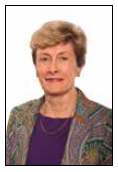
Janet Seggie
Editor.
References
-
1. Secretary-General's remarks at informal General Assembly debate on gender equality and the empowerment of women. New York, 6 March 2007. http://www.unOrg/sg/STATEMENTS/indexasp?nid=2469 (accessed 4 January 2016).
» http://www.unOrg/sg/STATEMENTS/indexasp?nid=2469 -
2. Prabahat Ranjan Sarkar. https://en.wikpedia.org/wiki/Prabhat_Ranjan_Sarkar (accessed 4 January 2016).
» https://en.wikpedia.org/wiki/Prabhat_Ranjan_Sarkar -
3. Ravi Batra. https://en.wikipedia.org/wiki/Ravi_Batra (accessed 4 January 2016).
» https://en.wikipedia.org/wiki/Ravi_Batra -
4. International Monetary Fund Strategy, Policy, and Review Department. Causes and Consequences of Income Inequality: A Global Perspective Prepared by Era Dabla-Norris, Kalpana Kochhar, Frantisek Ricka, Nujin Suphaphiphat, and Evridiki Tsounta (with contributions from Preya Sharma and Veronique Salins). Authorized for distribution by Siddharh Tiwari June 2015. https://www.imf.org/external/pubs/ft/sdn/2015/sdn1513.pdf (accessed 4 January 2016).
» https://www.imf.org/external/pubs/ft/sdn/2015/sdn1513.pdf -
5. Treanor J. Half of world's wealth now in hands of 1% ofpopulation - report. The Guardian 13 October 2015. http://www.theguardian.com/money/2015/oct/13/half-world-wealth-in-hands-population-inequality-report (accessed 4 January 2016).
» http://www.theguardian.com/money/2015/oct/13/half-world-wealth-in-hands-population-inequality-report -
6. Kings S. Inequality mocks SA's freedom. 31 October 2014. http://mg.co.za/article/2014-10-30-inequality-mocks-sas-freedom (accessed 4 January 2016).
» http://mg.co.za/article/2014-10-30-inequality-mocks-sas-freedom -
7. Piketty T. Transcript of Nelson Mandela Annual Lecture 2015. https://www.nelsonmandela.org/news/entry/transcript-of-nelson-mandela-annual-lecture-2015 (accessed 4 January 2016).
» https://www.nelsonmandela.org/news/entry/transcript-of-nelson-mandela-annual-lecture-2015 -
8. Even It Up: Time to End Extreme Inequality https://www.oxfam.org/sites/www.oxfam.org/files/file_attachments/cr-even-it-up-extreme-inequality-291014-en.pdf (accessed 15 February 2016).
» https://www.oxfam.org/sites/www.oxfam.org/files/file_attachments/cr-even-it-up-extreme-inequality-291014-en.pdf -
9. Benatar S. The poverty of the concept of 'poverty eradication'. S Afr Med J 2016;106(1):16-17. [http://dx.doi.org/10.7196/SAMJ.2016.v106i1.10417]
» http://dx.doi.org/10.7196/SAMJ.2016.v106i1.10417 -
10. Ferreira L. Social grants in South Africa - separating myth from reality. https://africacheck.org/factsheets/separating-myth-from-reality-a-guide-to-social-grants-in-south-africa/ (accessed 15 February 2016).
» https://africacheck.org/factsheets/separating-myth-from-reality-a-guide-to-social-grants-in-south-africa/ -
11. 'Black economic empowerment has failed': Piketty on South African inequality. http://www.theguardian.com/world/2015/oct/06/piketty-south-africa-inequality-nelson-mandela-lecture (accessed 4 January 2016).
» http://www.theguardian.com/world/2015/oct/06/piketty-south-africa-inequality-nelson-mandela-lecture -
12. Wikipedia, the free encyclopedia. Economic inequality. https://en.wikipedia.org/wiki/Economic_inequality (accessed 4 January 2016).
» https://en.wikipedia.org/wiki/Economic_inequality -
13. Wikipedia, the free encyclopedia. Polarization (economics). https://en.wikipedia.org/wiki/Polarization_(economics) (accessed 4 January 2016).
» https://en.wikipedia.org/wiki/Polarization_(economics) -
14. Mortimer C. Gender inequality: Female graduates earn up to £8,000 less than men who studied the same subject. Wednesday 30 December 2015. http://www.independent.co.uk/news/uk/home-news/gender-inequality-female-graduates-earn-up-to-8000-than-men-even-when-they-study-the-same-subject-a6790221.html (accessed 4 January 2016).
» http://www.independent.co.uk/news/uk/home-news/gender-inequality-female-graduates-earn-up-to-8000-than-men-even-when-they-study-the-same-subject-a6790221.html -
15. Sarah Silverman creates provocative new video on women's salaries and 'the $500,000 vagina tax. http://www.theguardian.com/money/us-money-blog/2014/oct/08/sarah-silverman-wage-gap-vagina-tax (accessed 4 January 2016).
» http://www.theguardian.com/money/us-money-blog/2014/oct/08/sarah-silverman-wage-gap-vagina-tax -
16. Grant L. Men get lion's share of income. 24 April 2015. http://mg.co.za/article/2015-04-23-men-still-get-lions-share-of-income (accessed 4 January 2016).
» http://mg.co.za/article/2015-04-23-men-still-get-lions-share-of-income -
17. Gender at Work. A Companion to the World Development Report on Jobs. http://www.worldbank.org/content/dam/Worldbank/document/Gender/GenderAtWork_web.pdf (accessed 4 January 2016).
» http://www.worldbank.org/content/dam/Worldbank/document/Gender/GenderAtWork_web.pdf -
18. South Africa Survey Online 2014/2015. http://irr.org.za/reports-and-publications/south-africa-survey/south-africa-survey-online-2014 (accessed 4 January 2016).
» http://irr.org.za/reports-and-publications/south-africa-survey/south-africa-survey-online-2014 -
19. SA has world's highest rate of women killed by partner. 12 December 2015. http://www.timeslive.co.za/sundaytimes/stnews/2015/12/12/SA-has-world%E2%80%99s-highest-rate-of-women-killed-by-partner (accessed 4 January 2016).
» http://www.timeslive.co.za/sundaytimes/stnews/2015/12/12/SA-has-world%E2%80%99s-highest-rate-of-women-killed-by-partner -
20. Joyner K, Rees K, Honikman S. Intimate partner violence (IPV) in South Africa: How to break the vicious cycle. http://pmhp.za.org/wp-content/uploads/2016/01/IPV_policybrief_2015.pdf (accessed 6 January 2016).
» http://pmhp.za.org/wp-content/uploads/2016/01/IPV_policybrief_2015.pdf - 21. Gass JD, Stein DJ, Williams DR, Seedat S. Intimate partner violence, health behaviours, and chronic physical illness among South African women. S Afr Med J 2010;100(9):582-585.
- 22. Baldwin-Ragaven L. Intimate partner violence: Are we ready for action? S Afr Med J 2010;100(9):577-578.
-
23. Rees K, Zweigenthal V, Joyner K. Intimate partner violence: How should health systems respond? S Afr Med J 2014;104(8):556-557. [http://dx.doi.org/10.7196/SAMJ.8511]
» http://dx.doi.org/10.7196/SAMJ.8511 -
24. Bhamjee S, Essack Z, Strode AE. Amendments to the Sexual Offences Act dealing with underage sex: Implications for doctors and researchers. S Afr Med J 2016;106(3):256-259. [http://dx.doi.org/10.7196/SAMJ.2016.v106i3.9877
» http://dx.doi.org/10.7196/SAMJ.2016.v106i3.9877 - 25. De Koker P, Eggers SM, Mathews C, et al. Prevalence of physical and sexual intimate partner violence and its demographic correlates among adolescents in South Africa. S Afr Med J 2016 (in press).
-
26. Mankazana EM. Intimate partner violence. S Afr Med J 2012;102(10):775. [http://dx.doi.org/10.7196/SAMJ.6207]
» http://dx.doi.org/10.7196/SAMJ.6207 -
27. Fees Must Fall campaign not over for some. Tuesday 3 November 2015-6:57am. https://www.enca.com/south-africa/persistent-protestors-refuse-give-student-uprising (accessed 4 January 2016).
» https://www.enca.com/south-africa/persistent-protestors-refuse-give-student-uprising -
28. Wesi T. Fees Must Fall analysis reveals promising politicians. national 29.10.2015 02:31 pm. http://citizen.co.za/842589/fees-must-fall-analysis-reveals-promising-politicians/ (accessed 4 January 2016).
» http://citizen.co.za/842589/fees-must-fall-analysis-reveals-promising-politicians/