Case fatality in severe acute malnutrition: Determinants and modifiable factors in hospitalised children in Vhembe district, South Africa
BACKGROUND: In 2019, one-quarter of child deaths in South African (SA) hospitals were attributed to severe acute malnutrition (SAM). OBJECTIVES: To identify demographic, clinical, case management and health system factors contributing to mortality in children aged <5 years with SAM admitted to three hospitals in Vhembe district, Limpopo, SA. METHODS: A retrospective record review was conducted for children aged 6 - 59 months admitted with SAM over a 30-month period. Bivariable and multivariable regression analyses were used to determine mortality factors. RESULTS: A total of 245 children with SAM were identified, with a median (interquartile range) age of 14 (10 - 18) months. The overall SAM case-fatality rate was 26.9% (66/245), significantly higher than routine data estimates. Key clinical factors associated with mortality included diarrhoea at presentation (odds ratio (OR) 3.34, 95% confidence interval (CI) 1.38 - 8.10), anaemia (OR 3.30, 95% CI 1.28 - 8.50), raised C-reactive protein (OR 9.29, 95% CI 2.81 - 30.76) and hyponatraemia (OR 6.64, 95% CI 2.70 - 16.31). Additional contributors included late presentation, self-referral, limited triage, poor recognition and management of comorbidities and inadequate compliance with SAM guidelines. HIV status and shock were not significant determinants of mortality. CONCLUSION: SAM mortality was alarmingly high, particularly in the context of a high middle-income country setting with established treatment protocols. The striking discrepancy between the observed case fatality rate and routine district health information system data highlights the need for review of data quality and reporting systems. Targeted interventions addressing both clinical risk factors and systemic gaps are essential to reduce mortality and improve outcomes for children with SAM.
severe acute malnutrition; mortality; risk factors; South Africa
Case fatality in severe acute malnutrition: Determinants and modifiable factors in hospitalised children in Vhembe district, South Africa
D FakudzI; H SaloojeII
IMB ChB, MSc; Department of Paediatrics and Child Health, Faculty of Health Sciences, University of the Witwatersrand, Johannesburg, South Africa
IIMB BCh, FCPaed (SA); Department of Paediatrics and Child Health, Faculty of Health Sciences, University of the Witwatersrand, Johannesburg, South Africa
BACKGROUND: In 2019, one-quarter of child deaths in South African (SA) hospitals were attributed to severe acute malnutrition (SAM).
OBJECTIVES: To identify demographic, clinical, case management and health system factors contributing to mortality in children aged <5 years with SAM admitted to three hospitals in Vhembe district, Limpopo, SA.
METHODS: A retrospective record review was conducted for children aged 6 - 59 months admitted with SAM over a 30-month period. Bivariable and multivariable regression analyses were used to determine mortality factors.
RESULTS: A total of 245 children with SAM were identified, with a median (interquartile range) age of 14 (10 - 18) months. The overall SAM case-fatality rate was 26.9% (66/245), significantly higher than routine data estimates. Key clinical factors associated with mortality included diarrhoea at presentation (odds ratio (OR) 3.34, 95% confidence interval (CI) 1.38 - 8.10), anaemia (OR 3.30, 95% CI 1.28 - 8.50), raised C-reactive protein (OR 9.29, 95% CI 2.81 - 30.76) and hyponatraemia (OR 6.64, 95% CI 2.70 - 16.31). Additional contributors included late presentation, self-referral, limited triage, poor recognition and management of comorbidities and inadequate compliance with SAM guidelines. HIV status and shock were not significant determinants of mortality.
CONCLUSION: SAM mortality was alarmingly high, particularly in the context of a high middle-income country setting with established treatment protocols. The striking discrepancy between the observed case fatality rate and routine district health information system data highlights the need for review of data quality and reporting systems. Targeted interventions addressing both clinical risk factors and systemic gaps are essential to reduce mortality and improve outcomes for children with SAM.
Keywords: severe acute malnutrition, mortality, risk factors, South Africa
In 2022, severe acute malnutrition (SAM) affected ~14 000 children aged <5 years in South Africa (SA), with >1 400 dying in 2023 and 2024.[1] Globally and in SA, SAM hospital mortality rates vary significantly owing to sociodemographic and health system factors, delayed referrals, illness severity, comorbid conditions such as diarrhoea and HIV, and substandard case management.[2]
In 2014, the SA Child Healthcare Problem Identification Programme (Child PIP) reported that one-third of hospital child deaths were associated with SAM,[3] improving to 24% by 2019.[4] The national SAM in-hospital case fatality rate (CFR) dropped from 8.9% in 2015 - 2016 to 7.1% in 2018 - 2019.[5,6] However, Limpopo Province, particularly the rural Vhembe district, consistently had higher SAM CFRs (e.g. 13% in 2016),[5] comparable with less-resourced settings in Ethiopia, Uganda and Malawi.[7-9] Failure to reduce SAM CFRs over a decade (2009 - 2018) despite fewer children having concomitant HIV infection was noted at a tertiary hospital in Durban, SA,[10] highlighting persistent systemic challenges in clinical management, resource allocation and health system responsiveness that continue to hinder progress in reducing child mortality from SAM.
While various African studies have explored SAM mortality in hospitals, few focus on SA, a relatively better-resourced country. Understanding factors associated with mortality among severely malnourished children is crucial for improving survival and care quality. This study aims to identify the demographic, clinical and health system factors contributing to SAM mortality in children aged 6 months to 5 years in three hospitals in Vhembe district, Limpopo, SA.
Methods
Study setting
This study was conducted in Vhembe district, Limpopo Province, a predominantly rural area. The three hospitals selected were Tshilidzini (a regional hospital receiving referrals from six district hospitals), Donald Fraser (a district hospital with the highest bed count in the district) and Malamulele (the district hospital with the highest SAM caseload). Hospitalised children received standard inpatient treatment per SA SAM guidelines,[11] based on World Health Organization (WHO) recommendations.[12]
Study design and population
This retrospective, descriptive study with analytic components reviewed hospital records of children aged 6 months to 5 years admitted for SAM from 1 January 2016 to 30 June 2018. SAM was defined by a weight-for-height/length (WFH/WFL) z-score <-3, mid-upper arm circumference (MUAC) <11.5 cm, or bilateral pedal oedema. Included were children aged 6 months - 5 years meeting the SAM definition. Excluded were children with long-term health conditions (e.g. cerebral palsy, trisomy 21) and those <6 months, owing to diagnostic challenges.
Data collection
Data were collected using a structured tool based on WHO and SA SAM guidelines. Variables included demographics, family details, clinical presentation, case management, laboratory markers, comorbid conditions and outcomes. The tool was pre-tested on hospital records from before the study period.
To ensure comprehensive data, a list of children admitted with diagnostic terms such as 'malnutrition', 'failure to thrive', 'kwashiorkor', 'protein-energy malnutrition', 'marasmus' and 'SAM' was compiled from admission and discharge registers. Records were screened for eligibility. Record retrieval was hindered by staff shortages and a poor filing system, with students assisting at the regional hospital. It was unclear whether retrieved files differed from those not found. The principal investigator manually plotted anthropometric data from patient records on WHO 2006 growth charts to identify eligible participants. Subsequently, data were entered into WHO anthropometric software, excluding implausible values (e.g. z-scores <-5). Routine measurements were taken by enrolled nurses and verified by dieticians using electronic scales and tape measures.
Data were sourced from various documents: (i) sociodemographic data, HIV status, tuberculosis (TB) screening and nutritional data from nursing admission forms; (ii) vital signs; (iii) feeding charts; (iv) treatment charts; (v) dietary history and feeds prescriptions from dieticians' notes; (vi) doctors' clinical notes; and (vii) laboratory results from patient files or the National Health Laboratory Service database. The principal investigator, experienced in paediatrics and SAM guidelines, assessed the appropriateness of hospital care based on WHO and national guidelines, categorising responses as appropriate, partial, or poor. Participants were retained in the study even with incomplete records or premature discharge.
Participant data from the Child PIP and Vhembe district clinical case reporting forms were reviewed to identify modifiable factors contributing to mortality. The Child PIP process evaluates missed opportunities, substandard care and intervention plans across all care levels, from home to hospital wards.
Sample size
The study anticipated a sample size of 300 children, sufficient to identify a doubling in any mortality risk factor with 80% power and a 0.05 alpha, assuming an 11.6% provincial mortality rate. Fewer children than this were identified, but the higher mortality rate allowed for detecting a 1.6-fold difference in mortality risk factors as statistically significant.
Statistical analysis
Data were entered into Excel 2016 (Microsoft, USA) and exported to IBM Statistical Package for Social Science version 27.0 (SPSS Inc, USA) for cleaning and analysis. WHO Anthro software v3.2.2 (WHO, Switzerland) was used to convert anthropometric measurements to WFH/WFL z-scores.
Factors potentially contributing to death were categorised into sociodemographic, clinical and laboratory groups. Chi-square tests assessed differences in proportions for categorical variables, while Mann-Whitney rank-sum tests were used for non-parametric continuous variables.
Binary logistic regression identified factors influencing mortality in children with SAM. Variables with p<0.15 in bivariable analysis were included in the multivariable logistic regression model, with entry and removal probabilities set at 0.05 and 0.15, respectively. Clinically important variables, such as age and sex, were included regardless of their p-value. Stepwise logistic regression was conducted for variables with p<0.05 to finalise the mortality determinants model.
Independent variables with >20% missing data were excluded from multivariable analysis. Missing data in patient records were treated as missing during analysis. Adjusted odds ratios, 95% confidence intervals (CIs) and p-values are reported, with p-values <0.05 considered statistically significant.
Ethical considerations
Ethical clearance was obtained from the Committee for Research in Human Subjects at the University of the Witwatersrand, Johannesburg (ref. no. M181051). Permission was also granted by the Limpopo provincial health department research committee, Vhembe district health authority, and the individual hospitals involved in the study.
Results
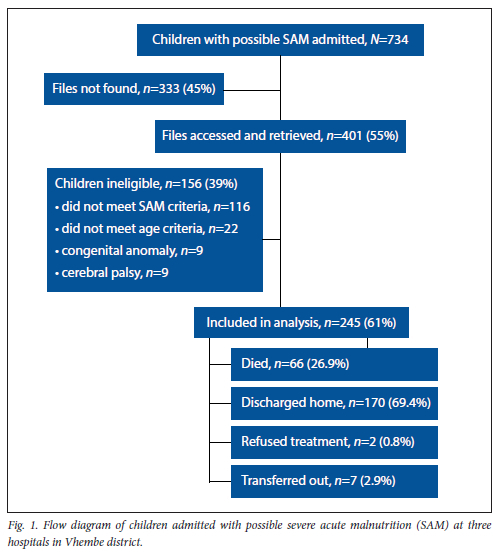
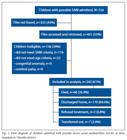
Between January 2016 and June 2018, 734 children with possible SAM were admitted to the three hospitals. Only 401 records (55%) were found, and 245 participants (61%) met the study definition of SAM. Participants were admitted to Tshilidzini Regional Hospital (n=109 (44.5%)), Malamulele Hospital (n=88 (35.9%)) and Donald Fraser Hospital (n=48 (19.6%)).
The flow of participants is shown in Fig. 1.
The SAM CFR was 26.9% (66/245). Malamulele Hospital had the highest death rate (30/88 (34%)), followed by Tshilidzini (25/109 (23%)) and Donald Fraser (11/48 (23%)). The median time to death was 100.5 hours (4.2 days), with 21% of deaths occurring within 24 hours of admission, 29% within 48 hours and 64% within the first week. The study CFR of 26.9% was substantially higher than the 7.2% - 7.4% reported for the same period in Vhembe district by the District Health Information System.[14,15] This discrepancy likely reflects differences in case identification and documentation quality between routine administrative data and detailed patient-level review
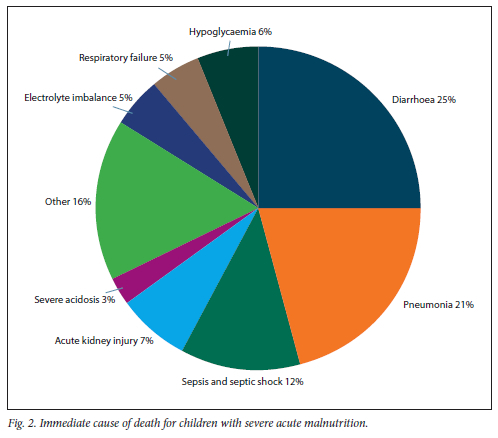
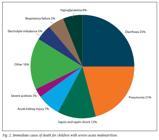
The leading immediate causes of death were diarrhoea (n=17 (25%)), pneumonia (n=14 (21%)), sepsis and septic shock (n=8 (12%)), acute kidney injury (n=5 (7%)) and hypoglycaemia (n=4 (6%)) (Fig. 2). Over half of the children had complications documented on the day of death, mainly shock (22 (61%)) related to hypovolaemia (13 (36%)), sepsis (6 (17%)) and hypoglycaemia (11 (31%)).
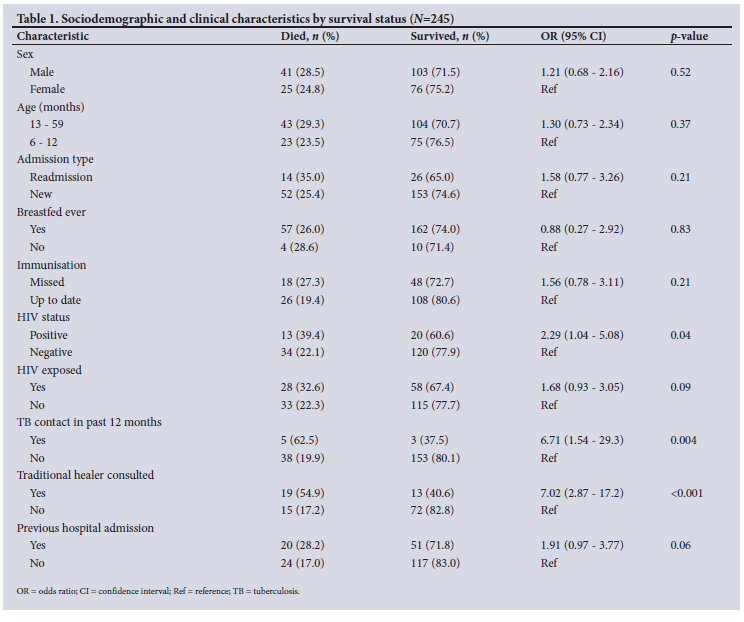
More male children were admitted (144 (59%)) and died (41 (62%)). The median age was 14 months, with most children (136 (56%)) aged between 13 and 24 months. There was no significant age difference between those who died and those who survived (Table 1). Three-quarters of the children (182 (74%)) were primarily cared for by their mothers, while about one-fifth (46 (19%)) were cared for by their grandmothers. Most mothers (177 (72%)) were unemployed, with a median age of 26 years. Details on mothers', fathers' and siblings' education were inconsistent.
Most admissions (205 (84%)) were first-time SAM cases. More children (138 (56%)) had the clinical syndrome of oedematous SAM (kwashiorkor) than non-oedematous SAM (marasmus). Most children (219 (89%)) had been breastfed at some point, with a mean breastfeeding duration of 9 months. Immunisation records showed that only half (134 (55%)) were up to date, 18% were partially immunised and 27% had no immunisation details. About one-third (35%) were HIV-exposed, with 13% HIV-infected, of whom 36% were on antiretroviral therapy. Eight children (4%) had a history of TB contact in the past 12 months. A recent consultation with a traditional healer was reported for 108 children (44%).
Significant determinants of mortality on bivariable analysis included a positive TB contact in the last 12 months (63% v. 33%, OR 6.71, 95% CI 1.54 - 29.3, p<0.001), a recent history of a traditional healer consult (55% v. 41%, OR 7.02, 95% CI 2.87 - 17.2, p<0.001) and the child being HIV positive (61% v. 39%, OR 2.29, 95% CI 1.04 - 5.08, p=0.04) (Table 1). Trends suggested higher mortality for children with previous SAM hospitalisation and those on HIV antiretroviral therapy, but these were not statistically significant.
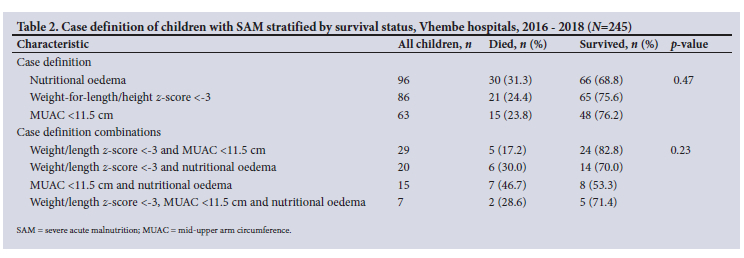
At admission, 96 children (39%) had documented bipedal oedema, 86 (35%) had a WFH/WFL z-score <-3, and 63 (26%) had a MUAC <11.5 cm (Table 2). Seventy-one children (29%) met multiple criteria, with the most common combination being a low WFH/ WFL z-score and low MUAC (11%). Seven children (3%) met all three criteria. None of the anthropometric indicators predicted mortality, alone or in combination.
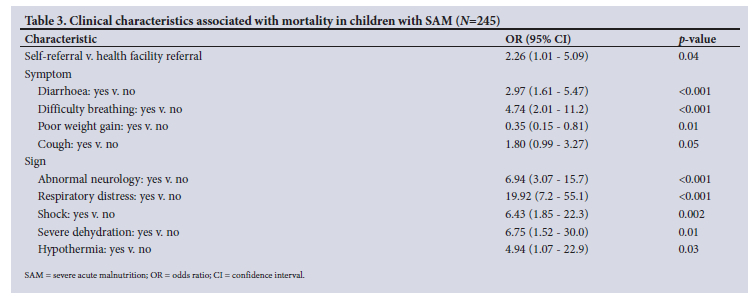
Three-quarters (192 (73%)) of children were referred from health facilities or from practitioners. Most (206 (84%)) had a SAM diagnosis before ward admission, while 35 (14%) were diagnosed in the ward and four (2%) after death. Self-referral was associated with higher mortality (OR 2.26, 95% CI 1.01 - 5.09, p=0.04) (Table 3). Only a quarter (60 (25%)) were triaged using Emergency Triage Assessment and Treatment (ETAT) or South African Triage Scale (SATS) tools, with triage more common at Donald Fraser Hospital (46 (77%)). Triage tool use did not significantly influence mortality. The mean duration of the presenting complaint was 7 days for children who died, and 6 days for survivors. The median duration of prior ill-health was not significantly different between those who died and survivors (30 v. 21 days, p=0.12). The median length of hospital stay was shorter for children who died compared with survivors (5 v. 11 days, p<0.001).
Diarrhoea was the most common presenting complaint (41%). Vomiting and poor appetite were also common. Diarrhoea (OR 3.0, 95% CI 1.61, 5.5, p<0.001) and difficulty breathing (OR 4.7, 95% CI 2.01, 11.2, p<0.001) at presentation were significant risk factors for death (Table 3). Children described by caregivers as having poor weight gain (OR 0.35, 95% CI 0.15 - 0.81, p=0.01) or a poor appetite (OR 0.51, 95% CI 0.25 - 1.03, p=0.06) were less likely to die.
Hypothermia, dehydration and hypoglycaemia were assessed in 66%, 52% and 32% of children, respectively. When identified, these signs were often poorly managed. Abnormal neurological status (OR 6.9, 95% CI 3.1 - 15.7, p<0.001), shock (OR 6.4, 95% CI 1.9 - 22.3, p=0.002), severe respiratory distress (OR 19.9, 95% CI 7.2 - 55.1, p<0.001), dehydration (OR 6.75, 95% CI 1.52 - 30.0, p=0.01) and hypothermia (OR 4.94, 95% CI 1.07 - 22.9, p=0.002) on admission significantly increased the odds of death (Table 3). Hypoglycaemia was not a significant determinant of death.
Common investigations included full blood count, urea and electrolytes and C-reactive protein (CRP). Elevated CRP (>12 mg/dL) (OR 7.54, 95% CI 2.93 - 21.1, p<0.001), hyponatraemia (<130 mmol/L) (OR 4.65, 95% CI 2.36 - 9.16, p<0.001), hypokalaemia (<3.5 mmol/L) (OR 2.88, 95% CI 1.50 - 5.51, p=0.001) and hypoalbuminaemia (<30 mmol/L) (OR 2.77, 95% CI 0.98 - 7.82, p=0.048) were associated with mortality (Appendix Table S1). Absence of Mycobacterium tuberculosis on sputum Gene-Xpert (OR 0.18, 95% CI 0.04 - 0.98, p=0.03) was associated with better survival. Elevated white cell counts or raised serum transaminases did not affect mortality risk.
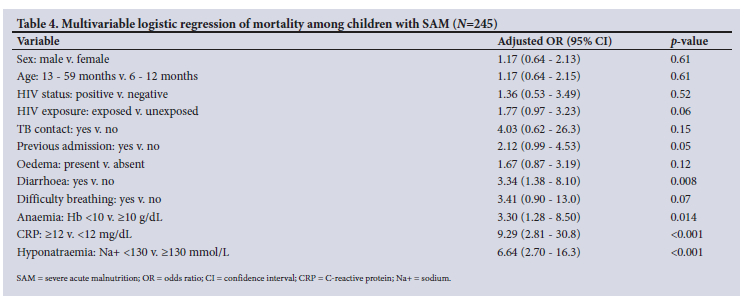
Table 4 presents the results of the multivariable analysis. The odds of dying were higher for children with diarrhoea (OR 3.34, 95% CI 1.38 - 8.10, p=0.008), anaemia (Hb <10 g/dL) (OR 3.30, 95% CI 1.28 - 8.50, p=0.014), raised CRP (>12 mg/dL) (OR 9.29, 95% CI 2.81 - 30.8, p<0.001) and hyponatraemia (OR 6.64, 95% CI 2.70 - 16.3, p<0.001) within the first 48 hours of admission.
Modifiable factors identified during the Child PIP mortality audit were mainly related to clinical personnel. Home-level factors contributing to mortality included inadequate food quality (78%), caregiver delay in seeking medical care (61%), failure to recognise danger signs (61%) and administering harmful traditional remedies (30%). Several contributory factors were identified at the clinic and referral facility levels. In the admission area and ward, several clinician-related factors were noted, such as inadequate history-taking (33%) and physical examination (18%), poor assessment of shock (23%), failure to test for HIV (9.1%) and TB (18.2%), inadequate blood glucose monitoring (31.8%), lack of handover of critically ill children (18%) and insufficient review of children with severe dehydration (26%).
Discussion
This study provides crucial insights into the factors contributing to the high mortality rates among children aged <5 years with SAM in Vhembe district, Limpopo Province, SA. Key contributors identified include diarrhoea, anaemia, raised CRP and hyponatraemia. These associations are consistent with clinical expectations and prior research, reinforcing the credibility of our findings. Additional factors such as late hospital presentation, limited triage, poor recognition and management of comorbidities and inadequate adherence to SAM guidelines further exacerbate mortality risk.
The overall CFR of 26.9% is alarmingly higher than the WHO's suggested target of 5% for SAM.[16] This rate aligns with a 2020 study in another Limpopo district (25.9% mortality)[17] and a 2017 Ugandan study,[18] but contrasts sharply with recent SAM mortality rates in other sub-Saharan African settings (8% - 17%)[8,19-21] and SA national data (7.1% - 8.9%)[5,6] for the same period.
The overall CFR of 26.9% observed in this study is markedly higher than the 7.2% - 7.4% reported through routine health information systems for the same hospitals during the study period.[5,6] These routine figures are derived from the District Health Information System (DHIS), SA's national reporting platform for hospital admissions and outcomes. DHIS data are widely used for tracking health outcomes and are most useful for national monitoring, relying on aggregated monthly reports. However, multiple studies have highlighted systemic weaknesses, including under-reporting, misclassification of causes of death and poor integration with clinical audit systems such as Child PIP.[22,23] These issues compromise the accuracy of routine CFR estimates, particularly for deaths occurring following ward transfers or among children misclassified at admission. In contrast, our study employed a detailed case record review using a stringent SAM case definition, including deaths not captured in DHIS.
The SAM CFR discrepancy highlights systemic weaknesses in routine reporting and the need for improved integration between clinical audit processes (e.g. Child PIP) and administrative systems (e.g. DHIS). Strengthening collaboration between these platforms could enhance data quality, improve mortality surveillance and support targeted interventions to reduce SAM-related deaths.
The high CFR observed in this study likely reflects a combination of factors. Children often presented with severe illness, as indicated by the high proportion with shock, respiratory distress and abnormal neurology on admission - each strongly associated with mortality. Our review of case management revealed frequent deviations from WHO and national SAM guidelines, particularly in the management of dehydration, hypoglycaemia and infections. Although we did not formally assess staffing levels, high patient-nurse ratios and limited practitioner experience were widely reported challenges at the study
sites during the period under review. Variations in hospital practices, such as more consistent triage at Donald Fraser Hospital, may have contributed to differences in outcomes. Notably, the high CFR at Tshilidzini Regional Hospital - despite its having access to paediatric specialists - is concerning, and warrants further investigation.
Differences in mortality rates compared with other studies may be a result of their study design,[24] the exclusion of critically ill children[25] and hospital setting.[2] Tertiary and regional facilities with paediatricians may have different mortality rates from district hospitals staffed by junior doctors and medical officers.
The management of SAM in SA has evolved substantially over the past two decades, with national and hospital-level interventions contributing to notable changes in CFRs among children <5 years. The introduction of WHO inpatient management guidelines for SAM and increased policy attention to child nutrition have underpinned many of these improvements, though disparities remain across provinces and facilities.
In the early 2000s, CFRs for children with SAM admitted to rural hospitals were alarmingly high. A landmark implementation study in Eastern Cape Province hospitals showed a reduction in CFR from 46% to 21% at Mary Theresa Hospital, and from 25% to 18% at Sipetu Hospital,[26] following structured adoption of WHO treatment protocols for SAM.[27] Indeed, the first global WHO SAM protocol implementation study was conducted at Mapulaneng Hospital in Limpopo, and demonstrated a reduction in the SAM CFR from 35% to 18% over 1 year.[27]
National data from the Child PIP and DHIS reflect a broader trend of improvement. Between 2009 and 2021, national inpatient SAM CFR declined from 19.2% to 7.0%, largely attributed to improved case management, expanded health worker training and the introduction of standardised treatment guidelines.[23]
However, provincial and hospital-level data reveal significant variability. For example, in 2015/2016, the national SAM CFR was 8.9%, but Limpopo Province reported a higher rate of 11.6%, exceeding the national target of <8%.[14] This gap suggests implementation challenges in resource-constrained settings, despite national progress. A focused study analysing data from 2014 to 2018 in Limpopo Province reported an overall SAM mortality rate of 25.9% among hospitalised children <5, significantly exceeding national averages.[17] This study identified dehydration, HIV exposure and delayed admission as risk factors, pointing to gaps in community-level detection, referral and facility-based care.
Since 2020, there has been increasing advocacy for integrating mortality audit platforms (e.g. Child PIP) with hospital administrative systems (DHIS) to improve data quality and drive accountability. Hospitals that have implemented this dual reporting approach report better case detection and improved care outcomes.[28]
While national SAM mortality has improved over time, a high CFR persists in some provinces and hospitals. Evidence supports the effectiveness of WHO guideline implementation, but underscores the need for ongoing quality improvement, targeted provincial strategies and accurate mortality reporting systems to achieve equitable outcomes across the health system.[29]
Diarrhoea emerged as the most common cause of death within the first 24 hours of admission, often accompanied by hypovolaemic shock. Poor fluid management and hydration monitoring contribute to early deaths in malnourished children with diarrhoea. Children who died after 24 hours often succumbed to infections (pneumonia, sepsis, septic shock) or complications from fluid and electrolyte imbalances and organ dysfunction (e.g. hypovolaemic shock, hypoglycaemia, acute kidney injury).
Almost two-thirds of deaths occurred within the first week of admission, mirroring findings in Ghana and Uganda.[18,21,24] The 24-hour mortality rate of 21% in our study is lower than the 40% and 29% reported in Zambian and Kenyan studies,[30,31] likely owing to differences in hospital types and patient severity. A Limpopo study reported a lower 24-hour mortality of 14.1%,[17] possibly owing to earlier presentation and better clinician skills. The median time to death was 101 hours (4 days), similar to an Ethiopian study reporting 3 days.[7]
Children with SAM and diarrhoea had a three-fold higher likelihood of death, consistent with other studies. Diarrhoea is a major cause of mortality in children <5,[9,31-34] and is common in SAM owing to gut barrier dysfunction and bacterial overgrowth.[35] Anaemia also tripled the risk of death, aligning with previous studies.[17,36-39] Raised CRP, indicating inflammation and infection, increased mortality risk nine-fold.'25,40' Hyponatraemia within the first 72 hours was associated with poor outcomes, similar to findings in India.[41] Interestingly, caregivers' reports of poor weight gain and appetite were protective, possibly indicating earlier recognition of illness by caregivers and timely hospital presentation.
Unlike other studies, our analysis did not identify age, sex, breastfeeding practice, anthropometric measurements, shock, or HIV to be significant predictors of mortality factors in children with SAM. This contrasts with several SA and regional studies where these factors have shown strong associations with poor outcomes.[2,17,42-45] A likely explanation lies in the retrospective design of our study, which was constrained by poor documentation, inconsistent history-taking and incomplete clinical investigation.
HIV and TB are recognised as risks for severe wasting, and associated with negative outcomes in SAM.[46-48] Although TB contact and HIV positivity were significantly associated with mortality in bivariable analysis, they did not remain significant in the multivariable model. This may reflect both under-recognition of TB in routine care and missing or undocumented HIV status for a substantial portion of children. Similarly, variables such as immunisation status and traditional healer consultation had high rates of missing data (18% and 51%, respectively), which may have limited their utility in identifying mortality risk. These data gaps likely reduced the statistical power of the model and may have masked true associations.
More children in our study had oedematous (kwashiorkor) rather than non-oedematous (marasmus) SAM, which is unusual in SA settings. Two recently published SA studies, including one from the same province, reported non-oedematous SAM to be more prevalent, with rates of 65% and 61%, respectively.[17,43] In contrast, studies in Zambia and Uganda found higher rates of oedematous SAM.[9,30] The clinical syndrome type influences outcomes, with oedematous SAM having poorer initial outcomes but better longterm outcomes.[49,50]
Health professionals did not consistently adhere to national SAM treatment guidelines or the WHO 10 steps of SAM management, particularly in managing hypoglycaemia, dehydration and electrolyte imbalance. Poor adherence to guidelines has been noted in other studies as a contributor to mortality.[21,31] The retrospective nature of this study did not allow for investigation into the underlying causes of health worker deficiencies or the impact of factors such as skills, experience and staff turnover.
Modifiable factors contributing to death were identified across three levels of care: home, admission and ward.[13] At home, delays in seeking medical attention were common, often related to caregivers' inability to recognise danger signs and reliance on traditional medicine. At admission, inadequate handover of critically ill patients, poor history-taking and suboptimal assessment practices contributed to missed opportunities for early intervention. Within the ward, deficiencies included insufficient charting, inadequate monitoring of hydration and blood glucose, and incomplete HIV and TB assessments. These findings highlight the fact that many deaths from SAM are not inevitable, but result from preventable failures in early recognition, clinical assessment and ongoing management. Addressing these modifiable factors through caregiver education, improved triage and communication and consistent adherence to treatment protocols could significantly reduce mortality and improve outcomes for children with SAM - even in resource-constrained settings.
Infection prevention through immunisation represents a potentially modifiable factor in reducing SAM-related mortality. Alarmingly, only half of the children had their immunisations up to date. A previous multicentre study revealed that children with SAM who were partially or not vaccinated at all were 1.9 and 1.6 times more likely to die, respectively, compared with those fully vaccinated.[51]
Study strengths and weaknesses
This study's main strength lies in its comprehensive examination of mortality determinants, covering sociodemographic factors, referral and triage, presenting symptoms and management throughout the hospital stay. It also reviewed modifiable factors at home, referral and hospital levels. Extensive screening of eligible cases and stringent application of anthropometric criteria were notable strengths. Multivariable analysis helped identify priority factors requiring attention.
A major limitation of this study was that only 55% of potential records were retrieved, owing to longstanding challenges with hospital filing systems. This raises the possibility of selection bias, as we could not determine whether missing records differed systematically - such as representing early deaths or undocumented discharges. The lack of identifiers or outcome data in registers prevented meaningful comparison between found and missing records. Future studies could mitigate this by linking paper and electronic data sources and documenting missing file characteristics. These challenges highlight the need to strengthen clinical record-keeping and digital health systems in SA hospitals.
Poor recording of patient details, such as dietary history and clinical information or misclassification of SAM status, was anticipated, and materialised. This was partially compensated for by recalculating anthropometric z-scores and extracting data from all available sources. Furthermore, missing data for key variables - such as HIV status (missing in 24%), immunisation status (18%) and traditional healer consultation (51%) - limited our ability to include these factors robustly in multivariable models. This likely reduced the power to detect certain associations, and may have led to underestimation of known mortality risk factors. These limitations underscore the need for improved clinical documentation, digitised record systems and routine data audits to support more accurate surveillance and quality improvement in SAM care.
Diarrhoea and respiratory distress were associated with substantially increased odds of death, as indicated by their wide but meaningful CIs. In contrast, variables such as TB contact showed large point estimates but wide CIs, reflecting either limited precision due to small sample sizes or potential confounding. These findings should be interpreted with caution, and viewed as exploratory signals for further research.
Contribution of the study
While building on established evidence regarding inpatient SAM outcomes, this study adds important context-specific data from a rural SA setting. It confirms that SAM mortality remains unacceptably high - even in facilities with paediatricians - and underscores the gap between clinical guidelines and real-world practice. The study also raises concerns about the accuracy and completeness of routinely collected SAM data in SA, highlighting the discrepancy between patient-level findings and DHIS reporting. Importantly, this study draws attention to frequent pre-admission consultations with traditional healers - an underexplored but potentially modifiable factor in SAM outcomes. By integrating clinical record review with elements of the Child PIP audit approach, this study provides a more nuanced and comprehensive view of SAM mortality determinants, and strengthens the case for targeted, localised interventions.
Recommendations
Based on the study's findings, five key recommendations are proposed to reduce mortality from SAM at the district level. Together, these recommendations address both the immediate clinical gaps identified and the systemic issues limiting quality improvement.
(i) Implement a red flag system to prioritise children presenting with high-risk features such as shock, respiratory distress, abnormal neurology and hypothermia for immediate care. These factors were significantly associated with mortality in this cohort, and warrant early intervention.
(ii) Strengthen training programmes for junior doctors and nursing staff, with targeted focus on deficiencies identified in the study: triage, management of dehydration, hypoglycaemia, electrolyte imbalances and poor adherence to SAM guidelines. Consultant outreach and bedside teaching are critical.
(iii) Reform mortality and morbidity meetings to include structured clinical audits against SAM protocols, with follow-up on modifiable factors, feedback to staff and practical strategies for system improvement.
(iv) Improve patient record-keeping, as poor documentation significantly limited data completeness and quality in this study. Hospitals should prioritise systematic and retrievable recording of key clinical indicators and outcomes.
(v) Foster collaboration between clinical audit teams (Child PIP) and hospital administrators (DHIS) to improve data quality, alignment and case detection. Such collaboration has been shown in other SA settings to improve reporting accuracy and reduce SAM CFRs and mortality surveillance.
At the national level, this study suggests that SAM CFRs reported through the DHIS may underestimate true mortality. One possible reason is that routine data may overestimate the number of children classified with SAM - artificially inflating the denominator - owing to inconsistent application of SAM diagnostic criteria. In particular, reliance on weight-for-age rather than WFH/WFL may lead to misclassification of general undernutrition as SAM. This discrepancy highlights the need for further investigation into routine data accuracy and classification practices.
Conclusion
This study found an unacceptably high CFR among children with SAM at three hospitals in Vhembe District - more than three times higher than national targets, and far above international benchmarks. The key clinical predictors of mortality - diarrhoea, anaemia, raised CRP and hyponatraemia - were strongly associated with poor outcomes, and require prioritisation in triage and early inpatient management. Although these factors have been described in other contexts, their consistent and significant presence in this cohort highlights the need for focused, context-specific clinical interventions.
Beyond clinical presentation, the study exposed systemic contributors to mortality, including delayed presentation, poor triage practices and inadequate adherence to established SAM treatment guidelines. These are modifiable failures within the health system. Targeted training, stronger accountability through clinical audit and improved implementation of national guidelines are essential to reversing this trend.
Finally, the stark discrepancy between observed and routinely reported SAM mortality underscores the limitations of current surveillance systems. Strengthening the accuracy of SAM data through better documentation, classification and collaboration between DHIS and Child PIP platforms is critical. Without immediate action on both clinical and system fronts, SAM-related deaths will continue at preventable levels.
Data availability. The data used for this study are available from the corresponding author upon reasonable request.
Declaration. The study was undertaken in partial fulfilment of DF's MSc in Child Health (Community Paediatrics) at the University of the Witwatersrand.
Acknowledgements. Dr Thivhulawi Malwela for her overall supportive role and for facilitating data access. The staff at the file registry in the three hospitals who despite being short-staffed worked tirelessly to retrieve files. The Vhembe district health office, and research committees at Tshilidzini, Malamulele and Donald Fraser hospitals for facilitating the study's conduct. Mr Muleya Nqobile for assistance with the multivariable analysis, and Mr Ravuluvulu Alufheli for helping with the structuring of the study data collection tool.
Author contributions. DF and HS conceived and designed the study. DF collected the data and undertook the statistical analysis. Both authors analysed the results, wrote the manuscript and approved the last version.
Funding. Self-funded.
Conflicts of interest. None.
References
-
1. Clarke M. More than 1 400 children starved to death in SA since 2023. Ekhuruleni News, 23 December 2024. https://ekurhuleninews.co.za/more-than-1-400-children-starved-to-death-in-sa-since-2023/ (accessed 23 December 2024).
» https://ekurhuleninews.co.za/more-than-1-400-children-starved-to-death-in-sa-since-2023/ -
2. Karunaratne R, Sturgeon JP, Patel R, Prendergast AJ. Predictors of inpatient mortality among children hospitalised for severe acute malnutrition: A systematic review and meta-analysis. Am J Clin Nutr 2020;112(4):10691079. https://doi.org/10.1093/ajcn/nqaa182
» https://doi.org/10.1093/ajcn/nqaa182 -
3. National Department of Health, South Africa. 2nd triennial report of the Committee on Morbidity and Mortality in children under 5 years (COMMIC). Pretoria: NDoH, 2014. https://www.health.gov.za/wp-content/uploads/2023/04/2nd-CoMMiC-Triennial-Report-2014.pdf (accessed 23 December 2024).
» https://www.health.gov.za/wp-content/uploads/2023/04/2nd-CoMMiC-Triennial-Report-2014.pdf -
4. National Department of Health, South Africa. 4th Triennial report of the Committee on Morbidity and Mortality in Children under 5 years (COMMIC): 2017 - 2020. Pretoria: NDoH, 2020. https://www.health.gov.za/wp-content/uploads/2022/03/4th-CoMMiC-Triennial-Report-20.12.07.pdf (accessed 23 December 2024).
» https://www.health.gov.za/wp-content/uploads/2022/03/4th-CoMMiC-Triennial-Report-20.12.07.pdf -
5. Massyn N, Peer N, English R, Padarath A, Barron P, Day C. District Health Barometer 2015/16. Durban: Health Systems Trust, 2016. https://www.hst.org.za/publications/District%20Health%20Barometers/District+Health+Barometer+2015-16+Web.pdf (accessed 23 December 2024).
» https://www.hst.org.za/publications/District%20Health%20Barometers/District+Health+Barometer+2015-16+Web.pdf -
6. Massyn N, Peer N, English R, Padarath A, Barron P, Day C. District Health Barometer 2018/19. Durban: Health Systems Trust, 2019. https://www.hst.org.za/publications/District%20Health%20Barometers/District+Health+Barometer+2018-19+Web.pdf (accessed 23 December 2024).
» https://www.hst.org.za/publications/District%20Health%20Barometers/District+Health+Barometer+2018-19+Web.pdf -
7. Desyibelew HD, Fekadu A, Woldie H. Recovery rate and associated factors of children age 6 to 59 months admitted with severe acute malnutrition at inpatient unit of Bahir Dar Felege Hiwot Referral hospital therapeutic feeding unit, northwest Ethiopia. PloS ONE 2017;12(2):e0171020. https://doi.org/10.1371/journal.pone.0171020
» https://doi.org/10.1371/journal.pone.0171020 -
8. Vonasek BJ, Chiume M, Crouse HL, et al. Risk factors for mortality and management of children with complicated severe acute malnutrition at a tertiary referral hospital in Malawi. Paediatr Int Child Health 2020;40(3):148-157. https://doi.org/10.1080/20469047.2020.1747003
» https://doi.org/10.1080/20469047.2020.1747003 -
9. Nabukeera-Barungi N, Grenov B, Lanyero B, et al. Predictors of mortality among hospitalised children with severe acute malnutrition: A prospective study from Uganda. Pediatr Res 2018;84(1):92-98. https://doi.org/10.1038/s41390-018-0016-x
» https://doi.org/10.1038/s41390-018-0016-x -
10. Ndlovu S, David-Govender C, Tinarwo P, Naidoo KL. Changing mortality amongst hospitalised children with severe acute malnutrition in KwaZulu-Natal, South Africa, 2009 - 2018. BMC Nutr 2022;8(1):63. https://doi.org/10.1186/s40795-022-00559-y
» https://doi.org/10.1186/s40795-022-00559-y - 11. National Department of Health, South Africa. Standard treatment guidelines and Essential Medicines List for South Africa: Hospital level paediatrics 2017. Pretoria: NDoH, 2017.
-
12. World Health Organization. Guideline: Updates on the management of severe acute malnutrition in infants and children. Geneva: WHO, 2013. https://apps.who.int/iris/handle/10665/95584 (accessed 23 December 2024).
» https://apps.who.int/iris/handle/10665/95584 - 13. Patrick M, Stephen C. Child PIP: Making mortality meaningful by using a structured mortality review process to improve the quality of care that children receive in the South African health system. South Afr J Child Health 2008;2(2):38-42.
-
14. Massyn N, Padarath A, Peer N. District health barometer 2016/17. Durban: Health Systems Trust, 2017. https://www.hst.org.za:443/publications/Pages/District-Health-Barometer-201617.aspx (accessed 23 December 2024).
» https://www.hst.org.za:443/publications/Pages/District-Health-Barometer-201617.aspx -
15. Massyn N, Pillay Y, Padarath A. District health barometer 2017/18. Durban: Health Systems Trust, 2019. https://www.hst.org.za:443/publications/Pages/DHB20172018.aspx (accessed 23 December 2024).
» https://www.hst.org.za:443/publications/Pages/DHB20172018.aspx -
16. World Health Organization, United Nations System Standing Committee on Nutrition, United Nations Children's Fund. Community-based management of severe acute malnutrition. Geneva: WHO, 2007. https://iris.who.int/server/api/core/bitstreams/4c056cdb-c9f2-4f65-b8f4-fbc6a1a82847/content (accessed 23 December 2024).
» https://iris.who.int/server/api/core/bitstreams/4c056cdb-c9f2-4f65-b8f4-fbc6a1a82847/content -
17. Gavhi F, Kuonza L, Musekiwa A, Motaze NV. Factors associated with mortality in children under five years old hospitalised for severe acute malnutrition in Limpopo province, South Africa, 2014 - 2018: A cross-sectional analytic study. PloS ONE 2020;15(5):e0232838. https://doi.org/10.1371/journal.pone.0232838
» https://doi.org/10.1371/journal.pone.0232838 -
18. Nalwanga D, Musiime V, Kizito S, et al. Mortality among children under five years admitted for routine care of severe acute malnutrition: A prospective cohort study from Kampala, Uganda. BMC Pediatr 2020;20(1):1-11. https://doi.org/10.1371/journal.pone.0232838
» https://doi.org/10.1371/journal.pone.0232838 -
19. Kassaw A, Amare D, Birhanu M, et al. Survival and predictors of mortality among severe acute malnourished under-five children admitted at Felege-Hiwot comprehensive specialised hospital, northwest, Ethiopia: A retrospective cohort study. BMC Pediatr 2021;21(1):176. https://doi.org/10.1186/s12887-021-02651-x
» https://doi.org/10.1186/s12887-021-02651-x -
20. Nduhukire T, Atwine D, Rachel L, Byonanebye JE. Predictors of in-hospital mortality among under-five children with severe acute malnutrition in South-Western Uganda. Plos ONE 2020;15(6):e0234343. https://doi.org/10.1371/journal.pone.0234343
» https://doi.org/10.1371/journal.pone.0234343 -
21. Carboo JA, Asare H, Nel E, Ricci C, Lombard M, Dolman R. Treatment outcomes and determinants of mortality in children aged 0 - 59 months diagnosed with complicated severe acute malnutrition in two referral hospitals in Ghana. Vulnerable Child Youth Stud 2020;15(4):329-343. https://doi.org/10.1080/17450128.2020.1800157
» https://doi.org/10.1080/17450128.2020.1800157 -
22. Mate KS BB, Mphatswe W, Barker P, Rollins N. Challenges for routine health system data management in a large public programme to prevent mother-to-child HIV transmission in South Africa. PloS ONE 2009;4(5):e5483. https://doi.org/10.1371/journal.pone.0005483
» https://doi.org/10.1371/journal.pone.0005483 -
23. Bamford LJ Barron P, Kauchali S, Dlamini N. Inpatient case fatality rates improvements in children under 5: Diarrhoeal disease, pneumonia and severe acute malnutrition. S Afr Med J 2018;108(3 Suppl 1):S33-S37. https://doi.org/10.7196/SAMJ.2018.v108i3.12772
» https://doi.org/10.7196/SAMJ.2018.v108i3.12772 -
24. Banga D, Baren M, Ssonko NV, et al. Comorbidities and factors associated with mortality among children under five years admitted with severe acute malnutrition in the nutritional unit of Jinja Regional Referral Hospital, Eastern Uganda. Int J Pediatr 2020;2020:1-9. https://doi.org/10.1155/2020/7809412
» https://doi.org/10.1155/2020/7809412 -
25. Rytter MJ, Babirekere-Iriso E, Namusoke H, et al. Risk factors for death in children during inpatient treatment of severe acute malnutrition: A prospective cohort study. Am J Clin Nutr 2017;105(2):494-502. https://doi.org/10.1155/2020/8826302
» https://doi.org/10.1155/2020/8826302 -
26. Ashworth A, Chopra M, McCoy D, et al. WHO guidelines for management of severe malnutrition in rural South African hospitals: Effect on case fatality and the influence of operational factors. Lancet 2004;363(9415):1110-1115. https://doi.org/10.1016/S0140-6736(04)15894-7
» https://doi.org/10.1016/S0140-6736(04)15894-7 - 27. Deen JL, Funk M, Guevara VC, et al. Implementation of WHO guidelines on management of severe malnutrition in hospitals in Africa. Bull World Health Org 2003;81(4):237-243.
-
28. Barron P, Mahomed H, Masilela TC, Vallabhjee K, Schneider H. District Health System performance in South Africa: Are current monitoring systems optimal? S Afr Med J 2023;113(12):13-17. https://doi.org/10.7196/SAMJ.2023.v113i12.1614
» https://doi.org/10.7196/SAMJ.2023.v113i12.1614 -
29. Kauchali S, Puoane T, Aguilar AM, et al. Scaling up improved inpatient treatment of severe malnutrition: Key factors and experiences from South Africa, Bolivia, Malawi, and Ghana. Glob Health Sci Pract 2022;10(2):e2100411. https://doi.org/10.9745/GHSP-D-21-00411
» https://doi.org/10.9745/GHSP-D-21-00411 -
30. Munthali T, Jacobs C, Sitali L, Dambe R, Michelo C. Mortality and morbidity patterns in under-five children with severe acute malnutrition (SAM) in Zambia: A five-year retrospective review of hospital-based records (2009 - 2013). Arch Public Health 2015;73(1):1-9.https://doi.org/10.1186/s13690-015-0072
» https://doi.org/10.1186/s13690-015-0072 -
31. Gachau S, Irimu G, Ayieko P, et al. Prevalence, outcome and quality of care among children hospitalised with severe acute malnutrition in Kenyan hospitals: A multi-site observational study. PloS ONE 2018;13(5):e0197607. https://doi.org/10.1371/journal.pone.0197607
» https://doi.org/10.1371/journal.pone.0197607 -
32. Manetu WM, M'masi S, Recha CW. Diarrhea disease among children under 5 years of age: A global systematic review. Open J Epidemiol 2021;11(03):207-221. https://doi.org/10.4236/ojepi.2021.113018
» https://doi.org/10.4236/ojepi.2021.113018 -
33. Grenov B, Lanyero B, Nabukeera-Barungi N, et al. Diarrhea, dehydration, and the associated mortality in children with complicated severe acute malnutrition: A prospective cohort study in Uganda. J Pediatr 2019;210:26-33.e3 https://doi.org/10.1016/j.jpeds.2019.03.014
» https://doi.org/10.1016/j.jpeds.2019.03.014 -
34. Kebede F, Kebede T, Negese B, Abera A, Fentaw G, Kasaw A. Incidence and predictors of severe acute malnutrition mortality in children aged 6 - 59 months admitted at Pawe general hospital, Northwest Ethiopia. PloS ONE 2022;17(2):e0263236. https://doi.org/10.1371/journal.pone.0263236
» https://doi.org/10.1371/journal.pone.0263236 -
35. Lanyero B, Grenov B, Barungi NN, et al. Correlates of gut function in children hospitalised for severe acute malnutrition, a cross-sectional study in Uganda. J Pediatr Gastroenterol Nutr 2019;69(3):292-298. https://doi.org/10.1097/MPG.0000000000002381
» https://doi.org/10.1097/MPG.0000000000002381 -
36. Nkosi-Gondwe T, Calis J, Boele van Hensbroek M, Bates I, Blomberg B, Phiri KS. A cohort analysis of survival and outcomes in severely anaemic children with moderate to severe acute malnutrition in Malawi. PloS ONE 2021;16(2):e0246267. https://doi.org/10.1371/journal.pone.0246267
» https://doi.org/10.1371/journal.pone.0246267 -
37. Wagnew F, Dessie G, Takele WW, et al. A meta-analysis of inpatient treatment outcomes of severe acute malnutrition and predictors of mortality among under-five children in Ethiopia. BMC Pub Health 2019;19(1):1-11. https://doi.org/10.1186/s12889-019-7466-x
» https://doi.org/10.1186/s12889-019-7466-x -
38. Lakonawa KY, Sidiartha IGL, Pratiwi IGAPE. Anemia and metabolic acidosis as risk factor of mortality in children with severe acute malnutrition. Int J Health Sci 2020;4(3):60-68. https://doi.org/10.29332/ijhs.v4n3.460/ijhs.v4n3.459
» https://doi.org/10.29332/ijhs.v4n3.460/ijhs.v4n3.459 -
39. Kluniari NPA, Sidiartha IGL. Anemia and metabolic acidosis are a predictor for mortality in children with severe acute malnutrition at Sanglah General Hospital, Bali. Intisari Sains Medis 2020;11(2):620-624. https://doi.org/10.15562/ism.v11i2.627
» https://doi.org/10.15562/ism.v11i2.627 -
40. Kheir AE, Gebreel BG. C-reactive protein as a marker of infection in children with severe acute malnutrition in Khartoum state, Sudan. Healthcare Low-Resource Settings 2017;5(1):1-5. https://doi.org/10.15562/ism.v11i2.627
» https://doi.org/10.15562/ism.v11i2.627 -
41. Kumar D, Rao SK, Kumar A, Singh TB. Risk factors of mortality in hospitalised children with severe acute malnutrition. Indian J Pediatr 2019;86(11):1069-1073. https://doi.org/10.1007/s12098-019-03016-0
» https://doi.org/10.1007/s12098-019-03016-0 -
42. Negussie AS, Tadesse AW. Predictors of undesirable treatment outcomes of severe acute malnutrition among inpatient children in Addis Ababa, Ethiopia: A retrospective cohort study. BMC Public Health 2020;20(1):1-10. https://doi.org/10.1186/s12889-020-09645-x
» https://doi.org/10.1186/s12889-020-09645-x -
43. Mandla N, Mackay C, Mda S. Prevalence of severe acute malnutrition and its effect on under-five mortality at a regional hospital in South Africa. South Afr J Clin Nutr 2021;34(2):1-6. https://doi.org/10.1080/16070658.2021.2001928
» https://doi.org/10.1080/16070658.2021.2001928 -
44. Schwinger C, Golden MH, Grellety E, Roberfroid D, Guesdon B. Severe acute malnutrition and mortality in children in the community: Comparison of indicators in a multi-country pooled analysis. PloS ONE 2019;14(8):e0219745. https://doi.org/10.1371/journal.pone.0219745
» https://doi.org/10.1371/journal.pone.0219745 -
45. Wagnew F, Tesgera D, Mekonnen M, Abajobir AA. Predictors of mortality among under-five children with severe acute malnutrition, Northwest Ethiopia: An institution based retrospective cohort study. Arch Public Health 2018;76(1):1-10. https://doi.org/10.1186/s13690-018-0309-x
» https://doi.org/10.1186/s13690-018-0309-x -
46. De Maayer T, Saloojee H. Clinical outcomes of severe malnutrition in a high tuberculosis and HIV setting. Arch Dis Child 2011;96(6):560-564. https://doi.org/10.1136/adc.2010.205039
» https://doi.org/10.1136/adc.2010.205039 -
47. Thakur J, Thakur R, Bhatta N, et al. Prevalence of tuberculosis in severe acute malnutrition: A prospective observational study. 2020;7(9):1789-1794. https://doi.org/10.3126/jnps.v42i1.39974
» https://doi.org/10.3126/jnps.v42i1.39974 -
48. Adler H, Archary M, Mahabeer P, LaRussa P, Bobat R. Tuberculosis in HIV-infected South African children with complicated severe acute malnutrition. Int J Tuberc Lung Dis 2017;21(4):438-445. https://doi.org/10.5588/ijtld.16.0753
» https://doi.org/10.5588/ijtld.16.0753 -
49. Kabalo MY, Yohannes B. Children with oedema recover better than those with severe wasting in outpatient therapeutic program at Boloso Sore district, Southwest Ethiopia. BMC Res Notes 2018;11(1):1-5. https://doi.org/10.1186/s13104-018-3232-x
» https://doi.org/10.1186/s13104-018-3232-x -
50. Grimbeek A, Saloojee H. Clinical and growth outcomes of severely malnourished children following hospital discharge in a South African setting. PloS ONE 2022;17(1):e0262700. https://doi.org/10.1371/journal.pone.0262700
» https://doi.org/10.1371/journal.pone.0262700 -
51. Alemu W, Argaw D, Adimasu M, Ewunie TM. Predictors of mortality among severe acute malnourished children. A multi-center prospective follow-up study. Clin Nutr ESPEN 2023;53:165-169. https://doi:10.1016/j.clnesp.2022.12.014
» https://doi:10.1016/j.clnesp.2022.12.014

Accepted 31 October 2025