The return of congenital syphilis: Disease spectrum and modifiable factors in a semi-rural regional hospital in KwaZulu-Natal Province, South Africa
BACKGROUND. Despite the World Health Organization's current focus on eliminating congenital syphilis (CS) as part of its triple elimination strategy, the incidence of CS in South Africa (SA) is increasing. This highly preventable disease causes high morbidity and mortality. Recent local data on the clinical presentation of CS and modifiable factors associated with vertical transmission are scarce. OBJECTIVES. To describe the maternal and neonatal characteristics of symptomatic and asymptomatic neonates admitted with CS, and to identify the modifiable factors leading to CS infection. METHODS. We conducted a retrospective review of all CS cases diagnosed in live-born infants managed at General Justice Gizenga Mpanza Regional Hospital in KwaZulu-Natal Province, SA, between 1 December 2019 and 31 December 2020, describing clinical presentation and modifiable factors that contributed to the occurrence of CS. Outcomes were compared between symptomatic and asymptomatic infants, and clinical features were compared between surviving and non-surviving infants. RESULTS. We recorded 54 cases of CS out of 7 535 live-born infants (0.7%), including two sets of twins. Mothers of infants with CS were more likely to be living with HIV (52% (n=27) v. 38% of all mothers delivering live-born infants at our facility (p=0.032)), and less likely to have attended antenatal care (ANC): 19% (n=10) did not attend ANC, v. 2% overall (p=0.000). Neonatal death occurred in 7 (13%) infants with CS. Forty (74%) of the infants were symptomatic, with hepatosplenomegaly being the most common finding (68% of infants with CS). In total, 78 modifiable factors contributing to CS were identified, and grouped into maternal factors and factors related to timing of diagnosis, the healthcare system, testing and hospital or clinic visits. For 18 mothers (33% of modifiable factors), the result of the syphilis test conducted during pregnancy was not traced, or no treatment was commenced; 14 (27%) seroconverted during pregnancy after an initial negative booking test. CONCLUSION. Our study confirms high morbidity and mortality associated with CS. We recommend the use of point-of-care rapid diagnostic tests (mono syphilis or dual HIV/syphilis) at regular intervals throughout pregnancy. Elimination of CS is challenging, with a high percentage of mothers of neonates with CS not attending ANC.
congenital syphilis; modifiable factors; HIV
The return of congenital syphilis: Disease spectrum and modifiable factors in a semi-rural regional hospital in KwaZulu-Natal Province, South Africa
S TiemersmaI; P A SetlatjileII; J A van LobensteinIII; N MoranIV, V
IDCH (SA), MD; Department of Paediatrics and Child Health, School of Clinical Medicine, College of Health Sciences, University of KwaZulu-Natal, and GJG Mpanza Regional Hospital, KwaDukuza, South Africa
IIMB ChB, DCH (SA); Department of Paediatrics and Child Health, School of Clinical Medicine, College of Health Sciences, University of KwaZulu-Natal, and GJG Mpanza Regional Hospital, KwaDukuza, South Africa
IIIMD; Department of Paediatrics and Child Health, School of Clinical Medicine, College of Health Sciences, University of KwaZulu-Natal, and GJG Mpanza Regional Hospital, KwaDukuza, South Africa
IVBM BCh, FCOG (SA); KwaZulu-Natal Department of Health, Durban, South Africa
VBM BCh, FCOG (SA); Department of Obstetrics and Gynaecology, School of Clinical Medicine, College of Health Sciences, University of KwaZulu-Natal, Pietermaritzburg, South Africa
BACKGROUND. Despite the World Health Organization's current focus on eliminating congenital syphilis (CS) as part of its triple elimination strategy, the incidence of CS in South Africa (SA) is increasing. This highly preventable disease causes high morbidity and mortality. Recent local data on the clinical presentation of CS and modifiable factors associated with vertical transmission are scarce.
OBJECTIVES. To describe the maternal and neonatal characteristics of symptomatic and asymptomatic neonates admitted with CS, and to identify the modifiable factors leading to CS infection.
METHODS. We conducted a retrospective review of all CS cases diagnosed in live-born infants managed at General Justice Gizenga Mpanza Regional Hospital in KwaZulu-Natal Province, SA, between 1 December 2019 and 31 December 2020, describing clinical presentation and modifiable factors that contributed to the occurrence of CS. Outcomes were compared between symptomatic and asymptomatic infants, and clinical features were compared between surviving and non-surviving infants.
RESULTS. We recorded 54 cases of CS out of 7 535 live-born infants (0.7%), including two sets of twins. Mothers of infants with CS were more likely to be living with HIV (52% (n=27) v. 38% of all mothers delivering live-born infants at our facility (p=0.032)), and less likely to have attended antenatal care (ANC): 19% (n=10) did not attend ANC, v. 2% overall (p=0.000). Neonatal death occurred in 7 (13%) infants with CS. Forty (74%) of the infants were symptomatic, with hepatosplenomegaly being the most common finding (68% of infants with CS). In total, 78 modifiable factors contributing to CS were identified, and grouped into maternal factors and factors related to timing of diagnosis, the healthcare system, testing and hospital or clinic visits. For 18 mothers (33% of modifiable factors), the result of the syphilis test conducted during pregnancy was not traced, or no treatment was commenced; 14 (27%) seroconverted during pregnancy after an initial negative booking test.
CONCLUSION. Our study confirms high morbidity and mortality associated with CS. We recommend the use of point-of-care rapid diagnostic tests (mono syphilis or dual HIV/syphilis) at regular intervals throughout pregnancy. Elimination of CS is challenging, with a high percentage of mothers of neonates with CS not attending ANC.
Keywords: congenital syphilis, modifiable factors, HIV
Congenital syphilis (CS) is a highly preventable disease with global impact on perinatal mortality and morbidity, and is re-emerging as a major public health threat across the globe.[1,2] CS is caused by infection with the spirochete Treponema pallidum, which is transmitted transplacentally to the fetus after maternal infection.[3] Early-stage maternal syphilis carries a higher risk of vertical transmission and severe neonatal disease, preterm birth and stillbirth.[4] Gestational syphilis, when untreated or treated insufficiently, results in adverse birth outcomes in an estimated 50 -80% of cases.[5] Clinical manifestations of early CS in the neonate include pneumonia, anaemia, thrombocytopenia, jaundice, rhinitis ('snuffles') and a peeling skin rash.[3,6] The most recent estimation in 2016 of the worldwide prevalence of syphilis in pregnancy was 0.7%, which equates to >661 000 cases.[7] Since then, analyses of national data from several countries have demonstrated an alarming increase in the incidence of CS, mainly in Brazil, the USA and Canada.[2,8,9]
In South Africa (SA), a steady increase in clinical notifications and number of positive rapid plasma reagin (RPR) test results in infants aged <24 months was noted between 2017 and 2019.[10] The prevalence of syphilis among antenatal women in SA in 2022 was estimated at 3.1% (95% confidence interval (CI) 2.9 - 3.3), an increase of >50% from 2015 (2.0%).[11] To gain more insight into the current presentation of CS, we performed a retrospective review of CS cases among live-born infants at a regional hospital in iLembe district, KwaZulu-Natal Province, SA. We describe the clinical presentation of CS, and report on the modifiable factors during pregnancy that contributed to the incidence of CS.
Methods
Study setting
We retrospectively analysed all live-born neonates with CS admitted at General Justice Gizenga Mpanza Regional Hospital (GJGMRH), KwaDukuza, KwaZulu-Natal, from 1 December 2019 to 31 December 2020, which included a 4-month period before the start of COVID-19 lockdown regulations, and a 9-month period after. GJGMRH is a regional hospital in the semi-rural district of iLembe, with ~7 000 deliveries a year. Antenatal care (ANC) visits occur at primary healthcare (PHC) facilities, and if any complications arise, pregnant women are referred to the hospital.
Diagnosis and treatment
For the diagnosis of CS, we used the definition used by the SA National Institute for Communicable Diseases (NICD) and the World Health Organization (WHO).[12-14] In summary, by this surveillance case definition - rather than a strictly clinical case definition - early CS is diagnosed in infants <24 months of age born to mothers with a positive syphilis test without adequate treatment (symptomatic or asymptomatic infants), and/or in symptomatic infants (laboratory, radiographic or clinical) regardless of maternal treatment status. A mother is considered adequately treated if the first dose of intramuscular benzathine penicillin was given >30 days before delivery. In SA, the most widely accepted treatment regimen for syphilis in pregnancy consists of three intramuscular injection doses of 2.4 million units of benzathine penicillin given at weekly intervals. At the time of the study, the national guidelines recommended routine testing for syphilis at the first antenatal visit, and then again at a gestational age of 32 weeks. In our hospital, testing for syphilis is done at our antenatal clinic and for all mothers at the time of delivery by using a point-of-care treponema-specific rapid test. If positive, this is followed by a laboratory RPR test to confirm the diagnosis. At the time of the study, the PHC clinics were generally using RPR tests processed at a central laboratory instead of point-of-care tests, with a turnaround time of between 2 and 4 days, and patients were given a review date in 1 week.[15,16] Treatment for the neonate is as per the national guideline: at least 10 days of intravenous aqueous crystalline penicillin for symptomatic infants, and a single intramuscular dose of benzathine penicillin for asymptomatic infants.[12]
Data collection and analysis
Cases of CS were identified using the birth register and notifiable medical conditions (NMC) notifications from our institution obtained from the NICD, including laboratory notifications from the National Health Laboratory Service. These notifications include all children with a positive RPR <2 years old. Stillbirths were not included. All neonates of mothers who tested positive for syphilis antenatally or at birth, as noted in the birth register, were screened for inclusion, as well as all cases obtained from the NICD for our study period. Duplicates were removed. All cases were cross-referenced with case identification forms sent from our institution to the NICD as part of the notification process. Clinical data were extracted from maternal and neonatal records. All cases were audited by two researchers (PS and ST) for verification of adherence to the case definition. In cases of ambiguity, expert opinion was requested (NM). Modifiable factors were identified after reviewing the clinical information (PS and ST). These factors are defined as any events during the antenatal period leading to the occurrence of syphilis in the neonate that could have been addressed in order to possibly prevent the CS. The total number of live-born infants during the period under review was extracted from the Perinatal Problem Identification Programme (PPIP), a facility audit tool for perinatal deaths used in SA.
Data for neonates were analysed using SPSS version 27 (IBM, USA). Shapiro-Wilk testing was used to assess whether data were normally distributed. Descriptive statistical analysis was done using means and standard deviations (SDs) for normally distributed data, and medians and interquartile ranges (IQRs) for non-normally distributed continuous data.
Between symptomatic and asymptomatic neonates, outcomes were compared using odds ratios (ORs) with 95% confidence intervals (CIs) and p-values. P<0.05 was considered statistically significant. Differences were compared using f-tests for normally distributed numerical data, Mann-Whitney U-tests for non-parametric numerical data and χ2n<5).
Ethical considerations
Ethics approval for the study was obtained from the Biomedical Research Ethics Committee of the University of KwaZulu-Natal (ref. no. BREC/00002629/2021). Approval to conduct the study at GJGMRH was granted by the hospital CEO and by the Health Research and Knowledge Management Unit from the KwaZulu-Natal Department of Health (ref. no. NHRD KZ_202105_007). Written permission was obtained from the NICD for the use of the NMC notifications.
Results
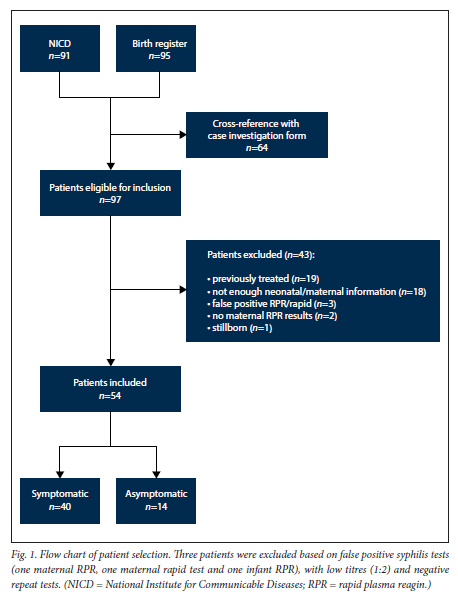
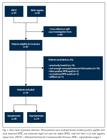
There were 7 535 live-born infants at GJGMRH between 1 December 2019 and 31 December 2020, among which we recorded 54 cases of CS, including two sets of twins (Fig. 1). This represents 0.72% of liveborn infants in our study period. The proportion of mothers whose newborns had CS and who did not receive ANC was spread evenly before (n=3/14; 21%) and during (n=7/38; 18%) the COVID-19 lockdown period.
Maternal and neonatal characteristics
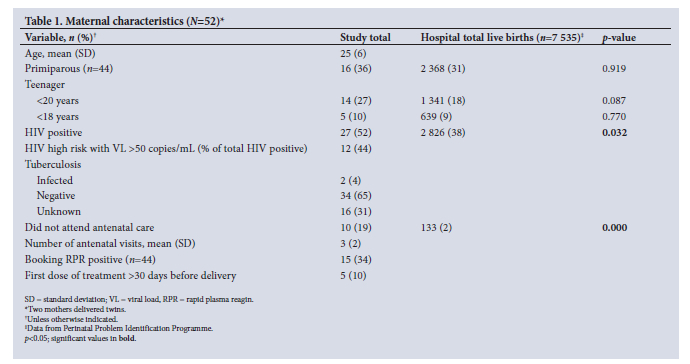
Table 1 summarises the characteristics of the 52 mothers who delivered babies with CS. Mothers of babies with CS were more likely to be living with HIV (52% v. 38% of all mothers delivering live-born infants at our facility, p=0.032), and less likely to have attended ANC (p=0.000). Most mothers (n=37; 89%) who received ANC attended a clinic within the iLembe district.
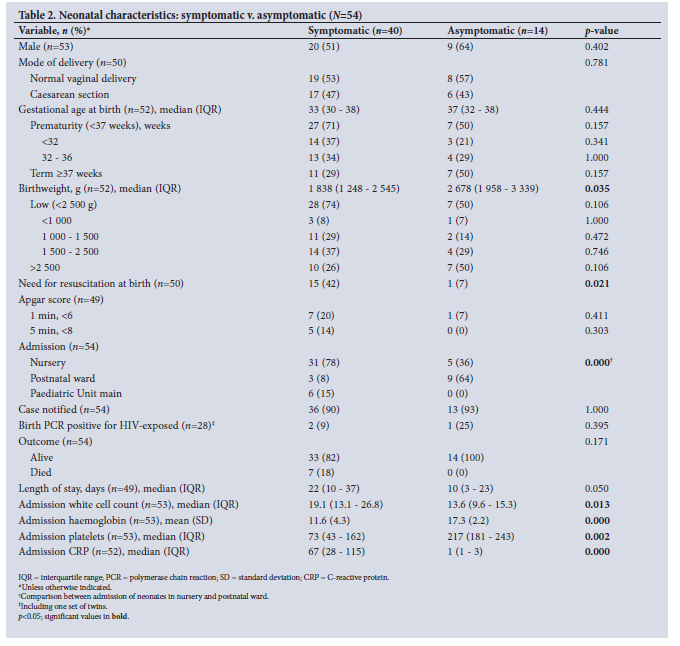
Differences in characteristics of CS symptomatic and asymptomatic neonates are shown in Table 2. Of the 28 HIV-exposed infants (including one set of twins), 23 (82%) were symptomatic of CS, v. 17 HIV-unexposed infants (65%; p=0.16).
Neonatal death occurred in 13% of infants with CS (n=7), and all deaths were in symptomatic infants. Six infants with CS were admitted to our paediatric ward (as opposed to the neonatal nursery), and most of these were admitted at ~6 weeks of age (range 35 - 96 days), with the oldest infant diagnosed at the age of 3 months. Analysis of cerebrospinal fluid was performed in 27 infants, of whom 9 (33%) tested positive for syphilis using the venereal disease research laboratory test, indicating neurosyphilis.
Symptomatic infants more often presented with an RPR titre >1:16 than asymptomatic infants (p=0.021; OR 95% CI 1.188 - 21.039), and less often had a titre <1:8 (p=0.004; OR 95% CI 0.029 - 0.582). A high maternal RPR titre of 1:32 or higher was not associated with giving birth to a symptomatic infant (p=0.219).
Disease spectrum and treatment of symptomatic patients
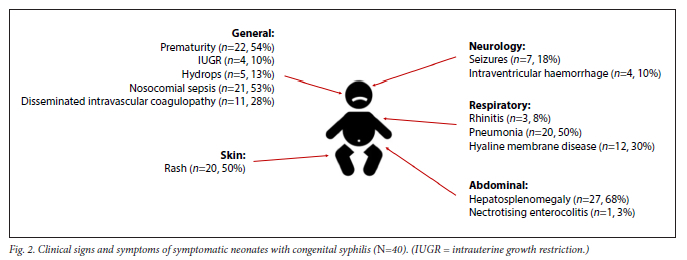
The clinical signs and symptoms of symptomatic neonates with CS are shown in Fig. 2. Non-surviving symptomatic infants more frequently needed resuscitation at birth (p=0.023) and were more often diagnosed with anaemia (haemoglobin <12 g/dL; p=0.017). Of the 4 neonates with intraventricular haemorrhage, 3 died and 1 survived. Conjugated hyperbilirubinaemia was found in 30% of patients (n=12).
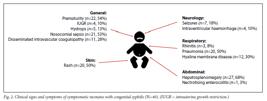
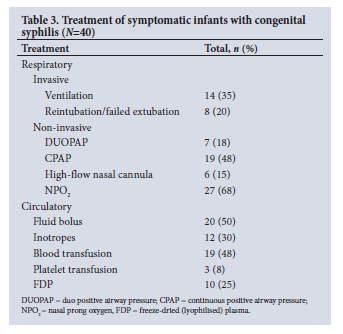
Table 3 summarises the treatment of symptomatic infants. All of the neonates who died were ventilated and received inotropes and a blood transfusion, except for 1 neonate with a birthweight of 735 g. According to the provincial guidelines, neonates with a birthweight <900 g are not eligible for ventilation. Nearly half of the symptomatic patients received >1 blood transfusions. The average duration of ventilation of surviving neonates (n=8) was 11 days.
Antibiotic treatment
All symptomatic infants were treated according to protocol with >10 days of aqueous crystalline penicillin G. Of the asymptomatic neonates, 8 were also treated with 10 days of intravenous therapy instead of a single dose of benzathine penicillin. Six of these were either premature or presented with (very) low birthweight, and therefore were possibly assessed by the attending physician as being symptomatic, while of the remaining two asymptomatic term infants, one was diagnosed with mild asphyxia. Both of these infants were treated incorrectly with respect to our protocol, and should have received one dose of benzathine penicillin only.
Modifiable factors
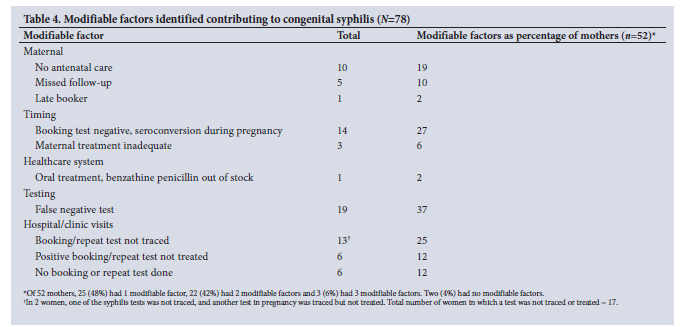
In total, we identified 78 modifiable factors contributing to CS (Table 4). In 10 cases (19%), no ANC was initiated. For 17 pregnant women the result of the syphilis test conducted during pregnancy was not traced, or no treatment was commenced (33%). In 5 mothers the repeat RPR test in pregnancy (as the first test was either not traced or the result was invalid) was not traced or treated. Another important modifiable factor in 27% of cases (n=14) was failure to detect seroconversion during pregnancy after an initial negative booking test, with either delivery before the scheduled date for repeat testing at 32 weeks' gestational age (n=4) or failure to conduct a repeat test at delivery (n=10).
Of the 15 mothers with a positive booking test, the result was not traced or treated in 10 cases. A further 3 mothers were inadequately treated, 1 was a late booker (delivered before treatment was completed) and 1 received oral treatment with amoxicillin and probenecid. In only 15% of cases was there documented evidence of treatment of the mother's sexual partner (n=8).
Nineteen mothers (37%) had a false negative syphilis test result at the time of delivery (RPR and/or rapid test). The rapid syphilis test was false negative in 18 mothers, and RPR in 5, with 4 mothers testing negative for both, while most of the infants of these mothers were symptomatic at birth (n=15, 79%), and syphilis testing was therefore repeated in the mother after birth and found positive. Infant RPR titres were 1:16 or higher in 16 out of these 19 cases (84%).
Discussion
Our study in a semi-rural regional hospital in SA confirms previously noted high morbidity and mortality among infants with CS.[7,17] Mortality in symptomatic infants was 18%, comparable with previous studies in SA. In 1996 the Chris Hani Baragwanath Hospital in Johannesburg reported a mortality rate of 29%, and a publication from a tertiary hospital in Cape Town showed an even higher mortality rate of 38% in symptomatic infants.[18] A recent study from another regional hospital in KwaZulu-Natal demonstrated a case fatality rate of 26%.[19]
In our study, 74% of infants with CS were symptomatic, a higher percentage than the 15 - 50% previously noted.[5,20] Oloya et al.[21] reported hepatomegaly (52%) and splenomegaly (58%) as the most common symptoms of CS in infants born to mothers with newly diagnosed syphilis in Uganda. Similarly, we found hepatosplenomegaly to be the most common finding in symptomatic infants (68%).
Approximately half (48%) of the symptomatic infants in our study required some form of intensive care: continuous positive airway pressure and/or ventilation, or one or more blood transfusions, and 30% of infants needed inotropic support. This amounts to significant medical costs and an additional burden in settings with limited resources, which could be potentially avoided with improved screening and treatment during ANC.
As Saloojee et al.[22] suggested in 2004, CS should by now be a medical curiosity, as in theory it is feasible to eliminate CS with good antenatal screening and penicillin as cheap treatment. They suggested that its ongoing prevalence is a symbol of the failure of basic systems of ANC and control of sexually transmitted infections. This was echoed by a more recent Brazilian study noting correlations between rates of stillbirth caused by syphilis and inadequate prenatal care.[23]
In 2017, the WHO launched a global initiative to eliminate mother-to-child-transmission of HIV and syphilis, which was updated in 2021 to include hepatitis B virus.[14] The target for all countries is to reach a CS case rate of <50 per 100 000 live births, and to adhere to the 95-95-95 goals: >95% ANC coverage with at least one visit; >95% coverage of syphilis testing during ANC; and >95% adequate syphilis treatment of syphilis-seropositive pregnant women.
To reach these goals, multiple studies have demonstrated that decentralised screening for syphilis during ANC, with same-day rapid testing and treatment with penicillin, is effective and feasible.[24-26] Although a SA study on implementing on-site syphilis testing did not lead to higher treatment rates or reduced perinatal mortality, it did reduce time from testing to start of treatment to 16 days (95% CI 11 - 21).[27]
In our study, the disadvantage of performing an off-site test such as RPR was demonstrated by the finding that for 33% of pregnant women, the syphilis test was not traced or not treated. On-site rapid testing and immediate treatment could potentially reduce the number of congenital infections in our district. The WHO now recommends a dual HIV/syphilis rapid diagnostic test to screen pregnant women during ANC,[28] and this has also been advocated in KwaZulu-Natal, SA, where there is a particularly high burden of both HIV and syphilis.[11,29] In our study, 52% of the mothers were living with HIV, higher than the average in KwaZulu-Natal (40.9%; 95% CI 39.6 - 42.3),[11] reflecting the higher prevalence of syphilis among HIV-positive patients.[29] New promising rapid tests have been developed, with a combination of nontreponemal and treponemal tests, or using novel biomarkers as Treponemal IgA-antibodies, which are able to distinguish early v. latent syphilis.[30,31]
We noted that a high percentage of mothers of neonates with CS did not receive any ANC (19%), compared with the overall rate (1.5%) for all women delivering during the study period (data from PPIP). Although our study included the COVID-19 lockdown period, the percentage of mothers of neonates with CS without ANC was not higher during the lockdown period compared with the period before the lockdown measures started. This high percentage of mothers of neonates with CS who never attended ANC was confirmed in a previous study, at 17%.[19]
In our study, 14 mothers (27%) seroconverted during pregnancy. A recent prevalence study in a PHC centre in Durban found 3.8% of pregnant women positive for syphilis at booking, with a seroconversion rate of maternal syphilis of 2.6% at 32 weeks' gestational age follow-up.[32] Possibly the true rate is even higher, as their follow-up rate was only 77%, with possible premature deliveries or stillbirths having unknown syphilis status. Syphilis testing at each visit could potentially avoid a high number of CS cases. Another recent study found 54% of mothers negative at booking, while delivering an infant with symptomatic CS.[19]
Although previous studies have highlighted the association between higher maternal RPR titres and the occurrence of CS in infants,[33] in the present study no association was demonstrated between maternal RPR titre and presence of symptoms in infants with CS. We also found a number of apparent false negative results from our point-of-care rapid tests. We postulate that this might be because of errors in testing methods (e.g. reading too quickly or too late) or errors in administration (copying the booking test result, or error in entering the test result). It also emphasises the need to use point-of-care tests that have been found to be reliable through quality assurance processes. Classically, the combination of a positive RPR test with a negative treponemal test (e.g. rapid) is seen as a biological false positive (BFP) test result, as reactive RPR tests (with low titre) are also associated with other medical conditions, such as connective tissue diseases and HIV infections.[34] However, in our study, BFP tests were not evident, as the majority of the mothers with apparent false negative rapid tests delivered a baby with clinical signs of syphilis (15/18) and high RPR titres (16/18). False negative RPR tests have been associated with the prozone effect, resulting from high antibody titres interfering with the formation of antigen-antibody lattice.[6] This effect is seen in pregnancy and in HIV infection. In our study, of the five false negative RPR tests, three were done in women living with HIV (of whom one was virally unsuppressed).
Study limitations
Our study has a few limitations, the most important of which is that we did not include information on stillbirths due to CS, as we were unable to trace those maternal records. We had a few cases with missing data and a small sample size of symptomatic infants (Table 2) and, most notably, we were not able to include information on skeletal abnormalities. Furthermore, we did not collect information about maternal substance abuse. We also found little evidence of partner tracing. It is common practice in our department to hand out a letter to the mother for partner treatment; however, evidence thereof could not be found in the file. Additionally, we only included children with symptomatic CS from our paediatric ward, and did not screen all admissions <2 years old for syphilis exposure.
Conclusion
Our study confirms high morbidity and mortality associated with CS. We recommend the use of quality-assured point-of-care rapid diagnostic tests (single or dual HIV/syphilis) at the antenatal booking visit, and then at regular (approximately monthly) intervals throughout pregnancy, as in our study population possibly up to 60% of CS cases could have been avoided by immediate testing and treating (33%) and by recognising syphilis seroconversion earlier during pregnancy (27%). As a result of this study and data from other centres, the national guidelines have recently been changed.[35] Currently, the SA National Department of Health advises testing for syphilis in syphilisnaive pregnant women via rapid test at approximately monthly intervals throughout pregnancy, and at delivery. In previously treated mothers, RPR tests are recommended at the same intervals, as the rapid tests usually remain positive for life despite treatment. Future studies are needed to investigate whether the prevalence of CS will decline using this strategy, and these studies preferably should include stillbirths caused by syphilis. Lastly, elimination of CS is challenging with a high percentage of mothers of infants with CS not attending ANC (19% in this study), and it needs to be approached hand in hand with the elimination of other vertically transmitted diseases, especially HIV infection.
Data availability. The data used for this study are available upon request from the authors.
Declaration. None.
Acknowledgements. The authors acknowledge Dr Johann Coetzee, designer and creator of the PPIP.
Author contributions. PS: conceived and designed the study, data collection; JvL: conceived and designed the study, review of manuscript; NM: review of data collection, review of manuscript; ST: principal investigator, conceived and designed the study, data collection, data analysis, draft and review of manuscript.
Funding. None.
Conflicts of interest. None.
References
-
1. Gilmour LS, Walls T. Congenital syphilis: A review of global epidemiology. Clin Microbiol Rev 2023;36(2):e0012622. https://doi.org/10.1128/cmr.00126-22
» https://doi.org/10.1128/cmr.00126-22 -
2. Nelson R. Congenital syphilis increases in the USA. Lancet Microbe 2022;3(3):e171. https://doi.org/10.1016/s2666-5247(22)00041-6
» https://doi.org/10.1016/s2666-5247(22)00041-6 -
3. Medoro AK, Sánchez PJ. Syphilis in neonates and infants. Clin Perinatol 2021;48(2):293-309. https://doi.org/10.1016/j.clp.2021.03.005
» https://doi.org/10.1016/j.clp.2021.03.005 -
4. Genç M, Ledger WJ. Syphilis in pregnancy. Sex Transm Infect 2000;76(2):73-79. https://doi.org/10.1136/sti.76.2.73
» https://doi.org/10.1136/sti.76.2.73 -
5. Gomez GB, Kamb ML, Newman LM, et al. Untreated maternal syphilis and adverse outcomes of pregnancy: A systematic review and meta-analysis. Bull World Health Organ 2013;91(3):217-226. https://doi.org/10.2471/blt.12.107623
» https://doi.org/10.2471/blt.12.107623 -
6. World Health Organization. WHO guidelines for the treatment of Treponema pallidum (syphilis). Geneva: WHO, 2016. www.who.int/publications/i/item/9789241549714 (accessed 20 January 2025).
» www.who.int/publications/i/item/9789241549714 -
7. Korenromp EL, Rowley J, Alonso M, et al. Global burden of maternal and congenital syphilis and associated adverse birth outcomes - estimates for 2016 and progress since 2012. PLoS ONE 2019;14(2):e0211720. https://doi.org/10.1371/journal.pone.0211720
» https://doi.org/10.1371/journal.pone.0211720 -
8. Paixao ES, Ferreira AJF, Oliveira dos Santos I, et al. Mortality in children under 5 years of age with congenital syphilis in Brazil: A nationwide cohort study. PLoS Med 2023;20(4):e1004209. https://doi.org/10.1371/journal.pmed.1004209
» https://doi.org/10.1371/journal.pmed.1004209 -
9. Aho J, Lybeck C, Tetteh A, et al. Rising syphilis rates in Canada, 2011-2020. Can Commun Dis Rep 2022;48(23):52-60. https://doi.org/10.14745/ccdr.v48i23a01
» https://doi.org/10.14745/ccdr.v48i23a01 -
10. Morifi M, Kufa-Chakezha T. Congenital syphilis quarterly surveillance report, December 2020. Pretoria: National Institute for Communicable Diseases, 2021. https://www.nicd.ac.za/wp-content/uploads/2021/02/Congenital-Syphilis-Quarterly-Surveillance-Report.pdf (accessed 20 January 2025).
» https://www.nicd.ac.za/wp-content/uploads/2021/02/Congenital-Syphilis-Quarterly-Surveillance-Report.pdf -
11. Kufa-Chakezha T, Shangase N, Lobard C, et al. The 2022 Antenatal HIV Sentinel Survey, key findings. Pretoria: National Department of Health, 2024. https://www.nicd.ac.za/the-2022-antenatal-hiv-sentinel-survey (accessed 20 January 2025).
» https://www.nicd.ac.za/the-2022-antenatal-hiv-sentinel-survey -
12. Centre for HIV and Sexually Transmitted Infections. Congenital syphilis: Frequently asked questions. Pretoria: National Institute for Communicable Diseases, 2016. https://www.nicd.ac.za/wp-content/uploads/2017/06/Congenital-Syphilis-FAQ_20170531.pdf (accessed 20 January 2025).
» https://www.nicd.ac.za/wp-content/uploads/2017/06/Congenital-Syphilis-FAQ_20170531.pdf -
13. Morifi M, Malevu N, Odayan S, et al. Congenital syphilis case surveillance in South Africa 2017-2019: Experience, challenges and opportunities. J Trop Pediatr 2021;67(4):fmab079. https://doi.org/10.1093/tropej/fmab079
» https://doi.org/10.1093/tropej/fmab079 -
14. World Health Organization. Global guidance on criteria and processes for validation: Elimination of mother-to-child transmission of HIV, syphilis and hepatitis B virus. Geneva: WHO, 2021. https://www.who.int/publications/i/item/9789240039360 (accessed 20 January 2025).
» https://www.who.int/publications/i/item/9789240039360 -
15. National Department of Health, South Africa. Guideline for the prevention of mother to child transmission of communicable infections. Pretoria: NDoH, 2019. https://knowledgehub.health.gov.za/elibrary/guideline-prevention-mother-child-transmission-communicable-infections (accessed 20 January 2025).
» https://knowledgehub.health.gov.za/elibrary/guideline-prevention-mother-child-transmission-communicable-infections -
16. Ortiz DA, Shukla MR, Loeffelholz MJ. The traditional or reverse algorithm for diagnosis of syphilis: Pros and cons. Clin Infect Dis 2020;71(Suppl 1):S43-S51. https://doi.org/10.1093/cid/ciaa307
» https://doi.org/10.1093/cid/ciaa307 -
17. Elarrat Canto SV, Leite Araújo MA, Espinosa Miranda A, et al. Fetal and infant mortality of congenital syphilis reported to the Health Information System. PLoS ONE 2019;14(1):e0209906. https://doi.org/10.1371/journalpone.0209906
» https://doi.org/10.1371/journalpone.0209906 -
18. Pillay S, Tooke LJ. Symptomatic congenital syphilis in a tertiary neonatal unit in Cape Town, South Africa: High morbidity and mortality in a preventable disease. S Afr Med J 2019;109(9):652-658. https://doi.org/10.7196/samj.2019.v109i9.13817
» https://doi.org/10.7196/samj.2019.v109i9.13817 -
19. Appalsamy P, Naidoo N. Resurgence of congenital syphilis: A profile of symptomatic newborns with congenital syphilis requiring admission to the nursery at a peri-urban regional hospital in KwaZulu-Natal Province, South Africa. S Afr J Child Health 2024;18(1):e434. https://doi.org/10.7196/sajch.2024.v18i1.434
» https://doi.org/10.7196/sajch.2024.v18i1.434 -
20. Vallejo C, Cifuentes Y. Characterisation and six-month follow-up on a cohort of newborns with congenital syphilis. Biomedica 2016;36(1):101-108. https://doi.org/10.7705/biomedica.v36i1.2661
» https://doi.org/10.7705/biomedica.v36i1.2661 -
21. Oloya S, Lyczkowski D, Orikiriza P, et al. Prevalence, associated factors and clinical features of congenital syphilis among newborns in Mbarara hospital, Uganda. BMC Pregnancy Childbirth 2020;20(1):385. https://doi.org/10.1186/s12884-020-03047-y
» https://doi.org/10.1186/s12884-020-03047-y - 22. Saloojee H, Velaphi S, Goga Y, et al The prevention and management of congenital syphilis: An overview and recommendations. Bull World Health Organ 2004;82(6):424-430.
-
23. Belo Bezerra MLM, Valença Fernandes FEC, de Oliveira Nunes JP, et al. Congenital syphilis as a measure of maternal and child healthcare, Brazil. Emerg Infect Dis 2019;25(8):1469-1476. https://doi.org/10.3201/eid2508.180298
» https://doi.org/10.3201/eid2508.180298 -
24. Bonawitz RE, Duncan J, Hammond E, et al. Assessment of the impact of rapid syphilis tests on syphilis screening and treatment of pregnant women in Zambia. Int J Gynaecol Obstet 2015;130(Suppl 1):S58-S62. https://doi.org/10.1016/j.ijgo.2015.04.015
» https://doi.org/10.1016/j.ijgo.2015.04.015 -
25. Severe L, Benoit D, Zhou XK, et al. Rapid-testing technology and systems improvement for the elimination of congenital syphilis in Haiti: Overcoming the 'technology to systems gap. J Sex Transm Dis 2013;2013:247901. https://doi.org/10.1155/2013/247901
» https://doi.org/10.1155/2013/247901 -
26. Shahrook S, Mori R, Ochirbat T, et al. Strategies of testing for syphilis during pregnancy. Cochrane Database Syst Rev 2014; 2014(10):CD010385. https://doi.org/10.1002/14651858.cd010385.pub2
» https://doi.org/10.1002/14651858.cd010385.pub2 -
27. Myer L, Wilkinson D, Lombard C, et al. Impact of on-site testing for maternal syphilis on treatment delays, treatment rates, and perinatal mortality in rural South Africa: A randomised controlled trial. Sex Transm Infect 2003;79(3):208-2013. https://doi.org/10.1136/sti.79.3.208
» https://doi.org/10.1136/sti.79.3.208 -
28. World Health Organization. Dual HIV/syphilis rapid diagnostic tests can be used as the first test in antenatal care. Geneva: WHO Policy Brief, 2019. https://www.who.int/publications/i/item/WHO-CDS-HIV-19.38 (accessed 20 January 2025).
» https://www.who.int/publications/i/item/WHO-CDS-HIV-19.38 -
29. Onyangunga OA, Naicker T, Moodley J. A clinical audit of maternal syphilis in a regional hospital in KwaZulu-Natal, South Africa. S Afr J Infect Dis 2020;35(1):115. https://doi.org/10.4102/sajid.v35i1.115
» https://doi.org/10.4102/sajid.v35i1.115 -
30. Maan I, Lawrence DS, Tlhako N, et al. Using a dual antibody point-of-care test with visual and digital reads to diagnose syphilis among people living with HIV in Botswana. Int J STD AIDS 2021;32(5):453-461. https://doi.org/10.1177/0956462420975639
» https://doi.org/10.1177/0956462420975639 -
31. Pham MD, Wise A, Garcia ML, et al Improving the coverage and accuracy of syphilis testing: The development of a novel rapid, point-of-care test for confirmatory testing of active syphilis infection and its early evaluation in China and South Africa. eClinicalMedicine 2020;24:100440. https://doi.org/10.1016/j.eclinm.2020.100440
» https://doi.org/10.1016/j.eclinm.2020.100440 -
32. Hoque M, Hoque ME, van Hal G, et al. Prevalence, incidence and seroconversion of HIV and syphilis infections among pregnant women of South Africa. S Afr J Infect Dis 2021;36(1):296. https://doi.org/10.4102/sajid.v36i1.296
» https://doi.org/10.4102/sajid.v36i1.296 -
33. Wang Y Wu M, Gong X, et al Risk factors for congenital syphilis transmitted from mother to infant - Suzhou, China, 2011-2014. Morb Mortal Weekly Rep 2019;68(10):247-250. https://doi.org/10.15585/mmwr.mm6810a4
» https://doi.org/10.15585/mmwr.mm6810a4 -
34. Matthias J, Klingler EJ, Schillinger JA, et al. Frequency and characteristics of biological false-positive test results for syphilis reported in Florida and New York City, USA, 2013 to 2017. J Clin Microbiol 2019;57(11):e00898-19. https://doi.org/10.1128/jcm.00898-19
» https://doi.org/10.1128/jcm.00898-19 -
35. National Department of Health, South Africa. Guideline for vertical transmission prevention of communicable infections. Pretoria: NDoH, August 2023, version 2. https://knowledgehub.health.gov.za/elibrary/guideline-vertical-transmission-prevention-communicable-infections (accessed 20 January 2025).
» https://knowledgehub.health.gov.za/elibrary/guideline-vertical-transmission-prevention-communicable-infections

Accepted 23 October 2025