
 Reflections on surgical leadership
ARTICLES
DJ DU PLESSIS LECTURE
Reflections on surgical leadership
DL ClarkeI, II
IDepartment of Surgery, University of KwaZulu-Natal, Durban, South Africa
IIDepartment of Surgery, University of the Witwatersrand, Johannesburg, South Africa
I would like to thank the president of the SRS and the committee for inviting me to present the annual DJ du Plessis lecture. It remains a great honour and is undoubtedly one of the highlights of a career in South African academic surgery. I have entitled my lecture "Reflections on surgical leadership".
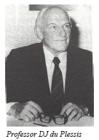
I would like to remind us all about DJ du Plessis. As time progresses the number of people in the audience who actually knew the man grows fewer and memories dim. Fortunately, there are many fine anecdotes and character sketches of Professor du Plessis which have been recorded in journals and history books. He took over a relatively new department at Wits, in 1958, which had just become embroiled in a rather unpleasant academic scandal. Over the next two decades Professor du Plessis established the department on a firm footing. He presided over a research-orientated department with an unsurpassed reputation for clinical excellence and teaching. This department was spread out over a number of teaching sites. He made a name for himself in the study of gastric reflux and cancer. He was instrumental in developing both the College of Medicine of South Africa and the Surgical Research Society of Southern Africa. He helped establish the South African Journal of Surgery, which has been a venue for much academic research from South African surgeons over the last half a century. More importantly, Professor du Plessis helped develop a coterie of exceptional younger surgeons who went on to establish their own legacies in both clinical surgery and research. The contribution of DJ du Plessis is exceptional.
What is interesting is his leadership style. He has been called the fair tyrant by his proteges. This reflects a hierarchical leadership style which was very much of its time and era. Despite this emphasis on hierarchy, there is no doubt that this approach allowed individuals to flourish and develop their own areas of expertise and excellence. So, Professor du Plessis epitomised an enabling and nourishing hierarchy which provided structure. In our contemporary world where we view authority and the enforcement of a top-down structure with a degree of suspicion, we find it hard to reconcile hierarchy with nourishing and enabling.
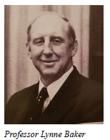
The next surgical leader who needs to be mentioned is Professor Lynne Baker of the University of Natal. In 1967 after completing his surgical training in Aberdeen and a Masters of Science in Montreal, he was appointed as Head of Department and Professor of Surgery at the University of Natal in Durban. The political situation at the University of Natal Medical School has been well documented. It was in essence a political hot potato, a non-European faculty in a European university, according to the apartheid parlance of the time. To say it was the Cinderella medical school of the country is a cliché, but nevertheless true. Professor Baker was obviously a very different individual to Professor du Plessis at Wits. He was according to those who knew him a superb technical surgeon, whose mantra was "if it is not right, it is wrong, so do it again." His informal and relaxed management style was counterpoised by his emphasis on discipline and dress standards. For Professor Baker a tie was essential regardless of the Durban summer. Professor Baker took over a rather neglected department and within the historical confines of the era managed to innovate. He identified surgeons with potential and enabled them to develop. Lynne Baker compared the University of Natal to the New York Mets. The New York Yankees are world famous. The Mets are the other team in New York and have to make do with the players the Yankees don't need. Lynne managed to forge a formidable department out of the surgeons who were not at other more well-established and famous departments. He helped create a dedicated oesophageal unit at King George V hospital, as well as a nascent intestinal failure unit in his ward at King Edward VIII. He oversaw the rise of independent departments of orthopaedics and ENT and he encouraged the development of vascular surgery within general surgery. He created the famous Saturday morning seminar which became the cornerstone of the department training programme.
There are examples of leadership outside of surgery which may also provide insight. Samuel Aubrey Langley was appointed Headmaster of the Durban High School in 1910. He had been born in Pietermaritzburg in 1871. He lived through the Zulu War, the Boer War and went on to serve in the Natal Carbineers during the 1906 Bambatha uprising. Langley, like Du Plessis, helped lay the foundations for future success and acclaim at his institution and to leave an indelible mark on its character and form. Langley was obsessed with classical education and rugby and was a stern disciplinarian who brooked no challenge to his rule. The maverick poet Roy Campbell who was a pupil at Durban High School under Langley described him as the surly tutor of my youth. Langley was undoubtedly a man of his time, yet we should not underestimate his achievement in establishing education in Natal on a firm footing.
We have different leaders all of whom operated under less than ideal circumstances and were all highly effective in nurturing and developing young departments. These men left behind well-established and highly thought-of institutions. Leadership is obviously highly individualised and context dependent. An effective leader has a vision and a style of leadership and has to negotiate an external environment which may very well be hostile. These leaders established excellence at their centres, leaving a legacy of vibrant institutions and famous trainees. They were driven by a vision and passion and reached new frontiers. The three examples above whilst reflecting different styles from different historical eras, all reflect a degree of unilateralism, which is now impossible to envisage in the twenty-first century. Leadership remains an elusive concept to define. Like Justice Potter's, a member of the US Supreme Court, famous legal definition of obscenity "I know it when I see it," we can recognise surgical leadership when we experience it.
British jurisprudence on the other hand struggled with this concept as epitomised by the hapless QC Griffiths Jones who led the prosecution at the Lady Chatterley's lover obscenity trial. He opened his argument with the immortal question "Would you leave this book lying around where your wife or servants could read it?"
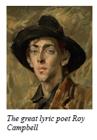
The great lyric poet Roy Campbell recognised leadership in Langley when he saw it. He said of Langley "He was the queerest mix of a sensitive artist and a stern disciplinarian. More than half the school would have died for him; and even I (who abominated him) was always elated for days if I could accidentally earn a word of praise from him." We currently live in a complex and contested environment, where unilateralism and a single dominant world view are no longer possible. We now have to provide leadership with a degree of consensus. However, academic surgeons of the past saw themselves as scholars and scientists rather than managers or politicians. They functioned imperiously in isolation from broader stakeholders. These stakeholders have become increasingly powerful and less tolerant of old-style unilateralism. They include junior doctors, patient rights advocates, NGOs, legislators, the media and the general public. The modern surgical leader needs other skills besides surgical knowledge and technical competence. Where then are we to find modern surgical leadership? We all agree, we need leadership. Without it we are rudderless. Yet we find ourselves distant from the leaders of the past.
Leadership is a complex interaction between an environment and the leader's personality and experience. South African hospitals, like Baragwanath, King Edward VIII, Addington, Edendale and Greys, reflect the political system and general Zeitgeist of the era. These contested austere environments interacted with the individual personalities to forge a leadership style. Leadership must ultimately be effective and produce results. Professor Robbs told me that when he first arrived at King Edward VIII Hospital from Cape Town he felt he had entered Dante's inferno. The wards were shabby and patients overflowed onto floor beds. Yet out of this chaos, innovative and pragmatic surgeons managed to build a successful well-respected surgical training system.
In many ways these previous leaders feel remote from our modern era of flattened hierarchies and social media influenced intellectual democracy, where all opinions are equally valid. The modern surgical leader needs to be strategic and pragmatic. Modern surgical leadership is as Bismarck described politics "the art of the possible, the attainable - the art of the next best." A modern surgical leader needs to exploit organisational strengths and resources whilst managing weaknesses. He needs to be able to resolve conflict and reach consensus. A modern leader must think before replying, pick which battle to fight and avoid fights which cannot be won. In essence, he must be able to bend the rules without breaking them. This requires imagination, discipline, restraint, flexibility, and entrepreneurship. He must strive to reach a compromise and avoid seeing situations as polarised tests. It is necessary to craft compromises that are responsible and workable enough to satisfy all stakeholders. This requires emotional intelligence and the ability to sacrifice personal ambition and short-term satisfaction for a greater goal.
This approach has been described as covert leadership, managing with a sense of nuances, constraints, and limitations. A modern leader must lead without seeming to, without people being fully aware of all that he is doing. In the contemporary environment a leader, although not completely powerless, does not have absolute control over others. A modern leader must be like a conductor in an orchestra and who has to get talented musicians to play together. The combined result is greater than the sum of the individual efforts. The covert leader must act quietly and unobtrusively, not seeking obedience but inspired performance.
Over the last twenty years I have attempted to provide surgical leadership in PietermaritZburg. PietermaritZburg was developed into a tertiary academic centre in the early part of the century. This opportunity was seiZed upon by several enthusiastic leaders such as Sandie Thomson who helped develop advanced surgical gastroenterology at Greys and by Fernando Ghimenton who ran the new metropolitan department.
Both these men helped train me as a young registrar in Durban and encouraged my academic and surgical development. Without their efforts in providing me with a strong foundation in terms of clinical and technical skills, surgical principles as well as with research and publishing skills, I would have floundered.
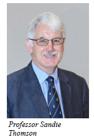
Sandie Thomson was my primary mentor who moulded my surgical career and world view. He is a Scotsman who like so many of his countrymen settled in KwaZulu-Natal. He made a seminal contribution to the development of academia and sub-specialist surgical training at the University of Natal. He helped develop the hepatobiliary and colorectal specialist service which now is established at the quaternary hospital in Durban. He pioneered complex gastroenterological endoscopy in Durban and in Pietermaritzburg. This included interventional endoscopic retrograde pancreatography as well as endoscopic scenting of oesophageal cancer.
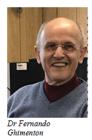
As a teacher he was a hard but fair taskmaster who insisted on excellence and an absolute commitment to patient care. He drummed the surgical principles into me and taught me academic writing and thinking. He helped me write my first paper on colonic trauma and supervised my M Med Sci thesis on mucosal blood flow in gastric ulcers. He went on to supervise my PhD in 2015. Sandie Thomson assisted me in obtaining a surgical fellowship in liver transplantation at the Edinburgh Royal Infirmary in 2001. He recognised my English essay skills which I had acquired at the Durban High School. I think I can say that Sandie played the role of Langley to my Roy Campbell.
On my appointment as Head of Trauma in Pietermaritzburg in 2006, I set out to develop a trauma service which would compete academically with other more well-established services, and which would provide holistic trauma care to the whole city of Pietermaritzburg and the western part of KwaZulu-Natal. Fernando Ghimenton as Chief of Surgery gave me room to develop both a level one trauma service and an academic department, like the poet Virgil accompanying Dante whilst he traversed the Inferno before leaving Dante as he moved on to the higher planes.
Most innovations in trauma care have occurred during human conflict. These include the use of bandages rather than cautery to treat wounds, pioneered by the Renaissance surgeon Ambrose Pare. The first trauma laparotomy was performed by Baudens during one of France's early colonial campaigns, and the first trauma laparotomy in the USA by the frontier surgeon George Goodfellow, who was present at the gunfight at the OK corral. The understanding that we must use balanced blood-based transfusion in trauma resuscitation was realised during the recent war on terror. The war poet Chas Lotter experienced conflict first-hand during the war in Rhodesia/Zimbabwe. In his poem about a CASEVAC he describes the medic running "the plastic fluid of life" into a wounded soldier. Whilst his poetry remains evocative, we now know that clear fluid-based resuscitation is deleterious.
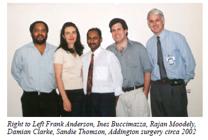
South Africa whilst being ostensibly at peace, experiences an excessive burden of trauma, and the resources to deal with this burden are restrained. The hospitals in which we train and work like Baragwanath, King Edward VIII, Addington, Edendale and Greys have modern resources, however, there is an excessive demand on these and consequently, we learn to be highly selective about how we use these precious resources. South African surgeons learn to not do a big operation, when a smaller or less invasive one is just as effective. They also learn to avoid an operation if there is a non-operative strategy available. South Africa has a proud history of applying a selective non-operative philosophy to various injuries. We have an abundance of clinical material, and we have applied this philosophy to almost all injuries. These include thoracic injuries, colonic, renal and penetrating neck injuries. The first South African report on non-operative management of penetrating abdominal trauma was by Archie Stein in the 1966. This was followed by many other reports refining this strategy from South African units over the next half a century. The same philosophy has been applied to penetrating thoracic trauma and has been very successful. Since these early reports, South African trauma surgeons have contributed massively to refining the strategies around the management of penetrating thoracic trauma.
Penetrating neck injuries can also be treated with a selective non-operative strategy. Once again Archie Stein and John Robbs made early contributions to this literature. These early reports were followed by a steady body of work from the Universities of Natal and the Witwatersrand over the next five decades, confirming the applicability of non-operative approaches and refining clinical algorithms. The use of Foley balloon tamponade to control non-junctional bleeding has been pioneered by South African trauma surgeons. This approach converts a situation of uncontrolled bleeding into a more controlled clinical scenario. It is cheap and applicable at almost any level of facility. A fine example of adversity and resource constraints prompting innovation.
Colonic trauma has been the source of controversy since surgeons first began performing laparotomy for trauma. Once again, the impetus behind this has come from wartime experience. The original approach of mandatory colostomy which was first introduced during the war in the western desert has now given way to a more selective use of defunctioning colostomy. South African surgeons have reported extensively on colonic trauma and produced publications which have been seminal and definitive. They have helped contextualise the data and have provided major data sets to support the contemporary best practice guidelines.
Despite these past triumphs, contemporary South African surgery faces a number of challenges. We function in a tumultuous contested environment, yet we need to remain relevant and to continue producing academic publications. Our inherent strength of a huge clinical load and access to relatively modern facilities and technologies to manage this burden remains intact, but we must note our external environment and adapt to it. Journals are less interested in case reports and want to see large series with clinical follow-up. We compete with Ivy League universities with greater access to funding, and we contend with epistemological elitism and snobbery. Many editors wish to see randomised trials and basic laboratory work and regard clinical audit as "derivative stamp collecting." It is becoming more difficult to publish in high impact journals. We need to meet these challenges strategically.
Whilst clinical audit has always been central to our academic output, we have been limited by our ability to capture information. In the past, a number of surgeons developed databases to capture data for audit purposes. Professor Baker pioneered an old-fashioned card indexed system to document his experience with colonic trauma. Professor Robbs introduced a proforma-based system to capture data on all vascular patients in Durban. Both these systems produced a significant number of publications. They were products of their time and highly dependent on the available technology. We set out to develop a database for the twenty-first century in Pietermaritzburg.
My team of talented young clinicians developed a digital interface for junior doctors to enter clinical data on all surgical patients at Greys Hospital. This interface allows the data to be captured directly into a relational database. Data is collected on admission and discharge. All operative notes are also captured onto the system, which is called the Hybrid Electronic Medical Registry (HEMR) and has been running for 14 years. It has accumulated over 40 thousand surgical patients and has been the bedrock of over 250 publications, thirty Masters degrees and ten PhD projects.
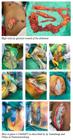
The next step in the process of developing an academic centre is to innovate and to contribute new knowledge. The most impressive breakthrough in Pietermaritzburg has been the development of a new strategy to manage the open abdomen post-damage control surgery. The recognition that massive resuscitation in ill patients could result in an abdominal compartment syndrome lead to the concept of leaving the abdomen open after surgery. This in turn resulted in much morbidity as the abdominal contents needed to be protected and contained prior to closing the abdomen. The patient shown obviously needed a damage control operation and obviously needed an open abdomen containment strategy. Justice Potter would agree with this assessment.
The makeshift Bogota bag was first developed in war torn Colombia and was adopted widely in South Africa. Whilst crudely effective in protecting the exposed viscera, it resulted in long term massive ventral hernias, which are extremely complex to manage and morbid in the extreme.
Fernando Ghimenton and Sandie Thomson published on our experience with the open abdomen at Addingtoninthe previous century. This image was submitted as part of the paper which Fernando, Sandie, David Muckart and Dick Burrows submitted to the BJS in 1996. This particular photograph was rejected with the laconic comment "Most English surgeons know what a plastic bag looks like". For this reason, I feel this photograph deserves to be shown at this August lecture.
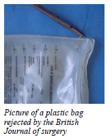
Despite this quintessential example of English sangfroid, the three Celtic and single Italian authors persisted, and the paper was published in the BJS. It documented a lifesaving but highly morbid procedure with significant long-term problems for individual patients.
The Pietermaritzburg Metropolitan Trauma Service (PMBTS) continued to use the Bogota bag, and we began thinking about ways to achieve delayed primary closure of the open abdomen. There were a number of anatomical and physiological challenges we needed to overcome. We needed to prevent fascial retraction and to slowly bring the fascial edges together whilst preventing a loss of domain and preserving access to the abdominal cavity. Our trauma team began to apply a combination of vacuum assisted and mesh mediated fascial traction (VAMMFT) to gradually approximate the edges of these open abdomen's and to achieve delayed secondary closure.
This combination of vacuum therapy and traction on the fascia via a mesh has been colloquially termed a pull and suck approach. We have developed an algorithm to assist staff with managing this open abdomen.
VAMMFT is a relatively inexpensive technique which can be safely applied even by trainee surgeons after hours. The gutters. This prevents the enteric contents form adhering to the abdominal wall and preserves domain. We then suture a cheap disposable mesh to the fascial edges over the protective sheath. We place shoe-lace sutures through the mesh which are left loose and then sequentially tightened either in theatre or under conscious sedation in the ward. We then apply the suction device over a protective sponge layer. This is attached to continuous wall suction which removes excess fluid and helps reduce bowl oedema. It also assists the traction force and helps approximate the wound edges. This understanding and approach arose organically in our unit and was increasingly applied to patients with an open abdomen. Using the HEMR data, we went on to audit our experience with this approach and documented that impressive closure rates can be achieved This is an example of innovation and the generation of new surgical knowledge in PietermaritZburg and this process has been supported by the HEMR and ongoing clinical audit. The development implementation and perfection of the VAMMFT technique must be considered a major advance in the care of trauma and emergency surgery patients and the PMTS can be justly proud of this achievement.
Rather than being an exercise in stamp collecting, audit may well be a source of significant breakthrough and innovation over the next decades. We plan to expand the HEMR to other sites in KwaZulu-Natal. With the help of our collaboration with the Dutch Department of Defence we have developed a simplified version of the HEMR, which is currently being used at the former Edendale Hospital and Prince Msheni Hospital in Durban.
Already this new arm of the HEMR has accumulated over three thousand chest drains for trauma in twenty-four months. There are a number of students both local and foreign who are enrolled for PhD projects using this new data set. The foreign students come from universities as diverse as Erasmus in Holland, Johns Hopkins in Maryland and Auckland in New Zealand. In addition, in collaboration with the Schools of Nursing at University of KwaZulu-Natal and the University of the Western Cape we have been granted funds to update the infrastructure of the Greys HEMR.
The era of big data is upon us, and we are all experiencing the effect of this new ability to collect and analyse massive amounts of disparate information. We encounter this in directed marketing as part of social media feeds or as Netflix and AmaZon suggest new products to us. Information which we routinely enter into a variety of electronic platforms is captured in huge databases which correlate our online behaviour with our demographic information. Whilst the Orwellian implications of this are real, big data sets also offer unique knowledge and insights. In the HEMR there are text fields for clinical descriptions and operative notes. Currently there are over 50 thousand operative procedures in the HEMR. It is obviously impossible for a human researcher to analyse these text fields, so in effect this is lost data. The use of artificial intelligence (AI) and natural language processing (NLP) to read through these operative notes and to generate correlations to common words allows for new patterns of outcome and disease profile to be identified.
This is in effect what Semmelweis achieved with puerperal sepsis, and Snow with cholera. These two giants of medical research observed their external environment and drew an association between superficially random events. For Semmelweis it was the medical students attending early morning postmortem before attending to the mothers in labour. For Snow it was an association between drawing water from the Broad Street pump and the development of cholera. These two men came upon these groundbreaking associations by a combination of good luck, insight, innate intelligence and persistence.
AI and NLP now allow for a machine enhanced analysis of association and causality and may well identify new areas of knowledge. The PMBTS hopes to be at the forefront of this big data revolution as it impacts on healthcare. We are currently in the process of using AI and NLP to analyse unplanned readmissions and plan to apply this project to predicting need for repeat operation and ICU admission. We have been awarded a substantial grant to upgrade our computers and to re-engineer aspects of the HEMR. We look forward to this new endeavour and hope it will build on previous successes going back over the last six decades.
Raphael's famous "School of Athens" places the two most important figures in philosophy, Aristotle and Plato at the centre of the canvas, drawing our gaZe to them. Plato was the idealist who believed in the forms. For Plato perfection existed in a divine mind and all human endeavours strove to achieve this degree of perfection. In the divine mind there was a perfect cover drive, a perfect surgical incision and all other human cover drives or surgical incisions strove to approximate this perfect form. Platonism was the belief in an ideal. Before Plato, humanity was in a cave staring at flickering shadows on the wall, lit only by the reflection of a fire behind us. Plato led us out of the cave. Aristotle his pupil points to the world around him. He was a pragmatist who looked to the real world and saw patterns in this world. Once the pattern had been recognised, knowledge could be obtained. These two philosophers represent the tension between idealism and pragmatism which exists in modern surgical leadership and research. Surgical leadership also reflects a tension between the two foundational epic poems of the western canon, the Iliad and the Odyssey. The protagonist of the Iliad, the vainglorious Achilles, is prone to emotional outbursts and is obsessed with honour. In a fit of anger, he slays Hector the Prince of Troy and desecrates his corpse by dragging it behind his chariot. Ultimately Achilles is killed by an arrow fired by Paris, which strikes him in his only vulnerable spot, the heel. The Odyssey tells us how the great hero Odysseus, who is strategic and pragmatic, manages to survive both the Trojan war itself and a perilous 10-year voyage home to his wife Penelope and his kingdom in Ithaca. I would suggest that modern surgical leadership takes it cue from Aristotle and Odysseus. Pragmatism and strategy are what is required in the modern environment.
I would like to end this lecture with the great lyric poet Roy Campbell whose grave is far away from Durban, near Sintra in Portugal. The words from his great poem "Tristan da Chuna" are apt and may well describe Odysseus in his voyage from the battlefield of Troy to his wife Penelope and his home at Ithaca. "Do I not freeZe in such a wintry place? Did I not travel through a storm as vast and rise at times victorious from the main, to fly the sunrise at my shattered mast."
Ladies and gentlemen I thank you.
ORCID
DL Clarke https://orcid.org/0000-0002-8467-1455
BIBLIOGRAPHY
- Anderson F, Clarke DL, Thomson SR. Preoperative biliary stenting - a prequel to pancreatic resection in selected patients. S Afr J Surg. 2004;42:128-30.
- Bill Guest Natal Society Foundation. Stella aurora - the history of a South African University; Volume I-III; 2019.
- Brookes EH. History of the University of Natal. University of Natal Press; 1966.
- Clarke DL, Thomson SR, Muckart DJJ, Neijenhuis PA. Universal primary colonic repair. Ann R Coll Surg Engl. 1999;81:58-61.
-
Clarke DL, Thomson SR. Attenuated gastric mucosal blood flow predicts non-healing of benign gastric ulcers. Eur Surg Res. 2002;34(6):432-6. https://doi.org/10.1159/000065706.
» https://doi.org/10.1159/000065706 -
Clarke DL, Thomson SR, Madiba TE Sanyika C. Preoperative imaging of pancreatic cancer: a management-oriented approach. J Am Coll Surg. 2003;196(1):119-29. https://doi.org/10.1016/S1072-7515(02)01609-5.
» https://doi.org/10.1016/S1072-7515(02)01609-5 -
Clarke DL, Thomson SR, Madiba TE, Muckart DJ. Selective conservatism in trauma management: a South African contribution. World J Surg. 2005;29:962-5. https://doi.org/10.1007/s00268-005-0131-9.
» https://doi.org/10.1007/s00268-005-0131-9 - Clarke DL, Thomson SR. Strategic planning and the changing nature of effective surgical leadership. S Afr J Surg. 2005;43:45-6.
-
Ghimenton F, Thomson SR, Muckart DJ, Burrows R. Abdominal content containment: practicalities and outcome. Br J Surg. 2000;87(1):106-9. https://doi.org/10.1046/j.1365-2168.2000.01337.x.
» https://doi.org/10.1046/j.1365-2168.2000.01337.x - Horwitz S. Baragwanath Hospital, Soweto: a history of medical care 1942-1990. Johannesburg: Wits University Press; 2013.
- Jennings HD. The D.H.S. story, 1866-1966; 1966.
-
Laing GL, Bruce JL, Skinner DL, et al. Development, implementation and evaluation of a hybrid electronic medical record system specifically designed for a developing world surgical service. World J Surg. 2014;38(6):1388-97. https://doi.org/10.1007/s00268-013-2438-2.
» https://doi. org/10.1007/s00268-013-2438-2 - Light on a dark horse: an autobiography, 1901-1935; Roy Campbell. Illinois Street Chicago: Henry Regnery Company; 1952.
- Löser DT. The classics, the cane and rugby: the life of Aubrey Samuel Langley and his mission to make men in the high schools of Natal, 1871-1939. Masters Thesis, University of Cape Town.
- Murray BK. Wits - the early years: a history of the University of the Witwatersrand, Johannesburg, and its precursors, 1896-1939. Johannesburg: Wits University Pres; 1982.
- Noble V. A school of struggle: Durban's Medical School and the education of Black doctors in South Africa. University of KwaZulu-Natal Press; 2013. ISBN-10:1869142527.
-
Pillay P, Smith MTD, Bruce JL, Clarke DL, Bekker W. The efficacy of VAMMFT compared to "Bogota bag" in achieving sheath closure following temporary abdominal closure at index laparotomy for trauma. World J Surg. 2023;47(6):1436-41. https://doi.org/10.1007/s00268-023-06898-6.
» https://doi.org/10.1007/s00268-023-06898-6 - Professor Lynne Wilford Baker 28.06.1928 - 10.02.2017. S Afr J Surg. 2017;55(2).
- Veller M. Department of Surgery, University of the Witwatersrand - a brief history. S Afr J Surg. 2006;44(2):4251.
-
Wikipedia [Internet]. I know it when I see it. Available from: https://en.wikipedia.org/wiki/I_know_it_when_I_see_it.
» https://en.wikipedia.org/wiki/I_know_it_when_I_see_it -
Wikipedia [Internet]. Potter Stewart. Available from: https://en.wikipedia.org/wiki/Potter_Stewart.
» https://en.wikipedia.org/wiki/Potter_Stewart
