A bibliometric analysis of research on Ebola in Science Citation Index Expanded
Abstract
An unprecedented outbreak of the Ebola virus in 2014 claimed more than 1000 lives in West Africa and the World Health Organization declared a global public health emergency. This outbreak will undoubtedly promote additional research related to the Ebola virus and will create debate related to experimental drugs. This article identified the quantum of research in the field since 1991; the scientific disciplines that contributed to the field; the countries, organisations and authors that supported such research and the most cited articles. An increasing trend in annual production during 1991-2013 was observed. Journal of Virology, Journal of Infectious Diseases, and Virology were the three most productive journals in the field. Similarly, the field of virology dominated the 73 categories in which the Ebola research was classified. A total of 63 countries contributed to Ebola-related research, led by the USA. The most productive institutions were the United States Army Medical Research Institute of Infectious Diseases, the Centers for Disease Control and Prevention, and the National Institute of Allergy and Infectious Diseases. African countries were more likely to be involved in international collaboration than independent research. The most influential article exhibited a notable citation pattern and presented global trends in emerging infectious diseases.
Ebola; Web of Science; Sci-Expanded; scientometrics; emerging virus
Introduction
The worst Ebola outbreak in recorded history claimed more than 1000 victims12
The 2014 Ebola outbreak was first diagnosed in the remote southeastern area of Nzerekore in Guinea in February 2014, but subsequently spread to neighbouring Liberia, Sierra Leone and Nigeria.3
Ebola's origin is not known, but it is suspected that it is transmitted through forest bats. It can be transmitted between humans by touching sufferers or through body fluids.4544
Apart from the mobilisation efforts to contain the virus and develop a relevant vaccine, the issue raised a number of ethical questions, as an experimental drug was used for two US health workers and not for African patients.1
The objective of this article is to report the results of an investigation aimed at mapping the research efforts related to Ebola virus internationally using scientometric techniques. These assessments are increasingly used as the basis for monitoring research performance of particular scientific disciplines and the support of appropriate policy actions. More specifically, the purpose of the study was to identify the state of Ebola virus research internationally and plot trends over time, to identify the institutions which undertake Ebola virus research and to pinpoint the scientific specialities which are emphasised in the field. The results of the investigation could possibly constitute benchmarks for monitoring the evolution of the research in this field and the impact of the outbreak on research efforts internationally.
Methodology
Following international best practice, we used evaluative scientometrics for the objectives of this investigation. Scientometrics is a tool by which the state of science and technology can be observed through the overall production of scientific literature at a given level of specialisation. Scientometric approaches have been used to map HIV/AIDS research6,7, malaria research89
Research articles indexed in the Science Citation Index Expanded (Sci-Expanded), a multidisciplinary database of the Thomson Reuters Web of Science, were identified for the objectives of this analysis (updated on 2014 August 05). The databases cover the most important international journals and the indices include the names and addresses of all co-authors, hence comprehensive coverage can be achieved. The keywords 'Ebola', 'Ebolas', and 'ebolavirus' were searched in the domain of topic (i.e. title, abstract, author keywords, and KeyWords Plus). KeyWords Plus provides search terms extracted from the titles of articles cited in Current Contents.101112
To investigate the citations received by the various articles, we estimated the number of times a paper was cited from Web of Science Core Collection. Total citations for a paper from its publication date to the end of a year, were recorded as TCyear13
Results and Discussion
Document type and language of publication
During the period under examination, 1623 documents from 12 document types were indexed. Of these documents, 70% were research articles, 10% reviews, 7.8% news items, 4.7% meeting abstracts, 4.5% editorial material, 3.9% proceedings papers, 1.6% letters, 0.62% corrections, 0.49% notes, 0.43% reprints, 0.12% book chapters and 0.062% biographical-items. The percentage of articles related to Ebola was lower than general medically-related fields, such as asthma in children141516 171618
The 1133 articles were analysed more thoroughly and revealed that the majority (96%) were in English. The second most popular language was Russian with 2.2%, followed by French (11 articles), German (three articles) and Spanish (one article).
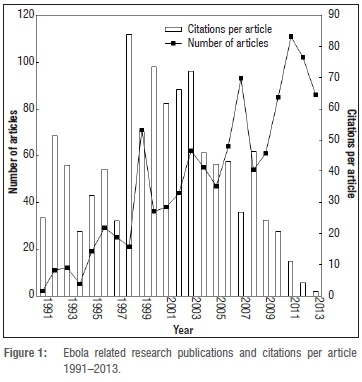
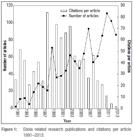
Figure 1 shows the number of relevant articles and citations per article for the period 1991-2013. The number of publications exhibited an increasing trend, albeit starting from a small base. During the recent years, there were approximately 100 articles produced per year. It is interesting to note that HIV/AIDs (another African disease) attracted more than 7000 articles per year.77
Web of Science categories and journals
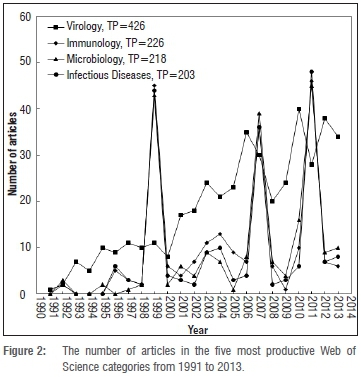
Distribution of Web of Science categories and journals have been studied in research topics.19Figure 2).
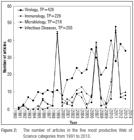
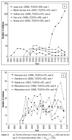
The citation peak in 1999 could be because of the article 'Clinical virology of Ebola hemorrhagic fever (EHF): Virus, virus antigen, and IgG and IgM antibody findings among EHF patients in Kikwit, Democratic Republic of the Congo, 1995'202013=119 in immunology and infectious diseases. The citation peak in 2007 could be attributed to the article 'The Ebola virus VP35 protein is a suppressor of RNA silencing'21 2013=141 the category of microbiology.
The Ebola set of articles was further analysed according to the journals in which they were published. In total, 1133 articles were published in a range of 282 journals. According to Bradford's Law of Scattering22Journal of Virology, which published the most proteome articles (172; 15% of 1133 articles), followed by Journal of Infectious Diseases (126; 11%), and Virology (71; 6.3%). In addition, regarding journal impact factor (IF), Nature gained first place with the highest iF2013(42.351) with seven articles, followed by Cell (IF2013 = 33.1 16) with two articles, Science (IF2013=31.477) with eight articles, Nature Medicine (IF2013=28.054) with 7 articles, and one article each for Nature Immunology (lF2013=24.973) and Nature Reviews Microbiology (IF2013=23.317).
Publications of country and institution
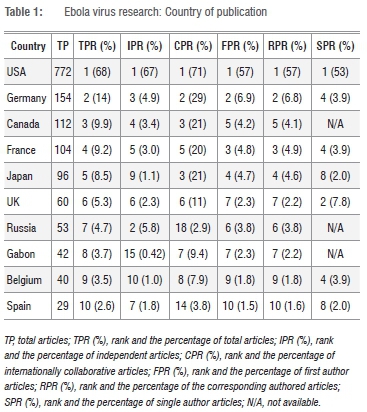
Excluding 11 articles without affiliation information of authors in Web of Science, there were 1122 articles with author information. Of these 1122 articles, 705 (63%) were single country articles and 417 (37%) were internationally collaborative articles. The top 10 countries, taking 93%, are listed in Table 1 under six indicators: total number of articles, single country articles, internationally collaborative articles, first author articles, corresponding author articles, and single author articles.23 2425
The USA dominated the table producing 68% of the articles during the period. It ranked top in all six indicators and was followed distantly by other countries. The USA had the most-frequent partners, accounting for 71% of all the internationally collaborative articles. Gabon was ranked in 8th position but had no single author articles. A number of African countries appeared to produce Ebola related publications including Uganda (25 articles), Congo (21), Zaire (18), South Africa (18), Central African Republic (7), Cote Ivoire (7), Cameroon (6), Zambia (6), Kenya (4), Ghana (3), Sierra Leone (2), Tanzania (2), Zimbabwe (2), and 1 article each from Angola, Burkina Faso, Egypt, Guinea, Rwanda, Senegal and Sudan.
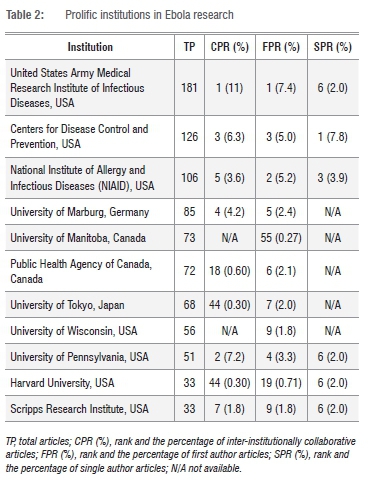
The contribution of different institutions was estimated by their affiliation to at least 1 author of the Ebola articles. Of the 1122 Ebola articles analysed, 327 (29% of 1122 articles) were single institution publications and 795 (71%) were inter-institutionally collaborative publications. The top 10 institutions were ranked according to their number of articles. This included the number of single institution articles and inter-institutionally collaborative articles; first author articles; and single author articles (Table 2). Out of the top 11 most productive institutions, seven were affiliated to the USA, two were from Canada, and one each from Germany and Japan, respectively. The United States Army Medical Research Institute of Infectious Diseases in the USA was the most productive institution, followed by Centers for Disease Control and Prevention and National Institute of Allergy and Infectious Diseases (NIAID) in the USA. Centers for Disease Control and Prevention and National Institute of Allergy published the most single author articles. The top 10 productive institutions in Africa were Centre International de Recherches Médicales de Franceville in Gabon (32 articles), Uganda Virus Research Institute in Uganda (13), Ministry of Health in Uganda (8), Ministry of Health in the Democratic Republic of Congo (6), National Institute for Virology in South Africa (6), National Institute for Communicable Diseases in South Africa (6), University of Zambia in Zambia (6), Institut de Recherche pour le Développement in Gabon (5), Kikwit General Hospital in Congo (5), and Institut Pasteur in Central African Republic (5).
Highly cited articles
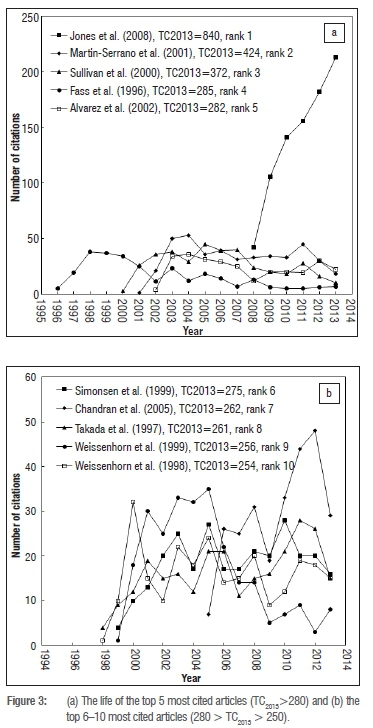
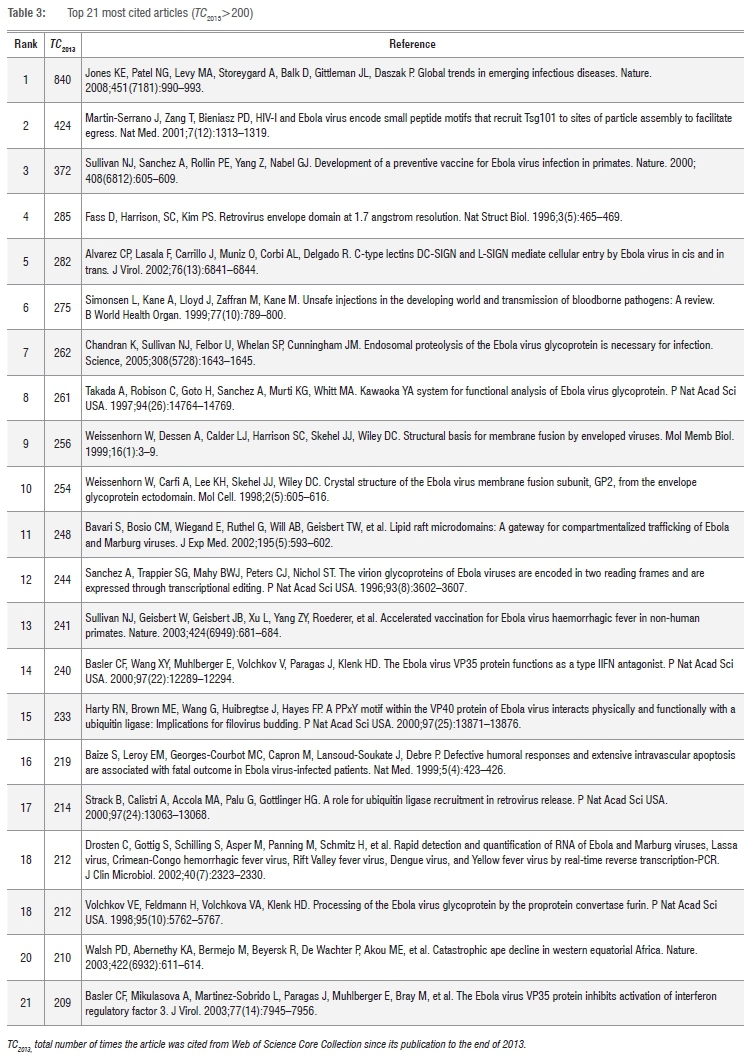
The total number of times an article was cited from Web of Science Core Collection since its publication to the end of 2013 (TC2013) was estimated.13 2013, an accumulative number, could reach a large value as long as the time span is long enough. The citation lives of the top 10 articles (TC2013>250) are shown in Figure 3. The only 1 article that kept a sharply increasing citation trend after its publication was 'Global trends in emerging infectious diseases'2626Table 3 presents the top 21 articles cited more than 200 times (TC2013>200). Out of these 21 articles, eight (38% of 21 articles) were published in the 1990s and 13 (62%) in the 2000s. The first article, which was cited more than 200 times, was published in 1996. The latest one was published in 2008. The journals in which these articles were published were Proceedings of the National Academy of Sciences of the United States of America (IF2013=9.809) with six articles, followed by Nature (four articles; IF2013=42.351), Nature Medicine (two articles; IF2013=28.054), Journal of Virology (two articles; IF2013=4.648), and one for each of Bulletin of the World Health Organization (IF2013=5.112), Journal of Clinical Microbiology (IF2013=4.232), Journal of Experimental Medicine (IF2013=13.912), Molecular Cell (IF2013=14.464), Molecular Membrane Biology (IF2013=1.729), Nature Structural Biology (IF2013=11.579), and Science (IF2013=31.477), respectively. Nature Structural Biology was not listed in Sci-Expanded after 2003. In 1998 and 1999, Weissenhorn from European Molecular Biology Laboratory in France published 2 highly cited papers as first author: 'Crystal structure of the Ebola virus membrane fusion subunit, GP2, from the envelope glycoprotein ectodomain'277C2013=254 and 'Structural basis for membrane fusion by enveloped viruses'282013=256. In 2000 and 2003, both Sullivan from National Institutes of Health in the USA and Basler from Mount Sinai School of Medicine in the USA also published 2 highly cited papers as first authors.
Conclusions
This article provided for the first time an overview of research related to Ebola virus undertaken internationally and identified that there has been limited international research. The Ebola virus-related articles showed an increasing trend during 1991-2013. Virology was the most dominant discipline in the domain, and Journal of Virology, Journal of Infectious Diseases, and Virology were the most favoured journals. Industrialised countries contributed to more than 70% of the articles, while a number of African countries played an important role in international collaboration. The United States Army Medical Research Institute of Infectious Diseases, the Centers for Disease Control and Prevention, and the National Institute of Allergy and Infectious Diseases were the most prolific institutions researching the topic. The top 3 most cited articles in the field were published in Nature. The most cited article with a distinguished citation pattern included hundreds of emerging infectious diseases events and non-random global patterns from 1940-2004.
The Ebola crisis has raised a number of issues that are subject to further research. How can the authorities decide on the resources to be spent on various diseases and related prevention activities? A controversy about drug testing in Africa and who should benefit for limited experimental drugs are also complexities facing public health authorities internationally outside the critical issue of how to control the disease and prevent its spreading to other countries. Similarly, it will be interesting to identify how the outbreak will affect research activities in the field in the foreseeable future.
Authors' contributions
The authors made equal contributions to this article.
References
-
1. Cowell A. Ebola death toll in West Africa tops 1200. The New York Times. 2014 Aug 19. Available from: http://www.nytimes.com/2014/08/20/world/africa/ebola-outbreak.html?_r=0.2014.
» http://www.nytimes.com/2014/08/20/world/africa/ebola-outbreak.html?_r=0.2014 -
2. World. Health Organization (WHO). Statement on the Meeting of the International Health Regulations Emergency Committee regarding the 2014 Ebola outbreak in West Africa. Geneva: WHO; 2014. Available from: http://www.who.int/mediacentre/news/statements/2014/ebola-20140808/en/
» http://www.who.int/mediacentre/news/statements/2014/ebola-20140808/en/ -
3. Baize S, Pannetier D, Oestereich L, Rieger T, Koivogui L, Magassouba N, et al. Emergence of Zaire Ebola virus disease in Guinea - Preliminary report. N Engl J Med. 2014;371:1418-1425. http://dx.doi.org/10.1056/NEJMoa1404505
» http://dx.doi.org/10.1056/NEJMoa1404505 -
4. Centers for Disease Control and Prevention (CDC). Outbreaks Chronology: Ebola Virus Disease. Atlanta, GA: CDC; 2014. Available from: http://www.cdc.gov/vhf/ebola/resources/outbreak-table.html.
» http://www.cdc.gov/vhf/ebola/resources/outbreak-table.html -
5. Bowen ETW, Platt GS, Simpson DIH, Mcardell LB, Raymond RT. Ebola hemorrhagic fever: Experimental infection of monkeys. T Roy Soc Trop Med H. 1978;72(2):188-191. http://dx.doi.org/10.1016/0035-9203(78)90058-5
» http://dx.doi.org/10.1016/0035-9203(78)90058-5 -
6. Small H. A SCI-map case-study: Building a map of AIDS research. Scientometrics. 1994;30(1):229-241. http://dx.doi.org/10.1007/BF02017225
» http://dx.doi.org/10.1007/BF02017225 -
7. Pouris A, Pouris A. Scientometrics of a pandemic: HIV/AIDS research in South Africa and the World. Scientometrics. 2011;86(2):541-552. http://dx.doi.org/10.1007/s11192-010-0277-6
» http://dx.doi.org/10.1007/s11192-010-0277-6 -
8. Garg KC, Kumar S, Madhavi Y, Bahl M. Bibliometrics of global malaria vaccine research. Health Info Libr J. 2009;26(1):22-31. http://dx.doi.org/10.1111/j.1471-1842.2008.00779.x
» http://dx.doi.org/10.1111/j.1471-1842.2008.00779.x -
9. Dos Santos NF, Rumjanek VM. Brazilian immunology: One hundred years later. Scientometrics. 2001;50(3):405-418. http://dx.doi.org/10.1023/A:1010502513971
» http://dx.doi.org/10.1023/A:1010502513971 - 10. Garfield E. KeyWords PlusTM - ISIS breakthrough retrieval method. 1. Expanding your searching power on current-contents on diskette. Curr Comments. 1990;32:5-9.
-
11. Fu HZ, Wang MH, Ho YS. The most frequently cited adsorption research articles in the science citation index (expanded). J Colloid Interf Sci. 2012;379(1):148-156. http://dx.doi.org/10.1016/j.jcis.2012.04.051
» http://dx.doi.org/10.1016/j.jcis.2012.04.051 -
12. Ho YS. Top-cited papers in chemical engineering in Science Citation Index Expanded: A bibliometric analysis. Chinese J Chem Eng. 2012;20(3):478-488. http://dx.doi.org/10.1016/S1004-9541(11)60209-7
» http://dx.doi.org/10.1016/S1004-9541(11)60209-7 -
13. Chuang KY, Wang MH, Ho YS. High-impact papers presented in the subject category of water resources in the essential science indicators database of the Institute for Scientific Information. Scientometrics. 2011;87(3):551-562. http://dx.doi.org/10.1007/s11192-011-0365-2
» http://dx.doi.org/10.1007/s11192-011-0365-2 -
14. Chen SR, Chiu WT, Ho YS. Asthma in children: Mapping the literature by bibliometric analysis. Rev Fr Allerg Immun Clin. 2005;45(6):442-446. http://dx.doi.org/10.1016/j.allerg.2005.08.002
» http://dx.doi.org/10.1016/j.allerg.2005.08.002 -
15. Ho YS, Satoh H, Lin SY Japanese lung cancer research trends and performance in science citation index. Internal Med. 2010;49(20):2219-2228. http://dx.doi.org/10.2169/internalmedicine.49.3687
» http://dx.doi.org/10.2169/internalmedicine.49.3687 -
16. Chiu WT, Huang JS, Ho YS. Bibliometric analysis of severe acute respiratory syndrome-related research in the beginning stage. Scientometrics. 2004;61(1):69-77. http://dx.doi.org/10.1023/B:SCIE.0000037363.49623.28
» http://dx.doi.org/10.1023/B:SCIE.0000037363.49623.28 -
17. Suk FM, Lien GS, Yu TC, Ho YS. Global trends in Helicobacter pylori research from 1991 to 2008 analyzed with the Science Citation Index Expanded. Eur J Gastroen Hepat. 2011;23(4):295-301. http://dx.doi.org/10.1097/MEG.0b013e3283457af7
» http://dx.doi.org/10.1097/MEG.0b013e3283457af7 -
18. World Health Organization (WHO). Cumulative number of reported probable cases of SARS from 1 Nov 2002 to 6 June 2003 [report on the Internet]. c2016 [cited 2003 Jul 19]. Available from: http://www.who.int/csr/sars/country/2003_06_06/en/
» http://www.who.int/csr/sars/country/2003_06_06/en/ -
19. Chiu WT, Ho YS. Bibliometric analysis of homeopathy research during the period of 1991 to 2003. Scientometrics. 2005;63(1):3-23. http://dx.doi.org/10.1007/s11192-005-0201-7
» http://dx.doi.org/10.1007/s11192-005-0201-7 -
20. Ksiazek TG, Rollin PE, Williams AJ, Bressler DS, Martin ML, Swanepoel R, et al. Clinical virology of Ebola hemorrhagic fever (EHF): Virus, virus antigen, and IgG and IgM antibody findings among EHF patients in Kikwit, Democratic Republic of the Congo, 1995. J Infect Dis. 1999;179(S1):S177-S187. http://dx.doi.org/10.1086/514321
» http://dx.doi.org/10.1086/514321 -
21. Haasnoot J, De Vries W, Geutjes EJ, Prins M, De Haan P, Berkhout B. The Ebola virus VP35 protein is a suppressor of RNA silencing. PLoS Pathog. 2007;3(6):e86. http://dx.doi.org/10.1371/journal.ppat.0030086
» http://dx.doi.org/10.1371/journal.ppat.0030086 - 22. Bradford SC. Sources of information on specific subjects. Brit J Eng. 1934;137(3550):85-86.
-
23. Ho YS, Kahn M. A bibliometric study of highly cited reviews in the Science Citation Index Expanded™. J Assoc Inform Sci Technol. 2014;65(2):372-385. http://dx.doi.org/10.1002/asi.22974
» http://dx.doi.org/10.1002/asi.22974 -
24. Emond RTD, Evans B, Bowen ETW, Lloyd G. A case of Ebola virus-infection. Brit Med J. 1977;2(6086):541-544. http://dx.doi.org/10.1136/bmj.2.6086.541
» http://dx.doi.org/10.1136/bmj.2.6086.541 - 25. Ellis DS, Bowen ETW, Simpson DIH, Stamford S. Ebola virus: Comparison, at ultrastructural level, of the behavior of the Sudan and Zaire strains in monkeys. Brit J Exp Pathol. 1978;59(6):584-593.
-
26. Jones KE, Patel NG, Levy MA, Storeygard A, Balk D, Gittleman JL, et al. Global trends in emerging infectious diseases. Nature. 2008;451(7181):990-993. http://dx.doi.org/10.1038/nature06536
» http://dx.doi.org/10.1038/nature06536 -
27. Weissenhorn W, Carfi A, Lee KH, Skehel JJ, Wiley DC. Crystal structure of the Ebola virus membrane fusion subunit, GP2, from the envelope glycoprotein ectodomain. Mol Cell. 1998;2(5):605-616. http://dx.doi.org/10.1016/S1097-2765(00)80159-8
» http://dx.doi.org/10.1016/S1097-2765(00)80159-8 -
28. Weissenhorn W, Dessen A, Calder LJ, Harrison SC, Skehel JJ, Wiley DC. Structural basis for membrane fusion by enveloped viruses. Mol Membr Biol. 1999;16(1):3-9. http://dx.doi.org/10.1080/096876899294706
» http://dx.doi.org/10.1080/096876899294706
Yuh-Shan Ho
Trend Research Centre, Asia University
500 Lioufeng Road, Wufeng, Taichung 41354. Taiwan

Revised: 14 Sep. 2015
Accepted: 14 Sep. 2015