Alien reptiles and amphibians in South Africa: towards a pragmatic management strategy
Abstract
Biological invasions area a growing problem in South Africa. Many alien species have been introduced for various reasons and through multiple pathways over the past few centuries. Invasive alien reptiles and amphibians (herpetofauna) are not yet a major problem in the country. However, escalating difficulties with invasive species in these groups worldwide, and changing circumstances in South Africa, suggest a high risk of increased problems in the future. This paper reviews key issues pertaining to invasive alien herpetofauna worldwide and discusses how risk assessment can be used as part of an effective biosecurity strategy for South Africa. Nearly 300 species of alien herpetofauna have already been imported into the country via the pet trade and are being kept in captivity. There is a need to consider the potential threat of these species, and others still to be introduced, in line with practices in other countries where formal risk assessment policies are in place to separate potentially invasive species from those that are unlikely to be problematical. New legislation in South Africa seeks to regulate activities involving alien species, but exactly how this will be done has yet to be finalized. Each province in South Africa currently has its own legislation with different requirements; this causes many problems. Records of permit applications are also poor, complicating attempts to compile accurate inventories and to discern trends in imports and permit allocations. We define a pragmatic framework for dealing with alien reptiles and amphibians in South Africa. The framework identifies key issues facing the country and considers how the situation and advances elsewhere in the world can be used to set priorities. We propose that a risk assessment protocol be implemented for categorizing species as permissible or prohibited for import and trade. Accurate data are needed on the alien species already in South Africa.
Introduction
People started translocating organisms around the world long before modern civilizations.1Acacia mearnsii)has been estimated to have cost US$1450 million (R8550 million) in stream-flow reduction alone in South Africa prior to 1998.2331
Invasive alien plants are one of the biggest threats to South Africa's biodiversity, and much more attention has been given to the study and management of invading plants than to other groups. Vertebrates are also a problem. Most of the birds and mammals introduced to South Africa were brought in by settlers as pets or 'novelties' to compensate for the lack of familiar species in the region,3,4 though some pests, such as the house rat (Rattus rattus), were introduced accidentally by trading vessels on their way from the Middle East. Alien freshwater fish have probably had a more dramatic effect than birds or mammals. Their introduction has detrimentally affected the functioning of freshwater ecosystems in many areas.5,6 Fish have been introduced mainly for angling and aquaria,3
With the recognition that biological invasions pose a considerable threat to biodiversity, society has begun to address the problem in various waysby managing those species that have already become invasive, and by attempting to reduce the influx of additional species that could invade in the future. In South Africa, most attention has been focused on the groups mentioned above, as the most pressing environmental problems have emerged from invasions by these groups. However, in several parts of the world invasive reptiles and amphibians (hereafter herpetofauna) are emerging as a major problem.7Bufo marinus) in Australia (and many other parts of the world),8,9 the brown tree snake (Boiga irregularis) in Guam,10Eleutherodactylus coqui) in Hawaii,1112,13
The general increase in global trade and travel has led to a substantial increase in the rate of biological invasions around the world. Invasive species are considered one of the main threats to biodiversity.1415,16 Here, we discuss crucial considerations from many sources that have a bearing on alien herpetofauna in a South African context and that relate to requirements for an effective and practical protocol for risk analysis. Our departure point is that such a protocol should merge the best science and information available worldwide with common sense, considering the needs and concerns of all affected parties, and effectively separate potentially problematic species from those with minimal risk of becoming invasive.
Why should we worry about alien herpetofauna?
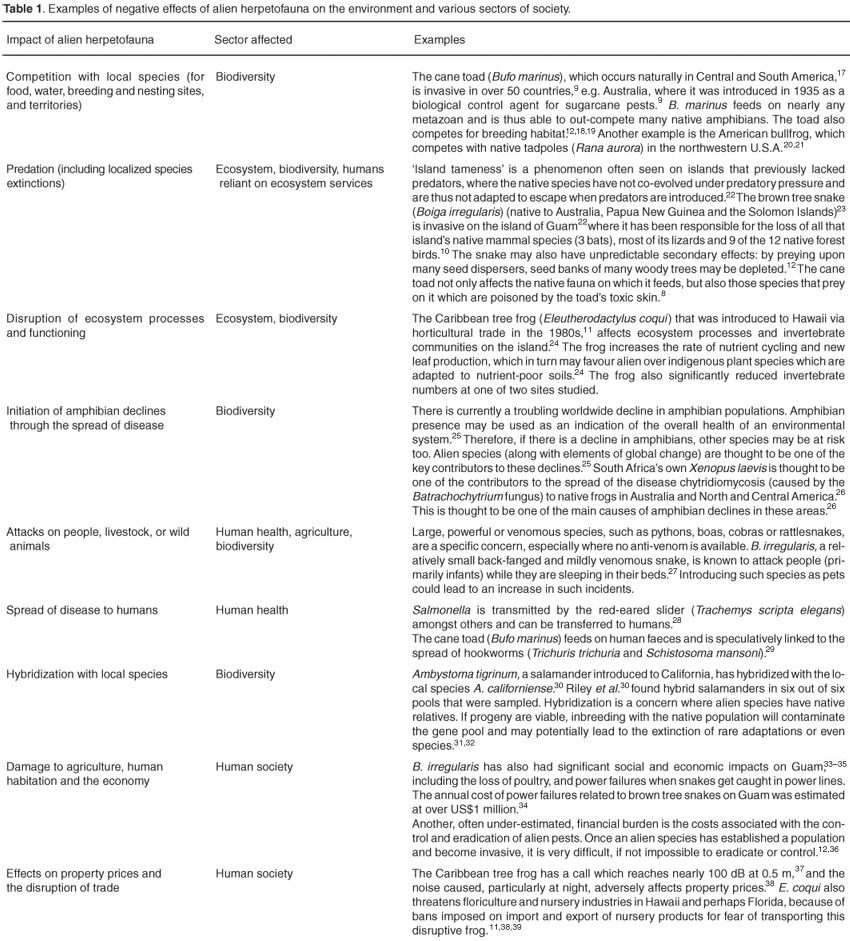
Invasive alien herpetofauna have the potential to cause a number of negative effects, ranging from impacts on native biota to affecting the day-to-day course of society (Table 1). Understanding the combination of these effects is important but can be very difficult.12
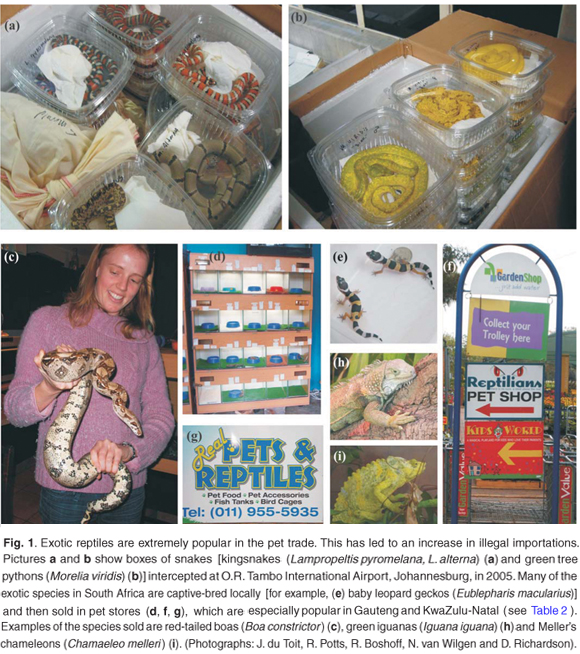
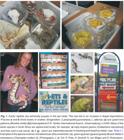
These species are inadequately studied, and detailed assessments have been made for only a handful of herpetofauna worldwide. Although some species have had dramatic effects, the consequences of invasion of others go relatively unnoticed as they are not as conspicuous to the public as those of large mammals, plants, or diseases. Although South Africa has not suffered impacts due to invasive herpetofauna to date, the increase in invasions in other parts of the world with similar environments and/or socio-economic drivers (such as the pet trade), has led to increased demand and volumes of importation of alien herpetofauna.13,40 This suggests that South Africa could well face more problems in the future. There is certainly a marked increase in the promotion of alien herpetofauna as pets, and local awareness needs to be raised concerning the potential consequences of invasions. There are currently nearly 300 species of alien reptiles and amphibians being kept in captivity in the country, and it is likely that there are many more undocumented species (N.v.W., unpubl. data; Fig. 1).
South African herpetologists have made several ad hoc observations of non-captive (escaped or released) alien reptiles, both in rural and urban areas during the past five years. These anecdotal observations include records of a kingsnake (Lampropeltis alterna) in a suburban garden in the Strand and an alligator snapper turtle (Macroclemys temmincki) in a pond at a George commercial crocodile facility (E. Baard, pers. obs.), a Burmese python (Python molurus bivittatus) in a Cape Town wetland (M. Burger, pers. comm.), a yellow ratsnake (Elaphe obsoleta quadrivittata) in a Cape Town suburb (M. Witberg, pers. obs.), western diamond-backed rattlesnakes (Crotalus atrox) seen by and removed from properties in Johannesburg by J. Marais (pers. comm.), several corn snakes (Elaphe guttata), a grey rat snake (Elaphe obsoleta spiloides), a northern pine snake (Pituophis melanoleucus melanoleucus) removed from a Durban urban area (J. Marais, pers. comm.) and a green iguana (Iguana iguana) in Gauteng province (G. Alexander, pers. comm.). These could be warning signs of potential future problems.
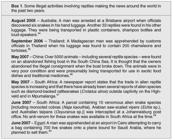
Furthermore, there are increasing reports in South Africa and around the world of illegal imports and other activities involving alien herpetofaunal species (Box 1; Fig. 1). Austria and the Czech Republic are two countries where this trade is extremely popular. Over 1000 tortoises, as well as consignments containing over 1000 spiders and reptiles, were intercepted by Austrian customs officials between 1999 and 2001.414243
What forces drive the introduction of alien herpetofauna?
What does the South African law require with regard to alien species?
South Africa's National Environmental Management: Biodiversity Act (No. 10 of 2004) (NEMBA) requires that a risk assessment be undertaken before a permit may be issued for activities involving an alien species (including importing, selling, keeping in captivity, or releasing the species). This Act has not yet been put into practice, however, as regulations to guide its implementation are still in preparation. Also, there is currently no set protocol whereby risk assessment may proceed, and provincial conservation agencies largely rely on either their own expertise or information provided to them by applicants or gleaned from the Internet. This does not promote an objective or well-informed (or even accurate) approach in considering permission to import alien species. Furthermore, the majority of provincial agencies have no herpetologists on their staff to advise them. The Department of Environmental Affairs and Tourism is currently working with scientists to draw up regulations in accordance with the Act.
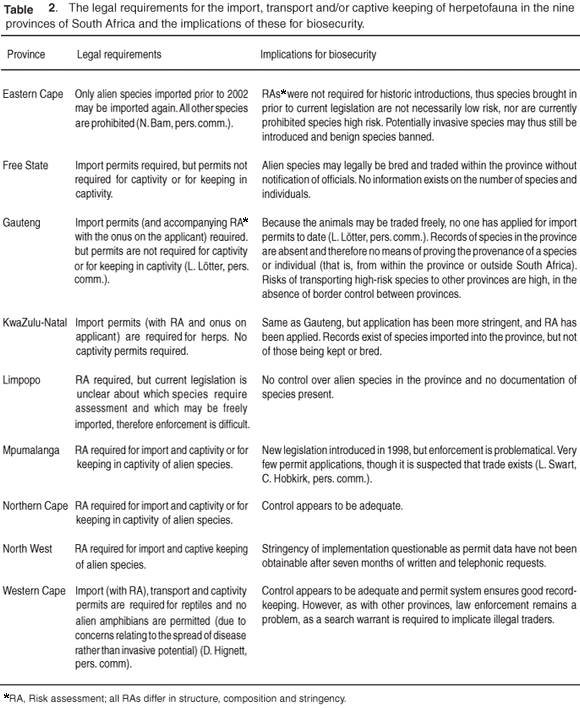
We conducted a telephone survey in March 2007 with provincial nature conservation agencies and governmental permitting departments, which revealed that most of South Africa's provincial nature conservation agencies do not know how many or even which alien (and native) herpetofaunal species are being kept in captivity in their provinces. Furthermore, each of the nine provinces has its own legislation, and policies differ considerably between provinces with regard to stringency, application, and scientific basis (Table 2). An additional problem is that in most cases risk assessment relies on 'expert' opinion, where the expert is a South African scientist with limited herpetological experience. In practice, these experts often have little knowledge of foreign species or invasive-species training/knowledge. Local herpetologists are sent lists of species that are desired for import, to which they then provide their opinion as to whether or not the animal should be permitted (E. Baard, pers. obs.; V. Egan, pers. comm.). Different experts use different criteria, and have different thresholds for what to them constitutes a high risk, or factors regarded as relevant for suitable habitat for a foreign species. Once a species has been introduced to one province, it can easily be moved to other provinces around the country, even ending up in areas where the legislation differs and would not permit it. This is obviously far from ideal and it is clearly desirable for one standard, defendable protocol to be developed for use throughout the country.
What do international agreements require?
The World Trade Organisation (WTO) governs international trade. Agreements made by this body aim to optimize fair trade and reduce the number of restrictions imposed on trade. Those restrictions that are in place relating to commerce in organisms serve primarily to stop trade in species that may harm humans, animals, and plants, as a result of spreading economically important pests and diseases.505051
The Convention on International Trade in Endangered Species of Wild Fauna and Flora (CITES) impacts directly on trade in some reptiles and amphibians. Trade in species whose populations are potentially threatened by such trade are monitored in three appendices (depending on the severity of the threat). Data from CITES are an important source of information for detecting overall trends, since there is a substantial trade in herpetofauna that could affect species and/or populations. The appendices include 96 amphibian (16 Appendix I, 90 Appendix II) and 606 reptile (70 Appendix I, 511 Appendix II) species and subspecies.52Box 1).
What is risk assessment?
The field of risk assessment has arisen largely from work on the threat of chemicals (with their precisely-known properties and behaviour) to human health, and definitions of risk assessment often reflect this focus.5354
Risk assessment for invasive species needs to discriminate effectively and objectively between potential pests and non-pests, and there should be only a small number of taxa which cannot be placed with confidence into either category.5555565613,57 Nevertheless, a number of risk assessment protocols that have been applied to a variety of taxa have accurately predicted (80-95%) the outcome of species invasiveness in many parts of the world.55,56,58-60
Application of risk assessment to alien species
One needs to know where to act to formulate effective prevention measures. Ecological risk assessment for alien species needs to address two key issues: defining the likelihood that a species will become invasive, and determining the potential impact that the species could have, should it become invasive. Many studies have focused on investigating the risks associated with the introduction of alien species (e.g. Phelong et al.5558616162
Likelihood of invasion. The first thing to examine is the likelihood of a species establishing a viable population.1212
Consequences of invasion. Having determined the likelihood of a species establishing a population, the next step is to assess the undesirable consequences that a species could have.12
It is important to realize that risk assessment protocols will never be completely accurate, and will probably overestimate the chance that a species has to invade.1212
Herpetofauna are not often considered a priority for risk assessment; however, the fact remains that more than 30% of recorded introductions of alien reptile and amphibian species have resulted in the establishment of populations (though this figure may be biased, as established populations are more likely to be reported than those that are unsuccessful).12
Proposed action for South Africa
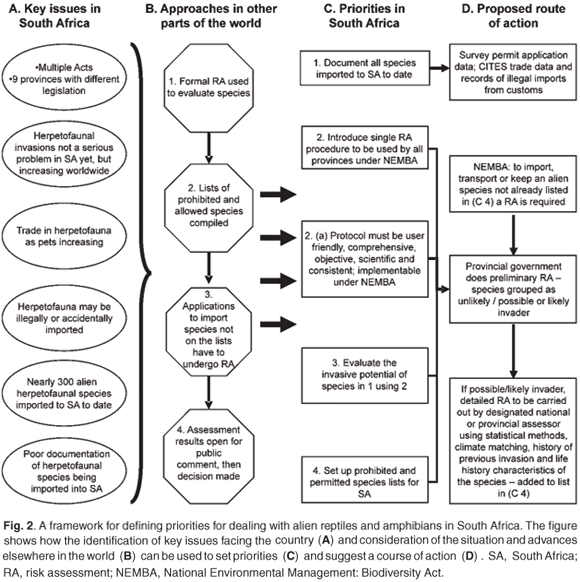
There are a number of issues regarding alien herpetofauna that are cause for concern in South Africa. Among these are the lack of cohesion in legislation between provincial and national legal instruments, the increasing trade in herpetofauna, and the large number of species that have already been imported. These issues can be addressed by means of a framework (Fig. 2) that takes due cognisance of the most important issues in the region. The first step is to assemble improved data on the alien species currently present in South Africa (such as which species are present, how many individuals, and where they are kept). Richardson et al.3Fig. 2(D). We realize that predicting the impact of species can be problematic, especially where data are deficient, and it may be wise to restrict initial screening processes to examination of the likelihood of species establishment. We consider that this is achievable using the techniques and principles outlined in the sections above. Though no standardized scientific risk assessment protocol currently exists, work in this regard has begun.
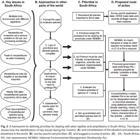
It may also be wise to monitor the number of each species being traded, and perhaps to implement annual quotas. Because many of these species are being bred in South Africa, we recommend that no further importation of permitted species be allowed without a permit. This would take pressure off wild populations, and reduce the chance of introducing alien diseases. The fate of species that may be placed on a prohibited list, but which are already in the country, will require careful handling, to encourage owners to surrender stocks, and end breeding and trade in these species. If breeding and or trade in prohibited species is stopped for a specified period (such as an equivalent to two generations of such a species), the species should disappear from private collections. Special allowances could be made for zoos, research and educational facilities. Finally, improved awareness of the potential danger of alien species and of the need for risk assessment procedures among people in the pet industry, and members of the public, would go a long way in combating the problems that South Africa faces from invasive alien species.
We thank Karen Beard, Mark Burgman, Fred Kraus, Brian van Wilgen and John Wilson for useful comments and suggestions. Financial support for this work came from the DST-NRF Centre of Excellence for Invasion Biology, the Wilhelm Frank Bursary Fund, the Hans Sigrist Foundation, and the Australian Centre of Excellence for Risk Analysis.
References
- 1. Le Maitre D.C., Richardson D.M. and Chapman R.A. (2004). Alien plant invasions in South Africa: driving forces and the human dimension. S. Afr. J. Sci. 100, 103-112.
- 2. De Wit M.P., Crookes D.J. and van Wilgen B.W. (2001). Conflicts of interest in environmental management: estimating the costs and benefits of a tree invasion. Biol. Invasions 3, 167-178.
- 3. Richardson D.M., Cambray J.A., Chapman R.A., Dean W.R.J., Griffiths C.L., Le Maitre D.C., Newton D.J. and Winstanley T.J. (2003). Vectors and pathways of biological invasions in South Africa - Past, present and future. In Invasive Species: Vectors and management strategies, eds G. Ruiz and J. Carlton, pp. 292-349. Island Press, Washington, D.C.
- 4. Brooke R.K., Lloyd P.H. and de Villiers A.L. (1986). Alien and translocated terrestrial vertebrates in South Africa. In The Ecology and Management of Biological Invasions in Southern Africa, eds I.A.W. Macdonald, F.J. Kruger and A.A. Ferrar, pp. 63-74. Oxford University Press, Cape Town.
- 5. Cambray J.A. (2003). Impact on indigenous species biodiversity caused by the globalisation of alien recreational freshwater fisheries. Hydrobiologia 500, 217-230.
- 6. Weyl O.L.F. and Lewis H. (2006). First record of predation by the alien invasive freshwater fish Micropterus salmoides L. (Centrarchidae) on migrating estuarine fishes in South Africa. Afr. Zool. 41, 294-296.
- 7. Pitt W.C., Vice D.S. and Pitzler M.E. (2005). Challenges of invasive reptiles and amphibians. Proc. 11th Wildlife Damage Management Conference.
- 8. Doody J.S., Green B., Sims R., Rhind D., West P. and Steer D. (2006). Indirect impacts of invasive cane toads (Bufo marinus) on nest predation in pig-nosed turtles (Carettochelys insculpta). Wildl. Res. 33, 349-354.
- 9. Easteal S. (1981). The history of introduction of Bufo marinus (Amphibia: Anura); a natural experiment in evolution. Biol. J. Linn. Soc. 16, 93-113.
- 10. Rodda G.H., Fritts T.H. and Chiszar D. (1997). Disappearance of Guam's wildlife. BioScience 47, 565-574.
- 11. Kraus F., Campbell E.W., Allison A. and Pratt T. (1999). Eleutherodactylus frog introductions to Hawaii. Herpetol. Rev. 30, 21-25.
- 12. Bomford M., Kraus F., Braysher M., Walter L. and Brown L. (2005). Risk assessment model for the import and keeping of exotic reptiles and amphibians. Australian Government Bureau of Rural Sciences, Canberra.
- 13. Kraus F. (2003). Invasion pathways for terrestrial vertebrates. In Invasive Species: Vectors and management strategies, eds G. Ruiz and J. Carlton, pp. 292-349. Island Press, Washington, D.C.
- 14. Mooney H.A. and Hobbs R.J. (2000). Invasive Species in a Changing World. Island Press, Washington, D.C.
- 15. Naylor R.L. (2000). The economics of alien species invasions. In Invasive Species in a Changing World, eds H.A. Mooney and R.J. Hobbs, pp. 241-259. Island Press, Washington, D.C.
- 16. Mgidi T.N., Le Maitre D.C., Schonegevel L., Nel J.L., Rouget M. and Richardson D.M. (2007). Alien plant invasionsincorporating emerging invaders in regional prioritization: a pragmatic approach for Southern Africa. J. Environ. Manage. 84, 173-187.
- 17. Zug G.R. and Zug P.B. (1979). The marine toad, Bufo marinus: a natural history resume of native populations. Smiths. Contrib. Zool. 284, 1-58.
- 18. Smith K.G. (2005). Effects of nonindigenous tadpoles on native tadpoles in Florida: evidence of competition. Biol. Conserv. 123, 433-441.
- 19. Greenlees M.J., Brown G.P., Webb J.K., Phillips B.L. and Shine R. (2006). Effects of an invasive anuran [the cane toad (Bufo marinus)] on the invertebrate fauna of a tropical Australian floodplain. Anim. Conserv. 9, 431-438.
- 20. Kiesecker J.M. and Blaustein A.R. (1998). Effects of introduced bullfrogs and smallmouth bass on microhabitat use, growth, and survival of native red-legged frogs (Rana aurora). Conserv. Biol. 12, 776-787.
- 21. Kiesecker J.M., Blaustein A.R. and Miller C.L. (2001). Potential mechanisms underlying the displacement of native red-legged frogs by introduced bullfrogs. Ecology 82, 1964-1970.
- 22. Fritts T.H. and Rodda G.H. (1998). The role of introduced species in the degradation of island ecosystems. Annu. Rev. Ecol. Syst. 29, 113-140.
- 23. Rodda G.H., McCoid M.J., Fritts T.H. and Campbell E.W. (1999). An overview of the biology of the brown treesnake (Boiga irregularis), a costly introduced pest on Pacific islands. In Problem Snake Management: the habu and brown treesnake, eds G.H. Rodda, Y. Sawai, D. Chiszar and H. Tanaka, pp. 44-80. Comstock, Ithaca, NY.
- 24. Sin H., Beard K.H. and Pitt W.C. (2008). An invasive frog, Eleutherodactylus coqui, increases new leaf production and leaf litter decomposition rates through nutrient cycling in Hawaii. Biol. Invasions 10, 335-345.
- 25. Collins J.P. and Storfer A. (2003). Global amphibian declines: sorting the hypotheses. Diversity Distrib. 9, 89-98.
- 26. Weldon C., du Preez L.H., Hyatt A.D., Muller R. and Speare R. (2004). Origin of the Amphibian Chytrid Fungus. Emerg. Infect. Dis. 10, 2100-2105.
- 27. Fritts T.H., McCoid M.J. and Haddock R.L. (1990). Risks to infants on Guam from bites of the brown tree snake (Boiga irregularis). Am. J. Trop. Med.Hyg. 42, 607-611.
- 28. Nagano N., Oana S., Nagano Y. and Arakawa Y. (2006). A severe Salmonella enterica serotype paratyphi B infection in a child related to a pet turtle, Trachemys scripta elegans. Jpn J. Infect. Dis. 59, 132-134.
- 29. Hoffman W.A. and Janer J.L. (1941). Bufo marinus vector de huevos de helmintos en la isla de Puerto Rico. Puerto Rico J. Pub. Hlth Trop. Med. 16, 505-509.
- 30. Riley S.P.D., Shaffer H.B., Voss S.R. and Fitzpatrick B.M. (2003). Hybridization between a rare, native tiger salamander (Ambystoma californiense) and its introduced congener. Ecol. Appl. 13, 1263-1275.
- 31. Levin D.A., Francisco Ortega J. and Jansen R.K. (1996). Hybridization and the extinction of rare plant species. Conserv. Biol. 10, 10-16.
- 32. Rhymer J.M. and Simberloff D. (1996). Extinction by hybridization and introgression. Annu. Rev. Ecol. Syst. 27, 83-109.
- 33. Fritts T.H. (2002). Economic costs of electrical system instability and power outages caused by snakes on the island of Guam. Int. Biodeterior. Biodegrad. 49, 93-100.
- 34. Bergman D.L., Chandler M.D. and Locklear A. (2000). The economic impact of invasive species to wildlife services' cooperators. In Proc. Third National Wildlife Research Center Special Symposium: Human conflicts with wildlife: Economic considerations. 169-178.
- 35. Frittz T.H. and McCoid M.J. (1991). Predation by the brown tree snake Boiga irregularis on poultry and other domesticated animals in Guam. The Snake 23, 75-80.
- 36. Myers J.H., Simberloff D., Kuris A.M. and Carey J.R. (2000). Eradication revisited: dealing with exotic species. Trends Ecol. Evol. 15, 316-320.
- 37. Narins P.M. and Hurley D.D. (1982). The relationship between call intensity and function in the Puerto Rican coqui (Anra: Leptodactylidae). Herpetologica 38, 287-295.
- 38. Kaiser B.A. and Burnett K. (2006). Economic impacts of E. coqui frogs in Hawaii. Interdis. Environ. Rev. 8, 1-12.
- 39. Beard K.H. and O'Neill E.M. (2005). Infection of an invasive frog Eleutherodactylus coqui by the chytrid fungus Batrachochytrium dendrobatidis in Hawaii. Biol. Conserv. 126, 591-595.
- 40. Auliya M. (2003). Hot trade in cool creatures: a review of the live reptile trade in the European Union in the 1990's with a focus on Germany. TRAFFIC Europe. Brussels.
-
41. News24 (2001). Earning millions with exotic animals. Online at: www.news24.com/News24/ Archive/0,2-1659_1018886,00.html
» www.news24.com/News24/ Archive/0,2-1659_1018886,00.html - 42. Thuiller W., Richardson D.M., Pysek P., Midgley G.F., Hughes G.O. and Rouget M. (2005). Niche-based modelling as a tool for predicting the risk of alien plant invasions at a global scale. Glob. Change Biol. 11, 2234-2250.
- 43. Wilson S. and Swan G. (2003). A Complete Guide to Reptiles of Australia. Reed New Holland, Australia.
-
44. News24 (2005). Tourist's luggage 'wriggling'. Online at: www.news24.com/News24/World/ News/0,2-10-1462_1758253,00.html
» www.news24.com/News24/World/ News/0,2-10-1462_1758253,00.html -
45. News24 (2006). Rare reptiles seized at airport. Online at: www.news24.com/News24/World/News/ 0,6119,2-10-1462_1993216,00.html
» www.news24.com/News24/World/News/ 0,6119,2-10-1462_1993216,00.html -
46. Watts J. (2007). 'Noah's Ark' of 5000 rare animals found floating off the coast of China. Online at: www.guardian.co.uk/environment/2007/may/26/china.conservation
» www.guardian.co.uk/environment/2007/may/26/china.conservation - 47. Gallagher C. (2007). Reptile smuggling a billion-dollar business: indigenous animals at risk as international trafficking syndicates target South Africa. Weekend Argus, (Cape Town), 19 May 2007, 13.
-
48. News24 (2007). Deadly snakes in SA post office. Online at: www.news24.com/News24/South_ Africa/News/0,2-7-1442_2113287,00.html
» www.news24.com/News24/South_ Africa/News/0,2-7-1442_2113287,00.html -
49. News24 (2007). Man tried to smuggle 700 snakes. Online at: www.news24.com/News24/Africa/ News/0,2-11-1447_2118627,00.html
» www.news24.com/News24/Africa/ News/0,2-11-1447_2118627,00.html - 50. Andersen M.C., Adams H., Hope B. and Powell M. (2004). Risk assessment for invasive species. Risk Anal. 24, 787-793.
- 51. Penman D.R. (1998). Managing a leaky border. Towards a biosecurity research strategy. Report 81. Ministry of Research, Science and Technology, Wellington, New Zealand.
-
52. CITES (2007). The CITES species. Online at: www. cites.org/eng/disc/species.shtml
» www. cites.org/eng/disc/species.shtml - 53. Stohlgren T.J. and Schnase J.L. (2006). Risk analysis for biological hazards: what do we need to know about invasive species? Risk Anal. 26, 163-173.
- 54. Hayes K.R. (2003). Biosecurity and the role of risk-management. In Bioinvasions: Pathways, vectors, and management strategies, eds G.M. Ruiz and J.L. Carlton, chap. pp. 382-414. Island Press, Washington, D.C.
- 55. Pheloung P.C., Williams P.A. and Halloy S.R. (1999). A weed risk assessment model for use as a biosecurity tool evaluating plant introductions. J. Environ. Manage. 57, 239-251.
- 56. Keller R.P., Lodge D.M. and Finnoff D.C. (2007). Risk assessment for invasive species produces net bioeconomic benefits. Proc. Natl Acad. Sci. USA 104, 203-207.
- 57. Jeschke J.M. and Strayer D.L. (2005). Invasion success of vertebrates in Europe and North America. Proc. Natl Acad. Sci. USA 102, 7198-7202.
- 58. Daehler C.C. and Carino D.A. (2000). Predicting invasive plants: prospects for a general screening system based on current regional models. Biol. Invasions 2, 93-102.
- 59. Kolar C.S. and Lodge D.M. (2002). Ecological predictions and risk assessment for alien fishes in North America. Science 298, 1233-1236.
- 60. Veltman C.J., Nee S. and Crawley M.J. (1996). Correlates of introduction success in exotic New Zealand birds. Am. Nat. 147, 542-557.
- 61. Richardson D.M., PyÓek P., Rejmánek M., Barbour M.G., Panetta F.D. and West C.J. (2000). Naturalization and invasion of alien plants: concepts and definitions. Diversity Distrib. 6, 93-107.
- 62. Ricciardi A. (2003). Predicting the impacts of an introduced species from its invasion history: an empirical approach applied to zebra mussel invasions. Freshw. Biol. 48, 972-981.