Do school smartphone policies work? A multiple case study of five South African high schools
Abstract
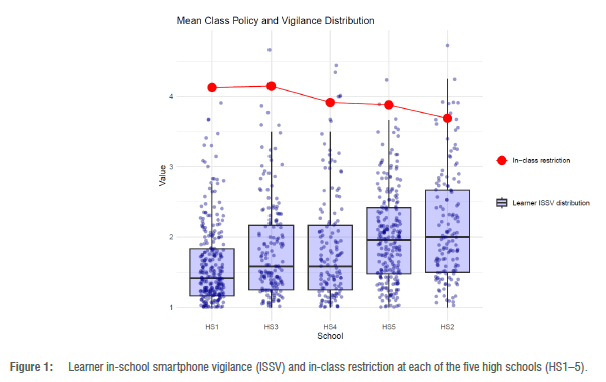
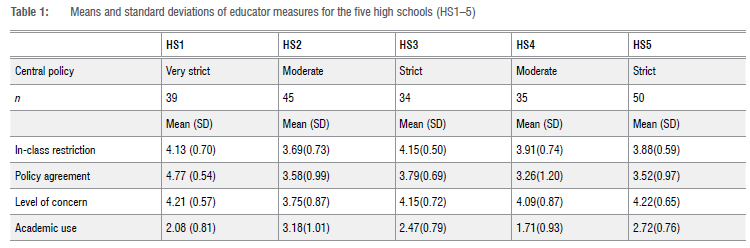
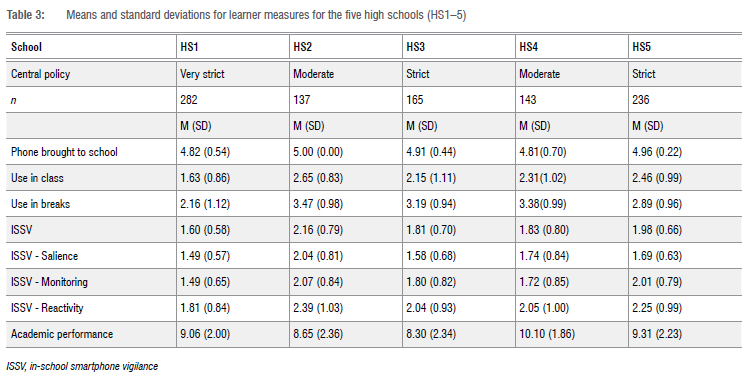
Smartphone ownership among adolescents has risen significantly over the past decade, leading many schools to implement policies restricting or banning phone use during school hours. However, the effectiveness of these policies, particularly in relation to academic performance, remains uncertain. To contribute knowledge in this domain, the notion of in-school smartphone vigilance (ISSV) is adopted to describe learners' cognitive involvement with their smartphones during the school day. A mixed-methods, multiple-case study across five public high schools was conducted to determine, firstly, whether educators' enactment of restrictive smartphone policies explains variance in learners' ISSV, and, secondly, whether ISSV is associated with academic performance outcomes. To address these questions, data collected from learners, educators and school management teams were compared across the five cases. The findings indicate that, if consistently enacted in class settings, restrictive policies are associated with lower ISSV. Additionally, across the full sample of learners (n = 963), a small, negative association between ISSV and academic performance is observed, suggesting that cognitive involvement with smartphones at school limits learners' capacity to concentrate on academic work. It is proposed that schools should adopt a holistic approach when developing smartphone policies which, in addition to academic performance, considers teacher and learner well-being more broadly. SIGNIFICANCE: • South African high schools generally allow learners to bring their phones to school but restrict the use of phones to varying degrees. • When comparing the policies and outcomes of five high schools, our findings indicate that, if consistently enforced, strict use policies reduce learners' cognitive involvement with phones. • Strict use policies place a substantial policing burden on educators and only have a small positive effect on academic performance outcomes. • Schools should consider a broad range of factors relating to the well-being and performance of both educators and learners when making smartphone policy decisions.
smartphone policy; high school; in-school smartphone vigilance; academic performance; policy enactment
 Thumbnail