Do school smartphone policies work? A multiple case study of five South African high schools
Abstract
Smartphone ownership among adolescents has risen significantly over the past decade, leading many schools to implement policies restricting or banning phone use during school hours. However, the effectiveness of these policies, particularly in relation to academic performance, remains uncertain. To contribute knowledge in this domain, the notion of in-school smartphone vigilance (ISSV) is adopted to describe learners' cognitive involvement with their smartphones during the school day. A mixed-methods, multiple-case study across five public high schools was conducted to determine, firstly, whether educators' enactment of restrictive smartphone policies explains variance in learners' ISSV, and, secondly, whether ISSV is associated with academic performance outcomes. To address these questions, data collected from learners, educators and school management teams were compared across the five cases. The findings indicate that, if consistently enacted in class settings, restrictive policies are associated with lower ISSV. Additionally, across the full sample of learners (n = 963), a small, negative association between ISSV and academic performance is observed, suggesting that cognitive involvement with smartphones at school limits learners' capacity to concentrate on academic work. It is proposed that schools should adopt a holistic approach when developing smartphone policies which, in addition to academic performance, considers teacher and learner well-being more broadly. SIGNIFICANCE: • South African high schools generally allow learners to bring their phones to school but restrict the use of phones to varying degrees. • When comparing the policies and outcomes of five high schools, our findings indicate that, if consistently enforced, strict use policies reduce learners' cognitive involvement with phones. • Strict use policies place a substantial policing burden on educators and only have a small positive effect on academic performance outcomes. • Schools should consider a broad range of factors relating to the well-being and performance of both educators and learners when making smartphone policy decisions.
smartphone policy; high school; in-school smartphone vigilance; academic performance; policy enactment
Introduction
A growing number of adolescents across both developed and developing countries now own smartphones12345,6 The present study contributes to this body of knowledge by reporting the results of a multiple case study of five large, public high schools in South Africa which restrict smartphone use to different degrees. For each school, a combination of qualitative and quantitative data were collected among staff to describe, firstly, the school's formulated policy and, secondly, teachers' enactment of this policy in their classes. We also collected data from learners about their cognitive involvement with phones at school. These data sources were compared across the five cases to determine whether enacted smartphone policies influence learners' phone vigilance, and whether this, in turn, explains variance in their academic performance.
Framing the smartphone policy debate
Proponents of smartphones in schools argue that, when meaningfully integrated in the learning process, smartphones have the potential to improve academic outcomes.78,9, and enable personalised learning plans that counter traditional one-size-fits-all approaches.106
A more subtle but important argument that is often raised by proponents of smartphones in schools, is that smartphone bans create an artificial environment in which learners fail to master the important skill of self-regulating their phone use behaviour.111213
Countering this positive outlook, opponents point towards a broad range of concerns. Central among these is the problem of digital distraction and off-task smartphone use in class settings.1415165617
Smartphone policy formulation and enactment
Policies can generally be positioned on a continuum, with those that completely ban smartphones from school on one extreme4181920
Policies are generally formulated at three different levels - governmental, school and class. Numerous national governments, including those of France, Spain, Switzerland, Italy, Finland and the Netherlands, have, or are in the process of developing, legislation which limits or bans smartphone use in schools.1920621,22
Importantly, there is ample evidence that even when smartphone policies are formulated and prescribed, many schools fail to enact them consistently.19,20,23 Such failure is often attributed to the effort required to constantly police smartphone use, which some educators experience as draining and ultimately futile.12246
Smartphone policy effectiveness
Despite a growing body of research, there remains uncertainty over the effectiveness of school smartphone policies in terms of their impact on key outcomes such as academic performance. In Norwegian middle schools, academic performance improved among girls when a smartphone ban was implemented, but not among boys.525,26, but among Vietnamese high schoolers, factors such as the duration of smartphone use and the frequency of smartphone checking were found not to be related to learning outcomes when controlling for age and gender.2719(p.258)
The present study
Acknowledging the need for improved education in South Africa's low-resource schools, many researchers have investigated the potential of smartphone-based teaching and learning interventions.28-31 Across these studies, there is broad agreement that a lack of technological infrastructure and expertise are key barriers to success. The notion that learners require guidance to self-regulate their smartphone use patterns in line with educational goals has also been acknowledged.3032,33, there have not been any attempts to systematically evaluate the effects of different levels of smartphone use restriction in South African schools. The present study addresses this gap in the literature and extends the domain in three important ways.
Firstly, while researchers have primarily focused on the effects of smartphone bans, there is a dearth of evidence about the effectiveness of moderate policies that restrict smartphone use during the school day, rather than banning use completely. Like most South African high schools, all the schools in this study allow learners to bring their phones to school and keep them on their person during the school day but restrict, to different degrees, learner phone use. Secondly, studies of policy effectiveness have mostly neglected the principle that educators' in-class policy enactment may differ from centrally formulated policy. In this study, we addressed this limitation by collecting data among individual educators to provide a more accurate view of the in-class reality at each school. Thirdly, most of the current research in this domain frames policy effectiveness in relation to academic performance outcomes, generally adopting designs in which performance outcomes before and after ban implementations are compared. While acknowledging the value of these designs, the key mechanism by which smartphone policies can impact academic performance concerns learners' cognitive orientation. The underlying logic, building upon the theoretical premises of the cognitive costs associated with task switching3418
To explicate this proposition, the notion of online vigilance (OV) was adopted. OV is a trait-like variable that describes three dimensions of an individual's cognitive involvement with their online sphere.353536-39
In recent studies, OV has been instrumentalised in relation to a particular context or setting (e.g. in the office4041
Given its theoretical underpinnings, ISSV provides a meaningful measure of policy effectiveness at the level of the individual learner. If effective, smartphone restriction policies should be associated with lower levels of ISSV among learners and enhance their cognitive availability for and concentration on academic work. However, acknowledging current conflicting evidence of the effects of smartphone bans on academic performance19
1. Is there a relationship between a school's enacted restrictive smartphone use policies and learners' ISSV?
2. Does ISSV predict variance in academic performance among high school learners?
Research design
To address the research questions, we undertook a multiple, mixed-methods case study of five large, public high schools in South Africa. Candidate schools were identified using purposive sampling criteria, guided by both practical and methodological considerations. Selection criteria included school size (minimum of 700 learners), geographical accessibility and language of instruction (English or Afrikaans), the latter ensuring alignment with the researchers' linguistic capacity. In line with recommendations for multiple case study research, schools were selected to enable meaningful comparison while maintaining sufficient within-case sample sizes for reliable analysis. Schools across the five quintiles of the South African education system were targeted. Despite multiple invitations to schools from lower quintiles, only Quintile 5 schools agreed to participate. The final sample includes five fee-paying schools located in the Western Cape and Gauteng provinces. While this sample composition enables cross-case pattern identification, the lack of language and socio-economic diversity limits the generalisation of findings.
Following initial email interactions with schools that responded positively, we scheduled meetings with the school management teams to explain the research aims and procedures, and to establish a timeline for data collection activities.
Data collection procedures
At each case school, data were collected among three groups of participants: school management teams, educators and learners. For each group, consent procedures were followed before commencement of data collection procedures. In the case of learners, in line with South African legislation regarding research involving minors, consent for participation was first obtained from each learner's parent or legal guardian and, thereafter, from the learners themselves. Response and coverage rates for the educator and learner surveys are presented in Supplementary table 1.
Group interviews with school management teams
To develop an in-depth understanding of each school's central smartphone policy, a semi-structured group interview was conducted with the school's management team. The interview guide and case descriptions are given in the supplementary material. In all cases, the interviews were conducted in person, on the school premises, and audio recorded. The composition of the school management teams varied, but either the principal and/or the deputy principal was present at each school. The interviews were conducted in the school management team's language of preference and were between 45 and 75 minutes in duration. Following each interview, the audio recordings were transcribed by the researchers and, in the case of Afrikaans schools, translated into English for analysis. In cases where schools had relevant documentation (e.g. written smartphone policy statements), these were provided to the researchers. Based on these data sources, each school's formulated policy was categorised as either 'moderate', 'strict' or 'very strict'.
Survey of educators
An online survey was distributed to all the educators at each school. In addition to demographic indicators, each educator completed the following measures:
• In-class restriction was measured with a single Likert-scale item, which asked educators to indicate the option which best described their management of learners' smartphone use for non-educational purposes (e.g. social media, messaging, video watching) in their class. Educators could select one of five responses: "I don't control smartphone use in any way, learners can do what they want"; "I provide some advice, but I don't police it"; "I call learners out whenever I see them using their phones, but there are no consequences"; "Learners may use smartphones but only when they have my permission to do so"; and "I strictly disallow all smartphone use in my class and there are consequences for disobedience to this".
• Agreement with the school's central policy was measured with a single 5-point Likert-scale item with indicators ranging from "strongly disagree" to "strongly agree".
• The frequency with which educators use smartphones as part of a teaching or learning activity in their class was measured with a single 5-point Likert-scale item with indicators ranging from "never" to "all the time".
• Concern over in-school smartphone use was measured with a scale containing four items that addressed distraction, cyberbullying, access to illicit content, and the use of AI for schoolwork. For each item, a 5-point Likert-scale was used with indicators ranging from "not at all concerned" to "extremely concerned". To calculate a scale, the mean score across the four items was used. The scale displayed acceptable internal consistency (α = 0.72).
Survey of learners
At each school, a survey was distributed to a stratified sample of about one third of the learners. After completing a consent procedure, learners could choose to complete an online version of the survey using their smartphones, or a paper-based version. The survey consisted of the following items:
• Gender (female, male, other) and grade (8-12).
• Academic performance was measured using a drop-down list with 5% intervals (e.g. "61%-65%", "66%-70%") ranging from "Below 30%" to "Above 90%". This produced a scale ranging from 0 (<30%) to 13 (>90%), which was used in the analysis procedures.
• Learners were asked to indicate how often they bring their phones to school, with indicators for "never", "once a week", "two to three times per week", "almost every day" and "every day".
• In-school smartphone use was measured with two items, one for use in class and one for use during breaks. A 5-point Likert-scale with indicators ranging from "never" to "all the time" was used.
• To measure ISSV, the 12-item OV scale3540,41 Each item was formulated to specifically target smartphone-related vigilance in school. For example, item MO1 in the original scale is formulated as "I constantly monitor what is happening online". It was adapted to "When I am at school, I constantly monitor what is happening on my phone". As in the original version, participants were asked to rate each of the 12 items on a 5-point Likert-scale ranging from 1 ("does not apply at all") to 5 ("fully applies"). The scale demonstrated good internal consistency (α = 0.91). Likewise, the model displayed good fit, providing evidence of construct validity: χ2p < 0.001, comparative fit index (CFI) = 0.97, root mean square error of approximation (RMSEA) = 0.06, 90% confidence interval [0.06, 0.08] and standardised root mean square residual (SRMR) = 0.03.
Data analysis plan
The data analysis plan is presented in the supplementary material.
Results
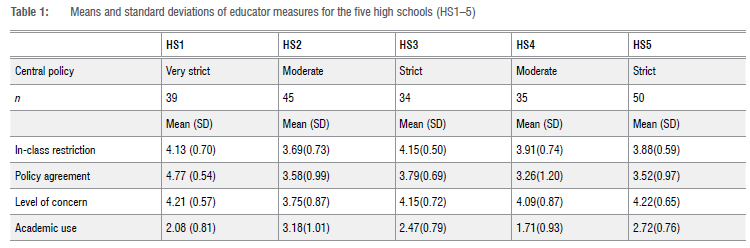
Table 1 presents the strictness classification of each school's central policy, as well as descriptive statistics for the educator measures. High school (HS) 1 has the strictest central policy, followed by HS3 and HS5.
HS2 and HS4 prescribe the least restriction on phone use. Based on educator measures, HS3 displays the highest degree of in-class restriction (M = 4.15), closely followed by HS1 (M = 4.13). HS1 also displays the highest level of policy agreement among educators (M = 4.77). HS2, by contrast, has the lowest level of in-class restriction (M = 3.69), the lowest level of concern about learner smartphone use (M = 3.75), and the most frequent in-class use of smartphones for academic purposes (M = 3.18).
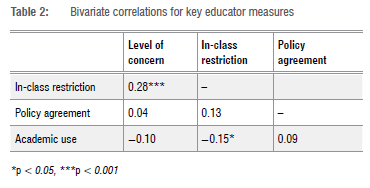
Table 2 presents the bivariate correlations between the educator measures across the full set of data. In-class restriction is positively correlated with level of concern (r = 0.28, p < 0.001) and negatively correlated with academic use (r = −0.15, p < 0.05).
As per the analysis plan, analyses of variance (ANOVAs) were conducted to determine whether these differences were statistically significant across the five schools. The results indicate significant differences for all the indicators: in-class policy, F(4, 198) = 3.4, p = 0.01; policy agreement, F(4, 198) = 15.9, p < 0.01; concern, F(4, 198) = 3.0, p = 0.02; and academic use, F(4, 198) = 17.4, p < 0.01.
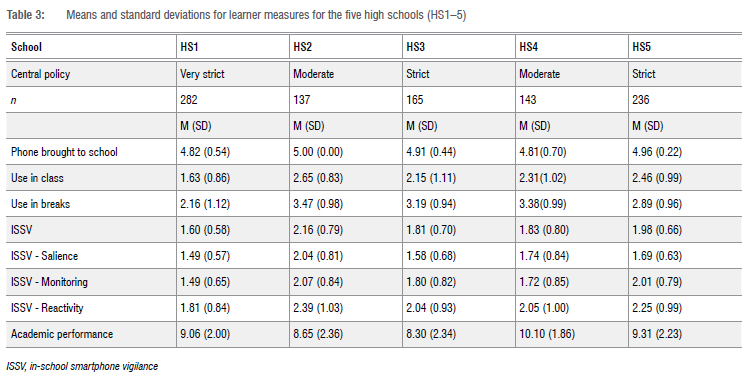
Table 3 presents the number of learners who completed the survey at each school, as well as descriptive statistics for the learner measures. The data indicate that almost all learners at each of the schools take their phones to school every day or almost every day. Learners in HS1 display the lowest frequency of use, both in class (M = 1.63) and during breaks (M = 2.16), while learners in HS2 display the highest for both measures (M = 2.65 and M = 3.47). HS2 also displays the highest level of ISSV (M = 2.16), followed by HS5 (M = 1.98).
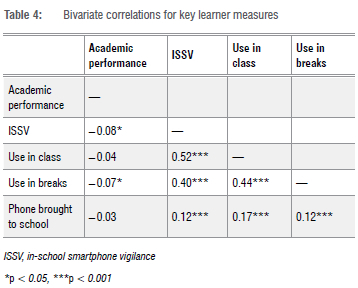
Table 4 presents bivariate correlations between the key indicators across the full set of learner data. Academic performance is negatively correlated with ISSV (r = −0.08, p < 0.05) and smartphone use during breaks (r = −0.07, p < 0.05), while smartphone use in class is positively correlated with ISSV (r = 0.52, p < 0.001) and smartphone use during breaks (r = 0.44, p < 0.001). Bringing a phone to school is weakly but significantly correlated with ISSV (r = 0.12, p < 0.001), smartphone use in class (r = 0.17, p < 0.001) and smartphone use during breaks (r = 0.12, p < 0.001).
As per the analysis plan, ANOVAs were conducted to determine whether these differences were statistically significant across the five schools. Results indicated significant differences for all the indicators: bringing a phone to school, F(4, 958) = 6.26, p < 0.01; use in class, F(4, 959) = 36.78, p < 0.01; use in breaks, F(4, 959) = 60.09, p < 0.01; and ISSV F(4, 959) = 18.91, p < 0.01.
Finally, a multiple linear regression was conducted to examine whether school predicted variance in ISSV while controlling for grade and gender. The model was statistically significant overall, F(10, 953) = 9.66, p < 0.001, and explained around 9% of the variance in ISSV (R2R2β = 0.50, SE = 0.10, t = 5.08, p < 0.001), HS3 (β = 0.18, SE = 0.08, t = 2.44, p = 0.015), HS4 (β = 0.20, SE = 0.10, t = 2.07, p = 0.039) and HS5 (β = 0.37, SE = 0.07, t = 5.22, p < 0.001). While gender was not a significant predictor of ISSV, grade level was, with higher ISSV at higher grade levels. The full table of model coefficients is presented as Supplementary table 2.
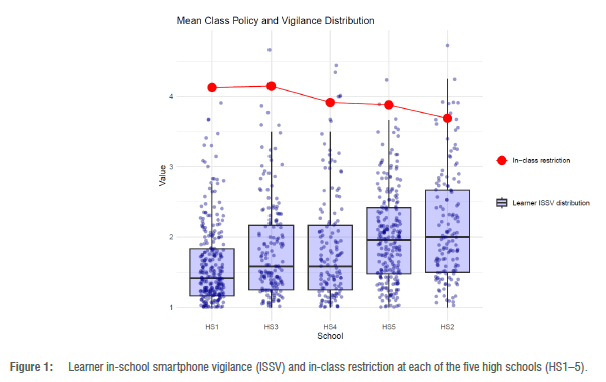
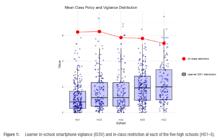
Figure 1 visualises the comparison of the five schools based on their distributions of ISSV and the mean level of in-class restriction by the schools' educators.
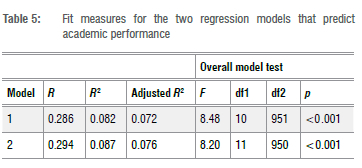
The second research question examined the relationship between ISSV and academic performance. The means and standard deviations for each school's academic performance are presented in Table 3. Following the analysis plan, a hierarchical linear regression analysis was conducted to determine (1) whether learners' school, grade and gender predict variance in academic performance, and (2) whether their ISSV accounts for additional variance in academic performance. The first model was statistically significant overall, F(10, 951) = 8.48, p < 0.001, and explained approximately 8.2% of the variance in academic performance (Table 5). The second model was also statistically significant, F(10, 950) = 8.20, p < 0.001, and accounted for an additional 0.5% of the variance in academic performance (Table 5). Although the additional variance explained is small, the difference between the two models is statistically significant (p < 0.05). The model coefficients are presented in Supplementary tables 2 and 3.
Discussion
The findings suggest that the formulation of smartphone policies demands the careful balancing of the needs of different stakeholder groups. All the schools included in the sample allow learners to bring their phones to school, with the primary motivating factor being parents' desire to communicate arrangements for post-school activities with their children. However, all the schools restrict, to various degrees, learners' phone use during the school day. These restrictions typically involve the specification of times of use (e.g. before school, during breaks, between classes) or place (e.g. in the school building). However, the findings, like those of earlier studies642
When considering educator and learner data in combination, the data, as visualised in Figure 1, suggest that when educators at a school are concerned about learner smartphone use, they tend to enact stricter rules about smartphone use in their classes, resulting in a decrease in learners' cognitive involvement with their smartphones. This effect is strongest when educators agree with central policy and display consistency in their application of the relevant rules in their classes.
Echoing the general pattern of findings from earlier studies19
It is important to consider the implications of the findings for those tasked with policy formulation and implementation at schools. If schools choose to allow learners to bring phones to school and carry them on their person, consistent enactment of a strict policy can be effective. However, this places a substantial burden on teachers and may not lead to improvements in academic performance for all learners. While some learners' performance may improve, our findings, like those of earlier studies, suggest that the overall impact would be small.
Acknowledging educators' sense that the potential value of constantly policing learners' smartphone use is not worth the effort1243
Limitations
Key limitations of the research design are worth highlighting. Firstly, the case schools are all English or Afrikaans medium and categorised as Quintile 5. Accordingly, the findings may not be generalisable to schools that fall outside these categories. Secondly, the cross-sectional nature of the data implies that effects resulting from policy changes at each school are not accounted for. For example, at HS1, data were collected around one year after the school implemented a revised policy. The comparison of pre/post-revision data would have enabled investigation of policy effects in a different manner. Interestingly, however, the present study produced comparable results to earlier pre/post studies in terms of academic performance effects. Thirdly, ISSV was measured "at school" as opposed to "in a particular class". In-class restriction may vary substantially across classes at the same school and learners may display varying levels of ISSV in different classes. Future studies should refine this approach by adopting class-sensitive measures of ISSV to account for this possibility. Finally, we did not control for cultural factors, such as power distance, hierarchy, discipline norms and authority. Future work should extend this investigation by studying their role in shaping ISSV patterns among learners.
Conclusion
In conclusion, we found that when schools adopt restrictive policies that are consistently enforced by educators, learners display lower levels of cognitive involvement with their phones. However, across our full sample of learners, this seems to have a negligible effect on academic performance outcomes. Accordingly, policies which ban or heavily restrict smartphone use may not be justifiable solely on academic grounds, but should consider a broader range of factors relating to learner and educator well-being.
Funding
Funding was received from the South African National Research Foundation (CSUR23041894319).
Data availability
Due to agreements with the participating schools, we are not allowed to publish or share the data in raw format.
Declarations
We have no competing interests to declare. No generative artificial intelligence tools were used to write or edit the text of this manuscript. All content was produced by the authors. Ethical clearance was obtained from the Stellenbosch University Research Ethics Committee: Social, Behavioural and Education Research (Project number: 29470). Approval to conduct research at the participating schools was obtained from the Departments of Education of the Western Cape and Gauteng provinces.
Authors' contributions
D.B.L.R.: Conceptualisation, methodology, investigation, formal analysis, validation, data curation, visualisation, writing - original draft, writing - review and editing. J.F.: Investigation, funding acquisition, writing - review and editing. Both authors read and approved the final manuscript.
Acknowledgements
We acknowledge the management teams, educators and learners at the five schools that participated in the study. Their assistance in the planning and execution of data collection activities was a key enabler of the study's execution.
References
- 1. Silas T, Mwila PM. The effects of technology adaptation on students' discipline in public secondary schools in Nyamagana District, Tanzania. Int J Educ Dev Using Inf Commun Technol. 2024;20(1):91-106.
-
2. Vorderer P, Krömer N, Schneider FM. Permanently online - Permanently connected: Explorations into university students' use of social media and mobile smart devices. Comput Hum Behav. 2016;63:694-703. https://doi.org/10.1016/j.chb.2016.05.085
» https://doi.org/10.1016/j.chb.2016.05.085 -
3. Montag C, Elhai JD. Do we need a digital school uniform? Arguments for and against a smartphone ban in schools. Soc Impacts. 2023;1(1), Art. #100002. https://doi.org/10.1016/j.socimp.2023.100002
» https://doi.org/10.1016/j.socimp.2023.100002 -
4. Haidt J. The case for phone-free schools [webpage on the Internet]. c2023 [cited 2024 Sep 09]. Available from: https://www.afterbabel.com/p/phone-free-schools
» https://www.afterbabel.com/p/phone-free-schools -
5. Abrahamsson S. Smartphone bans, student outcomes and mental health [Discussion paper]. Bergen: Institutt for samfunnsøkonomi; 2024 [cited 2024 Apr 19]. https://doi.org/10.2139/ssrn.4735240
» https://doi.org/10.2139/ssrn.4735240 -
6. Gath ME, Monk L, Scott A, Gillon GT. Smartphones at school: A mixed-methods analysis of educators' and students' perspectives on mobile phone use at school. Educ Sci. 2024;14(4), Art. #351. https://doi.org/10.3390/educsci14040351
» https://doi.org/10.3390/educsci14040351 -
7. Maia-Lima C, Silva A, Duarte P. Geometry teaching, smartphones and QR codes. In: Rodrigues MR, Llamas Nistal M, Figueiredo M, editors. Proceedings of the 2015 International Symposium on Computers in Education (SIIE); 2015 November 25-27; Setubal, Portugal. IEEE; 2015. p. 114-119. https://doi.org/10.1109/SIIE.2015.7451659
» https://doi.org/10.1109/SIIE.2015.7451659 -
8. Sari AI, Suryani N, Rochsantiningsih D, Suharno S. Digital learning, smartphone usage, and digital culture in Indonesia education. Integr Educ. 2020;24(1):20-31. https://doi.org/10.15507/1991-9468.098.024.202001.020-031
» https://doi.org/10.15507/1991-9468.098.024.202001.020-031 - 9. Bestwick A, Campbell JR. Mobile learning for all. Except Parent. 2010;40(9):18-20.
-
10. Song Y, Wong LH, Looi CK. Fostering personalized learning in science inquiry supported by mobile technologies. Educ Technol Res Dev. 2012;60(4):679-701. https://doi.org/10.1007/s11423-012-9245-6
» https://doi.org/10.1007/s11423-012-9245-6 -
11. Carlsson S, Willermark S. Forbidden and necessary: Making sense of smartphones in vocational teaching. J Workplace Learn. 2024;36(3):239-251. https://doi.org/10.1108/JWL-03-2023-0040
» https://doi.org/10.1108/JWL-03-2023-0040 - 12. Morrin TN. Teacher perceptions of appropriate norms for smartphone use during class [dissertation]. Minneapolis, MN: Walden University; 2022.
- 13. Langseth ID, Sedal H. Smart phones in schools: In what ways can coaching empower students to make a valid judgement on when and how to use their smart phone? Hum IT. 2019;14(3):48-82.
- 14. Throuvala MA. Prevention priorities for online challenges and harms in adolescence and assessment of smartphone distraction: An emotive-cognitive perspective [thesis]. Nottingham: Nottingham Trent University; 2020.
-
15. Le Roux DB, Parry DA. In-lecture media use and academic performance: Does subject area matter? Comput Hum Behav. 2017;77:86-94. https://doi.org/10.1016/j.chb.2017.08.030
» https://doi.org/10.1016/j.chb.2017.08.030 -
16. Auliarachman Diadi A, Nurdin MF, Gunawan W. Social interaction of students with gadget: Patterns and experiences during school time. Utamax J Ultim Res Trends Educ. 2023;5(2):126-138. https://doi.org/10.31849/utamax.v5i2.13763
» https://doi.org/10.31849/utamax.v5i2.13763 -
17. Motamedi Heravi M, Khosravan S, Mohammadi A, Mansoorian MR. Effects of self-management training on smartphone dependence in low to moderate adolescent males' users. Behav Change. 2023;40(1):67-75. https://doi.org/10.1017/bec.2022.3
» https://doi.org/10.1017/bec.2022.3 -
18. Le Roux DB, Parry DA. The role of self-regulation in experiences of digital distraction in college classrooms. In: Flanigan AE, Kim JH, editors. Digital distractions in the college classroom. Hershey, PA: IGI Global; 2022. p. 92-119. https://doi.org/10.4018/978-1-7998-9243-4.ch005
» https://doi.org/10.4018/978-1-7998-9243-4.ch005 -
19. Campbell M, Edwards EJ, Pennell D, Poed S, Lister V, Gillett-Swan J, et al. Evidence for and against banning mobile phones in schools: A scoping review. J Psychol Couns Sch. 2024;34(3):242-265. https://doi.org/10.1177/20556365241270394
» https://doi.org/10.1177/20556365241270394 -
20. Gao Q, Yan Z, Zhao C, Pan Y, Mo L. To ban or not to ban: Differences in mobile phone policies at elementary, middle, and high schools. Comput Hum Behav. 2014;38:25-32. https://doi.org/10.1016/j.chb.2014.05.011
» https://doi.org/10.1016/j.chb.2014.05.011 -
21. Claro M, Salinas A, Cabello-Hutt T, San Martín E, Preiss DD, Valenzuela S, et al. Teaching in a digital environment (TIDE): Defining and measuring teachers' capacity to develop students' digital information and communication skills. Comput Educ. 2018;121:162-174. https://doi.org/10.1016/j.compedu.2018.03.001
» https://doi.org/10.1016/j.compedu.2018.03.001 -
22. Reinaldo F, Magalhães DR, Reis LP, Gaffuri S, Freddo A, Hallal R. Impasse aos desafios do uso de smartphones em sala de aula: Investigação por grupos focais [Challenges to the use of smartphones in Brazilian classroom: Research by focus groups]. RISTI Rev Iber Sist Tecnol Inf. 2016;(19):77-92. Portuguese. Available from: https://pdfs.semanticscholar.org/4501/5ef4fae18ca2e456c28e258630cf8998b1af.pdf
» https://pdfs.semanticscholar.org/4501/5ef4fae18ca2e456c28e258630cf8998b1af.pdf -
23. Grigic Magnusson A, Ott T, Hård af Segerstad Y, Sofkova Hashemi S. Complexities of managing a mobile phone ban in the digitalized schools' classroom. Comput Sch. 2023;40(3):303-323. https://doi.org/10.1080/07380569.2023.2211062
» https://doi.org/10.1080/07380569.2023.2211062 -
24. Wikström P, Duek S, Nilsberth M, Olin-Scheller C. Smartphones in the Swedish upper-secondary classroom: A policy enactment perspective. Learn Media Technol. 2024;49(2):230-243. https://doi.org/10.1080/17439884.2022.2124268
» https://doi.org/10.1080/17439884.2022.2124268 -
25. Cheng L, Iglesias AL. Attitudes & effect of vocational school students' classroom smartphone use in the Spanish Castilla-Leon region. In: García-Peñalvo FJ, editor. Proceedings of the Fourth International Conference on Technological Ecosystems for Enhancing Multiculturality; 2016 November 2-4; Salamanca, Spain. New York: Association for Computing Machinery; 2016. p. 1073-1080. https://doi.org/10.1145/3012430.3012649
» https://doi.org/10.1145/3012430.3012649 - 26. Melattinkara RS. Smart devices in classrooms and academic performance: A causal-comparative study of academic performance at Los Angeles area high schools [dissertation]. San Diego, CA: Northcentral University; 2021.
-
27. Nguyen TV, Ngoc Nguyen QA, Nguyen NPH, Nguyen UB. Smartphone use, nomophobia, and academic achievement in Vietnamese high school students. Comput Hum Behav Rep. 2024;14(1), Art. #100418. https://doi.org/10.1016/j.chbr.2024.100418
» https://doi.org/10.1016/j.chbr.2024.100418 -
28. Bejrajh V, Themane M. Using smartphones in teaching English to secondary school students in South Africa. Interdiscip J Educ Res. 2022;4:76-90. https://doi.org/10.38140/ijer-2022.vol4.08
» https://doi.org/10.38140/ijer-2022.vol4.08 -
29. Khan Y. ICT integration in four schools situated in poor socio-economic contexts in the Western Cape [thesis]. Stellenbosch: Stellenbosch University; 2023. http://hdl.handle.net/10019.1/126997
» http://hdl.handle.net/10019.1/126997 -
30. Kock MA. Teachers' use of technology at a technology-rich model school in the Western Cape Province [thesis]. Cape Town: Cape Peninsula University of Technology; 2022. https://etd.cput.ac.za/handle/20.500.11838/3815
» https://etd.cput.ac.za/handle/20.500.11838/3815 -
31. Tsie MJ. Exploring the use of mobile learning applications in the Physical Sciences classroom [dissertation]. Bloemfontein: University of the Free State; 2022. http://hdl.handle.net/11660/12601
» http://hdl.handle.net/11660/12601 -
32. Jansen J. Value of cellphones in schools rings loud. The Herald. 2024 October 03 [cited 2025 May 26]. Available from: https://www.theherald.co.za/opinion/2024-10-03-value-of-cellphones-in-schools-rings-loud/
» https://www.theherald.co.za/opinion/2024-10-03-value-of-cellphones-in-schools-rings-loud/ -
33. Phiyega R. Is it time to take a bold stand about smartphones in schools? City Press. 2025 April 06 [cited 2025 May 26]. Available from: https://www.news24.com/citypress/voices/riah-phiyega-is-it-time-to-take-a-bold-stand-about-smartphones-in-schools-20250406
» https://www.news24.com/citypress/voices/riah-phiyega-is-it-time-to-take-a-bold-stand-about-smartphones-in-schools-20250406 -
34. Monsell S. Task switching. Trends Cogn Sci. 2003;7(3):134-140. https://doi.org/10.1016/S1364-6613(03)00028-7
» https://doi.org/10.1016/S1364-6613(03)00028-7 -
35. Reinecke L, Klimmt C, Meier A, Reich S, Hefner D, Knop-Huelss K, et al. Permanently online and permanently connected: Development and validation of the Online Vigilance Scale. PLoS One. 2018;13(10), e0205384. https://doi.org/10.1371/journal.pone.0205384
» https://doi.org/10.1371/journal.pone.0205384 -
36. Le Roux DB, Parry DA. Investigating predictors of online vigilance among university students. Inf Technol People. 2022;35(1):27-45. https://doi.org/10.1108/ITP-04-2020-0226
» https://doi.org/10.1108/ITP-04-2020-0226 -
37. Johannes N, Meier A, Reinecke L, Ehlert S, Setiawan DN, Walasek N, et al. The relationship between online vigilance and affective well-being in everyday life: Combining smartphone logging with experience sampling. Media Psychol. 2021;24(5):581-605. https://doi.org/10.1080/15213269.2020.1768122
» https://doi.org/10.1080/15213269.2020.1768122 -
38. Schneider FM, Hitzfeld S. I ought to put down that phone but I phub nevertheless: Examining the predictors of phubbing behavior. Soc Sci Comput Rev. 2019;39(6):1075-1088. https://doi.org/10.1177/0894439319882365
» https://doi.org/10.1177/0894439319882365 -
39. Kıdıman E, Durak HY. The relationship between academic self-control and online vigilance among high school students: A multi-group analysis. Eğitim Teknol Kuram Ve Uygul. 2023;13(1):24-36. https://doi.org/10.17943/etku.1079705
» https://doi.org/10.17943/etku.1079705 -
40. Conradie L, le Roux DB, Parry DA. Cross-domain online vigilance, boundary management and stress among knowledge workers. S Afr J Bus Manag. 2023;54(1):1-12. https://doi.org/10.4102/sajbm.v54i1.3896
» https://doi.org/10.4102/sajbm.v54i1.3896 -
41. Koessmeier C, Büttner OB. Beyond the smartphone's mere presence effect: A quantitative mobile eye tracking study on the visual and internal distraction potential of smartphones. Comput Hum Behav. 2022;134, Art. #107333. https://doi.org/10.1016/j.chb.2022.107333
» https://doi.org/10.1016/j.chb.2022.107333 -
42. Aloteibi S. The impact of smartphone usage on students: Teachers' perspectives and classroom policies [dissertation]. Long Beach, CA: California State University; 2022. Available from: https://www.proquest.com/docview/2724707016/abstract/1D017BB4A9B048E2PQ/1
» https://www.proquest.com/docview/2724707016/abstract/1D017BB4A9B048E2PQ/1 -
43. Randhawa A, Pallan M, Twardochleb R, Adab P, Al-Janabi H, Fenton S, et al. Secondary school smartphone policies in England: A descriptive analysis of how schools rationalize, design, and implement restrictive and permissive phone policies. J Res Technol Educ. 2025;57(5):1113-1132. https://doi.org/10.1080/15391523.2024.2363204
» https://doi.org/10.1080/15391523.2024.2363204

Revised: 27 Mar. 2026
Accepted: 04 Aug. 2026
Published: 29 Sep. 2026
Funding: South African National Research Foundation (CSUR23041894319)