Sleep quality of adult psychiatric outpatients at Chris Hani Baragwanath Academic Hospital
Abstract
BACKGROUND: Sleep disorders are increasingly prevalent among the general population and individuals with mental disorders. However, little research has focused on the sleep quality of psychiatric patients beyond depression, despite its relevance in diagnostic criteria AIM: This study aimed to assess overall sleep quality in psychiatric outpatients and to assess for an association with socio-demographic variables SETTING: This study took place at the adult psychiatric outpatient department of Chris Hani Baragwanath Academic Hospital METHODS: A cross-sectional study design was employed to evaluate overall sleep quality using the self-administered Pittsburgh Sleep Quality Index (PSQI), a validated tool. The PSQI yields a global score ranging from 0 to 21, with scores of 5 or greater indicating poor sleep quality. Eligibility was determined through structured clinical interviews and data obtained from participant records RESULTS: Poor sleep quality was found in 50% of participants. Sleep quality did not differ significantly based on sex or age. Subscale analysis revealed reduced sleep duration and efficiency, nocturnal disturbances and daytime dysfunction. Additionally, 38% of participants required pharmacological intervention for sleep issues, despite lacking a diagnosis of primary or comorbid sleep disorders CONCLUSION: Half of the psychiatric outpatients experienced poor sleep quality, irrespective of socio-demographic factors, psychiatric diagnosis, symptom remission or medication type CONTRIBUTION: This study highlights the importance of addressing sleep disturbances as comorbid conditions in psychiatric patients. Comprehensive evaluation and management of sleep quality can lead to improved patient outcomes and quality of life
psychiatric disorders; psychiatric outpatients; sleep quality; sleep disorders; insomnia; Pittsburgh Sleep Quality Index; PSQI
Introduction
Sleep disturbance affects 50% - 80% of all patients with psychiatric disorders and can be both a cause and effect of the same.122,3 A significant cost burden is solely attributed to sleep problems, and this is likely to increase exponentially in the coming years. These costs are both direct (treatment costs) and indirect (absenteeism, decreased productivity, accidents, etc.) costs.34,5 Insomnia is seen in more than 90% of patients with clinical depression. Insomnia as a symptom has a 60% - 70% positive predictive value in diagnosing major depressive disorder.2,6 To date, most research has focussed more on sleep in depression than in any other psychiatric disorder.78,9 alcohol use disorder, eating disorder and in borderline personality disorder.10
Sleep is defined as a rapidly reversible state with decreased awareness of external stimuli.111112
Historically, scholars in psychiatry, dating back to Sigmund Freud and Carl Jung in the 19th century, had a special interest in sleep, dreams and their relationship with mental illness.131111
The duration of sleep obtained per night varies across the human lifespan. Natural variation of this occurs with inherently short sleepers and long sleepers. Sleep needs and patterns are influenced by several factors, including genetic factors, age, and comorbid medical and psychiatric disorders.111114,15 This suggests that the systems involved in sleep and wakefulness overlap significantly with emotional regulation and other behaviours.1142
Örsal et al.161717,18 Sleep deprivation has an antidepressant-like effect, possibly by normalising the accelerated metabolic activity in the anterior cingulate gyrus seen in people with depression and anxiety disorders,10
This suggests an ability for sleep loss to precipitate and perpetuate mania, and possibly other psychiatric symptoms.17
Sleep deprivation studies in recent decades have revealed cognitive impairment, specifically, deficits in attention and short-term memory, impairment in speech, perseveration and concrete thinking.192011
An association also exists between sleep disturbances and subjective benefit from treatment received, and thus, the patient's overall perceived quality of life.11
Sleep disorders and psychiatric disorders are recognised as bi-directional in the Diagnostic and Statistical Manual of Mental Disorders, Fifth Edition (DSM-5).1,4,21 Assessing sleep quality in those in remission from the core symptoms of psychiatric disorders, can help to identify the likelihood of under diagnosis of concomitant primary sleep disorders and possible treatment thereof.1,22 There is a paucity of evidence of sleep quality assessment in psychiatric disorders other than depression, and sleep quality directly affects the adaptation of patients to the disorder and their commitment to participating in the treatment process. This shift in thinking and greater awareness of sleep problems could assist with early recognition and management of sleep disorders, subsequently impacting on the trajectory of the disorder and remission rates, overall prognosis and quality of life.1
Research methods and design
Study design and setting
This study was a cross-sectional assessment of the overall sleep quality, and its seven components, in adult psychiatric outpatients at the CHBAH, a level 3 facility with a psychiatric department servicing southern Gauteng. The patients have a variety of psychiatric disorders (more complex cases), comorbid medical conditions, substance use disorders, require tertiary care, or cannot yet be down referred to community clinics. Several inpatients are also seen in the clinic for consultation-liaison psychiatry assessment and daily review.
Study population and sampling strategy
The study was conducted with adult participants from the OPD at CHBAH. A clinical interview was conducted as per regular service delivery in the OPD, in conjunction with collection of data from the participants' records (psychiatry file), to assess eligibility. Informed consent was obtained from voluntary participants who were deemed eligible for the study. A total of 90 individuals (excluding 1 repeat participant) provided informed consent and were enrolled in the study during March 2021-June 2021.
Inclusion and exclusion criteria
The following participants were eligible for the study:
Adults (>18 and <60 years old) with a psychiatric disorder presenting within the study period.
Patients with residual symptoms of their disorder despite ongoing treatment.
The research study had the following exclusion criteria:
Patients who are assessed as having comorbid substance use that is ongoing at the time of the study (by self-report and assessment for features of intoxication or withdrawal in the clinical interview) were excluded to limit confounding variables affecting sleep quality independently.
Patients with psychiatric manifestations of another medical condition were excluded for the same reason.
Patients requiring admission based on the clinical interview were not eligible for this study.
Data collection and instrument (Pittsburgh Sleep Quality Index)
A clinical interview was conducted to assess current mental status, followed by cross-sectional record review to assess eligibility for the study. Data collected from eligible participant records were recorded on a data sheet and analysed. The data sheet contained the socio-demographic variables most affecting sleep quality (based on the literature review) and psychiatric diagnosis, treatment and the PSQI component and total scores. The PSQI was self-administered and collected by the principal researcher thereafter. A study number was assigned to the data sheet and corresponding PSQI to ensure confidentiality in the study.
Several methods of assessing sleep quality exist and one such tool is the PSQI, a non-specific sleep questionnaire. The PSQI was developed by Buysse et al. in 198923232324,25 and in South Africa,2626,27 with specific caution suggested to be exercised with its use in shift workers.2623
Data analysis
The data were captured in Microsoft ExcelTM. All statistical analyses were conducted using R software (R version 4.0.1; https://www.r-project.org). Tests are two-tailed probability values and statistical significance is accepted when α ≤ 0.05. The data set for this study was generated from assessments of categorical (PSQI) scores. Data are presented in tables, figures and in text.
To assess the sleep quality of the sample population, the proportion of patients with scores <5 was compared to those with scores of >5 using chi-squared contingency table analyses to assess whether the proportion of patients sampled with sleep disorder was greater or less than chance.
A frequency distribution plot of the total scores was generated. The distribution of scores (from 0 to 3) for each of the seven component categories was analysed using a chi-squared contingency test.
Fisher's exact tests were used to analyse whether socio-demographic variables (e.g. sex) predict sleep quality. For age (the continuous variable), t-test analysis was conducted in which age was the dependent variable and sleep quality was the independent variable.
Ethical considerations
Permission to conduct the study was obtained from the relevant hospital authorities. Ethical clearance to conduct the study was obtained from the chairperson of the Wits Human Research Ethics Committee (Medical) - clearance number M201190. Informed consent was obtained, and participant confidentiality was maintained, with only the researchers having access to information linking the data sheet with the corresponding PSQI completed in the study. No information obtained during this study was used for purposes other than fulfilling the study objectives.
Results
The data set included a total of 90 participants (excluding the one repeat participant whose data are not considered in the analyses) at the psychiatric OPD at CHBAH. Missing data (two incomplete questionnaires) are excluded in the analyses, below, so sample sizes varied.
Socio-demographic data
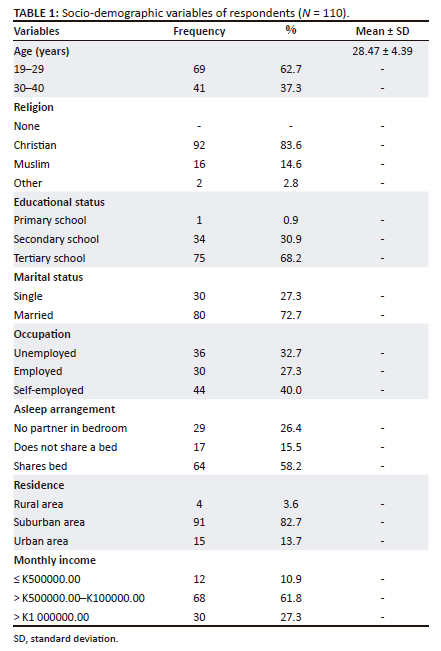
Shift work and being the primary caregiver to children under the age of 6 years is known to affect sleep quality.282p < 0.001) or provide care to young children (χ2p < 0.001). Patients in the study had a mean age of 35.2 years old (Table 1). Most patients in the study were female (57.8%) and there was one transgender patient. The distribution of the sexes did not vary significantly from chance (χ2df = 1, p = 0.091).
Sleep quality
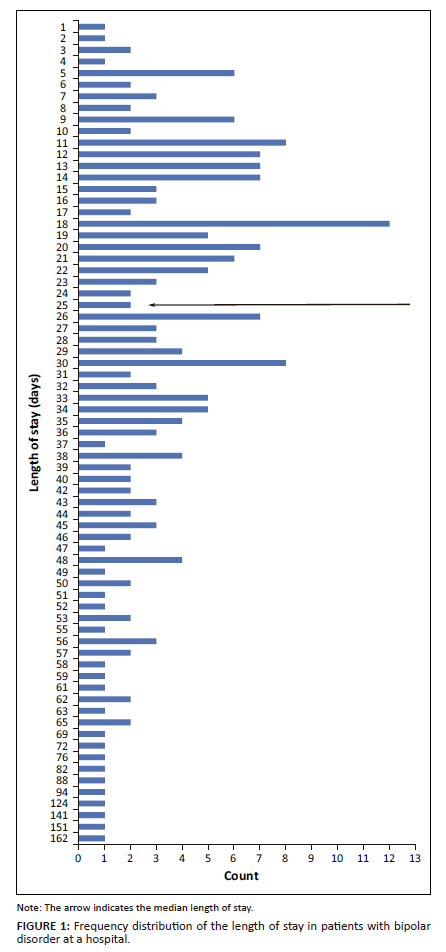
Sleep quality was categorised as good or poor, based on the total PSQI score. Sleep quality was obtained from 88 patients, with an equal number (n = 44) with good and poor sleep quality in the study population (Figure 2). This is not statistically significantly different from chance (χ2p = 1.000). A frequency plot of the total PSQI scores showed a skewed distribution (Figure 1). Because the cut off for good sleep was <5 and a similar number of the patients were categorised as having good and poor sleep quality, the left skew of the data was expected.
Table 2 shows the scores for each of seven PSQI components (subscales). The counts differed due to incomplete questionnaires being included in the subscale analysis. For the seven subscales (components) of the PSQI, the higher scores (0-3) indicated poorer sleep.
Comparisons were made of the sleep quality and socio-demographic factors. The age of patients, shift work and being the primary caregiver to a young child were not significant predictors of sleep quality. Sex was not a significant predictor of sleep quality (Fisher's exact test p = 0.278). Although this outcome was not significant, the proportion of sex by sleep quality showed interesting findings. For females, 44% reported good sleep quality and 56% reported poor sleep quality. In contrast, 58% of males reported good sleep quality and 42% reported poor quality (Figure 2).
Table 3 includes the diagnoses (including comorbid) of participants - which were predominantly mood disorders, psychotic disorders, personality disorders, and substance use disorders in remission. The proportion of participants with poor sleep quality was greater for mood (50.9%) than psychotic disorders (39.3%), which approached statistical significance (Fisher's exact test = 0.061). The associated number with overall poor sleep quality as measured by the PSQI is also shown. Table 4 represents data extrapolated from the data sheet regarding sleep medications prescribed or used. Over-the-counter medications were not included in this analysis due to a lack of information regarding specific medications used. Notably, no benzodiazepines were prescribed for sleep in the study participants.
Discussion
This study was conducted at CHBAH adult OPD from March to June 2021. The number of patients serviced by the OPD lessened during the coronavirus disease 2019 (COVID-19) pandemic due to safety protocols and alteration of the number of patients booked per day. Due to the diversity of patients seen, and rigorous inclusion and exclusion criteria, only 90 patients of the total population seen at OPD were eligible for participation in the study during the study period. Because of the decrease in overall numbers seen, this led to a smaller sample size than initially anticipated.
The key findings included 50% of participants having an overall PSQI score of ≥5 and thus, poor sleep quality. This is in line with previous research placing this figure at 50% - 80% of patients with psychiatric disorders.1
Although not significant, female participants had poorer sleep quality than male participants overall (Figure 2). Shift work (two participants) and being the primary caregiver to children under 6 years of age (one participant) were not significant predictors of sleep quality, likely due to the small data set. Although other forms of employment were not considered in this study, the presence of only two participants who did shift work could be representative of the burden of unemployment in the country (28.91%),2930
The diagnoses of the participants included some overlap with comorbid disorders, which are listed separately (Table 3), but broadly included: bipolar and related disorders (25 participants); depressive disorders2829515717122431
Of the participants reporting poor overall sleep quality, 27 participants had mood disorders (50.9%), 3 had anxiety disorders that were comorbid (42.8%) and 13 had psychotic disorders (39.4%). Most previous research has focused on sleep in depression compared to other psychiatric disorders,717,18 Poor sleep quality has also been shown to impair emotional regulation.20
There is some value in examining the subscales rather than just the overall PSQI score.232020202020
Of the participants, 26 were on medicines prescribed for sleep from the OPD, namely Promethazine (15 participants), Amitriptyline (2 participants) and Quetiapine IR 25 mg - 150 mg (9 participants), for its sedative properties at this dose.32
Strengths and limitations
The PSQI is a self-report scale, which has its own limitations as mentioned earlier. This study design was cross-sectional and only representative of the sleep quality of the sample population within the last month; further longitudinal studies are required to assess sleep quality over time.
The study did not examine PSQI subscales (only overall sleep quality) relative to diagnoses, which would have allowed for further analysis of specific sleep components and the possible association with each disorder. It also did not measure the effects of individual interventions on sleep quality or the effect of different medical comorbidities or environmental factors on poor sleep quality (e.g. body mass index, noisy residential area), but tried to limit the number of such confounding factors by the exclusion criteria.
Importantly, due to the research being conducted during periods when varying levels of restrictions on life activities were imposed nationally, the findings noted in the study may have been influenced by the effect of the COVID-19 pandemic and its accompanying psychological distress on sleep and overall well-being.33,34,35 Due to the relatively small sample size, these results should be interpreted with caution regarding generalisability.
Implications
The results suggest that sleep quality and sleep disorder should possibly be conceptualised as a comorbid condition, rather than a secondary phenomenon originating from the primary psychiatric diagnosis, because participants enrolled in this study with poor sleep quality were considered to be in remission from the primary psychiatric disorder symptoms during the clinical interview, before completion of the PSQI.136,37 and psychotherapy (e.g. cognitive-behavioural therapy for insomnia or CBT-I)381
Conclusion
Poor sleep quality was found in half of the study participants irrespective of socio-demographic factors, medication type, psychiatric diagnosis and being in remission from symptoms. This suggests there is value in conceptualising sleep disturbances as a comorbid condition and managing it accordingly.
Competing interests
The authors declare that they have no financial or personal relationship(s) that may have inappropriately influenced them in writing this article.
Authors' contributions
All authors contributed to the research study. C.H. and W.F. conceptualised and developed the research proposal, interpreted the results and critically reviewed and revised the initial and final drafts.
Funding information
The author(s) received no financial support for the research, authorship, and/or publication of this article.
Data availability
The data to support the findings of this study are available from the corresponding author, C.M.H. upon reasonable request.
Disclaimer
The views expressed in this article are those of the authors and not an official position of the University of the Witwatersrand.
Acknowledgements
The following contributions were instrumental in this research study: Dr Antwi-Anyimadu, Dr Phungula, Dr Mkhwebane and Dr Ntimani for their assistance with identifying possible participants from the outpatient department (OPD). Professor Pillay for his assistance with statistical planning and data analysis.
References
-
1. Kallestad H, Hansen B, Langsrud K, et al. Impact of sleep disturbance on patients in treatment for mental disorders. BMC Psychiatry. 2012;12:179. https://doi.org/10.1186/1471-244X-12-179
» https://doi.org/10.1186/1471-244X-12-179 -
2. Hombali A, Seow E, Yuan Q, et al. Prevalence and correlates of sleep disorder symptoms in psychiatric disorders. Psychiatry Res. 2019;279:116-122. https://doi.org/10.1016/j.psychres.2018.07.009
» https://doi.org/10.1016/j.psychres.2018.07.009 -
3. Stranges S, Tigbe W, Gómez-Olivé FX, Thorogood M, Kandala NB. Sleep problems: An emerging global epidemic? Findings from the INDEPTH WHO-SADE study among more than 40,000 older adults from 8 countries across Africa and Asia. Sleep. 2012;35(8):173-1181. https://doi.org/10.5665/sleep.2012
» https://doi.org/10.5665/sleep.2012 - 4. American Psychiatric Association1. Diagnostic and Statistical Manual of Mental Disorders. 5th ed. Arlington, VA: American Psychiatric Publishing; 2013, 947 p.
- 5. American Academy of Sleep Medicine. International Classification of Sleep Disorders. 3rd ed. Darien, IL: American Academy of Sleep Medicine; 2014.
- 6. Khurshid KA. Comorbid insomnia and psychiatric disorders: An update. Innov Clin Neurosci. 2018;15(3-4):28-32.
-
7. Peterson MJ, Benca RM. Sleep in mood disorders. Psychiatr Clin N Am. 2006;29(4):1009-1032. https://doi.org/10.1016/j.psc.2006.09.003
» https://doi.org/10.1016/j.psc.2006.09.003 -
8. Benson KL. Sleep in schizophrenia. Sleep Med Clin. 2008;3(2):251-260. https://doi.org/10.1016/j.jsmc.2008.01.001
» https://doi.org/10.1016/j.jsmc.2008.01.001 -
9. Ferrarelli F. Sleep abnormalities in schizophrenia: State of the art and next steps. Am J Psychiatry. 2021;178(9):903-913. https://doi.org/10.1176/appi.ajp.2020.20070968
» https://doi.org/10.1176/appi.ajp.2020.20070968 -
10. Klumpp H, Roberts J, Kapella MC, Kennedy AE, Kumar A, Phan KL. Subjective and objective sleep quality modulate emotion regulatory brain function in anxiety and depression. Depress Anxiety 2017;34(7):651-660. https://doi.org/10.1002/da.22622
» https://doi.org/10.1002/da.22622 - 11. Benca RM, Cirelli C, Tononi G. Basic science of sleep. In: Sadock, Benjamin J, Sadock, Virginia A, Ruiz, Pedro, editors. Comprehensive textbook of psychiatry. 9th ed. Philadelphia: Wolters Kluwer, 2009; p. 362-375.
- 12. Alhola P, Polo-Kantola P. Sleep deprivation: Impact on cognitive performance. Neuropsychiatr Dis Treat. 2007;3(5):553-567.
-
13. Gilmore MM, Nersessian E. Freud's model of the mind in sleep and dreaming. Neuropsychoanalysis. 1999;1(2):225-232. https://doi.org/10.1080/15294145.1999.10773263
» https://doi.org/10.1080/15294145.1999.10773263 -
14. Feinberg I. Schizophrenia: Caused by a fault in programmed synaptic elimination during adolescence? J Psychiatr Res. 1982;17(4):319-334. https://doi.org/10.1016/0022-3956(82)90038-3
» https://doi.org/10.1016/0022-3956(82)90038-3 -
15. Germann M, Brederoo SG, Sommer IEC. Abnormal synaptic pruning during adolescence underlying the development of psychotic disorders. Curr Opin Psychiatry. 2021;34(3):222-227. https://doi.org/10.1097/YCO.0000000000000696
» https://doi.org/10.1097/YCO.0000000000000696 -
16. Örsal Ö, Eren HK, Duru P. Examination of factors affecting the sleep quality of psychiatry patients using structural equation model. J Psychiatr Nurs. 2019;10(1):55-64. https://doi.org/10.14744/phd.2018.06978
» https://doi.org/10.14744/phd.2018.06978 -
17. Harvey AG, Murray G, Chandler RA, Soehner A. Sleep disturbance as transdiagnostic: Consideration of neurobiological mechanisms. Clin Psychol Rev. 2011;31(2):225-235. https://doi.org/10.1016/j.cpr.2010.04.003
» https://doi.org/10.1016/j.cpr.2010.04.003 -
18. Winokur A. The relationship between sleep disturbances and psychiatric disorders: Introduction and overview. Psychiatry Clin N Am. 2015;38(4):603-614. https://doi.org/10.1016/j.psc.2015.07.001
» https://doi.org/10.1016/j.psc.2015.07.001 -
19. Gradinger F, Glässel A, Bentley A, Stucki A. Content comparison of 115 health status measures in sleep medicine using the International Classification of Functioning, Disability and Health (ICF) as a reference. Sleep Med Rev. 2011;15(1):33-40. https://doi.org/10.1016/j.smrv.2010.07.001
» https://doi.org/10.1016/j.smrv.2010.07.001 -
20. O'Leary K, Small BJ, Panaite V, Bylsma LM, Rottenberg J. Sleep quality in healthy and mood-disordered persons predicts daily life emotional reactivity. Cogn Emot. 2017;31(3):435-443. https://doi.org/10.1080/02699931.2015.1126554
» https://doi.org/10.1080/02699931.2015.1126554 -
21. Krystal AD. Psychiatric disorders and sleep. Neurol Clin. 2012;30(4):1389-1413. https://doi.org/10.1016/j.ncl.2012.08.018
» https://doi.org/10.1016/j.ncl.2012.08.018 -
22. Özkan B, Çoban SA, Saraç B, Medik K. Sleep quality and factors affecting it in patients with chronic psychiatric disorders. Erciyes Med J. 2015;37(1):6-10. https://doi.org/10.5152/etd.2015.7837
» https://doi.org/10.5152/etd.2015.7837 -
23. Buysse DJ, Reynolds III CF, Monk TH, Berman SR, Kupfer DJ. The Pittsburgh Sleep Quality Index: A new instrument for psychiatric practice and research. Psychiatry Res. 1989;28(2):193-213. https://doi.org/10.1016/0165-1781(89)90047-4
» https://doi.org/10.1016/0165-1781(89)90047-4 -
24. Salahuddin M, Maru TT, Kumalo A, Pandi-Perumal SR, Bahammam AS, Manzar MD. Validation of the Pittsburgh Sleep Quality Index in community dwelling Ethiopian adults. Health Qual Life Outcomes. 2017;15:58. https://doi.org/10.1186/s12955-017-0637-5
» https://doi.org/10.1186/s12955-017-0637-5 -
25. Aloba OO, Adewuya AO, Ola BA, Mapayi BM. Validity of the Pittsburgh Sleep Quality Index (PSQI) among Nigerian university students. Sleep Med. 2007;8(3):266-270. https://doi.org/10.1016/j.sleep.2006.08.003
» https://doi.org/10.1016/j.sleep.2006.08.003 -
26. Roche J, Vos AG, Lalla-Edward ST, Kamerman PR. Importance of testing the internal consistency and construct validity of the Pittsburgh Sleep Quality Index (PSQI) in study groups of day and night shift workers: Example of a sample of long-haul truck drivers in South Africa. Appl Ergonom. 2022;98:103557. https://doi.org/10.1016/j.apergo.2021.103557
» https://doi.org/10.1016/j.apergo.2021.103557 -
27. Iacovides S, Avidon I, Bentley A, Baker FC. Diclofenac potassium restores objective and subjective measures of sleep quality in women with primary dysmenorrhea. Sleep. 2009;32(8):1019-1026. https://doi.org/10.1093/sleep/32.8.1019
» https://doi.org/10.1093/sleep/32.8.1019 -
28. Hulsegge G, Loef B, Van Kerkhof LW, Roenneberg T, Van der Beek AJ, Proper KI. Shift work, sleep disturbances and social jetlag in healthcare workers. J Sleep Res. 2019;28(4):e12802. https://doi.org/10.1111/jsr.12802
» https://doi.org/10.1111/jsr.12802 -
29. Chief Directorate: Advocacy and Dissemination. Statistics South Africa section 14 manual promotion of access to information [homepage on the Internet]. 2022 [cited 2023 May 15]. Available from: http://www.statssa.gov.za/wp-content/uploads/2022/09/Stats-SA-PAIA-manual-2022.pdf
» http://www.statssa.gov.za/wp-content/uploads/2022/09/Stats-SA-PAIA-manual-2022.pdf -
30. Gühne U, Pabst A, Löbner M, Breilmann J. Employment status and desire for work in severe mental illness: Results from an observational, cross-sectional study. Soc Psychiatry Psychiatr Epidemiol. 2021;56(9):1657-1667. https://doi.org/10.1007/s00127-021-02088-8
» https://doi.org/10.1007/s00127-021-02088-8 -
31. World Health Organization. Mental disorders [homepage on the Internet]. 2022 [cited 2023 May 17]. Available from: https://who.int.news-room/fact-sheets/detail/mental-disorders
» https://who.int.news-room/fact-sheets/detail/mental-disorders - 32. Stahl SM. Stahl's essential psychopharmacology. 4th ed. Cambridge: Cambridge University Press; 2013, 185-187 p.
-
33. Sher L. COVID-19, anxiety, sleep disturbances and suicide. Sleep Med. 2020;70:124. https://doi.org/10.1016/j.sleep.2020.04.019
» https://doi.org/10.1016/j.sleep.2020.04.019 -
34. Casagrande M, Favieri F, Tambelli R, Forte G. The enemy who sealed the world: Effects quarantine due to the COVID-19 on sleep quality, anxiety, and psychological distress in the Italian population. Sleep Med. 2020;75:12-20. https://doi.org/10.1016/j.sleep.2020.05.011
» https://doi.org/10.1016/j.sleep.2020.05.011 -
35. Duran S, Erkin Ö. Psychologic distress and sleep quality among adults in Turkey during the COVID-19 pandemic. Prog Neuropsychopharmacol Biol Psychiatry. 2021;107:110254. https://doi.org/10.1016/j.pnpbp.2021.110254
» https://doi.org/10.1016/j.pnpbp.2021.110254 -
36. Harvey A. Sleep hygiene and sleep-onset insomnia. J Nervous Ment Dis. 2000;188(1):53-55. https://doi.org/10.1097/00005053-200001000-00011
» https://doi.org/10.1097/00005053-200001000-00011 -
37. Rahimi A, Ahmadpanah M, Shamsaei F, et al. Effect of adjuvant sleep hygiene psychoeducation and lorazepam on depression and sleep quality in patients with major depressive disorders: Results from a randomized three-arm intervention. Neuropsychiatr Dis Treat. 2016;12:1507-1515. https://doi.org/10.2147/NDT.S110978
» https://doi.org/10.2147/NDT.S110978 -
38. Smith MT, Huang MI, Manber R. Cognitive behavior therapy for chronic insomnia occurring within the context of medical and psychiatric disorders. Clin Psychol Rev. 2005;25(5):559-592. https://doi.org/10.1016/j.cpr.2005.04.004
» https://doi.org/10.1016/j.cpr.2005.04.004

Accepted: 12 Oct. 2023
Published: 29 Nov. 2023
Project Research Number:
GP_202205_040