Long-term benzodiazepine prescriptions in community psychiatry clinics
Abstract
BACKGROUND: Anecdotal evidence indicates that the prevalence of long-term benzodiazepine prescription is high and not in accordance with accepted prescribing guidelines AIM: To determine the prevalence of long-term prescriptions of benzodiazepines and associations thereof in community psychiatry clinics SETTING: Of the 27 community psychiatry clinics, 5 were randomly selected METHODS: A descriptive, retrospective, and cross-sectional record review of files of 126 adult patients was conducted, to obtain sociodemographic and clinical characteristics. Descriptive statistics were presented as proportions and percentages. Fisher's exact test was used to determine any associations between long-term benzodiazepines use and demographic and clinical variables. Regression analyses were performed to determine the significance of any such associations RESULTS: Approximately one out of every four patients were prescribed benzodiazepines. Most of the patients were males aged between 18 and 50 years, single and unemployed. The most common psychiatric diagnoses were bipolar disorders and psychotic disorders, and the majority had no comorbid medical illnesses or substance use. Ninety-three per cent of the patients were prescribed long-term (more than 180 days) benzodiazepines. There were no statistically significant associations between prescribing patterns and any sociodemographic and clinical characteristics (p > 0.05 CONCLUSION: This study found that nearly all the benzodiazepine prescriptions were long-term (over 180 days) and no statistically significant associations between this practice and any sociodemographic and clinical characteristics could be established CONTRIBUTION: There is high prevalence rate of long-term benzodiazepine prescription in community psychiatry clinics, and as such clinical monitoring systems need to be established and enforced
long-term; benzodiazepines; prescriptions; community psychiatry; diagnosis; comorbidities
Introduction
International treatment and good practice guidelines recommend that before prescribing benzodiazepines to any patient, clinicians should first exclude any physical illness and determine the benefit-to-risk ratio.12,3 to counter any side effects of co-prescribed medication13,4,5 and to alleviate withdrawal symptoms in patients with substance misuse.1,6,7 Benzodiazepines should not be used routinely in patients with anxiety disorders,2,5,7 except for symptomatic relief of severe anxiety or panic attacks as they can provide rapid relief. They should be prescribed for only 2 weeks and thereafter reviewed.18
Worldwide, variable rates in the prescribing of benzodiazepines have been reported.9,10,11,12,13,14 Maust, Blow, and Lin15161217
Despite not being recommended as first-line treatment by all guidelines,1,2,4,17 benzodiazepines in actual clinical practice tend to be prescribed for a broad range of psychiatric conditions, including anxiety, mood, psychotic, personality, and sleep disorders,10,18,19,20 and in patients with comorbid medical illnesses.19,20,21,22 They are also frequently prescribed for older patients,23,24,25,26 females,27,28,29 patients with lower education and socioeconomic status,2424,30 Although the guidelines recommend that benzodiazepines be prescribed for short periods of 2 weeks initially and then reviewed, several studies have reported a high rate of prescribing benzodiazepines for long-term periods.18,19,31,32,33 The World Health Organization (WHO) defined long-term benzodiazepine use as exceeding 180 days,3433
Inappropriate and long-term prescribing of benzodiazepines by healthcare professionals is one of the leading causes of iatrogenic benzodiazepine use disorders.313535,36 Long-term benzodiazepine use may be appropriate in cases such as terminally ill or severely handicapped patients, where the benefits outweigh the risks and side effects.1,37
There is a paucity of research in the South African public health sector, especially in district clinics, where anecdotally, long-term benzodiazepine prescribing is a common practice, hence the need for this study. Establishing the prescribing patterns of benzodiazepines at the clinical level may help to detect and prevent long-term use and subsequent adverse health consequences. Such findings would also help district managers develop systems for monitoring benzodiazepine prescribing patterns and ensuring that the recommendations of approved guidelines are correctly implemented.
The study aimed to determine the rate of long-term prescribing of benzodiazepine and to determine any associations between demographic and clinical variables and this prescribing pattern at community psychiatry clinics in Johannesburg health district.
Research methods and design
The study was a descriptive retrospective and cross-sectional record review. Of the 27 community psychiatry clinics in the Johannesburg health district, five were randomly selected. The names of all 27 clinics were written on pieces of paper and placed in a hat. From the hat, five pieces of paper were randomly drawn, which made up the study sites. The clinics included in the study were Discoverers, Eldorado Park Ext 8, Crosby, Zola, and Hillbrow.
Study population and sample
The records of all patients aged 18 years and older who attended the community psychiatry clinic and were seen by a doctor from 01 January to 30 June 2019 were eligible for inclusion. The researcher was only available to collect data in the latter half of 2019. The period from 01 January to 30 June 2019 represented the most recent 6-month period before this. The attendees are chronic patients and receive 6-month repeat prescriptions, hence the study period was limited to 6 months to avoid capturing the same patient's data twice. If the patient had several clinic visits within the study period, only the first visit was considered. Manual randomisation was utilised in that every fifth patient in the register of each of the five community psychiatry clinics was chosen for inclusion in the study. The study sample comprised of 126 patients, 25 from 4 clinics and 26 patients from 1 clinic. All patients below the age of 18 were excluded. The patient records for the sample population were obtained from the clinic registry.
Data collection and analysis
The relevant information from the clinical notes and prescription sheets was extracted and captured on a Microsoft Excel spreadsheet and analysed using the R (version 3.6.1) statistical software, R Foundation, Free Software Foundation's GNU project. Vienna Austria. Sociodemographic data included age, gender, marital status, occupational status, and the highest level of education. Clinical data included the primary psychiatric diagnosis, the presence of comorbid medical illness or substance use, the psychotropic medication prescribed, and the type, dose, indication, and duration of the benzodiazepine prescribed.
For meaningful statistical analysis, the categories of some of the variables were collapsed into fewer categories. They included age groups, marital status, occupational status, and the highest level of education attained. Frequencies and percentages were calculated for all variables.
The study population was first divided into two groups, namely: those who were prescribed benzodiazepine and those who were not and were statistically analysed. In a subsequent analysis, the study population was divided into two other groups namely: those who were prescribed long-term benzodiazepines and those who were not. Fisher's exact test was used to determine any associations between long-term benzodiazepine use and demographic and clinical variables. Multivariate regression analyses were performed to determine the significance of any such associations, if present.
Ethical considerations
Ethical approval was granted by the University of Witwatersrand Human Research and Ethics and permission to conduct the study in the district by the Johannesburg District Research Committee (Certificate number M190116). Permission to conduct the study in the chosen clinics was obtained from the Johannesburg District Research Committee. No identifying data were captured and each record was given a unique number known only to the researcher as there were no other investigators in this study.
Results
Demographic and clinical characteristics of the study population
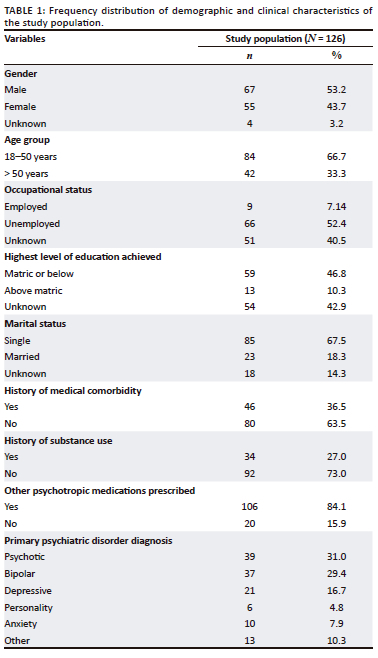
The study population comprised 126 patients, 25 each from Discoverers, Crosby, Zola, and Hillbrow psychiatric clinics, and 26 from Eldorado Park Ext 8 psychiatric clinic. The demographic and clinical characteristics are presented in Table 1.
Most of the participants were males (53.2%; n = 67), in the age group 18-50 years (66.7%; n = 84), single (67.5%; n = 85), and unemployed (52.4%; n = 66). Long-term benzodiazepine use and adverse side effects are associated with advancing age and hence the age groups were collapsed into two groups, namely 18-50 years and > 50 years. Just below half of the participants had achieved a matric or lower level of education (46.8%; n = 59). The most common primary diagnosis was psychotic disorder (31.0%; n = 39), followed by bipolar disorder (29.4%; n = 37). Personality disorders accounted for only 4.8% (n = 6) of the patients. Psychotropic medication was co-prescribed in 84.1% (n = 106) of patients. Approximately 63.5% (n = 80) of the patients had no comorbid medical illness and 73.0% (n = 92) had no comorbid substance use.
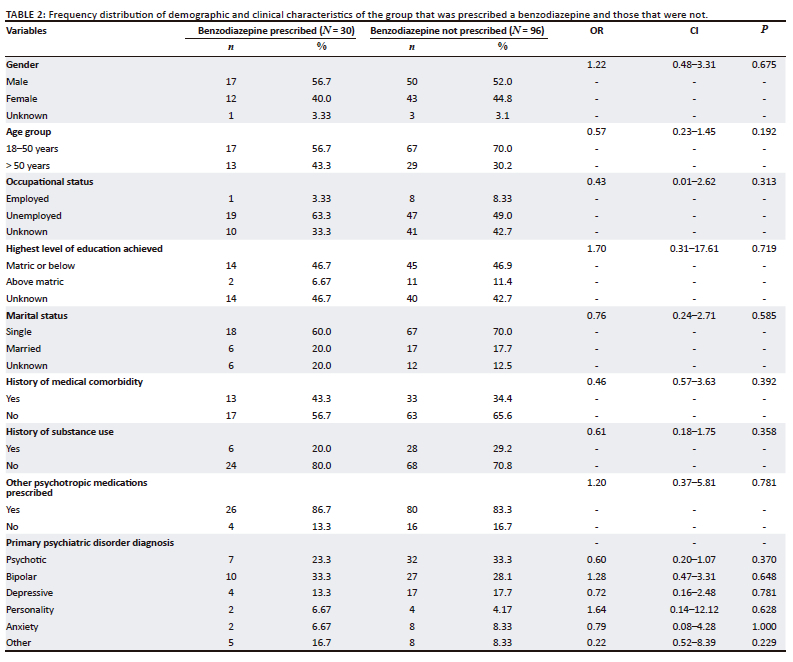
Approximately one out of every four patients in the study population was prescribed a benzodiazepine (23.8%; n = 30). The demographic and clinical characteristics are listed in Table 2.
The most commonly prescribed benzodiazepine was clonazepam (96.7%; n = 29), and only one patient (3.3%) was prescribed oxazepam. The mean dose of clonazepam prescribed was 0.8 mg (standard deviation [s.d.= ± 0.61) and the actual doses were 0.25 mg (18.5%; n = 5); 0.5 mg (44.4%; n = 12); 1 mg (33.3%; n = 9); 2 mg (7.4%; n = 2), and 3 mg (3.7%; n = 1). The dose of oxazepam prescribed was 15 mg. Only three patients (10.0%) had a clear indication recorded for the initiation of a benzodiazepine prescription (two for sedation and one for insomnia). There were no statistically significant differences between this group and the group that was not prescribed benzodiazepines with regard to all demographic and clinical variables (p > 0.05) and hence no multivariable analysis could be undertaken.
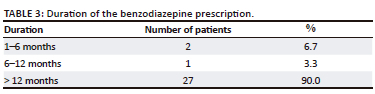
Twenty-seven (90%) of the 30 patients who were prescribed benzodiazepines met the WHO criterion of over 180 days for long-term benzodiazepine prescriptions (Table 3).
Because of the small number of patients not on long-term benzodiazepine use, no meaningful comparisons could be made between the group of patients who were prescribed long-term benzodiazepines and those who were not with respect to the demographic and clinical variables.
Discussion
Approximately one out of every four patients (23.8%) in the Johannesburg Health District community psychiatric clinics were prescribed a benzodiazepine. While similar high prescribing rates of 18.7% - 24.0% have been reported,10,32,38 lower rates of 3.8% - 12.6% have also been reported.13,14,15 The variation in reported prescribing rates could be because of differences in the methodology employed, such as study design, settings, and inclusion and exclusion criteria. The high rates in the studies of Ghosh-Nodia and Ahuja3811113239401541Medicines and Related Substances Control Act No. 101 of 1965, which serves as a control measure to prevent inappropriate prescribing and limit misuse of these drugs.4221
Benzodiazepines are divided into four groups based on their elimination half-life. They include ultra-short acting (midazolam, triazolam), short-acting (oxazepam, temazepam), intermediate-acting (alprazolam, bromazepam, lorazepam), and long-acting (clonazepam, diazepam, nitrazepam).6184321,44 During this study, the benzodiazepines available on the essential medicine list were diazepam, lorazepam, oxazepam, and clonazepam. However, as there are no limitations in the South African private health sector; there is a preference for intermediate-acting benzodiazepines such as alprazolam and bromazepam.14,29 Other countries have also shown variation in the choice of benzodiazepine prescribed between the public and private sectors. Lebanon, Ramadaan, Sheik-Taha, and Deep1010,20 and within the manufacturers' recommendations.4546
This study found that in almost all the patients (90%), the benzodiazepines were prescribed for a long-term period (exceeding 180 days). This rate was considerably higher than the range of 10% - 19% reported in most other studies.18,32,33 However, it must be noticed that the Johnson et al.321812,47 the Lagnaoui et al.1247
It is therefore relevant to determine what factors may be associated with this long-term benzodiazepine prescribing habit. Several studies have reported that long-term prescribing of benzodiazepines has been more common for female rather than male patients.47,48,49,50 Females tend to have better help-seeking behaviours than males, which may account for them consulting doctors more often and being on medication for more extended periods.5134245252
This study also found that approximately half of the patients on long-term benzodiazepine use (43.3%) were older than 50 years of age, like findings in the French study of the long-term prevalence of benzodiazepine use.5354,55 Chronic medical conditions in the older population have been associated with increasing psychosocial stressors that might precipitate or exacerbate anxiety and depression.16,56 However, more than half of the patients in the current sample (56.7%) had no medical comorbidities to support this argument. Gerlarch et al.5612,22,28
Being single with perceived poor social support has also been associated with long-term benzodiazepine use because of an increased likelihood of anxiety and related disorders.9,30,48,52 Similarly, a lower socioeconomic status because of a lower level of education and unemployment may add to the anxiety of low social support and perpetuate long-term benzodiazepine use.9,21,30 The settings of these studies were similar to our research. Many participants who were prescribed benzodiazepine for long-term use in this study were also either unmarried, divorced, or widowed, had a level of matric or below education, or were unemployed. This may be because they were generally from a relatively poor socioeconomic community with a lower level of education, unemployment, and lower income or disability grants.53
The origins of substance use disorders are complex and multifactorial, and there is evidence of a correlation with poor mental health, poverty, low levels of education, unemployment, a lack of social amenities, and social exclusion.57589,20,22 A South African study5953
Despite it not being recommended by approved guidelines, common mental disorders such as depression, anxiety, and sleep disorders are often associated with long-term benzodiazepine use.9,26 Surprisingly, this study found that most of the patients who were prescribed long-term benzodiazepines had bipolar and psychotic disorders. Similar findings were reported by Johnson et al.3252
Only three patients on long-term benzodiazepines had documented reasons for a benzodiazepine being prescribed. It is possible that there were clinical grounds for prescribing a benzodiazepine; however, because of poor record-keeping, the prescribers did not document it. Agarwal and Landon1639,60
Limitations
There were some limitations to this study. The study population comprised patients from only 5 out of the 27 community psychiatry clinics in the Johannesburg health district, and therefore may not be truly representative. The findings cannot be generalisable possibly because of small sample size and as there is a likely variation in prescribing patterns between clinics and other districts. The relatively small sample size may have limited the ability to detect statistically meaningful differences in the various categories' analyses. The exceedingly small group of short-term benzodiazepine prescriptions has defaulted this study to merely a description of long-term benzodiazepine prescriptions without any comparisons possible. As in any retrospective study design, some data were missing because of possible poor record keeping. Other reported factors associated with long-term benzodiazepine prescribing were not considered in this study and should be included in the design of future studies.
Notwithstanding the limitations, this study does provide useful insights into the prescribing patterns of benzodiazepines. Its strength lies in the fact that to the best of our knowledge, it is the first study to investigate long-term benzodiazepine use, and the associated sociodemographic and clinical factors in community psychiatric clinics. It also highlights the importance of appropriate and adequate documentation and record-keeping.
Recommendations
It is recommended that further studies be conducted with larger sample sizes and across the various districts in Gauteng and the rest of South Africa. The studies should also include some of the reported factors associated with long-term benzodiazepine use, but not included in this study.
According to accepted guidelines, clinicians at community clinics should attend regular training on responsible prescribing and reviewing of prescriptions for these drugs. They should be encouraged to psycho-educate patients concerning the advantages and disadvantages of benzodiazepines before initiation and during the process of de-prescribing. District clinical managers and pharmacists should adequately enforce appropriate use of established monitoring systems for continuous reviewing of the prescription of benzodiazepines concerning dosage and duration. Academics and psychiatric societies need to engage with the policymakers in the health department to ensure that there are clear regulatory framework and a regulatory body overseeing benzodiazepine prescription and distribution and that there are monitoring systems to ensure the implementation thereof.
Conclusion
The high rates of prescribing benzodiazepine and the long duration of prescribing found in this study are of concern. In addition, this study found that there were poor records of the indications for prescribing benzodiazepine. It would imply that the recommended accepted prescribing guidelines are not being adhered to. There is a high risk of developing dependence and the emergence of serious adverse effects especially in the elderly. Apart from impacting the patient's quality of life, there is a risk of litigation against the Department of Health with financial implications. It demands that the pharmaceutical industry and mental health trainers ensure that regular training on guidelines is carried out and that proper clinical monitoring systems be established.
Competing interests
The authors declare that they have no financial or personal relationship(s) that may have inappropriately influenced them in writing this article.
Authors' contributions
M.A.T. undertook this study for MMED degree. M.Y.H.M. supervised this study. Both M.A.T. and M.Y.H.M. contributed to the design and implementation of the research. M.A.T., M.Y.H.M., and F.Y.J. authors contributed to the analysis of the results and the article writing.
Funding information
This research received no specific grant from any funding agency in the public, commercial, or not for profit sector.
Data availability
The data that support the findings of this study are available from the corresponding author, M.A.T., upon reasonable request.
Disclaimer
The views and opinions expressed in this article are those of the authors and do not reflect the official policy or position of any affiliated institutions of the authors and the publisher.
Acknowledgements
The authors would like to acknowledge, with thanks, assistance of the Johannesburg Metro district psychiatry clinic staff members at the study sites in accessing data. This article is partially based on the author's dissertation for the degree of Master of Medicine at the University of the Witwatersrand, South Africa,with supervisor M.Y.H.M.
References
- 1. Taylor D, Paton C, Kapur S. The Maudsley prescribing guidelines in psychiatry. 13th ed. London: Wiley Blackwell; 2015.
-
2. Ackermann E. Royal Australian College of General Practitioners. Prescribing drugs of dependence in general practice, part B: Benzodiazepines [homepage on the Internet]. The Royal Australian College of General Practitioners. 2015 [cited 2018 May 15]. Available from: http://www.racap.org.au
» http://www.racap.org.au -
3. Group Health. Benzodiazepines and Z-drug safety guidelines [homepage on the Internet]. 2014 [cited 2018 May 15]. Available from: http://www.ghc.org/all-sites/guidelines/benzo-zdrugs
» http://www.ghc.org/all-sites/guidelines/benzo-zdrugs -
4. Cloos JM. Benzodiazepines and addiction: Myths and realities (part 1) [homepage on the Internet]. Psychiatric Times; 2010 [cited 2018 May 15];27:26-29. Available from: http://www.ama.iu/docs/psytimes-part1
» http://www.ama.iu/docs/psytimes-part1 -
5. The College of Psychiatry of Ireland. A consensus statement on the use of benzodiazepines in specialist mental health services [homepage on the Internet]. EAP03/2012 Position Paper. 2012 [cited 2018 May 15]. Available from: http://www.benzo.org.uk/amisc/eire12.pdf
» http://www.benzo.org.uk/amisc/eire12.pdf - 6. Davis S. Focus on benzodiazepines. S Afr Pharm J. 2017;84(4):57-60.
-
7. Schmitz A. Benzodiazepine use, misuse, and abuse: A review. Ment Health Clin. 2016;6(3):120-126. https://doi.org/10.9740/mhc.2016.05.120
» https://doi.org/10.9740/mhc.2016.05.120 -
8. Emsley R, Flisher AJ, Grobler G, Seedat S, Szabo PS. The South African Society of Psychiatrists (SASOP) treatment guidelines for psychiatric disorders. S Afr J Psychiatr. 2013;19(3):1-69. https://doi.org/10.4102/sajpsychiatry.v19i3.942
» https://doi.org/10.4102/sajpsychiatry.v19i3.942 -
9. Peritogiannis V, Manthapoulos T, Mavres V. Long-term benzodiazepine treatment in patients with psychotic disorders attending mental health services in rural Greece. J Neurosci Rural Pract. 2016;7(1):26-30. https://doi.org/10.4103/0976-3147.19447
» https://doi.org/10.4103/0976-3147.19447 -
10. Ramadaan W, Sheik-Taha M, Deep ME. Prescription patterns of benzodiazepines in the Lebanese adult population: A cross-sectional study. Neuropsychiatr Dis Treat. 2016;12:2299-2305. https://doi.org/10.2147/NDT.S113078
» https://doi.org/10.2147/NDT.S113078 -
11. Haw C, Stubbs J. Benzodiazepines - A necessary evil? A survey of prescribing at a specialist U.K. psychiatric hospital. J Psychopharmacol. 2007;21(6):645-649. https://doi.org/10.71177/0269881106072386
» https://doi.org/10.71177/0269881106072386 -
12. Lagnaoui R, Depont F, Fourrier A, Abouelfath A. Patterns, and correlates of benzodiazepine use in the French general population. Eu J Clin Pharmacol. 2004;60:523-529. https://doi.org/10.1007/s00228-004-0808-2
» https://doi.org/10.1007/s00228-004-0808-2 -
13. Alonso J, Angermeyer MC, Bernert S, Bruffaerts R. Psychotropic drug utilization in Europe: Results from the European study of the epidemiology of mental disorders (ESEMeD) project. Acta Psychiatr Scand Suppl. 2004;109:55-64. https://doi.org/10.1111/j.1600-0047.2004.00325.x
» https://doi.org/10.1111/j.1600-0047.2004.00325.x - 14. Visser CD. Prescribing patterns of benzodiazepines: A comparative study between two provinces in South Africa [Unpublished dissertation]. Bloemfontein: Northwest University; 2010.
-
15. Maust DT, Blow FD, Lin LA. Benzodiazepine use and misuse among adults in the United States. Psychiatr Serv. 2019;70(2):97-106. https://doi.org/10.1176/appi.ps.201800321
» https://doi.org/10.1176/appi.ps.201800321 -
16. Agarwal SD, Landon BE. Patterns in outpatient benzodiazepine prescribing in the United States. JAMA Netw Open. 2019;2(1):e187399. https://doi.org/10.1001/jamanetworkopen.2018.7399
» https://doi.org/10.1001/jamanetworkopen.2018.7399 -
17. JPS Health Network. Prescribing and tapering benzodiazepines [homepage on the Internet]. 2014 [cited 2018 Jun 01]. Available from: http://www.jpshealthnet.org/sites/default/files/prescribing_and_tapering_benzodiazepines.pdf
» http://www.jpshealthnet.org/sites/default/files/prescribing_and_tapering_benzodiazepines.pdf -
18. Bernard T, Luc M, Carrier JD, Fournier L. Patterns of benzodiazepine use in primary care adults with anxiety disorders. Heliyon. 2018;4(7):e00688. https://doi.org/10.1016/j.heliyon.2018.600688
» https://doi.org/10.1016/j.heliyon.2018.600688 -
19. Jacob L, Rapp MA, Kostev A. Long-term use of benzodiazepines in older patients in Germany: A retrospective analysis. Ther Adv Psychopharmacol. 2017;7(6-7):191-200. https://doi.org/10.1177/2045125317696454
» https://doi.org/10.1177/2045125317696454 -
20. Paton C, Banham S, Whitemore J. Benzodiazepines in schizophrenia. Is there a trend towards long-term prescribing? Psychiatr Bull. 2000;24:113-115. https://doi.org/10.1192/pb.24.3.113
» https://doi.org/10.1192/pb.24.3.113 -
21. Singh I, Oosthuizen F. A retrospective review on benzodiazepines use: A case study from chronic dispensary unit. S Afr Med J. 2019;109(2):127-132. https://doi.org/10.7196/samj.2019.v109i2.13347
» https://doi.org/10.7196/samj.2019.v109i2.13347 -
22. Castepiatra G, Balestrieri M, Arnoldo L, Brusaferro S. Association between benzodiazepine prescriptions and potential risk factors of adverse drug reactions among elderly and very elderly: Findings from Friuli Venezia Giulia region, Italy. Ital J Public Health. 2019;16(3):13157. https://doi.org/10.2424/13157
» https://doi.org/10.2424/13157 -
23. Donato F, Balestrien M, Sumani F, Marini M. A cross-sectional survey on benzodiazepine use among older people in an Italian region. Ital J Public Health. 2005;2(2):42-48. https://doi.org/10.2427/5983
» https://doi.org/10.2427/5983 -
24. Sjostedt C, Ohlsson H, Li X, Sundquist K. Sociodemographic factors, and long-term use of benzodiazepines in patients with depression, insomnia, and anxiety. Psychiatr Res. 2017;249:221-225. https://doi.org/10.1016/jpsychre.2017.01.046
» https://doi.org/10.1016/jpsychre.2017.01.046 -
25. Alvim MM, Teles da Cruz D, Bastos RR, Goncalves Leite IC. Prevalence of and factors associated with benzodiazepine use in community resident elderly persons. Rev Bras Geriatr Gerontol. 2017;20(4):463-473. https://doi.org/10.1590/1981-2256201720.170042
» https://doi.org/10.1590/1981-2256201720.170042 -
26. Olfonso M, Rosman S, King M. Benzodiazepine use in the United States. JAMA Psychiatr. 2015;72(2):136142. https://doi.org/1001/jamapsychiatry.2014.1763
» https://doi.org/1001/jamapsychiatry.2014.1763 -
27. Canadian Center on Substance Use and Addiction. Prescription of sedatives [homepage on the Internet]. 2017 [cited n.d.]. Available from: http://www.ccsa.ca
» http://www.ccsa.ca -
28. Hwang SH, Han S, Choi H, Pak C. Trends in the prescription of benzodiazepine for the elderly in Korea. BMC Psychiatry. 2017;17(303):1-9. https://doi.org/10.1186/s12888-017-1467-z
» https://doi.org/10.1186/s12888-017-1467-z -
29. Karuiz T, Truter I. Benzodiazepine prescribing: A qualitative cross-sectional comparative pilot study between Australia and South Africa [homepage on the Internet]. 2015 [cited 2018 Jun 01]. Available from: http://researchonline.jcu.edu.au
» http://researchonline.jcu.edu.au -
30. Manthey L, Van Veen T, Giltay EJ, Stoop JE. Correlates of (inappropriate) benzodiazepine use: The Netherlands study of depression and anxiety (NESDA). Br J Clin Pharmacol. 2011;71(2):263-272. https://doi.org/10.1111/j1365-2125.2010.03818.x
» https://doi.org/10.1111/j1365-2125.2010.03818.x -
31. Ahmer S, Salamat S, Khan RA, et al. Patterns of benzodiazepine use in psychiatric outpatient in Pakistan: A cross-sectional survey. Clin Pract Epidemiol Ment Health. 2009;5:5-9. https://doi.org/10.1186/1745-0179-5-9
» https://doi.org/10.1186/1745-0179-5-9 -
32. Johnson CF, Nassr OA, Harpur C, Kenicer D, Thom A, Akram G. Benzodiazepine and Z-hypnotics; prescribing from acute psychiatric inpatient discharge to long-term care in the community. Pharm Pract. 2018;16(3):1256. https://doi.org/10.18549/Pharmpract.2018.03.1256
» https://doi.org/10.18549/Pharmpract.2018.03.1256 -
33. Kurko TA, Saamstamoinen LK, Tahkapaa S, et al. Long-term use of benzodiazepines: Definition, prevalence, and usage patterns - A systematic review of register-based studies. Eu Psychiatr. 2015;30(8):1037-1047. https://doi.org/10.1016/j.eurpsy.2015.09.003
» https://doi.org/10.1016/j.eurpsy.2015.09.003 - 34. Zandstra SM, Furer JW, Van De Lisdonk EH, et al. Differences in the health status between long term and short - Term benzodiazepine users. Br J Gen Pract. 2002;52(483):805-808.
-
35. Johnson CF, Frei C, Downes N, McTaggart SA. Benzodiazepines and z-hypnotics prescribing for older people in primary health care: A cross-sectional population-based study. J Gen Pract. 2016;66(647):e410-e415. https://doi.org/10.3399/bjgp16X685213
» https://doi.org/10.3399/bjgp16X685213 - 36. Stern TA, Frochochione G, Casseim NH, Jellnek MS. Drug addicted patients: Handbook of general hospital psychiatry. 6th ed. Philadelphia, PA: WB Saunders; 2010.
-
37. Ashton H. Guidelines for the rational use of benzodiazepines. When and what to use. Drugs. 1994;48(1):25-40. https://doi.org/2165/00003495-199448010-00004
» https://doi.org/2165/00003495-199448010-00004 -
38. Ghosh-Nodiyal A, Ahuja H. Audit of patterns of benzodiazepine prescribing in a community mental health team in England. Eu Psychiatr. 2009;24(S1):1. https://doi.org/10.1016/S0924-9338(09)70776-x
» https://doi.org/10.1016/S0924-9338(09)70776-x -
39. Dieye AM, Sylla M, Ndiaye A, et al. Benzodiazepine prescription in Dakar: A study about prescribing habits and knowledge in general practitioners, neurologists, and psychiatrists. Fundam Clin Pharmacol. 2006;20(3):235-238. https://doi.org/10.1111/j.1472-8206.2006.00400.x
» https://doi.org/10.1111/j.1472-8206.2006.00400.x -
40. Torres-Bondia F, De Battle J, Galvin L, et al. Trends in the consumption rates of benzodiazepine related drugs in the region of Lleda from 2002 to 2015. BMC Public Health. 2020;20(1):818. https://doi.org/10.1186/s12889-020-08984-z
» https://doi.org/10.1186/s12889-020-08984-z -
41. Gallagher HC. Addressing the issue of chronic inappropriate benzodiazepine use: How can pharmacists play a role? A review. Pharmacy. 2013;1(2):65-93. https://doi.org/10.3390/pharmacy1020065
» https://doi.org/10.3390/pharmacy1020065 - 42. South African Health Care Products Regulatory Authority. Government Gazette: Medicine and substance-related Act no 101 of 1965 as amended. Government printing works, Gauteng; 2017.
- 43. Summers RS, Schutte AD, Summers BE. Benzodiazepine use in a small community hospital: Appropriate prescribing or not? S Afr Med J. 1990;78(12):721-725.
-
44. Moosa MYH, Jeenah FY. Community psychiatry: An audit of the services in southern Gauteng. S Afr J Psychiatr. 2008;14(2):3643. https://doi.org/10.4102/sajpsychiatry.v14i2.1563
» https://doi.org/10.4102/sajpsychiatry.v14i2.1563 - 45. Hodkinson P, Evans K. Emergency medicine clinical guidance for the Western Cape. 4th ed. Cape Town: Divisions of Emergency Medicine, Stellenbosch University; 2017.
-
46. Willems AI, Gorgels WJ, Mulder J, Voshaar RC. Tolerance to benzodiazepines among long-term users in primary care. Fam Pract. 2013;30(4):404-410. https://doi.org/10.1093/fampra/cmt010
» https://doi.org/10.1093/fampra/cmt010 -
47. Valestein M, Taylor K, Austin K, et al. Benzodiazepine use among depressed patients treated in a mental health setting. Am J Psychiatr. 2004;16(4):654-656. https://doi.org/10.1176/appi.ajp.161.4.654
» https://doi.org/10.1176/appi.ajp.161.4.654 -
48. Mokhar A, Tillenburg N, Dirmaier J, et al. Potentially inappropriate use of benzodiazepines and z-drugs in the older population-analysis of associations between long-term use and patient-related factors. Peer J. 2018;6:e4614. https://doi.org/10.7717/peerj.4614
» https://doi.org/10.7717/peerj.4614 -
49. Myers B, Siegfried N, Parry CDH. Over the counter and prescription medicine misuse in Cape Town: Findings from specialist treatment centres. S Afr Med J. 2003;93(5):367-370. https://doi.org/10.7196/samj.2164
» https://doi.org/10.7196/samj.2164 - 50. Canadian Tobacco, Alcohol and Drugs Survey. Department of Health. Components of Statistics Canada Catalogue. 2017.
- 51. Jackson J. Gender differences in help-seeking [Online thesis and dissertation]. Richmond: Eastern Kentucky University; 2011.
-
52. Franken H, Parker J, Allen R, Wicomb RA. A profile of adult acute admissions to Lentegeur hospital. S Afr J Psychiatr. 2019;25:a1244. https://doi.org/10.4102/sajpsychiatry.v250.1244
» https://doi.org/10.4102/sajpsychiatry.v250.1244 -
53. Aragaines G, Lemogne C, Renuy A, et al. Prevalence of prescribed benzodiazepine long term use in the French general population according to sociodemographics and clinical factors: Findings from the CONSTANCE cohort. BMC Public Health. 2019;19:566. https://doi.org/10.1186/s12889-6933-8
» https://doi.org/10.1186/s12889-6933-8 -
54. Cahir C, Fahey T, Teeling M, Feely J, Bennet K. Potentially inappropriate prescribing, and cost outcomes for older people: A national population study. Br J Clin Pharmacol. 2010;69:543-552. https://doi.org/10.1111/j.1365-2125.2010.03628.x
» https://doi.org/10.1111/j.1365-2125.2010.03628.x -
55. Naloto DCC, Lopes FC, Filho SB, et al. Prescription of benzodiazepines for adults and older adults from a mental health clinic. Cien Saude Colet. 2016;21(4): 1267-1276. https://doi.org/10.1590/1413-81232015214.10292015
» https://doi.org/10.1590/1413-81232015214.10292015 -
56. Gerlarch LB, Maust DT, Leon H, Mavandadi S, Oslin DW. Factors associated with long term benzodiazepine use among older adults. JAMA Intern Med. 2018;178(11):1560-1562. https://doi.org/10.1001/jamainternmed.2018.2413
» https://doi.org/10.1001/jamainternmed.2018.2413 - 57. Burns J, Roos L. Textbook of psychiatry. 2nd ed. Cape Town: Oxford University Press Southern Africa (PTY) Limited; 2016.
- 58. Dawson G. Understanding benzodiazepines and their roles in substance use disorders. Psychiatr Times. 2017;34:6.
-
59. Anic A, Robertson LJ. Prevalence and clinical correlates of substance use amongst acute psychiatric inpatients in Gauteng, South Africa. S Afr J Psychiatr. 2020;26:a1526. https://doi.org/10.4102/sajpsychiatry.v26i0.1526
» https://doi.org/10.4102/sajpsychiatry.v26i0.1526 -
60. Medicines and Health care Products Regulatory Agency. Current problems; benzodiazepine dependence and withdrawal symptoms. U K Govern Bull Prescrib Doct [serial online]. 1998 [cited 2018 Jun 01];21:1-2. Available from: www.gov.uk/mhra
» www.gov.uk/mhra

Accepted: 18 Mar. 2024
Published: 03 May 2024