Burnout and job satisfaction of nursing staff in a South African acute mental health setting
Abstract
BACKGROUND: Psychiatric nurses constitute a fundamental part of the mental health care system in South Africa. However, high levels of burnout and job dissatisfaction among nursing staff have been associated with reduced empathy and quality of care, and poor service delivery. Stikland Psychiatric Hospital is a state psychiatric hospital situated in Belville and provides all levels of psychiatric care to a large part of the Cape metro region. To our knowledge, no previous studies have examined burnout and job satisfaction among nurses in this setting. AIM: We assessed the relationship between burnout and job satisfaction among the nursing staff. SETTING: The study was conducted at Stikland Psychiatric Hospital, Cape Town, South Africa. METHODS: This cross-sectional study used the Copenhagen Burnout Inventory and an established job satisfaction questionnaire to assess burnout and job satisfaction among 127 staff members associated with psychiatric nursing. RESULTS: In this population comprising mostly female (83.5%) nurses, scores for personal, work-related and client-related burnout were relatively high, but job satisfaction was also high. Higher levels of burnout were significantly associated (Pearson's linear correlation, r = -0.077, p < 0.01) with lower levels of job satisfaction. There were no significant associations between burnout or job satisfaction and gender, rank or years of experience. CONCLUSIONS: If mental health service delivery is to be optimised, supportive or preventative processes should be implemented to reduce the prevalence of burnout in psychiatric nurses. This study adds to the scarce local knowledge and provides information that can be used to inform the development of supportive strategies for psychiatric nursing staff in South Africa.
psychiatric nurses; burnout; job satisfaction; mental healthcare; South Africa
Introduction
There is a high prevalence of burnout and job dissatisfaction among nursing professionals globally,1,234
It has also been shown to increase the rate of absenteeism among nursing staff members.567
An Australian study showed that haemodialysis nurses experienced high levels of burnout despite favourable work environments and acceptable levels of job satisfaction.8
There are several factors that have been shown to contribute to burnout and job dissatisfaction. Professionals below the age of 25, who have less than 5 years of experience and low levels of annual income experience higher levels of burnout.910
In 2000, Weber and Jaekel-Reinhard addressed the controversies associated with the concept of burnout being recognised as a valid work-related disease rather than an opinion or excuse for poor work performance.11
The nursing profession is a fundamental component of the health care system in South Africa and represents more than 50% of the total professional human resources.121213
Although there are challenges in all specialities of nursing, there are particular difficulties that are specifically associated with mental health settings.9,14,15,1617,1819
The South African Stress and Health (SASH) study, a large-scale population-based study of common mental health disorders published in 2009, showed a lifetime prevalence for any mental health disorder of 30.3%, with the Western Cape having the highest 12-month and lifetime prevalence rates.2020,21
As nurses are at the forefront of mental health care in South Africa, it is paramount that they are adequately supported. Previous research has recommended that the initiation and implementation of programmes aimed to reduce stress and burnout for health care professionals, postulating that these programmes could increase the well-being and resilience of mental health professionals and, in turn, improve the quality of mental health care.9
Methods
Study design
This cross-sectional study measured burnout and job satisfaction of permanent nursing staff working at Stikland Psychiatric Hospital, South Africa. The study was conducted between November and December 2017.
Study setting
Stikland Hospital is a state psychiatric hospital situated in Bellville, South Africa. The facility provides all levels of psychiatric care to a part of the Tygerberg East metro region as well as the Westcoast or Winelands rural region. This includes providing general care to adults as well as specialised geriatric and addiction services.
Study population
All nurses (N = 221) employed by Stikland Psychiatric Hospital on a permanent basis were eligible to participate in the study. These included professional nurses (N = 120), staff nurses (enrolled nurses, N = 24) and nursing assistants (N = 76). Nursing staff employed on a contract basis and students were excluded. The full details of the study were explained to the ward operational managers who informed nurses of the study. They were then approached and invited to participate by the primary investigator. A total of 132 nurses participated (60% response rate), but data of five participants were excluded because of incomplete demographic questionnaires.
Therefore, the data obtained from 127 nurses were included in the study.
Data collection
Envelopes containing the informed consent document as well as the demographic questionnaire, Copenhagen Burnout Inventory (CBI) and Job Satisfaction Survey (JSS) were distributed to all the wards on the premises of Stikland Psychiatric Hospital. Nurses filled out these self-administered questionnaires and deposited their responses into sealed collection boxes that were stored by the operational managers in a secure area. The collected data were then entered into an Excel spreadsheet by the primary investigator.
Measures
The demographic information questionnaire collected data related to age, gender, rank, ward category, years of experience, duration of employment at Stikland Psychiatric Hospital and full-time or part-time employment.
The CBI is a 19-item questionnaire that measures three burnout sub-dimensions (personal, work-related and client-related burnout). The personal burnout sub-dimension of the CBI measures 'the degree of physical and psychological fatigue and exhaustion experienced by the person'. The work-related sub-dimension measures 'the degree of physical and psychological fatigue and exhaustion that is perceived by the person as related to his or her work'. Client-related burnout is defined as 'the degree of physical and psychological fatigue and exhaustion that is perceived by the person as related to his or her work with clients'.2216,24,25
Oshagbemi23
The JSS has not been validated internationally or locally. It consists of four questions that are rated on a five-point Likert scale.23
Data analysis
Continuous variables were summarised as mean and standard deviation (SD), while categorical variables were summarised as counts and percentages. Valid percentages were used to take into account the fact that some participants did not fully complete the CBI or JSS. Because of the small sample size, scores for the three burnout sub-dimensions were summed to provide a single (total) burnout score. Linear regression (Pearson's product-moment coefficient) was used to show the relationship between total burnout scores and job satisfaction scores, as well as between burnout and years of experience. Independent t-tests were used to test the differences in CBI and job satisfaction scores between gender, while analysis of variance (ANOVA) was used to test the difference of CBI and JSS between ranks. Statistical significance was evaluated at the 5% significance level (p < 0.05), and all analyses were performed using SPSS (IBM, version 24).
Ethical considerations
The study was approved by the Health Research Ethics Committee (HREC) of Stellenbosch University as well as the Stikland Facility Management and Ethics Committee (reference number: 1116). Anonymity of participants was maintained throughout, and the consent document stated that implied consent would be indicated by completion of the questionnaires.
Findings
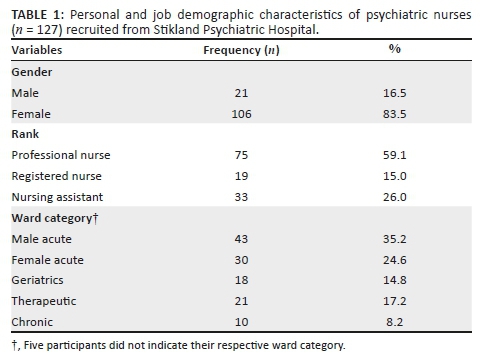
The demographic characteristics of the 127 psychiatric nurses who participated in this study are presented in Table 1. Most participants (83.5%) were female, and more than half (59.1%) were ranked as professional nurses. The mean ± SD age of participants was 43.46 ± 11.53 years (range: 23-63 years). Mean years of total nursing experience (including psychiatric nursing) as well as duration of experience at Stikland Psychiatric Hospital were found to be 17.1 years (median: 15.5 years; mode: 5 years; range: < 1 year to 45 years) and 11.5 years (median: 7 years; mode: 2 years; range: < 1 year to 35 years), respectively.
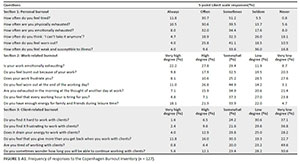
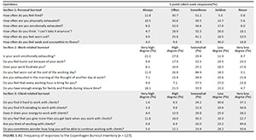
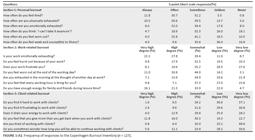
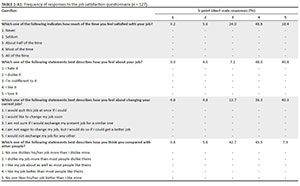
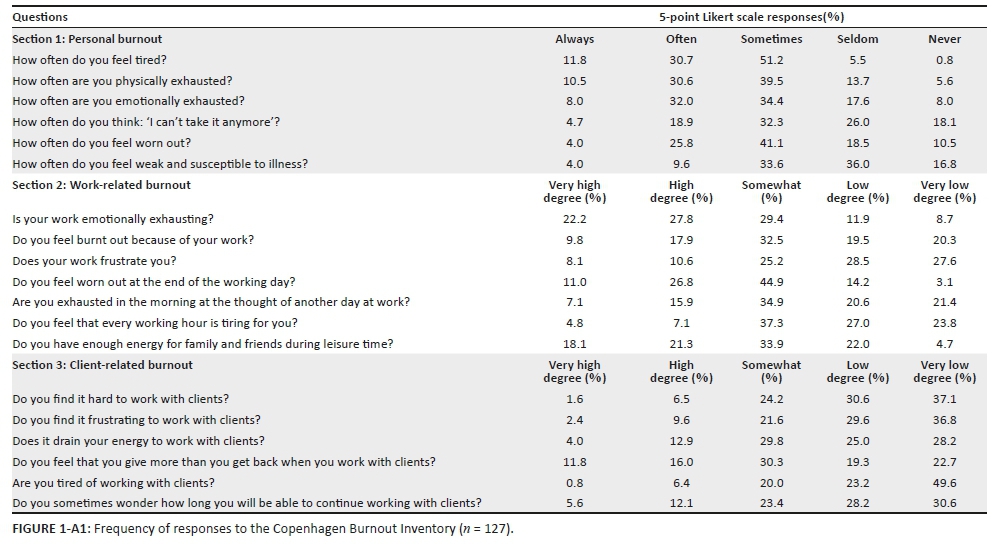
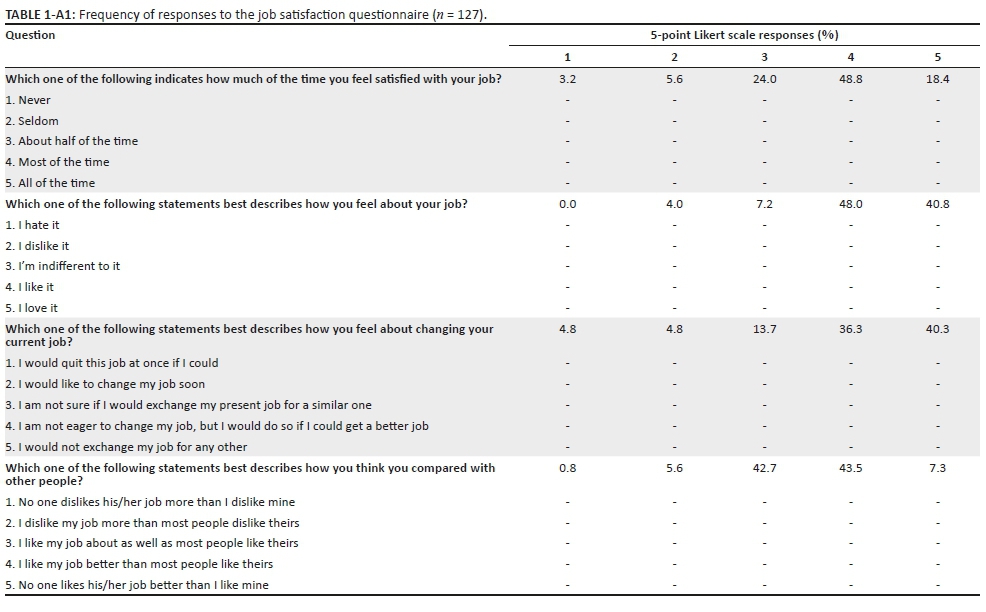
The frequencies of individual responses to CBI and JSS are provided in Appendix 1, Figure 1-A1 and Table 1-A1, respectively (supplementary information). The mean ± standard deviation scores for personal, work-related and client-related burnout were 49.2 ± 19.95, 45.0 ± 21.90 and 26.0 ± 19.49, respectively. The total score for job satisfaction was 15.5 ± 2.81 which indicates that psychiatric nurses at Stikland Psychiatric Hospital are satisfied overall. Linear regression showed that a negative correlation exists between burnout and job satisfaction (Pearson's product-moment correlation, r = -0.077, p < 0.01), indicating that higher levels of burnout are associated with lower levels of job satisfaction in this population. There were no significant associations between burnout or job satisfaction and gender, rank or years of experience.
Discussion
This study examined levels of burnout and job satisfaction among psychiatric nurses employed at Stikland Psychiatric Hospital. Overall, results showed that nurses displayed relatively high levels of burnout but were, nevertheless, satisfied with their jobs. Furthermore, higher levels of burnout were associated with lower levels of job satisfaction in this population, but there was no significant relationship between burnout or job satisfaction and selected demographic factors (gender, rank and years of experience).
In our population of psychiatric nurses, the mean job satisfaction score was 15.5 which indicates that these nurses are fairly satisfied with their jobs. A systematic review by Lu et al. reviewed numerous articles and found that there are varying levels of job satisfaction found in nurses in different settings.1010
We found high levels of job satisfaction. The score for client-related burnout was lower in our study (26.0) compared to that (30.9) found by Kristensen et al.222615
Our results show that higher levels of burnout are significantly associated with lower levels of job satisfaction.
The literature around burnout in South Africa remains scarce. Khamisa et al. also showed that burnout and job satisfaction were negatively correlated in a Johannesburg private nursing population.27
Engelbrecht et al. explored predictors and levels of burnout experienced by professional nurses working in Primary Health Care facilities in the Free State, South Africa and found that high levels of burnout were associated with the availability of resources, workload and conflict at work.28297,2612
The results of this study showed no significant correlations between burnout or job satisfaction and gender or rank. Hayes et al. also found no statistically significant correlations between rank and burnout or job satisfaction, as well as between gender and burnout or job satisfaction.81630
One of the limitations of this study was the relatively poor response rate (60%), possibly because we asked nurses to fill out the survey in their own time. Providing protected time to participate may have increased the response rate. This could be a source of bias because we cannot be sure about the levels of burnout and job satisfaction in the other nurses who chose not to participate. The study also had a relatively small sample size, and results are not generalisable to other psychiatric hospitals. In particular, the working environment at Stikland Psychiatric Hospital does not accurately reflect the diversity of mental health service conditions across South Africa.
Furthermore, this study was conducted in a public hospital in South Africa, and the results do not necessarily reflect the private hospital nursing population. The public sector hospitals are faced with additional challenges such as resource limitations and increased patient turnover which could influence the work environment.
Studies using larger samples of participants recruited from multiple sites are encouraged for future research.
Similar studies in other more resource constrained and rural settings in South Africa would increase our understanding regarding the extent of burnout in the local context.
Conclusion
Despite high levels of burnout in this population of nurses at Stikland Psychiatric Hospital, the staff were still 'satisfied' with their jobs. No significant correlations were found between burnout or job satisfaction and gender, rank or years of experience. It is our recommendation that preventative or supportive measures be implemented to reduce the prevalence of burnout in nursing staff.
Competing interests
The authors have declared that no competing interests exist.
Authors' contributions
All authors contributed equally to this work.
Funding information
This research received no specific grant from any funding agency in the public, commercial or not-for-profit sectors.
Data availability statement
Data are available upon reasonable request from the corresponding author.
Disclaimer
The views and opinions expressed in this article are those of the authors and do not necessarily reflect the official policy or position of any affiliated agency of the authors.
Acknowledgements
We thank Dr Karis Moxley (Stellenbosch University) for critical feedback, writing assistance and technical editing.
References
-
1.Schaufeli WB, Leiter MP, Maslach C. Burnout: 35 years of research and practice. Career Dev Int. 2009;14(3):204-220. https://doi.org/10.1108/13620430910966406
» https://doi.org/10.1108/13620430910966406 - 2.Bruce J, Sangweni B. The relationship between burnout and job satisfaction among registered nurses at an academic hospital in Johannesburg, South Africa. Afr J Nurs Midwifery. 2012;14(1):89-104.
-
3.El-Jardali F, Dimassi H, Dumit N, Jamal D, Mouro G. A national cross-sectional study on nurses' intent to leave and job satisfaction in Lebanon: Implications for policy and practice. BMC Nurs. 2009;8(1):1-13. https://doi.org/10.1186/1472-6955-8-3
» https://doi.org/10.1186/1472-6955-8-3 -
4.Schaufeli WB, Greenglass ER. Introduction to special issue on burnout and health. Psychol Health. 2001;16(5):501-510. https://doi.org/10.1080/08870440108405523
» https://doi.org/10.1080/08870440108405523 -
5.Maslach C, Jackson SE. The measurement of experienced burnout. J Organ Behav. 1981;2(2):99-113. https://doi.org/10.1002/job.4030020205
» https://doi.org/10.1002/job.4030020205 - 6.Locke EA. The nature and causes of job satisfaction. In Dunnette MD, editor. Handbook of industrial and organisational psychology. New York: Rand McNally. 1976; p. 1297-1349.
-
7.Rosales RA, Labrague LJ, Rosales GL. Nurses' job satisfaction and burnout: Is there a connection? IJANS. 2013;2(1):1-10. https://doi.org/10.14419/ijans.v2i1.583
» https://doi.org/10.14419/ijans.v2i1.583 -
8.Hayes B, Douglas C, Bonner A. Work environment, job satisfaction, stress and burnout among haemodialysis nurses. Nurs Manag. 2015;23(5):588-598. https://doi.org/10.1111/jonm.12184
» https://doi.org/10.1111/jonm.12184 -
9.Yang S, Meredith P, Khan A. Stress and burnout among healthcare professionals working in a mental health setting in Singapore. Asian J Psychiatr. 2015;15:15-20. https://doi.org/10.1016/j.ajp.2015.04.005
» https://doi.org/10.1016/j.ajp.2015.04.005 -
10.Lu H, Barriball KL, Zhang X, While AE. Job satisfaction among hospital nurses revisited: A systematic review. IJANS. 2012;49(8):1017-1038. https://doi.org/10.1016/j.ijnurstu.2011.11.009
» https://doi.org/10.1016/j.ijnurstu.2011.11.009 -
11.Weber A, Jaekel-Reinhard A. Burnout syndrome: A disease of modern societies? Occup Med. 2000;50(7):512-517. https://doi.org/10.1093/occmed/50.7.512
» https://doi.org/10.1093/occmed/50.7.512 -
12.Klopper HC, Coetzee SK, Pretorius R, Bester P. Practice environment, job satisfaction and burnout of critical care nurses in South Africa. Nurs Manag. 2012;20(5):685-695. https://doi.org/10.1111/j.1365-2834.2011.01350.x
» https://doi.org/10.1111/j.1365-2834.2011.01350.x -
13.Alarcon GM. A meta-analysis of burnout with job demands, resources, and attitudes. J Vocat Behav. 2011;79(2):549-562. https://doi.org/10.1016/j.jvb.2011.03.007
» https://doi.org/10.1016/j.jvb.2011.03.007 -
14.Sobekwa ZC, Arunachallam S. Experiences of nurses caring for mental health care users in an acute admission unit at a psychiatric hospital in the Western Cape Province. Curationis. 2015;38(2):1-9. https://doi.org/10.4102/curationis.v38i2.1509
» https://doi.org/10.4102/curationis.v38i2.1509 -
15.Jenkins R, Elliott P. Stressors, burnout and social support: Nurses in acute mental health settings. J Adv Nurs. 2004;48(6):622-631. https://doi.org/10.1111/j.1365-2648.2004.03240.x
» https://doi.org/10.1111/j.1365-2648.2004.03240.x -
16.Chakraborty R, Chatterjee A, Chaudhury S. Internal predictors of burnout in psychiatric nurses: An Indian study. Ind Psychiatry J. 2012;21(2):119-124. https://doi.org/10.4103/0972-6748.119604
» https://doi.org/10.4103/0972-6748.119604 - 17.Cronan-Stubbs D, Brophy E. Burnout: Can social support save the psych nurse? J Psychosoc Nurs Ment Health Serv. 1985;23(7), 8-13.
-
18.Sullivan PJ. Occupational stress in psychiatric nursing. J Adv Nurs. 1993;18(4):591-601. https://doi.org/10.1046/j.1365-2648.1993.18040591.x
» https://doi.org/10.1046/j.1365-2648.1993.18040591.x -
19.Karanikola MN, Papathanassoglou EE. Exploration of the burnout syndrome occurrence among mental health nurses in Cyprus. Arch Psychiatr Nurs. 2013;27(6):319-326. https://doi.org/10.1016/j.apnu.2013.08.004
» https://doi.org/10.1016/j.apnu.2013.08.004 - 20.Herman AA, Stein DJ, Seedat S, Heeringa SG, Moomal H, Williams DR. The South African Stress and Health (SASH) study: 12-month and lifetime prevalence of common mental disorders. SAMJ. 2009;99(5):339-344.
-
21.Lund C, Kleintjes S, Kakuma R, Flisher AJ, MHaPP Research Programme Consortium. Public sector mental health systems in South Africa: Inter-provincial comparisons and policy implications. Soc Psychiatry Psychiatr Epidemiol. 2010;45(3):393-404. https://doi.org/10.1007/s00127-009-0078-5
» https://doi.org/10.1007/s00127-009-0078-5 -
22.Kristensen TS, Borritz M, Villadsen E, Christensen KB. The Copenhagen Burnout Inventory: A new tool for the assessment of burnout. Work Stress. 2005;19(3):192-207. https://doi.org/10.1080/02678370500297720
» https://doi.org/10.1080/02678370500297720 -
23.Oshagbemi T. Job satisfaction profiles of university teachers. J Manag Psychol. 1997;12(1):27-39. https://doi.org/10.1108/02683949710164235
» https://doi.org/10.1108/02683949710164235 - 24.Chou LP, Li CY, Hu SC. Job stress and burnout in hospital employees: Comparisons of different medical professions in a regional hospital in Taiwan. BMJ Open. 2014;4(2):e004185.
- 25.Smit AM. Psychometric properties of the Copenhagen Burnout Inventory in a South African context [Doctoral dissertation]. Pretoria: University of Pretoria; 2011.
-
26.Melchior ME, Bours GJ, Schmitz P, Wittich Y. Burnout in psychiatric nursing: A meta-analysis of related variables. J Psychiatr Ment Health Nurs. 1997;4(3):193-201. https://doi.org/10.1046/j.1365-2850.1997.00057.x
» https://doi.org/10.1046/j.1365-2850.1997.00057.x -
27.Khamisa N, Oldenburg B, Peltzer K, Ilic D. Work related stress, burnout, job satisfaction and general health of nurses. Int J Environ Res Public Health. 2015;12(1):652-666. https://doi.org/10.3390/ijerph120100652
» https://doi.org/10.3390/ijerph120100652 -
28.Engelbrecht MC, Bester CL, Van Den Berg H, Van Rensburg HC. A study of predictors and levels of burnout: The case of professional nurses in primary health care facilities in the Free State. S Afr J Econ. 2008;76:S15-S27. https://doi.org/10.1111/j.1813-6982.2008.00164.x
» https://doi.org/10.1111/j.1813-6982.2008.00164.x -
29.Van Der Doef M, Mbazzi FB, Verhoeven C. Job conditions, job satisfaction, somatic complaints and burnout among East African nurses. J Clin Nurs. 2012;21(11-12):1763-1775. https://doi.org/10.1111/j.1365-2702.2011.03995.x
» https://doi.org/10.1111/j.1365-2702.2011.03995.x -
30.Brewer EW, Shapard L. Employee burnout: A meta-analysis of the relationship between age or years of experience. Hum Resource Dev Rev. 2004;3(2):102-123. https://doi.org/10.1177/1534484304263335
» https://doi.org/10.1177/1534484304263335

Accepted: 18 Mar. 2020
Published: 27 July 2020