Depression, anxiety and stress symptoms in patients presenting with dyspepsia at a regional hospital in KwaZulu-Natal province
Abstract
BACKGROUND: Depression, anxiety and stress (DAS) have been shown to be co-morbid with dyspepsia. Local data on the factors associated with these co-morbidities could inform the role of psychiatric intervention in affected patients AIM: The aim of this study was to describe the frequency of undiagnosed DAS and their associated protective and risk correlates in a sample of patients undergoing endoscopies for dyspepsia SETTING: The study was conducted at a regional hospital's gastro-intestinal unit in KwaZulu-Natal province METHOD: A cross-sectional survey was conducted on 201 in- and outpatients with symptoms of dyspepsia awaiting endoscopy. Information on DAS symptomatology (using the DASS-21 screening questionnaire, as well as socio-demographic and clinical data) were collected ANALYSES: Following a descriptive analysis of the participants' socio-demographic and clinical details, linear regression models were fitted to identify potential risk and protective correlates linked to DAS symptomatology RESULTS: The mean age of participants (N = 201) was 48.89 years, of whom approximately two-thirds (n = 133; 66.17%) were women, 97% (n = 195) were African and 64.68% (n = 130) resided in rural areas. Anxiety was the most prevalent symptom category (n = 149; 74.13%) versus depression (n = 96; 47.76%) and stress (n = 68; 33.83%) in each category of symptom (mild to extremely) severity. In the severe and extremely severe range, anxiety existed without co-morbid depression or stress in 61.19% of anxious patients. Alcohol use was significantly associated with all three symptom categories (p < 0.01 CONCLUSIONS: Given high frequencies of depression and anxiety in patients undergoing endoscopies for dyspepsia, screening for common mental disorders is essential
dyspepsia; depression; anxiety; stress; gut-brain
Introduction
The high prevalence of psychological distress among hospital outpatients in South Africa necessitates an understanding of the comorbid depressive and anxiety disorders in those with chronic medical illness1
Dyspepsia is a common presenting symptom complex in primary care all over the world,23456789101112513
Risk factors associated with dyspepsia include Helicobacter pylori infection141516171819
On psychometric tests, FD patients scored higher on anxiety, depression and somatisation than those without abdominal symptoms, suggesting the pathological central processing of visceral stimuli.20p < 0.001).21
A bidirectional gut-brain network that links emotional, cognitive and gut functions is suggested by the high co-morbidity between gastrointestinal (GI) and psychiatric disorders and the frequent use of antidepressants to treat GI conditions.22232425
Dyspepsia carries considerable direct and indirect (absenteeism and presenteeism) costs.262728
Methods
A quantitative descriptive cross-sectional survey was conducted at a public sector, regional hospital's GI unit in KwaZulu-Natal (KZN) province, South Africa. Ethical approval was obtained from the Biomedical Research Ethics Committee of the University of KwaZulu-Natal (BE 374/16). Permission to conduct the research was obtained from the KwaZulu-Natal Department of Health and the hospital management.
Participants
The study population consisted of all in- and outpatients undergoing endoscopy who were referred from the hospital's medical and surgical departments. For the purposes of this study, dyspepsia was defined as at least 3 months of one or more of the following symptoms: bothersome postprandial fullness, early satiation, epigastric pain and burning. In those with functional dyspepsia, there was no evidence of structural disease (including upper endoscopy) that is likely to explain the symptoms. Patients less than 40 years old, who had no improvement after 6 weeks of antacid treatment and first-line eradication therapy, were booked for endoscopy.
If the patient was more than 40 years old, the endoscopy was booked on the day of consultation to exclude possible organic causes and malignancy. Tests for bacteria were not conducted in patients with dyspepsia prior to the endoscopy due to the high prevalence of H. pylori and the financial constraints in our public health sector. The inclusion criteria were the following: patients with dyspepsia who had an endoscopy, aged 18 years and older and able to give consent, while those with severe medical or physical ailments, or currently taking medication for depression and/or anxiety, were excluded.
Data collection and instruments
Data were collected between April and June 2017, with informed consent being obtained from all participants meeting the study inclusion criteria based on convenience sampling. All participants completed a customised demographic data sheet and the DASS-21 questionnaire to measure DAS symptomatology29
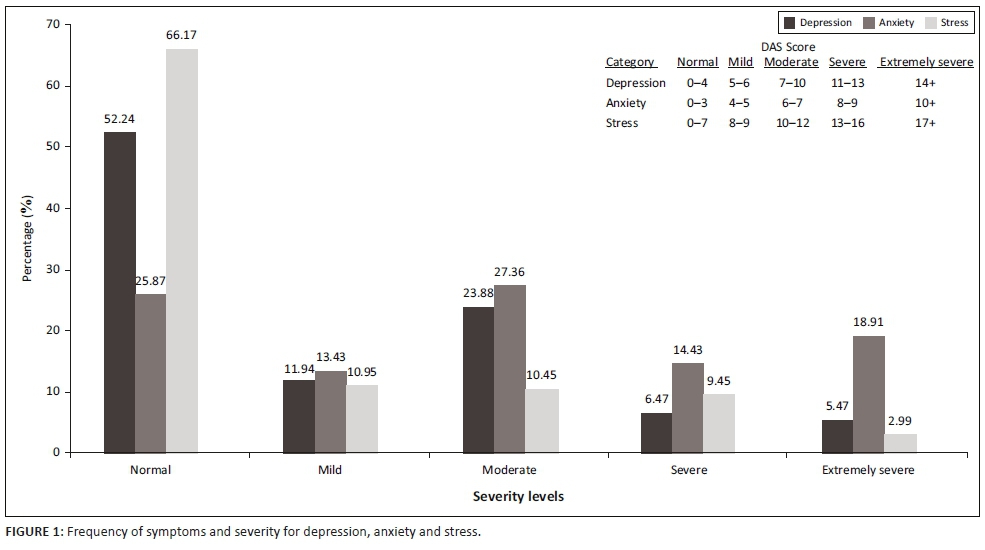
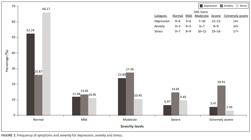
The cut-off scores based on five categories (normal, mild, moderate, severe and extremely severe) for DAS are noted in Figure 1. Although the emotional symptoms being quantified are dimensional, categorical severity labels are available.30,31 The DAS scores correlate with DSM or ICD diagnostic categories, and indicate the degree of difference between the A and the S experienced by normal subjects and clinical populations.2932,33
Statistical analyses
Following a descriptive analysis of the participants' socio-demographic and clinical details (i.e. to describe the frequency of DAS), linear regression models were fitted to identify potential risk and protective correlates linked to DAS symptomatology. A p-value of less than 0.05 was considered to be statistically significant, with the data being entered into SPSS version 24 and the analyses conducted using STATA 15.
Ethical considerations
Approval was obtained from University of KwaZulu-Natal Biomedical Research Ethics Committee BREC reference number: BE374/16.
Results
Socio-demographic and clinical profiles
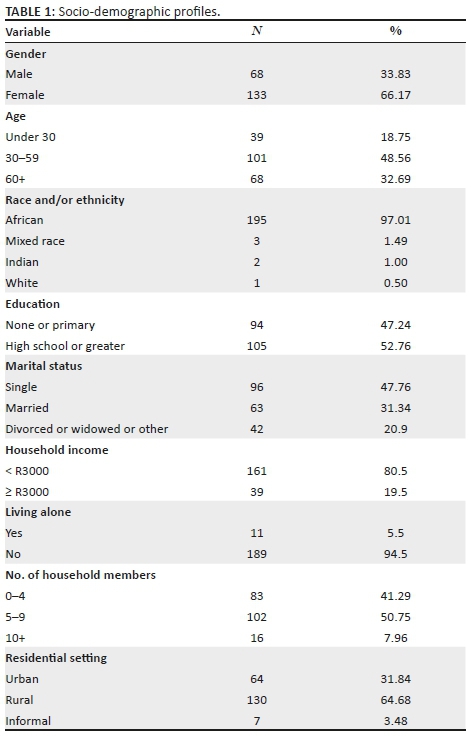
Of the 209 participants who were identified, eight were excluded due to incomplete data, which resulted in the analysis being conducted on 201 respondents. The socio-demographic and clinical profiles of participants are presented in Tables 1 and 2. Their mean age was 48.89 years, two-thirds were female and 97% were African. The majority (64.68%) resided in rural areas and 80.5% received a monthly income of < R3000. Almost a quarter reported alcohol (n = 42; 21%) or substance use that included cigarettes and cannabis (n = 46; 22.89%). More than half had a previous history of dyspepsia (N = 105), while endoscopic abnormalities were detected in 167 (89.78%) and hiatus hernia in 11. The commonest finding was gastritis (N = 86) alone or with other conditions (oesophagitis, duodenitis, gastric or duodenal ulcers). Peptic or duodenal ulcers were present in 19 and tumours in 15 participants, with the histopathological results not being available at the time of the study.

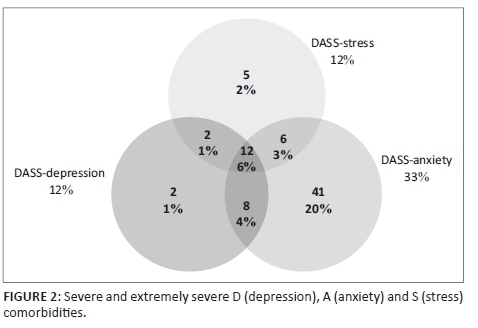
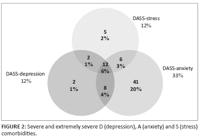
Regarding the frequency of DAS, ranging from mild to extremely severe, they were present in 96 (47.76%), 149 (74.13%) and 68 (33.83%) participants, respectively. Anxiety was the most prevalent of the three symptom categories overall as well as in each category of severity. The total numbers of participants scoring in the combined severe and extremely severe ranges were 24 (11.94%), 67 (33.33%) and 25 (12.44%) for DAS, respectively (Figure 1). Figure 2 represents the frequency of the comorbidities of DAS in the combined severe and extremely severe ranges, and while depression (2/24; 8.33%) and stress (5/25; 20%) rarely occurred in isolation, anxiety was present as a single symptom category in 41/67 (61.19%) of the severe and extremely severe anxious patients.
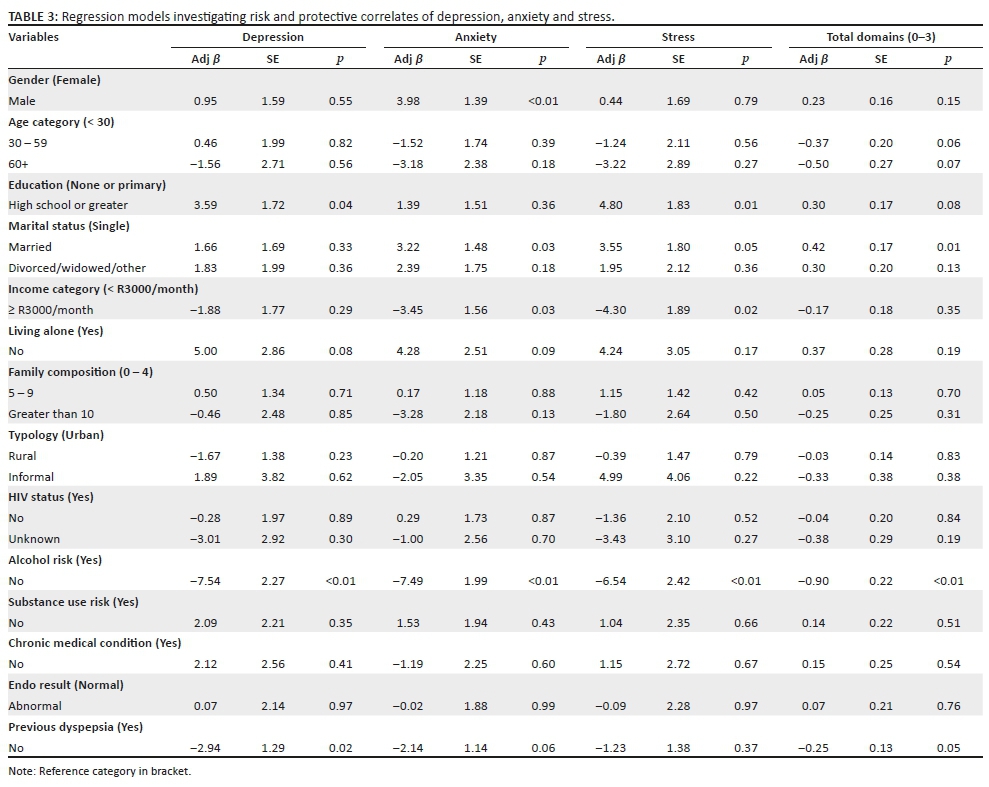
Using logistic regression analyses (Table 3), the following negative correlates of DAS were detected: males with dyspepsia were significantly more anxious than females.
Higher education level (> primary level) was significantly associated with depression and stress. Alcohol abuse was significantly associated with DAS. In terms of positive correlates, our logistic regression analyses detected the following: higher income and being married was significantly associated with anxiety and stress. No history of previous dyspepsia was also correlated with lower depressive symptoms. Age, living arrangement, family composition, typology, HIV status, substance use, chronic medical conditions and endoscopic abnormalities were not significantly associated with depression, anxiety or stress.
Discussion
Dyspepsia and CMD symptoms are frequent clinical presentations that are known to be co-morbid. The aim of this study was therefore to describe the frequency of DAS and their associated preventive and risk correlates in patients undergoing endoscopy for dyspepsia at a regional public sector hospital in KZN. The frequency of symptoms in excess of normal was reported by between one-third (stress) and three-quarters (anxiety) of the study sample.
The study reported on a clinical sample characterised by mainly older (mean 48.89 years) female participants from predominantly rural backgrounds and with low monthly income. Being a male was associated with an increased risk of anxiety (p = 0.02), and although female gender is a proposed risk correlate, a meta-analysis of risk factors found it to be only modestly associated with uninvestigated dyspepsia, but not in African studies.3435
Among the risk factors associated with CMDs of primary care patients in developing countries are older age, female, being widowed, separated or divorced, unemployment, low socioeconomic status, alcohol problems and chronic medical illness, including peptic ulcer.1,36,3738
Alcohol was the most commonly used substance in our sample and was significantly associated with DAS (p < 0.01 for each). A review of three studies concluded that a high intake of alcohol may lead to the development and aggravation of functional GI disorders, especially FD, this being a dose-dependent relationship.394041
Our findings of above normal, all-severity levels of DA and S in 47.76%, 74.13% and 33.83%, respectively, are lower than that reported by Haider et al.18381,3636
The high frequency of anxiety in dyspepsia patients has implications for whether sufferers choose to seek medical attention. In one study, consulters were distinguished by concern (worry) about the possible seriousness of the symptoms rather than the severity of their abdominal symptoms. Greater adverse events and over-representation by lower social class were characteristics of patients who consulted doctors for dyspepsia.424344
Functional dyspepsia patients were reported to have different regional brain activities on functional brain imaging, with abnormalities in central visceral pain processing implicated in FGID.45
Recognition of the need for a holistic approach to the aetiology and assessment of dyspepsia is to be found in the change of FGIDs to 'disorders of gut-brain interaction', with the Rome IV diagnostic criteria having a multicultural rather than a Western-culture focus. Guideline chapter on the 'Psychosocial Aspects of Functional Gastrointestinal Disorders' has been changed to the 'Biopsychosocial Aspects of Functional Gastrointestinal Disorders'.4620,47,48,49
Apart from its clinical implications, the additional impact of the co-morbidity of dyspepsia and psychiatric symptoms on work absenteeism and costs (direct and indirect) has relevance. Employees with FD have been shown to have greater health-related costs, absenteeism and lower productivity than those without.28
Limitations of the study
Our sample size was small and confined to patients awaiting endoscopy at a regional hospital.
No sample size was calculated for this study and our results are not generalisable to community samples.
Furthermore, not all race groups were represented, with the findings therefore not being reflective of the general South African population. The DASS-21 is a screening tool, and although the presence of DAS symptoms cannot be equated to clinical diagnoses, the findings support the need for further studies using diagnostic tools to establish the association of major or minor depression and GAD in patients with dyspepsia. Finally, although the patients met the Rome III diagnostic criteria for functional dyspepsia, they were not classified into subtypes, each of which may have different associations with psychiatric symptoms.
Conclusion
Proper screening for CMDs is essential in individuals with dyspepsia and vice versa. The role of psychiatric factors in the aetiology, course and management of dyspepsia requires further exploration, particularly in the local context and lower socio-economic settings, to provide holistic clinical care and optimise outcomes.
Competing interests
The authors have declared that no competing interests exist.
Authors' contributions
S.R. who is the principal investigator of the study developed the protocol. S.J.T. implemented the study and was responsible for data collection. A.T. analysed the data. The article was written collaboratively by S.J.T., A.T. and S.R., and all authors approved the final version of the article.
Funding
The second author was supported by SA MRC Flagship grant (MRC-RFAUFSP-01-2013/UKZN HIVEPI).
Data availability statement
Data are available to all interested researchers upon reasonable request.
Disclaimer
The content is solely the responsibility of the authors and does not necessarily represent the official views of the funding bodies.
Acknowledgements
References
-
1.Peltzer K, Penqpid S, Skaal L. Prevalence of psychological distress and associated factors in urban hospital outpatients in South Africa. S Afr J Psychiatr. 2012;18(1):6. https://doi.org/10.4102/sajpsychiatry.v18i1.304
» https://doi.org/10.4102/sajpsychiatry.v18i1.304 -
2.Bitwayiki R, Orikiiriza JT, Kateera F, et al. Dyspepsia is a common presenting symptom com-plex in primary care all over the world. S Afr Med J. 2015;105(12):1064-1069. https://doi.org/10.1093/fampra/cmm050
» https://doi.org/10.1093/fampra/cmm050 -
3.Kang JY. Systematic review: Geographical and ethnic differences in gastrooesophageal reflux disease. Aliment Pharmacol Ther. 2004;20:705-717. https://doi.org/0.1111/j.1365-2036.2004.02165.x
» https://doi.org/0.1111/j.1365-2036.2004.02165.x - 4.Whitehead WE, Validation Working Team Committee., Committee. RQ. Development and validation of the Rome III diagnostic questionnaire. In: Drossman DA, editor. Rome III: The functional gastrointestinal disorders. 3rd ed. Mc Clean, VA: Degnon Associates, 2006; p. 835-853.
-
5.Ford AC, Marwaha A, Lim A, et al. What is the prevalence of clinically significant endoscopic findings in subjects with dyspepsia? Systematic review and meta-analysis. Clin Gastroenterol Hepatol. 2010;8(10):830-837.e2. https://doi.org/10.1016/j.cgh.2010.05.031
» https://doi.org/10.1016/j.cgh.2010.05.031 -
6.Ford AC, Marwaha A, Sood R, et al. Global prevalence of, and risk factors for, univestigated dyspepsisa: A meta-analysis. Gut. 2015;64:1049-1057. https://doi.org/10.1136/gutjnl-2014-307843
» https://doi.org/10.1136/gutjnl-2014-307843 -
7.Futagami S, Yamawaki H, Agawa S, et al. New classification Rome IV functional dyspepsia and subtypes. Transl Gastroenterol Hepatol. 2018;3(70). https://doi.org/0.21037/tgh.2018.09.12
» https://doi.org/0.21037/tgh.2018.09.12 - 8.Farsakh NA, Saadeh A, Rawshdeh M, et al. Dyspepsia in the general population in Jordan. Indian J Gastroenterol. 2000;19(2):68-70.
-
9.Jones RH, Lydeard SE, Hobbs FD, et al. Dyspepsia in England and Scotland. Gut. 1990;31(4):401-405. https://doi.org/10.1136/gut.31.4.401
» https://doi.org/10.1136/gut.31.4.401 -
10.Crean GP, Card WI, Beattie AD. Geographical differences in the prevalence of dyspepsia. Scand J Gastroenterol. 1991;83(23):1734-1739. https://doi.org/10.3109/00365529109109532
» https://doi.org/10.3109/00365529109109532 -
11.Uday C, Ghoshal UC, Singh R, et al. Epidemiology of uninvestigated and functional dyspepsia in Asia: Facts and fiction. J Neurogastroenterol Motil. 2011;17(3):235-244. https://doi.org/0.5056/jnm.2011.17.3.235
» https://doi.org/0.5056/jnm.2011.17.3.235 - 12.Ihezue CH, Oluwole FS, Onuminya JE, et al. Dyspepsias among the highlanders of Nigeria: An epidemiological survey. Afr J Med Med Sci. 1996;25:23-29.
-
13.Talley NJ, Silverstein MD, Agreus L, et al. American Gastroenterological Association. Technical review: Evaluation of dyspepsia. Gastroenterology. 1998;114(3):582-595. https://doi.org/10.1053/j.gastro.2005.09.020
» https://doi.org/10.1053/j.gastro.2005.09.020 - 14.Tanih NF, Okeleye BI, Clarke AM, et al. Helicobacter pylori prevalence in dyspeptic patients in the Eastern Cape province - Race and disease status. S Afr Med J. 2010;100(11):734-737.
-
15.Mahadeva S, Goh KL. Epidemiology of functional dyspepsia: A global perspective. World J Gastroenterol. 2006;12(17):2661-2666. https://doi.org/10.3748/wjg.v12.i17.2661
» https://doi.org/10.3748/wjg.v12.i17.2661 -
16.Okumura T, Tanno S, Ohhira M, et al. Prevalence of functional dyspepsia in an outpatient clinic with primary care physicians in Japan. J Gastroenterol. 2010;45(2):187-194. https://doi.org/10.1007/s00535-009-0168-x
» https://doi.org/10.1007/s00535-009-0168-x -
17.Aro P, Talley NJ, Johansson SE, et al. Anxiety is linked to new-onset dyspepsia in the Swedish population: A 10-year follow-up study. Gastroenterology. 2015;148(5):928-937. https://doi.org/10.1053/j.gastro.2015.01.039
» https://doi.org/10.1053/j.gastro.2015.01.039 -
18.Haider SI, Rasool I, Ahmed S, et al. Frequency of depression, anxiety, and stress in patients referred for endoscopy with symptoms of dyspepsia. J Liaquat Uni Med Health Sci. 2013;12(3). https://doi.org/10.1111/apt.12036
» https://doi.org/10.1111/apt.12036 -
19.Mak AD, Wu JC, Chan Y, et al. Dyspepsia is strongly associated with major depression and generalised anxiety disorder - A community study. Aliment Pharmacol Ther. 2012;36(8):800-810. https://doi.org/10.1111/apt.12036
» https://doi.org/10.1111/apt.12036 -
20.Enck P, Azpiroz F, Boeckxstaens G, et al. Functional dyspepsia. Nat Rev Dis Primers. 2017;3:17081. https://doi.org/10.1038/nrdp.2017.81
» https://doi.org/10.1038/nrdp.2017.81 - 21.Sattar A, Salih M, Jafri W. Burden of common mental disorders in patients with functional dyspepsia. J Pak Med Assoc. 60(12):995-997.
-
22.Rogers G, Keating D, Young R, et al. From gut dysbiosis to altered brain function and mental illness: Mechanisms and pathways. Mol Psychiatry. 2016;21:738-748. https://doi.org/10.1038/mp.2016.50
» https://doi.org/10.1038/mp.2016.50 -
23.Talley NJ, Locke G, Saito Y, et al. Effect of amitryptiline and escitalopram on functional dyspepsia: A multi-center, randomized, controlled study. Gastroenterology. 2015;149:340-349. https://doi.org/10.1053/j.gastro.2015.04.020
» https://doi.org/10.1053/j.gastro.2015.04.020 -
24.Vitetta L, Vitetta G, Hall S. Commentary: The Brain-Intestinal Mucosa-Appendix-Microbiome-Brain Loop. Diseases. 2018;6(2):23. https://doi.org/10.3390/diseases6020023
» https://doi.org/10.3390/diseases6020023 -
25.Koloski NA, Jones M, Talley NJ. Evidence that independent gut-to-brain and brain-to-gut pathways operate in the irritable bowel syndrome and functional dyspepsia: A 1-year population-based prospective study. Aliment Pharmacol Ther. 2016;44(6):592-600. https://doi.org/10.1111/apt.13738
» https://doi.org/10.1111/apt.13738 -
26.Talley NJ, Ford AC. Functional dyspepsia. NEJM. 2015;373(19):1853-1863. https://doi.org/10.1056/NEJMra1501505
» https://doi.org/10.1056/NEJMra1501505 -
27.Lacy BE, Weiser KT, Kennedy AT, et al. Functional dyspepsia: The economic impact to patients. Aliment Pharmacol Ther. 2013;38(2):170-177. https://doi.org/10.1111/apt.12355
» https://doi.org/10.1111/apt.12355 -
28.Brook RA, Kleinman NL, Melkonian AK, et al. Functional dyspepsia impacts absenteeism and direct and indirect costs. Clin Gastroenterol Hepatol. 2010;8(6):498-503. https://doi.org/10.1016/j.cgh.2010.03.003
» https://doi.org/10.1016/j.cgh.2010.03.003 - 29.Lovibond SH, Lovibond PF. Manual for the depression anxiety & stress scales. 2nd ed. Sydney: Psychology Foundation; 1995.
-
30.Gomez F. A Guide to the Depression, Anxiety and Stress Scale (DASS 21). Central and Eastern Sydney primary health networks [online]. 2016 [cited 2016 Sep 20]. Available from: https://www.cesphnorg.au/images/mental_health/Frequently_Used/Outcome_Tools/Dass21pdf.
» https://www.cesphnorg.au/images/mental_health/Frequently_Used/Outcome_Tools/Dass21pdf -
31.Henry JD, Crawford JR. The short-form version of the Depression Anxiety Stress Scales (DASS-21): Construct validity and normative data in a large non-clinical sample. Br J Clin Psychol. 2005;44(2):227-239. https://doi.org/10.1348/014466505X29657
» https://doi.org/10.1348/014466505X29657 -
32.Tran TD, Tran T, Fisher J. Validation of the depression anxiety stress scales (DASS) 21 as a screening instrument for depression and anxiety in a rural community-based cohort of northern Vietnamese women. BMC Psychiatry. 2013;13(1):24. https://doi.org/10.1186/1471-244X-13-24
» https://doi.org/10.1186/1471-244X-13-24 - 33.Brown TA, Chorpita BF, Korotitsch W, et al. Psychometric properties of the Depression Anxiety Stress Scales (DASS) in clinical samples. Behav Res Ther. 1997;35(1):79-89.
-
34.Ford AC, Marwaha A, Sood R, et al. Global prevalence of, and risk factors for, uninvestigated dyspepsia: A meta-analysis. Gut. 2015;64(7):1049-1057. https://doi.org/10.1136/gutjnl-2014-307843
» https://doi.org/10.1136/gutjnl-2014-307843 -
35.Jalnapurkar I, Allen M, Pigott T. Sex differences in anxiety disorders: A review. HSOA J Psychiatry Depress Anxiety. 2018;4(012). https://doi.org/10.1016/j.yfrne.2014.05.004
» https://doi.org/10.1016/j.yfrne.2014.05.004 - 36.Bhagwanjee A, Parekh A, Paruk Z, et al. Prevalence of minor psychiatric disorders in an adult African rural community in South Africa. Psychol Med. 1998;28(5):1137-1147.
- 37.Culpepper L. Generalized anxiety disorder and medical illness. J Clin Psychiatry. 2009;70(Suppl 2):20-24.
- 38.Herman AA, Stein DJ, Seedat S, et al. The South African Stress and Health (SASH) study: 12-month and lifetime prevalence of common mental disorders. S Afr Med J. 2009;99(5 Pt 2):339-344.
-
39.Ohlsson B. The role of smoking and alcohol behaviour in management of functional gastrointestinal disorders. Best Pract Res Clin Gastroenterol. 2017;31(5):545-552. https://doi.org/10.1016/j.bpg.2017.09.006
» https://doi.org/10.1016/j.bpg.2017.09.006 -
40.Nwokediuko SC, Ijoma U, Olive Obienu O. Functional dyspepsia: Subtypes, risk factors, and overlap with irritable bowel syndrome in a population of African patients. Gastroenterol Res Practice. 2012;2012:562393. https://doi.org/10.1155/2012/562393
» https://doi.org/10.1155/2012/562393 - 41.Schneider M, Norman R, Parry C, et al. Estimating the burden of disease attributable to alcohol use in South Africa in 2000. S Afr Med J. 2007;97(8):664-672.
- 42.Lydeard S, Jones R. Factors affecting the decision to consult with dyspepsia: Comparison of consulters and non-consulters. J R Coll Gen Pract. 1989;39:495-498.
- 43.Hu WH, Wong WM, Lam CL, et al. Anxiety but not depression determines health care-seeking behaviour in Chinese patients with dyspepsia and irritable bowel syndrome: A population-based study. Aliment Pharmacol Ther. 2002;16(12):2081-2088.
-
44.De la Roca-Chiapas JM, Solis-Ortiz S, Fajardo-Araujo M, et al. Stress profile, coping style, anxiety, depression, and gastric emptying as predictors of functional dyspepsia: A case-control study. J Psychosom Res. 2010;68(1):73-81. https://doi.org/10.1016/j.jpsychores.2009.05.013
» https://doi.org/10.1016/j.jpsychores.2009.05.013 -
45.Chen Y, Wang R, Hou B, et al. Regional brain activity during rest and gastric water load in subtypes of functional dyspepsia: A preliminary brain functional magnetic resonance imaging study. J Neurogastroenterol Motil. 2018;24(2):268-279. https://doi.org/10.5056/jnm17076
» https://doi.org/10.5056/jnm17076 -
46.Schmulson MJ, Drossman DA. What is new in Rome IV. J Neurogastroenterol Motil. 2017;23(2):151-163. https://doi.org/10.5056/jnm16214
» https://doi.org/10.5056/jnm16214 - 47.Dyspepsia Working Group, South African Medical Association, Group. SAGSW. Diagnosis and management of dyspepsia clinical guideline, 1999. S Afr Med J. 1999;89(8 Pt 2):897-903.
-
48.Yamawaki H, Futagami S, Wakabayashi M, et al. Management of functional dyspepsia: State of the art and emerging therapies. Ther Adv Chronic Dis. 2018;9(1):23-32. https://doi.org/10.1177/2040622317725479
» https://doi.org/10.1177/2040622317725479 -
49.Moayyedi PM, Lacy BE, Christopher N, et al. ACG and CAG clinical guideline: Management of dyspepsia. Am J Gasroenterol. 2017;112(7):988-1013. https://doi.org/10.1038/ajg.2017.154
» https://doi.org/10.1038/ajg.2017.154
Accepted: 23 June 2019
Published: 21 Oct. 2019