The prevalence and clinical correlates of substance use disorders in patients with psychotic disorders from an Upper-Middle-Income Country
Abstract
BACKGROUND: Substance use disorders (SUDs) occur frequently in patients with psychotic disorders and have been associated with various demographic and clinical correlates. There is an absence of research on the prevalence and clinical correlates of SUDs in psychotic disorders in low-and-middle-income countries (LMICs AIM: We aimed to determine the prevalence and correlates of SUDs in psychotic disorders SETTING: Patients attending a large secondary-level psychiatric hospital in Cape Town South Africa METHODS: We used the Structured Clinical Interview for DSM-IV (SCID-I) to determine psychiatric and substance use diagnoses, depressive, anxiety, obsessive-compulsive and post-traumatic symptoms. We used logistic regression models to determine significant predictors of SUDs RESULTS: In total sample (N = 248), 55.6% of participants had any SUD, 34.3% had cannabis use disorders, 30.6% alcohol use disorders, 27.4% methamphetamine use disorders, 10.4% methaqualone use disorders and 4.8% had other SUDs. There were significant associations with male sex for most SUDs, with younger age and Coloured ethnicity for methamphetamine use disorders, and with lower educational attainment for cannabis use disorders. Anxiety symptoms and suicide attempts were significantly associated with alcohol use disorders; a diagnosis of a substance induced psychosis with cannabis and methamphetamine use disorders. Across most SUDs legal problems and criminal involvement were significantly increased CONCLUSION: This study found a high prevalence and wide distribution of SUDs in patients with psychotic disorders, consistent with previous work from high income countries. Given clinical correlates, in individuals with psychotic disorders and SUDs it is important to assess anxiety symptoms, suicidality and criminal involvement
substance use; schizophrenia; psychosis; clinical correlates; low-and-middle-income countries
Introduction
Depending on the sample characteristics and setting, the prevalence of substance use disorders (SUDs) in patients with serious mental disorders varies from as low as 10% to as high as 74%.1,2,34,5,62,7,8
Variation in the prevalence of difference substance use disorders is influenced by factors such as geographical region, setting, phase of illness (first vs. chronic), diagnostic method and other demographic and clinical characteristics. Some of these clinical characteristics include variations in clinical diagnosis and ethnic grouping, and in some studies stimulant use disorders were more prevalent in patients with affective psychosis,69,10,111,4,5,6,12,13,14,15,16,17,18,19,2021
In patients with psychotic disorders and SUDs, substance rehabilitation treatment is typically reported as to be low.22,233
Whereas most studies report that male sex, younger age, ethnic minority status, low educational attainment, unemployment, single marital status are significantly associated with SUDs,1,3,10,17,18,24,25,26,27,28,29,30,31,32,3315,191,23,30,34,35,36,3720,3814,15,22,39,40,41,4227,4320,27,30,4313
We aimed to determine the prevalence, and demographic and clinical correlates of co-occurring SUDs in a clinically heterogeneous sample of patients with psychotic disorders. In addition, we aimed to determine in SMI the association of co-occurring SUDs with anxiety, depressive symptoms including suicidality, involvement with police arrests, and prior treatment for SUDs.
Methods
Sample and Setting
We conducted a secondary analysis of a database (N = 248) derived from three separate studies that ran concurrently at Valkenberg hospital, a large psychiatric academic hospital attached to the University of Cape Town's Department of Psychiatry and Mental Health. The hospital is a secondary and tertiary level service that receives referrals from 5 community-based regional psychiatric short-stay units and several psychiatry outpatient clinics situated in a number of community mental health centres within the Western and Southern Cape regions of South Africa. Participants attended inpatient or outpatient services or community psychiatric clinics in the hospitals' Western metropolitan region catchment area. Participants from the first cross-sectional study; "Presentation and risk factor in the psychobiology of psychosis" (N = 86) were selected randomly from inpatients listed as attending pre-discharge inpatients wards.4445
The second study was a pilot randomised controlled trial ("Social inclusion Project-SIP", N = 59) investigating the effect of a treatment partner text messaging and psychoeducational intervention on treatment adherence in patients with serious mental illness, and participants included inpatients attending the pre-discharge wards at Valkenberg hospital.46N = 103).47
Exclusion criteria for the last two studies were the same as the first study.
Measures and procedures:
A socio-demographic schedule was used across the parent studies to record participants' demographic details such as age, sex, self-identified ethnicity, level of education, marital status, employment and past drug or alcohol treatment. For self-identified ethnic groups the terms 'mixed race (coloured)' 'black' and 'caucasian' and 'other' (Asian), were not intended to reify sociocultural constructs but were instead used to study ongoing health disparities. Across all three studies all participants had to complete the English language version of the Structured Clinical Interview for DSM-IV (SCID-I),4849n = 8) of participants with good agreement for the principle psychiatric diagnosis (kappa = 0.70, p < 0.001) and comorbid SUDs (kappa = 0.80, p < 0.001).
Statistical analysis
We calculated the 95% confidence intervals of prevalence's using the normal approximation of the binomial distribution. We constructed six separate dichotomous dependent variables denoting the presence or absence of any lifetime, alcohol, cannabis, methamphetamine, methaqualone and other drug (cocaine and hallucinogens) SUDs (abuse or dependence). We then explored the distribution and relationship between the different SUDs using logistic regression analyses. For the association between SUDs and demographic and clinical variables, we firstly conducted bivariate logistic regression analyses for each dependent variable separately onto each of the different independent demographic and clinical predictor variables. We then constructed multivariable logistic regression models with the dependent variables the various SUDs (any SUDS, alcohol, cannabis, methamphetamine, methaqualone, and other drug use disorders) and entered independent variables that were significant in the bivariate analyses at a p ≤ 0.10 levels into the final models.
We report the associations between independent variables and dependent variables as adjusted odds ratios (ORs) with their 95% confidence intervals. All analyses were two-tailed and considered significant at the 5% level. We used Stata version 13 for Windows for all analyses.50
Ethical consideration
All participants in the original studies provided written informed consent to participate in the studies and the secondary data analysis was also approved by the Human Research Ethics Committee of the University of Cape Town (HREC 652/2014) with its contributory studies: PRP study (HREC: 332/2008) the SIP study (HREC: 511/2011) and the CIAM study (HREC: 192/2010).
Results
Sample characteristics
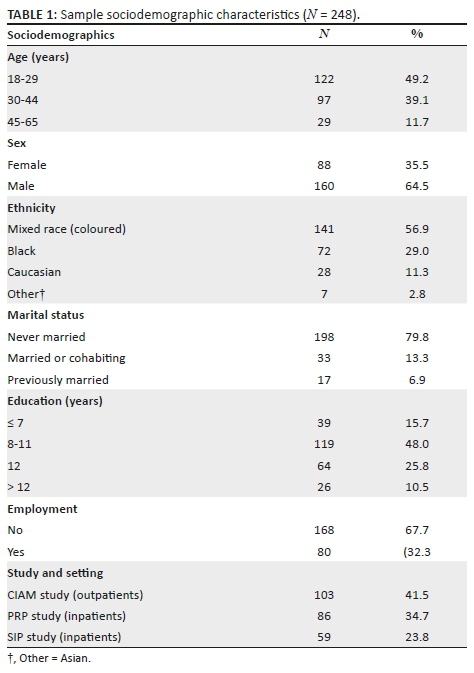
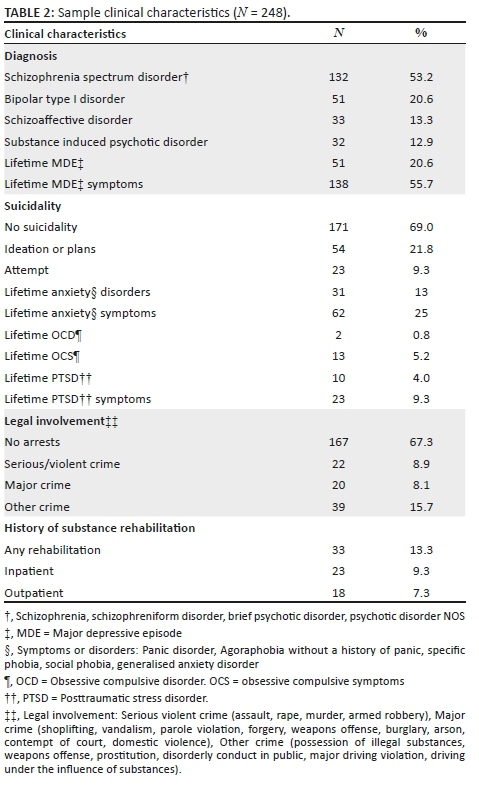
In the total of sample of 248 participants the mean age was 31.5 years (SD = 9.2), with the majority of participants being male (64.5%). Table 1 and 2 contain the sample demographic and clinical characteristics, respectively. Most participants were of 'Coloured' ethnic background, single, had less than 12 years of education, were unemployed and had a diagnosis of a schizophrenia spectrum disorder. Lifetime major depressive episodes or anxiety disorders occurred only in 20.6% and 13% of participants, but both depressive and anxiety symptoms were more prevalent and occurred in as many as half the sample (depressive symptoms, 55.7%) with anxiety symptoms occurring in a quarter (25%). Self-reported arrests were common and among participants with a SUD the most prevalent was arrest for 'other crimes' (26.1%) whereas arrests for major and serious violent crimes were less common (occurring in 10.1% and 11.6% with SUDs respectively). Of those patients with SUDs, less than a quarter (23.9%) indicated that they had attended any form of substance rehabilitation programme, of which 14.5% had attended inpatient and 13.0% outpatient rehabilitation programmes (Table 2).
Prevalence, patterns and distribution of substance use disorders
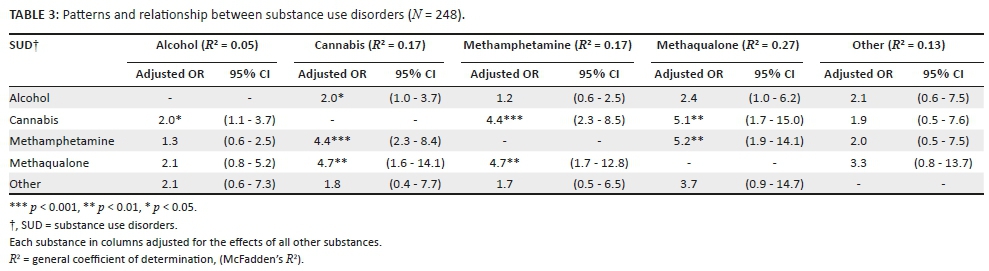
In the total sample of 248 participants, the prevalence of any substance use disorder (abuse or dependence) was 55.6% (95% CI = 49.2% - 62.0%). For the individual SUDs in the total sample, the most common SUD was cannabis use disorders with a prevalence of 34.3% (95% CI: 28.3% - 40.5%), followed by alcohol use disorders (30.6%; 95% CI = 25.0% - 36.7%), methamphetamine use disorder (27.4%; 95% CI = 22.0% - 33.4%) and methaqualone (sedative-hypnotic) use disorders (10.4%; 95% CI = 6.9% - 14.9%). Other drug use disorders occurred at a much lower frequency with cocaine use disorder occurring in only 4.4% (95% CI = 2.2% - 7.7%) and hallucinogens (MDMA and LSD) only in 1.6% (95% CI = 0.4%- 4.0%). All participants with SUDs fulfilled criteria for more than one SUD, with 4% abusing more than one substance and 22.9% fulfilling criteria for more than one substance dependence syndrome. There was a significant association between having a cannabis and alcohol use disorder (OR = 2.0, p = 0.031, 95% CI = 1.1 - 3.7) (Table 3). In turn, cannabis, methamphetamine or methaqualone use disorders often occurred together with the odds of having any one of these disorders significantly increasing the odds of having another with as many as 4-5 fold (Table 3).
Demographic and clinical correlates of substance use disorders
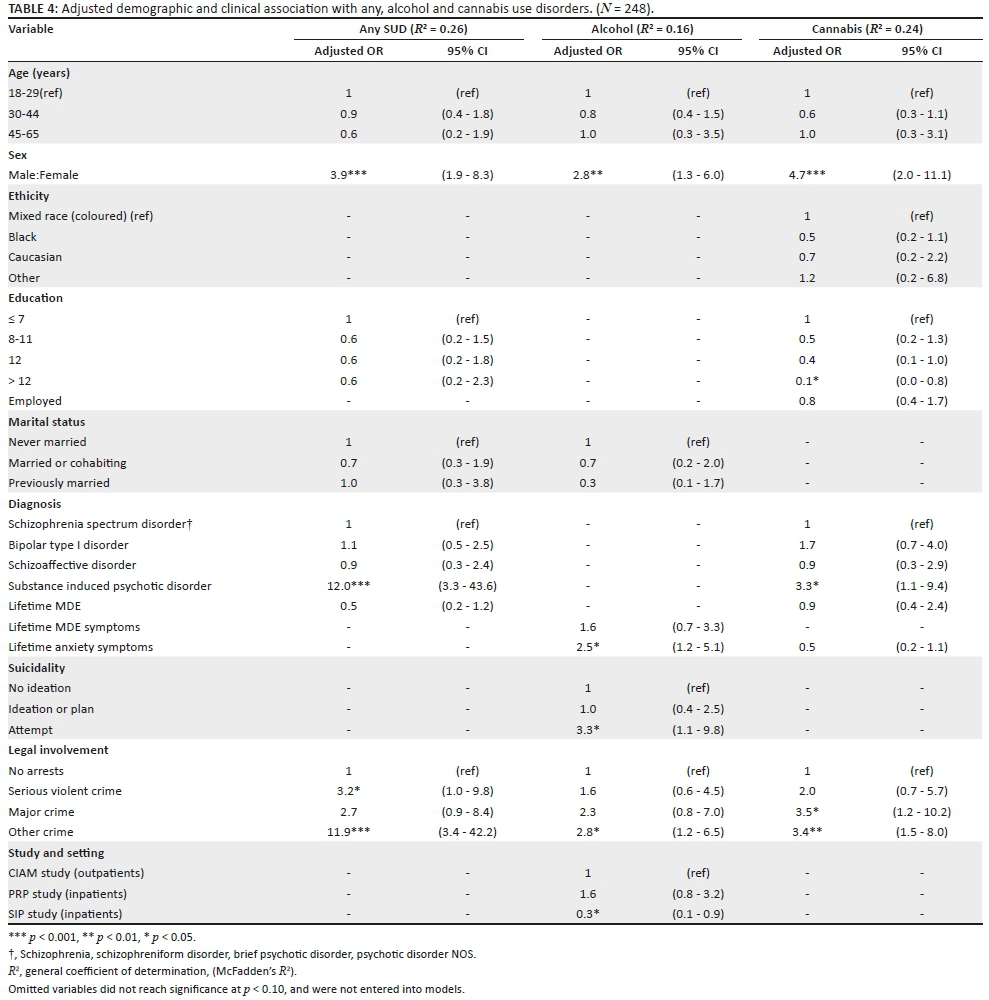
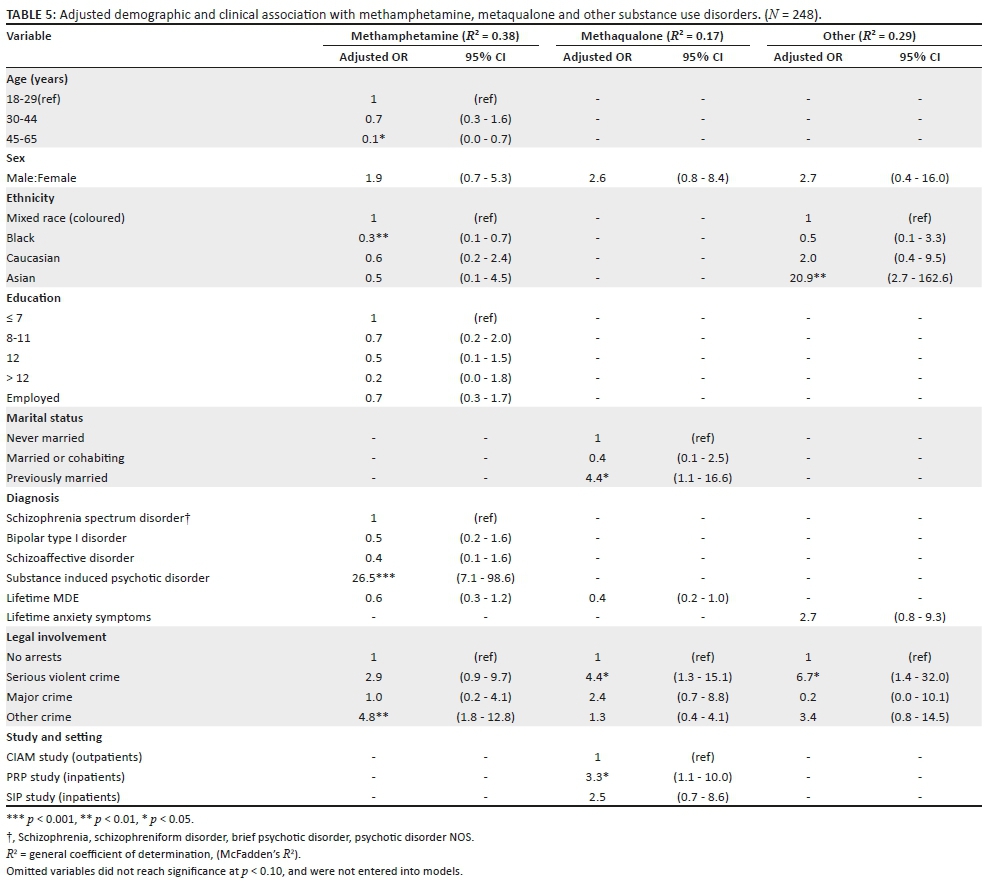
After adjustment for demographic and clinical covariates in multivariable models some variables remained significantly associated with the presence of the various SUDs (Tables 4 and 5). For the presence of any SUD there were significant positive associations in the adjusted multivariable model with male sex, substance induced psychosis, serious violent and 'other crimes' categories. For alcohol use disorders there were significant positive associations with male sex, lifetime anxiety symptoms, suicide attempts and other crime categories. For cannabis use disorder we found significant positive associations with male sex, lower educational attainment, substance induced psychosis, major and other crimes. For methamphetamine use disorders we found significant associations with younger age, significant negative associations with black ethnicity as compared to mixed ("coloured") ethnicity, a strong positive association with having a substance induce psychosis and a significant positive association with other crimes. For methaqualone there was a significant association between past marriage (divorced or widowed), and serious and violent crime, whereas for the category of 'Other SUDs' (of which cocaine 92%, LSD or MDMA 8%) there were significant associations between Asian ethnicity and serious violent crime.
Discussion
Main findings and comparison with other studies
In this study, one of the few from a LMIC context such as South Africa, we confirmed the high prevalence of SUDs in patients with a range of different psychotic disorders. We found prevalence for any SUD of 55.6%, similar to other studies in similar populations across the world, and very close to the previously found prevalence of 51% in a similar sample from Cape Town.31,3,4,5,634,36343
Consistent with other studies the association between methamphetamine and younger age remained significant in the multivariable models.181,3,15, 21,26,27,28,29,30,31,33,36,40201910,25,315126,28,31,3628
Similarly to other studies we found a significant association between SUD and a diagnosis of substance induced psychosis.3,521415,16,22,39192030,43
With the exception of alcohol use disorder, all categories of SUDs including any SUDs had significantly elevated occurrence of legal involvement, including serious and violent crime with an even stronger association with the 'other crime' category denoting police arrests for crimes relating to illegal drug possession, prostitution, driving violations and disorderly conduct in public. In addition, cannabis users also were significantly more likely to get arrested for major crimes (shoplifting, vandalism, parole violation, forgery, weapons offense, burglary, arson, domestic violence not involving assault) and methaqualone and 'other drug users' (predominantly cocaine users) were significantly more likely to be involved with serious violent offenses (assault, rape, murder, armed robbery). These findings are consistent with those from high income countries1,13,30,34,36
Implications for clinicians
Our results confirm the clinical profile of participants with SUDs as being more likely to be male, have a younger age (in particular methamphetamine users) and having a diagnosis of a substance induced psychosis. In particular, those with alcohol use disorders were more likely to experience anxiety symptoms (i.e. panic, generalised and social anxiety) and significantly more likely to have attempted suicide. This underscores the importance of screening for anxiety and suicide risk assessments in patients with co-occurring alcohol use disorders. For most substances, involvement in crimes relating to drug possession, prostitution, disorderly conduct and driving violations ('other crimes' category) were significantly more likely; and involvement in major crimes, serious violent crimes was also significantly elevated for cannabis, methaqualone and other (predominantly cocaine) users. Practitioners who manage patients with co-occurring disorder are likely to need to liaise with criminal justice institutions, state prosecutors and police.
Study strengths and limitations
Several limitations should be acknowledged. First, is the absence of biological verification of substance use.
Although urine tests for substances such as cannabis and methamphetamine conducted on some patients who were admitted to short-stay psychiatric units were taken into consideration during patient assessment and interviews, tests for alcohol and other drugs are not routinely conducted, neither were such tests recorded consistently so as to allow for use in this study. Short detection windows of most biological tests are also likely to result in false negative tests in participants who used recently but were tested only days after last use. As participants are more likely to underreport substances this would have led to an underestimation of substance use in this study. In addition, self-report of substances have been shown to yield accurate results, with other techniques like hair samples often being problematic in multi-ethnic samples.5318
Conclusion
This study found high prevalence of substance use disorders and multiple substance use in patients with psychotic disorders in a LMIC context. This underscores the importance of a thorough clinical assessment for various substance use disorders, and when present, for anxiety, suicidality and risky behaviours involving clashes with the law.
Competing interests
The authors declare that no competing interests exist.
Authors' contributions
H.S.T. and D.J.S. were involved in the conceptualization, design, analysis and write-up of the PRP study. H.S.T., G.S. and D.J.S. conceptualised and contributed to the design, analysis and write-up of the SIP study. F.M.H. and H.S.T. were involved in the design and conceptualization, data collection and write up of the CIAM study. S.M. contributed to the data management and editing of the current manuscript.
Funding information
The Presentation and Risk Factors in the Psychobiology of Psychosis (PRP) study received funding from the University of Cape Town, Department of Psychiatry and Mental Health Research Committee. The Cortical Inhibition and Attentional Modulation (CIAM) study received funding from the National Research Foundation of South Africa and the University of Cape Town, Department of Psychiatry and Mental Health Research Committee. The Social Inclusion in Psychosis study (SIP) received funding from the World Psychiatric Association and the University of Cape Town, Department of Psychiatry and Mental Health Research Committee. DJS is supported by the South African Medical Research Council (MRC).
Data availability
Data for this study is available from the corresponding author upon reasonable request and permission by the University of Cape Town.
Disclaimer
The views and opinions expressed in this article are those of the authors and do not necessarily reflect the official policy or position of any affiliated agency of the authors.
Acknowledgements
The authors would like to thank Jennifer Hsieh, Nyameka Dayakalashe, Lungiswa Mankayi, and Ziyanda Gemashe for their assistance with data collection. We would like to thank Peter Milligan and Valkenberg hospital senior management for their assistance and advice on study operations.
References
-
1.Cantor-Graae E, Nordstrom LG, McNeil TF. Substance abuse in schizophrenia: a review of the literature and a study of correlates in Sweden. Schizophrenia research. 2001;48(1):69-82. https://doi.org/10.1016/S0920-9964(00)00114-6
» https://doi.org/10.1016/S0920-9964(00)00114-6 -
2.Lambert M, Conus P, Lubman DI, Wade D, Yuen H, Moritz S, et al. The impact of substance use disorders on clinical outcome in 643 patients with first-episode psychosis. Acta psychiatrica Scandinavica. 2005;112(2):141-8. https://doi.org/10.1111/j.1600-0447.2005.00554.x
» https://doi.org/10.1111/j.1600-0447.2005.00554.x -
3.Weich L, Pienaar W. Occurrence of comorbid substance use disorders among acute psychiatric inpatients at Stikland Hospital in the Western Cape, South Africa. African journal of psychiatry. 2009;12(3):213-7. https://doi.org/10.4314/ajpsy.v12i3.48496
» https://doi.org/10.4314/ajpsy.v12i3.48496 -
4.Koskinen J, Lohonen J, Koponen H, Isohanni M, Miettunen J. Prevalence of alcohol use disorders in schizophrenia-a systematic review and meta-analysis. Acta psychiatrica Scandinavica. 2009;120(2):85-96. https://doi.org/10.1111/j.1600-0447.2009.01385.x
» https://doi.org/10.1111/j.1600-0447.2009.01385.x -
5.Koskinen J, Lohonen J, Koponen H, Isohanni M, Miettunen J. Rate of cannabis use disorders in clinical samples of patients with schizophrenia: a meta-analysis. Schizophrenia bulletin. 2010;36(6):1115-30. https://doi.org/10.1093/schbul/sbp031
» https://doi.org/10.1093/schbul/sbp031 -
6.Sara GE, Large MM, Matheson SL, Burgess PM, Malhi GS, Whiteford HA, et al. Stimulant use disorders in people with psychosis: a meta-analysis of rate and factors affecting variation. The Australian and New Zealand journal of psychiatry. 2015;49(2):106-17. https://doi.org/10.1177/0004867414561526
» https://doi.org/10.1177/0004867414561526 -
7.Swofford CD, Kasckow JW, Scheller-Gilkey G, Inderbitzin LB. Substance use: a powerful predictor of relapse in schizophrenia. SchizophrRes. 1996;20(1-2):145-151. https://doi.org/10.1016/0920-9964(95)00068-2
» https://doi.org/10.1016/0920-9964(95)00068-2 -
8.Wade D, Harrigan S, McGorry PD, Burgess PM, Whelan G. Impact of severity of substance use disorder on symptomatic and functional outcome in young individuals with first-episode psychosis. JClinPsychiatry. 2007;68(5):767-74. https://doi.org/10.4088/JCP.v68n0517
» https://doi.org/10.4088/JCP.v68n0517 -
9.Mazzoncini R, Donoghue K, Hart J, Morgan C, Doody GA, Dazzan P, et al. Illicit substance use and its correlates in first episode psychosis. Acta psychiatrica Scandinavica. 2010;121(5):351-8. https://doi.org/10.1111/j.1600-0447.2009.01483.x
» https://doi.org/10.1111/j.1600-0447.2009.01483.x -
10.Montross LP, Barrio C, Yamada AM, Lindamer L, Golshan S, Garcia P, et al. Tri-ethnic variations of co-morbid substance and alcohol use disorders in schizophrenia. Schizophrenia research. 2005;79(2-3):297-305. https://doi.org/10.1016/j.schres.2005.04.014
» https://doi.org/10.1016/j.schres.2005.04.014 -
11.Weaver T, Rutter D, Madden P, Ward J, Stimson G, Renton A. Results of a screening survey for co-morbid substance misuse amongst patients in treatment for psychotic disorders: prevalence and service needs in an inner London borough. Social psychiatry and psychiatric epidemiology. 2001;36(8):399-406. https://doi.org/10.1007/s001270170030
» https://doi.org/10.1007/s001270170030 - 12.Dixon L, Haas G, Weiden PJ, Sweeney J, Frances AJ. Drug abuse in schizophrenic patients: clinical correlates and reasons for use. The American journal of psychiatry. 1991;148(2):224-30.
-
13.Fowler IL, Carr VJ, Carter NT, Lewin TJ. Patterns of current and lifetime substance use in schizophrenia. Schizophrenia bulletin. 1998;24(3):443-55. https://doi.org/10.1093/oxfordjournals.schbul.a033339
» https://doi.org/10.1093/oxfordjournals.schbul.a033339 -
14.Goodwin RD, Amador XF, Malaspina D, Yale SA, Goetz RR, Gorman JM. Anxiety and substance use comorbidity among inpatients with schizophrenia. Schizophrenia research. 2003;61(1):89-95. https://doi.org/10.1016/S0920-9964(02)00292-X
» https://doi.org/10.1016/S0920-9964(02)00292-X -
15.Jimenez-Castro L, Hare E, Medina R, Raventos H, Nicolini H, Mendoza R, et al. Substance use disorder comorbidity with schizophrenia in families of Mexican and Central American ancestry. Schizophrenia research. 2010;120(1-3):87-94. https://doi.org/10.1016/j.schres.2010.02.1053
» https://doi.org/10.1016/j.schres.2010.02.1053 -
16.Margolese HC, Carlos Negrete J, Tempier R, Gill K. A 12-month prospective follow-up study of patients with schizophrenia-spectrum disorders and substance abuse: changes in psychiatric symptoms and substance use. Schizophrenia research. 2006;83(1):65-75. https://doi.org/10.1016/j.schres.2005.11.019
» https://doi.org/10.1016/j.schres.2005.11.019 -
17.Mueser KT, Yarnold PR, Levinson DF, Singh H, Bellack AS, Kee K, et al. Prevalence of substance abuse in schizophrenia: demographic and clinical correlates. Schizophrenia bulletin. 1990;16(1):31-56. https://doi.org/10.1093/schbul/16.1.31
» https://doi.org/10.1093/schbul/16.1.31 -
18.Sara GE, Burgess PM, Malhi GS, Whiteford HA, Hall WC. Stimulant and other substance use disorders in schizophrenia: prevalence, correlates and impacts in a population sample. The Australian and New Zealand journal of psychiatry. 2014;48(11):1036-47. https://doi.org/10.1177/0004867414533838
» https://doi.org/10.1177/0004867414533838 -
19.Sevy S, Robinson DG, Holloway S, Alvir JM, Woerner MG, Bilder R, et al. Correlates of substance misuse in patients with first-episode schizophrenia and schizoaffective disorder. Acta psychiatrica Scandinavica. 2001;104(5):367-74. https://doi.org/10.1111/j.1600-0447.2001.00452.x
» https://doi.org/10.1111/j.1600-0447.2001.00452.x -
20.Shoval G, Zalsman G, Apter A, Diller R, Sher L, Weizman A. A 10-year retrospective study of inpatient adolescents with schizophrenia/schizoaffective disorder and substance use. Comprehensive psychiatry. 2007;48(1):1-7. https://doi.org/10.1016/j.comppsych.2006.05.002
» https://doi.org/10.1016/j.comppsych.2006.05.002 -
21.Escamilla MA, Batki S, Reus VI, Spesny M, Molina J, Service S, et al. Comorbidity of bipolar disorder and substance abuse in Costa Rica: pedigree- and population-based studies. Journal of affective disorders. 2002;71(1-3):71-83. https://doi.org/10.1016/S0165-0327(01)00373-1
» https://doi.org/10.1016/S0165-0327(01)00373-1 -
22.Kerfoot KE, Rosenheck RA, Petrakis IL, Swartz MS, Keefe RS, McEvoy JP, et al. Substance use and schizophrenia: adverse correlates in the CATIE study sample. Schizophrenia research. 2011;132(2-3):177-82. https://doi.org/10.1016/j.schres.2011.07.032
» https://doi.org/10.1016/j.schres.2011.07.032 -
23.Mowbray CT, Ribisl KM, Solomon M, Luke DA, Kewson TP. Characteristics of dual diagnosis patients admitted to an urban, public psychiatric hospital: an examination of individual, social, and community domains. The American journal of drug and alcohol abuse. 1997;23(2):309-26. https://doi.org/10.3109/00952999709040949
» https://doi.org/10.3109/00952999709040949 -
24.Bersani G, Orlandi V, Kotzalidis GD, Pancheri P. Cannabis and schizophrenia: impact on onset, course, psychopathology and outcomes. European archives of psychiatry and clinical neuroscience. 2002;252(2):86-92. https://doi.org/10.1007/s00406-002-0366-5
» https://doi.org/10.1007/s00406-002-0366-5 -
25.Compton WM, 3rd, Cottler LB, Ben Abdallah A, Phelps DL, Spitznagel EL, Horton JC. Substance dependence and other psychiatric disorders among drug dependent subjects: race and gender correlates. The American journal on addictions. 2000;9(2):113-25. https://doi.org/10.1080/10550490050173181
» https://doi.org/10.1080/10550490050173181 -
26.Hapangama A, Kuruppuarachchi KA, Pathmeswaran A. Substance use disorders among mentally ill patients in a General Hospital in Sri Lanka: prevalence and correlates. The Ceylon medical journal. 2013;58(3):111-5. https://doi.org/10.4038/cmj.v58i3.6103
» https://doi.org/10.4038/cmj.v58i3.6103 -
27.Kamali M, Kelly L, Gervin M, Browne S, Larkin C, O'Callaghan E. The prevalence of comorbid substance misuse and its influence on suicidal ideation among in-patients with schizophrenia. Acta psychiatrica Scandinavica. 2000;101(6):452-6. https://doi.org/10.1034/j.1600-0447.2000.101006452.x
» https://doi.org/10.1034/j.1600-0447.2000.101006452.x -
28.Kavanagh DJ, Waghorn G, Jenner L, Chant DC, Carr V, Evans M, et al. Demographic and clinical correlates of comorbid substance use disorders in psychosis: multivariate analyses from an epidemiological sample. Schizophrenia research. 2004;66(2-3):115-24. https://doi.org/10.1016/S0920-9964(03)00130-0
» https://doi.org/10.1016/S0920-9964(03)00130-0 -
29.Latt N, Jurd S, Tennant C, Lewis J, Macken L, Joseph A, et al. Alcohol and substance use by patients with psychosis presenting to an emergency department: changing patterns. Australasian psychiatry : bulletin of Royal Australian and New Zealand College of Psychiatrists. 2011;19(4):354-9. https://doi.org/10.3109/10398562.2011.579971
» https://doi.org/10.3109/10398562.2011.579971 -
30.Rush B, Koegl CJ. Prevalence and profile of people with co-occurring mental and substance use disorders within a comprehensive mental health system. Canadian journal of psychiatry Revue canadienne de psychiatrie. 2008;53(12):810-21. https://doi.org/10.1177/070674370805301207
» https://doi.org/10.1177/070674370805301207 -
31.Swartz MS, Wagner HR, Swanson JW, Stroup TS, McEvoy JP, Canive JM, et al. Substance use in persons with schizophrenia: baseline prevalence and correlates from the NIMH CATIE study. The Journal of nervous and mental disease. 2006;194(3):164-72. https://doi.org/10.1097/01.nmd.0000202575.79453.6e
» https://doi.org/10.1097/01.nmd.0000202575.79453.6e -
32.Talamo A, Centorrino F, Tondo L, Dimitri A, Hennen J, Baldessarini RJ. Comorbid substance-use in schizophrenia: relation to positive and negative symptoms. Schizophrenia research. 2006;86(1-3):251-5. https://doi.org/10.1016/j.schres.2006.04.004
» https://doi.org/10.1016/j.schres.2006.04.004 -
33.Van Mastrigt S, Addington J, Addington D. Substance misuse at presentation to an early psychosis program. Social psychiatry and psychiatric epidemiology. 2004;39(1):69-72. https://doi.org/10.1007/s00127-004-0713-0
» https://doi.org/10.1007/s00127-004-0713-0 -
34.Carra G, Crocamo C, Borrelli P, Popa I, Ornaghi A, Montomoli C, et al. Correlates of dependence and treatment for substance use among people with comorbid severe mental and substance use disorders: findings from the "Psychiatric and Addictive Dual Disorder in Italy (PADDI)" Study. Comprehensive psychiatry. 2015;58:152-9. https://doi.org/10.1016/j.comppsych.2014.11.021
» https://doi.org/10.1016/j.comppsych.2014.11.021 -
35.McCabe PJ, Christopher PP, Druhn N, Roy-Bujnowski KM, Grudzinskas AJ, Jr., Fisher WH. Arrest types and co-occurring disorders in persons with schizophrenia or related psychoses. The journal of behavioral health services & research. 2012;39(3):271-84. https://doi.org/10.1007/s11414-011-9269-4
» https://doi.org/10.1007/s11414-011-9269-4 -
36.Mueser KT, Yarnold PR, Rosenberg SD, Swett C, Jr., Miles KM, Hill D. Substance use disorder in hospitalized severely mentally ill psychiatric patients: prevalence, correlates, and subgroups. Schizophrenia bulletin. 2000;26(1):179-92. https://doi.org/10.1093/oxfordjournals.schbul.a033438
» https://doi.org/10.1093/oxfordjournals.schbul.a033438 -
37.Robertson AG, Swanson JW, Frisman LK, Lin H, Swartz MS. Patterns of justice involvement among adults with schizophrenia and bipolar disorder: key risk factors. Psychiatric services (Washington, DC). 2014;65(7):931-8. https://doi.org/10.1176/appi.ps.201300044
» https://doi.org/10.1176/appi.ps.201300044 -
38.Seedat F, Roos JL, Pretorius HW, Karayiorgou M, Nel B. Prevalence and clinical characteristics of obsessive-compulsive disorder and obsessive compulsive symptoms in Afrikaner schizophrenia and schizoaffective disorder patients. AfrJPsychiatry (Johannesbg). 2007;10(4):219-24. https://doi.org/10.4314/ajpsy.v10i4.30259
» https://doi.org/10.4314/ajpsy.v10i4.30259 -
39.Cuffel BJ, Heithoff KA, Lawson W. Correlates of patterns of substance abuse among patients with schizophrenia. Hospital & community psychiatry. 1993;44(3):247-51. https://doi.org/10.1176/ps.44.3.247
» https://doi.org/10.1176/ps.44.3.247 -
40.Margolese HC, Malchy L, Negrete JC, Tempier R, Gill K. Drug and alcohol use among patients with schizophrenia and related psychoses: levels and consequences. Schizophrenia research. 2004;67(2-3):157-66. https://doi.org/10.1016/S0920-9964(02)00523-6
» https://doi.org/10.1016/S0920-9964(02)00523-6 -
41.O'Hare T, Sherrer M. Lifetime trauma, subjective distress, substance use, and PTSD symptoms in people with severe mental illness: comparisons among four diagnostic groups. Community mental health journal. 2013;49(6):728-32. https://doi.org/10.1007/s10597-013-9620-8
» https://doi.org/10.1007/s10597-013-9620-8 -
42.Scheller-Gilkey G, Moynes K, Cooper I, Kant C, Miller AH. Early life stress and PTSD symptoms in patients with comorbid schizophrenia and substance abuse. Schizophrenia research. 2004;69(2-3):167-74. https://doi.org/10.1016/S0920-9964(03)00188-9
» https://doi.org/10.1016/S0920-9964(03)00188-9 -
43.Gut-Fayand A, Dervaux A, Olie JP, Loo H, Poirier MF, Krebs MO. Substance abuse and suicidality in schizophrenia: a common risk factor linked to impulsivity. Psychiatry research. 2001;102(1):65-72. https://doi.org/10.1016/S0165-1781(01)00250-5
» https://doi.org/10.1016/S0165-1781(01)00250-5 -
44.Shelly J, Uhlmann A, Sinclair H, Howells FM, Sibeko G, Wilson D, et al. First-Rank Symptoms in Methamphetamine Psychosis and Schizophrenia. Psychopathology. 2016;49(6):429-35. https://doi.org/10.1159/000452476
» https://doi.org/10.1159/000452476 - 45.American Psychiatric Association. Diagnostic and Statistical Manual of Mental Disorders. 4th ed. Washington, DC: American Psychiatric Association; 2000.
-
46.Mall S, Sibeko G, Temmingh H, Stein DJ, Milligan P, Lund C. Using a treatment partner and text messaging to improve adherence to psychotropic medication: a qualitative formative study of service users and caregivers in Cape Town, South Africa. African journal of psychiatry. 2013;16(5):364-70. https://doi.org/10.4314/ajpsy.v16i5.49
» https://doi.org/10.4314/ajpsy.v16i5.49 -
47.Howells FM, Temmingh HS, Hsieh JH, van Dijen AV, Baldwin DS, Stein DJ. Electroencephalographic delta/alpha frequency activity differentiates psychotic disorders: a study of schizophrenia, bipolar disorder and methamphetamine-induced psychotic disorder. Translational psychiatry. 2018;8(1):75. https://doi.org/10.1038/s41398-018-0105-y
» https://doi.org/10.1038/s41398-018-0105-y - 48.First M, RL S, M G, JBW W. Structured Clinical Interview for DSM-IV Axis I disorders-Patient Edition (SCID-I-P, version 2). 1994 1994.
-
49.McLellan AT, Kushner H, Metzger D, Peters R, Smith I, Grissom G, et al. The Fifth Edition of the Addiction Severity Index. JSubstAbuse Treat. 1992;9(3):199-213. https://doi.org/10.1016/0740-5472(92)90062-S
» https://doi.org/10.1016/0740-5472(92)90062-S - 50.StataCorp. Stata Statistical Software: Release 13. College Station, TX: StataCorp LP. 2013.
-
51.Myers B, Kline TL, Browne FA, Carney T, Parry C, Johnson K, et al. Ethnic differences in alcohol and drug use and related sexual risks for HIV among vulnerable women in Cape Town, South Africa: implications for interventions. BMC public health. 2013;13:174. https://doi.org/10.1186/1471-2458-13-174
» https://doi.org/10.1186/1471-2458-13-174 -
52.Helseth V, Lykke-Enger T, Johnsen J, Waal H. Substance use disorders among psychotic patients admitted to inpatient psychiatric care. Nordic journal of psychiatry. 2009;63(1):72-7. https://doi.org/10.1080/08039480802450439
» https://doi.org/10.1080/08039480802450439 -
53.Selten JP, Bosman IJ, de Boer D, Veen ND, van der Graaf Y, Maes RA, et al. Hair analysis for cannabinoids and amphetamines in a psychosis incidence study. European neuropsychopharmacology : the journal of the European College of Neuropsychopharmacology. 2002;12(1):27-30. https://doi.org/10.1016/S0924-977X(01)00129-8
» https://doi.org/10.1016/S0924-977X(01)00129-8

Accepted: 20 May 2020
Published: 28 July 2020