Fine motor deficits and attention deficit hyperactivity disorder in primary school children
Abstract
BACKGROUND: Many children with attention deficit hyperactivity disorder (ADHD) display motor deficiencies during their daily routine, which may have impact on their developmental course. Children with ADHD who experience motor deficiencies often display deficits in tasks requiring movements, such as handwriting. AIM: This study investigated deficiencies in fine motor skills in primary school children with ADHD. The study further sought to establish whether ADHD subtypes differ in deficiencies of fine motor performance, recorded for both the dominant and non-dominant hands. METHODS: The Disruptive Behavior Disorders Rating Scale, completed by educators and parents, was used to screen for ADHD symptoms. Researchers confirmed the diagnosis of ADHD. Motor functioning was assessed using the Grooved Pegboard and Maze Coordination. The children diagnosed with ADHD were matched for age and gender with controls without ADHD. The sample consisted of an ADHD group (160) and control group (160) of primary school children from the Moletjie area. RESULTS: Children with ADHD (predominantly inattentive subtype) and ADHD (combined subtype) performed significantly more poorly than the control group on the Grooved Pegboard (p < 0.05) with both the dominant and non-dominant hand. No significant difference between the hyperactivity and impulsiveness subtype and the controls were found. There was no difference on the Maze Coordination Task (p > 0.05) between the ADHD subtypes and the controls. CONCLUSION: Difficulties in fine motor skills are prevalent in children with ADHD, particularly in the ADHD-PI and ADHD-C. Problems are encountered in distal, complex, speeded tasks. The effect may lead to poor handwriting and academic performance.
Introduction
Attention deficit hyperactivity disorder (ADHD) is a common, long-lasting, manageable childhood psychiatric disorder, characterised by a pattern of developmentally inappropriate inattention, motor restlessness and impulsiveness.11234,5 Motor coordination problems have previously been labelled 'clumsy child syndrome', 'non-cerebral-palsy motor-perception dysfunction', 'minor neurological dysfunction' or 'dyspraxia of childhood'.6
Motor skills are actions carried out when the brain, nervous system and muscles work together. It is a function that involves the precise movement of muscles with the intent to perform a specific act. They are categorised into two groups: gross motor skills and fine motor skills. Gross motor skills are involved in movement and coordination of the arms and legs and actions such as running, crawling and swimming.785,8
Since 1994, the use of the term 'developmental coordination disorder' (DCD) has predominated in the literature. In the Scandinavian countries, the combination of ADHD and motor coordination problems is known as 'deficits of attention and motor perception' (DAMP).9,10 Recently it was suggested that the name 'DAMP' be changed to 'DCD plus'.1123,12
Many of the differences found in the neural systems between ADHD and neurotypical comparisons are present in the areas responsible for motor control.13,14 Kaiser et al.1515
The prevalence of motor problems in children with ADHD ranges from 30% to 52%, depending on the method of measurement.16,17 A study by Pitcher et al.1819
Most studies show a strong association between ADHD and fine motor problems.18,20 Kadesjö and Gillberg9211,21,22,23 Motor problems severely affect children's daily lives and are an active predictor of a child's popularity and self-esteem.24
Several studies have identified dopamine as the key neurotransmitter in the brain in ADHD. Three pathways, namely the mesocortical, mesolimbic and nigrostriatal, have been shown to be dysfunctional and consequently cause deficiencies in the cortical areas, resulting in symptoms typical to ADHD: inattention, hyperactivity and impulsiveness.25,26,27 The nigrostriatal dopaminergic pathway is involved in the coordination of movement. Sagvolden et al.26262829
Motor problems are not usually part of assessments for ADHD and are not included in intervention programmes10,30 despite the estimate that 30% - 50% of children with ADHD exhibit motor problems.3
Research methods and design
Study design
The study was conducted in primary schools in the Moletjie area, Limpopo, in 2016. A quantitative, case-control experimental design was used. In order to establish whether children with ADHD are deficient in fine motor skills, the sample was divided into participants diagnosed with ADHD and those without ADHD.
Setting
The study was conducted with primary school children in the Moletjie area in Limpopo Province, South Africa. The selected regions were in a rural area in which assessment of this nature is very rare. The areas were selected based on the remoteness of the regions so that the community could benefit from such research.
Study population and sampling strategy
Four thousand two hundred children completed the Disruptive Behavior Disorders (DBD) Rating Scale. A total of 320 primary school children were screened; 160 with ADHD (80 boys and 80 girls) were matched for gender and age with 160 children without ADHD symptomatology (80 boys and 80 girls), who formed the control group. They were all Sepedi speaking, Grade 1 to Grade 7 learners, between the ages of 6 and 14 years, and were recruited from six schools in the Moletjie area, Limpopo Province, South Africa. The DBD, completed by educators and parents, was used to screen the children for ADHD.31,32 Learners who met the criteria for ADHD were assigned by the researcher as follows: Participants with scores ≥ 17 on the hyperactivity and impulsiveness scale were classified as ADHD-HI subtype and those having a score ≥ 20 on the inattention scale were classified as ADHD-PI subtype, based on the epidemiological study by Meyer and colleagues.3333
Children with a history of neurological problems (e.g. head injuries, epilepsy, cerebral palsy, etc.) or severe psychiatric disorders, as reported by the parents on the demographic questionnaire, were excluded from the study. None of the children were on psychostimulant medication at the time of testing.
Data collection
The principals of the schools were approached prior to commencing with the assessment. Following consent from parents, the study was explained to all participating children, and their assent was obtained. The return rate of the questionnaires was 100%. The data was collected from primary school children within the Moletjie area in Limpopo Province during 2016. The assessment was done during school hours at the participants' respective schools. The testing procedure for each child lasted 30 min and was conducted by a clinical psychologist and five research assistants (who held bachelor degrees in psychology), who were fluent in the child's home language.
Instruments
Screening instruments: Disruptive Behavior Disorders Rating Scale
The DBD Rating Scale31,32 was used to screen for ADHD symptoms. The scale is standardised and normed for all language and population groups in Limpopo Province, South Africa.3334352833
Assessment of motor functions
The Grooved Pegboard, measuring distal, complex fine motor coordination and psychomotor speed, was administered first, followed by the Maze Coordination Task, which evaluates tactual motor coordination skills and motor planning.36
Grooved Pegboard Task
The Grooved Pegboard is a manual dexterity test measuring complex fine motor skills.36left to right with the right hand and vice versa for the left. The score is the time it takes the participant to complete the task with each hand. The task duration is approximately 5 min.373821,39,40 have shown that the Grooved Pegboard could efficiently be used to detect problems with fine motor skills in children with symptoms of ADHD.
Maze Coordination Task
The Maze Coordination Task measures fine motor coordination.394142
Data analysis
Statistica (version 10)43p < 0.05.
Ethical consideration
I am enclosing a submission to the South African Journal of Psychiatry. The manuscript is the original and was never presented to any other journal and my institution, the University of KwaZulu-Natal, is fully aware of this submission. Ethical approval to conduct the study was obtained (Ethical clearance number: HSS/0702/015D) from the Biomedical Research Ethics Committee of the University of KwaZulu-Natal. The Department of Education provided permission for the study to be conducted at the participating schools, and consent was obtained from the relevant school principals. Written consent was obtained from the parents of the children, and children signed assent forms. Participation in the study was voluntary, and participants were informed that they could withdraw at any stage.
Results
A total of 4200 children completed the DBD, of which 320 children were screened in the study: 160 (50%) males and 160 (50%) females. One hundred sixty children (80 boys and 80 girls) met the criteria for ADHD (n = 160) and were matched for age and gender with a control group (n = 160) without ADHD symptomatology. The equal numbers in gender was coincidental. There was no statistically significant difference in ages of the ADHD group (M = 10.52, s.d. = 1.76) and control group (M =10.49, s.d. = 1.80, p = 0.94).
The grade distribution was as follows: Grade 1 - ADHD = 8, control = 8; Grade 2 - ADHD = 14; control = 13; Grade 3 - ADHD = 26, control = 24; Grade 4 - ADHD = 37, control = 33; Grade 5 - ADHD = 41, control = 39; Grade 6 - ADHD = 21, control = 32; and Grade 7 - ADHD = 13, control = 11.
The participants were classified according to subtype: ADHD-HI (n = 19, 12%), ADHD-PI (n = 81, 51%) and ADHD-C (n = 60, 37%).
Hand dominance: Of the ADHD group 146 (91%) were right-handed, while 14 (9%) were left-handed. The control group consisted of 149 (93%) children who were right-handed and 11 (7%) who were left-handed. The effect of hand dominance could not be included in the analysis because there were too few left-handers, resulting in empty cells when subtype, age and gender were taken into account. Therefore the results of each hand were analysed separately.
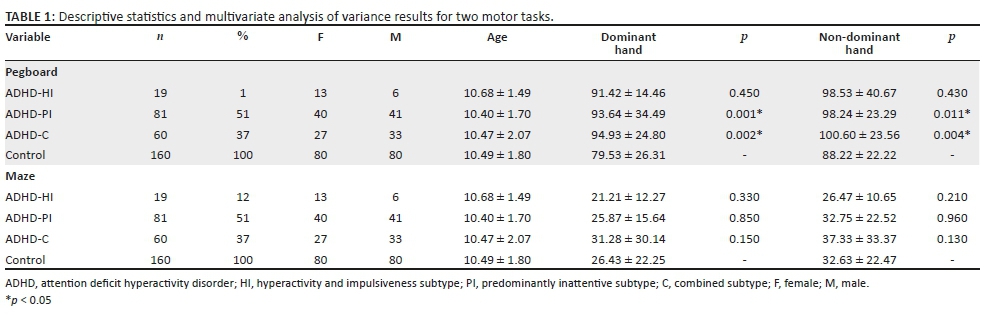
Table 1 presents the descriptive statistics and MANOVA results. The minimum statistical value was set at p < 0.05.
On the Grooved Pegboard test, the MANOVA showed no main significant differences or interaction effects for gender and age for either the dominant or the non-dominant hand. Therefore, only the ADHD subtypes were further analysed. There were significant differences between ADHD subtypes in the performance of the dominant hand, F(2, 297) = 8.48, p < 0.001. Post-hoc analysis revealed a statistically significant difference between the ADHD-PI (p = 0.001) and ADHD-C (p = 0.002) and the control group only. These groups took longer to complete the task with their dominant hand. There was no statistical difference between ADHD-HI and the control group when using the dominant hand. There were also statistically significant differences in the performance of the non-dominant hand among the ADHD subtypes, F(2, 297) = 5.93, (p < 0.001). Post-hoc analysis (Bonferroni) further showed that the ADHD-PI (p = 0.011) and ADHD-C (p = 0.004) subtypes differed significantly from the control group in that the two ADHD groups took significantly longer to complete the task. There was no statistical difference when the ADHD-HI subtype was compared with the control group.
On the Maze Coordination Task, age had an effect on performance with both the dominant and non-dominant hands (p = 0.004). There were no effects for gender. The MANOVA indicated significant differences in performance for dominant hand, F(2, 297) = 6.05, p < 0.001; post-hoc analysis, however, revealed that this was because of the interacting effect of age, with the performance of the younger group significantly poorer than that of the older group. The difference was between the age groups only and not between the subtypes. The difference between the ADHD groups and the controls was not statistically significant, and there was no statistically significant difference between the subtypes in performance of the non-dominant hand, F(2, 297) = 2.15, p = 0.093.
Discussion
The results of the study show that children with ADHD, especially the ADHD-PI and ADHD-C subtypes, were more impaired on the Grooved Pegboard Task, which measures distal, complex fine motor coordination and psychomotor speed, than on the Maze Coordination Task, which measures tactual coordination skills and motor planning.4439,45 possibly because of problems with attention as the underlying manifestation of the motor skills deficit.18,46 This finding is consistent with most other studies,15,39,47 which found that the most pronounced impairment of motor functioning was in children with symptoms of ADHD-PI and ADHD-C subtypes and that inattention may affect motor skills.3,48,49 These studies compared motor problems in children with ADHD with neurotypical controls, and the conclusion reached was that difficulties in gross and fine motor skills were all related to symptoms of intention, not hyperactivity or impulsiveness.
The studies conducted by Ghanizadeh48,50 implied that fine motor skills of writing were predicted by the severity of symptoms of inattention. Motor responses require attention to a target and attention during the response. If the target is not properly attended to, it will affect the subsequent motor planning and consequent performance. Additionally, when the target is not noticed in time, it can reduce the time remaining for motor preparation and accordingly affect the performance.13
Not all studies on motor deficiencies in ADHD have found fine motor impairment to be limited to inattention. Scharoun et al.513,39,52 The conclusion drawn by these authors was that, unlike inattention, hyperactivity and impulsiveness was not a good predictor of deficiencies in fine motor performance in children with ADHD.
Our study also showed that age influenced Maze Coordination Task performance with both the dominant and non-dominant hands. These results are similar to the findings of Meyer and Sagvolden,3939
The cortical-striatal and cortical-cerebellar network is considered to consist of parallel circuits that underlie motor, cognitive and emotional behaviours.5313,53 Houwen et al.5413
Implication
Problems with attention are the underlying manifestation of the motor skills deficit. Motor problems lead to difficulties in everyday living, including academic performance, sports, play and self-esteem,1,21,22,23 and severely impact children's daily lives. Fine motor problems are a strong predictor of a child's popularity and self-esteem.2422,24 Children with fine motor problems and ADHD are at risk for learning difficulties and deficient psychological adjustment.55,56
As noted by Gillberg et al.1030
The DSM-5 focuses mainly on DCD as a separate neurodevelopmental disorder, while the fine motor skill deficiencies related to ADHD are not documented in the DSM-5.2
Limitations
The sample does not represent the general population of primary school children in Limpopo Province as it was limited to Sepedi-speaking children in a particular municipal area. Owing to the homogeneity of the sample, socio-cultural differences could not be indicated. Future studies should include Sepedi along with other language groups. Another limitation was the small size of the ADHD-HI group, which may not represent all individuals with ADHD-HI. It may also be a limiting factor to compare 6-year-olds with 14-year-olds, who may already have entered puberty. Future studies should examine groups of children of the same age in regard to fine motor deficits and ADHD subtypes.
Conclusion
Our study showed that children with ADHD have poorer fine motor skills than typically neuro-developing children. The performance of the children with ADHD showed deficiencies in distal, complex, fine motor coordination and psychomotor speed, as measured by the Grooved Pegboard Task. The results suggest that fine motor difficulties affect mainly the predominantly inattentive and combined ADHD presentations. Given the relationship between motor problems, especially handwriting, and academic performance, assessment of fine motor skills should be part of the ADHD diagnostic process. The result of this and other studies show that the Grooved Pegboard Task can be used as a valid instrument to detect motor deficiencies in children with ADHD.
Competing interests
The authors declare that they have no financial or personal relationships that may have inappropriately influenced them in writing this article.
Authors' contributions
M.M. made an extensive contribution to the concept and design of the article, collected data and drafted the article, and finalised the version to be published. B.J.P. assisted with overseeing, made substantial remarks on the prepared article, rearranged tables and approved the final version to be published. A.M. provided substantial assistance with data analysis, revised the article and approved the version to be published.
Acknowledgements
References
-
1. Polanczyk G, de Lima MS, Horta BL, Biederman J, Rohde LA. The worldwide prevalence of ADHD: A systematic review and metaregression analysis. Am J Psychiatry. 2007;164(6):942-948. https://doi.org/10.1176/ajp.2007.164.6.942
» https://doi.org/10.1176/ajp.2007.164.6.942 - 2. American Psychiatric Association. Diagnostic and statistical manual of mental disorders: DSM-5. Washington, DC: American Psychiatric Association; 2013.
-
3. Fliers E, Rommelse N, Vermeulen S, et al. Motor coordination problems in children and adolescents with ADHD rated by parents and teachers: Efects of age and gender. J Neural Transm. 2008;115(2):211-220. https://doi.org/10.1007/s00702-007-0827-0
» https://doi.org/10.1007/s00702-007-0827-0 -
4. Kadesjö B, Gillberg C. The comorbidity of ADHD in the general population of Swedish school-age children. J Child Psychol Psychiatry. 2001;42(4):487-492. https://doi.org/10.1111/1469-7610.00742
» https://doi.org/10.1111/1469-7610.00742 -
5. Lin YC, Chao YL, Wu SK, et al. Comprehension of handwriting development: Pen-grip kinetics in handwriting tasks and its relation to fine motor skills among school-age children. Austr Occup Ther J. 2017;64(5):369-380. https://doi.org/10.1111/1440-1630.12393
» https://doi.org/10.1111/1440-1630.12393 -
6. Magalhães LC, Missiuna C, Wong S. Terminology used in research reports of developmental coordination disorder. Dev Med Child Neurol. 2006;48(11):937-941. https://doi.org/10.1017/S0012162206002040
» https://doi.org/10.1017/S0012162206002040 - 7. Schmidt R, Lee T. Motor control and learning: A behavioral emphasis. 5th ed. Champaign, IL: Human Kinetics; 2011.
-
8. Grissmer D, Grimm KJ, Aiyer SM, Murrah WM, Steele JS. Fine motor skills and early comprehension of the world: Two new school readiness indicators. Dev Psychol. 2010;46(5):1008. https://doi.org/10.1037/a0020104
» https://doi.org/10.1037/a0020104 -
9. Kadesjö B, Gillberg C. Attention deficits and clumsiness in Swedish 7-year-old children. Dev Med Child Neurol. 1998;40(12):796-804. https://doi.org/10.1111/j.1469-8749.1998.tb12356.x
» https://doi.org/10.1111/j.1469-8749.1998.tb12356.x -
10. Gillberg C, Gillberg IC, Rasmussen P, et al. Co-existing disorders in ADHD-implications for diagnosis and intervention. Eur Child Adolesc Psychiatry. 2004;13(1):i80-i92. https://doi.org/10.1007/s00787-004-1008-4
» https://doi.org/10.1007/s00787-004-1008-4 -
11. Gibbs J, Appleton J, Appleton R. Dyspraxia or developmental coordination disorder? Unravelling the enigma. Arch Dis Child. 2007;92(6):534-539. https://doi.org/10.1136/adc.2005.088054
» https://doi.org/10.1136/adc.2005.088054 -
12. Piek JP, Dyck MJ, Nieman A, et al. The relationship between motor coordination, executive functioning and attention in school aged children. Arch Clin Neuropsychol. 2004;19(8):1063-1076. https://doi.org/10.1016/j.acn.2003.12.007
» https://doi.org/10.1016/j.acn.2003.12.007 - 13. Dahan A, Ryder CH, Reiner M. Components of motor deficiencies in ADHD and possible interventions. Neuroscience. 2018;15(378):34-53.
- 14. Demers MM, McNevin N, Azar NR. ADHD and motor control: A review of the motor control deficiencies associated with attention deficit/hyperactivity disorder and current treatment options. Crit Rev Phys Rehabil Med. 2013; 25:(3-4):231-239.
-
15. Kaiser M-L, Schoemaker M, Albaret J-M, Geuze R. What is the evidence of impaired motor skills and motor control among children with attention deficit hyperactivity disorder (ADHD)? Systematic review of the literature. Res Dev Disabil. 2015;36:338-357. https://doi.org/10.1016/j.ridd.2014.09.023
» https://doi.org/10.1016/j.ridd.2014.09.023 -
16. Egeland J, Ueland T, Johansen S. Central processing energetic factors mediate impaired motor control in ADHD combined subtype but not in ADHD inattentive subtype. J Learn Disabil. 2012;45(4):361-370. https://doi.org/10.1177/0022219411407922
» https://doi.org/10.1177/0022219411407922 -
17. Barkely RA. A critique of current diagnostic criteria for attention deficit hyperactivity disorder: Clinical and research implications. J Dev Behav Pediatr. 1990;11(6):343-352. https://doi.org/10.1097/00004703-199012000-00014
» https://doi.org/10.1097/00004703-199012000-00014 -
18. Pitcher TM, Piek JP, Hay DA. Fine and gross motor ability in males with ADHD. Dev Med Child Neurol. 2003;45(8):525-535. https://doi.org/10.1111/j.1469-8749.2003.tb00952.x
» https://doi.org/10.1111/j.1469-8749.2003.tb00952.x -
19. Fliers EA, Franke B, Lambregts-Rommelse NN, et al. Undertreatment of motor problems in children with ADHD. Child Adolesc Ment Health. 2010;15(2):85-90. https://doi.org/10.1111/j.1475-3588.2009.00538.x
» https://doi.org/10.1111/j.1475-3588.2009.00538.x -
20. Tseng MH, Henderson A, Chow SM, Yao G. Relationship between motor proficiency, attention, impulse, and activity in children with ADHD. Dev Med Child Neurol. 2004;46(6):381-388. https://doi.org/10.1017/S0012162204000623
» https://doi.org/10.1017/S0012162204000623 -
21. Piek JP, Dawson L, Smith LM, Gasson N. The role of early fine and gross motor development on later motor and cognitive ability. Hum Mov Sci. 2008;27(5):668-681. https://doi.org/10.1016/j.humov.2007.11.002
» https://doi.org/10.1016/j.humov.2007.11.002 -
22. Cummins A, Piek JP, Dyck MJ. Motor coordination, empathy, and social behaviour in school-aged children. Dev Med Child Neurol. 2005;47(7):437-442. https://doi.org/10.1017/S001216220500085X
» https://doi.org/10.1017/S001216220500085X -
23. Miyahara M, Piek J, Barrett N. Accuracy of drawing in a dual-task and resistance-to-distraction study: Motor or attention deficit? Hum Mov Sci. 2006;25(1):100-109. https://doi.org/10.1016/j.humov.2005.11.004
» https://doi.org/10.1016/j.humov.2005.11.004 -
24. Skinner RA, Piek JP. Psychosocial implications of poor motor coordination in children and adolescents. Hum Mov Sci. 2001;20(1):73-94. https://doi.org/10.1016/S0167-9457(01)00029-X
» https://doi.org/10.1016/S0167-9457(01)00029-X -
25. Johansen EB, Aase H, Meyer A, Sagvolden T. Attention-deficit/hyperactivity disorder (ADHD) behaviour explained by dysfunctioning reinforcement and extinction processes. Behav Brain Res. 2002;130(1):37-45. https://doi.org/10.1016/S0166-4328(01)00434-X
» https://doi.org/10.1016/S0166-4328(01)00434-X -
26. Sagvolden T, Johansen EB, Aase H, Russell VA. A dynamic developmental theory of attention-deficit/hyperactivity disorder (ADHD) predominantly hyperactive/impulsive and combined subtypes. Behav Brain Sci. 2005;28(3):397-418. https://doi.org/10.1017/S0140525X05000075
» https://doi.org/10.1017/S0140525X05000075 -
27. Tripp G, Wickens JR. Research review: Dopamine transfer deficit: A neurobiological theory of altered reinforcement mechanisms in ADHD. J Child Psychol Psychiatry. 2008;49(7):691-704. https://doi.org/10.1111/j.1469-7610.2007.01851.x
» https://doi.org/10.1111/j.1469-7610.2007.01851.x - 28. Barkley, Murphy K. A clinical workbook: Attention-deficit hyperactivity disorder. New York: Guilford; 1998.
-
29. Berquin P, Giedd J, Jacobsen L, et al. Cerebellum in attention-deficit hyperactivity disorder: A morphometric MRI study. Neurology. 1998;50(4):1087-1093. https://doi.org/10.1212/WNL.50.4.1087
» https://doi.org/10.1212/WNL.50.4.1087 -
30. Sergeant JA, Piek JP, Oosterlaan J. ADHD and DCD: A relationship in need of research. Hum Mov Sci. 2006;25(1):76-89. https://doi.org/10.1016/j.humov.2005.10.007
» https://doi.org/10.1016/j.humov.2005.10.007 -
31. Pelham WE, Gnagy EM, Greenslade KE, Milich R. Teacher ratings of DSM-III-R symptoms for the disruptive behavior disorders. J Am Acad Child Adolesc Psychiatry. 1992;31(2):210-218. https://doi.org/10.1097/00004583-199203000-00006
» https://doi.org/10.1097/00004583-199203000-00006 -
32. Pillow DR, Pelham WE, Hoza B, Molina BS, Stultz CH. Confirmatory factor analyses examining attention deficit hyperactivity disorder symptoms and other childhood disruptive behaviors. J Abnorm Child Psychol. 1998;26(4):293-309. https://doi.org/10.1023/A:1022658618368
» https://doi.org/10.1023/A:1022658618368 -
33. Meyer A, Eilertsen D-E, Sundet JM, Tshifularo J, Sagvolden T. Cross-cultural similarities in ADHD-like behaviour amongst South African primary school children. S Afr J Psychol. 2004;34(1):122-138. https://doi.org/10.1177/008124630403400108
» https://doi.org/10.1177/008124630403400108 -
34. McClelland MM, Cameron CE, Connor CM, Farris CL, Jewkes AM, Morrison FJ. Links between behavioral regulation and preschoolers' literacy, vocabulary, and math skills. Dev Psychol. 2007;43(4):947. https://doi.org/10.1037/0012-1649.43.4.947
» https://doi.org/10.1037/0012-1649.43.4.947 - 35. American Psychiatric Association. Diagnostic and statistical manual. 4th ed. Text Revision (DSM-IV-TR). Washington, DC: American Psychiatric Association; 2000.
- 36. Matthews C, Klove H. Instruction manual for the adult neuropsychology test battery. Madison, WI: University of Wisconsin Medical School, 1964; p. 36.
- 37. Lezak M, Howieson D, Loring D, Hannay H, Fischer J. Neuropsychological assessment. 4th ed. New York: Oxford University Press; 2004.
- 38. Heaton R, Miller SW, Taylor MJ, Grant I. Revised comprehensive norms for an expanded Halstead-Reitan Battery: Demographically adjusted neuropsychological norms for African American and Caucasian adults. Lutz, FL: Psychological Assessment Resources; 2004.
-
39. Meyer A, Sagvolden T. Fine motor skills in South African children with symptoms of ADHD: Influence of subtype, gender, age, and hand dominance. Behav Brain Funct. 2006;2(1):33. https://doi.org/10.1186/1744-9081-2-33
» https://doi.org/10.1186/1744-9081-2-33 -
40. Marchand-Krynski M-È, Morin-Moncet O, Bélanger A-M, Beauchamp MH, Leonard G. Shared and differentiated motor skill impairments in children with dyslexia and/or attention deficit disorder: From simple to complex sequential coordination. PLoS One. 2017;12(5):e0177490. https://doi.org/10.1371/journal.pone.0177490
» https://doi.org/10.1371/journal.pone.0177490 -
41. Tichá R, Espin CA, Wayman MM. Reading progress monitoring for secondary-school students: Reliability, validity, and sensitivity to growth of reading-aloud and maze-selection measures. Learn Disabil Res Pract. 2009;24(3):132-142. https://doi.org/10.1111/j.1540-5826.2009.00287.x
» https://doi.org/10.1111/j.1540-5826.2009.00287.x - 42. Torgesen J, Nettles S, Howard P, Winterbottom R. Brief report of a study to investigate the relationship between several brief measures of reading fluency and performance on the Florida comprehensive assessment test-reading in 4th, 6th, 8th, and 10th grades. FCRR Technical Report# 6. Center for Reading Research, Tallahassee: Florida; 2004.
- 43. Statsoft I. Statistica. (Version 10). Tulsa: StatSoft Inc; 2011.
- 44. Reitan RM, Wolfson D. The Halstead-Reitan neuropsychological test battery: Theory and clinical interpretation. Tallahassee: FLuscon Neuropsychology Press; 1985.
-
45. Steger J, Imhof K, Coutts E, Gundelfinger R, Steinhausen H-C, Brandeis D. Attentional and neuromotor deficits in ADHD. Dev Med Child Neurol. 2001;43(3):172-179. https://doi.org/10.1111/j.1469-8749.2001.tb00183.x
» https://doi.org/10.1111/j.1469-8749.2001.tb00183.x -
46. Piek JP, Pitcher TM, Hay DA. Motor coordination and kinaesthesis in boys with attention deficit-hyperactivity disorder. Dev Med Child Neurol. 1999;41(3):159-165. https://doi.org/10.1017/S0012162299000341
» https://doi.org/10.1017/S0012162299000341 -
47. Gillberg C. Deficits in attention, motor control, and perception: A brief review. Arch Dis Child. 2003;88(10):904-910. https://doi.org/10.1136/adc.88.10.904
» https://doi.org/10.1136/adc.88.10.904 -
48. Ghanizadeh A. Predictors of different types of developmental coordination problems in ADHD: The effect of age, gender, ADHD symptom severity and comorbidities. Neuropediatrics. 2010;41(04):176-181. https://doi.org/10.1055/s-0030-1267962
» https://doi.org/10.1055/s-0030-1267962 -
49. Klimkeit EI, Mattingley JB, Sheppard DM, Lee P, Bradshaw JL. Motor preparation, motor execution, attention, and executive functions in attention deficit/hyperactivity disorder (ADHD). Child Neuropsychol. 2005;11(2):153-173. https://doi.org/10.1080/092970490911298
» https://doi.org/10.1080/092970490911298 -
50. Mous SE, Jiang A, Agrawal A, Constantino JN. Attention and motor deficits index non-specific background liabilities that predict autism recurrence in siblings. J Neurodev Disord. 2017;9(1):32. https://doi.org/10.1186/s11689-017-9212-y
» https://doi.org/10.1186/s11689-017-9212-y -
51. Scharoun S, Bryden P, Otipkova Z, Musalek M, Lejcarova A. Motor skills in Czech children with attention-deficit/hyperactivity disorder and their neurotypical counterparts. Res Dev Disabil. 2013;34(11):4142-4153. https://doi.org/10.1016/j.ridd.2013.08.011
» https://doi.org/10.1016/j.ridd.2013.08.011 -
52. Fenollar Cortés J, Servera M, Becker SP, Burns GL. External validity of ADHD inattention and sluggish cognitive tempo dimensions in Spanish children with ADHD. J Atten Disord. 2017;21(8):655-666. https://doi.org/10.1177/1087054714548033
» https://doi.org/10.1177/1087054714548033 -
53. Makris N, Biederman J, Monuteaux MC, Seidman LJ. Towards conceptualizing a neural systems-based anatomy of attention-deficit/hyperactivity disorder. Dev Neurosci. 2009;31(1-2):36-49. https://doi.org/10.1159/000207492
» https://doi.org/10.1159/000207492 -
54. Houwen S, van der Veer G, Visser J, Cantell M. The relationship between motor performance and parent-rated executive functioning in 3- to 5-year-old children: What is the role of confounding variables? Hum Mov Sci. 2017;53(Suppl C):24-36. https://doi.org/10.1016/j.humov.2016.12.009
» https://doi.org/10.1016/j.humov.2016.12.009 -
55. Hellgren L, Carina Gillberg I, Bågenholm A, Gillberg C. Children with deficits in attention, motor control and perception (DAMP) almost grown up: Psychiatric and personality disorders at age 16 years. J Child Psychol Psychiatry. 1994;35(7):1255-1271. https://doi.org/10.1111/j.1469-7610.1994.tb01233.x
» https://doi.org/10.1111/j.1469-7610.1994.tb01233.x -
56. Landgren M, Kjellman B, Gillberg C. A school for all kinds of minds. Eur Child Adolesc Psychiatry. 2003;12(4):162-171. https://doi.org/10.1007/s00787-003-0336-0
» https://doi.org/10.1007/s00787-003-0336-0

Accepted: 06 Nov. 2018
Published: 22 Jan. 2019