Research Orientation of South African occupational therapists
Abstract
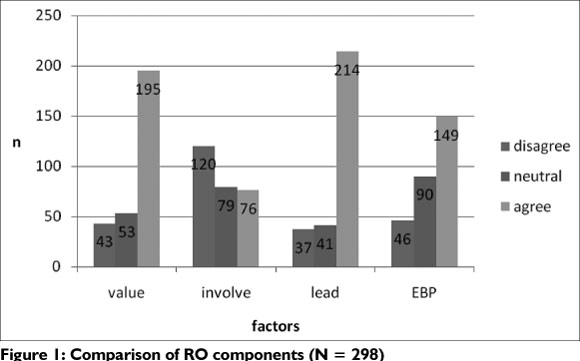
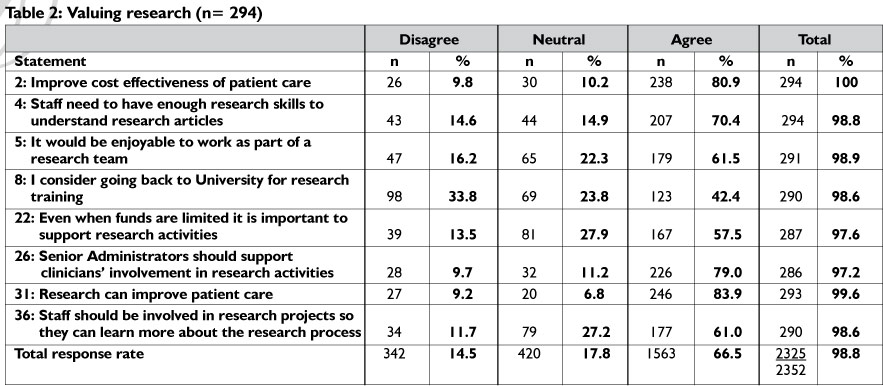
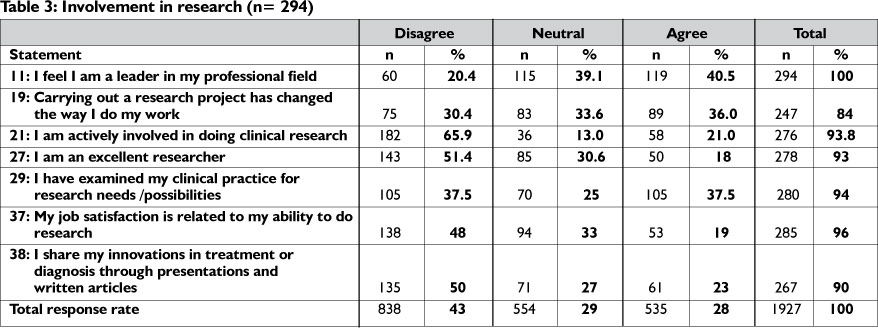
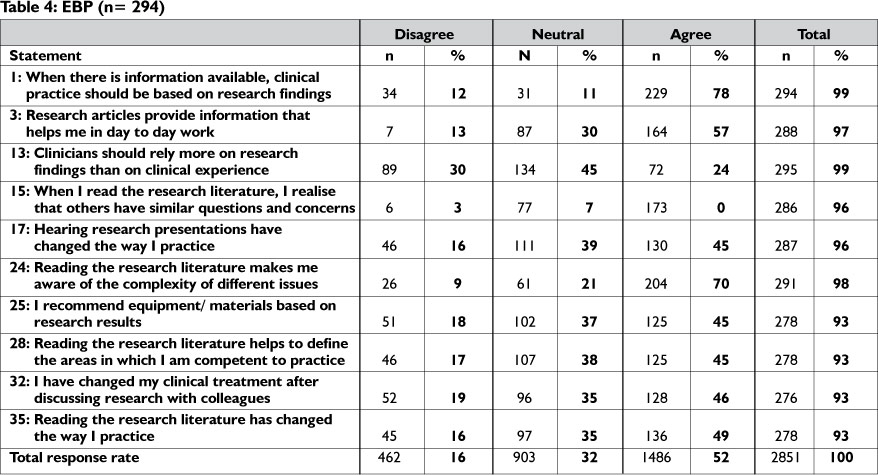
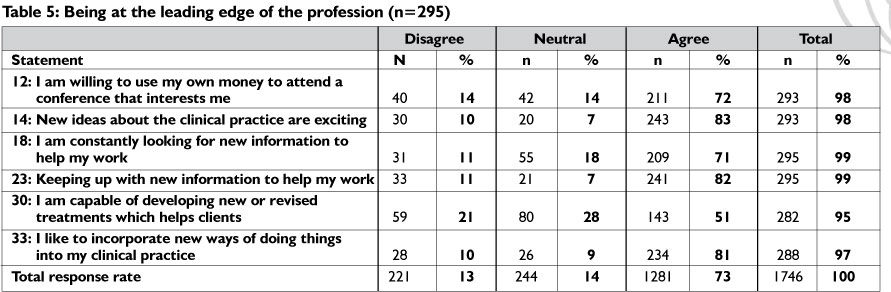
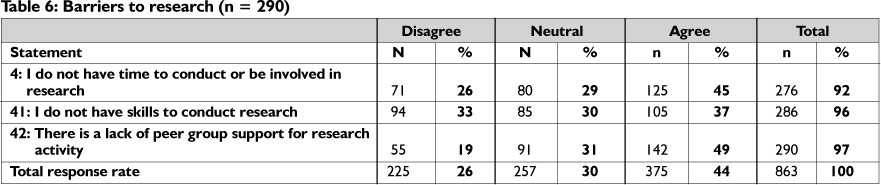
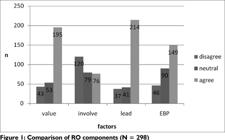
The value placed on and the extent of involvement of occupational therapists in research is unknown. This article reports on the quantitative part of a mixed methods study conducted to establish the multi-dimensional factors that influence Research Orientation. A cross-sectional descriptive design was employed. Data were collected through the use of a previously validated instrument, the Edmonton Research Orientation Survey (EROS). The survey was posted to all occupational therapists on the HPCSA register (2279 occupational therapists) in August 2007. A thirteen percent response rate (298 of 2279) was achieved. Most respondents (177/275, 67%) had high overall EROS scores (mean = 133.6 and median =136.) indicating a strong research orientation. With further analyses it became clear that these occupational therapists valued research ( 195 / 290, 67%) and saw themselves at the leading edge of the profession (214 / 291, 73% ) yet evidence based practice (149 / 285, 52%) and involvement in research was limited (76 / 275, 28%). The results suggest that although occupational therapists value research they do not engage in applying research in practice or participate in the execution of research. The positive research orientation provides an opportunity for the profession to use the available potential to increase research output.
Research orientation; evidence-based practice; research involvement
 Thumbnail