Occupational therapy students' experiences of using the Kawa model as a self-reflection tool during mental health work-integrated learning
INTRODUCTION: Healthcare professionals are encouraged to practice reflection, which can be learnt using various tools during their undergraduate studies. The study aimed to explore the experience of occupational therapy students using the Kawa model as a self-reflection tool during their mental health work-integrated learning METHOD: An exploratory, descriptive, qualitative design was employed. Semi-structured online interviews with probe follow-up questions were conducted in English with newly graduated community service occupational therapists (n=10) who used the Kawa Model as a self-reflection tool during their final year of mental health work-integrated learning. The data was transcribed and analysed by the researchers using thematic analysis. Ethical approval was granted by the ethical research board of the university. Trustworthiness was ensured through anonymity, member checking and peer debriefings FINDINGS: Three themes emerged from the data on using the Kawa model as a self-reflection tool, namely, (i) facilitators to reflection using the Kawa model, (ii) barriers to reflection using the Kawa model, (iii) recommendations for future use of the Kawa model CONCLUSION: The Kawa model as a self-reflection tool is beneficial. Participants noted that self-reflection using a model provided them with a guideline, which helped them to organise their thoughts when reflecting IMPLICATIONS FOR PRACTICE: •The Kawa model has a positive impact on professional development, encouraging students to become more self-aware. •The study highlights the need to integrate the Kawa model into undergraduate training and to utilise it as a self-reflection tool during work-integrated learning. •Although the results of this study are specific to mental health work-integrated learning, the Kawa model as a self-reflection tool can be explored in other work-integrated learning areas across South Africa.
professional development; self-awareness of strength and weakness; psychosocial learning model; competent healthcare practitioner; good health and well-being
Occupational therapy students' experiences of using the Kawa model as a self-reflection tool during mental health work-integrated learning
Nthabiseng PhalatseI; Aqeela NaidooII,; Michaela GoncalvesIII,; Kayla JenkinsonIV,; Justancia SitholeV,; Inaminkosi ZwaneVI,
IOccupational therapy department, University of Pretoria, South Africa. https://orcid.org/0000-0001-9749-0226
IIOccupational therapy department, Sasha Prinsloo Occupational Therapy, South Africa. https://orcid.org/0009-0001-7382-2473
IIIOccupational therapy department, Shelby Nassif Occupational Therapy, South Africa. https://orcid.org/0009-0002-7815-7940
IVOccupational therapy department, Reconnect Occupational Therapy, South Africa. https://orcid.org/0009-0008-0734-7636
VNo affiliations at present. https://orcid.org/0009-0008-4286-9974
VINo affiliations at present. https://orcid.org/0009-0004-2219-0586
INTRODUCTION: Healthcare professionals are encouraged to practice reflection, which can be learnt using various tools during their undergraduate studies. The study aimed to explore the experience of occupational therapy students using the Kawa model as a self-reflection tool during their mental health work-integrated learning
METHOD: An exploratory, descriptive, qualitative design was employed. Semi-structured online interviews with probe follow-up questions were conducted in English with newly graduated community service occupational therapists (n=10) who used the Kawa Model as a self-reflection tool during their final year of mental health work-integrated learning. The data was transcribed and analysed by the researchers using thematic analysis. Ethical approval was granted by the ethical research board of the university. Trustworthiness was ensured through anonymity, member checking and peer debriefings
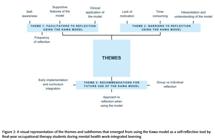
FINDINGS: Three themes emerged from the data on using the Kawa model as a self-reflection tool, namely, (i) facilitators to reflection using the Kawa model, (ii) barriers to reflection using the Kawa model, (iii) recommendations for future use of the Kawa model
CONCLUSION: The Kawa model as a self-reflection tool is beneficial. Participants noted that self-reflection using a model provided them with a guideline, which helped them to organise their thoughts when reflecting
IMPLICATIONS FOR PRACTICE:
•The Kawa model has a positive impact on professional development, encouraging students to become more self-aware.
•The study highlights the need to integrate the Kawa model into undergraduate training and to utilise it as a self-reflection tool during work-integrated learning.
•Although the results of this study are specific to mental health work-integrated learning, the Kawa model as a self-reflection tool can be explored in other work-integrated learning areas across South Africa.
Keywords: professional development, self-awareness of strength and weakness, psychosocial learning model, competent healthcare practitioner, good health and well-being
Self-reflection is integral in personal and professional development12,3. Reflection plays a critical role in the healthcare sector as it aids students' personal and professional development through building their self-awareness of their strengths and weaknesses, as well as their skills in bridging the gap between theory and practice1
Occupational therapy students are required to engage in self-reflection practices during the completion of their academic coursework, which consists of theory and practical work-integrated learning at various placements4456
During their period of study, occupational therapy students are trained by using a psychosocial learning model, which aids in viewing their patients holistically instead of focusing solely on the diagnosis6789
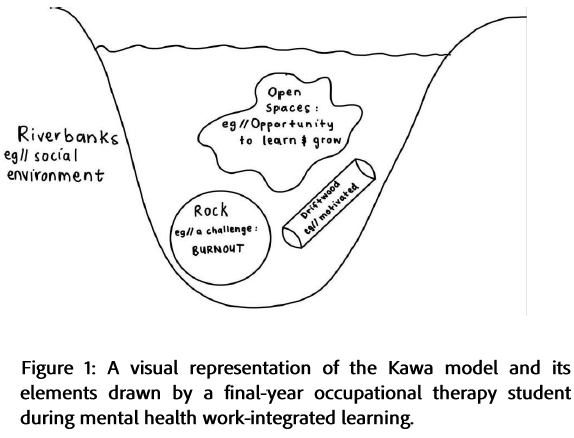
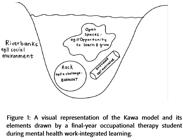
There are different tools one can utilise to practise self-reflection, including journaling or making use of models, such as Gibbs' reflective cycle101112,13. Although traditionally used with patients, the Kawa model has recently been used as a self-reflection tool in some contexts. A study was conducted in Australia exploring the impact of self-reflection for occupational therapy students using the Kawa model as the reflection tool, which concluded that the model facilitated personal and professional growth81415168Figure 1 adjacent.
In this study, the researchers applied the Kawa model as a reflection model within the reflective observation and active experimentation components of Kolb's model, which was utilised as the conceptual model1712
The Kawa model was used in a study in the Australian context for students during their work-integrated learning in rural community placements, demonstrating that students became more aware of their professional and personal strengths and weaknesses and were able to grow from what they learnt about themselves18119
METHODOLOGY
Study design
An exploratory, descriptive qualitative design was used in the study.
Population/sampling
The target population of this study consisted of 44 community service occupational therapists, of which 10 gave consent and participated in the study (n=10). Participants were recruited through the head of the occupational therapy department, using their email addresses on the system. In the email, a Google Form was attached for participants to indicate their willingness to participate in the study. Study participants were 2024 community service occupational therapists from the University of Pretoria in Gauteng, who completed their mental health work-integrated learning in 2023 and were the first group of students to use the Kawa model for reflection during work-integrated learning. During this period, participants engaged in weekly reflection sessions in pairs with their occupational therapy lecturer and were required to do weekly reflections by drawing up a Kawa model figure that represented a particular week of work-integrated learning over a 6-week period. All participants provided signed consent to participate in this study.
Pilot study
A pilot study was conducted online using a semi-structured interview with one participant from the population, who was excluded from the study sample.
Data collection
Data were collected through semi-structured online interviews conducted in English. The interview guide was developed using the five phases outlined by Kaleo et al20
Data analysis
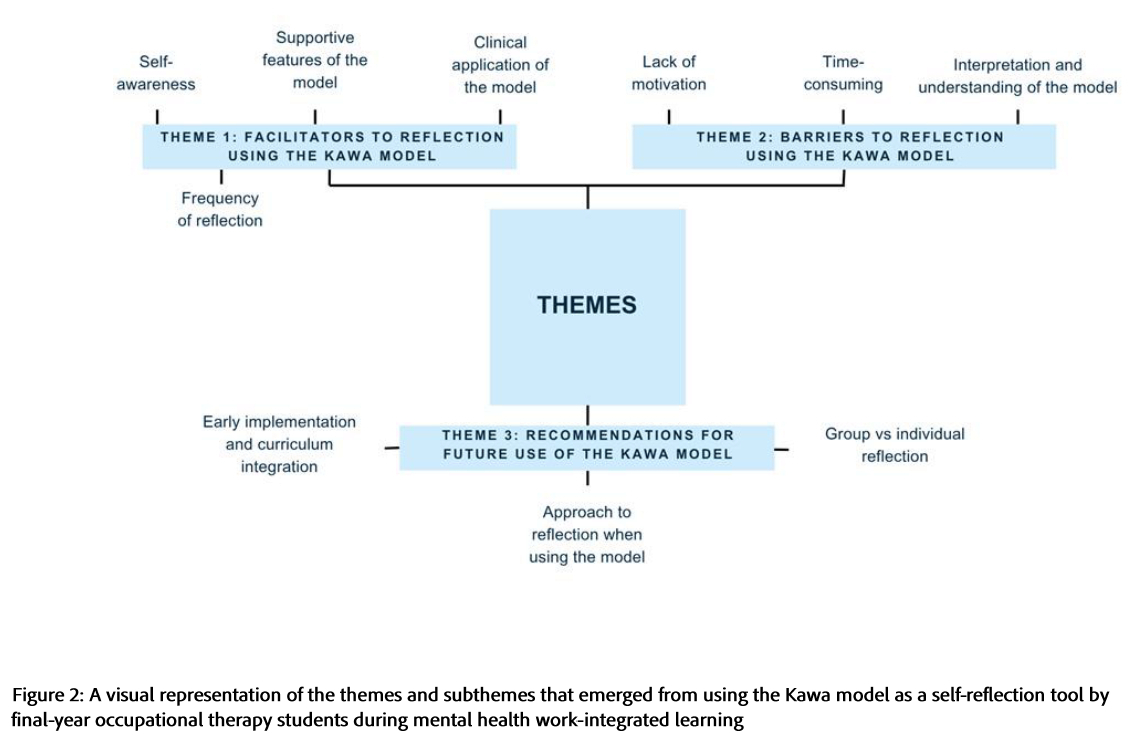
Braun and Clarke's six steps of thematic analysis21Figure 2 below.
Trustworthiness
Trustworthiness was considered throughout the research process. Dependability and credibility were ensured through triangulation of data sources, member checking, and peer debriefing within the research team. The researchers have saved a trail of all documents and data in an encrypted folder.
Ethical considerations
This study received ethical approval from the University of Pretoria Faculty of Health Sciences Research Ethics Committee, with the ethics approval number: 583/2023. Informed consent was obtained from all participants prior to data collection.
FINDINGS
Demographic information
This study comprised 10 participants who completed their final year of study in 2023 at the University of Pretoria; three were male, and seven were female. Pseudonyms were used to ensure participants' anonymity. The participants were given pseudonyms according to the order of their interviews (e.g. the third interview done was allocated the pseudonym - P3).
THEME 1: Facilitators to reflection using the Kawa model
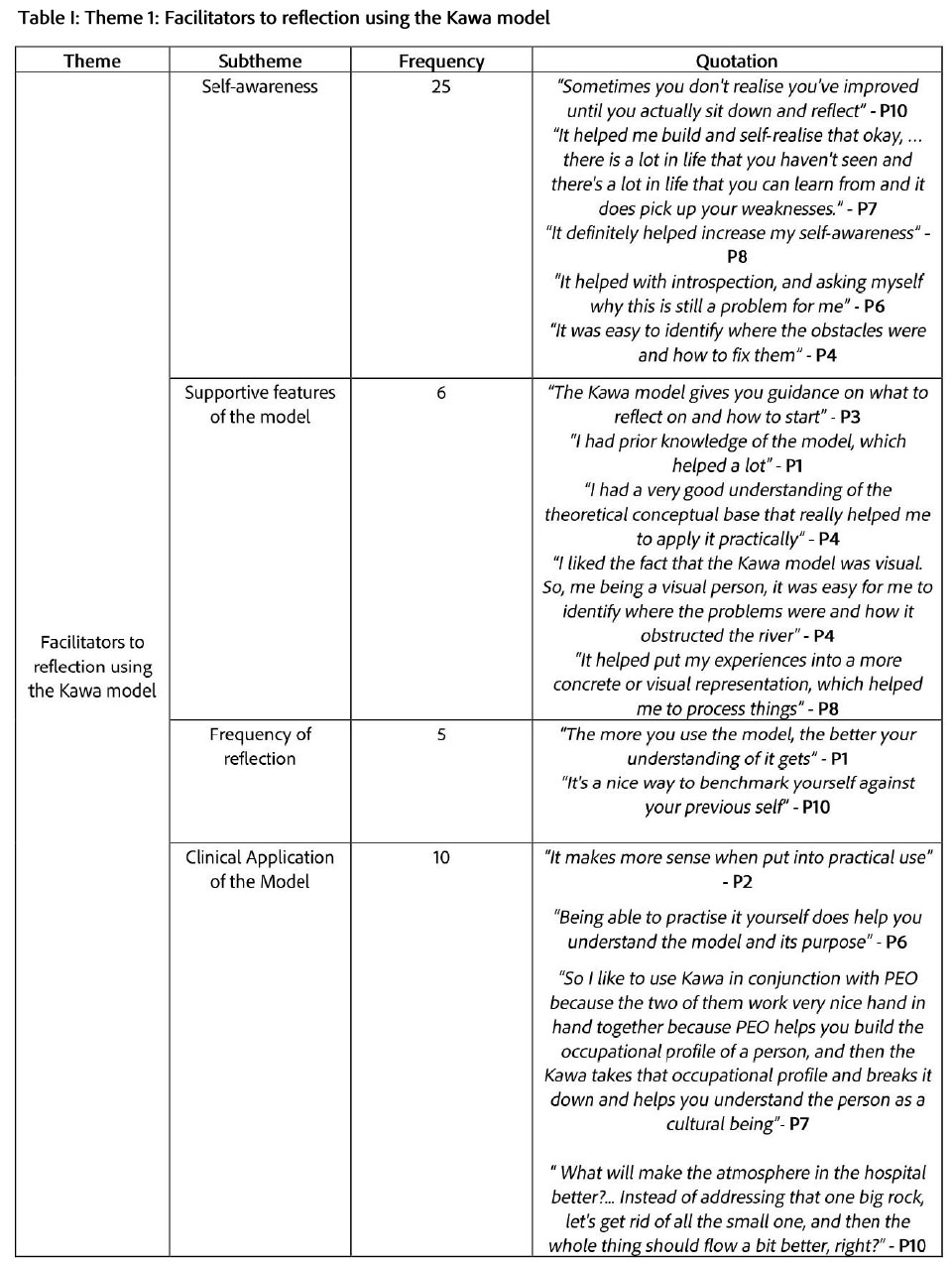
This theme described the facilitators for reflection and for using the Kawa model as a self-reflection tool. Key facilitators included encouraging self-awareness, supportive guidelines provided by the model, repetitive use, and the model's clinical application, as shown in Table I, page 4
Self-Awareness
The majority of participants felt that reflecting and using the Kawa model as a self-reflection tool facilitated their self-awareness. One participant stated that they did not realise they were improving until they sat down and reflected (P10), with another noting that it improved their ability to become self-aware (P8). It was noted that this self-awareness aided with introspection, the ability to look inward and assess why they may struggle with certain tasks. Other participants mentioned that identifying obstacles was easier when they were given opportunities to reflect, which led to problem-solving on how to address those obstacles (P4). This speaks to the value of self-awareness, which is made possible through consistent reflection.
Supportive features of the model
Participants were facilitated in using the model by its structure, representation, and understanding. The structure of the model provided a guideline for self-reflection, thus making reflection less complex as the different aspects served as prompts. One participant reported that the model provided direction on where to start reflecting and what to reflect on (P3), while another reported that it served as a valuable guideline open to individual interpretation (P1). Theoretical knowledge through prior education was credited for the model's usability for self-reflection. When one utilises it for self-reflection, they are not challenged by the metaphor of the model due to their prior theoretical knowledge. It was reported that having a thorough understanding of the model helped them apply it practically when reflecting on their experiences with it (P4). Another facilitator of the participants' reflection was the model's visual representation. The model's visual components were greatly appreciated by participants. More specifically, one participant stated that, as a visual learner, it was beneficial to see how their obstacles and challenges (rocks) affected their river (life flow) (P4). Similarly, many participants noted that the model's visual nature helped them process their experiences more easily and in greater depth.
Frequency of Reflection
Several participants noted the frequency of reflection, that is, how often they used the Kawa model to reflect, as a facilitator for self-reflection. According to some, the more consistently the model was used to reflect, the better their understanding of it became (P2) (P1). With frequent reflection also came frequent input on what was reflected on, which gave them the opportunity to see their progress against themselves over the 6-week period of work-integrated learning (P4).
Clinical Application of the Model
Participants reported that the Kawa model could be used to break down larger components, aiding understanding and developing a broader picture in both clinical and patient contexts (P7, P10). Another prevalent term was the model's practicality; one participant stated that their comprehension of the model improved when they were required to apply it (P2). In line with the model's supportive features, participants reported that using the Kawa model for reflection during WIL helped them better understand the model and its application in a clinical context (P6).
THEME 2: Barriers to reflection using the Kawa model
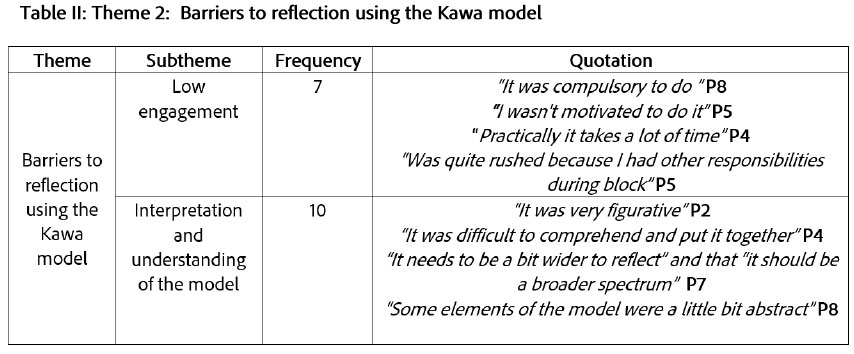
This theme describes students' barriers to reflection using the Kawa model as a self-reflection tool. This includes a lack of motivation, the time required to use the model and the interpretation of the model.
Low engagement
Since self-reflection was compulsory and part of the curriculum, participants stated they needed more motivation to complete the reflections each week and felt they were being forced to do so. The self-reflections were seen as a time-consuming task that took a substantial amount of time to complete, especially when one has many other responsibilities to fulfil during WIL.
Interpretation and understanding of the model
The Kawa model itself was perceived as very figurative, and participants found the terms difficult to understand because they are abstract. For example, the term "driftwood" was perceived as confusing because it can be either positive or negative, so participants struggled to differentiate "negative driftwood" from "rocks" in the model, as shown in Table II below.
THEME 3: Recommendations for future use of the Kawa Model
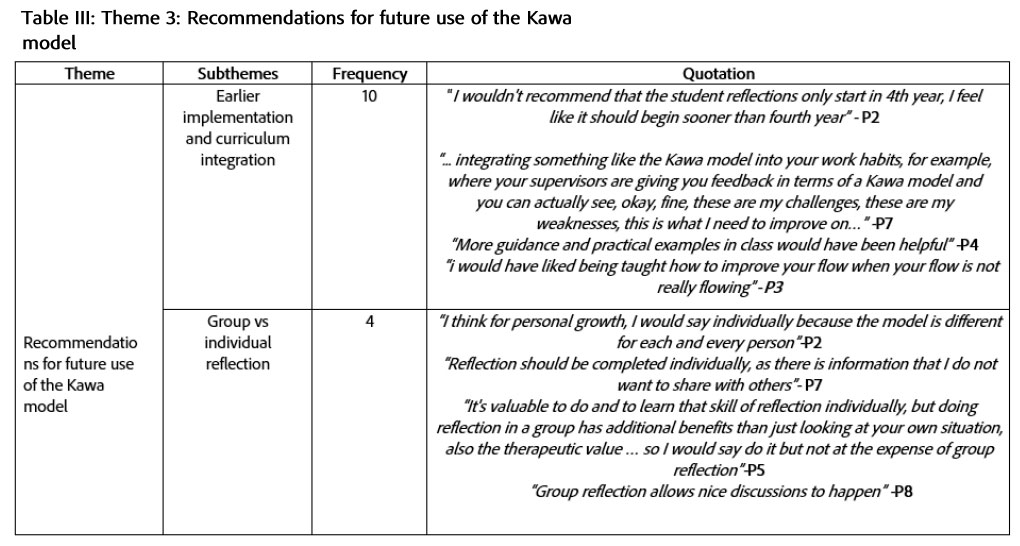
This theme explored participants' recommendations regarding the use of the Kawa Model as a reflection tool, reflection as a concept, and its implementation and teaching within the curriculum, as illustrated in Table III below.
Early Implementation and Curriculum Integration
The majority of participants stated that implementing the Kawa model in earlier years of study would be beneficial, as it would allow them to understand the model and, consequently, make it easier to apply in self-reflection. It was suggested that students be required to reflect only twice, at the beginning and at the end, during the 6-week period, to reduce the time spent reflecting. In addition, participants recommended that the model be integrated into one's work habits, as reported by supervisors on students' clinical performance, noting their strengths and weaknesses using the Kawa model.
Regarding the model's teaching and training, participants stated that further instruction on its use is required, as it requires strict adherence to its elements. The participants noted that self-reflection requires openness and honesty; therefore, practising it early in training would be beneficial. It is suggested that sufficient training from university lecturers on the practical use of the model is required. It was also reported that it would be beneficial if university supervisors would assist students when they experience difficulties that challenge their river flow.
Group vs Individual Reflection
Participants displayed differing opinions on whether reflection is more beneficial in an individual or group context. Some participants noted that reflection should be done individually, as there is information they would not be comfortable sharing with others. It was further noted that the benefit of completing reflection individually is that it allows for greater personal growth, as the model can be applied differently to each person. In contrast, other participants stated that group reflection also has its benefits. It was reported that it facilitates valuable discussions, which is important for learning. Group reflection indicated further benefits, such as therapeutic value from sharing with peers.
DISCUSSION
According to a study done by Blake et al228,10. Additionally, this study found that the visual representation of the model enhanced self-awareness as it provided a visual aid as well as a concrete interpretation of their experiences. Having a guideline for reflection helped participants learn to reflect effectively, focusing on the key aspects outlined by the Kawa model. Participants with prior knowledge of the model found that this helped their understanding and therefore enhanced its implementation as a self-reflection tool. One of the barriers to the Kawa model was its abstract nature; however, those with prior exposure to it did not struggle with this aspect. From this, it is suggested that having prior knowledge of the model enhances its implementation and effectiveness as a self-reflection tool.
Participation of patients in occupational therapy intervention plays a crucial role in the effectiveness of the intervention23
Moreover, the effectiveness of self-reflection relies on the integrity and honesty of the person reflecting. In a study by Maloney et al.242225
According to a study by Lim et al.99
This study recommends implementing the Kawa model as a self-reflection tool earlier in the curriculum. Due to the metaphorical nature of the model, it can be difficult to understand initially. Therefore, implementing the Kawa model for students to self-reflect earlier can ensure they fully understand its different aspects and are comfortable using it before their final year. The implementation of the model in earlier curricula would, in addition, aid in the development of reflective practitioners. This will allow students to become aware of their strengths and weaknesses whilst still at university, giving them the opportunity to work on their weaknesses before entering the workforce. It was also recommended that lecturers be more involved in the process, from the actual learning of the model to the interpretation of the rivers drawn. Having the lecturers involved in the process will aid students' understanding of the model and, therefore, its clinical application, as they will be able to understand the concept of river flow and how to enhance a river that is not flowing freely.
The reflections were done in pairs in this study, which may have affected the honesty of the self-reflection, as some participants did not feel comfortable sharing about themselves. Therefore, it is suggested that self-reflection be done individually to foster honest self-reflection.
Limitations
Participants were not required to share pictures of their Kawa models; this would have been helpful to view, as it would have given the researchers a visual representation of their growth throughout the mental health work-integrated learning period and therefore highlighted whether or not the Kawa model is a useful self-reflection tool.
The participants in this study were completing their community service year in 2024 during data collection; therefore, it was challenging to schedule interviews that aligned with the researchers' and participants' schedules. The limited number of participants in the study affects the transferability of the findings, as it was a small sample from a single institution. Further research should be conducted across a wider population.
The 2023 final-year students were the first at this institution to use the Kawa model as a reflection tool. A longitudinal study may be other institutions' guidelines and reflection tools might also be beneficial.
CONCLUSION
Self-reflection is important for mental health work-integrated learning and can also be useful across other work-integrated learning areas in occupational therapy. This study suggests that integrating self-reflection using the Kawa model during mental health work-integrated learning in South Africa at the University of Pretoria, enhances students' learning experience, as it allows them to track the progress being made and allows the students to reflect in a holistic way by acknowledging how context impacts their life and experiences. It is recommended that the practice of self-reflection using the Kawa model be introduced earlier in the curriculum to ensure all students have a comprehensive understanding of it. The study also recommends that other higher education institutions across the country consider integrating the model into the practice of self-reflection.
Author contributions
Nthabiseng Phalatse identified the topic and supervised the study. All listed authors were involved at all stages of the research study, held regular meetings to work on the manuscript, and approved the final manuscript.
Conflicts of interest
The authors have no conflicts of interest to declare.
REFERENCES
Acknowledgements
The authors would like to thank the occupational therapists who participated in the study for their valuable contributions.
INTRODUCTION/LITERATURE REVIEW:
-
1. Masedo A, Grandón P, Saldivia S, Vielma-Aguilera A, Castro-Alzate ES, Bustos C, et al. A multicentric study on stigma towards people with mental illness in health sciences students. BMC Medical Education. 2021;21:1-11. DOI: https://doi.org/10.1186/s12909-021-02695-8
» https://doi.org/10.1186/s12909-021-02695-8 -
2. Nguyen QD, Fernandez N, Karsenti T, Charlin B. What is reflection? A conceptual analysis of major definitions and a proposal of a five‐component model. Medical education. 2014;48(12):1176-89. DOI: https://doi.org/10.1111/medu.12583
» https://doi.org/10.1111/medu.12583 -
3. McFarland L, Saunders R, Allen S. Reflective practice and self-evaluation in learning positive guidance: Experiences of early childhood practicum students. Early Childhood Education Journal. 2009;36:505-11. DOI: https://doi.org/10.1007/s10643-009-0315-2.
» https://doi.org/10.1007/s10643-009-0315-2 - 4. What is Reflection In Terms of Education? : Eastern Washington University 2023 [Available from: Importance of Reflection as a Teacher - EWU Online]
- 5. WFOT: Minimum standards for the education of occupational therapists. Revised 2016. Available from: Publication: Minimum Standards for the Education of Occupational Therapists 2016 | WFOT
-
6. Bagatell N, Lawrence J, Schwartz M, Vuernick W. Occupational therapy student experiences and transformations during work-integrated learning in mental health settings. Occupational Therapy in Mental Health. 2013;29(2):181-96. DOI: https://doi.org/10.1080/0164212x.2013.789292
» https://doi.org/10.1080/0164212x.2013.789292 -
7. Fletcher T, Parham D, Bowyer P, Tool G, Iliff SL, Freysteinson WM. Occupational therapy student conceptions of self-reflection in Level II work-integrated learning. Journal of Occupational Therapy Education. 2019;3(1) DOI: https://doi.org/10.26681/jote.2019.030105
» https://doi.org/10.26681/jote.2019.030105 -
8. Naidoo O, Christopher C, Lingah T, Moran M. The Kawa Model: A Self-Reflection Tool for Occupational Therapy Student Development in Practice Placements in Australia. Occupational therapy international. 2023;2023(1). DOI: https://doi.org/10.1155/2023/2768898
» https://doi.org/10.1155/2023/2768898 -
9. Lim RBT, Hoe KWB, Zheng H. A Systematic Review of the Outcomes, Level, Facilitators, and Barriers to Deep Self-Reflection in Public Health Higher Education: Meta-Analysis and Meta-Synthesis. Front Educ (Lausanne). 2022;19;7. DOI: https://doi.org/10.3389/feduc.2022.938224
» https://doi.org/10.3389/feduc.2022.938224 -
10. Reljić NM, Pajnkihar M, Fekonja Z. Self-reflection during first clinical practice: The experiences of nursing students. Nurse education today. 2019;72:61-6. DOI: https://doi.org/10.1016/j.nedt.2018.10.019
» https://doi.org/10.1016/j.nedt.2018.10.019 -
11. Husebø SE, O'Regan S, Nestel D. Reflective practice and its role in simulation. Clinical Simulation in Nursing. 2015;11(8):368-75. DOI: https://doi.org/10.1016/j.ecns.2015.04.005
» https://doi.org/10.1016/j.ecns.2015.04.005 -
12. Healey M, Jenkins A. Kolb's experiential learning theory and its application in geography in higher education. Journal of geography. 2000;99(5):185-95. DOI: https://doi.org/10.1080/00221340008978967
» https://doi.org/10.1080/00221340008978967 -
13. Chiu SK. Innovative experiential learning experience: Pedagogical adopting Kolb's learning cycle at higher education in Hong Kong. Cogent Education. 2019;6(1):1644720. DOI: https://doi.org/10.1080/02331186x.2019.1644720
» https://doi.org/10.1080/02331186x.2019.1644720 -
14. Foo KS, Kueh YC, Leong KJ, Teoh JY, Mok HA, Kim Y, et al. Kawa model on mental health, sports and physical performance: A mini review. Asian Journal of Sport and Exercise Psychology. 2023. DOI: https://doi.org/10.1016/j.ajsep.2023.08.002
» https://doi.org/10.1016/j.ajsep.2023.08.002 -
15. Iwama MK, Thomson NA, Macdonald RM, Iwama MK, Thomson NA, Macdonald RM. The Kawa model: The power of culturally responsive occupational therapy. Disabil Rehabil. 2009 Jan 21;31(14):1125-35. DOI: https://doi.org/10.1080/09638280902773711
» https://doi.org/10.1080/09638280902773711 -
16. Blakely T, Potvin M-C, Iwama M. The Kawa Model's Value for Level II Occupational Therapy work-integrated learning Students. Journal of Occupational Therapy Education. 2021;5(4):14. DOI: https://doi.org/10.26681/jote.2021.050414
» https://doi.org/10.26681/jote.2021.050414 -
17. Jayatilleke N, Mackie A. Reflection as part of continuous professional development for public health professionals: a literature review. Journal of Public Health. 2013;35(2):308-12. DOI: https://doi.org/10.1093/pubmed/fds083
» https://doi.org/10.1093/pubmed/fds083 -
18. Lape JE, Lukose A, Ritter DR, Scaife BD. Use of the Kawa Model to facilitate Interprofessional collaboration: a pilot study. Internet Journal of Allied Health Sciences and Practice. 2019;17(1):3. DOI: https://doi.org/10.1007/s10643-009-0315-2
» https://doi.org/10.1007/s10643-009-0315-2 -
19. Ramsey R. Psychosocial aspects of occupational therapy (2004). AJOT: American Journal of Occupational Therapy. 2004;58(6):669-73. DOI: https://doi.org/10.5014/ajot.58.6.669
» https://doi.org/10.5014/ajot.58.6.669 -
20. Kallio H, Pietilä AM, Johnson M, Kangasniemi M. Systematic methodological review: developing a framework for a qualitative semi‐structured interview guide. Journal of advanced nursing. 2016;72(12):2954-65. DOI: https://doi.org/10.1111/jan.13031
» https://doi.org/10.1111/jan.13031 - 21. Clarke V, Braun V. Teaching thematic analysis: Overcoming challenges and developing strategies for effective learning. The psychologist. 2013;26(2):120-3. Available from: Teaching thematic analysis: Overcoming challenges and developing strategies for effective learning Victoria Clarke & Virgini.
-
22. Blakely T, Potvin MC, Iwama M. The Kawa Model's Value for Level II Occupational Therapy Fieldwork Students. Journal of Occupational Therapy Education. 2021;5(4):14. DOI: https://doi.org/10.26681/jote.2021.050414
» https://doi.org/10.26681/jote.2021.050414 - 23. De Witt, P. Creative Ability- a model for psychiatric occupational therapy. In Crouch, R. & Alers, V.(eds). Occupational Therapy in Psychiatry and Mental Health. 4th Edition. London and Philadelphia: Whurr Publishers; 2005.
-
24. Maloney S, Tai JH, Lo K, Molloy E, Ilic D. Honesty in critically reflective essays: an analysis of student practice. Advances in health sciences education. 2013;10(18):61 DOI: https://doi.org/10.1007/s10459-012-9399-3
» https://doi.org/10.1007/s10459-012-9399-3 - 25. HPCSA. Continuing Professional Development 2021. Available from: Health Professions Council of South Africa (HPCSA).

Submitted: 13 January 2025
Reviewed: 28 February 2025
Revised: 31 July 2025
Accepted: 8 August 2025
EDITOR: Pamela Gretschel https://orcid.org/0000-0002-7890-3635
DATA AVAILABILITY: Upon reasonable request, from corresponding author
FUNDING: No funding was received for this study