Exploring the lived experiences and quality of life of mental healthcare users in chronic psychiatric facilities in KwaZulu-Natal
Abstract
INTRODUCTION: The quality of life for mental health care users in public sector psychiatric facilities remains a significantly under-researched area in South Africa. These facilities, while providing essential care, often present challenges such as prolonged institutionalization, limited psychosocial engagement, and restricted contact with family. Understanding the lived experiences of mental health care users is essential to inform holistic, client-centered interventions that support mental health recovery and community reintegration METHODS: An exploratory qualitative design was employed, using semi-structured interviews to collect data from twelve purposively selected participants. Participants aged 30 to 60 years, with lengths of stays ranging from eight months to 12 years were selected. Thematic analysis was used to analyze data FINDINGS: The main themes to emerge included "Home is where the heart is" "Appraising treatment and care" the "Challenges of being a MHCU" and the "Positive experiences of the MHCUs". The subthemes related to longing for home and family connection, coping through spiritual practices and solitude, and the therapeutic value of occupational therapy. While some participants appreciated the structure and support provided by the facility, others reported emotional distress related to rigid routines, poor environmental conditions and limited autonomy CONCLUSION: Occupational therapy can play a critical role in promoting emotional well-being, facilitating skills development, and advocating for environmental improvements in psychiatric settings. Utilizing psychosocial interventions and family reintegration strategies may enhance the quality of life for MHCUs in public psychiatric care IMPLICATIONS FOR PRACTICE • Occupational therapists can enhance the emotional well-being of mental healthcare users through engagement in meaningful activities, life skills training, and structured daily routines. • Improving the infrastructure of state psychiatric facilities in terms of infrastructure, privacy, nutrition, and clothing provided is critical for safeguarding dignity and supporting recovery. • Strengthening family contact and community reintegration efforts can reduce isolation and promote continuity of care. • Expanding vocational programmes can prepare service users for independence and future work opportunities. • Addressing violence and ensuring safer therapeutic environments requires staff training in de-escalation techniques and consistent monitoring of aggressive, psychotic and vulnerable individuals. • Occupational therapists, as part of the multidisciplinary team, should advocate for systemic improvements that promote client-centred care and improved quality of life for mental healthcare users in chronic state psychiatric facilities.
public health psychiatric facilities; institutionalization; occupational therapy
INTRODUCTION
According to the World Health Organization (WHO), one in every eight of 970 million people worldwide lives with a mental health disorder, with anxiety and depressive disorders being the most prominent1234522
There is limited literature available about the perspectives of mental healthcare users globally, including South Africa. Occupational therapists who advocate for their clients and assist them in living functional and independent lives find this gap concerning. This dearth of literature contributes to the limited understanding of the lived experiences and the QoL of MHCUs in chronic state psychiatric facilities. Addressing this research problem is crucial for enhancing the holistic care provided to mental healthcare users. This research study could assist healthcare providers, policymakers, organizations, and communities in developing more tailored interventions that encompass clinical care, emotional well-being, social interactions, and a safe, enabling environment, thereby promoting a good QoL for MHCUs.
This literature review aims to critically examine the existing body of knowledge on the lived experiences and QoL of MHCUs, illuminating the challenges, successes, and complex realities faced by individuals in public psychiatric settings. Exploring the lived experiences and QoL of MHCUs emphasizes the subjective and multifaceted nature of mental health, recognising that well-being extends beyond symptom management to include broader aspects of an individual's life. Despite the global recognition of the significance of mental health, existing literature reveals critical gaps and limitations, particularly concerning the subjective dimensions of mental health and QoL of MHCUs in long-term care settings. Most existing research predominantly addresses the acute stages of mental health conditions, neglecting the chronic phases experienced by long-term residents in psychiatric facilities1
There is a dearth of literature on how long-term institutionalization affects MHCUs' self-perceptions, autonomy, and daily functioning. Tragic incidents, such as that which occurred at Life Esidimeni, in which 144 MHCUs died following their transfer from licensed care facilities to unlicensed and ill-equipped organizations as part of cost-containment, exposed critical systemic failures in the mental healthcare system6
Quality of Life measurement tools
WHO defines QoL as "an individual's perception of their position in life in the context of the culture and value systems in which they live, and about their goals, expectations, standards, and concerns"7(11). WHO conceptualizes QoL into five domains, namely physical health, psychological health, social relationships, environment, and general health. There are different QoL assessment tools, including the three versions from WHO, namely WHOQOL-BREF, WHOQOL-1007
The existing QoL assessments, including those designed by WHO, often do not capture the full spectrum of lived experiences, particularly in the under-researched global south regions, where cultural and social factors play a significant role8891010
Barriers in public sector, chronic psychiatric facilities in South Africa
De Wet and Pretorius1111111212
In another South African study focusing on staff perceptions in public psychiatric hospitals, the nursing staff noted a lack of autonomy among MHCUs, coupled with feelings of hopelessness13
Research Aim
This research study aimed to provide MHCUs with a voice through which their lived experiences and QoL within chronic state psychiatric facilities in KZN were explored. Furthermore, the aim was to identify and explore the positive and negative contributing factors that affect the quality of life of MHCUs. This study intends to contribute to existing findings concerning the QoL of MHCUs in chronic state psychiatric facilities in the KZN region of South Africa.
METHODS
Study design
This research study employed an exploratory qualitative design. It involved collecting and analysing data to gain insights into the underlying characteristics, meanings, and experiences associated with the phenomenon of interest14
Research context
This study was conducted within the context of two specialized psychiatric facilities in KZN, South Africa. One was a tertiary psychiatric facility, which was established in the 1880s as an asylum for individuals with mental illness in the uMgungundlovu District. The second facility was situated within the eThekwini District and provided services to chronic psychiatric clients. Only two institutions were sampled in KZN due to time constraints and the overall scope of the study, which was an honours level study. Other institutions in the province house forensic clients, which was not the focus of this study. Including forensic clients may have skewed the findings and introduced a different clinical context with divergent findings.
Sampling
Participants were selected using maximum variation purposive sampling to ensure a diverse representation of individuals with varying lengths of stay, diagnoses, and demographic characteristics. The inclusion criteria were:
• Participants must have resided in chronic state psychiatric facilities in KwaZulu-Natal for a minimum of six months.
• Participants must be adults, aged 18 years and older.
• Participants must have a confirmed diagnosis of a mental health condition.
• Participants should be willing to participate and be able to provide informed consent, affirming psychiatric patients' autonomy and ethical rights.
• Participants must be able to communicate in isiZulu or English.
Exclusion criteria included individuals who were actively psychotic or unable to participate due to cognitive impairments.
Data collection
Data were collected through face-to-face semi-structured interviews conducted in private counselling rooms within the psychiatric facilities. The individual interviews allowed the researchers the advantage of following up on verbal and non-verbal responses1515
Data analysis
The research was guided by an inductive approach, allowing themes to emerge from the data. Thematic analysis was employed to analyze the data by following a six-step process1616
Pilot study
Pilot studies were conducted at both facilities with one participant from each facility. The participants were chosen at random after the occupational therapists employed at the facility had provided the researchers with six to seven participants who met the inclusion criteria. This was done before data collection to evaluate the clarity, usability, and effectiveness of the semi-structured interview schedule and demographic questionnaire. The pilot study revealed that the initial answers were superficial, prompting the addition of more probing questions to elicit detailed responses from participants. For example, the original question, "How has being institutionalized affected your daily life?" was revised to "How has living in this hospital affected your daily life, both positively and negatively?" This allowed participants to explore their feelings in greater depth and provided richer data for analysis
Trustworthiness of data
Data were stored securely on Google Drive and Microsoft Teams, which were password-encrypted and accessible only to the research team. The original audio recordings made on mobile phones were deleted after being transcribed and moved to the secured Google Drive and Microsoft Teams to maintain confidentiality17thick descriptions of the research context enhanced the transferability of the findings, allowing other researchers to assess the applicability of the findings to similar psychiatric settings. These strategies helped ensure that the findings accurately reflected the reality of the participants, in line with recommendations by Shenton1818
Research Procedure
The researchers applied for gatekeeper permission to access the participants from the Department of Health through the National Health Research Database. Application for ethics was done through the Biomedical Research Ethics Committee at the University of KwaZulu-Natal. The researchers sent letters to the two hospitals requesting gatekeeper permission to conduct the research at their facilities and to access the clients for the study. After receiving ethical clearance and gatekeeper permission, the study commenced at the two facilities.
At each facility, a pilot study was done with one participant chosen at random from those that met the criteria. The pilot study led to some changes in the interview questions, and more probes were added. Occupational therapists at the two psychiatric facilities assisted in purposive sampling by identifying MHCUs who met the inclusion criteria. To account for racial and linguistic diversity, purposive racial sampling was applied during selection, and referral by occupational therapists ensured demographic variety across participants.
A total of 12 MHCUs volunteered and participated in the study. Upon first meeting with participants, the researchers administered the MMSE to ensure cognitive capacity for informed consent. The MMSE was conducted by the researchers themselves. Following this, the consent form was read aloud to each participant to ensure comprehension, after which participants signed the form. This process was followed by the completion of a demographic questionnaire and then the semi-structured interview was conducted. Interviews were conducted over two consecutive days across the two institutions. Five trained interviewers were involved in the process, and to facilitate linguistic and cultural responsiveness, at least one isiZulu-speaking interviewer was assigned to each site. Audio-recorded interviews were transcribed verbatim and translated where necessary. The data were then subjected to thematic analysis. Findings were synthesized into a manuscript format and prepared for examination and publication.
Ethical clearance
Ethical approval was obtained from the Biomedical Research Ethics Committee at the University of KwaZulu-Natal (Protocol reference number: BREC/00006787/2024). Gatekeepers' permission was obtained from the National Health Research Database and the two facilities. Informed consent was secured from all participants before they participated in the study, and their ability to provide informed consent was determined through a Mini-Mental State Examination (MMSE). Participants were informed of their right to withdraw from the study at any point without consequences. Confidentiality was maintained by anonymizing all data through pseudonyms. Only the research team have access to the raw data, which will be stored for 5 years, in compliance with the Protection of Personal Information Act (POPIA) of South Africa17
FINDINGS
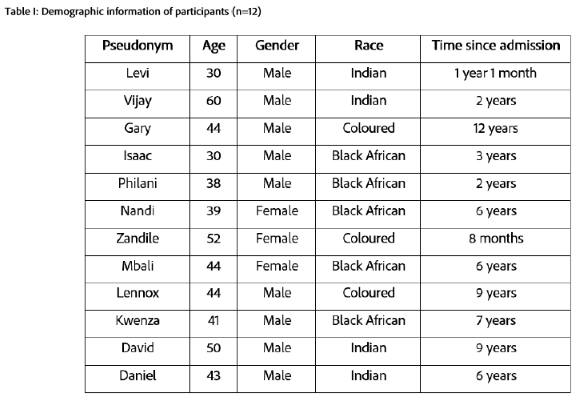
The participants' demographic information is presented in Table I (below).
The study included 12 participants, with ages ranging from 30 to 60 years. The sample comprised 9 males and 3 females, and represented a variety of racial groups. Participants had been admitted to the facility for durations ranging from 8 months to 12 years.
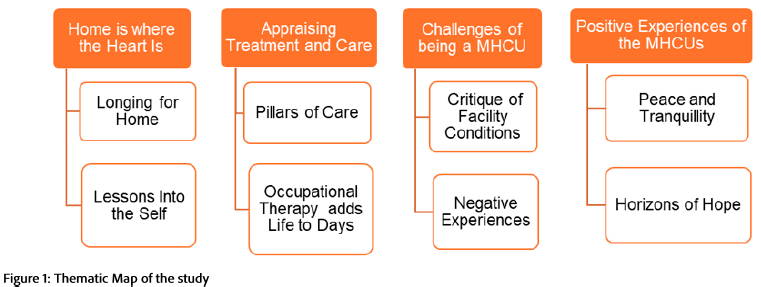
With reference to Figure 1, the analysis of the participants' experiences revealed four key themes that encapsulated the perspectives of MHCUs on life within the psychiatric facilities. The first theme, Home is where the heart is, explored the participants' emotional ties to their home environments through two subthemes. The first theme reflected the deep emotional significance that participants attached to the idea of home not merely as a physical place, but as a source of identity, belonging, and emotional stability. This theme was explored through two subthemes. The first, Longing for Home, captured the participants' desires to return to their homes and reconnect with loved ones, emphasizing the emotional toll caused by institutionalization. The second subtheme, Lessons into the Self, reflected the personal reflections, lessons and insights gained during their time in care, often prompted by distance from home and community. Together, these subthemes highlighted how the concept of "home" served both as a symbol of emotional yearning and a lens through which participants evaluated their past and envisioned their recovery. The second theme, Appraising treatment and care, assessed the quality of support received. There were two subthemes named as Pillars of Care, which emphasized the essential support systems, and Occupational Therapy Adds Life to Days, reflected the positive impact of occupational therapy on the participants' daily lives. The third theme, Challenges of being a MHCU, addressed the difficulties encountered within the facilities. These were organized into two subthemes, named as Critique of Facility Conditions, and Negative Experiences. Finally, the fourth theme Positive experiences of the MHCUs captured the uplifting aspects of the participants' inpatient journeys. The subthemes were named as Peace and Tranquility and Horizons of Hope, highlighting the bonds formed and optimism for the future. Together, these themes and subthemes provided a holistic understanding of the MHCUs' lived experiences within the chronic statepsychiatrici nstitutionsi nKZN.
THEME 1: Home is where the heart is.
This theme, called "Home is where the heart is," had two subthemes: Longing for Home and Lessons into the Self.
Subtheme 1: Longing for Home
Participants expressed their feelings regarding longing for their homes whilst they were institutionalized. They expressed gratitude for their families.
"I am not happy because I want to go home. I do not want to go for a visit. I want to get out once and for all." (Philani)
"I like working in thvou is place, but at home, I want to be back to my old self... free, doing things that everybody does, going to the mall, shopping, things like that." (Lennox)
"I realized how close my family is to me. I saw how close God is to me... even when facing challenges and I'm thankful that even when my family was close to me, they didn't abandon me."(Mbali)
Subtheme 2: Lessons into the self
Participants explored insights they had made about themselves. The narratives to emerge from this subtheme were related to stigma, regrets, and disappointment. Many participants viewed their past decisions with regret
"So, when you think of those days, you think of what you could have done to make it different ...you have regrets. I wish I was more educated... to be more serious because I was working at a young age." (Lennox)
"Incomplete career. ..mm-hmm...broken relationships, mm-hmm...bad fatherhood. I had an accident with my car." (David)
"I'm not happy with my achievements... maybe by this time I should have had my own car, my own house... it stopped me to achieve my career. Like the things that I want to do in life, I couldn't do it again because of my diagnosis." (Isaac)
THEME 2: Appraising treatment and care
Appraising treatment and care had two subthemes that emerged, named as Pillars of care and Occupational therapy adds life to days.
Subtheme 1: Pillars of Care
Participants shared mixed feelings about the medications they received. For some, the medications provided a sense of calm and control over their mental health, but it also came with side effects that impacted their daily functioning.
"Medication is good. I don't deny medication." (Gary
The side effects of medication, such as drowsiness and slurred speech, were frequently mentioned. Despite these challenges, participants generally acknowledged the necessity of medication.
"It does make me a bit drowsy...J'm battling with the slurred speech and the increased saliva that it produces due to the high dosage." (Zandile)
Participants spoke of the friendships they had developed with other patients and staff, which provided a sense of support and connection. These friendships and bonds provided emotional support, which was critical in helping participants navigate the challenges of living in a psychiatric facility.
"I have also made friends with some girl named, She's very outspoken... we get along so well, i share a lot of things with her, and we talk about everything. She also has kids, and I have kids, so we give each other advice on what to do and what to fix." (Mbali)
"When I first came there was an Indian guy, he took me under his wing, and he looked after me when I had nothing." (Lennox)
Subtheme 2: Occupational Therapy adds life to days
Occupational therapy emerged as a significant positive aspect of the participants' lives within the facilities. Participants appreciated occupational therapy for helping them cope with their mental health conditions.
"I have learned a lot in occupational therapy, like learning how to make things... like crocheting." (Mbali)
Others mentioned that occupational therapy activities helped them rediscover their skills and interests from before they were admitted to the facilities. This highlighted the occupational therapist's role in rehabilitation, which provided the participants with a sense of purpose and productivity
"OT is interesting ...it's so therapeutic. I love crafts. They showed you what to do with flowers and cones and sprayed it with spray paints... just aerosol spray. It could be used for decoration, for table decor for parties or just home decor as well." (Zandile)
THEME 3: Challenges of being a MHCU
The overarching theme of challenges faced by MHCUs in psychiatric facilities was pervasive. Sentiments from the participants illustrated the complex interplay between poorly maintained facilities, environmental inadequacies and emotional trauma. The participants' lived experiences provided critical insights into their daily struggles, revealing two subthemes: Critique of facility conditions and Negative experiences.
Subtheme 1: Critique of facility conditions
The poor physical conditions within the psychiatric facilities emerged as a recurring concern among the MHCUs, underscoring a lack of attention to basic infrastructural needs. One of the most significant issues highlighted by the participants was the poor state of the toilets and showers. Several toilets were reportedly broken, leaving the MHCUs without access to sanitary facilities, exacerbating their discomfort and frustration. This was vividly captured in Zandile's narrative:
"Some of the toilets are broken and can't be flushed." (Zandile)
Such infrastructural conditions were not limited to broken toilets but extended to the overcrowding of basic amenities. Participants described situations where they were forced to wait long periods to access showers, a situation that compounded their feelings of frustration. Participants expressed frustration, particularly when bigger built individuals would cut into the line to have a shower:
"There are two showers. You have to wait in line. When we go, they know it's our turn but the big guys come in afterwards... You can't say nothing!" (Vijay)
The inadequacies of the facility were not just about broken amenities, but also related to the inadequate infrastructure and clothing provided by the facilities. The issue of the inadequate temperature regulation was raised by several participants, as they endured cold winters without proper heating, leading to physical discomfort and emotional strain. Nandi stated:
"It's cold. If they could have a heater... they're supposed to put air-cons... there's none here." (Nandi)
These poor living conditions created an environment that was not only physically challenging, but also psychologically distressing. Moreover, the wards were overcrowded, with participants describing how beds were placed in close proximity to each other, offering no privacy or personal space.
"It's choked. It's like one bed is there and the next one is there ...a small space... it's too close." (David)
Despite the overwhelming challenges, participants identified several areas where improvements would significantly enhance their QoL within the facilities. The suggestions reflected their awareness of the structural deficiencies and their desire for improved living conditions.
Meals at the institutions
One of the most important areas for improvement was related to the food provided. Participants expressed dissatisfaction with the lack of variety in meals, noting that they had been served the same menu for years.
"Change the food we get because you know we eating the same menu from 2019." (Gary)
The lack of nutrition and variety in meals contributed to a sense of monotony and institutionalization, further diminishing the morale of the MHCUs.
Clothing issued at the hospitals
Participants called for seasonally appropriate clothing, particularly in response to the cold weather. MHCU's noted that the issued clothing was inadequate during inclement weather, and they needed jackets.
"Pyjamas are fine, but they don't make jackets... they don't provide those." (Levi)
Provision for leisure activities
Beyond the material improvements, participants suggested changes that could improve their overall well-being, such as allowing access to entertainment during rest periods
"Making people feel comfortable... by allowing us to watch TV during the rest period." (Vijay)
Privacy
Participants also called for more dignified treatment and better organization of living spaces. One key suggestion was the removal of invasive surveillance cameras from inside their rooms, as the constant monitoring contributed to a loss of privacy and autonomy.
"Take the cameras out of the rooms... Put the cameras on the outside so they can see everything." (Gary)
The suggestions for improvement were not unreasonable and could provide the MHCUs with a greater sense of dignity, comfort, and well-being in their daily lives.
Subtheme 2: Negative experiences
Beyond the physical conditions, MHCUs reported emotionally traumatic experiences, particularly related to violence and the atmosphere of fear that pervaded the facility. Violence among inpatients was a common occurrence, and participants recounted harrowing incidents of aggression and witnessing self-harm. One participant described witnessing a disturbing act of self-harm, painting a gruesome picture of the violence that was endemic within the facility.
"He took the blade... and the blood was like blood clots on the floor." (Lennox)
The presence of violence within the closed facilities not only created a constant state of tension but also reinforced feelings of hopelessness and despair among the MHCUs. The normalization of such events contributed to the deterioration of the participants' mental health, as they were forced to witness or experience trauma on a regular basis. Zandile captured the pervasive sense of fear and insecurity:
"There's still a lot of suffering and bad things happening here." The violence led some participants to describe the facility as resembling a prison, where they felt trapped and dehumanized.
"It's been turned into a jail. That's one thing I don't like about this place." (Gary)
Suicide was another tragic reality within these facilities.
"You feel how odd people can be in this place... to take their own life." (Lennox)
Such incidents highlighted the severity of the emotional and psychological toll that living in these conditions had on the MHCUs. The exposure to violence and suicide further entrenched feelings of fear, despair, and helplessness, all feelings that were already prevalent in this vulnerable population.
THEME 4: Positive experiences of the MHCUs
Under this theme, two subthemes emerged, namely Peace and Tranquility and Horizons of Hope.
Subtheme 1: Peace and Tranquility
Zandile expressed her deep devotion to her faith and how it has always acted as her comforter. She highlighted the guidance and strength that she drew from her faith and reflected on the deep spiritual connection that brought her peace. Most participants affirmed their religious beliefs brought them a sense of pride, peace and comfort, and happiness amidst their struggles. Participants used spirituality as a coping mechanism, which afforded them a reprieve from their worries.
"What makes me happy is our Father in Heaven, knowing that I'm wonderfully and fearfully created in His image and in His likeness... and in His perfection, and not just me, but all things bright and beautiful, all of God's creation. So, we just, it's a piece (or peace) of God that passes through all understanding, with God's spiritual wisdom... and it's nothing to worry about or be concerned about, maybe a little concerned. Because if God could take care of the trees on the field, the birds in the air, the herd of cattle, He creates, as He has created us, He takes care of us as well." (Zandile)
Subtheme 2: Horizons of Hope
Participants expressed their desires to work and be given another chance for a better education. Others reflected on the skills they acquired over the years. Some participants expressed how they had acquired skills during their time in the facilities, and expressed their wishful thoughts on work and futureaspirations.
"One day I wish to be a fashion designer. I want to find work." *(Mbali)
Participants expressed their desires to explore vocational pursuits while in the facilities. They reflected on the skills they had and the type of work they wanted to do. This showed that they were hopeful about the future. They reflected on how they equated work to being independent, functional, and having an improved quality of life. Nandi named the things she felt like she needed to start her business within the facility so she can generate an income.She stated:
"What will improve my quality of life is for them to get us stock to sell, and baking trays to bake. We'll make and sell cakes, like scones, so that we can make money." (Nandi)
"Maybe working, like where they can take me places where they can teach me what to do and how to do it... skills training, like fixing cupboards." (Levi)
Not only did the participants reflect on their desires for work, but they also highlighted their previous work experiences, which provided them with a sense of identity and purpose.
"I have six years of experience in purchasing." (Kwenza)
Other participants highlighted their desires to be integrated into their previous roles, as they felt like they could not fulfill them whilst in the facilities. Nandi's future aspirations entailed being a mother and returning to her children. She understood that she needed to take her medication and maintain focus to reprise her role.
"For my life to be better I just need to get better, take my medication and my mind to be focused so that I can go back to my children. My children are still young, and they need their mothers' love. I want to go back home." (Nandi)
DISCUSSION
This study explored the lived experiences of MHCUs in public sector psychiatric facilities in Kwazulu-Natal. It highlighted both the challenges they faced and the moments of optimism and endurance. The findings revealed the complexity of life within these institutions, where individuals navigated poor facility conditions, exposure to violence, and the emotional toll from prolonged institutionalization. However, they also found solace in friendship bonds, spirituality and faith, and participating in occupational therapy.
Findings emerged related to the difficult living conditions in the state psychiatric facilities in KwaZulu-Natal. Poor infrastructural conditions included broken toilets, overcrowded wards, and a lack of privacy, all of which contributed to the participants' discomfort and violation of human dignity. The participants' accounts of violence, including witnessing incidents of self-harm and suicide, exposed the psychological strains they endured within these environments. These findings resonated with the study by Hook and Bogdanov19
The overcrowded and poor conditions contributed to a dehumanizing atmosphere, which exacerbated the mental health challenges that MHCUs were already grappling with. One participant, Gary, likened the facility to a prison, underscoring the lack of safety and control he felt within the facility. The findings from this study also align with prior research on the barriers in chronic psychiatric facilities in the Western Cape, South Africa, particularly regarding poor living conditions and the limited family contact11
Occupational therapy was particularly significant in providing a sense of purpose and distraction from their daily struggles. Swarbrick and Noyes2021
Participants emphasized the significant role that social bonds, both within and outside the facilities, played in their emotional well-being. The findings highlighted the emotional strain caused by being away from home, missing important family milestones, and feeling disconnected from loved ones. This emotional distance contributed to a pervasive sense of stagnation, with participants describing the feeling of being "stuck" in their lives. Despite these challenges, friendships and spiritual faith provided crucial emotional support and instilled hope for a better future. These sentiments resonated with a study conducted in Hungary2222(1981). Both these studies demonstrated the powerful role that social bonds and faith play in counteracting emotional isolation and instilling hope, even in the most challenging psychiatric care environments.
Implications for Occupational Therapy
The findings highlighted the significance of occupational therapy in improving mental health outcomes for MHCUs. Participants consistently referenced their positive experiences with occupational therapy, emphasizing its therapeutic benefits, such as promoting relaxation and skills development, and fostering a sense of accomplishment. Occupational therapy interventions, such as arts and crafts, skills development, and structured activities, not only assisted participants in managing and coping with their symptoms but also promoted emotional well-being by giving them a sense of purpose and productivity23
The findings suggest that occupational therapy practitioners must be cognizant of the emotional and psychological struggles faced by MHCUs, such as the pervasive feelings of stagnation, isolation, and despair due to prolonged institutionalization. These emotional states hinder participation in meaningful occupations and negatively impact motivation and recovery. In response, occupational therapists can play a pivotal role by integrating therapeutic approaches that support emotional resilience, such as creative expression, reflective practices, and engagement in personally meaningful activities. These strategies not only foster self-understanding and coping but also help restore a sense of identity and purpose, thereby mitigating the emotional toll of institutional living. They can incorporate strategies and activities, such as celebrating special events, including sports days, Mothers' and Fathers' Day, movie nights, and braais, to mitigate institutionalization and foster a sense of pride and belonging within the institution24
Additionally, the research underscores the importance of advocating for better living conditions within state psychiatric facilities. The poor infrastructure, limited privacy, and exposure to violence reported by participants suggest that the therapeutic milieu itself must be addressed to facilitate healing and improved quality of life. Occupational therapists, working within the multidisciplinar/ teams, can advocate for systemic changes in facility management and patient care, ensuring that these environments are conducive to healing, engagement, and participation in daily life activities. This will promote an improved QoL for clients who reside in public chronic psychiatric facilities.
The findings also underpinned the necessity of family and community reintegration as a long-term goal of occupational therapy in psychiatric settings. Participants expressed a strong desire to regain their roles within their families and communities, which they saw as critical to their recovery. Occupational therapists can support this transition by providing training in life skills and vocational rehabilitation and developing coping strategies that prepare MHCUs for reintegration into society. This was also emphasized in the study by Rocamora-Montenegro21
Limitations
A notable limitation of the study was the gender representation, as one institution provided only male participants. Research shows significant gender differences in psychiatric hospital admissions, with females often being more frequently admitted than males, particularly for conditions like depression and severe mental illness2525
The study was conducted in two psychiatric facilities in KwaZulu-Natal, and while the sample reflected racial diversity, variations in healthcare delivery, institutional culture, and socioeconomic conditions across provinces may influence the lived experiences of MHCUs. As such, the findings should be interpreted within the context of KZN, and future research is encouraged to include broader geographic representation to enhance generalizability.
CONCLUSION AND RECOMMENDATIONS
In conclusion, the lived experiences of MHCUs in chronic state psychiatric facilities were characterized by a mix of hardship, discomfort, resilience, and moments of personal growth. The negative experiences, ranging from poor facility conditions, exposure to violence, and emotional isolation, highlighted the urgent need for systemic reforms. The small moments of joy found in friendships, occupational therapy, and spiritual connections demonstrated the capacity of the participants to find meaning and purpose even in challenging environments.
The following recommendations are made to improve the lived experiences and QoL of MHCUs in chronic psychiatric facilities in KZN:
1. Improvement of physical conditions: Address the inadequate infrastructure, particularly the broken toilets, overcrowded wards, and lack of proper temperature control, to provide a more comfortable and humane living environment in the chronic state psychiatric wards. Provide the inpatients with jackets during winter.
2. Enhanced therapeutic programmes: Expand access to occupational therapy and other therapeutic activities that provide MHCUs with skills, a sense of purpose, and emotional relief. Moreover, tailored interventions should be integrated into care plans to promote autonomy and improve coping mechanisms of MHCUs. Skills development programmes and vocational programmes should be provided. The viability of income generation or sheltered work programmes should be explored. Possible collaborations with the Department of Labour and the SETAs can be explored, so MHCUs can update their skills and qualifications whilst being hospitalized.
3. Family and community engagement: Strengthen initiatives that facilitate regular and meaningful contact between MHCUs and their families. This can be done by improving visitation policies and providing support for family members to engage with their loved ones through pass-outs and extended stays at their homes. More social work posts should be created to assist with family meetings, therapy, and reconstructive work.
4. Violence prevention and intervention: Implement stricter measures to prevent and minimize violence within facilities, including better monitoring through employing additional staff and mental health support for both staff and patients. Timely debriefing interventions should be in place for those exposed to or engaging in violent behavior to prevent vicarious trauma to other MHCUs or staff. It should be mandatory for all staff to be trained in self defence and de-escalation techniques.
5. Policy reforms: Engage with policymakers to address the systemic issues affecting chronic psychiatric facilities, including low funding and inadequate mental health services. Advocacy efforts should focus on increasing mental health resources and improving the oversight of psychiatric institutions. Robust quality assurance mechanisms should be implemented, aligned with the Department of Health (DoH) policies. This includes regular monitoring, evaluation, and accountability systems to ensure that psychiatric institutions adhere to national standards for patient care, safety, and rehabilitation.
These recommendations, if implemented, can contribute to creating a more supportive, safe, and dignified environment for MHCUs, fostering their mental and emotional well-being and quality of life.
Author Contributions
Phezisa Matandabuzo, Fundiswa N. Mvubu, Thandolwethu Q. Tshabalala, Izwakele Hlengwa and Kerriska L. Naidu contributed substantially to the conception and design of the study, participant sampling, data collection, data analysis and interpretation, and drafting and critically revising the manuscript for important intellectual content. Fundiswa N. Mvubu finalized the manuscript and prepared it for journal submission.
Dr Thavanesi Gurayah provided supervision throughout the research process, contributed to the study design, offered critical revisions of the manuscript for important intellectual content, and approved the final version for submission.
Conflicts of Interest
The authors declare that they have no conflicts of interest or competing interests related to this study.
REFERENCES
Acknowledgements
The authors wish to acknowledge and give thanks to the clients and staff of the psychiatric state facilities in Kwazulu-Natal who participated in this study, without whom this study would not have been possible.
LITERATURE REVIEW
-
1. World Health Organization (WHO). Mental Disorders. World Health Organization; World Health Organization. 2022, June 8. https://www.who.int/news-room/fact-sheets/detail/mental-disorders
» https://www.who.int/news-room/fact-sheets/detail/mental-disorders -
2. Maqhina M. Phaahla says 44 out of 357 hospitals have psychiatric inpatients units. Cape Times. 2023. https://iol.co.za/capetimes/news/2022-07-04-phaahla-says-44-out-of-357-hospitals-have-psychiatric-in-patients-units/
» https://iol.co.za/capetimes/news/2022-07-04-phaahla-says-44-out-of-357-hospitals-have-psychiatric-in-patients-units/ - 3. Baeza FL, da Rocha NS, Fleck MP. Predictors of length of stay in an acute psychiatric inpatient facility in a general hospital: a prospective study. Brazilian Journal of Psychiatry. 2017 Jul 6;40:89-96.
- 4. Myeni SY, Ntlantsana V, Tomita A, Aguwa US, Bridgmohun R, Shabalala S. The profile of long-stay patients in a psychiatric hospital in KwaZulu-Natal, South Africa. South African Journal of Psychiatry. 2025;31(1):1-8.
-
5. Johnson, S., Dalton-Locke, C, Baker, J., Hanlon, C, Salisbury, T. T, Fossey, M., Newbigging, K., Carr, S. E., Hensel, J., Carra, G., Hepp, U., Caneo, C, Needle, J. J., & Lloyd-Evans, B. (2022). Acute psychiatric care: approaches to increasing the range of services and improving access and quality of care. World Psychiatry, 21(2), 220-236. https://doi.org/10.1002/wps.20962
» https://doi.org/10.1002/wps.20962 - 6. Durojaye E, Agaba DK. Contribution of the Health Ombud to accountability: The life Esidimeni tragedy in South Africa. Health and Human Rights. 2018 Dec;20(2):161. PMID: 30568410; PMCID: PMC6293341.
-
7. World Health Organization. Programme on Mental Health. WHOQOL User Manual. World Health Organization. 1998. chromeextension://efaidnbmnnnibpcajpcglclefindmkaj/https://iris.who.int/server/api/core/bitstreams/4c5cd94a-599e-450f-9141-4a21a7b74849/content
» chromeextension://efaidnbmnnnibpcajpcglclefindmkaj/https://iris.who.int/server/api/core/bitstreams/4c5cd94a-599e-450f-9141-4a21a7b74849/content - 8. Killaspy HT, White S, WrightC, TaylorT, TurtonP, Schütewohl M, Schuster M, Cervilla J, Brangier P, Raboch J, Kalisová L. Association between service user experiences and staff rated quality of care in European facilities for people with longer term mental health problems. PLoS One. 2012 Jun 4;7(6).
- 9. Mapatwana D, Tomita A, Burns J, Robertson L. Predictors of quality of life among community psychiatric patients in a peri-urban district of Gauteng province, South Africa. South African Journal of Psychiatry. 2018;24(1):1-1.
-
10. Daliri DB, Afaya A, Laari TT, Abagye N, Aninanya GA. Exploring the burden on family caregivers in providing care for their mentally ill relatives in the Upper East Region of Ghana. PLOS Glob Public Health. 2024 Apr 16;4(4):e0003075. doi: 10.1371/journal.pgph.0003075. PMID: 38626022; PMCID: PMC11020355.
» https://doi.org/10.1371/journal.pgph.0003075 -
11. de Wet A, Pretorius C. From darkness to light: Barriers and facilitators to mental health recovery in the South African context. International Journal of Social Psychiatry. 2020; 68(1), 002076402098112. https://doi.org/10.1177/0020764020981126
» https://doi.org/10.1177/0020764020981126 -
12. Leng G. The impact of homelessness on health: a guide for local authorities. London: Local Government Association. 2017. https://www.local.gov.uk/sites/default/files/documents/22.7%20HEALTH%20AND%20HOMELESSNESS_v08_WEB_O.PDF
» https://www.local.gov.uk/sites/default/files/documents/22.7%20HEALTH%20AND%20HOMELESSNESS_v08_WEB_O.PDF - 13. Lucas M, Stevenson D. Violence and abuse in psychiatric in-patient institutions: A South African perspective. International Journal of Law and Psychiatry. 2006 May 1,-29(3):195-203.
- 14 Flick U. An Introduction to Qualitative Research. 2022.
- 15. Kakilla C. Strengths and weaknesses of semi-structured interviews in qualitative research: A critical essay. 2021.
- 16. Braun V, Clarke V. Using thematic analysis in psychology. Qualitative research in psychology. 2006 Jan 1,-3(2):77-101.
-
17. South African Government. Protection of Personal Information Act 4 of 2013. South African Government. 2013. https://www.gov.za/documents/protection-personal-information-act
» https://www.gov.za/documents/protection-personal-information-act -
18. Shenton AK. Strategies for ensuring trustworthiness in qualitative research projects. Education for information. 2004 May;22(2):63-75. https://doi.org/10.3233/EFI-2004-22201
» https://doi.org/10.3233/EFI-2004-22201 -
19. Hook K, Bogdanov S. Mental health care in Eastern Europe and Central Asia: an analysis of needs and a call for greater investment. Lancet Reg Health-Europe. 2021;10. https://doi:10.1016/j.lanepe.2021.100182
» https://doi:10.1016/j.lanepe.2021.100182 -
20. Swarbrick M, Noyes S. Effectiveness of occupational therapy services in mental health practice. American Journal of Occupational Therapy. 2018,72(5). https://doi.org/10.5014/ajot.2018.725001
» https://doi.org/10.5014/ajot.2018.725001 -
21. Rocamora-Montenegro M, Compañ-Gabucio LM, De La Hera MG. Occupational therapy interventions for adults with severe mental illness: a scoping review. BMJ Open. 2021 Oct 1;11(10):e047467. https://doi:10.1136/bmjopen-2020-047467.
» https://doi:10.1136/bmjopen-2020-047467 -
22. Kiss D, Pados E, Kovács A, Mádi P, Dervalics D, Bittermann É, Schmelowszky Á, Rácz J. "This is not life, this is just vegetation"-Lived experiences of long-term care in Europe's largest psychiatric home: An interpretative phenomenological analysis. Perspectives in Psychiatric Care. 2021 Oct;57(4):1981-1990(1982). https://doi.org/10.1111/ppc.12777
» https://doi.org/10.1111/ppc.12777 -
23. Pizzi MA, Richards LG. Promoting health, well-being, and quality of life in occupational therapy: A commitment to a paradigm shift for the next 100 years. The American Journal of Occupational Therapy. 2017 Jul 1;71(4):7104170010p1-5. https://doi.org/10.5014/ajot.2017.028456
» https://doi.org/10.5014/ajot.2017.028456 -
24. Chow WS, Priebe S. Understanding psychiatric institutionalization: a conceptual review. BMC Psychiatry. 2013 Dec;13:1-4. https://doi.org/10.1186/1471-244x-13-169
» https://doi.org/10.1186/1471-244x-13-169 -
25. Fugger G, Waldhör T, Hinterbuchinger T, Pruckner N, König D, Gmeiner A, Vyssoki S, Vyssoki B, Fellinger M. Pattern of inpatient care for depression: an analysis of 232,289 admissions. Bmc Psychiatry. 2020 Dec;20:1-7. https://doi.org/10.1186/s12888-020-02781-z
» https://doi.org/10.1186/s12888-020-02781-z

Reviewed: 27 May 2025
Revised: 25 June 2025
Accepted: 30 June 2025
EDITOR
Blanche Pretorius
https://orcid.org/0000-0002-3543-0743
DATA AVAILABILITY
Upon reasonable request, from corresponding author.
FUNDING
No funding was received for this study.