Therapeutic patient education to promote occupational participation of adults with Spinal Cord Injury in pre-2023 war Gaza, Palestine: A feasibility study
Abstract
INTRODUCTION: Therapeutic patient education could improve rehabilitation outcomes and promote occupational justice. This study evaluated the feasibility of the Activities of Daily Living Education Manual for Spinal Cord Injury (SADL-eM) for people with Spinal Cord Injury living in Gaza, Palestine. METHODOLOGY: In 2020, a single-group prospective feasibility study was used with a criterion sample of 15 participants with Spinal Cord Injury (SCI) recruited from an inpatient rehabilitation setting discharge list. Four domains of feasibility were assessed: demand, implementation, practicality, and acceptability, with predetermined criteria for feasibility in each domain. The secondary outcome was the reliability of the outcome measures used. RESULTS: Demand for this therapeutic patient education intervention was high (88%). 30 of 43 statements were positive (70%). Two themes emerged: 'Corresponding to my condition as an SCI' and 'Suggestions to improve the SADL-eM feasibility'. The therapeutic patient educational intervention feasibility was demonstrated by 60% recruitment, 100% adherence and zero% attrition rates. The reliability of the employed clinical tool outcome was low to very high (Cronbach Alpha: 0.43-0.97). CONCLUSION: A feasibility study is essential before conducting a main randomised control trail to reduce threats of failure and improve the reliability of findings. The SADL-eM was a feasible therapeutic education tool for people with SCI living in Gaza before the 2023/2024 war on the Gaza Strip. It is likely to continue being an important (and possibly only) information source for Arabic-speaking people who sustain an SCI. IMPLICATIONS FOR OCCUPATIONAL THERAPY PRACTICE • Co-designed and culturally relevant therapeutic patient education tools are more likely to be accepted and used by PW-SCI. This feasibility study was essential before conducting the main RCT because it highlighted limitations for consideration when planning for the main study. The value of including the perspective of PW-SCI in evaluating the feasibility of this intervention was evident in the qualitative data collected and led to improved delivery of the SADL-eM intervention. • Since rehabilitation services at most hospitals in the Gaza strip have been destroyed following the start of the October 2023 war on Gaza, this study also highlighted the need to develop a follow-up system for PW-SCI in the Gaza Strip to monitor their medical and functional status and ensure proper referral for ongoing community rehabilitation. • The SCIM-SR-Ar shows promise as a tool for follow-up and monitoring of the functional status of Arabic-speaking people with SCI internationally. • Subscales of the Brief Multidimensional Measure of Religiousness/Spirituality (BMMRS) have been used with people of Muslim faith in previous research. Dueto gendered differences, we found this tool to be an unreliable measure of participation in spiritual activities in Gaza. • Our freely available Arabic therapeutic patient education manual, co-designed in Gaza, may prove to be a valuable resource in post-war rehabilitation services.
SADL-eM; activities of daily living; functional status; Arabic therapeutic patient education manual; good health and well-being
INTRODUCTION
The validity of an experimental study can be threatened by participants' recruitment, adherence to the intervention, and attrition before the study is complete122
Spinal cord injury (SCI) refers to damage to the spinal cord that results in a range of symptoms including paralysis of the arms and legs, spasticity, pain, loss of sensation, bowel, bladder and sexual dysfunction, and muscle degeneration44457,8, cognitive behavioural therapy21113
This research began with a systematic review that identified four RCTs that showed that therapeutic patient education improved some rehabilitation outcomes in PW-SCI such as participation in activities of daily living, health behaviours, and quality of life14
This study aimed at evaluating the feasibility of the SADL-eM, participation in a planned RCT, and the selected outcome measures. The results of this initial feasibility study informed the planning and procedures for a subsequent pilot RCT and then the main randomised controlled trial. For these purposes, the study adopted three research questions:
1. Is the SADL-eM a feasible therapeutic patient education intervention for PW-SCI in the Gaza Strip?
2. What is the feasibility of participation in an RCT to determine the effectiveness of the SADL-eM for PW-SCI in the Gaza Strip?
3. Can the selected outcome measures be used with PW-SCI in the Gaza Strip?
METHODS
Study setting
Hamad Rehabilitation Hospital (HRH) was a private sector inpatient rehabilitation setting in the Gaza Strip of Palestine, LMIC. HRH provided post-acute comprehensive rehabilitation services for people from the Gaza Strip, Palestine, including PW-SCI. The rehabilitation team at HRH included physical rehabilitation doctors, rehabilitation nurses, physiotherapists, occupational therapists, speech therapists, clinical dietitians, psychologists, social workers, prosthetists and orthotists, and community-based rehabilitation workers.
Design
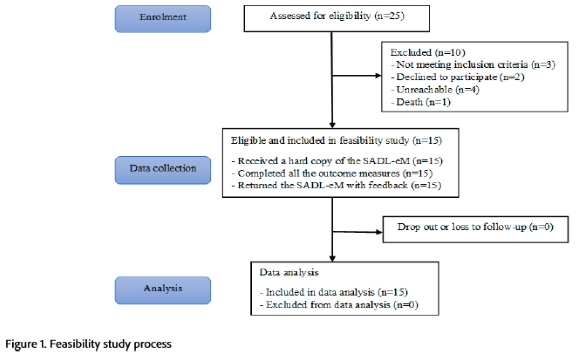
A single-group prospective feasibility study was conducted in January 2020. The process of this study is illustrated in Figure 1 (below).
Sampling
Population
The total population included 25 PW-SCI registered on the HRH 2019 inpatient list, who had undergone rehabilitation and had been discharged to the community. All participants were Muslim adults with SCI from the Gaza Strip of Palestine.
Recruitment
Participants were recruited from the 2019 inpatient discharge list of HRH. The patients were familiar with the principal researcher who was the head of the occupational therapy department in 2019.. Using total population sampling, all 25 PW-SCI were called by phone to determine their interest to participate in the study. Following verbal consent, participants were screened for eligibility. Inclusion criteria were persons with SCI of any cause and any type, aged 18-65 years, with previous inpatient rehabilitation experience, and a good level of Arabic literacy. Exclusion criteria were cognitive impairment and/or a poor level of Arabic literacy.
Sample size
Feasibility studies typically use small samples ahead of larger clinical trials. We intended to recruit all eligible participants from the HRH 2019 inpatient list. Of the 25 potential participants, 15 agreed to participate. Of the 10 who did not participate, three did not meet the inclusion criteria, one had died, four were uncontactable, and two declined to participate.
The researchers estimated that 15 participants were adequate to achieve the goals of this study2
Data collection tools
Therapeutic patient education manual
The SADL-eM is a treatment resource designed for use during inpatient rehabilitation. It consists of 91 pages and is written in Arabic. The document is divided into five sections: (1) An introduction; (2) Information about Activities of Daily Living (ADL) that may be impacted by a SCI in the context of life in Gaza; (3) Assistive devices that are beneficial for PW-SCI; (4) Possible adaptations for home environments; (5) Guidance on community resources available to support individuals. The text and accompanying illustrations have been carefully selected to ensure contextual relevance and suitability for lay users. However, it is important to note that a good level of Arabic literacy is required to fully understand the material-. The SADL-eM can be utilized by occupational therapists on an individual basis, with three educational sessions per week, each lasting a minimum of 15 minutes. This approach is tailored to meet the educational needs and preferences of each individual with spinal cord injury (SCI). The manual requires no modifications to the treatment area or any specialized equipment. The therapist and the individual with SCI will continue to use the manual during treatment sessions until they mutually decide that its use is no longer necessary16
Outcome Measures
The Spinal Cord Injury Measure - Self Reported (SCIM-SR) is a 17-item patient-rated outcome measure designed for individuals with spinal cord injuries (PW-SCI). It assesses a person's ability to perform specific activities independently, with assistance, or using assistive devices. Research supports the criterion validity of the SCIM-SR3217,18; however, it has not yet been translated into Arabic. For this feasibility study, the researcher collaborated with four experts to translate the SCIM-SR into Arabic using a forward-backwards translation method.
The Spinal Cord Injury Measure - III (SCIM-III) is a 17-item clinician-rated outcome measure designed to assess how well a PW-SCI can perform specific activities. It evaluates whether these activities are completed independently, with assistance, or using assistive devices. The SCIM-III can be administered through observation or interview. It demonstrates resilience to cross-cultural differences, including those found in the Middle East. However, it is important to note that the tool is not available in Arabic17,18 The English version was used in this feasibility study.
The Brief Multidimensional Measure of Religiousness/Spirituality (BMMRS) is a 38-item self-report measure of religiousness or spirituality across 11 domains. The researchers selected two domains of interest: the Private Religious Practices Scale (PRPS) and the Organisational Religiousness Short Form (ORSF). The PRPS includes four questions and measures the frequency of an individual's involvement in religious activities19,20. The researchers included the Mosque as a place of worship (Q1) and the Quran as a religious text (Q3). The ORSF is a 2-item measure of the involvement of the individual with a formal public religious institution such as a church or mosque19,20. Neither measure was available in Arabic, and the English version was administered in combination with an Arabic translation for illustration.
Although the SCIM-SR includes a range of different daily activities important to PW-SCI, it does not measure all the ADL domains addressed by the SADL-eM and neglects participation in community life. We, therefore, developed questions to capture participants' perceptions of their performance in three additional domains. The domain of Driving and Community Mobility included one question on participation in driving and community mobility. The domain of Health Management included one question on self-management and one on personal device care. Participation in religious rituals included a question about participation in Wudu (washing extremities before prayers) and participation in Salat (Muslims prayers).
Data collection
The feasibility study was conducted in the first two weeks of January 2021. A research assistant who was trained by the first author, briefed the candidate PWSCI by phone about the study purpose, approval, and data collection tools. Those who agreed to participate in the study were interviewed at their home. The interview included an introduction about the aims and process of the feasibility study, obtaining a written consent of participation, and administering data collection tools. The participants self-administered the translated Spinal Cord Independence Measure-Self Reported in Arabic (SCIM-SR-Ar) while the research assistant used interview to collect the biographical data and administered the other outcome measures. Each participant was then provided with a hard copy of the SADL-eM to read and comment on. Timeframe for this data collection was one week. Comments by the participants and the research assistant about the outcome measures and the SADL-eM were recorded either on the manual or separately. All the copies of the SADL-eM were returned in 7-10 days.
Intervention feasibility
To determine the feasibility of the intervention the researchers evaluated the demand, implementation, practicality, and acceptability of the SADL-eM from participants' perspectives2
Implementation, practicality, and acceptability were evaluated through inductive thematic analysis of participants' comments on the SADL-eM intervention. These three elements of feasibility reflected participants' views on the i) extent, likelihood, and how the SADL-eM could be fully implemented as planned and proposed in a rehabilitation setting; ii) whether the SADL-eM intervention could be delivered using existing resources without adverse effect on participants' health and wellbeing22
Participation Feasibility
Participant recruitment, adherence, and attrition rates were considered important indicators of the feasibility of a future intervention study-. The researchers measured recruitment as the proportion of the total SCI rehabilitation population eligible to participate, and the consent rates of participation. Acceptable recruitment was 60% of eligible participants agreeing to participate. Adherence was assessed as the total number of participants who completed all the feasibility study phases. Acceptable adherence was considered if at least 75% of the eligible participants completed the study22
Outcome measures feasibility
The feasibility of the selected outcome measures was based on the validity of translation, the time needed for administration (investigator and participant burden), and the internal consistency reliability of the outcome measures. The International Society for Quality-of-Life Research (ISOQOL) recommendations for minimum standards for patient-reported outcome measures (PRO) includes the criterion that when PRO measures are translated to another language, the methods of translation should be documented and include evidence from qualitative methods to evaluate the translation222223
Data analysis
All qualitative (verbal and written) data were transcribed and then each statement made by participants was categorised by feasibility domain (demand, implementation and practicality, acceptability, and outcome measures). Each statement was treated as a unit and was used only once. None of the statements was excluded from the analysis. Within each feasibility domain, the statements were then separated into positive or negative groups. The researchers employed Braun and Clarke's approach of inductive thematic analysis across all statements by coding each statement, grouping codes into categories, and then into themes25
Ethical Considerations
Necessary ethical approvals were obtained from relevant institutions before approaching study participants or any data collection: Stellenbosch University Human Research Ethics Committee (HREC Project ID: 1635) and Helsinki Committee for Ethical Approval (PHRC/HC/689/20). The trial was officially registered and has International Registered Report Identifier (IRRID: NCT04735887). All study participants were provided with comprehensive information and signed written consent. Freedom of participation, refusal, or withdrawal at any time was assured. Participant anonymity and confidentiality of information were sustained throughout the study. The study did not involve any harm, risk or discomfort to participants.
COVID-19 Considerations
The research assistant followed the required coronavirus pandemic (COVID-19) precautions guidelines published by the World Health Organization (WHO)24
RESULTS
Of the 25 PW-SCI on the 2019 rehabilitation list, only 17 were eligible for participation (68%), while three were ineligible due to age under 18 years old (2) and poor level of Arabic literacy (1), four could not be reached due to a change in contact details, and one died (Figure 1, page 2). Of the 17 eligible participants, only 15 (88%) agreed to participate in the feasibility study.
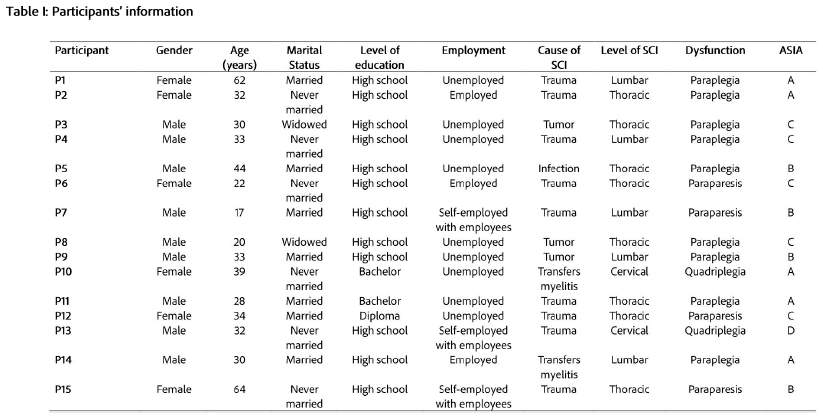
As indicated in Table I (below) all participants were Arabic native speakers, and one was bilingual (Arabic native, English second language). All participants in the feasibility study had formal accommodation. Thirteen participants (86.7%) had been admitted to another inpatient rehabilitation facility before attending HRH. Eleven participants (73.3%) received therapeutic patient education during current admission while before current admission only one (6.7%) received therapeutic patient education. Nine participants (60.0%) completed their rehabilitation course before discharge, while five (33.3%) were discharged due to inadequate healthcare coverage. Only one (6.7%) participant was referred to another hospital for further management of medical complications. and admission to HRH.


Feasibility of the SADL-eM as a therapeutic patient educational intervention
Demand for therapeutic patient education intervention was high (88%), with only two refusals. One refusal was a male patient who had a spinal cord tumour and justified that 'talking about my disease would make mesad for several days'. The second refusal was also a male patient who did not attend the interview, which was rescheduled for his convenience three times.
Most statements were positive and valued the SADL-eM (70%), while some criticised it and recommended improvements (30%). Two themes emerged from the thematic analysis: (1) 'Corresponding to my condition as an SCI', which overarched three subthemes and (2) Suggestions to improve the SADL-eM feasibility.
THEME 1: 'Corresponding to my condition as a person with SCI'
The first theme captures the viewpoint that the SADL-eM was seen by the participants as a feasible therapeutic patient education tool for PW-SCI in Gaza. Participants' comments in three subthemes indicated that the SADL-eM meets the therapeutic patient education needs of PW-SCI in Gaza, that the manual reflects their experience of rehabilitation, and that it is comprehensive.
Meets Therapeutic patient education Needs
PW-SCI need appropriate and available information to actively participate in planning for their rehabilitation, setting treatment goals, and making reasonable expectations for outcomes. P1 (female, 62 years) said:" I feel the education manual explains my exact condition and the situation I am in". P2 (female, 32 years) added: "Reading through the treatment program makes me expect all the things I will achieve"). P3 (male, 30 years) argued: "This manual used to show me questions that I was ashamed to ask, such as marital life". P4 (male, 3 years) had a different perspective and said: "The manual introduced me to my rights as a person with an SCI. We need this information to be reinforced by the government. I need someone to help me establish a small project that is suitable for my situation and meets my vocational needs".
Reflects experience of inpatient rehabilitation
When considering their own experiences of inpatient rehabilitation, P5 (male, 44 years) said: "The manual is identical to the real rehabilitation scenario". P6, (female, 22 years) commented that "The manual has a full explanation about the rehabilitation team and the role of each of them". The inclusion of information about the rehabilitation team was also highlighted by another five participants. P7 (male, 17 years) added: "My condition and illness are well-described in the manual. The manual is corresponding to my condition as a [person with] SCI".
Information is comprehensive
The SADL-eM was also seen as a comprehensive therapeutic patient educational tool that was user-friendly. "The manual provided patients with a comprehensive and extensive explanation of the rehabilitation process" (P8, male, 20 years). '"The manual is suitable for all daily activities" (P9, male, 33 years). ΡΊΟ, (female, 39 years) illustrated: "The manual is easy and clear for all patients, especially those who can read, as for those who can't read, the educational pictures helped them a little bit to understand'. Participants highlighted that the SADL-eM was unique in that it includes success stories of PW-SCI from Gaza: "Successful stories provide the patients with hope and motivation" (P11, male, 28 years).
THEME 2: Improving the SADL-eM Feasibility
Participants offered a range of suggestions to improve the feasibility of the intervention. "The manual needs verbal clarification for those who can't read' (P12, female, 34 years). Two others (P13, male 32 years) and P14 (male, 30 years) requested that the font be enlarged, and a colour picture used. One of the critiques of the SADL-eM is that it is too long: "Reducing] the number of pages so that there is no boredom in the explanation" (P15, female, 64 years). Two participants with quadriplegia did not agree with the inclusion of driving in the manual. One participant suggested deleting sections on driving and home modification since these were not widely accessible to PW-SCI in the Gaza Strip. In contrast, P12 (female, 34 year) suggested that "more clarification is needed [on driving] and where it is possible to make driving aids". P9 (male, 33 years) suggested including a directory of stores that sell adaptive devices. When using the SADL-eM with inpatients, participants suggested therapists read through the information with PW-SCI during a treatment session, rather than leaving the person to read through the information themselves.
Recruitment, Adherence and Attrition
The researchers were able to recruit 60% (15/25) of people who underwent rehabilitation at HRH. Of those who were contactable and eligible, 15/17 (88%) agreed to participate in the feasibility study. Adherence to the feasibility study procedures was 100%. Although the SADL-eM collection was planned for one week after the initial visit, three participants requested extra time because they were busy and did not want to rush through the manual and give shallow feedback. All the distributed manuals (15) were collected with feedback and comments from participants. No participants droopped out(Attrition = 0%).
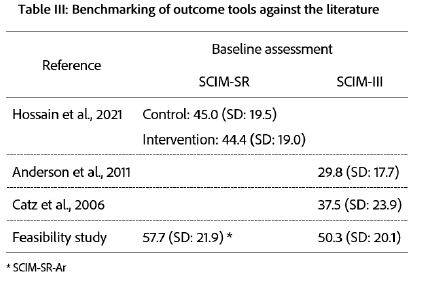
The burden on investigators and participants of completing the selected outcome measures was low, with a mean time of interviews to collect biographical information and administer the outcome measures of 27 minutes (range: 18-43, SD: 6). The researchers assessed the construct validity of the SCIM-SR-Ar by comparing scores of this measure with the clinician-rated SCIM-III. The subtotal scores of the SCIM-SR-Ar and SCIM-III were close or similar in the self-care and mobility items. SCIM-SR-Ar self-care subtotal ranged 4-20 (Mean: 13.3, SD: 5.8) while SCIM-III self-care subtotal ranged 4-20 (Mean: 13.3, SD: 6.6). Similarly, SCIM-SR-Ar mobility subtotal ranged 0-39 (Mean: 17.7, SD: 11.4) while SCIM-III self-care subtotal ranged 3-39 (Mean: 17.3, SD: 11.7). In contrast, SCIM-SR-Ar breathing and sphincter management subtotals ranged between 16-40 (Mean: 26.7, SD: 7.2) while SCIM-III breathing and sphincter management ranged between 10-40 (Mean: 24.7, SD: 8.2). Participants reported higher performance in the SCIM-SR-Ar than SCIM-III regarding bowel and bladder management, intermittent catheterization, use of external drainage instruments, and bowel movements. This difference led to some variations between the total scores of the SCIM-SR-Ar (Rang: 30-98, Mean: 57.7, SD: 21.9) and the SCIM-III (Rang: 28-67, Mean: 50.3, SD: 20.1).
Cronbach's Alpha (a) was used to evaluate and compare the internal consistency reliability of the outcome measures. The reliability of the employed outcome clinical tools was good to very high (a: 0.74-0.97), except for the Private Religious Practices Subscale which had very low reliability (a= 0.43) (Table III, page 7).
DISCUSSION
Feasibility studies are likely to improve the success of clinical trials and reduce research barriers and waste of resources2
Why the SADL-eM was viewed so positively
Qualitative feedback on the SADL-eM as a therapeutic patient education intervention was significantly positive. The participants viewed the SADL-eM as a resource that they would have liked to receive during their inpatient rehabilitation, that it was practical and accessible to them, and that it included the right information. The lack of Arabic therapeutic patient education tools relevant to SCI contributed to creating the current demand for the SADL-eM and enhanced adherence to the feasibility study26272,28 Another aspect is that the manual was typically similar to participants' inpatient rehabilitation experienced In this way, the SADl-eM was not only seen as attractive and easy to read but also promoted positive expectations about rehabilitation. Moreover, the SADL-eM was seen by the participants as comprehensive in content and compatible with users' needs. Therefore, the SADL-eM can be a practical and easy-to-implement SCI therapeutic patient education tool.
Limitations of the SADL-eM
No adverse events were reported, e.g., disagreement, discomfort, inability to handle or destroying of the hard copies of the manual, which indicated the practicality of the SADL-eM. Although the manual was edited by an expert in the Arabic language before use in this study, minimal typographical errors were highlighted by two participants. Sound language editing, friendly size of papers and number of pages, weight of the manual, and the type of paper are essential issues to improve manual implementation and acceptability2930
Feasibility of Participation in an RCT: Recruitment, Retention and Attrition
This feasibility study also provided us with valuable information regarding participants' recruitment, retention and attrition. The reliability of study results and the ability to generalize study findings to other contexts are threatened by the credibility of collected data and sample type-. The researchers provided full details about recruitment, participants, and injury characteristics. This feasibility study showed that the number of people undergoing inpatient rehabilitation for SCI at HRH was small, with only 25 admissions in 2019. Future RCT at HRH needs to address the low incidence of SCI and potential sample attrition-. PW-SCI usually stay several weeks in an inpatient rehabilitation setting and communicate with therapists, patients, and caregivers. This is a potential source of maturation and contamination bias for our planned RCT331
Sample attrition is another barrier to clinical research, including RCT3434
Feasibility of the Outcome Measures
In considering the construct validity of the translated SCIM-SR-Ar and the SCIM-III, the researchers found important variations between the means of results of the SCIM tools in the sample compared to other published articles353637,38,39.
If the researchers exclude the Private Religious Practices Subscale that had verylow reliability, the feasibility study findings also demonstrated adequate reliability of the outcome measures (a: 0.74-0.97), consistent with previous analysis of the reliability of these tools17-20.
The demand for the SADL-eM was promoted by the voice of participants, and involvement in completing the SCIM-SR-Ar by PW-SCI (self-reported), which established a just practice of research for the PW-SCI in the Gaza Stripe.
The variation between the two SCIM measures is attributed to the differences in the evaluations of the patient-administered tool (SCIM-SR-Ar) and therapist-administered tool (SCIM-III) and cultural differences, which influenced the data collected about bowel and bladder management. The issues of bowel and bladder management include privacy, and persons with SCI opt to conceal information from others to reconstruct notions and dignity of bodily aesthetics-. Cultural differences also influenced the data collected by the religious participation subscales. Originally, both scales were developed for the use of the Christian faith20
Limitations
This feasibility study has many limitations; however, its findings are important for conducting the main RCT. Limitations of this study include recruitment from a single clinical setting. Participants also did not provide any information relevant to the SADL-eM implementation determinants such as time, frequency of using the manual, and suggested range for educational sessions. The registration System was a barrier to follow-up where some candidates were unreachable. The fact that the researchers didn't do cognitive interviewing for the SCIM-SR-Ar is a limitation. The participants did not give any qualitative feedback or suggestions for improvement of the SCIM-SR-Ar.
CONCLUSIONS
This study's findings suggest implementing the SADL-eM with PW-SCI was feasible, and led to a pilot RCT conducted between 2020 and 2021. This article provides occupational therapists working in low and middle-income countries a useful example of how to plan a feasibility study, and how to interpret the findings. The ongoing war in Gaza, which commenced in October 2023, has destroyed rehabilitation service provision for people with SCI and created a public health catastrophe42
Conflicts of Interest
The authors declare that they have no competing interests
Authors' Contributions
The three authors equally contributed to the study design and methodology, data collection and analysis, and manuscript preepration.
Acknowledgements
The authors acknowledge the contributions of the participants and the research assistant who volunteered and collected study data.
REFERENCES
-
1. Stuckless S, Parfrey P. Bias in Clinical Research. Methods in Molecular Biology. 2021;17-34. https://doi.org/10.1007/978-1-0716-1138-8_2
» https://doi.org/10.1007/978-1-0716-1138-8_2 -
2. Blatch-Jones AJ, Pek W, Kirkpatrick E, Ashton-Key M. Role of feasibility and pilot studies in randomised controlled trials: A cross-sectional study. BMJ Open. 2018;8(9). https://doi.org/10.1136/bmjopen-2018-022233
» https://doi.org/10.1136/bmjopen-2018-022233 -
3. Eldridge SM, Lancaster GA, Campbell MJ, Thabane L, Hopewell S, Coleman CL, et al. Defining feasibility and pilot studies in preparation for randomised controlled trials: Development of a conceptual framework. PLoS One. 2016;11 (3):1 -22. https://doi.org/10.1371/journal.pone.0150205
» https://doi.org/10.1371/journal.pone.0150205 -
4. Estrada V, Oldenburg E, Popa O, Müller HW. Mapping the long rocky road to effective spinal cord injury therapy: A meta-review of pre-clinical and clinical research. Journal of Neurotrauma. 2022;39(9-10):591-612. https://doi.org/10.1089/neu.2021.029
» https://doi.org/10.1089/neu.2021.029 -
5. MacGillivray M, Sadeghi M, Mills P, Adams J, Sawatzky B, Mortenson W. Implementing a self-management mobile app for spinal cord injury during inpatient rehabilitation and following community discharge: A feasibility study. The Journal of Spinal Cord Medicine. 2020,-43(5):676-684. https://doi.org/10.1080/10790268.2019.1614343
» https://doi.org/10.1080/10790268.2019.1614343 -
6. Hoevenaars D, Holla JF, te Loo L, Koedijker JM, Dankers S, Houdijk H, et al. Mobile app (Wheels) to promote a healthy lifestyle in wheelchair users with spinal cord injury or lower limb amputation: Usability and feasibility study. JMIR Formative Research. 2021;5(8). https://doi.org/10.2196/24909
» https://doi.org/10.2196/24909 -
7. Chase T, Jha A, Brooks CA, Allshouse A. A pilot feasibility study of massage to reduce pain in people with spinal cord injury during acute rehabilitation. Spinal Cord. 2013;51(11):847-51. https://doi.org/10.1038/sc.2013.104
» https://doi.org/10.1038/sc.2013.104 -
8. Lovas J, Tran Y, Middleton J, Bartrop R, Moore N, Craig A. Managing pain and fatigue in people with spinal cord injury: a randomized controlled trial feasibility study examining the efficacy of massage therapy. Spinal Cord. 2017;55(2):162-166. https://doi.org/10.1038/sc.2016.156
» https://doi.org/10.1038/sc.2016.156 -
9. Mehta, S., Hadjistavropoulos, H., Nugent, M. et al. Guided internet-delivered cognitive-behaviour therapy for persons with spinal cord injury: a feasibility trial. Spinal Cord. 2020;58: 544-552. https://doi.org/10.1038/s41393-019-0398-6
» https://doi.org/10.1038/s41393-019-0398-6 -
10. Hearn JH, Finlay KA. Internet-delivered mindfulness for people with depression and chronic pain following spinal cord injury: A randomized, controlled feasibility trial. Spinal Cord. 2018;56(8):750-61. https://doi.org/10.1038/s41393-018-0090-2
» https://doi.org/10.1038/s41393-018-0090-2 -
11. Shields N, van den Bos R, Buhlert-Smith K, Prendergast L, Taylor N. A community-based exercise program to increase participation in physical activities among youth with disability: a feasibility study. Disability and Rehabilitation. 2019;41 (10):1152-1159. https://doi.org/10.1080/09638288.2017.1422034
» https://doi.org/10.1080/09638288.2017.1422034 -
12. Benson I, Hart K, Tussler D, Van Middendorp JJ. Lower-limb exoskeletons for individuals with chronic spinal cord injury: Findings from a feasibility study. Clin Rehabil. 2016;30(1):73-84. https://doi.org/10.1177/0269215515575166
» https://doi.org/10.1177/0269215515575166 -
13. Hossain M, Harvey L, Rahman M, Bowden J, Islam M, Taylor V et al. A pilot randomised trial of community-based care following discharge from hospital witha recentspinal cordinjuryi nBangladesh. Clinical Rehabilitation. 2017;31(6):781-789. https://doi.org/10.1177/0269215516654207
» https://doi.org/10.1177/0269215516654207 -
14. Abu Mostafa M, Plastow N, Savin-Baden M.The effectiveness of spinal cord injury ADL inpatient education on rehabilitation outcomes: A systematic review and meta-analysis. British Journal of Occupational Therapy. 2019,-83(1), 15-28. https://doi.org/10.1177/0308022619879019
» https://doi.org/10.1177/0308022619879019 -
15. Abu Mostafa MK, Plastow NA, Savin-Baden M. Participatory Methods to Develop Health Education for PW-SCI: Perspectives on Occupational Justice. Canadian Journal of Occupational Therapy. 2022; 90(1):55-67. https://doi.org/10.1177/00084174221116250
» https://doi.org/10.1177/00084174221116250 -
16. Abu Mostafa M, Ann Plastow N, Savin-Baden M, Ayele B. The Impact of an Evidence-Informed Spinal Cord Injury Activities of Daily Living Education Manual (SADL-eM): Protocol for a Randomized Controlled Trial. JMIR Research Protocols. 2022 Jul; 11(7). https://doi.org/doi:10.2196/30611
» https://doi.org/doi:10.2196/30611 -
17. Nuuttila E, Saarimäki SM, Hautala AI, Hiekkala S. Patient-Reported Outcome Measures for assessing functioning, disability, and health of people with spinal cord injury-a scoping review. The Journal of Spinal Cord Medicine. 2025. 6:1-21. https://doi.org/10.1080/10790268.2025.2477364
» https://doi.org/10.1080/10790268.2025.2477364 -
18. Lampart P, Gemperli A, Baumberger M, Bersch I, Prodinger B, Schmitt K, et al. Administration of assessment instruments during the first rehabilitation of patients with spinal cord injury: A retrospective chart analysis. Spinal Cord [Internet]. 2018;56(4):322-31. https://doi.org/10.1038/s41393-017-0039-x
» https://doi.org/10.1038/s41393-017-0039-x -
19. Unterrainer HF. The multidimensional measurement of religious/spiritual well-being: recent developments in scale validation and clinical applications. Religions. 2023 Jul 7;14(7):882. https://doi.org/10.3390/rel14070882
» https://doi.org/10.3390/rel14070882 -
20. Johnstone B, Bruininks P, Smith El, Yoon DP, Cohen D, Edman L, Bankard J, Witvliet C. Conceptualising spirituality and religion as psychological processes: Validation of the factor structure of the BMMRS. Mental Health, Religion & Culture. 2021 Mar16;24(3):316-32. https://doi.org/10.1080/13674676.2020.1793311
» https://doi.org/10.1080/13674676.2020.1793311 -
21. Wilson DT, Brown J, Farrin AI, Walwyn RE. A hypothesis test of feasibility for external pilot trials assessing recruitment, follow-up, and adherence rates. Statistics in Medicine. 2021 Sep 20;40(21):4714-31. https://doi.org/10.1002/sim.9091
» https://doi.org/10.1002/sim.9091 -
22. Reeve B, Wyrwich K, Wu A, Velikova G, Terwee C, Snyder C et al. ISOQOL recommends minimum standards for patient-reported outcome measures used in patient-centered outcomes and comparative effectiveness research. Quality of Life Research. 2013;22(8):1889-1905. https://doi.org/10.1007/s11136-012-0344-v
» https://doi.org/10.1007/s11136-012-0344-v -
23. MacDermid J, Arumugam V, Vincent J, Payne K, So A. Reliability of three landmarking methods for dual inclinometry measurements of lumbar flexion and extension. BMC Musculoskeletal Disorders. 2015,16(1). https://doi.org/10.1186/s12891-015-0578-2
» https://doi.org/10.1186/s12891-015-0578-2 -
24. Wasson J. Practice Standards for Effective Telemedicine in Chronic Care Management After COVID-19. Journal of Ambulatory Care Management. 2020,-43(4):323-325. https://doi.org/10.1097/JAC.0000000000000355
» https://doi.org/10.1097/JAC.0000000000000355 -
25. Braun V, Clarke V. A critical review of the reporting of reflexive thematic analysis in Health Promotion International. Health Promotion International. 2024 Jun 1;39(3):daae049. https://doi.org/10.1093/heapro/daae049
» https://doi.org/10.1093/heapro/daae049 -
26. Schofield P, Chambers S. Effective, clinically feasible and sustainable: Key design features of psycho-educational and supportive care interventions to promote individualised self-management in cancer care. Acta Oncol (Madr). 2015;54(5):805-12. https://doi.org/10.3109/0284186X.2015.1010016
» https://doi.org/10.3109/0284186X.2015.1010016 -
27. Shepherd JD, Badger-Brown KM, Legassic MS, Walia S, Wolfe DL. SCI-U: E-learning for patient education in spinal cord injury rehabilitation. J Spinal Cord Med. 2012;35(5):319-29. https://doi.org/10.1179/2045772312Y.0000000044
» https://doi.org/10.1179/2045772312Y.0000000044 -
28. Hoekstra F, Trigo F, Sibley KM, Graham ID, Kennefick M, Mrklas KJ, et al. Systematic overviews of partnership principles and strategies identified from health research about spinal cord injury and Related Health Conditions: A scoping review. The Journal of Spinal Cord Medicine. 2022,1-18. https://doi.org/10.1080/10790268.2022.2033578
» https://doi.org/10.1080/10790268.2022.2033578 -
29. Tederko P, Krasuski T, Krasuski M, Dtugotşcka A, Tarnacka B. Determinants of health knowledge and health perceptions from the perspective of health-related education of patients with spinal cord injury: A systematic review. Int J Rehabil Res. 2017;40(2):97-106. https://doi.org/10.1097/MRR.0000000000000215
» https://doi.org/10.1097/MRR.0000000000000215 -
30. Wyk K Backwell A, Townson A. A Narrative Literature Review to Direct Spinal Cord Injury Patient Education Programming. Topics in Spinal Cord Injury Rehabilitation. 2015;21(1):49-60. https://doi.org/10.1310/sci2101-49
» https://doi.org/10.1310/sci2101-49 -
31. Petersen J, Ranker L, Barnard-Mayers R, MacLehose R, Fox M. A systematic review of quantitative bias analysis applied to epidemiological research. International Journal of Epidemiology. 2021;50(5):1708-1730. https://doi.org/10.1093/ije/dyab061
» https://doi.org/10.1093/ije/dyab061 -
32. Cheng TC, Trivedi PK. Attrition bias in panel data: A sheep in Wolf's clothing? A case study based on the mabel survey. Health Economics. 2015:24(9):1101-17. https://doi.org/10.1002/hec.3206
» https://doi.org/10.1002/hec.3206 -
33. Stone JC, Glass K, Clark J, Munn Z, Tugwell P, Doi Sar. A unified framework for bias assessment in clinical research. Int J Evid Based Healthcare. 2019,-17(2):106-20. https://doi.org/10.1097/XEB.0000000000000165
» https://doi.org/10.1097/XEB.0000000000000165 -
34. Furuya-Kanamori L, Xu C, Hasan SS, Doi SA. Quality versus risk-of-bias assessment in Clinical Research. Journal of Clinical Epidemiology. 2021;129:172-5. https://doi.org/10.1016/j.jclinepi.2020.09.044
» https://doi.org/10.1016/j.jclinepi.2020.09.044 -
35. Gross-Hemmi MH, Post MWM, Bienert S, Chamberlain JD, Hug K, Jordan X, et al. Participation in people living with spinal cord injury in Switzerland: Degree and associated factors. Archives of Physical Medicine and Rehabilitation. 2019;100(10):1894-906. https://doi.org/10.1016/j.apmr.2019.03.018
» https://doi.org/10.1016/j.apmr.2019.03.018 -
36. Martinez M, Bartholomew M. What Does It 'Mean'? A Review of Interpreting and Calculating Different Types of Means and Standard Deviations. Pharmaceutics. 2017;9(4):14. https://doi.org/10.3h901pharmaceutics9020019
» https://doi.org/10.3h901pharmaceutics9020019 -
37. Anderson KD, Acuff ME, Arp BG, Backus D, Chun S, Fisher K, et al. United States (US) multi-center study to assess the validity and reliability of the spinal cord independence measure (SCIM III). Spinal Cord. 2011,-44(8):880-5. doi: https://doi.org/10.1038/sc.2011
» https://doi.org/10.1038/sc.2011 -
38. Khamnon N, Amatachaya S, Wattanapan P, Musika N, Jitmongkolsri P, Kongngoen N, Haisirikul M, Jaikarsen K, Thaweewannakij T, Namwong W. Reliability and concurrent validity of the Spinal Cord Independence Measure III among rehabilitation professionals. Spinal Cord. 2022 Oct;60(10):875-81. https://doi.org/10.1038/s41393-022-00807-9
» https://doi.org/10.1038/s41393-022-00807-9 -
39. Hossain MS, Harvey LA, Islam MS, Rahman MA, Muldoon S, Biering-Sorensen F, et al. A community-based intervention to prevent serious complications and death 2 years after discharge in people with spinal cord injury in Bangladesh (civic): A randomised trial. Spinal Cord. 2021;59(6):649-58. https://doi.org/10.1038/s41393-020-00546-9
» https://doi.org/10.1038/s41393-020-00546-9 -
40. Pratt B, Loff B. A framework to link international clinical research to the promotion of justice in global health. Bioethics. 2014,-28(8):387-96. https://doi.org/10.1111/bioe.12009
» https://doi.org/10.1111/bioe.12009 -
41. Ireland B, Pebdani RN, Heck M, Mudholkar A, Verdonck M. Sex-positive sexuality post-spinal cord injury: A systematic review and qualitative metasynthesis. Rehabilitation Psychology. 2024;70(2), 182-193. https://doi.org/10.1037/rep0000573
» https://doi.org/10.1037/rep0000573 -
42. Ijaz N, Habib AR. Public Health Crisis in Gaza-The Responsibility of US-Based Academic Medical Journals. JAMA. 2024;332(1):13-14. https://doi.org/10.1001/jama.2024.10766
» https://doi.org/10.1001/jama.2024.10766
Reviewed Round 1:2 December 2024
Revised: 14 April 2025
Reviewed Round 2: 27 May 2025
Final Revision: 18 August 2025
Accepted: 18 August 2025
EDITOR
Adele Ebrahim
https://orcid.org/0000-0002-5019-980X
DATA AVAILABLITY
From corresponding author upon reasonable request
FUNDING
This study received no specific grant support from any funding agency in the public, commercial, or not-for-profit sectors.