Hand osteoarthritis rehabilitation practices in South Africa
Abstract
BACKGROUND: Best-evidence recommendations guide the non-pharmacological management of patients diagnosed with hand osteoarthritis (OA) to manage function, quality of life, and pain based on the European League Against Rheumatism (EULAR) in their updated guidelines and recommendations. The current management approaches and use of these recommendations by occupational therapists and physiotherapists in South Africa for this condition have not yet been investigated. This study investigated the knowledge, patient load, and management practices used by occupational therapists and physiotherapists in South Africa, for individuals diagnosed with hand OA METHODS: This quantitative, cross-sectional study, included 34 postgraduate occupational therapists and physiotherapists in public and private sectors in South Africa. Participants completed the questionnaire after providing informed consent on the first question of a Research Electronic Data Capture (REDCap) questionnaire. The questionnaire data were exported to Excel and analysed using descriptive statistics in STATA RESULTS: Participants included 19 occupational therapists and 15 physiotherapists, 31 of whom were females. More occupational therapists obtained education in hand rehabilitation from accredited continuing education courses and reported more referrals and a higher patient load. Both occupational therapists and physiotherapists followed EULAR guidelines with a high percentage of occupational therapists providing intervention using splinting, activity modification, grip adjustment in activities of daily living, and exercise. Physiotherapists managed hand OA with exercise, pain education and joint mobilisations. Both professions provide education and home care programmes for patients with hand OA. Assessments for quality of life, and standardised outcome measures were infrequently used with limited referral of patients to a varied multidisciplinary team CONCLUSION: Best-evidence practice for hand OA according to international EULAR guidelines and recommendations were implemented by a higher percentage of occupational therapists IMPLICATIONS FOR PRACTICE: •Best-evidence hand OA management recommendations are advocated and implemented by occupational therapists and physiotherapists in South Africa but further research on context specific intervention is required. •Standardised hand function and quality of life assessments should be included in management approaches. •Interdisciplinary practices, where the strengths of both occupational therapists and physiotherapists are highlighted, benefit individuals diagnosed with hand OA
occupational therapy; physiotherapy; evidence based practice; European League Against Rheumatism (EULAR); Hand AO
INTRODUCTION
Osteoarthritis (OA), one of the top five most prevalent joint diseases among adults, leads to reduced quality of life and disability and costs global economies millions in lost productivity11234356,7. This condition negatively impacts individuals' quality of life due to joint stiffness, limitation in function, reduced grip strength and pain. Although mechanical loading and load bearing in hand OA was historically thought to relate to the extent of joint damage and inflammation89,10,11. Plotz et al. 2022 report cardiovascular disease, diabetes mellitus, obesity and gout share risk factors with hand OA1213
Due to the possible complexity of the management of patients with hand OA, an individualised, multidisciplinary, multicomponent management regime for this condition is supported by the European League Against Rheumatism (EULAR) in their updated overarching key principles for non-pharmacological management of hand OA14141415151516
In South Africa an occupational therapy study describing management of CMCJ OA17181917201920
The South African study indicated occupational therapists followed no fixed intervention regime for hand OA even though acute versus chronic progression of the condition was considered. Acute or early interventions included rest, static splinting, and a home programme. For patients at chronic stage interventions focused on preventing further deformities and on maintaining independence17
METHODS
Research design
A quantitative, descriptive cross-sectional questionnaire study was conducted to contribute to the current South African literature base and inform future research on the topic of hand OA management practices.
Population and sampling
The study population comprised postgraduate occupational therapists and physiotherapists, working in public or private sectors, who delivered rehabilitation to individuals diagnosed with hand OA. Occupational therapists and physiotherapists, not working in South Africa at the time of the study and assistants, were excluded from participation.
Purposive sampling was employed in recruiting occupational therapists and physiotherapists who deliver hand rehabilitation more frequently by targeting members of the South African Society of Hand Therapists (SASHT). The SASHT membership during 2025 was 121. A realistic expected questionnaire response rate for healthcare professionals is 30%21
Research Measure
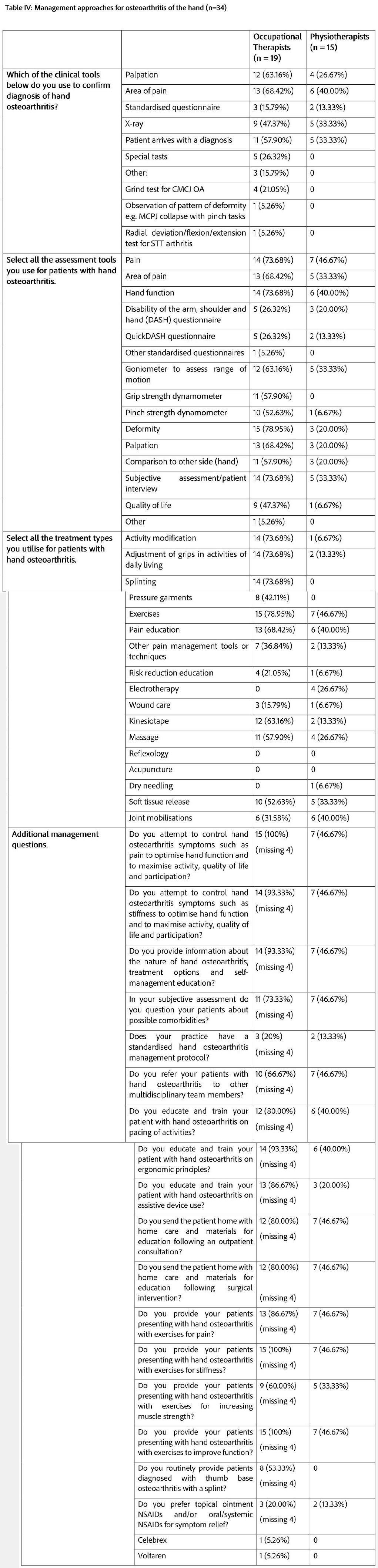
The study instrument was an online self-administered questionnaire created by the researchers using REDCap, a secure web-based software platform designed to facilitate research data collection22,23. The questionnaire included the following sections: socio-demographic information, clinician knowledge, patient load and management practices. According to the EULAR 2018 recommendations, the additional management approaches Table iv (page 7) were included. A pilot test of the REDCap questionnaire was conducted with two occupational therapists and two physiotherapists to ensure clarity, relevance, and functionality of items before the questionnaire was distributed.
Research procedure
Prospective participants were recruited through invitations sent via the SASHT membership bulk email to all members, as well as through social media posts in which the invitation and participation link were posted to the South African Society of Occupational Therapy and the South African Society of Physiotherapy social media groups by the primary researcher. Participants were given one month to complete the questionnaire. When prospective participants clicked the REDCap link to open the questionnaire, the landing page displayed the study information. Only those who indicated consent after reading the information leaflets were able to complete the questionnaire. Anonymity was ensured since no names were collected.
Anonymity was ensured by not collecting any personal identifiers in the demographic section of the questionnaire and further by assigning numbers to each data record. Confidentiality was safeguarded through secure data storage on REDCap, with restricted access to only authorised researchers.
Data Analysis
After data collection, the questionnaire responses were exported from REDCap into a Microsoft Excel document in raw data format. The dataset was reviewed for consistency and completeness before being imported into STATA for statistical analysis24
Ethical Considerations
Ethical clearance for the study was obtained from the Human Research Ethics Committee Faculty of Health Sciences, University of the Witwatersrand, with the number M221026 MED21-10-125. The participants received study information through the invitation letter, which included details about the study, and this information was repeated at the beginning of the REDCap questionnaire.
RESULTS
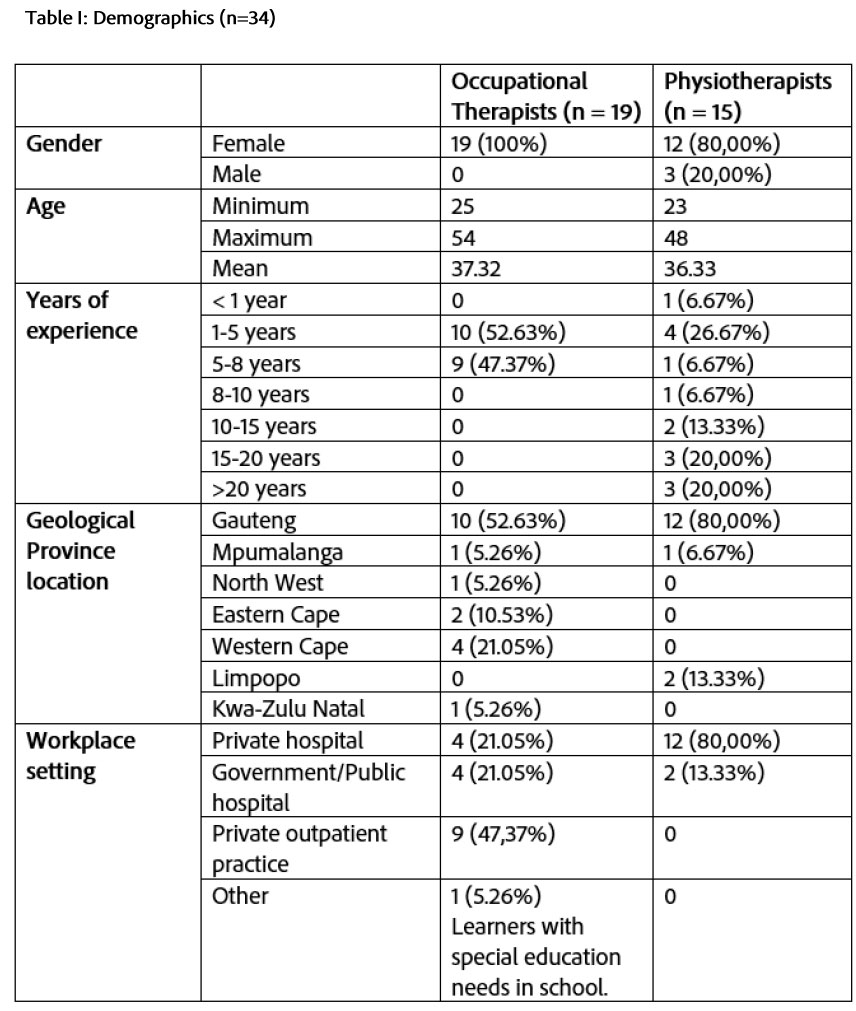
Demographics per occupation for the sample of 34 therapists, who completed the questionnaire were 19 occupational therapists, and 15 physiotherapists. All participants, except three physiotherapists, were female. Mean ages were similar for the occupational therapist and the physiotherapists. Years of experience after undergraduate education revealed a broader spread among the physiotherapists, as can be seen in Table I (below), with the occupational therapists equally divided between one to five years (52.63%) and five to eight years (47.37%) of experience. Participants work predominantly in Gauteng province for both professions. However, occupational therapists worked mainly in private outpatient practices (47,37%), whereas physiotherapy participants worked primarily in private hospitals (80,00%) with one missing entry.
Knowledge of and current clinical practice for the management of hand Osteoarthritis
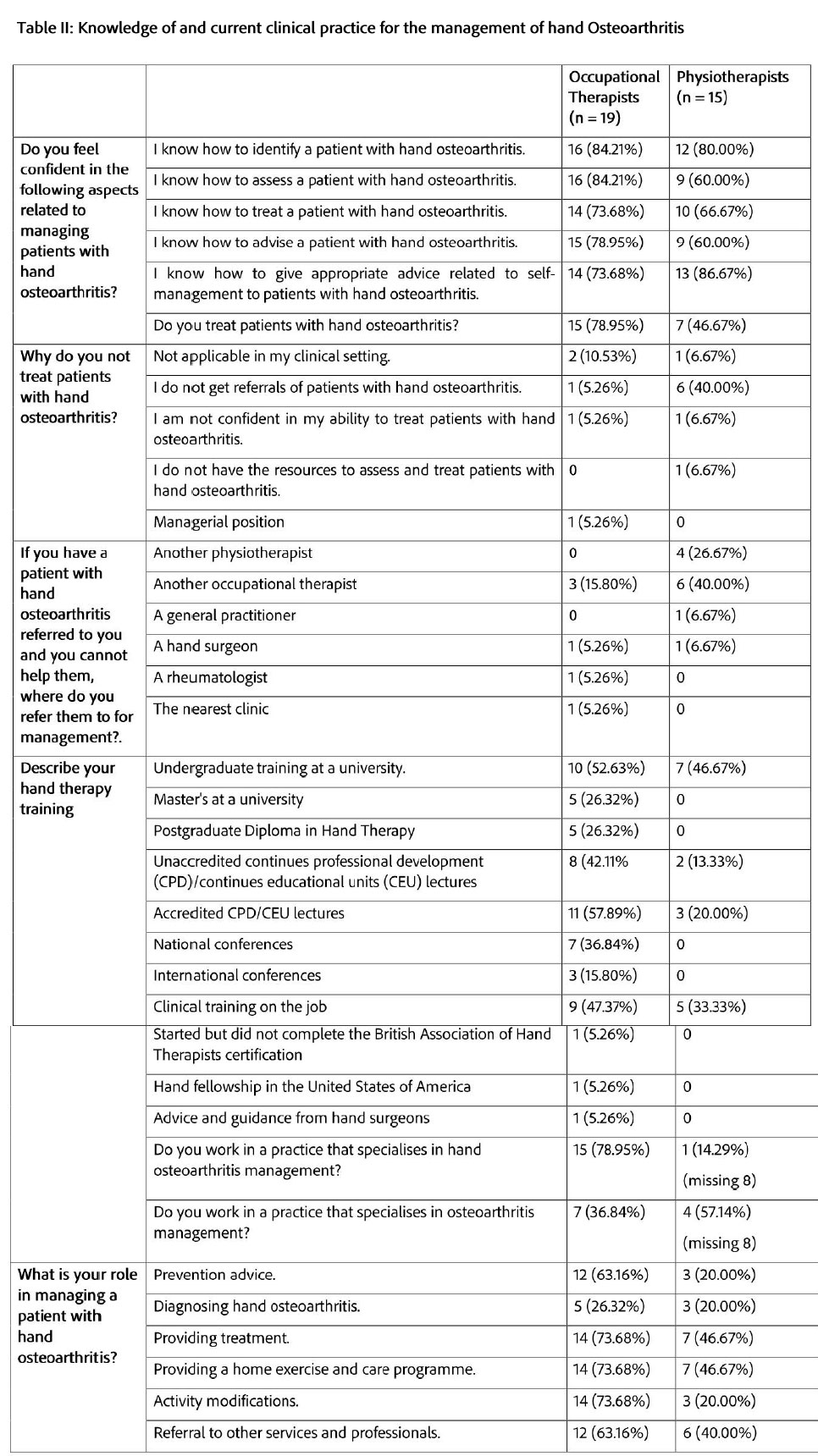
Knowledge, education in hand rehabilitation and the frequency of managing individuals presenting with hand OA were investigated Table II (below). More of the participating occupational therapists (78.95%), than of physiotherapists (46.67%) treated individuals with hand OA. The predominant reason for not treating individuals with hand OA reported by occupational therapists was that it was not applicable in their clinical setting (10.53%), and for physiotherapists (40.00%) was that they did not receive referrals of patients with hand osteoarthritis. Over 80% of both groups were confident in identifying hand OA but occupational therapists felt more confident in assessment and treatment than physiotherapists. Physiotherapists were more confident in giving appropriate advice on self-management (86.67%). Very few occupational therapists (15.80%) would refer the patient to another occupational therapist whereas more physiotherapists (40.00%) would refer to occupational therapy or to another physiotherapist (26.67%) for hand OA management when they felt they could not help a patient. Occupational therapists received their hand therapy training predominantly at accredited continued professional education (57.89%), undergraduate training at university (52.63%) and clinical training on the job (47.37%), whereas physiotherapists received their training at undergraduate training at university (46.67%), clinical training on the job (33.33%). Two questions, related to whether they worked in a practice that specialises in hand OA and osteoarthritis management, were not answered by eight physiotherapy participants. With the exception of confirming the diagnosis hand OA between 60%-70% of occupational therapists and 20%-45% of physiotherapist fulfilled all the roles in managing patients with hand OA.
Patient load, treatment time, joint affected and referrals in the management of hand osteoarthritis
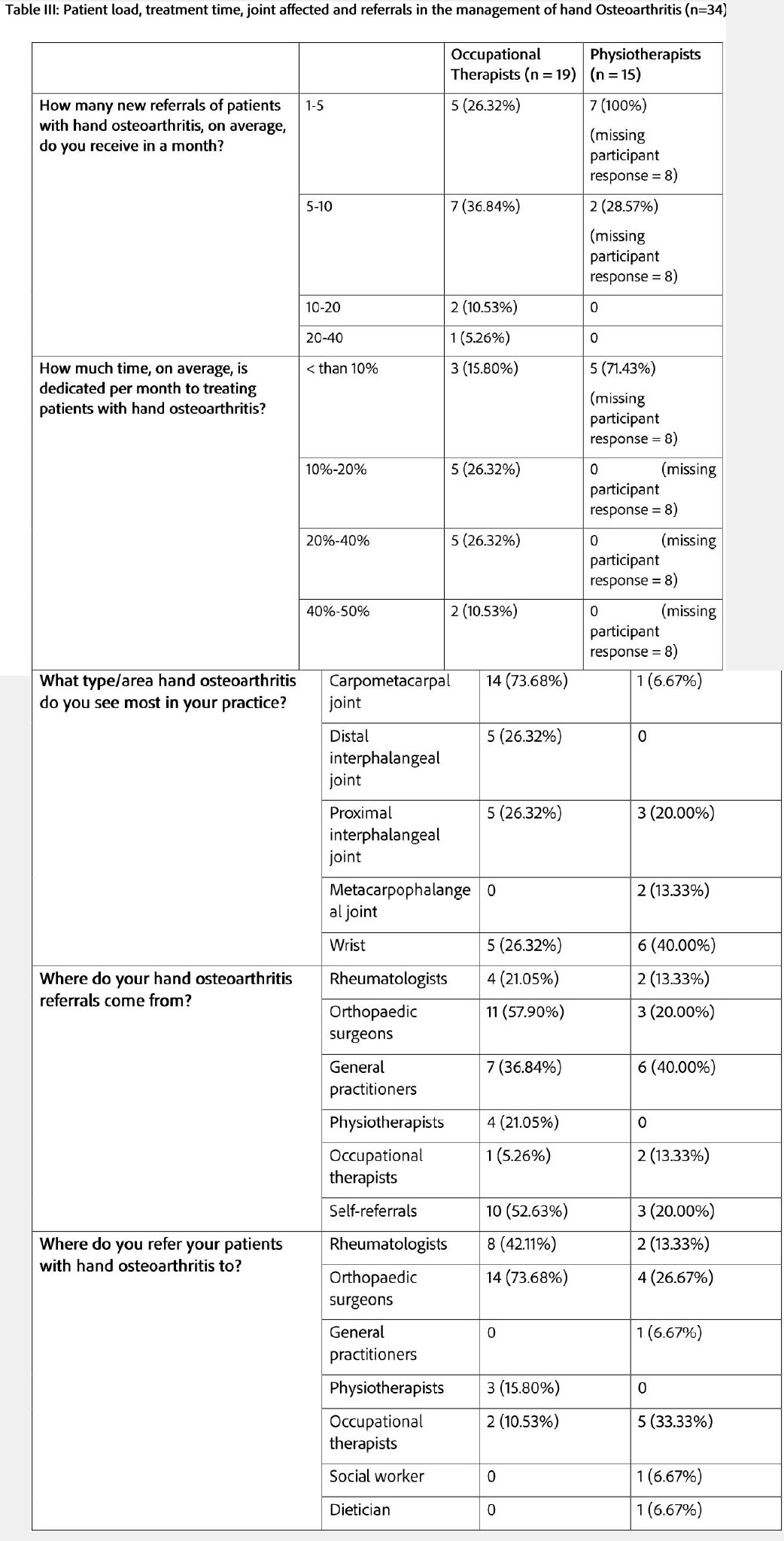
While more than half the occupational therapy participants receive between five and 40 new referrals of hand OA individuals a month the majority of physiotherapists who answered the question receive one to five referrals in the same time frame. Occupational therapists thus also spent more time managing individuals with hand OA per month than physiotherapists. Questions related to new referrals and the average time spent treating patients with hand OA had eight missing responses from physiotherapy participants.
The occupational therapists managed more patients with carpometacarpal joint OA (73.68%) relatively speaking more patients with wrist OA were managed by physiotherapists. Referrals of hand OA individuals to occupational therapists most frequently came from orthopaedic surgeons or self-referrals with most physiotherapists receiving their referrals from general practitioners. Referrals for co-management of patients were mostly to orthopaedic surgeons Table III (below).
Management approaches for osteoarthritis of the hand
The management, including assessment and treatment practices used by occupational therapists and physiotherapists for hand OA are in Table 4 (page 7). The patient arriving with a diagnosis was reported just over half of occupational therapists and a third of physiotherapists. Clinical tools most frequently used to confirm or suggest hand OA by 47% to 68% of occupational therapists and 40%-27% of physiotherapists were area of pain, palpation and x-rays. The least frequent used by less than a third of participants were standardised questionnaires, the grind test for CMCJ OA and observations of deformity patterns.
Assessment tools frequently used were observation of deformity, pain, hand function and subjective assessments were used by more than 70% of occupational therapist and between 30% to 40% of physiotherapists. Assessment tools least frequently used during management of hand OA by 5% to 47% of occupational therapists and up to 13% of physiotherapists were quality of life, DASH, QuickDASH and other standardised questionnaires.
Between 73% and 78% of occupational therapists most often used the following treatment modalities: exercises, activity modification, adjustment of grips in activities of daily living, and splinting. Approximately 40% to 45% of physiotherapists most frequently used exercises, pain education and joint mobilisations as treatment modalities. Occupational therapists had four missing participant responses for the EULAR recommendations; however, they fared well with all the recommendations incorporated into their treatments Table IV (page 7).
DISCUSSION
In South Africa, limited research exists on rehabilitation management approaches for hand OA. The study aimed to determine the knowledge, patient load, management approaches and implementation of EULAR recommendations by South African public and private occupational therapists and physiotherapists for individuals diagnosed with hand OA.
Although the sample size was small the demographics of the participants reflected those of occupational and physiotherapists working in South Africa. According to Ned et al.252026
Physiotherapists with a wider range of experience levels, from less than one to more than 20 years, were treating hand OA which may be aligned with the lack of postgraduate hand therapy education in South Africa for physiotherapists27282927
The greater opportunities for continued postgraduate training in hand therapy may support the higher percentage of occupational therapists who were confident in the assessment and treatment of hand OA. This may also be due to nearly 80% of the occupational therapists working in practices that provided services for hand OA and which received a higher number of referrals for this condition on a monthly basis. The low referral rates reported by both professions relative to the reported prevalence rate however align with research which indicates hand OA is a "forgotten" condition306,30 and low-middle income countries like South Africa17,31 indicate patients with hand OA have poor access to recommended treatment due to lack of knowledge about non pharmaceutical intervention173231
Teuchert et al.17141417,30 was limited. This may be due to the severe shortages of rheumatologists in low-middle income countries such as South Africa, limiting access to such specialised care33
However, literature suggests that referral to both occupational therapists and physiotherapists results improved quality of the care and effective treatment emphasizing that both professions play a crucial, often overlapping, role in the management for hand OA343536
The current study found a greater involvement of occupational therapists in managing hand OA, since this profession had higher patient loads and spent more time treating patients, especially CMCJ OA, than physiotherapists. These results are similar to a survey in the USA reported by O'Brien and McGaha3735
Management practice results revealed that occupational therapists and physiotherapists provide assessment and treatment that have similar goals, but these differ depending on the scope of the professions27143837
In evaluation of hand OA the highest percentage of assessments used by both professions were for pain, hand function and range of motion. However, the percentage of therapists using these assessments and more than half the occupational therapists also assessed grip and pinch strength did not align with the 80%-90% of therapists in the United States who routinely evaluate these components371937172014
The results for treatment implemented followed a similar pattern with emphasis on body function and structures as outlined in the EULAR guidelines to control symptoms, such as pain and stiffness, and to optimise hand function141638
Education on the nature of hand osteoarthritis and treatment options as well as home exercise programme consisting of pacing activities, range of motion and muscle strengthening exercises as recommended by the EULAR guidelines14173739
Limitations of the study
Only the EULAR guidelines and recommendations14
Recommendations
When considering the EULAR recommendations1427
The different management approaches by occupational therapists and physiotherapist in this study, as supported by research evidence should be considered for beneficial hand rehabilitation delivery in the proposed National Health Insurance in South Africa40
Very few therapist participants commented on the use of topical ointment or oral/systemic NSAIDs in the treatment of hand OA indicating they are probably only involved in monitoring the condition and referring for the pharmacological aspects of treatment38
CONCLUSION
The results of this study highlighted that both professions, occupational therapists and physiotherapists, included most but not all non-pharmaceutical EULAR guidelines and recommendations14
While it is encouraging that management of hand OA by occupational and physiotherapists in South Africa do follow practices, principles, and recommendations, contextually relevant South African evidence and perspectives to inform strategies suitable for low- to middle-income countries have not been considered in these guidelines. The impact of socioeconomic status, and comorbidities, as well as the psychological domain were not considered in the current study and Teuchert et al.17
Conflicts of interest
The authors declare that there is no conflict of interest.
Author contributions
Monique Keller proposed the topic for the research, M. Keller, CM Thomas, T. Mukheli, J. De Kock, R. Muvhumbe, Motsele M, S. Bhyat and N. Mngoma wrote the protocol for ethical approval. M. Keller wrote the first version of the article. The protocol and article were read, elaborated upon, refined and approved by all listed authors.
Acknowledgements
The authors acknowledge all participants for their participation.
REFERENCES
-
1. Reginster JL, Arden NK, Haugen IK, Rannou F, Cavalier E, Bruyère O, et al. Guidelines for the conduct of pharmacological clinical trials in hand osteoarthritis: Consensus of a Working Group of the European Society on Clinical and Economic Aspects of Osteoporosis, Osteoarthritis and Musculoskeletal Diseases (ESCEO). Seminars in Arthritis and Rheumatism 2018;48:1-8. Available from: https://doi.org/10.1016/j.semarthrit.2017.12.003
» https://doi.org/10.1016/j.semarthrit.2017.12.003 -
2. Hawker GA. Osteoarthritis is a serious disease. Clinical and Experimental Rheumatology 2019 Sep-Oct;37 Suppl 120(5):3-6. Available from: https://pubmed.ncbi.nlm.nih.gov/31621562/
» https://pubmed.ncbi.nlm.nih.gov/31621562/ -
3. Wei J, Su Z, Pan S, Zou Z, Liao G, Liu H, Gu R, Lan Y. The global burden of osteoarthritis hand: lessons from the Global Burden of Disease Study 1990-2021. Frontiers in medicine. 2025 31;12:1616132. Available from: https://doi.org/10.3389/fmed.2025.1616132
» https://doi.org/10.3389/fmed.2025.1616132 -
4. Wan J, Qian X, He Z, Zhu Z, Cheng P, Chen A. Epidemiological trends of hand osteoarthritis from 1990 to 2019: Estimates from the 2019 Global Burden of Disease study. Frontiers in Medicine. 2022 12;9:922321. Available from: https://doi.org/10.3389/fmed.2022.922321
» https://doi.org/10.3389/fmed.2022.922321 -
5. Steinmetz JD, Culbreth GT, Haile LM, Rafferty Q, Lo J, Fukutaki KG, et al. Global, regional, and national burden of osteoarthritis, 1990-2020 and projections to 2050: a systematic analysis for the Global Burden of Disease Study 2021. Lancet Rheumatology 2023 Sep 5(9):e508-22. Available from: https://doi.org/10.1016/S2665-9913(23)00163-7
» https://doi.org/10.1016/S2665-9913(23)00163-7 -
6. Kloppenburg M, Kwok WY. Hand osteoarthritis--a heterogeneous disorder. Nature Reviews Rheumatology 2011;8(1):22-31. Available from: https://doi.org/10.1038/nrrheum.2011.170
» https://doi.org/10.1038/nrrheum.2011.170 -
7. Marshall M, Watt FE, Vincent TL, Dziedzic K. Hand osteoarthritis: clinical phenotypes, molecular mechanisms and disease management. Nature Reviews Rheumatology 2018;14(11): 641-656. Available from: https://doi.org/10.1038/s41584-018-0095-4
» https://doi.org/10.1038/s41584-018-0095-4 -
8. Mulrooney E, Neogi T, Dagfinrud H, Berner Hammer H, Pettersen PS, Kvien TK, et al. Hand osteoarthritis phenotypes based on a biopsychosocial approach, and their associations with cross-sectional and longitudinal pain. Osteoarthritis Cartilage 2024;32(8):963-971. Available from: https://doi.org/10.1016/j.joca.2024.04.011
» https://doi.org/10.1016/j.joca.2024.04.011 -
9. Gløersen M, Steen Pettersen P, Neogi T, Jafarzadeh SR, Vistnes M, Thudium CS, et al. Associations of Body Mass Index with pain and the mediating role of inflammatory biomarkers in people with hand osteoarthritis. Arthritis & Rheumatology 2022;74(5):810-817. Available from: https://doi.org/10.1002/art.42056
» https://doi.org/10.1002/art.42056 -
10. Mulrooney E, Neogi T, Dagfinrud H, Berner Hammer H, Steen Pettersen P, Gaarden TL, et al. The associations of psychological symptoms and cognitive patterns with pain and pain sensitisation in people with hand osteoarthritis. Osteoarthritis and Cartilage Open 2022;4(2):100267. Available from: https://doi.org/10.1016/j.ocarto.2022.100267
» https://doi.org/10.1016/j.ocarto.2022.100267 -
11. Mulrooney E, Neogi T, Dagfinrud H, Benner Hammer H, Steen Pettersen P, Gløersen M, et al. Comorbidities in people with hand OA and their associations with pain severity and sensitisation: Data from the longitudinal Nor-Hand study. Osteoarthritis and Cartilage Open 2023 May 5;5(3):100367. Available from: https://doi.org/10.1016/j.ocarto.2023.100367
» https://doi.org/10.1016/j.ocarto.2023.100367 -
12. Plotz B, Bomfim F, Sohail MA, Samuels J. Current epidemiology and risk factors for the development of hand osteoarthritis. Current rheumatology reports. 2021 Aug;23(8):61. Available from: https://doi.org/10.1007/s11926-021-01025-7
» https://doi.org/10.1007/s11926-021-01025-7 -
13. Ohene-Kwofie D, Riumallo-Herl C, Kabudula C, Gómez-Olivé FX. Sociodemographic disparities in awareness of chronic conditions: an observational study among older persons in rural north-east of South Africa. BMJ Public Health 2024;2(1):e000315. Available from: https://doi.org/10.1136/bmjph-2023-000315
» https://doi.org/10.1136/bmjph-2023-000315 -
14. Kloppenburg M, Kroon FP, Blanco FJ, Doherty M, Dziedzic KS, Greibrokk E, et al. 2018 update of the EULAR recommendations for the management of hand osteoarthritis. Annals of the Rheumatic Diseases 2019 Jan 1;78(1):16-24. Available from: https://doi.org/10.1136/annrheumdis-2018-213826
» https://doi.org/10.1136/annrheumdis-2018-213826 -
15. Kolasinski SL, Neogi T, Hochberg MC, Oatis C, Guyatt G, Block J, et al. 2019 American College of Rheumatology/Arthritis Foundation Guideline for the Management of Osteoarthritis of the Hand, Hip, and Knee. Arthritis Care & Research 2020 Feb;72(2):220-33. Available from: https://doi.org/10.1002/acr.24131
» https://doi.org/10.1002/acr.24131 -
16. Sankah BE, Stokes M, Adams J. Exercises for hand osteoarthritis: a systematic review of clinical practice guidelines and consensus recommendations. Physical Therapy Reviews 2019;24(3-4):66-81. Available from: https://doi.org/10.1080/10833196.2019.1649104
» https://doi.org/10.1080/10833196.2019.1649104 -
17. Teuchert R, De Klerk S, Nieuwoudt HC, Otero M, Van Zyl N, Coetzé M. Occupational therapy intervention into Osteo-Arthritis of the Carpometacarpal joint of the thumb in the South African context. South African Journal of Occupational Therapy [Internet] 2017 Jan 1;47(1). Available from: https://doi.org/10.17159/2310-3833/2017/v47n1a8
» https://doi.org/10.17159/2310-3833/2017/v47n1a8 -
18. Eaton RG, Glickel SZ. Trapeziometacarpal osteoarthritis. Staging as a rationale for treatment. Hand Clinics 1987 Nov;3(4):455-471. Available from: https://pubmed.ncbi.nlm.nih.gov/3693416/
» https://pubmed.ncbi.nlm.nih.gov/3693416/ -
19. World Health Organization. International Classification of Functioning Disability and Health Checklist. Geneva. Switzerland. World Health Organization 2001. Available from: https://www.who.int/standards/classifications/international-classification-of-functioning-disability-and-health
» https://www.who.int/standards/classifications/international-classification-of-functioning-disability-and-health -
20. de Klerk S, Buchanan H, Pretorius B. Occupational Therapy Hand Assessment Practices: Cause for Concern? South African Journal of Occupational Therapy 2015; 45(2):43-50. Available from: https://doi.org/10.17159/2310-3833/2015/v45n2a7
» https://doi.org/10.17159/2310-3833/2015/v45n2a7 -
21. Koetsenruijter J, Wensing M. Survey Methods in Health Services Research. In: Wensing, M., Ullrich, C. (eds) Foundations of Health Services Research. Springer, Cham, 2023. Available from: https://doi.org/10.1007/978-3-031-29998-8_8
» https://doi.org/10.1007/978-3-031-29998-8_8 -
22. Harris PA, Taylor R, Thielke R, Payne J, Gonzalez N, Conde JG. Research electronic data capture (REDCap) - A metadata-driven methodology and workflow process for providing translational research informatics support. Journal of Biomedical Informatics 2009;42(2):377-381. Available from: https://doi.org/10.1016/j.jbi.2008.08.010
» https://doi.org/10.1016/j.jbi.2008.08.010 -
23. Harris PA, Taylor R, Minor BL, Elliott V, Fernandez M, O'Neal L, et al. The REDCap consortium: Building an international community of software platform partners. Journal of Biomedical Informatics 2019;95:103208. Available from: https://doi.org/10.1016/j.jbi.2019.103208
» https://doi.org/10.1016/j.jbi.2019.103208 - 24. StataCorp. 2025. Stata Statistical Software: Release 19. College Station, TX: StataCorp LLC.
-
25. Ned L, Tiwari R, Buchanan H, Van Niekerk L, Sherry K, Chikte U. Changing demographic trends among South African occupational therapists: 2002 to 2018. Human resources for Health. 2020 Mar 20;18(1):22. Available from https://doi.org/10.1186/s12960-020-0464-3
» https://doi.org/10.1186/s12960-020-0464-3 -
26. Louw QA, Berner K, Tiwari R, Ernstzen D, Bedada DT, Coetzee M, Chikte U. Demographic transformation of the physiotherapy profession in South Africa: A retrospective analysis of HPCSA registrations from 1938 to 2018. Journal of Evaluation in Clinical Practice. 2021 27(4):907-916. Available from https://doi.org/10.1111/jep.13502
» https://doi.org/10.1111/jep.13502 -
27. Keller MM. Hand therapy: Inclusive care by South African physiotherapists. South African Journal of Physiotherapy 2023;79(1):a1942. Available from: https://doi.org/10.4102/sajp.v79i1.1942
» https://doi.org/10.4102/sajp.v79i1.1942 -
28. Fang Y, Liu J, Roll SC. Challenges and Opportunities to Work and Industry Practice in Occupational Therapy: A Practitioner Survey. The American Journal of Occupational Therapy. 2024 1;78(6):7806205020. Available from https://doi.org/10.5014/ajot.2024.050600.
» https://doi.org/10.5014/ajot.2024.050600 -
29. Vorster I, Buchanan H. Occupation-based practice in hand therapy-perspectives from a South African occupational therapy survey. Hand Therapy. 2024;29(3):102-11. Available from https://doi.org/10.1177/17589983241239272.
» https://doi.org/10.1177/17589983241239272 -
30. Dziedzic KS, Allen KD. Challenges and controversies of complex interventions in osteoarthritis management: recognizing inappropriate and discordant care. Rheumatology 2018;57(suppl_4):iv88-iv98. Available from: https://doi.org/10.1093/rheumatology/key062.
» https://doi.org/10.1093/rheumatology/key062 -
31. Eyles JP, Sharma S, Telles RW, Namane M, Hunter DJ, Bowden JL. Implementation of best-evidence osteoarthritis care: perspectives on challenges for, and opportunities from, low and middle-income countries. Frontiers in Rehabilitation Sciences. 2022;24;2:826765. Available from https://doi.org/10.3389/fresc.2021.82676
» https://doi.org/10.3389/fresc.2021.82676 -
32. Dziedzic K, Nicholls E, Hill S, Hammond A, Handy J, Thomas E, Hay E. Self-management approaches for osteoarthritis in the hand: a 2× 2 factorial randomised trial. Annals of the Rheumatic Diseases. 2015;1;74(1):108-18.. Available from https://doi.org/10.1136/annrheumdis-2013-203938
» https://doi.org/10.1136/annrheumdis-2013-203938 -
33. Mody, G.M., 2017. Rheumatology in Africa-challenges and opportunities. Arthritis Research & Therapy, 19(1), p.49. Available from https://doi.org/10.1186/s13075-017-1259-3
» https://doi.org/10.1186/s13075-017-1259-3 -
34. Terpstra SE, van de Stadt LA, Kloppenburg M. The management of hand osteoarthritis: the rheumatologist's perspective. Journal of Hand Therapy. 2022;35(3):322-331. Available from https://doi.org/10.1016/j.jht.2022.08.001
» https://doi.org/10.1016/j.jht.2022.08.001 -
35. Takata SC, Wade ET, Roll SC. Hand therapy interventions, outcomes, and diagnoses evaluated over the last 10 years: A mapping review linking research to practice. Journal of Hand Therapy. 2019;1;32(1):1-9 Available from https://doi.org/10.1016/j.jht.2017.05.01836. Zink S, Kjeken I, Feiring M. Who
» https://doi.org/10.1016/j.jht.2017.05.01836 -
36. Does What in Hand Osteoarthritis Care? A Qualitative Study of Boundary Work Between Rheumatologists and Occupational Therapists in Norway. Journal of Multidisciplinary Healthcare. 2024;31:3995-4009. Available from https://doi.org/10.2147/JMDH.S467297
» https://doi.org/10.2147/JMDH.S467297 -
37. O'Brien VH, McGaha JL. Current practice patterns in conservative thumb CMC joint care: survey results. Journal of Hand Therapy. 2014 Jan 1;27(1):14-22. Available from. http://dx.doi.org/10.1016/j.jht.2013.09.00
» http://dx.doi.org/10.1016/j.jht.2013.09.00 -
38. Watt FE, Kennedy DL, Gardiner MD, Vincent TL. Current and future advances in practice: practical management of hand osteoarthritis. Rheumatology Advances in Practice. 2025;9(4):rkaf093. Available from. https://doi.org/10.1093/rap/rkaf093
» https://doi.org/10.1093/rap/rkaf093 -
39. Killingback C, Thompson M, Chipperfield S, Clark C, Williams J. Physiotherapists' views on their role in self-management approaches: a qualitative systematic review. Physiotherapy Theory and Practice. 2022 Dec 2;38(12):2134-48. Available from. https://doi.org/10.1080/09593985.2021.1911011
» https://doi.org/10.1080/09593985.2021.1911011 -
40. Keller MM. National Health Insurance interprofessional practice implementation in hand rehabilitation service delivery in South Africa. South African Journal of Physiotherapy 2024;80(1):a1969. Available from: https://doi.org/10.4102/sajp.v80i1.1969
» https://doi.org/10.4102/sajp.v80i1.1969

Submitted: 6 June 2025
Reviewed: 4 July 2025
Revised: 12 November 2025
Accepted: 28 January 2026
DATA AVAILABILITY: Upon reasonable request, from the corresponding author
FUNDING: The South African Society of Physiotherapy Research Grant and PPK funding