The profile and experiences of burn-injured patients in KwaZulu-Natal who received rehabilitation to return to work
Abstract
BACKGROUND: Information regarding rehabilitative intervention facilitating return to work in burn-injured patients within the South African context is not well documented AIM: The study aimed to explore the demographic and clinical profiles of burn-injured patients and their experiences of intervention for return to work at a private outpatient occupational therapy practice in KwaZulu-Natal METHODS: This study adopted a mixed-methods design. A retrospective file audit of the rehabilitation records (n=40) and patient interviews (n=10) was conducted. The data were analysed separately, merged, and presented in a joint display RESULTS: The majority of patients (72%, n=29) were male and within the age range of 32-41 years old. Four themes emerged from the data, namely, (i) the patients' experience of the burn injury, (ii) occupational therapy interventions, (iii) enabling return to work, and (iv) benefits of return to work CONCLUSIONS: Burn injuries impact the working-age population in KwaZulu-Natal. For a successful return to work, burn-injured patients require holistic intervention, which includes environmental support and physical and psychological intervention. Patient personal factors, such as resilience, should also be considered. Occupational therapy interventions are effective in facilitating return to work. However, there is a gap in the psychological interventions that are provided to patients. Challenges that patients experience, such as limited access to psychological services due to limited funds and human resources, need to be addressed by the multidisciplinary team IMPLICATIONS FOR PRACTICE • Given the high unemployment rate and poverty levels in South Africa, returning to work is vital for patients to reclaim their roles as breadwinners and contribute to the local economy. • Adequate social support, both from the family and the employer, plays a crucial role in facilitating the return to work of burn-injured patients. Patients who returned to supportive work environments with assistance from colleagues and modified tasks reported greater success in reintegrating into the workforce. • Burn-injured patients and their families commonly experience psychological trauma, including fear, guilt, anxiety, depression, and low self-esteem. Pain, fear of re-injury, and post-traumatic stress are significant barriers to returning to work Occupational therapists should incorporate evidence-based psychological interventions into their treatment plans and make necessary referrals to address these issues effectively.
rehabilitative intervention facilitating return to work; holistic intervention; patient resilience; patient personal factors; evidence-based psychological interventions; good health and well-being
INTRODUCTION
More than 90% of the burden of burn injuries occurs in low- and middle-income countries (LMICs), including those in Sub-Saharan Africa. Moreover, burn injuries are one of the leading causes of disability-adjusted life years (DALYs)12343
Gender and age distribution of burn injuries in the adult population
Globally, a more significant proportion of men are affected by burn injuries than women56,7. Research in high-income countries (HICs) such as Australia indicated that the most significant proportion of burns patients (30%) is in the 25-44 age group895,10. Similarly, a study profiling adult burn-injured patients admitted at a tertiary-level hospital in South Africa found that most of the cohort were male and middle-aged4
Causes of burn-related injuries
Thermal burns, including scalding and flames, are common causes of burn injuries both internationally and in South Africa558,11-13
Occupational performance associated with burn injuries
All burn injuries are considered traumatic and require close management and follow-up, including an outpatient program14141516171816
The long-term psychological effects of burn injuries are severe and debilitating1915,19. Pain is a significant issue among burn-injured patients. Procedures utilised to manage burn injuries often result in further pain, which affects rehabilitation post-discharge and increases the patient's anxiety levels191920192119222222
Rehabilitation of burn-injured patients
An interprofessional team provides optimal burns management during the acute management of the injury and provides long-term comprehensive rehabilitation23161616161624
Being able to work provides a source of income for individuals and is an essential component in shaping the identity of individuals and their social status258,25. Internationally, rates of return to work in burn-injured patients also vary from 14%-91%824,26. In South Africa, there is a lack of occupational therapy evidence supporting occupational therapists' role in burns rehabilitation26
METHODS
Study Design
The study adopted a mixed methods design, combining quantitative and qualitative research. In a concurrent mixed methods design, quantitative and qualitative data collection and analysis occur simultaneously and independently from one another27
Sampling
Phase 1: Retrospective File Audit (Quantitative Phase)
Purposive sampling was utilised in the study as it allowed the researcher to identify participants who could provide rich data on the experience of burns and return to work28
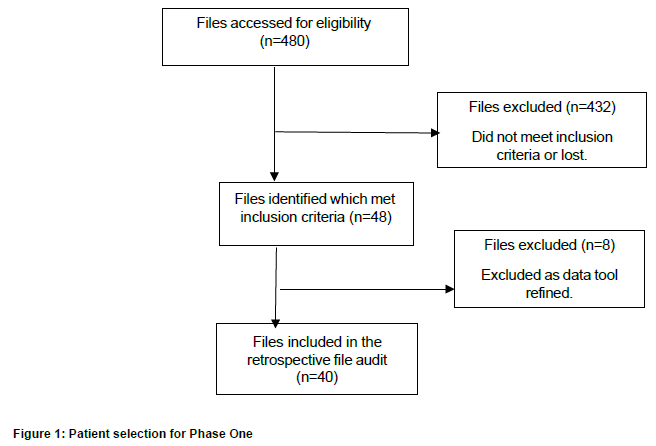
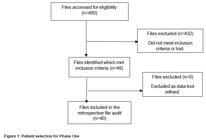
The inclusion criteria for the file audit phase included the files of burn-injured patients who received occupational therapy intervention for returning to work between January 2017 and December 2021, files of patients that were of working age, 18 years and older of all gender and races, files of patients who sustained occupational-related injuries and non-occupational related injuries, and file of patients who successfully returned to work for regular work duties, accommodated or realigned work duties. Occupational therapy files were accessed in hard copy and electronic format. According to the electronic record, 480 burn-injured patients were consulted at the occupational practice between January 2017 and December 2021. A total of 432 files were excluded based on exclusion criteria or because they were lost. A total of 48 files were thereafter identified, anda pilot study was done on ten of these patient files to formulate and trial the data extraction tool. Limitations of the consent was obtained. Inclusion criteria included burn-injured patients who returned to regular or accommodated duties after receiving rehabilitation at an occupational therapy practice between January 2017 and December 2021.
data extraction tool led to refinement to ensure that only the relevant information was retrieved. More detail was added to the pilot study, which included adding ICD 10 codes, detailing the specific body part burnt, reasons for referrals made to health professionals, length of overall rehabilitation and the occupational therapy treatment modalities were grouped. Eight patients' files were excluded from the 48 as the data extraction tool was refined, thus 40 files (Figure 1, below) were audited using the data extraction tool in the final audit.
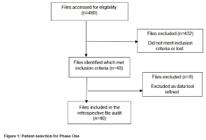
Data Collection: Information was retrieved from the 40 files using the data extraction tool. The data extraction tool included biographical details, such as age and gender, and general information, such as comorbidities and the ICD-10 codes. Information related to the injury was included, such as the aetiology of injury, injured body part, degree of depth of the burned body part, and total body surface area involved (%TBSA). Information related to medical and surgical interventions, such as skin grafts and debridement, length of stay in the hospital, and frequency of follow-ups, was retrieved. Return to work for accommodated duties or regular duties was documented. Results were coded, transferred, and organised into an Excel document.
Data Analysis: Descriptive statistical analysis was utilised to describe the categorical variables. The data for each variable were analysed on the Excel sheet and represented using bar graphs and percentages.
Reliability and Validity: A pilot study was conducted before data collection to ensure content validity of the data extraction tool. The pilot study allowed fora critique of the data extraction tool to ensure an accurate profile of the burn-injured patient is obtained; thus, construct validity occurs. To ensure reliability, the data extraction tool was utilised with each file audit, and one designated researcher performed the file audit.
Phase 2: Patient Interview Phase (Qualitative Phase)
Data Collection: The first author conducted individual interviews with ten patients, with some interviews done in person and some telephonically for approximately 30-60 minutes after informed The interview questions were piloted with two of the ten participants, and thereafter, the questions were refined. The semi-structured interviews included open-ended questions about the patient's experience of occupational therapy and rehabilitation, and return to work. The interview questions were based on the ICF framework as it provides a client-centred, holistic approach to analysing health conditions and their effect on activity and participation and considers personal and environmental factors29
Data Analysis for Phase 2: Interviews were audio recorded and transcribed verbatim by the first author and analysed thematically30
Trustworthiness: Credibility was established in the study by purposive participant sampling. The interviews were audio-recorded and transcribed verbatim, with results analysed and thick descriptions of the interview provided where possible. Confirmability and dependability were considered by using a reflexive journal to identify and eliminate biases. A reflexive journal allows for self-reflection and documents how personal bias and personal beliefs influence each phase of the research process24
Merging of analysed data from Phase One, Phase Two
The results of quantitative data (Phase one) and qualitative data (Phase two) were analysed separately and merged for comparison (triangulation). The findings were represented in a joint display, with data represented in bar graphs and tables and explored under themes and subthemes.
Ethical Clearance and Considerations
Ethical clearance was obtained from the University's Biomedical Research Ethics Committee (BREC) (BREC/00004104/2022). Gatekeeper permission was received from the owner of the occupational therapy practice. Informed written consent was sought from all participants in Phase 2. They were aware that their participation was autonomous and voluntary, with the right to withdraw from the study at any point, with no adverse consequence to themselves. Throughout the study, principles of confidentiality were upheld, pseudonyms were utilised when providing verbatim transcriptions, and no identifying information appeared on the biographical questionnaire.
RESULTS
Demographics of the patients attending occupational therapy for return to work
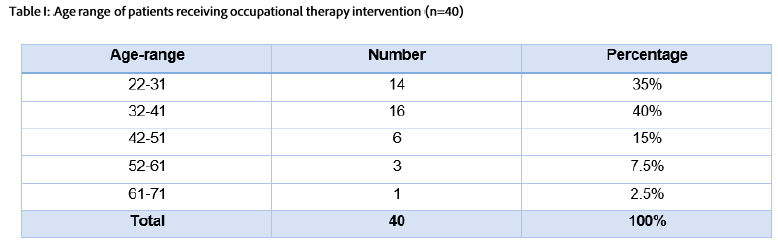
The mean age of participants in the quantitative phase of the study was 37 years (standard deviation [sd] of 10.3 years), 72% (n=29) were male as compared to 28% (n=11) who were female. The highest age range of patients was within the age bracket of 32-41 years old (40%, n=16) (Table I, below)


Comorbidities
7.5% (n=3) of the files did not indicate if the patient presented with comorbid conditions, and 37 did (n=37, 92.5%)., Only 8.1% (n=3) of participants were diagnosed with pre-morbid conditions, namely hypertension (5.4%, n=2), diabetes (2.7%, n=1) and high cholesterol (2.7%, n=1).
Injury and Surgical Details
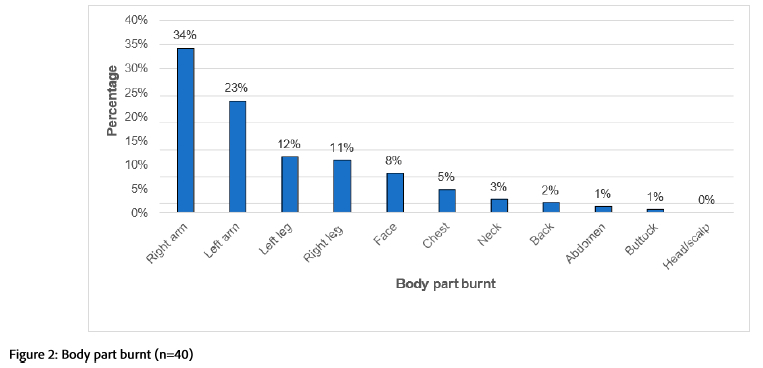
The majority (90%, n=36) of the patients sustained partial thickness burns, which extend into the lower dermis of the skin31Figure 2 (below).
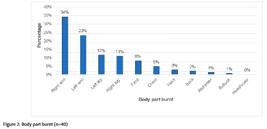
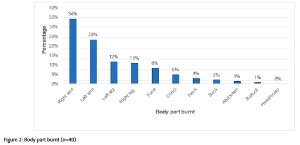
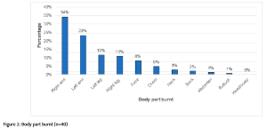
Half (n=20) of the patients' files did not indicate the total body surface area (TBSA) that was injured. Of the 50% that indicated the TBSA, the highest TBSA percentage recorded was 45%. This correlated with the highest number of occupational therapy sessions attended by a patient (n=142). The average TBSA of participants in this study was 12.61%. Work-related injuries accounted for the majority (n=29, 72.5%) of the burn injuries sustained by the patients, and 27.5% (n=11) were non-work related. The most common mechanism of injury (75%, n=30) was thermal burns, followed by chemical burns (15%, n=6) and electrical burns (10%, n=4), with no patients (0%, n=0) sustaining radiation burns, sunburns, or cold burns. Results revealed that 97.5% (n=39) of the patients underwent surgical intervention, such as debridement, skin graft or keloid injections. Each patient underwent an average of six debridement procedures.
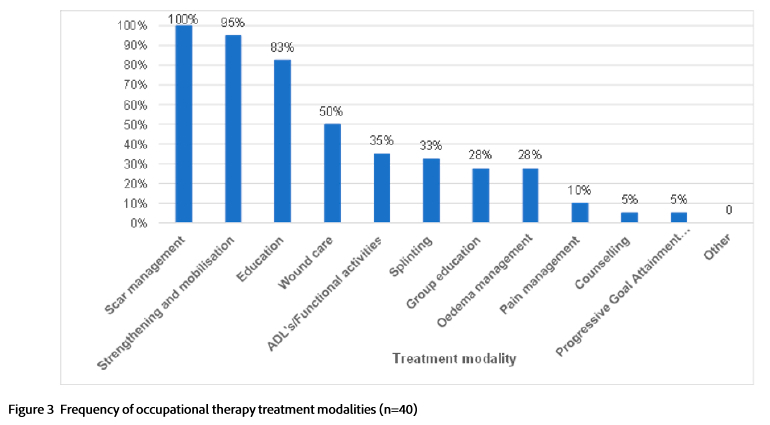
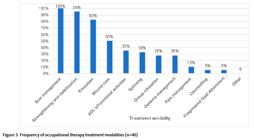
Scar management and education were recorded as occupational therapy interventions, which significantly assisted their recovery and return to work (Figure 3, page...). Scar management was done in 100% (n=40) of cases, followed by 95% (n=38) for strengthening and mobilisation and 83% (n=33) for education (Figure 3). Educating patients on burns and theirtreatment developed their insight and, thus, their compliance in therapy. The Progressive Goal Attainment Program (PGAP), which is a 10-week rehabilitation programme designed to target psychosocial risk factors such as fear avoidance, catastrophising and depression27
Findings from qualitative methods
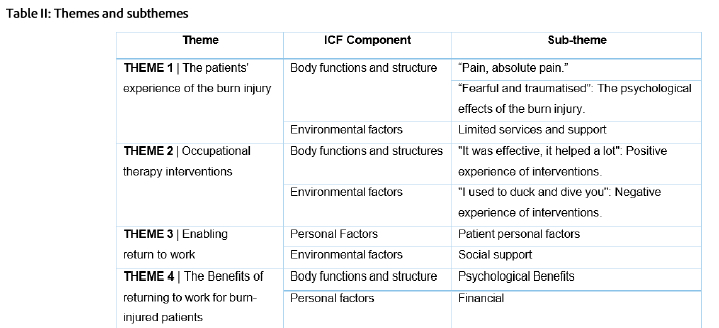
The mean age of patients interviewed was 42 years (sd = 8.9 years), of which five were male and five were female patients. Nine interviews were conducted in person, and one telephonically, and each patient was interviewed once. Four themes with subthemes emerged from the data and are discussed within the ICF framework (Table II, page...). Verbatim quotes are included to present the participant's voice in the four emerging themes.
THEME ONE: The Patient Experience of the Burn Injury
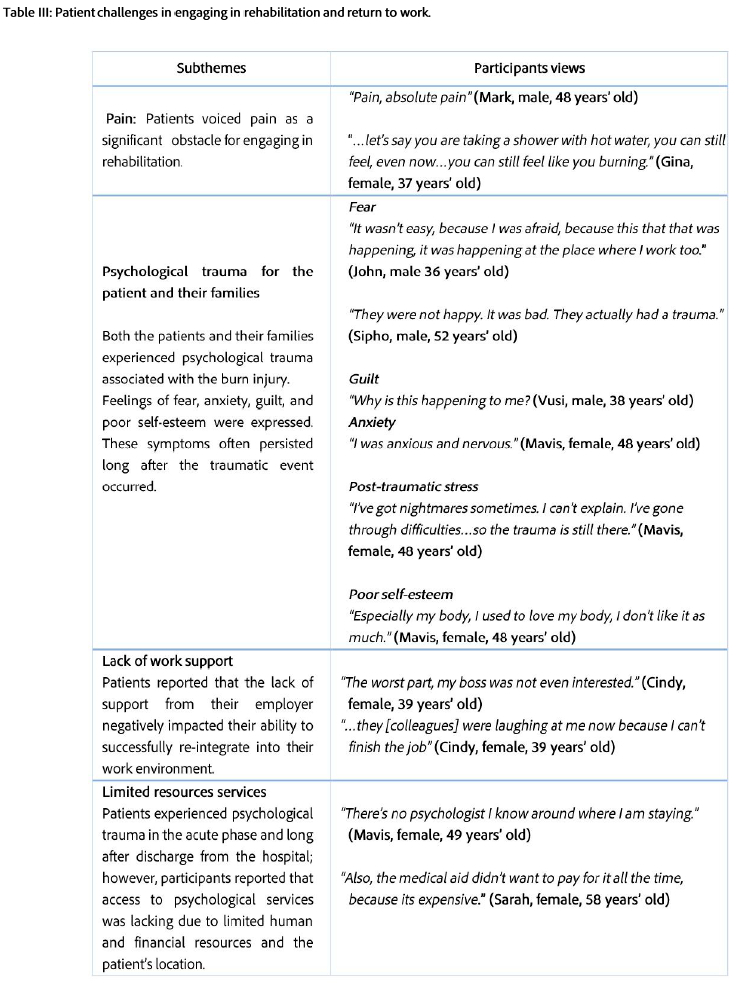
The body function and structural impairments experienced by burn-injured patients include both physical and psychological components. Pain was a significant challenge experienced by participants with burn injuries. Additionally, the participants with burn injuries and their families experienced psychological trauma associated with the injury, and there was often limited access to psychological support. Other challenges included environmental factors such as a lack of support from work and patients' difficulty with being compliant with therapy due to access challenges.
THEME TWO: Occupational therapy Interventions
Burn-injured patients reported positive and negative experiences with occupational therapy interventions and medical services received.
"She [occupational therapist] actually showed me how to safely carry a load and how to drop it now that my legs were injured...That was absolutely helpful." (Mark, male, 43 years old)
The patients reported a positive experience of occupational therapy interventions related to functional outcomes they experienced from engaging in therapy. Moreover, positive experiences were related to the attitude of the therapist and their engagement with the employer.
"...the occupational therapists, they have a way of calmly and very supportively and sympathetically taking you through the entire healing process, without you focusing on the negative aspects..." (Thandi, female, 33 years' old)
"But the most perfect and 100% thing that makes me think of going back to work, it was my last therapy, the way she was attending my boss. "(Cindy, female, 39 years' old)
The occupational therapy treatment modalities reported by patients and those reflected in thefile audit as seen in Figure three focused explicitly on physical body functions and structure as well as activity engagement in activities of daily living (ADL's), while intervention to address psychological trauma was not prominent.
Patient Education
The patients reported the value of the patient education they received from the occupational therapists regarding the treatment protocols and possible complications of burn injuries, which improved their understanding and compliance with therapy.
"...everything was work-related, so there was nothing I couldn't understand why are we doing this." (Mark, male, 48 years old)
"...it was a picture, if you don't wear your pressure garments, you don't do your stretching...what the outcome is going to be." (Cindy, female, 39 years old)
Scar Management
The benefits of the various techniques for managing scars, such as pressure garments and scar massage, were evident in the burn-injured patients. The burn-injured patients experienced the benefits of following the scar management programs.
"Massage my skin...it was effective, it helped a lot" (Sipho, male, 52 years old)
"The one thing I do miss about therapy is my compression tights because they were very good... but for now, I still keep myself out of the sun and make sure that my burns are not in sunlight." (Thandi, female, 33 years old).
Strengthening and Mobilisation
Burn-injured patients realised the positive impact of the strengthening exercises by observing how specific performance components and their function improved. Rehabilitation was specific to their impairments.
"The theraband was working very good and the ball, where I had to hit it..It worked for me. It worked for me very well." (Cindy, female, 39 years' old)
"While I am holding the weight, I would twist my hand. Some of the exercises, some of them I had to squeeze...it helps me get the muscles stronger and your hand too." (Bheki, male, 31 years old)
There appeared to be a common association between occupational therapy and pain, as reported by patients, which contributed to a negative experience of therapy.
"I used to duck and dive you, the first couple of weeks... Pain, absolute pain. I used to run away from you all [occupational therapists] literally." (Mark, male, 48 years' old)
"I really hated it when I saw an occupational therapist walk inside... because I knew this person was goingto make me feel pain... (Bheki, male, 31 years' old)
THEME THREE: Enabling return to work
As evident from data in phase one, most of the participants (82.5%, n=33) returned to regular duties and 17.5% (n=7) returned to the accommodated duties in the workplace. The burn-injured patients voiced contextual factors as facilitators to activity engagement and participation in work. These contextual factors included their positive and resilient attitude; their determination to overcome the negative effects of this injury and support from their family and work colleagues.
"My biggest motivation was that I refused to sit still. I refused to let his hold me back." (Thandi, female, 33 years' old)
"Because I'm not a loser, I wanted to pass that phase and be okay and be back to be fit again. That was the drive." (Cindy, female, 39 years' old)
"It was for my kids and my family and the plans I had for my future." (Vusi, male, 38 years' old)
THEME FOUR: The Benefits of Returning to Work for Burn-injured Patients
Burn-injured patients expressed that returning to work had a positive impact on their psychological functioning and resulted in positive financial outcomes. Returning to work for burn-injured patients provided them with a sense of purpose and fulfilment.
"I have to wake up and go and study so I can earn extra cash again or earn more again." (Cindy, female, 39 years' old)
"Normalcy...to get back to normal...It really was for me to get back to my normal life as soon as possible, and work was part ofthat." (Sarah, female, 58 years' old)
"My biggest motivation was that I refused to sit still. I refused to let this hold me back." (Thandi, female, 33 years' old)
These patients could now provide financially for their families, reducing the burden of care on the family and enabling the patients to resume their role as breadwinners. This improved their self-esteem as they engaged in tasks which are meaningful to them.
DISCUSSION
According to the International Classification of Functioning Disability and Health Framework (ICF), work is essential to the participation construct3233-353363
Factors such as the %TBSA, depth of burns and length of hospital stay are seen as major predictors for return to work in burn-injured patients332537 37
The challenges experienced by burn-injured patients were related to physical and psychological impairments and the lack of support from the employer in their RTW endeavours. Without adequate support, the complications experienced by burn-injured patients are exacerbated3928393788
A challenge prevalent within the private sector of South Africa is the limited financial resources available for patients to access psychological intervention, such as attending psychology and their geographical location. The patients and their families experienced psychological trauma due to the burn injuries. Symptoms such as PTSD, anxiety and fear impact work integration and employment outcomes38404141
The occupational therapy interventions most frequently utilised in therapy correlated with what burn-injured patients reported as being most effective: education, scar management, and strengthening and mobilisation2642434445
Limitations
Poor record keeping and missing information from patient files, such as the percentage of total body surface area burnt, depth of burns and length of stay in hospital, was a limitation in this study. The surgical and medical information was not consistently documented for all patients, and thus, this limited the sample size and the results. The research setting was conducted at a private practice, which limits the population of research participants. Thus, future research could involve patients in the public sector.
CONCLUSION
Burn injuries affect the working-age population in KZN, for whom return to work is an integral part of rehabilitation and recovery. Burn-injured patients identified scar management, strengthening, education, and the positive attitude of the therapist in engaging with the employer as significant factors that aided in their recovery and the return-to-work process. Although the role of the occupational therapist is holistic in addressing physical and psychological impairments and providing environmental support, there is a gap in the psychosocial and psychological intervention provided to burn-injured patients and their families. Burn-injured patients experience doubts regarding their ability to return to work and cope with a change in work demands. Receiving psychological support affirms theirself-confidence and motivation to reenter their work environment19
Future studies utilising objective, standardised assessments and outcome measures, which include physical and psychological domains, are required to monitor patients' progress in occupational therapy. The role of occupational therapists is holistic, and thus, they should not limit their treatment approach to addressing physical impairments alone, but also psychological and psychosocial impairments, as well as environmental factors. They play a role in providing social support to burn-injured patients and facilitating return to work through effective communication with the employer.
Author contributions
Nadé Adonis completed the study towards a postgraduate degree and was responsible for the conceptualisation, design, acquisition, analysis and interpretation of data, and in drafting the manuscript. Pragashnie Govender and Deshini Naidoo, as supervisors of the study, were responsible for co-conceptualisation, design and reviewing the analysis and interpretation of the data and critical review and revision of the manuscript.
Conflicts of interest
The authors declare no conflict of interest.
REFERENCES
Acknowledgements
The University of KwaZulu-Natal is acknowledged for the tuition remission for the first author of this study.
LITERATURE REVIEW
-
1. Rybarczyk MM, Schafer JM, Elm CM, Sarvepalli S, Vaswani PA, Balhara KS, et al. A systematic review of burn injuries in low- and middle-income countries: Epidemiology in the WHO-defined African Region. African Journal of Emergency Medicine [Internet] 2017;7(1):30-7. Available from: https://doi.org/10.1016/j.afjem.2017.01.006
» https://doi.org/10.1016/j.afjem.2017.01.006 -
2. Devleesschauwer B, Havelaar AH, De Noordhout CM, Haagsma JA, Praet N, Dorny P, et al. Calculating disability-adjusted life years to quantify burden of disease. International Journal of Public Health [Internet]. 2014 Apr 22;59(3):565-9. Available from: https://doi.org/10.1007/s00038-014-0552-z
» https://doi.org/10.1007/s00038-014-0552-z -
3. Allorto N, Wall SD, Clarke DR. Quantifying capacity for burn care in South Africa. Burns Open [Internet] 2018;2(4):188-92. Available from: https://doi.org/10.1016/j.burnso.2018.07.002
» https://doi.org/10.1016/j.burnso.2018.07.002 -
4. Angelou IK, Van Aswegen H, Wilson M, Grobler RC A profile of adult patients with major burns admitted to a Level 1 Trauma Centre and their functional outcomes at discharge: A retrospective review. South African Journal of Physiotherapy [Internet] 2022,78(1). Available from: https://doi.org/10.4102/sajp.v78i1.1543
» https://doi.org/10.4102/sajp.v78i1.1543 -
5. Daffue B, Moolman D, Ferreira S, Roos L, Schoeman L, Smit SJA, et al. The causes of burn wounds among adult patients treated at Pelonomi Tertiary Hospital, Bloemfontein. South African Journal of Surgery [Internet]. 2018 Jan 1,-56(3):31-6. Available from: https://doi.org/10.17159/2078-5151/2018/v56n3a2592
» https://doi.org/10.17159/2078-5151/2018/v56n3a2592 -
6. Martins CL, Echevarria-Guanilo ME, Silveira DT, Gonzales RIC, Pai DD. Risk Perception of Work-related Burn Injuries from the workers perspective. Texto & Contexto Enfermagem [Internet] 2015,-24(4):1148-56. Available from: https://doi.org/10.1590/0104-0707201500000880015
» https://doi.org/10.1590/0104-0707201500000880015 -
7. Clouatre E, Gómez M, Banfield J, Jeschke MG. Work-related burn injuries in Ontario, Canada: A follow-up 10-year retrospective study. Burns [Internet] 2013;39(6):1091-5. Available from: https://doi.org/10.1016/j.burns.2012.12.020
» https://doi.org/10.1016/j.burns.2012.12.020 -
8. Katsu A, Tyack Z, Mackey M, Elliott JM, Mackenzie L. Return to employment for working-aged adults after burn injury: a scoping review protocol. BMJ Open [Internet] 2021;11(1):e044145. Available from: https://doi.org/10.1136/bmjopen-2020-044145
» https://doi.org/10.1136/bmjopen-2020-044145 -
9. Netcare Group. Netcare Burns Statistics 2014/2015: An eye-opener [Internet]. 2015. [cited 2 December 2021]. Available from: https://www.netcare.co.za/News-Hub/Artides/netcare-burns-statistics-20142015-an-eye-opener
» https://www.netcare.co.za/News-Hub/Artides/netcare-burns-statistics-20142015-an-eye-opener -
10. Blake NJ, Swart O, Duvenage R. The demographics and outcomes of burn patients admitted to Worcester Hospital. South African Journal of Surgery [Internet] 2021;58(2). Available from: https://doi.org/10.17159/2078-5151/2020/v58n2a3124
» https://doi.org/10.17159/2078-5151/2020/v58n2a3124 -
11. Forbinake NA, Dongmo G, Ohandza CS, Chichom-Mefire A, Fokam P, Beyiha G. Epidemiologic and clinical profile of burns in a tertiary hospital in Sub-Saharan Africa. Burns Open [Internet] 2020,4(1):22-7. Available from: https://doi.org/10.1016/j.burnso.2019.10.001
» https://doi.org/10.1016/j.burnso.2019.10.001 -
12. Hashmi M, Kamal RS. Management of patients in a dedicated burns intensive care unit (BICU) in a developing country. Burns [Internet] 2013;39(3):493-500. Available from: https://doi.org/10.1016/j.burns.2012.07.027
» https://doi.org/10.1016/j.burns.2012.07.027 -
13. Ortiz-Prado E, Armijos L, Iturralde AL. A population-based study of the epidemiology of acute adult burns in Ecuador from 2005 to 2014. Burns [Internet] 2015,-41(3):582-9. Available from: https://doi.org/10.1016/j.burns.2014.08.012
» https://doi.org/10.1016/j.burns.2014.08.012 -
14. Karashchuk IP, Solomon EA, Greenhalgh DG, Sen S, Palmieri TL, Romanowski KS. Follow-up after burn injury is disturbingly low and linked with social factors. Journal of Burn Care & Research [Internet]. 2021 May 7;42(4):627-32. Available from: https://doi.org/10.1093/jbcr/irab065
» https://doi.org/10.1093/jbcr/irab065 -
15. Wu J, Zou J, Yang Q, Wang H, Tian H, Chen L, et al. The effects of scar in psychological disorder: A bibliometric analysis from 2003 to 2022. International Wound Journal [Internet]. 2023 Sep 7; Available from: https://doi.org/10.1111/iwj.14373
» https://doi.org/10.1111/iwj.14373 -
16. Cen Y, Chai J, Chen H, Chen J, Guo G, Han C, et al. Guidelines for burn rehabilitation in China. Burns & Trauma [Internet]. 2015 Jan 1;3. Available from: https://doi.org/10.1186/s41038-015-0019-3
» https://doi.org/10.1186/s41038-015-0019-3 -
17. Grieve B, Shapiro GD, Wibbenmeyer L, Acton A, Lee A, Marino M, et al. Long-Term social reintegration outcomes for burn survivors with and without peer support attendance: A Life Impact Burn Recovery Evaluation (LIBRE) study. Archives of Physical Medicine and Rehabilitation [Internet]. 2020 Jan 1;101(1):S92-8. Available from: https://doi.org/10.1016/j.apmr.2017.10.007
» https://doi.org/10.1016/j.apmr.2017.10.007 - 18. Kaddoura I, Abu-Sittah G, Ibrahim A, Karamanoukian R, Papazian N. Burn injury: review of pathophysiology and therapeutic modalities in major burns. Annals of burns and Fire Disasters. 2017 Jun 6;30(2):95.
-
19. Ali MB, Ali MB. Psychological and physiological complications of Post-Burn patients in Pakistan. Sultan Qaboos University Medical Journal (Print) [Internet]. 2022 Feb 28,-22(1):8-13. Available from: https://doi.org/10.18295/squmj.8.2021.118
» https://doi.org/10.18295/squmj.8.2021.118 -
20. Ali H, Pervaiz M. Depression in adults post burn injury: a descriptive study conducted in the burn centre of a tertiary care hospital in Karachi. Annals of Burns and Fire Disasters [Internet]. 2019 Mar 31,32(1):33-6. Available from: https://www.ncbi.nlm.nih.gov/pmc/articles/PMC6588335/
» https://www.ncbi.nlm.nih.gov/pmc/articles/PMC6588335/ -
21. Akarsu S, Durmuş M, Yapıcı AK, Öznur T, Öztürk S. Psychiatrie assessment and rehabilitation of burn patients. Türk Plastik Rekonstrüktif Ve Estetik Cerrahi Dergisi [Internet]. 2017 Feb 16;25(1):20-7. Available from: https://doi.org/10.5152/turkjplastsurg.2017.2112
» https://doi.org/10.5152/turkjplastsurg.2017.2112 -
22. Bayuo J, Wong FK. Issues and concerns of family members of burn patients: a scoping review. Burns. 2021 May 1;47(3):503-24. Available from: https://doi.org/10.1016/j.burns.2020.04.023
» https://doi.org/10.1016/j.burns.2020.04.023 -
23. Esselman PC, Kowalske K. Preface. Physical Medicine and Rehabilitation Clinics of North America[lnternet]. 2011 May 1;22(2):xiii-XV. Available from: https://doi.org/10.1016/j.pmr.2011.03.002
» https://doi.org/10.1016/j.pmr.2011.03.002 -
24. Katsu A, Mackenzie L, Tyack Z, Mackey M. Understanding return-to-employment experiences after burns: Qualitative scoping review findings. Australian Occupational Therapy Journal [Internet]. 2023 Nov 22; Available from: https://doi.org/10.1111/1440-1630.12915
» https://doi.org/10.1111/1440-1630.12915 -
25. Verma K, Thakurani S, Vashishta A, Srivatsa SI, Shah D. Assessing return to work outcomes for individuals affected by burn injuries: a comprehensive study. Curëus [Internet]. 2024 Feb 18; Available from: https://doi.org/10.7759/cureus.54410
» https://doi.org/10.7759/cureus.54410 -
26. Van Biljon HM, Engelbrecht M, Van Der Walt J, Soeker S. Occupational therapy practice with burn injuries: A Rapid Review. South African Journal of Occupational Therapy [Internet]. 2024 Apr 1;54(1):87-94. Available from: https://doi.org/10.17159/2310-3833/2024/vol54no1a10
» https://doi.org/10.17159/2310-3833/2024/vol54no1a10 -
27. Schoonenboom, J., & Johnson, R. B. (2017). How to Construct a Mixed Methods Research Design. KZfSS Kölner Zeitschrift Für Soziologie Und Sozialpsychologie, 69(S2), 107-131. https://doi.org/10.1007/s11577-017-0454-1
» https://doi.org/10.1007/s11577-017-0454-1 -
28. Etikan, I. (2016). Comparison of Convenience Sampling and Purposive Sampling. American Journal of Theoretical and Applied Statistics, 5(1), 1. https://doi.org/10.11648/j.ajtas.20160501.11
» https://doi.org/10.11648/j.ajtas.20160501.11 -
29. Neubauer H, Stolle A, Ripper S, Klimitz F, Ziegenthaler H, Strupat M, et al. Evaluation of an International Classification of Functioning, Disability and Health-based rehabilitation for thermal burn injuries: a prospective non-randomised design. Trials [Internet]. 2019 Dec 1;20(1). Available from: https://doi.org/10.1186/s13063-019-3910-6
» https://doi.org/10.1186/s13063-019-3910-6 -
30. Byrne, D. (2021). A worked example of Braun and Clarke's approach to reflexive thematic analysis. Quality & Quantity, 56(3), 1391-1412. https://doi.org/10.1007/s11135-021-01182-y
» https://doi.org/10.1007/s11135-021-01182-y -
31. Gibson ALF, Carney BC, Cuttle L, Andrews CJ, Kowalczewski CJ, Liu A, et al. Coming to consensus: What defines deep partial thickness burn injuries in porcine models? Journal of Burn Care & Research [Internet]. 2020 Aug 24,-42(1):98-109. Available from: https://doi.org/10.1093/jbcr/iraa132
» https://doi.org/10.1093/jbcr/iraa132 -
32. Spronk I, Van Loey NE, Van Der Vlies CH, Haagsma JA, Polinder S, Van Baar ME. Activity impairment, work status, and work productivity loss in adults 5-7 years after burn injuries. Journal of Burn Care & Research [Internet] 2021;43(1):256-62. Available from: https://doi.org/10.1093/jbcr/irab047
» https://doi.org/10.1093/jbcr/irab047 -
33. Brusselaers N, Monstrey S, Vogelaers D, Hoste E, Blot S. Severe burn injury in europe: a systematic review of the incidence, etiology, morbidity, and mortality. Critical Care [Internet] 2010;14(5): R188. Available from: https://doi.org/10.1186/cc9300
» https://doi.org/10.1186/cc9300 -
34. Hutter MF, Smolle C, Kamolz L. Life after Burn, Part I: Health-Related Quality of Life, Employment and Life Satisfaction. Medicina-lithuania [Internet] 2022;58(5):599. Available from: https://doi.org/10.3390/medicina58050599
» https://doi.org/10.3390/medicina58050599 -
35. Peck MD. Epidemiology of burns throughout the world. Part I: Distribution and risk factors. Burns [Internet] 2011;37(7):1087-100. Available from: https://doi.org/10.1016/j.burns.2011.06.005
» https://doi.org/10.1016/j.burns.2011.06.005 -
36. Scheven D, Barker P, Govindasamy J. Burns in rural Kwa-Zulu Natal: Epidemiology and the need for community health education. Burns [Internet] 2012;38(8):1224-30. Available from: https://doi.org/10.1016/j.burns.2012.04.001
» https://doi.org/10.1016/j.burns.2012.04.001 -
37. Quinn T, Wasiak J, Geland H. An examination of factors that affect return to work following burns: A systematic review of the literature. Burns [Internet] 2010;36(7):1021-6. Available from: https://doi.org/10.1016/j.burns.2009.10.001
» https://doi.org/10.1016/j.burns.2009.10.001 -
38. Katsu A, Mackenzie L, Tyack Z, Mackey M. Understanding return-to-employment experiences after burns: Qualitative scoping review findings. Australian Occupational Therapy Journal [Internet]. 2023 Nov 22,71(1):113-31. Available from: https://doi.org/10.1111/1440-1630.12915
» https://doi.org/10.1111/1440-1630.12915 -
39. Van Bentum J, Nicholson J, Bale N, Fadyl J. Supporting people experiencing a burn injury to return to work or meaningful activity: Qualitative systematic review and thematic synthesis. The New Zealand Journal of Physiotherapy [Internet]. 2023 May 10;49(3). Available from: https://doi.org/10.15619/nzjp/49.3.04
» https://doi.org/10.15619/nzjp/49.3.04 -
40. Bayuo J, Wong FKY. Issues and concerns of family members of burn patients: A scoping review. Burns [Internet] 2021;47(3):503-24. Available from: https://doi.org/10.1016/j.burns.2020.04.023
» https://doi.org/10.1016/j.burns.2020.04.023 - 41. Jackson KB and Lauderback H. Psychosocial Aspects of Burn Management in a Changing Model of Care. Austin J Emergency & Crit Care Med. 2015; 2(5): 1033.
-
42. Yohannan SK, Ronda-Velez Y, Henriquez DA, Hunter H, Tufaro PA, Marren M, et al. Burn survivors' perceptions of rehabilitation. Burns [Internet] 2012;38(8):1151-6. Available from: https://doi.org/10.1016/j.burns.2012.07.009
» https://doi.org/10.1016/j.burns.2012.07.009 -
43. Procter F. Rehabilitation of the burn patient. Indian Journal of Plastic Surgery [Internet]. 2010 Jan 1;43(3):101. Available from: https://doi.org/10.4103/0970-0358.70730
» https://doi.org/10.4103/0970-0358.70730 - 44. Jeschke MG, van Baar ME, Choudhry MA, Chung KK, Gibran NS, Logsetty S. Burn injury. Nature Reviews Disease Primers. 2020 Feb 13;6(1):11.
-
45. Gay C, Chabaud A, Guilley É, Coudeyre E. Educating patients about the benefits of physical activity and exercise for their hip and knee osteoarthritis. Systematic literature review. Annals of Physical and Rehabilitation Medicine [Internet] 2016;59(3):174-83. Available from: https://doi.org/10.1016/j.rehab.2016.02.005
» https://doi.org/10.1016/j.rehab.2016.02.005
Reviewed: 29 April 2024
Revised: 30 January 2025
Accepted: 1 March 2025
EDITOR
Hester van Biljon
https://orcid.org/0000-0003-4433-6457
DATA AVAILABILITY
Data can be made available by the corresponding author on request.
FUNDING
The University of KwaZulu Natal provided a tuition bursary for the first author of this study.