Will artificial intelligence replace human librarians: views from librarians in a developing country?
Abstract
This study explores whether artificial intelligence (AI) will replace human librarians, offering an analysis of the evolving role of librarianship in the AI era. The rapid advancement of AI technologies has transformed various industries, and libraries are no exception. AI-powered tools can now perform many traditional library functions such as cataloguing, reference services, and collection management more efficiently and accurately. This has sparked a debate on the potential of AI to replace human librarians. Through expert opinions from 43 librarians, the study examines the capabilities and limitations of AI in library settings, highlighting areas where AI excels and falls short. It argues that while AI can enhance the efficiency of routine tasks, it lacks the contextual understanding, emotional intelligence, and critical thinking necessary for complex information needs, personalised user interactions, and ethical decision making that librarians provide. The study concludes that rather than replacing librarians, AI will likely serve as a collaborative tool, enabling librarians to focus on more specialised and value-added services such as information literacy education, digital scholarship, and community engagement. The study calls for reimagining the role of librarians in the AI era, emphasizing the importance of upskilling and integrating AI tools to augment, rather than replace, human expertise in libraries.
Artificial intelligence; Human librarians; AI and libraries; Library automation; ChatGPT; Chatbots; Virtual assistants
1 Introduction
The rapid evolution of artificial intelligence (AI) technologies is reshaping industries worldwide, presenting both opportunities and challenges. In the field of librarianship, AI tools are being integrated to streamline processes like cataloguing, reference services, and collection management (Zondi et al. 2024). These advancements have sparked a crucial conversation about the future role of human librarians. Will the rise of AI signify an end to traditional librarianship, or will it herald a new era of human-AI collaboration? This manuscript seeks to address these pressing questions, with a focus on the perspectives of librarians from a developing country context. The issue at the core of this investigation is whether AI could eventually replace human librarians, a concern that has gained traction as libraries increasingly adopt AI-powered tools. Proponents of AI argue that such technologies enhance operational efficiency (Oyetola et al. 2023), reduce workload, and improve the accuracy of routine tasks (Suryawanshi 2024). However, critics highlight that while AI excels in automating repetitive and data-driven activities, it lacks the human touch needed for services, such as personalised guidance, ethical judgment, and community engagement (Alawamleh et al. 2024). This study aims to explore these opposing views and assess whether the unique human skills provided by librarians can be adequately replicated by AI or whether they remain indispensable.
Previous research has documented AI's role in enhancing library operations. Allal (2022) stated that AI-driven cataloguing and metadata generation can improve speed and accuracy (Allal 2022). Meanwhile, Rubin et al. (2010) noted the effectiveness of chatbots in handling simple user queries and providing libraries with scalable solutions for basic reference services. However, the studies point out the limitations of AI, especially in areas requiring critical thinking, emotional intelligence, or the ethical decision-making that human librarians provide. This view challenges the assumption that technology alone can sustain the diverse functions of a library. This study seeks to fill this research gap by examining the perspectives of 43 librarians in a developing country, where technological adoption is often mediated by different socio economic challenges than those in more developed regions. By analysing the experiences and opinions of these professionals, this research aims to determine whether AI in its current form can fully replace librarians or serve as an augmentation to their roles. The study strives to contribute to the discourse on AI's limitations and potential as a collaborative tool, emphasizing the critical importance of human expertise in the evolving library landscape. It is against such a background that the study sought to answer the following objectives:
To analyse the potential impact of AI on the roles and responsibilities of librarians in various library settings.
To identify the limitations of AI in delivering complex, context-sensitive, and personalised library services.
To explore the opportunities for librarians to collaborate with AI technologies to enhance library services and improve user experiences.
This section discusses the literature review
2.1 Impact of AI in performing traditional library functions
Artificial intelligence has increasingly become a transformative force in libraries and its integration affects librarians' roles and responsibilities in all types of libraries (Zondi et al. 2024). AI can now automate routine tasks such as cataloguing, circulation, and inventory management efficiently (Ali et al. 2020; Cox & Mazumdar 2024; Rudisnsyah 2023), freeing up librarians for more community-focused roles (Chakarova & Trabert 2017; Cox 2023; Manjunatha 2023). AI chatbots can provide 24/7 customer support, addressing frequently asked questions and assisting with locating resources. Librarians, therefore, need to adapt by learning to manage and maintain AI systems and focus on digital literacy training for their communities (Lo 2023). Academic libraries support research, teach information literacy, manage electronic resources, and provide reference services among other things (Ali et al. 2023). AI tools like semantic search engines and predictive analysis can enhance literature reviews and data retrieval (Barsha & Munshi 2023), shifting the librarian's role towards guiding users in leveraging these technologies.
Librarians need to focus on overseeing AI-driven systems to ensure accuracy, reliability, and ethical compliance. AI tools like adaptive learning platforms can personalise student experiences, while AI systems can recommend age appropriate and curriculum-aligned materials (Yeter et al. 2024). As a result, librarians must evolve into facilitators of digital learning, guiding students in the ethical use of AI and digital tools. However, there are some challenges for librarians, especially in developing countries where many libraries lack the technological infrastructure to implement advanced AI systems, skills gap, algorithm bias, and data privacy (Barsha & Munshi 2023; Zondi et al. 2024).
2.2 Limitation of AI in library services
Artificial intelligence has revolutionised library services, but its limitations are evident in delivering complex, context sensitive, and personalised services requiring human expertise. AI struggles to interpret ambiguous requests that require a deep understanding of cultural, social, or institutional contexts, which can be termed contextual understanding (Ehinomhen & Bosede, 2022). In addition, complex inquiries involving sensitive topics such as personal issues require emotional intelligence, ethical judgement, and empathy, which AI lacks (Gajbhiye 2024). Moreover, AI operates within the confines of its programming and training data, and it cannot think critically, make value judgements, or approach problems creatively (Rudiansyah 2023). Furthermore, AI systems inherit biases from their training data, which can result in recommendations or interactions that are skewed or inappropriate for certain users (Echedom & Okuonghae 2021; Ehinomhen & Bosede 2022; Ngulube & Mosha 2025). AI struggles with unprecedented scenarios or queries outside its training dataset and AI cannot make dynamic decision-making when there are complex scenarios that require weighing multiple, and conflicting factors (Gajbhiye 2024). Moreover, AI may have limitations in integrating interdisciplinary knowledge effectively and human librarians are trained to synthesize information across diverse fields, tailoring their assistance to complex, multi-faceted user queries (Rudiansyah 2023). In some instances, AI may inadvertently misuse or over-collect user data, raising privacy concerns, whereas librarians are better equipped to manage user data ethically and ensure compliance with legal and institutional policies (Ehinomhen & Bosede 2022). When providing services to marginalised or underrepresented groups, AI tools might not adequately cater to the needs of this group as their unique requirements might be underrepresented in the training data. Human expertise is crucial in bridging these gaps and ensuring inclusivity.
2.3 Opportunities for librarians to collaborate with AI technologies in libraries
Librarians can collaborate with AI technologies through various approaches that integrate AI's capabilities into library systems and services (Rudiansyah 2023; Zondi et al. 2024). Participation in the development of AI-driven solutions would be key to enhancing the usefulness of AI in libraries. Librarians can collaborate with AI developers to design tools tailored to library-specific needs, such as search algorithms optimised for academic research (Kalbande et al. 2024). They can also use insights from library users to guide the customisation of AI systems, ensuring they address real-world challenges. Working with AI developers to ensure AI tools are transparent, fair, and aligned with privacy laws and ethical guidelines is another way librarians can collaborate with AI technologies (Kalbande et al. 2024). They also have a role to play in contributing to refining AI models to reduce biases, particularly in search algorithms. Automation of repetitive tasks can be done by using AI to streamline cataloguing, metadata generation, and inventory management, reducing manual workload (Adejo & Misau 2021). Research support services can also be enhanced by assisting researchers through integrating AI tools for data mining, sentiment analysis and systematic reviews (Ehinomhen & Bosede 2022). Resource discovery and access can be expanded through advanced search capabilities where librarians work with AI to enhance catalogue search engines, enabling semantic or voice-based searches. Librarians can also collaborate with AI to offer more efficient and comprehensive responses to research queries by leveraging natural language processing (IFLA 2023a). In scholarly submissions, AI-based tools can be used to ensure integrity through plagiarism detection.
In collection development, librarians can use AI to implement personalised recommendation systems that suggest relevant sources to users based on their preferences (Kalbande et al. 2024; Manjunatha 2023a; Rudiansyah 2023). AI can be used to build accessible library services, especially assistive technologies and multilingual resources. AI can be used to provide text-to-speech, speech-to-text, and other assistive services for users with disabilities and AI translation tools can be used to make library materials accessible to diverse linguistic communities (Manjunatha 2023). AI can also be integrated into information literacy programmes by offering interactive learning and leveraging AI platforms for adaptive and gamified learning experiences in library instruction. Librarians can promote open science by using AI to assist researchers with managing, sharing, and preserving research data and ensure seamless integration of identifiers like digital object identifiers (DOIs) into research workflows. AI systems based on radio frequency identification (RFID) can be used to locate resources during shelving and stock-taking (Chhetri & Thakur, 2019; Okunlaya et al., 2022). Library operations can also be transformed by using self-checkout systems and offering 24-hour services within the library (IFLA 2023b).
3 Methodology
This study adopted a cross-sectional descriptive study design to explore the perspectives of librarians in Zimbabwe regarding the potential for AI to replace human librarians (Creswell & Creswell 2018; Deckert & Wilson 2023). The target population comprised librarians working in various types of libraries across Zimbabwe, and the sample was selected using a convenience sampling approach. Respondents were recruited through the Zimbabwe Library Association (ZimLA) WhatsApp group, a widely used professional platform that facilitates information sharing and networking among Zimbabwean librarians. This sampling method provided an efficient means to reach a diverse cross-section of actively engaged librarians across the country. The primary data collection tool was a structured questionnaire developed using Google Forms, which was distributed using the ZIMLA WhatsApp group with librarians who had paid membership fees for the year 2025. The group had 100 fully paid members and 43 librarians responded. The questionnaire included both closed and open-ended questions to gather comprehensive insights into librarians' perspectives. Some of the questions were single response while others were multiple response to ensure that the respondents choose all the AI concepts they deal with in their day to day running of the library.
The closed-ended questions focused on respondents' roles, years of experience, the adoption of AI technologies in their libraries, perceived limitations of AI, and the skills required for integrating AI into library services. The open-ended questions were designed to elicit detailed qualitative responses, allowing librarians to elaborate on their views beyond predefined options (Deckert & Wilson 2023). To ensure the reliability and validity of the survey instrument, a pilot study was conducted with a small group of librarians before full-scale data collection. The feedback from the pilot study was used to refine question wording, improve clarity, and confirm the instrument's effectiveness in capturing relevant data. Cronbach's alpha was computed for the closed-ended questions to assess internal consistency, while expert review was used to validate the questionnaire's content.
Participation in the study was voluntary, and informed consent was obtained from all respondents at the beginning of the questionnaire. To protect survey respondents' privacy and confidentiality, no personally identifiable information was collected. Additionally, Google Forms' security settings were configured to ensure anonymous participation, and only the principal investigator had access to the raw data. Data storage and handling adhered to ethical guidelines to prevent unauthorised access or disclosure. The collected data were analysed using both quantitative and qualitative approaches. Descriptive statistics were used to summarise responses to closed-ended questions, with results presented through tables and graphical representations to facilitate interpretation. Content analysis was applied to the open-ended responses to identify recurring themes and patterns in librarians' perceptions (Krippendorff 2018; Bernard, Wutich, & Ryan 2017). The analysis process involved coding responses and categorising them into thematic areas related to AI adoption, perceived risks, and future implications for librarianship.
4 Results
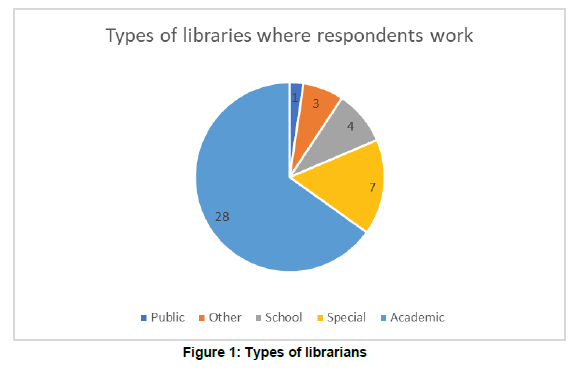
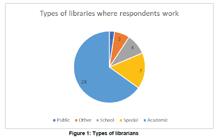
The study was done to solicit the views of librarians on whether AI would replace humans. Forty-three responses were obtained from different types of librarians as shown in Figure 1. The majority (28) work in academic libraries while the least (1) work in a public library.
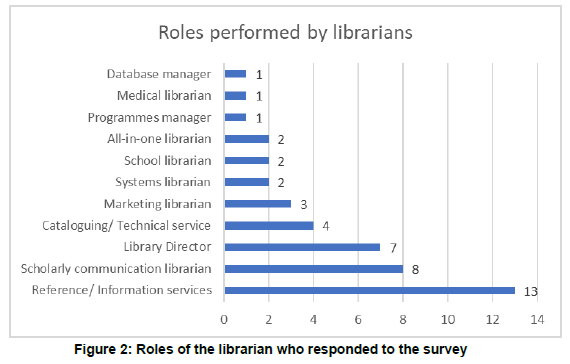
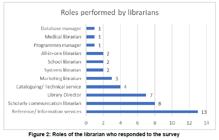
It was important to know the role of the librarians who responded to the questionnaire. It was noted that 13 were reference and information services librarians and the respondents were balanced since they represented all the sections of the library. Six were library directors who were responsible for the overall management of the department while others were the operations people as shown in Figure 2. The all-in-one librarians were those who were working alone in the library offering all the services from technical to client services.
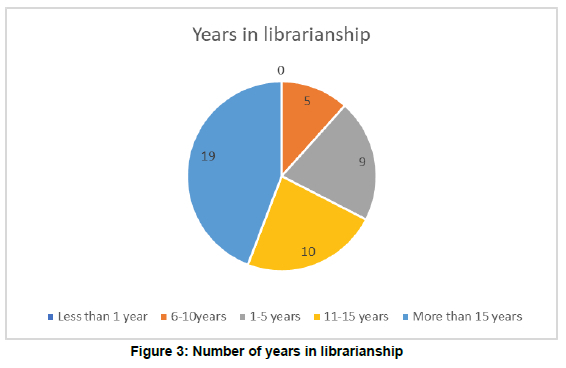
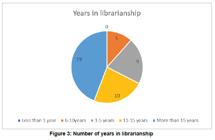
The findings showed that 19 respondents had more than 15 years of experience in librarianship which allows them to give a balanced view in terms of traditional librarianship and the opportunities and challenges being brought by using AI technologies in libraries as shown in Figure 3.
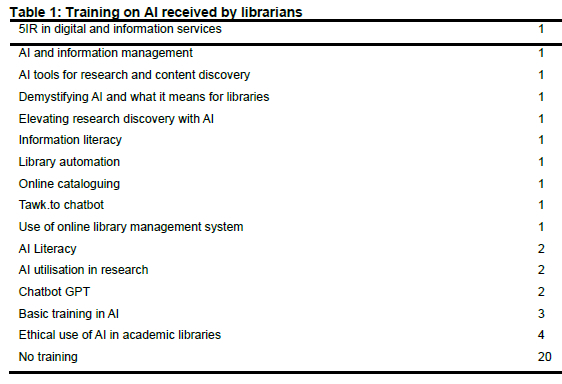
The respondents were asked whether they got any training on the use of AI technologies in libraries. The results indicated that 20 of them did not receive any training while some attended some webinars and workshops that dealt with the issue as shown in Table 1.
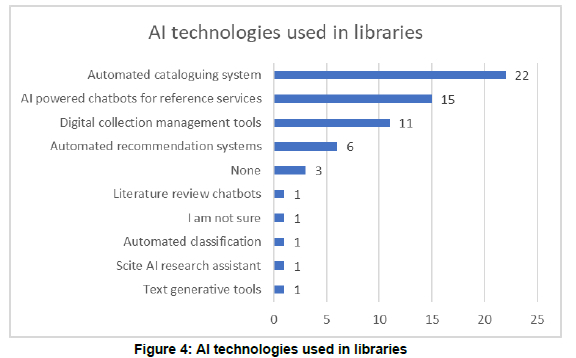
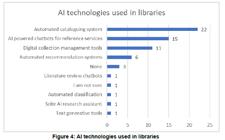
The findings showed that 22 libraries had automated their cataloguing system while 15 were using AI chatbots to answer reference queries in their librariesas shown in Figure 4. Furthermore, respondents who referenced specific AI tools in their answers provided insights into the technologies currently being explored in Zimbabwean libraries. The mentioned AI tools included chatbot applications, machine learning-based cataloguing systems, and automated reference services. The frequency of AI tool mentions, and their perceived impact were documented to highlight trends in AI adoption across different library settings. However, 3 respondents said they haven't implemented any AI technologies in their libraries and 1 was not sure if they are using AI. As a result, this is a clear indication that libraries in Zimbabwe are not fully utilising AI, and this means it cannot replace human librarians anytime soon.
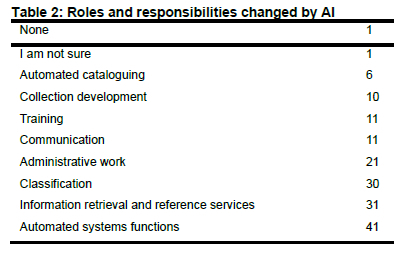
It was noted that the librarians who responded to the survey view the automated systems functions as the one that is most affected by AI technologies as shown in Table 2. Six librarians indicated that the roles and responsibilities of cataloguers had been changed by AI. Surprisingly, one librarian stated that none of the roles has changed while the other one indicated that he/she is not sure, showing that human librarians in those two libraries are still doing their traditional roles and responsibilities.
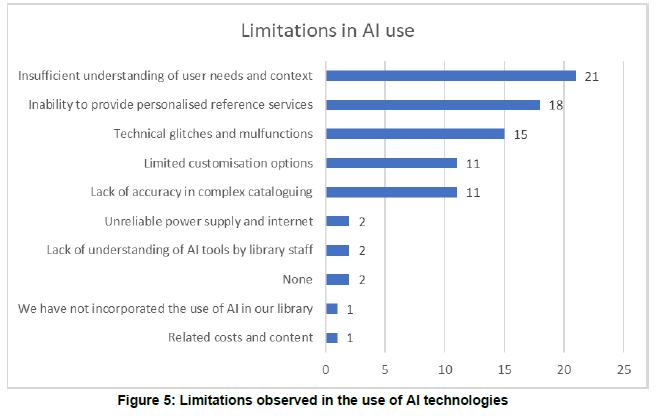
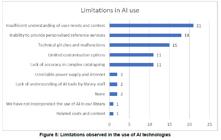
Figure 5 indicates the limitations that have been observed by librarians when using AI technologies. The major limitation experienced by 21 librarians is an insufficient understanding of user needs and context, and an inability to provide personalised reference services (18) which might limit the results obtained when using AI technologies.
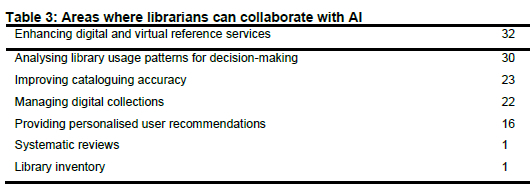
The results showed that there are some areas where librarians can work with AI technologies to enhance their services as shown in Table 3. The one that topped the list is enhancing digital and virtual reference services, especially answering frequently asked questions and then in turn directing the queries to human librarians if the chatbot is no longer able to assist.
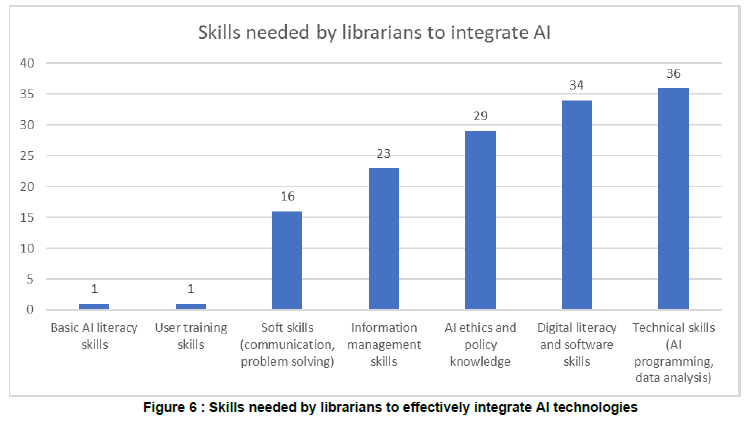
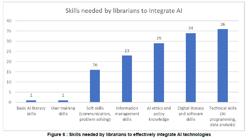
However, it was noted that some challenges might be encountered if human librarians are not skilled enough to use AI technologies. Figure 6 documents the skills that are needed by librarians to integrate AI technologies into their services. The most important skill noted by 36 librarians is technical skills including AI programming and data analysis so that they would be able to use the prompts to get the required information.
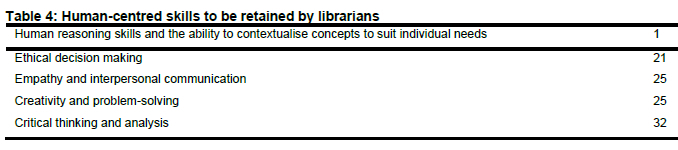
The findings also showed that some skills should be retained by librarians to be able to operate in any environment whether there are AI technologies or not. Table 4 shows that human librarians should always work on their critical thinking and analysis skills (32) which can never be replaced by AI in librarianship. This indicates that AI can be used to a certain extent and cannot do away with the human component in libraries, but librarians should continuously upskill and reskill to be able to utilise AI technologies in enhancing library services.
The respondents were asked to provide any other comments in line with the human librarians' replacement by AI technologies. They pointed out that AI cannot replace human librarians, but it complements and enhances the services by improving the efficiency and effectiveness of library services and decision-making processes. One respondent indicated that AI has already replaced humans through virtual libraries. The responses were categorised into themes according to whether they depict the replacement of human librarians and the skills required for libraries to integrate AI into their operations.
4.1 Theme 1: AI cannot replace humans
Respondents rejected the idea that AI will replace human librarians, instead emphasized its complementary role. As one respondent stated,
"AI cannot replace humans in libraries, but it complements what librarians do tom improve service delivery." Another reinforced this view by noting that, "AI may never replace human agency but would rather complement it and also introduce consistency and enable service standards."
The importance of uniquely human qualities was also highlighted, with one respondent asserting that,
"Many tasks require human judgement, empathy, and understanding, qualities that AI cannot replicate." Similarly, another concluded that, "AI will not be able to completely replace humans in librarianship, there is always the human element needed in all the divisions of the library."
These responses demonstrate a strong consensus that AI should be viewed as an enabling tool that enhances librarians' work rather than a substitute for human expertise, agency and interpersonal; engagement.
4.2 Theme 2: Skills needed to use AI technologies
Respondents emphasized that while AI is a valuable tool, librarians must actively develop the skills required to use it efficiently and remain professionally relevant. One participant noted that
"AI is here to stay hence a need for librarians to be futureproofed through continuous professional development and also be in touch with current trends. If we snooze we will lose."
Another stressed the urgency of skills development by stating that
"AI is moving at a faster pace, are we as librarians equipped?"
A third responded highlighted the need for proactive adaptation, observing that
"Librarians should be more proactive in learning, adapting, and adopting AI to focus more on on creative new roles and leave mechanical tasks to AI."
Another respondent emphasised the importance of structured training by saying
"There is a need for AI literacy training for librarians to properly embed with AI as it is always mutating."
These responses reflect a strong call for continuous learning, technological competence, and strategic adaptation to ensure librarians remain central in an AI-driven information environment.
6 Discussions
The findings of this study provide insightful perspectives on the potential replacement of human librarians by AI technologies in Zimbabwe. The results strongly suggest that while AI is transforming certain aspects of librarianship, its complete replacement of human librarians remains unlikely due to the unique value human expertise brings to library services. The findings showed that AI is reshaping the roles and responsibilities of librarians across various library settings. Its impact can be both transformative and challenging, offering opportunities to enhance services while requiring librarians to adapt to new tools and paradigms. Many libraries are adopting AI-driven chatbots to provide 24/7 assistance for frequently asked questions, freeing up librarians for complex tasks as stated by Aithal and Aithal (2023); Kaushal and Yadav (2022), as well as Manjunatha (2023). A recurring theme in the responses was the view that AI is a complementary tool rather than a replacement for human librarians. This perspective aligns with broader discussions on AI in professional contexts, where it is seen to augment human capabilities rather than render them obsolete. Respondents highlighted AI's ability to improve efficiency, consistency, and service standards, especially in tasks such as cataloguing, classification, and virtual reference services. However, limitations such as insufficient understanding of user needs and the inability to provide personalised services reinforce the irreplaceable role of human judgment and empathy in libraries. The adoption of AI technologies in Zimbabwean libraries appears limited. Only a fraction of respondents reported using AI tools, with three librarians indicating no use of AI in their institutions. This low adoption rate might be reflecting some challenges within the institution which may be related to infrastructure, finance, and skills as stated by Barsha and Munshi (2023) and Zondi et al. (2024). AI implementation remains concentrated in technical services where cataloguing and classification tasks have seen notable changes due to AI technologies.
The findings emphasize a significant gap in AI-related skills among Zimbabwean librarians, where 17 respondents indicated receiving no formal training on AI technologies, as stated by Barsha and Munshi (2023) and Zondi et al. (2024). However, respondents recognised the importance of acquiring technical skills such as AI programming and prompting skills to effectively integrate AI into library services. Furthermore, the need to retain critical thinking and analytical skills was underscored as essential for librarians to remain relevant and adaptable in any technological environment, as indicated by Gajbhiye (2024). The overarching consensus among respondents is that AI cannot entirely replace human librarians. The human element, characterised by empathy, creativity, and critical thinking, remains integral to the provision of library services in the AI era, as supported by Rudiansyah (2023). Moreover, respondents emphasised the importance of interpersonal skills and face-to-face service provision, which AI cannot replicate.
6 Implications of the study
The findings of this study, which explored the views of Zimbabwean librarians on the potential for AI to replace human librarians have significant implications for the profession of librarianship, library management, policy development, and professional development in Zimbabwe and beyond. Implications for library practice came out through the highlights that AI cannot replace the unique human qualities essential in librarianship such as empathy, critical thinking, and interpersonal skills. This underscores the need for libraries to strategically integrate AI technologies to complement rather than replace human efforts. Library management must prioritise the adoption of AI technologies to improve operational efficiency and service delivery. However, the findings suggest that significant gaps in skills and training exist among librarians. Managers should address these gaps by investing in capacity-building initiatives such as workshops, webinars, and professional development programmes focused on AI literacy. Additionally, there is a need for managers to develop policies and strategies that guide the ethical and effective integration of AI into library operations while preserving the human element. The limited implementation of AI technologies in Zimbabwean libraries reflects broader infrastructural and policy challenges. Policymakers in the library sector must create frameworks that support the integration of AI in libraries to address barriers such as funding constraints, infrastructure limitations, skills gaps, and the lack of policies on AI adoption in libraries.
7 Conclusion and recommendations
It can be concluded that AI is unlikely to entirely replace librarians in the foreseeable future, but it will redefine their roles. Librarians in developing countries must position themselves as indispensable intermediaries between technology and their patrons, ensuring equitable access to AI-powered services. This can be accomplished by educating patrons on AI tools, focusing on their ethical use, potential biases such as AI algorithms, intellectual property concerns, the balance between personalisation and privacy, and limitations. In addition, with AI-generating content like deepfakes, librarians play a vital role in teaching critical evaluation skills. Librarians need to continuously upskill to understand and deploy AI technologies effectively. They must develop skills in managing AI systems, interpreting data ethically, and fostering digital literacy, transforming potential threats into opportunities for professional growth and community impact. Professional associations should play a proactive role in fostering AI-related training and knowledge-sharing opportunities. This shows that librarians must proactively adapt, balancing technological advancements with the core mission to provide equitable, ethical, and human-centered services. This dynamic evolution positions librarians as both technology facilitators and stewards of knowledge in the digital age.
This transition requires rethinking library education and professional development to include training in AI technologies, data literacy, and ethical considerations in using AI. The findings also revealed a lack of widespread adoption and understanding of AI among librarians in Zimbabwe. Therefore, advocacy efforts should focus on raising awareness about the benefits and limitations of AI in libraries, encouraging a balanced and informed approach to its integration. All the stakeholders including library associations, government bodies, educational institutions, and librarians must collaborate to promote the responsible use of AI technologies in libraries. The study opens avenues for further research on the role of AI in transforming specific library functions and its broader implications for the profession. Further studies could investigate user perceptions of AI-assisted library services, comparative studies across different countries, or the long-term impact of AI on the job market for librarians. While AI has the potential to revolutionise library services, its role should be framed as a tool that enhances human expertise. Librarians must embrace continuous learning and adaptation to effectively harness AI, ensuring that it complements their roles rather than replacing them.
References
2 Literature review
- Adejo, A.A. and Misau, A.Y. 2021. Application of Artificial Intelligence in Academic Libraries in Nigeria. Library Philosophy and Practice (e-journal). 6639. https://digitalcommons.unl.edu/libphilprac/6639.
- Aithal, S. and Aithal, P. (2023). Effects of AI-based ChatGPT on higher education libraries. International Journal of Management, Technology, and Social Sciences, 8(2): 95-108.
- Alawamleh, M., Shammas, N., Alawanleh, K. and Ismail, L.B. 2024. Examining the limitations of AI in business and the need for human insights using interpretive Structural Modelling. Journal of Open Innovation: Technology, Market, and Complexity, 10 (3):100388. https://doi.org/10.1016/j.joitmc.2024.100338.
- Allal, M. 2022. Artificial intelligence as a support for librarians who buy scientific documents: what factor do they take into account? Journal of Positive School Psychology, 6(5): 8765-8782.
- Ali, M.Y., Naeem, S.B. and Bhatti, R. 2020. Artificial intelligence tools and perspectives of university librarians: an overview. Business Information Review, 37(3): 116-124.
- Ali, N., Shoaib, M. and Abdullah, F. 2023. Information literacy and research support services in academic libraries: A bibliometric analysis from 2001 to 2020. Journal of Information Science, 49(6): 1593-1606. https://doi.org/10.1177/01655515211068169.
- Barsha, S. and Munshi, S. A. 2023. Implementing artificial intelligence in library services: a review of current prospects and challenges of developing countries. Library Hi Tech News, 41(1): 7-10.
- Bernard, H, R., Wutich, D. and Ryan, G. W. 2017. Analyzing qualitative data: systematic approaches. Thousand Oaks, CA: Sage.
- Chakarova, J. and Trabert, J. 2017. I-robot, to help you-librarian. https://library.ifla.org/id/eprint/2699/1/s08-2019-chakarova-en.pdf.
- Chhetri, M. and Thakur, R. S. 2019. Implementation of RFID technology in libraries: a case study in UPES library. Library Philosophy and Practice, 2344. https://digitalcommons.unl.edu/libphilprac/2344/
- Cox, A. 2023. How artificial intelligence might change academic library work: applying the competencies literature and the theory of the professions. Journal of the Association for Information Science and Technology, 74(2023): 367-380.
- Cox, A.M. and Mazumdar, S. 2024. Defining artificial intelligence for librarians. Journal of Librarianship and Information Science, 56(2): 1-11: 330-340. https://doi.org/10.1177/09610006221142029
- Creswell, J.W. and Creswell, J.D. 2018. Research design: qualitative, quantitative, and mixed methods approaches. Sage: Los Angeles.
- Deckert., J.L. and Wilson. M. 2023. Descriptive Research Methods, in T. Welsh, J. P. Ambegaonkar. and L. Mainwaring (Eds.), Research Methods in the Dance Sciences (pp.153-165). Gainesville, FL, University Press of Florida. doi: 10.5744/florida/9780813069548.003.0011
- Echedom, A.U. and Okuonghae, O. 2021. Transforming academic library operations in Africa with artificial intelligence: opportunities and challenges: a review paper. New Review of Academic Librarianship, 27(2): 243-255.
- Ehinomhen, B.I. and Bosede, M. 2022. Artificial intelligence: prospects and challenges for Nigerian academic libraries. Journal of Library and Information Science, 24(2): 1-17.
- Gajbhiye, C. K. 2024. Impact of Artificial Intelligence (AI) in Library Services. International Journal of Multidisciplinary Research, 6(3): 1-13.
- IFLA. 2023a. ChatGPT in libraries? a discussion. https://blogs.ifla.org/cpdwl/2023/05/14/chatgpt-in-libraries-a-discussion
- IFLA. 2023b. Innovations are opportunities. https://www.ifla.org/news/innovations-are-opportunities/.
- Kalbande, D., Yuvaraj, M., Verma, M.K., Subaveerapandiyan, A., Saradkar, P. and Chavan, S. 2024. Exploring the Integration of Artificial Intelligence in Academic Libraries: A Study on Librarians' Perspectives in India. Open Information Science, 8 (20240006): 1-15. https://doi.org/10.1515/opis-2024-0006.
- Krippendorff, K. 2018. Content Analysis: An Introduction to Its Methodology. 4th ed. SAGE Publications: Los Angels.
- Lo, L.S. 2023. An initial interpretation of the US Department of Education's AI report: Implications and recommendations for academic libraries. The Journal of Academic Librarianship, 49(5): 102761.
- Manjunatha, K. 2023. A study on impact of artificial intelligence (AI) on library services. International Journal of Research in Library Science, 9(4): 189-199.
- Ngulube, P. and Mosha, N.F. V. 2025. Integrating artificial intelligence-based technologies 'safely' in academic libraries: An overview through a scoping review. Technical Services Quarterly, 42(1): 46-67. https://doi.org/10.1080/07317131.2024.2432093.
- Okunlaya, R.O., Syed Abdullah, N. and Alias, R.A. 2022. Artificial intelligence (AI) library services innovative conceptual framework for the digital transformation of university education. Library Hi Tech, 40(6): 1869-1892.
- Rubin, V.L., Chen, Y. and Thorimbert, L.M. 2010. Artificially intelligent conversational agents in libraries. Library Hi Tech, 28(4): 496-522. https://doi.org/10.1108/07378831011096196.
- Rudiansyah, R. 2023. Artificial intelligence: prospects and challenges for library services. In A. Nugrobo Widiadi (Eds), Proceedings of the 3rd International Conference on Social Knowledge Sciences and Education (ICSKSE) 2023 "Change and Continuity in Southeast Asia", Advances in Social Science, Education and Humanities Research 800, https://doi.org/10.2991/978-2-38476-168-5_28.
- Suryawanshi, S. 2024. Using AI tools in libraries. Indian Journal of Psychology. 2: 205-213.
- Yeter, I.H., Yang, W. and Sturgess, J.B. 2024. Global initiatives and challenges in integrating artificial intelligence literacy in elementary education: Mapping policies and empirical literature. Future in Educational Research. https://doi.org/10.1002/fer3.59.
- Zondi, N.P., Epizitone, A., Nkomo, N., Mthalane, P.P., Moyane, S., Luthuli, M., Khumalo, M. and Phokoye, S. 2024. A review of artificial intelligence implementation in academic library services. South African Journal of Library and Information Services, 90(2): 1-8.
Accepted: 6 February 2026