A case for black sartorial history: The role of orality, archives, museums, and libraries
Abstract
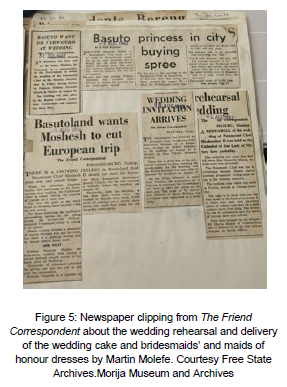
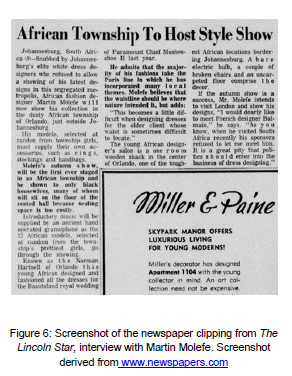
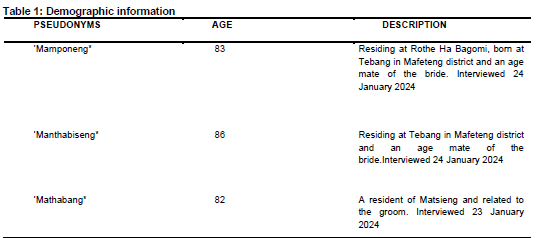
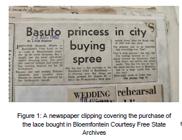
In this article, we investigate black sartoriality through oral history, archives, museums, and libraries by focusing on Martin Molefe, the South African black fashion designer. We do so by recovering the unknown, under-celebrated, and under-represented story of Molefe, who, for the most part, has been excluded from the history of fashion design at global, continental, and regional levels. This qualitative study adopted a multi-method research approach using archival research and in-depth oral interviews as methods of recuperating Molefe's pivotal role in the history of black sartoriality on the African continent, as seen during the Lesotho Royal Wedding in 1962. The archives were sourced from both Lesotho and South Africa, and in-depth interviews were conducted with three elderly women from Matsieng and Tebang, who participated in the wedding. The results indicated that little is known about Molefe's work, both in the archives and from the elderly women's recollections. The archives from Lesotho were silent on Molefe, and the South African archives scantily mentioned his work, apart from a few newspaper clippings. This article concludes that a combination of orality, archives, libraries, and museums is instrumental in preserving the histories of those who have largely disappeared into obscurity, like Molefe.
1962 Lesotho's Royal Wedding; Black Sartoriality; libraries; Martin Molefe; museums
 Thumbnail
 Thumbnail
 Thumbnail
 Thumbnail
 Thumbnail
 Thumbnail