Exploring Renewable Energy Trading Based on Blockchain Technology and Decentralised Finance: Systematic Literature Review
Abstract
Renewable energy trading is evolving in an effort to create a fairer, more efficient, and more sustainable energy system by involving the public as prosumers. However, its implementation faces problems such as lack of trust, data insecurity, and limited digital infrastructure. Blockchain offers a solution to ensure the transparency and immutability of transactions, while decentralised finance strengthens the ecosystem through participatory financing, incentives, and energy tokenisation. This study uses the Kitchenham systematic literature review method on 33 Scopus articles to identify trends, problems, and development directions. The results demonstrate the potential of smart contracts and decentralised finance, although regulatory barriers and asset volatility remain significant.
Abstract
Hernubare energiehandel ontwikkel as 'n poging om 'n billiker, meer doeltreffende en meer volhoubare energiestelsel te skep deur die publiek as prosumers te betrek. Die implementering daarvan staar egter uitdagings in die gesig soos vertroue, datasekuriteit, en beperkte digitale infrastruktuur. Blokkettingtegnologie bied 'n oplossing om deursigtigheid en onveranderlikheid van transaksies te verseker, terwyl gedesentraliseerde finansiering die ekosisteem versterk deur deelnemende finansiering, aansporings, en energietokenisering. Hierdie studie gebruik die Kitchenham sistematiese literatuuroorsig metode op 33 Scopus-artikels om tendense, uitdagings, en ontwikkelingsrigtings te identifiseer. Die resultate demonstreer die potensiaal van slimkontrakte en gedesentraliseerde finansiering, hoewel regulatoriese hindernisse en bate-wisselvalligheid steeds beduidend bly.
1. INTRODUCTION
Energy trading is emerging as an innovative approach to distributing energy more efficiently and empowering active community participation in the renewable energy ecosystem [1], [2]. In this scheme, consumers, who also act as energy producers or prosumers, can trade energy directly without the involvement of conventional intermediaries, creating more flexible pricing dynamics and significant distribution cost efficiencies [3], [4]. However, the implementation of this model still faces fundamental difficulties, particularly related to transparency, transaction security, and digital infrastructure readiness [5], [6].
Blockchain presents itself as a potential solution to these problems. With its decentralised and immutable characteristics, this technology is capable of providing a transparent and auditable real-time energy transaction recording system [1], [7]. The use of smart contracts enables the automation of transactions between users without the involvement of third parties, while ensuring adherence to pre-programmed business logic [2], [5]. Furthermore, the concept of tokenisation in blockchain provides a new way to represent energy value as a digital asset that can be exchanged and monetised in a broader market. This approach makes energy trading not only more efficient but also more inclusive and democratic, supporting the shift towards a more sustainable energy system [1], [7].
Along with the advancement of blockchain technology, innovations in the decentralised finance (DeFi) sector have also emerged. DeFi expands the potential of blockchain by providing financial services without the need for traditional financial institutions, such as banks or insurance companies [3], [5]. In the energy context, DeFi can be used to fund small-scale projects such as community microgrids with adaptive, performance-based financing models [6], [7]. With the support of smart contracts, disbursement and payment processes can be directly linked to the energy output produced, creating greater transparency and efficiency [2], [8]. This model enables communities with limited capital to participate actively in the energy market, while still receiving protection through technology-based mechanisms [4], [9]. Furthermore, the integration of DeFi into the peer-to-peer (P2P) energy ecosystem opens up opportunities for payment automation, dynamic tariff setting, and performance-based incentives for prosumers [1], [3], supporting the principles of decentralisation and sustainability [5], [6].
Many studies have shown that blockchain has been used effectively to create accurate and transparent energy tracking systems, particularly in the context of renewable energy [1], [9]. Trust in the quantity and quality of traded energy is a crucial aspect that could be improved through blockchain-based record-keeping systems [3], [7]. One emerging innovation is blockchain-based energy certification, which allows each unit of energy to be encoded as a digital asset and traceable to its source, as has been piloted in various community solar energy projects [5], [10]. In addition, the integration of blockchain with small-scale energy systems allows for smoother connectivity and integration into the national energy grid, without compromising the overall stability of the system [4], [7]. In fact, the implementation of a smart grid integrated with blockchain opens up opportunities for participatory demand management, with the support of the Internet of Things (IoT) and artificial intelligence (Ai) technologies to enhance automated data-driven decision-making [6], [10]. Thus, the synergy between blockchain, DeFi, and digital energy technologies is a significant milestone in the transition towards a smarter and more adaptive future energy ecosystem [3], [5].
However, the adoption of this technology still faces various structural barriers. In many regions, limited digital infrastructure, unprepared legal frameworks, and low technological literacy are major barriers [5], [6]. The implementation of blockchain and DeFi systems requires stable internet connectivity, reliable hardware, and user understanding of the risks and benefits of the digital systems being used [7], [9]. Furthermore, the lack of global standards for interoperability between blockchain-based energy trading systems complicates cross-border collaboration [2], [4]. Equally important, the price volatility of crypto assets that form the backbone of the DeFi ecosystem also increases the economic risks in energy transactions [3], [9]. Several studies suggest a hybrid approach - combining conventional systems with new technologies - as a realistic transition step [1], [6]. The active role of government, regulators, industry, and the education sector is key to building adaptive governance and encouraging inclusive adoption of this technology [5], [7]. Incentive strategies and digital literacy programmes at the grassroots level are essential to expand public participation in a fair and sustainable way [4], [9].
Given the urgency of this issue, this article aims to conduct a systematic review of the trends, difficulties, and development directions of the P2P energy trading ecosystem supported by the integration of blockchain and DeFi [1], [4]. This review is based on an analysis of the scientific literature indexed in reputable databases such as Scopus, with a focus on the application of blockchain technology to increase efficiency and transparency in energy transactions [2], [5]. This article also examines the contribution of DeFi in creating innovative financing and incentive schemes for renewable energy projects [5], [6]. Implementation barriers in various countries, as well as supporting policies, are also discussed to provide a comprehensive perspective [5], [9]. It is hoped that this study could provide conceptual and practical contributions to the development of a more equitable, transparent, and participatory energy system in the era of global energy transition [1], [3], [6], [9].
2. METHODOLOGY
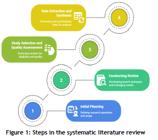
This study uses an SLR approach to explore how blockchain technology and DeFi are integrated into P2P renewable energy trading systems, particularly in the context of supporting the transition to sustainable energy. This approach is designed to provide a comprehensive understanding of the trends, problems, and opportunities reflected in the published scientific literature. To ensure the transparency and quality of the selection process, this study follows the Kitchenham model [11], which has been widely used in cross-disciplinary systematic review studies. Data was collected from Scopus, a leading scientific database known for the coverage and quality of its publications in the technology and energy fields.
2.1.
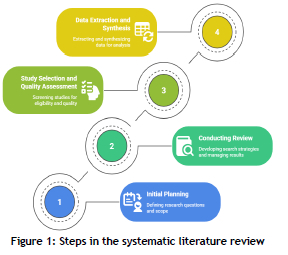
Study planning at the initial stageThis stage established the research objectives, formulated the research questions, and developed a study protocol that included a keyword search strategy and inclusion-exclusion criteria. This step ensured that the study process had a clear direction from the start. At this stage, two main approaches were used to analyse the selected articles: one strategy was thematic analysis to identify the primary research focus, the difficulties with implementation, and the development directions of blockchain and DeFi technology in the context of energy trading. The second strategy was bibliometric analysis to explore the dominant keywords, institutional affiliations, the most prolific authors, and collaboration patterns across countries. This process was aided by R Studio software and Microsoft Excel to map the conceptual trends visually and comprehensively.
The research questions were the following:
• RQ1: How have research trends related to the integration of blockchain and DeFi technologies in peer-to-peer energy trading systems evolved from 2019 to 2025 to support energy sustainability? This question aimed to identify publication patterns, growth in the literature, dominant topics, and the evolution of concepts in this domain, based on bibliometric data.
• RQ2: What are the main difficulties faced in implementing blockchain and DeFi-based peer-to-peer energy trading, from technical, regulatory, and social perspectives? This question aimed to explore the barriers to implementation reported in the literature, such as infrastructure limitations, low user trust, token volatility, and regulatory gaps.
• RQ3: What technological development directions and potential solutions do previous studies offer for integrating blockchain and DeFi in distributed energy systems? This question aimed to examine the innovations and strategies proposed in the literature, such as the use of smart contracts, energy tokenisation, AI-IoT for real-time monitoring, and DeFi-based economic incentive models.
2.2.
Conducting the reviewA comprehensive literature search was conducted in the selected database using predetermined keywords. The following actions were carried out: The initial step involved developing a search strategy using the following keyword combination: "blockchain" AND "DeFi" AND ("peer-to-peer energy trading" OR "renewable energy"). The timeframe was limited to 2019 to 2025, with the aim of capturing current trends. Selected articles had to meet several criteria: published in a reputable indexed journal or proceedings; written in English; focused on the topic of blockchain integration, DeFi, and/or renewable energy; retrieved from the Scopus database using the title search field only. Articles that were too general, were not directly relevant, or were reviews without analytical contributions were excluded from the analysis.
2.3.
Study selection and quality assessmentArticles that passed the screening stage were then read in full to assess their topic suitability and methodological quality, ensuring that only relevant and credible studies were retained. Topic validation was conducted through triangulation between the abstract, keywords, and main content of the article. Furthermore, the findings were compared with similar studies to ensure relevance and context. This study, which included 33 scientific publications indexed in the Scopus database, focused on the integration of blockchain technology, decentralised finance (DeFi), and distributed energy systems.
2.4.
Data extraction and synthesisThe process began with systematic data extraction using a dedicated form to record the study's identity, research objectives, methodology, technology used, main results, and limitations. After all the data had been collected, a thematic analysis was conducted to group the findings into relevant themes and subthemes, and a narrative synthesis was conducted to compare, connect, and explain patterns between the studies. The final results were summary tables, thematic maps, and comprehensive narratives that answered the research questions and identified research gaps.
3. RESULTS AND ANALYSIS
This study analysed 33 scientific publications indexed in the Scopus database, focusing on the integration of blockchain technology, decentralised finance (DeFi), and distributed energy systems. The study revealed that the use of blockchain in the energy sector not only opens up significant opportunities for creating more efficient and decentralised systems, but also presents complex new problems, particularly in the technical, regulatory, and social domains. Over the past five years, publication trends in this area have increased significantly, reflecting global enthusiasm for the topic. Many studies highlight the potential of smart contracts in automating energy transactions, the use of tokens as representations of energy value, and the use of DeFi-based incentive mechanisms to strengthen public participation in community-based energy systems. These findings illustrate that the integration of digital technology in the energy sector is not simply a technical innovation, but rather a structural transformation involving various multidisciplinary aspects.
3.1. RQ1: How have research trends related to the integration of blockchain and DeFi technologies in peer-to-peer energy trading systems evolved over the past five years to support energy sustainability?
3.1.1. Research publication trend related to integration
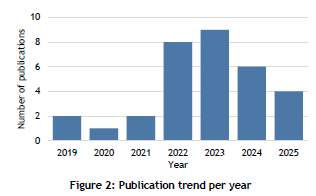
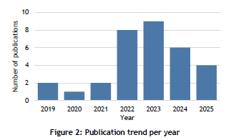
Figure 2 shows the publication trend from 2019 to 2025; the number of publications discussing the integration of blockchain and DeFi technologies in peer-to-peer (P2P) energy trading has increased significantly. This trend reflects the growing attention of researchers to efforts to create more transparent, efficient, and participatory energy systems amid the global push towards renewable energy. The most striking spike occurred in 2024 and 2025, indicating that this topic has become a significant part of the digital energy research agenda in various countries. During this period, publications often addressed themes such as smart contracts, energy tokenisation, and DeFi-based microgrid project financing as a solution to the limitations of conventional models. Furthermore, blockchain is increasingly being accepted as a tool to address the challenges of transparency and traceability in energy. The dominance of these keywords indicates a shift in research focus from technical aspects to the development of business models and energy governance based on distributed technology. Overall, this trend reflects the convergence between the energy sector and financial technology in creating a more inclusive and sustainable energy system.
3.1.2. Research trends related to integration
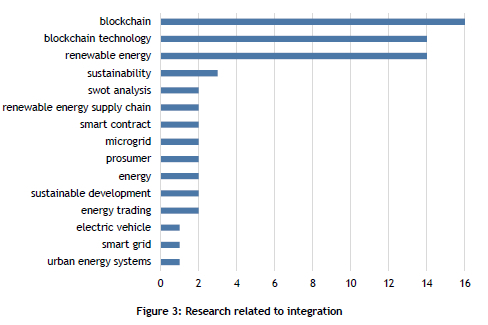
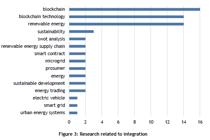
Figure 3 shows a keyword analysis of scientific publications from 2020-2025; the main focus of research in this topic is on the integration of blockchain technology and sustainable energy systems. The keywords appearing most often are blockchain, renewable energy, peer-to-peer energy trading, smart grid, and decentralised finance (DeFi), indicating that research in this field is interdisciplinary and progressive. The dominance of the terms 'blockchain' and 'renewable energy' reflects the close relationship between distributed technologies and global efforts to promote decarbonisation and energy system efficiency. The emergence of the term 'peer-to-peer trading' emphasises that the decentralised approach is no longer just a theoretical concept, but is starting to be implemented in concrete forms such as community microgrids and local energy trading platforms. In addition, terms such as 'smart grid', 'tokenisation', 'DeFi', and 'smart contracts' indicate a research direction that increasingly emphasises system automation, loT integration, and digital technology-based financing innovation. Overall, these results suggest that current scientific studies are not only focused on technological development, but also explore synergies between the information, financial, and energy sectors as a foundation for creating a more inclusive and sustainable future energy system.
3.1.3. An analysis of international collaboration
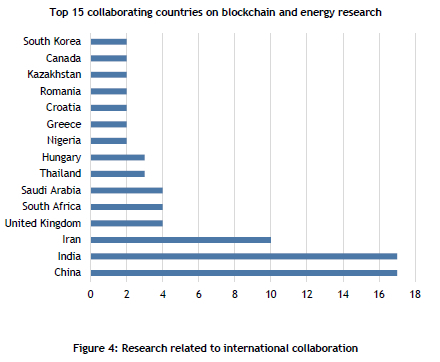
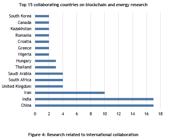
Figure 4 shows an analysis of international collaboration in research on blockchain, DeFi, and renewable energy, revealing the formation of extensive cross-border scientific networks. India and China are recorded as the countries with the highest level of collaboration: each is involved in 17 institutional partnerships, reflecting the high commitment of both countries to developing distributed technologies for future energy systems. In addition, the active participation of countries such as Iran, Saudi Arabia, and South Africa, which are variously involved in four to ten collaborations, indicates that the Asia and Africa regions are also beginning to strengthen their role in blockchain-based digital energy research and smart contracts. Interestingly, the involvement of these developing countries reflects that global energy problems have encouraged open collaboration that is not limited to developed countries alone. This international collaboration not only expands knowledge exchange, but also accelerates the spread of digital innovation in the energy sector, with blockchain and DeFi as key driving elements.
3.2. RQ2: What are the main difficulties faced in implementing blockchain and DeFi-based peer-to-peer energy trading, from technical, regulatory, and social perspectives?
3.2.1. Technical difficulties
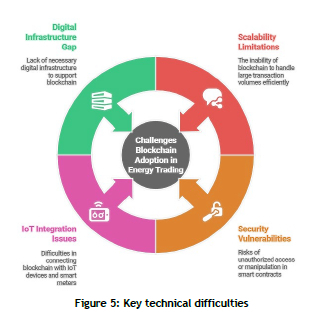
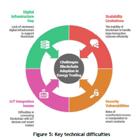
The key technical difficulties hindering the widespread adoption of blockchain technology in energy trading are scalability and transaction speed limitations, security vulnerabilities in smart contracts, difficulties in integrating with IoT devices and smart meters, and the existing digital infrastructure gap. Addressing these issues would be crucial to realising the full potential of blockchain in creating a more efficient, transparent, and decentralised energy market. The key technical difficulties are shown in Figure 5.
Scalability and transaction speed
One of the main obstacles in implementing blockchain for peer-to-peer (P2P) energy trading systems lies in limited scalability and transaction processing speed [12]-[15]. In practice, P2P schemes generate a large number of microtransactions that occur in real time between prosumers. This requires blockchain systems to be able to handle high transaction volumes with low latency and minimal fees. However, public platforms such as Ethereum often experience network congestion and spikes in transaction fees (gas fees), reducing the system's efficiency and effectiveness [3], [16]. This situation becomes even more complex when blockchains must be integrated into national-scale energy grids, which have much larger and more dynamic operational characteristics [12], [16].
Security risks in smart contracts
Smart contracts have revolutionised the way in which energy transactions are managed, offering efficient process automation without third-party intervention [2], [13], [17]. However, these advantages also come with serious security problems [12], [13]. Small flaws in code or contract logic can lead to significant failures, especially in the context of energy systems that require high accuracy and reliability. Several studies have highlighted that the lack of testing and verification standards for smart contracts makes these systems vulnerable to exploits or to technical errors [13], [15], [18]. When systems are managed in a fully decentralised way, reliance on poorly tested code can pose serious systemic risks to microgrid networks [19]-[21].
Integration with loT devices and smart meters
Blockchain in the energy sector cannot function optimally without data collected from physical devices such as smart meters and loT-based sensors [10], [14], [15]. Problems arise when many of these devices are not yet compatible with transmitting data directly to blockchain networks. Differences in communication protocols, device limitations, and the lack of middleware infrastructure present significant obstacles. Therefore, it is necessary to develop new technical standards that could efficiently bridge digital and physical ecosystems [8], [9], [20]. Without robust integration, blockchain risks functioning only as a passive digital record that does not reflect the actual condition of the energy system [2], [3].
Digital infrastructure gap
The implementation of blockchain technology in decentralised energy systems depends greatly on the readiness of digital infrastructure [13], [20], [22], [23]. In many regions, especially in developing countries, access to stable internet connections, supporting hardware, and technical support remains strictly limited. This gap poses the risk that technology adoption will occur only in regions or communities that already have adequate digital resources, thus widening the gap in access to sustainable energy [4], [24]-[26]. To ensure inclusivity, there is a need for adaptive strategies that take into account local conditions and promote equitable distribution of digital infrastructure as an integral part of energy transformation [2], [22], [27].
3.2.2. Regulatory and legal difficulties
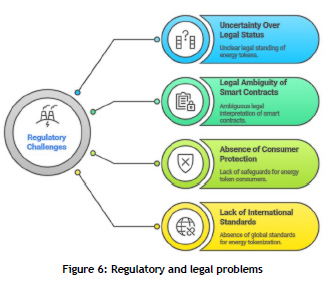
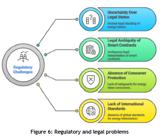
Regulatory and legal difficulties currently hinder the widespread adoption of energy tokenisation. As shown in Figure 6, they include uncertainty about the legal status of energy tokens, the legal ambiguity of smart contracts, the absence of consumer protection mechanisms, and the lack of international standards. Addressing these problems would be crucial to fostering a secure and transparent environment for energy tokenisation to flourish.
Uncertainty over the legal status of energy tokens
One of the fundamental problems in implementing blockchain in the energy sector is the lack of a uniform legal classification for energy tokens [20], which are digital representations of energy units traded on blockchain networks. In many jurisdictions, these tokens are not clearly categorised as assets [20], [28], commodities, or financial instruments, creating ambiguity about their ownership, taxation, and the legality of their value transfers [20], [28]. This uncertainty not only creates risks for investors and end-users, but also makes it difficult for regulators to design appropriate policies [2], [9], [30].
The legal ambiguity of smart contracts
Although smart contracts have enabled efficient and transparent automation of agreements, many national legal systems do not explicitly recognise the validity of these digital contracts as valid legal documents [4], [30]. As a result, if coding errors, malfunctions, or disputes between the parties occur, resolution becomes difficult owing to the lack of a clear legal framework to address them [3], [5], [16]. This uncertainty is a major obstacle to implementing smart contracts for large-scale energy transactions, which naturally require a high level of legal reliability.
The absence of consumer protection mechanisms
The decentralised nature of blockchain systems presents new difficulties for consumer protection [13], [22]. Unlike conventional systems with regulatory authorities, users in blockchain-based energy systems lack clear guarantees in the event of system failures, token loss, or even fraud through digital contracts [20], [25]. Consumer protection regulations in this context are still in their early stages of development, and do not yet address the specific needs of the digital energy sector [12], [31]. This lack of clarity could undermine public trust in blockchain implementation in public and community energy services.
Lack of international standards
While blockchain technology offers significant potential for creating a globally integrated energy market, the lack of international standards governing blockchain-based energy trading systems is a major obstacle. Differences in national policies, system architectures, and data formats contribute to poor cross-border interoperability, both technically and legally [4], [30]. Without a comprehensive multilateral agreement, the potential for blockchain-based cross-border energy exchange would be difficult to realise, even if the technological infrastructure were already in place and operationally mature [12], [18].
3.2.3. Social and economic difficulties
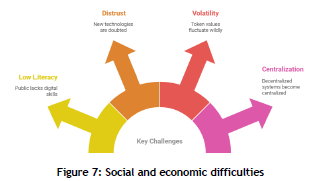
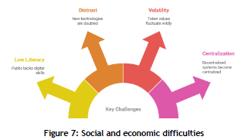
The key difficulties hindering the widespread adoption of blockchain and decentralised finance (DeFi) technologies in energy systems occur in the social, economic, and technical domains, as shown in Figure 7. These include low public digital literacy, distrust of new technologies, volatility of energy token values, and risks of centralisation in decentralised systems. Addressing these issues would be crucial to realising the full potential of blockchain and DeFi in creating more democratic, efficient, and sustainable energy ecosystems.
Low public digital literacy
One of the most obvious problems in implementing blockchain and DeFi technology in energy systems is the low level of public digital literacy. Many users do not yet understand basic concepts such as energy tokens [25], digital wallets [32], or smart contracts [13], [15], [18], which are key elements in blockchain-based energy trading systems [5], [9], [18]. This lack of understanding raises concerns about the risks of digital transactions, including technical errors or asset loss, which ultimately reduce interest in adopting new systems [12], [15], [31]. The lack of educational initiatives and the gap in understanding between technology developers and end-users further deepen the technology adoption gap at the societal level [25].
Distrust of new technologies
The stigma associated with blockchain and DeFi as part of the crypto ecosystem is that they are unstable, speculative, and prone to fraud. This negative perception becomes a serious social barrier, especially when blockchain-based projects lack transparency in their operations, including in the energy sector [21]. When people lack trust in a system, they tend to be reluctant to participate, even if the technology is available and offers potential benefits [4], [25]. Building public trust would be a crucial step towards the widespread and sustainable acceptance of blockchain-based P2P systems [15], [21].
Volatility of energy token values
One of the main economic barriers to using blockchain for energy transactions is the volatility of the value of the tokens used as a medium of exchange [20], [25]. Because many energy tokens follow the dynamics of the global crypto market, their exchange rates can fluctuate rapidly and unpredictably. This uncertainty makes it difficult for users who rely on stable energy prices for daily needs, such as households or small businesses [5], [23]. Such fluctuations not only reduce convenience but also undermine the incentive to use token-based systems for long-term energy transactions.
Risks of centralisation in decentralised systems
A paradox in blockchain implementation is that, although these systems are designed to be decentralised, in practice technical control and development often reside in the hands of a handful of platform providers or core developers [6], [13], [20], [23]. When network architecture and decision-making are determined by a limited number of entities, there is a risk of new forms of centralisation similar to the conventional energy systems they were designed to address [16], [21], [22]. This power imbalance could hinder the primary goal of P2P energy systems: to democratise access and community participation in energy production and consumption.
3.3. RQ3: What technological development directions and potential solutions do previous studies offer for integrating blockchain and DeFi in distributed energy systems?
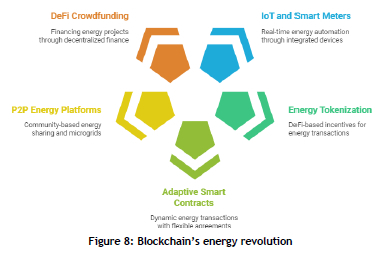
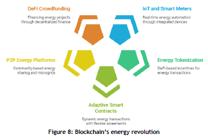
The transformative potential of blockchain technology in shaping future digital energy systems involves five key areas: the integration of blockchain with IoT and smart meters for real-time energy automation; energy tokenisation and DeFi-based incentives; adaptive smart contract design for dynamic energy transactions; the development of community-based P2P energy platforms and microgrids; and energy project financing through DeFi crowdfunding. These are shown in Figure 8. Each section below highlights the benefits, applications, and supporting literature for these innovative approaches.
3.3.1. Blockchain integration with loT and smart meters for real-time energy automation
One rapidly developing technological direction is the integration of blockchain with loT devices and smart meters to enable automatic, real-time recording of energy consumption and production data [10], [14], [27]. With this approach, smart contracts can be executed that are directly based on input from energy sensors without the need for human intervention, resulting in a more efficient, responsive, and error-free system. Furthermore, storing energy data on the blockchain guarantees transparency and auditability, which are crucial in distributed energy systems. In the context of P2P energy trading, this architecture allows transactions to take place directly between prosumers without the need for intermediaries. Several studies have confirmed the potential of this approach as the technical foundation of future digital energy systems [12], [31].
3.3.2. Energy tokenisation and DeFi-based incentives
Energy tokenisation opens up new opportunities for representing energy units, such as kilowatt-hours (kWh), as tradable digital assets [20], [25], [28]. With this approach, users could not only buy and sell energy in the form of tokens, but also earn incentives through DeFi protocols such as staking, liquidity mining, or yield farming. This would create a participatory and inclusive energy ecosystem in which the public could directly participate in the green energy transition without relying on traditional financial institutions. This incentive system would also strengthen community spirit and expand access to collective-based energy project financing. This idea has strong support in the literature as an adaptive and transparent energy financing model in the digital era [13], [16], [24], [30], [33].
3.3.3. Adaptive smart contract design for dynamic energy transactions
In future, smart contracts in the energy system will no longer be static but will instead be developed to be adaptive and responsive to external conditions [15], [18]. Next-generation smart contracts would be able to adjust transaction terms based on real-time data such as market demand, usage time, network load, and even weather data [13], [18]. With this flexibility, the energy trading system would become more dynamic and able to reflect energy value contextually [22]. Furthermore, the open and documented nature of smart contracts would enhance the transparency and trustworthiness of the system [15], [22], [24]. This approach would foster automated energy markets that are more flexible, efficient, and adaptable to local and regional needs.
3.3.4. Development of community-based P2P energy platforms and microgrids
The development of P2P energy systems is now widely directed at the local scale through community initiatives and microgrids [12], [15], [34]. By leveraging blockchain technology, these platforms would enable individuals or organisations in a region directly to exchange energy with one another at a low cost and with greater control over their energy resources. This approach would not only improve the efficiency of local energy distribution but also strengthen energy security in remote or marginalised communities. Blockchain would play a crucial role in accurately and transparently recording energy transactions between individuals, thereby building a sense of ownership and trust among stakeholders. This model is increasingly considered relevant in the context of energy democratisation and strengthening community-based energy systems [4], [35].
3.3.5. Energy project financing through DeFi crowdfunding
DeFi offers an innovative and inclusive financing alternative for renewable energy projects through smart contract-based crowdfunding schemes [36]-[38]. This approach would enable local communities, energy startups, and microgrid projects to obtain funding directly from the global public without relying on traditional financial institutions. Furthermore, the token-based reward mechanism would provide sustainable economic incentives for investors and participants, encouraging long-term engagement. This model would not only lower barriers to access to capital but also open up broader opportunities for community participation in supporting green energy projects [39], [40]. The recent literature highlights the significant potential of this model as a new driver of community-based energy transitions.
4. CONCLUSION
The integration of blockchain technology and DeFi into distributed energy trading systems has significant potential to revolutionise the way in which energy is produced, distributed, and traded. The application of this technology would open up opportunities for a more transparent, efficient, and inclusive energy system, in which prosumers and local communities could play an active role in energy markets through mechanisms such as smart contracts, energy tokenisation, and DeFi-based incentives.
The findings also indicate a rapidly growing research trend from 2019 to 2025, focusing on the integration of blockchain with IoT and smart meters, the development of community-based microgrid platforms, and innovative financing models through DeFi crowdfunding mechanisms. However, this research identifies a number of significant obstacles, including technical limitations such as the scalability and security of smart contracts, regulatory barriers related to the legal status of energy tokens and the legal recognition of smart contracts, and socio-economic issues such as low digital literacy, public distrust, token value volatility, and the risk of new centralisation by technology providers.
Therefore, the successful adoption of this technology would require a multidisciplinary approach that encompasses technical innovation, regulatory harmonisation, and community empowerment strategies. Cross-sector collaboration between governments, industry players, researchers, and communities would be key to overcoming the barriers and maximising the benefits offered. Moving forward, further research needs to be directed at developing global standards, consumer protection mechanisms, and sustainable business models, so that the integration of blockchain and DeFi could truly contribute to the creation of a democratic, resilient, and sustainable future energy system.
FUNDING:
This research was funded by the Ministry of Higher Education, Science and Technology through a regular fundamental grant in 2025, with the title "Pengembangan Model dan PlatForm Perdagangan Energi Terbarukan dan Sertifikasinya dengan decentralised finance (DeFi) berbasiskan Teknologi Blockchain".
ACKNOWLEDGEMENTS
The authors thank the Ministry of Higher Education, Science and Technology through a regular fundamental grant.
REFERENCES
-
[1] M. Andoni et al., "Blockchain technology in the energy sector: A systematic review of challenges and opportunities," Renewable and Sustainable Energy Reviews, vol. 100, no. October 2018, pp. 143-174, Feb. 2019. doi: 10.1016/j.rser.2018.10.014
» https://doi.org/10.1016/j.rser.2018.10.014 -
[2] J. Li, G. Li, and P. Zhao, "Research on the market-oriented trading of renewable energy power based on blockchain technology under the new quota system," in IOP Conference Series: Earth and Environmental Science, 2021, vol. 702, 012031. doi: 10.1088/1755-1315/702/1/012031
» https://doi.org/10.1088/1755-1315/702/1/012031 - [3] K. Gopal, M. Gupta, M. S. Rao, T. A. A. U. Abedi, and K. Smitha, "Enhancing renewable energy management with neural networks and blockchain technology," in 2025 International Conference on Cognitive Computing in Engineering, Communications, Sciences and Biomedical Health Informatics (IC3ECSBHI 2025), 2025, pp. 1245-1250. doi: 10.1109/IC3ECSBHI63591.2025.10991060
-
[4] G. Mazure and A. Kalnina, "Analysis of potential application of blockchain technology in renewable energy sector," in International Multidisciplinary Scientific GeoConference Surveying Geology and Mining Ecology Management (SGEM), 2022, vol. 22, no. 5.1, pp. 523-532. doi: 10.5593/sgem2022/5.1/s21.066
» https://doi.org/10.5593/sgem2022/5.1/s21.066 -
[5] J. Kim, H. Park, G. Ho Lee, J. Kyun Choi, and Y. Heo, "Seal-bid renewable energy certification trading in power system using blockchain technology," in International Conference on ICT Convergence, 2020, vol. 2020 (October), pp. 1752-1756. doi: 10.1109/ICTC49870.2020.9289395
» https://doi.org/10.1109/ICTC49870.2020.9289395 -
[6] I. G. Sahebi, A. Mosayebi, B. Masoomi, and F. Marandi, "Modeling the enablers for blockchain technology adoption in renewable energy supply chain," Technology in Society, vol. 68, 101871, 2022. doi: 10.1016/j.techsoc.2022.101871
» https://doi.org/10.1016/j.techsoc.2022.101871 -
[7] M. Amirifard and H. Taherdoost, "Employment of blockchain technology in the field of renewable energy," in Lecture Notes in Networks and Systems (LNNS), 2023, vol. 605, pp. 739-746. doi: 10.1007/978-3-031 -22375-4_59
» https://doi.org/10.1007/978-3-031 -22375-4_59 -
[8] N. Tariq et al., "The security of big data in fog-enabled IoT applications including blockchain: A survey," Sensors, vol. 19, no. 8, 1788, 2019. doi: 10.3390/s19081788
» https://doi.org/10.3390/s19081788 - [9] Q. Zhang et al., "Study of traceability system of renewable energy power trading based on blockchain technology," in Proceedings - 2022 International Conference on Blockchain Technology and Information Security (ICBCTIS 2022), 2022, pp. 171-176. doi: 10.1109/ICBCTIS55569.2022.00047
-
[10] S. M. A. A. Abir, A. Anwar, J. Choi, and A. S. M. Kayes, "IoT-enabled smart energy grid: Applications and challenges," IEEE Access, vol. 9, pp. 50961-50981, Aug. 2021. doi: 10.1109/ACCESS.2021.3067331
» https://doi.org/10.1109/ACCESS.2021.3067331 -
[11] B. Kitchenham and P. Brereton, "A systematic review of systematic review process research in software engineering," Information and Software Technology, vol. 55, no. 12, pp. 2049-2075, 2013. doi: 10.1016/j .infsof.2013.07.010
» https://doi.org/10.1016/j .infsof.2013.07.010 - [12] M. I. Sarwar and L. A. Maghrabi, "Smart grid and blockchain technology for community-based P2P renewable energy trading," 2023 2nd International Engineering Conference on Electrical, Energy, and Artificial Intelligence (EICEEAI), 2023. doi: 10.1109/EICEEAI60672.2023.10590111
- [13] R. Umbare, A. Shende, V. Patil, P. Sugure, D. Markad, and S. Rangdale, "Building a decentralized renewable energy marketplace using blockchain technology," in Proceedings of 5th International Conference on Trends in Material Science and Inventive Materials (ICTMIM 2025), 2025, pp. 1602-1610. doi: 10.1109/ICTMIM65579.2025.10987955
-
[14] K. S. Thu, S. Tiwari, and W. Ongsakul, "Blockchain technologies for renewable energy resources with case study: SHA-256, 384, and 512," in IoT, machine learning and blockchain technologies for renewable energy and modern hybrid power systems, C. Sharmeela, P. Sanjeevikumar, P. Sivaraman, M. Joseph, eds. Thailand: River Publishers, 2022, pp. 257-270. [Online]. Available: https://www.scopus.com/inward/record.uri?eid=2-s2.0-85172808121 & partnerID=40 & md5=225688e4ef368672429745a395281b9f
» https://www.scopus.com/inward/record.uri?eid=2-s2.0-85172808121 & partnerID=40 & md5=225688e4ef368672429745a395281b9f -
[15] O. Juszczyk and K. Shahzad, "Blockchain technology for renewable energy: Principles, applications and prospects," Energies, vol. 15, no. 13, 4603, 2022. doi: 10.3390/en15134603
» https://doi.org/10.3390/en15134603 -
[16] A. Rejeb, K. Rejeb, I. Zrelli, E. Süle, and M. Iranmanesh, "Blockchain technology in the renewable energy sector: A co-word analysis of academic discourse," Heliyon, vol. 10, no. 8, e29600, 2024. doi: 10.1016/j.heliyon.2024.e29600
» https://doi.org/10.1016/j.heliyon.2024.e29600 - [17] Y. Chang et al., "Research on nearby consumption of renewable energy and electric power user matching method based on energy blockchain technology," in 2021 3rd Asia Energy and Electrical Engineering Symposium (AEEES 2021), 2021, pp. 1060-1069. doi: 10.1109/AEEES51875.2021.9402964
-
[18] Y. Tang, W. Huo, M. Liu, and Y. Jiang, "Renewable energy trading mechanism based on blockchain technology," in Proceedings of SPIE - The International Society for Optical Engineering, 2022, vol. 12244. doi: 10.1117/12.2635160
» https://doi.org/10.1117/12.2635160 - [19] M. Ghosh, S. Ghosh, S. Halder, and P. Mishra, "A case study of renewable energy trading in a peer-to-peer microgrid based network using blockchain technology," in 2023 IEEE IAS Global Conference on Renewable Energy and Hydrogen Technologies (GlobConHT), 2023. doi: 10.1109/GlobConHT56829.2023.10087585
- [20] O. Ayo, H. Zhang, R. Moreira, D. Bertin, and N. Zribi, "Electric vehicle charging with fractional renewable energy certificates using blockchain technology," in 2023 IEEE Belgrade PowerTech, 2023. doi: 10.1109/PowerTech55446.2023.10202972
- [21] E. Svetec, L. Nad, R. Pasicko, and B. Pavlin, "Blockchain application in renewable energy microgrids: An overview of existing technology towards creating climate-resilient and energy independent communities," in International Conference on the European Energy Market (EEM), vol. 2019 September, 2019. doi: 10.1109/EEM.2019.8916292
-
[22] S. Das, H. Swapnarekha, and S. Vimal, "Integration of blockchain technology with renewable energy for sustainable development: Issues, challenges and future direction," in Lecture Notes in Networks and Systems (LNNS), 2023, vol. 725, pp. 595-607. doi: 10.1007/978-981-99-3734-9_48
» https://doi.org/10.1007/978-981-99-3734-9_48 -
[23] S. J. Hosseini Dehshiri, M. Amiri, and S. M. Hosseini Bamakan, "Evaluating the blockchain technology strategies for reducing renewable energy development risks using a novel integrated decision framework," Energy, vol. 289, 129987, 2024. doi: 10.1016/j.energy.2023.129987
» https://doi.org/10.1016/j.energy.2023.129987 -
[24] K. Almutairi et al., "Blockchain technology application challenges in renewable energy supply chain management," Environmental Sciences and Pollution Research, vol. 30, no. 28, pp. 72041-72058, 2023. doi: 10.1007/s11356-021 -18311-7
» https://doi.org/10.1007/s11356-021 -18311-7 -
[25] D. Stamatakis, D. G. Kogias, H. C. Leligou, P. A. Karkazis, and E. Penalvo, "Genera: A serious game leveraging blockchain technology for renewable energy education," in IET Conference Proceedings, vol. 2024, no. 29, pp. 412-417, 2024. doi: 10.1049/icp.2024.4695
» https://doi.org/10.1049/icp.2024.4695 - [26] J. Levi-Oguike, D. Sandoval, and E. Ntagwirumugara, "Blockchain technology and renewable energy access: A case for sub-Saharan Africa," in 2019 5th International Conference for Convergence in Technology (I2CT), 2019. doi: 10.1109/I2CT45611.2019.9033952
-
[27] C. Sharmeela, S. Padmanaban, P. Sivaraman, and M. K. Joseph, eds, IoT, machine learning and blockchain technologies for renewable energy and modern hybrid power systems. Department of EEE, CEG Campus, Anna University, Chennai, India: River Publishers, 2022. [Online]. Available: https://www.scopus.com/inward/record.uri?eid=2-2.0-85172759428 & partnerID=40 & md5=bcb335a6601138189b543a13872a7028
» https://www.scopus.com/inward/record.uri?eid=2-2.0-85172759428 & partnerID=40 & md5=bcb335a6601138189b543a13872a7028 -
[28] J. Li, J. Ma, B. Wang, X. Yan, and L. Wang, "Study on trading system of renewable energy asset and application of platform key technology based on blockchain," Quanqiu Nengyuan Hulianwang, vol. 5, no. 6, pp. 593-601, 2022. doi: 10.19705/j.cnki.issn2096-5125.2022.06.008
» https://doi.org/10.19705/j.cnki.issn2096-5125.2022.06.008 -
[29] I. H. A. Alqudah, A. Carballo-Penela, and E. Ruzo-Sanmartín, "High-performance human resource management practices and readiness for change: An integrative model including affective commitment, employees' performance, and the moderating role of hierarchy culture," European Research on Management and Business Economics, vol. 28, no. 1, 100177, 2022. doi: 10.1016/j.iedeen.2021.100177
» https://doi.org/10.1016/j.iedeen.2021.100177 -
[30] J. A. R. Yamaguchi, T. R. Santos, and A. P. de Carvalho, "Blockchain technology in renewable energy certificates in Brazil," Brazilian Administration Review (BAR), vol. 18, no. Special Issue, 2021. doi: 10.1590/1807-7692bar2021200069
» https://doi.org/10.1590/1807-7692bar2021200069 -
[31] Q. Mao, X. Ma, and Y. Sun, "Study of impacts of blockchain technology on renewable energy resource findings," Renewable Energy, vol. 211, pp. 802-808, 2023. doi: 10.1016/j.renene.2023.05.038
» https://doi.org/10.1016/j.renene.2023.05.038 -
[32] D. Chawla and H. Joshi, "Consumer attitude and intention to adopt mobile wallet in India - An empirical study," International Journal of Bank Marketing, vol. 37, no. 7, pp. 1590-1618, 2019. doi: 10.1108/IJBM-09-2018-0256
» https://doi.org/10.1108/IJBM-09-2018-0256 - [33] M. Dosso, N. S. Shirazi, and M. Obaidullah, "Blockchain technology in achieving SDGs through renewable energy: Case studies," in Studies in Systems, Decision and Control, J. Kacprzyk, ed., Springer Science and Business Media Deutschland GmbH, 2024, vol. 545, pp. 725-740. doi: 10.1007/978-3-031 -65203-5_63
-
[34] A. Ranawaka, D. Alahakoon, Y. Sun, and K. Hewapathirana, "Leveraging the synergy of digital twins and artificial intelligence for sustainable power grids: A scoping review," Energies, vol. 17, no. 21, 2024. doi: 10.3390/en17215342
» https://doi.org/10.3390/en17215342 -
[35] Y. Yao, C. Gao, H. Tian, and H. Zhang, "Review of mid- to long-term trading mechanism for renewable electricity consumption in Ningxia, China," Renewable and Sustainable Energy Reviews, vol. 134, 110325, 2020. doi: 10.1016/j.rser.2020.110325
» https://doi.org/10.1016/j.rser.2020.110325 -
[36] F. A. Bakare, J. Omojola, and A. C. Iwuh, "Blockchain and decentralized finance (DEFI): Disrupting traditional banking and financial systems," World Journal of Advanced Research and Reviews, vol. 23, no. 3, pp. 3075-3089, Sep. 2024. doi: 10.30574/wjarr.2024.23.3.2968
» https://doi.org/10.30574/wjarr.2024.23.3.2968 -
[37] A. Alamsyah, G. N. W. Kusuma, and D. P. Ramadhani, "A review on decentralized finance ecosystems," Future Internet, vol. 16, no. 3, 76, Feb. 2024. doi: 10.3390/fi16030076
» https://doi.org/10.3390/fi16030076 -
[38] C. S. Han, M. Lotfi Ghahroud, M. J. Park, and J. Ghassemi Nejad, "A new blockchain investment and energy certificate platform," Cogent Engineering, vol. 10, no. 2, 2023. doi: 10.1080/23311916.2023.2260226
» https://doi.org/10.1080/23311916.2023.2260226 -
[39] I. Haryani et al., "Blockchain-based renewable energy certificate system in Indonesia," Heliyon, vol. 11, no. 3, e42364, 2025. doi: 10.1016/j.heliyon.2025.e42364
» https://doi.org/10.1016/j.heliyon.2025.e42364 -
[40] I. Petri, M. Barati, Y. Rezgui, and O. F. Rana, "Blockchain for energy sharing and trading in distributed prosumer communities," Computers in Industry, vol. 123, 103282, 2020. doi: 10.1016/j.compind.2020.103282
» https://doi.org/10.1016/j.compind.2020.103282
Accepted for publication 9 Mar 2026
Available online 31 Aug 2026
ORCID® identifiers
E. Fernando https://orcid.org/0000-0003-2428-0484
M. Tampubolon https://orcid.org/0000-0002-8918-850X
Meyliana https://orcid.org/0000-0003-4142-4312
R. Wiputra https://orcid.org/0000-0002-7447-4271