A Strategic Farmwork for Passenger Information Systems in the Rail Industry: A Gauteng Passenger Rail Study
Abstract
This study investigates the impact of rail passenger information systems (PISs) on service delivery in South Africa. Poor service delivery causes rail transport and profitability to decline, as national statistical reports show. PISs in the rail sector have been largely regarded as operational support systems. An interpretive explorative case study's findings suggest that PISs have characteristics that qualify them as strategic information systems (SISs) to extend a business strategy. A framework is proposed to guide rail organisations on how PISs could be used as SISs to improve service delivery and profitability in this sector.
Abstract
Hierdie studie ondersoek die impak van spoorpassasierinligtingstelsels (PISs) op dienslewering in Suid Afrika. Swak dienslewering veroorsaak 'n afname in spoorvervoer en -winsgewendheid, soos aangedui in nasionale statistiese verslae. Spoorpassasierinligtingstelels word grootliks beskou as operasionele ondersteuningstelsels. Die bevindings van 'n interpretiewe ondersoekende gevallestudie dui aan dat spoorpassasierinligtingstelsels gebruik kan word as strategiese inligtingstelels (SISs) om besigheidstrategie uit te voer. 'n Raamwerk word voorgestel wat spoororganisasies kan ondersteun om PISs te gebruik as SISs vir beter dienslewering en winsgewendheid in die sektor.
1. INTRODUCTION
Rail transport in urban South Africa is popular, with passenger trips reaching 400 million per annum [1]. The first rapid rail passenger commuter operator in South Africa, the Gautrain, was established between the two major cities of Johannesburg and Pretoria. By 2019, the Gautrain had completed over 100 million trips since its inception in 2010 [2]. Despite concerted efforts from government to support innovative and significant developments such as the Gautrain, and to provide financial assistance, the use of rail compared with other modes of transport in the country remains at lower levels than expected [3]. Ineffective policy implementation [4] and a lack of service delivery [1] are problems with which the passenger rail sector struggles. While a passenger rail service's main priority is the timely and safe transport of passengers, service disruptions are a frequent occurrence in railway operations [5]. Disruptions are often unforeseen, as they are caused by unpredictable circumstances [6]. These events can lead to train delays, trip cancellations, extended waiting times, and extended travel times, which in turn lead to missed connections, all resulting in very dissatisfied passengers not being in control of their planned trip [1, 7].
The absence of a real-time passenger information system (PIS) at railway stations and on-board trains worsens the traveller's feeling that the waiting times have been long. On the other hand, when real-time information is available, travellers in transit recognise the predicted waiting time as being accurate [8]. Benefits derived from the existence of a good real-time PIS extend even to non-rail users (the public) who perceive the overall railway services being offered as efficient and effective, thereby increasing appreciation for and support of the railway operator [9]. To this end, a PIS is viewed as crucial to rail communication and operation [10].
PISs should accordingly be recognised a fundamental part of strategy, as they affect the bottom line. It is imperative to understand better the significance of these systems and how they could be optimised to meet organisational objectives [11]. This study investigates the impact of PISs on service delivery in South Africa, and specifically the strategic potential of a PIS to improve rail operations and service delivery. The main research question of this study is: What constitutes a framework to describe the role of a PIS as a strategic information system in order to improve rail operations and service delivery to rail commuters?
The paper is structured as follows. Relevant literature is reviewed, followed by the research methodology chosen for this study. Thereafter, the findings are presented, followed by a discussion and the research conclusion.
2.1. Railway passenger information systems
A PIS is an information dissemination tool that rail operators use to provide a variety of travel and other relevant information to their commuters in order to ensure that they have a pleasant experience on their journey. A PIS is a vital communication link between rail operators and commuters, as it facilitates the delivery of a wide range of passenger services, including real-time train tracking, scheduling, route information, travel planning, passenger infotainment, and more luxurious offerings such as real-time high-definition video conferencing, live broadcasts, and video entertainment aimed mainly at business passengers [10].
In order to have a desirable experience, passengers need information about platform allocation, the punctuality of the train, and connections to the next destination [11, 12]. Common functions of a PIS include, but are not limited to, general information about the service, seat availability, congestion levels, location information, journey planning information, notification of disruptions, and alternative options in case of disruption [13]. Railway operators also use dispatching systems that are key to ensuring that the planned schedule is maintained for punctuality and reliability [7]. State-of-the-art dispatching systems automatically perform the following major functions: monitoring the network operating situation, identifying deviations from targeted performance goals, and detecting train conflicts.
The absence of a functional real-time PIS leads to fragmented and unreliable passenger information, and results in uncertainty about travel conditions and disruptions [13]. As mentioned, the rail industry has difficulty improving overall customer experience, as it struggles to meet the passengers' demand for punctuality, accurate scheduling information, and better-quality on-board entertainment [10]. Therefore, there is a need to investigate the intentional use of advanced Information and Communication Technologies (ICTs) to provide better-quality railway services and so stay abreast of market demands [10].
2.1.1. Uses and functions of a passenger information system
In passenger railway services, a schedule is defined as a timetable with a set of arrival and departure times of every train at each of the stations where it stops. The schedule also contains the predetermined 'train line', which is the sequence in which a train will visit the stations on that route [6]. Through the PIS, customers are able to access schedule information that can either be presented entirely via digital (electronic) interfaces, or be paper-based (static), visual, or acoustic [10]. The key factor is that this service should be readily available whenever it is required [12]. Schedules often contain additional information that can assist passengers beyond providing departure and arrival times in order to improve the overall experience of the journey [10].
Information required during the journey includes "real-time information delays - information regarding changes which will affect the passenger's journey, advance warning of changes which may affect subsequent or later journeys as well as information on interchanges" [13]. An example of a PIS function that might be required when the journey has already been partly completed is information on the fastest versus the most comfortable trip; the most accurate up-to-the-minute train arrival and departure times; available car parking; how quickly and easily passengers could get on to the train or get out of the station [10]; and the most efficient passenger exit to use, considering how full the trains are or whether other inbound trains will be arriving at the same time [10]. All these features are considered necessary, as they allow passengers to make informed choices depending on their personal trip preferences [12].
In the event of having an interoperable ticket (one for which a journey requires the use of services provided by independent operators), the combination of more than one information source would be an advantage. The different legs of a passenger journey may happen over several days or weeks, and the combined and linked information would allow the passenger not only to evaluate the information on the current phase of the journey or on the current trip, but also to plan with greater certainty the next or a future trip [10]. This confirms the importance of the information that rail commuters require in planning their overall journey. The existence of a real-time PIS is appreciated by both users and non-users of rail commute services [12]. Non-users include mobility planners - traffic engineers who model transport routes, networks, and aspects such as timing and journey patterns [13].
2.1.2. Technological and modal shift impact
Technology advancement is at the centre of strategic planning in various industries. The railway industry is expected to leverage innovation in order to create smart systems that would advance rail network infrastructure and all aspects of rail operations. Examples of these are integrated security, asset management, predictive maintenance, and safety [10]. It is necessary to maintain a balance between costs and benefits and to improve overall transport efficiency, while also considering the environment by reducing congestion, carbon emissions, delays, and noise, and by increasing safety [9]. The influence of information systems on transportation, especially in the past decade, is evident because of their value in "creating, collating and delivering public transport information" [14]. PISs keep travellers informed about the conditions of their trip and provide them with options; but in the rail sector the aim is also to encourage passengers to move from private transport to public transport [9].
It is possible to bring rail transport up to the required levels of efficiency by adopting technology inspired strategies to "increase information provision and communication, enhance convenience, improve control and facilitate journey planning" [15]. It has long been recognised that a software application that integrates real-time and predictive information of the public transport network should be a feature of a railway strategy in order to encourage travellers to use public transport, as passengers would have relevant information available to make informed choices between alternative arrangements for their trip or journey [9].
The impact of technological innovation on rail transport has the potential to shift the public's opinion about their travel experience once certain features have been inserted into the system. Previous research indicated that the number one feature that railway commuters would like to see being implemented is automatic compensation for late or cancelled trains. This research was carried out in the UK, where punctuality is reported to be as high as 89.77% or within five minutes of scheduled railway times [15]. In South Africa, however, the largest commuter rail operator was rated 1.79 out of a possible score of 5 for punctuality [1]. Public transport operators need to invest more money and resources in understanding the needs of their travellers. This investment would assist railway service operators to make informed decisions about where to invest and budget for new technology in railway operations and what information to distribute to commuters, and how, for improved service delivery [16].
In the 1990s the notion was that, to discourage private car use, commuters required the alternative service (e.g., the railway system) to be reliable, clean, easy to locate, and easy to use; and the journey time should preferably not be longer than that of travelling by car. It has been established as most important that there should be quick and easy access to information in order for the traveller to make the best use of their available time [9]. Even now, on-board cleanliness, safety, comfort, punctuality, and frequency of service still influence passenger satisfaction and loyalty to public transport use [3]. More recent views are focused on the well-being of commuters by adopting technology inspired strategies [15]. In acknowledging this, strategies should consider social media (given the huge number of active and frequent users) and smart phone devices as important technologies when considering ways improve trip planning in the public transport operating context [16].
Railway operators need to pay attention to the various attributes of their travellers in order to design and implement targeted solutions [16]. Smartphone applications, SMS services, email services, websites, and community displays have previously been identified as the appropriate channels for the distribution of realtime passenger information [13]. However, the continuous evolution of technology means that current technology use trends need to be surveyed regularly. Passengers should be able to use mobile devices to receive real-time information about arrival and departure times [3]. This would help to change traveller perceptions of the overall reliability of public transport, thereby influencing their preferred mode of transport. Focus groups could be used in research to explore the factors leading to positive outcomes associated with the implementation of a real-time PIS [12].
2.2.
Strategic information systemsRail operators need to have a flexible strategy for adopting new tools and acquiring knowledge that is intended to improve rail capabilities in order to leverage new business opportunities [17]. Strategic information systems (SISs) could aid management in making decisions to enhance a rail organisation's competitive advantage and to improve its business strategy [18].
SISs are defined as:
- a portfolio of IS applications supporting an organisation's business plans to enable the process and content of business strategy to achieve objectives [19];
- an information system that supports an organisation's competitive strategy [20].
In these definitions it is assumed that SISs plays a secondary role to strategy. However, Harun and Hashim [21] challenge the view that an information system (IS) strategy emerges from a business strategy, because a business strategy can still be strongly be influenced by an IS strategy. It has become imperative for management to understand the impact of new technologies on their business, as there is a positive relationship between a business that has an alignment between ICT and strategy on the one hand and performance on the other [18]. Organisations that try out new approaches using SISs usually keep abreast of their external environment and discover previously overlooked information that could be used to improve their products and services, which in turn could establish them as leaders in their industry sector [22].
A fast-paced, technology-inspired business environment provides many opportunities. It is essential to take advantage of the associated technological innovations by responding to them quickly in order to maximise profits [20]. Integrating innovative technologies with activities aimed at improving an organisation's methods and processes to do business is necessary in order to maximise profitability, particularly in a service industry that is declining [17]. IS strategies adhere to the principle, 'the greater the risk, the greater the reward'. Therefore, if a rail organisation adopted new and successful innovations, it could achieve performance gains that had otherwise not been achieved [22].
"The effective use of SISs ensures a stronger impact of competitive strategy and corporate performance in turbulent economic environments" [19]. SIS's content feeds into the business strategy and is able to improve the likelihood of positive outcomes being attained in organisational performance through innovative activities [22]. There is a positive relationship between innovation and strategy in the public transport industry; and this could revolutionise an organisation's business model, enabling it to gain an increased market share [17].
2.3.
Rail service managementRail service is an essential and significant contributor to economic growth, as it is a vital mode of transport for mass commuting. Service delivery is an important concern both at home [23, 24] and abroad [13, 25]. An efficient rail system has benefits that are experienced locally, such as "reducing congestion on roads and contributing to re-industrialisation" [23]. As vital as rail is, other modes of transport in the transport sector also form part of the competitive environment. In order for rail transport to remain relevant, and even to outshine its competitors, it is important for rail operators to offer exceptional service to their customers [26].
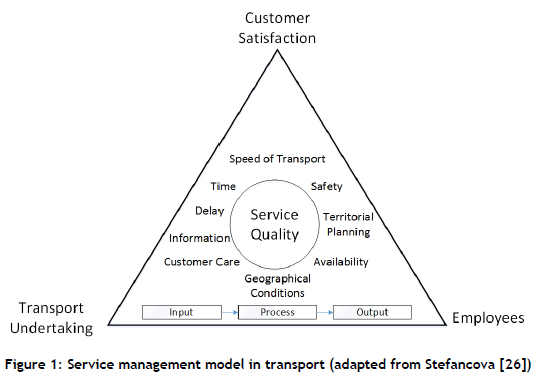
The service management model in transport (Figure 1 ) help rail organisations to understand the intricacies of service delivery in the rail industry. In the left base corner of the model is the "Transport undertaking", which is the mandate of providing railway services to stakeholders - that is, the individuals or groups who are either risk-bearers or beneficiaries of the investment in capital or time in the organisation [27]. At the right base of the model is the "Employees" in the service industry. The frontline employees (those who directly interact with customers) should be courteous and cheerful, because the customer's assessment of service performance is strongly influenced by how satisfactory that first contact is, although this depends on individual attitudes [26]. From an internal perspective, employees are a key stakeholder group, because quality of service is measured by how good its people are. In the case of transport companies in particular, a failure to understand employee needs or to provide them with ample motivation to treat customers well and to look after the company's assets well would result in organisational objectives not being met [28].
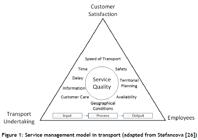
At the top of the model is "Customer satisfaction". Ensuring quality of transport services should be based on a sound understanding of what customers require [26].
There is a tendency to measure organisational performance by using financial results. However, shareholder value is achieved in the long term through understanding customer preferences, which are measured through service quality variables and reflected in customer satisfaction and retention [19]. To thrive and remain profitable, a business should also ensure that it fulfils its social responsibility by generating value that is high enough to ensure continued support from its primary stakeholders, the customers [27]. Information systems are able to improve service management quality. Ultimately the aim is to ensure that the highest level of service is achieved, assisted by continuous monitoring and evaluation of customer wishes and requirements [26]. Therefore, while service delivery and performance are generally measured against financial profitability, the service management model in transport (Figure 1 ) focuses on customer service quality. However, knowing the prescripts of good service management (time, safety, availability, customer care, etc.) in the rail industry is not sufficient, as performance in these areas partly depends on information systems.
3. METHODOLOGY
The study followed an explorative, qualitative, and interpretive case study approach that investigated a South African railway transport company. In particular, the study focused on a public-private rapid rail commuter operator in the Gauteng province. In organisational research, where social contextual influences are important elements in the study, an interpretive case study approach is suitable, as it allows the researcher to obtain profound and unfiltered insights and understanding (how and why things happen) from the context of the phenomenon under investigation [29].
Face-to-face semi-structured interviews were selected as the primary data collection technique for the study. However, owing to the global Covid-19 pandemic, online and virtual meetings were held using Microsoft Teams. Interviews were held in July to December of 2021. Participants were part of the ICT department of the railway transport company. Interviews of about 20 minutes each were held until data saturation occurred. Fifteen interviews were performed in total, with the participants being four senior ICT managers (28%), five middle-level ICT managers (33%), five ICT specialists (33%), and one helpdesk operator (6%). The respondents had an average of 15 years of work experience, totaling 238 years of experience in the rail industry. Their vast experience revealed the depth of knowledge in both rail and industry-wide matters. The chosen data analysis approach for this study was a qualitative thematic analysis in which a systematic procedure was used to generate codes and themes from the data.
4. RESULTS AND DISCUSSION
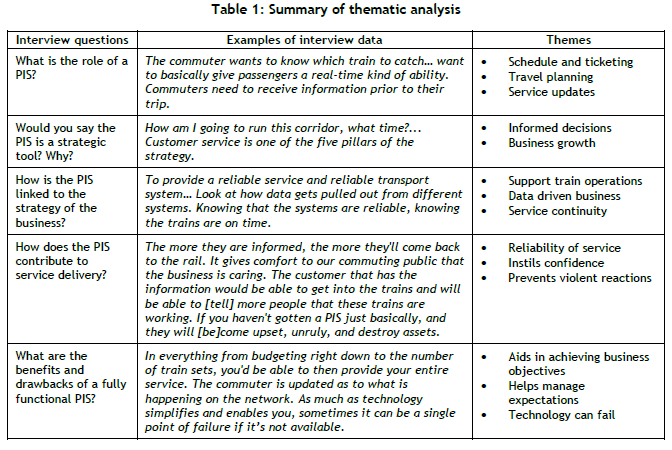
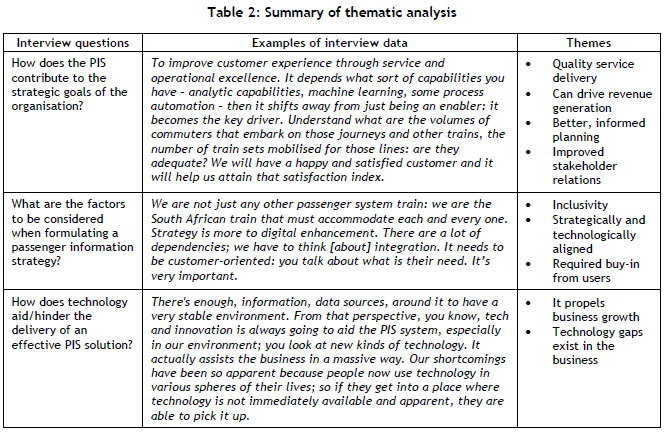
The analysis of the data is divided into two parts, with Table 1 focusing on the relevance and use of a PIS in rail operations, and Table 2 outlining how a PIS could be used to achieve the strategic objectives of the business.
4.1. Passenger information systems for rail operations
PISs were primarily established as railway communication tools with trip schedules and ticket information. The study revealed that timeous service information is of utmost importance, such as knowing which train to catch and how much a ticket will cost. This agrees with Niemand and Chauke [11], who state that schedule information is best received prior to arrival at the station. This ensures that commuters can make alternative plans when faced with delays, cancellations, or incidents [30]. From an operational perspective, service continuity is crucial when disruptions or incidents occur [6]. A PIS therefore plays a significant role by providing real-time information to commuters to help them to make alternative arrangements and to provide incident status updates.
The study also found that a reliable PIS instils rail-commuter confidence and further helps to manage customer expectations, so encouraging a greater use of rail services [27]. This could promote a shift towards public railway transport [9]. A PIS could close the gap between perception and expectation by providing a better way of communicating railway information.
The PIS provides value through the rich and diverse information that could be drawn from it and that could be used to enable an information-driven business strategy. Innovation and value delivery are attributes of SISs, which provide operational and strategic support across the organisation [8]. This implies that automation, intelligence, and analytics could be used by the PIS to drive revenue generation, leading to organisational effectiveness.
A PIS facilitates the delivery of safe and reliable transportation to commuters, which is a social responsibility of the rail operator towards the community at large. Safe railways also instil confidence in commuters, stakeholders, investors, and the general public [23]. The study discovered that the violent reactions from South African commuters that damage infrastructure and property are partly the result of frustration about a lack of reliable rail service. It has been reported that vandalism has caused losses amounting to a billion rand per annum [31]; this could be substantially reduced with the availability of a reliable information and service update system. The combination of function, role, and importance of the PIS in both strategy and operations makes it an invaluable tool for business performance, competitive advantage, and sustainability.
4.2. Operational passenger information systems as strategic information systems
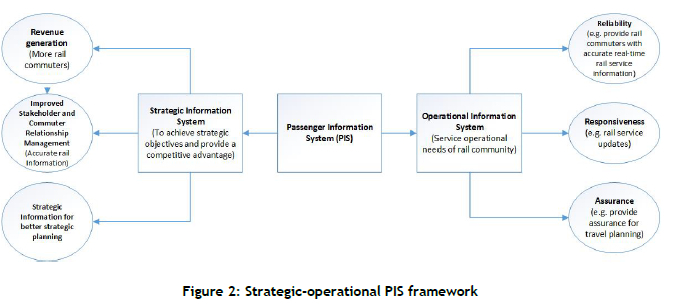
The research indicates that a PIS could be used to achieve strategic objectives through quality operational service delivery. The findings in this regard have been synthesised into the framework presented in Figure 2, which considers both the strategic and the operational perspectives that are proposed for a PIS. Quality service constructs may differ, depending on context; but reliability, responsiveness, and assurance are common and essential constructs for operational quality service delivery in the rail industry [32], as shown in Figure 2. As discussed in the research, reliability could be associated, for example, with accurate realtime rail service information, responsiveness with real-time rail service updates, and assurance in travel planning (Section 2).
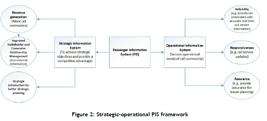
At the same time, an effective PIS contributes to achieve strategic rail objectives, as indicated in Figure 2. Operational excellence improves the customer, commuter, and stakeholder relations that position rail as the backbone of public transport. Currently the lack of service delivery encourages the public to search for alternatives to rail as a mode of public transport [24]. Overall, the travel experience (to achieve operational excellence) is influenced by a variety of preferences, choices, patterns, and commuter trends [15]. Therefore, strategically investigating these preferences, choices, patterns, and commuter trends may assist in obtaining the buy-in from customers and commuters that is necessary to keep rail as a viable transport option that generates revenue.
While the research findings (Table 2) reveal that efforts have been made to achieve operational objectives (e.g., to enhance the ability of passengers to take control of planning a journey using accurate information from the PIS), there is a misalignment between the operational objectives and the strategic objectives in the case study. Our recommendation is that there be a shared responsibility between management (business) and ICT to ensure that critical systems such as a PIS are included as part of the corporate strategy [33]. This would be to redefine the purpose, prescripts, and plan of action of a collectively agreed passenger information strategy that considers the inclusivity, alignment, and ratification of operational and strategic objectives.
The findings reveal that, instead of waiting for opportunities to present themselves in the environment, rail operators could use a PIS to build a competitive advantage. The data analysis reveals that the PIS could be key in a turnaround strategy by driving revenue generation (Table 2). Owing to poor service delivery, the bottom line (from the income generation side) in this case had not been as good as expected.
The research findings reveal that a PIS could also be used to achieve the strategic and business objectives of the organisation through better strategic planning, based on deliberate and specific strategic design efforts that use intelligence/strategic data (Table 2), as indicated in Figure 2. The respondents proposed that, on the operational side, the PIS should be used to determine commuter traffic on a rail line, the capacity of a particular corridor, how many trains and train sets would be required to ensure that there is no overcrowding, and that passengers did not have to wait for unreasonably long periods for a train. This resonates with the view that the quality of information obtained from a PIS, and the speed at which such information could be made available to users and business managers, would make a difference to the quality of the strategic decisions that could be made for a business [34]. Finally, the research highlights the dynamic nature of innovation. Innovative technologies have positively impacted businesses in general through automation and data intelligence. However, the railway operator in this case study was perceived as lagging behind.
To summarise, the findings reveal that, as an SIS, the proposed PIS would be capable of influencing the organisation from both strategic and operational perspectives, as indicated in the strategic-operational PIS framework in Figure 3. The framework serves to inform railway operating companies about the dual role that a PIS could play in railway operations. It could be used as a strategic IS to create a competitive advantage, but at the same time it would need to fulfil its operational duties in order to increase service delivery.
5. CONCLUSION
This study sought to answer the following research question: "What constitutes a framework to describe the role of a PIS as a strategic information system in order to improve rail operations and service delivery to rail commuters?" By conducting an interpretive case study that focused on a public-private rapid rail commuter operator in Gauteng, the study highlighted the reasons why a PIS could be regarded as an SIS. First, a PIS contributes by providing information that adds value and enhances operational and strategic decision-making. The study also identified factors to be considered in developing a PIS strategy (Table 2), considering the unique mix of South African commuters. These factors are critical in ensuring that the planning, investment, and implementation of the activities related to the PIS are driven by an inclusive strategy. The study also identified the benefits of having a fully functional PIS that includes digitising strategic data to influence strategic planning (Table 2).
The insights thus gained justify viewing the PIS through a strategic lens. The findings of this research offer insights into the capabilities of the PIS from a strategic perspective relating to how it provides input to inform planning, drive revenue generation, create a competitive edge, and improve stakeholder relations. The study also revealed that the PIS should contribute to service delivery by providing reliable information that aids in journey planning, averts violent reactions, and improves the travel experience. The PIS could be harnessed, continuously improved, and monitored through the Strategic Information Systems Plan process. The main contribution of this study is the strategic-operational PIS framework (Figure 2) that could be applied in the context of railway operations in South Africa. This framework proposes that a PIS be viewed as both an SIS, with its strategic capabilities to generate revenue and to increase market share, and an operational information system with its operational capabilities.
The study was limited to a public-private rapid rail commuter operator in the Gauteng province of South Africa. Further research would be required to assess whether the developed framework would also apply to the fully state-run rail services in South Africa, given the different operating environment and the problems faced by state-run rail services. Further research is also suggested to investigate what would be required from an architectural and data viewpoint in developing a fully functional operational and strategic PIS for the railway operating company in the study.
REFERENCES
2. LITERATURE REVIEW
- [1] G. Heyns and R. Luke, "Rail commuter service quality in South Africa: Results from a longitudinal study," 37th Annual Southern African Transport Conference (SATC 2018), 471-483, 2018.
-
[2] Gautrain Management Agency, "The economic and social impact of Gautrain," Gautrain Management Agency, Midrand, Gauteng, South Africa, July 2019. Available: https://gma.gautrain.co.za/development/Shared%20Documents/Economic%20and%20Social%20Impact%20of%20Gautrain%20-%202019.pdf
» https://gma.gautrain.co.za/development/Shared%20Documents/Economic%20and%20Social%20Impact%20of%20Gautrain%20-%202019.pdf - [3] D. van Lierop, M. G. Badami, and A. M. El-Geneidy, "What influences satisfaction and loyalty in public transport? A review of the literature," Transport Reviews, vol. 38, no. 1, pp. 52-72, 2018.
- [4] J. Preston and D. Robins, "Evaluating the long term impacts of transport policy: The case of passenger rail privatisation," Research in Transportation Economics, vol. 39, no. 1, pp. 14-20, 2013.
-
[5] N. Wilson, C. J. Fourie, and R. Delmistro, "Mathematical and simulation techniques for modelling urban train networks," South African Journal of Industrial Engineering, vol. 27, no. 2, pp. 109-119, 2016. doi: http://dx.doi.org/10.7166/28-4-1763
» http://dx.doi.org/10.7166/28-4-1763 - [6] S. Binder, Y. Maknoon, and M. Bierlaire, "The multi-objective railway timetable rescheduling problem," Transportation Research Part C: Emerging Technologies, vol. 78, pp. 78-94, 2017.
-
[7] A. Nash, U. Weidmann, and M. Luethi, "Can information technology help rail to play a greater role?" Transportation Research Record, vol. 2139, no. 1, pp. 133-141, 2009. https://journals.sagepub.com/doi/abs/10.3141/2139-16
» https://journals.sagepub.com/doi/abs/10.3141/2139-16 -
[8] V. Merchán Rodríguez, "Value-based information systems and technologies governance quality assessment," Journal of Computer Science and Technology, vol. 18, no. 01, pp. e08-e08, 2018. doi: 10.24215/16666038.18.e08
» https://doi.org/10.24215/16666038.18.e08 -
[9] B. Caulfield and M. O'Mahony, "Real time passenger information: The benefits and costs," presented at The Association for European Transport Conference, Strasbourg, France, 8-10 October, 2003. [Online]. Available https://www.worldtransitresearch.info/research/2774/
» https://www.worldtransitresearch.info/research/2774/ - [10] P. Fraga-Lamas, T. M. Fernández-Caramés, and L. Castedo, "Towards the internet of smart trains: A review on industrial IoT-connected railways," Sensors, vol. 17, no. 6, pp. 1-44, 2017.
- [11] C. J. P. Niemand and H. Chauke, "The use of mobile applications by public transport commuters in Gauteng, South Africa," SA Journal of Information Management, vol. 19, no. 1, pp. 1-9, 2017.
- [12] M. R. McCord, R. G. Mishalani, and M. Ettefagh, "Effect of real-time passenger information systems on perceptions of transit's favorable environmental and traffic reduction roles," Transportation Research Record, vol. 2538, pp. 102-109, 2015.
- [13] K. Papangelis, S. Sripada, D. Corsar, N. Velaga, P. Edwards, and J. D. Nelson, "Developing a real time passenger information system for rural areas," in Human Interface and the Management of Information. Information and Interaction for Health, Safety, Mobility and Complex Environments, HIMI 2013. Lecture Notes in Computer Science, vol. 8017, pp. 153-162, 2013.
- [14] A. Tibaut, B. Kaučič, and D. Rebolj, "A standardised approach for sustainable interoperability between public transport passenger information systems," Computers in Industry, vol. 63, no. 8, pp. 788-798, 2012.
- [15] L. Oliveira, C. Bruen, S. Birrell, and R. Cain, "What passengers really want: Assessing the value of rail innovation to improve experiences," Transportation Research Interdisciplinary Perspectives, vol. 1, no. 100014, pp. 1-9, 2019.
- [16] G. Yeboah, C. D. Cottrill, J. D. Nelson, D. Corsar, M. Markovic, and P. Edwards, "Understanding factors influencing public transport passengers' pre-travel information-seeking behaviour," Public Transport, vol. 11, no. 1, pp. 135-158, 2019.
- [17] A. Berdiyorov, T. Berdiyorov, S. Ergashxodjaeva, and N. Berdiyorova, "Innovation marketing in electronic ticketing system and strategic relationship in public transport," International Journal of Advanced Science and Technology, vol. 29, no. 6, pp. 7554-7560, 2020.
- [18] F. Kitsios and M. Kamariotou, "Strategizing information systems: An empirical analysis of IT alignment and success in SMEs," Computers, vol. 8, no. 74, pp. 1-14, 2019.
- [19] A. C. Yoshikuni and A. L. Albertin, "Effects of strategic information systems on competitive strategy and performance," International Journal of Productivity and Performance Management, vol. 67, no. 9, pp. 2018-2045, 2018.
- [20] M. Rahro and B. Soleymani, "An investigation on the effect of strategic information system on the improvement of the implementation of organisational strategies," International Journal of Economics, Commerce and Management, vol. V, no. 5, pp. 529-537, 2017.
- [21] H. Harun and M. K. Hashim, "Strategic information systems planning: A review of its concept, definitions and stages of development," International Journal of Research in Science & Engineering, vol. 3, no. 2, pp. 432-441, 2017.
- [22] A. C. Yoshikuni, J. E. R. Favaretto, A. L. Albertin, and F. D. S. Meirelles, "The influences of strategic information systems on the relationship between innovation and organizational performance," Brazilian Business Review, vol. 15, no. 5, pp. 444-459, 2018.
- [23] J. Hutchings and A. Thatcher, "Do we really learn from railway occurrence investigations? A South African railway industry perspective," Ergonomics SA, vol. 30, no. 1, pp. 31-50, 2018.
-
[24] R. Luke and G. J. Heyns, "An analysis of the quality of public transport in Johannesburg, South Africa using an adapted SERVQUAL model," Transportation Research Procedia, vol. 48, pp. 35623576, 2020. doi: https://doi.org/10.1016/j.trpro.2020.08.095
» https://doi.org/10.1016/j.trpro.2020.08.095 - [25] C. Nash, A. Smith, Y. Crozet, H. Link, and J. E. Nilsson, "How to liberalise rail passenger services? Lessons from European experience," Transport Policy, vol. 79, pp. 11-20, 2019.
- [26] V. Štefancová, E. Nedeliaková, and C. López-Escolano, "Connection of dynamic quality modeling and total service management in railway transport operation," Procedia Engineering, vol. 192, pp. 834-839, 2017.
- [27] A. Hillman and G. D. Keim, "Shareholder value, stakeholder management and social issues: What's the bottom line?" Strategic Management Journal, vol. 22, no. 2, pp. 125-139, 2001.
- [28] P. M. Smudde and J. L. Courtright, "A holistic approach to stakeholder management: A rhetorical foundation," Public Relations Review, vol. 37, no. 2, pp. 137-144, 2011.
- [29] R. Naidoo, "Guidelines for designing an interpretive case study for business and management doctoral students," in 18th European Conference on Research Methodology for Business and Management Studies, 2019, p. 256.
-
[30] S. Kurup, D. Golightly, D. Clarke, and S. Sharples, "Passenger information provision: Perspectives from rail industry stakeholders in Great Britain," Journal of Rail Transport Planning and Management, vol. 19, 2021. doi: https://doi.org/10.1016/j.jrtpm.2021.100264
» https://doi.org/10.1016/j.jrtpm.2021.100264 -
[31] Railway Safety Regulator State of Safety Report, South Africa 2019/2020. https://www.railwaysafrica.com/assets/docs/RSR-StateofSafety2019-20.pdf
» https://www.railwaysafrica.com/assets/docs/RSR-StateofSafety2019-20.pdf - [32] L. Francis and J. Richard, "Customer service quality management in public transport: The case of rail transport in Tanzania," International Review, vol. 3, no. 4, pp. 102-117, 2017.
- [33] E. D. Canedo, R. P. da Costa, R. T. de Sousa Jr, and G. D. A. Nze, "Best practices kits for the ICT governance process within the secretariat of state-owned companies of Brazil and regarding these public companies," Information, vol. 9, no. 6, pp. 1-17, 2018.
- [34] O. Alshikhi and B. Abdullah, "Information quality: Definitions, measurement, dimensions, and relationship with decision making," European Journal of Business and Innovation Research, vol. 6, no. 5, pp. 36-42, 2018.
Accepted for publication 9 Dec 2025
Available online 30 May 2025
M.P. Chakabva
https://orcid.org/0009-0006-0717-5681
H.W. Pretorius
https://orcid.org/0000-0003-2051-5290
M. Turpin
https://orcid.org/0000-0002-4425-2010
* Corresponding author: