A Strategic Guideline for Dredging Operations for Port Sustainability: A Case Study of a River Port in South Africa
Abstract
This research addresses the difficulties that port authorities experience in managing maintenance dredging activities. A strategic guideline for optimising dredging practices is developed to address these challenges. The guideline addresses dredging budgets, port sustainability, and navigational safety. Through a mixed-method approach, dredging data of a South African river port is analysed and insights collected from port authority practitioners. The results identify gaps between planned and actual dredging volumes, financial inefficiencies, equipment limitations, and the impact of adverse weather conditions on productivity. Based on the results, guidelines are proposed to bridge these gaps and to contribute to our knowledge for similar cases.
Abstract
Hierdie navorsing spreek uitdagings aan wat hawe-owerhede ervaar in die bestuur van instandhoudingsbaggeraktiwiteite. 'n Strategiese riglyn vir die optimering van baggerpraktyke word ontwikkel om hierdie uitdagings aan te spreek. Die riglyn spreek baggerbegrotings, hawevolhoubaarheid en navigasieveiligheid aan. Deur 'n gemengde metodebenadering word baggerdata van 'n Suid-Afrikaanse rivierhawe geanaliseer en insigte van hawe-owerheidspraktisyns ingesamel. Die resultate identifiseer gapings tussen beplande en werklike baggervolumes, finansiële ondoeltreffendhede, toerustingbeperkings en die impak van ongunstige weerstoestande op produktiwiteit. Gebaseer op die resultate word riglyne voorgestel om hierdie gapings te oorbrug en by te dra tot kennis vir soortgelyke gevalle.
1. INTRODUCTION
In the past decade, research has focused on the critical role of dredging operations in maintaining the operational viability of shipping ports by ensuring sufficient navigable depths for the safe manoeuvring of vessels. Dredging activities, which involve the removal of accumulated sediments transported through natural processes, are essential for ports to remain accessible and competitive in global maritime trade. Studies such as Mahmoudzadeh et al. [1] reinforce that uncertain sediment accumulation poses direct risks to navigational safety, as sudden sediment build-up can reduce the depth of critical channels, creating under-depth conditions that jeopardise vessel manoeuvrability in ports. Similarly, Bian et al. [2] emphasised the importance of strategic planning and forecasting for dredging activities to sustain port accessibility, given the reliance of global trade on maritime transportation. A recent study by Hanowsky et al. [3] highlights the financial difficulties of dredging management, as it is capital- and resource-intensive, and magnified by the need for specialised dredging equipment, high mobilisation costs, prioritisation of shipping activities in scheduled dredging works, and environmental restrictions on dredging operations. Collectively, these studies show that dredging activities remain a substantial financial burden for port authorities owing to operational, equipment-related, and climate-related difficulties, requiring strategies that not only optimise dredging operations but also address the rising operational expenditure associated with maintaining navigable depths.
Given that dredging costs represent a significant portion of operational expenditure for shipping ports, effective integration of financial management with operational strategies in dredging has not been fully addressed from the perspective of port authorities, especially considering the growing economic and environmental problems faced by port management. While research has explored the technical methodologies of dredging, a gap exists in how port authorities, who own and manage navigable infrastructure, could balance cost and operational efficiency with navigational safety for long-term port sustainability [4]. This need is further amplified by climate change, which introduces additional complexities such as evolving wind and wave patterns, increased sediment influx, and more constrained dredging windows, thereby hindering the maintenance of existing productivity levels. These climate-induced disruptions lead to more frequent and unpredictable dredging requirements, intensifying the financial strain on port authorities, who are required to allocate resources to both routine and emergency dredging operations to maintain the navigational safety of shipping ports [3].
Against this background, the research problem is rooted in three problems:
• Dredging operations are not optimised for the available operational expenditure budgets for port maintenance activities;
• Dredging operations and the planning of them are not adapted for the impact of climate change, and;
• Sustainable dredging practices have not been integrated for financial return while mitigating long-term environmental impacts.
The following research questions underpin the research problem and guide the research:
• How could dredging operations at shipping ports be optimised for port sustainability, while managing costs and ensuring navigational safety?
• How does the impact of climate change on dredging operations affect financial considerations, and how could these be mitigated?
• What impact do climate change trends and equipment efficiency have on the cost of dredging activities?
• What guidelines could be implemented to address the operational and financial challenges of dredging management to ensure port sustainability?
Following on from the research questions, the primary objective of this research is to develop a strategic guideline for port authorities that is aimed at optimising dredging operations. Addressing the identified problems would benefit port authorities, as a standardised strategic framework could be applied when planning and executing maintenance dredging activities. While models and frameworks exist in the literature to support dredging optimisation, these are primarily focused on technical scheduling, and do not adequately address the practical operational and financial constraints faced by port authorities as asset owners, particularly in developing country contexts; this has motivated the development of the strategic guideline as the primary contribution of this study. The guideline results from a case study of a South African river port facing high sediment inflows. It included an analysis based on five years of dredging data and on insights gained from semi-structured interviews with dredging practitioners in the port authority. The results identify recommendations and short-, medium-, and long-term strategic actions that contribute to the scholarship by addressing operational and financial challenges in dredging management from the port authority perspective, and offer support for improved dredging practices, budget optimisation, and enhanced port sustainability.
Dredging operations are essential to maintaining port navigability, enabling ports to accommodate larger vessels and to support national and global trade. Effective dredging mitigates sediment build-up that can obstruct channels, thus ensuring operational continuity and safety for maritime traffic [5]. Studies highlight the economic significance of dredging in sustaining port accessibility, but financial difficulties owing to high dredging costs and limited funding often result in maintenance backlogs and navigational risks [1]. Saichenthur et al. [6] show that sand traps are effective systems for sediment management by capturing inflowing sediment before it reaches critical areas, thereby reducing dredging complexities and costs when optimally configured. Sustainable dredging practices, which include adaptive path planning and sediment control, are also vital in addressing the dynamic near-shore conditions that affect sediment transport [7].
Past research that began in the late 1980s established dredging as a scheduling problem aimed at maximising navigational depth in channels; this led to the development of various strategic and tactical models using mixed-integer programming, simulation, and decision-support frameworks. Building on these foundations, Hanowsky et al. [3] and Kaizer and Neumann [4] contributed insights into operational prioritisation, equipment disruptions, and cost challenges in dredging, which informed the focus on equipment functionality, sediment volumes, and cost efficiency in this study. Bian et al. [2] also require an understanding of how port authorities influence the cost management of dredging activities through variables used in the dredging planning optimisation model (DPOM) and the dynamic planning prioritisation (DPP) model. Climate change impacts, highlighted by Izaguirre et al. [8] and Dahl et al. [9], introduce additional considerations on financial risk and operational disruptions, particularly in ports with high sediment inflow.
The focus has shifted during the past decade to optimising dredging operations to maintain navigable waterways in order to support port operations. Kaizer and Neumann [4] emphasise the complexities of dredging because of unpredictable sediment accumulation, weather conditions, and equipment constraints, which can undermine the effectiveness of planned campaigns and complicate cost management. Zilinskas et al. [5] and Hanowsky et al. [3] highlight the effects of environmental factors that alter sediment transportation and require reactive dredging that disrupts dredging schedules. Kaizer [10] explains the importance of selecting appropriate dredging equipment based on soil type and operational needs, as equipment mismatches lead to operational inefficiencies and unplanned downtime. To address budgetary and planning challenges, Bian et al. [2] introduced the DPOM with a DPP algorithm, allowing for adaptive dredging schedules that optimise financial resources over multi-year horizons.
The financial burden of maintenance dredging for port authorities is seen as significant in the literature, as it requires specialised equipment, high mobilisation costs, and careful scheduling to accommodate shipping priorities and environmental regulations ([3], [11]). Models such as the analytic hierarchy process (aHP) applied by Kaizer and Neumann [4] and the dPoM developed by Bian et al. [2] enhance cost-efficiency by prioritising critical dredging areas and simulating operational impacts, addressing both budget limitations and operational constraints because of prioritised shipping activities. Dahl et al. [9] and Izaguirre et al. [8] agree that changing climate conditions, particularly rising sea levels, changing wind and wave patterns, altered precipitation patterns, and increased storm frequencies, affect port and dredging operations and increase sediment transport and deposition patterns, thus requiring more frequent maintenance dredging activities; and these have an impact on the annual capital required to address maintenance dredging requirements.
Seymour and Luman [12] offer insight from a systems engineering framework on holistically approaching and examining complex problems such as dredging operations by viewing them as interconnected components, thus integrating financial management, equipment functionality, port operations, and climate factors into the main elements of the theoretical model. This approach also underpins the identification of the critical variables that influence dredging efficiency from the port authority perspective. In addition, Ghorbani et al. [13] propose a cost-benefit approach to preventive maintenance, and Bian et al.'s [2] multi-year planning models offer the financial optimisation of dredging operations, especially under budget constraints. Finally, the resource-based view (RBV) framework presented by Mong et al. [14] is used to evaluate how port authorities allocate and manage resources to achieve both operational and economic goals, thereby improving cost efficiency while supporting navigational safety and economic throughput. Effective dredging operations are therefore essential for supporting shipping activities and global trade. However, the complex financial and operational difficulties posed by managing the port water depths amid increasing climate change impacts and operational inefficiencies remain insufficiently addressed in respect of improved port authority operational expenses, adapting dredging planning to climate change, and integrating sustainable practices for financial return. These gaps underpin the research problem of this study. Models such as the DPOM and DPP algorithm developed by Bian et al. [2] and the AHP model developed by Kaizer and Neumann [4] are meaningful advances in dredging optimisation; however, their application is primarily focused on technical scheduling and equipment selection rather than on the broader operational and financial management problems faced by port authorities as asset owners. Furthermore, these models were developed and tested in contexts that do not account for the practical constraints of a developing country river port, such as limited dredging fleet availability, shared national dredging resources, constrained operational expenditure budgets, and the compounding effects of climate-related disruptions on campaign planning and execution. These limitations in existing frameworks underpin the need for a strategic guideline that is developed specifically from the port authority perspective, which is the primary contribution of this study.
3. METHODOLOGY
This study used the concurrent triangulation mixed-methods research design of Creswell [15] to investigate the factors influencing dredging activities, operational expenditure and financial management, and climate change dynamics from the port authority perspective. In the concurrent triangulation approach both quantitative and qualitative data are collected and analysed concurrently and integrated into the final results. The quantitative component is based on the analysis of historical dredging data from a river port case study in South Africa that has significant sediment inflow, while the qualitative component involves semi-structured interviews with port authority practitioners involved in various dredging operations. The integration of the findings aims to develop a strategic guideline that informs port authorities about effective dredging management strategies, identifies potential cost-saving initiatives, and enhances oversight capabilities for sustainable port management.
3.1.
Quantitative methodsFor the quantitative component of the study, historical dredging data through a case study focused on a South African river port for a five-year period from the 2019/2020 to the 2023/2024 financial years was analysed in order to understand dredging campaign patterns and their correlation with financial management factors. An analysis of operational efficiency and expenditure on dredging operations and its relationship with port financial sustainability was undertaken, consistent with the approach of Mahamoudzadeh et al. [1]. Statistical analysis of the historical data was conducted to identify trends, correlations, and patterns related to dredging activities and their financial impacts, aligned with approaches by Barkley [11] and Bian et al. [2]. The historical data gathered for the five-year period investigated the following:
• Planned dredging volumes (m3) and actual volumes dredged (m3) per month, to assess the efficiency of dredging campaigns at the river port.
• Approved operational expenditure budgets (ZAR) and actual dredging expenditure (ZAR), to analyse the cost implications of dredging operations for port sustainability.
• Standing time and weather-delay claims recorded each month, to analyse the impact on the overall campaign costs, thereby determining the significance of climate-related factors and port operations on operational expenditure management.
• Sand trap volumes (m3) before and after campaigns, to determine the impact of sand traps on the port's navigational status and dredging efficiency.
It is important to note that, in the quantitative component of the study, the influence of climate change on dredging operations was examined through observable weather conditions recorded during dredging campaigns - specifically, average wind speeds and wave heights - as these were the environmental parameters available from the port's historical weather records. These variables were measurable proxies for weather-related disruptions to dredging campaigns rather than direct indicators of long-term climate change trends. The qualitative component complemented this by identifying practitioner perceptions of longer-term shifts in weather patterns, sediment behaviour, and operational disruptions, which practitioners described as consistent with broader climate change projections documented in the literature. The integration of these two levels of evidence through triangulation therefore provided a more complete, although not exhaustive, picture of how climate-related factors influence dredging operations and associated costs at the river port.
The descriptive statistics, including the mean, median, standard deviation, and interquartile range (IQR), were used to summarise the data and to provide insights into dredging efficiency and financial performance, to offer an understanding of key trends in dredging volume-productivity, costs, and delays. In addition, inferential methods were used to establish relationships between dredging activities and the financial management factors being considered. Correlation analysis helped to identify how changes in dredging volumes corresponded with variations in financial expenditure, while the regression analysis examined the influence of various factors on significant cost components.
3.2.
Qualitative methodsIn addition to the quantitative analysis, a qualitative approach was used to gather secondary data through semi-structured interviews with practitioners involved with dredging operations.
Five participants were purposively selected based on their involvement in dredging operations at the river port. Their collective experience ranged from five to seventeen years in dredging management, and their roles spanned both the port authority and the dredging service provider, ensuring that perspectives from asset ownership and operational execution were both represented. The port engineer provided insights into the financial planning and management of dredging operations, as well as sediment inflow trends over the study period. The harbour master contributed insights into navigational safety and the economic sustainability of the river port as governed by dredging efficiency. The technical director, with seventeen years of experience and a national oversight role as chair of the national dredging committee, provided perspective on dredging productivity, deployment planning, hydrographic survey requirements, and environmental compliance. From the dredging service provider perspective, the principal project manager contributed insights into equipment functionality constraints and the operational support required from port management to optimise campaigns, drawing on fourteen years of experience in both capital and operational expenditure contexts. The senior project manager contributed insights into strategically using dredging budgets relative to volume targets, and on optimisation practices drawn from experience of executing campaigns at comparable river ports in Africa. The purposive small sample is appropriate for collecting specialised tacit knowledge, although representativeness of the qualitative results is acknowledged as a limitation of the study.
The semi-structured interview questions were derived from the literature review and sought open-ended responses. The interview process adhered to the ethical considerations of the study through informed consent and interviewee confidentiality. The secondary data gathered aimed to understand the challenges relating to dredging operations, to confirm or disconfirm the quantitative analysis, and to recommend solutions and sustainable practices for mitigating inefficiencies in annual dredging operations at the river port. The interview questions are included in Appendix A.
The qualitative data collected through the interviews underwent content analysis, in which responses are coded to identify recurring themes, patterns, and disparities. This allowed for key insights into dredging operations, financial management, and climate resilience to be extracted. Themes were further explored by identifying common problems and proposed solutions and to triangulate the themes with the findings of the quantitative analysis.
Through the mixed-methods approach, the study investigated the complexities of managing dredging operations, balancing financial constraints, and ensuring port sustainability. The integration of quantitative historical data analysis with qualitative practitioners' perspectives served as the input for achieving the objective of the study: to develop a strategic guideline on how port authorities could implement more effective and sustainable dredging practices.
4. RESULTS
For the historical data, the initial format of the reports required extensive data wrangling to produce formats related to planned and actual dredging volumes, budgets, and influential campaign details, in order to structure the data for statistical analysis. In addition, the information that was provided included quantified sediment volumes from hydrographic surveys, dredging campaign priorities, and standing time details because of inclement weather, although some details on campaign delays were inconsistently recorded. The Kolmogorov-Smirnov test for normality revealed that most key variables, such as planned and actual dredging volumes, costs and budgets, standing time, and standing time claims, deviated significantly from normal distribution, resulting in the use of non-parametric tests in the analysis. Only wind speeds and wave heights showed p-values that indicated proximity to normality, suggesting that environmental factors could display more predictable patterns (normal distributions) with increased monitoring. These findings about the distribution of quantitative data aligned with the qualitative insights gained from the interviewees, which highlighted the unpredictability of dredging costs and sediment accumulation, which are often exacerbated by unplanned weather disruptions and operational difficulties.
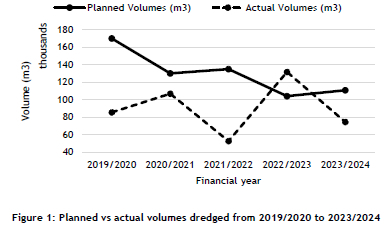
The statistical analysis of planned versus actual dredging volumes over the five-year period indicated a recurring gap between targeted and actualised volumes, explained by the interviewees that it was caused by operational inefficiencies such as deployment plan changes, campaign disruptions, and equipment breakdowns, which had an impact on dredging targets being achieved.
In Figure 1, the planned volumes show a generally declining trend, suggesting a shift towards more conservative planning as the river port adapted to past problems, but actual volumes continued to fall short, especially in earlier years. The qualitative insights from the practitioners further revealed that volume targets and budgets were based on historical dredging averages rather than on quantified current sediment inflow data, contributing to problems with planning calibration such that targets were insufficiently informed by actual sediment-inflow conditions at the time of planning. However, the 2022/2023 financial year was an exception, with actual dredging volumes exceeding planned targets thanks to simultaneous improvements in both planning and execution strategies. On the planning side, dredger deployment schedules were more closely aligned with campaign priorities and monthly volume targets. On the execution side, tandem dredging was adopted, with the grab hopper dredger (GHD) excavating and placing material closer for lifting and disposal by the trailing suction hopper dredger (TSHD), thereby reducing the long dumping cycle times associated with the GHD's smaller hopper capacity and improving overall productivity. This demonstrated that both planning and execution must be addressed concurrently to close the gap between planned and actual dredging outcomes.
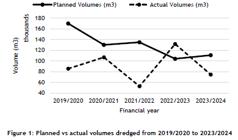
Overall, the weak Pearson correlation (r = 0.060, p = 0.878) between planned and actual volumes indicates that planning alone is insufficient to guarantee efficient campaign outcomes, and suggests that other influencing factors such as equipment limitations and environmental disruptions contribute to overall campaign efficiency. Furthermore, the qualitative insights from the interviews support these findings, attributing productivity problems to inconsistent dredger availability, reactive dredging efforts, and lack of coordination with stakeholders such as terminal operators and shipping lines prior to dredging campaigns. The interview responses also noted that unplanned delays, breakdowns, and the deployment of incorrect dredgers further hindered meeting planned targets.
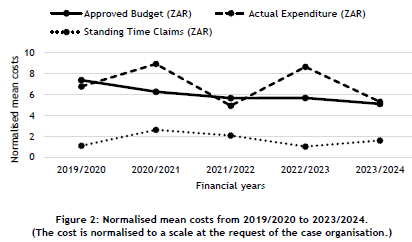
The analysis of dredging costs over the five-year period indicates a variation between approved budgets and actual spending, revealing financial difficulties and inefficiencies in meeting dredging targets. In Figure 2 it is shown that the actual costs frequently exceeded approved budgets, particularly in the financial years 2020/2021 and 2022/2023, owing to campaign inefficiencies and unplanned standing time claims caused by environmental delays and the prioritisation of port activities. The Wilcoxon test results, with a Z-statistic = -2.83 and p-value = 0.778, indicate that the differences between planned and actual costs are not statistically significant, suggesting that they may arise from random operational fluctuations rather than from systematic budgeting flaws. A further investigation of standing time claims as a proportion of actual spending reveals the variability in campaign efficiency throughout the five years. Standing time claims were highest in 2021 /2022, accounting for 24% of actual spending, and indicating a year of significant campaign inefficiency driven by equipment problems and weather delays. In contrast, 2022/2023 recorded the lowest proportion of standing time claims at only 9% of actual spending, corresponding with the highest actual dredging volumes achieved in the study period, demonstrating that the coordinated deployment strategies used in that year not only improved volumetric productivity but also substantially reduced the financial burden of campaign delays.
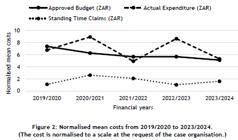
The financial year 2022/2023 marked a positive deviation, when higher productivity through tandem dredging enabled the river port to exceed planned volumes with justifiable overspending on operational expenditure, reinforcing insights from Bian et al. [2] about the effectiveness of adaptive dredging strategies. The variability in actual spending, supported by the illustrated trends, reflects peaks in years with fewer but larger-scale campaigns, aligning with interview insights into the need to prioritise economically critical and highly productive dredging areas for better use of the budget. In addition, limiting interruptions in dredging campaigns were noted by interviewees as critical to maintaining sustainable operations. They also suggested that optimising TSHD productivity in open-water regions reduced the financial strain on operational expenditure budgets. Furthermore, the influence of dredger types and deployment schedules was evident, with TSHDs incurring higher costs because of mobilisation and demobilisation expenses, reinforcing the findings of Hanowsky et al. [3] about key cost drivers.
The regression analysis of standing time claims reveals that, while weather conditions (wind speeds and wave heights) were initially considered significant predictors, they did not statistically account for variations in standing time claims, as indicated by the low R-value (R = 0.140) in the unadjusted model. However, the inclusion of actualised expenditure in the adjusted model significantly improved the explanatory power, achieving a high R-value = 0.907 and indicating that financial expenditure is a crucial predictor of standing time claims, with a p-value of 0.002. This suggests that higher dredging expenditure is linked to increased standing time claims, as delays often lead to additional costs to meet dredging targets. The interviewees' responses supported these findings, with several interviewees noting that campaign delays resulted in increased standing time because of factors such as equipment disruptions from port activities.
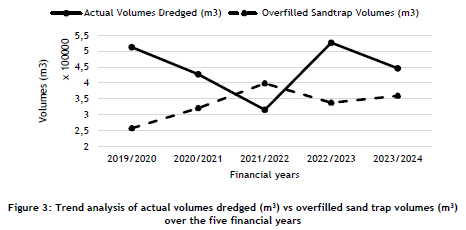
The sand trap's design has a theoretical volume capacity of 260 207.82 m3, which is consistently exceeded by the overfilled volumes recorded before dredging campaigns. The analysis of the sand trap data over the five years is illustrated in Figure 3, and reveals a fluctuating trend in actual volumes dredged and overfilled sand trap volumes, with a notable decline in dredging volumes from 2019/2020 to 2021/2022, leading to increased sediment accumulation (overfilled volumes). The significant peak in dredged volumes in 2022/2023, which corresponded to a decrease in overfilled volumes, indicates a successful campaign that likely enabled minimal operational delays, high equipment productivity, and favourable weather conditions. However, in 2023/2024, the slight increase in overfilled volumes, despite lower dredging activity, indicated ongoing difficulties in maintaining sediment control, which the interviewees noted to be caused by limited dredging capabilities to address sediment mounding against the breakwater. Using the CSIR-estimated annual sediment inflow of 315 000 m3, the mean annual trapping efficiency of the sand trap was calculated at 23.57%, which is considerably lower than the approximately 60% reduction in downstream dredging reported by Saichenthur et al. [6] for optimally configured sand traps. The Mann-Whitney U test (p = 0.018) confirmed that dredging campaigns statistically reduced overfilled volumes. However, there was no statistical evidence to prove that the sand trap's trapping efficiency improved (p = 0.819). This was noted by interviewees as a cause owing to the inherent design and positioning constraints of the port and the sand trap respectively.
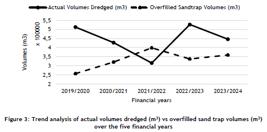
The interviewees also emphasised the importance of routine sand trap maintenance for navigational safety and dredging cost control, although they also noted the limitations caused by its proximity to the breakwater, which led to sediment mounding on the west and south-west quadrants, reducing theoretical trapping volume by about 50%, further limiting its effectiveness in intercepting sediment before it reached critical navigational areas. The interviewees explained that a different dredging methodology was currently available, compared with the maintenance methodologies indicated during the design phase of the sand trap. Furthermore, the frequent exceeding of the sand trap's theoretical capacity was caused by sediment build-up along the breakwater, underscoring the need to redesign or reposition the sand trap to enhance its effectiveness in sediment management.
Further results from the interviews revealed significant difficulties associated with dredging equipment that had a negative impact on operational efficiency and dredging volumes. The interviewees emphasised issues such as poor equipment selection, frequent and rigid maintenance requirements to uphold international certification, and the lack of available spare parts, all leading to delays and inconsistent dredging performance. This was particularly evident in the 2021/2022 financial year, when actual dredging volumes dropped significantly. In addition, the interviewees stated that campaign disruptions caused by port operations hindered equipment performance and contributed to the accumulation of campaign delays and associated standing time costs; this aligns with Kaizer and Neumann [4], who note the negative impacts of prioritising vessel traffic in active ports. The qualitative findings also align with Dyck [7], who emphasises the importance of reliable dredging equipment and the need for predictive maintenance systems to minimise downtime. Overall, the findings of this study support the need for improved maintenance routines, and suggest that ports could benefit from more modular dredging equipment designs to expedite repairs and reduce equipment downtime.
The results could not provide conclusive statistical evidence that observable weather conditions and longer-term climate-related trends had a significant impact on dredging operations, although it was evident from the interviews that directional shifts, such as increased sediment influx, rising sea levels, increased wind speeds and wave heights, and unfavourable weather events disrupted campaign productivity and inflated operational costs. The 2022/2023 dredging activities were notably effective because of tandem dredging and scheduling during calmer seasons; yet this proactive approach was not consistently applied in 2023/2024, which highlights the problem of managing the unpredictable nature of adverse weather events and their operational impacts.
The qualitative data, gathered through the semi-structured interviews with the five practitioners, was analysed through content analysis and organised into five themes: general dredging importance and difficulties; financial management and budgeting; equipment problems; climate change impacts; and recommendations and best practices.
On the theme of general dredging importance and difficulties, all the interviewees were aligned over the primary objective of maintenance dredging as ensuring navigational safety in accordance with the National Ports Act (Act 12 of 2005), maintaining promulgated port depths to support maritime economic activity, and acquiring scientific data through hydrographic surveys to inform future dredging plans. Key problems to be identified included inadequate pre-campaign planning leading to continual shipping interruptions, constrained operational expenditure budgets that induced reactive rather than preventative dredging, and a limited national dredging fleet shared between eight commercial ports, which frequently results in the deployment of equipment that is mismatched to the specific requirements of the river port. The interviewees also noted that a lower over-dredging tolerance to protect marine infrastructure limits dredger productivity, and that inclement weather poses significant safety risks, causing campaign stoppages owing to unfavourable wind speeds, wave heights, and swell conditions.
On the theme of financial management and budgeting, the interviewees identified the primary cost drivers as mobilisation and demobilisation costs, sediment dredging and disposal costs based on equipment production rates, and campaign delay claims. The port engineer noted that dredgers experience mandatory crew changes about every fourteen days, causing up to two days of downtime per cycle, which sometimes coincides with optimal dredging windows. The interviewees agreed that financial decision-making during campaigns is heavily influenced by the need to balance operational priorities with budget limitations, as berth unavailability and shipping prioritisation frequently require priority-dredging areas to be modified mid-campaign. The technical director noted that an additional tariff for the offshore disposal of dredged material was planned by the Department of Forestry, Fisheries and the Environment (DFFE), which posed a future financial risk to the river port, given its current practice of disposing of all dredged material offshore.
On the theme of equipment problems, the interviewees highlighted that the wear and tear of key mechanical components in the coastal dredging environment inevitably leads to equipment failure and downtime, requiring rigid maintenance routines before operations can resume. The lack of locally available spare parts and original equipment manufacturer support was identified as a significant constraint, compounded by lengthy procurement processes that lack agility. The interviewees from the dredging service provider also noted that unknown seabed conditions and foreign objects from terminal operations pose risks of unplanned damage to dredging equipment. Dredger performance was further noted to be significantly influenced by the experience and skill of the onboard crew: less experienced crews were better suited to high-volume and open-water operations, while more experienced crews were better suited to precision dredging in constrained navigational areas.
On the theme of climate-related operational impacts, the interviewees agreed that weather patterns consistent with climate-related changes had manifested sooner than anticipated, with increased wind speeds, higher wave heights, longer wave periods, rising sea levels, and more frequent adverse weather events all contributing to campaign delays and standing time accumulation. Increased sediment influx, attributed to stronger currents and the natural sedimentation processes of the river, had raised the annual volume to be dredged, which placed additional pressure on dredging resources. The interviewees noted that, after extreme storm events, overtopping waves and city stormwater culverts carrying sediment and pollutants into the port exacerbated seabed shallowing, requiring reactive dredging to restore navigable depths. The tandem dredging approach used in the 2022/2023 financial year, combined with campaigns timed for calmer weather seasons, was identified by the interviewees as having directly reduced weather-related delays and improved overall campaign productivity.
On the theme of recommendations and best practices, the interviewees consistently advocated a collaborative approach involving the marine, port engineering, and operations departments, the terminal operators, and the dredging service provider, to improve campaign planning and to align dredging activities with shipping schedules. The interviewees recommended that sediment modelling and material composition analysis be used to inform dredger selection and deployment, and that the location and design of the sand trap be investigated and optimised to align with the trailing methodology used by the available dredging fleet. Representatives of the dredging service provider specifically attributed the low trapping efficiency of the current sand trap to its proximity to the breakwater, which prevents full dredging of the sand trap using the trailing suction hopper dredger methodology under exposed weather conditions. The reuse of uncontaminated dredged material for coastline replenishment was recommended to reduce offshore disposal costs and to mitigate the financial impact of the anticipated disposal tariff. The harbour master emphasised the need to align with international best practices and to equip dredging crews with skills to maintain operations under increasingly extreme weather conditions.
The recommendations provided by the practitioners under all five themes were notably consistent with and directly informed the strategic guideline developed in this study. The practitioners' insights collectively validated the guideline's focus on collaborative campaign planning, tandem dredging operations, sand trap optimisation, improved financial planning flexibility, and climate-resilient deployment strategies as the priority areas for port authorities to address. This alignment between practitioner experience and the empirical findings of the quantitative analysis strengthens the credibility of the strategic guideline as a practically grounded framework rather than as a theoretically derived one, and directly responds to the need identified in the literature for strategies that account for the practical constraints faced by port authorities as asset owners.
The study's findings emphasise that adaptive strategies are essential to address financial unpredictability, equipment reliability problems, and the weather-related and climate-associated operational disruptions identified by the practitioners, to improve dredging efficiency and to manage the use of operational expenditure budgets. Similarly, proactive planning, accurate volume estimation, and strategic dredger deployment are noted as key improvements that would be required to enhance the operational performance and financial management of dredging activities. In addition, the findings of the study highlight the need to optimise the effectiveness of the sand trap and to develop resilient strategies to mitigate the problems caused by equipment downtimes and environmental disruptions.
5. DISCUSSION
This study provides a mixed-method analysis of dredging operations at a South African river port, focusing on the interrelationship between operational efficiency, financial management, and environmental difficulties. A discussion follows to address the research questions in the light of the quantitative and qualitative findings.
Regarding the optimisation of dredging operations to manage costs while ensuring navigational safety, the financial analysis of 2022/2023 showed that targeted dredging planning, which aligned deployment schedules with campaign priorities and used tandem dredging, resulted in actual volumes exceeding planned volumes within the approved budget. However, this outcome was inconsistent during the five-year study period. The weak, non-significant correlation between planned and actual dredging volumes (r = 0.060, p = 0.878) suggests that operational problems and unpredictable factors continued to affect cost outcomes, despite planned efforts to optimise the use of the operational expenditure budget. These findings suggest that dredging optimisation requires not only improved planning, but also adaptive operations strategies and better coordination to translate planned targets into actual outcomes.
Regarding the impact of weather-related and climate-associated factors on financial considerations and how these could be mitigated, the qualitative findings from the interviews indicate that the practitioners identified how weather patterns consistent with climate change disrupted dredging planning and operations through increased sediment influx, rising sea levels, higher wave heights, and other adverse weather events. However, the quantitative analysis did not statistically support the notion that wind speeds and wave heights alone were significant predictors of dredging delays and associated costs, as illustrated by the low explanatory power of the unadjusted regression model (R = 0.140). The adjusted model, which includes actual expenditure as a predictor, achieved a substantially high explanatory power (R = 0.907), suggesting that the financial impact of weather-related delays manifests through cumulative campaign costs rather than individual weather variables in isolation. Although adaptive strategies, such as tandem dredging, showed benefits in the 2022/2023 financial year, the inconsistent application in the other years suggests that such strategies alone may be insufficient, highlighting the need for additional measures such as infrastructure improvements to support sustained financial mitigation.
5.1. Recommendations
The findings of this study underscore key areas for enhancing dredging effectiveness, focusing on essential operational and financial strategies for port sustainability from a port authority's perspective. While the theoretical model and analysis of the study were specific to the South African river port case study, the recommendations below, such as adopting advanced forecasting methods, optimising equipment use, improving budget flexibility, and developing adaptive strategies for unforeseen costs, offer valuable and applicable insights to port authorities everywhere who face similar challenges. The recommendations provided below are categorised to align with the key dependent variables tested in the study, namely operational efficiency and financial performance.
To improve dredging operational efficiency, there is a need for more comprehensive dredging report details that incorporate climate data, including operational disruptions and climate-related variables such as wind speeds, wave heights, currents, rainfall, and storm occurrences, to allow for better tracking of the root causes and significant predictors of campaign delays. This should offer port authorities with insights into the impact of campaign disruptions on dredger productivity. In addition, tandem dredging is recommended, using both TSHDs and GHDs to improve campaign productivity. TSHDs should be dedicated to broader, exposed areas such as the entrance channel, sand trap, and bar, while GHDs focus on intricate, high-traffic zones or complex sediment compositions. Furthermore, deploying the GHD during low-traffic periods would ensure precision in navigational areas, while larger volumes could be dredged efficiently by the TSHD under suitable campaign conditions.
Detailed analysis and feasibility work is recommended on repositioning the sand trap, based on current and forecast sediment transport patterns and available dredger capabilities, which could improve trapping efficiency and reduce sediment overflow into critical navigational zones. This repositioning recommendation requires preliminary studies, such as physical and numerical modelling, to determine the optimal location, size, and design parameters of the new sand trap, and to investigate the need for and potential of creating downstream sand traps to manage sediment inflow from stormwater culverts. It is also recommended to include environmentally sustainable practices such as the beneficial use of clean dredged material to nourish beaches, to help combat coastal erosion.
Operational efficiency recommendations of the study also include collaborating with external service providers or nearby ports to supplement dredging capacity during peak demand or high-risk sediment build-up periods, in order to address equipment shortages and ensure the navigational safety of shipping ports. The adoption of a cost-benefit analysis framework, as suggested by relevant economic theories, would enable port authorities to make informed decisions about resource allocation, and so minimise the gap between planned and actual dredging volumes. Last, the implementation of advanced sensor systems and modular dredging equipment is recommended to reduce equipment downtime, improve real-time monitoring, and support adaptive path planning under changing sediment and weather conditions, ultimately to enhance dredging operational resilience and campaign efficiency.
To enhance operational expenditure budget utilisation for dredging, port authorities are recommended to implement strategic equipment selection processes, choosing tools based on sediment types and priority areas to improve productivity and cost efficiency. Prioritising dredging in high-revenue areas, such as highly active commodity berths, could optimise service continuity and support economic activity by focusing on regions of the port that are most affected by sediment build-up. It is recommended that port authorities adopt and tailor available tools such as the AHP, which factors in sediment characteristics, dredging volume, and area location, to support data-driven decision-making and so maximise operational efficiency and streamline operational expenditure budgeting throughout financial years.
It is further recommended that increasing the frequency of hydrographic surveys and integrating real-time sediment monitoring systems could provide more accurate sediment volume estimates, allowing port authorities to predict maintenance needs more accurately and to allocate operational expenditure budgets accordingly. These measures, coupled with differential surveys that account for variations in tide levels and water densities in different zones, would allow for precise dredging plans that are tailored to current sediment conditions, reducing dependency on historical data. An additional recommendation is to undertake a multi-hazard risk analysis to improve the climate resilience of dredging practices, as suggested by Izaguirre et al. [8], which could mitigate the risks posed by severe weather disruptions, improve dredging campaign resilience, and reduce costly weather delays.
To minimise delays and standing time claims further, the port authorities are recommended to collaborate and coordinate with terminal operators and shipping lines to plan dredging campaigns during periods of low vessel traffic, to reduce disruptions and avoid critical under-depth areas having an impact on shipping during peak times. Establishing clear communication protocols with these key stakeholders would ensure windows of berth availability for dredging that are embedded in annual shipping schedules, which would optimise dredging tool use and avoid costly standing time claims. In addition, sharing mobilisation costs with nearby ports or coordinating regional dredger deployment agreements could reduce the financial burden of the large cost driver, enhance equipment efficiency, and expand dredging volumes per campaign.
Finally, the port authorities are recommended to investigate optimal dredging windows based on historical weather patterns and shipping demands to create effective dredger deployment schedules, aligning with the findings from the 2022/23 financial year that demonstrated higher efficiency and lower delay costs (optimal use of the operational expenditure budget) owing to campaigns planned in optimal windows relating to limited weather and shipping delays.
5.2. Strategic dredging guidelines for port authorities
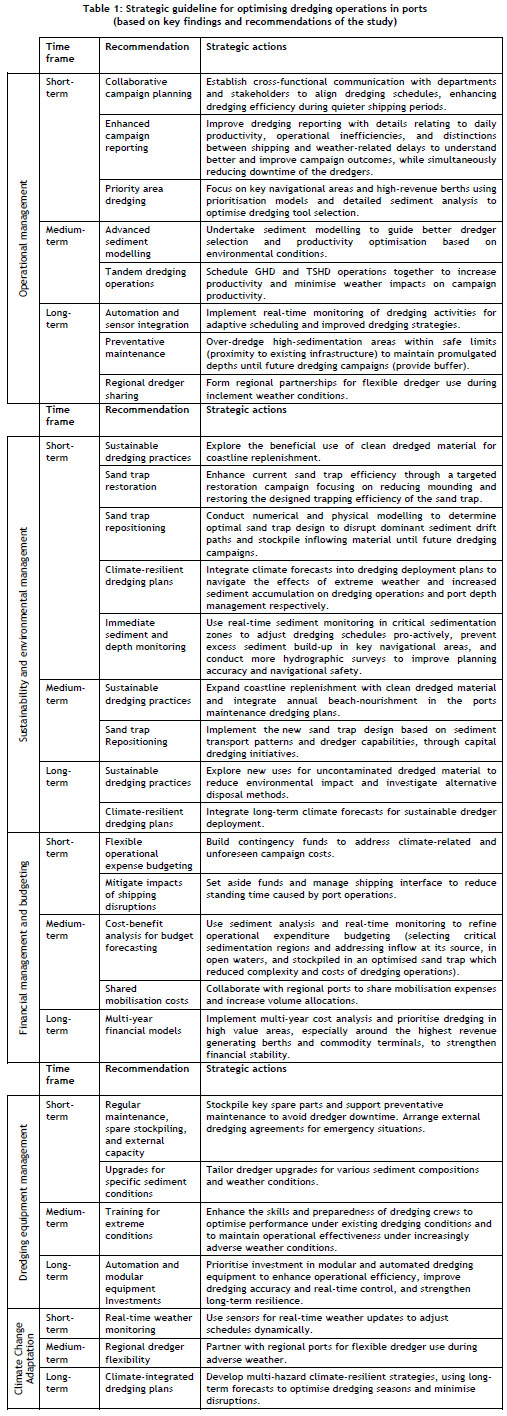
A strategic guideline is presented that is derived from the findings and recommendations of the research, to help port authorities to address the difficulties associated with port depth-management. The expected benefits of implementing the guideline are evidenced by the measurable improvements demonstrated in the 2022/2023 financial year, when the simultaneous application of several guideline elements - including collaborative campaign planning, tandem dredging operations, alignment of deployment schedules to campaign priorities, and scheduling of campaigns during calmer weather seasons - resulted in actual dredging volumes exceeding planned targets while remaining within the overall approved operational expenditure budget. This was the only financial year in the five-year study period to achieve this outcome, and, as reported in the results, standing time claims represented only 9% of actual spending compared with 24% in the least efficient year, demonstrating that the coordinated application of the recommended strategies could meaningfully improve both the operational efficiency and the financial performance of dredging campaigns. While the 2022/2023 financial year provides a proof of concept for the guideline's potential, the inconsistent application of these strategies in the other years underscores the importance of systematic and sustained implementation between financial years rather than ad hoc application. By implementing the short-, medium-, and long-term recommendations, port authorities should be able to enhance operational expenditure budget use, improve dredging efficiency, and ensure safe navigation to support port sustainability. The recommended timeframes for actions are adaptable, allowing each port authority to customise the implementation based on governance processes and on budget and resource availability.
6. VALIDITY AND LIMITATIONS
The concurrent triangulation approach was intentional to enhance internal validity by triangulating the quantitative historical results with insights from the interviews with practitioners, which was intended to reduce the risk that analytical results did not correspond with operational realities. The five-year dataset further supported internal validity by capturing trends in multiple dredging campaigns and financial cycles rather than at a single point in time. Nonetheless, internal validity is subject to limitations. Studying a single river port case means that context-specific conditions may influence the findings. Interview responses could also be susceptible to bias - for example, when practitioners might underreport inefficiencies. Although triangulation with the quantitative results mitigates the potential bias, the risk cannot be fully eliminated. With respect to external validity, the study is intentionally bound to a specific river port in the South African regulatory and financial context that has high sediment inflow, and so it cannot be directly generalisable to all other port contexts. Furthermore, while the purposive small sample of practitioners is appropriate for collecting specialised tacit knowledge, the representativeness of the qualitative results is limited. However, the strategic guideline is intended to offer transferable principles that port authorities in similar operating environments could adapt to their specific circumstances.
7. CONCLUSION
This research contributes to the scholarship of dredging operations in a developing country context, offering structured strategies for sustainable port depth management. Practically, it provides port authorities with recommendations, such as tandem dredging and targeted deployment, to improve operational expenditure utilisation, maintain navigational safety, and balance economic constraints in dredging operations.
A notable finding of the study is the disparity between the quantitative and qualitative evidence about climate change impacts. While the regression analysis could not statistically confirm that wind speeds and wave heights alone were significant predictors of standing time claims, all five practitioners identified weather patterns consistent with climate-related changes as already manifesting in measurable operational disruptions at the river port, including increased sediment influx, higher wave heights, and more frequent adverse weather events. This disparity is because of the limited scope of the climate-related data available from the port's existing reporting systems, which did not capture any other weather-related data during dredging campaigns. It is therefore recommended that port authorities invest in systems to collect a wider range of influential climate parameters, to allow for improved analysis of climate change impacts on dredging operations and associated costs.
Regarding the sand trap, the study found that dredging campaigns significantly reduce overfilled sand trap volumes, as confirmed by the Mann-Whitney U test (p = 0.018). However, no statistically significant improvement in trapping efficiency was found as a result of current dredging practices (p = 0.819), with the annual trapping efficiency calculated at 23.57% - considerably lower than the approximately 60% reduction in downstream dredging reported by Saichenthur et al. [6] for optimally configured sand traps. The primary cause identified through both quantitative analysis and the practitioner interviews is the sand trap's proximity to the breakwater, which prevents restoration using the available trailing methodology, and has led to mounding that reduces the theoretical trapping volume by about 50%. These findings underscore the need for physical and numerical modelling to investigate sand trap repositioning as a priority capital investment for the river port.
Future research could test the theoretical model in multiple ports in diverse geographical settings to enhance its generalisability and predictive accuracy and to incorporate additional environmental and operational variables for deeper insights into the operational efficiency and financial performance of dredging management. Investigating new dredging technologies, such as water-injection and low-energy dredging systems, could provide more sustainable and cost-effective sediment management strategies to be considered by port authorities.
REFERENCES
2. LITERATURE REVIEW
-
[1] Mahmoudzadeh, A., Khodakarami, M., Ma, C., Mitchell, K.B., Wang, X.B. and Zhang, Y. 2021. Waterway maintenance budget allocation in a multimodal network. Transportation Research Part E: Logistics and Transportation Review, 146, 102215. https://www.sciencedirect.com/science/article/pii/S1366554520308577
» https://www.sciencedirect.com/science/article/pii/S1366554520308577 -
[2] Bian, Z., Bai, Y., Douglas, W.S., Maher, A. and Liu, X. 2022. Multi-year planning for optimal navigation channel dredging and dredged material management. Transportation Research Part E: Logistics and Transportation Review, 159, e102618. https://www.sciencedirect.com/science/article/pii/S1366554522000163
» https://www.sciencedirect.com/science/article/pii/S1366554522000163 -
[3] Hanowsky, M., Mitchell, K.N., Kothari, K., Lillycrop, W.J. and Loney, D. 2024. Optimal scheduling of maintenance dredging in a maritime transportation system. Maritime Transport Research, 6, 100113. https://www.sciencedirect.com/science/article/pii/S2666822X2400011X
» https://www.sciencedirect.com/science/article/pii/S2666822X2400011X -
[4] Kaizer, A. and Neumann, T. 2021. The model of support for the decision-making process, while organizing dredging works in the ports. Energies, 14(9), 2706. https://www.mdpi.com/1996-1073/14/9/2706
» https://www.mdpi.com/1996-1073/14/9/2706 -
[5] Zilinskas, G., Janusaitè, R., Jarmalavicius, D. and Pupienis, D. 2020. The impact of Klaipeda Port entrance channel dredging on the dynamics of coastal zone, Lithuania. Oceanologia, 62(4), pp 489-500. https://www.sciencedirect.com/science/article/pii7S0078323420300610
» https://www.sciencedirect.com/science/article/pii7S0078323420300610 -
[6] Saichenthur, N., Murali, K. and Sundar, V. 2021. Studies on locating sediment trap for reducing dredging in Jellingham navigational fairway, Kolkata. In: V. Sundar, S.A. Sannasiraj, V. Sriram, and V. Nowbuth, MD (eds), Proceedings of the Fifth International Conference in Ocean Engineering (ICOE2019). Lecture Notes in Civil Engineering, 106, pp 185-199. Springer, Singapore. https://doi.org/10.1007/978-981-15-8506-7_15
» https://doi.org/10.1007/978-981-15-8506-7_15 -
[7] Dyck, C.B. 2023. A lean approach to system design and the development of a multi-stage dredging system for commercial applications. Master's thesis, University of Alberta, Canada. https://doi.org/10.7939/r3-a09s-j977
» https://doi.org/10.7939/r3-a09s-j977 -
[8] Izaguirre, C., Losada, I.J., Camus, P., Vigh, J.L. and Stenek, V. 2021. Climate change risk to global port operations. Nature Climate Change, 11(1), pp 14-20. https://www.nature.com/articles/s41558-020-00937-z
» https://www.nature.com/articles/s41558-020-00937-z -
[9] Dahl, T.A, Kendall, A.D. and Hyndman, D.W. 2018. Impacts of projected climate change on sediment yield and dredging costs. Hydrological Processes, 32(9), pp 1223-1234. https://onlinelibrary.wiley.com/doi/full/10.1002/hyp.11486
» https://onlinelibrary.wiley.com/doi/full/10.1002/hyp.11486 -
[10] Kaizer, A. 2020. Expert survey method as a technique to support the decision-making process during dredging activity at the harbour. TransNav: International Journal on Marine Navigation and Safety of Sea Transportation, 14(1), pp 187-190. https://www.transnav.eu/Article2_Expert_Survey_Method_as_a_Technique_Kaizer,53,993.html
» https://www.transnav.eu/Article2_Expert_Survey_Method_as_a_Technique_Kaizer,53,993.html -
[11] Barkley, A. 2021. Cost and efficiency in government outsourcing: Evidence from the dredging industry. American Economic Journal: Microeconomics, 13(4), pp 514-547. https://www.aeaweb.org/articles?id=10.1257/mic.20190018
» https://www.aeaweb.org/articles?id=10.1257/mic.20190018 -
[12] Seymour, S.J. and Luman, R.R. 2011. Academic perspectives of systems engineering. Johns Hopkins APL Technical Digest, 29(4), pp 377-386. https://secwww.jhuapl.edu/techdigest/Content/techdigest/pdf/V29-N04/29-04-Seymour.pdf
» https://secwww.jhuapl.edu/techdigest/Content/techdigest/pdf/V29-N04/29-04-Seymour.pdf -
[13] Ghorbani, E., Hajiabadi, M.E., Samadi, M. and Lotfi, H. 2023. Providing a preventive maintenance strategy for enhancing distribution network resilience based on cost-benefit analysis. Electrical Engineering, 105(2), pp 979-991. https://link.springer.com/article/10.1007/s00202-022-01710-5
» https://link.springer.com/article/10.1007/s00202-022-01710-5 -
[14] Mong, S.G., Mohamed, S.F., Misnan, M.S. and Palis, P. 2021. Integrating resource-based view and performance improvement theory in developing maintenance management continuous improvement model: A conceptual framework. Studies of Applied Economics, 39(4). https://ojs.ual.es/ojs/index.php/eea/article/view/4479
» https://ojs.ual.es/ojs/index.php/eea/article/view/4479 - [15] Creswell, J.W. 2009. Research design: qualitative, quantitative, and mixed methods approaches. 3rd ed. Thousand Oaks, CA: SAGE Publications.
Accepted for publication 7 Jun 2026
Available online 31 Aug 2026
ORCID® identifiers
K. Veerasamy https://orcid.org/0009-0006-4071-1271
J.L. Jooste https://orcid.org/0000-0003-2172-0480
APPENDIX A
The following questions were asked in the semi-structured interviews that formed part of the qualitative data collection:
1.
Introduction and general understanding:1.1. How many years of experience do you have managing port dredging operations, and how does your current role influence dredging operations?
1.2. In your opinion, what are the primary objectives of maintenance dredging activities?
1.3. In your experience, what are the key challenges associated with dredging operations regarding maintaining safe navigational limits?
1.4. What is the key function of a sand trap, and how does it affect annual dredging operations and maintenance of safe navigable areas?
2.
Financial management and budgeting:2.1. What are the key cost drivers of dredging campaigns?
2.2. How do port operations influence campaign planning and cost management of dredging activities?
2.3. How do these financial considerations impact decision-making during dredging activities?
3.
Equipment challenges:3.1. What are the typical challenges faced with dredging equipment functionality and maintenance, and how do they impact campaign efficiency?
4.
Climate change impacts:4.1. How is climate change affecting the efficiency of dredging operations with regard to sediment movement, and wind and wave impacts?
4.2. What strategies would you recommend to address climate-related challenges, and their financial impacts on dredging operations?
5.
Recommendations and best practices:5.1. How can port authorities balance operational and economic considerations in dredging decision-making?
5.2. In your opinion, what are some of the 'best practices' for optimising dredging efficiency and port sustainability, that can be implemented in the river port?