Assertiveness as a Project Management Competency: A Systematic Review
Abstract
Assertiveness is increasingly recognised as a critical competency in project management, influencing communication styles, conflict management approaches, and interpersonal dynamics. However, it remains underexplored in the academic literature. This study addresses this gap by conducting a systematic literature review, guided by the Preferred Reporting Items for Systematic Reviews and Meta-Analyses (PRISMA), to examine the role of assertiveness in project management environments. It also explores how assertiveness is experienced and perceived by both project managers and team members. The findings have implications for project management practice and education, highlighting the importance of assertiveness training and its strategic application. By bridging this research gap, the study enhances the understanding of how assertiveness contributes to project success.
Abstract
Selfgelding word toenemend erken as 'n kritieke bevoegdheid in projekbestuur, wat kommunikasiestyle, konflikbestuursbenaderings en interpersoonlike dinamika beïnvloed. Dit bly egter onder-ontgin in die akademiese literatuur. Hierdie studie spreek hierdie gaping aan deur 'n sistematiese literatuuroorsig uit te voer, gelei deur die Preferred Reporting Items for Systematic Reviews and Meta-Analyses (PRISMA) riglyne, om die rol van selfgelding in projekbestuursomgewings te ondersoek. Dit ondersoek ook hoe selfgelding deur beide projekbestuurders en spanlede ervaar en waargeneem word. Die bevindinge het implikasies vir projekbestuurspraktyk en -onderwys, en beklemtoon die belangrikheid van selfgeldingsopleiding en die strategiese toepassing daarvan. Deur hierdie navorsingsgaping te oorbrug, verbeter die studie die begrip van hoe selfgelding tot projeksukses bydra.
1. INTRODUCTION: BACKGROUND
Assertiveness is a social and interpersonal skill that psychologists say involves expressing one's opinions, needs, and rights clearly, directly, and, importantly, respectfully [1]. Kennerley [2] confirms the concept, and defines it as a balance between passivity, when individuals may neglect their own needs, and aggression or manipulation, when the needs of others are disregarded or charm is used to achieve personal goals at the expense of others' confidence. By fostering mutual respect and clear communication, assertiveness helps individuals to navigate complex interpersonal dynamics and to take decisive actions.
In the context of project management, assertiveness is particularly relevant. Assertiveness is mentioned as a key competency in project management, specifically in environments that require negotiation and leadership, and it is essential for project success [3].
Project success has moved beyond the traditional "iron triangle" of cost, time, and quality to a broader, multidimensional view. This approach, based on the work of Shenhar and Dvir [4] and Shenhar [5], recognises that true project success encompasses four key dimensions: project efficiency, which still values timely and budget-conscious delivery; impact on the customer, which evaluates how well the project meets customer needs, solves problems, and ensures satisfaction; business success, which considers the project's contribution to organisational goals such as profitability and market share; and preparation for the future, which assesses the project's role in enabling innovation, entering new markets, or developing new technologies. This broader perspective reflects a shift in thinking, acknowledging that project success is not just about immediate outputs but also about long-term value, stakeholder impact, and strategic alignment.
Despite substantial research on leadership and communication in project management [7], [8], the specific role of assertiveness is less understood. Most studies focus on broader competencies or interpersonal skills without investigating specifics, such as assertiveness and how it is achieved. However, effective communication and collaboration between team members is crucial for project success in multidisciplinary project management environments. In these projects, project managers are responsible for navigating team dynamics [6]. It is here that it is important to investigate the role of assertiveness. Assertiveness is a fairly new concept in the field of psychology [1]. However, research in this field does not directly align with its use in project management. This gap in the literature highlights the need for a systematic review to understand the role of assertiveness in project management environments.
The primary objective of this study is to examine the literature on assertiveness in project management environments. This includes exploring its role in project settings and how the project team and project manager experience and perceive assertiveness and its influence on project success. The following research questions (RQ) are therefore addressed:
RQ 1: What is the role of assertiveness in project management environments?
RQ 2: How is assertiveness as a competency experienced and perceived to influence project success from the perspectives of project managers and project team members?
Answering these questions should highlight the research on evaluating assertiveness as a competency in project management environments and identify gaps and opportunities for future research.
2. RESEARCH METHOD
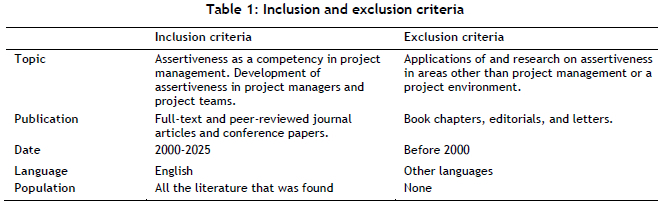
A systematic literature review (SLR) is regarded as a rigorous method for synthesising research, thereby enhancing the replicability and reliability of findings. By following a predefined process or protocol, SLRs help researchers to identify gaps in the literature, assess the quality of studies, and provide a clear overview of the available evidence [9], [10]. This fitted the purpose of the study and was therefore the research method that was used. It was also essential to document the methodology of the review process thoroughly. This involved detailing the databases that were consulted, outlining the search methods used, and clearly stating the inclusion and exclusion criteria for selecting studies. Following this process minimised bias and ensured the credibility of the results [11]. The inclusion and exclusion criteria that were used during the screening process are provided in Error! Reference source not found..
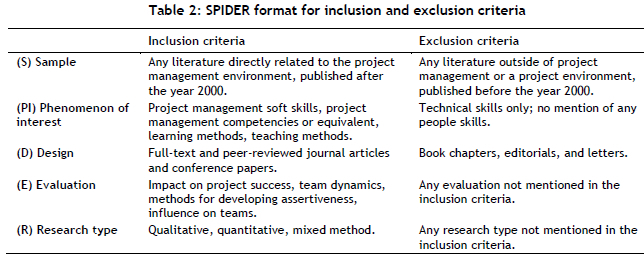
The SPIDER tool, adapted from the PICO (population, intervention, comparison, outcome) framework [12], was used to determine which literature would be included (as seen in Table 2). The tool is structured around five key elements: sample (S), phenomenon of interest (PI), design (D), evaluation (E), and research type (R). "Sample" refers to the specific groups being studied. "Phenomenon of interest" describes the experiences, behaviours, or decisions being explored, rather than the effectiveness of an intervention. "Design" pertains to the methodology used, such as interviews or focus groups. "Evaluation" involves the outcomes or findings, which are often descriptive and interpretive. Finally, "research type" specifies whether the study is qualitative, quantitative, or mixed methods.
Four literature sources (Scopus, Web of Science, ProQuest, and the Stellenbosch library) were used to gather the relevant literature using keyword searches related to the research questions. To investigate assertiveness as a competency in the project management context, the search strategy used broad keywords. This approach ensured a comprehensive review of the literature, free from predefined biases about the nature or type of sources identified. Combining the keywords with Boolean operators resulted in the following phrases that were used to gather the relevant literature from the databases: assertive* AND ("project manage*" OR "project team*" OR project OR projects). Since project management spans multiple disciplines, this review considered studies from all relevant fields.
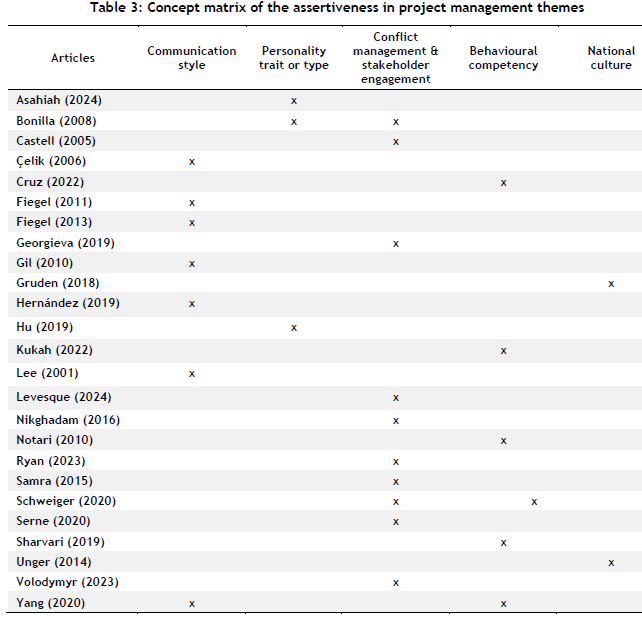
The 25 articles were screened in two phases, first by their titles and abstracts, and then based on the full text. The PRISMA flow diagram [13] was adapted and used to record and document the literature retrieval, screening and selection process (see Figure 1). Atlas.ti was used during the data extraction phase to code relevant themes emerging from the literature, and to determine the gaps in the literature. A concept matrix (see Table 3) was used to organise the themes and to provide a consolidated answer to the research questions.
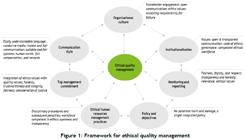
All 25 articles satisfied the inclusion criteria. They were peer-reviewed full texts in English, published between 2000 and 2025, focusing on project management and assertiveness or another closely related soft skill. The literature was sourced from major databases and reputable journals such as Project Management Journal, International Journal of Project Management, and Journal of Applied Psychology. These outlets have strong publisher and professional-body affiliations, including ASCE and IEEE, and the authors are from reputable universities around the world. Their methods varied, such as multi-country surveys using
validated tools and advanced analyses such as SEM, factor analysis, and meta-analysis, as well as mixed-methods designs, qualitative or longitudinal case studies, and intervention or teaching studies. Several studies explicitly noted that their quantitative findings confirmed earlier qualitative research, reinforcing their methodological rigour and cumulative evidence. Common but non-critical limitations of the articles included dependence on one-time self-reports, samples limited to specific regions or sectors, small pilot or educational groups, and some conceptual work lacking complete empirical validation. None of the studies showed a significant, unmitigated risk of bias or lacked methodological transparency. Overall, the evidence base was methodologically varied, credible, and drawn from high-quality scholarly outlets, offering a strong foundation for this review.
3. RESULTS
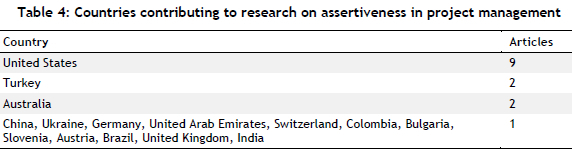
The five main themes that emerged from the SLR were assertiveness as a communication style, assertiveness as a personality trait or type, assertiveness in conflict management and stakeholder engagement, assertiveness as a behavioural competency, and assertiveness in national culture. A concept matrix depicting the themes that were identified from the surveyed literature can be seen in Table 3. Table 4 lists the countries that contributed to the body of literature identified through the SLR, and that are discussed in Section 4.
3.1. Assertiveness as a communication style
Assertive communication, defined by Gil [14] as confidently expressing one's stance, even when facing resistance from individuals in positions of power or influence, was the dominant communication style used by project managers during the £4.2 billion (2006 prices) Terminal 5 (T5) project at Heathrow airport. About two-thirds of managers adopted this style, compared with less frequent use of caring or apologetic approaches [14]. In the Heathrow project, an assertive communication style was used when managers showed their commitment to mitigating project impacts, dismissing claims they viewed as illegitimate or exaggerated, and managing expectations when demands were seen as unreasonable, given the project's scale.
In a first-year engineering course, assertive communication was recognised as a key learning objective [15], with instructors emphasising the importance of conveying information clearly and confidently. The importance of making sure that such communication is aimed at its intended recipients, in the correct format, and at the appropriate time was also emphasised. [16]. On the other hand, Lee [17] warned that assertiveness, when defined as using direct and forceful methods such as issuing demands or applying pressure to force compliance from team members, was the least-used influence tactic owing to its negative impact on team cohesion, open communication, and defensive behaviours in teams.
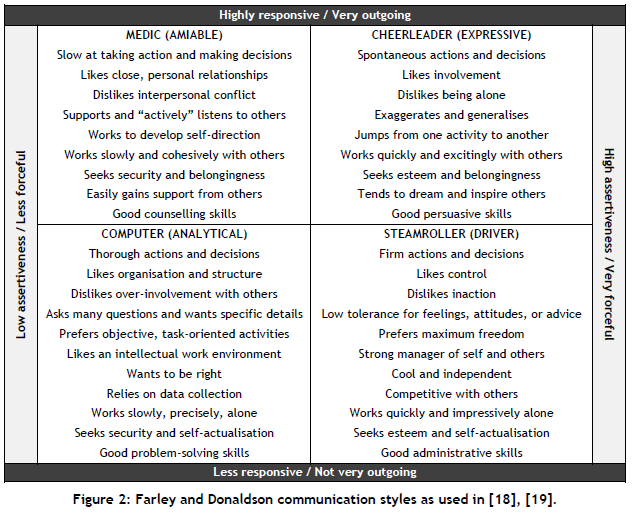
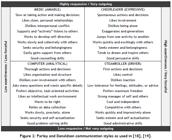
Assertiveness seems to operate on a continuum, as clarified by Farley and Donaldson's communication styles matrix, which was confirmed in [18], [19], and can be seen in Figure 2. Assertiveness or forcefulness is plotted on the Y-axis, and responsiveness or outgoingness is plotted on the X-axis. In this model, high assertiveness is categorised as being either a "cheerleader" (expressive, excitement seeker) or a "steamroller" (driver, results seeker), and low assertiveness as a "medic" (amiable, harmony seeker) or "computer" (analytical, detail seeker). Fiegel [18] notes that a key step towards becoming a better communicator and team contributor in project management environments is recognising that individuals tend to have distinct and preferred communication styles. The prevalent communication style observed among the 27 senior civil engineering student teams was the "computer" type, characterised by low assertiveness and low expressiveness. However, individuals selected as team leaders tended to score higher in both assertiveness and outgoingness than the class average [18]. This suggests a potential link between higher levels of assertiveness and the likelihood of being perceived as a leader.
3.2. Assertiveness as a personality type or trait
Assertiveness is also described in the literature as either a personality type or a personality trait. In type-based models, such as the Myers-Briggs Type Indicator (MBTI) and the Strength Deployment Inventory (SDI), assertiveness is treated categorically, with individuals assigned to defined styles or motivational groups. In contrast, trait-based frameworks such as the Big Five measure assertiveness on a continuum, often as a facet of extraversion [20], [21].
In the MBTI framework, assertiveness appears as the final dimension (assertive vs turbulent), reflecting a person's level of confidence in their abilities and decisions, and the SDI links assertiveness to the "RED" Motivational Value System (MVS), defined as a focus on achieving goals efficiently by strategically managing tasks and resources [20], [21].
Asahiah [21] associates the student teams' strong assertiveness and low turbulence scores with qualities that contribute to proactive problem-solving, confident decision-making, and a collaborative atmosphere that supports effective task execution. The group, categorised as three-quarters assertive, consisted of 40 students. The study also notes that assertive individuals are known for their tendency to encourage open communication and foster win-win outcomes [21]. The SDI model focuses on understanding a person's core motives and value system, drawing from Dr Elias Porter's relative awareness theory, which suggests that behaviour is driven by underlying motivations that can shift in times of conflict [20]. The model identifies several motivational value systems (MVSs): BLUEs prioritise caring for others and fostering well-being; REDs are driven by achieving results through leadership and task execution; GREENs value independence, logic, and structured thinking; and HUBs (equal in all MVSs) seek flexibility and group harmony. In addition, blended styles reflect combinations of these core drives. RED-BLUEs integrate compassion with goal-oriented leadership, RED-GREENs emphasise fairness, order, and assertive decision-making, while BLUE-GREENs focus on thoughtful support, personal growth, and a strong sense of justice. This is discussed further in Section 3.3.
Frameworks that describe personality traits include the Big Five or the Neuroticism-Extraversion-Openness Personality Inventory (NEO-PI-3), which is an expansion of the Big Five [22]. The NEO-PI-3 is mainly used to test assertiveness as a facet of extraversion, which is one of the five personality traits of the NEO-PI-3 or of the Big Five [22]. Assertiveness in this context is defined as dominant and forceful behaviour. Research has identified a curvilinear, inverted U-shaped relationship between team members' assertiveness and the likelihood of peers seeking advice from them. This suggests that, while moderate assertiveness, characterised by confidence and initiative, encourages advice-seeking in teams, excessive assertiveness can come across as aggressive or intimidating, thereby discouraging such interactions [22]. These findings emphasise the importance of maintaining a balanced level of assertiveness to promote positive team dynamics, aligning with the earlier view that it functions more as a continuum than as a fixed trait.
3.3. Assertiveness in conflict management and stakeholder engagement
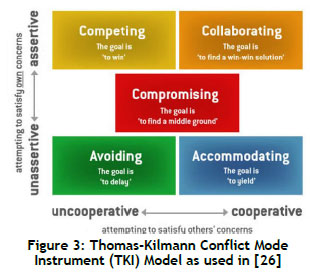
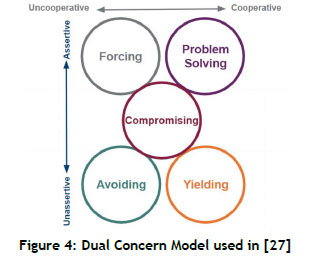
Assertiveness also features prominently in conflict management models such as the Thomas-Kilmann Conflict Mode Instrument (TKI) and the Dual Concern Model [23], [24], [25], [26], [27]. Both the TKI and the Dual Concern Model (as seen in Figure 3 and Figure 4 respectively) measure assertiveness along the Y-axis and cooperativeness along the X-axis, categorising conflict responses into five categories: avoiding (low concern for both self and others), accommodating (prioritising others over self), compromising (balancing both parties' interests), competing/forcing (prioritising self over others), and collaborating/problem-solving (high concern for both self and others), the last being considered the most constructive response [24], [25], [26], [27].
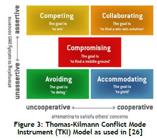
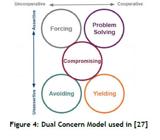
The TKI defines assertiveness as the degree to which an individual pursues their own needs and goals in a conflict situation, while cooperativeness reflects the extent to which the person considers others' interests [23], [24], [25], [27], [28]. In one study involving second- and third-year university students, project-based training led to only a modest 5.7% increase in collaborating behaviour, while avoiding behaviour increased by 12.7% [23]. Another study found that a team's knowledge-sharing climate (which included perceptions of knowledge-sharing culture, communication openness, and both enablers of and barriers to knowledge sharing) was positively associated with moderate to high levels of assertive and cooperative behaviour [24], potentially explaining the limited behavioural shift observed in the first study.
Further research applying the Dual Concern Model in an educational setting emphasised that conflict management is context-dependent and requires adaptive strategies [26]. While many students expressed a desire to become more assertive and cooperative, the study cautioned that assertive strategies such as forcing or problem-solving, if applied insensitively, could harm team dynamics or even contribute to workplace bullying. This highlights the importance of project managers regulating their and the project team's assertiveness and fostering responsible conflict engagement. This underscores project managers' critical role in regulating their assertive behaviour and fostering responsible conflict engagement in their teams. In addition, students often avoided confronting uncooperative peers directly, preferring instructor intervention owing to fear of social discomfort or negative judgment [29]. This has led to a strong educational focus on teaching assertive conflict resolution by helping students to find a balance between passivity and aggression. Using dysfunctional peer project scenarios, students are encouraged to express concerns clearly and respectfully, describe the situation, and articulate desired changes without assigning blame. Personality-based models such as the SDI (as mentioned in Section 3.2) offer further insight into these dynamics. The SDI reveals that individuals' conflict responses are shaped by their underlying motivational value systems, which shift under stress. For instance, engineering students who identified as balanced HUBs under normal conditions became more assertive (RED) or analytical (GREEN) during conflict [20]. This suggests that assertiveness in conflict situations is not fixed but is influenced by deeper motivational drivers, reinforcing the need for individualised and context-aware conflict management strategies.
In project teams, similar dynamics emerge. Members tend to be overly cooperative at the start of the project and overly assertive towards the end [28]. For example, an IT firm accepted a contract with fewer features to preserve client relations, which led to unspoken frustrations and missed opportunities [28].
As the project evolved, particularly with the addition of an administrative subgroup, assertiveness surfaced, but in a reactive and fragmented way, often expressed through blame, rigid demands, or avoidance. Subgroups asserted their interests independently, without shared goals or mutual understanding, which intensified the conflict. Each group viewed its own assertiveness as justified while perceiving others as obstructive or irrational, reinforcing negative stereotypes. Uncontrolled conflict can significantly hinder project success, while effective conflict resolution, particularly through assertive collaboration, can enhance trust, reduce the negative impact of task conflict, and improve team performance [27].
In stakeholder engagement, assertiveness can also describe customer behaviour. Nikghadam [30] categorises customers into passive, standard, and assertive types, with assertive customers being direct, demanding, and often associated with high-pressure, urgent requests. These customers required a more adaptive and flexible negotiation approach, one that could accommodate tight deadlines, multi-sourcing, and value-based pricing. The study found that tailoring engagement strategies to customer assertiveness improved outcomes for both parties, such as stakeholder demands being met, along with a higher-paying contract. Rather than viewing assertiveness as a barrier, it was reframed as a strategic opportunity that encouraged innovation, customisation, and stronger stakeholder alignment.
3.4. Assertiveness as a behavioural competency
Assertiveness is a key behavioural competency in project management, positioned within the "PEOPLE" domain of the IPMA ICB4 framework. It is not a fixed personality trait, but a developable skill that enables project managers to communicate clearly, set boundaries, and manage conflict effectively [31]. The study confirms that "PEOPLE" competence is the primary driver in all dimensions of project success, with a powerful indirect effect on customer impact. "PEOPLE" competence enhances the "PRACTICE" competence, representing technical skills, by a substantial 41.2%, which in turn significantly improves customer outcomes such as satisfaction, problem-solving, and fulfilment of needs. This pathway illustrates how assertiveness and other interpersonal abilities empower project managers to execute technical tasks more effectively, ultimately shaping customer perceptions and experiences. Moreover, the "PEOPLE" competence also influences the "PERSPECTIVE" competence by 39.3%, enabling managers to engage with broader organisational dynamics and to prepare for future opportunities.
Notari [32] identifies assertiveness as one of five core social skills influencing team collaboration, and reveals that student teams (of which there were 20) in which all members exhibited high assertiveness demonstrated significantly stronger mutual support. This mutual support, in turn, was strongly linked to improved collaboration efficiency. Conversely, teams with low or uneven levels of assertiveness tended to struggle with mutual support, which undermined overall team performance. These findings suggest that assertiveness, when consistently present in a student team, plays a critical role in fostering supportive, high-functioning project environments. This was confirmed in professional project teams, where assertiveness emerged as a critical behavioural competency that had to be intentionally developed and applied [28]. Rather than viewing assertiveness as a fixed trait, the study highlights its dynamic role in shaping team interactions.
Kukah [33] positions assertiveness as a key behavioural competency within the broader framework of emotional intelligence (EI), specifically under the domain of self-awareness. In the context of the construction industry, assertiveness is identified as the most critical EI competency, closely linked to leadership, conflict resolution, and trust-building among stakeholders [33]. Its link to self-awareness shows that assertiveness comes from understanding and managing one's emotions, making it a skill that can be developed to improve decision-making, teamwork, and project outcomes. A Linkedln survey of United States hiring managers found that soft skills, such as communication, teamwork, emotional intelligence, and assertiveness, not only are difficult to find but also limit productivity when they are absent [34].
3.5. Assertiveness in national culture
Assertiveness was also found to play a role from a national culture point of view. Unger [35], in a large-scale study of 17,370 senior-level project managers in Austria, Canada, Finland, and South Korea, found that assertiveness, defined as the degree to which individuals in organisations or societies are assertive, confrontational, and aggressive in social relationships, had differing impacts depending on national culture. In high-assertiveness cultures such as Austria and other Germanic European countries, assertive behaviours such as making tough project decisions, rewarding standout performers, and conducting blunt performance reviews are not only accepted but expected. In these countries, assertive behaviour is seen as a strength, driving performance and innovation. Conversely, in low-assertiveness cultures such as Finland and South Korea, the same assertive behaviours are less effective and are sometimes counterproductive. Here, assertiveness is perceived as disruptive to group harmony or as favouritism, undermining the intended benefits of innovation-driven practices. These cultures tend to emphasise harmony, subtlety, and cooperation over direct confrontation. Supporting this cultural perspective, Gruden [36] found that, among Slovenian project managers, assertiveness was identified as the most critical behavioural competency for reducing project delays, ranking even higher than leadership, which was placed fifth in importance.
4. DISCUSSION
Over the past two decades, the literature on assertiveness in project management has undergone a significant transformation, from being viewed as a potentially disruptive influence to being recognised as a critical yet context-sensitive competency. Early studies, such as those from the early 2000s, characterised assertiveness as one of the least-used influence tactics among project managers, often associated with negative outcomes such as reduced team cohesion and defensive behaviours [18]. By 2018, this perception had shifted to identifying assertiveness as a key competency for ensuring that project delays are kept to a minimum. Studies in the 2020s have highlighted even more its positive influence on trust, motivation, and team commitment when used constructively [22], [23], [34].
The shift in perspectives also involves viewing assertiveness as neither inherently positive nor negative. Assertiveness is now conceptualised as a continuum and is seen through the lens of the "too-much-of-a-good-thing" effect, with studies identifying an inverted U-shaped relationship between assertiveness and outcomes such as advice-seeking and leadership emergence [23]. This underscores the importance of balance, particularly in navigating the tension between assertiveness and cooperativeness in team settings [27]. Assertiveness is consistently positioned as a pivotal enabler of project team dynamics and decision-making clarity. However, its impact is highly dependent on its context and the degree to which it is used.
Low assertiveness may result in ambiguity and indecisiveness, while high assertiveness may alienate team members or stakeholders.
More recent studies use quantitative methods to validate the impact of assertiveness on project outcomes, often within broader frameworks of behavioural competencies and personality traits [31], [33]. This shift has enhanced the precision and applicability of findings, particularly in understanding how assertiveness interacts with other variables. Moreover, pro-social motivation has been shown to amplify the positive effects of assertiveness, especially in leadership emergence and peer evaluations [23].
National culture also plays a critical role: in high-assertiveness cultures, directness and confrontation may be valued, whereas in low-assertiveness cultures, such behaviours may be perceived as disruptive or inappropriate [35]. There is also no literature on the South African context (as seen in Table 4); and since culture plays the role it was found to have in Slovenia [36], Austria, Canada, Finland, and South Korea [35], it highlights a gap in the literature investigating assertiveness in the South African context.
The themes that emerged from the literature, as put forward in the concept matrix (Table 3) and discussed in Section 4, play a key role in addressing the research questions.
4.1.
Research Question 1: What is the role of assertiveness in project management environments?Assertiveness plays an important role in shaping project communication, conflict management, and interpersonal dynamics. It serves as a communication style that enables project managers and team members to express ideas, provide feedback, and manage expectations clearly and respectfully [14], [29].
As a personality trait, assertiveness is linked to leadership emergence and team influence, particularly when balanced with pro-social motivation and emotional intelligence [21], [22], [33]. In conflict management, assertiveness enables individuals to pursue their own goals while considering others' interests, supporting constructive resolution strategies such as collaboration and compromise when appropriately balanced with cooperativeness [23], [24], [25], [27]. However, its effectiveness depends on the context in which it is used and the way in which it is delivered. Assertive behaviours such as forcing or problem-solving (high assertive approach) can be counterproductive if applied insensitively, potentially harming team dynamics or escalating tension [26], [29].
In stakeholder engagement, assertiveness also plays a strategic role, particularly when interacting with demanding or high-pressure clients, when adaptive and flexible negotiation approaches could transform assertiveness into a driver of innovation and alignment [30]. As a behavioural competency, it enhances interpersonal effectiveness and contributes to project success by strengthening collaboration, decisionmaking, and trust in teams [31], [32], [34]. Finally, from a national culture perspective, it is valued in some cultures as a driver of performance, yet requires moderation in others to preserve harmony and cooperation [35], [36].
4.2.
Research Question 2: How is assertiveness as a competency experienced and perceived to influence project success from the perspectives of project managers and project team members?As a competency, assertiveness is widely perceived to influence project success through its impact on communication, leadership, conflict management, and stakeholder engagement. Project success, as defined in Section Error! Reference source not found., refers to project efficiency, which still values timely and budget-conscious delivery; impact on the customer, which evaluates how well the project meets customer needs, solves problems, and ensures satisfaction; business success, which considers the project's contribution to organisational goals such as profitability and market share; and preparation for the future, which assesses the project's role in enabling innovation, entering new markets, or developing new technologies [4], [5].
Project managers often experience assertiveness as a practical skill that enables them to communicate expectations clearly, maintain authority, and navigate complex stakeholder demands with confidence [15], [30]. When used effectively, it can help to maintain project momentum; however, assertiveness that lacks emotional sensitivity or that is applied too rigidly can be perceived as domineering, potentially undermining trust and collaboration in the team [18], [23]. Cultural context also plays a significant role, and project managers need to be aware of this. In some national settings, assertiveness is seen as a strength that drives performance and innovation, while in others, it must be moderated to preserve harmony and group cohesion [35]. When engaging with assertive stakeholders, project managers often need to adjust their communication and negotiation approach, turning what might initially appear to be a challenge into an opportunity for collaboration and added value, such as securing a higher-paying contract, ultimately resulting in a win-win outcome for both parties [30].
Team members, in contrast, tend to experience assertiveness in more interpersonal terms. When expressed with clarity and respect, it can foster a sense of direction and safety. Yet, if it comes across as inflexible or dismissive, it may lead to disengagement or conflict, particularly in high-pressure phases of a project [23], [30]. In conflict situations, assertiveness can facilitate constructive dialogue and resolution, especially when balanced with cooperativeness, as outlined in the Thomas-Kilmann and Dual Concern models [24], [25], [26], [28]. But if team members use a highly assertive style without regard for context or tone, they may escalate tensions rather than resolve them [27], [30]. In the early stages of a project, teams often prioritise cooperation over assertiveness; however, when assertiveness is not well balanced with cooperation from the outset, without shared goals or mutual understanding, it leads to misunderstandings and unresolved tensions that surface later [28]. When teams lack a shared understanding of assertive communication, or when assertiveness is limited to only a few individuals, teams tend to experience lower levels of mutual support and overall project performance [32]. This suggests that assertiveness, when consistently demonstrated throughout the team, plays a vital role in fostering collaboration, maintaining alignment, and contributing to project success.
5. CONCLUSION
In summary, the literature on assertiveness in project management has evolved from viewing it as a potentially harmful trait to recognising it as a vital, yet complex, competency. This shift highlights the importance of balance, the context in which assertiveness is applied, how it is expressed, and the influence of factors of national culture. Assertiveness is no longer seen as a one-dimensional behaviour but as a dynamic skill that, when applied thoughtfully, could significantly enhance project success.
The findings demonstrate that assertiveness plays a critical role in project management environments by influencing communication styles, conflict management approaches, and interpersonal dynamics. It enables project managers and team members to express expectations clearly, make timely decisions, and manage stakeholder demands effectively. However, its impact is highly context dependent. Overuse or underuse could hinder team dynamics and stakeholder relationships. National culture further moderates its effectiveness, shaping how assertive behaviours are perceived and received.
From the perspective of both project managers and project team members, assertiveness is experienced as a double-edged tool. When balanced with pro-social motivation, it strengthens leadership credibility, enhances team alignment, and supports constructive conflict management. But when assertiveness lacks sensitivity or is inconsistently used throughout the team, it can create disengagement, tension, and reduced project success.
Future research should explore assertiveness in the South African project management context, focusing on both student and professional project teams that operate in various industries. South Africa's unique multicultural environment and diverse workplace dynamics provide a rich setting to investigate how assertiveness is expressed, perceived, and adapted in project environments. Such research could uncover how cultural values, communication norms, and socio-economic factors shape assertiveness behaviours and their outcomes in project settings. The findings of such studies could have implications for project management practice and education, highlighting the importance of assertiveness training and its strategic application, contributing to project success.
REFERENCES
- [1] E. Postolatii, "Assertiveness: Theoretical approaches and benefits of assertive behavior," Journal of Innovation in Psychology, Education and Didactics, vol. 21, no. 1, pp. 83-96, 2017.
-
[2] H. Kennerley, "Being assertive," Oxford Cognitive Therapy Centre, Aug. 2016. [Online]. Available: https://www.octc.co.uk/wp-content/uploads/2016/10/Assertiveness-OCTC-practical-guide.pdf
» https://www.octc.co.uk/wp-content/uploads/2016/10/Assertiveness-OCTC-practical-guide.pdf -
[3] IPMA, Individual competence baseline for project, programme & portfolio management, version 4.0. IPMA Publications, 2015. [Online]. Available: https://products.ipma.world/wp-content/uploads/2016/03/IPMA_ICB_4_0_WEB.pdf.
» https://products.ipma.world/wp-content/uploads/2016/03/IPMA_ICB_4_0_WEB.pdf -
[4] A. Shenhar and D. Dvir, "Project management research: The challenge and opportunity," IEEE Engineering Management Review, vol. 36, no. 2, pp. 112-121, 2008. doi: 10.1109/EMR.2008.4534315
» https://doi.org/10.1109/EMR.2008.4534315 -
[5] A. J. Shenhar, D. Dvir, O. Levy, and A. C. Maltz, "Project success: A multidimensional strategic concept," Long Range Planning, vol. 34, no. 6, pp. 699-725, Dec. 2001. doi: 10.1016/S0024-6301(01)00097-8
» https://doi.org/10.1016/S0024-6301(01)00097-8 - [6] E. O. Nwulu, T. Y. Elete, O. V. Erhueh, O. A. Akano, and K. O. Omomo, "Leadership in multidisciplinary engineering projects: A review of effective management practices and outcomes," International Journal of Scientific Research Updates, vol. 4, no. 2, pp. 267-283, 2022.
- [7] S. Pretorius, H. Steyn, and T. J. Bond-Barnard, "Leadership styles in projects: Current trends and future opportunities," South African Journal of Industrial Engineering, vol. 29, no. 3, pp. 161-172, 2018.
- [8] M. A. Ahmed, S. M. A. Naqi, and S. M. Cheema, "Leadership styles and their influence on project team performance," Sir Syed Journal of Education & Social Research (SSJESR), vol. 6, no. 2, pp. 153-159, 2023
-
[9] E. Christou, A. Parmaxi, and P. Zaphiris, "A systematic exploration of scoping and mapping literature reviews," Universal Access in the Information Society, vol. 24, no. 1, pp. 941-951, Mar. 2025. doi: 10.1007/s10209-024-01120-3
» https://doi.org/10.1007/s10209-024-01120-3 -
[10] P. C. Sauer and S. Seuring, "How to conduct systematic literature reviews in management research: A guide in 6 steps and 14 decisions," Review of Managerial Science, vol. 17, no. 5, pp. 1899-1933, Jul. 2023. doi: 10.1007/s11846-023-00668-3
» https://doi.org/10.1007/s11846-023-00668-3 -
[11] R. Prill, J. Karlsson, O. R. Ayeni, and R. Becker, "Author guidelines for conducting systematic reviews and meta-analyses," Knee Surgery, Sports Traumatology, Arthroscopy, vol. 29, no. 9, pp. 2739-2744, Sep. 2021. doi: 10.1007/s00167-021-06631-7
» https://doi.org/10.1007/s00167-021-06631-7 -
[12] A. Cooke, D. Smith, and A. Booth, "Beyond PICO: The SPIDER tool for qualitative evidence synthesis," Qualitative Health Research, vol. 22, no. 10, pp. 1435-1443, 2012. doi: 10.1177/1049732312452938
» https://doi.org/10.1177/1049732312452938 -
[13] PRISMA, "PRISMA 2020 flow diagram for new systematic reviews which included searches of databases and registers only," PRISMA flow diagram, 2020. [Online]. Available: http://www.prisma-statement.org/PRISMA2020
» http://www.prisma-statement.org/PRISMA2020 -
[14] N. A. Gil, "Language as a resource in project management: A case study and a conceptual framework," IEEE Transactions on Engineering Management, vol. 57, no. 3, pp. 450-462, 2010. doi: 10.1109/TEM.2009.2028327
» https://doi.org/10.1109/TEM.2009.2028327 -
[15] B. K. Çelik, B. U. Özdemir, and J. M. Verhoeven, "An orientation course for freshmen in engineering," presented at the SEFI 2006 - 34th Annual Conference: Engineering Education and Active Students, 2006. [Online]. Available: https://www.scopus.com/pages/publications/84938851522
» https://www.scopus.com/pages/publications/84938851522 -
[16] F. Y. Hernández, R. P. Ramírez, and R. I. Laguado, "Communications management in the success of projects. Case study: Provincial university," Journal of Physics. Conference Series, vol. 1388, no. 1, 012048, 2019. doi: 10.1088/1742-6596/1388/1/012048
» https://doi.org/10.1088/1742-6596/1388/1/012048 -
[17] D. R. Lee and P. J. Sweeney, "An assessment of influence tactics used by project managers," Engineering Management Journal, vol. 13, no. 2, pp. 16-24, 2001. doi: 10.1080/10429247.2001.11415112
» https://doi.org/10.1080/10429247.2001.11415112 - [18] G. Fiegel, "Enhancing design team interaction by understanding communication styles," in 2013 ASEE Annual Conference & Exposition Proceedings, Atlanta, Georgia: ASEE Conferences, Jun. 2013, pp. 23.529.1-23.529.20. doi: 10.18260/1-2--19543
- [19] G. L. Fiegel and J. S. Denatale, "Civil engineering capstone design: Team formation, preparation, and performance," International Journal of Engineering Education, vol. 27, no. 6, pp. 1295-1307, 2011.
- [20] C. Bonilla, S. M. Lord, and L. A. Perry, "Promoting understanding in the classroom: Comparison of the Strength Deployment Inventory, Learning Styles Inventory, and Myers-Briggs," in 2008 38th Annual Frontiers in Education Conference, IEEE, 2008, pp. T3F-5-T3F-10. doi: 10.1109/FIE.2008.4720443
-
[21] A. O. Asahiah, O. A. Owolabi, P. O. Abiodun, O. Aladeokin, H. Abedoh, and O. V. Emiola-Owolabi, "Harmonizing team dynamics and personality strengths in effectively managing a large educational STEM program," presented at 2024 ASEE Annual Conference and Exposition, Portland, Oregon, 2024. [Online]. Available: https://peer.asee.org/harmonizing-team-dynamics-and-personality-strengths-in-effectively-managing-a-large-educational-stem-program
» https://peer.asee.org/harmonizing-team-dynamics-and-personality-strengths-in-effectively-managing-a-large-educational-stem-program -
[22] J. Hu, Z. Zhang, K. Jiang, and W. Chen, "Getting ahead, getting along, and getting prosocial: Examining extraversion facets, peer reactions, and leadership emergence," Journal of Applied Psychology, vol. 104, no. 11, pp. 1369-1386, 2019. doi: 10.1037/apl0000413
» https://doi.org/10.1037/apl0000413 - [23] S. Georgieva, D. Mitova, S. Plachkov, and L. Zoneva, "Parameters of the conflicting competency of the students - Future teachers in technologies and entrepreneurship," in
- [24] CBU International Conference Proceedings, vol. 7, 2019. doi: 10.12955/cbup.v7.1395
- [25] R. A. Samra, K. Shaalan, M. Hericko, I.-H. Ting, and L. Uden, "The relationship between knowledge sharing climate and conflict resolution styles," in Lecture Notes in Business Information Processing, vol. 224. Cham: Springer International Publishing, 2015, pp. 176-189. doi: 10.1007/978-3-319-21009-4_14
-
[26] J. Serne and D. W. Martin, "A gender-based analysis of conflict management styles for construction management students," presented at the ASEE Annual Conference and Exposition, Conference Proceedings, 2020. [Online]. Available: https://peer.asee.org/a-gender-based-analysis-of-conflict-management-styles-for-construction-management-students
» https://peer.asee.org/a-gender-based-analysis-of-conflict-management-styles-for-construction-management-students -
[27] O. Ryan, M. J. Fisher, L. Schibelius, M. V. Huerta, and S. Sajadi, "Using a scenario-based learning approach with instructional technology to teach conflict management to engineering students," presented at 2023 ASEE Annual Conference and Exposition, Baltimore, Maryland, 2023. [Online]. Available: https://peer.asee.org/using-a-scenario-based-learning-approach-with-instructional-technology-to-teach-conflict-management-to-engineering-students
» https://peer.asee.org/using-a-scenario-based-learning-approach-with-instructional-technology-to-teach-conflict-management-to-engineering-students -
[28] V. O. Zanora, S. V. Momot, D. I. Bedrii, and L. S. Fonar, "Conflict management in enterprise development project teams," Akademichnyi ohliad, vol. 1, no. 58, pp. 187-204, 2023. doi: 10.32342/2074-5354-2023-1-58-14
» https://doi.org/10.32342/2074-5354-2023-1-58-14 -
[29] S. Schweiger, S. W. Konlechner, and W. H. Güttel, "How cooperation reinforces conflict over time," Project Management Journal, vol. 51, no. 1, pp. 62-76, 2020. doi: 10.1177/8756972819891281
» https://doi.org/10.1177/8756972819891281 -
[30] L. L. Levesque, "Building assertiveness and listening skills using dysfunctional peer project scenarios," Organization Management Journal, vol. 21, no. 1, pp. 12-18, 2024. doi: 10.1108/OMJ-02-2023-1726
» https://doi.org/10.1108/OMJ-02-2023-1726 -
[31] S. Nikghadam, A. M. Ozbayoglu, H. O. Unver, and S. E. Kilic, "Design of a Customer's Type Based Algorithm for Partner Selection Problem of Virtual Enterprise," Procedia Computer Science, vol. 95, pp. 467-474, 2016, doi: 10.1016/j.procs.2016.09.323.
» https://doi.org/10.1016/j.procs.2016.09.323 -
[32] C. E. Cruz, G. Scur, A. P. Vilas Boas Viveiros Lopes, and M. M. Carvalho, "The influence of the eye of competence on project success: Exploring the indirect effect of people on both perspective and practice," Academia (Consejo Latinoamericano de Escuelas de Administración), vol. 35, no. 4, pp. 516-536, 2022. doi: 10.1108/ARLA-11-2021-0218
» https://doi.org/10.1108/ARLA-11-2021-0218 -
[33] M. P. Notari and A. Baumgartner, "Do social skills play a role in collaborative project-based learning? Impact of the distribution of perceived social skills within learning groups in a computer supported collaborative learning-setting: An empirical pilot study," Learning in the Disciplines: ICLS 2010 Conference Proceedings - 9th International Conference of the Learning Sciences, vol. 2, 2010, pp. 288-289. [Online]. Available: https://dl.acm.org/doi7abs/10.5555/1854509.1854661
» https://dl.acm.org/doi7abs/10.5555/1854509.1854661 -
[34] A. S. Kukah, I. Akomea-Frimpong, X. Jin, and R. Osei-Kyei, "Emotional intelligence (EI) research in the construction industry: A review and future directions," Engineering, Construction, and Architectural Management, vol. 29, no. 10, pp. 4267-4286, 2022. doi: 10.1108/ECAM-05-2021-0414
» https://doi.org/10.1108/ECAM-05-2021-0414 -
[35] K. Sharvari and D. G. Kulkarni, "Gap analysis of soft skills in the curriculum of higher education (A case study of management institutes in Karnataka)," Advances in Management, vol. 12, no. 1, pp. 64-67, 2019. [Online]. Available: https://www.worldresearchersassociations.com/mngmntspecialissue/11.pdf.
» https://www.worldresearchersassociations.com/mngmntspecialissue/11.pdf -
[36] B. N. Unger, J. Rank, and H. G. Gemünden, "Corporate innovation culture and dimensions of project portfolio success: The moderating role of national culture," Project Management Journal, vol. 45, no. 6, pp. 38-57, 2014. doi: 10.1002/pmj.21458
» https://doi.org/10.1002/pmj.21458 -
[37] N. Gruden and A. Stare, "The influence of behavioral competencies on project performance," Project Management Journal, vol. 49, no. 3, pp. 98-109, 2018. doi: 10.1177/8756972818770841
» https://doi.org/10.1177/8756972818770841
ORCID® identifiers
I. H. Mc Donald
https://orcid.org/0009-0004-9242-2899
T. J. Bond-Barnard
https://orcid.org/0000-0003-0853-4480