Improving Organisational Learning in Project-Based Organisations Through the Translation of Project Lessons Learnt into Project Risks
Abstract
This study examines the translation of lessons learnt into risks in project-based organisations to improve organisational learning through the development of a knowledge transfer model. A qualitative analysis of semi-structured interviews, a focus group interview, and an organisational repository review in a single case study organisation revealed that framing lessons as risks enhances organisational learning by strengthening critical practices such as systematic problem-solving, learning from past experiences, and efficient knowledge transfer. The proposed model configures the application of risk-phrased lessons learnt to promote the transfer of knowledge and to foster organisational learning in project-based organisations.
Abstract
Hierdie studie ondersoek die vertaling van geleerde lesse in risikos binne projekgebaseerde organisasies, om organisatoriese leer te verbeter deur die ontwikkeling van 'n kennisoordragmodel. Die kwalitatiewe analise van semi-gestruktureerde onderhoude, 'n fokusgroeponderhoud en organisatoriese dokumentasie in 'n enkele gevallestudie-organisasie het aan die lig gebring dat die uiteensetting van lesse as risiko's organisatoriese leer verbeter deur sleutelpraktyke soos sistematiese probleemoplossing, leer uit vorige ervarings en doeltreffende kennisoordrag te versterk. Die voorgestelde model konfigureer die toepassing van risiko-gefraseerde lesse wat geleer is om die oordrag van kennis te bevorder en om organisatoriese leer in projekgebaseerde organisasies te bevorder.
1. INTRODUCTION
The temporary nature of projects creates challenges for project management teams in achieving performance commitments in a volatile environment. In project-based organisations (PBOs), multiple projects of varying nature and complexity are simultaneously executed to deliver products or services to customers [1-3]. While each project is considered a unique endeavour [3, 4], there is a considerable commonality to projects executed in a specific PBO and/or industry. The nature of multiple projects that are carried out by a dispersion of resources throughout the organisation [2] has resulted in PBOs repeating the same mistakes and being unable to seize similar opportunities owing to a lack of knowledge transfer [3, 5, 6].
As shown by Landaeta [5], project performance is positively affected by the transfer of knowledge between projects. It is, therefore, critical for a PBO to ensure that the lessons learnt in one project are shared with future projects, as it would enable improved project performance by avoiding a repeat of similar risks and by promoting the seizing of opportunities [7, 8]. The effective transfer of lessons learnt between projects has been observed to have a low success rate, largely because of a range of inhibiting factors that hinder knowledge retention and application [2, 4, 9, 10]. This inability for proper knowledge transfer of historical risks, which considers both threats and opportunities to project success, through a supportive lessons-learnt process, has an impact on the organisation's ability to learn, thereby affecting the project and organisational performance [11]. This increasingly complex environment emphasises the need for PBOs to become learning organisations so that they can manage this more effectively [12].
This study aims to develop a knowledge transfer model that translates and integrates project lessons learnt into project risks, enabling improved organisational learning in PBOs. Given this research objective, the research questions and sub-questions are these:
1. How does the translation of lessons learnt into project risks statements improve the dissemination of lessons learnt in PBOs?
2. How do project risks, based on project lessons learnt, improve effective organisational learning?
a. How does integrating project lessons learnt into risk statements in a learning PBO affect its systematic problem-solving capabilities?
b. How does the integration of project lessons learnt into risk statements in a learning PBO influence the organisation's ability to learn from past experiences?
c. How does integrating risk-phrased lessons learnt in the systems and processes of a learning PBO contribute to its ability to learn from others (external to the PBO)?
d. How does the implementation of a proficient mechanism for transforming project lessons learnt into risk statements in a learning PBO facilitate the transfer of knowledge between projects?
Section 2 of this article examines the body of literature on lessons learnt, knowledge-based risk management, and organisational learning in project-based organisations. Section 3 introduces a conceptual model informed by the relevant literature, by established theories, and by existing models. Section 4 outlines the research approach adopted for the study, while Section 5 details the data collection and analysis processes, culminating in the development of an updated risk-phrased lessons-learnt model. Finally, Section 6 presents the conclusions and recommendations arising from the study.
The importance of project knowledge management is highlighted by the positive correlation that can be drawn between project performance and project knowledge management [11]. However, the nature of projects, especially factors such as the temporary constitution of teams and the urgency of achieving project outcomes, has an impact on the success of knowledge transfer through inter-project communication [2, 13]. The key element that drives the ability of projects to learn from one another is this inter-project communication, or socialisation, which, if well executed, improves the quality and effectiveness of the knowledge transfer between the projects and the overall organisational learning [13] by building the organisational memory.
The execution of project lessons learnt at project close-out, which sometimes form part of a post-project review [14-17], is unsuccessful at capturing knowledge from multiple project phases [18]. It has been proposed that capturing lessons learnt at the conclusion of each phase or stage in a project could improve the knowledge transfer [19]. However, on a large project, a phase can stretch over several years, and so it may face the same difficulties [18]. It is therefore recommended that a more frequent process be applied continually throughout the project's life.
Abd Elhameed [20], McClory, Read, and Labib [21] and Jugdev [22] note that, although project management bodies of knowledge recognise the need for lessons learnt, a standalone project process for learning management is also needed to enable success. This process should preferably not increase the burden on the project manager and project team [16], which would discourage participation. So, it is recommended that an existing project management process be used to incorporate learning management. One such project management process that is well established in PBOs, is well documented, and is executed frequently is the project risk management process [17, 23, 24].
The knowledge transfer process in PBOs is subject to various difficulties owing to the limited time duration for which resources are assigned to the specific team [2]. Van Waveren, Oerlemans and Pretorius [2] found that limited studies were available that enquired about the process of knowledge transfer between projects in PBOs. They therefore proposed a conceptual model for the relationship between knowledge types, knowledge transfer mechanisms, and transfer success, and highlighted the need for further study of these concepts. In the project environment, lessons learnt are one mechanism that enables inter-project knowledge transfer between a source and a recipient project [6]. Lessons-learnt processes, although established in organisations and project management bodies of knowledge, are found not to be enacted well in PBOs [21]. In addition, McClory et al. [21] reported that separating learning from other existing project management processes resulted in insufficient time and dedication to enabling learning between projects, while Schindler and Eppler [25] recognised that, although various literature sources acknowledge the importance of both knowledge transfer processes and documented repositories, limited guidance is provided on implementable solutions. Endorsing this view, Jugdev [22] found that the topic of lessons learnt was underrepresented in academic research despite its importance to PBOs and project management practitioners.
In conclusion, lessons learnt are a core activity that should be systematically and continually integrated into project management processes to improve organisational learning. A failure to allocate the required time and resources to enable this process of knowledge-sharing may impact a project and an organisation's performance. The use of knowledge management principles in the capture and reuse of knowledge should be integrated into existing activities, should be done regularly throughout a project's life, should use a common language, and should be facilitated through an established system. Risk management is a core process in PBOs, and is well-engrained in project management processes. Therefore, the risk management process provides an existing project management process that can facilitate the improved knowledge-sharing of past project risks and opportunities, thus having an impact on the project's performance. This process of using historical knowledge to enhance current projects leads to organisational learning and has a positive impact on the organisation's performance.
Developing a process that can assist project managers and their teams to contribute to documenting and disseminating valuable explicit and tacit knowledge throughout the organisation is, therefore, invaluable to enabling effective organisational learning, and is identified as the research gap to be addressed by this study.
3. PROPOSED CONCEPTUAL MODEL
The learning organisation, a term coined by Peter Senge in his book The fifth discipline [26], is one with a continuous and expanding learning and knowledge-sharing process. Although it was a pioneering idea, Garvin [27] noted that the concepts proposed in Senge's book were too idealistic to provide practical and actionable guidance to organisational leaders [28]. Garvin [27] instead defined a learning organisation as "an organisation skilled at creating, acquiring, and transferring knowledge, and at modifying its behaviour to reflect new knowledge and insights". Organisational learning, therefore, requires the acquisition of experience and data that the organisation can then use to enable a change that corrects a historical error [29].
Basten and Haamann [28] in their literature review of organisational learning (OL), identified three core OL theories: single- and double-loop learning [30], organisational knowledge creation theory [31], and the five building blocks of learning organisations [27]. These three seminal theories [12, 28, 32] form the foundation of the theoretical framework of this research study. Given these three theories, the practical applicability of Garvin's [27] five building blocks leans more towards supporting an evaluation of operational effectiveness and a case study research approach. As one of the quintessential frameworks of organisational learning, Garvin's five building blocks approach is, therefore, suitable to adopt as practices that, if visible in a PBO's operations, would indicate effective organisational learning.
In a review of Garvin's [27] five building blocks of organisational learning, it was identified by the researcher that the concept of documenting, coding, and storing lessons learnt in PBOs is aligned with four of the five building blocks. These are (1) systematic problem-solving, (2) learning from past experiences, (3) learning from others (external to the organisation), and (4) transferring knowledge. In addition to a consideration of Garvin's [27] five building blocks, the principles of Nonaka's [31] spiral of knowledge provides the required guidance for developing a suitable knowledge transfer method. Such a knowledge transfer method should enable integration across all three levels in a PBO, namely personal (individual), project (group), and organisational and it should consider all four modes of knowledge conversion: socialisation, externalisation, combination, and internalisation.
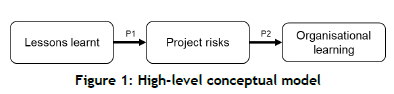
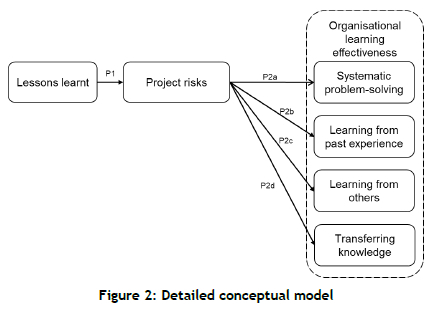
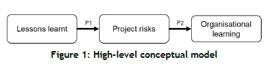
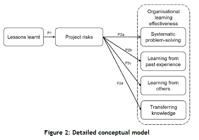
The conceptual model is developed on the basis of the above-mentioned literature, theories, and existing models, and is presented in Figure 1 and in Figure 2. Linked to the existing understanding of the importance of lessons learnt for PBOs, Garvin [27] and Nonaka [31] theorise the importance of organisational learning to improving organisational performance. The conceptual model proposes that an improvement in the incorporation of lessons learnt into the PBO risk management process would lead to the improved effectiveness of organisational learning in PBOs. The model is anchored in the research propositions listed below.
3.1. Research propositions
The following propositions are offered in response to the research questions, and describe the conceptual model depicted above.
Proposition 1: Transforming project lessons learnt into risk statements enhances their use in new project planning compared with current standalone lessons-learnt statements.
Proposition 2: A learning PBO that incorporates risk-phrased lessons learnt in its systems and processes displays proficiency in effectively implementing four key learning organisation attributes: (a) systematic problem-solving, (b) learning from past experience, (c) learning from others, and (d) transferring knowledge [27].
Proposition 2(a): Integrating project lessons learnt into risk statements in a learning PBO enhances systematic problem-solving capabilities. [Systematic problem-solving]
Proposition 2(b): In a learning PBO, the transformation of project lessons learnt into risk statements enhances the capacity to learn from past experiences, thereby enabling more effective use of historical insights to inform decision-making and to improve future project planning and execution. [Learning from past experience]
Proposition 2(c): A learning PBO that incorporates risk-phrased lessons learnt in their systems and processes demonstrates an enhanced capability to learn from others, thus fostering a culture of knowledge exchange and collaboration that enriches project planning and execution through insights gained from external sources and stakeholders. [Learning from others]
Proposition 2(d): In a learning PBO where project lessons learnt are transformed into risk statements, there is a proficient mechanism for transferring knowledge, thus facilitating the dissemination of valuable insights and best practices across projects, thereby enhancing organisational learning and improving project performance. [Transferring knowledge]
4. RESEARCH APPROACH
This study adopted a relativist ontological and constructionist epistemological philosophy, approaching the theory development in a deductive way. This was based on the observed influence of both internal and external factors on organisational learning effectiveness in the case study PBO (the unit of analysis) and on the researcher's engagement and interaction with individual project team members (the unit of observation) in the case study PBO. The constructionist epistemological position required gathering data from multiple sources to ensure a diverse set of perspectives; these were included in the observation of the specified phenomenon. Data collection was done through interviews, a documentation review, and focus groups, and the data was analysed using content analysis, thematic analysis, and pattern-matching, which was aligned with the deductive approach to generating themes and patterns in order to build on the proposed theoretical model.
In response to the research questions, information was gathered from the case study PBO to determine whether the findings supported the propositions that were posed. The research was carried out as a case study of the context and experience of project teams in a PBO, their application of knowledge transfer techniques, and the potential to improve this knowledge transfer process and so improve organisational learning effectiveness in the PBO. This case study and the applied data collection and analysis techniques were aligned with a deductive research approach, based on the situational difficulties that PBOs face, on shared experiences, and on the reviewed literature.
A qualitative single case study approach was adopted to study current practices in the case study PBO in the South African petrochemical industry. The unit of observation was team members in the PBO, each with their own diverse experiences and perspectives. Although a single case study could have various limitations, such as apprehensions about its methodological rigour, researcher subjectivity, and the external validity or generalisability of the findings being applied to other contexts [33, 34], the research design included tactics to ensure the quality of the implemented approach. This included the triangulation of primary data from semi-structured interviews, a focus group interview with project professionals in the PBO, and secondary data from the case study PBO's governance documents, in support of establishing construct validity [35, 36].
The process of qualitative data analysis for this case study research adopted the structured framework presented by Leavy [37], and was facilitated using ATLAS.ti CAQDAS software, thereby ensuring structured management of the data, as recommended by Yin, Campbell and Sage [33] and by Stake [38].
Pattern-matching was selected as the data analysis strategy, based on Yin et al.'s [33] five recommended analytic techniques for case study research. This enabled the researcher to provide greater validity to the conceptual model by supporting the findings with explanation-building [39]. The pattern-matching process required the researcher to begin with the theoretical realm before initiating data collection and analysis in the observational realm for patterns and themes [39]. The predicted patterns were established, based on the research propositions, theorised rival explanations, and the literature. This was followed by the data collection from the documentation, interviews, and a focus group to determine the observed patterns.
The data collection process began with secondary data sourced from the PBO's internal governance documents related to lessons learnt. Twenty-five documents were analysed using deductive content analysis in ATLAS.ti, guided by the themes and codes from the conceptual model and the referenced literature. The primary data was then collected through semi-structured interviews and a focus group. A diverse grouping of 67 project team members were invited to participate, of whom 17 were interviewed and included in the study. The diversity of the participant group, in project discipline and location, contributed to generalisability and transferability and to avoiding participant bias, all of which supported the research and data quality aims of the study. A focus group session was conducted with eight participants from various engineering disciplines and experience levels, and focused on a large capital project.
The interviews were recorded, transcribed, and anonymised before being imported into ATLAS.ti for thematic analysis. The thematic coding implemented a hybrid approach, combining deductive coding based on the research aims and questions and inductive coding from participant responses. The emerging patterns and themes from the data were then compared with predicted patterns to derive theoretical implications, thus contributing to the study's broader understanding of the lessons-learnt processes in PBOs.
5. RESULTS AND DISCUSSION
5.1. Data analysis
The analysis process commenced with developing the predicted patterns based on the theoretical realm and originating from the deductive coding process. The initial deductive codes were extracted from the theoretical framework, which included Garvin's five building blocks [27] and Nonaka's organisational knowledge creation theory [31], along with the research propositions based on the guidance of Pearse [40], Pearse [41], Almutairi, Gardner and McCarthy [39], and Sinkovics [42]. These authors posited that the key principles (or variables) in the theoretical framework and the derived propositions would provide a suitable foundation for the deductive codes and help to determine the predicted pattern.
Thirty-one codes, themes, and sub-themes, including their definitions, were identified, and constituted the study's code book. These codes were preliminarily arranged using organisational knowledge creation theory [31] as an anchoring theory, and supplemented by Garvin's five building blocks of a learning organisation [27], with the codes mapped according to the core concepts but not yet assigned as themes or patterns. The codes were then grouped into deductive themes focused on the themes that had significance for the research questions. This process of generating themes contributed to providing a pattern that was supportive of the arguments in response to the research questions.
The predicted patterns, based on the deductive coding process described above and founded within the theoretical framework and research questions, were noted as follows:
1. A PBO's lessons-learnt process, which includes transforming lessons learnt into risk statements, improves knowledge transfer.
2. A PBO that is capable of improved learning from transforming lessons learnt into risk statements will display learning organisation traits and a positive learning culture and behaviours.
a. Learning organisation traits include systematic problem-solving, learning from past experiences, learning from others, and knowledge transfer between projects.
b. Learning culture and behaviours consist of the overall PBO culture and individual behaviours regarding knowledge-sharing.
As part of the pattern-matching data analysis process, rival patterns were proposed that were mutually exclusive to the predicted patterns, as advised by Yin et al. [33]. In this study, the opposing explanation to the predicted patterns would be that using lessons learnt transformed into risk statements does not have a mediating impact on knowledge transfer or on the development of effective organisational learning.
5.1.1. Data analysis: Documentation (secondary data)
The deductive thematic analysis of the secondary data included reflecting on the most prevalent codes found in the documents reviewed, represented by the 'grounded parameter' (or quotation counts) in the ATLAS.ti code manager. The well-grounded codes that were observed were lessons-learnt process (63), lessons-learnt usage (35), systematic problem-solving processes (33), project performance (28), and systematic knowledge integration into formal processes (27). In addition, the researcher noted several codes that were assigned very few quotations, such as socialisation, informal knowledge-sharing, and experience dependence, which indicated that these codes were not well grounded in the secondary data, and may have been redundant codes needing to be merged or may have reflected critical outliers.
The researcher found that some codes that were regularly applied concurrently throughout the coding process matched the 'code co-occurrence' parameter. There was expected to be a higher code cooccurrence, or strong links, between codes in the same theme grouping. However, the researcher was more interested in the co-occurrence of codes from different themes that would indicate a link between the themes. The most significant code co-occurrences were found between the following codes and themes:
• Knowledge transfer through lessons learnt and lessons-learnt process themes and codes;
• Lessons-learnt process themes and project performance codes;
• Learning organisation and knowledge-sharing culture codes;
• Systematic problem-solving processes and risk management codes; and
• Lessons-learnt process themes and transforming lessons learnt into risk statements themes.
These code co-occurrences indicated preliminary relationships between the different codes and their overarching themes that needed to be considered in the primary data analysis.
5.1.2. Data analysis: Interviews and focus group (primary data)
The data analysis of the interview transcripts was executed using thematic analysis and the framework provided by Braun and Clarke [43], which considers six phases of thematic analysis to provide structure and rigour to the thematic analysis method.
The initial "data familiarisation" phase was used to derive the initial inductive codes during the process of identifying quotations and noting comments in ATLAS.ti, when key terms and phrases were observed and marked. In total, 62 codes were derived from the primary data. The next phase, "generating of initial codes", was based on a combination of the deductive codes with the secondary data (document) analysis and the inductive codes derived during the coding process of the primary data.
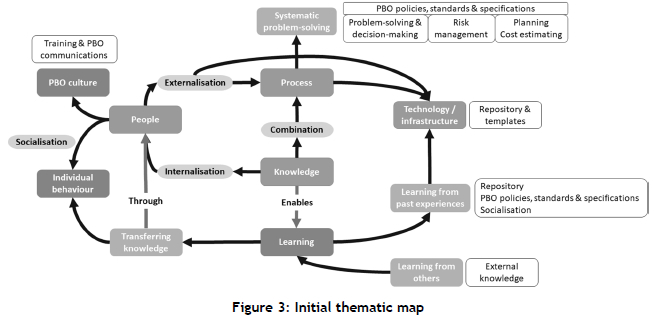
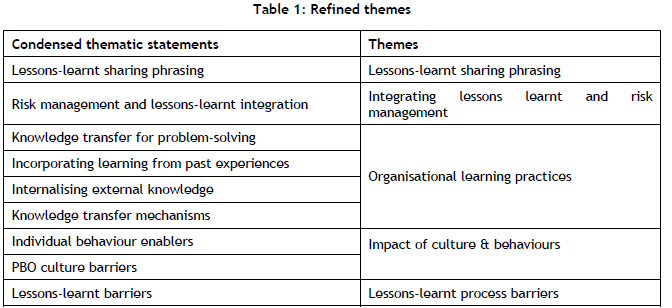
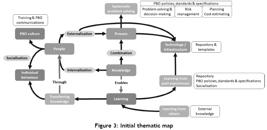
In the initial "searching for themes" phase, consideration was given to grouping and categorising the different themes according to an established theoretical model or framework. The codes were initially categorised according to the three pillars of organisational knowledge management: people, processes, and technology [44]. However, this categorisation did not provide a comprehensive way to address the transfer of knowledge between these three areas, nor the organisational learning theme. In addition, the refined "systemic lessons-learnt knowledge" (Syllk) model [45] was considered, which indicated the six factors in the project organisation that need to be aligned before the process of learning lessons could be successful. This model provided a more comprehensive way to categorise the codes, as used in the thematic analysis of McClory et al. [21]. The inclusion of the core categories and key principles of Garvin's building blocks of organisational learning and Nonaka's knowledge creation SECI model were then used to develop an initial thematic map, shown in Figure 3. This preliminary categorisation and thematic map provided the initial categorisation of the codes.
5 . 1.3. Observed patterns
The final two framework phases were presented as the observed patterns, which were the key themes to emerge from the analysed data. The observed patterns reflected where the three data sources, each analysed independently and integrated, converged to provide a consistent perspective through the triangulation of the findings. It was, however, also vital to consider where the data diverged and could have supported an alternative explanation [39].
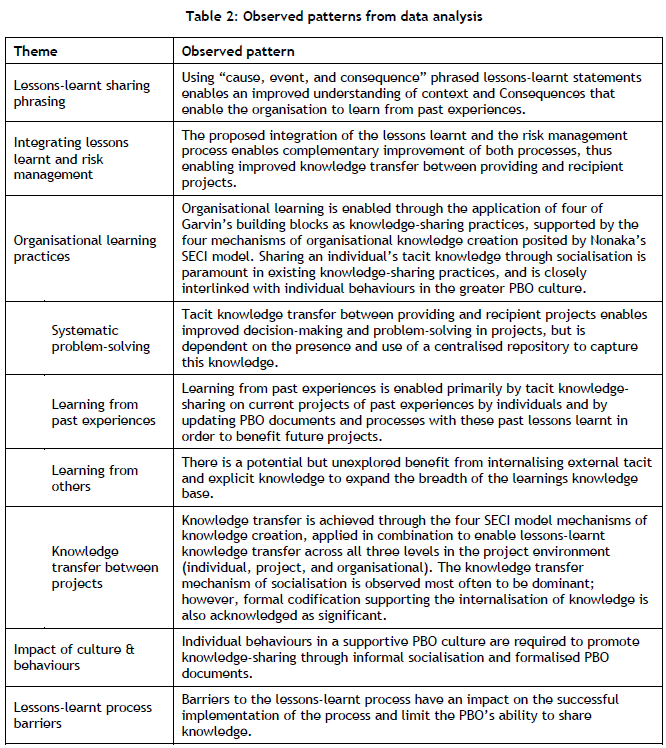
The intent of extracting the observed patterns from the data was to provide a comparison with the predicted patterns and to address the research questions and propositions of this study. The convergence of perspectives from the different data sources and the emergent main themes are listed in Table 2.
Reflecting on the divergence of the primary and secondary data, the analysis of the organisational learning subtheme of "internalising external knowledge" revealed that the primary data reflected an absence of proper means in the PBO to source external knowledge. In contrast, the secondary data revealed six documents addressing this need to source external knowledge. This data divergence reflected the lack of adherence to procedures when conducting lessons learnt in the PBO, a theme confirmed by the primary data.
A divergence in perspectives was also found between the data sources in the reflection on the importance of "socialisation" and "informal knowledge-sharing". While the secondary data showed these two codes to be poorly grounded, with a low frequency of application, the primary data revealed a high prevalence of informal knowledge-sharing between individuals in the project teams (socialisation), providing an opportunity for the informal transfer of lessons learnt. This divergence could be attributed to the failure of the PBO's governance documents to address the informal processes that are necessary to support knowledge transfer
5.1.4. Pattern matching
Pattern matching was done using a comparison of the theoretical realm - represented by the literature review and the theoretical propositions contained in the conceptual model - with the observational realm - represented by the themes identified in the analysis of the primary and secondary data [42, 48]. This case study adopted a similar approach to that of Sinkovics, Kim and Sinkovics [49] to conducting pattern matching, concluding with the posing of the "implications for theoretical development based on pattern matching" discussed in Section 5.2 below.
5.2. Discussion
The interpretation and discussion of the five main themes identified in the data analysis are summarised here in the light of the literature and the primary and secondary data. They are presented as the implications for theoretical development, and provide the basis for the expansion of the existing theories of knowledge transfer in a PBO.
5.2.1. Lessons-learnt phrasing
The phrasing of lessons-learnt statements for sharing was recognised in the primary data as an important factor that contributes to the success of the lessons-learnt process. This concept of using risk management language and syntax to improve the phrasing of lessons learnt, such that context and understanding are contained in the lesson statement, remains a gap in the literature. The importance of understanding the "knowledge context" in the transfer of knowledge was highlighted by Cummings and Teng [50], indicating the need for the comprehensive articulation of the knowledge between the provider and the recipient. This was supported by the data analysis, which revealed a majority of positive responses to the proposition of using "cause, event and consequence" statements. The data confirmed the benefit of improved context and understanding provided by this phrasing. This outcome supported the initial research proposition that transforming lessons learnt into risk statements would enhance the ability of recipient project teams to learn from these past experiences.
5.2.2. Integrating lessons learnt and risk management processes
The use of past lessons learnt to improve future project risk management is a recurring topic that has been highlighted by various authors [17, 51-53]. In contrast, using risk management outcomes to improve the lessons-learnt process is not addressed sufficiently in the literature. This corresponds with the initial research gap that was identified and confirmed in the primary data, where the proposal to use risk processes to improve the recording of lessons learnt was considered non-typical. The data revealed agreement by eight of the interviewees that using realised and closed risks as sources of lessons could improve the quality of the lessons being recorded. In addition, the data supported the use of the maturity of the risk management processes to dovetail with lessons learnt to contribute positively. This indicates that not only by using lessons learnt as an input to the risk management process and recording lessons learnt using risk statement phrasing, but also through the overall integration of these two processes, the potential exists to add value to both.
5.2.3. Organisational learning practices
The primary data analysis identified the importance of using Nonaka's [31] four mechanisms of knowledge creation in the PBO to promote the achievement of the key building blocks of organisational learning defined by Garvin [27]. The data analysis revealed that sharing an individual's tacit knowledge through socialisation, which leads to learning from past experiences, is paramount in existing knowledge-sharing practices. Van Waveren et al. [54] reconfirmed these knowledge transfer mechanisms through socialisation between all three levels in an organisation. This was supported by the primary data, which confirmed the importance of socialisation as an enabling force to transfer lessons-learnt knowledge in an organisation, explicitly emphasising the individual level of informal knowledge-sharing.
5.2.4. Impact of culture and behaviours
The study of organisational culture and individual behaviours and their potential impact on knowledge transfer in a PBO was not part of the initial research objective. However, the frequency of these two codes being applied in the data analysis of the interview responses mandated the researcher at least to touch on this important theme. The data analysis revealed that individual behaviour is both an enabler of and a barrier to knowledge-sharing, especially between individuals through the mechanism of socialisation. This is supported by Bell, Waveren and Steyn's [4] knowledge-pull framework, which considers how the organisational culture of motivating knowledge-seeking and sharing behaviours, when embedded in the PBO routines and supported by management, is vital to enabling knowledge transfer. This concept was supported by the primary data, which indicated that a supportive organisational culture enables knowledge-sharing individual behaviours, which in turn promote knowledge transfer and organisational learning practices in the PBO.
5.2.5. Lessons-learnt process barriers
Although not related to a specific research question, and regarded as beyond the scope of this case study, the frequency of barriers noted by the interviewees made it necessary for the researcher to discuss this theme, albeit briefly. The data analysis showed that the participants noted various barriers, limitations, or gaps in existing lessons-learnt practices. These barriers indicate the areas of improvement on which a PBO should focus to enable improved sharing of lessons learnt in order to facilitate organisational learning. The identified barriers included: the high workload of project teams; turnover of project resources; the time that elapses between the start of a project or phase and when a lessons-learnt session is done; and the support of leadership. This corroborated the data of Wiewiora, Trigunarsyah, Murphy and Liang [3], who found that knowledge-sharing is made difficult by the dispersion of people, project locations, and project timelines.
5.3. Development of updated model
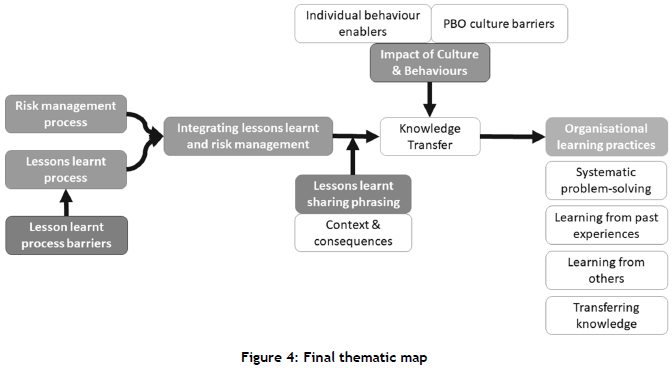
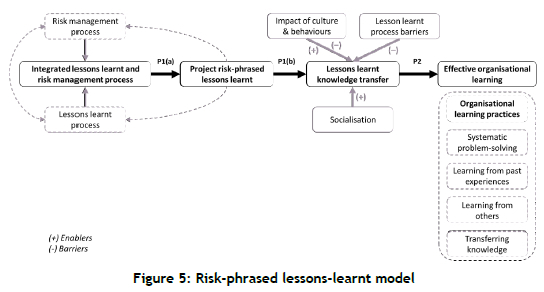
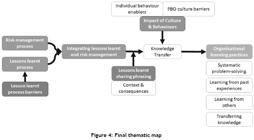
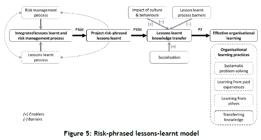
The initial conceptual model (Figure 2) and research propositions considered a simplified view that the translation of lessons learnt into risk-phrased statements would enhance effective organisational learning in a PBO environment. The data revealed that organisational learning could be improved by using risk-phrased lessons learnt to transfer lessons-learnt knowledge. The primary data analysis also showed that integrating the risk management and lessons-learnt processes provided an additional benefit to enabling organisational learning. The conceptual model was therefore updated to include a consideration of the outcomes of the data analysis, which revealed the contributing factors, such as socialisation and positive organisational culture, to the knowledge-transfer process. The updated model, incorporating the research findings and named "risk-phrased lessons-learnt model", is presented in Figure 5.
It also prompted the updating of the initially posed research propositions to reflect the observed relationships between the key variables.
1. Proposition 1:
a. Proposition 1(a): Integrating the lessons-learnt and risk-management processes enables the development of risk-phrased lessons-learnt statements.
b. Proposition 1(b): Risk-phrased lessons learnt significantly enhance the lessons-learnt knowledge-transfer process.
2. Proposition 2: The improvement of the lessons-learnt knowledge transfer in a learning PBO, enabled by the risk-phrased lessons learnt, leads to the PBO realising effective organisational learning practices.
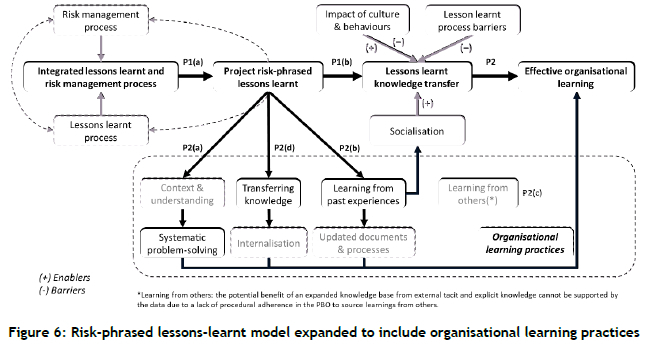
In considering the subthemes of effective organisational learning, the risk-phrased lessons-learnt model is expanded in Figure 6 to show how risk-phrased lessons learnt enable lessons-learnt knowledge transfer and effective organisational learning using the organisational learning practices. The updated propositions related to the secondary variables of effective organisational learning are these:
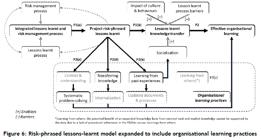
1. Proposition 2(a): Risk-phrased lessons learnt enhance systematic problem-solving capabilities in a learning PBO by providing context and understanding to the lessons learnt.
2. Proposition 2(b): Risk-phrased lessons learnt enhance the capacity for learning from past experiences, thereby enabling more effective use of historical insights by a learning PBO to update their organisational documents and process with these learnings, as well as enabling lessons-learnt knowledge transfer through the socialisation of these past experiences.
3. Proposition 2(c) (unvalidated*): Risk-phrased lessons learnt, based on an expanded knowledge base from external tacit and explicit knowledge, enhance a learning PBO's ability to learn from others. *It is noted, however, that only the secondary data supported this proposition, and the observed patterns did not validate it for inclusion in the updated model.
4. Proposition 2(d): Risk-phrased lessons learnt support the mechanism of individual internalisation of knowledge shared in formal communications and training in the learning PBO.
The findings, based on the risk-phrased lessons-learnt model and the updated propositions, may be summarised as follows:
• The integration of the risk management and lessons-learnt processes facilitates the development of risk-phrased lessons learnt. [Proposition 1(a)]
• Risk-phrased lessons learnt promote lessons-learnt knowledge transfer, supported by the socialisation of lessons learnt and a positive organisational culture and individual behaviours. [Proposition 1(b)]
• The socialisation of risk-phrased lessons learnt enables lessons-learnt knowledge transfer.
• The lessons-learnt knowledge transfer process is impeded by lessons-learnt barriers and a negative organisational culture.
• A lessons-learnt knowledge transfer leads to effective organisational learning by encouraging systematic problem-solving, learning from past experiences, learning from others, and knowledge transfer. [Proposition 2]
• These organisational learning practices are strengthened by the risk-phrased lessons learnt by providing improved contextualisation and understanding of the lessons, and updated PBO documents and procedures; and by encouraging socialisation of learnings. [Propositions 2(a), 2(b), 2(d)]
6. CONCLUSIONS AND RECOMMENDATIONS
This research was conducted to develop a knowledge transfer model to conceptualise the relationship between lessons learnt and organisational learning concepts. The research gap identified in the literature directed the researcher to examine how integrating risk management principles with lessons-learnt processes could support improved knowledge transfer, enabling organisational learning. This objective prompted the development of the research questions to understand the "how" of this proposed knowledge transfer model.
In response to the research questions, the conceptual model was developed to depict a relationship between lessons learnt, project risks, and organisational learning. The data analysis outcomes revealed that the integration of the risk management and lessons-learnt processes would be required to enable the formation of risk-phrased lessons-learnt statements, which could provide understanding and context in the lessons-learnt knowledge transfer process. This knowledge transfer process, supported by realised organisational learning practices, would depend on contributing factors such as the implementation of socialisation as a mode of knowledge-sharing, and the consideration of individual behaviours and organisational culture to either promote or inhibit it. Given the data analysis outcomes, the risk-phrased lessons-learnt model and the associated updated research propositions were developed.
The research has built on the literature about the importance of lessons learnt between projects in an organisation [6, 22], using the principles of knowledge creation theory [31] and organisational learning [27, 55]. In addition, the findings complement existing theoretical models on lessons learnt and knowledge-sharing in PBOs through the risk-phrased lessons-learnt model, which demonstrates the integration of lessons learnt and risk management processes and the use of risk-phrased lessons learnt to improve lessons-learnt knowledge transfer, which in turn would enable organisational learning. This study contributes to academia by advancing a theoretical understanding of knowledge transfer through the integration of lessons learnt and risk management processes, thus enhancing organisational learning in project-based organisations. For practitioners, it provides a structured model that should improve the practical application of lessons learnt, enabling more effective decision-making and risk mitigation in project environments.
The research study was subject to the limitations of a single case study [33] with a cross-sectional study design approach. Therefore, to improve reliability and robustness, a multiple-case research design with broader primary data collection should be considered for future research, as it would strengthen the findings presented in this study. In addition, it is recommended that future research expand on the potential benefits of the risk-phrased lessons-learnt model in improving the organisational learning aspects through a longitudinal post-implementation study of applying the risk-phrased lessons-learnt model. A longitudinal research design would allow a baseline of current organisational learning effectiveness to be determined, along with a re-evaluation of how implementing integrated risk management and lessons-learnt processes, such as those contained in the risk-phrased lessons-learnt model, would benefit a PBO.
REFERENCES
2. LITERATURE REVIEW
- [1] Pemsel, S. and Müller, R. 2012. The governance of knowledge in project-based organizations. International Journal of Project Management, 30(8), pp. 865-876.
- [2] Van Waveren, C.C., Oerlemans, L.A. and Pretorius, M.W. 2014. Knowledge transfer in project-based organizations: A conceptual model for investigating knowledge type, transfer mechanisms and transfer success. In 2014 IEEE International Conference on Industrial Engineering and Engineering Management. IEEE.
- [3] Wiewiora, A., Trigunarsyah, B., Murphy, G.D. and Liang, C. 2009. Barriers to effective knowledge transfer in project-based organisations. In Proceedings of the International Conference on Global Innovation in Construction. Loughborough University.
- [4] Bell, L., Waveren, C.C.V. and Steyn, H. 2016. Knowledge-sharing within the project-based organisation: A knowledge-pull framework. South African Journal of Industrial Engineering, 27(4), pp. 18-33.
- [5] Landaeta, R.E. 2008. Evaluating benefits and challenges of knowledge transfer across projects. Engineering Management Journal, 20(1), pp. 29-38.
- [6] Xu, R., Yan, Z., Wang, Z. and He, J. 2020. Inter-project knowledge transfer in project-based organizations: An organizational context perspective. Management Decision, 58(5), pp. 844-863.
- [7] Talukhaba, A. and Taiwo, A. 2009. Knowledge management as a performance enhancing tool in construction project management in South Africa. Acta Structilia: Journal for the Physical and Development Sciences, 16(1), pp. 33-63.
- [8] Eresia-Eke, C.E. and Makore, S. 2017. Knowledge acquisition and organisational performance in project-focused companies. Journal of Contemporary Management, 14(1), pp. 788-811.
- [9] Louw, I.R., Steyn, H. and Waveren, C.C.V. 2017. Inhibitors to the transfer of knowledge generated on projects: A case study within a construction company. Journal of Contemporary Management, 14(1), pp. 986-1010.
- [10] Ghobadi, S. and Mathiassen, L. 2017. Risks to effective knowledge sharing in agile software teams: A model for assessing and mitigating risks. Information Systems Journal, 27(6), pp. 699-731.
- [11] Kotnour, T. 2000. Organizational learning practices in the project management environment. International Journal of Quality & Reliability Management, 17(4/5), pp. 393-406.
- [12] De Toni, A.F. and Pessot, E. 2021. Investigating organisational learning to master project complexity: An embedded case study. Journal of Business Research, 129, pp. 541-554.
- [13] Ren, X., Deng, X. and Liang, L. 2018. Knowledge transfer between projects within project-based organizations: The project nature perspective. Journal of Knowledge Management, 22(5), pp. 10821103.
- [14] Jewels, T., Baker, J. and Underwood, A. 2003. Post implementation reviews - A means of applying knowledge: Lessons from a failed project. In Proceedings of the 14th Australasian Conference on Information Systems.
- [15] Williams, T. 2007. Post-project reviews to gain effective lessons learned. Project Management Institute.
- [16] Pretorius, C.J. and Steyn, H. 2005. Knowledge management in project environments. South African Journal of Business Management, 36(3), pp. 41-50.
- [17] Dikmen, I., Birgonul, M.T., Anac, C., Tah, J.H.M. and Aouad, G. 2008. Learning from risks: A tool for post-project risk assessment. Automation in Construction, 18(1), pp. 42-50.
- [18] Rothenburger, B. and Galarreta, D. 2006. Facing knowledge evolution in space project: a multi-viewpoint approach. Journal of Knowledge Management, 10(2), pp. 52-65.
- [19] Herbst, A.S. 2017. Capturing knowledge from lessons learned at the work package level in project engineering teams. Journal of Knowledge Management, 21(4), pp. 765-778.
- [20] Abd Elhameed, A.T. 2018. Analyzing the project management body of knowledge (PMBOK) through theoretical lenses: A study to enhance the PMBOK through the project management theories. PM World Journal, 6(9), pp. 1-31.
- [21] McClory, S., Read, M. and Labib, A. 2017. Conceptualising the lessons-learned process in project management: Towards a triple-loop learning framework. International Journal of Project Management, 35(7), pp. 1322-1335.
- [22] Jugdev, K. 2012. Learning from lessons learned: Project management research program. American Journal of Economics and Business Administration, 4(1), pp. 13-22.
- [23] Project Management Institute. 2021. Guide to the Project Management Body of Knowledge (PMBOK Guide) and the Standard for Project Management. Project Management Institute.
-
[24] Hartono, B., Wijaya, D.F. and Arini, H.M. 2019. The impact of project risk management maturity on performance: Complexity as a moderating variable. International Journal of Engineering Business Management, 11. doi: 10.1177/1847979019855504.
» https://doi.org/10.1177/1847979019855504 - [25] Schindler, M. and Eppler, M.J. 2003. Harvesting project knowledge: A review of project learning methods and success factors. International Journal of Project Management, 21(3), pp. 219-228.
- [26] Senge, P.M. 1990. The fifth discipline: The art and practice of the learning organization. Doubleday/Currency.
- [27] Garvin, D.A. 1993. Building a learning organization. Harvard Business Review, 71(4), pp. 78-91.
-
[28] Basten, D. and Haamann, T. 2018. Approaches for organizational learning: A literature review. SAGE Open, 8(3).doi: 10.1177/2158244018794224.
» https://doi.org/10.1177/2158244018794224 - [29] Argyris, C. 1977. Double loop learning in organizations. Harvard Business Review, 55(5), pp. 115125.
- [30] Argyris, C. and Schon, D.A. 1978. Organizational learning: A theory of action perspective. Addison-Wesley.
- [31] Nonaka, I. 1994. A dynamic theory of organizational knowledge creation. Organization Science, 5, 14-37.
- [32] Crossan, M.M., Lane, H.W. and White, R.E. 1999. An organizational learning framework: From intuition to institution. The Academy of Management Review, 24(3), pp. 522-537.
- [33] Yin, R.K., Campbell, D.T. and Sage, P. 2018. Case study research and applications: Design and methods, 6th ed. SAGE Publications.
- [34] Glette, M.K. and Wiig, S. 2022. The headaches of case study research: A discussion of emerging challenges and possible ways out of the pain. The Qualitative Report, 27(5), pp. 1377-1392.
- [35] Saunders, M., Lewis, P. and Thornhill, A. 2007. Research methods for business students, 4th ed. Financial Times/Prentice Hall.
- [36] Carter, N., Bryant-Lukosius, D., DiCenso, A., Blythe, J. and Neville, A.J. 2014. The use of triangulation in qualitative research. Oncology Nursing Forum, 41(5), pp. 545-547.
- [37] Leavy, P.E. (ed.). 2014. The Oxford handbook of qualitative research. Oxford University Press.
- [38] Stake, R. 2003. Case studies. In Denzin, N.K. and Lincoln, Y.S. (eds), Strategies of qualitative inquiry, 2nd ed., (pp. 134-164). SAGE Publications.
- [39] Almutairi, A.F., Gardner, G.E. and McCarthy, A. 2014. Practical guidance for the use of a pattern-matching technique in case-study research: A case presentation. Nursing & Health Sciences, 16(2), pp. 239-244.
- [40] Pearse, N. 2019. An illustration of a deductive pattern matching procedure in qualitative leadership research. Electronic Journal of Business Research Methods, 17(3), pp. 143-154.
- [41] Pearse, N. 2019. An illustration of deductive analysis in qualitative research. In 18th European conference on research methodology for business and management studies.
- [42] Sinkovics, N. 2018. Pattern matching in qualitative analysis. In Cassell, C., Cunliffe, A. and Grandy, G. (eds). The SAGE handbook of qualitative business and management research methods, (pp. 468485). SAGE Publications.
- [43] Braun, V. and Clarke, V. 2006. Using thematic analysis in psychology. Qualitative research in psychology, 3(2), pp. 77-101.
- [44] Hosseini, M.R., Tahsildari, H., Hashim, M.T. and Tareq, M.A. 2014. The impact of people, process and technology on knowledge management. European Journal of Business and Management, 6(28), 230-241.
- [45] Duffield, S. and Whitty, S.J. 2015. Developing a systemic lessons learned knowledge model for organisational learning through projects. International Journal of Project Management, 33(2), pp. 311-324.
- [46] Graneheim, U.H. and Lundman, B. 2004. Qualitative content analysis in nursing research: Concepts, procedures and measures to achieve trustworthiness. Nurse Education Today, 24(2), pp. 105-112.
- [47] Creswell, J.W. 2009. Research design: Qualitative, quantitative, and mixed methods approaches, 3rd ed. SAGE Publications.
- [48] Trochim, W.M. 1989. Outcome pattern matching and program theory. Evaluation and program planning, 12(4), pp. 355-366.
- [49] Sinkovics, N., Kim, J. and Sinkovics, R.R. 2022. Business-civil society collaborations in South Korea: A multi-stage pattern matching study. Management International Review, 62(4), pp. 471-516.
- [50] Cummings, J.L. and Teng, B.-S. 2003. Transferring R&D knowledge: The key factors affecting knowledge transfer success. Journal of Engineering and Technology Management, 20(1), pp. 39-68.
- [51] Neef, D. 2005. Managing corporate risk through better knowledge management. The Learning Organization, 12(2), pp. 112-124.
- [52] Zhu, F., Hu, H. and Xu, F. 2022. Risk causation model to capture and transfer knowledge in international construction projects. Journal of Civil Engineering and Management, 28(6), pp. 457468.
- [53] Neto, A., Perkusich, M., Dantas, E., Ramos, F., Costa, A., Almeida, H. and Perkusich, A. 2021. Knowledge-based risk management: A systematic literature review. In Proceedings of the XXXV Brazilian Symposium on Software Engineering, (pp. 320-329).
- [54] Van Waveren, C., Oerlemans, L. and Pretorius, T. 2017. Refining the classification of knowledge transfer mechanisms for project-to-project knowledge sharing. South African Journal of Economic and Management Sciences, 20(1), a1642.
- [55] Duffield, S.M. and Whitty, S.J. 2016. Application of the systemic lessons learned knowledge model for organisational learning through projects. International Journal of Project Management, 34(7), pp. 1280-1293.
Accepted for publication 28 Jul 2025
Available online 29 Aug 2025
ORCID® identifiers
C. Bredell: https://orcid.org/0009-0006-3799-1444
B. Tshuma: https://orcid.org/0000-0002-7206-0681