Systematic Review of Micro-Credentials in Engineering Education
Abstract
The rapid evolution of the job market demands upskilling and reskilling, challenging traditional higher education systems. Micro-credentials, offering verifiable skills that are often delivered online, present a promising solution. This study conducted a systematic literature review of 5,940 publications, narrowing them down to 75 for detailed analysis. The findings show that integrating micro-credentials into higher engineering education is gaining awareness as a way to meet the shifting needs of learners and industry. Institutions are increasingly required to provide relevant, adaptable courses that are aligned with engineering career paths. This study offers valuable insights for stakeholders who aim to enhance the relevance of engineering education in a digital era.
Abstract
Die vinnige ontwikkeling van die arbeidsmark vereis die opgradering en herontwikkeling van vaardighede, wat tradisionele hoëronderwysstelsels onder druk plaas. Mikrokwalifikasies, wat verifieerbare vaardighede bied en dikwels aanlyn aangebied word, bied 'n belowende oplossing. Hierdie studie het 'n sistematiese literatuuroorsig van 5,940 publikasies uitgevoer en dit tot 75 vir gedetailleerde ontleding verminder. Die bevindinge toon dat die integrasie van mikrokwalifikasies in hoër ingenieursonderwys toenemend erken word as 'n manier om aan die veranderende behoeftes van leerders en die bedryf te voldoen. Daar word toenemend van instellings verwag om relevante en aanpasbare kursusse aan te bied wat met loopbaanrigtings in ingenieurswese belyn is. Hierdie studie bied waardevolle insigte aan belanghebbendes wat die relevansie van ingenieursonderwys in die digitale era wil verbeter.
1. INTRODUCTION
Micro-credentials are brief certifications created to acknowledge particular skills, competencies, or knowledge in a specific field. In contrast to conventional degrees or diplomas, they focus on specific skills, usually centred on one skill or a few related skills. Micro-credentials are given by schools, training groups, or industry associations, and are frequently offered online, allowing for easy access and adaptability for students.
The field of engineering is renowned for its rapid evolution, propelled by continuous technological advancements, shifting industry demands, and the emergence of interdisciplinary fields. In this dynamic landscape, higher engineering education assumes a central role in equipping students with the necessary competencies for navigating the complexities of modern engineering practice. This entails not only fostering technical proficiency but also nurturing essential professional skills. Nonetheless, traditional engineering degree programmes frequently encounter hurdles in keeping pace with the evolving demands of the profession. These challenges include the need for specialised skill sets, ongoing professional development initiatives, and the seamless integration of emerging technologies [1]. In the constantly evolving realm of higher engineering education, there is a pressing need to respond to the dynamic requirements of both learners and industry stakeholders. Consequently, there has been a noticeable surge in the literature [2-4] on alternative educational paradigms that provide greater flexibility and precision in skills development that is tailored to the demands of the engineering profession.
Traditional degree programmes, while fundamental, often struggle to keep pace with the rapidly evolving demands of the engineering field, which includes the emergence of novel technologies and interdisciplinary skill requirements [5]. In parallel, structural and demographic institutional dynamics have shifted the focus from conventional engineering education to mass education and the marketisation of credentials [6]. Unlike traditional degree programmes, which typically offer broad-based education covering various disciplines, micro-credentials provide a more focused and customisable approach to learning. This approach gives learners clear incentives to pursue well-defined goals and to acquire proficiency in specific skills [7]. Therefore, the renewed applications of micro-credentials have garnered attention from universities, students, governments, and, most importantly, employers, who are the consumers of education [8].
Moreover, international organisations and policymakers emphasise the importance of recognising prior skills to enhance career prospects. This recognition is underscored in documents such as "Agenda 2063" [9] and the Organisation for Economic Co-operation and Development Skills Strategy [10], which refer to the importance of skills recognition in shaping career opportunities pertinent to the labour market [11]. The European Commission defines micro-credentials as a short-term learning experience that offers flexible and targeted ways to help people develop the knowledge, skills, and competencies needed for professional and personal development. For this study, the European Commission's definition and papers referring to micro-credentials or digital badges were adopted.
While numerous studies and policy documents have explored micro-credentials, a gap remains regarding their precise definition and integration into specific higher education programmes [l2]. However, recent attention has shifted towards prioritising the incorporation of micro-credentials into higher engineering education programmes, aiming to bolster their presence and enhance the quality of graduate degrees [8], [13], [14]. Alongside the benefits of micro-credentials, difficulties in their adoption and implementation are also acknowledged, particularly in engineering education, where teaching content often requires laboratory experiments and hands-on training.
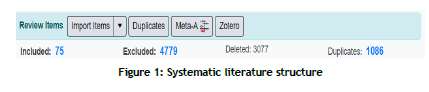
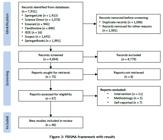
Traditional engineering curricula often lag behind quickly evolving industry requirements, resulting in a skills gap between what graduates learn and what employers anticipate. The outdated course content and limited exposure to emerging technologies hinder graduates' readiness for modern engineering challenges. This forms the central problem that our paper addresses. Understanding the existing body of knowledge is crucial for identifying gaps and areas that require further research, particularly to promote the widespread adoption of micro-credentials in higher engineering education (HEE). Furthermore, the current synthesis would provide new insight by showing how micro-credentials offer a practical strategy to mitigate this mismatch. As illustrated in Figure 1, the authors initially retrieved 7,931 items from five databases. In the preliminary review, 1,991 items were deleted because they were unsuitable for analysis (including book chapters, grey literature, and podcasts). From the remaining 5,940 items, 4,779 were excluded from further consideration because they did not meet the predefined criteria for inclusion in the review, leaving 1161, of which 1,086 were identified as duplicates and removed to ensure that each item was considered only once in the analysis. Last, 75 items that fulfilled the inclusion criteria were selected for detailed analysis.

Accordingly, this study aims to achieve three primary objectives: i) to investigate the relevant literature on micro-credentials in higher education; ii) to identify trends in their adoption in engineering programmes; and iii) to determine the factors influencing the implementation of micro-credentials in undergraduate programmes in HEE. The paper is structured as follows: Section 2 provides insights into critical features of micro-credentials in science, technology, engineering, and mathematics higher education. Section 3 outlines the methodology used. Section 4 presents the results and subsequent discussion, while Section 5 concludes the paper.
2. PERSPECTIVE LITERATURE ON MICRO-CREDENTIALS
The concept of certification based on standards-based skills and quality assessments of employers has been in existence for decades [8]. Cantwell and Rose [15] explained that badges have long been awarded by organisations as a way to recognise the achievement of specific abilities, knowledge, and skills. While the concept of micro-credentials (MC) is not new, interest has spiked in the aftermath of COVID-19 [14]. In practice, MCs are also referred to as digital badges, online certificates, alternative credentials, and nano-degrees or micro masters [11].
Higher education students are increasingly looking for alternative credentials to improve the prospects of their degrees. Thus, tailored certifications that validate the acquisition of specific skills or competencies have gained prominence in the literature as a potential solution to address the evolving need for flexible access to education. Tomlinson and Watermeyer [6] argue that traditional credentials such as degrees from higher education institutions are losing value owing to the massification of educational content. The increasing moves of higher education towards the online environment are a catalyst for micro-credentials as a method not only for remotely accessing and assessing learning, but also for making learners aware of skills that are otherwise not formally awarded [15].
However, given the intangible nature of digital badges, their efficacy in representing accomplishment and skill achievement in MCing is still being explored [16]. [17] investigates the awareness, challenges, and factors affecting the effectiveness of MC implementation. The author identifies gaps in the literature related to the viability of MCs in the long term. [18] highlight the need for research in the implementation and sustainability of MCs while effectively functioning in the technical systems that require integration. Their findings indicate that this field of research is still in the exploration stage in Australia, with the latest work published in 2016.
As technology continually evolves, the demand for engineering professionals is growing globally. Industry is now looking for graduates with a pool of skills beyond their traditional university curricula. These ready-to-work employees contribute to the organisation immediately after recruitment, and a graduate's degree is not a licence for graduate employment any more [17]. In response to this educational shift, the incumbent responsibility to produce graduates who are industry-ready no longer solely lies with higher education: it is now a collective engagement that also requires the participation of students, the government and, most importantly, employers [8].
This credentialing demand-and-supply relationship leads learning institutions to find ways to improve the quality of the degrees or diplomas they offer. Ahsan et al. [21] point to the need to grow the research in the area of MCs by proposing a general framework for MC implementation in higher education. The authors highlight several gaps, with design and implementation being some of the difficulties that will affect the readiness of HE to adopt MC fully. However, the work provides little clarity on the specific field in which this credential could be implemented, or whether the framework could be applied and replicated by anyone seeking to introduce MC. Thus, there is an interest in the implementation of MCs in HEE to complement traditional degrees.
2.1. Implementation
The design of MCs involves special consideration of factors such as identifying target competencies, aligning with industry standards, and developing clear assessment criteria. The general process of the implementation of MCs comprises the provider, the earner, and the consumer [20]. The provider is the entity that issues the digital badge. The earner is the learner who acquires knowledge, and the consumer is any prospective employer who views the credential. The interest in MCs in engineering education also relates to how higher education institutes could improve the quality of the programmes they offer by integrating industry-based MCs into the formal qualification curricula.
[23] Outline the objectives, structure, and key components of the certificate programme as well as the methods and strategies used in its design and delivery. Earlier work undertaken by [24] explores the difficulties and considerations associated with the implementation of open badges in education, including issues related to standardisation, credibility, and equity. The authors highlight the need for careful design and implementation of open badge systems to ensure their effectiveness and impact in educational contexts.
[25] describe the process of redesigning a computer science capstone course to incorporate MCs. The methods involved evaluating the existing curriculum, identifying relevant MCs, developing assessment criteria, integrating MCs into the course structure, and designing assessments aligned with the MC framework. [8] reveals that MCs offer a flexible and targeted approach to skill acquisition in the engineering discipline, allowing learners to acquire specific competencies relevant to their career aspirations or industry demands. By breaking down complex engineering concepts into modular units, MCs facilitate personalised learning pathways that align with individual learning styles and professional goals. Moreover, the digital nature of MCs enables learners to access training and assessment materials remotely, catering to the needs of a diverse and geographically dispersed student population.
[29] discuss the concept of "digital lofts" as learning environments designed to facilitate real-world innovation. In these environments, students collaborate on authentic projects, and formative feedback plays a crucial role in guiding their learning while supporting their creative endeavours. [26] Provide a detailed exploration of the development process for "open badges", focusing on the technical and conceptual aspects required for their effective implementation. The work begins with a discussion of the background and evolution of open badges as a digital credentialing system, highlighting their potential to recognise and showcase the skills and achievements of individuals in diverse contexts. The authors then delve into the comprehensive approach needed to develop open badges, covering various technical components such as metadata, badge issuing, badge storage, and badge display.
As far as engineering education is concerned, MC implementation presents a peculiar challenge, given the hands-on nature of the engineering curriculum. However, authors [27], [28] introduce the concept of a "digital badge" as a method to enhance and evaluate the hands-on laboratory skills of students in higher education settings. Towns et al. [27] highlight the importance of hands-on laboratory skills in science education and the challenges associated with assessing and improving these skills effectively. In response to these challenges, the authors introduce the "digital pipetting badge", a digital credentialing system designed to recognise and validate the proficiency of students with pipetting techniques. The digital pipetting badge is implemented as part of a larger educational initiative aimed at enhancing student learning outcomes in laboratory settings, and is awarded to students who demonstrate competence in pipetting through a series of assessments, including virtual simulations and practical laboratory exercises.
Furthermore, assessment plays a critical role in the implementation of MCs. [27] explore innovative assessment methods such as project-based learning or competency-based assessments, which can be used to evaluate student performance and award MCs accordingly. These assessments should be transparent, rigorous, and aligned with the desired learning outcomes. When designing MCs, the importance of metadata that provides detailed information, including criteria, evidence, issuer, and recipient, must be noted to ensure their credibility and interoperability. There is also a need to follow clear badge design principles to ensure that badges are visually appealing, meaningful, and aligned with the goals and motivations of the learners. [28] highlight the importance of designing meaningful and relevant credentials that align with the goals and interests of learners to maximise their motivational impact.
2.2. Motivation
By offering MCs as digital badges, educators can provide students with tangible and immediate rewards. Clayton et al. [30] explore the use of MCing and digital badges as motivational tools in various learning contexts, including formal education settings, professional development programmes, and online learning platforms. In providing tangible recognition for their achievements, MCing and digital badges enhance motivation among learners in respect of enhanced learner engagement, fostering a sense of accomplishment, and promoting lifelong learning. In their case study, Cucchiara et al. [31] examine the use of digital badges to support self-regulated learning (SRL) in an online course on programming. In this case study, the authors explore how digital badges could be used as motivational tools to enhance the self-regulation and engagement of the students, in which badges are awarded to students on completion of specific learning activities or mastery of certain skills.
Ahn et al. [24] discussed the motivational aspect of open badges, highlighting how they can serve as visual representations of achievement and progress, thereby incentivising students to engage more deeply with their learning activities. [32] used qualitative research methods, specifically focus groups, to gather data and insights about the use of digital badges to motivate introductory programmers. The methodological approach also included recognition, feedback, and perceptions as qualitative insights into the effectiveness of digital badges for motivating introductory programmers. These qualitative findings from the focus groups provide valuable insights into the use of digital badges to motivate introductory programmers, highlighting their potential impact on learning experiences.
Fanfarelli and McDaniel [33] used quantitative research methods to investigate the relationships between digital badge quantity, student engagement, and academic performance in university courses. Their findings contribute to the understanding of the relationships between digital badge quantity, student engagement, and academic performance in university courses, offering valuable insights for educators and course designers who seek to leverage digital badges as a pedagogical tool. By leveraging the motivational power of MCs, educators could inspire students to participate actively in engineering education, ultimately enhancing their learning outcomes and preparing them for success in the field.
2.3. Employability
The use of MCs for enhanced employability in engineering education has gained traction in recent years. One approach to designing MCs in engineering education is to align them with industry standards and emerging technologies. [11] emphasise the importance of industry involvement in validating MCs and ensuring their relevance in the job market. The earlier work of [32] describes the methods used to develop pathways to stackable credentials in robotics through a collaborative partnership between a community college and a university. The authors outline methods for engaging industry stakeholders in the development of stackable credentials. These include convening advisory boards, conducting industry needs assessments, and soliciting feedback from employers to ensure the relevance and applicability of the credentials.
[24] explore the implications of open badges for education, particularly at the intersection of open systems and badging. The authors examine the implications of open badges for various stakeholders in education, including learners, educators, institutions, and employers. Their findings reveal the potential benefits of open badges, such as enabling learners to showcase their skills beyond traditional credentials and fostering lifelong learning through MCing. [33] investigated the establishment of a collaborative partnership between a community college and a university to create pathways to obtain stackable credentials in robotics. The paper highlights the successful collaboration between the community college and the university in developing pathways to acquire stackable credentials in robotics. This partnership facilitated the alignment of curricula, resources, and expertise to meet the needs of the robotics industry.
[36] used qualitative and quantitative research methods to investigate the use and effectiveness of digital badges for training in digital skills in higher education. Similarly, [22] used qualitative research methods to gather insights from employers in Upper Austria about their perspectives on digital badges in higher education. The findings of the study provide valuable insights into the challenges and opportunities associated with the adoption of digital badges in higher education from the perspective of employers. These include concerns about standardisation, credibility, and interoperability, as well as potential benefits for enhancing workforce readiness and addressing skills gaps.
In South Africa, educational programmes in technical vocational education training (TVET) colleges are structured to align with industry requirements, requiring employers to certify that learners meet specified competency standards before receiving their degrees and diplomas. Collaboration with industry also offers students opportunities to gain practical experience via internships or projects, which can be acknowledged through MCs. In such cases, industry or employers have the authority to assess competence and shape learning content, ensuring that candidates meet industry standards or professional board requirements for practice [8]. While this practice is mainly reported in TVEt colleges, recently there has been a shift towards HEE institutions.
In tandem with the acknowledgement that targeted certifications in specific skills or competencies empower engineering students to attain job-relevant expertise that is aligned with industry demands, the findings drawn from the literature review underscore several gaps in MC research. There is a growing imperative to ensure that graduates from HEE are industry-ready, prompting closer collaboration between industries and HE institutions to provide modules that can be seamlessly integrated into formal qualifications as MCs. Unlike previous reviews on MCs, this paper contributes to the field by concentrating on the specific domain of integrating MCs into engineering education. Thus, this work aims to contribute to the understanding of MCs in HEE and to guide future research in this area.
3. METHODOLOGY
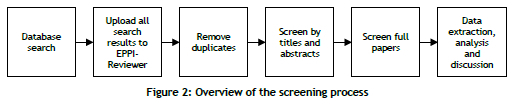
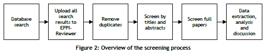
Building on the research questions delineated in the Introduction, this study undertakes an exploration of the literature surrounding MCs in HEE, with a keen focus on recent advancements. Using a systematic literature review (SLR) approach, the research endeavours to pinpoint the primary research themes and effective implementations of MCs in higher education. The survey process conducted in this study serves to uncover the evolution of research on MCs and to assess their prospects in HEE. To ensure a comprehensive approach, the search was executed using seven research databases: SpringerLink, ScienceDirect, Emerald, Taylor & Francis, IEEE Xplore, Scopus and SpringerBooks. Keywords such as "micro-credentials", "digital badges", "nano-degrees", "engineering education", and "higher education" were used to identify relevant studies. The review process itself consisted of several stages, as illustrated in Figure 2. These stages were (i) defining the research objectives; (ii) establishing the research field; (iii) screening abstracts and full texts; and (iv) reporting on the reduced data while generating categories and summarising the validation process of the literature review.
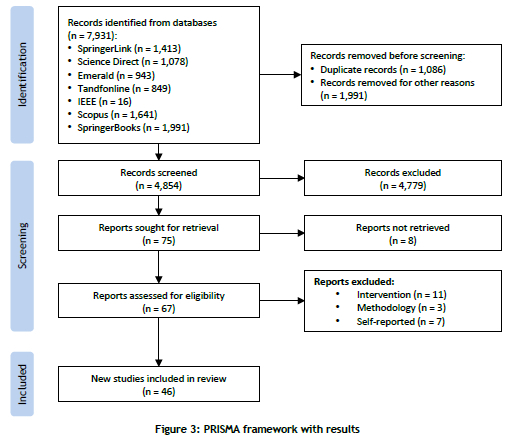
The framework followed in the data collection and analysis is further outlined in Figure 3, and is based on the PRISMA framework [37] to ensure that the review process is a simple, systematic, explicit, and reproducible method for identifying, synthesising, and evaluating an available body of literature based on research conducted by authors.
3.1. Defining the research objectives
A robust research protocol was devised and circulated among the reviewers to ensure a comprehensive understanding of the research questions, keywords, search strings, screening criteria, time frame, and quality requirements. The overarching research hypothesis posited that the successful integration of MCs into formal engineering education programmes could significantly enhance the quality of qualifications. To address this hypothesis, a thorough investigation of research conducted in the last decade on MCs in higher education was undertaken to gauge the extent to which it supports the identified hypothesis. This review operates under the premise that MCs present promising, adaptable, and responsive learning opportunities, potentially transforming HEE. The objective of this review is to lay the groundwork for the widespread adoption of MCs in HEE programmes, facilitating enhanced educational experiences and improving learning outcomes.
3.2. Establishing the research field
In this step, all the articles were subjected to selection based on their titles and keywords. To this end, search strings such as "Micro-Credentials*", "MC", "Skills programs", and "Industry Certificates" were used across all seven databases to ensure methodological consistency. A manual search of reference lists and citation tracking also identified a few additional relevant articles. The outcomes of these searches were imported into EppiReview software [38] for screening, leveraging its functionalities to enhance the consistency and reliability of the screening process. Selection criteria were established to provide clarity on what content should be included and excluded from the review. The research population was delineated to encompass scholars, lecturers, professors, and curriculum developers engaged in higher education research within the timeframe of 2013 to 2023. A total of 5,940 research papers were retrieved and imported into EppiReview software, where 1,086 duplicate entries were identified and subsequently removed. The focus then shifted to identifying research specifically related to MCs in HEE.
3.3. Screening abstracts and full texts
The screening process was conducted meticulously, adhering to pre-established inclusion and exclusion criteria. Specifically, the review focused on articles published between 2013 and 2023, concentrating on MCs in engineering education degree programmes. Articles not directly relevant to MCs in engineering education and those not published in English were excluded. Only peer-reviewed journal articles, conference papers, and book chapters met the eligibility criteria for inclusion. A total of 4854 articles underwent screening based on their abstracts, with the exclusion of grey literature sources such as newspaper articles, reports, and non-peer-reviewed papers, as well as any content unrelated to MCs in engineering education.
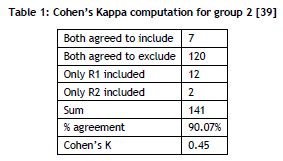
To ensure consistency in full-text inclusion, the reviewers were paired in five groups and allocated a portion (±700 or ±140 articles per group) of the articles, corresponding to 15% of the articles for double review of abstracts for full-text inclusion using the EppiReview double screening functionality. Cohen's Kappa coefficient is a statistical measure used to assess inter-rater reliability by quantifying the level of agreement between two reviewers beyond that expected by chance alone. In this study, inter-reviewer agreement was evaluated iteratively using both percentage agreement and Cohen's Kappa coefficient. Acceptance thresholds were set at a minimum of 90% raw agreement and a Kappa value of 0.41 or higher, indicating at least moderate agreement beyond chance. Table 1 presents the percentage agreement and corresponding Cohen's Kappa values for one of the reviewer groups, providing a comprehensive assessment of the reliability of the screening process.
During the full-text screening phase, each selected article underwent a detailed quality appraisal, focusing on assessing the robustness of the research methodology and the credibility of the sources. Given the rigorous preliminary screening of titles and abstracts, a significant number of articles were deemed irrelevant to engineering education in higher institutions. Recognising that much of the research on MCs pertained primarily to professional development rather than to direct integration into engineering education programmes, we expanded our screening criteria to include STEM fields broadly. Consequently, only 75 articles advanced to a comprehensive quality appraisal and full-text review. In this phase, 21 records were excluded based on our stringent appraisal criteria, which included methodology, intervention specificity, and quality of reporting. In addition, eight records could not be retrieved. This meticulous screening process ultimately yielded 46 papers eligible for synthesis, representing a sampling of 0.95 per cent. This refined selection underscores the specificity and relevance of our review, ensuring that our synthesis draws from the most pertinent and rigorously researched articles in the field.
3.4. Analysis and synthesis
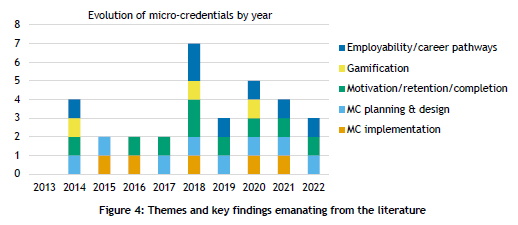
Following the application of the inclusion criteria, all the selected articles were thoroughly examined in full text to identify recurring themes and to address the research questions. These articles were then grouped according to emerging themes to assess the current status and to identify gaps in the literature. Using bibliometric software, data analysis was conducted to delineate existing gaps further. Figure 4 provides an overview of the themes and key findings emanating from the literature included in the bibliometric analysis, and highlights the relevant themes extracted from the final selection of papers.
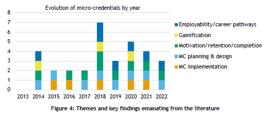
The distribution of MC themes from 2013 to 2023 reveals a clear evolution in focus [38, 39, 40, 41, 42, 43, 44, 45, 46, 47,48,49, 50]. Early research centred on foundational experimentation and motivation-based applications, while later studies expanded towards structured planning, design, and employability alignment. A steady growth in studies addressing MC planning, design, and learner motivation indicates the maturing integration of MCs into higher education. The emergence of gamification and employability pathways reflects a shift toward enhancing engagement and demonstrating labour-market relevance. Collectively, these patterns illustrate a transition from exploratory implementations to strategically designed systems supporting lifelong learning and professional identity development.
4. RESULTS AND DISCUSSION
4.1. Bibliometric analysis
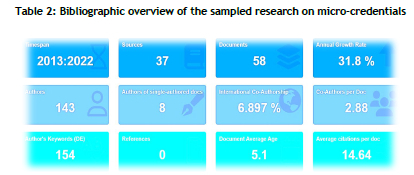
This research stands out because of its unique approach, which involves the selective sampling of the literature followed by bibliometric analysis. In contrast to prior studies that analysed unfiltered bibliographies from databases, our analysis exclusively focused on the references extracted from full-text screened articles. This method allows for a comprehensive understanding of the current state of MC research and its implementation in engineering education. Table 2 provides an overview of MC research, showcasing an annual publication growth rate of 31%, and highlighting the significant interest in this field. In addition, international co-authorship stands at 6.89%, indicating collaboration across borders for knowledge exchange and sharing of best practices. Moreover, the increasing number of citations over time suggests a dynamic scholarly discourse, with researchers both building on existing knowledge and critically evaluating previous findings to contribute new insights to the field.
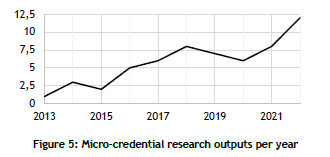
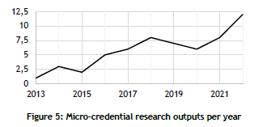
The bibliometric study used selective sampling of papers from the database, a methodology that yielded findings closely aligned with those reported by [13] regarding the trajectory of research on MCs. As previously noted, research on MCs is not novel. However, our findings reveal a scarcity of publications focusing on engineering before 2013; only one paper was found in this specific domain. Following a subsequent decline in publications in 2015, a consistent upward trend up to 2018 indicates a burgeoning interest in this field, signifying scholars' recognition of the need for further exploration to comprehend the effective implementation of MCs. The onset of the COVID-19 pandemic in 2020 coincided with a noticeable decrease in publications, likely attributable to the initial uncertainty surrounding the pandemic's impact. Notably, post-2020, we observe characteristics indicative of exponential growth, which may be attributed to the widespread adoption of online learning and the extensive use of digital technology in education during this period. This surge in interest could signify a catalytic moment for MCs, as they align closely with the evolving landscape of digital education.
Figure 5 illustrates that research on MCs has progressively gained momentum from 2013 to 2022. Starting with a single publication in 2013, the output increased to five publications in 2016 and further to eight in 2018. There was a slight decline in 2020, with the output dropping to six publications. However, a significant surge was observed between 2021 and 2022, when the publication output in the field of MCs in engineering education peaked at twelve. This trend highlights a growing academic interest and the expanding scope of MCs in engineering education over the decade.
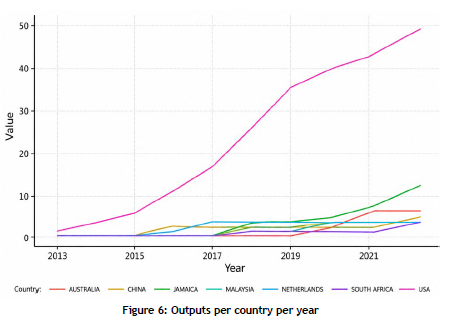
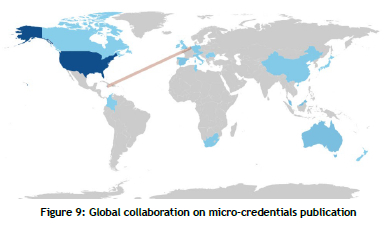
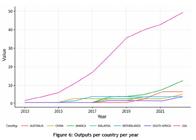
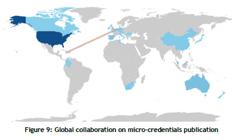
Advancements in technology have sparked a heightened interest in MCs, as higher education institutions (HEIs) can now seamlessly implement these credentials and monitor them through digital badges. This technological capability, which was once rare, has become increasingly accessible in recent years, thus facilitating the widespread adoption of MCs. Notably, our findings reveal that the majority of MC research has been conducted in developed nations where technology infrastructure is more readily available. Specifically, the United States leads in MC research, followed by Malaysia and Australia, as illustrated in Figure 6. The data reflect a consistent growth in publication output in these countries. Conversely, the lowest-ranking countries in MC research activity include Spain and South Africa. It is plausible to infer from this data that countries actively engaged in MC research have also implemented these credentials in engineering education. However, a more in-depth analysis of the content would be necessary to ascertain the extent of the implementation and its effectiveness.
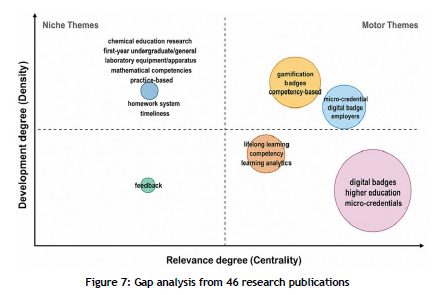
Shown in Figure 7, the thematic analysis maps and categorises different themes based on their relevance and development in the fields of engineering education and MCs. On the top left quadrant, the niche themes that include "practice-based", "laboratory equipment", and "mathematical competencies" are characterised by lower relevance and development scores, suggesting that they are less central and less explored in the field. Positioned towards higher relevance but lower development, emerging themes indicate they are becoming more central but are not yet fully explored or established. It is worth noting that digital badges and employers' perspectives occupy an intermediary position between motor themes and basic themes in the research landscape. This reflects the ongoing hesitance of industry about the transformative educational landscape.
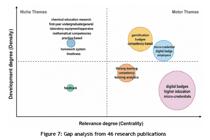
However, the past decade has witnessed a notable shift towards referring to MCs as digital badges, reflecting the rapid advancements in technology. Scholars have increasingly favoured digital badges when referring to Mcing, given their online monitoring and evaluation capabilities. This marks a departure from traditional assessment mechanisms, such as industry assessments, which were prevalent in previous years. The growing prominence of digital badges underscores the importance of technology-driven solutions in facilitating the implementation and assessment of MCs in educational contexts. Online learning and lifelong learning emerge as fundamental themes in this research. The majority of articles underscore the significance of online learning as a pivotal platform for introducing MCs via digital badges.
The adoption of MCs by HEIs, both in formal and non-formal programmes, facilitates lifelong learning. Graduates can seamlessly continue their education through technology, augmenting their existing qualifications. The predominant theme among the publications remains student engagement with the e-learning curriculum. MCs, as elucidated by [15], are predominantly hosted online through digital badge platforms. This contrasts with previous decades owing to advancements in digital identification and traceability. Technologies such as the Mozilla Open Badges Framework and Open have facilitated their implementation by ensuring authenticity and preventing replication. The gap analysis also highlights gamification of educational content and competency-based education as the driving themes. Notably, [42] delve into the integration of gaming content into education, illustrating its positive impact. Gamification fosters engagement by tapping into social structures, where individuals are incentivised to participate in activities that offer social validation through rewards, ultimately fulfilling psychological needs.
4.2. Discussion
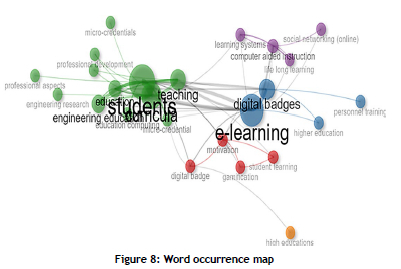
The overview of the interconnection between various key terms in the studied scientific literature is shown in Figure 8. The word occurrence map places e-learning as a central node, indicating that it is a major focus area with numerous connections to other key terms such as "digital badges", "motivation", and "gamification". This highlights the integration of technology in education. Students, also a central node, suggest that much of the research or discourse revolves around student engagement, learning outcomes, and pedagogical strategies. The connected sub-theme "engineering education" connects to "professional development" and "teaching", indicating a focus on improving educational strategies in engineering contexts. Examination of the themes identified in the literature reveals a scarcity of studies focusing on these aspects, with only a few papers addressing the integration of MCs into formal engineering programmes. Notably, among the papers analysed, only the studies carried out by [47] and [15] provide insights into the framework and curriculum integration of MCs. The e-learning approach must be followed during implementation, and a curriculum review must be conducted during the planning and design phase. This highlights the need for further exploration and development in this area to leverage fully the potential of MCs in engineering education. The analysis also indicates that there are benefits associated with implementing MCs or digital badges in solving current HEE challenges, some of which are listed below.
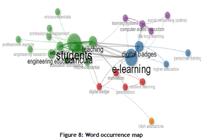
Figure 8 presents a word-occurrence map illustrating the dominant themes and interconnections in the analysed scientific literature. E-learning emerges as the most central concept, demonstrating its strong association with key terms such as digital badges, motivation, and gamification, which collectively reflect the growing integration of technology-enhanced learning approaches. The prominence of the term "students" indicates that much of the research focuses on student engagement, learning experiences, and outcomes. Although engineering education appears as a relevant cluster, its limited linkages, particularly to professional development and teaching, suggest that research on MC integration in formal engineering curricula remains under-explored. Only a small number of studies [15], [47], [51] provide insight into curriculum design and framework integration for MCs. Overall, the map highlights increased interest in digital learning, yet reveals a gap in empirical studies addressing the systematic implementation of MCs in engineering education.
4.2.1. Increase the value of the degree offered by the institution
As in South Africa, industries are facing an overwhelming influx of qualified graduates seeking employment, yet the number of available positions is insufficient to accommodate all the qualified individuals. This has resulted in intense competition among graduates to secure employment opportunities. Graduating with a college or university degree alone is no longer sufficient to guarantee employment, leading to a perceived decline in the value of traditional degrees. In response to this shifting landscape, HEIs are exploring ways to ensure that their graduates remain competitive in the job market. One strategy is to integrate value-added industry certificates in the form of MCs or digital badges into formal degree programmes [52]. By doing so, graduates acquire industry-specific credentials alongside their degree, demonstrating to employers that they possess the skills and competencies required for the job. This integration enhances the employability of graduates and provides them with tangible evidence of their readiness for the workforce.
4.2.2. Motivation for student success
The practical and applied nature of MCs, often involving real-world projects or case studies, enhances student engagement and motivation by demonstrating the immediate relevance and applicability of the skills learned. Overall, MCs offer engineering undergraduate students a pathway to enhance their employability, expand their skill set, and stay competitive in a rapidly evolving job market. Thus, MCs offer significant motivation for engineering undergraduate students by providing them with opportunities to acquire targeted skills and competencies that align with industry demands. In addition, MCs often come with digital badges or certificates, allowing students to pursue specific areas of interest or skill development, which serve as tangible evidence of the skills acquired, further motivating students to engage in learning activities. However, it is worth noting that, despite the growing interest in MCs to enhance education and learning, there are inherent conflicts between openness and credentialing [22]. While widening access and visibility are important ideals to promote equitable access and use of educational content, they may ultimately alter the intrinsic motivation of learners. This is because learners might prefer to be associated with a niche community or little-known credentials that provide some measure of exclusivity.
4.2.3. Benefits of implementing micro-credentials in higher education institutions
MC research in higher education is experiencing notable progress, largely attributable to the integration of digital technologies that facilitate blended learning approaches. Through blended learning, HEIs can supplement traditional degree programmes with MCs delivered via online platforms. This innovative approach not only enhances the overall learning experience but also underscores the importance of recognising prior skills and experiences for enhancing career prospects [53]. This recognition serves as a pivotal catalyst in unlocking the full potential of Africa's workforce, enabling individuals to leverage their existing skills and experiences to access meaningful employment opportunities and to contribute to the development objectives of the continent. By validating prior skills acquired through formal and informal learning pathways, individuals can seamlessly transition into new roles, pursue further education, and advance their careers. In addition, the acknowledgement of prior skills fosters social inclusion and economic empowerment, enabling individuals from diverse backgrounds to participate actively in the labour market and in society at large. Consequently, there is a growing interest in industry-based MCs that are aimed at elevating the quality of educational programmes that are offered, thereby aligning education with industry needs and enhancing workforce readiness.
Further research endeavours are essential to delve into curriculum design and framework development, ensuring alignment with industry demands and accreditation standards. Bridging this gap would be paramount to advance the integration of MCs into formal engineering education programmes and to maximise their benefits for learners and institutions. One avenue that the current authors are exploring is the implementation of collaborative project-based learning MCs. As illustrated in Figure 9, few authors in the literature have pursued international collaboration to exchange insights into the challenges and opportunities of MCs among higher learning institutions.
4.2.4. Theoretical perspectives and critical analysis
The integration of MCs into engineering education can be analysed through engineering education theory, curriculum theory, and professional formation frameworks. From an engineering education standpoint, MCs align with outcome-based, competency-driven models that prioritise demonstrable technical and professional skills [54]. Advocates view them as tools for bridging the persistent gap between academic learning and industrial practice, while critics argue that focusing on discrete skills may fragment learning and diminish holistic problem-solving capacity.
Curriculum theory interprets MCs as mechanisms for deconstructing rigid, slow-to-change curricula. Their modular, stackable design promotes responsiveness to technological and labour-market shifts. Yet, without coherent institutional integration, they risk remaining peripheral and undermining curricular coherence and accreditation alignment.
Professional formation theory, concerned with developing engineers' identities, ethics, and reflective capacities, positions MCs as vehicles for validating authentic workplace learning. However, poorly designed systems may commodify education, reducing professionalism to a checklist of competencies.
These perspectives reveal both promise and tension: MCs can enhance flexibility, employability, and lifelong learning, but risk credential inflation and the erosion of integrative knowledge [55]. This study synthesises these viewpoints to position MCs as complementary instruments for reforming engineering curricula.
5. CONCLUSION
The landscape of MC research has witnessed significant growth in recent years, with emerging interest in engineering education. This study assessed the current state of MC research in engineering education and explored its intersections with digital badges, competency-based education, gamification, and online learning. There is substantial interest in this area, especially from developed countries, with the United States at the forefront. The literature highlights MCs' potential to democratise learning through decentralised educational models, addressing critical challenges such as accessibility, affordability, and personalised learning. These benefits suggest that MCs offer a transformative approach to education. Our findings also underscore the role of MCs in enhancing HEE by complementing traditional curricula and facilitating their integration into formal higher education programmes via online learning platforms. However, the adoption of MCs in engineering education is not progressing as rapidly as in other fields, such as the humanities. There is a significant gap in the accreditation of engineering MCs, highlighting the need for further research on how these credentials could be formally integrated and recognised by various STEM professional bodies. Future work will focus on designing international curricula and identifying factors crucial for successful implementation. A key area of interest is aligning these efforts with professional accreditation standards to meet industry demands for graduates equipped with specific, verifiable skills, thereby enhancing employability.
Although MCs are purposeful, they focus solely on specific skills, and cannot adapt to a rapidly changing innovation environment. However, the scope of MCs could be expanded to address the need for emerging technological advancements.
REFERENCES
- [1] S. Sheppard, K. Macatangay, A. Colby, W. M. Sullivan, and L. S. Shulman. 2009. Educating engineers: Designing for the future of the field. Jossey-Bass: San Francisco, CA.
- [2] A. Gregg, J. Park, C. Fenton, D. Lang, and M. Handley. 2022. Exploring the "Why" of micro-credentials and digital badges: Engineering students' motivations for and perceived utility of learning outside of class. In 2022 IEEE Frontiers in Education Conference (FIE), IEEE, pp. 1-7. DOI: 10.1109/FIE56618.2022.9962376
-
[3] E. Cook. 2021. Practice-based engineering: Mathematical competencies and micro-credentials. International Journal of Research in Undergraduate Mathematics Education, vol. 7, no. 2, pp. 284305. https://doi.org/10.1007/s40753-020-00128-3
» https://doi.org/10.1007/s40753-020-00128-3 -
[4] B. Eager and E. Cook. 2020. Micro-credentialing of entrepreneurship education in a practice-based undergraduate engineering context. Entrepreneurship Education and Pedagogy, vol. 3, no. 4, pp. 352-363. https://doi.org/10.1177/2515127419890344
» https://doi.org/10.1177/2515127419890344 -
[5] T. Litzinger, L. R. Lattuca, R. Hadgraft, and W. Newstetter. 2011. Engineering education and the development of expertise. Journal of Engineering Education, vol. 100, no. 1, pp. 123-150. https://doi.org/10.1002/j.2168-9830.2011.tb00006.x
» https://doi.org/10.1002/j.2168-9830.2011.tb00006.x -
[6] M. Tomlinson and R. Watermeyer. 2022. When masses meet markets: Credentialism and commodification in twenty-first-century higher education. Discourse: Studies in the Cultural Politics of Education, vol. 43, no. 2, pp. 173-187. https://doi.org/10.1080/01596306.2020.1814996
» https://doi.org/10.1080/01596306.2020.1814996 -
[7] M.-E. Sousa-Vieira, D. Ferrero-Castro, and J.-C. López-Ardao. 2021. Design, development and use of a digital badges system in higher education. Applied Sciences, vol. 12, no. 1, 220. https://doi.org/10.3390/app12010220
» https://doi.org/10.3390/app12010220 -
[8] D. Olcott Jr. 2022. Micro-credentials: A catalyst for strategic reset and change in US higher education. American Journal of Distance Education, vol. 36, no. 1, pp. 19-35. https://doi.org/10.1080/08923647.2021.1997537
» https://doi.org/10.1080/08923647.2021.1997537 -
[9] African Union. 2015. Agenda 2063: Report of the commission on the African Union Agenda 2063: The Africa we want in 2063. http://archives.au.int/handle/123456789/4631
» http://archives.au.int/handle/123456789/4631 -
[10] N. S. W. Bo. 2024. OECD digital education outlook 2023: Towards an effective education ecosystem. Hungarian Educational Research Journal vol. 15, no. 2, pp. 284-289. https://doi.org/10.1556/063.2024.00340
» https://doi.org/10.1556/063.2024.00340 -
[11] B. W. Shanahan and J. Organ. 2022. Harnessing the benefits of micro credentials for Industry 4.0 and 5.0: Skills training and lifelong learning. IFAC-PapersOnline, vol. 55, no. 39, pp. 82-87. https://doi.org/10.1016/j.ifacol.2022.12.015
» https://doi.org/10.1016/j.ifacol.2022.12.015 -
[12] Cartiş, J. Leoste, R. lucu, K. Kikkas, K. Tammemäe, and K. Männi. 2023. Conceptualising micro-credentials in the higher education research landscape: A literature review. In Dascalu, M., Marti, P., Pozzi, F. (eds), Polyphonic construction of smart learning ecosystems, Springer: Singapore, 2023, pp. 191-203. https://doi.org/10.1007/978-981-19-5240-1_13
» https://doi.org/10.1007/978-981-19-5240-1_13 -
[13] D. K. Narong. 2025. Research trends on micro-credentials: A keyword co-occurrence analysis and science mapping. Journal of Further and Higher Education, vol. 49, no. 7, pp.1919-937. https://doi.org/10.1080/0309877X.2025.2509578
» https://doi.org/10.1080/0309877X.2025.2509578 -
[14] C. B. Azolibe, S. K. Dimnwobi, and C. P. Uzochukwu-Obi. 2025. The determinants of unemployment rate in developing economies: Does banking system credit matter? Journal of Economic and Administrative Sciences, 41(1), pp. 300-319. https://doi.org/10.1108/JEAS-01-2022-0021
» https://doi.org/10.1108/JEAS-01-2022-0021 - [15] L. P. Cantwell and K. K. Rose. 2018. Addressing stakeholder needs to establish meaningful digital badging in higher education. In O'Brien, K. and Jacobsen, T. E. (eds), Teaching with digital badges: Best practices for libraries, Rowman and Littlefield: Lanham, MD, pp. 31-60.
-
[16] M. Brown, M. N. G. Mhichil, E. Beirne, and C. Mac Lochlainn. 2021. The global micro-credential landscape: Charting a new credential ecology for lifelong learning. Journal of Learning for Development, vol. 8, no. 2, pp. 228-254. https://files.eric.ed.gov/fulltext/EJ1314205.pdf
» https://files.eric.ed.gov/fulltext/EJ1314205.pdf -
[17] M. Behney. 2019. Synthesising a digital badge for chemistry undergraduates. Reference Services Review, vol. 47, no. 4, pp. 448-460. https://doi.org/10.1108/RSR-04-2019-0025
» https://doi.org/10.1108/RSR-04-2019-0025 -
[18] J. Stefaniak and K. Carey. 2019. Instilling purpose and value in the implementation of digital badges in higher education. International Journal of Educational Technology in Higher Education, vol. 16, no. 1, 44. https://doi.org/10.1186/s41239-019-0175-9
» https://doi.org/10.1186/s41239-019-0175-9 -
[19] N. Thi Ngoc Ha, M. Spittle, A. Watt, and N. Van Dyke. 2023. A systematic literature review of micro-credentials in higher education: A non-zero-sum game. Higher Education Research & Development, vol. 42, no. 6, pp. 1527-1548. https://doi.org/10.1080/07294360.2022.2146061
» https://doi.org/10.1080/07294360.2022.2146061 -
[20] R. M. Selvaratnam and M. D. Sankey. 2021. An integrative literature review of the implementation of micro-credentials in higher education: Implications for practice in Australasia. Journal of Teaching and Learning for Graduate Employability, vol. 12, no. 1, pp. 1-17. https://ojs.deakin.edu.au/index.php/jtlge/
» https://ojs.deakin.edu.au/index.php/jtlge/ -
[21] K. Ahsan, S. Akbar, B. Kam, and M. D.-A. Abdulrahman. 2023. Implementation of micro-credentials in higher education: A systematic literature review. Education and Information Technologies, vol. 28, pp. 13505-13540. https://doi.org/10.1007/s10639-023-11739-z
» https://doi.org/10.1007/s10639-023-11739-z - [22] T. Fischer, U. Niederländer, and M. Stabauer. 2022. Digital badges in higher education: The perspective of employers in Upper Austria, in 2022 20th International Conference on Information Technology Based Higher Education and Training (ITHET), 2022, IEEE, pp. 1-9. Doi: 10.1109/ITHET56107.2022.10031743
- [23] R. Barlow, J. Uziak, I. Villanueva, O. Lawanto, and K. H. Becker. 2017. Work in progress: Online engineering education certificate program. Paper presented at the 2017 ASEE Annual Conference & Exposition. Columbus, Ohio, USA. https://doi.org/10.18260/1-2--29174.
-
[24] J. Ahn, A. Pellicone, and B. S. Butler. 2014. Open badges for education: What are the implications at the intersection of open systems and badging? Research in Learning Technology, vol. 22, 23563. https://doi.org/10.3402/rlt.v22.23563
» https://doi.org/10.3402/rlt.v22.23563 - [25] Y. Song. 2018. Redesigning a computer science capstone course with micro-credentials. In 2018 IEEE Frontiers in Education Conference (FIE), 2018, IEEE, pp. 1-5.
-
[26] V. Devedzic and J. Jovanovic. 2015. Developing open badges: A comprehensive approach. Educational Technology Research and Development, vol. 63, pp. 603-620. DOI: 10.1007/s11423-015-9388-3
» 10.1007/s11423-015-9388-3 -
[27] M. Towns, C. J. Harwood, M. B. Robertshaw, J. Fish, and K. O'Shea. 2015. The digital pipetting badge: A method to improve student hands-on laboratory skills. Journal of Chemical Education, vol. 92, no. 12, pp. 2038-2044. DOI: 10.1021/acs.jchemed.5b00464
» https://doi.org/10.1021/acs.jchemed.5b00464 -
[28] S. Hensiek, B. K. DeKorver, C. J. Harwood, J. Fish, K. O'Shea, and M. Towns. 2016. Improving and assessing student hands-on laboratory skills through digital badging. Journal of Chemical Education, vol. 93, no. 11, pp. 1847-1854. https://doi.org/10.1021/acs.jchemed.6b00234
» https://doi.org/10.1021/acs.jchemed.6b00234 - [29] M. W. Easterday, D. R. Lewis, and E. Gerber. 2013. Formative feedback in digital lofts: Learning environments for real world innovation. In AIED Workshops, 2013, Citeseer.
- [30] J. Clayton, R. Elliott, and J. Iwata. 2014. Exploring the use of micro-credentialing and digital badges in learning environments to encourage motivation to learn and achieve. In ASCILITE 2014 Conference Proceedings. Rhetoric and Reality: Critical perspectives on educational technology.
-
[31] S. Cucchiara, A. Giglio, D. Persico, and J. E. Raffaghelli. 2014. Supporting self-regulated learning through digital badges: A case study. in New Horizons in Web-Based Learning: ICWL 2014 International Workshops, SPeL, PRASAE, IWMPL, OBIE, and KMEL, FET, Tallinn, Estonia, August 14-17, 2014, Revised Selected Papers 13, 2014: Springer, pp. 133-142. https://doi.org/10.1007/978-3-319-13296-9_15
» https://doi.org/10.1007/978-3-319-13296-9_15 - [32] L. Facey-Shaw, M. Specht, and J. Bartley-Bryan. 2018. Digital badges for motivating introductory programmers: Qualitative findings from focus groups. In 2018 IEEE Frontiers in Education Conference (FIE), 2018, IEEE, pp. 1-7. DOI: 10.1109/FIE.2018.8659227
-
[33] J. R. Fanfarelli and R. McDaniel. 2017. Exploring digital badges in university courses: Relationships between quantity, engagement, and performance. Online Learning, vol. 21, no. 2. doi: 10.24059/olj.v21i2.1007
» https://doi.org/10.24059/olj.v21i2.1007 - [34] M. B. Kinney, M. Highum, A. Sergeyev, and S. A. Kuhl. 2017. Creating pathways to stackable credentials in robotics by manufacturing a community college and university partnership: Year two progress. Paper presented at 2017 ASEE Annual Conference & Exposition, Columbus, Ohio, USA.
- [35] M. B. Kinney, A. Sergeyev, S. A. Kuhl, and M. N. Highum. 2016. Creating pathways to stackable credentials in robotics: Meeting industry needs by manufacturing a community college and university partnership. Paper presented at 2016 ASEE Annual Conference & Exposition, New Orleans, Louisiana, USA
- [36] O. Borrás-Gené. 2018. Use of digital badges for training in digital skills within higher education. In 2018 International Symposium on Computers in Education (SIIE), 2018, IEEE, pp. 1-7.
-
[37] W. Mengist, T. Soromessa, and G. Legese. 2020. Method for conducting systematic literature review and meta-analysis for environmental science research. MethodsX, vol. 7, 100777. https://doi.org/10.1016/j.mex.2019.100777
» https://doi.org/10.1016/j.mex.2019.100777 -
[38] J. Thomas, J. Brunton, and S. Graziosi. 2010. EPPI-Reviewer 4.0: Software for research synthesis. EPPI-Centre Software. London: Social Science Research Unit, Institute of Education. https://eppi.ioe.ac.uk/cms/er4/Features/tabid/3396/Default.aspx
» https://eppi.ioe.ac.uk/cms/er4/Features/tabid/3396/Default.aspx -
[39] B. Wisckowska, K. B. Kubiak, P. Józwiak, W. Moryson, and B. Stawinska-Witoszynska. 2022. Cohen's kappa coefficient as a measure to assess classification improvement following the addition of a new marker to a regression model. International Journal of Environmental Research and Public Health, 19(16), 10213. https://doi.org/10.3390/ijerph191610213
» https://doi.org/10.3390/ijerph191610213 -
[40] R. Crafford and M. Matthee. 2016. Implementing open badges for recognition of learning achievements in South African organisations. In Proceedings of the Annual Conference of the South African Institute of Computer Scientists and Information Technologists, 2016, pp. 1-10. https://doi.org/10.1145/2987491.2987503
» https://doi.org/10.1145/2987491.2987503 -
[41] D.-K. Mah. 2016. Learning analytics and digital badges: Potential impact on student retention in higher education. Technology, Knowledge and Learning, vol. 21, pp. 285-305. DOI: 10.1007/s10758-016-9286-8
» https://doi.org/10.1007/s10758-016-9286-8 -
[42] J. A. Delello, H. Hawley, R. R. McWhorter, C. S. Gipson, and B. Deal. 2018. Gamifying education: Motivation and the implementation of digital badges for use in higher education. International Journal of Web-Based Learning and Teaching Technologies (IJWLTT), vol. 13, no. 4, pp. 17-33. DOI: 10.4018/IJWLTT.2018100102
» https://doi.org/10.4018/IJWLTT.2018100102 -
[43] K. L. Carey and J. E. Stefaniak. 2018. An exploration of the utility of digital badging in higher education settings. Educational Technology Research and Development, vol. 66, pp. 1211-1229. https://doi.org/10.1007/s11423-018-9602-1
» https://doi.org/10.1007/s11423-018-9602-1 -
[44] Z. Cheng, S. L. Watson, and T. J. Newby. 2018. Goal setting and open digital badges in higher education. TechTrends, vol. 62, pp. 190-196. https://doi.org/10.1007/s11528-018-0249-x
» https://doi.org/10.1007/s11528-018-0249-x - [45] J. Hung and D. Weinman. 2019. Enhanced student learning experience in technical drawing and CAD through augmented reality and micro-credentials. Paper presented at 2019 ASEE Annual Conference & Exposition, Tampa, Florida, USA
- [46] Y. Song. 2019. Alignment of deliberate practice to micro-credentials in an introductory computer science course. In 2019 IEEE Frontiers in Education Conference (FIE), 2019, IEEE, pp. 1-4. DOI: 10.1109/FIE43999.2019.9028427
- [47] O. Akintewe, J. E. Gaines, A. M. Bateman, and L. Chisholm. 2020. Work in progress: Professional development module in first-year engineering courses. Paper presented at 2020 ASEE Virtual Annual Conference Content Access, June 22-26, 2020, American Society for Engineering Education
-
[48] L. Facey-Shaw, M. Specht, P. Van Rosmalen, and J. Bartley-Bryan. 2020. Do badges affect intrinsic motivation in introductory programming students? Simulation & Gaming, vol. 51, no. 1, pp. 33-54, 2020. https://doi.org/10.1177/1046878119884996
» https://doi.org/10.1177/1046878119884996 -
[49] D. T. Hickey and G. T. Chartrand. 2020. Recognizing competencies vs. completion vs. participation: Ideal roles for web-enabled digital badges. Education and Information Technologies, vol. 25, pp. 943-956, 2020. https://doi.org/10.1007/s10639-019-10000-w
» https://doi.org/10.1007/s10639-019-10000-w - [50] A. Gregg, E. Marsh, and K. A. Thole. 2021. Augmenting traditional ME curriculum with digital badge microcredentials. Paper presented at 2021 ASEE Virtual Annual Conference Content Access.
- [51] S. Jindal and J. Bringardner. 2021. A combined e-portfolio and microcredentialing tool for engineering identities and career pathways. Paper presented at 2021 ASEE Virtual Annual Conference Content Access. DOI: 10.18260/1-2-36561
-
[52] J. Uanhoro and S. S.-C. Young. 2022. Investigation of the effect of badges in the online homework system for an undergraduate general physics course. Education Sciences, vol. 12, no. 3, 217, 2022. https://doi.org/10.3390/educsci12030217
» https://doi.org/10.3390/educsci12030217 -
[53] M. F. Maina, L. Guàrdia Ortiz, F. Mancini, and M. Martinez Melo. 2022. A micro-credentialing methodology for improved recognition of HE employability skills. International Journal of Educational Technology in Higher Education, vol. 19, 10, 2022. https://doi.org/10.1186/s41239-021-00315-5
» https://doi.org/10.1186/s41239-021-00315-5 -
[54] M. Sedighi. 2016. Application of the word co-occurrence analysis method in mapping of the scientific fields (Case study: The field of informetrics). Library Review, vol. 65, no. 1/2, pp. 52-64. https://doi.org/10.1108/LR-07-2015-0075
» https://doi.org/10.1108/LR-07-2015-0075 -
[55] N. T. Ngoc Ha, N. Van Dyke, and M. Spittle. 2025. Micro-credentials in higher education: Perceived benefits for graduate employability and interest levels in micro-credentials for training employability skills. Studies in Higher Education, vol. 52, no. 7, pp.1457-1459. https://doi.org/10.1080/03075079.2025.2516709
» https://doi.org/10.1080/03075079.2025.2516709
Accepted for publication 25 Jun 2026
Available online 31 Aug 2026
ORCID® identifiers
M.G. Kanakana-Katumba https://orcid.org/0000-0001-7475-2131
K.A. Bello https://orcid.org/0000-0003-2543-2590
T.Y. Chuengwa https://orcid.org/0000-0002-1618-2350
A. Adeodu https://orcid.org/0000-0003-4438-2867
T.K. Ramasu https://orcid.org/0000-0002-2774-1007