Institutional mentorship for graduate empowerment and work-readiness in South Africa
Abstract
Despite a growing pool of graduates, South Africa grapples with persistent graduate unemployment. This challenge is frequently attributed to a gap between education and workplace needs, prevalent skill shortages, and concerns that higher education institutions (HEIs) may not fully equip students for the realities of the world of work. Against this backdrop, the main research issue of this study is whether institutional mentorship can effectively empower graduates and improve their work-readiness, therefore providing a workable approach to lower graduate unemployment in South Africa. Under Kram's mentorship theory, which looks at the link between mentorship and employability, the study used electronic survey responses from alumni of a South African HEI to assess the effect of institutional mentorship. The findings reveal that institutional mentorship programmes can positively shape graduates' personal and professional development. Based on these insights, the study puts forward specific strategies and recommendations to enhance graduates' success in the job market and tackle the broader issue of graduate unemployment.
graduate unemployment; employability; institutional mentorship; higher education; labour
INTRODUCTION
Addressing the issue of graduate unemployment in South Africa, in conjunction with the considerable lack of available skills services, is challenging, requiring advanced solutions from the higher education system. This study undertakes the challenge by forming and exploring the institutional mentorship model as a vital component to improve graduate outcomes. It is argued that implementing proper institutional mentorship practices will enhance graduates' chances of employment through empowerment and work-readiness initiatives.
In order to explain the causal relationships of this study, Kram's mentorship theory is used to develop a comprehension model that will be analysed. This model proposes a sequence of steps in which institutional mentorship programmes (independent variables) such as career counselling and psychosocial assistance can affect graduate empowerment on multiple fronts (self, professional, and entrepreneurship) as well as work-readiness in terms of requisite skills and competence-these are known as intermediate outcomes of the model, which are anticipated to heighten employability and thus aid in addressing the existing surge of unemployed graduates. This model provides a framework to determine whether institutional mentorship can be strategically designed to reduce the education-employment gap. Hence, the guiding research question to be addressed is: To what extent can institutional mentorship, through its influence on graduate empowerment and work-readiness, enhance the employability of graduates within the South African context?
The urgency of this investigation is underscored by the limitations of traditional human capital theory in fully explaining the current employment paradox, where increased graduate numbers do not seamlessly translate into workforce absorption. While higher education improves employment prospects, the South African context is concerning, with an 11 per cent unemployment rate among graduates as of Q2 2021 (OECD 2021, 66) and a claimed skills shortage. This reality brings a major disconnect. In addition, there is a lack of practical skills and relevant workplace competencies, which aids in creating this gap.
By applying mentorship theory within educational settings and using a quantitative study, supported by qualitative data from a survey of alumni of a South African university, this study seeks to make an evidence-based impact. The findings aim to assist in formulating institutionally targeted mentorship programmes suited to graduates and the realities of the labour market to solve a major challenge in the country.
HIGHER EDUCATION'S ROLE BEYOND SERVING THE ECONOMY
Higher education in the 21st century, broadly defined as any post-secondary study, training, or research undertaken at an authorised institution, holds varied meanings across nations, often shaped by distinct national objectives and institutional missions. Common understanding, however, points to academic and educational pursuits within traditional arts and science faculties or specialised technological institutions. In South Africa, the Higher Education Act (No. 101 of 1997) defines it as programmes enabling certification according to the Higher Education Qualifications Framework.
The purposes and objectives of higher education have changed and evolved in the modern era (Blunt 2005). Historically, philosophers have offered diverse perspectives: Aristotle emphasised the realisation of individual potential (Hummel 1993, 2), Confucius advocated for continuous self-cultivation for societal betterment through moral and intellectual development (Zhao 2013, 10), and Plato viewed education as a transformative journey towards wisdom, virtue, and a harmonious society where individuals fulfil roles based on natural aptitudes (Sanni and Momoh 2019). While all valued knowledge and development, their conceptions of education's societal role differed, particularly concerning social mobility, a modern concept not uniformly attributable to all three. Implicit in these foundational philosophies is the view that higher education preserves, discovers, and creates knowledge, translating into societal participation through developed skills and innovation.
Contemporary societal shifts, however, have increasingly underscored the pragmatic generation of knowledge and its perceived utility for economic growth. This necessitates an approach that provides students with qualifications for upward mobility and economic participation and sees higher education contributing to output productivity by developing a skilled workforce. In a developing African context, this instrumental role is tied to expectations of stimulating innovation, boosting employability, and contributing to national growth strategies. HEIs have thus often been positioned as creators of developmental experts tasked with addressing socio-economic upliftment, aligning with the operations of an information-driven economy. Consequently, investment in higher education is often positively correlated with improved employment prospects and economic stability. Data suggest that economies, including South Africa, require a steady supply of highly trained workers, especially given the unemployment challenges that youth with lower educational credentials face. Despite a low overall proportion of adults with tertiary education in South Africa, their unemployment rates are notably the lowest, and qualifications can yield substantial returns in employment likelihood and earnings.
The era of globalisation, marked by international market involvement and the growth of private HEIs, has further reshaped higher education's societal role. Graduate employability ratings, for instance, have become a significant metric for assessing institutional quality globally. Employability itself is a multifaceted concept. Small, Shacklock and Marchant (2018, 4) define it as the capability to independently navigate the labour market by applying and adapting knowledge and personal skills within workplace contexts. Beyond purely academic or programmatic skills relevant to a specific industry, employability encompasses a suite of non-academic and transferable skills. Employers increasingly expect HEIs to cultivate these broader attributes, which direct students' contributions to their future employment and society. In South Africa, commonly required graduate skills include adaptability, IT literacy, communication proficiency, analytical ability, and collaborative capacity. While some professional programmes like engineering and medicine often embed experiential learning, humanities and arts graduates may have fewer direct opportunities, even though practical training significantly enhances employability skills. This global emphasis on skill acquisition is so crucial that the OECD has termed it the 21st century's "global currency".
HIGHER EDUCATION AND GRADUATE OUTCOMESEvaluating graduate outcomes necessarily involves considering both employer and employee satisfaction, alongside acquiring skills crucial for navigating the world of work. Competencies such as lifelong learning, entrepreneurial abilities, communication, and teamwork are globally sought after (Dass et al. 2018). African higher education institutions strive to cultivate the abilities needed to produce graduates with favourable employment and career maintenance prospects, a significant policy concern for developing nations (Association of African Universities 2013, 3).
It is important to distinguish employability - a set of lifelong skills and competencies enabling one to compete for jobs and perform effectively - from the mere state of being employed (Taylor 2016). Indeed, having the required skills does not equate to automatic employment, which makes it challenging to evaluate HEI quality solely on employment rates, given the varied factors influencing graduate unemployment. Nevertheless, HEIs, the labour market, and governments share a role in fostering employable graduates, although HEIs alone cannot ensure graduate employment (International Labour Organization 2015, 1).
Causal factors for graduate unemployment in South Africa
A confluence of factors shapes the previously established context of graduate unemployment in South Africa. The field of study chosen by a graduate is often cited as a critical predictor of employment outcomes (Bhorat, Mayet, and Visser 2012). For instance, an OECD report indicated that 32 per cent of South African workers are in roles misaligned with their areas of study (OECD 2018), and research suggests that degree specialisation can limit career advancement opportunities (Kraak 2015; Oluwajodu et al. 2015).
Employer perceptions and biases also play a role (Oluwajodu et al. 2015). Some studies indicate that employers may view graduates from historically white institutions (HWIs) more favourably than those from historically black institutions (HBIs), based on presumptions about the quality of education, thereby contributing to social inequality. Furthermore, issues within the foundational education system, such as the quality of secondary schooling, can contribute to later graduate unemployment (Paridjo and Waluya 2017).
Demographic factors are also relevant; 2021 data showed very high unemployment among 15-24-year-olds (64.4%) and 25-34-year-olds (42.9%), suggesting age significantly determines employment likelihood. This complex array of factors underscores the need for interventions like institutional mentorship to better prepare graduates for existing labour market realities, as proposed in this study.
TOWARDS UNDERSTANDING MENTORSHIPMentorship, historically viewed as a beneficial relationship where an experienced mentor guides a less experienced protégé's career, encompasses various supportive actions (Ragins and Kram 2007, 5). Meyer and Fourie (2006) describe it as a mutually beneficial partnership transcending mere obligation, involving coaching, networking, and career planning. Others highlight its value in meeting protégé development needs alongside organisational interests, providing coping mechanisms for structural changes, or offering support in employment and professional growth (Jyothi and Sharma 2015). It often involves seasoned individuals assisting protégés socially or professionally through career guidance and psycho-social support, or an interaction where a mentor provides counsel, emotional support, and motivation to enhance a protégé's development (Mohana and Enoch, 2020).
Synthesising these perspectives, this study understands mentorship as an interactive relationship wherein a knowledgeable mentor provides opportunities for a protégé's holistic (personal, psychological, social, and professional) growth, with the protégé proactively engaging in these opportunities. Such relationships are formed for diverse reasons, from enhancing organisational productivity (Abomeh 2015) and skill transfer (DeLong, Gabarro, and Lees 2008) to fostering managerial skills (Toor and Ofori 2008), diversity (Martin and Haar 2021), learning opportunities (Jyoti and Sharma 2015), and supportive environments for minorities (Murrell, Blake-Beard, and Porter 2021).
Within higher education, mentorship programmes could be instrumental in supporting students academically and personally. HEIs are uniquely positioned to offer guidance and assurance as they prepare students for the working world. At a faculty level, mentorship can aid in mapping competencies to prepare students for future professions. Hooley, Watts, and Andrews (2015) suggest HEI mentorship programmes provide a platform for career education, facilitating long-term planning and the transition from academic life. Thus, mentorship in this setting often occurs directly between trained lecturers or affiliated industry specialists and students, aiming to develop competencies for managing life post-graduation. Evidence suggests that effectively mentored individuals develop crucial habits like time management and critical thinking, alongside skills for workplace excellence. Well-managed programmes can enhance global competitiveness, and psycho-social mentoring functions are vital for protégés constructing professional identities.
This theoretical understanding of mentorship's potential benefits directly informs this study's investigation into how institutional mentorship, as perceived and experienced by alumni, contributes to their empowerment and work-readiness. The subsequent findings will explore the extent to which these theoretical functions are realised in practice.
Challenges and limitations of mentorship
While mentorship undoubtedly offers many benefits, engaging with its potential downsides and inherent limitations is crucial for a balanced perspective. For instance, programmes conceived as universal remedies for institutional issues may encounter significant challenges if not carefully tailored. Indeed, effective mentorship requires careful planning and implementation, considering the needs of both the mentor and the protégé. Evidently, mentorship relationships can be counterproductive if these needs are not aligned or if the mentor dominates the relationship or hinders the protégé's independence (Wanberg, Welsh, and Hezle, 2003).
The mentor's commitment and investment in the relationship are crucial for its success, as a mentor's lack of interest or engagement can lead to adverse outcomes. Therefore, it is essential to ensure that both partners' expectations are aligned without compromising the objectives of the relationship (Balu 2014, 67). Beyond the interpersonal dynamics, a range of exogenous factors-such as disparities in competence, socioeconomic status, inherent power dynamics, as well as gender, race, and individual upbringing-can also exert considerable influence on the ultimate effectiveness of a mentoring arrangement (McGinn and Oh 2017).
Despite these potential general challenges, the body of research focusing on mentorship within the specific context of higher education is extensive and frequently highlights significant positive outcomes for students. While the precise impact of institutional mentorship programmes can naturally vary depending on their design and implementation strategy, existing studies consistently point towards beneficial results for participating students. For instance, research by Spence and Hyams-Ssekasi (2015) revealed that active participation in university mentorship programmes can substantially facilitate a smoother entry into the working world for graduates. Further studies suggest that graduates who participated in mentorship programmes during their studies benefited from career and salary perks (Eby et al. 2013). Moreover, reports also indicate that professional and personal development alongside psychological well-being are positive outcomes of participating in such programmes (Fox et al. 2010). These collective findings suggest that mentorship can be valuable in supporting students' transition from higher education to the workforce and fostering their overall success.
The significance of African philosophical perspectives in mentorship for graduate work-readiness
Understanding the full potential and impact of institutional mentorship programmes designed to enhance graduate work-readiness and employability within the African context requires an appreciation of indigenous philosophical perspectives. These frameworks offer significant insights into holistic development and communal support, which are paramount for practical guidance and growth. While dominant mentorship theories, such as Kram's model, provide parameters for dyadic professional relationships, a more layered and complex perspective emerges when considering indigenous learning and human development philosophies.
The principle of Ubuntu serves as a foundational element in various African epistemological frameworks. The concept, often articulated in isiZulu as "Umuntu ngumuntu ngabantu," suggests that an individual's existence and identity fundamentally influence their relationships with others (Nussbaum 2003; Msila 2008). This relational understanding of being contrasts with individual-centric Western perspectives, suggesting that personal identity, well-being, and growth are intricately connected to the communal fabric. Ubuntu shapes a pedagogical approach that perceives learning as a collective, shared experience rather than an individual cognitive endeavour. As such, acquiring knowledge is frequently associated with developing moral integrity, social responsibility, and commitment to the collective good (Letseka 2000; Waghid 2004). Thus, when viewed from this perspective, institutional mentorship transcends a solely career-focused or skill-based relationship. This manifests as communal solidarity, where experienced individuals guide junior members in achieving professional competence and developing into responsible and valuable societal contributors. This approach aligns with the established roles of elders and the community in the upbringing and guidance of the youth, ensuring the transmission of values, accumulated wisdom, and essential life skills (Mkabela and Luthuli 1997).
Furthermore, African epistemologies often promote a holistic development of the person, where intellectual, emotional, spiritual, and social dimensions are seen as interconnected (Seepe 2004). Interestingly, this holistic view resonates strongly with the psycho-social functions of mentorship but frames them within a broader cultural understanding of the meaning of a fully realised human being within a community. Therefore, institutional mentorship programmes in an African context could be enriched by explicitly incorporating principles of Ubuntu. This might involve fostering a stronger sense of belonging and mutual support among cohorts of mentees, encouraging peer mentoring as a form of communal learning, and framing individual career success in terms of its potential contribution to the broader community and societal upliftment.
Across the African continent, a comparative view of regional outlooks, despite their inherent diversity, frequently reveals a shared emphasis on community and collective responsibility in cultivating talent. For instance, notions of personhood within numerous West African traditions similarly underscore the individual's integral position within a social matrix, wherein personal success is recognised as a benefit to the collective (see discussions in Hallen 2015; Matolino 2014; Molefe 2019). Likewise, principles such as Ujamaa in East Africa, though predominantly socio-political in their origins, encompass educational ramifications that prioritise shared learning and self-sufficiency for the advancement of the community, a vision whose relevance continues to be explored (Lembuka 2024); Nyerere, 1967, as analysed in (Kambuga and Msemwa 2017).
Incorporating these African communitarian philosophies suggests an opportunity to enhance and situate them within a particular cultural milieu, an approach gaining traction in many professional fields, without necessarily discarding established mentorship theories. This strategy forces a critical review of mentorship and informs institutional mentorship programmes of the importance of achieving more cultural resonance. Such an approach could improve efficacy in producing employable graduates and actively involved and socially conscious citizens -a key issue for transformative leadership development (Mmope 2020; Mahali et al. 2023). Such a factor is especially important given current issues such as graduate unemployment and the need for graduates to prove creativity and adaptation in different community settings, a point underlined in this article. Moreover, this perspective could respond to some normative objections of human capital theory by re-emphasising human development within a more inclusive social and ethical framework, transcending only economic reasons for education (Auerbach 2024; Ssekamwa and Lugumba, as cited in Ocheni and Aleji 2020, on historical critiques).
METHODOLOGY
This study employed a quantitative research design to investigate the proposed relationship between institutional mentorship, graduate empowerment, and work-readiness. Quantitative research is a systematic approach to investigating a phenomenon using numerical data and statistical methods. It is often used to test hypotheses and to identify relationships between variables. This research design was considered the most appropriate method for investigating the degree and characteristics of these relationships by gathering and analysing statistical numerical data.
The main variables examined were the existence and perceived effectiveness of institutional mentorship (independent variable), and the degrees of graduate empowerment and work-readiness (dependent variable) as indicated by university alums. The research instrument- an electronic survey- was primarily quantitative, but also included components that generated qualitative data, facilitating a deeper and more nuanced comprehension of the phenomenon.
Sampling Technique
The target population for this investigation comprised alums from a specific South African public university who had completed their studies and graduated. From this defined population, a sample was selected using a simple random sampling technique, a probability sampling technique in which each member of the population has an equal chance of being selected for the sample. This technique was chosen because it is considered one of the most unbiased sampling techniques.
Data Analysis Methods
Data for this study were gathered through an electronic survey instrument, carefully constructed to capture quantitative and qualitative insights. The quantitative data, derived primarily from closed-ended questions with scaled responses, were subjected to descriptive statistical analysis. This involved the calculation of frequencies, percentages, means, and standard deviations to effectively summarise the dataset, identify prevalent trends, and describe the central tendencies and variability within the responses concerning institutional mentorship, empowerment, and work-readiness.
Concurrently, the qualitative data from open-ended questions were analysed using thematic analysis. This method involved a systematic process of identifying, analysing, and interpreting patterns of meaning (themes) within the textual data. Firstly, the researcher immersed themselves in the data through repeated readings to understand the participants' perspectives holistically. Following this process, key themes and subthemes were identified and coded systematically. Subsequently, the codes were grouped into meaningful themes that captured the essence of the data. Thereafter, the identified themes were interpreted in the context of the research questions and existing literature.
Data triangulation was employed to enhance the credibility and validity of the findings, which involved integrating the results from the quantitative and qualitative analyses. By comparing and contrasting the findings from both methods, a more comprehensive and nuanced understanding of the relationship between institutional mentorship, graduate empowerment, and work-readiness was achieved.
FINDINGS
Before delving into the specific results, it is important to contextualise the scope of this research. While the study aimed to evaluate the influence of institutional mentorship on graduate employability, a comprehensive assessment was constrained by the lack of specific institutional data on its broader graduate outcomes. Unfortunately, this missing information prevented us from conducting a more robust evaluation of how well the University reflects the characteristics of all South African universities regarding graduate outcomes. Such information is crucial as it would determine the generalisability of the study's findings and contribute to a more nuanced understanding of the role of institutional mentorship in enhancing graduate employability.
Nevertheless, this university has a large and diverse student body and consistently maintains strong industry links and active transformation initiatives, all of which could bear on graduate outcomes, though the precise impact of these initiatives warrants further study. Key data for a more granular evaluation, such as employment rates by specific fields within the university or detailed comparisons with national averages and employer demand alignment, were unavailable. While the survey did yield valuable information on the sample's demographics, fields of study, graduation years, and perceived mentorship influence, more extensive data on career paths and the specifics of mentorship involvement would be beneficial for assessing long-term impacts.
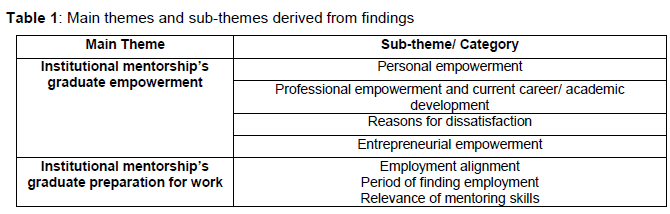
Still, the findings offered significant insights. For instance, the qualitative responses gathered enabled the researcher to identify core ways in which institutional mentorship was perceived to operate, thanks to a thematic analysis.
Table 1 illustrates two of the generated main themes: institutional mentorship's role in graduate empowerment and its contribution to graduate preparation for the world of work. These themes revealed institutional mentorship as a potentially effective, valuable strategy for higher education and labour in their quest to mitigate graduate unemployment and skills shortage.
The function concerning fostering a range of skills, as discussed in the literature on the purpose of higher education, was examined through specific questions posed to the alums. To determine the impact their university experience has on personal development and readiness, respondents were asked to assess how the institution enabled them in various domains. This question includes higher education and labour contributions to graduate employment because knowledge and training provided by the University are designed to lead to employment or even entrepreneurship (Hunt and Michael 1983).
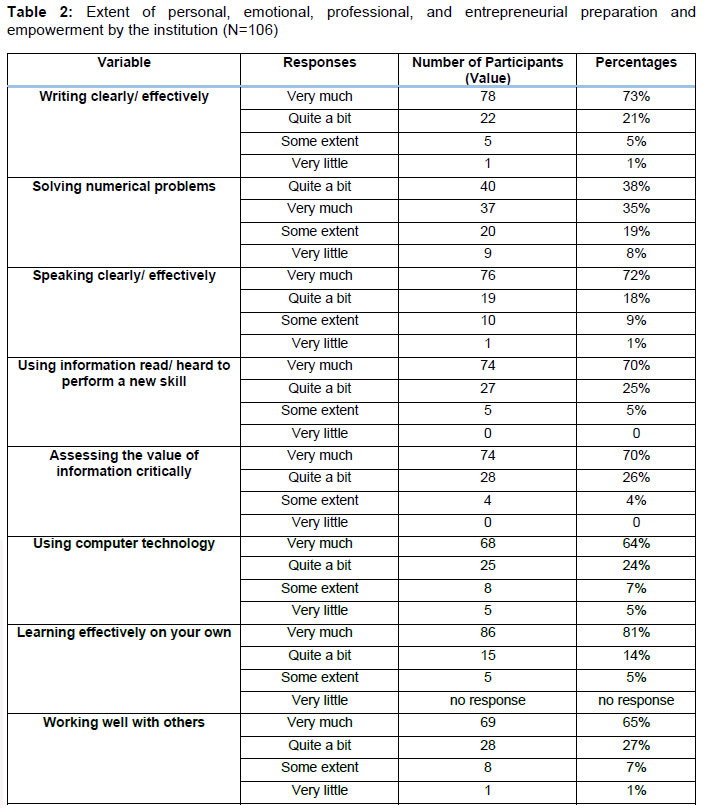
Table 2 below depicts the responses, offering insights into which skills were perceived as most significantly enhanced.
The data in Table 2 indicate that "learning effectively on your own" (81% "Very much") and "writing clearly/effectively" (73% "Very much") were perceived as substantial contributions of their higher education to work-readiness. Conversely, the development of "solving numerical problems' skills was viewed less emphatically (35% "Very much", 38% "Quite a bit").
These findings directly inform the researcher's proposal for mentorship programmes that prioritise variables from Table 2 according to their perceived importance and relevance in enhancing graduate performance. The emphasis on skills such as interpersonal communication (linked to "speaking clearly/effectively" and "working well with others"), numeracy, and IT proficiency, which underpin critical thinking, aligns with recommendations from scholars such as Wanberg et al. (2003) for effective developmental interventions.
Beyond these general skills, the study sought to understand the specific personal impact of formal mentorship programmes. Participants were asked directly: "Have these mentorship programmes had a positive influence on your personal life?"
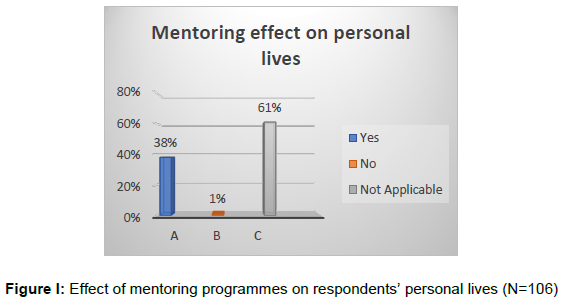
From the data depicted in Figure I, it can be noted that only 38 per cent of the sample, n=40, reported a good personal effect from the institutional mentorship programme, which is in stark contrast with the general satisfaction experienced with the educational undertaking consumed along with the programme, as depicted in Figure 2 below.
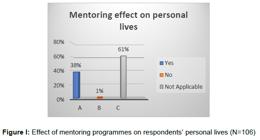
The disparity, especially when juxtaposed with the less favourable attitude on the development of mathematical problem-solving skills through mentorship as portrayed in Table 2, seems to indicate that the institution is well regarded, however, the personal consequences of some of its specific mentorship programmes suffers from uneven impact, which could be the result of mentor-mentee relationships or the employment status of graduates.
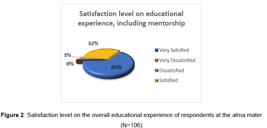
Several inquiries were made to gauge professional development, understood here to encompass all educational, career, skills, and training-related factors improving employability. First, regarding their educational journey: "How satisfied were you with your overall educational experience at the University, including the mentorship you received?".
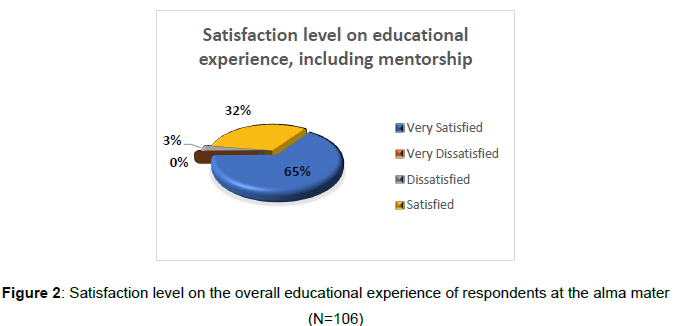
As Figure 2 illustrates, participants indicated a significant level of satisfaction, with 97 per cent (n=103) expressing contentment regarding their learning experience, notably encompassing mentorship. However, it should be acknowledged that 3 per cent of respondents expressed dissatisfaction. This highly favourable sentiment highlights the perceived excellence of the institution's educational and mentorial offerings.
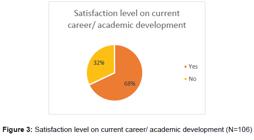
Following this, their current professional standing was queried by asking, "Are you generally satisfied with your present career/ academic situation?".
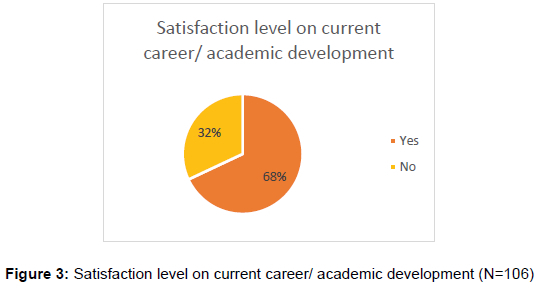
Figure 3 indicates that while a substantial majority (68%) expressed satisfaction with their professional or academic progress, 32 per cent of respondents reported dissatisfaction with their current career or academic growth. This latter figure might be linked to unmet work expectations or perceived inadequacies in academic preparation. However, the overall high satisfaction with professional advancement could suggest the positive influence of the institutional programmes, including mentorship, on student development and career paths. For those expressing discontent, further probing revealed reasons such as seeking more education to bolster employability or pursue different passions, and notably, dissatisfaction with teaching careers due to structural, work-related factors (Roser and Ortiz-Ospina 2019, 3). This sentiment among educators has potential implications for cultivating a diverse, skilled workforce, often highlighting a mismatch between graduate aspirations and professional realities. In such circumstances, institutional mentorship, by pairing graduates with industry specialists, could offer realistic insights and guidance, potentially bridging the expectation-reality gap and enhancing career satisfaction.
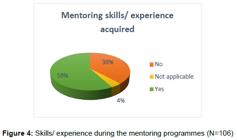
Two questions focused on empowerment were posed to further discern the specific impact of the mentorship experience itself. The first asked: "Have you acquired any skills/ experience during these mentorship programmes?".
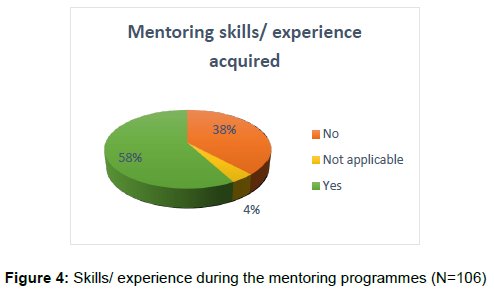
Figure 4 illustrates that most respondents (58%) agreed that the institutional mentorship programme equipped them with essential knowledge and skills, specifically addressing the perceived impact of mentorship on "academic" and "entrepreneurial" empowerment. This positive response, potentially influenced by high satisfaction with the institution's overall reputation, suggests the programme's benefits align to empower students for workplace success and societal contribution (Roser and Ortiz-Ospina 2019, 3). However, a notable proportion (38%) of participants responded negatively, while a small percentage (4%) provided neutral, ambiguous, or undecided answers.
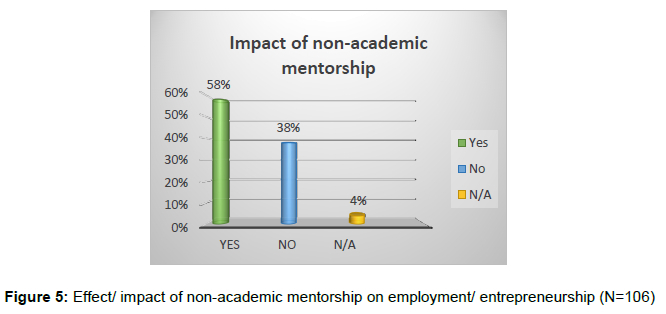
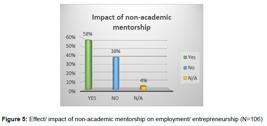
Complementing this, respondents were asked: "Would you say that the mentorship unrelated to academics received at the University helped you to become a better employee/ employer/ entrepreneur?".
As illustrated in Figure 5, a similar 58 per cent perceived a positive impact from the non-academic components of the institutional mentorship programme. Again, 38 per cent provided contradictory responses, and 4 per cent did not respond or were uncertain. The congruence in response patterns between Figure 4 (academic/entrepreneurial skills) and Figure 5 (non-academic impact) is noteworthy, suggesting that respondents ascribed comparable value to both dimensions of skill development within their mentorship experience.
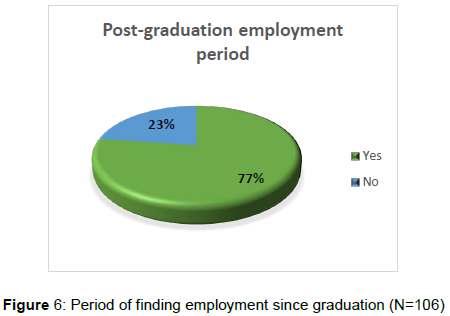
Transitioning from perceived skill acquisition to tangible employment outcomes, participants were asked: "After attending the University, did you get employment within a year?".
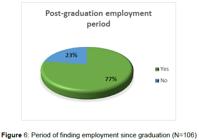
Most respondents (77%) reported securing employment immediately after graduation, while 23 per cent experienced a more extended period of unemployment. This finding is significant given the high unemployment rates in South Africa, where the post-graduation job search can be particularly challenging (Khuluvhe and Negogogo 2021, 12).
Prolonged unemployment among graduates can lead to dissatisfaction and potential emigration in pursuit of better career opportunities, contributing to brain drain and hindering economic growth. Furthermore, graduates may lose confidence in institutional mentorship programmes, often perceived as quick fixes to address perceived skills gaps, particularly if these programmes do not translate into immediate employment.
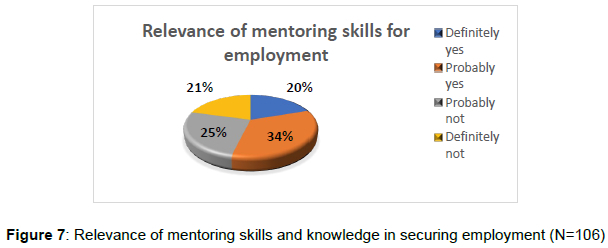
Finally, to connect the mentorship experience directly to job acquisition, the survey asked: "Would you say that the skills, knowledge, or tools learned during these mentorship programmes at the University helped you to secure employment?".
Figure 7 illustrates a diverse range of perceptions regarding the impact of mentoring skills on securing employment. While the most significant proportion of respondents (34%) strongly affirmed the benefits of these skills, a considerable portion expressed reservations. Specifically, 25 per cent perceived the skills as potentially irrelevant, 21 per cent found them unhelpful in their job search, and 20 per cent reported a positive impact.
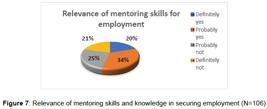
Overall, 54 per cent of respondents acknowledged the importance of the knowledge and skills gained through institutional mentorship programmes in securing employment, though varying degrees. This finding underscores the potential of such programmes to empower graduates by enhancing their self-confidence, career adaptability, and proactiveness in the job market (O'Mally and Antonelli 2016).
DISCUSSION AND CONCLUSION
The data gathered from graduates of a South African higher education institution must be carefully contextualised within the ongoing national issues of graduate unemployment and crucial skill shortages, which motivated this study. Findings confirm the great value South Africans place on higher education, which is essential for better employment opportunities and more general life paths. This observation aligns with the general belief of society that a significant factor determining both personal and professional development is educational level.
The studies also revealed a complex picture of Higher Education Institutions (HEIs) graduates' work-readiness initiatives. Although HEIs are important in providing students with necessary life and work skills, the results also fit academic points of view that warn against assigning HEIs the sole responsibility of fixing national skills shortfalls and unemployment. Hence, effective, durable solutions must be developed by cooperative efforts among appropriate government agencies, industry partners, and HEIs.
The significance of African philosophical perspectives is evident in the results of this investigation, which show a remarkable congruence with the fundamental principles of African epistemologies. The notion of Ubuntu provides a strong conceptual underpinning for the good influence of institutional mentorship on graduates' personal and professional growth, especially on their empowerment. Thus, mentorship, seen through this epistemological perspective, goes beyond a simple professional tool to embody communal solidarity, whereby experienced individuals or groups guide junior members not only towards professional competence but also towards becoming employable, responsible and active members of society.
Moreover, the paradigm of development promoted by many African philosophical traditions, which sees intellectual, emotional, spiritual, and social aspects as inextricably linked, closely matches the evidence that institutional mentorship develops a spectrum of skills useful for both daily life and professional advancement. Although Kram's theory clearly defines professional and psychological support roles within mentorship, an African epistemological lens places them within a more general cultural imperative: the realisation of complete human potential within a communal setting. Findings demonstrating that non-academic elements of mentorship and acquired necessary knowledge and skills support this concept of holistic development that goes beyond only academic or technical competencies.
Qualitative data illustrating graduates' unpreparedness when faced with systematic professional challenges point to a field where institutional mentorship mixed with African communitarian principles could be particularly effective. Such a strategy, stressing collective learning, mutual support, and a strong feeling of belonging, could explain why, despite general satisfaction with their educational experience, only 38 per cent of the sample reported a significant positive personal effect from the institutional mentorship programme. Therefore, mentorship's personal significance and psycho-social impact might be enhanced by designing it as a shared, communal effort directed towards mutual development and societal responsibility.
Strong empirical evidence from the quantitative data supports the key thesis-that institutional mentorship could efficiently close the gap between labour market necessities and higher education offerings. Consistent with modern studies arguing for mentorship as a necessary tool for improving graduate employability, the clear positive influence on graduate preparedness, especially in the development of crucial non-academic skills, is evident. Moreover, African epistemologies support a conception of "employability" that also includes a graduate's commitment to the collective good and societal advancement, when 54 per cent of respondents acknowledged, to varying degrees, the value of skills and knowledge accumulated through mentorship in securing employment. From this perspective, the effectiveness of institutional mentorship in producing involved and socially conscious citizens determines its success in addition to employment indicators.
Although some discrepancies in respondent viewpoints and their fit with accepted literature were observed, overall, the data demonstrated that involvement in institutional mentorship assists graduates in approaching their post-graduation life more efficiently. Combining African epistemologies with the evidence of the improvement of personal, entrepreneurial, and professional empowerment through institutional mentorship provides a deeper, more coherent analytical framework in general. Institutional mentorship programmes not only help the congruence between academic programmes and employer expectations, facilitate the transition from university to the professional sphere, and perhaps even shorten the length of job searches, but also have a latent capacity to produce graduates who are very conscious of their interconnectedness and accompanying social responsibilities.
The ongoing issue of graduate unemployment in South Africa, especially in areas with high skill requirements, necessitates research into such enhanced mentorship methods. The data confirm that carefully planned and cooperatively executed initiatives, particularly those that sensibly include indigenous philosophical ideas such as Ubuntu, can greatly increase graduate employability and stimulate entrepreneurial aptitudes. Hence, future institutional mentorship models should carefully investigate and clearly incorporate these communitarian ideas to possibly increase their relevance and influence in the South African environment as well as on the entire African continent.
POLICY IMPLICATIONSThis study's findings demonstrate that institutional mentorship positively influences graduate empowerment and preparedness for post-graduation complexities, suggesting important policy implications for improving graduate throughput and employability in South Africa. Translating these insights into widespread and impactful practice necessitates coordinated efforts from both Higher Education Institutions (HEIs) and the Department of Higher Education and Training (DHET).
Recommendations for Higher Education Institutions (HEIs)
Institutions of Higher Education represent gateway frameworks for graduate development and are well placed to implement and continue enhancing effective mentorship strategies. An important first step involves a transition from informal or limited-scope mentorship activities to formally establishing comprehensive mentorship programmes across Higher Education institutions (HEIs). Effective mentorship programmes should be purposefully designed and benefit from sustained institutional resources for them to be adopted and embedded within the institutions' operational frameworks. Such approach would require institutions to have a clear structure with parameters for both mentor recruitment -drawing from academic staff, experienced alumni, or industry professionals-as well as parameters for mentee involvement, and establishing mentorship programme governance. Phiri and Mishi (2023) concur with this recommendation, as they call for the promotion of practices leading to student success.
The effectiveness of mentorship programmes will depend on the quality and preparedness of selected mentors. Thus, HEIs should invest heavily in comprehensive training initiatives and ensure that said training addresses mentoring ethics, effective communication strategies, goal-setting methods, cultural competencies, and an informed understanding of the diverse needs of the student cohort pre- and post-graduation. To complement initial training, the establishment of ongoing support mechanisms and communities of practice for mentors is also advisable.
Moreover, mentorship initiatives must not operate in a vacuum to maximise their effects. Rather, mentorship should be embedded into the fabric of academic curricula, perhaps through credit-bearing courses or project-based learning modules that actively involve mentors, and concurrently aligned with the institution's work-readiness initiatives. Such integration fosters a more cohesive and holistic support ecosystem for students. The focus of these mentorship endeavours should be broad, aiming to cultivate not only career-specific competencies but also the indispensable non-academic, transferable skills-such as sophisticated critical thinking, heightened emotional intelligence, articulate communication, and pronounced adaptability-which this study, along with a considerable body of literature, identifies as crucial for navigating the contemporary professional landscape. Inherent in this commitment from HEIs is also the need to be inclusive and accessible to actively remove barriers, ensuring that mentorship programmes are readily available and designed to meet the needs of the entire student population, with particular focus on those from historically disadvantaged backgrounds or less represented populations (Msila 2021).
Finally, to ensure accountability and promote meaningful improvement, HEIs should implement systematic and regular monitoring and evaluation systems that would track participation rates, gather feedback on mentee/mentor satisfaction, and specifically undertake longitudinal studies of graduate outcomes. Such data-based evaluation will enable evidence-based improvements to the implemented programmes and unambiguously highlight the impact of mentorship initiatives.
Recommendations for the Department of Higher Education and Training (DHET)
The Department of Higher Education and Training (DHET) has substantial influence in creating an enabling policy environment and mobilises systemic change across the higher education system. Important policy initiatives undertaken by the DHET could immensely support institutional mentorship. For instance, the DHET could initiate the development of a National Mentorship Framework for South African HEIs. Such a framework could be a point of reference, outlining core principles and minimum standards, as well as promoting recognised good practices. Essentially, the framework should serve as a guide, and not a prescriptive direction that stifles institutional autonomy and flexibility to address varying contexts (Molebatsi 2022).
Recognising mentorship as a clearly defined high-impact practice, the DHET should also investigate and commit to finding dedicated mechanisms of funding and resource allocation/distribution. This could imply providing funding directly to HEIs or creating incentives encouraging institutions to invest in developing, improving, and sustaining quality mentorship programmes. Furthermore, given that mentorship success is often amplified through collaboration, the DHET could play a pivotal facilitative role in establishing quality partnerships between HEIs and industries, Sector Education and Training Authorities (SETAs) and professional bodies. Such collaborations are essential for expanding the pool of qualified industry mentors and ensuring that mentorship programmes remain closely attuned to the evolving needs of the labour market (Mashego and Modise 2023).
Additionally, deepening national commitment to mentorship could include the integration of effective institutional support systems, including mentorship provision, as a defined indicator within the national quality assurance framework for higher education. This would naturally incentivise HEIs to consider mentorship a priority and dedicate more resources to delivering high-quality programmes.
Lastly, the DHET should intentionally commission and support further focused research into diverse mentorship models and relevant best practices for the unique South African higher education context. Creating and curating platforms for HEIs to share experiences, challenges, and success stories concerning mentorship initiatives would be significant in promoting and retaining a culture of learning and growth within the higher education sector.
Further recommendations to embed African epistemologies in institutional mentorship initiatives
A basic re-evaluation of mentorship models within Higher Education Institutions (HEIs), which moves beyond simply dyadic configurations towards the development of communal and reciprocal learning settings, is necessary. This strategy would involve the active promotion of organised peer group mentorship, therefore allowing cohorts of mentees to help each other grow cooperatively. Moreover, intentional reverse mentorship should be encouraged, a practice which acknowledges the valuable insights of all participants, including mentees, hence contributing to the relational dynamic. Such a strategy would reflect the Ubuntu philosophy of shared personhood and the acknowledgement that development is a relational accomplishment.
In addition, the training and development of mentors calls for a clear broadening of perspectives outside traditional mentoring competencies. Training courses should be deliberately planned to incorporate foundational principles from African epistemologies, with a distinct focus on fostering holistic guidance by equipping mentors to support mentees not merely in the attainment of career-specific skills, but also in navigating their ethical development, cultivating a robust sense of social responsibility, and nurturing a genuine commitment to the collective good.
Discussions around mentorship should be purposefully arranged to help mentees contextualise their own professional successes, which involves assisting mentees to consider these accomplishments in deliberate relation to their potential impact on broader community well-being and positive societal advancement. Such a practice encourages a definition of success that transcends purely individual gain, aligning more substantively with communitarian values and the inherent notion that personal achievements can and should contribute to collective upliftment.
Finally, great thought should be paid to the deliberate integration of indigenous pedagogical strategies into the fabric of mentorship relationships. This could include, for instance, the critical investigation of difficult situations anchored in local socioeconomic reality, the use of dialogic circles as venues for collaborative problem-solving, and the guided reflective storytelling approach to improve self-awareness and learning. Approaches of this kind could have the potential to increase the cultural relevance and relational depth of the mentorship experience, therefore resonating with ongoing traditional African ways of knowledge transmission, wisdom sharing, and character development.
REFERENCES
- Abomeh, O. 2015. "Effects of Mentoring on Employees' Performance in Selected Family Business in Abuja, Nigeria." Singaporean Journal of Business Economics and Management Studies 9 (4): 29-50.
- Association of African Universities. 2013. Transforming African Higher Education for Graduate Employability and Socioeconomic Development: Proceedings from 13th General Conference. Association for the Development of Education in Africa.
- Auerbach, P. 2024. "Reformulating the Critique of Human Capital Theory." Journal of Economic Surveys.
- Balu, L. 2014. "Importance of Mentoring in Higher Education." Journal of Education and Practice 5 (34): 167-171.
- Bhorat, H., N. Mayet, and M. Visser. 2012. Student Graduation, Labour Market Destinations and Employment Earnings. Working Papers 12153. Development Policy Research Unit, University of Cape Town.
- Blunt, R. J. 2005. "Challenges for the Curriculum of a Comprehensive University: A Critical Case Study." South African Journal of Higher Education 19 (6): 1021-1032.
- Dass, M., I. Sarfraz, C. Hewege, and D. Rajendran. 2018. "An Exploration of Global Employability Skills: A Systematic Research Review." International Journal of Work Organisation and Emotion 9 (1): 63-88.
- DeLong, T. J., J. J. Gabarro, and R. J. Lees. 2008. "Why Mentoring Matters in a Hypercompetitive World." Harvard Business Review 86 (1): 115-121.
- Department of Higher Education and Training. 1997. Higher Education Act, No. 101 of 1997. Government Gazette.
- Eby, L. T., T. D. Allen, B. J. Hoffman, L. E. Baranik, J. B. Sauer, S. Baldwin, R. L. Morrison, and K. S. Sullivan. 2013. "An Interdisciplinary Meta-Analysis of the Potential Antecedents, Correlates, and Consequences of Protégé Perceptions of Mentoring." Psychological Bulletin 139 (2): 441-476.
- Fox, A., L. Stevenson, P. Connelly, A. Duff, and A. Dunlop. 2010. "Peer-Mentoring Undergraduate Accounting Students: The Influence on Approaches to Learning and Academic Performance." Active Learning in Higher Education 11 (2): 145-156.
- Hallen, B. 2015. "Personhood in a Communitarian Context." Thought and Practice: A Journal of the Philosophical Association of Kenya 7 (2): 1-10.
- Hooley, T., A. G. Watts, and D. Andrews. 2015. Teachers and Careers: The Role of School Teachers in Delivering Career and Employability Learning. International Centre for Guidance Studies, University of Derby.
- Hummel, C. 1993. "Aristotle (384-322 B.C.)." Prospects: The Quarterly Review of Comparative Education 23 (1/2): 39-51.
- Hunt, D. M., and C. Michael. 1983. "Mentorship: A Career Training and Development Tool." Academy of Management Review 8 (3): 475-485.
- International Labour Organization. 2015. National Employment Policies: A Guide for Workers' Organisations. Some Key Terms and What They Mean. ILO Publications.
- Jyoti, J., and P. Sharma. 2015. "Impact of Mentoring Functions on Career Development: Moderating Role of Mentoring Culture and Mentoring Structure." Global Business Review 16 (4): 563-579.
- Kambuga, Y., and P. Msemwa. 2017. "African Philosophy of Education: Analysis of the Neglected Ideals of Nyerere's Ujamaa." In Perspectives in African Philosophy, Religion and Education, edited by E. J. Etieyibo, 135-150. Vernon Press.
- Khuluvhe, M., and V. Negogogo. 2021. Highest Level of Education Attainment in South Africa. Department of Higher Education and Training.
- Kraak, A. 2015. "The Value of Graduate Destination Survey Data in Understanding Graduate Unemployment: A Focus on the Universities of Technology." South African Journal of Labour Relations 39 (1): 80-103.
- Lembuka, M. H. 2024. "Applicability of Ujamaa Policy in Social Work Education in Tanzania Regarding Ubuntu Philosophy - A Literature Review." International Journal of Social Science and Human Research 7 (8): 5842-5848.
- Letseka, M. 2000. "African Philosophy and Educational Discourse." In African Voices in Education, edited by P. Higgs, N. C. G. Vakalisa, T. V. Mda, and N. T. Assie-Lumumba, 179-193. Juta.
- Martin, W. J., and J. M. Haar. 2021. "Mentorship as a Mechanism to Mobilise Inclusion." Nature Immunology 22 (8): 932-933.
- Mashego, T. B., and M. A. Modise. 2023. "Enhancing Graduate Employability through University-Industry Collaborations in South Africa: A Policy Perspective." Journal of Education and Work 36 (2): 145-158.
- Mahali, A., T. de Kock, V. Mathambo, P. Maoba, and A. Mugeere. 2023. "'Giving Back Is Typical African Culture': Narratives of Give-Back from Young African Graduates." Journal of Student Affairs in Africa 11 (2): 1-16.
- Matolino, B. 2014. Personhood in African Philosophy. Cluster Publications.
- McGinn, K. L., and E. Oh. 2017. "Gender, Social Class, and Women's Employment." Current Opinion in Psychology 18: 84-88.
- Meyer, M., and L. Fourie. 2006. Mentoring and Coaching. Knowres Publishing.
- Mkabela, Q., and P. C. Luthuli. 1997. Towards an African Philosophy of Education. Kagiso Publishers.
- Mmope, P. 2020. "A Conceptual Framework for Mentorship Support to Early-Career Black Women Academics in South Africa." African Journal of Inter/Multidisciplinary Studies 2 (1): 106-118.
- Mohana, P., and A. Enoch. 2020. "A Study on Mentoring Functions and Their Influence on Protégé's Career Development in Information Technology (IT) Sector, Chennai." European Journal of Molecular & Clinical Medicine 7 (9): 1974-1995.
- Molebatsi, T. M. 2022. "Towards a National Graduate Employability Framework for South African Universities." South African Journal of Higher Education 36 (6): 148-165.
- Molefe, M. 2019. An African Philosophy of Personhood, Morality, and Politics. Palgrave Macmillan.
- Msila, V. 2008. "Ubuntu and School Leadership." Journal of Education 44 (1): 67-84.
- Msila, V. 2021. "Mentorship in South African Higher Education: Challenges and the Way Forward." Mentorship & Tutoring: Partnership in Learning 29 (5): 535-550.
- Murrell, A. J., S. Blake-Beard, and D. M. Porter. 2021. "The Importance of Peer Mentoring, Identity Work and Holding Environments: A Study of African American Leadership Development." International Journal of Environmental Research and Public Health 18 (9): Article 4920.
- Nussbaum, B. 2003. "African Culture and Ubuntu: Reflections of a South African in America." World Business Academy: Rekindling the Human Spirit in Business 17 (1): 1-12.
- Nyerere, J. K. 1967. Education for Self-Reliance. Ministry of Information and Tourism.
- Ocheni, S., and A. E. Aleji. 2020. "Human Capital Theory and Educational Policy Strategies in Sub-Saharan Africa: A Retrospective Overview." International Journal of Educational Development in Africa 5 (2): 83-102.
- OECD. 2018. Skills for Jobs: OECD Skills Strategy South Africa. OECD Publishing.
- OECD. 2021. Education at a Glance 2021: OECD Indicators. OECD Publishing.
- Oluwajodu, F., D. Blaauw, L. Greyling, and E. Kleynhans. 2015. "Graduate Unemployment in South Africa: Perspectives from the Banking Sector." SA Journal of Human Resource Management 13 (1).
- O'Mally, J., and K. Antonelli. 2016. "The Effect of Career Mentoring on Employment Outcomes for College Students Who Are Legally Blind." Journal of Visual Impairment & Blindness 110 (5): 295-307.
- Paridjo, and S. B. Waluya. 2017. "Analysis Mathematical Communication Skills Students in the Matter Algebra Based NCTM." IOSR Journal of Mathematics 13 (1): 60-66.
- Phiri, L., and S. Mishi. 2023. "Mentoring as a High Impact Practice for Student Success and Employability in South African Higher Education." Journal of Student Affairs in Africa 11 (1): 89-105.
- Ragins, B. R., and K. E. Kram, eds. 2007. The Handbook of Mentoring at Work: Theory, Research, and Practice. Sage.
-
Roser, M., and E. Ortiz-Ospina. 2019. "Tertiary Education." Our World in Data. Accessed June 18, 2019. https://ourworldindata.org/tertiary-education.
» https://ourworldindata.org/tertiary-education - Sanni, A., and D. Momoh. 2019. "Plato's Philosophy of Education and Its Implications to Counselling." British Journal of Education 7 (4): 66-73.
- Seepe, S., ed. 2004. Speaking Truth to Power: Research and Policy Debates in Education and Development in Africa and Its Diaspora. Africa World Press.
- Small, L., K. Shacklock, and T. Marchant. 2018. "Employability: A Contemporary Review for Higher Education Stakeholders." Journal of Vocational Education & Training 70 (1): 148-166.
- Spence, S., and D. Hyams-Ssekasi. 2015. "Developing Business Students' Employability Skills through Working in Partnership with a Local Business to Deliver an Undergraduate Mentoring Programme." Higher Education, Skills and Work-Based Learning 5 (3): 299-314.
- Statistics South Africa. 2021. Quarterly Labour Force Survey (QLFS), Q2: 2021. Statistical Release P0211.
- Taylor, L. E. 2016. How to Develop Your Healthcare Career: A Guide to Employability and Professional Development. John Wiley & Sons.
- Toor, S. R., and G. Ofori. 2008. "Leadership for Future Construction Industry: Agenda for Authentic Leadership." International Journal of Project Management 26 (6): 620-630.
- Waghid, Y. 2004. "Revisiting the African-Ubuntu Philosophy of Education in South Africa." Educational Philosophy and Theory 36 (4): 363-373.
- Wanberg, C. R., E. T. Welsh, and S. A. Hezlett. 2003. "Mentoring Research: A Review and Dynamic Process Model." In Research in Personnel and Human Resources Management, edited by J. J. Martocchio and G. R. Ferris, 39-124. Vol. 22. Elsevier.
- Zhao, J. 2013. "Confucius as a Critical Educator: Towards Educational Thoughts of Confucius." Frontiers of Education in China 8 (1): 9-27.