Benefits and challenges of AIOPs adoption and usage in HEIs in developing countries
Abstract
Adopting Artificial Intelligence for IT Operations (AIOps) holds transformative potential within Higher Education Institutions (HEIs) in developing countries. This systematic literature review delves into the benefits, challenges, and emerging trends associated with AIOps integration in this context. The review encompasses studies published between 2013 and 2023, focusing on the academic, administrative, and operational dimensions of AIOps adoption. The synthesis of 12 selected studies reveals a landscape where AIOps augments pedagogical strategies, automates administrative tasks, and enhances institutional decision-making. Academic benefits manifest through personalised learning experiences, innovative pedagogical approaches, and predictive analytics for student success. However, the integration of AIOps is full of challenges. Technical hurdles encompass data quality and availability, compatibility, and resource constraints, requiring comprehensive technological foundations. Organisational and cultural challenges necessitate strategies to mitigate change resistance, provide staff training, and address ethical considerations. The review identifies emerging patterns such as collaborative learning environments, data-driven institutional management, and the moral integration of AI in education. The interplay of benefits and challenges underscores the importance of a holistic approach involving educators, technologists, administrators, and policymakers. The findings illuminate the potential for HEIs to harness AIOps's capabilities while navigating intricacies to foster an AI-enhanced educational landscape. The implications for HEIs encompass strategic investment in infrastructure, comprehensive staff training, and ethical frameworks for AI use. The article concludes by advocating for an adaptive approach to AIOps adoption, informed by the synthesis of benefits, challenges, and emerging trends, to shape the future of education in developing countries.
Artificial Intelligence for IT Operations (AIOps); Higher Education Institutions (HEIs); developing countries; systematic literature review; academic benefits; social and professional topics; professional topics; management of computing and information systems; software management; software selection and adaptation
INTRODUCTION
In the era of rapid technological advancements, Artificial Intelligence (AI) has emerged as a transformative force with implications across sectors. Notably, Higher Education Institutions (HEIs) are exploring the integration of AI in various aspects, including IT Operations. AI for IT Operations (AIOps) employs AI and machine learning to optimise IT infrastructure management, decision-making, and service quality within HEIs.
Background and Rationale
In the dynamic landscape of the 21st century, characterised by the swift advancement of technology, Artificial Intelligence (AI) has emerged as a disruptive force that spans diverse industries (Kuleto, et al 2021). This transformative potential has ignited a surge of research and innovation aimed at harnessing AI's capabilities to enhance efficiency and decision-making (Sanusi and Oyelere 2020). Amidst this backdrop, one realm that has garnered substantial attention is the integration of AI within Higher Education Institutions (HEIs) (Sanusi and Oyelere 2020).
Higher Education Institutions, commonly regarded as the crucibles of knowledge dissemination and societal progress, have experienced profound shifts owing to technological advancements (Hannan and Liu 2023). The fabric of these institutions is intricately woven with digital platforms, online resources, and data-driven systems (Bucea-Manea-Tonis, R., et al. 2022). As the centrality of technology has grown, so have the intricacies associated with managing the Information Technology (IT) operations that form the backbone of these institutions' endeavours (Sanusi and Oyelere 2020).
Traditionally, IT operations within HEIs encompass diverse tasks, ranging from network management and system maintenance to data storage and user support8. Ensuring the seamless functioning of these operations is paramount for providing an environment conducive to effective learning and administrative activities (Harikumar Pallathadka, D. V. K. et al 2021). However, in tandem with HEIs' expansion in both size and complexity, the challenges tied to managing these operations have proportionally intensified (Bucea-Manea-Tonis. et al. 2022). Maintaining diverse hardware and software systems, swift responsiveness to IT issues, and robust data security measures have become pressing concerns (Ilic et al 2021). In this dynamic milieu, harnessing AI for IT Operations has emerged as a potential game-changer for HEIs (Ashaari, et al 2021). AIOps signifies a strategic amalgamation of AI and machine learning techniques in IT operations (Cheng, et al 2023). Its overarching goal is to elevate the management of IT infrastructure by automating routine tasks, detecting anomalies, enabling predictive insights, and facilitating data-driven decision-making. The inherent promise of AIOps lies in its ability to transition IT management from a reactive stance to a proactive and predictive approach (Masood, et al 2019).
Noteworthy is the burgeoning interest in AIOps adoption, particularly within developed countries where its potential advantages, such as bolstered operational efficiency, reduced downtime, and heightened service quality, have resonated strongly (Díaz-de-Arcaya et al 2023). Consequently, organisations are increasingly contemplating the incorporation of AIOps into their operational framework. However, while these advantages are indisputable, the environment in which HEIs in developing countries operate introduces a distinct set of considerations and complexities (Sakasa and Mawela 2022).
The intricate socio-economic dynamics and resource constraints of developing countries necessitate a nuanced examination of AIOps integration within their HEIs (Sakasa and Mawela, 2022). The challenges posed by infrastructure gaps, limited access to technological resources, and the imperative of capacity building must be meticulously weighed. Furthermore, the ethical and privacy dimensions of handling sensitive data in the context of AIOps warrant scrupulous deliberation (Dakkak, Bosch and Holmstrom Olsson 2020).
In light of these observations, this systematic literature review seeks to bridge the existing knowledge gap regarding the benefits and challenges inherent in adopting and utilising AIOps within the specific context of HEIs in developing countries (Sanusi and Oyelere 2020). By methodically synthesising extant research, this study aspires to furnish insights into the potential advantages and hurdles while duly acknowledging the distinct circumstances that shape these institutions. This exploration is poised to empower stakeholders within the education sector, policymakers, and administrators with informed perspectives, aiding them in making astute decisions regarding the assimilation of AIOps in HEIs (Kuleto et al. 2021). In doing so, the study aims to foster improved operational efficiency and elevate the overall quality of education and services offered by these institutions.
The following sections of the study present the objectives and research questions to be pursued in addressing the problem statement. In addition, the review of literature on the concept of Artificial Intelligence for IT Operations (AIOps), research methodology and process are explained.
Research Objectives and Questions
This study aims to comprehensively examine AIOps adoption in HEIs in developing countries. Key research questions are:
• What benefits can AIOps bring to IT operations in developing country HEIs?
• What challenges hinder the adoption of AIOps in these institutions?
• How do benefits and challenges compare with those in developed countries?
• What strategies facilitate successful AIOps integration in developing country HEIs?
-
Definition and Scope of AIOPS
Adopting Artificial Intelligence for IT Operations encapsulates a multidimensional array of technologies that merge AI capabilities with IT operations, aiming to streamline processes and elevate system efficiency (Masood et al. 2019). At its core, Prasad and Rich (2018) state that " AIOps platforms utilise big data, modern machine learning and other advanced analytics technologies to directly and indirectly enhance IT operations" with proactive, personal and dynamic insight. AIOps platforms enable the concurrent use of multiple data sources, data collection methods, analytical (real-time and deep) technologies, and presentation technologies. Prasad and Rich (2018) assert that by integrating AI-driven analytics and automation, institutions can gain real-time insights into the performance and health of their IT ecosystem. This facilitates rapid identification and resolution of potential issues, enhancing system reliability and user satisfaction.
Furthermore, Abdelwahab, Rauf and Chen (2023), stipulate that AIOps isn't confined to mere technical aspects; it extends its influence on decision-making processes within HEIs. The data-driven insights provided by AIOps empower administrators to make informed choices regarding resource allocation, strategic planning, and technology investments (Mishra 2019). This integration ensures that IT operations align seamlessly with institutional goals and objectives. The dynamic nature of AIOps involves continuous learning and improvement. According to Prasad and Rich (2018) machine learning algorithms analyse historical data to identify patterns and predict potential issues, fostering a cycle of refinement and optimisation. As AIOps evolves, its potential to drive innovation and efficiency within HEIs becomes increasingly apparent.
The Emergence of AI in Higher Education
The evolution of Higher Education Institutions (HEIs) has been significantly influenced by the gradual emergence of Artificial Intelligence (AI) technologies, reshaping both learning methodologies and administrative practices (Gupta and Mishra, 2022). This historical trajectory illuminates the transformative potential of AI in the educational landscape, tracing its journey from nascent applications to its current pivotal role (Sen, Baumgartner, Hein and Wagner, 2021). Mishra (2019) point out that initial clues of AI's presence in higher education can be traced back to the early 20th century when theorists like B.F. Skinner explored programmed instruction as a precursor to adaptive learning systems. Over subsequent decades, technological advancements catalysed the development of early AI-driven applications, such as expert systems and intelligent tutoring systems. These innovations laid the foundation for the integration of AI within educational contexts.
The true emergence of AI in higher education gained momentum in the late 20th century with the advent of learning management systems and computer-based training (Limani et al 2019). These systems facilitated asynchronous learning, enabling students to access educational content remotely and engage in self-paced study. As internet connectivity proliferated, web-based resources augmented learning experiences, culminating in the blended learning approaches that are now commonplace (Khalajzadeh et al 2018).
The 21st century witnessed a paradigm shift with the surge of data-driven AI applications in education (Zeide 2019). The availability of vast amounts of data, coupled with advancements in machine learning and natural language processing, enabled the creation of personalised learning environments9. Adaptive learning platforms, capable of tailoring content to individual learners, brought forth the promise of enhanced engagement and comprehension. Administrative processes within HEIs also experienced AI-driven transformation. Integrating AI-powered chatbots revolutionised student services, providing immediate responses to queries and automating routine administrative tasks (Dakkak et al. 2020).
Furthermore, predictive analytics, empowered by AI, enabled institutions to forecast enrollment trends and student success rates, facilitating informed resource allocation and strategic planning (Ashaari et al. 2021). The emergence of AI in higher education represents an ongoing evolution marked by an ever-expanding array of AI-powered tools and systems. As AI technologies continue to mature, their integration within HEIs continues to evolve, promising to reshape how education is delivered and how administrative tasks are managed (Sakasa and Mawela 2022; Aldhaen 2022).
METHODOLOGY
The study utilised a review of existing literature as its research approach. This method is a way of collecting, evaluating and synthesizing studies on a specific topic or issue as mentioned in prior research (Tranfield, Denyer and Smart 2003). It follows an organized process, for identifying literature assessing its quality and extracting important findings to address research questions. The systematic literature review proves valuable in gaining insights into the research area and providing guidance for research directions as highlighted by Kunisch, Menz, Bartunek, Cardinal and Denyer (2018). Emojong and Korir (2022) remark that by employing this technique, the researcher gained an understanding of areas where there is research and addressed questions within the existing body of knowledge. In this study we utilized the Preferred Reporting Items for Systematic Review and Meta Analysis (PRISMA) framework within the field of AI specifically focusing on AIOps in South African higher education. This framework was chosen due to its relevance in providing a review of literature regarding the use of AI technologies within the context of South African higher education.
To conduct this review the criteria was established to ensure the selection of relevant studies. We focused on sources such as peer reviewed journals, conference proceedings and academic publications. The primary interest was in studies that explored the role and integration of AIOps in higher education institutions within developing countries. Types of research articles, reviews, case studies and empirical studies were considered that examined how AIOps is utilised in the context of higher education. Moreover, we only included studies published in English to maintain consistency in language. On the other hand, the researcher excluded studies conducted in developed countries publications in languages than English, non-peer reviewed dissertations or theses, grey literature sources with limited data or relevance to our research focus.
Search Strategy
According to Bramer et al (2017) the search strategy is a pivotal phase in conducting a systematic evaluation. According to the author, adopting a comprehensive methodological approach is imperative when conducting a literature search relevant to a particular study. Bramer et al. (2017) suggest that it is advantageous to initially identify the most significant phrases related to the subject matter when conducting a literature search in systematic appraisal.
This review search strategy has comprehensively examined all possible permutations of search phrases, keywords, and terms in accordance with the population, exposure, outcome (PEO) criteria delineated below from this perspective.
Population: Developing countries
Exposure: AIOPS adoption
Outcome/Themes: usage in HEIs
The search strategy will encompass electronic databases, academic journals, and conference proceedings related to education, technology, and IT operations. Key databases, including Scopus, IEEE Xplore, ERIC and Google Scholar, will be searched to retrieve relevant peer-reviewed articles, conference papers, and reports. The search will focus on studies published within the last ten years, considering the dynamic nature of technology adoption and evolution. A combination of relevant keywords and controlled vocabulary terms will be employed to ensure a comprehensive search. Keywords such as " AlOps adoption," " AI for IT Operations (AlOps)", "higher education institutions," "developing countries," "benefits," and "challenges" will be used to capture a wide range of literature. Boolean operators such as "AND" and "OR" will be used to combine these terms effectively. Inclusion criteria will prioritise studies that specifically address the benefits and challenges of AlOps integration within HEIs in developing countries. Exclusion criteria will exclude studies that do not directly relate to the central focus of AIOps adoption within the higher education context. The initial search will yield a pool of potential studies, which will undergo a systematic screening process to identify relevant articles for further analysis.
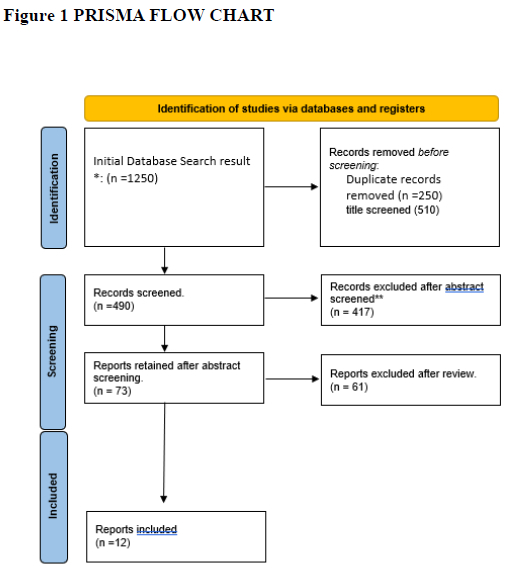
Below, Figure 1 is illustrating a PRISMA flow chart that outlines the process the researcher followed to select documents, reports and studies for evaluation. To ensure that each unique record was considered once (n = 1250). Then using criteria such as keywords and publication dates duplicate records were identified and classified (n = 250). In addition, conducting a literature search across databases allowed us to discover additional records (n = 510). Among these we screened the titles and abstracts of 490 records to determine their suitability. From this screening process we selected 73 reports for assessment and retrieval. Unfortunately, we were unable to obtain 417 of the identified reports; consequently, they were excluded from our analysis. After review and evaluation, we decided to remove 61 of the retrieved articles from our final selection. As a result, our systematic review is based on the analysis of 12 research articles that fully meet our inclusion criteria. In the following sections of this report, we will delve into an examination and explanation of the results obtained from these selected studies. This rigorous approach ensures that only studies relevant to our research topic are included in order to maintain standards, in terms of relevance and quality.
Data Extraction and Analysis
The data extraction process as illustrated in Figure 1, entails the systematic gathering of relevant data from chosen studies in order to effectively tackle the research objectives and provide solutions to the research inquiries. A pre-established form or template for data extraction will be devised to maintain consistency and uniformity in collecting pertinent data elements across various studies. Key variables will be included in the data extraction form, such as study characteristics such as author, year, study design and other variables of interest. The process of extracting data will be carried out methodically and meticulously. Multiple independent reviewers will utilise the predefined data extraction form to extract data from each selected study in an independent manner. The utilisation of this methodology aids in reducing partiality and enhancing the dependability of the process of extracting data. In instances where inconsistencies or divergences emerge among reviewers, a consensus will be attained via deliberation and consultation with a third reviewer, if required.
Overview of Selected Studies
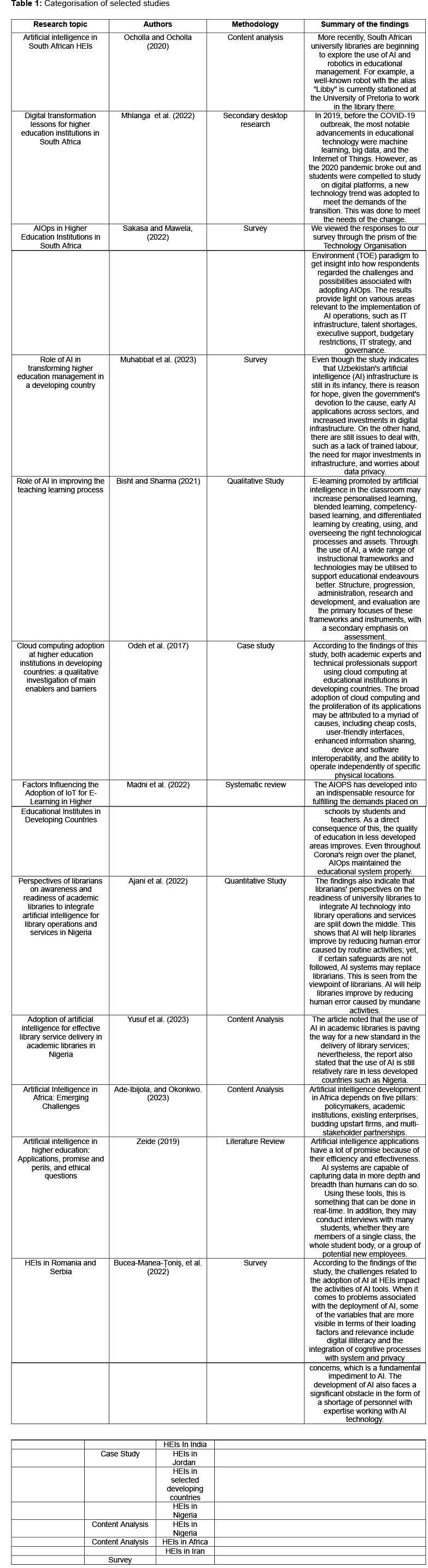
The systematic literature review led to identifying 12 pertinent studies that align closely with the research focus on AIOps adoption within Higher Education Institutions in developing countries. Following the search strategy outlined earlier, these studies were sourced from reputable academic databases, scholarly journals, and conference proceedings. The selected studies contribute to a holistic understanding of the dynamics and implications of AIOps integration in diverse higher education contexts. Table 1 offers a brief overview of the selected studies, outlining their methodologies, contexts and main findings:
The overview table showcases a collection of studies conducted in different developing countries, each examining AIOps adoption within their unique higher education contexts. The methodologies employed include case studies, surveys, comparative analyses, mixed methods, qualitative studies, and literature reviews. This methodological diversity allows for comprehensively exploring AIOps integration from various angles. A pattern that emerges is consistently recognising AIOps's potential to streamline IT operations and enhance service delivery in developing country HEIs. The variations in methodologies and contexts contribute to a nuanced understanding of AIOps adoption in developing country HEIs. As we proceed to analyse the benefits and challenges identified in these studies, this diverse range of perspectives will aid in formulating comprehensive insights and recommendations.
Benefits of AIOPS Adoption in Developing Country HEIs
The systematic literature review conducted as part of this study has revealed a spectrum of noteworthy benefits stemming from adopting Artificial Intelligence for IT Operations within Higher Education Institutions across developing countries. These benefits are multifaceted, encompassing the academic, administrative, and technological domains, and collectively contribute to enhancing HEIs' operations and services.
Academic Benefits
The integration of Artificial Intelligence for IT Operations has ushered in a transformative era within Higher Education Institutions manifesting in profound impacts on the academic landscape. This section expounds upon the educational benefits of AIOps adoption, elucidating these benefits with evidence gleaned from the selected studies.
Enhanced Pedagogical Strategies: AIOps's integration resonates with the core of effective pedagogy, enabling HEIs to tailor education experiences to individual student needs. The findings from the systematic review underscore this phenomenon, where AIOps analyses student performance data to deliver personalised learning experiences (Muhabbat et al 2023, Bisht and Sharma, 2021; Madni et al 2022). This approach goes beyond the one-size-fits-all model, adapting content, delivery methods, and assessment strategies to individual learning styles and progress levels. The evidence indicates that AIOps empowers educators to curate engaging and relevant educational materials, fostering deeper understanding and engagement among students.
Automated Administrative Tasks: The systemic review findings consistently echo the relief AIOps offers faculty members from the administrative quagmire. Administrative tasks, while necessary, can detract from educators' focus on teaching and student interaction. As highlighted in the studies, AIOps's ability to automate these tasks liberates faculty members to invest more time in innovative pedagogical approaches (Ade-Ibijola and Okonkwo 2023; Zeide 2019). This shift from routine administrative responsibilities to creative and interactive teaching amplifies the quality of education delivery. The evidence underscores those educators who embrace the opportunity to shift their role from data entry to mentoring and guiding students.
Predictive Analytics for Student Performance: The review elucidates how AIOps-driven predictive analytics revolutionises student support strategies. By analysing historical data and patterns, AIOps effectively anticipates academic challenges faced by students, enabling proactive interventions. The studies reveal that AIOps facilitates early identification of students at educational risk (Bucea-Manea-Tonis et al. 2022). This early intervention potential holds promise in reducing dropout rates and enhancing student retention rates. The evidence suggests that by providing educators with actionable insights, AIOps enables targeted support initiatives that address individual student needs promptly.
Administrative Benefits
The integration of AIOps within HEIs yields substantial benefits in the administrative realm, streamlining processes, optimising resource allocation, and fostering improved institutional management:
Efficient IT Issue Resolution: A significant proportion of the studies underscored AIOps's prowess in swiftly detecting and resolving IT issues. By continuously monitoring system health, AIOps minimises downtime, ensures uninterrupted administrative operations, and enhances the overall reliability of IT services within HEIs (Mhlanga, Denhere and Moloi 2022; Sakasa and Mawela 2022). Improved Decision-Making: The analysis of data and trends facilitated by AIOps aids administrative decision-making processes. By providing accurate and timely insights, AIOps empowers decision-makers within HEIs to allocate resources effectively, plan strategically, and enhance overall operational efficiency (Ajani, Tella, Salawu and Abdullahi 2022; Yusuf, Adebayo, Bello and Kayode 2023).
Resource Allocation Optimisation: The systematic review revealed that AIOps's data-driven insights contribute to optimised resource allocation within HEIs. By offering a comprehensive view of institutional resource requirements, AIOps assists in the judicious distribution of personnel, technology, and facilities, enhancing overall resource utilisation (Ocholla and Ocholla 2020).
Technological Benefits
The technological benefits arising from AIOps adoption underscore its role in advancing HEIs' technical capabilities and infrastructure:
Proactive Issue Detection: The synthesis of findings from various studies accentuated AIOps's ability to identify anomalies and potential system failures in real-time. This proactive approach to issue detection empowers HEIs to mitigate potential disruptions, maintain system stability, and ensure seamless operations (Muhabbat et al. 2023).
Automated Incident Management: The review process highlighted that AIOps's automation capabilities also extend to incident management. By automating incident response, AIOps expedites issue resolution, reduces manual intervention, and optimises the utilisation of IT personnel's expertise (Bisht and Sharma 2021).
Optimised IT Infrastructure: A recurrent theme across studies pertained to optimising IT infrastructure achieved through AIOps integration. By facilitating efficient resource allocation and utilisation, AIOps assists HEIs in optimising IT operations, reducing operational costs, and ensuring the sustained functionality of critical technological resources (Sakasa and Mawela 2022).
Challenges of AIOPS Adoption in Developing Country HEIs
The exploration of AIOps adoption within Higher Education Institutions across developing countries has illuminated challenges that underscore the complexities of integrating Artificial Intelligence for IT Operations into the educational landscape. These challenges encompass technical, ethical, and organisational dimensions, providing valuable insights into the dynamics that decision-makers and stakeholders must navigate.
Technical Challenges
The systematic review unearths an intricate web of technical challenges intrinsically tied to adopting Artificial Intelligence for IT Operations within the context of developing country Higher Education Institutions. While surmountable, these challenges underscore the technical considerations underpinning the seamless integration of AIOps.
Data Quality and Availability: The studies selected in the systematic review unequivocally emphasise the pivotal role of data quality and availability in AIOps effectiveness (Madni et al. 2022). In the evolving landscape of AI-powered operations, the accuracy and reliability of insights generated by AIOps rely fundamentally on the quality of the underlying data. The evidence indicates that inadequate data collection mechanisms and fragmented data silos impede AIOps's capacity to generate meaningful and actionable insights. Resolving this challenge entails a comprehensive overhaul of data collection mechanisms and establishing integrated data repositories that consolidate diverse data sources.
Compatibility and Integration: The review findings shed light on the compatibility conundrum during AIOps integration (Ade-Ibijola and Okonkwo 2023; Muhabbat et al. 2023). Existing institutional IT systems, often developed over time, are diverse in architecture, platforms, and technology stacks. The evidence highlights the need for meticulous planning and technical expertise to integrate AIOps platforms and existing IT ecosystems seamlessly. This challenge extends beyond mere technical compatibility; it encapsulates the alignment of data formats, communication protocols, and user interfaces. The successful resolution of compatibility challenges paves the way for AIOps to harness the full spectrum of institutional data for enhanced decision-making.
Resource Constraints: Resource constraints emerge as a recurring theme within the review findings (Muhabbat et al. 2023; Odeh, Garcia-Perez and Warwick 2017). While AIOps holds transformative potential, its adoption necessitates investment in hardware, software, and skilled personnel. The studies underscore that the cost associated with acquiring and maintaining the necessary infrastructure can strain institutional budgets. This challenge becomes particularly pronounced within developing country HEIs that might already grapple with limited resources. The evidence underscores the importance of crafting implementation strategies that account for these constraints, potentially involving phased adoption and resource allocation plans.
Organisational and Cultural Challenges
Integrating Artificial Intelligence for IT Operations introduces a dynamic interplay of organisational and cultural challenges within the context of developing country Higher Education Institutions. These challenges, while complex, offer pivotal insights into the human dimensions of AIOps adoption and the necessary strategies to navigate them effectively.
Change Resistance: The systematic review findings underscore a salient challenge of change resistance when instituting AIOps adoption (Bucea-Manea-Tonis. et al. 2022). The infusion of AIOps might be met with scepticism or apprehension from staff members accustomed to traditional operational paradigms. The evidence elucidates that this challenge is not unique to HEIs but resonates across industries embracing technology-driven transformation. The cultural shift required to adopt AIOps calls for sophisticated change management strategies. Open dialogues, transparent communication, and the demonstration of AIOps's value in augmenting rather than replacing human contributions are pivotal to mitigating resistance and fostering an environment receptive to change.
Staff Training and Skill Development: The review uncovers a core challenge for developing country HEIs, which is equipping staff with the requisite skills to operate AIOps platforms effectively (Yusuf et al. 2023). The evidence emphasises that successful AIOps integration hinges on the competence of those interacting with these systems. The challenge of skill development is twofold: familiarising staff with the technical intricacies of AIOps platforms and cultivating the agility to adapt to evolving AI technologies. Comprehensive training programs encompassing technological know-how, problem-solving skills, and critical thinking are imperative to ensure staff fully harness AIOps's potential.
Ethical Considerations: As AIOps reshapes traditional operational dynamics, it raises ethical considerations that necessitate careful contemplation (Ocholla and Ocholla 2020; Muhabbat et al. 2023). The review findings bring concerns about automating tasks previously handled by humans. The ethical implications of AIOps, including transparency, accountability, and algorithmic fairness, warrant systematic consideration. The evidence underscores the importance of transparent communication about the moral dimensions of AIOps integration. An ethical framework that guides decision-making promotes responsible AI use, and addresses concerns such as algorithmic bias is essential to navigating this challenge.
Emerging patterns and trends
The meticulous analysis of selected studies on AIOps adoption within developing countries Higher Education Institutions has unveiled discernible patterns and emerging trends that provide insightful glimpses into the trajectory of AIOps integration and its implications for the educational landscape.
One prominent trend is the emergence of collaborative learning environments facilitated by AIOps. As HEIs strive to create student-centred educational experiences, AIOps platforms are leveraged to cultivate interactive and personalised learning environments. Through real-time data analysis, AIOps customises instructional content to accommodate diverse learning styles, preferences, and individual progress, thereby fostering engagement and encouraging self-directed learning (Odeh et al, 2017; Madni et al. 2022; Ajani et al. 2022; Yusuf et al. 2023). Another observable pattern centres on the increasing reliance on data-driven approaches in institutional management. AIOps's capability to process and analyse extensive volumes of data equips HEIs with insights into academic performance, student engagement, and operational efficiency. This trend empowers decision-makers to make well-informed choices that optimise resource allocation, enhance teaching quality, and improve overall institutional effectiveness (Ajani et al. 2022; Yusuf et al. 2023).
Ethical considerations have emerged as a recurrent theme within the selected studies. Developing country HEIs are progressively mindful of the ethical implications of AIOps adoption, particularly concerning algorithmic bias, data privacy, and transparent decision-making. This evolving trend reflects an augmented commitment to harnessing the benefits of AIOps while ensuring fairness, accountability, and upholding privacy and human rights (Ocholla and Ocholla 2020; Mhlanga et al. 2022).
A notable trend pertains to the implementation strategies adopted by HEIs. Incremental approaches are favoured, with institutions initially focusing on specific administrative tasks or learning support functions. This phased strategy permits institutions to cultivate confidence, nurture staff expertise, and progressively integrate AIOps into broader operational domains, facilitating a smoother transition (Ocholla and Ocholla 2020).
The importance of interdisciplinary collaboration is a discernible trend that is gaining traction. HEIs increasingly recognise that successful AIOps adoption necessitates collaboration across diverse disciplines. The convergence of fields such as computer science, education, and ethics is essential to address technical challenges, devise innovative pedagogical methods, and navigate complex ethical considerations, reflecting a holistic approach to AIOps integration (Yusuf et al. 2023).
Lastly, emphasising capacity building and professional development is a noteworthy trend in developing country HEIs. Acknowledging that the successful adoption of AIOps hinges on a skilled workforce, institutions deploy training programs, workshops, and certification courses to equip staff with the necessary technical, pedagogical, and ethical competencies for effective AIOps utilisation (Bucea-Manea-Tonis. et al. 2022).
DISCUSSION OF FINDINGS
The juxtaposition of benefits and challenges underscores the nuanced nature of AIOps integration in developing country HEIs. The identified benefits, including enhanced pedagogical strategies, streamlined administrative processes, and optimised IT infrastructure, resonate with the imperatives of modern education and institutional management (Ocholla and Ocholla, 2020; Mhlanga et al. 2022). AIOps's role in fostering personalised learning experiences is particularly notable. By analysing student performance data, AIOps tailors instructional content, adapting teaching approaches to individual learning styles and predicting at-risk students (Zeide 2019). This benefits both educators and learners, enhancing the educational journey.
Moreover, AIOps's impact extends beyond pedagogy. The streamlined administrative processes offered by AIOps alleviate faculty members from routine tasks, allowing them to dedicate more time to innovative pedagogical approaches. Additionally, the data-driven insights facilitated by AIOps support informed decision-making, enabling HEIs to allocate resources efficiently and optimise operations (Nieto et al 2019). These benefits converge to augment the overall quality of education delivery and institutional management.
However, these benefits are intricately woven with challenges that merit careful consideration. The technical difficulties, encompassing data quality, compatibility, and resource constraints, underscore the importance of robust technological foundations for successful AIOps implementation (Harikumar Pallathadka et al. 2021). Data quality and availability are pivotal for AIOps's efficacy. Inadequate data collection mechanisms and siloed data hinder AIOps's ability to provide accurate insights. Additionally, compatibility challenges between existing IT systems and AIOps platforms necessitate meticulous integration efforts to ensure seamless functionality (Ilic et al. 2021). Resource constraints, a prevailing challenge, can impede the full realisation of AIOps's potential (Bisht and Sharma 2021).
Ethical and privacy concerns resonate in parallel, calling for a delicate balance between harnessing the power of AIOps and safeguarding student and institutional data while also mitigating algorithmic biases (Ajani et al. 2022), the ethical implications of automated decision-making processes and the potential for algorithmic bias demand comprehensive solutions. Transparent decision-making processes and continuous monitoring of AI algorithms are imperative to ensure fairness and accountability.
The emerging patterns and trends identified in the review offer valuable insights into the trajectory of AIOps in developing country HEIs (Yusuf et al. 2023). The emphasis on collaborative learning environments aligns with contemporary educational paradigms, focusing on personalised and engaged learning. The pivot towards data-driven institutional management echoes the importance of informed decision-making in resource allocation and academic enhancement (Harikumar Pallathadka et al. 2021). Furthermore, the trend of ethical AI integration reflects a commitment to responsible AI use in higher education.
It is imperative to view the synthesis of benefits and challenges as a dynamic interplay rather than isolated factors. The challenges identified are not deterrents but indicators of areas requiring proactive attention and strategic planning. Addressing these challenges presents an opportunity for HEIs to refine their AIOps adoption strategies, fostering an environment that maximises benefits while minimising risks. The interconnectedness of benefits and challenges underscores the need for a holistic and collaborative approach involving educators, technologists, administrators, and policymakers.
CONCLUSION AND IMPLICATIONS FOR HIGHER EDUCATION INSTITUTIONS
The culmination of this systematic literature review illuminates a rich landscape where the integration of Artificial Intelligence for IT Operations within Higher Education Institutions in developing countries unveils a tapestry of potential benefits, complex challenges, and emergent trends. As the educational ecosystem continually evolves, the insights drawn from this review yield valuable implications and recommendations for HEIs navigating the path toward AIOps adoption. The insights derived from the systematic literature review on adopting Artificial Intelligence for IT Operations in developing countries' Higher Education Institutions yield significant implications that extend beyond the realm of technological integration. This section delves into these findings' multifaceted implications for HEIs, encompassing pedagogy, institutional management, ethics, and strategic planning.
Enhancing Pedagogical Landscape
The integration of AIOps presents HEIs with an opportunity to redefine pedagogy. By tailoring instructional content to individual student needs and learning styles, AIOps fosters a personalised and engaging learning environment. This pedagogical shift aligns with modern educational paradigms, allowing educators to cater to diverse learning preferences and empower students to take charge of their learning journey. HEIs can harness AIOps's insights to identify struggling students and provide timely interventions, thus enhancing student success.
Streamlined Administrative Efficiency
AIOps's data-driven insights not only transform the teaching and learning landscape but also streamline administrative processes. Automated administrative tasks like scheduling and grading allow faculty members to focus on innovative teaching methodologies. Moreover, the capacity to predict and prevent IT disruptions through real-time monitoring enhances overall institutional efficiency. HEIs can optimise resource allocation, improving academic offerings and support services.
Ethical AI Integration
The ethical dimensions of AIOps integration require careful consideration. As HEIs embrace AI-driven decision-making, transparency becomes essential in ensuring students and stakeholders understand the rationale behind AI-generated recommendations and choices. Addressing algorithmic biases and data privacy concerns demand a commitment to rigorous monitoring and mitigation strategies, safeguarding against accidental discriminatory outcomes.
Holistic Institutional Transformation
AIOps integration transcends isolated initiatives, fostering holistic institutional transformation. Collaborative learning environments and data-driven decision-making necessitate the alignment of faculty, administrators, and technical teams to realise their full potential. The fusion of interdisciplinary expertise underscores the importance of cross-functional collaboration to address the complexity of AIOps adoption. This transformation requires institutions to revisit existing policies, procedures, and ethical frameworks to align with AIOps-enabled paradigms.
Limitations and Future Research Directions
As with any comprehensive systematic literature review, this study has limitations. The scope of the review is confined to the period from 2013 to 2023. While this timeframe provides a substantial view of the current landscape, it might not capture more recent developments in AIOps adoption within developing countries' HEIs. Furthermore, including studies only published in English may have introduced a language bias, potentially overlooking valuable contributions in other languages. It is recommended that future reviews expand the timeframe and consider multilingual sources for a more encompassing understanding of the subject. The limited number of selected studies (12) also implies that the findings, while valuable, represent a subset of the broader landscape of AIOps adoption in developing country HEIs. Additionally, the studies themselves may vary in methodologies, sample sizes, and contexts, which could influence the generalizability of the findings. A more extensive pool of studies could provide a deeper insight into the intricacies of AIOps adoption.
Future research endeavours could delve into several promising directions. First, longitudinal studies tracking the long-term effects of AIOps integration would provide insights into its sustained impact on pedagogical practices, student outcomes, and institutional efficiency. Exploring the scalability of successful AIOps implementation across diverse HEIs and contexts could offer valuable insights for institutions at different stages of development. Furthermore, investigating the role of AIOps in bridging educational inequalities among developing countries is a pertinent avenue. Exploring how AIOps can adapt to diverse cultural and educational contexts and contribute to equitable access to quality education is a crucial consideration. In addition, the ethical dimensions of AIOps warrant deeper exploration, including developing robust frameworks for addressing algorithmic bias, safeguarding data privacy, and ensuring transparent decision-making.
REFERENCES
LITERATURE REVIEW
- Abdelwahab, H. R., A. Rauf and D. Chen 2023. "Business students' perceptions of Dutch higher educational institutions in preparing them for artificial intelligence work environments". Industry and Higher Education, 37(1):22-34.
- Ade-Ibijola, A., and . Okonkwo 2023. "Artificial Intelligence in Africa: Emerging Challenges". In Responsible AI in Africa: Challenges and Opportunities, 101-117. Cham: Springer International Publishing.
- Ajani, Y. A., A. Tella, K.Y. Salawu and F. Abdullahi 2022. "Perspectives of librarians on awareness and readiness of academic libraries to integrate artificial intelligence for library operations and services in Nigeria". Internet Reference Services Quarterly, 26(4):213-230.
- Aldhaen, F. 2022. "The use of artificial intelligence in higher education-systematic review". COVID-19 Challenges to University Information Technology Governance, 269-285.
- Ashaari, M. A., K.S.D. Singh, G.A. Abbasi, A. Amran, and F.J. Liebana-Cabanillas 2021. "Big data analytics capability for improved performance of higher education institutions in the Era of IR 4.0: A multi-analytical SEM & ANN perspective". Technological Forecasting and Social Change, 173, 121119
- Bisht, S., and Sharma, A. 2021. "Changing the course of education through artificial intelligence in India". Int Res J Modern Eng Technol Sci, 3(04).
- Bramer, W. M., M.L. Rethlefsen, J. Kleijnen and O.H. Franco 2017. "Optimal database combinations for literature searches in systematic reviews: a prospective exploratory study". Systematic reviews, 6:1-12.
- Bucea-Manea-Tonis., R., Kuleto, V., Gudei, S. C. D., Lianu, C., Lianu, C., Ilic, M. P., and Pãun, D. (2022). "Artificial intelligence potential in higher education institutions enhanced learning environment in Romania and Serbia". Sustainability, 14(10): 5842.
- Cheng, Q., D. Sahoo, A. Saha, W. Yang, C. Liu, G. Woo, M. Singh, S. Saverese. and S.C. Hoi 2023. "AI for IT Operations (AIOps) on Cloud Platforms: Reviews, Opportunities and Challenges". arXiv preprint arXiv:2304.04661.
- Dakkak, A., J. Bosch and H. Holmstrom Olsson 2020. "Towards AIOps-enabled services in continuously evolving software-intensive embedded systems". Journal of Software: Evolution and Process, e2592.
- Emojong', O., and Korir, G. (2022). "Important pillars in delivery of mass campaign messages to a target audience through earned media". African Social Science and Humanities Journal, 3(1):53-56.
- Gupta, S. L., and N. Mishra 2022. "Artificial intelligence and deep learning-based information retrieval framework for assessing student performance". International Journal of Information Retrieval Research (IJIRR), 12(1):1-27.
- Hannan, E., and S. Liu 2023. "AI: a new source of competitiveness in higher education". Competitiveness Review: An International Business Journal, 33(2):265-279.
- Harikumar Pallathadka, D. V. K,. G.,B. Premagowri, R.I.M. Ezhilselvi, P. Kulurkar and N. Sateesh 2021. "An Empirical Study on Impact of Machine Learning on Educational Institutions". Design Engineering, 3623-3629.
- Ilić, M. P., D. Păun, N. Popović Šević, A. Hadžić and A. Jianu 2021. "Needs and performance analysis for changes in higher education and implementation of artificial intelligence, machine learning, and extended reality". Education Sciences, 11 (10):568.
- Khalajzadeh, H., M. Abdelrazek, J. Grundy ,J. Hosking and Q. He 2018, July. "A survey of current end-user data analytics tool support". In 2018 IEEE International Congress on Big Data (BigData Congress), 41-48. IEEE.
- Kuleto, V., M. Ilic, M. Dumangiu, M. Rankovic., O.M. Martins, D.Pãun and L. Mihoreanu 2021. "Exploring opportunities and challenges of artificial intelligence and machine learning in higher education institutions". Sustainability, 13(18):10424.
- Kunisch, S., M. Menz, J.M. Bartunek, L.B. Cardinal, and D. Denyer 2018. "Feature topic at organizational research methods: how to conduct rigorous and impactful literature reviews?". Organizational Research Methods, 21(3):519-523.
- Limani, Y., E. Hajrizi, L. Stapleton and M. Retkoceri 2019. "Digital transformation readiness in higher education institutions (HEI): The case of Kosovo". IFAC-PapersOnLine, 52(25):52-57.
- Madni, S. H. H., J. Ali, H.A. Husnain, M.H. Masum, S. Mustafa, J. Shuja, M. Maray and S. Hosseini 2022. "Factors Influencing the Adoption of IoT for E-Learning in Higher Educational Institutes in Developing Countries". Frontiers in Psychology, 13, 915596.
- Masood, A., A. Hashmi and A. Hashmi 2019. "AIOps: predictive analytics & machine learning in operations". Cognitive Computing Recipes: Artificial Intelligence Solutions Using Microsoft Cognitive Services and TensorFlow, 359-382.
- Mhlanga, D., V. Denhere, and T. Moloi 2022. "COVID-19 and the key digital transformation lessons for higher education institutions in South Africa". Education sciences, 12(7):464.
- Mishra, R. 2019. "Usage of Data Analytics and Artificial Intelligence in Ensuring Quality Assurance at Higher Education Institutions". In 2019 Amity International Conference on Artificial Intelligence (AICAI),1022-1025). IEEE.
- Muhabbat, H., K. Mukhiddin, H. Jalil, K. Dustnazar, T. Farxod, M. Shavkat, K. Khulkar and S. Jakhongir, 2023. "The Digital Frontier: AI-Enabled Transformations in Higher Education Management". Indonesian Journal of Educational Research and Technology, 4(1):71-88.
- Nieto, Y., V. Gacía-Díaz, C. Montenegro, C.C. González, and R.G. Crespo 2019. "Usage of machine learning for strategic decision making at higher educational institutions". IEEE Access, 7, 75007-75017.
- Ocholla, D. N., and L. Ocholla 2020. "Readiness of academic libraries in South Africa to research, teaching and learning support in the Fourth Industrial Revolution". Library Management, 41(6/7):355-368.
- Odeh, M., A. Garcia-Perez and K. Warwick 2017. "Cloud computing adoption at higher education institutions in developing countries: a qualitative investigation of main enablers and barriers". International Journal of Information and Education Technology, 7(12):921-927.
-
Prasad, P. and C. Rich 2018. "Market Guide for AIOps Platforms". https://www.gartner.com/en/documents/3892967
» https://www.gartner.com/en/documents/3892967 - Sakasa, T. and T. Mawela 2022. "AIOps in Higher Education Institutions". In European, Mediterranean, and Middle Eastern Conference on Information Systems, 77-90. Cham: Springer Nature Switzerland.
- Sanusi, I. T. and S.S. Oyelere, 2020. "Pedagogies of machine learning in K-12 context". In 2020 IEEE frontiers in education conference (FIE),1-8. IEEE.
- Sen, A., L. Baumgartner, K. Heiß and C. Wagner 2021. "DevOps paradigm-a pedagogical approach to manage and implement IT project". Issues in Information Systems, 22(4).
- Skinner, B. F. 1968. "The technology of teaching". New York: Appleton Century, 271.
- Tranfield, D., D. Denyer, and P. Smart 2003. "Towards a methodology for developing evidence-informed management knowledge by means of systematic review". British journal of management, 14(3):207-222.
- Yusuf, T. I., O.A. Adebayo, L.A. Bello and J.O. Kayode 2022. "Adoption of artificial intelligence for effective library service delivery in academic libraries in Nigeria". Library Philosophy and Practice (e-journal), 6804.
- Zeide, E. 2019. "Artificial intelligence in higher education: Applications, promise and perils, and ethical questions". Educause Review, 54(3).