Towards AI learning ecosystems: A domino effect framework for generative AI tutoring in mathematics
Abstract
The Sustainable Development Goal 4 commitment to inclusive and equitable quality education by 2030 requires substantial educational system transformation, including addressing a fifteen-million teacher shortfall in sub-Saharan Africa. Generative AI (genAI) tutoring is increasingly proposed as part of the response, yet institutional approaches to AI in education frequently default to restriction and detection rather than pedagogical integration, foreclosing the conditions under which AI might extend rather than substitute for teachers. This qualitative study examines how curriculum design shapes the pedagogical role that genAI tutoring can play, drawing on classroom-based research in a Grade 9 mathematics class at a South African public high school. Integrating Vygotsky's Zone of Proximal Development, Laurillard's Conversational Framework and a critical AI literacy model (SMART), the study analyses 40 AI-learner chat transcripts through Computational Grounded Theory, contrasting structured learning and problem-based learning contexts. Findings are formalised as a Domino Effect Framework in which initial engagement, sustained dialogue, quality scaffolding and mathematical understanding constitute a sequential cascade activated by problem-based contexts and foreclosed by structured ones. The study argues that institutional transformation toward problem-based curriculum design, supported by critical AI literacy development in both learners and teachers, is a prerequisite condition for AI tutoring to contribute to educational equity in resource-constrained Southern contexts. Implications for curriculum redesign, professional development and assessment are advanced for educational systems navigating the transition from restrictive to integrated AI learning.
Generative AI; assessment design; problem-based learning; critical AI literacy; Zone of Proximal Development; Conversational framework
INTRODUCTION: FROM AI RESTRICTION TO AI INTEGRATION
The integration of artificial intelligence (AI) into education has sparked renewed interest in how digital tools can support learner development within socially situated contexts. Central to this discourse is Vygotsky's Zone of Proximal Development (ZPD), which posits that learning occurs most effectively when a more knowledgeable other scaffolds the learner's progression from current ability to potential development (Shabani, Khatib and Ebadi, 2010). In traditional settings, this role is fulfilled by teachers or peers; however, recent advances in generative AI (genAI) suggest that intelligent systems may also serve this function. In the context of global education challenges, where 44 million additional teachers are needed to achieve universal primary and secondary education by 2030, and sub-Saharan Africa faces a shortage of 15 million teachers (United Nations Educational, Scientific and Cultural Organization, 2024), there is a need for a more knowledgeable other, thus the potential for genAI tutoring presents potential opportunities and challenges for democratising access to quality education (Choi et al 2023).
This study positions itself within Southern scholarship not because it is conducted in a Southern setting, but because the conditions it examines generate questions that Northern AI integration debates do not fully grasp. The 15-million-teacher shortfall in sub-Saharan Africa is not a neutral matter of supply and demand. Legacies, structural underinvestment, and the global mobility of trained educators shape the colonial education system (Sayed, 2018). Any framing of generative AI tutoring as a response to teacher shortage that does not interrogate these conditions risks repeating the technological solutions that Southern scholars have long warned against (Nemorin, 2024). The argument advanced in this article is therefore not that genAI can substitute for teachers, but that under conditions of pedagogical scarcity, intentional learning design and critical AI literacy can extend what teachers and learners are able to do together. The Grade 9 mathematics classroom observed in this study is, in this sense, not simply a setting for the research but a site that produces analytical demands which Northern AI-in-education scholarship might not fully account for. These can include, for example, how learners read AI outputs across language registers, how teachers retain pedagogical authority when AI tools assume scaffolding roles, and how cultural references in AI-generated examples travel or fail to travel across contexts.
The fifteen-million-teacher shortfall in sub-Saharan Africa is frequently cited but rarely interrogated as a statistical artefact of historical and political processes. It is the cumulative effect of colonial education legacies that determined which knowledges and pedagogies were valued, structural underinvestment that has continued through successive post-independence economic regimes, the global mobility of trained teachers from African systems to Northern systems offering better conditions, and the persistent characterisation of African pedagogy in dominant policy discourse as deficient (Joseph Mbembe, 2016; Sayed, 2018). Framing generative AI tutoring as a response to teacher shortage, therefore requires more than an efficiency argument. It requires interrogation of why teachers are scarce, whose labour is being substituted, and what the displacement of teachers would mean within educational systems where teaching remains one of the most politically charged and socially significant professional roles.
The position taken in this article is that AI integration in contexts of pedagogical scarcity must be intentionally and cautiously decided. AI cannot, and should not, substitute for the cultural, linguistic and political work that teachers perform. The question pursued here is whether AI can extend the reach of existing teachers and learners, supporting dialogical pedagogies that are themselves not yet widespread in South African schooling. Much pedagogy across the African continent remains characterised by non-learner-centred approaches inherited from colonial schooling models, and any framework for AI integration must reckon with this context rather than assume that AI deployment will automatically activate progressive pedagogies.
However, realising this potential requires fundamental shifts in how educational institutions conceptualise AI integration (UNESCO, 2024). The educational landscape is experiencing a paradigm shift as AI technologies, particularly genAI, challenge traditional pedagogical approaches and institutional policies (Fawns et al 2025).
Current approaches to AI integration in education often fall into what is refer to as "restrictive paradigms", which are characterised by policies focused on detection, prohibition, and compliance (Corbin et al 2025) rather than strategic integration and critical AI literacy development (Newton and Jones, 2025). These approaches fail to recognise AI's potential as a pedagogical tool (Khlaif et al., 2025). The challenge facing educational institutions is not whether to integrate AI, but how to do so in ways that enhance rather than diminish learning outcomes. This requires moving beyond fear-driven policy responses toward frameworks that support both technological and pedagogical innovation. Much pedagogy across the African continent remains characterised by non-learner-centred approaches inherited from colonial schooling models, and any framework for AI integration must reckon with this context rather than assume that AI deployment will automatically activate progressive pedagogies.
While many educational institutions are responding to AI integration with restrictive policies focused on detection and prevention, this research argues for a transformative approach that positions AI as a collaborative learning/thinking partner rather than a threat to academic integrity (Corbin et al 2025).
This study examines how genAI can function as an effective tutoring partner in mathematics education within a South African high school context. Through classroom-based research genAI tutoring is investigated in Grade 9 mathematics, exploring how different learning design approaches enable or constrain the development of social learning ecosystems. The research contributes to growing scholarship on genAI in education offering both theoretical frameworks and practical strategies for institutional transformation.
This research employs three complementary theoretical frameworks. First, we extend Vygotsky's Zone of Proximal Development (ZPD) to position genAI as a "more knowledgeable other" capable of scaffolding mathematical learning. Second, we adapt Laurillard's Conversational Framework to examine dialogue patterns in AI-mediated learning. Third, we introduce the SMART framework, a critical AI literacy model encompassing five integrated competencies:
• Seeing AI capabilities and constraints,
• Managing context-appropriate implementation,
• Asking effective prompts,
• Respecting ethical boundaries, and
• Thinking critically about outputs.
SMART framework, developed through the synthesis of UNESCO's AI competency guidelines (UNESCO, 2024) and recent AI literacy scholars (Pretorius and Cahusac de Caux, 2025; Ruiz et al 2024), provides both an analytical lens for exploring AI-learner interactions and a practical guide for institutional AI integration. The SMART framework positions critical AI literacy not as a technical skill but as an essential digital competency for 21st-century learning. The decision whether and how to integrate AI in a given classroom is also not solely a pedagogical question. It is a question of procurement, data sovereignty, infrastructural readiness, and the political economy of Education Technology. The article proceeds as follows: Section 2 sets out the paradigmatic positioning and theoretical frameworks, including Ubuntu and Southern epistemologies, the adapted ZPD, Laurillard's Conversational Framework, and the SMART critical AI literacy model. Section 3 presents the Domino Effect Framework as an analytical lens. Section 4 describes the methodology and data collection context. Section 5 presents findings. Section 6 discusses implications, and Section 7 draws bounded conclusions with directions for future research.
THEORETICAL FRAMEWORKParadigmatic positioning
The paradigmatic commitments of this study warrant explicit declaration. The Vygotskian, Laurillard and SMART frameworks deployed below are pedagogical models situated within an interpretivist epistemology, which examines how meaning is constructed through interaction within bounded settings. This is a productive but partial frame. A critical pedagogy lens would extend the analysis to examine how AI-mediated learning is shaped by, and reproduces, conditions of power, language hierarchy, and cultural location (Joseph Mbembe, 2016; Le Grange, 2016). From a Southern scholarship view, the difference matters. A Northern study of AI tutoring can plausibly hold the social and political context constant; a Southern study cannot, because the social and political context is precisely what makes the conditions of AI use uneven, contested and structurally consequential. The framework deployed here is therefore best understood as interpretivist with critical pedagogy commitments held open at the edges of the analysis, surfaced where the data demand it, and held as productive tension where they cannot yet be fully integrated. This positioning reflects an active methodological judgement rather than an oversight and is offered as one move within the broader project of generating Southern scholarship on AI in education.
Ubuntu and Southern epistemologies
While Vygotsky and Laurillard provide the analytical scaffolding for examining AI-learner dialogue, the framework deployed in this study is shaped equally by Southern epistemological commitments. Ubuntu philosophy, with its emphasis on personhood as constituted through relation rather than as autonomous individual achievement, does not sit comfortably with conceptions of AI as substitute peer or as surrogate teacher (Mhlambi, 2020). It does, however, support the position taken here in that AI participates within a social learning ecosystem rather than replacing the human relations that constitute it. Reading Vygotsky's emphasis on social interaction alongside Ubuntu's relational ontology makes visible something that Northern adaptations of ZPD frequently obscure, namely, that the more knowledgeable other is never a neutral participant, and that scaffolding is always also a relation of power, language, and cultural location. This commitment is operationalised in the SMART framework's Respect component, which treats cultural appropriateness and ethical engagement not as add-on considerations but as constitutive of critical AI literacy in Southern contexts.
Scaffolding: Reimagining the zone of proximal development for AI-enabled learning
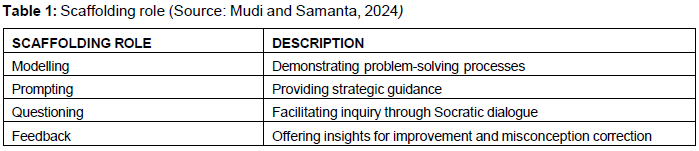
Vygotsky's Zone of Proximal Development (ZPD) is defined as the difference between what learners can accomplish independently and what they can achieve with guidance (Isaac et al 2023; Vygotsky, 1978). A critical reading of Vygotsky's more knowledgeable other (MKO) requires acknowledgement that no MKO, human or artificial, is an unbiased participant. Human teachers carry their own social, linguistic and cultural locations into the scaffolding relationship, just like an AI tutor carries the choices made by its developers, the patterns embedded in its training data, and the commercial structures within which it is deployed (Mhlambi, 2020; Nemorin, 2024). When AI assumes the MKO role in a South African classroom, it speaks from a location that is not the learners' own, in a language register that is not always theirs, with cultural references and worked examples drawn predominantly from Northern contexts. Treating this asymmetry as a feature of the relationship to be interrogated, rather than as a neutral starting point, is essential to the critical orientation this study takes. This study extends Vygotsky's ZPD by positioning genAI as a MKO capable of providing scaffolding within learners' developmental zones. This theoretical extension from human to artificial agents in the ZPD raises fundamental epistemological questions about the nature of scaffolding and knowledge mediation. While AI systems can provide adaptive responses and strategic guidance, they lack the cultural-historical consciousness that Vygotsky positioned as central to cognitive development (Engeness and Gamlem, 2025). A study done by Mudi and Samanta (2024) explore how AI can scaffold learning through adaptive feedback and personalised support and their work emphasise the importance of responsive AI systems that adjust to learner needs in real time, as detailed in Table 1 :
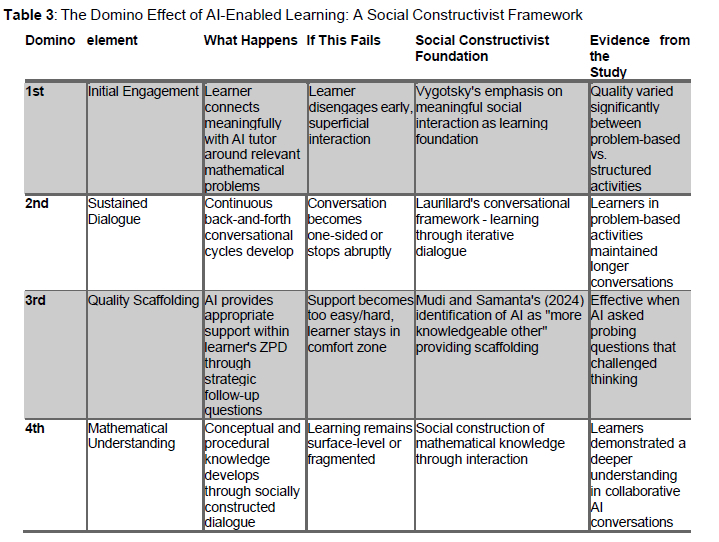
While Mudi and Samanta's (2024) work emphasises the importance of responsive AI systems that adjust to learner needs in real time, it does not place an AI system as a "more knowledgeable other" to help scaffold a user to achieve a learning outcome. To this end, a Domino Effect Framework (see Table 3) provides a novel analytical lens that captures how social constructivist principles manifest sequentially in AI-mediated learning environments. It is argued that the effectiveness of AI as a scaffolding partner depends on its capacity to generate interactions that learners experience as meaningful engagement, which is a crucial aspect of the ZPD (Ferguson, van den Broek and van Oostendorp, 2022). While AI systems lack agency and cannot possess the intentionality that characterises human pedagogical relationships, their computational 'intelligence' can mimic agentic behaviour sufficiently to approximate the 'more knowledgeable other' role in carefully designed learning contexts. This meaningful engagement requires intentional learning design, such as problem-based learning (PBL), rather than relying solely on the technological capabilities of AI systems (Boye and Agyei, 2023)
Adapting Laurillard's conversational framework for AI-enabled learning
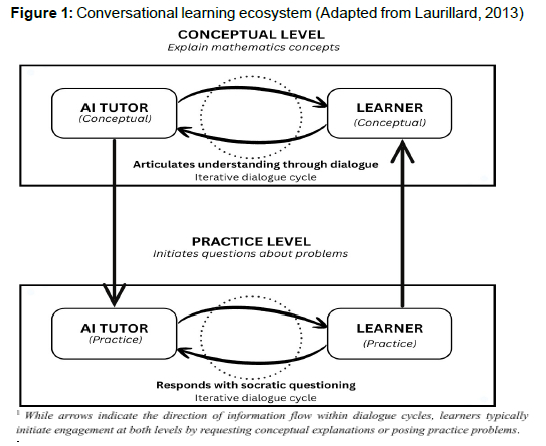
This study adapted Laurillard's Conversational Framework (Laurillard, 2013) which provides a complementary lens for understanding how learning occurs through iterative dialogue cycles. The researcher adapted this framework, as seen in Figure 1, to focus specifically on AI-learner interactions. While Laurillard's original framework featured learners engaging in dialogue cycles with both teachers and peers, our adaptation positions AI as mirroring the teacher role within the conversational learning ecosystem. This framework sets out to examine how conversational exchanges at both conceptual and practical levels can facilitate mathematical understanding within an AI-enabled learning ecosystem.
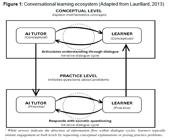
This adaptation of Laurillard's framework positions AI as complementing the teacher's role within the conversational learning ecosystem. While Laurillard's original model featured learners engaging in dialogue cycles with both teachers and peers, our framework examines how AI can effectively mirror the pedagogical functions traditionally associated with human teachers, providing conceptual explanations, strategic questioning, and adaptive scaffolding within iterative learning cycles. This theoretical positioning allows for systematic examination of AI's capacity to engage in the sophisticated pedagogical dialogue that Laurillard identified as essential for knowledge construction, while preserving the framework's emphasis on conversational cycles as the mechanism through which learning occurs. This methodological choice positions AI not as a replacement for human interaction but as a complementary conversational partner within socially situated learning environments.
The adapted framework illustrates two primary learning cycles that operate through distinct initiation patterns:
Conceptual Level
While the AI tutor may introduce mathematical concepts in structured learning contexts, meaningful conceptual dialogue typically begins when learners request explanations or express confusion. The AI tutor then explains concepts, and learners articulate their developing understanding through dialogue, creating an iterative cycle of explanation and articulation.
Practice Level
At this level, learners consistently initiate the dialogue by posing specific mathematical problems or questions. The AI tutor responds not with direct answers but with Socratic questioning that scaffolds learners' problem-solving processes, maintaining the iterative conversational cycle.
To analyse the quality of AI-generated feedback within these scaffolding interactions, this study integrates Roper's (1977) four-level feedback model with Vygotsky's ZPD scaffolding approaches. Roper's framework categorises feedback by its pedagogical function: (1) verification (correct/incorrect), (2) correct response (providing the answer), (3) error flagging (identifying mistakes), and (4) elaboration (explaining reasoning and guiding improvement). This classification enables systematic evaluation of whether AI tutoring provides developmentally appropriate scaffolding or merely superficial responses.
The SMART framework: Fostering AI literacy in mathematics education
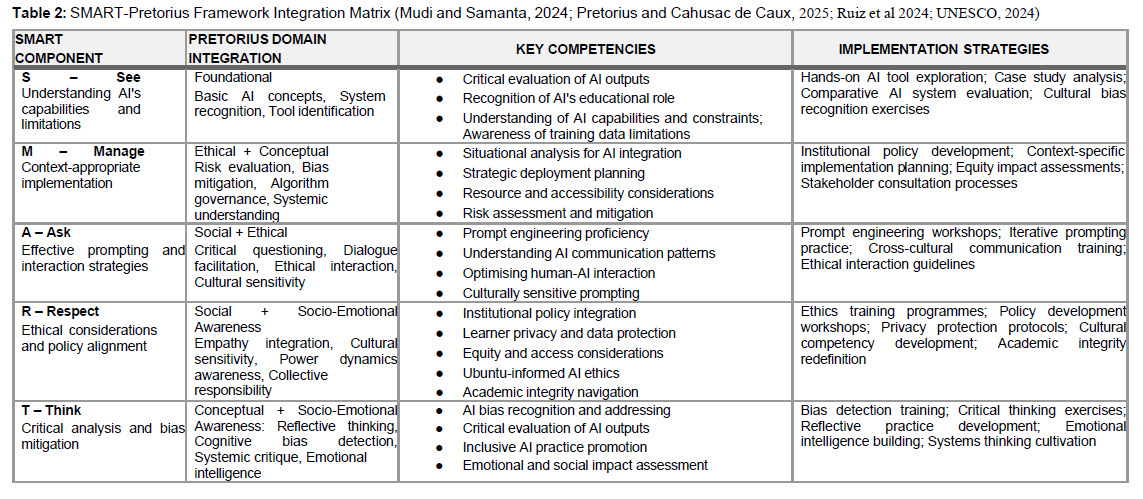
The SMART framework builds on UNESCO's AI Competency Framework for Teachers (UNESCO, 2024), which emphasises that educators must understand when and how to use AI ethically while planning inclusive AI-assisted teaching practices. While the UNESCO framework provides policy guidance, it lacks specific implementation strategies for subject-specific contexts like mathematics education. The SMART framework extends this foundation by integrating insights from Pretorius and Cahusac de Caux's (2025) five-domain model for higher education AI literacy. This integration creates a comprehensive approach that moves beyond technical competency to encompass critical thinking, ethical reasoning, emotional intelligence, and responsible implementation. The SMART framework integrates insights from UNESCO's AI competency guidelines (2024) framework, Ruiz et al's (2024) three-component model, and Pretorius and Cahusac de Caux's (2025) five-domain model. This convergence creates a theoretically grounded yet practically applicable framework for AI literacy development in mathematics education contexts and could be applicable in other subjects.
The critical in critical AI literacy is not synonymous with careful or evaluative. Drawing on the critical pedagogy tradition, criticality here implies engagement with the power relations, ideological assumptions, and political economies that shape AI systems and their deployment in classrooms (Nemorin, 2024; Nemorin et al 2023). Functional digital literacy asks whether learners can use a tool effectively. Critical AI literacy asks who built the tool, on whose data, with what assumptions, for whose benefit, and at what cost. The SMART framework operationalises this distinction across all five components: Seeing extends beyond capability recognition to include awareness of the labour, infrastructure, and ecological footprint behind AI systems; Asking foregrounds how prompts shape and are shaped by linguistic and cultural assumptions; Respecting encompasses critical evaluation of training data biases and cultural mismatches; and Thinking demands metacognitive awareness of how AI shapes the learner's reasoning over time. Within Southern contexts, this critical orientation is not optional. Learners using AI tools developed in the Global North require the analytical capacity to recognise when those tools speak from outside their context, to refuse uncritical adoption, and to make deliberate choices about when AI helps and when it harms.
The SMART framework provides a practical approach to critical AI literacy development that complements the theoretical principles established through ZPD and conversational framework analysis. While ZPD theory explains how scaffolding facilitates learning through the "more knowledgeable other," it assumes learners can recognise and effectively engage with appropriate scaffolding. In AI-enabled learning ecosystems, this assumption requires critical AI literacy development. The SMART framework addresses this gap by operationalising the learner's competencies necessary for ZPD-based learning in AI-mediated environments. The "See" component enables learners to recognise AI's potential as a "more knowledgeable other" while understanding its constraints as an algorithmic machine. The "Manage" component helps learners choose when AI scaffolding is pedagogically appropriate versus when independent practice or human support is needed for when to work independently or seek human support. The "Ask" component equips learners to initiate the scaffolding dialogue essential for ZPD engagement through effective prompting that elicits modelling, questioning, and feedback responses (see Table 1). The "Respect" component ensures scaffolded learning maintains ethical boundaries and cultural appropriateness. Finally, the "Think" component develops metacognitive awareness to evaluate whether AI responses are guiding them effectively and supporting their personal learning level. Without these critical AI literacy competencies, learners cannot effectively access or benefit from AI's scaffolding potential, regardless of the AI system's technical sophistication. Thus, SMART transforms ZPD from a descriptive theory of how learning occurs into an actionable framework for developing the learner capabilities required for AI-enabled scaffolded learning. This integration becomes evident in practice when examining how SMART-literate learners engage with the four scaffolding approaches identified in Table 1 (modeling, prompting, questioning, and feedback), demonstrating that AI literacy and scaffolding effectiveness are interdependent rather than separate concerns.
The framework's five integrated components address distinct but interconnected aspects of critical AI literacy, and a discussion of each follows below
"Seeing AI" capabilities involve learners' and teachers' understanding of the range of available mathematical AI tools and their specific affordances. In mathematics education contexts, this means learners recognise that different AI platforms and Large Language Models (LLMs) offer varying approaches to mathematical support, each with distinct strengths and limitations. Many AI language models were trained on general language patterns rather than specialised mathematical pedagogy, requiring learners to approach mathematical AI tutoring with informed expectations (Liu et al 2024).
Building on this foundational understanding, "Managing AI" strategically emerged as the superior effectiveness of problem-based learning contexts suggests that AI integration requires intentional curriculum design rather than universal application (Ruiz et al 2025). Both learners and teachers develop judgment about when AI collaboration enhances mathematical thinking versus when independent work develops essential cognitive skills.
This strategic management requires "Asking" effective prompts that enable the quality scaffolding characterising effective AI-learner dialogue (Mudi and Samanta, 2024). Effective prompting embodies the conversational principles central to both Vygotsky and Laurillard's frameworks, where questions initiate conversational cycles that enable collaborative knowledge construction within AI-mediated learning environments. Unlike simple information retrieval queries, effective prompts for mathematical learning should invite explanation, encourage reasoning processes, and create opportunities for sustained dialogue (Schorcht et al., 2024).
However, effective prompting needs to be grounded in "Respecting" ethical boundaries, which becomes particularly relevant in mathematical contexts where AI systems may reflect biases embedded in training data (Pantsar, 2025). In South African contexts, AI tutors may reference currency systems, calculation methods, or cultural contexts that do not align with local mathematical practices. Learners require guidance to critically evaluate whether AI responses reflect appropriate mathematical standards and cultural relevance.
Ultimately, all these competencies support "Thinking" critically about outputs, which emerged as the cornerstone of critical AI literacy. Since language models are fundamentally designed for linguistic pattern recognition rather than mathematical reasoning, learners develop metacognitive awareness to evaluate whether AI-generated mathematical explanations demonstrate sound logical reasoning or merely plausible-sounding language patterns (Davis, 2023).
Thus, the SMART framework aims to guide both learning design and assessment practices, ensuring that AI integration develops both teachers' and learners' critical thinking rather than fostering dependency.
Table 2 illustrates how the SMART framework's integration with Pretorius and Cahusac de Caux's model can possibly create enhanced learning opportunities. The SMART framework is positioned here as a tool for thinking rather than as a settled solution. Three potential risks accompany its use. First, SMART is a synthesis of existing competency frameworks rather than fully novel theoretical construction; its analytical work consists of integration and contextualisation, not original theoretical creation. Second, the operationalisation of SMART as five components risks producing a checklist orientation that runs counter to its critical intent. The framework is most useful when learners and teachers engage it as a set of questions to be asked of any AI interaction (what am I seeing, managing, asking, respecting, thinking?), and least useful when reduced to a competency rubric to be measured. Third, the framework has been developed primarily within South African higher education and TVET settings; its purchase in primary schooling, in linguistically diverse contexts, and in non-mathematics disciplines requires empirical interrogation. Researchers and practitioners adopting SMART should therefore treat it as a hypothesis to be tested in context rather than as a framework to be applied without modification.
Analytical framework: Domino effect of conversation cycles
The Domino Effect framework names a sequence that, when activated, produces sustained AI-supported learning. It does not, however, name the sociology of why and how the cascade is initiated, sustained or refused. Initial engagement (Domino 1) presupposes a learner who is willing to engage, a teacher who has framed the task as engagement-worthy, an institutional environment that permits experimentation with AI tools, and an absence of countervailing factors (language barriers, prior negative experiences with technology, peer dynamics) that would inhibit engagement. Each subsequent domino sits within similar conditions. The framework is therefore best read as a procedural model of a relatively well-resourced and well-prepared classroom interaction; it should not be read as a guarantee that the sequence will activate, nor as a sufficient explanation of why it does or does not. The conditions of the cascade are themselves the matter of further sociological and political inquiry, beyond the scope of the present study.
This article argues that effective AI tutoring operates through what we term a "domino effect" of social constructivist interactions that emerged from the conversational framework discussed in Section 2.2. The Domino Effect Framework identifies four interrelated phases in AI-learner interactions:
• Initial Engagement - The learner's entry point into dialogue, often driven by curiosity or a problem to solve.
• Sustainable Dialogue - Iterative exchanges that deepen understanding and maintain learner interest.
• Quality Scaffolding - Structured guidance from the AI that breaks down complex tasks into manageable steps.
• Mathematical Understanding - Evidence of conceptual mastery and accurate application of mathematical procedures.
The quality of initial engagement between learner and AI tutor triggers subsequent cycles. This domino effect framework extends Mudi and Samanta's (2024) work on AI scaffolding by demonstrating how social constructivist principles manifest sequentially in AI-enabled learning environments. Each domino represents a critical juncture where Vygotskian social interaction principles either encourage or weaken the learning cycles. Table 3 depicts a Social Constructive view of the Domino Effect of AI-Enabled learning.
The Domino Effect Framework extends Mudi and Samanta's (2024) work by emphasising the temporal and relational dynamics of AI tutoring. Rather than viewing scaffolding as a static feature, the Framework conceptualises it as a progressive sequence, where each phase builds upon the previous conversation to support deeper learning To further interpret these AI-learner conversations, the study draws on the adapted Conversational Framework, which distinguishes between conceptual and practice-level engagements. At the conceptual level, learners articulate understanding through dialogue, while at the practice level, they engage with problem-solving tasks supported by Socratic questioning. This dual-level model complements the Domino Effect Framework by illustrating how genAI may facilitate both cognitive and procedural learning. Together, these frameworks provide a theoretical foundation for analysing whether genAI can act as a "more knowledgeable other" and how its scaffolding capabilities unfold in real-time educational interactions.
METHODOLOGY
Exploring AI-learner interactions in context
This study employed Computational Grounded Theory (CGT) (Nelson,2020) a hybrid methodological approach that integrates human interpretation with computational pattern recognition, to analyse qualitative data from AI-learner interactions. The analysis was conducted using NVivo 15, a qualitative data analysis software that supports thematic coding and pattern identification. Using a qualitative interpretive methodology, this study examined genAI tutoring interactions within a South African high school mathematics discipline. The interpretive approach prioritises understanding how meaning is constructed through interaction, which aligns with the social constructivist theoretical foundation and allows exploration of AI-learner dialogue in educational settings. The research focused on Grade 9 learners engaging with an AI tutor across two different learning contexts to understand how curriculum design influences AI's pedagogical effectiveness. The study contrasted two distinct learning approaches:
Structured Learning Context: Traditional mathematics problems with clearly defined procedures and expected outcomes. These activities followed conventional curriculum patterns, emphasising procedural knowledge acquisition.
Problem-Based Learning Context: Real-world mathematical challenges requiring learners to apply mathematical concepts to authentic scenarios. These activities emphasised conceptual understanding and collaborative problem-solving.
Data collection
Data consisted of 40 individual chats between an AI tutor and Grade 9 learners at a public high school in the Central Karoo District of the Western Cape, a rural-urban context characterised by limited prior exposure to AI tools, mixed-language learner backgrounds (predominantly Afrikaans and English home languages), and curriculum delivery aligned to the South African CAPS Mathematics framework. The school was selected on the basis of an existing institutional research agreement and the willingness of the mathematics teacher to integrate AI tutoring into a sequence of Grade 9 lessons. Chats were collected across two distinct sessions in February 2024. A chat is defined in this study as an individual conversation between an AI tutor and a learner, structured as a continuous dialogue across two 50-minute periods, with learners free to continue interactions until satisfied with their understanding or task completion. These interactions were collected across two distinct sessions:
• Session 1: 30 participants have generated 30 chats.
• Session 2: 10 of the original participants returned, generating an additional 10 chats. This article focuses on the 10 chats from returning participants, as they provide richer data for analysing sustained engagement and learning progression. The reduced participation in the second session was attributed to the absence of formal assessment requirements and waning interest. Each session spanned two 50-minute periods per day, allowing learners ample time to engage meaningfully with the AI tutor. The researcher-one of the authors-facilitated all sessions using the same AI tutor system to ensure consistency. Participants had limited prior experience with AI tutoring, ensuring a uniform baseline for interaction. Learners were free to continue their conversations until they felt satisfied with their understanding or task completion, allowing for natural variation in dialogue length, depth, and engagement.
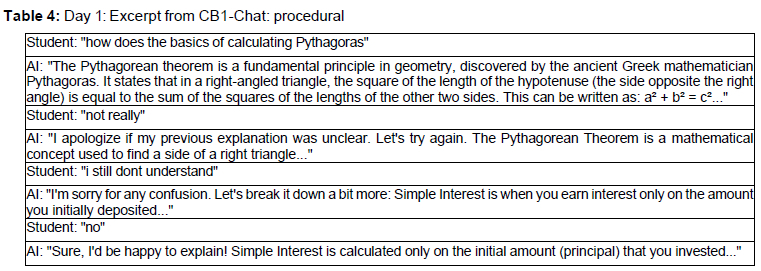
The following interactions (See Table 4 and Table 5) from transcript excerpts [CB1-PBA and CB1-Chat] show the AI-Learner conversation within a problem-based learning context and in a structured procedural maths problem during Day 1 and Day 2, respectively.
The transcripts presented below are interpretive sources, not data that speak for themselves. They have been selected and read through the dual lenses of Vygotsky's ZPD and Laurillard's Conversational Framework, with attention to the four-domino sequence. The interpretation offered draws inferences that another reader, with different theoretical commitments, would draw differently. Each transcript excerpt is therefore presented with explicit analytical commentary in the surrounding text, identifying what the dialogue makes visible (and what it does not), where scaffolding succeeds, where it breaks down, and where the AI tool's limitations become consequential for the learner. The intention is not to use the transcripts as proof of the framework, but to use the framework as a discipline on how the transcripts are read.
Reading the CB1-PBA transcript closely reveals more than domino-completion. The learner's framing of the problem ("if I buy a cortado every day of a work week, I will be able to buy myself a Nespresso machine within 17 days") arrives as a hypothesis already formed, not as a question asked of the AI. The AI tutor's first move is to disaggregate the hypothesis into its information requirements rather than to test or affirm it. The dialogue that follows is therefore not the AI teaching the learner to solve a problem; it is the AI scaffolding the learner's existing reasoning by surfacing the assumptions the learner has made implicitly. This is consequently different from the structured-context exchanges in Table 4, in which the AI is positioned as an information source rather than as a scaffolding partner. Such responses are consistent with the operation of the Domino Effect in the procedural sense, in that the conversation continues, the calculation is performed, and the answer is reached, but they raise an interpretive question: are learners participating in genuine dialogue, or are they performing the role the AI's scaffolding implies for them? The distinction is not always recoverable from the transcript alone, and it matters for any claim that AI tutoring activates dialogical learning in the substantive sense. The transcripts in this study can sustain the procedural claim; the substantive claim about dialogical engagement requires research designs that combine transcript analysis with stimulated-recall interviews or post-session reflection, capable of recovering the learner's intent behind brief responses.
To illustrate the difference in interaction quality for both days, consider these example dialogues (see Table 6):
These examples demonstrate how problem-based learning encouraged more extended, thoughtful interactions and longer conversation cycles.
Ethics, data sovereignty and the political economy
All phases of the research adhered to ethical standards, with approvals obtained from both the University and the Education Department. However, the integration of generative AI tools developed in Global North contexts into Southern classrooms raises ethical concerns that extend well beyond conventional research ethics framings of consent, anonymity, and confidentiality. Three concerns are particularly pressing for institutions considering large-scale AI integration in resource-constrained contexts.
First, the question of data sovereignty. When South African learners interact with AI systems whose training data, model weights, and inference infrastructure reside in Northern jurisdictions, the data generated through those interactions, including learners' reasoning patterns, errors, and conceptual struggles, is held under foreign governance regimes. Second, the question of algorithmic bias. AI tools trained predominantly on English-language data from Northern contexts perform unevenly across African languages, cultural references, and pedagogical traditions (Mhlambi, 2020; Mosimege, 2012).
Third, the question of political economy. Free or low-cost AI tutoring tools are not free of cost. They generate value through user data, attention, and dependency, and that value flows largely to companies headquartered in the Global North (Nemorin, 2024; Nemorin et al 2022). Resource-constrained institutions adopting these tools without policy guardrails risk reinforcing the very inequalities the tools are nominally addressing. The argument here is not that AI integration should be refused, but that the conditions of integration must be made explicit, contested where necessary, and renegotiated as the technology and its commercial structures evolve.
This study does not resolve these concerns. It argues that any framework for AI integration in Southern educational contexts must hold them as constitutive rather than peripheral, and that the SMART framework, with its Respect and Think components, provides one practical entry point for embedding them in classroom practice
Data preparation and coding
The 40 selected chat transcripts were uploaded into NVivo and labelled as follows:
Day 1:
30 CHATS: CB1-CB30
Day 2:

Using CGT, the researchers manually read each transcript and coded instances of four predefined Domino Effects:
• Initial Engagement - Learner's first interaction or curiosity-driven question.
• Mathematical Understanding - Evidence of conceptual grasp, accurate calculations, or correct application of mathematical procedures.
• Quality Scaffolding - AI tutor's structured guidance, breaking down problems into manageable steps.
• Sustainable Dialogue - Extended, iterative exchanges that reflect deepening understanding or clarification.
Each coded instance was supported by direct textual evidence. For example, in CB2-PBA, Quality Scaffolding Coding (See Figure 2) was identified through three references where the AI tutor guided the learner step-by-step: calculating the total cost over 17 days, determining workweeks, and computing total savings using a formula. The figure below shows only the problem-based chat dialogues of the 10 students, as the other 30 were recognised as non-compliant to the scaffolding within the ZPD, as already discussed in previous paragraphs.



In CB4-PBA, Mathematical Understanding was coded (See Figure 3) based on the learner's ability to apply formulas, perform calculations, and interpret results accurately.

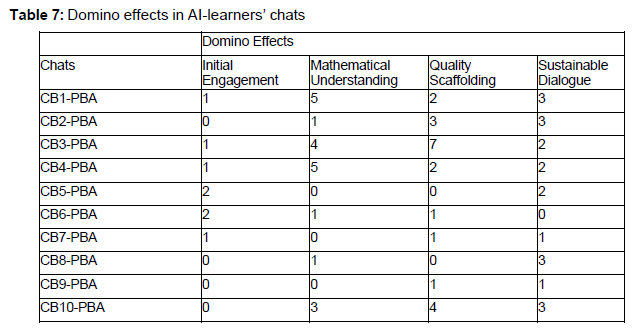
In Table 7, a coding summary of Domino Effects for 10 chats is outlined.
Researcher positioning and reflexivity
The lead researcher facilitated all classroom sessions and conducted all phases of analysis, occupying a dual role as both research instrument and analyst. This positioning carries methodological consequences that warrant explicit acknowledgement. As facilitator, the researcher's framing of tasks, modelling of AI interaction, and presence in the classroom shaped the conditions under which learners engaged with the AI tutor. As analyst, the same researcher selected and interpreted the transcripts presented in Section 4. The three-step Computational Grounded Theory approach was adopted partly to mitigate this concentration of influence, by introducing both unsupervised and supervised AI-enabled stages alongside human qualitative coding. The use of predetermined theoretical lenses (Vygotsky's ZPD, Laurillard's Conversational Framework, Roper's feedback model) was a further measure to discipline interpretation. These measures do not eliminate researcher influence; they make it visible and legible. The findings reported here are therefore best read as one researcher's grounded interpretation of a specific pedagogical setting, not as positioned-from-nowhere claims about AI tutoring in general.
The AI tool as a research instrument
The AI tutor used in this study (Mindjoy) is itself a research instrument with characteristics that shape what could and could not be observed. Three features warrant explicit acknowledgement. First, the tool is a wrapper around a large language model (Claude 3.5 Sonnet at the time of data collection), which means its responses inherit the training data, optimisation choices, and known limitations of that underlying model, including the cultural and linguistic biases documented in the AI ethics literature (Mhlambi, 2020; Nemorin, 2024). Second, the tool's interface choices, including which prompts it foregrounds, how it handles uncertainty, and when it offers direct answers versus Socratic questioning, shape the structure of the dialogue in ways that are not directly within the researcher's or the learner's control. Third, the tool was deployed in a particular configuration, with the Lorelei tutoring prompt and no external web access, which prioritises pedagogical scaffolding over information retrieval; a different configuration would produce different dialogue patterns. The findings reported here are therefore best read as findings about a particular AI tool in a particular configuration in a particular pedagogical setting, rather than as findings about AI tutoring in general.
RESULTS
The study investigated the potential of genAI to function as a "more knowledgeable other" within Vygotsky's ZPD, specifically in scaffolding Grade 9 learners' acquisition of mathematical understanding. Using NVivo 15, qualitative data from learners' chat interactions with an AI tutor were analysed to identify patterns of engagement and learning progression, conceptualised as Domino Effects: Initial Engagement, Sustainable Dialogue, Quality Scaffolding, and Mathematical Understanding.
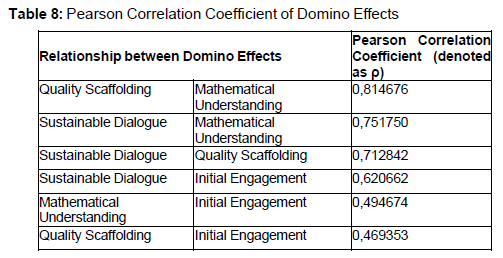
To explore the relationships between the Domino Effects, Pearson's Correlation Coefficient (r) was calculated (See Table 8) to determine the degree of linear association between each pair of effects. This statistical analysis was critical to answering the central research question: Can genAI act as a "more knowledgeable other," and if so, to what extent does it scaffold mathematical learning?
The correlation results provide quantitative insight into how different aspects of AI-learner interaction influence one another, reinforcing the qualitative findings and supporting the study's theoretical framing within Vygotsky's ZPD.
Pearson's correlation coefficients were calculated as an exploratory heuristic across the ten PBA chats to surface directional patterns among the Domino effects. Given the small dataset (N = 10), these values should be read as indicative of tendencies within this bounded classroom context rather than as statistically generalisable findings.With that interpretive caveat in mind, the correlations are consistent with the study's theoretical framing and support the following qualitative observations:
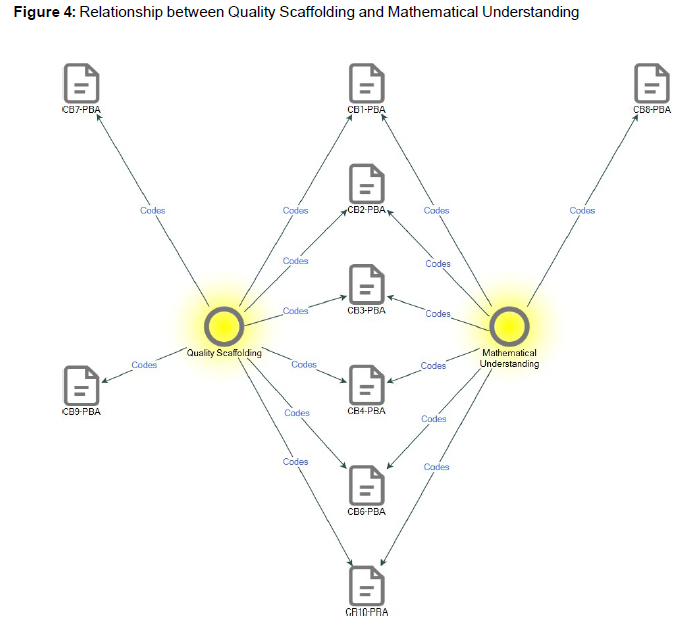
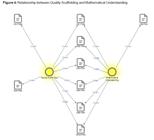
Quality Scaffolding and Mathematical Understanding showed the highest correlation (r = 0.81) among the six pairs, suggesting that when genAI provided structured and responsive support, learners were more likely to demonstrate deeper mathematical comprehension (See Figure 4).
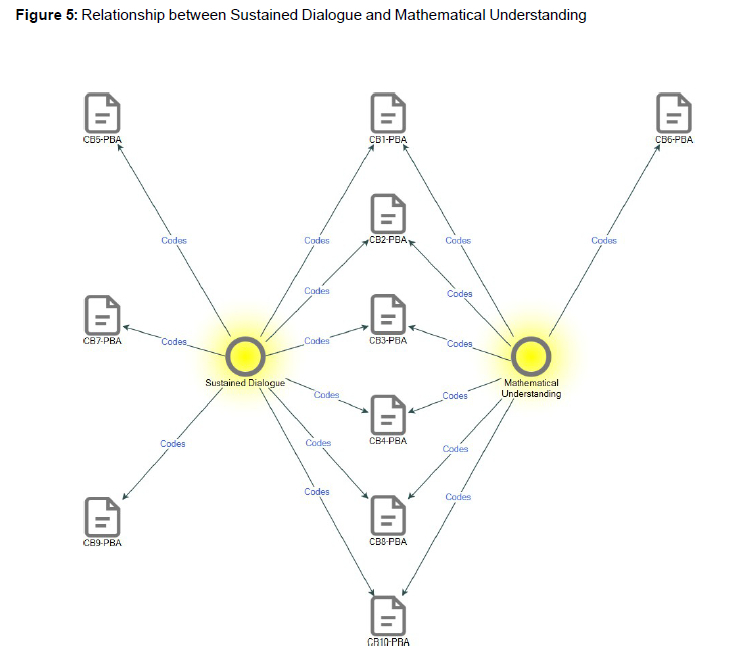
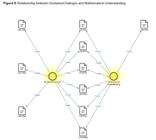
Sustainable Dialogue and Mathematical Understanding also exhibited a strong correlation (r = 0.75), indicating that extended, meaningful interactions with the AI tutor contributed positively to learners' conceptual grasp (See Figure 5).
A similarly high correlation was found between Sustainable Dialogue and Quality Scaffolding (r = 0.71), reinforcing the idea that dialogic engagement is foundational to effective scaffolding.
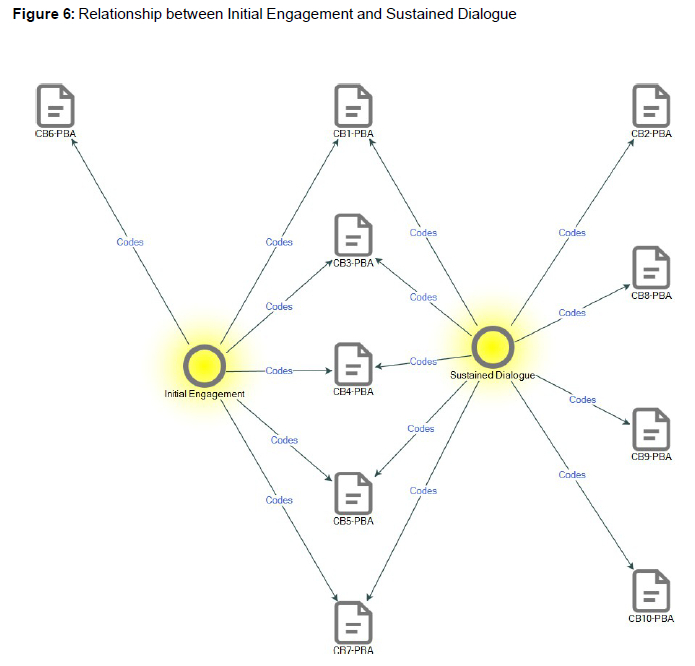
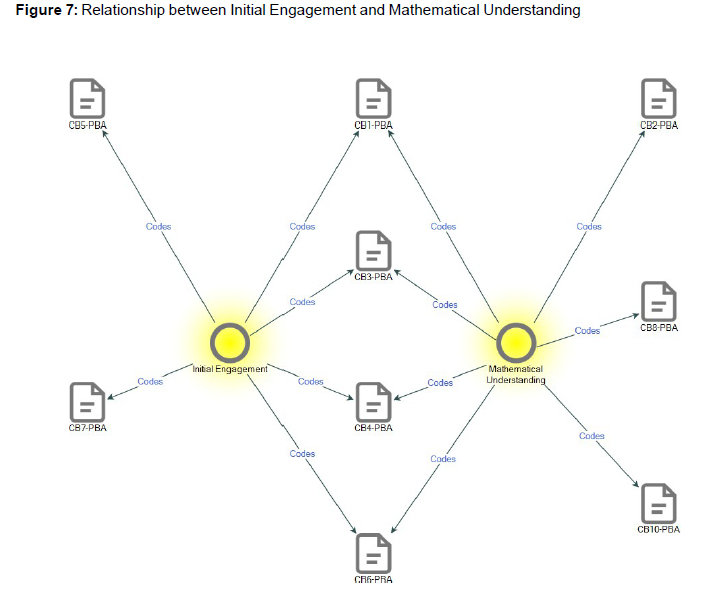
Moderate correlations were observed between Sustainable Dialogue and Initial Engagement (r = 0.62), and between Mathematical Understanding and Initial Engagement (r = 0.49), suggesting that early learner interest and participation play a role in subsequent learning outcomes (See Figure 6 and 7).
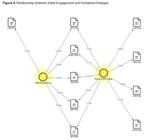
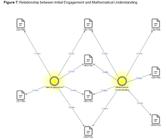
The weakest correlation was between Quality Scaffolding and Initial Engagement (r = 0.47), implying that while initial engagement is important, it may not directly predict the quality of scaffolding provided by genAI.
These findings support the hypothesis that genAI can serve as a socially responsive and pedagogically effective agent within a ZPD framework. The AI tutor's ability to sustain dialogue and scaffold learning appears to be critical in facilitating mathematical understanding, aligning with social constructivist principles. The Domino Effect framework developed in this article provides a nuanced lens for evaluating AI-mediated learning interactions and highlights the interdependence of engagement, dialogue, scaffolding, and comprehension in digital tutoring environments.
DISCUSSION
Our findings highlight the potential of AI-powered tutoring in mathematics education, particularly when applied to problem-based learning scenarios. The marked increase in sustained dialogue during problem-based activities aligns with Laurillard's Conversational Framework, demonstrating the AI tutor's ability to engage in meaningful dialogue at both conceptual and practical levels. The disparity in engagement between structural and problem-based activities suggests that the nature of the learning task significantly influences the effectiveness of AI-tutored questioning. This finding has important implications for the design of AI-integrated learning experiences, indicating that educators should possibly prioritise problem-based scenarios to maximise the benefits of AI tutoring and scaffolding within the ZPD.
However, the general lack of effective AI engagement skills among learners underscores a critical need for critical AI literacy in mathematics education (Anders, 2023; Walter, 2024). This encompasses not only the ability to interact effectively with AI tools but also skills in prompt engineering and critical evaluation of AI-generated content.
The methodological commitments required to advance socially situated analysis of AI pedagogy in Southern contexts extend beyond what the present study has attempted. Future research designs should integrate transcript analysis with stimulated-recall interviews, recovering learner intent and meaning-making behind brief responses; with classroom ethnography that surfaces the institutional, peer and disciplinary contexts within which AI interactions are situated; with teacher participatory research that positions educators as co-researchers rather than as subjects; and with longitudinal designs capable of tracking how AI literacy and pedagogical practice co-evolve over months and years rather than two sessions. Methodologically, the call is to move from grounded interpretation of a specific setting to a research programme capable of generating Southern scholarship that holds the social, political and infrastructural conditions of AI use at the centre of analysis rather than at its margins.
Also, teacher professional development for dialogical AI-supported learning cannot be reduced to technical training in tool use. Schools are social spaces inhabited by real actors with vested interests, professional identities, fears about displacement, and rituals of classroom practice that have sedimented over decades. Effective professional development must therefore engage with the sociology of teaching rather than only its pedagogy. It must acknowledge that decentering the teacher from the role of sole knowledge authority, even when framed as a progressive move, has identity, status and labour implications that teachers will reasonably resist if those implications are not addressed openly.
Future research should explore the use of AI literacy frameworks, focusing on prompt engineering and critical evaluation of AI integration in education (Ng et al 2021). Additionally, investigating the long-term impact of AI-integrated learning on learning problem-solving skills and mathematical understanding would provide valuable insights for educational policy and practice (UNESCO, 2024). As we navigate this AI-driven educational landscape, our approach should emphasise understanding AI's limitations alongside its capabilities (Mollick, 2024) to ensure that we can foster a generation of learners who are not just consumers of AI technology, but innovative thinkers (UNESCO, 2024). It's important to acknowledge that AI in education is a rapidly changing landscape (Lee et al 2023). Ongoing research and adaptation of pedagogical approaches are essential to fostering an educational ecosystem that not only embraces the potential of AI, but also ensures its ethical, equitable, and effective implementation of using AI tools. Ultimately, it is about preparing all learners to thrive in an AI-augmented world, regardless of their socioeconomic background (Walter, 2024).
CONCLUSION
This article proposes the Domino Effect Framework as a novel analytical lens for examining AI-mediated learning interactions. Building on Mudi and Samanta's (2024) foundational work on AI scaffolding, this framework extends Mudi and Samanta's insights by demonstrating how social constructivist principles unfold sequentially in generative AI-enabled environments. It captures the dynamic interplay between learner engagement, sustained dialogue, quality scaffolding, and mathematical understanding. The article aimed to offer a structured way to trace how genAI can function as a "more knowledgeable other" within ZPD through a practical guidance of the SMART framework.
The claims advanced here are bounded by their evidentiary base. This study analysed 40 chats from one Grade 9 mathematics classroom in one South African school across two sessions. The Domino Effect framework and the SMART model are offered as analytical contributions, not as scaled-up findings about AI tutoring effectiveness in general. The role of genAI in addressing SDG4 ambitions, in democratising access to quality education, or in transforming sub-Saharan teacher provision sits beyond the inferential reach of the present study. What this study can support is the more modest but pedagogically consequential claim that intentional learning design, anchored in problem-based contexts and supported by critical AI literacy development, materially shapes whether AI tutoring functions as scaffolding or as substitution. Cross-contextual validation, longitudinal evidence, and engagement with linguistic and infrastructural diversity across African educational settings are required before stronger claims can be defended.
ACKNOWLEDGEMENT
This article builds on the second author's MEd research, and its core ideas and theoretical framing were developed without the use of generative AI. During writing, Grammarly was used for proofreading and improving sentence clarity, while Claude Sonnet was occasionally consulted to help refine wording and shorten overly long sentences. These tools did not contribute to generating ideas, arguments, or interpretations. Data was analysed in NVivo 15 through manual coding, with its AI Assistant supporting theme identification and visual outputs. Claude 3.5 Sonnet was also used within a Computational Grounded Theory approach (Nelson, 2020) to complement, not replace, the researchers' analysis.
REFERENCES
-
Anders, B. A. 2023. "Is Using ChatGPT Cheating, Plagiarism, Both, Neither, or Forward Thinking?" Patterns 4 (3). https://doi.org/10.1016/j.patter.2023.100694.
» https://doi.org/10.1016/j.patter.2023.100694 -
Boye, E. S., and D. D. Agyei. 2023. "Effectiveness of Problem-Based Learning Strategy in Improving Teaching and Learning of Mathematics for Pre-Service Teachers in Ghana." Social Sciences & Humanities Open 7 (1): 100453. https://doi.org/10.1016/j.ssaho.2023.100453.
» https://doi.org/10.1016/j.ssaho.2023.100453 -
Choi, J. H., O. Garrod, P. Atherton, A. Joyce-Gibbons, M. Mason-Sesay, and D. Bjõrkegren. 2023. "Are LLMs Useful in the Poorest Schools? TheTeacher.AI in Sierra Leone." arXiv preprint arXiv:2310.02982. https://doi.org/10.48550/arXiv.2310.02982.
» https://doi.org/10.48550/arXiv.2310.02982 -
Corbin, T., M. Bearman, D. Boud, and P. Dawson. 2025. "The Wicked Problem of AI and Assessment." Assessment & Evaluation in Higher Education: 1-17.https://doi.org/10.1080/02602938.2025.2553340.
» https://doi.org/10.1080/02602938.2025.2553340 -
Davis, E. 2023. "Mathematics, Word Problems, Common Sense, and Artificial Intelligence." arXiv preprint arXiv:2301.09723. https://doi.org/10.48550/arXiv.2301.09723.
» https://doi.org/10.48550/arXiv.2301.09723 -
Engeness, I., and S. M. Gamlem. 2025. "Exploring AI-Driven Feedback as a Cultural Tool: A Cultural- Historical Perspective on Design of AI Environments to Support Students' Writing Process." Integrative Psychological and Behavioral Science 59 (1): 23. https://doi.org/10.1007/s12124-025-09894-8.
» https://doi.org/10.1007/s12124-025-09894-8 -
Fawns, T., M. Bearman, P. Dawson, J. H. Nieminen, K. Ashford-Rowe, K. Willey, L. X. Jensen, C. Damşa, and N. Press. 2025. "Authentic Assessment: From Panacea to Criticality." Assessment & Evaluation in Higher Education 50 (3): 396-408. https://doi.org/10.1080/02602938.2024.2404634.
» https://doi.org/10.1080/02602938.2024.2404634 -
Ferguson, C., E. L. van den Broek, and H. van Oostendorp. 2022. "AI-Induced Guidance: Preserving the Optimal Zone of Proximal Development." Computers and Education: Artificial Intelligence 3: 100089. https://doi.org/10.1016/j.caeai.2022.100089.
» https://doi.org/10.1016/j.caeai.2022.100089 -
Isaac, M., M. Ateeq, H. Hafizh, B. Hu, and D. Shodipo. 2023. "Leveraging Artificial Intelligence with Zone of Proximal Development: An ARCS Motivational E-Learning Model." In 2023 IEEE International Conference on Teaching, Assessment and Learning for Engineering (TALE), 1-8. https://doi.org/10.1109/TALE56641.2023.10398344.
» https://doi.org/10.1109/TALE56641.2023.10398344 -
Joseph Mbembe, A. 2016. "Decolonizing the University: New Directions." Arts and Humanities in Higher Education 15 (1): 29-45. https://doi.org/10.1177/1474022215618513.
» https://doi.org/10.1177/1474022215618513 -
Khlaif, Z. N., W. A. Alkouk, N. Salama, and B. Abu Eideh. 2025. "Redesigning Assessments for AI- Enhanced Learning: A Framework for Educators in the Generative AI Era." Education Sciences 15 (2): 174. https://doi.org/10.3390/educsci15020174.
» https://doi.org/10.3390/educsci15020174 -
Laurillard, D. 2013. Rethinking University Teaching: A Conversational Framework for the Effective Use of Learning Technologies. 2nd ed. Routledge. https://doi.org/10.4324/9781315012940.
» https://doi.org/10.4324/9781315012940 -
Le Grange, L. 2016. "Decolonising the University Curriculum." South African Journal of Higher Education 30 (2). https://doi.org/10.20853/30-2-709.
» https://doi.org/10.20853/30-2-709 -
Lee, U., H. Jung, Y. Jeon, Y. Sohn, W. Hwang, J. Moon, and H. Kim. 2023. "Few-Shot Is Enough: Exploring ChatGPT Prompt Engineering Method for Automatic Question Generation in English Education." Education and Information Technologies. https://doi.org/10.1007/s10639-023-12249-8.
» https://doi.org/10.1007/s10639-023-12249-8 -
Liu, N., S. Sonkar, M. Le, and R. Baraniuk. 2024. "MalAlgoQA: Pedagogical Evaluation of Counterfactual Reasoning in Large Language Models and Implications for AI in Education." arXiv preprint arXiv:2407.00938. https://doi.org/10.48550/arXiv.2407.00938.
» https://doi.org/10.48550/arXiv.2407.00938 -
Mhlambi, S. 2020. From Rationality to Relationality: Ubuntu as an Ethical and Human Rights Framework for Artificial Intelligence Governance. Discussion Paper No. 9, Carr Center for Human Rights Policy Discussion Paper Series. Cambridge, MA: Carr Center for Human Rights Policy, Harvard Kennedy School. https://cyber.harvard.edu/story/2020-07/rationality-relationality-ubuntu-ethical-and-human-rights-framework-artificial.
» https://cyber.harvard.edu/story/2020-07/rationality-relationality-ubuntu-ethical-and-human-rights-framework-artificial - Mollick, E. 2024. Co-Intelligence: Living and Working with AI. New York: Portfolio/Penguin.
-
Mosimege, M. 2012. "Methodological Challenges in Doing Ethnomathematical Research." International Journal of African Renaissance Studies-Multi-, Inter- and Transdisciplinarity 7 (2): 59-78. https://doi.org/10.1080/18186874.2013.774698.
» https://doi.org/10.1080/18186874.2013.774698 -
Mudi, S., and T. K. Samanta. 2024. "Applying Vygotsky's Zone of Proximal Development in Modern Classroom Settings: A Call for Social Learning in the Digital Age." International Journal for Multidisciplinary Research 6 (4): 24233. https://doi.org/10.36948/ijfmr.2024.v06i04.24233.
» https://doi.org/10.36948/ijfmr.2024.v06i04.24233 -
Nelson, L. K. 2020. "Computational Grounded Theory: A Methodological Framework." Sociological Methods & Research 49 (1): 3-42. https://doi.org/10.1177/0049124117729703.
» https://doi.org/10.1177/0049124117729703 -
Nemorin, S. 2024. "Towards Decolonising the Ethics of AI in Education." Globalisation, Societies and Education: 1-13. https://doi.org/10.1080/14767724.2024.2333821.
» https://doi.org/10.1080/14767724.2024.2333821 -
Nemorin, S., A. Vlachidis, H. M. Ayerakwa, and P. Andriotis. 2023. "AI Hyped? A Horizon Scan of Discourse on Artificial Intelligence in Education (AIED) and Development." Learning, Media and Technology 48 (1): 38-51. https://doi.org/10.1080/17439884.2022.2095568.
» https://doi.org/10.1080/17439884.2022.2095568 -
Newton, P. M., and S. Jones. 2025. "Education and Training Assessment and Artificial Intelligence. A Pragmatic Guide for Educators." British Journal of Biomedical Science 81: 14049. https://doi.org/10.3389/bjbs.2024.14049.
» https://doi.org/10.3389/bjbs.2024.14049 -
Ng, D. T. K., J. K. L. Leung, K. W. S. Chu, and M. S. Qiao. 2021. "AI Literacy: Definition, Teaching, Evaluation and Ethical Issues." Proceedings of the Association for Information Science and Technology 58 (1): 504-509. https://doi.org/10.1002/pra2.487.
» https://doi.org/10.1002/pra2.487 -
Pantsar, M. 2025. "The Need for Ethical Guidelines in Mathematical Research in the Time of Generative AI." AI and Ethics 5 (4): 3657-3668. https://doi.org/10.1007/s43681-025-00660-5.
» https://doi.org/10.1007/s43681-025-00660-5 -
Pretorius, L., and B. Cahusac de Caux. 2025. The AI Literacy Framework for Higher Education: A Grounded Theory Exploration of the Foundational, Social, Conceptual, Ethical, and Affective Domains of AI Literacy. Monash University. https://doi.org/10.26180/25965178.
» https://doi.org/10.26180/25965178 -
Roper, W. J. 1977. "Feedback in Computer Assisted Instruction." Programmed Learning and Educational Technology 14 (1): 43-49. https://doi.org/10.1080/1355800770140107.
» https://doi.org/10.1080/1355800770140107 -
Ruiz, P., K. Mills, K. Lee, M. Coenraad, J. Fusco, J. Roschelle, and J. Weisgrau. 2024. AI Literacy: A Framework to Understand, Evaluate, and Use Emerging Technology. Digital Promise. https://doi.org/10.51388/20.500.12265/218.
» https://doi.org/10.51388/20.500.12265/218 -
Sayed, Y., ed. 2018. Continuing Professional Teacher Development in Sub-Saharan Africa: Improving Teaching and Learning. 1st ed. Bloomsbury Publishing. https://doi.org/10.5040/9781474277914.
» https://doi.org/10.5040/9781474277914 -
Schorcht, S., N. Buchholtz, and L. Baumanns. 2024. "Prompt the Problem - Investigating the Mathematics Educational Quality of AI-Supported Problem Solving by Comparing Prompt Techniques." Frontiers in Education 9: 1386075. https://doi.org/10.3389/feduc.2024.1386075.
» https://doi.org/10.3389/feduc.2024.1386075 -
Shabani, K., M. Khatib, and S. Ebadi. 2010. "Vygotsky's Zone of Proximal Development: Instructional Implications and Teachers' Professional Development." English Language Teaching 3 (4): 237. https://doi.org/10.5539/elt.v3n4p237.
» https://doi.org/10.5539/elt.v3n4p237 -
UNESCO. 2024. AI Competency Framework for Teachers. UNESCO. https://unesdoc.unesco.org/ark:/48223/pf0000391104.
» https://unesdoc.unesco.org/ark:/48223/pf0000391104 -
Vygotsky, L. S. 1978. Mind in Society: Development of Higher Psychological Processes. Harvard University Press. https://doi.org/10.2307/j.ctvjf9vz4.
» https://doi.org/10.2307/j.ctvjf9vz4 -
Walter, Y. 2024. "Embracing the Future of Artificial Intelligence in the Classroom: The Relevance of AI Literacy, Prompt Engineering, and Critical Thinking in Modern Education." International Journal of Educational Technology in Higher Education 21 (1): 15. https://doi.org/10.1186/s41239-024-00448-3.
» https://doi.org/10.1186/s41239-024-00448-3