Carboxymethyl Cellulose Formulation of a South African Isolate of Steinernema yirgalemense
Abstract
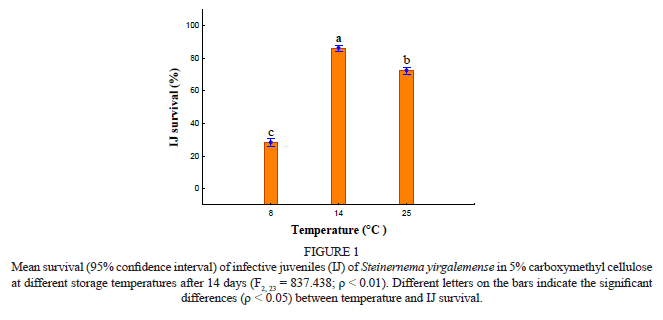
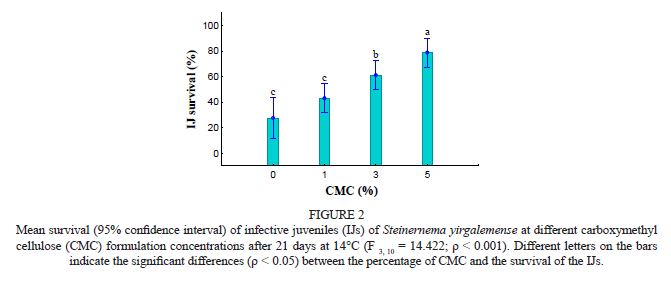
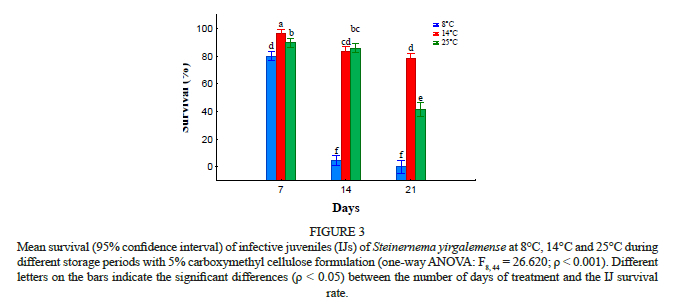
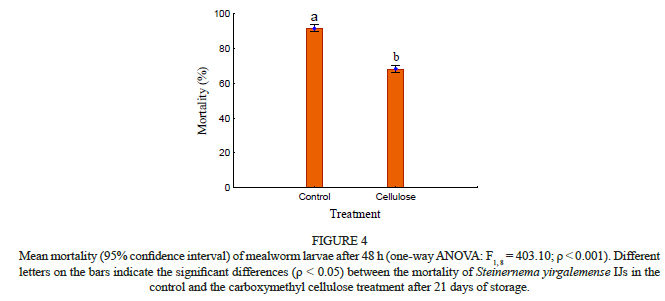
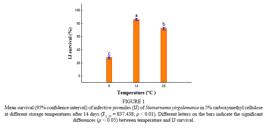
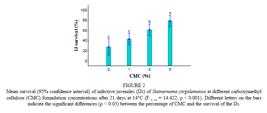
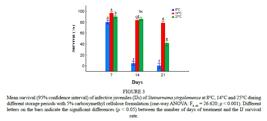
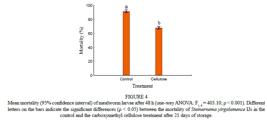
South African organic wine production is a small, but rapidly growing, sector supported by increasing global demand for organic wines. In growing organic vines, the process relies on the use of approved products available for organic production. At the same time, entomopathogenic nematodes (EPNs) offer an excellent solution for managing key insect pests in table grapes, particularly by addressing challenges related to maximum residue limits and withholding periods before and during the harvesting of grapes intended for export. Research on the use of EPNs in South Africa has demonstrated their potential as effective biological control agents against major grapevine pests, including vine mealybug, false codling moth and the banded fruit weevil. Key to their commercial success is the development of a formulation protocol for the active ingredient, which is the infective juveniles (IJ) of the nematode. The formulation provides a prolonged shelf life, without negatively affecting their pathogenicity and application methods. This study assessed the shelf life and pathogenicity of a carboxymethyl cellulose (CMC)-based formulation, using a South African nematode isolate, Steinernema yirgalemense 157-C. The infective IJs used in this study were cultured by means of in vitro liquid culture in Erlenmeyer flasks. The results show that 5% CMC at 14°C offered the highest viability of S. yirgalemense (79%) over a period of 21 days, with no negative effect on the infection potential of the IJs.
CMC; shelflife; temperature; pathogenicity; survival; partial anhydrobiosis
 Thumbnail
 Thumbnail
 Thumbnail
 Thumbnail