The effect of pre-school teachers' levels of COVID-19 fear on attitudes towards the COVID-19 vaccine
Abstract
It is crucial to reveal the attitudes and behaviours of individuals towards the COVID-19 disease to be able to develop the right health policies and interventions. With this research we examined the effects of pre-school teachers' COVID-19 fear levels on their attitudes towards the COVID-19 vaccine. The study was carried out with 405 pre-school teachers from 34 different provinces of Turkey who participated voluntarily. In this study, descriptive data were collected online. The data were obtained using the introductory information form, the COVID-19 fear scale, and the COVID-19 attitude towards vaccination scale. We determined that the negative attitudes towards the vaccine differed significantly according to age group and that the attitudes of younger teachers towards the vaccine were more negative. It has been revealed that pre-school teachers' fear of COVID-19 had a significant and positive effect on the development of a positive attitude towards the COVID-19 vaccine (p < 0.001), while the effect of fear of COVID-19 on the negative attitude towards the vaccine was not significant. Public health experts point out that many infectious diseases may occur in the future. Teachers educate future generations and serve as role models for children and their families. Therefore, determining the fears and attitudes of teachers on COVID-19 and similar infectious diseases may turn a possible crisis into an opportunity.
COVID-19 fear; COVID-19 vaccine; school health; teacher; vaccine attitude
Introduction
Healthy societies consist of healthy individuals. Protecting and improving the health of children, the youngest members of society, creates a healthier, more efficient, and dynamic social structure in the future. Health is a variable affected by many factors and affects many systems. Protecting and improving health, which is the basic principle of public health, is to prevent the deterioration of the current health status and to reach the optimal health status of individuals (Van Teijlingen, Devkota, Douglas, Simkhada & Van Teijlingen, 2021). To achieve this, it is important to prevent negative behaviour that harms health and to reinforce beneficial behaviour (Koelen & Van den Ban, 2023). In this context, it is important to provide adequate and desired school health services to school-aged children, especially during the growth and development period (Moussi, Tahan, Habchy, Kattan, Njeim, Abou Habib, El Bitar, El Asmar & Chahine, 2024; Sahinöz, Sahinöz & Kivanç, 2017).
School health services encompass all activities aimed at assessing and promoting the health of students and school staff, ensuring and maintaining a healthy school environment, and providing health education to students, thereby contributing to the overall health of society. The aim with school health is to ensure that students, teachers, and school personnel are in a state of complete mental, physical, and social well-being (Pulimeno, Piscitelli, Colazzo, Colao & Miani, 2020). By recognising growth and development disorders at an early stage through school health services, some problems can be prevented and the benefits of protective measures may continue throughout life (Dietz & Baur, 2022; Samuel, Acharya & Rao, 2020). The possibility of the development of accidents in the school environment, the high incidence and spread of infectious diseases, and the provision of health education services at school make school health services important (Chaabane, Doraiswamy, Chaabna, Mamtani & Cheema, 2021). On the other hand, students' health problems at school may cause academic failure. In addition, preventive measures such as vaccination may easily be taken at schools (Ministry of National Education [MONE], 2017).
Many studies indicate that effective school health services have many positive effects, especially on providing students with a healthier school environment (Gormley, 2019), nutrition habits (Gothilander & Johansson, 2023), disease prevention (Cook, Appleton, Bekaert, Harrold, Taylor & Sammut, 2023), mental health (Kaskoun & McCabe, 2022), and accident prevention (Akgül & Ergün, 2021; Al-Hajj, Nehme, Hatoum, Zheng & Pike, 2020). For the improvement of school health, the attitudes and behaviour of all school staff, especially teachers, about health, are important. The fact that teachers work in a safe environment that is comfortable, peaceful, and healthy not only increases the success of the students at school but also positively affects the spiritual development of the students (Darling-Hammond & Cook-Harvey, 2018). Teachers have an important role in promoting health. It is important for teachers to be educated about health and for teachers to be role models, as they enable children and young people to acquire positive health-related behaviour (Gündüz & Mutlu Albayrak, 2014). Teachers can be role models for students and their families through their behaviour (Demir & Köse, 2016).
For this reason, it was important to learn about teachers' attitudes and behaviour towards vaccination during the coronavirus disease (COVID-19) period.
COVID-19 has brought vaccines, which have been the most effective weapon throughout history to protect against infectious diseases, to the fore. In many studies on COVID-19 vaccines, the factors determining acceptance or opposition to the vaccine (Troiano & Nardi, 2021) have been investigated. Basic factors such as distrust in the content and effectiveness of the vaccine, distrust in health authorities, fear of side effects of the vaccine, and fear of stigmatisation have led to vaccine instability and even anti-vaccination (Kartoglu & Pala, 2023). With this study we aimed to determine the effects of these factors.
Literature Review
A school serves as an environment to promote a healthy lifestyle among individuals. A healthy school is an organisation dedicated to the well-being of students, teachers, staff, and everyone who interacts with the school (Sahinöz et al., 2017).
As a global threat, the COVID-19 pandemic has profoundly impacted education, a vital part of daily life. During this period, as in many countries, face-to-face education was suspended in Türkiye, and distance learning was implemented (Bozkurt, Jung, Xiao, Vladimirschi, Schuwer, Egorov, Lambert, Al-Freih, Pete, Olcott, Rodes, Aranciaga, Bali, Alvarez, Roberts, Pazurek, Raffaghelli, Panagiotou, De Coëtlogon, Shahadu, Brown, Asino, Tumwesige, Ramírez Reyes, Barrios Ipenza, Ossiannilsson, Bond, Belhamel, Irvine, Sharma, Adam, Janssen, Sklyarova, Olcott, Ambrosino, Lazou, Mocquet, Mano & Paskevicius, 2020; Yildiz, 2024). While distance education was implemented at many educational levels in schools, the process was more difficult due to the importance of peer interaction and individual developmental differences in pre-school education (Duran, 2021; Oktavianingsih & Arifiyanti, 2021).
The fact that the children could not see the virus made it difficult for the children (Haber, Kumar, Puttre, Dashoush & Corriveau, 2022), who were in the concrete developmental stage, to make sense of the disease, and to comply with measures such as wearing masks and keeping social distance (Idoiaga, Berasategi, Eiguren & Picaza, 2020). Preschool teachers are among professionals in the high-risk group because of the close contact between the students, their families, each other and the teacher in the classroom. This high-risk situation exacerbated the fear of contracting or spreading the disease (Gaffney, Himmelstein & Woolhandler, 2020; Stachteas & Stachteas, 2020). Some studies done on fear of COVID-19 - Özgünay, Akça, Karasu, Eminoglu and Gamli (2021) reveal that anaesthetists working in the COVID-19 intensive care units had statistically significantly higher fears of COVID-19 than others. COVID-19 fear scales have been developed by some researchers (Akkuzu, Yumuçak, Karaman, Ladikli, Türkkan & Bahadir, 2020; Artan, Karaman, Atak & Cebeci, 2020; Artan, Meydan & Irmak, 2021; Bakioglu, Korkmaz & Ercan, 2021). Yalçin (2021) conducted a study with 506 undergraduate and graduate students and found significant relationships between fear of COVID-19 and depression, anxiety, stress, self-recovery and mindfulness. Duman (2020), in his study examining the COVID-19 fear and uncertainty tolerance levels of university students, revealed that the students were moderately afraid of the coronavirus and were intolerant of uncertainty. Kasapoglu (2020) found a negative correlation between fear of coronavirus and transcendence, which is a sub-dimension of spiritual well-being; and stated that women reported higher fear of the coronavirus. We have found no research on levels of fear for COVID-19 and teachers' attitudes towards vaccination.
The vaccination process, which started with priority groups in Turkey, was later extended to all segments of society. However, distrust of vaccines, uncertainty, incorrect information and misdirection hampered to effective administering of vaccines (Durmuç, Akbolat & Amarat, 2021; Kartoglu & Pala, 2023). The vaccination process is ultimately shaped by individuals' intentions and attitudes, which influence whether it translates into actual behaviour. While some authorities advocated for making vaccination mandatory, others argued that compulsory vaccination could provoke negative reactions, as it was perceived to infringe upon individual freedom of thought and bodily autonomy (Amnesty International, 2020). In this case, instead of a compulsory vaccination policy, identifying the factors affecting the public's knowledge and attitudes about vaccination and clearly revealing the obstacles to vaccination would be difficult. In this context, the health belief model (HBM) provides a useful theoretical framework to understand individuals' health-related behaviour, including their fear of disease and attitudes toward vaccination. This model suggests that the likelihood of individuals engaging in behaviour to promote health is influenced by their perceived susceptibility to a health issue (e.g., risk of COVID-19), perceived severity of the condition, perceived benefits of the preventive action (e.g., vaccination), perceived barriers to taking action, cues to action (e.g., public health messaging), and self-efficacy (Champion & Skinner, 2008; Rosenstock, 1974). Applying the HBM allows for a better understanding of pre-school teachers' health behaviour during the pandemic, especially concerning their fears and attitudes towards vaccination. For instance, perceived high susceptibility and severity might increase fear, while perceived benefits and self-efficacy may influence willingness to be vaccinated. Therefore, by structuring the study within this model we had hoped to enhance theoretical depth and the development of targeted health promotion interventions.
Purpose of the Study
This research was conducted to determine the effect of pre-school teachers' levels of fear of COVID-19 on their attitudes towards the COVID-19 vaccine.
Methodology
The following hypotheses were developed within the scope of the research.
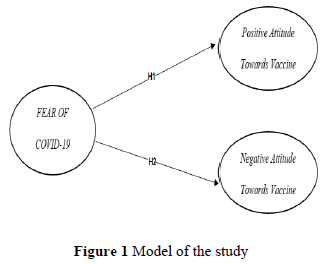
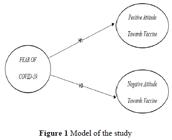
• H1: Fear of COVID-19 has a statistically significant effect on positive attitudes towards COVID-19 vaccines.
• H2: Fear of COVID-19 has a statistically significant effect on negative attitudes towards COVID-19 vaccines.
The conceptual model of the research is presented in Figure 1.
Data Collection Tools
Data for this study were collected using an introductory information form and three psychometric scales: the fear of COVID-19 scale, the positive attitude towards vaccination scale, and the negative attitude towards vaccination scale. The introductory form included socio-demographic variables (e.g., gender, age, marital status, number of children, education level, professional experience, institution type, class size, age group, and chronic illness) and contextual items related to COVID-19 (e.g., personal or familial infection history, perceived adequacy of school-level preventive measures), grounded in current literature. The fear of COVID-19 scale, developed by Ahorsu, Lin, Imani, Saffari, Griffiths and Pakpour (2022) and adapted into Turkish by Bakioglu et al. (2021), is a seven-item unidimensional measure using a 5-point Likert scale. The scale demonstrates high internal consistency in both the original (α = .82) and Turkish (α = .88) versions, with strong psychometric properties (e.g., RMSEA = .03, CFI = .99). This tool's straightforward and emotionally salient items allow for clear interpretation of participants' fear responses. The attitudes towards COVID-19 vaccine scale, developed by Genis, Gürhan, Koç, Genis, Sirin, Çirakoglu and Cocar (2020), contains nine items divided into two sub-dimensions - positive (four items) and negative (five items) - rated on a 5-point Likert scale. Negative items are reverse coded before total scores are calculated. In the original study, the Cronbach's alpha values were .96 and .78 for the positive and negative subscales respectively; in our study, these were α = .88 and α = .68. However, the negative subscale may lack conceptual specificity, as it does not clearly differentiate whether participants' hesitancy stems from general scepticism about the vaccine or specific concerns regarding the COVID-19 vaccine's novelty, safety, or development process. This ambiguity may explain why no significant correlation was found between COVID-19 fear and negative vaccine attitudes, as participants may have simultaneously feared the disease and distrusted the vaccine. To address this complexity, structuring the interpretation of findings within the HBM framework offers a valuable theoretical lens. By considering perceived susceptibility, severity, benefits, and barriers - as well as cues to action and self-efficacy - the HBM provides a coherent approach to understanding the psychological and cognitive mechanisms underlying vaccine-related decision-making in the context of fear of the pandemic.
Ethical Aspect of Research
The questionnaire containing the data collection tools to be used in the research, along with the research content, were submitted to the Scientific Research and Publication Ethics Committee of Toros University for ethical review. After obtaining expert opinions from professionals in the fields of public health, nursing and child development, the study was deemed ethically appropriate (Ethics Committee Decision No: 2021/1225; Date: March 23, 2021). Following ethics approval, official permission was obtained to conduct the study from the Republic of Turkey MONE - covering all provinces - and from the Ministry of Health. Data were collected online via Google Forms between April and June 2021. All necessary precautions were taken to protect participants' personal data and privacy. Informed consent was obtained from all participants prior to their participation in the study.
Population and Sample
The population of the study consisted of pre-school teachers working in public and private institutions in Türkiye. At the time of the study, a total of 98,825 pre-school teachers were working in public and private institutions under the MONE (2023). Since it was not possible to reach all teachers in the study population, sampling was needed. In cases where the study population is more than 10,000, the unlimited population formula is used. The sample size required for the study was calculated according to Ural and Kilic's (2005) unlimited population formula (n = p.q.z2a/e2). According to this formula, with 95% confidence interval and 5% margin of error, the sample size was n = (0.05x0.05x1.962)/0.052, i.e. n = 384 as the lower limit. In addition, according to Bougie and Sekaran (2019), if the population size is 10,000 or more, it is sufficient for the sample size to consist of 384 people and this size does not change much as the number increases. A sample size of 384 is sufficient for 100,000. 1,000,000 or 10,000,000 (Bougie & Sekaran, 2019). A total of 405 valid questionnaires were obtained and analysed in the research. Due to the fact that the data were collected online and the survey responses were delivered to us quickly, more than 384 valid questionnaires had been received. The data collection process was terminated when 405 participants had been reached. Considering the possibility of data loss, it was thought that it would be appropriate to keep 405. The number of valid surveys represents the universe at a 95% confidence level and the results obtained were extensive enough to generalise to the population. We reached 2.44% of the population.
Reliability and Validity
In the research, a two-stage approach (Anderson & Gerbing, 1988) was applied to evaluate the overall measurement quality and to evaluate the putative
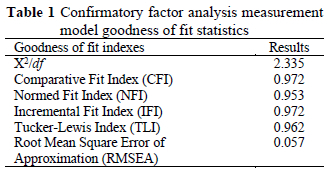
relationships. In the first step, confirmatory factor analysis (CFA) was performed to test the validity of the scales used in the study. Then, structural equation modelling (SEM) was applied to test the hypotheses in the research model. CFA results show a good model fit with 207,839 chi-square values and 89 degrees of freedom (p < .001) X2/df = 2.335 < 5 (Kline, 2016). In addition, other goodness-of-fit statistics were between reference values (0.90 < CFI < 1, 0.90 < NFI < 1, 0.90 < incremental fit index (IFI) < 1, 0.95 < TLI < 1, RMSEA < 0.08) (Sahoo, 2019). The goodness of fit regarding the CFA results is presented in Table 1.
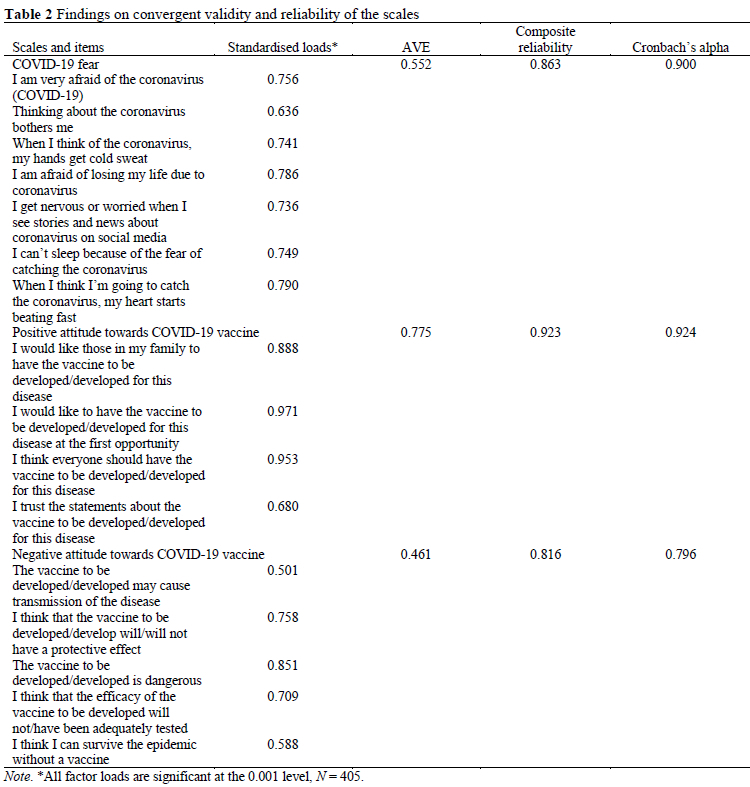
Although various methods are used to test the reliability of a scale, the most widely used is Cronbach's alpha (α) coefficient (Ural & Kiliç, 2005:286), which was also used in our study. As is shown in Table 2, all Cronbach's alpha values in this study were greater than 0.70. Therefore, it is possible to say that the scales are reliable (Taber, 2018). In addition, there should be evidence for convergent and discriminant validity to ensure construct validity (Cheung, Foo, Chu, Co & Lee, 2023). To ensure convergent validity, standardised factor loads explained mean-variance average variance extracted (AVE) and construct reliability (CR) values are required to be at the desired level (Kline, 2016). The AVE was greater than the 0.50 standard for all constructs except negative attitudes towards the vaccine. If the AVE value is less than 0.50 and the CR coefficient is greater than 0.60, the convergent validity of the construct is considered sufficient (Cheung et al., 2023). In addition, the standardised factor loadings of all measurements were significant and within acceptable limits at the p < .001 level. High CR values and significant factor loads for CR confirmed the convergent validity of the research model (Kline, 2016). The results of the CFA applied for the validity of the measurement model and the results of the reliability analysis are presented in Table 2.
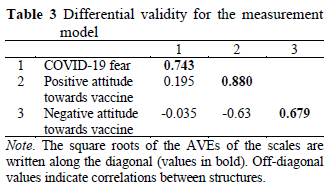
Finally, to ensure the discriminant validity of the model, the square root of the AVE value of each construct should be compared with the correlation between that construct and other constructs. The correlation between structures should be smaller than the square roots of the AVE value for each structure (Nasution, Fahmi, Jufrizen, Muslih & Prayogi, 2020). As shown in Table 3, all correlations between the scales are lower than the square roots of the AVEs. In conclusion, all findings confirm that the measurement model represents reliability with satisfactory validity (Cheung et al., 2023). As shown in Table 3, all correlations between the scales are lower than the square roots of the AVEs.
In conclusion, the findings confirm that the measurement model represents reliability with satisfactory convergent and discriminant validity.
Results
The pre-school teacher participants were mostly married (90.1%) women (90.1%), of which 75.1% of them were undergraduates and 28.4% were between the ages of 25 and 31. Of the 405 participants from 34 different provinces in Türkiye, 133 participants (32.8%) were from Mersin and 117 participants (28.9%) from Adana. Additionally, 28.1% of the teachers had 11 to 15 years of work experience, and 75.6% worked in public institutions. Of the participating teachers, 53.6% worked in independent kindergartens of which 44.9% stated that their classes consisted of children aged 48 to 60 months, and 71.9% reported that their class size was between 10 and 14 students. Most of the participants reported that they did not have a chronic illness (87.2%), had not contracted COVID-19 (84.7%), and did not have any family members who had contracted COVID-19 (64.9%). Lastly, 41.2% of the participants found the COVID-19 measures taken in their institutions to be adequate. We first tested whether COVID-19 fear, positive attitudes towards vaccination, and negative attitudes towards vaccination differed according to the demographic characteristics of the participants. Interpreting the relationships among COVID-19 fear and attitudes towards the vaccine requires a nuanced approach that considers potential confounding, mediating, and moderating variables. Although fear of COVID-19 was a key psychological factor influencing vaccination attitudes, this relationship was unlikely to be linear or independent of other variables. For instance, self-efficacy beliefs - individuals' confidence in their ability to avoid infection or recover without external medical support - may mediate the influence of fear on acceptance of the vaccine (Bandura, 1997). In this regard, younger participants, who often perceive themselves as healthier or less vulnerable to severe illness, may exhibit lower levels of vaccine acceptance despite experiencing moderate levels of fear (Millstein & Halpern-Felsher, 2002). Moreover, age itself may serve as a moderating factor, as older individuals are generally more risk-averse and thus more inclined toward protective health behaviour, including vaccination (Rosenstock, Strecher & Becker, 1988). Additionally, the gender composition of the sample - predominantly female - raised the possibility that general anxiety levels may have influenced participants' fear responses. Research indicates that women tend to report higher baseline levels of anxiety (McLean, Breen & Fournier, 2010), which may amplify emotional responses to pandemic-related threats, independently of disease-specific fears. Although we did not directly assess general anxiety in this study, its potential role as a confounding variable underscores the need for future research to incorporate broader psychological constructs to better differentiate specific fears from underlying emotional vulnerabilities.
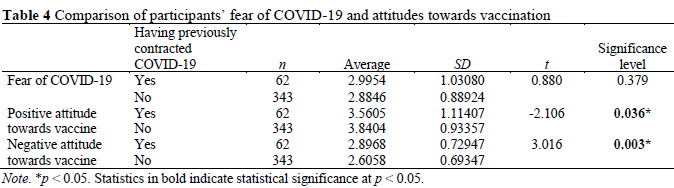
The independent sample t-test was performed to determine whether the fear levels and attitudes towards the vaccine showed significant, and the results are presented in Table 4.
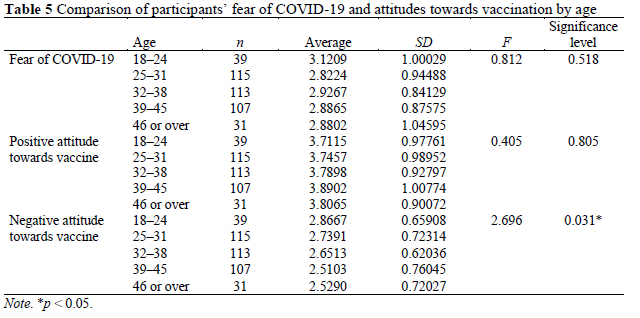
When examining the significance levels in Table 4, no statistically significant difference was found in the level of fear of COVID-19 based on whether individuals had previously contracted COVID-19; however, statistically significant differences were observed in the sub-dimensions of attitudes towards vaccination (p < 0.05). According to Table 4, teachers who have not had COVID-19 before had a relatively more positive attitude towards vaccination than those who have had the disease. On the other hand, teachers who had previously contracted COVID-19 had a more negative attitude towards the vaccine. This may be due to the idea that those who recovered from the disease would become immune for a while. ANOVA analysis was performed to determine whether teachers' COVID-19 fear levels and attitudes towards vaccination differed significantly according to age, and the results are summarised in Table 5.
When the mean levels in Table 5 were examined, we concluded that only negative attitudes towards the vaccine showed a significant difference according to age. The fear of COVID-19 and the positive attitude towards the vaccine did not differ according to age. According to the homogeneity of variances test (Levene), the variances of the negative attitude towards vaccination dimensions were found to be homogeneous (p > 0.05). Therefore, the Gabriel test was applied to determine the differences between the groups (Mayers, 2013:180).
As shown in Table 5, pre-school teachers aged 18 to 24 had higher mean scores for negative attitudes towards vaccination than those aged 39 to 45. This suggests that younger teachers tend to have more negative attitudes towards vaccination compared to their older counterparts. One possible explanation for this finding could be that younger individuals may be more exposed to misinformation and scepticism about vaccination through social media platforms, which are more widely used by this age group. Additionally, older individuals might have greater experience with previous public health campaigns or a heightened sense of vulnerability, which could contribute to more positive attitudes towards vaccination. The lack of difference in fear of COVID-19 and positive attitudes across age groups may indicate that while general perceptions of the disease and trust in vaccines remained relatively stable, age-specific concerns or cultural influences might shape negative attitudes more prominently.
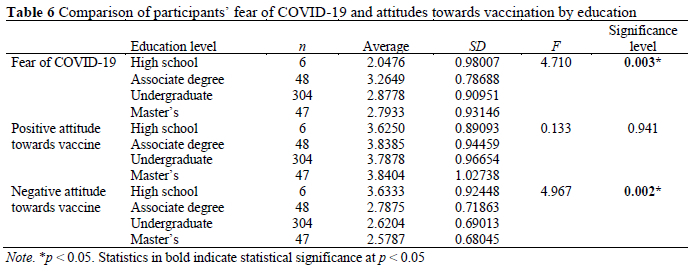
ANOVA was conducted to determine whether the COVID-19 fear levels and attitudes towards the vaccine differed according to the education level of the participants, and the results are given in Table 6.
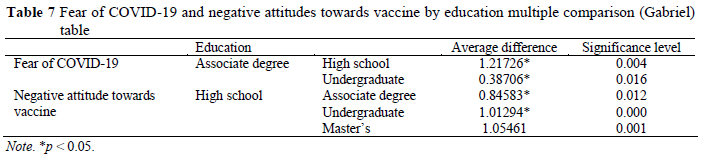
According to the comparisons in the dimension of fear of COVID-19 in Table 7, teachers with associate degrees had higher averages (more fear of COVID-19) than teachers with high school and undergraduate degrees. In the dimension of negative attitudes towards vaccination, high school graduate teachers had higher averages than teachers with associate, undergraduate, and graduate degrees.
From this point of view, it can be deduced that as the education level decreases, the negative attitude towards the vaccine increases.
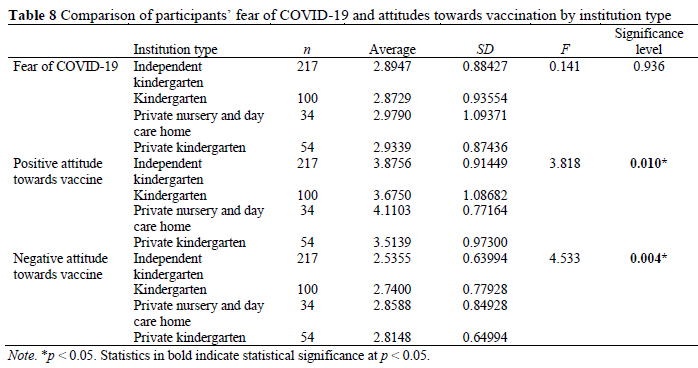
ANOVA was conducted to determine whether the level of fear of COVID-19 and their attitudes towards vaccines changed according to the type of institution they work at. The results are presented in Table 8.
According to Table 9, teachers working in private nurseries and daycare centres showed more positive attitudes towards vaccination than teachers working in private kindergartens. In addition, teachers working in private kindergartens showed higher negative attitude averages than teachers working in independent kindergartens. This shows that the attitudes of teachers working at private or state institutions differed.
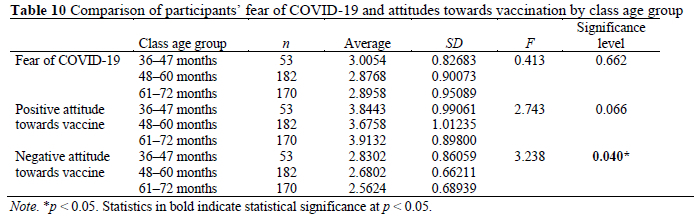
ANOVA was conducted to determine whether the COVID-19 fear levels and attitudes towards the vaccine differed according to the age group of the classes they taught, and the results are presented in Table 10.
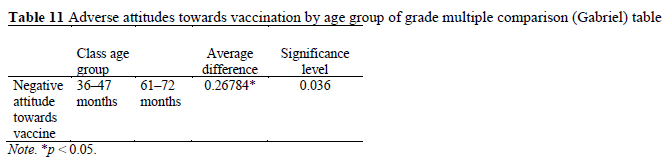
From the data in Table 10 it is clear that only the negative attitudes towards the vaccine differed significantly according to the age group of the class that the teachers taught. The Gabriel test results in Table 11 show in which groups these differences existed.
According to Table 11, pre-school teachers who worked with children of 36 to 47 months old held more negative attitudes towards vaccination compared to teachers working with children in the age group of 61 to 72 months. The result show that, as the average age of the class increased, teachers' negative attitudes towards vaccination decreased.
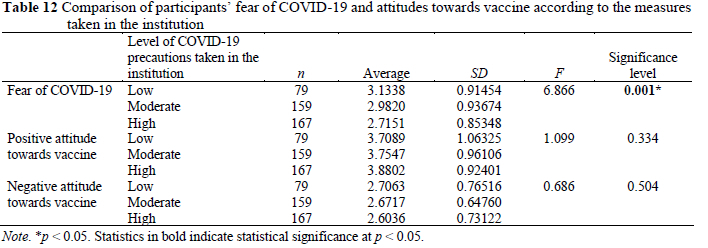
ANOVA was conducted to determine whether the COVID-19 fear levels and attitudes towards the vaccine differed significantly according to the level of COVID-19 measures (low, medium, high) taken by the pre-school teachers participating in the research. The analysis results are presented in Table 12.
Pre-school teachers in centres where precautions against COVID-19 were of a low level had more fear of COVID-19 than teachers whose institution took high-level precautions (Table 12). As a result of the different tests performed according to other demographic variables, no significant differences were found according to gender, marital status, type of institution, chronic disease, having COVID-19 in the family, the number of children, working time, and class size (p > 0.05).
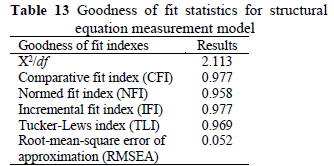
After the difference tests, structural equation modelling (SEM) was used to test the hypotheses in the research. The effect of pre-school teachers' fear of COVID-19 on positive and negative attitudes towards the vaccine was tested with the path analysis created within the scope of SEM. Goodness-of-fit values for SEM are given in Table 13. The goodness of fit indices, which presents the SEM results of the research model, show that the established structural model is acceptable (Bakioglu et al., 2021).
The results of testing the hypotheses in the model developed within the scope of the research are given in Table 14.
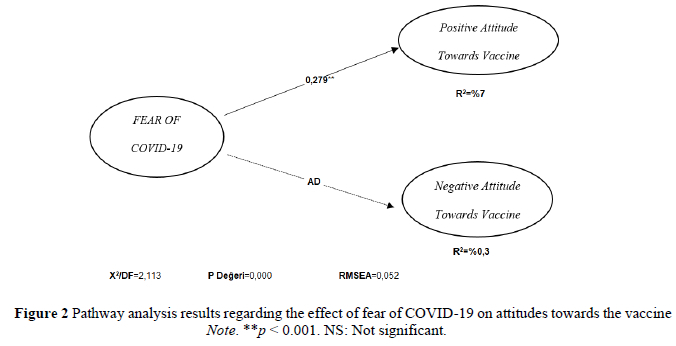
The constructed structural model, together with the path coefficients obtained are shown in Figure 2.
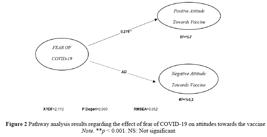
As seen to Figure 2, a significant and positive effect of fear of COVID-19 on positive attitudes towards the COVID-19 vaccine was identified (p < 0.001). In other words, an increase in fear of COVID-19 resulted in an increase in positive attitudes towards vaccination. The pathway analysis results presented in Figure 2 also indicate that fear of COVID-19 accounted for 7% of the variance in positive attitudes towards the vaccine (R2 = 0.07). Based on the standardised beta coefficient, a one-unit increase in fear of COVID-19 resulted in a 0.279-unit increase in positive attitude towards the vaccine. However, the effect of fear of COVID-19 on negative attitudes towards the vaccine was not found to be statistically significant. As such, H1 was supported, whereas H2 was rejected.
This pattern of findings suggests an asymmetrical effect of fear: while greater fear of the disease enhanced individuals' positive perceptions of the vaccine, it did not necessarily reduce their negative attitudes. One possible explanation for this could be the coexistence of fear towards both COVID-19 and the vaccine itself. Individuals may perceive the vaccine as potentially risky - especially given early concerns about safety, side effects, or perceived novelty - and thus retain negative attitudes despite recognising the benefits of vaccination. Another possible reason lies in the psychological distinction between positive and negative attitudes, which are not always mirror opposites and may be influenced by different cognitive or emotional factors. In addition, unmeasured confounding variables such as mistrust in health authorities, exposure to misinformation, or prior negative healthcare experiences may contribute to persistent negative attitudes unaffected by fear of the disease. These findings highlight the complexity of vaccine-related attitudes and the importance of examining both positive and negative dimensions separately in future research.
Discussion
The literature shows that, while the acceptance of COVID-19 vaccine was 59% for participants of 18 to 24 years old, 60% for 25 to 34 years old, 64% for 35 to 44 years old, 56% for 45 to 54 years old, this rate was 78% for individuals over 55 years old. In addition to the study of Malik, McFadden, Elharake and Omer (2020), Gkentzi, Benetatou, Karatza, Kanellopoulou, Fouzas, Lagadinou, Marangos and Dimitriou (2021) found that the intention to be vaccinated for COVID-19 was higher in the 52 to 67 age group. In our study, while age and fear of COVID-19 and positive attitudes towards the vaccine did not differ significantly, it was determined that the attitudes of teachers aged 18 to 24 towards vaccination were more negative than those of teachers aged 39 to 45. Considering another important variable, gender; evidence shows that women had a higher level of COVID-19 fear and anxiety than men (Li, Miao, Zeng, Tarimo, Wu & Wu, 2020; Shehada, Albelbeisi, Albelbeisi, El Bilbeisi & El Afifi, 2021; Stachteas & Stachteas, 2020), and that acceptance of the vaccine in women was lower than in men (Malik et al., 2020; Racey, Donken, Porter, Albert, Bettinger, Mark, Bonifacio, Dawar, Gagel, Kling, Mema, Mitchell, Roe, Ogilvie & Sadarangani, 2021). In our study, however, no significant differences were found in terms of gender, fear of COVID-19, and attitude towards COVID-19 vaccine.
In the study conducted by Malik et al. (2020) in the United States of America (USA), the acceptance of the COVID-19 vaccine was found to be higher in people with a university or higher education degree compared to those who did not have a university degree (Malik et al., 2020). This situation may be related to the acceptance of the measures taken by the government to prevent the spread of the pandemic (Stachteas & Stachteas, 2020). In a study conducted in the Philippines, it was found that teachers with postgraduate degrees had a higher intention to get vaccinated against COVID-19 (22.91% vs. 19.07%) compared to those with the most undergraduate degrees (Cahapay, 2022). On the other hand, it has been determined that teachers with associate degrees had higher fear of COVID-19 than teachers with high school and undergraduate degrees. High school graduate teachers had higher averages than teachers with associate, undergraduate, and graduate degrees in terms of negative attitudes towards vaccines. In a study conducted by Taspinar, Taspinar, Gulmez and Sezgi Kizilirmak (2021), it was found that people who had COVID-19 had a lower fear of COVID-19. We did not find the same, but we determined that teachers who had COVID-19 had a more negative attitude towards the vaccine. It is thought that the idea that those who had survived the disease would gain immunity for a while may have caused this situation. No study was found in the literature in which the relationship between the age group of pre-school teachers, the fear of COVID-19, and attitudes towards the COVID-19 vaccine was found. Considering the effect of the age group on knowing the risks and complying with the measures, we questioned this situation and as a result, it was determined that only the negative attitudes of the teachers towards the vaccine differed significantly according to the age group of the classes they taught. The attitudes of the teachers for children of 36 to 47 months were more negative than those of the teachers who taught children of 61 to 72 months.
According to the type of institution the teachers worked at, the fear of COVID-19 did not differ, but the attitudes towards the vaccine differed; teachers working in private kindergartens and daycare centres held more positive attitudes towards vaccination than teachers working in private kindergartens. Teachers working in private kindergartens had higher average negative attitudes than teachers working in independent kindergartens.
In our study, no significant differences were found in terms of variables such as marital status, type of institution, chronic disease status, presence of an individual with COVID-19 in the family, number of children, working time, and class size. However, studies found that those who did not have chronic diseases (Cahapay, 2022), those who did not have an average of more than 15 years of working experience, and teachers who had children were more likely to accept the COVID-19 vaccine than those who did not have children (Gkentzi et al., 2021).
The result of our study show that the fear of COVID-19 differed significantly according to the measures taken in the institutions and did not differ in terms of attitude towards the vaccine. It has been determined that teachers in institutions with a low level of measures against COVID-19 had more fear of COVID-19 than teachers who took high-level precautions.
The effect of pre-school teachers' fear of COVID-19 on positive and negative attitudes towards the vaccine was tested with structural equation modelling (SEM). It was found that the fear of COVID-19 had a significant and positive effect on the positive attitude developed against the COVID-19 vaccine (p < 0.001). We also determined that the effect of the fear of COVID-19 on a negative attitude towards the vaccine was not significant.
In spite of us meticulously planning each stage of the study, some limitations were noted.
Firstly, as close contact was risky and transportation channels could not be used actively during the pandemic, we collected data online using a self-report Google Form. A limitation of the self-report method may be that individuals presented themselves more positively during self-evaluation. Secondly, only pre-school institutions were included since education at the high school and primary education level was interrupted during the pandemic period, but education continued in most pre-school institutions. Since it was not possible to ensure the objective standardisation of the measures taken in the institutions under pandemic conditions, the adequacy of the measures taken in the institutions was questioned because of the teachers' evaluations. It is widely acknowledged that public health priorities take precedence over individual decisions during pandemics. However, implementing necessary safety measures in schools is particularly challenging, as they are inherently crowded environments. In the literature we found that student health is generally emphasised and teachers'/educators' health, which is the main component of school health, is ignored. Aiming to contribute to strategies for protecting and maintaining teachers' health, we examined the fear of COVID-19 and factors influencing attitudes towards the COVID-19 vaccine. In light of similar studies to be done, it would be valuable to examine these factors in depth. We propose that in future studies the research should be extended to different teaching levels, and not be limited to pre-school teachers.
In addition, interventions aimed at fostering positive attitudes towards vaccination should specifically target young teachers, and in-service training on school health should be provided. Furthermore, since fear of COVID-19 and attitudes towards the vaccine were found to vary based on working conditions and safety precautions, the critical importance of vaccination must be emphasised with these specific factors in mind. Therefore, implementing comprehensive educational interventions regarding COVID-19 may contribute to fostering positive attitudes towards the vaccine.
Conclusion
The COVID-19 era was an extraordinary crisis which had profound repercussions on all aspects of life. As in any crisis, fighting against something unknown brings fear. Although fear in society is frequently seen in extraordinary situations, it is important how the fear is managed. While the right level of fear affects the risk perception positively and reinforces the adoption of protective behaviour, excess causes anxiety disorder in people.
Although many studies were done on the fear and attitudes towards vaccines during the COVID-19 period in Türkiye, there were no studies done with pre-school teachers. Pre-school teachers are particularly at risk because they are in contact with younger children and their parents. Children in this age group cannot understand what the virus is because they do not think abstractly. The children are in physical contact with their peers and cannot adapt to wearing masks. It was thought that pre-school teachers might have more fear due to this situation, and we tried to evaluate how this situation affected the teachers' attitudes towards the vaccine. We determined that fear of COVID-19 and attitudes towards the vaccine differed according to working status, professional experience, and the preventative measures taken during the pandemic. The importance of vaccination during the pandemic requires careful consideration. Therefore, implementing comprehensive educational initiatives regarding COVID-19 may contribute to fostering positive attitudes towards the vaccine.
Pre-school teachers at institutions with low levels of precautions against COVID-19 had more fear of COVID-19 than teachers at institutions where high levels of precautions had been taken. Fear of COVID-19 did not change according to gender, marital status, type of institution, chronic illness, presence of COVID-19 in the family, number of children, length of period at work and class size. We found that the attitudes of teachers aged 18 to 24 towards the COVID-19 vaccine were more negative than those of teachers aged 39 to 45. Teachers working at private nursery and daycare centres had more positive attitudes towards vaccination than teachers working in private kindergartens. In addition, teachers working in private kindergartens, on average, had more negative attitudes than teachers working in kindergartens. The attitudes of teachers who taught children aged 36 to 47 months were more negative than those of the teachers who taught children aged 61 to 72 months old. As a result, we found that an increase in fear of COVID-19 lead to an increase in positive attitudes towards the vaccine.
Authors' Contributions
All authors worked collaboratively.
Notesi. We presented a summary of the outputs of our study as an oral presentation at the first International Positive Schools and Well-Being Congress held in Girne, Northern Cyprus on 16 and 17 May 2023.
ii. Published under a Creative Commons Attribution Licence.
References
-
Ahorsu DK, Lin CY, Imani V, Saffari M, Griffiths MD & Pakpour AH 2022. The Fear of COVID-19 Scale: Development and initial validation. International Journal of Mental Health and Addiction, 20(3):1537-1545. https://doi.org/10.1007/s11469-020-00270-8
» https://doi.org/10.1007/s11469-020-00270-8 -
Akgül E & Ergün A 2021. Toplum sagliginin gelistirilmesinde okul sagligi hemsireligi [School health nursing in promotion public health]. Halk Sagltgt Hemsireligi Dergisi, 3(2):141-153. Available at https://dergipark.org.tr/en/download/article-file/1269104. Accessed 22 December 2025.
» https://dergipark.org.tr/en/download/article-file/1269104 -
Akkuzu H, Yumuçak FN, Karaman G, Ladikli N, Türkkan Z & Bahadir E 2020. Koronavirüs Kaygi Olcegi'nin Türkçe güvenirlik ve geçerlik çalismasi [The reliability and validity of Turkish version of Coronavirus Anxiety Scale]. Ktbrts Turk Psikiyatri ve Psikoloji Dergisi, 2(2):63-67. https://doi.org/10.35365/ctjpp.20.2.09
» https://doi.org/10.35365/ctjpp.20.2.09 -
Al-Hajj S, Nehme R, Hatoum F, Zheng A & Pike I 2020. Child school injury in Lebanon: A study to assess injury incidence, severity and risk factors. PLoS One, 15(6):e0233465. https://doi.org/10.1371/joumal.pone.0233465
» https://doi.org/10.1371/joumal.pone.0233465 -
Amnesty International 2020. A fair shot: Ensuring universal access to Covid-19 diagnostics, treatments, and vaccines. Available at https://www.amnesty.org/en/documents/pol30/3409/2020/en/. Accessed 12 June 2023.
» https://www.amnesty.org/en/documents/pol30/3409/2020/en/ -
Anderson JC & Gerbing DW 1988. Structural equation modeling in practice: A review and recommended two-step approach. Psychological Bulletin, 103(3):411-423. https://doi.org/10.1037/0033-2909.103.3.411
» https://doi.org/10.1037/0033-2909.103.3.411 -
Artan T, Karaman M, Atak I & Cebeci F 2020. Covid-19 Salginina Yönelik Algi ve Tutumlari Degerlendirme Olcegi'nin degerlendirilmesi [Evaluation of the Scale of Assessment of Perceptions and Attitudes towards the Covid-19 outbreak]. Sosyal Çalisma Dergisi, 4(2):101-107. Available at https://dergipark.org.tr/en/download/article-file/1376965. Accessed 22 December 2025.
» https://dergipark.org.tr/en/download/article-file/1376965 -
Artan T, Meydan S & Irmak HS 2021. Covid-19 Korkusu Olçeginin Türkçe uyarlamasi: Geçerlilik ve güvenilirlik çalismasi [Turkish version of the Fear of COVID-19 Scale: Validity and reliability study]. Archives of Health Science and Research, 8(2):117-123. https://doi.org/10.5152/archealthscires.2021.20113
» https://doi.org/10.5152/archealthscires.2021.20113 -
Bakioglu F, Korkmaz O & Ercan H 2021. Fear of COVID-19 and positivity: Mediating role of intolerance of uncertainty, depression, anxiety, and stress. International Journal of Mental Health and Addiction, 19:2369-2382. https://doi.org/10.1007/s11469-020-00331-y
» https://doi.org/10.1007/s11469-020-00331-y - Bandura A 1997. Self-efficacy: The exercise of control. New York, NY: W.H. Freeman.
- Bougie R & Sekaran U 2019. Research methods for business: A skill building approach (8th ed). New York, NY: John Wiley & Sons.
-
Bozkurt A, Jung I, Xiao J, Vladimirschi V, Schuwer R, Egorov G, Lambert SR, Al-Freih M, Pete J, Olcott D, Jr, Rodes V, Aranciaga I, Bali M, Alvarez AJ, Jr, Roberts J, Pazurek A, Raffaghelli JE, Panagiotou N, De Coëtlogon P, Shahadu S, Brown M, Asino TI, Tumwesige J, Ramírez Reyes T, Barrios Ipenza E, Ossiannilsson E, Bond M, Belhamel K, Irvine V, Sharma RC, Adam T, Janssen B, Sklyarova T, Olcott N, Ambrosino A, Lazou C, Mocquet B, Mano M & Paskevicius M 2020. A global outlook to the interruption of education due to COVID-19 pandemic: Navigating in a time of uncertainty and crisis. Asian Journal of Distance Education, 15(1):1-126. https://doi.org/10.5281/zenodo.3878572
» https://doi.org/10.5281/zenodo.3878572 -
Cahapay MB 2022. To get or not to get: Examining the intentions of Philippine teachers to vaccinate against COVID-19. Journal of Human Behavior in the Social Environment, 32(3):325-335. https://doi.org/10.1080/10911359.2021.1896409
» https://doi.org/10.1080/10911359.2021.1896409 -
Chaabane S, Doraiswamy S, Chaabna K, Mamtani R & Cheema S 2021. The impact of COVID-19 school closure on child and adolescent health: A rapid systematic review. Children, 8(5):415. https://doi.org/10.3390/children8050415
» https://doi.org/10.3390/children8050415 - Champion VL & Skinner CS 2008. The Health Belief Model. In K Glanz, BK Rimer & K Viswanath (eds). Health behavior and health education: Theory, research, and practice (4th ed). San Francisco, CA: Jossey-Bass.
-
Cheung BHH, Foo DCC, Chu KM, Co M & Lee LS 2023. Perception from students regarding online synchronous interactive teaching in the clinical year during the COVID-19 pandemic. BMC Medical Education, 23:5. https://doi.org/10.1186/s12909-022-03958-8
» https://doi.org/10.1186/s12909-022-03958-8 -
Cook G, Appleton JV, Bekaert S, Harrold T, Taylor J & Sammut D 2023. School nursing: New ways of working with children and young people during the Covid-19 pandemic: A scoping review. Journal of Advanced Nursing, 79(2):471-501. https://doi.org/10.1111/jan.15504
» https://doi.org/10.1111/jan.15504 -
Darling-Hammond L & Cook-Harvey CM 2018. Educating the whole child: Improving school climate to support student success. Palo Alto, CA: Learning Policy Institute. Available at https://learningpolicyinstitute.org/sites/default/files/product-files/Educating_Whole_Child_REPORT.pdf. Accessed 29 December 2025.
» https://learningpolicyinstitute.org/sites/default/files/product-files/Educating_Whole_Child_REPORT.pdf -
Demir E & Köse M 2016. Ogretmenlerin rol modelligi hakkinda ögretmen görüsleri [Teachers' view on teachers' being a role model]. Akademik Bakis Uluslararast Hakemli Sosyal Bilimler Dergisi, 53:38-57. Available at https://dergipark.org.tr/tr/pub/abuhsbd/issue/32947/366153. Accessed 23 June 2023.
» https://dergipark.org.tr/tr/pub/abuhsbd/issue/32947/366153 -
Dietz WH & Baur LA 2022. The prevention of childhood obesity. In PG Kopelman, ID Caterson & WH Dietz (eds). Clinical obesity in adults and children (4th ed). Hoboken, NJ: John Wiley & Sons. https://doi.org/10.1002/9781119695257.ch25
» https://doi.org/10.1002/9781119695257.ch25 -
Duman N 2020. Üniversite ögrencilerinde COVID-19 korkusu ve belirsizlige tahammülsüzlük [COVID-19 fear and intolerance to uncertainty in university students]. The Journal of Social Science, 4(8):426-437. https://doi.org/10.30520/tjsosci.748404
» https://doi.org/10.30520/tjsosci.748404 -
Duran M 2021. The effects of COVID-19 pandemic on preschool education. International Journal of Educational Methodology, 7(2):249-260. https://doi.org/10.12973/ijem.7.2.249
» https://doi.org/10.12973/ijem.7.2.249 -
Durmus A, Akbolat M & Amarat M 2021. Covid-19 asi okuryazarligi ölçegi'nin Türkçe geçerlilik ve güvenirliligi [Turkish validity and reliability of the COVID-19 Vaccine Literacy Scale]. Cukurova Medical Journal, 46(2):732-741. https://doi.org/10.17826/cumj.870432
» https://doi.org/10.17826/cumj.870432 -
Gaffney AW, Himmelstein D & Woolhandler S 2020. Risk for severe COVID-19 illness among teachers and adults living with school-aged children. Annals of Internal Medicine, 173(9):765-767. https://doi.org/10.7326/M20-5413
» https://doi.org/10.7326/M20-5413 -
Genis B, Gürhan N, Koç M, Genis Ç, Sirin B, Çirakoglu OC & Cosar B 2020. Development of perception and attitude scales related with COVID-19 pandemia. Pearson Journal of Social Sciences & Humanities, 5(7):306-326. https://doi.org/10.46872/pj.127
» https://doi.org/10.46872/pj.127 -
Gkentzi D, Benetatou E, Karatza A, Kanellopoulou A, Fouzas S, Lagadinou M, Marangos M & Dimitriou G 2021. Attitudes of school teachers toward influenza and COVID-19 vaccine in Greece during the COVID-19 pandemic. Human Vaccines & Immunotherapeutics, 17(10):3401 -3407. https://doi.org/10.1080/21645515.2021.1945903
» https://doi.org/10.1080/21645515.2021.1945903 -
Gormley JM 2019. School nurse advocacy for student health, safety, and school attendance: Impact of an educational activity. The Journal of School Nursing, 35(6):401-411. https://doi.org/10.1177/1059840518814294
» https://doi.org/10.1177/1059840518814294 -
Gothilander J & Johansson H 2023. School nurses' experiences and challenges of working with childhood obesity in Northern Sweden: A qualitative descriptive study. Nordic Journal of Nursing Research, 43(1):1-9. https://doi.org/10.1177/20571585211044698
» https://doi.org/10.1177/20571585211044698 -
Gündüz S & Mutlu Albayrak H 2014. Okul sagliginda neredeyiz? [Where are we in school health?]. Ankara Medical Journal, 14(1):29-33. https://doi.org/10.17098/amj.42040
» https://doi.org/10.17098/amj.42040 -
Haber AS, Kumar SC, Puttre H, Dashoush N & Corriveau KH 2022. "Why can't I see my friends and family?": Children's questions and parental explanations about coronavirus. Mind, Brain, and Education, 16(1):54-61. https://doi.org/10.1111/mbe.12309
» https://doi.org/10.1111/mbe.12309 -
Idoiaga N, Berasategi N, Eiguren A & Picaza M 2020. Exploring children's social and emotional representations of the COVID-19 pandemic. Frontiers in Psychology, 11:1952. https://doi.org/10.3389/fpsyg.2020.01952
» https://doi.org/10.3389/fpsyg.2020.01952 -
Kartoglu U & Pala K 2023. Evaluation of COVID-19 pandemic management in Türkiye. Frontiers in Public Health, 11:1142471. https://doi.org/10.3389/fpubh.2023.1142471
» https://doi.org/10.3389/fpubh.2023.1142471 -
Kasapoglu F 2020. Examining the relationship between fear of COV[D-19 and spiritual well-being. Spiritual Psychology and Counseling, 5(3):341-354. https://doi.org/10.37898/spc.2020.5.3.121
» https://doi.org/10.37898/spc.2020.5.3.121 -
Kaskoun J & McCabe E 2022. Perceptions of school nurses in addressing student mental health concerns: An integrative review. The Journal of School Nursing, 38(1):35-47. https://doi.org/10.1177/10598405211046223
» https://doi.org/10.1177/10598405211046223 - Kline RB 2016. Principles and practice of structural equation modeling (4th ed). New York, NY: The Guilford Press.
-
Koelen MA & Van den Ban AW 2023. Health education and health promotion. Leiden, The Netherlands: Brill. https://doi.org/10.3920/978-90-8686-665-6
» https://doi.org/10.3920/978-90-8686-665-6 -
Li Q, Miao Y, Zeng X, Tarimo CS, Wu C & Wu J 2020. Prevalence and factors for anxiety during the coronavirus disease 2019 (COVID-19) epidemic among the teachers in China. Journal of Affective Disorders, 277:153-158. https://doi.org/10.1016/j.jad.2020.08.017
» https://doi.org/10.1016/j.jad.2020.08.017 -
Malik AA, McFadden SM, Elharake J & Omer SB 2020. Determinants of COVID-19 vaccine acceptance in the US. eClinicalMedicine, 26:100495. https://doi.org/10.1016/j.eclinm.2020.100495
» https://doi.org/10.1016/j.eclinm.2020.100495 - Mayers A 2013. Introduction to statistics and SPSS in psychology. Harlow, England: Pearson Education.
-
McLean KC, Breen AV & Fournier MA 2010. Constructing the self in early, middle, and late adolescent boys: Narrative identity, individuation, and well-being. Journal of Research on Adolescence, 20(1):166-187. https://doi.org/10.1111/j.1532-7795.2009.00633.x
» https://doi.org/10.1111/j.1532-7795.2009.00633.x -
Millstein SG & Halpern-Felsher BL 2002. Perceptions of risk and vulnerability. Journal of Adolescent Health, 31(1):10-27. https://doi.org/10.1016/S1054-139X(02)00375-2
» https://doi.org/10.1016/S1054-139X(02)00375-2 -
Ministry of National Education 2017. Okul sagltgt hizmetleri [School health services]. Available at https://okulsagligi.meb.gov.tr/www/okul-sagligi-hizmetleri/icerik/29. Accessed 24 June 2023.
» https://okulsagligi.meb.gov.tr/www/okul-sagligi-hizmetleri/icerik/29 -
Ministry of National Education 2023. Pre-school education statistics in Türkiye. Available at https://www.meb.gov.tr/. Accessed 31 December 2025.
» https://www.meb.gov.tr/ -
Moussi C, Tahan L, Habchy P, Kattan O, Njeim A, Abou Habib L, El Bitar W, El Asmar B & Chahine MN 2024. School-based pre-and post-intervention tests assessing knowledge about healthy lifestyles: A national school health awareness campaign on children aged between 3 and 12 years old [Special issue]. Children, 11(2):213. https://doi.org/10.3390/children11020213
» https://doi.org/10.3390/children11020213 -
Nasution MI, Fahmi M, Jufrizen, Muslih & Prayogi MA 2020. The quality of Small and Medium Enterprises performance using the Structural Equation Model-Part Least Square (SEM-PLS). Journal of Physics: Conference Series, 1477:052052. https://doi.org/10.1088/1742-6596/1477/5/052052
» https://doi.org/10.1088/1742-6596/1477/5/052052 -
Oktavianingsih E & Arifiyanti N 2021. School readiness for early childhood in face-to-face learning in pandemic Covid-19. Indonesian Journal of Educational Assessment, 4(1):22-29. Available at https://www.researchgate.net/profile/Eka-Oktavianingsih-2/publication/3567463 57_SCHOOL_READINESS_FOR_EARLY_CHILDHOOD_IN_FACE-TO-_FACE_LEARNING_IN_PANDEMIC_COVID-19/links/61a988c6aade5b1bf5fdc09b/SCHOOL-READINESS-FOR-EARLY-CHILDHOOD-IN-FACE-TO-FACE-LEARNING-IN-PANDEMIC-COVID-19.pdf. Accessed 13 December 2025.
» https://www.researchgate.net/profile/Eka-Oktavianingsih-2/publication/3567463 57_SCHOOL_READINESS_FOR_EARLY_CHILDHOOD_IN_FACE-TO-_FACE_LEARNING_IN_PANDEMIC_COVID-19/links/61a988c6aade5b1bf5fdc09b/SCHOOL-READINESS-FOR-EARLY-CHILDHOOD-IN-FACE-TO-FACE-LEARNING-IN-PANDEMIC-COVID-19.pdf -
Özgünay SE, Akça F, Karasu D, Eminoglu S & Gamli M 2021. Coronavirüs (COVID-19) pandemi sürecinde, anestezistlerin yasadiklan korku düzeyleri ve profilaksi uygulamalarinin degerlendirilmesi [Evaluation of fear levels of anesthetists and prophylaxis practices in the coronavirus (COVID-19) pandemic]. Journal of Anesthesiology and Reanimation Specialists' Society, 29(1):25-31. https://doi.org/10.5222/jarss.2021.40412
» https://doi.org/10.5222/jarss.2021.40412 -
Pulimeno M, Piscitelli P, Colazzo S, Colao A & Miani A 2020. School as ideal setting to promote health and wellbeing among young people. Health Promotion Perspectives, 10(4):316-324. https://doi.org/10.34172/hpp.2020.50
» https://doi.org/10.34172/hpp.2020.50 -
Racey CS, Donken R, Porter I, Albert A, Hettinger JA, Mark J, Bonifacio L, Dawar M, Gagel M, Kling R, Mema S, Mitchell H, Roe I, Ogilvie G & Sadarangani M 2021. Intentions of public school teachers in British Columbia, Canada to receive a COVID-19 vaccine. Vaccine: X, 8:100106. https://doi.org/10.1016/j.jvacx.2021.100106
» https://doi.org/10.1016/j.jvacx.2021.100106 -
Rosenstock IM 1974. Historical origins of the Health Belief Model. Health Education & Behavior, 2(4):328-335. https://doi.org/10.1177/109019817400200403
» https://doi.org/10.1177/109019817400200403 -
Rosenstock IM, Strecher VJ & Becker MH 1988. Social learning theory and the Health Belief Model. Health Education & Behavior, 15(2):175-183. https://doi.org/10.1177/109019818801500203
» https://doi.org/10.1177/109019818801500203 -
Sahinöz T, Sahinöz S & Kivanç A 2017. Sagligi gelistirmenin en kolay yolu: Okul sagligi [The easiest way to improve health: School health]. Gümüshane Üniversitesi Sagltk Bilimleri Dergisi, 6(4):303-312. Available at https://dergipark.org.tr/tr/pub/gumussagbil/issue/32215/370461. Accessed 24 June 2023.
» https://dergipark.org.tr/tr/pub/gumussagbil/issue/32215/370461 -
Samuel SR, Acharya S & Rao JC 2020. School interventions-based prevention of early-childhood caries among 3-5-year-old children from very low socioeconomic status: Two-year randomized trial. Journal of Public Health Dentistry, 80(1):51-60. https://doi.org/10.1111/jphd.12348
» https://doi.org/10.1111/jphd.12348 -
Shehada AK, Albelbeisi AH, Albelbeisi A, El Bilbeisi AH & El Afifi A 2021. The fear of COVID-19 outbreak among health care professionals in Gaza Strip, Palestine. Sage Open Medicine, 9:1-8. https://doi.org/10.1177/20503121211022987
» https://doi.org/10.1177/20503121211022987 -
Stachteas P & Stachteas C 2020. The psychological impact of the COVID-19 pandemic on secondary school teachers. Psychiatriki, 31(4):293-301. https://doi.org/10.22365/jpsych.2020.314.293
» https://doi.org/10.22365/jpsych.2020.314.293 -
Taber KS 2018. The use of Cronbach's alpha when developing and reporting research instruments in science education. Research in Science Education, 48(6):1273-1296. https://doi.org/10.1007/s11165-016-9602-2
» https://doi.org/10.1007/s11165-016-9602-2 -
Taspinar B, Taspinar F, Gulmez H & Sezgi Kizilirmak A 2021. Fizyoterapistlerde COVID-19 korkusu ve yasam kalitesi arasindaki iliski [The relationship between fear of COVID-19 and quality of life in physiotherapists]. Forbes Journal of Medicine, 2(2):108-115. https://doi.org/10.5222/forbes.2021.54376
» https://doi.org/10.5222/forbes.2021.54376 -
Troiano G & Nardi A 2021. Vaccine hesitancy in the era of COVID-19. Public Health, 194:245-251. https://doi.org/10.1016/j.puhe.2021.02.025
» https://doi.org/10.1016/j.puhe.2021.02.025 - Ural A & Kiliç I 2005. Bilimsel arastirma süreci ve SPSS ile veri analizi [Scientific research process and data analysis with SPSS]. Ankara, Türkiye: Detay Yayincilik.
-
Van Teijlingen KR, Devkota B, Douglas F, Simkhada P, & Van Teijlingen ER 2021. Understanding health education, health promotion and public health. Journal of Health Promotion, 9(1):1-7. https://doi.org/10.3126/jhp.v9i01.40957
» https://doi.org/10.3126/jhp.v9i01.40957 - Yalçin I 2021. Covid-19 korkusu ile ruh sagligi degiskenleri arasindaki iliskide koruyucu ve risk faktörlerinin moderatör etkisi [The moderating effect of protective and risk factors on the relationship between fear of Covid-19 and mental health variables] (Scientific Research Project Report). Ankara, Türkiye: Ankara University.
-
Yildiz Z 2024. The effect of distance education practices during the COVID-19 pandemic on mathematics and geometry teaching. South African Journal of Education, 44(2):Art. #2359, 13 pages. https://doi.org/10.15700/saje.v44n2a2359
» https://doi.org/10.15700/saje.v44n2a2359
Revised: 7 May 2025
Accepted: 1 July 2025
Published: 31 December 2025