Tertiary paediatric hospital admissions for children with cerebral palsy in South Africa
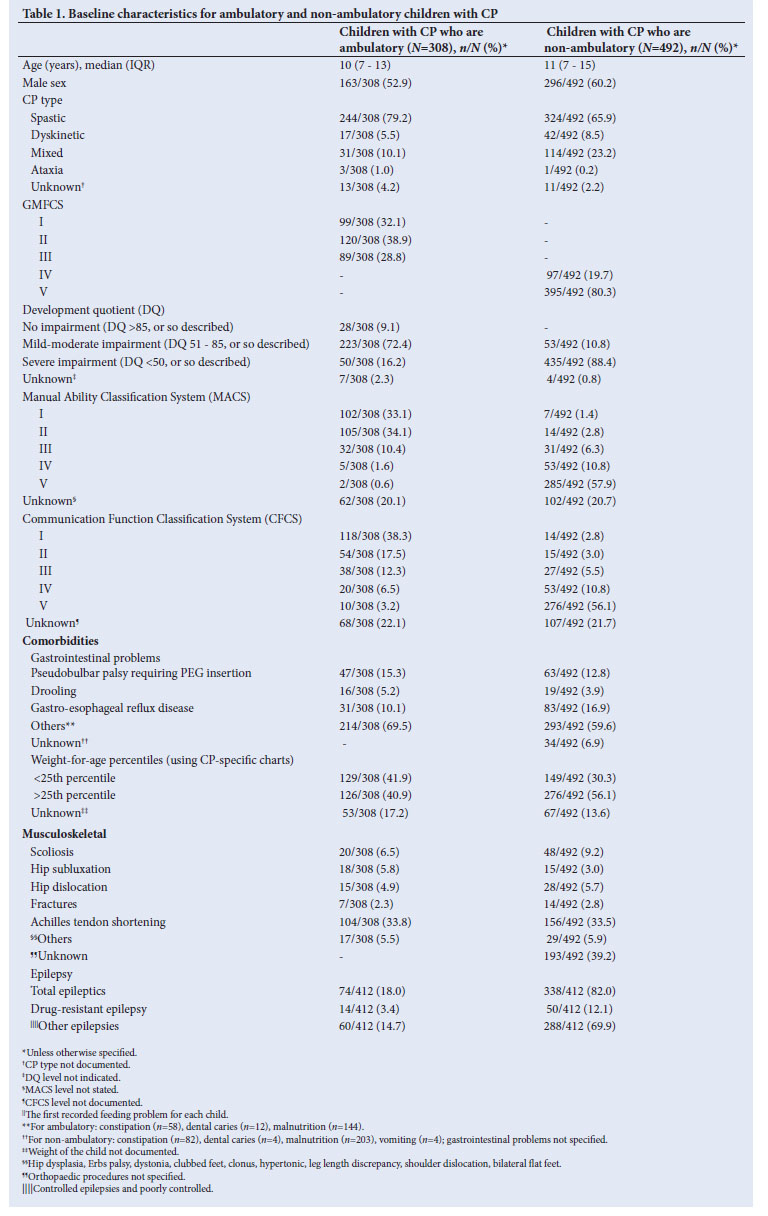
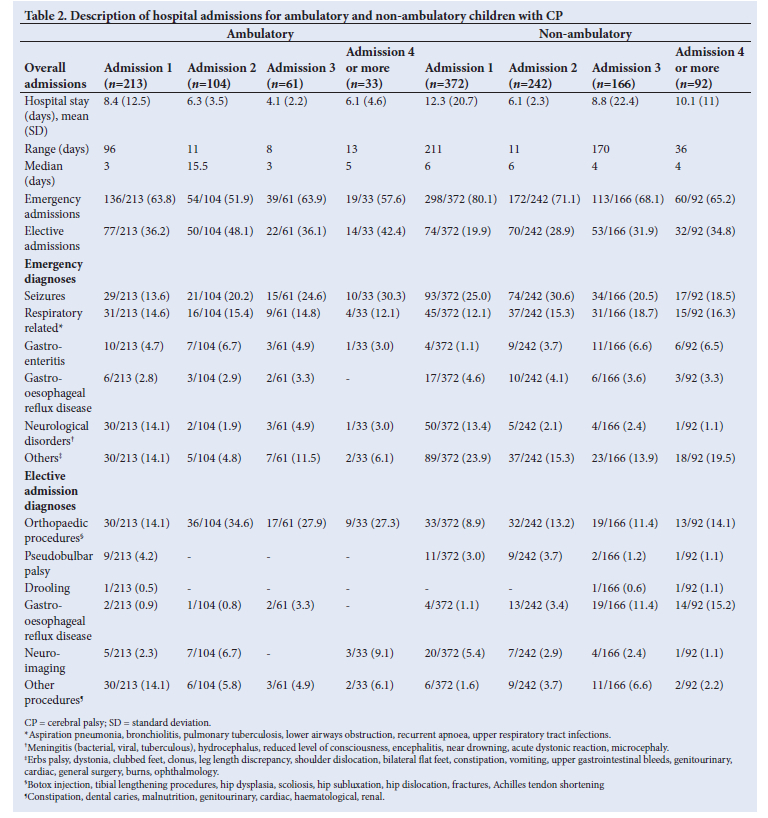
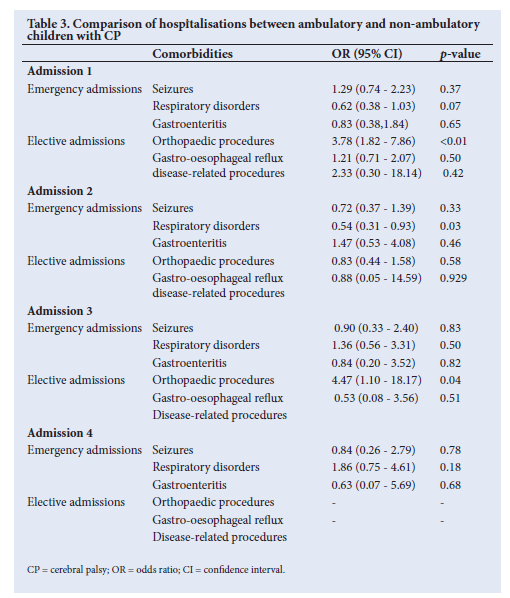
BACKGROUND. There are limited data on hospital admissions for children with cerebral palsy (CP) in Africa. OBJECTIVES. To examine the lifetime post-neonatal hospitalisation of children with CP who attended the CP clinic in 2021 at Red Cross War Memorial Children's Hospital, Western Cape Province, South Africa. METHODS. This retrospective study examined lifetime post-neonatal hospitalisation among all children with CP who attended the dedicated CP clinic at a tertiary paediatric hospital at least once during 2021. Descriptive and inferential statistics were used to analyse data. Logistic regression was conducted to test the association between CP comorbidities and hospitalisation. RESULTS. The present study included 877 children and young adults with CP, aged 1 to 23 years. Among them, 800 participants had their CP classified according to the Surveillance of Cerebral Palsy in Europe (SCPE) Classification, with the majority being non-ambulatory (61.5%; n=492) (Gross Motor Function Classification System (GMFCS) IV to V). More than two-thirds (66.5%; n/N=585/877) of the entire cohort were admitted to hospital at least once per year, primarily the non-ambulatory children (63.6%; n/N=372/585). Seizures (22.8%; 293/1 283), respiratory-related illness (14.7%; n/N=188/1 283) and gastrointestinal disorders (7.6%; 98/1 283) co-occurred with frequent emergency admissions. Orthopaedic procedures, however, co-occurred with frequent elective admissions (17.1%; n/N=219/1 283). In our cohort of children with CP, orthopaedic complications were more commonly associated with the first elective hospital admission for ambulatory children (odds ratio (OR) 3.78; 95% confidence interval (CI) 1.82 - 7.86). CONCLUSION. The present study highlights the significant burden of hospital admissions, particularly in non-ambulatory children with CP. It also underscores the importance of preventing and effectively managing complications to reduce emergency hospitalisation for children with CP.
non-ambulatory cerebral palsy; elective hospital admissions; emergency hospital admissions; orthopaedic interventions; LMICs