Fasting lipid profile of HIV-infected children on antiretroviral therapy living in an area of prolonged armed conflict
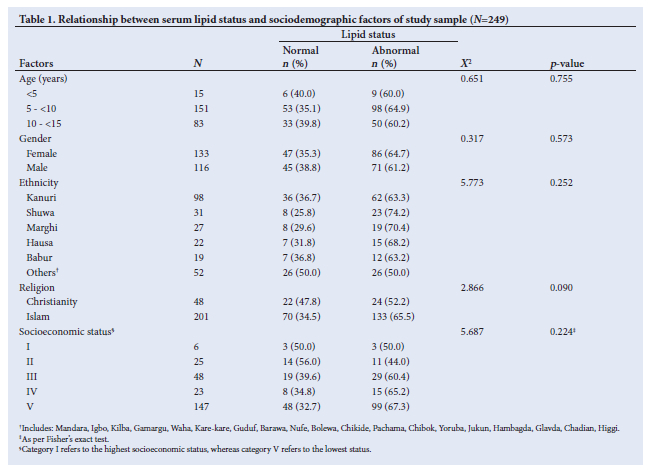
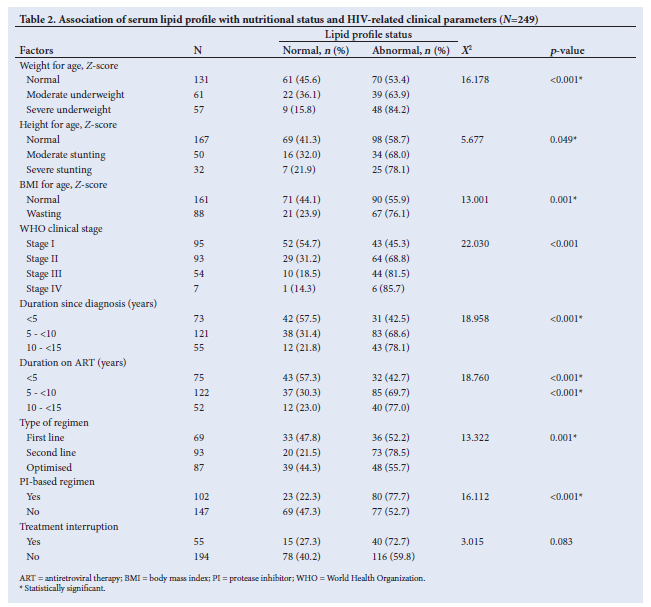
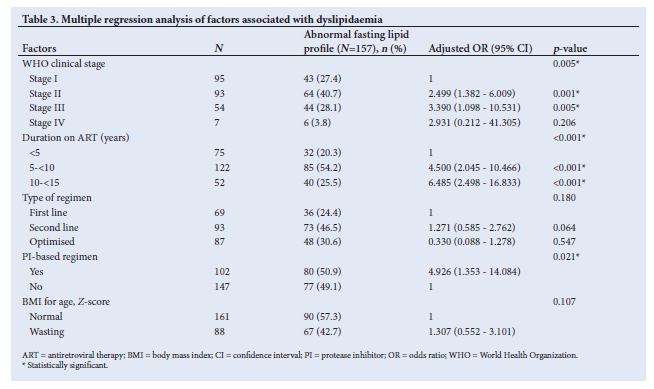
BACKGROUND. Armed conflict of over a decade in north-eastern Nigeria has led to interrupted access to antiretroviral therapy (ART) among HIV-positive children in this region. OBJECTIVE. To determine the prevalence of lipid abnormalities among HIV-positive children on ART in an area experiencing prolonged armed conflict. METHODS. This descriptive cross-sectional study involved 249 children aged 2 - 15 years on ART presenting at the University of Maiduguri Teaching Hospital between April 2021 and March 2022. Sociodemographic and clinical characteristics were obtained through a questionnaire, while serum lipid levels were determined from blood samples. RESULTS. Dyslipidaemia was found in 63.1% of the study sample. Hypertriglyceridaemia was the most prevalent abnormality (38.6%), followed by hypercholesterolaemia (32.3%), high levels of low-density lipoprotein cholesterol (24.9%) and low levels of high-density lipoprotein cholesterol (21.3%). Significant associations were found between dyslipidaemia and prolonged ART (>5 years) (p<0.001), increasing clinical disease stage (p=0.031) and use of protease inhibitors (p=0.016). All patients whose treatment had been interrupted (n=55) owing to the conflict experienced treatment failure and were switched to protease inhibitor-based regimens, although treatment interruption was not significantly associated with dyslipidaemia. CONCLUSION. Almost two-thirds of the study sample (63.1%) presented with dyslipidaemia. We recommend a pragmatic strategy to ensure continuation of treatment in a conflict zone and routine determination of fasting serum lipid profiles in HIV-positive children, especially those who have been on ART for 5 years or more, patients receiving protease inhibitors, and children whose disease has progressed to stage II or beyond.
HIV; children; dyslipidaemia; armed conflict; antiretroviral therapy