Fasting lipid profile of HIV-infected children on antiretroviral therapy living in an area of prolonged armed conflict
BACKGROUND. Armed conflict of over a decade in north-eastern Nigeria has led to interrupted access to antiretroviral therapy (ART) among HIV-positive children in this region. OBJECTIVE. To determine the prevalence of lipid abnormalities among HIV-positive children on ART in an area experiencing prolonged armed conflict. METHODS. This descriptive cross-sectional study involved 249 children aged 2 - 15 years on ART presenting at the University of Maiduguri Teaching Hospital between April 2021 and March 2022. Sociodemographic and clinical characteristics were obtained through a questionnaire, while serum lipid levels were determined from blood samples. RESULTS. Dyslipidaemia was found in 63.1% of the study sample. Hypertriglyceridaemia was the most prevalent abnormality (38.6%), followed by hypercholesterolaemia (32.3%), high levels of low-density lipoprotein cholesterol (24.9%) and low levels of high-density lipoprotein cholesterol (21.3%). Significant associations were found between dyslipidaemia and prolonged ART (>5 years) (p<0.001), increasing clinical disease stage (p=0.031) and use of protease inhibitors (p=0.016). All patients whose treatment had been interrupted (n=55) owing to the conflict experienced treatment failure and were switched to protease inhibitor-based regimens, although treatment interruption was not significantly associated with dyslipidaemia. CONCLUSION. Almost two-thirds of the study sample (63.1%) presented with dyslipidaemia. We recommend a pragmatic strategy to ensure continuation of treatment in a conflict zone and routine determination of fasting serum lipid profiles in HIV-positive children, especially those who have been on ART for 5 years or more, patients receiving protease inhibitors, and children whose disease has progressed to stage II or beyond.
HIV; children; dyslipidaemia; armed conflict; antiretroviral therapy
Fasting lipid profile of HIV-infected children on antiretroviral therapy living in an area of prolonged armed conflict
S I WalaI; H A ElechiII; R A ImamIII; A I RabasaIII; H B BakariIV
IMBBS, FWACP (Paed); Department of Paediatrics, University of Maiduguri Teaching Hospitals, Maiduguri, Nigeria
IIMBBS, FWACP (Paed), FESPE; Department of Paediatrics, College of Medical Sciences, University of Maiduguri, Nigeria
IIIMBBS, FWACP (Paed); Department of Paediatrics, College of Medical Sciences, University of Maiduguri, Nigeria
IVMBBS, FMCPaed; Department of Paediatrics, Modibbo Adama University, Yola, Nigeria
BACKGROUND. Armed conflict of over a decade in north-eastern Nigeria has led to interrupted access to antiretroviral therapy (ART) among HIV-positive children in this region.
OBJECTIVE. To determine the prevalence of lipid abnormalities among HIV-positive children on ART in an area experiencing prolonged armed conflict.
METHODS. This descriptive cross-sectional study involved 249 children aged 2 - 15 years on ART presenting at the University of Maiduguri Teaching Hospital between April 2021 and March 2022. Sociodemographic and clinical characteristics were obtained through a questionnaire, while serum lipid levels were determined from blood samples.
RESULTS. Dyslipidaemia was found in 63.1% of the study sample. Hypertriglyceridaemia was the most prevalent abnormality (38.6%), followed by hypercholesterolaemia (32.3%), high levels of low-density lipoprotein cholesterol (24.9%) and low levels of high-density lipoprotein cholesterol (21.3%). Significant associations were found between dyslipidaemia and prolonged ART (>5 years) (p<0.001), increasing clinical disease stage (p=0.031) and use of protease inhibitors (p=0.016). All patients whose treatment had been interrupted (n=55) owing to the conflict experienced treatment failure and were switched to protease inhibitor-based regimens, although treatment interruption was not significantly associated with dyslipidaemia.
CONCLUSION. Almost two-thirds of the study sample (63.1%) presented with dyslipidaemia. We recommend a pragmatic strategy to ensure continuation of treatment in a conflict zone and routine determination of fasting serum lipid profiles in HIV-positive children, especially those who have been on ART for 5 years or more, patients receiving protease inhibitors, and children whose disease has progressed to stage II or beyond.
Keywords: HIV, children, dyslipidaemia, armed conflict, antiretroviral therapy
Prolonged armed conflict disrupts the support system of a society, with healthcare services being one of the early casualties. This can lead to an increase in morbidity and mortality, particularly among people living with chronic illnesses such as HIV infection. Interruption of antiretroviral therapy (ART), whether due to the disruption of healthcare systems or as a result of negative effects on mental health of patients, is an important effect of armed conflict on HIV care.[1,2] North-eastern Nigeria has been engulfed in an armed insurgency for over a decade, leading to internal displacement of over two million people and severely curtailing access to healthcare services.[3]
HIV is a significant public health problem in sub-Saharan Africa,[4 where of the approximately 1.3 million children living with HIV, 57% had access to ART in 2020 in Eastern or Southern Africa and 35% in West or Central Africa.[5] In Nigeria, an estimated 1.9 million people were reported to be living with HIV at the time, of whom 170 000 (12.6%) were children <14 years.[6] The introduction of antiretroviral (ARV) drugs has changed the course of HIV disease from an invariably fatal illness to a chronic but manageable one. The improvement in the survival rates for children living with HIV has led to the emergence of long-term multi-systemic complications, including dyslipidaemia.[7,8]
The prevalence of dyslipidaemia among children living with HIV varies. Among ART-naive children, the reported prevalence ranges from 25% to 63.9%,[8,9] and from 38.3% to 75% among long-term ART users.[8,10] Similarly, the pattern of dyslipidaemia varies: most studies among ART-naive children have reported a predominance of low levels of high-density lipoprotein (HDL-c) and high triglycerides, with low frequency of high total cholesterol and low-density lipoproteins (LDL-c).[9,11] Among ART-experienced patients, there is a predominance of high TG, high triglycerides and high LDL-c levels, while frequency of low HDL-c levels remains low.[11-13] Several factors have been linked to the development of dyslipidaemia in HIV-positive children, including: the infection itself;[9] the use of ARVs (in particular protease inhibitors);[13,14] nutritional status;[15] age;[7] advanced clinical stage of the disease;[16] duration of illness; and prolonged therapy.[17] Genetic, demographic and lifestyle factors may contribute to an increased risk of dyslipidaemia in HIV-positive children.[18,19]
High triglyceride levels combined with low HDL-c, high total cholesterol and prolonged increases in LDL-c due to HIV infection and ART constitute a classic proatherogenic lipoprotein profile associated with an increased risk of atherosclerosis.[20,21] In the presence of factors such as increased inflammation, procoagulation, endothelial dysfunction and metabolic dysregulation, such a lipid profile increases the risk of cardiovascular disease.[20]
Borno State in north-eastern Nigeria has been the epicentre of a Boko Haram insurgency for over a decade. Previously a front-runner in ART coverage, the area recorded a decline of 18% in uptake between 2013 and 2016, with annual drops of 41.2% in the number of people accessing treatment. [22] This decline in HIV-related services could be due to fewer centres offering HIV care amid the prolonged conflict.]22] A lack of continuous access to medication by those already on ART predisposes them to developing drug resistance,[23] particularly those on a first-line regimen that includes non-nucleoside reverse transcriptase inhibitors (NNRTIs), which is common in resource-poor settings.[24] Restarting the same regimen when access to therapy is re-established could lead to treatment failure if resistance developed, which would require a patient to be switched to second-line treatment. Such regimens included mostly protease inhibitors, which are known to be potent inducers of dyslipidaemia.[13,14]
This study therefore investigated the prevalence of lipid abnormalities and the associated factors among children on ART in an area that has been experiencing prolonged armed conflict.
Methods
Study population
This was a cross-sectional, descriptive analysis conducted at the paediatric HIV clinic of the University of Maiduguri Teaching Hospital (UMTH) between April 2021 and March 2022. The clinic, which operates twice a week, forms part of a large tertiary outpatient HIV/AIDS clinic in Maiduguri that offers comprehensive HIV care, including ART, to over 1 500 children up to the age of 15 years. Treatment consists of a combination of three or more medications drawn from two or three different classes of ARVs. Treatment that commenced before 2021 followed the Nigerian National Guideline for HIV Prevention, Treatment and Care of 2016; first-line treatment, at the time of the study, consisted of a backbone of two nucleoside reverse transcriptase inhibitors (NRTIs) combined with an NNRTI (for children >3 years) or a protease inhibitor for children younger than 3 years.[25] Second-line regimens consisted of two NRTIs and a protease inhibitor. (National guidelines changed after 2020 to recommend integrase inhibitors such as dolutegravir (DTG) instead of NNRTIs.[26])
Sample selection
The sample size was estimated using Cochrane's formula.[27] The estimated prevalence (21.8%) was adopted from a previous study from Jos.[28] The calculated sample size was 227; however, with 10% attrition provided for, the final total sample required was 249 participants.
Participants were recruited through a systematic random sampling method. An average of between 25 and 30 HIV-positive children attended each of the two clinics per week. A sampling interval was obtained using f=N/n, where N represents the number of HIV-positive children attending the clinics and n is the calculated sample size. Therefore, every sixth client (f=1500/249~6) was approached for participation in the study. The first participant at each clinic was recruited by simple balloting from the first six presenting patients, followed by every sixth patient thereafter. All patients who met the inclusion criteria were enrolled in the study until the required sample size was achieved. In case the approached patient was not eligible for inclusion or refused to participate, the immediate next patient was approached.
To be included in the study, patients had to: be HIV positive; between 2 and 15 years of age; and have been on ART for at least 3 months at the time of the study. Informed consent for participation had to be given by an adult caregiver or guardian. In addition, children of 8 years and older had to personally assent to participation.
Children who had been on corticosteroids for at least 1 month at the time of the study, presented with acute illness, were taking lipid-lowering agents, or presented with diabetes, nephrotic syndrome, Cushing's syndrome or hypothyroidism were excluded from the study.
Data collection and quality assurance
Participant data were obtained with the use of a structured interviewer-administered questionnaire. Sociodemographic variables such as age, gender, ethnic group, religion of parents, occupation and educational level of both parents were obtained. Clinical history was obtained from parents and cross-checked against the patient's clinical records. Socioeconomic class was determined using the classification suggested by Oyedeji et al.[29] A score between 1 (highest) and 5 (lowest) was awarded for education and occupation of each parent or caregiver and the mean of these four scores were approximated to the nearest whole number and classified as status I-V. (Classes I and II represent high socioeconomic status, class III falls in the middle, and classes IV and V represent low socioeconomic status.) Information on clinical history included:
• age at diagnosis and commencement of ART, with duration of diagnosis and duration of treatment calculated from these
• types of regimen (first-line, second-line or optimised) that formed part of the clinical history, and the current regimen following any prior change (the reason for a change in regimen was obtained from the patient's clinical file)
• information on treatment failure (referring to virological or immunological failure) and clinical failure
• history of treatment interruption, together with duration of and reason for interruption, if applicable. (Treatment interruption was defined as an unplanned break of 30 days or more due to the patient not being able to access medication, preceding recommencement of ART.[30])
Clinical staging was determined based on the World Health Organization's (WHO) case definitions for HIV surveillance and staging in children. Patients were assigned to a particular stage if they presented with at least one clinical condition included in the criteria for that stage. Stage I disease is considered as asymptomatic, stage II as mild disease, stage III as advanced disease, and stage IV as severe disease.
Weight and height were measured according to WHO guidelines[31] and body mass index (BMI) was calculated. Z-scores for age-related weight, height and BMI were calculated using the WHO Anthro-plus software package (version 2).[32] Weight-for-age and height-for-age Z-scores were interpreted against the demographic and health survey data.[33]
Processing and storage of plasma
Enrolled participants were scheduled for a single blood sample collection visit the next day and educated on fasting overnight. A blood sample of 3 - 5 mL was collected into a collection tube and allowed to clot for between 30 minutes and 1 hour at room temperature. The sample was then centrifuged at 520 rpm for 10 minutes. The resultant clear supernatant was aspirated into cryovials and labelled accordingly. The collected samples were processed and analysed at the chemical pathology laboratory of UMTH on the day of collection. The remaining sera were stored at -20°C until the end of the study
Estimation of the lipid profile
Fasting lipid profiles were determined through the enzymatic endpoint method using Randox* cholesterol kits (Randox Laboratories, UK). This method is based on the hydrolysis of cholesterol by cholesterol esterase, followed by oxidation to 7a-hydroxy-4- cholesten-3-one by cholesterol oxidase. Hydrogen peroxide generated from this reaction reacts with phenol and 4-aminoantipyrine in the presence of peroxidase to yield quinoneimine and water. Quinoneimine serves as an indicator, turning the solution red. The colour change was read off photometrically at an absorbance of 500 nm as an indication of cholesterol concentration.[34] Total cholesterol, triglyceride and HDL-c levels were estimated by the enzymatic method, whereas that of LDL-c was estimated using the Friedwald equation.[35] Dyslipidaemia was defined as the presence of one or more lipid abnormalities defined according to the (US) National Cholesterol Education Program guidelines, namely: total cholesterol >200 mg/ dL (5.2 mmol/L); LDL-c >130 mg/dL (3.3 mmol/L); triglyceride >145 mg/dL (1.7 mmol/L); and HDL-c <40 mg/dL (1.0 mmol/).[36]
Statistical analysis
Data were analysed using the SPSS software package (IBM Corp., New York) version 26. The Kolmogorov-Smirnov test was used to determine normality of the data distribution. Categorical variables were presented as frequencies and percentages, whereas continuous variables were presented as medians and interquartile ranges (IQRs). The association between dyslipidaemia and variables such as demographics, socioeconomic status, nutritional status and HIV-related clinical characteristics were tested using the chi-square test. Multivariate logistic regression analysis was used to identify independent predictors of dyslipidaemia. A significance level of p<0.05 was used (95% confidence interval).
Ethical considerations
Ethical approval was obtained from the UMTH research and ethics committee (ref. no.: UMTH/REC/20/636). Written informed consent was obtained from parents or guardians together with verbal assent from children 8 years and older after the research and its procedures were explained to them in the presence of a witness. All information was treated confidentially and was used solely for the purpose of the study. The study was at no cost to the participants and those with abnormal lipid results were contacted and referred to the appropriate unit for further management and follow-up.
Results
Sociodemographic and HIV-related clinical characteristics
A total of 249 children were enrolled in the study, with a median (IQR) age of 11 (7.0 - 13.0) years. Boys (n=116) represented 46.6% of the sample. Just over half of the participants (n=139; 52.6%) had a normal weight-for-age Z-score. Approximately two-thirds of participants had normal Z-scores with regard to height for age (n=167; 67.1%) and BMI for age (n=161; 65.7%).
The median (IQR) age at HIV diagnosis was 2.5 (1.5 - 5.0) years and the median (IQR) duration since diagnosis was 6.20 (4.0 - 9.25) years. The median (IQR) age at commencement of ART was 3.0 (1.50 - 5.00) years, while the median (IQR) duration on ART was 6.10 (4.0 - 9.0) years. Stage I disease was most common (n=95; 38.2%). Almost three-quarters of participants (n=180; 72.3%) had changed their medication over the course of their treatment duration. Although 93 participants (37.4%) were switched from first- to second-line regimens owing to treatment failure, and 87 (34.9%) were switched to the optimised regimen following viral suppression, 69 participants (27.7%) remained on first-line treatment. (Optimised regimens have more favourable dosing schedules, safety and tolerability for which HIV-positive patients are to commence or transitioned to after achieving viral suppression for at least 6 months.)
Just over a fifth of the participants (n=55; 22.1%) had been unable to access treatment for a median (IQR) duration of 1.50 (1.00 - 2.25) years owing to armed conflict, and were all switched to second-line regimen following clinical failure. Of these 55 children, 48 (87.3%) were on first-line treatment prior to interrupting, whereas the rest were on the optimised regimen. The median (IQR) duration on lopinavir/ritonavir-based ART was 1.50 (0.90 - 2.00) years.
Prevalence and pattern of dyslipidaemia
Mean (and associated standard deviation, SD) serum levels of triglycerides, total cholesterol, LDL-c and HDL-c were 150.97 (92.29 mg/dl), 184.41 (71.47 mg/dL), 101.23 (38.86 mg/dL) and 49.11 (15.01 mg/dL), respectively. Dyslipidaemia was seen in n=157, representing a prevalence of 63.1% in the sample. Further analysis of dyslipidaemia results showed that 96 participants (38.6%) had abnormal triglyceride levels and n=78 (32.3%) had abnormal total cholesterol levels. Abnormal LDL-c and HDL-c levels were seen in n=62 (24.9%) and n=53 (21.3%) participants, respectively.
Of the total of 157 children with an abnormal lipid profile, n=58 (36.9%) presented with a single lipid abnormality; this was mostly hypertriglyceridaemia (n=34; 21.7%). The least common lipid abnormality was elevated LDL-c levels (n=4; 2.6%). With regard to multiple abnormal lipid levels, a combination of two types was most common, while abnormalities of all four lipid markers were the least common (n=2; 1.3%).
Factors associated with dyslipidaemia in study participants
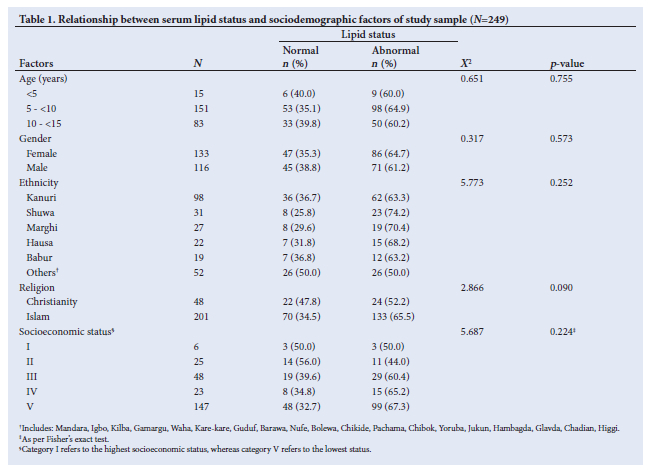
Table 1 shows the relationship between serum lipid profile and sociodemographic characteristics of HIV-positive children in this study. There was no significant association between dyslipidaemia and age, gender, religion, ethnicity or socioeconomic status.
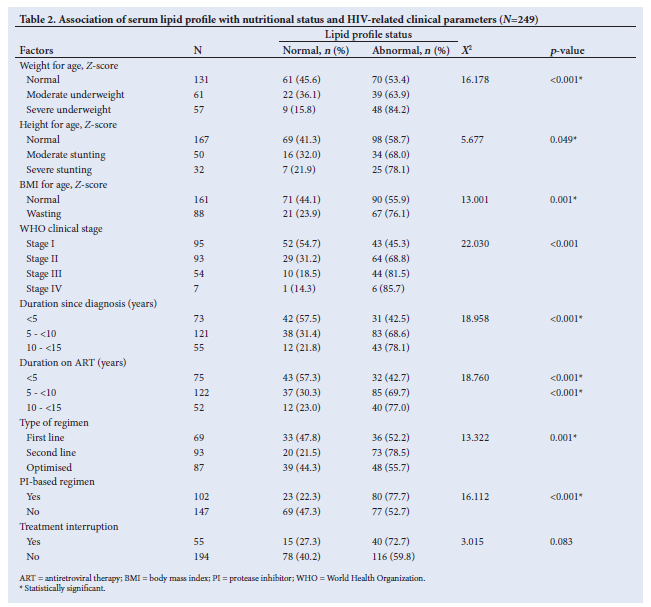
Table 2 shows the relationship of serum lipid status with nutritional status and HIV-related clinical parameters. The proportion of children with dyslipidaemia increased significantly as the severity of malnutrition increased, as reflected by Z-scores of all indices (weight, height and BMI for age). Similarly, the proportion of dyslipidaemia also increased significantly with worsening clinical staging. Both duration since diagnosis and duration since commencement of ART were significantly associated with dyslipidaemia (p=0.001). The proportion of patients with dyslipidaemia was significantly greater among those on second-line treatment or those whose treatment included protease inhibitors (p=0.001). Although more participants who had interrupted treatment presented with dyslipidaemia (n=40; 72.7%), this difference was not significant (p=0.083). However, all patients who had interrupted treatment (n=55; 22.1%) experienced treatment failure and were switched to the second-line regimen. There was a significant association between treatment interruption and treatment failure (p=0.007).
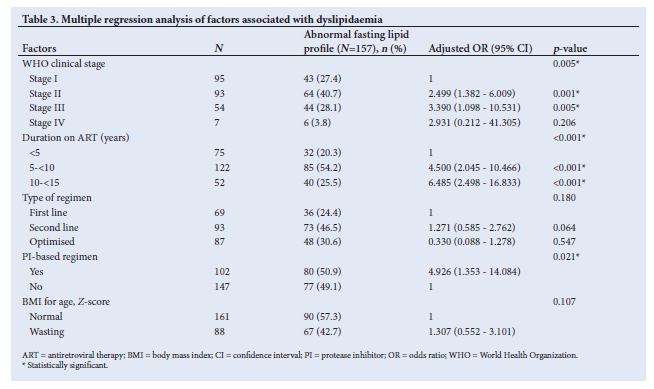
A logistic regression model showed significant associations between dyslipidaemia and clinical staging (p=0.031), duration on ART (p<0.001) and protease inhibitor-based regimens (p=0.016) (Table 3). Dyslipidaemia was three times more likely among patients who presented with stage III disease than among those in clinical stage I (odds ratio (OR) =3.390, 95% confidence interval (CI) 1.098 - 10.531, p=0.046), 6.5 times more likely among patients who had been on ART for 10 years or more than among those who had been on ART for <5 years (OR=6.485, 95% CI 2.498 -16.833, p<0.001) and 4.9 times more likely among patients on protease inhibitors than among those not taking these drugs (OR=4.926, 95% CI 1.353 - 14.084, p=0.016). However, type of regimen and nutritional status were not independent predictors of dyslipidaemia.
Discussion
The prevalence of dyslipidaemia (63.1%) reported in this study was high, although within the range of what has been reported previously (38.3 - 75%)[8,10] and similar to the findings from Kano, Nigeria (62.5%) reported by Aliu-Isah et al.[11] However, the prevalence was higher than what has been reported from other studies from Nigeria[28,37] and also from South Africa[14] and Tanzania.'71 The higher prevalence seen in this study could be due to the difference in the type of ART and exposure, as well as the definition of dyslipidaemia. Although we recruited only ART-experienced patients, with 41% being on protease inhibitors, the study by Ige et al.[28] included some ART-naive participants and only 14.9% were on protease inhibitors. Furthermore, the cut-off value for hypertriglyceridaemia (>145 mg/dL) used in this study was lower than used in comparative studies'[7,14,28,37] (150 mg/dL or 170 mg/dL) and the cut-off for low HDL-c levels (<40 mg/dL) was higher than what was used by Irira et al.[7] and Innes et al.[14] (<35 mg/dL). These differences in cut-off values expand the pool of patients defined as presenting with dyslipidaemia in our study.
In contrast, the prevalence reported in our study is lower than what has been reported from South Africa (75%),[10] Uganda (74%)[16] and Ethiopia (70.2%).[15] The difference could be due to the lower proportion of participants in our study being on protease inhibitors (41%) compared with, for example, 77% in the study by Viljoen et al.[10] Protease inhibitors directly stimulate hepatic triglyceride synthesis through up-regulation of mRNA production in hepatic cells, leading to the hepatic accumulation of triglyceride-rich lipoparticles with subsequent release into the circulation.[38] In addition, Viljoen et al.[10] defined dyslipidaemia as at least one abnormal or two borderline values of any two of the four lipid types, which is a more encompassing definition than in our study. In the case of the study in Ethiopia by Tadesse et al.,[15] non-fasting blood samples were used to determine the lipid profile, although triglyceride levels are known to be higher if the last meal was shortly before sampling. Furthermore, 61.6% of the participants in the study Nampijja et al.[16] in Uganda had severe disease, compared with only 39% in our study.
Hypertriglyceridaemia was the most prevalent lipid abnormality observed in this study, as seen also in previous studies,[12,13,15,39] followed by hypercholesterolaemia. Low HDL-c was the least common lipid abnormality. However, in two other studies from Nigeria, both Ige et al.[28] and Okechukwu et al.[37] found hypercholesterolaemia more common than hypertriglyceridaemia. Again, this may be due to the higher cut-off values used by these authors in defining hypertriglyceridaemia,[28>37] thus potentially increasing those recruited as having hypertriglyceridaemia in the current study. Some studies reported patterns different from our findings. For example, Kanjanavit etal.,[9] Nampijja et al.,[16] Irira etal.[7] and Innes et al.[l4] all reported low HDL-c as the most prevalent cholesterol abnormality. The difference may be attributed to varying patient characteristics. For example, the study by Kanjanavit et al.[9] included only ART-naive participants, whereas our study included only experienced ART users. The pattern of lipid abnormalities has been shown to vary between ART-naive and ART-experienced patients. Whereas hypertriglyceridaemia[8,12,13,15] and hypercholesterolaemia[14,28,37] have been found as the predominant lipid abnormalities in HIV-infected children on ART, low HDL-c levels are the predominant abnormality among patients who are yet to or have just started ART.[7,9,16] This could be explained by the inhibitory effect of ARVs (specifically protease inhibitors) on lipoprotein lipase, leading to the reduced clearance of lipids by the liver.
This study showed that advanced disease stage, prolonged ART use and protease inhibitors were independent predictors of dyslipidaemia, similar to what has been described in other literature.[7,13,16] In contrast, Mandal et al.[8] and Tadesse et al.[15] found no association between clinical disease stage and dyslipidaemia; however, the two mentioned studies included relatively few patients with severe or advanced disease (7.4%)[8] compared with our study. Advanced disease is associated with a high viral load, increased circulating interferon-α levels and increased production (with associated reduced clearance) of triglycerides, which can lead to dyslipidaemia.[40] Furthermore, the study by Mandal et al.[8] might have lacked sufficient power to reveal a significant association owing to a small sample size.
Similar to findings in other studies,[11,13,14] our results showed that prolonged ART was an independent predictor of dyslipidaemia. It has been shown that unfavourable lipid concentrations could begin to manifest within 3-12 months after starting ART, and possibly sooner when treatment is based on protease inhibitors.[37]
Protease inhibitors directly stimulate hepatic triglyceride synthesis through up-regulation of mRNA production in hepatic cells for key enzymes involved in the triglyceride biosynthetic pathway, leading to the hepatic accumulation of triglyceride-rich lipoparticles.[40] However, Nampijja et al.[16] found no significant association between dyslipidaemia and duration on ART. This finding could be linked to most of their participants being on NNRI-based regimens. In contrast to findings from our study, Viljoen et al.[10] reported that children who were on ARTs for a shorter period (<34 months) were more likely to have dyslipidaemia than those on treatment for a longer period. Although the underlying reason is not immediately clear, they suggested that it might be due to the direct involvement of the virus in dyslipidaemia.
Our findings showed a significant association between protease inhibitor use and dyslipidaemia. Previous studies have similarly reported that the type of ART is an important determinant in the prevalence and pattern of dyslipidaemia.[8,12,15,16,39,41] Rhoads et al.[41] investigated associations between lipids and specific ARVs. They found lopinavir/ritonavir to have a greater effect on dyslipidaemia than nevirapine, nelfinavir, efavirenz and abacavir. This has been attributed to the inhibitory effect of ART, and in particular protease inhibitors (such as lopinavir), on lipoprotein lipase. In contrast, Nampijja et al.[16] found no significant difference in prevalence of dyslipidaemia among patients on protease inhibitors compared with patients taking other types of ARVs. However, the comparison was between unequal populations, with only a small proportion of their patients on protease inhibitors.
Conclusion
The prevalence of dyslipidaemia among children on ART presenting at UMTH, serving an area that has experienced prolonged armed conflict, was high (63.1%). Hypertriglyceridaemia was the most prevalent type of lipid abnormality, whereas low HDL-c was the least common abnormality seen. Factors associated with dyslipidaemia in this study include increasing disease stage, prolonged use of ART and using protease inhibitors. Treatment interruption was significantly associated with treatment failure, but not with dyslipidaemia. Therefore, we recommend a novel strategy in ensuring continuation of therapy in conflict zones and routine lipid profile measurement in all HIV-positive children, especially those taking protease inhibitors, patients who have been on ART for more than 5 years, and those whose disease has progressed to stage II or beyond.
Declaration. None.
Acknowledgements. We wish to acknowledge all the staff of the infectious unit for their assistance and cooperation throughout the period of sample collection. Our gratitude goes to Madan Rhoda and her team for the laboratory analysis. We acknowledge pharmacist Nasir for his advice during analysis.
Author contributions. SW was responsible for sample collection and prepared the manuscript. HE contributed to conceptualisation and preparation of the manuscript. RI contributed to sample collection and analysis of results. AR reviewed the manuscript prior to submission. HB contributed to manuscript review and data analysis.
Funding. None.
Conflicts of interest. None.
References
- 1. Veenstra N, Whiteside A, Lalloo D, Gibbs A. Unplanned antiretroviral treatment interruptions in southern Africa: How should we be managing these? Global Health 2010;6:4.
- 2. Vreeman R, Nyandiko W, Sang E, Musick B, Braitstein P, Wiehe S. Impact of the Kenya postelection crisis on clinic attendance and medication adherence for HIV-infected children in western Kenya. Confl Health 2009;3:5.
- 3. Loewenberg S. Famine fears in northeast Nigeria as Boko Haram fight rages. Lancet 2017;389:352.
-
4. WHO. HIV/AIDS -Disease Burden. WHO 2021. https://www.afro.who.int/health-topics/hivaids (accessed 5 August 2025).
» https://www.afro.who.int/health-topics/hivaids -
5. Joint United Nations Programme of HIV/AIDS. Global HIV Statistics - Fact Sheet 2021. https://embargo.unaids.org/static/files/uploaded_files/UNAIDS_2021_factsheet_en_em.pdf (accessed 5 August 2025).
» https://embargo.unaids.org/static/files/uploaded_files/UNAIDS_2021_factsheet_en_em.pdf -
6. Statista. People living with HIV in Nigeria in 2021. Statista, 2021. https://www.statista.com/statisticss/1128675/people-living-with-hiv-receiving-treatment-in-nigeria/
» https://www.statista.com/statisticss/1128675/people-living-with-hiv-receiving-treatment-in-nigeria/ - 7. Irira EM, Rune NP, Joshua YM, et al. Dyslipidaemia in HIV-infected children and adolescents on antiretroviral therapy receiving care at Kilimanjaro Christian Medical Centre in Tanzania: A cross-sectional study. Infect Dis (Auckl) 2020;13:1178633720948860.
- 8. Mandal A, Mukherjee A, Lakshmy R, Kabra SK, Lodha R. Dyslipidaemia in HIV infected children receiving highly active antiretroviral therapy. Indian J Pediatr 2016;83:226-231.
- 9. Kanjanavanit S, Puthanakit T, Vibol U, et al. High prevalence of lipid abnormalities among antiretroviral-naive HIV-infected Asian children with mild-to moderate immunosuppression. Antivir Ther 2011;16(8):1351-1355.
- 10. Viljoen E, MacDougall C, Mathibe M, Veldman F, Mda S. Dyslipidaemia among HIV-infected children on antiretroviral therapy in Garankuwa, Pretoria. S Afr J Clin Nutr 2019;33(3):1-8.
-
11. Aliu-Isah O, Hassan-Hanga F, Yahaya I, Oyelami O, Aikhionbare H. The prevalence and risk factors for dyslipidaemia in human immunodeficiency virus-infected children on highly active antiretroviral therapy in Kano, Nigeria. Ann Afri Med Res 2020;3. https://doi.org/10.4081/aamr.2020.103
» https://doi.org/10.4081/aamr.2020.103 - 12. Blazquez D, Ramos-Amador JT, Sainz T, et al. Lipid and glucose alterations in perinatally-acquired HIV-infected adolescents and young adults. BMC Infect Dis 2015;15:119.
- 13. Santiprabhob J, Tanchaweng S, Maleesatharn S, et al. Metabolic disorders in HIV-infected adolescents receiving protease inhibitors. Biomed Res Inter 2017:7481597.
- 14. Innes S, Abdullah KL, Haubrich R, Cotton MF, Browse SH. High prevalence of dyslipidaemia and insulin resistance in HIV-infected prepubertal African children on antiretroviral therapy. Pediatr Infect Dis J 2016;35(1)::e1-7.
- 15. Tadesse BT, Foster BA, Chala A, et al. HIV and cART-associated dyslipidaemia among HIV-infected children. J Clin Med 2019;(8):430.
- 16. Nampijja D, Kumbakumba E, Bajunirwe F, Kiwanuka J. Dyslipidaemia and its correlates among HIV infected children on HAART attending Mbarara Regional Referral Hospital. Int Clin Pathol J 2017;4(3):00098.
- 17. Dejkhamron P, Unachak K, Aurpibul L, Sirisanthana V. Insulin resistance and lipid profiles in HIV-infected Thai children receiving lopinavir/ritonavir-based highly active antiretroviral therapy. J Pediatr Endocrinol Metab 2014;27(5-6):403-412.
- 18. Padmapriyadarsini C, Shet A, Srinivasan R, et al. High prevalence of lipid abnormalities and insulin resistance among antiretroviral naive HIV-infected children in India. Pediatr Infect Dis J 2018;37(3):253-257.
- 19. Jao J, Yu W, Patel K, et al. Improvement in lipids after switch to boosted atazanavir or darunavir in children/adolescents with perinatally acquired HIV on older protease inhibitors: Results from the Pediatric HIV/AIDS Cohort Study. HIV Med 2018;19(3):175-183.
- 20. Hammond CK, Eley B, Wieselthaler N, Ndondo A, Wilmshurst JM. Cerebrovascular disease in children with HIV-1 infection. Dev Med Child Neurol 2016;58:452-460.
- 21. Dapena M, Jiménez B, Noguera-Julian A, Soler-Palacín P, Fortuny C, Lahoz R, et al. Metabolic disorders in vertically HIV-infected children: Future adults at risk for cardiovascular disease. J Pediatr Endocrinol Metab 2012;25:529-535.
- 22. Babayemi OO, Daniel AA, Sabastine SW, Tolulope TO, Chamberlin E. Quantification of the effect of terrorism on the HIV response in Nigeria. Lancet 2018;391(10127):1257-1258.
- 23. Mann M, Lurie MN, Kimaiyo S, Kantor R. Effects of political conflict induced treatment interruption on HIV drug resistance. AIDS Rev 2013;15(1):15-24.
- 24. Gardner EM, Burman WJ, Steiner JF, Anderson PL, Bangsberg DR. Antiretroviral medication adherence and the development of class-specific antiretroviral resistance. AIDS 2009;23:1035-1046.
- 25. Federal Ministry of Health. National guidelines for HIV prevention, treatment and care - National AIDS and STIs control programme. Abuja: Federal Ministry of Health, 2016.
- 26. Federal Ministry of Health. National guidelines for HIV prevention, treatment and care - National AIDS and STIs control programme. Abuja: Federal Ministry of Health, 2020.
- 27. Cochrane WG. Sampling Technique. 2nd edition, New York: John Wiley and Sons; 1963.
- 28. Ige OO, Yilgwan CS, Ebonyi OA, et al. Serum lipid and glucose profiles in HIV-positive Nigerian children. J Virus Erad 2017;3:157-162.
- 29. Oyedeji GA. Socio-economic and cultural background of hospitalised children in Ilesha. Nig J Paediatr 1995;1:111-117.
-
30. Kranzer K, Lewis JJ, Ford N, et al. Treatment interruption in a primary care antiretroviral therapy programme in South Africa: Cohort analysis of trends and risk factor. J Acquir Immune Defic Syndr 2010;55(3):e17-23. https://doi.org/10.1097/OAI.0b013e3181f275fd
» https://doi.org/10.1097/OAI.0b013e3181f275fd -
31. World Health Organization. Guide to physical measurement. The WHO STEPS Surveillance Manual. Geneva: WHO, 2014. https://cdn.who.int/media/docs/default-source/ncds/ncd-surveillance/steps/part3-section5.pdf?sfvrsn=a46653c7_2
» https://cdn.who.int/media/docs/default-source/ncds/ncd-surveillance/steps/part3-section5.pdf?sfvrsn=a46653c7_2 -
32. World Health Organization. WHO AnthroPlus Software. Geneva: WHO, 2007. https://www.who.int/tools/growth-reference-data-for-5to19-years/application-tools
» https://www.who.int/tools/growth-reference-data-for-5to19-years/application-tools -
33. Croft TN, Aileen MJM, Courtney KA, et al. 2018.Nutritional status in: Guide to DHS Statistics, DHS-7(version 2). Rockville, Maryland, USA: ICF, 2018:11.50-11.58. https://www.dhsprogram.com/pubs/pdf/DHSG1/Guide_to_DHS_statistics_DHS7_V2.pdf
» https://www.dhsprogram.com/pubs/pdf/DHSG1/Guide_to_DHS_statistics_DHS7_V2.pdf - 34. Fossati P, Prencipe L. Serum triglycerides determined colorimetrically with an enzyme that produces hydrogen peroxide. Clin Chem 1982;28(10):2077-2080.
- 35. Friedwald WT, Levy RI, Fredrickson DS. Estimation of the concentration of low-density lipoprotein cholesterol in plasma, without the use of the preparative ultracentrifuge. Clin Chem 1972;18(6):499-502.
- 36. Expert Panel on Integrated Guidelines for Cardiovascular Health and Risk Reduction in Children and Adolescents, National Heart, Lung, and Blood Institute. Expert panel on integrated guidelines for cardiovascular health and risk reduction in children and adolescents: Summary report. Pediatrics 2011;128 Suppl 5: S213-S256.
- 37. Okechukwu AA, Lawson J, Dalilo M. Dyslipidemia in HIV infected children and adolescents on highly active antiretroviral therapy in Abuja, Nigeria. J Adv Med Med Res 2017;24(3):1-11.
- 38. Dressman J, Kincer J, Matveev SV, et al. HIV protease inhibitors promote atherosclerotic lesion formation independent of dyslipidaemia by increasing CD36-dependent cholesteryl ester accumulation in macrophages. J Clin Invest 2003;111(3):389-397.
- 39. Paganella MP, Cohen RA, Harris DR, et al. Association of dyslipidemia and glucose abnormalities with antiretroviral treatment in a cohort of HIV-infected Latin American children. J Acquir Immune Defic Syndr 2017;74(1):e1-8.
- 40. Calza L, Manfredi R, Chiodo F. Hyperlipidaemia in patients with HIV-1 infection receiving highly active antiretroviral therapy: Epidemiology, pathogenesis, clinical course and management. Int J Antimicrob Agents 2003;22(2):89-99.
- 41. Rhoads MP, Lanigan J, Smith CJ, Hermione EG. Effect of specific ART drugs on lipid changes and the need for lipid management in children with HIV. J Acquir Immune Defic Syndr 2011;57:404-412.

Accepted 14 May 2025