Experimental Design and Statistical Modelling for Analysis of Inhibition Efficiency Using Daucus crinitus Essential Oil in corrosion Processes
Abstract
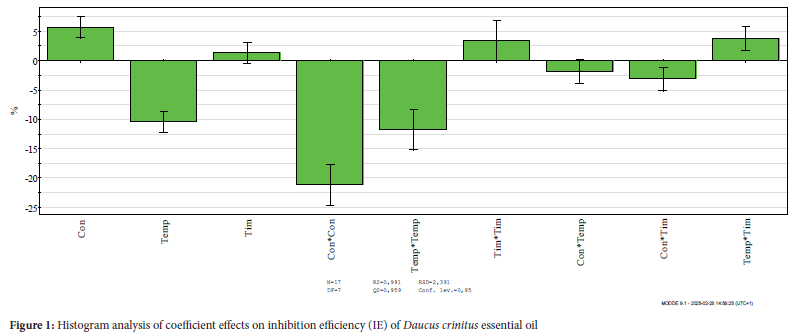
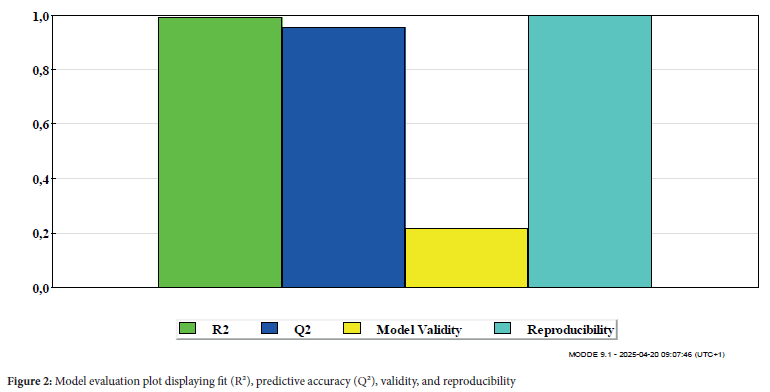
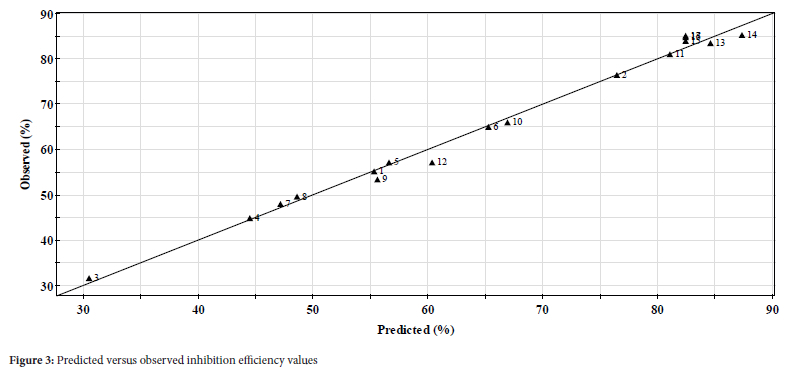
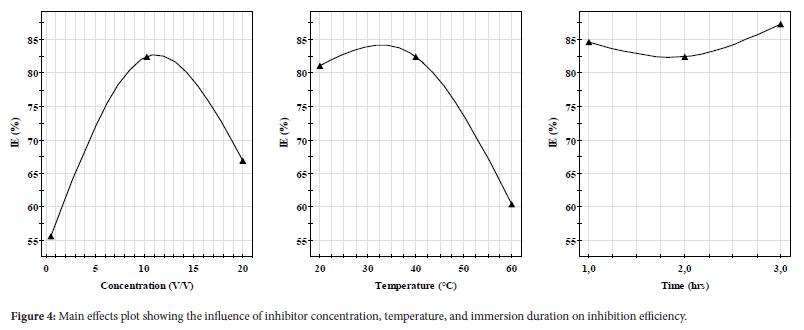
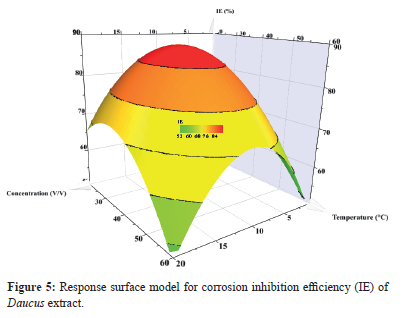
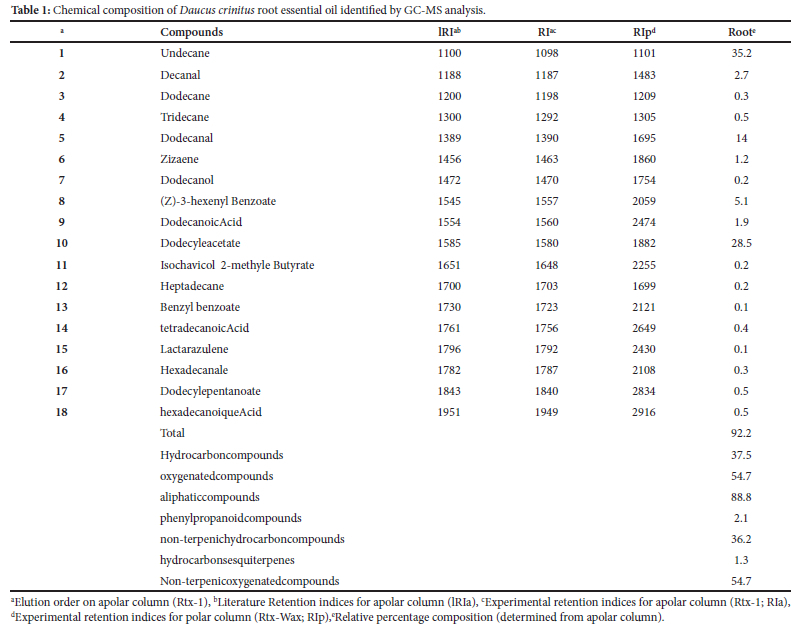
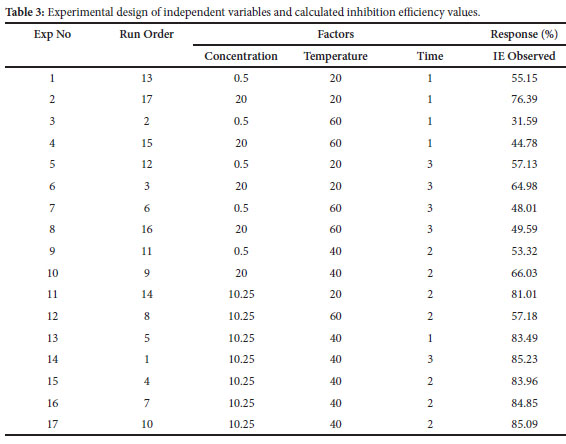
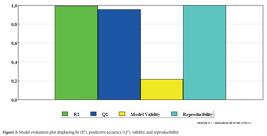
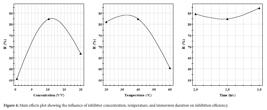
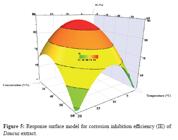
This research explores the effectiveness of Daucus crinitus essential oil as a corrosion inhibitor for copper in a 0.5 M sulfuric acid solution, utilizing experimental design and statistical analysis. The study examines how temperature, inhibitor concentration, and immersion duration influence inhibition efficiency (IE) through Response Surface Methodology (RSM). GC/MS analysis identified the essential oil's main components as aliphatic compounds, such as dodecyl acetate (28.5%), undecane (35.2%), and dodecanal (14%).The highest inhibition efficiency (85%) was obtained at an inhibitor concentration of 10.25 (v/v), a temperature of 40 °C, and an immersion period of 3 hours. Elevated temperatures decreased IE, indicating a physisorption-based mechanism, whereas higher concentrations and longer immersion times improved copper protection. Statistical evaluation confirmed the model's reliability, with an of 0.991 and a value above 0.95, reflecting strong predictive capability. These results position D. crinitus essential oil as an eco-friendly and sustainable substitute for traditional synthetic inhibitors, demonstrating its potential for effective corrosion control in industrial settings. The study emphasizes the value of plant-derived inhibitors for reducing copper corrosion in acidic environments and offers insights for enhancing corrosion prevention approaches.
Daucus crinitus essential oil; corrosion inhibition; experimental design; response surface methodology
 Thumbnail
 Thumbnail
 Thumbnail
 Thumbnail
 Thumbnail