The cooperative influence of Ag(I) and sodium lauryl sulfate micelles on the oxidation rate of D-mannitol by acidic KMnO4
Abstract
Oxidation of organic substrate by KMnO4 is fascinating because such process proceeds via different mechanistic pathway. No research has examined how metal catalysts affect carbohydrate oxidation by acidic KMNO4 in micellar environments. The impact of sodium lauryl sulfate (SLS) micelles on the Ag(I) facilitated oxidation kinetics of D-mannitol by KMnO4 has been investigated in the aqueous micellar media. The progression of the oxidation process is assessed by monitoring the decrease in absorbance, employing the pseudo-first-order condition as an indicator for [H+], [Mn(VII)], [Na2SO4], [D-mannitol], [Ag(I)], and [SLS]. The examined reaction shows fractional-first-order kinematics for [D-mannitol], [H+], and Ag(I), and first-order for [Mn(VII)] across the examined concentration range. The spectrophotometric kinetic investigation revealed that both Ag(I) and SLS catalyze the oxidation independently, yet their combined influence is significantly more pronounced. Ag(I) significantly increases the oxidation rate (5.5 times). Interestingly, the kinetic profile demonstrated an increase in the observed rate constant values (7.2 fold) corresponding to an increase in surfactant concentration. The combination of Ag(I) and SLS micelles produces an 11.5-fold enhancement in the oxidation rate of D-mannitol. The electrostatic attraction between the charged micelle and Mn(VII) promotes the proximity of the oxidizing species to the substrate (D-mannitol), which is typically solubilized in a micellar environment, thus enhancing the oxidation process. A credible mechanism that corresponds with the kinetic findings has been emphasized, alongside an analysis of the Piszkiewicz model, to elucidate the apparent catalytic influence of SLS micellar environments.
D-mannitol; Ag(I) catalyzed; Permanganate ion; Micellar medium; Rate enhancement
INTRODUCTION
The exploration of carbohydrates represents a captivating domain within organic chemistry. Carbohydrates serve as the fundamental fuel for energy across humans, animals, and plants. Mannose is a significant sugar alcohol within the realm of carbohydrates, playing a crucial role in human metabolism, particularly in the glycosylation processes of specific proteins. A number of genetic problems of glycosylation are linked to enzyme mutations that play a role in mannose metabolism.12-4 With the chemical formula C6H8(OH)6, D-Mannitol is a significant organic molecule that is mostly utilized in chocolate-flavored topping ingredients for confections and ice cream. This polyol serves a primary function in the circuit prime of the heart-lung device during cardiac bypass surgery and is additionally utilized as a therapeutic agent for the management of acute glaucoma in veterinarians. It serves as a sweetening agent in candies designed to freshen breath and is frequently identified as a mild laxative suitable for infants.56-8 This research aims to investigate the oxidation of D-mannitol by permanganate in a sulfuric acid environment, facilitated by Ag(I) and SLS micelles.
Potassium permanganate is a highly adaptable oxidizing agent, frequently employed in acidic, neutral, and alkaline environments for the oxidation of organic molecules.910117, HMnO3, H2MnO4+, and HMnO4.12 1314-17 Transition metal ions like Ru(III), Cu(II), and Ag(I) are sought after as catalysts in the oxidation of organic moieties by permanganate ions. Researchers have proposed multiple mechanistic approaches for the oxidation of organic moieties by permanganate ions.18,19 In light of this, it is considered important to examine the kinetic behavior of the specified reaction in the aqueous anionic micellar environment.
The influence ofsurfactants and micelles on chemical kinetics presents a captivating area of research for biologists and chemists.20-24 Micelles represent dynamic assemblies of amphiphilic molecules that establish distinctly anisotropic interfacial regions at the interface of non-polar hydrocarbon and highly polar aqueous regions, thereby conferring novel physical and chemical characteristics to the system.2523262728,29 The availability of various types of surface-active agents is contingent upon the charge of the head group. The anionic surfactant SLS, characterized by its sulfate head group, unveils several advantages when it interacts with substances of opposite charge. The stabilization of these formulated anionic conjugated systems is achieved through electrostatic forces of attraction. Consequently, the chemical transformations mediated by aqueous SLS represent a compelling area of research that continues to be investigated, particularly with an emphasis on establishing their roles in environmentally friendly synthesis, green chemistry, and sustainable catalysis.
Our research team has long been engaged in the exploration of diverse metal-catalyzed oxidative transformation processes, focusing on a range of organic substrates and various oxidizing agents within micellar environments.30-34 While numerous studies have addressed the catalyzed and uncatalyzed oxidation of amino acids, carboxylic acids, polyols, and dyes by Mn(VII) in both aquatic and micellar milieus,35-38 the metal-catalyzed oxidation of polyols by Mn(VII) in micellar medium has been relatively underexplored. This study presents the comprehensive kinetic analysis of the synergistic influence of Ag(I) and SLS on the rate enhancement of D-mannitol oxidation directed by permanganate ion, as this particular investigation has not been previously addressed within the micellar environment. In this scenario, Mn(VII) functions as a polar oxidant, while the catalyst carries a positive charge. Utilizing a micellar surface with a contrasting charge may significantly improve the oxidation rate. In addition, the other aims included identifying the primary kinetically reactive species, determining the principal oxidation product, deducing the rate law, and ascertaining the likely reaction site in the presence of a catalyst.
EXPERIMENTALReagents and Instruments
D-mannitol (99 %, SRL, India), H2SO4 (98%, Merck, India), AgNO, (99.9 % HiMedia, India), SLS (99 %, Merck, India), and Na2SO4 (98%, Merck, India) were used without further purification. Preparation and standardization of potassium permanganate solution (99 %, Merck, India) was similar to that reported elsewhere.39μS cm-1. To eliminate the possibility of any photochemical degradation, reaction vessels were painted black.
An HTLP digital pH Meter (model HTLP-081) was employed to monitor the pH of the resultant mixture. The devices accuracy was confirmed using a recommended buffer solution. A Labtronics (LT-1900) UV-visible spectrophotometer was utilized for recording the spectral scans and measuring absorption values at a designated wavelength. An independently developed system of recirculating water was responsible for maintaining a constant temperature inside the cell compartment.
Kinetic Measurements
The oxidation of D-mannitol by Mn(VII), catalyzed by Ag(I), was performed at 303 K utilizing pseudo-first-order settings ([D-mannitol] >> [Mn(VII)]) throughout both aquatic and micellar conditions. The specified quantity of reactants (D-mannitol, surfactant, H2SO4, Na2SO4, and Ag(I)) was pre-immersed for 30 minutes in a thermostat to maintain temperature stability. The reaction commenced by mixing the requisite volume of thermally equilibrated oxidant solution with the reaction mixture. The reaction's progression was monitored spectrophotometrically by monitoring the decline in absorbance at 525 nm corresponding to [Mn(VII)]. The absorption peaks at 525 nm assigned to the orbitally allowed 11 to 12 transition.400), at distinct points of time (At), and at infinite time (A„) was carefully computed. The non-linear fitting strategy, utilizing the exponential first-order rate equation (equation 1), was employed to ascertain the rate constant (kobs) of the reaction.41

RESULTS AND DISCUSSION
Reaction's stoichiometry, analysis of the product, and evaluation of free radical involvement
To determine the stoichiometry of the reaction, the measured amount of D-mannitol (1.0 χ 10-2 M) was allowed to react with different mole ratios of Mn(VII) (1.0 χ 10-2 M to 6.0 χ 10-2 M) in 1.0 M H2SO4 within a tightly closed container at a temperature of 303 K, in both micellar and aquatic environments. The reaction was allowed to proceed to completion at that temperature. Determination of unreacted Mn(VII) suggested that two moles of Mn(VII) are required to oxidize five moles of D-mannitol, as demonstrated in equation 2.

Where R = HOH2C(CHOH)4
Following the conclusion of the reaction, the resulting mixture was meticulously shifted into a round-bottom flask, linked to fractional distillation equipment. The product of the distillation process was collected for subsequent analysis. The ultimate outcome of the reaction was identified as D-mannose; the detection and confirmation are achieved through spot tests utilizing a reagent solution composed of 0.25 g of stannous chloride and 5.0 g of urea dissolved in 12 mL of 45% sulfuric acid under heated conditions.42f value of the obtained product and pure D-mannose in TLC analysis, along with the melting point of the formed product, further corroborates the formation of D-mannose as the final product.
A research attempt was conducted to determine the presence of free radicals in the course of the reaction by employing a polymerization test. The reaction mixture was sustained in an inert environment for an extended period of 6 hours, employing a specific amount of acrylonitrile. The addition of methanol results in the formation of a white precipitate, signifying the emergence of a free radical intermediate within this reaction process.
Impact of varying [H+] on kobs
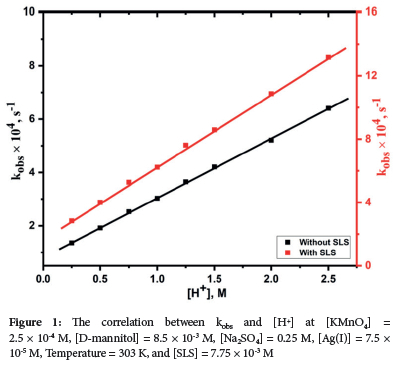
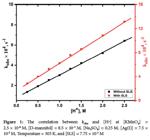
The study aimed to examine the oxidation rate constant across a range of [H+] from 0.25 M to 2.5 M by computing the rate constant at various [H+] values. The studied reaction reflects fractional-first-order kinematics in relation to [H+], as demonstrated by the positive intercepted linear relationship between [H+] and kobs in Figure 1. At low levels of H+, the reaction rate is moderate, but then it gradually increases in a precise manner as the concentration of H+ increases within the assessed range. Mn(VII) predominantly manifests in its protonated state (HMnO4) in an acidic medium.18,19 The existence of a protonated form of Mn(VII) is thought to be accountable for the enhanced oxidation rate witnessed in an aquatic medium following an increase in [H+]. Compared to an aqueous environment, the oxidation rate in SLS micellar media was significantly higher, as depicted in Figure 1.
Impact of varying [d-mannitol] on kobs
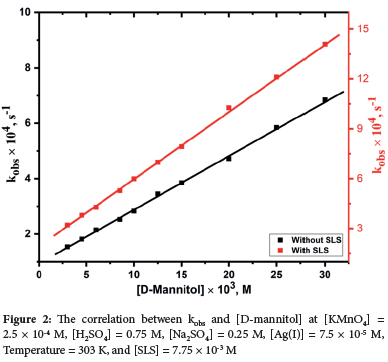
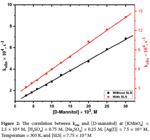
The impact of variable [D-mannitol] upon the reaction rate was investigated at 303 K temperature within the spectrum of 3.0 χ 10-3 M to 30.0 χ 10-3 M, at the specified H+ concentration. The graph illustrating the correlation between kobs and [D-mannitol] (Figure 2) demonstrates a consistent increase in the kobs value, characterized by positive intercepts. The results of the investigation demonstrate that in both the aquatic and SLS micellar milieus, the D-mannitol displays fractional-first-order kinetics. In contrast to the aquatic medium, the micellar environment of SLS displays a higher rate of D-mannitol oxidation by Mn(VII).
Impact of varying [Mn(VII)] on kobs
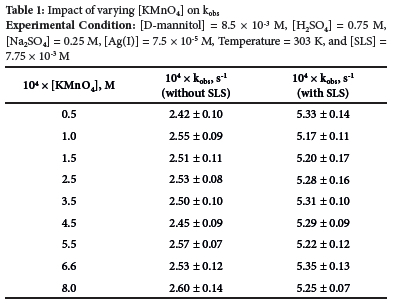
By maintaining all other variables pertaining to the reaction constant and applying the optimum [D-mannitol] and H+ conditions, the oxidation rate was calculated with respect to [Mn(VII)] within the 0.5 χ 10-4 M to 8.0 χ 10-4 M concentration range. Referring to the calculated kobs value for each [Mn(VII)], as presented in Table 1, clearly indicates that the examined range of [Mn(VII)] exhibits first-order kinetics.
Impact of varying [Na2S04] on k0bs
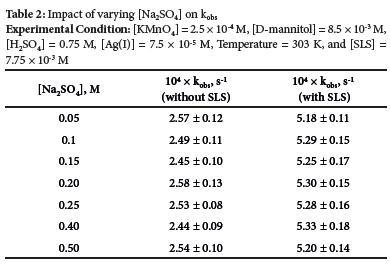
By employing sodium sulfate to regulate the ionic strength (I) of the reacting mixture between 0.05-0.50 M, the impact of I on the oxidation rate was examined. The other variables were remained constant at [KMnO4] = 2.5 χ 10-4 M, [D-mannitol] = 8.5 χ 10-3 M, [H2SO4] = 0.75 M, [Ag(I)] = 7.5 χ 10-5 M, Temperature = 303 K, [SLS] = 7.75 χ 10-3 M. A zero salt eflect is suggested by the observed constancy in oxidation rate with increasing Na2SO4 concentration, as displayed in Table 2. The constancy of the oxidation rate regardless of the ionic strength indicates that the positively charged D-mannitol-Ag(I) complex and the neutral HMnO4 are involved in the rate-determining step.
Impact of varying [Ag(I)] on kobs
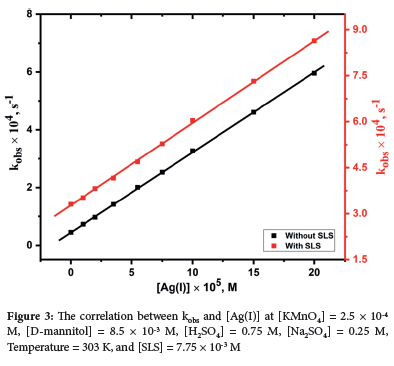
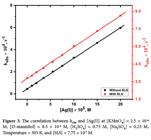
In light of the prospective utilization of Ag(I) promoted oxidative processes for the micro-level detection of Ag(I), it is vital to investigate the influence of [Ag(I)] on the kobs. The research focused on analyzing the oxidation rate within the parameters of 1.0 χ 10-5 to 20.0 χ 10-5 M [Ag(I)] under optimal reaction conditions. This was accomplished through the calculation of the rate constant (kobs) at diflerent concentrations of Ag(I). Figure 3 displays a linear trend between kobs and [Ag(I)], which suggests fractional-first-order kinematics in reliance on [Ag(I)] across the concentration range under investigation.
Impact of added Mn2obs
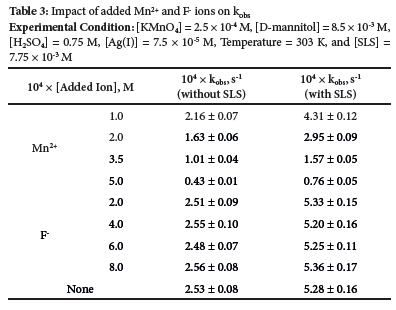
The role of Mn(II) as a catalyst in the oxidation process facilitated by permanganate is well established. The anticipated oxidizing species in the oxidation process involving permanganate in acidic solutions are Mn(VII), Mn(IV), and Mn(III), as delineated in equation 3.19,43

If Mn(III) and Mn(IV) are the reactive species, the oxidation rate will increase with [Mn(II)], as documented by Verma et al.44Table 3). This outcome suggests that neither Mn(III) nor Mn(IV) plays a role in the oxidation process. Moreover, if Mn(VI) or Mn(III) serve as the reactive species, the introduction of complexing agents such as fluoride ions would be expected to diminish the reaction rate.19
Impact of temperature on kobs
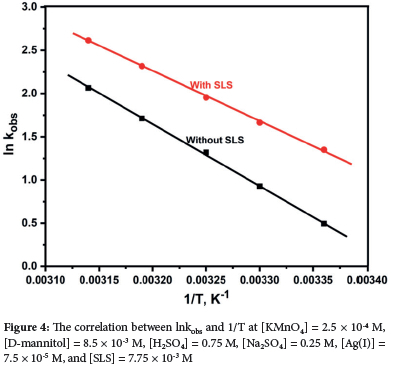
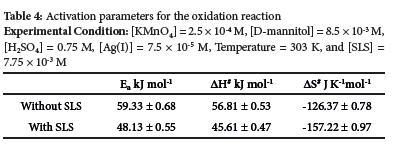
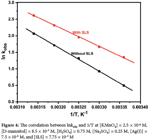
The study looked at the relationship between temperature and oxidation rate between 298 and 318 K. The examination of the reaction under elevated temperatures was disregarded due to apprehensions regarding the possible deterioration ofthe finished product. The reaction proceeds precisely in accordance with the equation proposed by Arrhenius, which guarantees that the reaction rate rises with temperature. There is a noticeable pace of advancement in the reaction at 303 K. As a result, 303 K should be considered the optimal choice for further exploration of the reaction system. Activation energy (Ea) values were determined using the Arrhenius equation by plotting lnkobs vs 1/T (Figure 4), and other activation parameters were calculated using the Eyring equation. The values of the evaluated activation parameters have been presented in Table 4. Moore and Hicks reported that the activation entropy, AS*, for a series of MnO4- reactions is negative for those that occur through complex formation, specifically the inner-sphere mechanism, conversely, the AS* values for the outer-sphere reactions generally exhibit more positive values.45
Impact of [SLS] on k
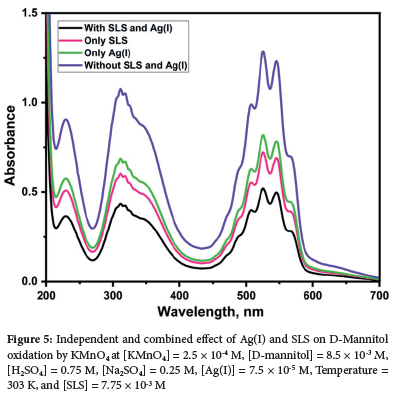
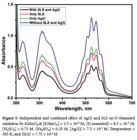
obsSurfactants possess the ability to promote rate enhancement while simultaneously guaranteeing the consistent dispersion of organic reactants in an aqueous medium, dependent upon their charge attributes. The surfactants (SLS), spanning a broad spectrum of concentrations from pre- to post-micellar regions, have been utilized for an in-depth kinetic investigation. The examination of the kinetic outcome distinctly reveals that the presence of aqueous micellar media markedly accelerates the oxidation rate in comparison to the reaction taking place exclusively in aqueous media (Table S1). Figure 5 shows the eflect of SLS and Ag(I) and combined impact of SLS + Ag(I) on reaction rate. Ag(I) acts as a catalyst and enhances the oxidation of d-mannitol by 5.5 times, whereas the negative charges SLS micelles attracts the positively charged Ag(I), polar D-mannitol, and neutral HMNO4 in the stern layer and accelerates the rate of reaction by 7.2 times. The combined impact of SLS + Ag(I) is more pronounced, enhancing the reaction rate by 11.5 fold.
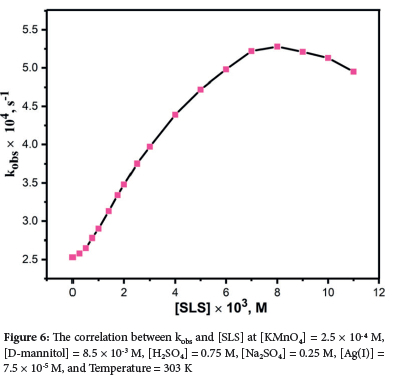
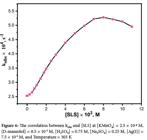
The graph depicting [SLS] versus kobs, as presented in Figure 6, reveals a substantial rise in the reaction rate as [SLS] approaches 8.0 χ 10-3 M, which is in close proximity to the CMC of SLS. Subsequent to this, the decrease in the oxidation rate was noticed throughout the ranges of the examined [SLS]. In the observed reaction condition, the computed CMC of SLS is 7.32 χ 10-3 M, which is marginally less than the value recorded in the aquatic environment. The convergence of the two linear trajectories on the kobs versus [SLS] graph elucidates this point. The apparent decline in CMC of SLS might be due to the electrostatic attraction between the positively charged Ag(I) and negatively charged head of SLS micelle, which mitigates the mutual electrostatic repulsion amongst the negative head groups of surfactant micelles.
Mechanism and rate law
In the oxidation of diverse organic moieties by acidic Mn(VII), it has been proposed that the accelerated oxidation rate observed at elevated hydrogen-ion concentrations is likely attributable to the protonation of the oxidant. The argument was corroborated by the documented spectral analyses that aligned with equation 4.18,19

The eflect of added ions (Mn2-) on the reaction rate further suggests that the Mn(VII) will be the most reactive species in the current reaction conditions. The results of the kinetic study suggested a first-order reliance on Mn(VII), a fractional-order relationship with respect to D-mannitol, H+, and Ag(I). The fractional order dependence on both D-mannitol and Ag(I) indicates that the catalyst Ag(I) and the substrate D-mannitol engage in complex formation prior to the rate-determining step. The zero-salt eflect reveals the participation of neutral HMNO4 and positively charged D-mannitol-Ag complex in the critical rate-determining step. The research findings allow us to suggest the most plausible mechanistic framework for the Ag(I) facilitated oxidation of D-mannitol by Mn(VII) in an acidic environment through Eqs. 5-9, aligning with previous similar findings.14-18,46
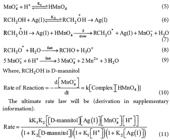
The mentioned rate law delineates the entirety of the recorded kinetic order concerning various reaction parameters.
It can be inferred from our knowledge of chemistry that Ag(I) might act as a coordinator to facilitate the electron transport from D-mannitol to Mn(VII). Without Ag(I), the electron transfer process is a little sluggish. The enhancement of the rate by Ag(I) can be explained through the activation energy required for the progression of the rate-determining step in the oxidation process. It is plausible that Ag(I) lowers the activation energy linked to the electron transfer process, consequently decreasing the free energy of activation and thereby enhancing the reaction rate. The oxidation reaction advances rapidly as the concentration of Ag(I) within the reaction mixture increases.
Contingent upon their charge attributes (cationic, neutral, and anionic), surfactants can both increase the rate and ensure the uniform dispersion of reacting moieties in an aqueous media.47,48 The catalytic activity observed below the CMC of SLS is likely attributed to the generation of catalytic micelles, which occurs through the aggregation of substrate moieties and monomeric SLS.495051-53
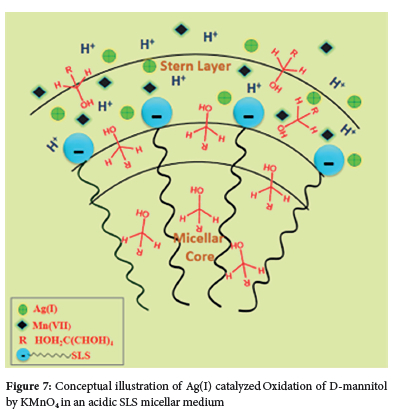
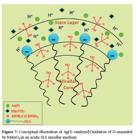
In an aqueous surfactant environment, a comparable direct electron transfer pathway occurs, facilitating a rapid reaction progression. Surfactant exhibits a formidable ability to produce nanoscale micelles that facilitate the integration of all constituents in the SLS micellar solution.504-), substrate (-OH), catalyst Ag+, and reactive species Mn(VII) close together, thereby facilitating the oxidation of D-mannitol molecules (Figure 7). The enhanced accumulation of reactant molecules at the micellar interface enhances the frequency of eflective collisions among the moieties involved in the reaction, thus significantly promoting the oxidation process. Micelle-facilitated reactions encompass three fundamental stages: the integration of substrates into micelles, the rearrangement of substrates at the micelle surface, and the ensuing formation of the product. Micelles exert an influence on the electron transfer process through the solubilization of reactants or by facilitating their distribution between the aqueous and micellar phases.
Piszkiewicz's Cooperativity Model
There are several suitable models for surfactants' catalytic action. Kinetic data in this study showed SLS's catalytic capacity at various concentrations. Piszkiewicz's model serves as an appropriate choice for explaining and clarifying the precise quantitative evaluation of current micelle-mediated kinetic information.54555654

In this instance, KD stands for the micellar aggregate dissociation constant. The term kw indicates the rate constants associated with the reaction occurring in the bulk (aqueous) phase, while km signifies the maximum kobs value in the micellar medium. The rate constant (kobs) for the micelle-catalyzed pseudo-first-order reaction can be described as a function of [surfactant] using the following equation.

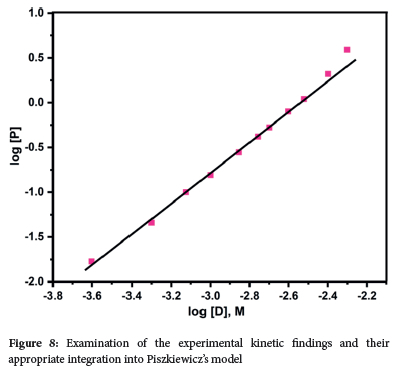
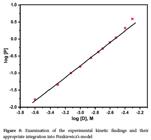
Where n denotes the cooperativity Index, while [D] represents the surfactant's overall concentration. Equation 15's advantage lies in its independence from the critical micelle concentration of the employed surfactant. While Eq. 15 was initially formulated for micelle-catalyzed reactions exhibiting an optimum rate accompanied by inhibition, the approach has been utilized in various studies to elucidate the micellar effect, wherein the reaction is either inhibited or catalyzed by the micelle throughout the entire spectrum. The slope and intercept of the linear graph of logP versus log[D] are utilized to determine the values of n and KD and found to be 1.7104 and 4.43 χ 10-5, respectively (Figure 8). A value of n over one indicates positive cooperative binding, suggesting aggregation with an effective number of monomers. The presence of catalytically effective submicellar aggregates is indicated by values of n = 1-2, which are significantly lower than the aggregated number (20-100).57D and a higher value of n. This implies that the complex between the surfactant and the substrate is more stable.
CONCLUSION
The electron transfer kinetics of D-mannitol are conducted both in the micellar phase and in an aqueous medium. In both mediums, the reaction proceeded along a comparable pathway, wherein an intermediate complex is established between the D-mannitol and Ag(I), preceding the rate-limiting step. Across the spectrum of concentrations explored, the reaction under consideration demonstrates fractional first-order kinetics with [Ag(I)], [H+], and [D-mannitol], while displaying first-order reliance on [Mn(VII)]. The invariance of the oxidation rate with rising ionic strength demonstrates the presence of a zero salt effect. The oxidation of D-mannitol by Mn(VII) in an acidic environment has revealed that Ag(I) serves as a proficient metal catalyst. The combination of SLS and Ag(I) significantly enhances the reaction rate, demonstrating superior catalytic efficiency compared to Ag(I) alone. The Piszkiewicz model stipulates the catalytic activity of micellar-induced oxidative processes, highlighting positive cooperative binding (n > 1) and implying aggregation with an effective number of monomers.
SUPPLEMENTARY MATERIAL
Supplementary information for this article is provided in the online supplement.
AUTHOR CONTRIBUTIONA. Srivastava: Supervision, Conceptualization, Statistical analysis, Writing original draft. N. Srivastava: Investigation, Experimental, Statistical analysis, Formal Analysis, Writing original draft. VK. Singh: Supervision, Conceptualization, Statistical analysis, Investigation, Formal Analysis, Writing original draft.
CONFLICTS OF INTEREST/COMPETING INTERESTS
None
GENERATIVE AI AND AI-ASSISTED TECHNOLOGIES
The authors declare that they have used generative AI and/or AI-assisted technologies in the writing process before submission, but only to improve the language and readability of their paper.
ORCID IDSAbhishek Srivastava: https://orcid.org/0000-0003-2463-1213
Neetu Srivastava: https://orcid.org/0009-0009-0482-510X
Vinay Kumar Singh: https://orcid.org/0000-0002-0683-2093
REFERENCES
-
1. Freeze HH, Sharma V. Metabolic manipulation of glycosylation disorders in humans and animal models. Semin Cell Dev Biol. 2010;21(6):655-662. https://doi.org/10.1016/j.semcdb.2010.03.011.
» https://doi.org/10.1016/j.semcdb.2010.03.011 -
2. Basu A, Ghosh SK, Saha R, Ghosh A, Mukherjee K, Saha B. Combination of Best Promoter and Micellar Catalyst for Chromic Acid Oxidation of D-Mannitol to Mannose in Aqueous Media. Tenside Surfactants Deterg. 2013;50(4):249-258. https://doi.org/10.3139/113.110256.
» https://doi.org/10.3139/113.110256 -
3. Das AK, Islam M, Bayen R. Studies on kinetics and mechanism of oxidation of D-sorbitol and D-mannitol by cerium(IV) in aqueous micellar sulphuric acid media. Int J Chem Kinet. 2008;40(8):445-453. https://doi.org/10.1002/kin.20332.
» https://doi.org/10.1002/kin.20332 -
4. Lakshman Kumar Y, Venkata Nadh R, Radhakrishnamurti PS. Substrate inhibition: oxidation of D-sorbitol and D-mannitol by potassium periodate in alkaline medium. Russ J Phys Chem A Focus Chem. 2014;88(5):774-778. https://doi.org/10.1134/S003602441405015X.
» https://doi.org/10.1134/S003602441405015X -
5. Hosahalli RV, Savanur AP, Nandibewoor ST, Chimatadar SA. Ruthenium (Ill)-mediated oxidation of D-mannitol by cerium (IV) in aqueous sulfuric acid medium: A kinetic and mechanistic approach. Int J Chem Kinet. 2010;42(7):440-452. https://doi.org/10.1002/kin.20485.
» https://doi.org/10.1002/kin.20485 -
6. Sharma VK, Sohn M, Anquandah GAK, Nesnas N. Kinetics of the oxidation of sucralose and related carbohydrates by ferrate (VI). Chemosphere. 2012;87(6):644-648. https://doi.org/10.1016/j.chemosphere.2012.01.019.
» https://doi.org/10.1016/j.chemosphere.2012.01.019 -
7. Mukherjee K, Ghosh A, Saha R, Sar P, Malik S, Saha B. Best combination of promoter and micellar catalyst for the rapid conversion of sorbitol to glucose. Spectrochim Acta A Mol Biomol Spectrosc. 2014;122:204-208. https://doi.org/10.1016/j.saa.2013.11.068.
» https://doi.org/10.1016/j.saa.2013.11.068 -
8. Malik MA, AL-Thabaiti SA, Khan Z. AL-Thabaiti SA, Khan Z. Kinetics of oxidation of d-glucose by permanganate in aqueous solution of cetyltrimethylammonium bromide. Colloids Surf A Physicochem Eng Asp. 2009;337(1-3):9-14. https://doi.org/10.1016/j.colsurfa.2008.11.005.
» https://doi.org/10.1016/j.colsurfa.2008.11.005 -
9. Dash S, Patel S, Mishra BK. Oxidation by permanganate: synthetic and mechanistic aspects. Tetrahedron. 2009;65(4):707-739. https://doi.org/10.1016/j.tet.2008.10.038.
» https://doi.org/10.1016/j.tet.2008.10.038 -
10. Shaabani A, Mirzaei P, Naderi S, Lee DG. Green oxidations. The use of potassium permanganate supported on manganese dioxide. Tetrahedron. 2004;60(50):11415-11420. https://doi.org/10.1016/j.tet.2004.09.087.
» https://doi.org/10.1016/j.tet.2004.09.087 -
11. Singh N, Lee DG. Permanganate: A green and versatile industrial oxidant. Org Process Res Dev. 2001;5(6):599-603. https://doi.org/10.1021/op010015x.
» https://doi.org/10.1021/op010015x - 12. Oluwayemisi B. A Study of the kinetics and mechanism of oxidation of L ascorbic acid by permanganate ion in acidic medium. World J Chem. 2008;3:27-31.
-
13. Asghar BH, Fawzy A. Kinetic, mechanistic, and spectroscopic studies of permanganate oxidation of azinylformamidines in acidic medium, with autocatalytic behavior of manganese (II). J Saudi Chem Soc. 2016;20(5):561-569. https://doi.org/10.1016/j.jscs.2014.12.001.
» https://doi.org/10.1016/j.jscs.2014.12.001 -
14. Hassan RA, Dahy R, Ibrahim S, Zaafarany I, Fawzy A. Oxidation of some macromolecules. kinetics and mechanism of oxidation of methyl cellulose polysaccharide by permanganate ion in acid perchlorate solutions. Ind Eng Chem Res. 2012;51(15):5424-5432. https://doi.org/10.1021/ie200646p.
» https://doi.org/10.1021/ie200646p -
15. Andrabi SMZ, Malik MA, Khan Z. Permanganate partitioning in cationic micelles of cetyltrimethylammonium bromide: A kinetic study of d-fructose oxidation. Colloids Surf A Physicochem Eng Asp. 2007;299(1-3):58-64. https://doi.org/10.1016/j.colsurfa.2006.11.018.
» https://doi.org/10.1016/j.colsurfa.2006.11.018 -
16. Hassan RM, Abdel-Kader DA, Ahmed SM, Fawzy A, Zaafarany IA, Asghar BH, Takagi HD. Acid-catalyzed oxidation of carboxymethyl cellulose. Kinetics and mechanism of permanganate oxidation of carboxymethyl cellulose in acid perchlorate solutions. Catal Commun. 2009;11(3):184-190. https://doi.org/10.1016/j.catcom.2009.09.023.
» https://doi.org/10.1016/j.catcom.2009.09.023 -
17. Tabassum S, Sabir S, Sulaiman O, Rafatullah M, Khan I, Hashim R. Oxidative degradation of acetaminophen by permanganate in neutral medium-a kinetic and mechanistic pathway. J Dispers Sci Technol. 2011;32(2):217-223. https://doi.org/10.1080/01932691003656938.
» https://doi.org/10.1080/01932691003656938 -
18. Surender Rao V, Sethuram B, Navaneeth Rao T. Kinetics of oxidation of some amino acids by KMNO4 in a moderately concentrated H2SO4 medium in the presence and absence of Ag+. Int J Chem Kinet. 1979;11(2):165-173. https://doi.org/10.1002/kin.550110208.
» https://doi.org/10.1002/kin.550110208 -
19. Hassan RM, Mousa MA, Wahdan MH. Kinetics and mechanism of oxidation of β-phenylalanine by permanganate ion in aqueous perchloric acid. J Chem Soc, Dalton Trans. 1988;605-609(3):605-609. https://doi.org/10.1039/DT9880000605.
» https://doi.org/10.1039/DT9880000605 -
20. Srivastava A, Srivastava N, Singh R, Srivastava K. Cu(II) promoted oxidation of L-valine by hexacyanoferrate(III) in cationic micellar medium. J Indian Chem Soc. 2023;100(8):101058. https://doi.org/10.1016/j.jics.2023.101058.
» https://doi.org/10.1016/j.jics.2023.101058 -
21. Sar P, Saha B. Potential application of Micellar nanoreactor for electron transfer reactions mediated by a variety of oxidants: A review. Adv Colloid Interface Sci. 2020;284:102241. https://doi.org/10.1016/j.cis.2020.102241.
» https://doi.org/10.1016/j.cis.2020.102241 -
22. Srivastava A, Dohare RK, Srivastava N, Singh R. Cu(II) mediated oxidation of L-phenylalanine with chromic acid in micellar medium: A kinetic and mechanistic approach. Main Group Chem. 2025;24(1):24-36. https://doi.org/10.1177/10241221241291408.
» https://doi.org/10.1177/10241221241291408 -
23. Omari A, Cao R, Zhu Z, Xu X. A comprehensive review of recent advances on surfactant architectures and their applications for unconventional reservoirs. J Petrol Sci Eng. 2021;206:109025. https://doi.org/10.1016/j.petrol.2021.109025.
» https://doi.org/10.1016/j.petrol.2021.109025 -
24. Srivastava A, Srivastava N, Dohare RK, Srivastava K, Singh R. Effect of CTAB micellar medium on Cu(II) catalyzed L-leucine oxidation by hexacyanoferrate(III). Dokl Phys Chem. 2024;514(2):15-23. https://doi.org/10.1134/S0012501623600201.
» https://doi.org/10.1134/S0012501623600201 -
25. Lipshutz BH. On the role of surfactants: rethinking aqueous chemistry. Green Chem. 2024;26(2):739-752. https://doi.org/10.1039/D3GC03875K.
» https://doi.org/10.1039/D3GC03875K -
26. Perinelli DR, Cespi M, Lorusso N, Palmieri GF, Bonacucina G, Blasi P. Surfactant self-assembling and critical micelle concentration: one approach fits all? Langmuir. 2020;36(21):5745-5753. https://doi.org/10.1021/acs.langmuir.0c00420.
» https://doi.org/10.1021/acs.langmuir.0c00420 -
27. Cortes-Clerget M, Kincaid JRA, Akporji N, Lipshutz BH. Supramolecular Catalysis. In: van Leeuwen PWNM, Raynal M (editors), Surfactant Assemblies as Nanoreactors for Organic Transformations. Weinheim: WILEY-VCH GmbH; 2022. https://doi.org/10.1002/9783527832033.ch32.
» https://doi.org/10.1002/9783527832033.ch32 -
28. Bunton CA, Savelli G. Organic reactivity in aqueous micelles and similar assemblies. Adv Phys Org Chem. 1986;22:213-309. https://doi.org/10.1016/S0065-3160(08)60169-0.
» https://doi.org/10.1016/S0065-3160(08)60169-0 -
29. Bhattacharyya P, Ghosh A, Saha B. Room temperature micellar catalysis on permanganate oxidation of butanol to butanal in aqueous medium at atmospheric pressure. Tenside Surfactants Deterg. 2015;52(1):36-40. https://doi.org/10.3139/113.110346.
» https://doi.org/10.3139/113.110346 -
30. Srivastava A, Srivastava N, Singh VK. Oxidation of l-tyrosine by diperiodatocu-prate(III) in CPC micellar medium, facilitated by Ru(III). Tenside Surfactants Deterg. 2025;62(3):237-249. https://doi.org/10.1515/tsd-2025-2662.
» https://doi.org/10.1515/tsd-2025-2662 -
31. Srivastava A, Goswami MK, Srivastava N. Role of surfactants on Fe(II) catalyzed L-tryptophan oxidation by persulfate. Indian J Chem. 2023;62(12):1268-1275. https://doi.org/10.56042/ijc.v62i12.5608.
» https://doi.org/10.56042/ijc.v62i12.5608 -
32. Srivastava A, Srivastava N, Srivastava K. Kinetic and mechanistic investigation of Os(VIII) - catalyzed L-tryptophan oxidation by hexacyanoferrate(III) in CTAB micellar medium. Russ J Phys Chem A Focus Chem. 2023;97(13):2932-2941. https://doi.org/10.1134/S0036024423130022.
» https://doi.org/10.1134/S0036024423130022 -
33. Srivastava A, Goswami MK, Singh R, Srivastava N. Os(VIII) accelerated oxidation of L-leucine by hexacyanoferrate(III) in CTAB micellar medium. J Dispers Sci Technol. 2024;45(11):2240-2248. https://doi.org/10.1080/01932691.2023.2263543.
» https://doi.org/10.1080/01932691.2023.2263543 -
34. Srivastava A, Srivastava N, Dohare RK. Kinetic and mechanistic investigation of L-phenylalanine oxidation by alkaline Cu(III) periodate in CPC micellar medium. J Phys Org Chem. 2025;38(1):e4669. https://doi.org/10.1002/poc.4669.
» https://doi.org/10.1002/poc.4669 -
35. Hassan M, Al-Dhoun M, Batineh Y, Najjar AA, Dahadha A, Ibrahim QA. Micellar and polymer catalysis in the kinetics of oxidation of L-lysine by permanganate ion in perchloric acid medium. S Afr J Chem. 2021;75:73-79. https://doi.org/10.17159/0379-4350/2021/v75a8.
» https://doi.org/10.17159/0379-4350/2021/v75a8 -
36. Zaheer Z, Aazam ES. Anionic-micelles assisted oxidation of tartaric acid by permanganate: A kinetic and mechanistic approach. J Mol Liq. 2017;229:436-442. https://doi.org/10.1016/j.molliq.2016.12.081.
» https://doi.org/10.1016/j.molliq.2016.12.081 -
37. Ghosh A, Datta I, Ghatak S, Mahali K, Bhattacharyya SS, Saha B. Picolinic acid promoted permanganate oxidation of D-mannitol in micellar medium. Tenside Surfactants Deterg. 2016;53(4):332-346. https://doi.org/10.3139/113.110440.
» https://doi.org/10.3139/113.110440 -
38. Ibrahim SM, Al-Hossainy AF, Saha B, El-Aal MA. Removal ofbromothymol blue dye by the oxidation method using KMnO4: accelerating the oxidation reaction by Ru (III) catalyst. J Mol Struct. 2022;1268:133679. https://doi.org/10.1016/j.molstruc.2022.133679.
» https://doi.org/10.1016/j.molstruc.2022.133679 -
39. Ohlweiler OA, Schneider AMH. Standardization of potassium permanganate by titration of sodium oxalate in presence of perchloric acid and manganese(II) sulfate. Anal Chim Acta. 1972;58(2):477-480. https://doi.org/10.1016/S0003-2670(72)80031-X.
» https://doi.org/10.1016/S0003-2670(72)80031-X -
40. Hu X, Shi L, Zhang D, Zhao X, Huang L. Accelerating the decomposition of KMnO4 by photolysis and auto-catalysis: a green approach to synthesize a layered birnessite-type MnO2 assembled hierarchical nanostructure. RSC Adv. 2016;6(17):14192-14198. https://doi.org/10.1039/C5RA2266F.
» https://doi.org/10.1039/C5RA2266F -
41. Lente G. Deterministic Kinetics in Chemistry and Systems Biology: The Dynamics of Complex Reaction Networks. Cham: Springer; 2015. https://doi.org/10.1007/978-3-319-15482-4.
» https://doi.org/10.1007/978-3-319-15482-4 - 42. Feigl F. Spot Tests in Organic Analysis, 5th ed. Amsterdam: Elsevier; 1958. p 391 and p 358.
-
43. Waters WA. Mechanisms of oxidation by compounds of chromium and manganese. Q Rev Chem Soc. 1958;12(4):277-300. https://doi.org/10.1039/qr9581200277.
» https://doi.org/10.1039/qr9581200277 -
44. Verma RS, Reddy MJ, Shastry VR. Kinetic study of homogeneous acid-catalysed oxidation of certain amino-acids by potassium permanganate in moderately concentrated acidic media. J Chem Soc, Perkin Trans 2. 1976;2(4):469-473. https://doi.org/10.1039/p29760000469.
» https://doi.org/10.1039/p29760000469 -
45. Moore FM, Hicks KW. Mechanism of the permanganate ion oxidation of vanadium(IV). Inorg Chem. 1975;14(2):413-416. https://doi.org/10.1021/ic50144a041.
» https://doi.org/10.1021/ic50144a041 - 46. Chamatadar SA, Kini AK, Nandibewoor ST. A study of the ruthenium (III) catalysed oxidation of L-phenylalanine by heptavalent manganese-A kinetic and mechanistic approach. Indian J Chem. 2003;42A:1850.
-
47. Rastogi R, Srivastava A, Naik RM. Kinetic and mechanistic analysis of ligand substitution of aquapentacyanoruthenate(II) in SDS medium by 4,4-bipyridine. J Disper Sci Technol. 2019;41:1045-1050. https://doi.org/101080/0193269120191614042.
» https://doi.org/101080/0193269120191614042 -
48. Bunton CA, Nome F, Quina FH, Romsted LS. Ion binding and reactivity at charged aqueous interfaces. Acc Chem Res. 1991;24:357-364. https://doi.org/10.1021/ar00012a001.
» https://doi.org/10.1021/ar00012a001 -
49. Piszkiewicz D. Cooperativity in bimolecular micelle-catalysed reactions. inhibition of catalysis by high concentrations of detergent. J Am Chem Soc. 1997;99:7695-9697. https://doi.org/101021/ja00465a046
» https://doi.org/101021/ja00465a046 -
50. Lopez-Cornejo P, Mozo JD. Rolda n E, Domínguez M, Sanchez F, Kinetic study of the reaction [ru(bpy)3]2++S2O82- in solutions of brij-35 at premicellar and micellar concentrations. Chem Phys Lett. 2002;352:33-38. http://dx.doi.org/101016/S0009-2614(01)01287-8
» http://dx.doi.org/101016/S0009-2614(01)01287-8 -
51. Karmakar P, Kundu S, Layek M, Karmakar K, Mitra M, Mukherjee A, Dhak D, Mandal U, Sar P, Saha B. An efficient mixed micellar strategy for the catalytic oxidation of benzyl alcohol by diperiodatoargentate(iii) in aqueous media. New J Chem. 2023;47(28):13235-13246. https://doi.org/10.1039/D3NJ02023A.
» https://doi.org/10.1039/D3NJ02023A -
52. Sen PK, Gani N, Pal B. Effects of microheterogeneous environments of sds.; tx-100.; and tween 20 on the electron transfer reaction between l-leucine and AuCl4-/AuCl3(OH). Ind Eng Chem Res. 2013;52:2803-2813. https://doi.org/101021/ie302656d.
» https://doi.org/101021/ie302656d -
53. Acharjee A, Rakshit A, Chowdhury S, Malik S, Barman MK, Ali MA, Saha B. Micellar catalysed and heteroaromatic base promoted rate enhancement of oxidation of an alicyclic alcohol in aqueous medium. J Mol Liq. 2019;277:360-371. https://doi.org/101016/jmolliq201812082.
» https://doi.org/101016/jmolliq201812082 -
54. Piszkiewicz D. Positive cooperativity in micelle-catalyzed reactions. J Am Chem Soc. 1977;99(5):1550-1557. https://doi.org/10.1021/ja00447a044.
» https://doi.org/10.1021/ja00447a044 -
55. Hill AV. A new mathematical treatment of changes of ionic concentration in muscle and nerve under the action of electric currents, with a theory as to their mode of excitation. J Physiol. 1910;40(3):190-224. https://doi.org/10.1113/jphysiol.1910.sp001366.
» https://doi.org/10.1113/jphysiol.1910.sp001366 -
56. Pandey S, Upadhyay SK. Effect of cationic micellar aggregates on the kinetics of oxidation of aminoalcohols by N-bromosuccinimide in alkaline medium. J Colloid Interface Sci. 2005;285(2):789-794. https://doi.org/10.1016/j.jcis.2004.01.085.
» https://doi.org/10.1016/j.jcis.2004.01.085 -
57. Kulthe SS, Choudhari YM, Inamdar NN, Mourya V. Polymeric micelles: authoritative aspects for drug delivery. Des Monomers Polym. 2012;15(5):465-521. https://doi.org/10.1080/1385772X.2012.688328.
» https://doi.org/10.1080/1385772X.2012.688328
Revised 1 November 2025
Accepted 14 November 2025