From kilowatts to kilometers: Unpacking the Potential of Electric Mobility in Africa
Abstract
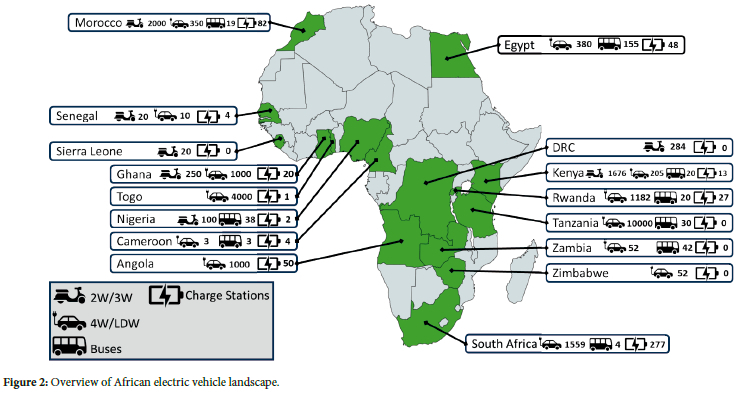
Electric vehicles are slowly reinforcing their place in the global market, with 6.75 million units sold in 2021, accounting for 8.3% of the global automotive market, with expectations of this increasing to 33% by 2028. South Africa and Kenya, however, only contributed approximately 1559 and 350 units to this total, respectively. To accommodate the anticipated e-mobility growth in South Africa, and the rest of the continent, a sound understanding of the battery chemistry, developments and advances need to be explored and integrated with additional principles, such as project and risk management. The battery chemistry has a profound effect on cradle-to-grave assessments, and in exploring second-life applications, the battery utilisation can be increased before the need for recycling. Sound knowledge of the chemistry is also crucial in elucidating risks and providing a safe working environment, making risk-mitigation initiatives more transparent, improving the manufacturing process and providing opportunities for small start-ups to form, supporting the shift to a more electric-powered mindset. Adopting new technologies and integrating electric mobility can not only advance local efforts to advance electrochemistry research but also support sustainable development schemes in Africa.
e-Mobility; lithium-ion safety; electric vehicle; battery project management; lithium-ion commodity
 Thumbnail
 Thumbnail
 Thumbnail
 Thumbnail
 Thumbnail
 Thumbnail