From kilowatts to kilometers: Unpacking the Potential of Electric Mobility in Africa
Abstract
Electric vehicles are slowly reinforcing their place in the global market, with 6.75 million units sold in 2021, accounting for 8.3% of the global automotive market, with expectations of this increasing to 33% by 2028. South Africa and Kenya, however, only contributed approximately 1559 and 350 units to this total, respectively. To accommodate the anticipated e-mobility growth in South Africa, and the rest of the continent, a sound understanding of the battery chemistry, developments and advances need to be explored and integrated with additional principles, such as project and risk management. The battery chemistry has a profound effect on cradle-to-grave assessments, and in exploring second-life applications, the battery utilisation can be increased before the need for recycling. Sound knowledge of the chemistry is also crucial in elucidating risks and providing a safe working environment, making risk-mitigation initiatives more transparent, improving the manufacturing process and providing opportunities for small start-ups to form, supporting the shift to a more electric-powered mindset. Adopting new technologies and integrating electric mobility can not only advance local efforts to advance electrochemistry research but also support sustainable development schemes in Africa.
e-Mobility; lithium-ion safety; electric vehicle; battery project management; lithium-ion commodity
INTRODUCTION
The importance of batteries continues to grow with developments in grid storage, the internet of Things and electric vehicles as society continues to embrace greener and more technologically integrated systems and processes. Electric vehicles are a significant driver of battery demand as global sales of passenger battery electric and plug-in hybrid sales increased to 6.75 million units in 2021, up 108% from 2020 and 5400% from 2012, with forecasts estimating sales at 21 million in 2025, resulting in 77 million EVs on the world's roads.12
The anticipated advances in electric vehicles and stronger integration into the African economy provide some unique continental opportunities in developing and utilising local mineral beneficiation processes to enhance the value of the mined commodity.
Beneficiation, which includes mechanical and chemical processes, is used to improve the mineral percentage by removing unwanted components of the original mined ore. This allows for a more concentrated product to be shipped, thereby reducing the waste that is generated at the refinery and results in following a leaner methodology from the initial stages in the process chain. Early-stage beneficiation of the crushed ores includes gravity (dense media) separation, magnetic separation and froth flotation. Gravity separation exploits the specific gravity between the target and gangue minerals where the dense media allows for selective floating of target minerals, while magnetic separation is predominantly used on magnetic iron-bearing minerals, which are difficult to separate using other methods. Froth flotation exploits the surface characteristics of minerals when the particle sizes or the specific gravities of the particles are too small to be effective in dense media separation. There are two different methods, namely reverse and direct flotation, with reverse flotation using cationic collectors to float the gangue minerals, whereas an anionic collector floats the desired mineral to the surface. Several factors affect the recovery of minerals, including surface chemistry, type and concentration of the collector, pulp pH and pretreatment. For example, NaOH, Na2S and NaF are used in various pre-cleaning processes to modify the surface and allow for improved separation. Understanding the crystal structure of the phases present in the ore is also crucial since it allows for the identification of crystal planes with varied hydrophobicity that affects contact angles, which allows for an ideal collector to be selected for chemisorption to occur. For example, spodumene (LiAl(SiO3)2) can be targeted explicitly by using froth flotation anionic collectors such as oleic acid, sodium oleate, sulfonated and phosphorated fatty acids that typically favours the {100} cleavage plane for chemisorption.3
There are additional refining processes to further improve the concentration of the valued metals, such as reductive leaching, solvent extraction, ion exchange and electrowinning. Reductive leaching, using copper ore as an example, is an electrochemical process with an anodic portion, the reductant dissolution (such as aqueous metallic iron), and a cathodic portion, the chalcopyrite (CuFeS2) ore reduction. Solvent extraction is the subsequent process by which the anions or cations are transferred from an aqueous to an organic phase with good chelating agents, such as hydroxylamines for copper ions. The remaining aqueous raffinate contains cobalt along with iron, aluminium, manganese and copper impurities. By precipitating cobalt with MgO and redissolving, high-purity cobalt-rich electrolyte is produced, which is then filtered. The final step to produce the metallic product, both copper and cobalt in the example, is to perform electrowinning by applying a current to a concentrate solution containing the desired metallic species that are then deposited on the cathode in the electrolytic system.4
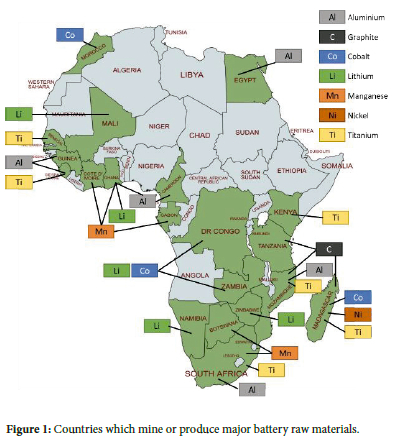
There is an estimated 0-15 kg of cobalt, 0-40 kg nickel and 30-50 kg of lithium in a typical battery for an electric vehicle, along with manganese and aluminium, depending on the cathode chemistry. Africa already has a strong presence in some of these commodities and the capacity to develop operations in a few others. The prominent countries in the battery's mineral value chain are shown in Figure 1, with several countries producing more than one of the desired minerals. The minerals and African contributions are explored individually thereafter. All production and mineral reserve values are reported from the United States Geological Survey (USGS) Commodity Statistics and Information,5
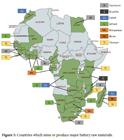
Cobalt, produced as a by-product of copper mining, is synonymous with electric vehicle cathode material since it provides favourable energy and power densities. The Democratic Republic of Congo (DRC) accounts for around 70% (120 kilotonne (kt)) of global output as well as holds 50% of the world's reserves. In a Bloomberg article,6 7
Africa also has a strong presence in the manganese market, with South Africa contributing around one-third of global seaborne supply (largest exporter) as well as holding 43% of global reserves, followed by Gabon being the 2nd largest exporter. There are also relatively smaller operations in Côte d'Ivoire and Ghana. The majority of this manganese is used in the steel industry and therefore doesn't undergo substantial beneficiation specific for Li-ion battery applications; however, South Africa's Manganese Metal Company is reportedly the world's only non-China-based producer of high-grade electrolytic manganese metal (EMM) and is considered to be the largest refinery of 99.9% (selenium-free) EMM.8910
The major component in every lithium-ion battery is reported to be present in many African countries, including Zimbabwe (1.2 kt production, 500 kt reserves), Democratic Republic of Congo (3 megatonnes (Mt) reserves), Mali (700 kt reserves), Ghana (130 kt reserves) and Namibia (50 kt reserves). Zimbabwe is currently the only lithium exporter in Africa. A historic tin mine in the DRC is currently undergoing a feasibility study, with the first spodumene concentrate production expected to start in late 2023.11
Around four tonnes of bauxite are required to produce one tonne of alumina, and approximately two tonnes of alumina are electrolytically refined into one tonne of aluminium. This bodes well for Africa because the 3rd largest producer of bauxite, Guinea (64Mt in 2019), also holds the largest reserves at 7 gigatonnes (GT), with additional smaller projects present in Sierra Leone, Ghana and Mozambique. The break in the value chain occurs when it comes to the alumina since no refining takes place in Africa, and the bauxite is shipped for refining (via the Bayer process) mostly to South America and China. The final stage, producing aluminium through the Hall-Heroult process, is where South Africa makes its mark, with the Hillside Aluminium smelter producing 720 ktpa (kilotonne per anum), making it the largest smelter in the Southern Hemisphere. Mozal Aluminium, in Mozambique, also produces a substantial amount of 580ktpa, with additional smelters present in Egypt, Ghana and Cameroon, with the latter two running well below capacity due to the need for further investment and poor access to electricity, respectively.
Ambatovy operation in Madagascar is one of the largest lateritic nickel mining and refining companies in the world, while also producing cobalt as a by-product. The remainder of African nickel is produced as by-products from precious metal mines in Zimbabwe and South Africa.12titanium mining. Mozambique produced 30 Mt of graphite in 2021, with additional projects at various development stages in Tanzania and Madagascar. According to the USGS, the contained TiO2 in Ilmenite (FeTiO3) reserves lie in Kenya (390 kt), Madagascar (22 Mt), Mozambique (26 Mt), South Africa (30 Mt) and Senegal (unknown). While rutile (TiO2) can also be found in Kenya (170 kt), Mozambique (890 kt), Senegal (unknown), South Africa (6.5 Mt) and Sierra Leone (490 kt), although to a lower degree.
Apart from the well-known materials which are required for the cathode and anode material, there are many other minerals which are involved in battery manufacturing, such as copper, fluorine, phosphate, tin and steel. There is an estimated 23 kg of copper in an internal combustion engine vehicle, while hybrid electric, plug-in hybrid electric and battery electric vehicles have around 40 kg, 60 kg and 83 kg, respectively. Larger vehicles consequently require greater amounts due to increased wiring demand and larger electric motors, with hybrid busses requiring 89 kg of copper and the battery between 224-369 kg depending on the sizes required. EV chargers add a further 0.7 kg and for fast chargers up to 8 kg of copper is needed. Since cobalt is a by-product of copper mining, there are established copper smelters in Africa, such as Ivanhoe and Zijin's Kamoa-Kakula mining complex and China Nonferrous Mining Corp's Lualaba smelter. Copper smelting also produces sulfur dioxide (SO2), which can be converted into sulfuric acid that is used in various mining leaching processes or the manufacturing of lead-acid batteries. South Africa has the largest fluorspar reserves globally, which are exported for refining and then imported at a significantly higher cost once integrated into its many uses, such as ceramics, fluorochemicals (used in lithium-ion batteries) and various construction materials. South Africa has attempted to mitigate some of the losses in the value chain and has a reasonably well-established fluorine-based chemical industry supplying a range of applications through the well-known South African Nuclear Energy Corporation (NECSA), which includes its nuclear program as well as National Research Chairs located at the University of Pretoria and University of KwaZulu-Natal.136. The USGS report estimates 2021 production in Algeria (1.2 mntpa), Egypt (5 mntpa), Morocco (38 mntpa), Senegal (2.2 mntpa) and South Africa (2 mntpa). More than 60% of tin is used as solder but is also present in many other motor vehicle components from brake pads to sealants, with supply coming from Tinco's Rutongo mine, in Rwanda, and small-scale mines present throughout sub-Saharan Africa, predominantly in DRC, Uganda, Burundi and Nigeria.
Over and above the use of batteries in applications such as grid storage, within mining operations, attempts are made to incorporate more renewable energy generation sources. These include the use of specialized electric-driven mining vehicles where the end-use product, the batteries, are being integrated into the mining resources. Prominent mining houses, such as BHP, Rio Tinto, Newmont and Teck, have agreements with Caterpillar to roll out pilot studies of electric haul trucks by 2025, with full production to begin by 2027.14151617
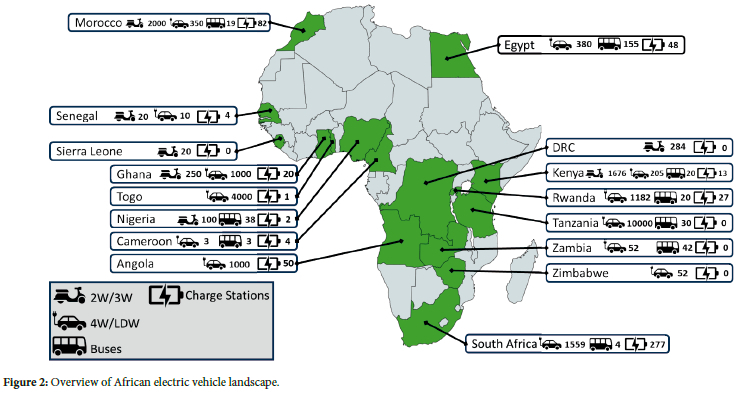
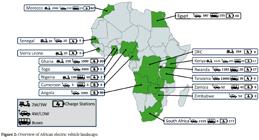
With the increasing battery material demand and resulting aged or waste batteries, niche areas applications are appearing, which could allow for the establishment of small and medium micro enterprises to capitalize on repurposing for second-life applications, integrity testing and recycling. Understanding the chemistry of the batteries and the associated handling risks is paramount to the safe and cost-effective establishment of an emerging industry when paired with best practices such as lean-six sigma and other well-established project management principles. Within the African context, there are still many challenges to overcome where many OEMs have indicated that they are not planning to reduce their internal combustion engine (ICE) vehicle sales to Africa any time soon. For example, Volkswagen has indicated that they are expected to sell ICE vehicles until 2050 while having an exclusively EV lineup for the European market by 2035.1819Figure 2. Noticeably, some countries (like Kenya) have shown a larger uptake of the 2W/3W transporters that include scooters and three-wheelers. Also, countries like Tanzania and Togo have shown a significant uptake of EVs with little or no increase the public accessible charge stations. In comparison, China has an estimated 1.15 million charging stations, followed by 113 527 in US, 106 701 in South Korea and 85 453 in Netherlands.20
Recently, some research in the field of battery applications has included studies involving the cost and life cycle analysis (LCA) developments of African-specific vehicles and the viability of e-mobility that could be integrated into the extensive public transport network.
For example, the Minibus taxi has become synonymous with many cities' transportation systems where approximately 70% of the South African workforce utilize this method of urban commuting. Rix et al. 21222223222425
The balance between the total cost and the related CO2 emissions hasn't yet found an equilibrium within the African context. This was explored by various authors. Collett et al.26272829
Moeletsi30312 in the Northern Cape and Free State provinces when compared to other provinces.
There have been attempts to make a vehicle specifically for Sub-Saharan Africa, which was termed the "African Car" or aCar by Brönner et al.32-37 Their study proceeded to show the ideal set of configured parameters from a production process perspective, using simulations of dependencies and scenario testing with fuzzy logic as well as the requirements for production transfer to support sustainable development in developing countries. They conceptualised a low-maintenance vehicle which could be implemented into the African market and proposed nine indicators which could promote local manufacturing, including long-term location planning, higher-than-average wages, active support of local education and critical safety requirements. Nur38
This paper explores the extent of literature focusing on e-mobility in the African context, the prominent battery chemistries used in EVs, battery safety aspects and how a lean-six-sigma mindset can synergistically merge all these disciplines to promote sustainable development of e-mobility in Africa.
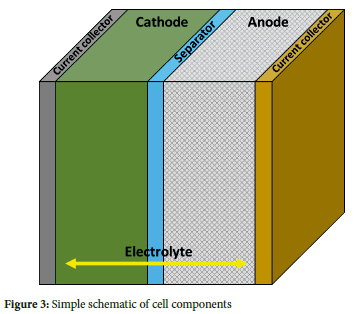
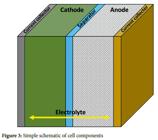
BATTERY TYPESBatteries have a simple configuration of a positive electrode (cathode), negative electrode (anode), separator and electrolyte to allow for ion mobility during charging and discharging, as shown by the simple schematic in Figure 3.
In the case of lead batteries, the active material, which determines capacity and other electrochemical properties, is contained within a lead grid which acts as the current collector, whereas in lithium batteries, the electrode material is deposited as a layer onto the current collector (generally aluminium for the cathode and copper for the anode). Lead acid batteries are well understood, used extensively as starting-lighting-ignition applications due to the ability to have high specific power - up to 150 W/kg, and were some of the first batteries used in electric mobility applications as early as 1890. Soon the ICE vehicle dominated the transportation market with the onset of the two World Wars. This was supported by the discovery of large oil fields to produce the carbon-based fuel and, ironically, the ability to start the vehicles' engine by using a battery and a starter motor that led to the accelerated uptake of the ICE vehicle as a mode of transport.
Alternate chemistries were researched to overcome various challenges associated with lead-based technology. These challenges include its low specific energy (30-50 Wh/kg) that is due to the high density of lead, slow charge times and relatively low cycle life. Equation 1 shows the discharge reaction of a lead-acid battery (with the reverse being the charge cycle). The positive plate reduces from lead (IV) oxide to lead (II) sulfate and the released electrons reduce the negative plate from metallic lead to lead (II) sulfate.

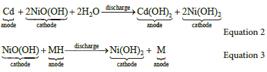
Some of these challenges were overcome with the use of nickel-cadmium (NiCd) cells, which boasted 45-80Wh/kg energy densities which were on average 56% greater than lead acid batteries. They had significantly higher cycle life in application, had much quicker charging characteristics and were able to work in extremely high-temperature applications. These pros did however come at the cost of high self-discharge rates, which were 4 times greater than lead-acid batteries and coupled with using highly toxic materials such as cadmium. Nickel metal hydride batteries soon replaced the use of NiCd, which was the next step in advancing e-mobility. They showed to have up to a 98%, on average, increase in energy density from NiCd while maintaining a high power density, reliability and considerably lower toxicity.3940
The current battery chemistry of choice, lithium-ion, has been in use since the 1990s and a key area of research in the past decade to improve its electrochemical and physical properties to support the growing power electronics market and the more recent demand for the electric vehicle industry. The majority of advances have been focused on the cathode material, with the lithium oxides of cobalt, nickel, manganese and iron phosphates being the main materials which have been integrated to design a single cell that is then configured into a battery of various shapes and sizes to meet the demands for faster charging, higher specific energy density, lower cost and improved safety aspects. The main cathodic chemistries are summarized in Table 1, with various molar ratios being tested and dopants being incorporated into the material, such as niobium.4142 434445,46 The anode is predominantly made of carbon-based material (graphite), and the half-cell reaction remains the same, regardless of the cathodic material used, as in equation 4.

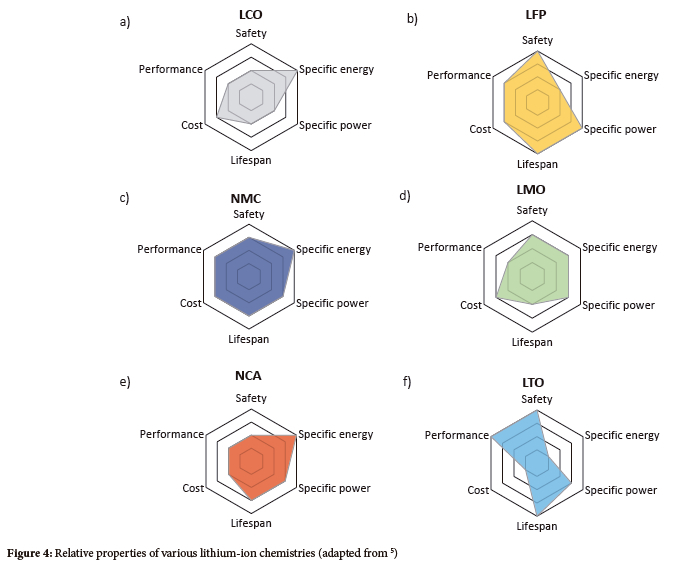
A well-known alternate anode chemistry,47Figure 4) but provides faster charging capabilities, longer capacity cycle life and is considered relatively safer than carbon-based anode cells. The simplified half reaction is shown in equation 5 where there are a number of new and novel alternatives that contain dopants such as Mn,48 Mg, Bi49 and Na.50

Extensive research has been performed over the past decade to try and integrate alloyed anodes into lithium batteries which have a theoretical capacity of 2-10 times higher than graphite and 4-20 times greater than LTO. The main challenge, which affects the rapid implementation of alloyed cathodes, is the large volume change (up to 400% experienced with Li22Si)5147
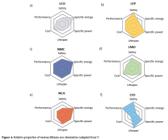
In summary, the main properties associated with each chemistry can be displayed in a simplistic "spider" diagram - where higher values represent more favourable characteristics - that compare the performance, safety, specific power, specific energy and life span to each other on a relative scale (Figure 4).5253
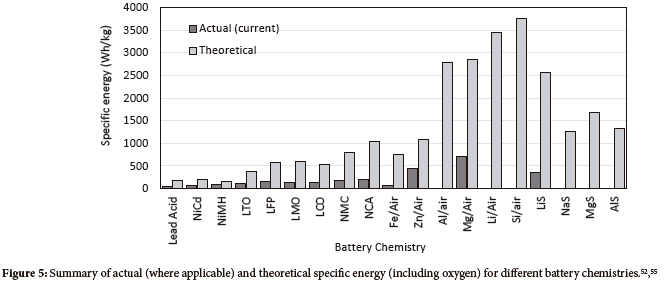
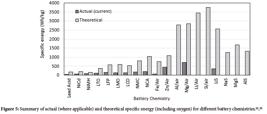
Research, however, continues to improve not only lithium-ion batteries but also delve into new chemistries and cell assemblies, which include metal-sulfur, metal-air and solid-state electrolyte batteries, to name but a few. Lithium-sulfur chemistry, for example, has a theoretical specific energy of 2567 Wh/kg; however, with current prototypes only achieving 350 Wh/kg range, with many other challenges that still need to be overcome before commercial viability is an option. The sulfur cathode has high electrochemical insulating properties, which require large amounts of conductive additives, as well as the tendency for the sulfur electrode to form long chain polysulfides, which reduce charging capability and active mass available for discharge.54

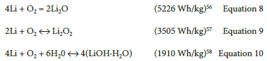
Another area of interest is metal-air batteries which are composed of a metal electrode (Zn, Li, Mg, Al, etc.), electrolyte and bi-functional air electrode and boast very high theoretical energies, as shown in Figure 5. The oxygen from the air is reduced, and the metal electrode reversibly oxidizes to a solid metal oxide.5555
SAFETY ASPECTS
Over the last few decades, in terms of the use of batteries in various large-scale applications, the main safety aspects were associated with the use of lead acid batteries that related to the spilling of highly corrosive acid and the electrolysis of water (producing H2 and O2) which, if accumulated within the battery, can cause an explosion when subjected to a spark.5960 2 carbon dioxide (asphyxiant), CO (carbon monoxide) (asphyxiant), diethyl carbonate (DEC) (flammable), dimethyl carbonate (DMC) (flammable), ethyl methyl carbonate (EMC) (flammable), propylene carbonate (PC), various other alkanes and alkenes along with hydrogen fluoride (HF) (highly toxic) and phosphorus oxyfluoride (toxic).61,62 Depending on the cathode chemistry, environmental concerns can also result from the presence of toxic elements such as cobalt and nickel that can leach into the groundwater.
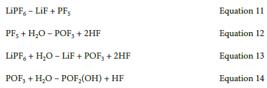
Upon combustion, the formation of highly toxic HF can result as described by equations 11-13 with a reaction product further reacting to form additional HF, as in equation 14.63,64 At certain elevated temperatures, this reaction becomes self-propagating and, as shown in equation 14, is propagated by the addition of water.
A study by Yuan et al.652 (24%) and CO2 (25%) and LTO was CO2 (38%). For NMC cells, the gases were CO (29%), CO2(17%) and H2(12%). Sturk et al.622ratio was 1/10, and for the NMC/LMO, a ratio of 1/100 was determined.
Advances in the use of solid-state electrolytes in Li-ion chemistry improve the safety aspects of batteries as there are fewer flammable materials present than organic electrolytes currently in use. With these considerable hazards in mind, there is a need for adequate project planning to implement safety features in small and medium enterprises which emerge in the growing battery production chain.
PROJECT MANAGEMENT ASPECTSEngineering and chemistry advances cannot alone create sustainable development. Project and quality management, risk mitigation and lifecycle streamlining are required and should be customized to optimize the situation in which it is implemented. Since the lithium-ion battery value chain is an emerging sector in Africa, investment and collaboration is required from the public and private sector: government, intergovernmental organizations, automotive, mining and manufacturing industries to initiate pilot projects that test the feasibility of SMMEs operating across certain aspects of the value chain particularly within repurposing of 2nd life batteries for various applications and recycling. These pilot projects can be used to develop a collaborative platform for peer-to-peer exchanges across African countries to share lessons learnt, recommendations, areas that require more research and development and activities that can be scaled or replicated. Waterfall project methodology, which is a long-term project plan that has a single timeline, creates a linear-phased approach to dependencies and discourages intra-project changes due to its costly nature, has become a common concept in software engineering. This long-term thinking can be related to many manufacturers' 2030 and 2050 CO2 emission reduction goals, with many deliverables being planned linearly. Agile project management, on the other hand, is a shorter planning strategy based on multiple deliverables. It is highly flexible and promotes collaborative and interactive approaches as well as involving the customer throughout the project. Agile management has also become more prominent in the software industry, which is highly competitive and rapidly changing. This has very similar attributes to the electric vehicle market, indicating that an agile mindset could lead to rapid technological advances and quicker integration into the market resulting in accelerated development of the electric vehicle economy. New chemistries, alternative battery designs, improved battery management systems and improved charging infrastructure could be established with shorter lead times and remain highly relevant. Waterfall methodology is a sound management system for long-term plans, but the adaptive and flexible nature observed in top manufacturers such as Tesla, Toyota and BYD has shown to meet current client needs in a very competitive and fast-changing market.
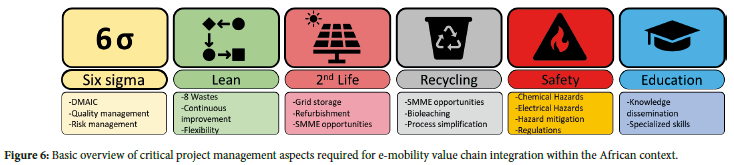
A summary of key management aspects and areas of interest for Africa is shown in Figure 6. Many, if not all, of these initiatives, are a staple in developed countries, where quality, efficiency and safety are just as important as merely producing the final product. The fundamental principles can be applied within an African-based economy to establish sustainable processes and businesses right from inception, however with aspects such as increased automation of production lines, artificial intelligence-based systems, and Internet of Things (IoT) would not be the foremost of priorities where there still is a higher tendency to rely on the labour force.
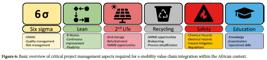
Lean six sigma (the integration of Lean and six sigma) principles should become more relevant to many highly competitive emerging technologies that include the EV market, especially within the African context. Lean is focused on waste reduction and standardizing workflows through workplace organization and visual controls, whereas six sigma aims at reducing variations through statistical data analysis and hypothesis testing and therefore maintaining quality.666768
For Africa to have a foothold in the tertiary battery market, well-established safety and testing policies and regulations need to be implemented, not only for consumer safety but also for the manufacturer and recycling operations. The need for recycling is set to increase as electric vehicles gain a stronger presence in the automotive market and as the first generations of vehicles come to their end-of-life. This will provide unique opportunities for SMMEs in EV pack disassembly, 2nd life applications and recycling instead of simply shipping the battery pack back to the original equipment manufacturer (OEM) at elevated costs. Apart from the safety associated with the chemistry of the battery, where gas sensing and biomonitoring can aid in prevention mechanisms, EV packs are an electric shock risk, with packs generally producing 400-800V and 160-240 Ah. Where shocks from currents over 10 milliamps are considered painful to severe, and 100-200 milliamps being lethal. These factors indicate that a specialized skill set are required for the emerging workforce in the EV value-chain sector and the need for multi-discipline educational initiatives. Areas of specialisation and skills required include electrochemists, inorganic material scientists who are amenable to data analytics, simulations and artificial intelligence; technicians who are knowledgeable in electrochemistry, electrical engineers, and process engineers. Project managers, social scientists and environmental specialists who have a deeper understanding of battery technology are also required. Project managers are required for the implementation and delivery of specialised projects, social scientists are required to impart knowledge on cross-cultural relations, and stakeholder buy-in and environmental specialists are required to assist with providing solutions to protecting and providing a safe and healthy environment that promotes the circular economy concept and mitigates climate change. Short skills programmes, internships and on-the-job training should also be integrated into educational initiatives.69
Second-life applications, specifically for EV battery packs, have been of interest and discussed in multiple research articles.70-73 This provides an opportunity for the EV packs to be utilized in an alternate application, such as renewable energy grid storage, allowing for further waste mitigation and the ability to benefit from the battery pack's value stream. Simplistically, if batteries or cells within an aged pack can be tested and the faulty or weak cells are replaced with suitable cells from other packs, a 2nd life back can be assembled that can then be used in an application that is considered less stringent in its power and mobility requirements. General, EV packs are replaced once approximately 80% state of health (SoH) (battery holds 80% of rated capacity at full charge) is reached. This is primarily because the vehicle's kilometres per charge decrease, and unpredictable battery failure is then more likely to occur. However, this value was originally reported by the United States Advanced Battery Consortium(USABC)7473
It is only after the 2nd life application that the pack is then considered for recycling. There are many well-documented studies and processes that utilize hydrometallurgical and pyrolysis techniques to recycle spent lithium-ion batteries.75,76 These have been developed and optimized alongside changes in battery chemistry. A good business model would be to develop localized African recycling operations alongside the manufacturing industry to promote the localization of employment and thereby support multiple economies through the improvement of the value chain. For example, energy storage is seen as an enabler for the provision of domestic renewable energy solutions, and The World Economic Forum estimates that localizing the repurposing of lithium batteries in countries across Africa has the potential to create 40 jobs for every 1000 solar home systems sold. In contrast the use of repurposed lithium batteries creates an affordable and sustainable solution where the cost of batteries is reduced by approximately 30%. Potential business models for the local recycling of lithium batteries should be further explored as recyclers based outside of the continent pay up to $1,000 per ton for lithium batteries that contain cobalt across the world.77
Recycling is not without its challenges, namely the effective separation of the diverse types of cells and batteries with their own variations in their cell chemistries. Gaines787979
Many aspects explored in this article are currently employed by the national uYilo e-Mobility Programme, which was established in 2013 as a multi-stakeholder collaborative programme focused on enabling, facilitating and mobilising e-Mobility in South Africa. uYilo is an initiative of the Technology Innovation Agency, a public entity of the Department of Science and Innovation. Aligned to global technology advancements across transport, energy and ICT that electric mobility impacts. uYilo has created a footprint in the local industry while also leveraging international networks towards advancing the uptake of electric mobility through government lobbying, Industry engagement, enterprise development, pilot projects, thought leadership and skills development. uYilo's facilities include a nationally accredited battery testing laboratory that supports local manufacturing companies, providing accurate and repeatable testing services for new storage solutions and validation of existing battery technologies. uYilo's Live Testing Environment creates a platform for the electric vehicle ecosystem to facilitate universal connectivity between electric vehicles and supportive smart grid infrastructure. The smart grid infrastructure of the live testing environment consists of various electric vehicle ecosystem elements such as electric vehicles, a mix of AC charge points, DC fast chargers and Vehicle-to-Grid system capabilities. Renewable energy is incorporated to supply the charger network and is dynamically controlled through a supervisory Energy Management System for individual charger energy profiling. Energy storage is achieved through a repurposed electric vehicle battery pack serving as a 'second life' application under stationary storage.
The programme is hosted within eNtsa, an engagement entity within Nelson Mandela University. uYilo's facilities are headquartered in Gqeberha, with a satellite office in Johannesburg. For more information, visit www.uYilo.org.za.
CONCLUSION
African e-mobility programs and initiatives are few and far between, with OEMs focusing on Europe and America and the eastern markets such as India, China, Japan and South Korea. This is also seen in the research capacity being expended in analyzing the development, implementation and improvement of electric vehicles in the African economy and society. This paper explored the key chemistries involved in batteries which are commonly utilized in e-mobility applications as well as potential future chemistries to be used. The chemical safety aspects were highlighted to support the need for more accessible knowledge dissemination incorporating chemical risks and hazards, especially as opportunities arise for small, medium and micro enterprises to capitalize on the growing 2nd life application and recycling space. These niche SMMEs can not only provide additional jobs but also support the local economies by keeping the value stream within Africa through unique approaches which are tailor-made to the continent. The models being employed by the global leaders can be used as a learning opportunity which allows Africa to understand both what has been successful, as well as unsuccessful. The 2nd life market could be key in reducing renewable energy storage costs, and end-of-life batteries can be recycled without needing to be shipped back to the OEM. If good project management principles are adopted to ensure product quality, workplace safety and waste reduction are also coupled with improved skill enhancement programs, stakeholder buy-in and support from the public and private sector (for initiating projects to test the feasibility of business models), then the unique EV African market can emerge by also integrating the shift to the electric-mobility mindset as an opportunity that not only reduces its CO2 emissions but also sees business development as a possibility for local battery manufacturing from localized mined resources along the entire value chain. Africa is still in its infancy in this specific market, and, by taking every opportunity, can become more prominent in the ever-shifting technological landscape.
ORCID IDSBrandon Davoren: https://orcid.org/0000-0001-6520-2613
Ernst Ferg: https://orcid.org/0000-0001-7231-5050
Edem Foli: https://orcid.org/0009-0003-2405-1806
ACKNOWLEDGEMENTS
The authors thank the Nelson Mandela University (NMU) postdoctoral program for contributing funding toward the project.
REFERENCES
-
1. Henze V. Net-zero road transport by 2050 still possible, as electric vehicles set to quintuple by 2025. BloombergNEF. Published June 1, 2022. Accessed August 30, 2022. https://about.bnef.com/blog/net-zero-road-transport-by-2050-still-possible-as-electric-vehicles-set-to-quintuple-by-2025/
» https://about.bnef.com/blog/net-zero-road-transport-by-2050-still-possible-as-electric-vehicles-set-to-quintuple-by-2025/ -
2. EVO Report 2022. BloombergNEF & Bloomberg Finance LP. Accessed August 30, 2022. https://about.bnef.com/electric-vehicle-outlook/
» https://about.bnef.com/electric-vehicle-outlook/ -
3. Tadesse B, Makuei F, Albijanic B, Dyer L. The beneficiation of lithium minerals from hard rock ores: A review. Miner Eng. 2019;131:170-184. https://doi.org/10.1016/j.mineng.2018.11.023
» https://doi.org/10.1016/j.mineng.2018.11.023 -
4. Crundwell FK, Moats MS, Ramachandran V, Robinson TG, Davenport WG. Chapter 30 - Production of Cobalt from the Copper-Cobalt Ores of the Central African Copperbelt. In: Extractive Metallurgy of Nickel, Cobalt and Platinum Group Metals. Elsevier; 2011:377-391. https://doi.org/10.1016/B978-0-08-096809-4.10030-9
» https://doi.org/10.1016/B978-0-08-096809-4.10030-9 -
5. Commodity Statistics and Information | U.S. Geological Survey. Accessed October 7, 2022. https://www.usgs.gov/centers/national-minerals-information-center/commodity-statistics-and-information
» https://www.usgs.gov/centers/national-minerals-information-center/commodity-statistics-and-information -
6. Producing Battery Materials in the DRC Could Lower Supply-Chain Emissions and Add Value to the Country's Cobalt. BloombergNEF. Published November 24, 2021. Accessed September 2, 2022. https://about.bnef.com/blog/producing-battery-materials-in-the-drc-could-lower-supply-chain-emissions-and-add-value-to-the-countrys-cobalt/
» https://about.bnef.com/blog/producing-battery-materials-in-the-drc-could-lower-supply-chain-emissions-and-add-value-to-the-countrys-cobalt/ -
7. Zambia's Mopani plans to resume cobalt production as prices rise | Reuters. Accessed October 6, 2022. https://www.reuters.com/world/africa/zambias-mopani-plans-resume-cobalt-production-prices-rise-2022-05-24/
» https://www.reuters.com/world/africa/zambias-mopani-plans-resume-cobalt-production-prices-rise-2022-05-24/ -
8. Creamer M. High-purity manganese facing phenomenal demand growth, PDAC hears. Mining Weekly. Accessed October 6, 2022. https://www.miningweekly.com/article/high-purity-manganese-facing-phenomenal-growth-pdac-hears-2022-06-24
» https://www.miningweekly.com/article/high-purity-manganese-facing-phenomenal-growth-pdac-hears-2022-06-24 -
9. Import P. Delta to end local operations. Mpumalanga News. Published March 24, 2014. Accessed December 22, 2022. https://mpumalanganews.co.za/48493/delta-to-end-local-operations/
» https://mpumalanganews.co.za/48493/delta-to-end-local-operations/ -
10. Projects. Giyani Metals Corp. Accessed October 6, 2022. https://giyanimetals.com/projects
» https://giyanimetals.com/projects -
11. DRC issues ministerial decree for Manono lithium-tin project. Accessed October 6, 2022. https://www.mining-technology.com/news/drc-decree-manono-lithium/
» https://www.mining-technology.com/news/drc-decree-manono-lithium/ -
12. Five largest nickel mines in South Africa in 2021. Mining Technology. Published June 3, 2022. Accessed October 6, 2022. https://www.mining-technology.com/marketdata/five-largest-nickel-mines-south-africa-2021/
» https://www.mining-technology.com/marketdata/five-largest-nickel-mines-south-africa-2021/ -
13. Crouse PL. Fluorine: A key enabling element in the nuclear fuel cycle. J South Afr Inst Min Metall. 2015;115(10):931-935. https://doi.org/10.17159/2411-9717/2015/v115n10a5
» https://doi.org/10.17159/2411-9717/2015/v115n10a5 -
14. Cat to have prototype battery electric trucks running in 2022 with early learner models to customers in 2024. International Mining. Published May 18, 2022. Accessed October 6, 2022. https://im-mining.com/2022/05/18/cat-to-have-prototype-battery-electric-trucks-running-in-2022-with-early-learner-models-to-customers-in-2024/
» https://im-mining.com/2022/05/18/cat-to-have-prototype-battery-electric-trucks-running-in-2022-with-early-learner-models-to-customers-in-2024/ -
15. Iannucci E. Rio purchases battery-electric trains for the Pilbara. Mining Weekly. Accessed October 6, 2022. https://www.miningweekly.com/article/rio-purchases-battery-electric-trains-for-the-pilbara-2022-01-11
» https://www.miningweekly.com/article/rio-purchases-battery-electric-trains-for-the-pilbara-2022-01-11 -
16. Hill JS. BHP orders battery-electric loaders for Canadian mine. The Driven. Published June 23, 2022. Accessed October 6, 2022. https://thedriven.io/2022/06/23/bhp-orders-battery-electric-loaders-for-canadian-mine/
» https://thedriven.io/2022/06/23/bhp-orders-battery-electric-loaders-for-canadian-mine/ -
17. Burger S. Battery electric mining vehicles can boost efficiencies, sustainability. Mining Weekly. Accessed October 6, 2022. https://www.miningweekly.com/article/battery-electric-mining-vehicles-can-boost-efficiencies-sustainability-2022-03-24
» https://www.miningweekly.com/article/battery-electric-mining-vehicles-can-boost-efficiencies-sustainability-2022-03-24 -
18. VW petrol engines for Africa - until 2050. Cars.co.za. Published June 28, 2021. Accessed August 30, 2022. https://www.cars.co.za/motoring-news/vw-petrol-engines-for-africa-until-2050/95273/
» https://www.cars.co.za/motoring-news/vw-petrol-engines-for-africa-until-2050/95273/ -
19. Africa E-Mobility Alliance. Accessed December 9, 2023. http://www.africaema.org/
» http://www.africaema.org/ -
20. China has 65% of public EV charging stations worldwide. Accessed December 9, 2023. https://www.thebuzzevnews.com/china-public-ev-charging-stations/
» https://www.thebuzzevnews.com/china-public-ev-charging-stations/ -
21. Rix AJ, Abraham CJ, Booysen MJ. Why taxi tracking trumps tracking passengers with apps in planning for the electrification of Africa's paratransit. iScience. Published online August 18, 2022:104943. https://doi.org/10.1016/j.isci.2022.104943
» https://doi.org/10.1016/j.isci.2022.104943 -
22. Abraham CJ, Rix AJ, Ndibatya I, Booysen MJ. Ray of hope for sub-Saharan Africa's paratransit: Solar charging of urban electric minibus taxis in South Africa. Energy Sustain Dev. 2021;64:118-127. https://doi.org/10.1016/j.esd.2021.08.003
» https://doi.org/10.1016/j.esd.2021.08.003 -
23. Booysen MJ, Abraham CJ, Rix AJ, Ndibatya I. Walking on sunshine: Pairing electric vehicles with solar energy for sustainable informal public transport in Uganda. Energy Res Soc Sci. 2022;85:102403. https://doi.org/10.1016/j.erss.2021.102403
» https://doi.org/10.1016/j.erss.2021.102403 -
24. Buresh KM, Apperley MD, Booysen MJ. Three shades of green: Perspectives on at-work charging of electric vehicles using photovoltaic carports. Energy Sustain Dev. 2020;57:132-140. https://doi.org/10.1016/j.esd.2020.05.007
» https://doi.org/10.1016/j.esd.2020.05.007 -
25. Ayetor GK, Mbonigaba I, Sunnu AK, Nyantekyi-Kwakye B. Impact of replacing ICE bus fleet with electric bus fleet in Africa: A lifetime assessment. Energy. 2021;221:119852. https://doi.org/10.1016/j.energy.2021.119852
» https://doi.org/10.1016/j.energy.2021.119852 -
26. Collett KA, Hirmer SA, Dalkmann H, Crozier C, Mulugetta Y, McCulloch MD. Can electric vehicles be good for Sub-Saharan Africa? Energy Strategy Rev. 2021;38:100722. https://doi.org/10.1016/j.esr.2021.100722
» https://doi.org/10.1016/j.esr.2021.100722 -
27. Ayetor GK, Quansah DA, Adjei EA. Towards zero vehicle emissions in Africa: A case study of Ghana. Energy Policy. 2020;143:111606. https://doi.org/10.1016/j.enpol.2020.111606
» https://doi.org/10.1016/j.enpol.2020.111606 -
28. Ayetor GK, Opoku R, Sekyere CKK, Agyei-Agyeman A, Deyegbe GR. The cost of a transition to electric vehicles in Africa: A case study of Ghana. Case Stud Transp Policy. 2022;10(1):388-395. https://doi.org/10.1016/j.cstp.2021.12.018
» https://doi.org/10.1016/j.cstp.2021.12.018 -
29. Dioha MO, Duan L, Ruggles TH, Bellocchi S, Caldeira K. Exploring the role of electric vehicles in Africa's energy transition: A Nigerian case study. iScience. 2022;25(3):103926. https://doi.org/10.1016/j.isci.2022.103926
» https://doi.org/10.1016/j.isci.2022.103926 -
30. Moeletsi ME. Socio-Economic Barriers to Adoption of Electric Vehicles in South Africa: Case Study of the Gauteng Province. World Electr Veh J. 2021;12(4):167. https://doi.org/10.3390/wevj12040167
» https://doi.org/10.3390/wevj12040167 -
31. Pillay NS, Brent AC, Musango JK. Affordability of battery electric vehicles based on disposable income and the impact on provincial residential electricity requirements in South Africa. Energy. 2019;171:1077-1087. https://doi.org/10.1016/j.energy.2018.10.148
» https://doi.org/10.1016/j.energy.2018.10.148 -
32. Brönner M, Fries D, Pelka J, Lienkamp M. Testing Scenarios of Strategic Production Configuration Using Fuzzy Logic. In: Delele MA, Bitew MA, Beyene AA, Fanta SW, Ali AN, eds. Advances of Science and Technology. Lecture Notes of the Institute for Computer Sciences, Social Informatics and Telecommunications Engineering. Springer International Publishing; 2021:395-407. https://doi.org/10.1007/978-3-030-80618-7_27
» https://doi.org/10.1007/978-3-030-80618-7_27 -
33. Kalt S, Brönner M, Lienkamp M. Application-Based Design of Electric Machines for New Vehicle Concepts in Developing Countries. In: 2019 Fourteenth International Conference on Ecological Vehicles and Renewable Energies (EVER); 2019:1-6. https://doi.org/10.1109/EVER.2019.8813520
» https://doi.org/10.1109/EVER.2019.8813520 -
34. Brönner M, Baumgartner V, Lienkamp M. Requirements Engineering for Production Transfer to Developing Countries. In: Hamrol A, Grabowska M, Maletic D, Woll R, eds. Advances in Manufacturing II. Lecture Notes in Mechanical Engineering. Springer International Publishing; 2019:1-15. https://doi.org/10.1007/978-3-030-17269-5_1
» https://doi.org/10.1007/978-3-030-17269-5_1 -
35. Brönner M, Hagenauer MS, Lienkamp M. Sustainability - Recommendations for an Electric Vehicle Manufacturing in Sub-Saharan Africa. Procedia CIRP. 2019;81:1148-1153. https://doi.org/10.1016/j.procir.2019.03.283
» https://doi.org/10.1016/j.procir.2019.03.283 -
36. Brönner M, Wolff S, Jovanovic J, Keuthen K, Lienkamp M. Production Strategy Development: Simulation of Dependencies Using Recurrent Fuzzy Systems. Systems. 2020;8(1):1. https://doi.org/10.3390/systems8010001
» https://doi.org/10.3390/systems8010001 -
37. Brönner M, Ampofo J, Fries D, Lienkamp M. Configuration Parameters within Electric Vehicle Production Strategies in Sub-Saharan Africa - the aCar mobility Case. Procedia CIRP. 2019;86:288-293. https://doi.org/10.1016/j.procir.2020.01.025
» https://doi.org/10.1016/j.procir.2020.01.025 -
38. Nur BM. A case study of socio-cultural and technical factors in automobile design: Discourses between designers and potential users on a new electric vehicle in Africa. Technol Soc. 2020;63:101398. https://doi.org/10.1016/j.techsoc.2020.101398
» https://doi.org/10.1016/j.techsoc.2020.101398 -
39. Fetcenko M, Koch J, Zelinsky M. 6 - Nickel-metal hydride and nickel-zinc batteries for hybrid electric vehicles and battery electric vehicles. In: Scrosati B, Garche J, Tillmetz W, eds. Advances in Battery Technologies for Electric Vehicles. Woodhead Publishing Series in Energy. Woodhead Publishing; 2015:103-126. https://doi.org/10.1016/B978-1-78242-377-5.00006-6
» https://doi.org/10.1016/B978-1-78242-377-5.00006-6 -
40. Toyota. Prius Prime - Plug In Hybrid. Toyota Canada. Accessed October 19, 2022. https://www.toyota.ca/toyota/en/vehicles/prius-prime/overview
» https://www.toyota.ca/toyota/en/vehicles/prius-prime/overview -
41. Li X, Xin H, Liu Y, Li D, Yuan X, Qin X. Effect of niobium doping on the microstructure and electrochemical properties of lithium-rich layered Li[Li0.2Ni0.2Mn0.6]O2 as cathode materials for lithium ion batteries. RSC Adv. 2015;5(56):45351-45358. https://doi.org/10.1039/C5RA01798J
» https://doi.org/10.1039/C5RA01798J -
42. Tang X, Lv S, Jiang K, Zhou G, Liu X. Recent development of ionic liquid-based electrolytes in lithium-ion batteries. J Power Sources. 2022;542:231792. https://doi.org/10.1016/j.jpowsour.2022.231792
» https://doi.org/10.1016/j.jpowsour.2022.231792 -
43. Zheng F, Kotobuki M, Song S, Lai MO, Lu L. Review on solid electrolytes for all-solid-state lithium-ion batteries. J Power Sources. 2018;389:198-213. https://doi.org/10.1016/j.jpowsour.2018.04.022
» https://doi.org/10.1016/j.jpowsour.2018.04.022 -
44. Zhang SS. A review on electrolyte additives for lithium-ion batteries. J Power Sources. 2006;162(2):1379-1394. https://doi.org/10.1016/j.jpowsour.2006.07.074
» https://doi.org/10.1016/j.jpowsour.2006.07.074 -
45. Bicy K, Gueye AB, Rouxel D, Kalarikkal N, Thomas S. Lithium-ion battery separators based on electrospun PVDF: A review. Surf Interfaces. 2022;31:101977. https://doi.org/10.1016/j.surfin.2022.101977
» https://doi.org/10.1016/j.surfin.2022.101977 -
46. Dai X, Zhang X, Wen J, et al. Research progress on high-temperature resistant polymer separators for lithium-ion batteries. Energy Storage Mater. 2022;51:638-659. https://doi.org/10.1016/j.ensm.2022.07.011
» https://doi.org/10.1016/j.ensm.2022.07.011 -
47. Zhang WJ. A review of the electrochemical performance of alloy anodes for lithium-ion batteries. J Power Sources. 2011;196(1):13-24. https://doi.org/10.1016/j.jpowsour.2010.07.020
» https://doi.org/10.1016/j.jpowsour.2010.07.020 -
48. Singh H, Topsakal M, Attenkofer K, et al. Identification of dopant site and its effect on electrochemical activity in Mn-doped lithium titanate. Phys Rev Mater. 2018;2(12):125403. https://doi.org/10.1103/PhysRevMaterials.2.125403
» https://doi.org/10.1103/PhysRevMaterials.2.125403 -
49. Firdous N, Arshad N, Muzaffar N, Norby P. Effect of Mg+2 and Bi+3 co-doping on structural and electrochemical properties of lithium titanium oxide for use as anode material in lithium-ion battery. J Electroanal Chem. 2020;876:114515. https://doi.org/10.1016/j.jelechem.2020.114515
» https://doi.org/10.1016/j.jelechem.2020.114515 -
50. Wang P, Qian S, Yi TF, et al. Effect of Sodium-Site Doping on Enhancing the Lithium Storage Performance of Sodium Lithium Titanate. ACS Appl Mater Interfaces. 2016;8(16):10302-10314. https://doi.org/10.1021/acsami.6b01293
» https://doi.org/10.1021/acsami.6b01293 -
51. Liang C, Gao M, Pan H, Liu Y, Yan M. Lithium alloys and metal oxides as high-capacity anode materials for lithium-ion batteries. J Alloys Compd. 2013;575:246-256. https://doi.org/10.1016/j.jallcom.2013.04.001
» https://doi.org/10.1016/j.jallcom.2013.04.001 -
52. BU-205: Types of Lithium-ion. Battery University. Published 2019. Accessed September 2, 2022. https://batteryuniversity.com/article/bu-205-types-of-lithium-ion
» https://batteryuniversity.com/article/bu-205-types-of-lithium-ion -
53. Battery Pack Prices Fall to an Average of $132/kWh, But Rising Commodity Prices Start to Bite. BloombergNEF. Published November 30, 2021. Accessed October 14, 2022. https://about.bnef.com/blog/battery-pack-prices-fall-to-an-average-of-132-kwh-but-rising-commodity-prices-start-to-bite/
» https://about.bnef.com/blog/battery-pack-prices-fall-to-an-average-of-132-kwh-but-rising-commodity-prices-start-to-bite/ -
54. Scheers J, Fantini S, Johansson P. A review of electrolytes for lithium-sulphur batteries. J Power Sources. 2014;255:204-218. https://doi.org/10.1016/j.jpowsour.2014.01.023
» https://doi.org/10.1016/j.jpowsour.2014.01.023 -
55. Clark S, Latz A, Horstmann B. A Review of Model-Based Design Tools for Metal-Air Batteries. Batteries. 2018;4(1):5. https://doi.org/10.3390/batteries4010005
» https://doi.org/10.3390/batteries4010005 -
56. Rechargeable Multi-Valent Metal-Air Batteries. technology.matthey.com. Accessed October 14, 2022. https://technology.matthey.com/journal
» https://technology.matthey.com/journal -
57. Bruce PG, Freunberger SA, Hardwick LJ, Tarascon JM. Li-O2 and Li-S batteries with high energy storage. Nat Mater. 2012;11(1):19-29. https://doi.org/10.1038/nmat3191
» https://doi.org/10.1038/nmat3191 -
58. Visco S, Nimon V, Petrov A, Goncharenko K, Nimon E, De Jonghe L, Volfkovich YM, Bograchev D. Aqueous and nonaqueous lithium-air enabled by water-stable lithium metal electrodes. J Solid State Electrochem. 2014;18:1443-1456. https://doi.org/10.1007/s10008-014-2427-x
» https://doi.org/10.1007/s10008-014-2427-x -
59. Schismenos S, Chalaris M, Stevens G. Battery hazards and safety: A scoping review for lead acid and silver-zinc batteries. Saf Sci. 2021;140:105290. https://doi.org/10.1016/j.ssci.2021.105290
» https://doi.org/10.1016/j.ssci.2021.105290 -
60. Barnett B, Ofer D, Sriramulu S, Stringfellow R. Lithium-Ion Batteries, Safety. In: Brodd RJ, ed. Batteries for Sustainability: Selected Entries from the Encyclopedia of Sustainability Science and Technology. Springer; 2013:285-318. https://doi.org/10.1007/978-1-4614-5791-6_9
» https://doi.org/10.1007/978-1-4614-5791-6_9 -
61. Roth EP, Orendorff CJ. How Electrolytes Influence Battery Safety. Electrochem Soc Interface. 2012;21(2):45. https://doi.org/10.1149/2.F04122if
» https://doi.org/10.1149/2.F04122if -
62. Sturk D, Rosell L, Blomqvist P, Ahlberg Tidblad A. Analysis of Li-Ion Battery Gases Vented in an Inert Atmosphere Thermal Test Chamber. Batteries. 2019;5(3):61. https://doi.org/10.3390/batteries5030061
» https://doi.org/10.3390/batteries5030061 -
63. Yang H, Zhuang GV, Ross PN. Thermal stability of LiPF6 salt and Li-ion battery electrolytes containing LiPF6. J Power Sources. 2006;161(1):573-579. https://doi.org/10.1016/j.jpowsour.2006.03.058
» https://doi.org/10.1016/j.jpowsour.2006.03.058 -
64. Kawamura T, Okada S, Yamaki J ichi. Decomposition reaction of LiPF6-based electrolytes for lithium ion cells. J Power Sources. 2006;156(2):547-554. https://doi.org/10.1016/j.jpowsour.2005.05.084
» https://doi.org/10.1016/j.jpowsour.2005.05.084 -
65. Yuan L, Dubaniewicz T, Zlochower I, Thomas R, Rayyan N. Experimental study on thermal runaway and vented gases of lithium-ion cells. Process Saf Environ Prot. 2020;144:186-192. https://doi.org/10.1016/j.psep.2020.07.028
» https://doi.org/10.1016/j.psep.2020.07.028 -
66. Six Sigma Definition - What is Lean Six Sigma? | ASQ. Accessed October 14, 2022. https://asq.org/quality-resources/six-sigma
» https://asq.org/quality-resources/six-sigma -
67. Objectives and goals: Writing meaningful goals and SMART objectives -MN Dept. of Health. Accessed December 22, 2022. https://www.health.state.mn.us/communities/practice/resources/phqitoolbox/objectives.html#NaN
» https://www.health.state.mn.us/communities/practice/resources/phqitoolbox/objectives.html#NaN -
68. REVOV 2nd LiFe | Affordable Lithium Iron Phosphate Batteries. REVOV Battery Backup Power Solutions. Accessed December 22, 2022. https://revov.co.za/2ndlife/
» https://revov.co.za/2ndlife/ -
69. Axel Thielmann. Future Expert Needs of the Battery Sector. EIT RawMaterials GmbH; 2021. Accessed December 22, 2022. https://eitrawmaterials.eu/wp-content/uploads/2021/03/EIT-RawMaterials-Fraunhofer-Report-Battery-Expert-Needs-March-2021.pdf
» https://eitrawmaterials.eu/wp-content/uploads/2021/03/EIT-RawMaterials-Fraunhofer-Report-Battery-Expert-Needs-March-2021.pdf -
70. Cheng M, Ran A, Zheng X, et al. Sustainability evaluation of second-life battery applications in grid-connected PV-battery systems. J Power Sources. 2022;550:232132. https://doi.org/10.1016/j.jpowsour.2022.232132
» https://doi.org/10.1016/j.jpowsour.2022.232132 -
71. Colarullo L, Thakur J. Second-life EV batteries for stationary storage applications in Local Energy Communities. Renew Sustain Energy Rev. 2022;169:112913. https://doi.org/10.1016/j.rser.2022.112913
» https://doi.org/10.1016/j.rser.2022.112913 -
72. Thakur J, Martins Leite de Almeida C, Baskar AG. Electric vehicle batteries for a circular economy: Second life batteries as residential stationary storage. J Clean Prod. 2022;375:134066. https://doi.org/10.1016/j.jclepro.2022.134066
» https://doi.org/10.1016/j.jclepro.2022.134066 -
73. Zhu J, Mathews I, Ren D, et al. End-of-life or second-life options for retired electric vehicle batteries. Cell Rep Phys Sci. 2021;2(8):100537. https://doi.org/10.1016/j.xcrp.2021.100537
» https://doi.org/10.1016/j.xcrp.2021.100537 - 74. Gary Hunt. USABC electric vehicle battery test procedures manual. Published online 1996.
-
75. Mishra G, Jha R, Meshram A, Singh KK. A review on recycling of lithium-ion batteries to recover critical metals. J Environ Chem Eng. 2022;10(6):108534. https://doi.org/10.1016/j.jece.2022.108534
» https://doi.org/10.1016/j.jece.2022.108534 -
76. Latini D, Vaccari M, Lagnoni M, et al. A comprehensive review and classification of unit operations with assessment of outputs quality in lithium-ion battery recycling. J Power Sources. 2022;546:231979. https://doi.org/10.1016/j.jpowsour.2022.231979
» https://doi.org/10.1016/j.jpowsour.2022.231979 -
77. WEF_Closing_Loop_Energy_Access_2021.pdf. Accessed December 26, 2022. https://www3.weforum.org/docs/WEF_Closing_Loop_Energy_Access_2021.pdf
» WEF_Closing_Loop_Energy_Access_2021.pdf -
78. Gaines L. Lithium-ion battery recycling processes: Research towards a sustainable course. Sustain Mater Technol. 2018;17:e00068. https://doi.org/10.1016/j.susmat.2018.e00068
» https://doi.org/10.1016/j.susmat.2018.e00068 -
79. Gaines L. The future of automotive lithium-ion battery recycling: Charting a sustainable course. Sustain Mater Technol. 2014;1-2:2-7. https://doi.org/10.1016/j.susmat.2014.10.001
» https://doi.org/10.1016/j.susmat.2014.10.001
Revised 11 December 2023
Accepted 7 January 2024